
PODCAST · business
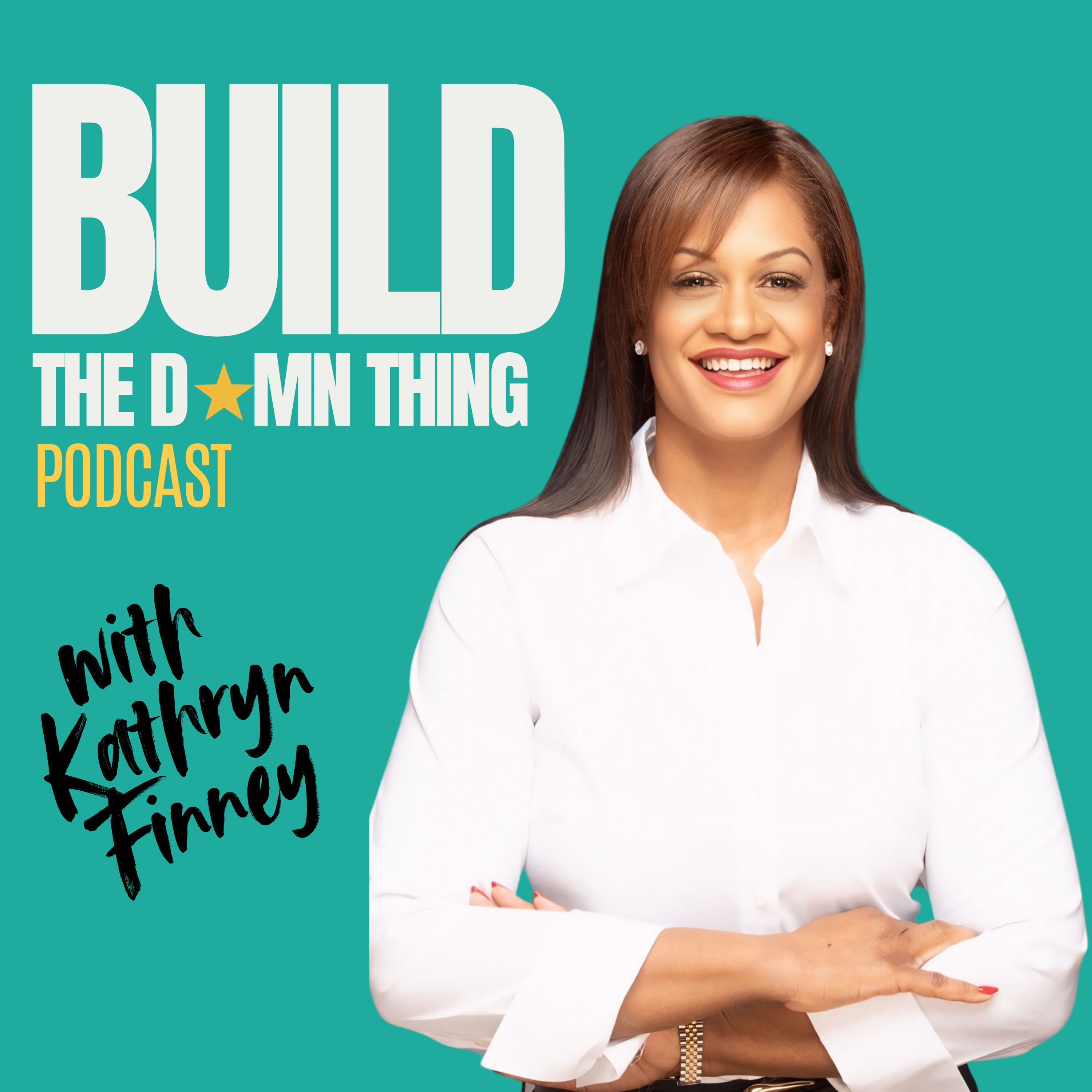
Build The Damn Thing with Kathryn Finney
by Kathryn Finney
No more excuses. No more procrastination. If you’re ready to take your business, side hustle or idea to the next level, then this is the podcast for you! The podcast is hosted by Kathryn Finney, one of the most influential women in tech (INC Magazine), one of the first Black women to sell her startup, and Managing General Partner at the Chicago-based venture firm, Genius Guild.Based on Kathryn’s bestselling book “Build the Damn Thing: How to Build a Successful Business if You’re NOT a Rich White Guy”, Build the Damn Thing is part storytelling, part mix tape and designed to teach you how to bring your business to the next level. The podcast features lessons and tips from leaders and entrepreneurs who have “Built the Damn Thing” themselves. From serial entrepreneurs to those who take risks to solve problems both abroad and locally — it's all here on the show! kathrynfinney.subs
-
51
From Corporate Burnout to Finding Your Purpose: How to Build a Life You Actually Love
In this episode of Build a Damn Thing, host Kathryn Finney speaks with Francesca Hogi, a lawyer turned entrepreneur and author, about her journey from corporate law to matchmaking. They discuss the importance of navigating life changes, finding one's passion, and the financial preparations necessary for career transitions. Francesca shares insights on creating multiple income streams, overcoming fear in entrepreneurship, and the significance of aligning business with personal values. The conversation emphasizes that entrepreneurship is nzot just about profit but also about purpose and helping others.TakeawaysFrancesca experienced a pivotal moment that led her to leave law.It's important to confront the shame associated with career changes.Having multiple income streams can provide financial security.Starting a side hustle can help test entrepreneurial waters.Fear is a natural part of entrepreneurship; facing it is crucial.Networking and telling people about your new venture is essential.Pricing your services appropriately is key to sustainability.Transitioning careers can take time and requires strategic planning.Aligning your business with your personal values enhances fulfillment.Entrepreneurship offers the chance to create a life you love.
-
50
How to Go From Layoff to $600k
In this episode of Build a Damn Thing, host Kathryn Finney speaks with Elina Pantelyeva, the founder of Dood Woof, about her journey from being laid off in the tech industry to building a successful brand for dog lovers. Elina shares her insights on identifying target audiences, product development, and the importance of authenticity in creating loyal customers. She discusses the challenges of entrepreneurship, the significance of community, and her strategies for leveraging platforms like Amazon and TikTok for growth. Elina emphasizes the value of understanding customer pain points and the importance of building relationships with customers to foster brand loyalty.Takeaways- Identifying a target audience is crucial for product success.- Building an audience before launching a product can lead to better sales.- Authenticity in communication fosters customer loyalty.- Selling on Amazon offers higher conversion rates than personal websites.
-
49
How to Use Storytelling to Make $$$
In this episode of Build The Damn Thing, host Kathryn Finney speaks with expert authority coach Christine Blosdale about the importance of visibility and storytelling in entrepreneurship. Christine shares insights on overcoming imposter syndrome, the significance of authenticity, and how to connect personal stories to business success. She emphasizes the need for entrepreneurs to uncover their unique narratives, focus on serving their audience, and effectively brand themselves in a digital world. The conversation provides practical tips for building a compelling online presence and magnetizing one's brand.Key takeaways- Storytelling is essential for connecting with your audience.- Imposter syndrome affects everyone, even the most successful.- Shift focus from self-doubt to serving others.- Authenticity is crucial in today's market.- Your unique story can enhance your business success.- Professional branding includes a strong visual identity.Sound Bites"Imposter syndrome happens to everybody.""You have to stop beating yourself up.""What am I a specialist in?"Chapters00:00- Building a Life You Love01:03- The Power of Storytelling04:22- Uncovering Your Unique Story06:04- Overcoming Imposter Syndrome14:44- Shifting Focus to Serve Others19:05-Connecting Storytelling to Business29:47- Magnetizing Your Brand33:33- Creating Your Online Presence
-
48
How to Build a Powerful Network
How do you build a network that actually fuels your business and life?In this special compilation episode of Build the Damn Thing, Kathryn Finney brings together some of the most powerful insights from past guests on the importance of relationships, risk-taking, and resilience in entrepreneurship.You’ll learn:- How founders turned corporate careers into thriving businesses- Why inclusive communities create better opportunities for everyone- Strategies for balancing leadership and family life- What separates angel investors from venture capitalists- How to embrace pivots, failure, and self-belief to fuel growth- Why networking isn’t optional—it’s the foundation of entrepreneurshipWhether you’re just starting out or scaling your venture, this episode is packed with strategies to expand your network, embrace resilience, and leverage community for long-term success.Learn more Discover Kathryn: kathrynfinney.com Join the community: buildthedamnthing.com
-
47
How to Turn a Side Hustle Into a Thriving Business with Andee Hart
What does it really take to turn a kitchen side hustle into a thriving wholesale business?In this episode of Build the Damn Thing, Kathryn Finney talks with entrepreneur and sales strategist Andee Hart, founder of Hart Design Co. and host of She Sells Differently. Andee shares how she went from a Fortune 500 sales executive to building a candle empire, the sales framework that works in any market, and her mission to help women entrepreneurs overcome sales anxiety.You’ll learn:The lessons Andee took from corporate America into entrepreneurshipWhy having a simple, repeatable sales framework is a game changerHow to create lead magnets that actually grow your businessThe importance of starting local and listening to feedbackSales confidencePricing strategies for scaling into wholesaleIf you’ve ever struggled with sales or wondered how to take your side hustle full time, this conversation is packed with strategies and inspiration.Learn more:Connect with AndeeDiscover Kathryn Join the community
-
46
How to Use The Profit First Method To Get $$$ as an Entrepreneur
In this episode of Build the Damn Thing, host Kathryn Finney interviews financial advisor and money mindset expert Shari Rash, host of Everyone’s Talking Money, a show recognized by The New York Times. The conversation gives new and early stage entrepreneurs a clear money playbook for leaving a 9 to 5 and building a profitable business. Listeners learn how to pay themselves first using a Profit First style framework, budget variable income, and separate personal and business finances with simple systems that work in real life. The episode explains LLC basics, dedicated business bank accounts, and a lightweight Google Sheets dashboard. It also clarifies the roles of a bookkeeper, a CPA, and a financial planner, and teaches how to read a profit and loss statement and a balance sheet. Shari and Kathryn cover pricing a founder salary, creating a profit buffer for slow months, and the mindset shifts women entrepreneurs need to discuss money with confidence. This is a practical guide to small business finance, cash flow, and wealth building for first time founders.
-
45
Why 'Mastering Intentions' Beat Traditional Goal-Setting for This Real Estate Mogul and HBO Max Star
What happens when you achieve everything you thought you wanted but feel completely empty inside? Bianca D'Alessio, author of "Mastering Intentions," HBO Max's Selling Tampa star, and top real estate broker, found herself at the pinnacle of success—and completely burned out, isolated from family, and questioning everything.In this raw conversation, Bianca breaks down the difference between toxic goal-setting and intentional living, sharing how her approach to success nearly cost her the relationships that mattered most. From her father's incarceration for financial fraud to her siblings staging an intervention in Sicily, she reveals how family trauma became the catalyst for rebuilding her leadership philosophy and ultimately writing "Mastering Intentions."You'll discover:Why "SMART goals" can become toxic traps that steal your joyThe powerful shift from metrics-based success to intention-based growth from "Mastering Intentions"How appearing on HBO Max's Selling Tampa taught her to own her story—even the messy partsWhy perfectionism kills creativity and innovation in your teamThe difference between managing people and creating "team-ship"How to recruit for loyalty and trust over skillset aloneBianca doesn't sugarcoat the reality of entrepreneurship: "One day you're the CEO, the other day you're the janitor." But she's learned that vulnerability, not perfection, creates the strongest teams. Her approach to writing intentions on glass walls instead of traditional goal-setting offers a fresh framework for building sustainable success.Whether you're burning out from hustle culture, struggling with family dynamics while building your business, or ready to lead with authenticity instead of perfectionism, this episode will shift how you define winning.Bianca D'Alessio is the author of "Mastering Intentions," a top real estate broker, and star of HBO Max's Selling Tampa. Her journey from family scandal to intentional leadership offers a blueprint for sustainable success.
-
44
From $25 Google Checks to 7-Figure Exit: OG Influencers Reveal the Business Behind Personal Branding
What happens when you turn a fashion blog into a business empire worth acquiring? Marie Denée, founder of The Curvy Fashionista, sits down with Kathryn Finney to break down the real economics of influence - from the wild west days of $12 CPMs and $50K satellite media tours to today's oversaturated market.This isn't your typical "follow your passion" conversation. Marie and Kathryn dig deep into the business fundamentals that separate profitable personal brands from hobby accounts that burn out. You'll learn:Why understanding marketing funnels can 10x your influencer income:- The critical difference between building "Marie Denée" vs "The Curvy Fashionista" (and why it matters for exits)- How a failed 10-month acquisition nearly bankrupted Marie - and the legal mistakes to avoid- The mindset shift from "creating content to create revenue" to "creating revenue to create content"Two pioneers who built their tables before anyone knew the rules existed share hard-won wisdom about turning personal brands into scalable businesses. Whether you're just starting out or looking to level up beyond being the product yourself, this episode reveals the strategies that actually work in 2024.Marie Denée is the creator of The Curvy Fashionista, a groundbreaking digital platform that redefined plus-size fashion coverage. Kathryn Finney is a serial entrepreneur, investor, and author of "Build the Damn Thing."
-
43
How to Own Your Power Part 2: Say No, Stand Tall, and Build on Your Terms
Owning your power isn’t a personality trait—it’s a strategy.In this special Build the Damn Thing compilation, Kathryn Finney brings together bold voices who know what it takes to lead, negotiate, and build with intention. From navigating bias to setting unapologetic boundaries, this episode is a crash course in standing tall and taking up space as an entrepreneur.You’ll hear from founders and leaders who refused to play small—even when the systems around them demanded it. They chose themselves. They bet on their voice. And they built something better.Listen in for real talk on:Saying no without guiltNavigating likeability and respectThe emotional cost of shrinking in the roomWhy underestimated entrepreneurs are rewriting the rules of powerThis isn’t just about building a business. It’s about building yourself in the process.🎧 Hit play—and don’t forget to subscribe, review, and share with a fellow builder.#BuildTheDamnThing #Entrepreneurship #OwnYourPower #Negotiation #UnderestimatedFounders
-
42
How to Own Your Power: The Mindset Every Entrepreneur Needs to Build Boldly
What does it really take to build the business—and life—you want?In this special compilation episode of Build the Damn Thing, host Kathryn Finney brings together powerful insights from founders and leaders who are redefining what it means to be an entrepreneur. From negotiating your worth to building through bias, this episode unpacks the real inner work required to lead with power and purpose.You’ll hear from voices who’ve been told to shrink—and chose to expand instead.Discover why owning your power isn’t just about saying yes to opportunity, but also about knowing when to say no. Learn what it looks like to create spaces where underestimated founders can thrive. And walk away with the mindset tools every entrepreneur needs to navigate the highs, the lows, and everything in between.If you’re building the damn thing—this one’s for you.🎧 Listen now and subscribe for more episodes that speak to the heart of what it means to be a builder.#BuildTheDamnThing #Entrepreneurship #PowerMoves #Negotiation #UnderestimatedFounders
-
41
How to Make Joy Part of Your Business Strategy
What if leadership didn’t have to be lonely? What if building your business could feel like a joyful act of service—not just a climb to the top?In this episode of Build the Damn Thing, Kathryn Finney sits down with her longtime collaborator and friend, Darlene Gillard Jones, to unpack the emotional reality of entrepreneurship. From surviving literal blizzards in North Carolina to producing a runway show that changed lives, Kathryn and Darlene reflect on the power of building with people who believe in you—and how joy, levity, and legacy show up in the startup trenches.This is more than a behind-the-scenes conversation. It’s a blueprint for how to build with purpose, how to honor the people who helped you get there, and how to know when it’s time to move on.🎧 In this episode, you’ll learn:Why the people you build with matter more than any pitch deckHow levity and laughter can be leadership superpowersWhat it looks like to transition out of something with graceHow to spot the difference between someone who’s with you and someone who wants to be youWhy small acts of generosity can create big ripple effects (hello, Doonie Fund)If you’re navigating your own leadership journey—or learning how to build the damn thing while staying rooted in who you are—this conversation is your reminder to lead with joy, love, and unapologetic clarity.✨ Hit subscribe, leave a review, and send this episode to someone who rides with you in the storm and the spotlight. Because leadership is a team sport—and your joy is part of the strategy.
-
40
How to Use AI to Grow Your Business
It's time to use AI to save you time and grow your businessIn this episode of Build the Damn Thing, Kathryn Finney sits down with Cheryl Contee—tech futurist, serial entrepreneur, and author of AI for Nonprofits—to break down how underestimated founders can use AI right now to grow their businesses, save time, cut costs, and stay competitive.Whether you’re running a small team, a solo hustle, or a community-based organization, this episode is packed with real-world examples, free tools, and no-BS advice on how to integrate AI into your workflow without selling your soul (or breaking the bank).🎧 You’ll learn:The 3 types of AI you need to know (and which one matters most)How to use AI for content, customer service, bookkeeping, research, and moreWhat “prompt engineering” actually means—and how to do itHow to overcome fear, avoid burnout, and stay human in an AI-powered worldThe one mindset shift that separates businesses that grow from those that get left behind💡 AI Tools Mentioned in This Episode:ChatGPT – content creation, research, and analysisClaude – AI chatbot by Anthropic for writing and productivityGemini – Google’s AI assistantPopAI – instant slide deck generatorFathom – AI-powered meeting transcription and summariesFireflies – automatic meeting notes and follow-upsRead.ai – meeting summaries and analyticsThere’s An AI For That – searchable AI tool directorySynesthesia (now Synthesia) – AI-generated human avatars for videoLovable.dev– AI voiceovers and media generationPerplexity – AI-powered search and research assistantChangeAgent – AI for social impact content and storytellingThis isn’t about chasing the latest trend. It’s about building smarter, not harder—and making AI work for you.🚀 Subscribe, share, and leave a review if you’re ready to grow your business and stay ahead of the curve. Let’s build the damn thing—together.
-
39
What is Venture Capital?
You’ve heard the buzz about venture capital, but do you really know how it works? Or if it’s even right for your business?In this episode of Build the Damn Thing, Kathryn Finney sits down with Brian Laung Aoaeh, co-founder of Refashioned Ventures, to break down the truth about venture capital—without the jargon. From understanding how VCs actually make money to knowing what “high growth” really means, Kathryn and Brian reveal what most entrepreneurs get wrong about raising money and why VC funding is not for everybody.They also get real about:Why most businesses will never be a fit for venture capitalThe financial realities of venture funds (aka how VCs get paid)The #1 question every founder must answer before pitching investorsWhy press and popularity don’t translate into profitThe tough but necessary truth about legacy-building vs. scalingIf you’ve ever wondered when (or if) you should raise VC money, or you’re tired of the hype and want the real deal on funding, this episode is your roadmap.💡 Learn more about Kathryn Finney: kathrynfinney.com👥 Join the Build the Damn Thing community: buildthedamnthing.com🔗 Connect with Brian Aoaeh: Refashioned Ventures
-
38
How to Turn Your Creativity Into Cash Without Selling Out
In this episode of "Build a Damn Thing," host Kathryn Finney delves into the intersection of art and entrepreneurship with Natalie Osborne, founder of Natalie O. Decor. Born in the historic Greenwood district of Tulsa, Oklahoma, Natalie carries the legacy of Black Wall Street into her vibrant art. Discover how she transitioned from teaching to full-time artistry, leveraging platforms like Etsy and Shopify to sell her work. Natalie shares insights on pricing, market strategies, and breaking free from traditional art world constraints. Whether you're an artist or an entrepreneur, this episode offers valuable lessons on betting on yourself and thriving in a rapidly changing world.
-
37
How to Leverage Relationships to Power Your Next Move
Your network is more than who you know — it’s about who knows what you know.In this episode of Build the Damn Thing, Kathryn Finney sits down with networking powerhouse Kelly Hoey, author of Build Your Dream Network, to unpack how building the right relationships can be the ultimate power move for entrepreneurs, career changers, and women in business.From career pivots to personal branding, Kathryn and Kelly dive into the strategies that turn connections into catalysts. Learn how to engage your community authentically, how to identify your value in a crowded space, and why curiosity is the underrated superpower of successful networking.Whether you’re launching a business or planning your next professional chapter, this episode will show you how to build and use your network with intention.Listen in to discover:How to make your network work for youWhy relationships unlock entrepreneurial opportunityWhat it means to build with community, not in isolationHow to show up with value and bring others on the journeyThis episode is for anyone serious about:Networking, entrepreneurship, building connections, career transitions, women in business, personal branding, and leading with purpose.Subscribe, share, and start building your damn thing with the people who want to see you win.
-
36
How to Be a Likeable Badass in Business
What does it really mean to own your power in business—and still be likeable?In this powerful episode of Build the Damn Thing, Kathryn Finney sits down with Dr. Alison Fragale, negotiation expert, professor at the University of North Carolina, and author of "Likeable Badass: How Women Get the Success They Desrve", to unpack how underestimated entrepreneurs can navigate power, presence, and persuasion without losing themselves.They explore what it means to be a “likeable badass,” why curiosity is one of the most underrated business tools, and how storytelling can be your secret weapon in negotiations. Alison shares practical strategies that you can use to confidently advocate for yourself, build authentic connections, and push back on the myth that assertiveness and likability are mutually exclusive.Whether you’re walking into a pitch meeting, asking for what you’re worth, or trying to build strategic business relationships, this episode is packed with the tools you need to stand tall and get what you came for.What You’ll Learn:How to self-promote without the cringeWhy presence matters more than polishThe truth about power (and how to use it effectively)Negotiation tips that actually work for womenHow to build influence through connection and storytellingMore from this episode:Learn more about Alison Fragale’s work and speaking at alisonfragale.comCheck out her book Likeable Badass: How Women Get the Success They Deserve, hereDiscover more about Kathryn at kathrynfinney.comJoin the movement at the Build the Damn Thing community🎧 Available now on Apple Podcasts, Spotify, and YouTube.Tune in now and start showing up like the badass you already are.🎧 Available on Apple Podcasts, Spotify, and YouTube.#BuildTheDamnThing #NegotiationTips #WomenInBusiness #PowerMoves #KathrynFinney #LikeableBadass #Entrepreneurship #Leadership #BusinessStrategies #AuthenticConnections #PodcastDrop
-
35
How to Network Without Feeling Fake (or Exhausted)
In a world where business often feels transactional, how do you build relationships that actually matter?In this episode of Build the Damn Thing, Kathryn Finney sits down with renowned connector and corporate responsibility expert Susan McPherson to talk about the real power behind authentic connections. Together, they unpack what it means to lead with purpose, why curiosity is your greatest networking tool, and how entrepreneurs can thrive in a world transformed by AI and social uncertainty.Susan shares her powerful Gather, Ask, Do framework—designed to help you create meaningful relationships that fuel both personal and professional growth. From building purpose-driven brands to navigating the shifting political and economic landscape, this conversation is a must-listen for entrepreneurs who want to do business with heart and impact.What You’ll Learn:How to build a network rooted in authenticity and generosityWhy curiosity is the key to long-term connectionThe role of kindness in modern entrepreneurshipHow the political climate is reshaping business relationshipsTools to navigate AI, economic uncertainty, and subsistence entrepreneurshipDon’t miss this episode packed with wisdom, strategy, and a whole lot of heart.🎧 Listen now on Spotify: The Power of Connection🔗 Learn more about Susan at mcpstrategies.com🌐 Discover Kathryn at kathrynfinney.com👥 Join the Build the Damn Thing community and connect with bold entrepreneurs like you#BuildTheDamnThing #PurposeDrivenBusiness #Entrepreneurship #AuthenticConnections #WomenInBusiness #KindnessInBusiness #KathrynFinney #SusanMcPherson #NetworkingWithPurpose #AIandEntrepreneurship
-
34
How to Launch a Food Brand From Your Home Kitchen
What if your burnout, breakup, and boldest idea all showed up in the same year—and led you to your biggest breakthrough?In this powerful episode of Build the Damn Thing, Kathryn Finney sits down with Nekeia Boone, tech executive turned ice cream entrepreneur and founder of Tudy’s Kitchen. Named in honor of her grandmother, this Amsterdam-based, Black woman–led dessert brand is shaking up the frozen food aisle with flavors rooted in culture, legacy, and love.After hitting a breaking point during the pandemic—divorce, corporate burnout, and a global shutdown—Nekeia leaned into an unplanned pivot. What started as late-night kitchen therapy became a booming ice cream brand now stocked in major European retailers like Albert Heijn.In this episode, Nekeia shares how she went from managing product teams at Booking.com to managing churn (the good kind), why storytelling is her superpower, and how building with what you already have can unlock global opportunity.🔗 Learn more:Tudy’s Kitchen Follow on Instagram🎧 Subscribe, share, and review—because your pivot could be your purpose
-
33
How to Go From Corporate to CEO
In this episode of Build the Damn Thing, Kathryn Finney sits down with Dana Hork — a powerhouse marketer, brand builder, and founder of the rapid-fire microagency Beers With Friends — to unpack what it really takes to go from startup scrappiness to billion-dollar success, and why speed, clarity, and creativity are the new marketing superpowers.From being one of the first 100 employees at Jet.com to leading its explosive growth and $3.3 billion acquisition by Walmart, Dana has had a front-row seat to brand revolutions at scale. She’s revitalized corporate giants like Walmart with a bold new social strategy, launched food-tech innovations at Wonder, and stepped into the future with a Web3 podcast that cuts through the hype to explore real-world use cases.But Dana doesn’t just lead with strategy — she leads with energy. As a certified spin instructor, NYC Marathon and Triathlon finisher, and all-around execution machine, she brings the same level of discipline and vision to her fitness goals as she does to her entrepreneurial ventures.If you’ve ever felt the pressure to slow down or play small, this episode is your permission to go fast and build loud.🔗 Learn more:https://www.bwfagency.com/Dana Hork on https://www.linkedin.com/in/danahork/🎧 Subscribe and share — because speed is strategy, and legacy doesn’t wait.
-
32
How to Create a Company Culture Before You Have a Team
What if the boldest thing you could do is build the space you’ve been told you don’t belong in?In this powerful episode of Build the Damn Thing, Kathryn Finney sits down with Alex West Steinman, co-founder and CEO of The Coven—a trailblazing co-working space built by and for women, non-binary, and trans professionals. From confronting systemic inequities in the advertising industry to creating inclusive spaces where everyone feels seen, Alex’s journey is a blueprint for leading with purpose, equity, and unapologetic authenticity.Together, Kathryn and Alex dive into how childhood lessons, supportive parents (especially #BlackDads), and bold leadership shaped her entrepreneurial path. They explore building community as a business model, the power of showing up as your full self, and what it means to scale without selling out your values.Whether you’re launching a startup or rethinking your leadership style, this episode will inspire you to bet on yourself—and build something that centers belonging for all.🔗 Follow Alex:The Coven WebsiteInstagram @alexweststeinmanLinkedIn🎧 Don’t forget to rate, share, and subscribe—because you are a big deal.
-
31
How to Thrive as a Mission-Driven Entrepreneur in a Broken System
What if building your business could also build a better world?In this episode of Build the Damn Thing, Kathryn Finney sits down with Teresa Chahine, Yale School of Management senior lecturer, social entrepreneurship pioneer, and author of Social Entrepreneurship: Building Impact Step-by-Step. Teresa shares how she’s blending academic insight with on-the-ground action to reshape the future of business—one purpose-driven venture at a time.From launching the first venture philanthropy organization in Lebanon to supporting immigrant-owned businesses in New Haven, Teresa offers a global perspective on how entrepreneurs—especially underestimated ones—can create companies that are both profitable and ethical. Together, she and Kathryn explore how to build sustainable ventures, work with imperfect allies, shift from scarcity to abundance mindsets, and fund your idea without waiting for VC validation.This episode is your playbook for socially responsible entrepreneurship—and a powerful reminder that building your damn thing doesn’t have to mean building alone.🔗 Learn more about Teresa’s work:Book: Social EntrepreneurshipImpact & Innovation PodcastLinkedIn🎧 Listen, subscribe, and share—because making money and making impact don’t have to be mutually exclusive.
-
30
How to Buy a Business (and Make It Your Own)
How do you stay relevant, build community, and lead through massive industry change—without losing yourself in the process?In this episode of Build the Damn Thing, Kathryn Finney sits down with powerhouse media executive and community builder Ann Shoket, former Editor-in-Chief of Seventeen Magazine and current CEO of TheLi.st. From the high-stakes world of legacy media to building a digital-first, purpose-driven network for women and non-binary leaders, Ann shares raw lessons on evolution, acquisition, and leadership in the face of disruption.Together, they unpack:The collapse of the magazine industry and how Ann pivoted from editorial to entrepreneurshipWhy knowing what problem you’re solving is the most critical leadership skillHow acquiring a brand (instead of starting from scratch) can accelerate your impact—and the pitfalls to avoidThe business cost of loneliness in leadership, and how to build your personal advisory boardThe power of micro-habits to strengthen your professional support networkWhether you’re navigating a career shift, scaling a startup, or searching for your next bold move, this conversation delivers actionable insights for leading with clarity and building what matters.🔗 Follow Ann Shoket:TheLi.stInstagram @annshoketLinkedIn🎧 Don’t just dream—build smarter. Subscribe, share, and let us know what you’re building.
-
29
How to Date Like a CEO and Attract the Partnership You Deserve
What if the skills you used to launch your dream business were the same skills you need to launch a successful romantic partnership?In this one-of-a-kind episode of Build the Damn Thing, host Kathryn Finney sits down with acclaimed love coach and entrepreneur Francesca Hogi to uncover the surprising parallels between building a business and building a relationship. Francesca—author of How to Find True Love and TED Talk veteran—dives deep into how intention, vision, and self-worth shape both our love lives and our entrepreneurial paths.Together, they break down why so many high-achieving people struggle with dating, the toxic impact of the “fairy tale industrial complex,” and how your personal growth is the greatest asset in both business and love.Whether you’re pitching investors or planning your next date, this episode will help you ditch the scarcity mindset, align with your true values, and open up to the partnership—and life—you actually deserve.🔗 Learn more and connect with Francesca:Fran’s book: How to Find True Love – BookFran’s TED Talk Fran’s WebsiteFollow her on Instagram @dearfranny🎧 Subscribe, rate, and share—because your best business move might just be opening your heart.
-
28
How to Grow a Multi-Million Dollar Business From Passion and Purpose
In this episode of Build the Damn Thing, Kathryn Finney sits down with Lisa Price, founder of Carol’s Daughter, to unpack how she transformed a $100 passion project into a powerhouse beauty brand—and what it really takes to grow without compromising your purpose.From mixing body butters in her Brooklyn kitchen to landing shelf space at Sephora, Lisa shares the behind-the-scenes journey of building with limited capital, leveraging community instead of venture funding, and navigating the realities of acquisition—including public backlash.This isn’t just a story about beauty products. It’s about betting on yourself, knowing your worth, and building a legacy business when the world tells you it’s impossible. If you’ve ever wondered how to go from homemade to high growth—and stay true to who you are—this episode is your blueprint.🔗 Learn more:Carol’s DaughterLisa Price on InstagramCarol’s Daughter on Instagram🎧 Subscribe and share—because legacy isn’t given. It’s built.
-
27
How to Stop Running (Business) Races that Don’t Matter
What if building your business (and your life) wasn’t about “doing more”, but about “doing smarter”?In this powerful season-opening episode of Build the Damn Thing, Kathryn Finney sits down with Christina Wallace—Harvard Business School senior lecturer, serial entrepreneur, and author of The Portfolio Life—to unpack how entrepreneurs can future-proof their careers and personal lives with intentional design.Christina introduces the concept of living a “portfolio life,” where success isn’t defined by hustle or traditional job titles but by how well you allocate time, energy, and resources across work, creativity, health, and relationships. Drawing from her now-viral Harvard Business Review article Everyone Deserves a Season to Step Back, Christina explains how to avoid burnout, de-risk your entrepreneurial journey, and redefine success on your own terms.This episode is a must-listen for anyone building a business, pivoting careers, or navigating uncertain times in the age of AI and economic disruption.🔗 Get Christina’s free personal balance scorecard, Gantt chart templates, and more at christinawallace.com📘 Check out her book The Portfolio Life📲 Follow her on LinkedIn and Instagram🎧 Subscribe, share, and let us know: what’s in your life portfolio?
-
26
The Art of Leaving w/ Darlene Gillard Jones
Whether navigating the complexities of divorce, stepping away from a business venture, or exiting any significant chapter of your life, leaving can be a difficult art. In this episode, Kathryn and Darlene Gillard Jones discuss the nuances of knowing when to leave and the importance of doing it in a way that doesn't destroy what you’ve built. “Figuring out how to leave is a delicate dance, and you definitely need a strategy.” One thing you should keep in mind is that leaving is a change, and many people are not very good with change. So you have to recognize that when you leave a situation, many people will not be comfortable with you leaving because they're uncomfortable with change. You’re not disappointing people; they just don’t like change. Realizing this truth can help make it a little bit easier to leave. “One of the things I wanna encourage everyone to do is to figure out how to remove yourself from a situation before you get to the point of losing yourself.” It can be tempting to stay in a stable situation, even when you’re no longer growing and it’s no longer the best environment for you. When you’re thinking about how to leave, be sure to center who you are and meditate a bit. The biggest part of leaving anything is knowing yourself and your reasons for doing this. And when you're clear on that, it makes it much easier to exit. “My goal is to leave in a way that honors me and who I am, but also to make sure that whatever I build continues on.” You don’t have to leave in a way that hurts other people or burns bridges. Instead, you should strive to leave with dignity while preserving relationships and fostering growth. Doing this requires intention, authenticity, and a deep understanding of the impact our departures can have on those around us. Guest Darlene Gillard Jones: https://www.darlenegillardjones.com/ To hear more, visit kathrynfinney.substack.com
-
25
Global Impact w/ Gizelle George-Joseph
After George Floyd's death, Gizelle George-Joseph, Partner and Global Chief Operating Officer of the Global Investment Research Division at Goldman Sachs realized that she could leverage her platform to bring a voice to the issues in the Black community. In this episode, she and Kathryn discuss how businesses can be a force for positive change, the importance of diversity in leadership, and the role of inclusive research in shaping a more equitable future. “Black women, for all of the progress that we've made over the last few decades…experience just massive inequalities across such a broad range of economic measures.” Gizelle’s research uncovered the massive inequalities still experienced by Black women, which led to Goldman Sachs’ 1 Million Black Women, an investment initiative that committed $10 billion in direct investment capital and $100 million in philanthropic support to address the dual disproportionate gender and racial biases that Black women have faced for generations. “If we as a society can effectively address gender and racial economic disparities, it is not just the right thing to do…it's actually really good for business and good for the economy.” Addressing structural problems like racism actually helps the economy. Doing well in business isn't just about profits. It's about building something that resonates globally, empowers communities, addresses global challenges, and leaves a positive mark on our planet. “As an investor, I have no interest in just making individuals rich. I am in it because I wanna see communities be right.” Scarcity-based capitalism creates a winner-take-all mentality. But stakeholder capitalism says that we are all in this together and that we all can win. It’s really about building wealth in the community, both for those who excel in the capitalist ecosystem and those who are unable to participate actively in it. Guest Gizelle George Joseph: https://www.linkedin.com/in/gizelle-george-joseph-9a127319/ To hear more, visit kathrynfinney.substack.com
-
24
What It Takes to Support a Black Woman Leader? w/ Kimberly Bryant
One of the hardest people to be in the world is a brilliant Black woman because Black women leaders are rarely given the mentorship, guidance, and grace needed to be truly successful. In this episode, Kathryn and Kimberly Bryant, founder of Black Girls Code, discuss the power of supporting Black women leaders. This episode explores the strategies, practices, and nuances that go into fostering a thriving leadership ecosystem for Black women. “We as Black women and Black-women-run entities are undervalued, underfunded, and undersupported.” Despite doing the work and often doing it even better than others, Black women face a dearth of support in entrepreneurship. They have more barriers to raising capital and creating a strong network. Their businesses often receive less funding and publicity than similar businesses owned by white founders. “We need to be very active about aligning Black women to be successful.” One concrete way to support Black women leaders is not just to open a door but walk with them- hand in hand- across the threshold. One way to do this is to facilitate warm introductions, sharing why you’ve decided to invest. “And all along the path, there were other women, mostly Black women, that kind of pushed me along and held me up every step of the way.” Creating a network of support is important for business success. Often the highest level of support comes from those who are most proximate to the problem(s) you are trying to solve. Guest Kimberly Bryant: https://premierespeakers.com/kimberly-bryant/bio To hear more, visit kathrynfinney.substack.com
-
23
The Power of Resilience w/Torian Richardson
How do we access our full potential? In this episode, Kathryn and her guest, expert life hacker Torian Richardson, explore how to hack your way to reaching your full potential- addressing setbacks, failures, and doubts head-on. Learn how to deal with the fear of permitting yourself to live the life you want to live and how to cultivate resilience in your own life. “I can't give what I don't have, right? So, I can't give time if I don't have it. I can't give resources or money or love if I don't have those things for myself.” You can’t serve your family or community if you have nothing left for yourself. You need to be able to put on your own oxygen mask before you can help others. One way to do that is to set intentional boundaries around how much you can give and to recognize that you don’t have to say yes to every request. No is a complete sentence, and it’s crucial to be able to say it without feeling the need to apologize or explain. “As entrepreneurs, we talk a lot about business success and structure, and that's all pretty clear. But the most successful entrepreneurs I know in life, not just in business, are those who do the healing work internally… and really understand the cost of success.” One of Torian’s biggest strategies for resilience is cultivating self-awareness. You have to really understand your strengths and weaknesses and areas where you may need to ask for help. Self-awareness also means understanding your values and where to place your loyalty and commitment. Guest Torian Richardson: https://torianrichardson.wordpress.com/ To hear more, visit kathrynfinney.substack.com
-
22
Adapting to Change w/Denise Hamilton
We say we want change but often don’t budget for its cost. In this episode, Kathryn and her guest, Denise Hamilton, founder of WatchHer and author of Indivisible, examine the complexities of adapting to change and uncover effective strategies for navigating these shifts seamlessly. “We often say that we want change, but we don't budget for the cost of change, right?” Change means more than just making minor adjustments. There is a cost to real change. For example, change can mean calling out toxic practices or people, even if the people are powerful and the practices are just how things have always been done. “You can't be intentionally exclusive for hundreds of years and then be accidentally inclusive. You have to do the work.” Part of Denise’s diversity and inclusion work is helping leaders understand that they need to push against the status quo actively. They can’t just coast and pretend to do the work to create inclusivity; rather, it’s about changing the company's underlying culture. But this is hard for many leaders because humans, in general, tend to resist change and see it as a threat. As Denise writes in her recent book, Indivisible, the goal should be beyond surface-level inclusivity and focused on making actual change. “If you create a paradigm of change that only suggests sacrifice, it will be mighty hard to get up the hill. You have to show how making these changes benefits everyone.” Many corporations have abandoned commitments made after George Floyd's murder. However, some corporations are sticking to the promises they made in 202, and those that are sticking with their promises are doing very well financially. Guest Denise Hamilton: DeniseHamilton.co To hear more, visit kathrynfinney.substack.com
-
21
Dating as an Entrepreneur w/AJ Johnson
Entrepreneurship demands dedication, innovation, and unwavering focus… and so does dating. In this episode, Kathryn speaks with celebrity hairstylist and designer AJ Johnson, who has navigated the intricacies of dating while pursuing business ambitions. “One thing that I definitely think [that high-powered women] could do is instill in themselves self-love… because you're not gonna be able to share or receive love from nobody else if you don't feel it about yourself.” To find a life partner successfully, you have to put as much effort into dating as you do into building your career. A key component of this is spending time learning about yourself and, more importantly, loving yourself. “In our community, there's a certain level of validation that you get as a Black woman when a Black man ‘chooses’ you...then when you decide that there's more that you want, it is really shocking for people.” Women, particularly Black women, often stay in marriages or partnerships where they may not actually be valued because of the outside validation of being “chosen”. Choosing yourself, while not always easy in our social media-driven culture, is the key to lasting happiness. Guest AJ Johnson: @iamajjohnson To hear more, visit kathrynfinney.substack.com
-
20
Motherhood and Entrepreneurship w/Laurence Basse
Balancing the beautiful chaos of motherhood with the demands of entrepreneurship can be a real challenge. In this episode, Kathryn is joined by fashion designer and Project Runway alumnus Laurence Basse to discuss the joys of motherhood and entrepreneurship. “ I'm a rockstar mom.” Having your child be part of your work life can give them more insight into who you are and what you do when you’re not being Mom. For Kathryn and Laurence, having their kids around when they work means that the kids better understand what they do and why. “I never felt very connected to regular mothers because I feel like when I was supposed to go out and, and have fun and be a kid, I was already a mom.” Laurence knew she was an artist from a very young age. When she was accepted to fashion school at 16, she discovered she was pregnant with her son. She quickly had to learn to balance the demands of motherhood and her education. “I had a nice little career modeling, but I got bored. I did everything I wanted to do with that, and I needed to create.” While still in design school, Laurence became a successful model. But modeling wasn’t enough; she still wanted to create the clothes other models were wearing on the runway. So she left her support network and moved to New York as a single mom to chase the dream of opening her own studio. She did everything with her son, including all the travel needed for her work. Guest Laurence Basse: @laurencebasse To hear more, visit kathrynfinney.substack.com
-
19
Defying Convention w/Roger Carter
Many have walked unconventional paths, made bold decisions, and exhibited incredible resilience. They've not only broken barriers but also redefined what's possible. In this episode, Kathryn is joined by Roger Carter, an award-winning visual artist who captures the context of modern culture and the persona of the African-American journey to the representation of iconic images in everyday citizens. “Good art, whatever that may mean, elicits discussion. Maybe it gets people to think differently. Maybe it gets them to ask questions and explore.” We tend to see our public heroes as flat, ignoring all of the dimensions that make them more than their public personas. Roger’s art challenges the viewer to see other dimensions in these icons and to think about them differently. “In art classes…the teacher [said], you have to do something this way and do it that way. And I didn't think that was art.” Some people believe that art is coloring inside the lines, that it’s rigid, rule-bound, and fixed. But for Roger, art meant something more authentic, where he could do his own thing. When you are your most authentic self, it permits other people also to be authentically themselves. In embracing your own authenticity, you’re also giving others a space to find their own sense of self. “I'm still this type of artist: If I don't have something in front of me, I'll just make it.” When Roger grew up in Chicago, he and his friends couldn’t afford Air Jordans or Nikes. Instead, they would get sneakers from the thrift shop and he would paint a Nike logo on them. He was determined to find a way to stand out while working with what he had, and his art today continues that trend by using whatever materials he can find in the recycling and letting the art come from what’s on hand. Guest Roger Carter: https://www.rogerjcarter.art To hear more, visit kathrynfinney.substack.com
-
18
Balancing Act: Work, Life, and Entrepreneurship w/Darlene Gillard Jones
Are you struggling to balance work, life, and family? In this episode, Kathryn and her guest, Darlene Gillard Jones, provide real advice and heartwarming stories to help entrepreneurs maintain a healthy work-life balance. Darlene was a fashion editor who was doing it all at magazines like ELLE and Essence. But the late nights and constant travel weren’t easily compatible with raising her young children and helping care for her mother with cancer. So, she decided to leave that life behind for a creative life which she controls. “Figure out how to simplify things that don't need to be complicated.” Accepting help can be hard. However, seeking support–whether that’s with cooking, childcare, or day-to-day administrative tasks–is crucial to creating balance in your life. Work-life balance means constantly making choices about what to add and remove from your personal bag of tasks. “There's a difference between self-care and selfishness. And I think many people don't understand that self-care is honoring myself. I'm refueling my tank so I can give to others.” Self-care is sacred. If you’re not filling your own cup, you can’t help fill someone else’s. Knowing what is important to you and carving out time for it on your calendar means you’re more likely to take that time for yourself and avoid burnout. “We are trained from birth to serve everyone but ourselves.” Balance is often not something that people are encouraged to have, particularly women and particularly women of color. But you need to be able to decide what is important to you and what you need out of your own life. Guest Darlene Gillard Jones: https://www.darlenegillardjones.com/ To hear more, visit kathrynfinney.substack.com
-
17
Centering Joy w/ Bevy Smith
Do you center joy in your life? In this episode, Kathryn and author Bevy Smith share tips on how to center joy in all areas of your life, from work to your personal life. You’ll learn what centering joy in your life looks like, how to find your own blissful brand, and how living in joy can help you be successful. “You cannot be in your joy, in your bliss, if you are being something you're not. And part of that is showing up a hundred percent who you are.” It can be hard to center joy in a world where happiness is determined by the amount of “things” you possess. The key to being blissful is to focus on what’s important to YOU. “It's very hard for people from our community to acknowledge or to admit to ourselves much less than anyone else when we are unhappy.” We’re not encouraged to think about how to center joy in our lives or even what “joy” means. However, the key to a fulfilling life is figuring out our own definitions of joy. “I think the first step to changing your life is acknowledging that this current life you're in is not working anymore.” The first step towards change and a life where you can truly center joy is acknowledging the space that you're in. You need to understand why you feel like you can’t pursue joy in your life so that you can figure out what needs to change. However recognizing the need for change can be hard, especially if you have achieved traditional success through the access and money that society tells you should lead to happiness. Guest Bevy Smith: https://www.bevysmith.com/ To hear more, visit kathrynfinney.substack.com
-
16
Sell The Damn Thing
When the time comes to transition away from your business, know that there is more out there for you. It may be a new business or a new opportunity, but whatever the case, change is good. In this episode, you’ll learn the ins and outs of selling your company, what to consider when exiting, and how to make a game plan to leave. “When you're exiting, I think having a game plan is important.” You need to understand your exit goal. Maybe you just want to pay back your investors with the money from the sale. Perhaps you want to be acquired by another company, so your team has an excellent place to land. It’s essential to think about how you're going to exit and what the conditions are. “Ideally, you have done your research on the market, and you have a sense of how your product would fit within the types of corporations that have enough resources to purchase you.” Know what your company is worth. When you get an offer to buy, it’s a good idea to reach out to people in your industry who have done it so that you can get advice on whether the number they’re offering is solid. You must make a case for why your company has value to get that offer. What relationships and products are you offering them that are worth more than what they could build? “You can build a damn thing…There is a way to do it, and there's a way to do it while still maintaining who you are that still maintains your morals and what you believe in.” Leaving doesn’t have to mean completely abandoning what you’ve built. That’s why you need to have a structured plan for how you’re going to leave and how you think you can do so while maintaining your core values. This episode will teach you the basics of walking away with dignity and how to determine when it’s the right time to leave. Guests Heather Hiles: https://www.linkedin.com/in/heather-hiles/ Cheryl Contee: https://dobigthings.today/team-members/cheryl-contee/ Lisa Price: https://www.ibsnewyork.com/ibsnewyorkcom/lisa-price Hafeezah Muhammad: https://www.linkedin.com/in/hafeezahmuhammad/ Laura Weidman Powers: https://www.linkedin.com/in/laurawp/ To hear more, visit kathrynfinney.substack.com
-
15
How To Get the Money You Need To Grow Your Company
From bootstrapping to venture capital to just plain profits, there are many ways to fund your business's growth. The next step is essential and requires thoughtful consideration. In this episode of Build The Thing, you’ll determine the best route for you and your company as you continue to build it. “As a general rule of thumb, if a startup founder can't see how what they're doing gets to the point where it becomes a big company… it probably doesn't make a lot of sense to talk to venture capitalists.” The first step in deciding whether Venture Capital is the right source of funding for you is to determine if you are building a startup or a small business. A startup is a temporary organization that you're looking to scale to reach some sort of exit event, whether selling it to a larger company, listing it as an initial public offering, or otherwise letting go of equity in that company. A small business doesn't necessarily mean you're building the business to sell. A venture capitalist is going to want to invest in a startup, specifically a startup that scales rapidly because they need to make their investment back. “Not every company is venture-backable, and not all money is good.” If you’re building a small business and want to maintain control of it, venture funding isn’t the correct option. There are many other sources of funding, including grants, both federal and state, and microlending platforms. “There are many different ways to scale your business, and figuring out the best financial plan for you and your company will take you to the next level.” Center your core values when deciding which type of funding to accept for your company. Never sacrifice core values for money. Guests Lisa Price: https://www.ibsnewyork.com/ibsnewyorkcom/lisa-price Brian Laung Aoaeh: https://www.linkedin.com/in/industrialtransformationandsupplychaintechnology/ Felecia Hatcher: https://www.feleciahatcher.com/ Denise Hamilton: DeniseHamilton.co Cheryl Contee: https://dobigthings.today/team-members/cheryl-contee/ Denitria Lewis: https://www.linkedin.com/in/dnyree/ To hear more, visit kathrynfinney.substack.com
-
14
How To Build An Amazing Team
The right team is crucial to any business and depends on its success. Knowing who to hire and when to let them go can make or break your company. One way to ensure you’re building a successful team is to identify your core needs so that you can provide all of your hires are moving your business forward. You also want to make a team with complementary skills. “I’ve learned that businesses are not just about money; they’re about people and relationships, particularly when working with folks.” Creating a company where you enjoy working with the people around you is essential, especially for startups or small businesses. You should have a good working relationship with your team and understand both their needs and your needs. “One of the things that I like about Genius Guild that really surprised me and was so revolutionary compared to other companies is our core values.” When Kathryn began Genius Guild, she developed core values that she thought the company should embody. Developing these values helped her solidify the people she wanted to work with and recognize who she didn't want to work with. You should think about what’s important to you in running the day-to-day operations of your company. For Kathryn, that was figuring out Genius Guild’s core values. For Ellie Bahrmasel, the CEO and co-founder of Further Faster Ventures, it was about determining processes for onboarding and frameworks around communication and norms so that once she found the right people, she could integrate them into her company seamlessly. “Many folks want to be a startup of one because they think entrepreneurship is a solo sport. And I'm here to tell you it is not.” The most successful people are those who have teamed up with others. You cannot do everything yourself, both because it’s physically impossible and because you need the diversity of skills and ideas that come with other people. All founders need a great team behind them to ensure that their business is strong and can weather whatever is thrown at it. Guests Dr. Jeffrey Robinson: https://www.business.rutgers.edu/faculty/jeffrey-robinson Ellie Bahrmasel: https://www.linkedin.com/in/elliebahrmasel/ Sharmayne Lueiza Muñoz: https://www.linkedin.com/in/sharmayne-lueiza-mu Citi Medina: https://www.linkedin.com/in/medinaciti/ Brian Laung Aoaeh: https://www.linkedin.com/in/industrialtransformationandsupplychaintechnology/ Elisa Camahort Page: https://www.elisacp.com/ To hear more, visit kathrynfinney.substack.com
-
13
How To Turn Your Solution Into a Money Making Business
Is your big idea something people will pay for? In this episode, Kathryn and other Builders discuss turning an idea into a successful business. You’ll learn the importance of setting your pricing structure, finding product-market fit, and scaling up your business. “What often happens with entrepreneurs is that they forget that a business is truly about creating something for people will pay a premium.” A business is only an actual business when it builds a product for which people want to pay a premium. If people don’t buy your product at the price you need to charge to be sustainable, it will be tough for your business to succeed. “Finding product market fit is the golden rail to building a successful business, whether a startup or a small business.” To turn your business into a money-making solution, you must find product-market fit. That means you're building a product that the market wants, actively wants, and purchases. “Make sure you always pivot and know when it's time to pivot and when it's time to add new products and services.” If you’re trying to decide whether to add new products or services, you should use the Business Model Canvas tool. It’s a great way to operationalize whether or not a product or service is something you can do. It helps you save time and energy because it gives you a simple snapshot of your business so that you can determine whether a new idea can fit into it. Guests Hafeezah Muhammad: https://www.linkedin.com/in/hafeezahmuhammad/ Cheryl Contee: https://dobigthings.today/team-members/cheryl-contee/ Citi Medina: https://www.linkedin.com/in/medinaciti/ To hear more, visit kathrynfinney.substack.com
-
12
How to Make Sure Your Business Solves a Problem
The difference between a great idea and a thriving business is that a business solves a problem that people will pay for, aka its value proposition. In this episode, learn how to create a value proposition for your company, including using methods like Build-Measure-Learn and the Ugly Baby Test to help you define the value your company provides your customers. “Be a constant virtuous cycle of building something and asking ourselves what the smallest thing we can build in the lowest risk way is to get the insight we need.” The Build Measure Learn feedback loop begins with you building the fastest, most straightforward product you can to get feedback from potential customers. Then, you measure that feedback quantitatively by looking at numbers and data and qualitatively by looking at personal anecdotes. Those measurements go back into the cycle when you take all that information you learned and use it to build a better product iteration. “Understand what about your company will make people choose you.” To succeed, you must understand what you have to offer that people will value. Push to define your value proposition, aka why people will want to buy your specific product or service, as soon as possible. What differentiates you from the competition? “Look for something that people will keep coming back to repeatedly.” Does your product/solution solve a repeatable problem? If you can’t get repeat customers because people only need to buy your product once, it will be hard to grow the business and make it scalable. Guests Tessa Flippin: https://www.capitalizevc.com/tessa-flippin Citi Medina: https://www.linkedin.com/in/medinaciti/ Denise Hamilton: DeniseHamilton.co Elisa Camahort Page: https://www.elisacp.com/ Ellie Bahrmasel: https://www.linkedin.com/in/elliebahrmasel/ To hear more, visit kathrynfinney.substack.com
-
11
How to Build Your Personal Advisory Board
On this episode of the Build The Damn Thing, find out how a robust support system–aka your personal advisory board–can help you create the business and life you've always wanted. A personal advisory board differs from a “corporate” advisory board in one fundamental way. The traditional corporate advisory board advises about your company; your personal advisory board advises you about YOU. “As you consider building your personal advisory board, consider areas where you need help and weaknesses.” Your personal advisory board should ideally have people who give you advice and direction, and sometimes the slap upside the head that you need to get through this process of building. You want members of your advisory board not to see the world the same way you do so they can help you rethink your approach when needed. “My community is vital to me because they allow me to do what I need to do.” Because they are in your business, your personal advisory board should go beyond just your business. It can be the people who watch your child so that you can take that late-night meeting. Or the people who bring over homemade cooking when you’re super exhausted. All the people around you who support you and allow you to do what you need to do to be the best you can be are crucial to your success as an entrepreneur. “Think of your personal advisory board as the people who are in the business of you and the people who wanna see you win and succeed.” To build your own personal advisory board, start by asking yourself a few questions: Who are the people around you who offer support? Who do you trust when it's hard? Who do you turn to when you have to make a decision? Your personal advisory board can be a mix of family members, friends, business colleagues, and mentors. It is an imperative piece of support on your journey to build your own damn thing. Guests Brian Laung Aoaeh: https://www.linkedin.com/in/industrialtransformationandsupplychaintechnology/ Dr. Lisa DeRochė: https://www.hrdrderoche.com/about/ Felecia Hatcher: https://www.feleciahatcher.com/ Darlene Gillard-Jones: https://www.darlenegillardjones.com/ To hear more, visit kathrynfinney.substack.com
-
10
How To Mentally Prepare For Entrepreneurship
Succeeding in entrepreneurship is a mental game. In this episode, learn how to manage the cognitive load of building a company, including tips for managing your personal life. “At the end of the day, as a founder, it ultimately falls on your shoulders, and you ultimately have to be confident in what you're doing, even when it's scary and even when it's fearful.” As an entrepreneur, you will face many obstacles. A crucial part of overcoming these obstacles is understanding what you need mentally to thrive and ensuring you have a support system to help you carry your vision forward. “Think of your company as a wheel, and you as the CEO as the center. If you are broken, the wheel can't turn.” Your health and well-being are intimately tied to the health and well-being of your company. Builders, particularly those of color, are often used to doing whatever needs to be done, even at the cost of their sanity, health, and self-esteem. Take the time to practice self-care, and be sure you’re taking breaks. For your company to be the best it can be, you must be your best self. Guests Kendra Bracken-Ferguson: http://kendrabracken-ferguson.com/ Geri Stengel: https://ventureneer.com/founder-bio/ Danielle Robinson Bell: https://www.medill.northwestern.edu/directory/faculty/danielle-bell.html Mary Pryor: https://www.linkedin.com/in/marypryor/ Farah Allen: https://www.linkedin.com/in/farahallen/ Kellee James: https://www.linkedin.com/in/kelleejames/ Cheryl Contee: https://dobigthings.today/team-members/cheryl-contee/ To hear more, visit kathrynfinney.substack.com
-
9
Build The Damn Thing: Leaning Into Your Purpose
On this episode of Build the Damn Thing, Kathryn Finney and four other builders talk about how their backgrounds have influenced their sense of purpose when creating their startups. They discuss how they have taken the lessons from the historic, systemic obstacles their ancestors have overcome to build their own companies. “If you're a startup founder and you are Black, no matter what you're doing, you're probably playing some sort of pioneering role.” Brian Laung Aoaeh, co-founder of Refashioned Ventures, uses his own experiences as a founder to give some pivotal and straightforward advice to Builders: Just do it. Don’t think about data and statistics at first. Start with a problem that grabs you and just won't let go. Then, think about how you can solve that problem. “You do a disservice to the world when you live small…the world needs you to be the best you can be.” Kathryn’s mantra is that the universe is conspiring for your greatness. There’s no reason to limit yourself despite your fear and uncertainty that things may not work out. All you have to do is listen and pay attention. Guests Brian Laung Aoaeh: https://www.linkedin.com/in/industrialtransformationandsupplychaintechnology/ Dr. Lisa DeRochė: https://www.hrdrderoche.com/about/ Patrice Grell Yursik: https://about.me/afrobella Felecia Hatcher: https://www.feleciahatcher.com/ To hear more, visit kathrynfinney.substack.com
-
8
Black Muse: Sticking to Your Values and Investing in Black Excellence
Venture capital may be Kathryn’s occupation, but entrepreneurship is her vocation. She looks at the world through the lens of possibilities and what can be built. In creating her venture capital firm, Genius Guild, she uses venture capital to build a new Black future. In this episode, you’ll learn about the founding of Genius Guild, the power of investing in Black entrepreneurs, and the importance of sticking to your core values. “I think Genius Guild is going about its mission with much more experience than almost anyone else doing this.” Kathryn started Genius Guild as both a community for entrepreneurs and a fund to invest in high-growth companies led by Black founders. Genius Guild’s investment thesis is that Black companies produce alpha- aka market rate returns- for investors, their community, and themselves. They aim to invest in market-based solutions that end racism by funding and supporting Black founders. “On average, it takes seven introductions to an investor to get a white woman funded in their network. But it takes fifty to get a black female entrepreneur invested.” Genius Guild was created to level the playing field and make it easier for founders of color to find investments to continue pioneering work. If only some people create new businesses, you don’t get access to creators’ entire wealth of lived experience and new, innovative ideas that may not look like everything else on the market. “We're doing something big, bold, and forward-thinking. And so, we must ensure we're all on board.” When you build your business, you want to ensure that you and your team are on the same page. One way Kathryn did this was to create a set of shared company values alongside her team and create an environment of shared trust where everyone felt comfortable contributing. “In a lifetime of doing a lot of big, interesting things, this is the biggest, the most interesting, the boldest thing I've ever done.” Life is about what you leave behind and whether your existence made the world better. Guests Renee Wittemyer: https://ncwit.org/profile/renee-wittemyer/ Brian Laung Aoaeh: https://www.linkedin.com/in/industrialtransformationandsupplychaintechnology/ Cheryl Contee: https://dobigthings.today/team-members/cheryl-contee/ Geri Stengel: https://ventureneer.com/founder-bio/ Sharmayne Lueiza Muñoz: https://www.linkedin.com/in/sharmayne-lueiza-mu Barbara Clarke: https://impactseat.org/team-member/barbara-clarke/ Teresa Chahine: https://som.yale.edu/faculty-research/faculty-directory/teresa-chahine Dr. Jeffrey Robinson: https://www.business.rutgers.edu/faculty/jeffrey-robinson To hear more, visit kathrynfinney.substack.com
-
7
Money Don't Grow On Trees: How the Concept of Frictionless Investments Can Disrupt the World of Business
They may be called “micro-investments,” but they’re anything but small. In this episode, you’ll learn about The Doonie Fund, a social investment fund started by Kathryn in honor of her grandmother Kathryn “Doonie” Hale. The Doonie Fund provides micro-investments to Black women entrepreneurs and has provided grants to over 2,000 women. “During the pandemic, I felt helpless.” The Doonie Fund began during COVID when Kathryn had an extra $10,000 from a canceled cruise. She decided to donate that money to Black women entrepreneurs who were struggling due to the pandemic. Those initial donations became the Doonie Fund and started a movement. “It was just such a sweet, simple way to tell women–particularly women of color, particularly Black women–that we see you.” One of The Doonie Fund's most important aspects was its placing trust in women of color entrepreneurs. The fund trusts women to know what is best for their businesses. “The Doonie Fund is one of the first resources that I've seen that is truly equitable.” The Doonie Fund allowed people to put their money where their values were by supporting underrepresented founders. Guests Jamela Peterson: https://socialpreneurlab.org/about-founder/ Robert Finney Shawn Escoffery: https://www.ioes.ucla.edu/person/shawn-escoffery/ Kim Folsom: https://www.linkedin.com/in/kimtfolsom/ Ruth Ann Harnisch: https://www.linkedin.com/in/ruthannharnisch/ Barbara Clarke: https://impactseat.org/team-member/barbara-clarke/ Jennifer Van Dam: https://www.linkedin.com/in/jennifervandam/ Michea Rahman: https://www.linkedin.com/in/michea-rahman-aa09078a/ To hear more, visit kathrynfinney.substack.com
-
6
When Doves Cry: Knowing When It's Time to Exit Your Business
Choosing yourself isn’t always easy. But after eight years leading the groundbreaking digitalundivided—D)—an organization that she founded to help Black and Latinx women tech entrepreneurs get the mentorship and support they desperately needed, Kathryn had to do just that. She chose herself and her sanity and decided to leave the business. “You have to pivot, change, and evolve, and it's hard.” After digitalundivided’s first cohort, Kathryn restructured the organization, moving it from New York City to Atlanta. However, Atlanta’s tech scene wasn’t as developed as New York's, so after two years, she moved the company headquarters back to the East Coast to Newark and got an investment from Pivotal Ventures, a Melinda French Gates company. This completely changed digitalundivided’s trajectory. “I think the greatest challenge that I saw Kathryn overcome was being in a place where you've created something that you love and adore and then taking a step back and being willing to make a change.” The Pivotal Ventures investment gave digitalundivided the space to grow from an organization led by a charismatic leader to an institution. “I could leave feeling empowered because I knew I could build something else.” Exiting your company can be a real opportunity to unleash your creativity and consider what you want to build next. For Kathryn, it was creating her VC firm, Genius Guild. Guests Dr. Jeffrey Robinson: https://www.business.rutgers.edu/faculty/jeffrey-robinson Laura Weidman Powers: https://www.linkedin.com/in/laurawp/ Darlene Gillard-Jones: https://www.darlenegillardjones.com/ Valeska Toro: https://www.instagram.com/valeska_toro/ Kelechi Anyadiegwu Danielle Robinson Bell: https://www.medill.northwestern.edu/directory/faculty/danielle-bell.html Citi Medina: https://www.linkedin.com/in/medinaciti/ Kendra Bracken-Ferguson: http://kendrabracken-ferguson.com/ To hear more, visit kathrynfinney.substack.com
-
5
Black Sweat: How Data and Determination Can Disrupt an Industry for the Better
One of the hardest things for an entrepreneur is to sell your big idea to others. That’s precisely what Kathryn did when she started digitalundivided. Kathryn shares how her “co-conspirators” — such as the founders of BlogHer and early employee Darlene Gillard Jones — helped her build a powerful company based on her mission of empowering Black and Latina women in technology. You’ll also learn how she pioneered the groundbreaking research study, Project Diane, which exposed the disparities in venture capital investing in Black women's businesses and went viral. “The FOCUS100 conference was just an introduction into this new ecosystem around Black women entrepreneurs and Black women in tech.” Kathryn started a conference for Black women in business called Focus 100. Her colleagues at BlogHer gave her the template to plan such an enormous event, and she raised money from partners as diverse as Andreessen Horwitz and American Express, as well as putting in another $30,000 of her own money. The conference, mainly focusing on how diverse entrepreneurs could raise money, was a success that helped launch many careers. “We were about three or four years too early with the Focus Conference.” It’s important to recognize when your ideas are ahead of their time and when you might need to reevaluate your approach. After the first few years, Kathryn realized that it would be challenging to get the funding she needed to make the digitalundivided genuinely a business. “Project Diane fundamentally changed venture capital space in ways that still vibrate today.” As a Builder, there will be times when the ecosystem isn’t ready for what you offer. But you can take what you’ve learned” idea and use those lessons to build your next venture. Kathryn could take what she learned from Focus100 and create her next venture–digitalundivided–and a game-changing research study with Project Diane. Guests Darlene Gillard-Jones: https://www.darlenegillardjones.com/ Elisa Camahort Page: https://www.elisacp.com/ Shawn Escoffrey: https://www.ioes.ucla.edu/person/shawn-escoffery/ Kelechi Anyadiegwu Kellee James: https://www.linkedin.com/in/kelleejames/ Chris Carfi: https://christophercarfi.com/ Jeanne Sullivan: https://www.linkedin.com/in/jeannemsullivan/ Geri Stengel: https://ventureneer.com/founder-bio/ To hear more, visit kathrynfinney.substack.com
-
4
Free: How to Successfully Exit a Company and Begin Again
Diverse entrepreneurs often feel they have to stick to what they’ve built. But what happens if you want to do something different? How does one even begin? How do you sell a company? In this episode, you’ll learn how to successfully exit a company–something many entrepreneurs can’t imagine–and how to start something new. “I think what many people don't realize–particularly in the Black community–is how venture capital works.” Selling a company can mean a couple of different things, but fundamentally, it's about seeing some return on the investment of time and money you put into building your company. When she was thinking about leaving The Budget Fashionista, Kathryn had a choice between venture capital, private equity, and just selling it. Accepting venture capital or private equity meant she would have to stay with the company for several years, something she wasn’t interested in doing. So Kathryn decided to sell the company. To sell it, she had to prove that the community and the revenue would stay even if she left. So she spent two more years building a team that could take over The Budget Fashionista when she was gone. “One of the challenges that we have in the Black community is that we overstay, and I know why: security.” In many resource-poor communities, selling, aka exiting your company, isn’t a positive thing. Some see it as a failure. However, in the world of venture capital, exiting is the goal. “This is what a CEO might do, or somebody in charge of a corporation might do: sell and move on to the next and build another one.” Kathryn never saw The Budget Fashionista as just a passion project. It was always about the business and what that could create. Her focus on the b helped her recognize when it was time to leave so she could take the money and go on to her next venture. Guests Kendra Bracken-Ferguson: http://kendrabracken-ferguson.com/ Heather Hiles: https://www.linkedin.com/in/heather-hiles/ Cheryl Contee: https://dobigthings.today/team-members/cheryl-contee/ Brian Laung Aoaeh: https://www.linkedin.com/in/industrialtransformationandsupplychaintechnology/ John Schmidt: https://www.forbes.com/advisor/au/author/john-schmidt/ Patrice Grell Yursik: https://about.me/afrobella To hear more, visit kathrynfinney.substack.com
-
3
Baby I'm A Star: How to Build a Blog into a Successful Business
The Budget Fashionista (TBF) was one of the first superstar blogs and became a sensation in the early 2000s, making Kathryn one of the first internet influencers. For many women, TBF was one of the first blogs they read, becoming a gateway into internet content. In this episode, Kathryn shares how she built and grew the company from a blog to a media empire. “Kathryn was such a pioneer and really one of the first, and to look at someone in that space who looked like me, who sounded like me, who was accomplished–it was really exciting.” At the beginning of the social media/blogging landscape, there were very few—to none—women and/or people of color. As a result, Kathryn’s presence became an important marker and influenced a whole generation of successful women entrepreneurs. “And (blogging) started to change the more money came into the space.” Kathryn’s popular blog led to TV appearances and eventually a book deal. This success validated her for a while, and Kathryn felt like she was part of a community with other early bloggers. However, as blogging became more popular and easy with the advancement of blogging technology, the community began to fracture. Guests Patrice Grell Yursik: https://about.me/afrobella Darlene Gillard-Jones: https://www.darlenegillardjones.com/ Tobias Wright: https://www.linkedin.com/in/tobiaswright/ Elisa Camahort Page: https://www.elisacp.com/ Nicholas Roman Lewis: https://www.linkedin.com/in/nicholas-roman-lewis-revolutionarydaydreams69569/ Kendra Bracken-Ferguson: http://kendrabracken-ferguson.com/ To hear more, visit kathrynfinney.substack.com
-
2
The Question of U: What it Takes to be a Successful Entrepreneur
Entrepreneurs are often built from a very early stage. In this episode, Kathryn talks to the people who were present at the beginning of her journey as a young builder and explains what led her to become one of the most influential women in tech. “When you go against Entitleds, there is sometimes a price to pay.” Sometimes, going against the grain has a price. The key is understanding the price and ensuring you have the support system to help you navigate the fallout. “And I'm always thinking about how to build, how to make things grow, how to make them bigger, and how to even be bigger myself.” Looking back through your childhood, you can often see the genesis of how you got to where you are today. To hear more, visit kathrynfinney.substack.com
We're indexing this podcast's transcripts for the first time — this can take a minute or two. We'll show results as soon as they're ready.
No matches for "" in this podcast's transcripts.
No topics indexed yet for this podcast.
Loading reviews...
ABOUT THIS SHOW
No more excuses. No more procrastination. If you’re ready to take your business, side hustle or idea to the next level, then this is the podcast for you! The podcast is hosted by Kathryn Finney, one of the most influential women in tech (INC Magazine), one of the first Black women to sell her startup, and Managing General Partner at the Chicago-based venture firm, Genius Guild.Based on Kathryn’s bestselling book “Build the Damn Thing: How to Build a Successful Business if You’re NOT a Rich White Guy”, Build the Damn Thing is part storytelling, part mix tape and designed to teach you how to bring your business to the next level. The podcast features lessons and tips from leaders and entrepreneurs who have “Built the Damn Thing” themselves. From serial entrepreneurs to those who take risks to solve problems both abroad and locally — it's all here on the show! kathrynfinney.subs
HOSTED BY
Kathryn Finney
CATEGORIES
Loading similar podcasts...
Frequently Asked Questions
How many episodes does Build The Damn Thing with Kathryn Finney have?
Build The Damn Thing with Kathryn Finney currently has 50 episodes available on PodParley. New episodes are automatically indexed when they're published to the podcast feed.
What is Build The Damn Thing with Kathryn Finney about?
No more excuses. No more procrastination. If you’re ready to take your business, side hustle or idea to the next level, then this is the podcast for you! The podcast is hosted by Kathryn Finney, one of the most influential women in tech (INC Magazine), one of the first Black women to sell her...
How often does Build The Damn Thing with Kathryn Finney release new episodes?
Build The Damn Thing with Kathryn Finney has 50 episodes. Check the episode list to see recent publication dates and frequency.
Where can I listen to Build The Damn Thing with Kathryn Finney?
You can listen to Build The Damn Thing with Kathryn Finney on PodParley by clicking any episode. We provide an embedded audio player for direct listening, and you can also subscribe via your preferred podcast app using the RSS feed.
Who hosts Build The Damn Thing with Kathryn Finney?
Build The Damn Thing with Kathryn Finney is created and hosted by Kathryn Finney.
URL copied to clipboard!