
PODCAST · business
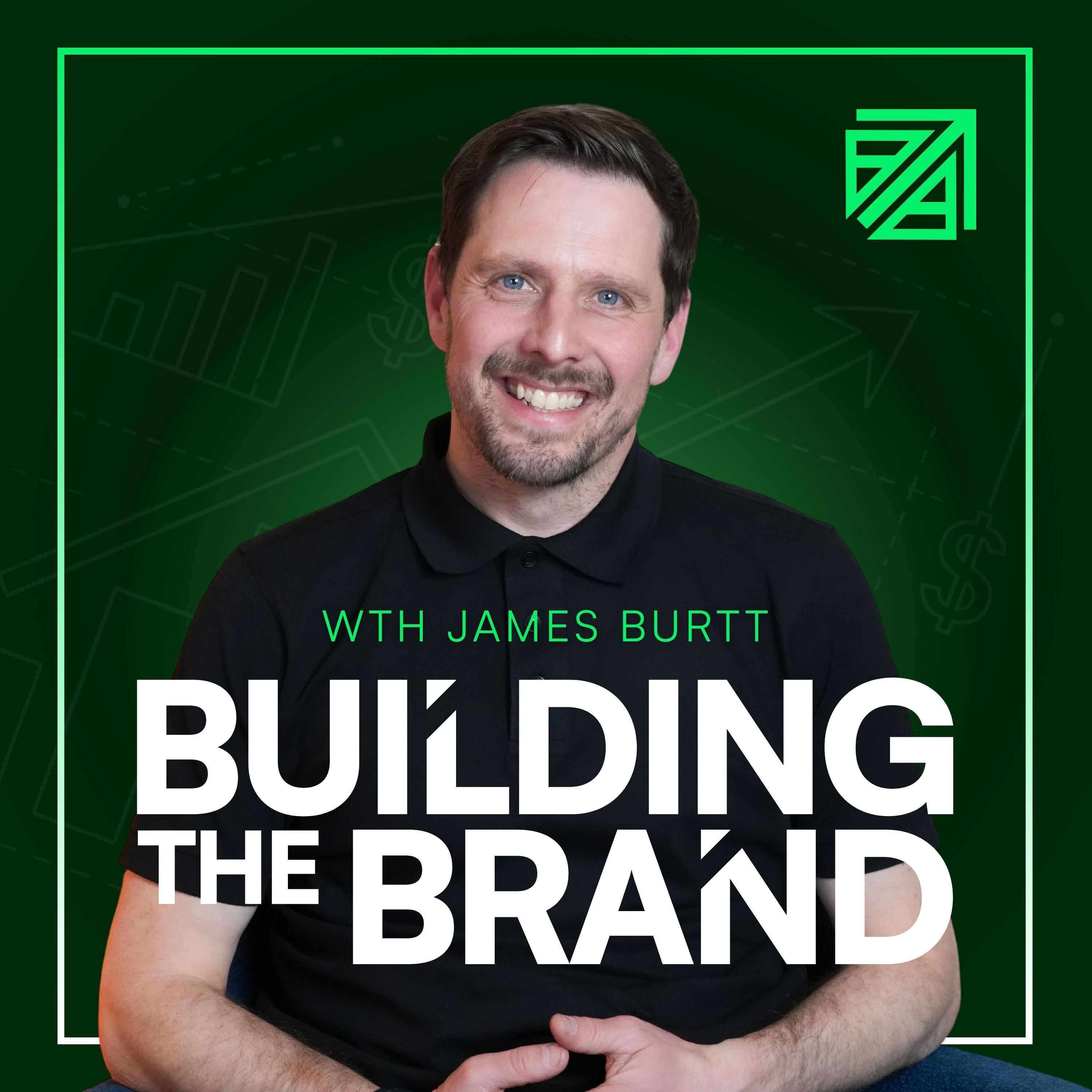
Building The Brand with James Burtt
by Phonic Content
Building The Brand is a Top 50 business podcast for people who don’t just want success stories - they want to understand how success is actually built. Hosted by James Burtt, each episode features in-depth conversations with entrepreneurs, founders, and creators behind standout brands. This isn’t surface-level storytelling. This is a tactical break down of real decisions, trade-offs and lessons behind standout brands Past guests include world-renowned business and entrepreneurial figures Gary Brecka, Grant Cardone, Joe Foster, Mark Victor Hansen and John Lee Dumas. Not how to. This is how you.
-
10
Grenade Founder Juliet Barratt: Building Carb Killa, £200M Exit & Why Success Felt Like Grief
Juliet Barratt is the co-founder of Grenade, one of the most successful British brands of the last decade.In this episode of Building The Brand, Juliet shares the real story behind Grenade, from launching with limited resources, driving a tank into the NEC to stand out at BodyPower, getting picked up by major retailers, creating the Carb Killa bar, helping bring protein into mainstream retail, taking on private equity and eventually selling to Mondelez.IN THIS EPISODE, JULES SHARES:▪️ How Grenade was born from years of experience in sports nutrition▪️ Why Juliet believes founder-market fit matters more than just having a good idea▪️ How Grenade spotted a gap in a category full of generic white tubs and scientific names▪️ Why the grenade-shaped packaging gave the brand instant memorability▪️ How standing out at BodyPower helped get the attention of GNC▪️ Why early brand building was about being different, not having the biggest budget▪️ The story behind launching Carb Killa▪️ How Grenade helped move protein bars from niche sports nutrition into mainstream food retail▪️ Why timing was crucial to Grenade’s success▪️ How the brand educated retailers and consumers at the same time▪️ Why Juliet says the secret to Grenade’s success was simply “giving a shit”▪️ The reality of having almost no money in the early days▪️ Why Juliet and Al did not take salaries for years▪️ How private equity changed the business▪️ Why selling a majority stake may not always be the right move▪️ What it really felt like to sell Grenade to Mondelez▪️ The emotional impact of exiting a business you built from scratch▪️ Building a business with your spouse▪️ Why Grenade kept Juliet and Al together professionally even as their marriage changed▪️ The difference between building a brand and running a numbers-led business▪️ What Juliet looks for now when she works with founders and brandsKEY MOMENTS:0:00 — Intro01:24 — The one thing that made Grenade successful01:43 — Why “giving a shit” became Grenade’s real advantage02:00 — Juliet and Alan’s experience before Grenade03:14 — Why the first version of Grenade did not sell04:20 — Going from distributor to brand owner05:00 — The gap in the sports nutrition market07:00 — Why Grenade’s branding came from gut instinct08:46 — Retiring, getting bored and deciding to build again10:25 — Creating a product people could actually feel working12:26 — Wanting Grenade to be the Red Bull of sports nutrition13:52 — Driving a tank into the NEC15:00 — How Grenade started attracting athletes and advocates17:00 — Why bricks and mortar made sense before DTC18:43 — The tough early days of building Grenade20:18 — Running lean, paying suppliers and not taking salaries21:45 — Taking private equity in 201423:00 — Bringing in a CFO and freeing up the founders25:00 — Launching Carb Killa25:50 — Why Juliet still worries about money28:16 — The emotional finality of the Mondelez deal30:00 — Why selling Grenade felt like giving away a child31:05 — Still feeling protective over the brand32:08 — PAUSE POINT: Creating a category35:00 — Leaving the business and losing founder identity40:31 — How Carb Killa moved Grenade into mainstream FMCG41:30 — Educating Tesco and helping build the protein category45:00 — PAUSE POINT: Why timing matters in business47:00 — Why taste mattered more than health claims48:19 — Building Grenade as husband and wife51:44 — Did Grenade break up the marriage or hold it together?56:40 — PAUSE POINT: The truth about co-founder relationships58:45 — How the Oreo collaboration came about1:01:10 — Did Juliet and Al build Grenade to sell?1:03:00 — Selling a majority stake and what Juliet would rethink1:07:34 — Why founder DNA matters as a business scales1:08:59 — Carb Killa, timing and creating opportunity1:10:30 — Juliet’s work with founders, boards and entrepreneurship1:12:00 — What Juliet looks for in the brands she supports
-
9
How Hytro Built in Pro Sport, Reached NASA & SpaceX and Chose Not to Go DTC Too Early with Co-Founder & CEO Raj Thiruchelvarajah
What do you do when your product is scientifically strong, commercially promising… but the mass market won’t understand what it is?In this episode of Building The Brand, James Burtt sits down with Raj Thiruchelvarajah, co-founder and CEO of Hytro, to unpack how a startup in performance wearables built credibility in elite sport, got product into NASA and SpaceX missions and made the unusual decision to avoid direct-to-consumer too early.Watch more episodes and connect here:https://www.youtube.com/@buildingthebrandofficialhttps://buildingthebrand.co.uk/newsletterRaj explains how Hytro pioneered wearable blood flow restriction technology, why the business originally started in the wrong market, and how the team realised that pro sport was not just a niche audience but the perfect proving ground. He shares how coaches became one of the company’s biggest growth levers, why athletes and practitioners started investing in the business and how the right kind of advocacy can matter more than pure science-backed data.CONNECT WITH RAJ / HYTRO:https://hytro.com/https://www.linkedin.com/in/raj-thiruchelvarajah-89a8b522KEY MOMENTS:0:00 What it feels like to see your product go to space1:11 Raj on Hytro, NASA and SpaceX2:24 Why founders often struggle to enjoy the win5:07 Why co-founder relationships can make or break startups5:40 What Hytro actually does and what blood flow restriction means6:10 How Hytro turned BFR into a scalable wearable product8:03 Why elite teams trust players to use Hytro unsupervised10:27 Why the business originally started in DTC12:22 Why Raj now says they started in the wrong place13:00 Raj’s move from corporate life into entrepreneurship17:37 The unreasonable belief it took to build Hytro18:21 Why the company pivoted from DTC to B2B20:00 Why pro sport became a better route than mass consumer21:52 Why Raj would go straight to pro sport if he started again22:58 How Hytro began showing up in elite team environments24:20 Why coaches and players becoming investors matters so much27:35 The logic behind Hytro’s funding model30:00 Why DTC is still the future, just not yet31:09 Why endurance athletes may be the right consumer entry point32:25 Why timing and sequence matter more than hype34:30 What Hytro needs in place before a DTC launch36:53 Why the obvious route is not always the easiest one40:00 How founders should think about new vertical opportunities42:48 Why saying no becomes more important as you grow43:06 The importance of knowing what kind of company you want to build45:00 Why focus is a sign of maturity in a scaling business45:50 Why Hytro has stayed lean and used fractional talent47:02 The mindset shift from startup to scale-up49:47 Why the US market is such a major opportunity50:42 Why the UK can feel difficult for ambitious founders51:31 Raj on mentoring other founders while raising twins52:51 Why there is no real work-life balance in founder life55:00 What building Hytro means for Raj’s children and family56:39 Fatherhood, fear and building through hard seasons1:01:27 Why both startups and children constantly change1:02:58 Why purpose matters more than comfort1:06:41 The pressure on dads who are also founders1:07:15 Finding peace within the storm1:11:10 Why chasing perfect balance is unrealistic1:12:45 What Raj is most excited about next1:13:00 Hytro’s future around data and consumer experience1:14:00 Why most people should not become founders unless they really mean it1:15:00 Why Raj does not want to sell Hytro1:16:10 The leadership shift Raj needs to make next1:17:22 Why moving out of the detail is part of becoming CEO
-
8
Rory McFadyen: How Reflo Built a Sustainable Sportswear Brand, Landed Harry Kane & Scaled Through Partnerships
How do you build a performance wear brand in one of the most competitive industries in the world… while trying to fix one of fashion’s biggest environmental problems?In this episode of Building The Brand, James Burtt sits down with Rory McFadyen, co-founder of Reflo, to unpack how a startup launched in 2021 and grew from an ambitious idea into a fast-scaling sportswear business working with major partners across football, golf, motorsport and elite sport.Watch more episodes and connect here:https://www.youtube.com/@buildingthebrandofficialhttps://buildingthebrand.co.uk/newsletterRory explains why Reflo positions itself as a performance wear brand with sustainability at its core, not the other way around, and why great product and great storytelling matter more than green-washing. He shares the origin story of the brand, how he and co-founder Pete turned a problem in the fashion industry into a commercial opportunity, and why they chose one of the hardest categories in business to enter.The conversation also goes deep on startup reality; building products with no industry background, learning how to scale systems, evolving from founder chaos into process-led growth, and recognising when the original business model needs to change. Rory also reveals how early inbound interest from the Australian Open and WM Phoenix Open changed the route to market, how Reflo built real traction in teamwear and partnerships, and how Harry Kane became both an ambassador and investor in the business.CONNECT WITH RORY /REFLO: https://reflo.com/https://www.linkedin.com/in/rorymcfadyen/https://www.instagram.com/refloofficial/KEY MOMENTS:0:00 Why fashion is such a huge environmental problem1:09 Is Reflo a performance brand or a sustainability brand1:59 Why customers buy product first and sustainability second4:23 Where Reflo is now and what changed after major growth5:00 Why building systems and data became the next phase of the business7:32 What happens when a startup becomes a 50-person company10:00 The early story of Rory and Pete as childhood friends14:10 The moment the Reflo idea really began15:00 Turning waste plastic into high-performance apparel17:37 Why apparel was one of the hardest possible businesses to start20:00 How the founders researched the market before launching22:15 Why co-founders need different strengths, not identical ones30:00 The first prototype products and early product mistakes32:18 The reality of fixing bad first samples33:48 Reflo’s innovation drops and recycled car part capsule36:12 The early days of selling to friends and first real customers37:16 The first moments Rory saw strangers wearing Reflo40:00 How Rory still reads customer feedback, reviews and returns43:55 Why Reflo does not lead with sustainability messaging alone45:00 The original DTC plan versus what actually happened45:53 How the Australian Open and WM Phoenix Open found Reflo47:48 Why teamwear became a major growth opportunity48:21 The huge commercial and environmental problem in sports kit49:15 How Reflo built Reloop and circular recycling into teamwear50:24 Why genuine partnerships matter more than logo placement52:26 Why founders must stay focused but flexible54:20 How Harry Kane discovered the brand56:38 How Harry Kane became an investor and ambassador57:03 Why Reflo chose crowdfunding over traditional VC1:03:06 What the next six to twelve months look like for Reflo1:05:00 Why DTC is becoming a bigger focus now1:06:47 Building an in-house agency model inside the marketing team1:10:16 How Reflo operates as a remote international company1:13:00 What Rory is most excited about next1:16:37 What Rory has had to change as a founder to keep scaling1:18:44 Why leadership structure had to evolve as the business matured1:22:35 The difference between being a founder and becoming a CEO1:24:19 Rory’s dream future brand partnerships
-
7
Jake Lee: Inside Celebrity Talent Management, Creator Economics & Why Owned Media Now Beats Traditional Fame
What does it actually take to build a modern talent brand in a world where followers mean less, engagement means more, and creators now hold more power than the platforms and brands trying to use them?In this episode of Building The Brand, James Burtt sits down with Jake Lee, founder of Alpha Talent Group, to unpack what is really happening inside the creator economy, celebrity talent management, and the new rules of influence. From managing major personalities and sports talent to navigating brand deals, reputation risk, platform shifts and long-term career planning, Jake gives a sharp behind-the-scenes view of an industry that many people still misunderstand.Watch more episodes and connect here:https://www.youtube.com/@buildingthebrandofficialhttps://buildingthebrand.co.uk/newsletterJake explains why engagement matters more than follower count, why creators should think like business owners, why LinkedIn is wildly underrated, and why the smartest operators are planning for life beyond the current wave of attention.He also opens up about working with high-profile names including Tommy Fury, how trust is built in the talent world, what brands still get wrong when working with creators, and why the future belongs to people who own their audience rather than just rent attention from traditional media.In this episode, you will hear: • Why owned media has become as powerful as, or more powerful than, traditional media • Why follower count is often a vanity metric and engagement is what really matters • How brands should brief creators if they actually want better content and better ROI • Why talent management today has to go far beyond brand deals • How creators can turn content into a genuine full-time career • Why long-term planning matters for creators, athletes and founders alike • How Alpha Talent Group thinks about trust, reputation and 360 management • Why LinkedIn is one of the most overlooked platforms for creators and public talent • What the future of sports creators looks like ahead of major events like the World Cup • What happens behind the scenes when managing talent through public controversy and career-defining momentsConnect with Jake: KEY MOMENTS:0:00 – Why creator work can now be a genuine full-time career01:07 – Jake Lee on building Alpha Talent Group across entertainment, digital and sport05:32 – Why engagement matters more than audience size09:07 – Has owned media now become more powerful than traditional fame?10:00 – Why creators now hold more power in brand relationships14:30 – How Alpha Talent approaches talent-first dealmaking16:14 – Why the government is now taking creators seriously22:23 – How brands are thinking more about ROI, conversion and performance25:34 – Why the best metric is the one tied to the actual outcome27:52 – Affiliate deals, hybrid deals and the changing economics of creator partnerships30:00 – Why creators need stable income before taking bigger commercial risks32:29 – Setting expectations with talent and treating content like a real profession36:47 – Which platforms are working best right now for creators38:18 – Why LinkedIn may be the most underrated platform in media and talent41:18 – Why athletes and creators need to plan for life after the peak45:15 – The real value of 360 management and trusted advisors49:45 – Why talent agencies should build brand visibility without becoming the talent53:21 – Managing Tommy Fury, public scrutiny and protecting talent through difficult periods59:25 – The business of boxing, showmanship and selling attention01:05:41 – Why Alpha uses a three-month trial contract instead of locking people in01:11:09 – Why the best businesses often win by rejecting lazy industry norms01:12:25 – The milestone moments that made Jake realise the business was real01:21:15 – What Jake is most excited about in the next phase of the creator economy
-
6
Rob Moore: Personal Brand, Controversy Marketing, Disruptors, Trolls & Building a Business That Scales Beyond You
How do you build a personal brand so powerful that it drives trust, sales, attention and scale - without becoming trapped inside it?Rob Moore is an entrepreneur, investor, founder of Progressive Property, host of the Disruptors podcast, and creator of Money.School. He shares what personal brand actually does commercially, why criticism can be a growth tool, how controversy affects positioning, and why most founders still misunderstand the difference between attention and leverage.He explains:▪️Why personal brand is not vanity when it is tied to trust and conversion▪️How Rob separated his own identity from the Progressive brand so the business could scale beyond him▪️Why training other people to replace you is the best way to grow▪️How trolls, critics and public feedback can sharpen your business▪️What the Andrew Tate and Bonnie Blue interview did for his brand commercially▪️Why not all publicity is good publicity - but some of it is perfectly aligned with positioning▪️How email databases, podcasting and omnichannel content became major growth levers▪️Why he believes founders need to stop hiding from criticism if they want to build anything meaningful▪️How Rob thinks about content, controversy, algorithms and attention in 2026Watch more episodes and connect via:https://www.youtube.com/@buildingthebrandofficialhttps://buildingthebrand.co.uk/newsletterKey Moments: 0:00 Hate, trolls and using criticism as fuel1:26 Rob Moore and James Burtt reconnect after 13 years 2:35 Why he split his personal brand from Progressive4:07 Nearly property 400 units, 20 years in business and £350m in sales5:30 What the 20-year business anniversary meant emotionally7:28 The fuel that drives him now10:26 “Trolls are the ticks”11:22 Childhood trauma, people pleasing and business pressure15:00 Why criticism can actually make you better17:12 The complaints department growth lesson19:28 Therapy, self-development and ongoing inner work21:18 The early foundations of Rob’s personal brand22:10 Working on the business, not in it24:47 The burnout that forced him to change26:37 The Cayman Islands accountability move27:21 How the business scaled from Rob being the bottleneck28:00 Why trainers leaving is a cost of scaling32:26 The olive branch rule after fallouts33:27 Why personal brand is a commercial asset36:21 Was podcasting the biggest growth lever?37:01 200 million monthly views and the scale of Rob’s audience37:19 Why email is still one of the biggest assets in business38:58 Podcasting as a content machine39:31 The Andrew Tate and Bonnie Blue episode41:01 The boardroom fallout and brand risk debate45:19 How the Tate interview actually came together50:01 What the Andrew Tate and Bonnie Blue interview did for the Rob Moore brand52:15 The views, backlash and commercial upside53:39 Why controversial interviews have already produced buyers and hires1:01:36 Prince Andrew, Trump, Musk and the guests he’d still have on1:02:22 Why he gives people space to speak1:05:43 Conspiracy, banking and boardroom tension1:08:13 The risk of saying what he thinks publicly1:09:41 What the Rob Moore brand team looks like1:12:20 Why he wants to double down on content this year1:15:08 How much profit Rob Moore’s personal brand drives1:16:20 Why personal brand reduces ad spend and increases trust1:17:45 Why live events still matter in an AI world1:19:41 The promise he made to never miss a platform again1:24:15 Social media platforms Rob Moore is focused on now1:25:16 Why lifestyle content performs so well1:27:01 LinkedIn, algorithms and posting consistently1:35:22 Why the information and education space gets so much hate1:38:24 Criticism vs noise1:41:37 Will Rob fight Samuel Leeds again?1:44:21 Reinventing yourself like Radiohead1:45:24 Why he did the boxing match in the first place1:50:45 Rob’s content bridge offer strategyCONNECT WITH ROB MOORE: https://robmoore.com/https://money.school/
-
5
PREVIEW: Rob Moore on Scaling Divisive Brands to over £350 Million In Revenue
How do you build brands so powerful that they drive trust, attention and scale, generating in excess of £350 Million in revenue?! FULL EPISODE OUT NOW
-
4
John Vincent: Why I Bought LEON Back, How Purpose Builds Better Brands & What’s Killing UK Business Right Now
Why would someone sell a business for a reported 9-figures… and then buy the same business back in one of the toughest markets imaginable?John Vincent is the co-founder of LEON Restaurants, bestselling author of Winning Not Fighting, and one of the most original thinkers in British business.He explains: ▪️Why he felt he had to buy LEON back ▪️Why most businesses get purpose completely wrong ▪️How rising rents, VAT, National Insurance and the government are crushing hospitality ▪️Why chasing money as the main goal often makes businesses worse ▪️How LEON was built to prove that business can be based on love, purpose and profit ▪️Why the UK High Street is being damaged by policy, not just market conditions ▪️How founders should think about money, mission, control and long-term valueFIND OUT MORE ABOUT THE SHOW HERE https://buildingthebrand.co.ukKEY MOMENTS: 0:00 Buying LEON back01:12 “Petrified and excited” at the same time03:30 From idea to execution of the buy-back deal in under a year04:39 Why John doesn’t believe in combative negotiation06:40 Why he fully walked away after selling08:49 The moment he realised LEON wasn’t right11:03 Why owning less than 50% means you don’t own the business12:07 The equity mistakes he made early on15:49 Why hospitality is such a capital-intensive business17:32 From Bain to building LEON21:26 “McDonald’s in heaven” - the original LEON vision23:14 Why restaurant rents have become unsustainable25:28 Why John believes the government is killing hospitality27:15 “I had to do it” - why he bought LEON back35:08 Why he believes business should start with love42:31 Why life is not a journey or destination44:49 How purpose and profit can coexist48:45 Why John thinks of money like water52:27 The externalities LEON actually cares about54:20 Can you do the right thing and still make money?52:27 The externalities LEON actually cares about55:07 Can you do the right thing and still make money?55:21 Where John’s worldview comes from1:05:28 Why founder-led, purpose-driven businesses matter more than ever1:06:05 How to build real purpose into a business from day one1:12:10 What happened immediately after the deal was done1:14:16 The secret pre-deal planning and day-one execution1:16:06 Rebuilding the leadership team around LEON1:30:11 The three biggest policy levers UK government should usethat could help hospitality fast1:34:03 The family sacrifices behind building - and buying back - LEON1:36:26 Why having honest people around you matters1:43:31 The influence of John’s mum, mindset and personal belief system1:45:15 John’s self-awareness, anger, and where he feels he still falls shortFollow John: https://leon.co/https://www.instagram.com/johnv_leonRead John's Book: https://www.amazon.co.uk/stores/John-Vincent/author/B00I50RNPW?ref=ap_rdr&shoppingPortalEnabled=true
-
3
PREVIEW: LEON Founder John Vincent - The Story Of Buying Back The Brand He Loves
Why would someone sell a business for a reported 9-figures… and then buy the same business back in one of the toughest markets imaginable?John Vincent, co-founder of LEON Restaurants, bestselling author of Winning Not Fighting, and one of the most original thinkers in British business tells us all. FULL EPISODE OUT NOW
-
2
WELCOME TO BUILDING THE BRAND (LAUNCHING 25TH MAR '26)
Building The Brand is a Top 50 business podcast for people who don’t just want success stories - they want to understand how success is actually built. Hosted by James Burtt, each episode features in-depth conversations with entrepreneurs, founders, and creators behind standout brands. This isn’t surface-level storytelling. It’s about the thinking, decisions, and trade-offs that drive real growth. Past and upcoming guests include world-renowned business and entrepreneurial creative figures Gary Brecka, Rob Moore, Grant Cardone, John Vincent,Joe Foster, Mark Victor Hansen Thomas Hal Robson-Kanu and John Lee Dumas. Not 'how to'. This is how you.
No matches for "" in this podcast's transcripts.
No topics indexed yet for this podcast.
Loading reviews...
ABOUT THIS SHOW
Building The Brand is a Top 50 business podcast for people who don’t just want success stories - they want to understand how success is actually built. Hosted by James Burtt, each episode features in-depth conversations with entrepreneurs, founders, and creators behind standout brands. This isn’t surface-level storytelling. This is a tactical break down of real decisions, trade-offs and lessons behind standout brands Past guests include world-renowned business and entrepreneurial figures Gary Brecka, Grant Cardone, Joe Foster, Mark Victor Hansen and John Lee Dumas. Not how to. This is how you.
HOSTED BY
Phonic Content
CATEGORIES
Loading similar podcasts...
URL copied to clipboard!