
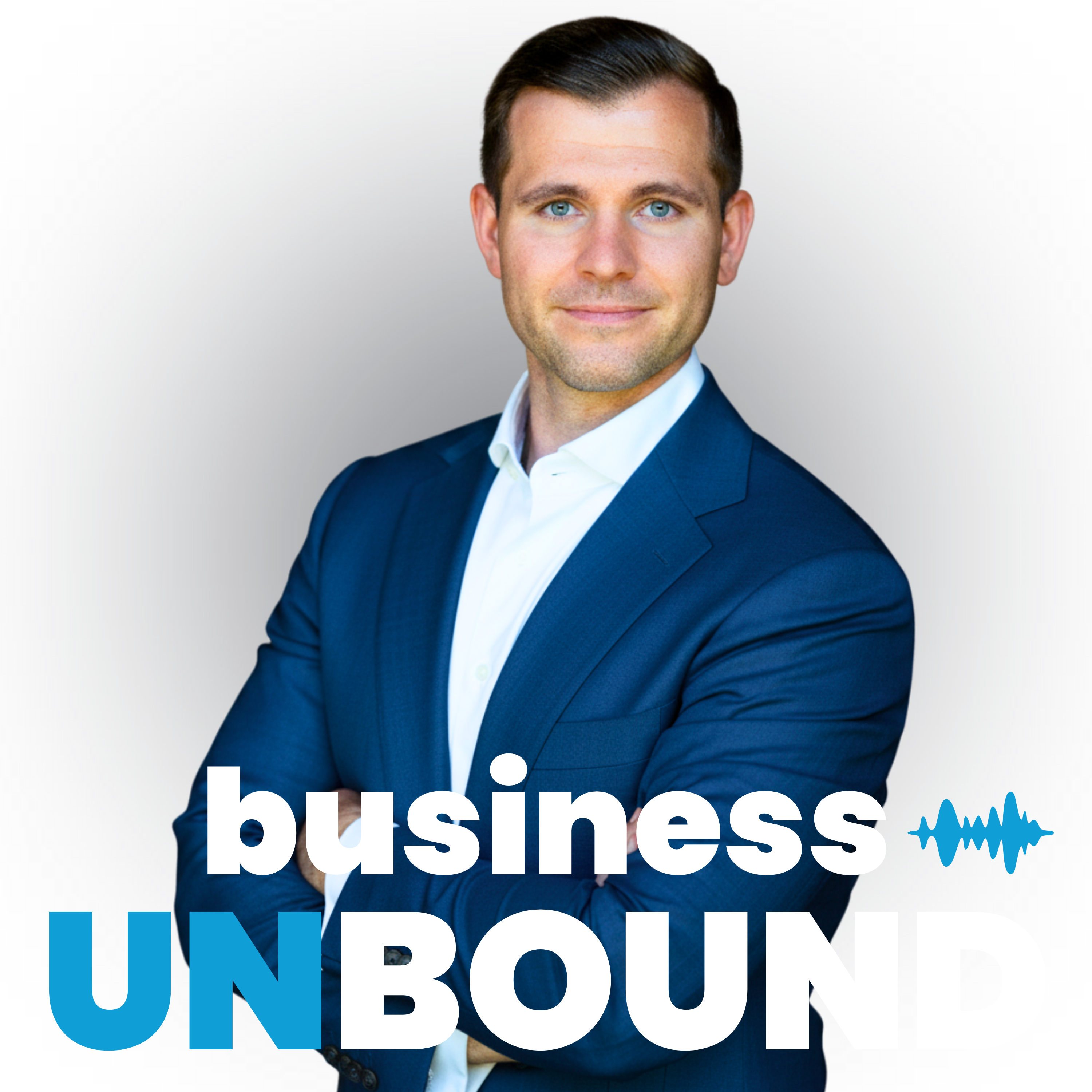
PODCAST · business
Business Unbound
by Florian Haufe
The leaders reshaping industries aren't following the playbook. They're rewriting it. Business Unbound brings you raw, unfiltered conversations with the visionaries, entrepreneurs, and executives who are breaking the rules and building the future, across continents, sectors, and industries.Welcome to Business Unbound! Hosted by Florian Haufe, a business leader with 15+ years of experience in business transformation and consulting, this podcast brings you masterclass conversations with visionary leaders reshaping business globally.Each episode features candid, in-depth interviews with executives, entrepreneurs, and innovators across tech, finance, defense, private equity, law, and beyond.You'll discover the real stories behind success. Not generic advice, but actionable strategies, proven frameworks, and hard-won lessons from l
-
21
Why Innovation Is a Management Problem, Not an Ideas Problem - Bruno Pesec
Innovation in large enterprises is usually a management problem, not an ideas problem. Bruno Pesec argues that leaders should look for the real signals of innovation, frustration, friction, slow progress, and hard tradeoffs, rather than mistaking polished innovation theater for actual change. He explains why disciplined innovation depends on vertical-slice governance, tranche-based funding, and the willingness to let evidence, not preference, decide what gets more support.What You'll Learn◼️ How to tell early whether an organization is truly innovating or just performing innovation through restless but empty rhetoric◼️ Why healthy frustration can be a sign that people actually care enough to do the difficult work of innovation◼️ How to fund uncertainty in smaller tranches so leaders can kill weak ideas early before committing large amounts of capital◼️ Why support functions like finance, legal, procurement, and IT should be treated as defenders and partners, not blockers◼️ How portfolio thinking helps leaders stop pet projects, rebalance risk, and align innovation with business strategyKey Discussion Topics◼️ The difference between innovation theater and genuine enterprise innovation capability◼️ Vertical-slice governance and why innovation boards should stay lean, direct, and cross-functional◼️ Stage gates, evidence thresholds, and what leaders should look for before releasing the next tranche of support◼️ Core, adjacent, and transformational portfolios as a way to map innovation risk and strategic balance◼️ Bureaucracy as organizational defense against trauma, especially in regulated industries◼️ The distinction between R&D, innovation, and corporate venture investing as separate organizational functions◼️ AI, optionality, and why enterprises should remain pragmatic while staying alert to structural changeGuest BackgroundName: Bruno PesecBio: Bruno Pešec is the president of Pesec Global, where he advises senior leaders on building innovation capability in large organizations. His work focuses on governance, portfolio management, and execution, with particular attention to how enterprises fund and scale uncertain bets without losing discipline. His background in mechanical engineering, lean process improvement, and advisory work gives him a practical lens on why innovation efforts succeed or stall inside complex organizations.Follow Bruno on LinkedIn: Follow Bruno on LinkedInGet engagedSubscribe to the channel for more conversations that sharpen how you think.Follow us on social media: Follow us on social mediaAbout Business UnboundEvery week, your host, Florian Haufe, dives deep into conversations with visionary global leaders to bring you insights, inspiration, and the real stories behind success.#BusinessUnbound #Podcast #Innovation #EnterpriseInnovation #InnovationGovernance #PortfolioManagement #CorporateVenturing
-
20
Why Smart Leadership Teams Still Produce Confused Execution - Kathy Eastwood
Leadership execution fails less from bad strategy than from broken alignment, weak trust, and messages that get distorted as they move through an organization. Kathy Eastwood, founder and CEO of E Equals Why, explains why smart leadership teams still struggle to turn clarity into consistent execution, and how to diagnose whether people actually understand what success looks like, why it matters, and how their work connects to it.Drawing on experience as a CPA at EY, a chief of staff in a $2.6 billion software business, and a chief people officer in a private equity-backed technology company, Kathy shares the operating patterns she has seen across finance, technology, HR, and integration work. Her E3 Leadership Code, Express, Engage, Execute, offers a practical way to align strategy, buy-in, and rhythm, powered by trust and emotional intelligence.What You'll LearnHow to test whether a strategy has actually been understood by frontline managers, not just approved in the boardroomWhy communication is not enough, and how to check for real buy-in, commitment, and ownershipHow to spot execution breakdowns caused by silos, weak trust, and diluted messages across layers of managementWhy disciplined review rhythms and simple red, yellow, green heat maps can surface where leaders are truly alignedHow to apply a people-first approach to restructuring, automation, and AI adoption without losing resultsKey Discussion TopicsTurning leadership clarity into consistent execution across complex organizationsThe gap between what leaders think they communicated and what teams actually heardCross-functional alignment, silos, and the role of trust in high performanceThe difference between compliance and genuine commitment from leadership teamsHow to use dashboards, operating cadence, and accountability without turning strategy into paperworkWhy AI should reduce reporting burden while humans focus on judgment, adoption, and behavior changeExpress, Engage, Execute, the E3 Leadership Code framework and methodologyGuest BackgroundName: Kathy EastwoodBio: Kathy Eastwood is CEO and founder of E Equals Why, where she works with senior leaders on turning leadership clarity into consistent execution. She began her career as a CPA at EY and later held executive roles across technology, including chief of staff for a $2.6 billion software business and chief people officer at a private equity-backed technology company, giving her a rare end-to-end view of how strategy breaks down in practice.Follow Kathy on LinkedIn: LinkedInGet engagedSubscribe to the channel for more conversations that sharpen how you think.Follow us on social media: Linktr.eeAbout Business UnboundEvery week, your host, Florian Haufe, dives deep into conversations with visionary global leaders to bring you insights, inspiration, and the real stories behind success.#BusinessUnbound #Podcast #leadership #strategyexecution #peoplestrategy #organizationalalignment #aiadoption
-
19
Procurement Insider: Negotiate Logistics Costs When Markets Turn Chaotic - Harry Davies
Global transportation sourcing is not just about moving goods, it is about pricing risk, structuring contracts, and building resilience across a fragmented network of carriers, ports, customs brokers, and suppliers. Harry Davies explains how procurement leaders can diagnose transportation spend, benchmark rates lane by lane, and design supply chains that survive tariffs, capacity shocks, damage exposure, and geopolitical disruption.He also breaks down how global logistics actually works in practice, from freighting finished vehicles out of Berlin to coordinating ocean, road, and terminal capacity across multiple countries. Along the way, he makes the case that AI can strengthen market intelligence and supplier shortlisting, but cannot replace judgment, operational execution, or contract discipline.Key Discussion TopicsHow to explain global sourcing in plain English, from supplier selection to last mile deliveryWhy logistics and procurement have become strategic functions in a world shaped by tariffs, COVID, and geopolitical shocksHow finished vehicle logistics works across road, ocean, ports, terminals, and customs clearanceWhat can go wrong in transit, including delays, damage, missing shipments, insurance gaps, and dangerous goods riskHow to use tendering, weighted criteria, and market benchmarking to choose the right logistics partnerWhy long-term contracts, buffer capacity, and primary plus secondary suppliers are central to continuityWhere AI helps in transportation sourcing, supplier shortlisting, market research, and contract standardizationGuest BackgroundName: Harry DaviesBio: Harry Davies is the Global Transportation Strategy and Sourcing Manager at Cisco, where he helps shape ground and parcel transportation across EMEA and the Americas. His career spans logistics, customs, transportation, and procurement roles across West Africa and Europe, including experience at Uber and Tesla. Harry’s perspective is especially valuable because he works at the intersection of sourcing, operating risk, and multinational supply chain execution, where contract design and service continuity matter.Follow Harry on LinkedIn: Harry DaviesGet engagedSubscribe to the channel for more conversations that sharpen how you think.Follow us on social media: Business UnboundAbout Business UnboundEvery week, your host, Florian Haufe, dives deep into conversations with visionary global leaders to bring you insights, inspiration, and the real stories behind success.#BusinessUnbound #Podcast #SupplyChain #Procurement #Logistics #TransportationSourcing #GlobalSourcing
-
18
How Consulting is Changing and Why AI is Disrupting the Traditional Model - Ben Appleton
Consulting is being reshaped by AI, but the real shift is not simply automation, it is the changing consulting pyramid, the rise of smaller senior-led teams, and a sharper focus on commercial gravity at partner level. Ben Appleton, founder of Stratbridge, explains why senior hiring in strategy consulting now depends less on project pedigree and more on whether a candidate can originate work, solve a clear market problem, and bring credible client relationships with them.He also breaks down why the market is bifurcating between global platforms that win on scale and boutiques that win on specialization, trust, and agility. From private equity capital flowing into mid-market firms to the limits of AI tools inside consulting shops, this conversation maps the forces that are redefining how firms compete, hire, and grow.What You'll LearnWhy partner hiring in consulting is fundamentally a business case centered on commercial gravity, not just experienceHow AI is changing the consulting pyramid by accelerating research, benchmarking, and early analysis while increasing pressure on senior talentWhy industry expertise often matters more than functional breadth when firms hire partners and directorsHow to judge whether a consulting platform is right for your niche, ambition, and long-term partner caseWhy the strongest partner candidates can explain a clear client problem, a credible revenue story, and a repeatable business development processKey Discussion TopicsThe future of consulting delivery as AI reshapes team size, junior roles, and the traditional apprenticeship modelWhy the consulting market is splitting into large global platforms, deep boutiques, and PE-backed mid-market challengersHow firms evaluate client portability, origination history, and practice-building potential in partner searchesThe tension between AI adoption, trust, and human judgment in C-suite advisory workWhy certain consulting segments, such as ESG, have cooled while AI, energy, aerospace, and defense are growingThe role of private equity in funding consulting firms and the capital needs created by AI transformationWhat goes wrong when internal sponsors are misaligned or a partner move overpromises on client portabilityGuest BackgroundName: Ben AppletonBio: Ben Appleton is the founder of Stratbridge, a specialized executive search and advisory firm focused on the management and strategy consulting industry. Based in London, he works with consulting firms and senior leaders across the UK, Germany, Switzerland, North America, and other markets on partner, director, and team-level hiring. His perspective is especially valuable because he spent years inside professional services before building a niche practice at the intersection of talent, strategy, and consulting economics.Follow Ben on LinkedIn: https://www.linkedin.com/in/bappleton/Get engagedSubscribe to the channel for more conversations that sharpen how you think.Follow us on social media: https://linktr.ee/businessunboundAbout Business UnboundEvery week, your host, Florian Haufe, dives deep into conversations with visionary global leaders to bring you insights, inspiration, and the real stories behind success.#BusinessUnbound #Podcast #Consulting #ExecutiveSearch #PartnerHiring #ArtificialIntelligence #PrivateEquity
-
17
Biotech Insider: Why Most Companies Fail and What it Actually Takes to be Successful - Sarah Ahmed
Biotech is a business built around uncertainty, where scientific hypotheses, capital allocation, and clinical trial execution collide.Sara Ahmed explains why most drug candidates fail, how biotech companies actually move from discovery to first-in-human studies, and why the smartest founders start with the market and work backward.Her perspective spans clinical operations, portfolio planning, and the practical economics of drug development, including why one asset can absorb years of runway and still never prove itself in humans. We also unpack gene therapy, RNA editing, AI in discovery, and the very different incentives behind curative versus chronic treatments.What You'll LearnHow to think about biotech as a capital-constrained business, not just a scientific fieldWhy most of the cost in drug development sits in clinical trials, R&D, and manufacturingHow to tell whether a biotech program deserves more capital, or should be stopped earlyWhy founders should start with the disease market and work backward before pursuing a technologyWhat separates scientists who can lead from those who struggle in business settingsKey Discussion TopicsSara Ahmed’s path from hospitals and private practice into CROs and biotech program managementHow the drug development value chain moves from pre-discovery to phase one, two, and three trialsWhy biotech companies outsource so much execution to CROs and specialized vendorsThe economics of clinical trials, GMP manufacturing, and capital burn in early-stage biotechWhy 90 percent of drug candidates fail in clinical trials and what usually goes wrongGene therapy, RNA editing, and the biological differences between DNA and RNA-targeted approachesStrategic tradeoffs between curative one-time therapies and recurring chronic treatmentsAI’s potential to reduce discovery costs and improve scientific knowledge managementWhat biotech founders and investors should look for in milestones, fit, and management qualityWhy biotech rewards passion for science more than a short-term search for financial upsideGuest BackgroundName: Sara AhmedBio: Sara Ahmed works in biotech and drug development, most recently leading program development within the corporate strategy and portfolio planning team at an RNA editing therapies company focused on genetic diseases. Her career spans clinical operations, clinical trial execution, and enterprise-level program management across hospitals, CROs, and biotech firms, giving her a practical view of how scientific ideas move from hypothesis to human trials. She is currently pursuing an executive MBA at Yale University, adding a broader business lens to her deep experience in the drug development value chain.Follow Sara on LinkedIn: LinkedInGet engagedSubscribe to the channel for more conversations that sharpen how you think.Follow us on social media: LinktreeAbout Business UnboundEvery week, your host, Florian Haufe, dives deep into conversations with visionary global leaders to bring you insights, inspiration, and the real stories behind success.#BusinessUnbound #Podcast #Biotech #DrugDevelopment #ClinicalTrials #GeneTherapy #RNAEditing
-
16
The Mindset Shift Every Business Leader Needs About AI ($3.6 Trillion Opportunity) - Amelia Green
Eighty-eight percent of organizations claim to use AI, yet only a third scale it beyond pilots. In this conversation, Amelia Green, founder of U-BI and a 25-year veteran of AI and digital transformation, reveals why most organizations fail to move from experimentation to real business impact—and shares the exact framework that separates winners from the rest.From the four-pillar roadmap that drives tens of millions in EBITDA uplift to the uncomfortable truth about workforce redesign, this episode cuts through AI hype to explore what actually works at scale, how leaders engage both top-down and bottom-up innovation, and why your unique human creativity remains irreplaceable in an AI-enabled world.What You'll LearnWhy 88% of organizations have AI but only one-third scale it enterprise-wide—and what's actually blocking themThe four-pillar framework for moving beyond pilots: value portfolio, data infrastructure, operating model, and governanceHow successful organizations tie AI directly to EBITDA through lighthouse use casesWhy AI is now a business imperative, not a technology projectThe workforce redesign playbook: automating routine work while redeploying talent to higher-value strategic rolesKey Discussion TopicsBusiness imperative vs. technology tool: why AI is disrupting markets and competitionThe pilot trap: common mistakes organizations make when starting AIDesigning for scale from day one: shared governance and common data platformsMeasuring what matters: business value and EBITDA impactBottom-up innovation: engaging junior talent to build organizational buy-inSkills for mid-career professionals: AI literacy, data comfort, and domain expertiseGuest BackgroundAmelia Green is the founder of UBI, an AI and data infrastructure platform enabling data monetization and EBITDA uplift. With 25+ years driving digital transformation for Fortune 500 companies and governments, she previously served as partner and managing director leading AI and data at AlixPartners and as chief digital officer at PwC Singapore. Amelia has helped organizations unlock over $4.2 billion in value through data and AI.Follow Amelia Green on LinkedInGet EngagedSubscribe to the channel for more inspiring conversations with visionary leaders shaping the future of business and technology.Follow us on social mediaAbout Business UnboundEvery week, your host Florian Haufe dives deep into conversations with visionary global leaders to bring you insights, inspiration, and the real stories behind success.#BusinessUnbound #AI #DigitalTransformation #Leadership #DataInfrastructure #Podcast #ArtificialIntelligence #WorkforceFuture
-
15
From Problem Solver to System Builder: The Transformation from Engineer to CEO - Aline Daoud
From procurement engineer to founder of an all-female construction company operating across five countries, Aline Daoud disrupted a male-dominated industry by proving that competence, trust, and clear communication matter far more than stereotypes. In this episode, she reveals how she scaled Konnect & Co during Qatar's embargo, managed two companies simultaneously while earning an MBA from Oxford, and built high-performing teams by listening more than speaking.What you will learnThe critical mindset shift from employee problem solver to systems-building founderHow to build trust with clients through over-communication and on-ground verification (Gemba Walks)Practical strategies for scaling a lean, high-performing all-female team in male-dominated industriesWhy crisis periods are opportunities: adapting to uncertainty by listening to what clients truly needHow to find your passion: the role of experimentation, childhood fascination, and resilienceKey discussion topicsFrom civil engineering family background to founding Konnect & Co during Qatar's embargoFirst client acquisition: visiting 300+ factories and building client confidence through progress reportsLeadership philosophy: leading by example, emotional intelligence, and weekly team huddlesWhy detail-orientation without perfectionism drives execution: limiting options to three per meetingRunning two businesses: Konnect & Co and the Blockchain Research Institute Middle EastThe Gemba Walk framework and on-site verification for preventing errors and saving costsBuilding trust in male-dominated fields: competence over labels, women in construction, and disrupting stereotypesEducation as a catalyst: Executive MBA from Oxford, blockchain certifications, and pursuing diplomacyGuest backgroundAline Daoud is the founder and managing director of Konnect & Co, one of the first all-female-led construction engineering and procurement companies operating across Qatar, Saudi Arabia, the Emirates, Oman, and Lebanon. A civil engineer with an Executive MBA from the University of Oxford, she specializes in supply chain management, value engineering, and owner representation for luxury projects. Aline is also managing partner of the Blockchain Research Institute Middle East.Learn more about AlineConnect with Aline on LinkedInGet engagedSubscribe to the channel for more inspiring conversations.Follow us on social mediaWatch this episode on YouTube: https://youtu.be/TVbIY3Hs2sMAbout Business UnboundEvery week, host Florian Haufe dives deep into conversations with visionary global leaders to bring you insights, inspiration, and the real stories behind success.#BusinessUnbound #Entrepreneurship #Leadership #FemaleLeadership #ConstructionTech #SupplyChainManagement
-
14
Olympic Gold Champion: Be a Better Business Leader By Adopting Elite Athlete Principles - Rosie Popa
From Olympic gold medalist to corporate leader: Rosie Popa reveals how elite athletic principles unlock high-performance teams, navigate ambiguity, and build resilience through setback. In this conversation, she decodes the mental frameworks that took her crew to an Olympic record at Tokyo 2020 and translates them directly into business contexts where leaders face uncertainty, stakeholder complexity, and the pressure to deliver under extreme conditions.If you lead teams through change, manage high-stakes situations, or want to understand how elite performers prepare for pressure, this episode reveals the frameworks that separate peak performers from the rest.What You Will LearnHow to build psychologically safe teams where brutal honesty and vulnerability drive peak performanceThe mental preparation frameworks elite athletes use to execute flawlessly under pressure—and how to apply them to pitches, negotiations, and high-stakes momentsWhy focusing on process over outcomes is the single biggest unlock for sustained results and career advancementHow to reframe anxiety and pressure as signals of alignment and care, not weaknessRosie's approach to navigating setback, failure, and career transitions with resilience and compassionKey Discussion TopicsThe 2016 Olympic miss: how failure became the inflection point for gold in 2021Building trust through transparent, hard conversations—especially during change and uncertaintyThe exploit-explore continuum: balancing operational excellence with innovation in teamsSimplicity and lightness: taking complex race plans down to five-to-six-word calls for effortless executionAmbiguity in business versus clarity in sport: how to build agile leadership and stakeholder buy-inBeing "on your own side": self-compassion, self-advocacy, and avoiding self-imposed limitationsTransitioning from elite sport to consulting to in-house leadership: career pivots and finding alignmentGuest BackgroundRosie Popa is an Olympic gold medalist in rowing who set an Olympic record with her crew at the Tokyo 2020 Games and received the Order of Australia Medal. She holds a sociology degree from UC Berkeley (earned on a rowing scholarship) and completed her MBA at Saïd Business School, University of Oxford. Currently in people operations at Bunnings Warehouse, Rosie combines elite athletic performance principles with evidence-based leadership practices to help corporate teams achieve sustained high performance.Follow Rosie Popa on LinkedIn: https://www.linkedin.com/in/rosemarypopa/Additional ResourcesThe Creative Act by Rick RubinGet EngagedSubscribe to the channel for more inspiring conversations. Follow us on social media: https://linktr.ee/businessunboundAbout Business UnboundEvery week, host Florian Haufe dives deep into conversations with visionary global leaders to bring you insights, inspiration, and the real stories behind success.Shownotes: https://businessunbound.co/?post_type=episode&p=1569Watch on Youtube: https://youtu.be/oF01HEVSYC0#BusinessUnbound #OlympicLeadership #HighPerformanceTeams #ChangeManagement #Resilience #PeakPerformance #LeadershipDevelopment
-
13
He Left Billion Dollar Deals at Wall Street for Online Business Acquisitions - Dominic Sullivan
From billion-dollar corporate M&A to democratizing online business acquisitions, Dominic Sullivan reveals how anyone with capital can build wealth through buying proven, cash-flowing digital businesses. In this episode, discover the exact framework top buyers use to evaluate deals, why most founders leave money on the table at exit, and the counterintuitive truth about passive income in the online business world.What you will learnHow to buy profitable online businesses at 2-3x profit multiples and build a portfolio of income-generating assetsThe SST framework (Sustainable, Scalable, Transferable) that separates good acquisitions from value trapsWhy the biggest gap between corporate and entrepreneurial M&A is financial hygiene, not intelligenceThe exact due diligence checklist buyers use to avoid costly mistakes in deals from $100K to $50MWhat founders should do 12-18 months before selling to maximize their exit valueKey discussion topicsWhy COVID triggered a shift from trading time for salary toward passive income and business ownershipE-commerce margins, SaaS defensibility, content sites, and which online business models generate reliable cash flowHow to distinguish between passive investing versus hands-on operator rolesDeal structuring strategies: seller financing, earnouts, and aligning incentives between buyer and founderThe biggest mistakes first-time buyers make and why interest in a business matters more than financial returnsWhy age, brand defensibility, and customer loyalty are worth more than trending business modelsThe real-world story of a 19-year-old building €700K profit e-commerce businesses and what it reveals about risk-takingGuest backgroundDominic Sullivan is Senior M&A Advisor at Flippa, the world's leading marketplace for buying and selling online businesses (15,000 transactions annually). With nearly a decade bridging traditional high finance and the digital economy, Dominic has advised on transactions ranging from billion-dollar corporate deals to six and seven-figure online business acquisitions. He specializes in democratizing wealth-building for founders and professionals seeking financial independence through acquisitions and is known for his SST framework.Follow Dominic Sullivan on LinkedInGet engagedSubscribe to the channel for more inspiring conversations. Follow us on social mediaAbout Business UnboundEvery week, your host Florian Haufe dives deep into conversations with visionary global leaders to bring you insights, inspiration, and the real stories behind success.#BusinessUnbound #OnlineBusinessAcquisitions #MergerAndAcquisitions #Entrepreneurship #WealthBuilding #PassiveIncome #SaaS
-
12
Oxford Lecturer & Entrepreneur Explains Unusual Principles of Business Success - Neri Karra Sillaman
From a refugee camp in Istanbul to supplying luxury fashion houses like Prada and Gucci, Dr. Neri Karra Sillaman's 25-year journey reveals what academic research keeps missing: immigrant-founded businesses don't just start more frequently—they last longer and build differently. In this masterclass on business longevity, Neri unpacks why 46% of Fortune 500 companies were founded by immigrants, the eight principles behind their enduring success, and how non-immigrants can adopt the immigrant entrepreneur mindset to create sustainable, purpose-driven enterprises in any industry.What you will learnWhy immigrant-founded businesses statistically outlast native-founded ones, even as 90% of startups failThe eight principles of business longevity: cross-cultural bridging, visionary thinking, homophilic ties, right-profit generation, community building, reframing rejection, frying in your own oil, and creating luckHow bootstrapping and self-reliance create sustainable competitive advantages without external investorsThe difference between profit-driven and problem-solving business models, and why one lasts and one doesn'tConcrete mindset shifts corporate leaders can implement to regain agency and escape the hero complexKey discussion topicsFleeing communist Bulgaria in 1989 and discovering the power of education as an escape routeHow a chance business card led to a global leather goods empire supplying Prada, Miu Miu, Gucci, and VersaceCross-cultural understanding as competitive advantage and bridging two markets innovativelyHomophilic ties: how immigrant entrepreneurs build trust with suppliers, distributors, and employeesThe immigrant mindset applied to corporate leadership: humility, ecosystem thinking, and abandoning the hero complexWhy constant growth and endless profitability are unsustainable, and what sustainable business models look likeNavigating real-world business challenges: employee health issues, distributor departures, and tough decisionsGuest backgroundDr. Neri Karra Sillaman is an Entrepreneurship Expert at Saïd Business School, University of Oxford, and co-founder and creative director of Neri Karra, a B Corp certified luxury leather goods manufacturer employing 175 craftsmen and producing for global brands. With over 25 years of building a bootstrapped family business while earning a PhD from Cambridge, Neri bridges academia, entrepreneurship, and sustainability to champion purpose-driven business longevity. Her 2025 book, Pioneers: Eight Principles of Business Longevity from Immigrant Entrepreneurs, was named a Thinkers50 Top 10 Best New Management Book and Financial Times Reader's Choice.Connect with Neri Karra Sillaman on LinkedIn: https://www.linkedin.com/in/neri-karra-sillaman/Get engagedSubscribe to the channel for more inspiring conversations with visionary global leaders. Follow us on social media: https://linktr.ee/businessunboundAdditional resourcesPioneers: Eight Principles of Business Longevity from Immigrant Entrepreneurs by Neri Karra Sillaman (2025)About Business UnboundEvery week, your host Florian Haufe dives deep into conversations with visionary global leaders to bring you insights, inspiration, and the real stories behind success.#BusinessUnbound #ImmigrantEntrepreneur #Entrepreneurship #BusinessLongevity #LeadershipMindset #SustainableBusiness #Founder
-
11
Self-Driving Cars Are Here! This Is What's Actually Happening (Insider's Perspective) - William Mee
Self-driving vehicles have moved beyond speculation. Thousands of passengers ride in autonomous vehicles daily across multiple cities, yet the industry remains far from mainstream adoption.In this episode of Business Unbound, William Mee, a software engineer who spent nearly a decade at Google and built critical fleet dispatch systems at Zoox (Amazon's autonomous vehicle company), reveals what actually works, what's overblown, and why different companies are making fundamentally different bets on the technology.From the sensors and AI systems powering autonomous perception to the messy operational reality of fleet management and the edge cases that still stump AI, this conversation cuts through hype and delivers insider perspective on where self-driving really stands in 2026.What You'll LearnWhy the technology is proven but scaling remains the challengeThe radical differences in approaches: Zoox's purpose-built hardware vs Tesla's camera-only strategy vs Waymo's retrofit modelHow fleet orchestration works and why teleoperator ratios matter more than most realizeThe role of simulation, neural networks, and transformer models in autonomous systemsWhy edge cases—from pranksters placing cones to first responder interactions—create real safety complexityKey Discussion TopicsPerception, prediction, planning, and collision avoidance as core technical pillarsWhy sensor fusion (LiDAR, radar, cameras) matters more than cost-driven camera-only approachesTraining vehicles, simulation, and detailed 3D mapping as essential development infrastructureThe business of operating autonomous fleets: operators, maintenance, charging, and logisticsSafety measurement through simulation metrics and North Star KPIsThe chaos of real-world urban environments vs controlled test environmentsJob disruption and the emergence of new skilled roles in fleet operationsGuest BackgroundWilliam Mee is a software engineer with nearly three decades of experience across frontier technologies. He spent just under a decade at Google working on products including Google Maps, AdWords, and Android before moving to Thumbtack and Coda. In 2023, William joined Zoox, an Amazon company building purpose-built autonomous vehicles, where he developed the fleet orchestration and dispatch system. In 2025, he pursued an Executive MBA at UC Berkeley's Haas School of Business.Connect with Will on LinkedInAdditional ResourcesAndrew Ng's Newsletter: The BatchDeepLearning.AIGet EngagedSubscribe to the channel for more inspiring conversations. Follow us on social media: https://linktr.ee/businessunboundAbout Business UnboundEvery week, your host Florian Haufe dives deep into conversations with visionary global leaders to bring you insights, inspiration, and the real stories behind success.#BusinessUnbound #Podcast #AutonomousVehicles #SelfDrivingCars #Technology #Innovation #Leadership
-
10
This Happens When You Lead Only for the Next Quarter Instead of the Next Decade - Nicola Clement
Ranked #3 in Australia's top 50 e-commerce leaders, Nicola Clement has navigated a non-linear career across retail, aviation, fashion, and beauty—scaling online revenue from $250M to over $800M at Myer during COVID while leading 75+ direct reports. But her real expertise lies in a radical idea: building sustainable competitive advantages by thinking in decades, not quarters, and proving that human-centered leadership actually drives shareholder value.In this conversation, we explore why fundamental business transformation takes 3–5 years to stick, how to make the business case for customer and employee-first strategies to skeptical boards, and why authenticity isn't a weakness—it's your competitive edge. Nicola shares her innovation rocket framework for solving customer problems, reveals the hidden cost of quarterly obsession, and offers brutally honest advice for startups tempted by vaporware over transparency.What You'll LearnHow to build durable competitive advantages and sustainable profit by planning for decades, not quartersHow to structure a human-centered business case that convinces skeptical boards and delivers 10x ROIThe innovation rocket framework: turning customer data into prioritized solutions through ideation, hypothesis, and testingWhy authentic leadership inspires teams to execute hard decisions, even uncomfortable short-term pivotsPractical guidance for startups: transparency beats vaporware; co-development wins over overselling MVPsKey Discussion TopicsThe cost of short-termism: why vanity metrics and quarterly focus prevent real organizational changeLong-term thinking in practice: the horizon framework and aligning teams around decades-long visionLeading through crisis: balancing 10,000 jobs during COVID while building long-term roadmapsFrom zoology to e-commerce: the non-linear career path and why curiosity beats expertiseHuman-centered design meets profitability: Tony Hsieh, customer journey mapping, and the red chair conceptAuthenticity vs. commercial effectiveness: delivering your truth with clarity, data, and emotional connectionBuilding cultures where people can be themselves: why diversity of thought drives better outcomesGuest BackgroundNicola Clement is Chief Experience Officer and e-commerce transformation leader with 23+ years driving digital and retail innovation across airlines, fashion, outdoor retail, department stores, and beauty. Ranked #3 in Australia's Top 50 E-commerce Leaders and a global Top 50 CX Influencer. Recently completed her Executive MBA at the University of Oxford's Saïd Business School.Connect with Nicola Clement on LinkedIn https://www.linkedin.com/in/nicolaclement/Additional ResourcesDon't Make Me Think by Steve KrugDelivering Happiness by Tony HsiehRadical Candor by Kim ScottPrime Minister (Documentary featuring Jacinda Ardern)Get EngagedSubscribe to the channel for more inspiring conversations. Follow us on social media https://linktr.ee/businessunboundAbout Business UnboundEvery week, your host Florian Haufe dives deep into conversations with visionary global leaders to bring you insights, inspiration, and the real stories behind success.#BusinessUnbound #Podcast #Leadership #Ecommerce #CustomerCentric #AuthenticLeadership
-
9
Can you complete a PhD while in Top-Tier Consulting and Pivoting to PE CFO? Yes! - Dr Raphael Ruess
Completing a PhD while working full-time in top-tier consulting sounds impossible. Transitioning from advisory to a CFO role at a private equity-backed company seems equally daunting. Dr. Raphael Ruess did both, and his journey reveals what happens when ambition meets discipline, curiosity meets execution, and consulting expertise meets operational leadership.In this conversation, Raphael, CFO at a private equity-backed portfolio company and former AlixPartners consultant, shares the real story behind his unconventional career path.From navigating high-pressure M&A consulting while completing a PhD to making the leap some consultants dream of (moving from recommending strategies to owning the outcome as a CFO) this episode of Business Unbound decodes what it truly takes to transition from consulting to industry and create sustainable value in a PE-backed environment.You'll learn:How to complete a PhD while working full-time through consistency, strategic time management, and reaching a "point of no return"Why transitioning from consultant to operator requires unlearning consulting instincts and prioritizing trust-building over quick winsThe real consulting skills that transfer to operational roles: adaptability, stakeholder management, and willingness to roll up your sleevesHow private equity creates value through buy-and-build strategies, digitization, and unlocking synergies across portfolio companiesWhy people skills matter more than technical expertise when becoming a CFO in an SME environmentKey discussion topics:Lifelong learning and why Raphael chose a PhD over certifications to maintain intellectual freedomAlixPartners' diamond structure and how senior environments accelerate professional developmentThe consulting toolkit: what transfers to operational roles and what needs to be unlearnedHow to position yourself for PE CFO roles: gain PMI experience, seek leadership opportunities, embrace tough situationsValue creation in practice: digitizing processes, implementing CRM systems, prioritizing based on impact and time-to-valueLeadership lessons: motivating operational teams by showing the bigger picture and aligning interestsThe Sunday evening test: how you feel about Monday reveals everything about your career pathGuest BackgroundDr. Raphael Ruess is CFO at a private equity-backed portfolio company with a track record of driving value creation and operational transformation. Raphael began at EY in transaction advisory before moving to AlixPartners, working on high-stakes M&A engagements. While working full-time in consulting, he completed a PhD. He then transitioned to operational leadership as CFO.Learn more about RaphaelConnect with Raphael on LinkedInGet engagedSubscribe and follow us on Social MediaAbout Business UnboundEvery week, host Florian Haufe dives deep into conversations with visionary global leaders to bring you insights, inspiration, and the real stories behind success.Connect with Florian Haufe on LinkedIn#BusinessUnbound #leadership #consulting #privateequity #CFO #careeradvice #PhD #AlixPartners #MBA
-
8
Starting a Company? Founder Explains What You're Actually Getting Into (It's Hard!) - Ludmila Milla
In this episode of Business Unbound, serial entrepreneur and ultra-marathon runner Ludmila Milla shares the unfiltered reality of starting and scaling a company when there truly is no Plan B. From leaving a stable career in Brazil, selling everything, and restarting from zero in the UK, to building an AI-powered learning platform without a technical background, she explains what founders are really signing up for.You will hear the hard truth behind fundraising, bias in venture capital, and how to turn long, messy journeys into resilient, sustainable success.If you are thinking about founding a company or are stuck in the “valley of death,” this conversation shows how to keep moving when quitting feels like the easier choice.What you will learnHow to assess your real risk tolerance before becoming a founder.Why fundraising in the early days is more about the founder than the pitch deck.How a non-technical founder can successfully build and ship an AI SaaS product.How an ultra-marathon mindset and micro goals can help survive startup chaos.Why culture and knowledge sharing often break when scale-ups grow fast.Key discussion topicsLudmila’s journey to serial entrepreneur and AI founder.Selling everything, moving abroad, and rebuilding life and career from scratch.The brutal realities of pre-seed fundraising and why big rounds do not equal success.Female founder challenges and why even female-focused funds can be hard to access.Building product-market fit, killing features early, and avoiding overbuilding.Using AI to capture tribal knowledge and turn it into scalable training.How to think about resilience, money, and lifestyle when there is no Plan B.Guest backgroundLudmila Milla is a serial entrepreneur, ultra-marathon runner, and mother. She began her career as an architect in Brazil and went on to found a 3D technology company, followed by a coaching business. After selling her stake, she moved to Europe, started over in the UK, completed an Executive MBA at the University of Oxford, and co-founded UJJI AI—an AI-powered learning platform.Learn more about LudmilaFollow Ludmila Milla on LinkedInGet engagedSubscribe to the channel for more inspiring conversations.Follow us on social mediaAdditional resourcesMore about this conversationUJJI AIThe History of Money: A Story of HumanityAbout Business UnboundEvery week, your host Florian Haufe dives deep into conversations with visionary global leaders to bring you insights, inspiration, and the real stories behind success.#Entrepreneurship #Founder #FemaleFounders #Startup #Leadership #BusinessUnbound
-
7
Struggling Business? Here's What a Seasoned CEO With 30+ Years Experience Would Do - James Lindstrom
When your business is bleeding cash and trust is eroding, what does a CEO with three decades of experience actually do?In this conversation, James Lindstrom, former CEO of Integrated Electrical Services and Providence Service Corporation and now founder of Verdian Insights, opens his real playbook for rescuing distressed companies and building durable compounding machines. From simplifying overgrown organizations and restoring cash discipline to mastering capital allocation and acquiring overlooked assets in governance, risk, and compliance, James explains how he thinks as both an operator and an investor.If you are running a struggling business, considering acquisitions as your next chapter, or want to think like a true owner, this episode shows how to turn it around with clarity, focus, and patience.You’ll learnHow James diagnoses a struggling business, what he cuts first, and where he insists on reinvesting for the long term.The four-pillar framework of strategy, operations, capital allocation, and governance that underpins every successful company he has led.How to balance urgent turnaround moves with building a business that compounds value over a decade, not just one fund cycle.What makes a company worth buying, from high-quality recurring revenue to messy but fixable platforms that others avoid.Practical advice for executives who want to leave corporate roles and become true owners and business builders.Key discussion topicsEarly lessons from reading annual reports as a teenager, investment banking at First Boston, and becoming a bank CFO at twenty-eight.Why culture beats spreadsheets, and how plant safety boards reveal more about customer quality than any model.Inside the IES and Providence turnaroundsApplying the Lindy principle to business, and why patience and holding great companies for a decade can create outsized outcomes.How James underwrites acquisitionsOperational improvement playbooksGuest backgroundJames Lindstrom is a seasoned CEO and investor with over thirty years of experience transforming complex businesses through strategic turnarounds and acquisitions. He led full financial and strategic recoveries at Integrated Electrical Services and Providence Service Corporation, a global services holding company with nearly two billion dollars in revenue. Today, he is the founder of Verdian Insights, focused on acquiring and growing governance, risk, and compliance businesses across training, media, events, and membership.More about James:https://businessunbound.co/guest/james-lindstrom/Follow James Lindstrom on LinkedIn:https://www.linkedin.com/in/james-l-5a20a168/Get engagedSubscribe to the channel for more inspiring conversations.Follow us on social media: https://linktr.ee/businessunboundAdditional resourcesVerdian Insights: https://verdianinsights.com/The Outsiders by Will ThorndikeAbout Business UnboundEvery week, your host, Florian Haufe, dives deep into conversations with visionary global leaders to bring you insights, inspiration, and the real stories behind success.#BusinessUnbound #leadership #turnaround #GRC #businessstrategy #entrepreneurship #MergersAndAcquisitions #CEOinsights
-
6
Oil & Gas Executive Explains Why Fossil Fuels Still Dominate Other Sources - Domenico Sansalone
Fossil fuels still account for 80% of global energy demand, despite decades of investment in renewable energy, yet the narrative surrounding the energy transition paints a starkly different picture.In this conversation, Domenico Sansalone, corporate treasurer at Expro Group Holdings and a 20-year veteran of industrial finance, cuts through the political theater to reveal what energy companies actually model, where billions truly flow, and why the transition to renewables is far messier than headlines suggest.From energy density and grid constraints to geopolitical risk and the real economics of fusion, this episode exposes the cold financial calculus behind energy's biggest bets and the overlooked technical barriers that make fossil fuels irreplaceable in the near term.You'll learnWhy fossil fuels remain dominant despite massive renewable investment, and what energy density and efficiency really meanThe overlooked technical barriers facing solar and wind, including storage, intermittency, and grid integration challengesWhy geothermal is a better long-term bet than fusion, according to an industry insider with access to real capital allocation decisionsHow multi-billion dollar energy investment decisions are actually made beyond NPV spreadsheetsWhy geopolitical risk and energy sovereignty now drive long-term energy strategy as much as climate considerationsKey discussion topicsThe disconnect between energy transition narratives and actual global energy demand (fossil fuels still 80% in 2024) Energy as a universal currency: why efficiency and energy density matter more than most realizeThermodynamics, energy loss, and why converting renewable energy is inherently less efficient than fossil fuelsWhat major oil and gas operators are actually planning: growth through 2040 in places like Guyana and NamibiaCapital allocation in cyclical industries: lessons from the 2008 financial crisis, the 2015 oil price collapse, and the steel industry crisisGeopolitical shocks reshaping energy strategy: Ukraine, Iran, Venezuela, and the rise of energy sovereigntyAI-driven electricity demand: how data centers are consuming unprecedented amounts of power and reshaping long-term forecastsGuest BackgroundDomenico Sansalone is a finance executive and corporate treasurer at Expro Group Holdings, one of the world's leading energy services companies operating across 60 countries with over 8,500 employees. A Canadian finance professional with nearly 20 years of experience, Domenico has navigated treasury and risk management at some of the world's largest industrial companies, including Rio Tinto's metals operations and ArcelorMittal's steel empire, before joining the global oil and gas sector at Expro. He holds an Executive MBA from the University of Oxford. FollowDomenico Sansalone on LinkedIn: https://www.linkedin.com/in/domenico-sansalone-6775027/Get engagedSubscribe to the channel for more inspiring conversations. Follow us on social media: https://linktr.ee/businessunboundAbout Business UnboundEvery week, your host, Florian Haufe, dives deep into conversations with visionary global leaders to bring you insights, inspiration, and the real stories behind success.#Businessunbound #leadership #leadershipdevelopment #energytransition #oilandgas #CorporateTreasury #renewableenergy #geothermalenergy
-
5
Investment Banker turned Investor: How to become a CEO without Starting a Company - Sean Smith
In 2024, Sean Smith walked away from investment banking and entrepreneurship to head straight into a world most professionals overlook: buying "boring" businesses instead of starting flashy ones.Sean launched an investment fund to back acquisition entrepreneurs across North America, specifically those buying small and medium-sized businesses generating stable cash flow in unglamorous sectors like HVAC, commercial cleaning, and business services.This conversation unpacks how ambitious professionals can become CEOs without climbing corporate ladders or risking everything on a startup, how to raise millions to acquire a business, and why Baby Boomer retirements are creating a trillion-dollar transfer of ownership that most people aren't paying attention to yet.Sean explains:Entrepreneurship through acquisition (ETA) versus traditional career pathsFunded search vs. self-funded search: Pros, cons, and realitiesRaising and structuring capital for acquisitionsKey criteria for investorsWhat makes a business a strong buyMajor lessons from Stanford research on what causes deals to failYou'll learn:Why buying a business can be less risky than starting one from scratchThe two main models in entrepreneurship through acquisition: funded search vs. self-funded searchHow to evaluate whether you're a fit to run a specific businessWhat investors look for when backing acquisition entrepreneursGuest BackgroundSean Smith is the Managing Partner at Search Fund Ventures and founder of the SMB Investor Network. He started his career in leveraged finance at CIBC Capital Markets, supporting over $11 billion in transactions including the Canada Goose IPO. Sean launched Search Fund Ventures in August 2024. The fund backs acquisition entrepreneurs buying small and medium-sized businesses across North America, focusing on mission-critical, cash-flowing companies in sectors like business services, healthcare support, and essential infrastructure.Connect with Sean Smith on LinkedIn: https://www.linkedin.com/in/sean-smith-47ab2a70/Get engagedSubscribe to the channel for more inspiring conversations. Follow us on social media: https://linktr.ee/businessunboundAdditional ResourcesSean's Fund https://www.searchfundventures.co/Co-Investment Opportunities https://www.smbinvestornetwork.com/Buy Then Build by Walker Deibel https://buythenbuild.com/ETA Community https://searchfunder.com/Scaling Up by Verne Harnish https://scalingup.com/EOS (Entrepreneurial Operating System) https://www.eosworldwide.com/About Business UnboundEvery week, your host, Florian Haufe, dives deep into conversations with visionary global leaders to bring you insights, inspiration, and the real stories behind success.#BusinessUnbound #EntrepreneurshipThroughAcquisition #SearchFunds #SmallBusinessAcquisition
-
4
Top-Tier Investment Bank MD: Crisis Management Secrets to Use When Everything's On Fire - Jean Voigt
When leading teams through Deutsche Bank's historic transformation, former Managing Director Dr. Jean Voigt faced billions in fines, regulatory scrutiny, and relentless pressure. But instead of just surviving the chaos, he used crisis as a strategic lever for lasting change.Now founder of the Soteria Initiative, Jean reveals how to lead through organizational fire, build resilient teams under extreme pressure, and recognize when it's time to bet on yourself.In this episode, discover the mindset shifts, leadership tactics, and crisis management principles that separate leaders who thrive from those who crumble when everything is on fire.He explains:How to turn crisis situations into strategic transformation opportunities rather than just fixing problemsWhy servant leadership creates more resilient and independent teams in high-pressure environmentsThe critical mistakes leaders make when navigating organizational transformationHow to build and maintain trust through transparent communication during periods of intense scrutinyYou'll learn:Practical frameworks for prioritizing work when demands exceed capacityWhy talking about failures openly accelerates organizational learningThe importance of creating psychological safety downward while managing pressure upwardWhen to step away from corporate success to pursue mission-driven entrepreneurshipGuest BackgroundDr. Jean Voigt is a former Managing Director at Deutsche Bank, where he led large-scale teams through one of the most intensive transformation periods in modern banking. With a background in computer science and expertise in anti-money laundering, risk management, and organizational resilience, Jean specialized in driving strategic change under regulatory scrutiny and extreme operational pressure. In early 2025, he founded the Soteria Initiative, a nonprofit focused on transforming how the financial industry fights financial crime through collaborative AI, data standards, and innovation. Jean's leadership philosophy centers on servant leadership, systems thinking, and turning crisis into strategic opportunity.Follow Dr. Jean Voigt on LinkedIn: https://www.linkedin.com/in/jeanvoigt/Get engagedSubscribe to the channel for more inspiring conversations.Follow us on social media: https://linktr.ee/businessunboundMentioned ResourcesSoteria Initiative https://soteria-initiative.org/How to Win Friends and Influence People by Dale Carnegie https://www.amazon.com/How-win-Friends-Influence-People/dp/8189297813About Business UnboundEvery week, your host, Florian Haufe, dives deep into conversations with visionary global leaders to bring you insights, inspiration, and the real stories behind success.#businessunbound #LeadershipDevelopment #CrisisManagement #OrganizationalTransformation #ServantLeadership #FinancialCrime
-
3
The Surprising Truth About Business Strategies Nobody Tells You - Dana Pavlychko
In this eye-opening conversation, Dana Pavlychko reveals the hard truths about business survival that most entrepreneurs discover too late.After inheriting her mother's Ukrainian publishing company at just 22, facing bankruptcy, employee theft, revolution, and war, Dana transformed crisis into opportunity. But the real surprise? Sometimes the best strategy is knowing when to walk away.In this conversation, we're exploring why protecting your family legacy might mean letting it go, how venture philanthropy is helping rebuild Ukraine's future, and why the creator economy could be your most strategic business move right now.Dana explains:Taking over a failing family business at 22 with zero experience and discovering employee financial theftNavigating business operations through revolution and full-scale war while managing three childrenThe strategic decision to sell a 14-year legacy business and why family pressure nearly prevented itHow venture philanthropy differs from traditional giving and why it's critical for Ukraine's reconstructionBuilding 75,000+ social media followers in 10 months while launching Dana Pavlychko AcademyWhy authenticity in the creator economy requires 100 hours of practice before it becomes naturalYou'll learn:The hidden dangers of tying your identity to your business and how this trap keeps founders stuckWhy most businesses fail to prepare for life without their founder and the critical systems needed for a successful exitHow to recognize when burnout signals it's time for strategic change rather than pushing throughThe surprising financial opportunities in Ukraine's tech ecosystem despite ongoing warWhy investing in your personal brand and creator presence is no longer optional for business leadersGuest BackgroundDana Pavlychko spent 14 years leading Osnovy Publishing, Ukraine's most prestigious independent publishing house, founded by her mother in 1992. After navigating the company through revolution, war, and near bankruptcy from age 22, she completed an Executive MBA at Oxford's Said Business School and made the bold decision to sell the business in 2024. Today, Dana serves as an advisor at Tolkary Foundation. She is also the founder of Dana Pavlychko Academy, where she has helped nearly 4,000 people transform.Connect with Dana Pavlychko on LinkedIn: https://www.linkedin.com/in/dana-pavlychko-b44a0673/Get EngagedSubscribe to the channel for more inspiring conversations. Follow us on social media: https://linktr.ee/businessunboundAdditional ResourcesDana Pavlychko Academy https://danapavlychko.academy/ Osnovy Publishing https://www.osnovypublishing.com/ Tokarev Foundation https://www.tokarevfoundation.org/About Business UnboundEvery week, your host, Florian Haufe, dives deep into conversations with visionary global leaders to bring you insights, inspiration, and the real stories behind success.#BusinessUnbound #BusinessStrategy #Entrepreneurship #CreatorEconomy #ImpactInvesting
-
2
Secrets Behind Real Success Stories! - Business Unbound Intro and Meet your Host, Florian Haufe
Welcome to Business Unbound, the podcast where visionary global leaders share the real stories behind success.This premiere episode introduces your host, Florian Haufe, a career consultant with 15 years in finance, strategy, and transformation, an executive MBA from Oxford University, and a track record as an entrepreneur.Florian explains the core mission of Business Unbound: breaking down business bubbles through diverse, candid conversations with executives, entrepreneurs, and leaders from every corner of the globe.𝐇𝐞 𝐞𝐱𝐩𝐥𝐚𝐢𝐧𝐬:◼️ Why he launched Business Unbound and the inspiration behind the show◼️ The power of escaping industry bubbles and connecting diverse perspectives◼️ How the Oxford Executive MBA network shaped this podcast concept◼️ The commitment to weekly episodes with high-caliber guests◼️ Building a thriving community for ambitious professionals worldwide𝐘𝐨𝐮'𝐥𝐥 𝐥𝐞𝐚𝐫𝐧:◼️ How cross-pollination of ideas drives real innovation◼️ What to expect from upcoming episodes featuring global leaders◼️ The vision to create an accessible platform for unbound business thinking◼️ Exclusive pre-launch access details and official launch date𝐅𝐥𝐨𝐫𝐢𝐚𝐧'𝐬 𝐁𝐚𝐜𝐤𝐠𝐫𝐨𝐮𝐧𝐝Florian Haufe is the host of Business Unbound and a Director at AlixPartners, a global strategy and management consulting firm. With 15 years of experience at the intersection of finance, strategy, and complex business transformation, he specializes in helping major organizations navigate regulatory complexity, redesign operations, and manage risk in constantly shifting environments. His career spans consulting, banking, and entrepreneurship, including founding and successfully exiting a digital venture in the training and certification space in 2024. Florian holds a bachelor's degree in business administration and banking, a master's degree in management and corporate law, and an executive MBA from the University of Oxford. His diverse background across consulting, banking, entrepreneurship, and global business education fuels his passion for connecting perspectives from around the world.Follow Florian Haufe on LinkedIn: https://www.linkedin.com/in/florian-haufe-751363135𝐆𝐞𝐭 𝐄𝐧𝐠𝐚𝐠𝐞𝐝Follow the show for more inspiring conversations.Follow us on social media: https://linktr.ee/businessunbound𝐀𝐝𝐝𝐢𝐭𝐢𝐨𝐧𝐚𝐥 𝐑𝐞𝐬𝐨𝐮𝐫𝐜𝐞𝐬 Sign up for exclusive pre-launch access to the first three episodes before the official January 12, 2026, launch: https://subscribepage.io/obL1Z8𝐀𝐛𝐨𝐮𝐭 𝐁𝐮𝐬𝐢𝐧𝐞𝐬𝐬 𝐔𝐧𝐛𝐨𝐮𝐧𝐝 Every week, your host, Florian Haufe, dives deep into conversations with visionary global leaders to bring you insights, inspiration, and the real stories behind success.#BusinessUnbound #Leadership #ExecutiveInsights #GlobalBusiness #Entrepreneurship
No matches for "" in this podcast's transcripts.
No topics indexed yet for this podcast.
Loading reviews...
ABOUT THIS SHOW
The leaders reshaping industries aren't following the playbook. They're rewriting it. Business Unbound brings you raw, unfiltered conversations with the visionaries, entrepreneurs, and executives who are breaking the rules and building the future, across continents, sectors, and industries.Welcome to Business Unbound! Hosted by Florian Haufe, a business leader with 15+ years of experience in business transformation and consulting, this podcast brings you masterclass conversations with visionary leaders reshaping business globally.Each episode features candid, in-depth interviews with executives, entrepreneurs, and innovators across tech, finance, defense, private equity, law, and beyond.You'll discover the real stories behind success. Not generic advice, but actionable strategies, proven frameworks, and hard-won lessons from l
HOSTED BY
Florian Haufe
CATEGORIES
Loading similar podcasts...
URL copied to clipboard!