PODCAST · science
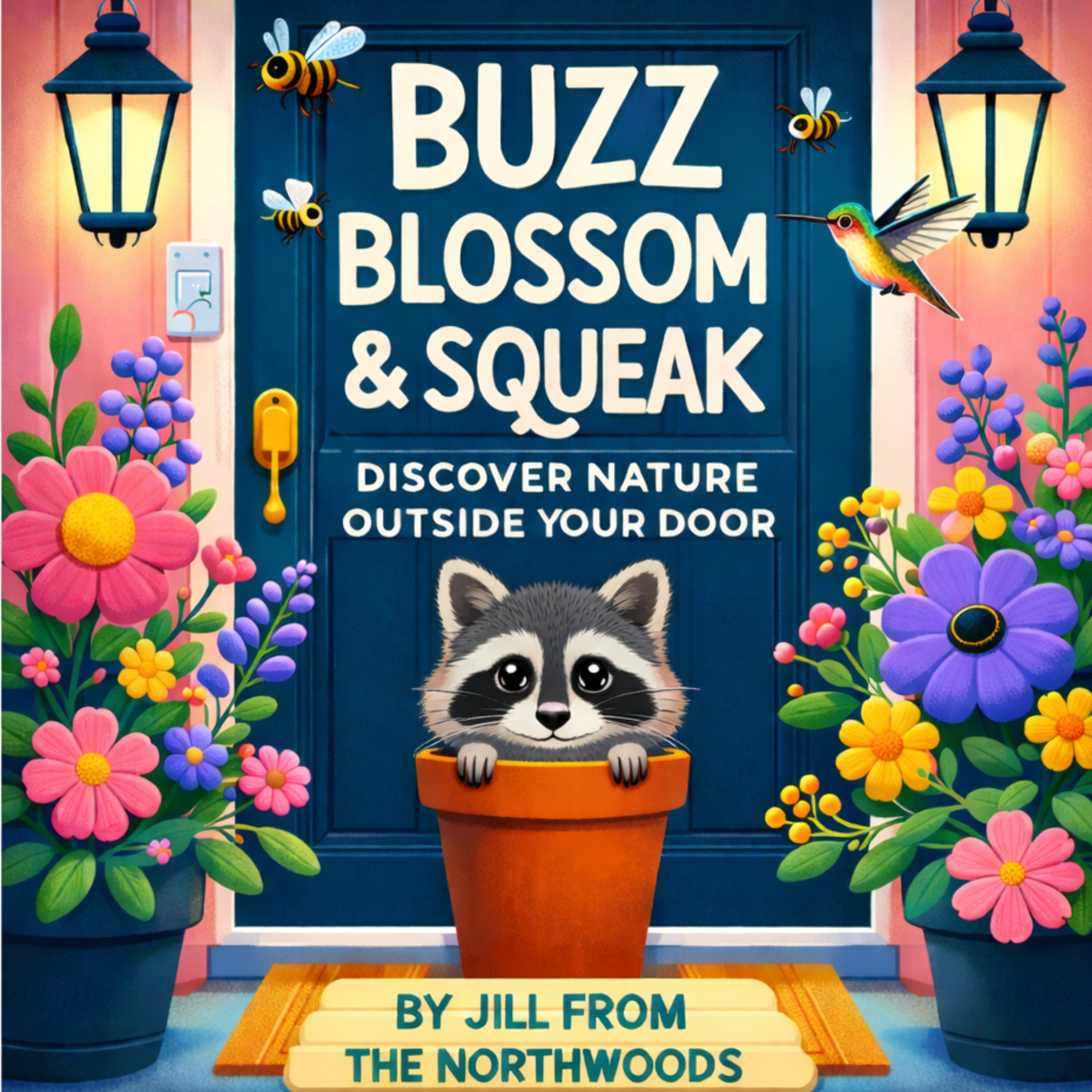
Buzz Blossom & Squeak
by Jill McKinley
Buzz, Blossom & Squeak is a quiet, curious walk into the natural world right outside your door.You don’t need to be a scientist, a hardcore birder, or someone who hikes miles into the wilderness. This podcast is for anyone who has ever paused to notice a bird call, wondered about a plant growing along a sidewalk, watched insects move through a garden, or felt the seasons shifting without quite knowing why.Each episode focuses on small, approachable pieces of nature—birds, bugs, plants, weather, ecosystems, and natural patterns—explained in a way that’s calm, curious, and grounded in observation. Instead of rushing toward big conclusions, Buzz, Blossom & Squeak invites you to slow down and really notice what’s happening in the living world around you.You’ll hear about things like:How birds use different layers of trees and skyWhy certain plants grow where they doWhat insects are actually doing when they buzz pastHow seasons quietly reshape landscapesThe hidden systems that conne
-
113
112- Why Is Water Blue? The Science of Color in Lakes, Oceans, and Ice
Why is Lake Superior almost black on a stormy day and impossibly blue on a calm one? Why does the Caribbean look turquoise when it's made of the same H2O? And what's happening when glacier ice glows that eerie deep blue inside a crevasse? Water doesn't have a color the way a cardinal has red feathers. What we see when we look at water is physics in action — selective absorption, light scattering, depth, biology, and the geometry of the sun. In this episode we break down exactly how it works.Why Pure Water Is Blue at AllWater molecules absorb light selectively. They absorb energy at the red end of the spectrum more readily than at the blue end — it has to do with how the hydrogen and oxygen atoms vibrate at frequencies that match red and infrared wavelengths. So as sunlight enters water and travels deeper, the reds disappear first, then orange and yellow fade, then green weakens. Blue and violet penetrate deepest. The blue light that survives gets scattered back toward your eyes. A single glass of water is barely detectable. A deep lake or ocean makes the filtering unmistakable.Deep Blue: Lake Superior and Open OceanIn deep, cold, clear water — away from river mouths and shorelines — selective absorption plays out fully. By 30 feet, red disappears from underwater life almost entirely. By 30 meters, saltwater has absorbed nearly everything except blue. Lake Superior behaves like a small inland ocean: deep, cold, and clear enough that on a calm day with nothing stirring up sediment, it can appear impossibly, purely blue. That blue is not reflection — it's what's left after everything else has been filtered out.Turquoise: Why Tropical Water Looks DifferentTropical water like the Caribbean involves a second mechanism: a pale, reflective bottom. The water is shallow enough that light reaches the sandy or coral floor, reflects back upward, and passes through a thin column of water on its way to your eyes. The red wavelengths still get knocked out, but you get some blue-green light mixing back in with the blue — giving you that bright, warm turquoise. The shallower the water and the more reflective the bottom, the brighter and lighter the color. That's why it can look almost mint green over white sand in just a foot or two of water.Glaciers, Sea Caves, and the Blue GrottoWhen light enters a glacier through compacted ice or a sea cave through a narrow underwater opening, something beautiful happens. The ice or water column absorbs the reds, and concentrated blue scatters in every direction through the confined space. In a glacier crevasse, that creates the sensation that the ice is glowing from within. In the Blue Grotto at Capri, light enters through an underwater opening, reds are absorbed by the column of water, and blue illuminates the entire cave and its walls. Same physics. Different stage.Tannins, Algae, and Living ColorNot all water color comes from light physics alone. Tea-colored rivers carry dissolved organic material — tannins leaching from decaying plant matter upstream. Algae blooms can turn a lake green, and certain bacteria produce red and pink pigments as a kind of biological sunscreen. Pink lakes like Lake Hillier in Western Australia and Lake Retba in Senegal are colored entirely by living organisms, not by chemistry. The biology of a body of water can override its physics entirely.Whitecaps, Clouds, and Equal ScatteringWhen waves break, they trap millions of tiny air bubbles. Those bubbles are large enough to scatter all wavelengths of light equally — not just blue. Every color comes back to you at once, and the result is white. The same reason clouds are white: water droplets large enough to scatter the full spectrum. A whitecap is, in a sense, a momentary cloud forming at the surface of the water. When a sea that was deep navy suddenly goes pale and foamy, the water hasn't changed — its physics has.Structural Color: Blue Jays and the Same RulesBlue jays have no blue pigment in their feathers. Their barbules contain nanostructures with air pockets that scatter blue wavelengths and absorb red and orange — the same selective physics as the ocean. If you find a blue jay feather and hold it at the wrong angle, the blue disappears. Cardinals really are red; blue jays only appear blue. Hummingbird throats, dragonfly wings, glacier ice, and the open Pacific are all playing by the same set of rules.Jill’s Linkshttp://jillfromthenorthwoods.comhttps://www.buymeacoffee.com/smallstepspodTwitter - https://twitter.com/schmernYouTube @BuzzBlossomSqueakBy choosing to watch this video or listen to this podcast, you acknowledge that you are doing so of your own free will. The content shared here reflects personal experiences and opinions and is intended for informational and educational purposes only. I am not a licensed biologist, ecologist, or wildlife professional. Any nature observations, identifications, or suggestions offered should not be considered a substitute for professional scientific or environmental guidance. Always follow local regulations when observing or interacting with wildlife and natural spaces. You are solely responsible for any decisions or actions you take based on this content.
-
112
111 - Spectrometry in Space: What Every Planet Is Telling Us
We've never touched Mars. We've never scooped up Pluto's frost or sifted through Jupiter's cloud layers. And yet scientists can describe the chemistry of every planet in our solar system with remarkable precision. This episode is about how that's possible — and why the colors you see when you look up at the night sky are some of the most information-rich things in the universe.The Philosopher Who Said It Was Impossible In 1835, French philosopher Auguste Comte declared that the physical composition of stars and distant worlds would forever lie beyond human knowledge. Within 25 years, he had been proven wrong — not by luck, but by a fundamental discovery about what light actually carries. The story of Kirchhoff, Bunsen, and those dark lines in the solar spectrum is one of the most dramatic reversals in the history of science.How Planets Speak in Light Planets don't generate their own light — they reflect the Sun's. But that reflected light isn't the same as what left the Sun. As sunlight passes through a planet's atmosphere and bounces off its surface, specific elements and compounds pull out their characteristic wavelengths. The result is a spectrum full of gaps — a chemical fingerprint that survives billions of miles of travel to reach our telescopes.A Tour of the Solar System in Color Each planet has a story written in its reflected light. Mars's rust-red surface broadcasts iron oxide chemistry and a history of possible liquid water. Venus's blinding brightness hides an atmosphere of carbon dioxide and clouds made of sulfuric acid droplets. Jupiter's banded cloud layers reveal ammonia ice, and Neptune's vivid deep blue comes from methane filtering out the red end of the spectrum. Even the difference between Uranus's pale blue-green and Neptune's rich blue turns out to be a story about atmospheric haze.The Doppler Twist Spectrometry doesn't just identify what worlds are made of — it can measure how they move. The same Doppler shift that changes an ambulance siren's pitch as it passes you also shifts light from a moving source. Scientists use this to measure a planet's rotation speed without watching it turn. More remarkably, this technique — Doppler spectroscopy — is how the first planet orbiting a sun-like star was confirmed in 1995, and how hundreds of exoplanets have been found since.Reading Atmospheres Across Light-Years Transit spectroscopy takes this further still: when an exoplanet crosses in front of its star, a sliver of starlight filters through the planet's atmosphere, picking up chemical fingerprints that survive the journey across hundreds of light-years to reach us. Scientists have already detected water vapor, carbon dioxide, and methane in distant exoplanet atmospheres. What researchers are ultimately searching for are biosignatures — chemical combinations that could only be explained by life. We haven't found them yet. But the tools are ready.Light is not just light. It's a message — and if you know how to read it, the universe opens up in ways a 19th-century philosopher could not have imagined. Next episode, we're bringing spectrometry back to Earth, where the same techniques are being used right now to track greenhouse gases, ozone, wildfire chemistry, and pollution plumes in real time.Jill’s Linkshttp://jillfromthenorthwoods.comhttps://www.buymeacoffee.com/smallstepspodTwitter - https://twitter.com/schmernYouTube @BuzzBlossomSqueakBy choosing to watch this video or listen to this podcast, you acknowledge that you are doing so of your own free will. The content shared here reflects personal experiences and opinions and is intended for informational and educational purposes only. I am not a licensed biologist, ecologist, or wildlife professional. Any nature observations, identifications, or suggestions offered should not be considered a substitute for professional scientific or environmental guidance. Always follow local regulations when observing or interacting with wildlife and natural spaces. You are solely responsible for any decisions or actions you take based on this content.
-
111
110 - How Light Reveals Secrets
What if you could know what something is made of — without ever touching it? That's not science fiction. It's spectrometry, and it's one of the most quietly extraordinary tools in all of science. In this first episode of a short series, we explore how light carries chemical fingerprints, what a high school flame test has in common with detecting helium on the sun, and why my dad's aircraft engine has everything to do with this story.🔑 The Oil Sample That Started It AllMilitary aircraft mechanics routinely send oil samples to labs to diagnose what's happening deep inside an engine — without taking it apart. The trace metals suspended in the oil tell exactly which component is wearing down. That's spectrometry in practice, and it's the same principle astronomers use to analyze distant planets.🔑 What Is Spectrometry?Every element interacts with light in its own unique way. When atoms are energized, their electrons release specific wavelengths of light — a fingerprint as distinctive as a bar code. Sodium glows bright yellow. Copper burns blue-green. Potassium turns pale violet. A spectrometer spreads those wavelengths apart and reads them precisely.🔑 The Flame Test — Science You've Probably SeenToss a pinch of table salt into a candle flame and it flashes vivid yellow — that's sodium's fingerprint made visible. Those colorful campfire packets that turn flames blue and purple and red? Metal salts: copper chloride, strontium, potassium. The fire is the instrument.🔑 Helium Was Discovered on the Sun FirstIn 1868, an astronomer running sunlight through a spectrometer during a solar eclipse found a yellow spectral line that matched no known element on Earth. Scientists named it helium — after Helios, the sun. For 27 years it was known only as a solar element. In 1895 it was finally identified here on Earth, same fingerprint, same element. Scientists identified it without ever leaving the planet.🔑 Where Else Spectrometry Shows UpFrom hospital blood analysis that can detect heavy metals at parts-per-billion concentrations, to food safety testing that can tell whether olive oil has been cut with a cheaper substitute, to environmental satellites tracking methane and ozone — the same principle is working everywhere. Every fingerprint tells a story.Next episode: how spectrometry lets us know exactly what planets are made of without sending a probe. The light tells us everything.Jill’s Linkshttp://jillfromthenorthwoods.comhttps://www.buymeacoffee.com/smallstepspodTwitter - https://twitter.com/schmernYouTube @BuzzBlossomSqueakBy choosing to watch this video or listen to this podcast, you acknowledge that you are doing so of your own free will. The content shared here reflects personal experiences and opinions and is intended for informational and educational purposes only. I am not a licensed biologist, ecologist, or wildlife professional. Any nature observations, identifications, or suggestions offered should not be considered a substitute for professional scientific or environmental guidance. Always follow local regulations when observing or interacting with wildlife and natural spaces. You are solely responsible for any decisions or actions you take based on this content.
-
110
109 - The Science of Noticing When Nature Happens
Spring doesn't arrive in a single moment — it arrives in layers, and phenology is the science of noticing the order. There's a name for what farmers, hunters, and naturalists have practiced for centuries: tracking when nature shows up. And it turns out you can start doing it right now, with nothing more than a notebook.What Phenology IsPhenology is the study of cyclic and seasonal natural events — when the first flower blooms, when the first frog calls, when ice leaves the lake. The word comes from the Greek for 'to appear.' It's one of the oldest sciences in the world, used long before it had a name, by communities who planted corn when the oak leaf was the size of a squirrel's ear and tracked walleye spawning by when the lilacs bloomed.A Long History of Careful WatchersIn 1736, English naturalist Robert Marsham began recording the first dates of 27 natural events on his estate. He continued for 62 years. His family kept the records going after he died. Henry David Thoreau did the same in Concord, Massachusetts — noting flower dates, ice-out on Walden Pond, the arrival of specific birds. Those journals are still being studied today. Aldo Leopold's A Sand County Almanac brought the same practice to Wisconsin with the precision of a scientist and the voice of a poet.Spring Comes in LayersSilver maples flower before trilliums emerge. Trilliums emerge before warblers arrive. The order stays the same every year — what changes is how early or late the whole sequence runs. A warm February pushes the ladder forward. A cold snap in April pauses it. When you know the order, each event predicts the next one.How to Start Your Own RecordPick five things you already notice every year — first robin, first bumblebee, first dandelion, first day the lake is ice-free, first hummingbird at the feeder. Write down the date each one happens. That's it. Do it again next year. Patterns emerge that you can't see any other way, and over time you'll know whether a given spring is running early or late — useful information if you're trying to time a camping trip.Your Yard, SpecificallyPhenology observations belong to a place. A south-facing slope warms faster than a north-facing one. A yard near a creek stays cool longer. Your records describe your neighborhood's particular timing, not a generic field guide average. That's what makes personal phenology data genuinely valuable — and it's also what makes it satisfying.Jill’s Linkshttp://jillfromthenorthwoods.comhttps://www.buymeacoffee.com/smallstepspodTwitter - https://twitter.com/schmernYouTube @BuzzBlossomSqueakBy choosing to watch this video or listen to this podcast, you acknowledge that you are doing so of your own free will. The content shared here reflects personal experiences and opinions and is intended for informational and educational purposes only. I am not a licensed biologist, ecologist, or wildlife professional. Any nature observations, identifications, or suggestions offered should not be considered a substitute for professional scientific or environmental guidance. Always follow local regulations when observing or interacting with wildlife and natural spaces. You are solely responsible for any decisions or actions you take based on this content.
-
109
108 - How to Actually Identify Ducks
Duck season is here — and ducks are confusing. If you've ever stood at the edge of a pond going completely blank while trying to name what you're looking at, this episode is for you. I'm launching a new series called Birds That Fool You, and we're starting with ducks: how to build a reliable ID strategy and how to sort out the most commonly confused pairs.Color Is a Trap — Shape Is ReliableMost people lead with color when identifying ducks. But color changes by season, by sex, and by lighting conditions. Shape doesn't lie — a duck's head and body silhouette stays consistent year-round, in both males and females. Behavior locks it in further: dabblers tip up to feed, divers plunge completely under. Use color to confirm, not to identify.Strategy: Pairs, Groups, and Permission to Stop EarlyDucks tend to flock with their own kind, so if you can identify the male in a pair, the female beside him is probably the same species. And it's perfectly okay to call it "a scaup" without knowing if it's a greater or lesser. Partial identification is real progress.Canvasback vs. RedheadBoth have reddish heads on males, but the canvasback has a long, sloped forehead that runs almost in a straight line from bill tip to crown — very aerodynamic. The redhead has a rounded, dome-shaped head, friendlier and softer. This head shape distinction works in any light and for females too.Mallard vs. American Black Duck, and the Underrated GadwallThe female mallard has a streaky pattern with an orange-and-black bill. The American Black Duck is darker and more uniform, with an olive or greenish-yellow bill — no orange. Both species overlap in the Midwest and East and get misidentified constantly. The gadwall looks plain from a distance but reveals an intricate herringbone scallop pattern up close — one of the most beautiful ducks in the field once you see it.Teals, Scaup, Buffleheads, Goldeneyes, and MergansersTeals are tiny and fast — size alone often tips you off. Blue-winged, green-winged, and cinnamon teal each have distinct field marks once you slow down to look. Bufflehead vs. common goldeneye comes down to size: ping-pong ball vs. full-sized duck. Mergansers are unmistakable with their shaggy rock-and-roll crest and serrated bill — once you've seen one, you never forget it.ClosingStart with one or two pairs. Get comfortable with canvasback vs. redhead, or bufflehead vs. goldeneye. Add another pair next season. The Birds Near Me app (Apple only, powered by eBird) is a great way to see what species others have logged at a specific pond — use it as a sanity check while you're still learning.Jill’s Linkshttp://jillfromthenorthwoods.comhttps://www.buymeacoffee.com/smallstepspodTwitter - https://twitter.com/schmernYouTube @BuzzBlossomSqueakBy choosing to watch this video or listen to this podcast, you acknowledge that you are doing so of your own free will. The content shared here reflects personal experiences and opinions and is intended for informational and educational purposes only. I am not a licensed biologist, ecologist, or wildlife professional. Any nature observations, identifications, or suggestions offered should not be considered a substitute for professional scientific or environmental guidance. Always follow local regulations when observing or interacting with wildlife and natural spaces. You are solely responsible for any decisions or actions you take based on this content.
-
108
107 -The Dusk Chorus: What Happens When the Sun Goes Down
You've heard the dawn chorus — but have you heard the dusk chorus? Step outside at sunset and a whole different world comes alive. In this episode, Jill heads out to a Wisconsin oak savanna just before dark and witnesses something spectacular: the American Woodcock sky dance, the haunting winnowing of a Wilson's Snipe, and eight woodcocks performing courtship displays just feet away. Best of all, neither bird makes its sound with its voice — it's all in the feathers. We also cover sandhill cranes bugling into the marsh at sunset, Whip-poor-wills and Common Nighthawks (the night hunters of the insect world), the eerie calls of the barred owl, and the invisible rivers of migrating birds that stream over your county every night during peak spring migration.Jill’s Linkshttp://jillfromthenorthwoods.comhttps://www.buymeacoffee.com/smallstepspodTwitter - https://twitter.com/schmernYouTube @BuzzBlossomSqueakEmail the podcast at mailto: [email protected] choosing to watch this video or listen to this podcast, you acknowledge that you are doing so of your own free will. The content shared here reflects personal experiences and opinions and is intended for informational and inspirational purposes only. I am not a licensed healthcare provider, psychiatrist, or counselor. Any advice or suggestions offered should not be considered a substitute for professional medical or mental health advice. You are solely responsible for any decisions or actions you take based on this content.
-
107
106 - Why Do Birds Sing at Dawn?
Have you ever woken up at five in the morning, stepped outside into the cold and the dark, and heard a single bird start to sing — and then another, and then another, until the whole world seemed to be answering? That's the dawn chorus. And once you've really heard it, you'll never take a quiet morning for granted again.What Is the Dawn Chorus?The dawn chorus is a surge of bird song that builds in the 30 to 90 minutes around sunrise, peaking in spring when birds are establishing territory and finding mates. It happens on every continent where birds live, and it follows the same logic everywhere. In the Upper Midwest, the loudest, most species-rich mornings tend to arrive in mid-May, when the spring migrants have settled in. There's even an International Dawn Chorus Day — the first Sunday of May — that started in Birmingham, England in 1984 and has since spread worldwide.Why at Dawn Specifically?The timing is not accidental. In the early morning, insects aren't active yet — it's too cold and too dark to forage efficiently. Rather than burn energy looking for food in poor conditions, birds fill that window with the social work of claiming territory and attracting mates. And sound works in their favor: at dawn, the way temperature layers the atmosphere causes sound to travel two to three times farther than it would at midday. A bird singing at dawn is broadcasting to a much larger audience.The Hormone FactorSpring's longer days trigger a surge of testosterone in male songbirds, and hormone levels peak right at dawn. A male who goes silent in the morning is signaling illness or weakness, and potential mates notice. Singing early, loudly, and with complexity is a fitness advertisement: I survived the night, I'm healthy enough to sing before I've eaten, and my territory is still mine.Who Sings First?The sequence of the dawn chorus is predictable enough that you can track the morning by listening. Birds with larger eyes relative to their heads go first. Robins are famous early singers, often starting 30 to 40 minutes before sunrise. Towhees, Wood Thrushes, and Ovenbirds follow. Then come Song Sparrows, Yellow Warblers, Red-winged Blackbirds, and Common Yellowthroats. By full sunrise, Baltimore Orioles, Scarlet Tanagers, and Veeries are joining in. The Merlin app (free, from the Cornell Lab of Ornithology) can identify individual species even when they're all singing simultaneously — something genuinely astonishing.The Females Are ListeningThe dawn chorus isn't a one-sided broadcast. Female birds are evaluating. The male who sings earlier, longer, louder, and with more complexity is advertising fitness, territory quality, and energy reserves. Singing before breakfast costs real resources. The females know that.If you want to hear it for yourself, set an alarm about 30 minutes before sunrise this spring. Find a spot near water or a marsh if you can. You don't need to know a single bird by name to be moved by it. Just listen.Recommended reading:Trees in My Forest by Bernd HeinrichWhy Birds Sing by David RothenbergJill’s Linkshttp://jillfromthenorthwoods.comhttps://www.buymeacoffee.com/smallstepspodTwitter - https://twitter.com/schmernYouTube @BuzzBlossomSqueakEmail the podcast at mailto: [email protected] choosing to watch this video or listen to this podcast, you acknowledge that you are doing so of your own free will. The content shared here reflects personal experiences and opinions and is intended for informational and inspirational purposes only. I am not a licensed healthcare provider, psychiatrist, or counselor. Any advice or suggestions offered should not be considered a substitute for professional medical or mental health advice. You are solely responsible for any decisions or actions you take based on this content.
-
106
105 - The First Thing Every Animal Does When Spring Arrives
Spring fever is real — and it turns out every creature in the natural world has it too. In this episode I'm exploring the very first thing each animal does the moment winter releases its grip. From frogsicles thawing in vernal ponds to bumblebee queens hunting for a home underground, nature wastes absolutely no time.Frogsicles and Spring PeepersWood frogs freeze solid over winter — no heartbeat, no breathing, just ice crystals in their body held together by glucose flooding from the liver. When they thaw, the first thing they do is head straight for a vernal pond to breed. Spring peepers, barely bigger than your thumb, do the same on the first rainy 42-degree night.Turtles, Bears, and GroundhogsPainted turtles spend winter buried in mud, breathing through their skin. When they surface, their first priority is warmth — they can't even digest food until they soak up enough sun on a log. Black bears emerge already having given birth during hibernation, now needing to rebuild the 30% of body weight lost. Groundhog males emerge weeks before the females — not to predict weather, but to map territory and locate burrows before the females arrive.Birds on the MoveRed-winged blackbirds are often back before the snow is fully gone, the males arriving first to claim their patch of marsh and start singing. Robins never fully left — they moved into the deep woods — and now edge back toward lawns as the soil begins to thaw. And sandhill cranes return to the same wetlands year after year, reconnecting with their partners through an elaborate rattling call and dance.The Bumblebee QueenShe spent the entire winter underground — alone, as the sole surviving member of last year's colony. In early spring she emerges and takes on every role at once: architect, forager, nurse, and furnace to her eggs. If you see a big, slow bumblebee hovering close to the ground, she's not lost — she's searching for the right den to start everything over again.One Thing They All Have in CommonNobody eases into spring. Whether it's finding food, finding a mate, finding a home, or just warming up enough to move — every creature acts immediately. There are no warm-up stretches in the wild. Spring is a deadline, and they all know it.Want to participate? Start a nature log. Track your first red-winged blackbird, your first spring peeper, your first bumblebee queen. You'll be amazed what you notice when you start paying attention.📚 Book recommendation: Winter World and Summer World by Bernd HeinrichJill’s Linkshttp://jillfromthenorthwoods.comhttps://www.buymeacoffee.com/smallstepspodTwitter - https://twitter.com/schmernYouTube @BuzzBlossomSqueakEmail the podcast at mailto: [email protected] choosing to watch this video or listen to this podcast, you acknowledge that you are doing so of your own free will. The content shared here reflects personal experiences and opinions and is intended for informational and inspirational purposes only. I am not a licensed healthcare provider, psychiatrist, or counselor. Any advice or suggestions offered should not be considered a substitute for professional medical or mental health advice. You are solely responsible for any decisions or actions you take based on this content.
-
105
104 - Spring Is Already Here — You Just Have to Know Where to Look
Step outside with me for a minute. The grass is still brown and undecided. There are patches of snow on the north side of the fence. The ground is soft on top but frozen just a few inches down. Nothing looks alive — but it really, truly is. Somewhere near your foundation, by the mailbox, wherever the snow melted first, something is already blooming. And something with wings is already looking for it. This episode is about those bold, easy-to-miss first flowers of spring, and the equally bold creatures that depend on them.Look Up: The Trees Are Already BloomingBefore anything blooms at eye level, look up. Silver maples and red maples push out tiny flower clusters before their leaves appear — reddish clumps or deep red bursts on gray branches that look like fuzz or frost from a distance. They're wind-pollinated and bloom early on purpose: no leaves yet means nothing blocking the pollen from moving. Pussy willows along creek edges and damp ground are swelling with soft gray catkins loaded with pollen — an oasis for a bumblebee just waking up from winter. Birch and alder add dangling brown tassels to the show, swaying in the breeze and dusting the air with their own early contribution.Drop Your Eyes: The Ground Flowers Are HereSnowdrops are usually first — small white bells pushing straight through frozen soil, and remarkably, they generate a small amount of their own heat to melt the snow immediately around them. They're literally opening their own path into spring. Crocuses follow in purple, yellow, white, and striped, opening wide in sun and closing tight on cold days to protect their pollen. The small blue star-shaped glory-of-the-snow and Scilla carpet the ground when almost nothing else does. Daffodils hold their own too — they contain lycorine, an alkaloid that makes them toxic to most deer and rodents, which is why they tend to survive when tulips don't. And coltsfoot, one of the earliest wildflowers in the Midwest, blooms at the edge of roadsides with flowers that appear before its leaves — bright yellow and easy to miss if you're driving fast.The Bumblebee Queen — Most Important Insect of Early SpringThat large, lone bumblebee you see in March is almost certainly a queen. She survived the winter underground, alone, on stored fat. She emerges starving and needs nectar for energy and pollen to begin laying eggs. Everything — the entire summer colony — depends on those first flowers being there when she wakes up. She's not aggressive; she's focused. She cannot fly below around 50 degrees Fahrenheit, which is why a cold snap after a warm week can be genuinely dangerous for her. If she gets caught out foraging when the temperature drops, she needs leaf litter, a log, or a brush pile to shelter in.Other Early Pollinators Worth NoticingMining bees are tiny, solitary bees that nest underground and hover over patches of bare soil in early spring — one reason a tidy, fully-mulched yard is harder on bees than a yard with a little bare ground. Some butterfly species overwinter as adults, tucking into bark and tree cavities and emerging on warm February or March days to feed on sap and overwintered berries — the mourning cloak butterfly is one of the most common early fliers in the Midwest. Hoverflies round out the group: they look like bees, don't sting, and are quietly doing important pollination work while everyone ignores them.When the Snow Comes Back — and It WillEarly spring flowers are tougher than they look. Many contain antifreeze-like compounds in their cells, and snow actually provides insulation rather than damage. Tulips, which require a cold period called vernalization to bloom properly, are genuinely built for late snow — it doesn't set them back. The crocuses get buried and come right back up. What's more fragile is the bumblebee queen caught out in the cold, which is why leaving the leaf litter, the brush pile, the stick pile just a little longer into spring matters more than we might think.Spring doesn't arrive all at once — it sneaks in from the edges, from the treetops and the muddy patches and the south-facing spots by the foundation. Your small step this week: go outside and find something blooming. Look up into the tree branches. Watch for the bumblebee queen making her rounds. If you want to do something for next year, consider planting some early bulbs this fall — crocus, snowdrops, Scilla — and leave the leaves a little longer this spring. You might also start a nature journal: write down your first crocus, your first bee, your first butterfly. You'll be surprised what you start to notice when you're actually looking.Jill’s Linkshttp://jillfromthenorthwoods.comhttps://www.buymeacoffee.com/smallstepspodTwitter - https://twitter.com/schmernYouTube @BuzzBlossomSqueakEmail the podcast at mailto: [email protected] choosing to watch this video or listen to this podcast, you acknowledge that you are doing so of your own free will. The content shared here reflects personal experiences and opinions and is intended for informational and inspirational purposes only. I am not a licensed healthcare provider, psychiatrist, or counselor. Any advice or suggestions offered should not be considered a substitute for professional medical or mental health advice. You are solely responsible for any decisions or actions you take based on this content.
-
104
103 - Feathers Are More Incredible Than You Think
I walk past feathers all the time — on the trail, in my yard, floating across the floor when my bird molts — and I'll be honest, I never gave them a second thought. But when you actually stop and look at what a feather is, you realize you've been walking past one of the most complex, precisely engineered structures in the entire animal kingdom. Today we're getting into all of it, and I promise you won't look at feathers the same way again.Feathers Are Tiny, Interlocking Zippers A feather isn't just a fancy piece of fluff — it's a shaft lined with dozens of branches called barbs, each growing smaller branches called barbules, each tipped with tiny hooks that lock together like Velcro. That's what gives a feather its smooth, flat surface. When the hooks come apart, the feather looks scraggly. When a bird preens, it's literally zipping those hooks back together with its beak — running a quality check on hundreds of tiny zippers every single day.A Wardrobe of Feathers, Each With a Job Birds don't have just one kind of feather — they have a whole wardrobe. Contour feathers form the sleek outer jacket. Down feathers underneath are soft, hookless, and trap warm air like a personal sleeping bag. Flight feathers are long, stiff, and asymmetrical — the narrower front edge helps generate lift the same way an airplane wing does. Filoplumes act as touch sensors, alerting the bird when preening is needed. Bristle feathers around the face of flycatchers form a built-in bug net.Color That Comes From Light, Not Pigment Cardinals are red because of pigment. But the iridescent blue of a kingfisher, the shimmering green of a hummingbird, the teal and purple of a peacock's tail? None of that color actually exists in the feather. Instead, microscopic layered structures in the feather scatter light the same way a soap bubble does — creating what scientists call structural color. The feather hasn't changed. The light has. It's the same technology now used in anti-counterfeiting ink on banknotes, and birds had it figured out long before we did.Owl Feathers and the Science of Silence Owls fly in near-total silence, and it's entirely by feather design. The leading edge of their wing feathers has a comb-like serration that breaks up air turbulence before it can create sound. Other feathers have a velvety texture that absorbs rather than reflects noise. For an owl, silent feathers aren't impressive — they're essential. Without them, the mouse hears it coming.Fun Facts Worth Knowing Hummingbirds have the fewest feathers of any bird — around 1,000. Tundra swans can have 25,000, mostly dense down for Arctic survival. A bird's entire set of feathers (plumage) often weighs more than its skeleton — which makes sense, since bird bones are hollow. The longest feather ever recorded was a rooster tail feather in Japan, measuring over 30 feet. And flamingos? Not naturally pink — they turn pink from the algae and crustaceans they eat.The next time you find a feather on a walking path or watch a bird land on a fence post, take a second look. That feather can zip and unzip itself, generate color from light, muffle sound, trap heat, and slice through the air — all at once. It's not just a bird accessory. It's a structural miracle hiding in plain sight.Jill’s Linkshttp://jillfromthenorthwoods.comhttps://www.buymeacoffee.com/smallstepspodTwitter - https://twitter.com/schmernYouTube @BuzzBlossomSqueakEmail the podcast at mailto: [email protected] choosing to watch this video or listen to this podcast, you acknowledge that you are doing so of your own free will. The content shared here reflects personal experiences and opinions and is intended for informational and inspirational purposes only. I am not a licensed healthcare provider, psychiatrist, or counselor. Any advice or suggestions offered should not be considered a substitute for professional medical or mental health advice. You are solely responsible for any decisions or actions you take based on this content.
-
103
102 - Why Can Animals Eat Things That Would Kill Us?
Have you ever watched a dog eat something off the ground and thought — I would be in the hospital right now? Or stared at a koala stuffing eucalyptus leaves into its face and wondered how that's even possible? Today I'm digging into one of those questions that just sits with you — why can animals eat things we simply can't? The answer is genuinely fascinating, and once you understand it, you'll see the animals in your backyard in a completely different way.Specialists vs. Generalists: The Big IdeaEvery animal on Earth is essentially a custom-built system, optimized for a very specific food supply in a very specific environment. A bear living in the forest has exactly the enzymes, gut bacteria, and stomach chemistry needed to process fish, berries, roots, and the occasional deer. We humans are something different — we're generalists. We eat a huge variety of things, including cooked food, which semi-processes our meals and makes calories more accessible without requiring the long, specialized digestive machinery that many animals carry. That generalist toolkit is part of what supports our higher brain function. We gave up dietary specialization in exchange for cognitive power.Enzymes: The Chemical Workers InsideEnzymes are proteins your body manufactures to break down food — tiny, specific workers in your digestive tract. The key word is specific. Different animals have entirely different enzyme profiles. The koala is the perfect example: eucalyptus is toxic to most mammals, including us, but koalas have liver enzymes specifically designed to neutralize those compounds. It's essentially a built-in detox filter. Monarch butterflies do something similar with milkweed — not only tolerating the toxin, but storing it in their bodies so that anything that eats them gets sick. The food becomes a weapon.Gut Bacteria: The Community That Shapes What You Can EatWe're learning more about gut bacteria than ever before, and the science keeps getting more interesting. Trillions of microorganisms — not harmful, but essential — live in our digestive systems, helping break down food, support immunity, and regulate metabolism. Every species has its own gut microbiome community, shaped over time by what they eat. Vultures are the extreme example: their gut bacteria has evolved specifically to neutralize pathogens like botulism, anthrax, and salmonella that would put you or me in the hospital. Combined with their extraordinary stomach acid, they have what amounts to an industrial-grade sanitation system built right in.Stomach Acid: The First Line of DefenseThe pH scale runs from 0 (extremely acidic) to 14 (base/alkaline), with 7 as neutral. Your stomach acid sits around pH 2–3 — strong enough to break down food and kill a good number of bacteria, roughly similar to vinegar. Vultures operate at pH 1, closer to battery acid, making them the most acidic-stomached vertebrate on the planet. That extreme acidity is their first line of defense against dangerous pathogens. The stronger the acid, the more it can destroy before anything gets further into the system.Cellular Biology and Some Surprising ExamplesBeyond enzymes and gut bacteria, the cellular biology of different animals is simply built differently. Cats are obligate carnivores — they must eat meat — and their livers are highly efficient at processing vitamin A from animal tissue. For us, too much vitamin A causes hypervitaminosis A: headaches, bone pain, skin problems, and worse. Arctic explorers in the early 1900s sometimes died after eating polar bear liver, which accumulates massive amounts of the vitamin. The polar bear handles it easily. We do not. Dogs can handle raw meat better than we can partly because of shorter digestive tracts — food moves through faster, giving bacteria less time to cause trouble. Seagulls have a salt gland near their eyes that filters excess sodium directly from their blood, letting them drink ocean water that would accelerate dehydration in us.The Tradeoff: Specialization Has a CostEvery superpower comes with a constraint. Koalas can eat eucalyptus, but they can barely eat anything else. Monarchs depend entirely on milkweed — which is why protecting milkweed plants from mowing and development matters so much. Cats must eat meat; their biology gives them no other option. Vultures are tied to carrion; that's their role in the ecosystem, and they fill it well. Specialization is a form of excellence, but it's also fragility. When the one thing your system is built for disappears, the whole system is at risk. We gave up that depth for breadth — and the ability to adapt.Next time you watch a vulture circling or a seagull drinking from the ocean, you're not seeing a tougher animal. You're seeing a different kind of engineering — finely tuned for a specific role in a specific world. We have our own version of that. It just looks like the ability to eat pizza one day and a salad the next.Jill’s Linkshttp://jillfromthenorthwoods.comhttps://www.buymeacoffee.com/smallstepspodTwitter - https://twitter.com/schmernYouTube @BuzzBlossomSqueakEmail the podcast at mailto: [email protected] choosing to watch this video or listen to this podcast, you acknowledge that you are doing so of your own free will. The content shared here reflects personal experiences and opinions and is intended for informational and inspirational purposes only. I am not a licensed healthcare provider, psychiatrist, or counselor. Any advice or suggestions offered should not be considered a substitute for professional medical or mental health advice. You are solely responsible for any decisions or actions you take based on this content.
-
102
101 - From Skywatching to Wall Clocks: How Nature Became Our Calendar
How did watching the sky turn into the calendar on the wall and the clock we check every day? This episode explores how ancient sky observations evolved into the structured systems of time we now take for granted.⏳ Time Before ClocksLong before digital watches and printed planners, humans looked to the sky. The rising and setting of the sun, the phases of the moon, and the shifting constellations provided the first reliable markers of time. While animals still follow light, temperature, and seasonal cues, humans began translating those natural cycles into numbers and systems.🌍 The Babylonian BreakthroughAround 4,000 years ago in ancient Mesopotamia, the Babylonians created a mathematical framework that still shapes how we measure time today.Base 60: The Language of TimeInstead of counting in base 10 (like we do), the Babylonians used a base 60 system. Why 60?It divides evenly by many numbers (2, 3, 4, 5, 6, 10, 12, 15).It made calculations practical.It allowed flexible fractions.This system gave us:60 seconds in a minute60 minutes in an hour360 degrees in a circleThe 12-part division of day and nightThese weren’t cosmic requirements — they were human decisions that worked well.🌙 Lunar Months and Drifting SeasonsEarly calendars were based on the moon. A lunar month lasts about 29.5 days. Twelve lunar months equal 354 days — about 11 days short of a solar year.Without correction, calendars drifted away from the seasons.The Babylonians solved this by occasionally adding an extra month (intercalation), keeping lunar months aligned with agricultural seasons. This lunar-solar balancing act is still reflected in calendars like the Hebrew calendar today.♈ The Zodiac: Astronomy Before AstrologyOriginally, the zodiac was not about horoscopes or personality traits.It was practical astronomy.As the sun appeared to move through 12 constellations over the year, these regions of the sky became seasonal markers. They helped determine:When to plantWhen to harvestWhen festivals should occurWhere the sun would rise and setOnly later were myths and personality traits layered onto these sky markers.🕰️ Sundials, Angles, and NavigationThe Babylonian framework of 360 degrees made tools like sundials and later sextants possible.A sundial uses the Earth’s 360° rotation to cast measurable shadows.The Earth rotates about 15° per hour.Navigators used angular measurements between stars and the horizon to determine position at sea.Time and position became mathematically linked through the sky.🌎 Many Cultures, One SkyThe Babylonians were not alone in reading the sky.Ancient Egypt used shadow clocks and star risings to divide day and night.Maya civilization developed multiple interlocking calendars and tracked Venus and eclipses with remarkable precision.Ancient China created detailed star catalogs and lunisolar calendars aligned with solstices and equinoxes.Polynesian navigators memorized star paths, ocean swells, and bird behavior to travel vast distances without instruments.Different tools. Same principles.Time comes from motion.Cycles matter more than numbers.The sky is readable.📅 From Lunar Drift to Modern CalendarsThe Romans shifted from lunar to solar reckoning to stabilize civic life. The Julian calendar standardized 365 days with a leap year every four years.But small errors accumulated over centuries.The Gregorian calendar refined the leap year rules, realigning the calendar with the solar year and seasonal cycle. That is the calendar hanging on most walls today — still carrying Babylonian math, Roman structure, and lunar ancestry.🔄 What This MeansDespite reforms and refinements:We still divide the circle into 360 degrees.We still count 60 minutes per hour.We still organize the year into 12 months.We still adjust for solar drift with leap days.We still quietly track the moon.Our clocks and calendars are layered systems — ancient skywatching translated into geometry, then governance, then everyday routine.Nature hasn’t changed. The sun still rises. The moon still cycles. Constellations still shift with the seasons.What changed is that we turned those motions into a shared human agreement — a language of time that lets us plan crops, festivals, travel, and even vacations years in advance.🌌 In This EpisodeWhy 60 became the foundation of modern timekeepingHow lunar calendars drift and how civilizations corrected themThe practical origins of the zodiacHow angles, shadows, and stars shaped navigationWhy nearly every culture developed sky-based time systemsHow we arrived at the modern Gregorian calendarTime isn’t just numbers on a screen — it’s the sky translated into structure.Jill’s Linkshttp://jillfromthenorthwoods.comhttps://www.buymeacoffee.com/smallstepspodTwitter - https://twitter.com/schmernYouTube @BuzzBlossomSqueakEmail the podcast at mailto: [email protected] choosing to watch this video or listen to this podcast, you acknowledge that you are doing so of your own free will. The content shared here reflects personal experiences and opinions and is intended for informational and inspirational purposes only. I am not a licensed healthcare provider, psychiatrist, or counselor. Any advice or suggestions offered should not be considered a substitute for professional medical or mental health advice. You are solely responsible for any decisions or actions you take based on this content.
-
101
100 - Berries: Nature’s Winter Survival Strategy
Winter isn’t empty—it’s stocked with hidden food. Berries are nature’s survival pantry when everything else disappears. Look closer, and you’ll see winter is very much alive.This episode explores why berries are one of the most overlooked yet essential food sources in nature, especially during winter. While the landscape may look barren, berry-bearing trees and shrubs are quietly sustaining birds and mammals when insects and fresh vegetation are gone. The discussion walks through how berries store summer energy, how different species rely on them, and why winter is not a pause in nature, but a continuation of it. The episode also highlights how planting native berry-producing plants can support wildlife right outside the door.Top Topics CoveredWhy Berries Matter in WinterBerries act as concentrated packets of energy, holding sugars and fats created during the growing season. Unlike many fruits that fall quickly, berries often stay attached to shrubs and trees deep into winter, standing out against snow as visible signs that food is still available.Birds That Depend on BerriesAs insect-eating birds leave and seed-eaters struggle with snow-covered ground, berry-eating birds thrive. Species like robins adapt by shifting their diet entirely to berries once the ground freezes. Cedar waxwings go even further, traveling in tight flocks and stripping entire trees of fruit in minutes.Berry Trees as Wildlife Gathering HubsA single berry-laden tree can attract multiple bird species at once, turning a quiet winter yard into a brief burst of activity. These trees function as communal feeding stations that support biodiversity even in the coldest months.Mammals and the Berry NetworkDeer, foxes, coyotes, squirrels, and small mammals all rely on berries for winter calories. Forgotten squirrel caches feed other animals, connecting species that never directly interact but depend on the same food system.Timing, Fermentation, and Nature’s HumorSome berries delay being edible until freeze-thaw cycles soften them, spreading food availability across the season. Occasionally, natural fermentation creates slightly intoxicated birds, adding an unexpected and harmless bit of comedy to winter survival.Key TakeawaysWinter is not a dead season—it’s a different chapter in nature’s story. Berries prove that energy harvested in summer continues to circulate through ecosystems long after leaves fall. Paying attention to berry plants reveals how wildlife adapts, survives, and stays connected even in harsh conditions.Planting native berry-producing trees and shrubs supports local wildlife while adding beauty and life to winter landscapes. Watching what happens to berries over the season offers a deeper understanding of how nature works right outside the door.http://jillfromthenorthwoods.comhttps://www.buymeacoffee.com/smallstepspodTwitter - https://twitter.com/schmernYouTube @BuzzBlossomSqueakEmail the podcast at mailto: [email protected] choosing to watch this video or listen to this podcast, you acknowledge that you are doing so of your own free will. The content shared here reflects personal experiences and opinions and is intended for informational and inspirational purposes only. I am not a licensed healthcare provider, psychiatrist, or counselor. Any advice or suggestions offered should not be considered a substitute for professional medical or mental health advice. You are solely responsible for any decisions or actions you take based on this content.
-
100
99 - Reading the Tracks: Discovering Animal Stories Right Outside Your Door
Every snowfall writes a story across the ground. Each footprint is a clue left behind by a hidden neighbor. All you have to do is slow down and learn how to read it.This episode explores how winter snow turns the outdoors into a living field guide. By paying attention to tracks left behind by animals, it becomes possible to uncover where they traveled, how fast they moved, and what they were trying to do. Instead of needing special tools or deep expertise, curiosity and observation become the main skills. Snow reveals a hidden world that is always present but often overlooked, offering a deeper connection to nature right outside familiar doors.Top TopicsSnow as Nature’s NotebookSnow makes movement visible in a way that other seasons often hide. Tracks reveal patterns, decisions, and behavior, turning the ground into a record of recent activity. This visibility helps train attention and encourages careful observation.Thinking Like a Nature DetectiveRather than immediately naming the animal, the focus is on asking questions. Was the animal walking or hopping? Did it move in a straight line or wander? These questions lead naturally to understanding what happened before identifying who made the tracks.Movement Patterns and EnergyDifferent animals move in distinct ways. Walkers travel efficiently in straight lines. Hoppers leave paired prints that show bursts of speed. Bounders create clustered patterns that reflect long bodies and short legs. Birds add wing marks, tail drags, and sudden takeoffs that tell their own stories.Time, Weather, and CluesTracks also show age. Sharp edges mean recent visits, while softened or filled-in prints suggest older activity. Wind, sun, and new snowfall all leave evidence that helps reconstruct when events occurred.Finding Tracks EverywhereAnimal stories don’t require remote wilderness. Driveways, sidewalks, fences, shrubs, and bird feeders all serve as corridors. These everyday places often hold the most surprising discoveries.Key TakeawaysWinter is not empty or barren; it is active and full of life. Tracks are temporary, reminding us to pay attention in the moment before the evidence disappears. By slowing down and observing carefully, it becomes possible to understand not just which animal passed through, but what it was doing and why. With practice, reading tracks turns familiar spaces into places of continual discovery.http://jillfromthenorthwoods.comhttps://www.buymeacoffee.com/smallstepspodTwitter - https://twitter.com/schmernYouTube @BuzzBlossomSqueakEmail the podcast at mailto: [email protected] choosing to watch this video or listen to this podcast, you acknowledge that you are doing so of your own free will. The content shared here reflects personal experiences and opinions and is intended for informational and inspirational purposes only. I am not a licensed healthcare provider, psychiatrist, or counselor. Any advice or suggestions offered should not be considered a substitute for professional medical or mental health advice. You are solely responsible for any decisions or actions you take based on this content.
-
99
98 - Snowflakes, Snert, and Snow Sharks: A Tour of Winter’s Icy Wonders
In this episode, we explore the remarkable diversity of snow and ice, uncovering the hidden science and sensory experiences behind winter weather. From the light crunch of fresh powder underfoot to the glassy threat of black ice, snow isn't just snow—it’s a constantly shifting part of life in the Northwoods. Whether you ski, hike, or just appreciate winter’s beauty, this episode will help you notice the small differences in the snow around you—and maybe even fall in love with winter a little more.Top Topics:The Many Faces of Snow:We start by learning how temperature, moisture, and wind create wildly different types of snow. Whether it's dry and fluffy powder or heavy, wet snow perfect for snowballs, each type affects how we walk, shovel, ski, and play. Discover how temperatures inside the clouds shape the snowflake and why not all snow is great for building snowmen.Lake Effect and Fern Snow:Snow isn't just formed in the clouds—bodies of water like the Great Lakes play a big role. Lake effect snow can dramatically increase snowfall totals in localized areas. We also discuss “firn” snow—partially melted and refrozen snow that forms the beginnings of glaciers—and how mountaineers and skiers value it for its firm, supportive texture.Slippery Situations – Ice and Safety:From sleet and freezing rain to invisible black ice and dangerous blizzard conditions, not all winter hazards look dramatic. Learn how and why freezing fog and melting snow create treacherous walking and driving conditions, and the best ways to stay safe while still enjoying the season.Nature’s Winter Artistry:Hoarfrost, rime frost, and diamond dust aren't just pretty names—they’re among the most beautiful and delicate signs of winter. These phenomena turn ordinary mornings into sparkling fairylands and offer moments of quiet magic for anyone willing to step outside early enough to see them.Takeaways:This episode invites listeners to deepen their relationship with winter by observing its nuances. Noticing how snow crunches or drifts, how frost forms on the east side of a tree, or how sleet bounces off a jacket can transform a routine winter day into something fascinating. Winter isn’t just cold and inconvenient—it’s alive with detail, beauty, and opportunity. Whether you're a skier, snowshoer, or sidewalk stroller, understanding snow helps you appreciate what nature is doing right outside your door. The next time it snows, take a moment. Listen. Look. Feel. It might just change the way you see the season.
-
98
97 - Why Orion Is the Coolest Constellation in the Sky
Why Orion Is the Coolest Constellation in the SkyIn this episode, we explore the majestic constellation Orion—why it's a favorite, how it acts as a celestial guide, and what makes it so scientifically and culturally significant. From its seasonal appearances in the northern hemisphere to its use in navigation and its dynamic stellar structures, Orion offers both beauty and depth. This episode is not just about stargazing—it's about understanding the powerful stories, science, and personal connections embedded in one of the most recognizable constellations in the night sky.Top Topics Covered:1. Orion as a Seasonal and Celestial LandmarkWe begin with Orion's role as a seasonal marker in the sky. Most visible from late fall to early spring, Orion heralds the coming of winter. Listeners learn how its presence or absence reflects Earth’s position relative to the sun. It's a comforting constant—rising early in winter evenings and disappearing in summer daylight—making it easy to identify and emotionally meaningful.2. Personal Connection to OrionThis episode shares a nostalgic, heartfelt story of Orion as a guide in the Northwoods, offering a sense of direction and wonder. Whether walking home alone in the dark or traveling halfway across the world, Orion has served as a reassuring cosmic companion—always overhead, always familiar.3. Orion and Its Stellar NeighborsWe explore how Orion leads the way to other constellations and stars. Using Orion’s Belt, one can trace paths to Sirius in Canis Major, Aldebaran in Taurus, and the Pleiades. Gemini, Canis Minor, and Lepus the Hare also make an appearance. It’s a connected sky map of myths, astronomy, and interstellar beauty.4. The Science Behind the StarsOrion is not just visually impressive—it’s a stellar laboratory. We look at Betelgeuse (a red supergiant nearing its end) and Rigel (a blue supergiant in its youth), as well as the vibrant Orion Nebula—a star-forming region rich with young stars, protoplanetary disks, and radiant gas clouds. Orion offers a snapshot of stellar birth and death in one constellation.5. Getting Started with StargazingFor newcomers, Orion is the perfect constellation to begin exploring the night sky. We talk about observing it with binoculars, identifying its stars and nebulae, and using it to branch out into deeper skywatching. Tips include binocular recommendations and practical advice for seeing Orion in all its glory—even without a telescope.Takeaways:Orion is more than a group of stars—it's a cosmic storybook. It teaches us about the life cycle of stars, provides ancient navigation cues, and offers emotional grounding across seasons and life experiences. For anyone looking to get started in stargazing, Orion is a beautiful, reliable, and awe-inspiring starting point. It reminds us how vast and connected the universe really is, and how accessible it becomes once you know where to look.So grab your binoculars, step outside on a crisp winter night, and find Orion. Whether you’re a seasoned astronomer or a casual skywatcher, there’s something in those stars for everyone.http://jillfromthenorthwoods.com https://www.buymeacoffee.com/smallstepspod Twitter - https://twitter.com/schmern YouTube @BuzzBlossomSqueak Email the podcast at mailto: [email protected] By choosing to watch this video or listen to this podcast, you acknowledge that you are doing so of your own free will. The content shared here reflects personal experiences and opinions and is intended for informational and inspirational purposes only. I am not a licensed healthcare provider, psychiatrist, or counselor. Any advice or suggestions offered should not be considered a substitute for professional medical or mental health advice. You are solely responsible for any decisions or actions you take based on this content.
-
97
96 - The Secret Life of Winter Lakes: A Hidden World Beneath the Ice
"What if I told you that beneath this silent, frozen surface, fish are still swimming, plants are still growing, and nature hasn’t stopped at all?"In this episode, we explore the quiet yet vibrant world of lakes during winter. Though a frozen lake may appear silent and lifeless, there's an entire ecosystem at work beneath the ice. From slow-moving fish and dormant plants to persistent microbes and crackling ice sheets, winter in a lake is a carefully balanced, structured, and active time of year. This episode takes you under the surface—literally and figuratively—to reveal how life adapts and thrives in extreme conditions, offering a beautiful metaphor of resilience and quiet survival.Top Topics:1. Ice as Protector, Not EnemyWe kick off by dispelling the myth that ice suffocates lake life. Ice forms a protective lid on the lake, preserving a liquid environment beneath it. This frozen surface insulates the lake, shielding it from the bitter cold and allowing life to carry on in a slower but steady rhythm.2. Life Beneath the IceFish don’t hibernate. They shift gears. Perch and trout remain relatively active, while bass and sunfish conserve energy in deeper waters. Aquatic plants store energy in roots and rhizomes, and some even stay green, producing oxygen. Insect larvae like dragonflies and mayflies feed slowly, providing vital nutrition for fish.3. Microbial Magic and Nutrient RecyclingMicrobes remain tirelessly at work in near-freezing waters, breaking down decaying material and recycling nutrients. Their activity is so significant, they release gases that become trapped in bubbles under the ice—a visible sign that life continues, even unseen.4. Amphibians and Bottom DwellersFrogs and salamanders overwinter in lakebed mud, barely moving, relying on oxygen exchange through their skin. Alongside them, snails, worms, and crustaceans contribute to a slow but ongoing ecological process, helping keep the system in balance.5. The Lake’s Organized LayersWinter doesn’t bring chaos—it brings structure. The lake layers into zones: the icy lid, a freezing cold upper layer (epilimnion), a shifting middle layer (thermocline), and a life-rich lower refuge (hypolimnion). Each plays a role in protecting and organizing life below.6. Cracking Sounds and Ice AcousticsOne of winter’s wonders is the eerie, musical cracking of lake ice. These sounds—booms, groans, and pops—are the result of pressure shifts and temperature changes. Far from dangerous, they are a sign of the ice adjusting and holding strong, transmitting sound like a natural amphitheater.Takeaways:Winter lakes are not lifeless—they’re marvels of adaptation and resilience. From the surface, it might seem like everything has stopped, but underneath, life reorganizes, endures, and prepares for spring. It’s a reminder that in times of stillness, growth continues in quiet ways. Understanding this hidden activity deepens our appreciation for nature’s complexity and strength. So next time you're near a frozen lake, remember: it’s not asleep. It’s alive and waiting.Whether you're a nature enthusiast, a hiker, or someone just looking for a deeper connection to the natural rhythms around you, this episode invites you to see winter not as an end—but as a powerful pause filled with quiet determination.http://jillfromthenorthwoods.comhttps://www.buymeacoffee.com/smallstepspodTwitter - https://twitter.com/schmernYouTube @BuzzBlossomSqueakEmail the podcast at mailto: [email protected] choosing to watch this video or listen to this podcast, you acknowledge that you are doing so of your own free will. The content shared here reflects personal experiences and opinions and is intended for informational and inspirational purposes only. I am not a licensed healthcare provider, psychiatrist, or counselor. Any advice or suggestions offered should not be considered a substitute for professional medical or mental health advice. You are solely responsible for any decisions or actions you take based on this content.
-
96
95 - Start the New Year with Nature: A Personal Challenge to Reconnect
Start the New Year with Nature: A Personal Challenge to ReconnectIn this episode, we explore how to make nature a central theme in your life this year. Whether you're a curious beginner or someone who already enjoys the outdoors, this episode offers a fresh perspective on using January as a launchpad for a meaningful and cumulative journey through the natural world. It’s not about mastering everything at once but about starting with one small, meaningful area of interest and allowing that spark to grow over time. From birds and trees to weather patterns and constellations, there’s something for everyone—right outside your front door.Top Topics:The Power of Starting SmallStarting a nature practice doesn’t have to be overwhelming. Whether it's identifying one bird, learning one tree species, or tracking a few cloud types, the key is consistency. You don't need a journal or a checklist. You just need curiosity and a willingness to notice.Building Cumulative KnowledgeOne of the most encouraging things about getting into nature is how your knowledge naturally builds. You start with a robin or a maple tree, and before you know it, you're noticing migration patterns, seasonal changes, or even rare species in your area. Every year can bring deeper understanding if you start with something that truly sparks your interest.Personal Nature JourneysFrom birding to weather tracking, to constellations and mosses—examples from personal experience and friends show how diverse and rewarding nature interests can be. Some start with birdwatching, others get hooked on clouds or water systems. Once you're in, it's easy to expand.Resources to Support Your ExplorationA wide range of tools and websites are recommended—from the Cornell Lab’s bird quizzes to the Seek app for identifying plants and bugs. Astronomy lovers can try apps like Sky Tonight or Stellarium. Those interested in weather and water systems are guided to the National Weather Service or the USGS Water Science School.Takeaways:This episode is a heartfelt invitation to choose just one piece of the natural world to focus on this year. It’s about making nature part of your daily life—not through obligation, but through genuine interest. Start with what calls to you. That could be a single bird, a type of tree, or the patterns in the clouds. Let that initial interest be the foundation for a broader connection to the environment around you. You don’t have to be a scientist or outdoors expert—just someone who notices. And as you keep noticing, your knowledge, appreciation, and personal joy will naturally grow.Jill’s Linkshttp://jillfromthenorthwoods.comhttps://www.buymeacoffee.com/smallstepspodTwitter - https://twitter.com/schmernYouTube @BuzzBlossomSqueakEmail the podcast at mailto: [email protected] choosing to watch this video or listen to this podcast, you acknowledge that you are doing so of your own free will. The content shared here reflects personal experiences and opinions and is intended for informational and inspirational purposes only. I am not a licensed healthcare provider, psychiatrist, or counselor. Any advice or suggestions offered should not be considered a substitute for professional medical or mental health advice. You are solely responsible for any decisions or actions you take based on this content.
-
95
94 - Black, Brown, and Polar Bears: What Makes Each Unique?
Black, Brown, and Polar Bears: What Makes Each Unique?In this episode, I explore the fascinating world of bears—not just as powerful wilderness icons, but as intelligent, adaptable, and ecologically essential animals. From their plantigrade feet to their mental calendars, from myths about hibernation to the science of nitrogen recycling, this episode uncovers what truly makes bears extraordinary. Whether you’re an avid camper, nature enthusiast, or simply curious about wildlife, you’ll gain a deeper appreciation for bears and the roles they play in ecosystems around the world.Top Topics:1. Bear Biology and Evolutionary AdvantageWe start by exploring the basic anatomy and versatility of bears. With plantigrade feet like humans and powerful shoulders built for digging and climbing, bears are built for survival in vastly different environments—from polar ice to tropical forests. Their adaptable skull and omnivorous diet give them a competitive edge, making them ultimate opportunists in the animal kingdom.2. Bears and Their Strategic DietContrary to the popular belief that bears are mainly carnivores, we uncover that up to 80% of their diet in some regions is made up of plant material. Berries, roots, nuts, and grasses dominate their intake. Meat becomes part of their diet when it’s efficient, such as during salmon runs or scavenging. Bears are strategic eaters with a mental map of seasonal abundance.3. Hibernation and Medical MarvelsBear hibernation isn’t the sleep-all-winter myth many think it is. Their heart rates drop, and they don’t eat or drink, but they don’t suffer muscle wasting or bone density loss. Medical researchers study hibernating bears for clues to treating human conditions like osteoporosis and kidney failure. Even more fascinating—mothers give birth during hibernation, nurturing newborn cubs in their dens until spring.4. Intelligence and Human InteractionsBears aren’t just brawn—they’re brains. Their problem-solving skills and memory help them navigate natural and human-influenced environments. But this intelligence can lead to dangerous food conditioning when humans leave food out or feed them intentionally. Once a bear associates humans with easy calories, it often ends poorly for both species.5. Bears as Ecosystem EngineersBeyond their charisma, bears are ecological powerhouses. Their digging aerates soil. Their scat spreads seeds. And in salmon-rich regions, their leftovers enrich forests with marine nutrients. These subtle behaviors make them essential to the health of their habitats.6. Safety Tips for Bear CountryCamping or hiking in bear territory? You’ll learn practical advice on how to stay safe: lock food in bear-proof containers, make noise while hiking, and never run from a bear. Black bears typically avoid humans, but brown and polar bears pose greater risks. Knowing what to do during an encounter can make all the difference.7. Bear Species Around the WorldWe take a global tour of the bear family—from North America’s black, brown, and polar bears to Asia’s sloth, sun, and panda bears, and South America’s spectacled bear. Each species has evolved to fit its unique environment, yet all share core bear traits. We even bust the myth that raccoons are mini bears—they’re distant cousins, not siblings.Takeaways:Bears are much more than symbols of wilderness—they are brilliant, adaptable, and vital parts of the ecosystems they inhabit. Their intelligence, physical strength, and ecological contributions remind us how interconnected life really is. Learning about them encourages us to respect wildlife, make safer choices in nature, and better understand the world just outside our doors. Whether it’s a bear track on a hiking trail or a story of an accidental close encounter, every moment shared with these creatures teaches us something about nature, survival, and balance. Jill’s Links http://jillfromthenorthwoods.comhttps://www.buymeacoffee.com/smallstepspodTwitter - https://twitter.com/schmernhttps://www.youtube.com/@smallstepswithgodEmail the podcast at mailto: [email protected] By choosing to watch this video or listen to this podcast, you acknowledge that you are doing so of your own free will. The content shared here reflects personal experiences and opinions and is intended for informational and inspirational purposes only. I am not a licensed healthcare provider, psychiatrist, or counselor. Any advice or suggestions offered should not be considered a substitute for professional medical or mental health advice. You are solely responsible for any decisions or actions you take based on this content.
-
94
93 - El Niño, La Niña, and the Pacific’s Hidden Rhythm
El Niño, La Niña, and the Pacific’s Hidden RhythmWhy does the weather sometimes feel wildly different from one decade to the next?Why are some winters brutally cold while others barely show up at all?And how can a strip of ocean near the equator end up shaping snowstorms, droughts, hurricanes, and even tornado seasons across the United States?In this episode, we explore El Niño and La Niña—two opposite phases of a powerful Pacific Ocean cycle known as ENSO (El Niño–Southern Oscillation). Together, they form one of Earth’s most influential climate patterns, quietly steering jet streams, storm tracks, and seasonal extremes thousands of miles away.But the deeper question we ask is this: why does this cycle exist at all?In This Episode, We Cover:What El Niño and La Niña actually are—and how they differHow shifting trade winds move massive volumes of warm water across the PacificWhy the jet stream bends, speeds up, or dips south depending on the phaseHow El Niño reshapes U.S. weather with wetter southern states and milder northern wintersHow La Niña sharpens the climate, bringing colder northern winters, drought in the South, and more Atlantic hurricanesMemorable El Niño and La Niña years that left lasting marks on U.S. weather historyWhy strong El Niños are often followed by La Niña—but not alwaysWhat scientists understand very well about ENSO—and what still remains a mysteryWhy researchers say we know the mechanism behind ENSO, but not always the spark that starts itWhy This Matters Where You LiveEl Niño and La Niña don’t just affect weather headlines—they shape everyday life.They influence snowpack and spring flooding, wildfire risk, crop planning, bird migration, lake ice, hurricane seasons, and even how early spring arrives.Understanding this cycle helps us see weather not as random chaos, but as part of a larger planetary rhythm—one that repeats, overshoots, corrects, and swings again.A Key TakeawayEl Niño and La Niña happen because the Pacific Ocean and the atmosphere are locked in a constant feedback loop—winds push water, water stores heat, and the atmosphere amplifies the result.What we still don’t fully know is what plucks the string each time—why one year tips into El Niño while another stays neutral, or why some La Niñas linger for years.And that mystery is part of what makes Earth’s climate so endlessly fascinating.
-
93
92 - Earth's Hidden Thermostat: The Oceanic Conveyor
Earth's Hidden Thermostat: The Oceanic Conveyor In this episode, we explore the extraordinary yet often overlooked mechanism that helps regulate Earth’s climate: the oceanic conveyor belt. Inspired by a legendary winter and a captivating book on the coming ice age, this episode dives into how global ocean currents distribute heat, influence climate patterns, and even shape human history. It’s a story of temperature, salt, freshwater, and the hidden rhythms of our planet’s oceans.Top Topics Covered:The Spark of a Scientific Journey: The episode opens with a vivid recollection of a historic winter in the Northwoods, where sub-zero temperatures and deep snow sparked a fascination with science. This childhood memory becomes the backdrop for discovering a larger climate story.Understanding the Oceanic Conveyor Belt: We explain how the thermohaline circulation moves warm and cold water around the globe based on temperature and salinity differences. This natural loop regulates Earth’s heat and impacts regional climates.Historical Climate Shifts: Two key events—the Younger Dryas and a climate shift 8,200 years ago—highlight how disruptions in ocean circulation led to major temperature drops, changing ecosystems and human behavior.More Than Just Weather: The episode explores how the conveyor influences not just temperature, but also life, trade, and civilization. From upwelling nutrients to sweetwater streaks from rivers like the Amazon, the ocean's movement shapes everything.Climate vs. Weather: A clear distinction is made between short-term weather events and long-term climate change, reminding listeners that the ocean conveyor’s impact is measured over millennia, not months.Key Takeaways:This episode is a reminder that some of Earth’s most powerful systems operate slowly, silently, and below the surface. The oceanic conveyor may not be visible to the naked eye, but its impact is massive. Learning about it provides insight into long-term climate change and the importance of maintaining the delicate balance of salt, heat, and water on our planet.Listeners walk away with a deeper appreciation for how the ocean regulates our planet's temperature, influences ecosystems, and supports civilizations—past and present. Understanding these forces encourages curiosity and responsibility as we look toward the future.
-
92
91 - Fractals, Spirals, and Fibonacci: The Hidden Geometry of Nature
Fractals, Spirals, and Fibonacci: The Hidden Geometry of Nature" In this episode, I talk about the mesmerizing and efficient patterns that appear throughout nature—fractals, spirals, and Fibonacci sequences. These aren't just beautiful visuals in seashells and trees; they are mathematical and structural patterns that help nature grow, spread, and survive in the most efficient way. Whether it’s in your backyard or the structure of galaxies, these recurring shapes are everywhere.Top Topics Covered:1. Fractals in Nature:I explain what fractals are—repeating shapes that show up in branching systems like trees, rivers, lightning bolts, and even human lungs. We explore how this repetition helps maximize coverage, strength, and resource flow.2. Spirals and Continuous Growth:From snail shells to storm systems, spirals come up when growth moves outward around a center. I share how these naturally occurring spirals reflect underlying geometry, like logarithmic spirals, and help things grow efficiently.3. Fibonacci Numbers and Ratios:We look at the famous Fibonacci sequence and where it shows up in the petals of flowers, seed arrangements, and pinecones. These numbers help nature pack elements efficiently.4. Everyday Examples You Can Find:I encourage you to find these patterns yourself—in trees, leaves, vegetables like Romanesco broccoli, or even frost on windows. Once you see them, you start recognizing these designs everywhere.Key Takeaways:Nature isn’t random—it’s efficient. Whether it’s growing a tree or forming a galaxy, it uses repeating patterns to solve complex problems. These shapes—fractals, spirals, Fibonacci numbers—are elegant solutions created over time. They give us a new appreciation for the world around us. Once you start looking, you’ll notice them everywhere—from a riverbed to your own body. This episode invites you to observe, explore, and be amazed by the quiet genius of nature’s design.
-
91
90 - Nature’s Hidden Code: The Fibonacci Sequence in Your Backyard
Nature’s Hidden Code: The Fibonacci Sequence in Your Backyard In this episode, I explore one of nature’s most beautiful secrets—the Fibonacci sequence. From sunflower spirals to pinecone patterns, this simple number series reveals a world of structure and beauty all around us. You don’t need to be a mathematician to appreciate it—just a curious observer of the natural world.Top Topics Covered:1. What Is the Fibonacci Sequence?We begin by breaking down this accessible yet powerful number pattern: 0, 1, 1, 2, 3, 5, 8, and so on. Originally used to model rabbit reproduction, Fibonacci’s sequence turns out to describe countless patterns in nature.2. Flowers and Fibonacci NumbersFlowers often grow petals in Fibonacci numbers—three, five, eight, even up to 89 in some daisies. It’s not a strict rule but a frequent guideline that helps plants grow efficiently and evenly.3. Spirals in Seeds, Pinecones, and ProduceFrom sunflower seeds to pineapples and pinecones, spiral arrangements based on Fibonacci numbers allow for tight packing and efficient use of space. We look at examples you can spot easily in everyday life.4. Leaf Arrangement and Light OptimizationEven leaves grow according to Fibonacci-derived fractions like 1/2 and 3/8. This spacing helps ensure that no leaf shades another, promoting balanced growth.5. The Golden Ratio in Nature and ArtThe golden ratio—a mathematical offshoot of the Fibonacci sequence—also shows up in human design. Whether consciously or not, we are drawn to its balance and harmony in both nature and art.Takeaways:This episode is a reminder that nature is quietly organized. What may appear chaotic at first glance is often built on a pattern that’s repeated across time, space, and species. The Fibonacci sequence offers a gentle lens through which we can better appreciate the elegance of the world around us.Next time you’re outside, look closely. Trace the spirals, count the petals, notice the patterns. They’re everywhere—and once you recognize them, you’ll never see the world the same way again.https://www.buymeacoffee.com/smallste...Buzz Blossom and Squeak Website https://buzzblossomandsqueak.com/Twitter - / schmern Blog Headquarters at https://abetterlifeinsmallsteps.com/Email the podcast at mailto: [email protected] https://www.buymeacoffee.com/smallstepspod Buzz Blossom and Squeak Website https://buzzblossomandsqueak.com/ Twitter - https://twitter.com/schmern Blog Headquarters at https://abetterlifeinsmallsteps.com/ Email the podcast at mailto: [email protected]
-
90
89 - Winter Survival: How Animals Keep Warm When the Cold Hits
Winter Survival: How Animals Keep Warm When the Cold Hits In this episode, we explore the incredible ways that animals survive brutal winter conditions. From biological superpowers like brown fat and blubber to clever behaviors like huddling and building snow dens, nature has crafted a toolkit of survival strategies that rival any modern heating system. Learn how birds, mammals, reptiles, insects, and even plants handle the frost—and what we can learn from them. 1. Insulation in Fur and FeathersAnimals like deer grow thick winter coats with hollow hairs, while birds fluff up their down feathers to trap warm air. These adaptations mimic the way we use layers to stay warm.2. Snow as a Survival ToolAnimals like voles and pikas use snow as an insulating blanket. Even humans can learn from this; snow caves are a proven way to retain warmth in survival situations.3. Fat, Blubber, and Brown FatMarine mammals rely on dense blubber, while other creatures utilize brown fat to generate heat without shivering. This internal furnace is a key to warmth when all else fails.4. Behavioral TacticsHibernation, torpor, sunbathing, and even huddling together are crucial behavioral adaptations. Emperor penguins take teamwork to the extreme, sharing warmth through rotating huddles.5. Plant StrategiesThough immobile, plants survive winter by entering dormancy and wrapping their buds in natural insulation. Evergreens continue photosynthesis beneath snow, proving resilience isn't just for animals.Takeaways:Winter is harsh, but nature is ready. Every animal and plant has evolved a way to endure cold months, whether it's a chickadee fluffing its feathers or a frog freezing solid. These strategies inspire not only admiration but also practical lessons in adaptation. From better winter clothing to energy-efficient living, humans have much to learn from the natural world’s cold-weather expertise. Next time you're outside in winter, look around—you might spot survival in action. https://www.buymeacoffee.com/smallste...Buzz Blossom and Squeak Website https://buzzblossomandsqueak.com/Twitter - / schmern Blog Headquarters at https://abetterlifeinsmallsteps.com/Email the podcast at mailto: [email protected] https://www.buymeacoffee.com/smallstepspod Buzz Blossom and Squeak Website https://buzzblossomandsqueak.com/ Twitter - https://twitter.com/schmern Blog Headquarters at https://abetterlifeinsmallsteps.com/ Email the podcast at mailto: [email protected]
-
89
88 - Biomicry: How Nature is Teaching Us to Innovate
n this episode, we explore how the natural world has become the ultimate R&D department for some of the most groundbreaking innovations in human technology and design. Nature isn’t just beautiful—it’s brilliant. And if we pay close attention, it might just solve some of our most urgent problems.1. What is Biomimicry?We kick things off by introducing the concept of biomimicry—how observing nature’s designs can help humans create more sustainable, efficient, and elegant solutions. From Janine Benyus’s framework to everyday examples, this segment sets the stage.2. Engineering Inspired by NatureWe explore case studies like the kingfisher-beak-inspired bullet trains, Velcro’s invention from burrs, and turbine blades modeled after whale fins. Each example shows the ingenuity behind translating biology into engineering.3. Nature’s Answers to SustainabilityFrom shark-skin surfaces to termite-mound architecture, we highlight innovations that use nature’s patterns to tackle pollution, energy consumption, and healthcare challenges.4. When Biomimicry Goes WrongNot every attempt hits the mark. We discuss notable failures—ventilation systems gone moldy, awkward animal-inspired robots, and early lab-grown meat misfires—to understand the challenges of copying complex ecosystems.5. Practical Takeaways for Everyday LifeWe wrap up by encouraging listeners to adopt a mindset of curiosity and observation. Biomimicry isn’t just for scientists—it’s a way of seeing the world that anyone can embrace.Takeaways:Biomimicry invites us to see nature as an ally in solving human problems. It’s not about copying blindly but understanding deeply. The next time you swat at a burr on your pants or admire a bird in flight, consider what it’s doing right. That tiny insight might just inspire the next big invention. With enough attention and humility, we can learn to build more like nature—efficiently, beautifully, and sustainably.https://buzzblossomandsqueak.com/?p=507https://www.buymeacoffee.com/smallste...Buzz Blossom and Squeak Website https://buzzblossomandsqueak.com/Twitter - / schmern Blog Headquarters at https://abetterlifeinsmallsteps.com/Email the podcast at mailto: [email protected] https://www.buymeacoffee.com/smallstepspod Buzz Blossom and Squeak Website https://buzzblossomandsqueak.com/ Twitter - https://twitter.com/schmern Blog Headquarters at https://abetterlifeinsmallsteps.com/ Email the podcast at mailto: [email protected]
-
88
87 - The Secret Life Beneath Our Feet – Understanding the Power of Soil
The Invisible World Beneath Our Feet” In this episode, we explore the incredible world of soil — not dirt, but a vibrant, living ecosystem that powers life on Earth. From the moment we step outside, we’re standing on top of one of the most vital systems that sustains plants, animals, and humanity. Soil is not just a passive surface, it’s a bustling underground world filled with microscopic life, essential nutrients, and a delicate structure that supports everything from our gardens to our global climate. 1. What is Soil?We break down the difference between soil and dirt. Soil is alive, teeming with microorganisms, minerals, and organic material. Dirt, by contrast, is simply lifeless debris.2. Soil Composition and StructureDiscover the four main ingredients that make up healthy soil — minerals, organic matter, air, and water — and learn how these components create the foundation for plant life.3. The Underground EcosystemWe explore the many creatures living in soil: microbes, fungi, protozoa, nematodes, and earthworms. Each plays a role in recycling nutrients, balancing ecosystems, and supporting plant health.4. Environmental ImportanceSoil filters water, buffers against floods and droughts, stores carbon, and sustains over 95% of our food. It’s crucial to planetary health.5. Modern Threats and Soil StewardshipWe look at erosion, chemical overuse, and construction as threats to soil. Simple steps like composting, planting cover crops, and reducing tilling can go a long way in protecting this resource.TakeawaysSoil isn’t just a background player — it’s the stage where life begins. Understanding its value helps us appreciate the natural systems that support our existence. By composting, reducing chemical use, and allowing natural biodiversity to flourish in our yards and gardens, we can each play a small role in preserving this precious ecosystem. Remember, when we protect soil, we’re protecting our future. https://buzzblossomandsqueak.com/?p=503 https://www.buymeacoffee.com/smallstepspod Buzz Blossom and Squeak Website https://buzzblossomandsqueak.com/ Twitter - https://twitter.com/schmern Blog Headquarters at https://abetterlifeinsmallsteps.com/ Email the podcast at mailto: [email protected]
-
87
86 - What Comes Alive When the Sun Goes Down: A Journey Into Nocturnal Wildlife
What Comes Alive When the Sun Goes Down: A Journey Into Nocturnal Wildlife In this episode, I take you into the fascinating and often overlooked world of nocturnal creatures right outside our front doors. From the moment twilight falls, a magical transition occurs. The familiar sounds of daytime vanish, and a new cast of characters emerges. I share personal stories, nature facts, and simple tips to help you reconnect with the nighttime wilderness in your own backyard. Twilight’s Hand-Off:The shift from day to night is more than just a change in lighting. I describe the almost palpable exchange between diurnal and nocturnal animals and how nature readjusts itself with frogs, crickets, and moths replacing birds and bees.The Superpowers of Nocturnal Creatures:I explore how owls, bats, raccoons, and others are built for nighttime life. Whether it’s an owl’s silent flight or a bat’s echolocation, these adaptations are not only impressive—they're essential for survival and even influence human technology.Personal Encounters in the Dark:I share stories of raccoons investigating dishes while camping, kayaking with owls at dusk, and how my backyard camera captures the nightly drama of deer, coyotes, and more. My cats also made appearances as eager nighttime spectators!The Impact of Light Pollution:Artificial lights are changing the natural world. I talk about how they confuse migrating birds, exhaust moths, and interfere with the behaviors of frogs and fireflies—and what we can do about it.Simple Ways to Help:I offer actionable tips on creating a night-friendly backyard: planting moon gardens, installing motion-sensitive amber lights, using red lighting, and even setting up bat houses. These small changes can make a big difference.Takeaways:Night isn’t scary—it’s stunning. By paying attention to the world that wakes when we sleep, we can build a deeper connection to nature. We don’t need to live in the wilderness to enjoy it. Even in a city, the night is filled with drama, beauty, and wild life. Whether it’s helping bats fight disease, planting flowers for nighttime pollinators, or simply dimming the porch light, we all play a part in protecting this hidden world. There’s something profoundly humbling in realizing that while we sleep, the world keeps turning—and it’s full of life we rarely see. https://buzzblossomandsqueak.com/?p=500 https://www.buymeacoffee.com/smallstepspod Buzz Blossom and Squeak Website https://buzzblossomandsqueak.com/ Twitter - https://twitter.com/schmern Blog Headquarters at https://abetterlifeinsmallsteps.com/ Email the podcast at mailto: [email protected]
-
86
85 - How Plants Travel the World: Nature’s Secret Voyagers
The Secret Travels of Seeds: How Plants Get Around In this episode, we explore the often-overlooked journey of plant seeds and the surprising ways they travel across landscapes. From floating through the air like tiny parachutes to hitching rides on animals and humans, seeds are nature’s brilliant little travelers. We'll look at the science behind their movement, share personal stories from outdoor adventures, and reflect on what these migrations teach us about adaptability and resilience. Wind-borne Seeds:We take a look at plants like milkweed, thistle, and maple that use wind to disperse their seeds. You’ll learn how electrostatic charges help milkweed fly and how maple helicopters inspired drone design.Hitchhiking Plants:From burrs on your socks to your dog’s fur, some seeds cling to anything they can to move. The origin story of Velcro is just one fascinating result of this method.Water Floaters:Seeds like cattails and lotus use rivers and marshes to spread. Some, like the lotus, can lie dormant for centuries before sprouting again.Exploding Seeds:Jewelweed and witch hazel use built-up tension to shoot their seeds far from the parent plant, adding an element of surprise to seed dispersal.Creeping Runners:We discuss the quiet takeover of runners and rhizomes from plants like strawberries and sumac, which walk underground to spread across a yard or forest.Takeaways:Seeds aren’t passive. They travel great distances using whatever means available — air, water, animals, or explosions. These tiny capsules teach us about resilience, resourcefulness, and the interconnectedness of ecosystems. By simply walking outside or taking our dogs on a trail, we might be carrying dozens of future plants with us. Paying attention to how seeds move helps us understand nature’s strategies for survival — and how we’re part of that journey. By choosing to watch this video or listen to this podcast, you acknowledge that you are doing so of your own free will. The content shared here reflects personal experiences and opinions and is intended for informational and inspirational purposes only. I am not a licensed healthcare provider, psychiatrist, or counselor. Any advice or suggestions offered should not be considered a substitute for professional medical or mental health advice. You are solely responsible for any decisions or actions you take based on this content. https://buzzblossomandsqueak.com/?p=496 https://www.buymeacoffee.com/smallstepspod Buzz Blossom and Squeak Website https://buzzblossomandsqueak.com/ Twitter - https://twitter.com/schmern Blog Headquarters at https://abetterlifeinsmallsteps.com/ Email the podcast at mailto: [email protected]
-
85
84 - The Jet Stream: Earth's Invisible Superhighway in the Sky
The Jet Stream: Earth's Invisible Superhighway in the Sky In this episode, we're talking about one of the most powerful yet invisible forces shaping life on Earth — the jet stream. From the way it moves storms across continents to how it helps birds and even insects travel long distances, the jet stream plays a massive role in our daily lives. Whether you’re a weather nerd, a curious traveler, or someone who's ever wondered why your flight gets in early coming eastbound, this episode will give you a fresh look at the river of wind rushing above our heads.🌪️ Top Topics:What is the Jet Stream?We break down what the jet stream actually is — a high-altitude band of fast-moving air that flows west to east, about 30,000 to 39,000 feet above sea level. You’ll learn how it forms, how it moves, and why it changes with the seasons.How the Jet Stream Shapes Our WeatherWe explore how the jet stream guides storms, creates cold snaps, and explains those days when the weather just won’t change. We talk about blocking patterns, Rossby waves, and what happens when the jet stream stalls or splits.Birds, Bugs, and Wind TravelDid you know that moths and mosquitoes can ride high-speed winds to migrate? While they don’t fly in the main jet stream, they use lower-level wind currents shaped by it. Birds do it too — waiting for the perfect tailwind to save energy on their long migrations.Jet Streams and Air TravelEver wondered why your flight from California to the Midwest is faster than the one going west? It's the jet stream. We talk about how pilots use — or avoid — the jet stream to save time and fuel, and how weather forecasting helps make those calls more accurate than ever. 🧭 Takeaways:The jet stream is much more than a technical term on a weather map. It’s a high-altitude highway that influences everything from storm systems and flight times to bird migrations and garden insects. Understanding its position, its shifts, and its strength can help explain the world around us in a whole new way.We often think of weather as chaotic or random, but the jet stream shows us there's a powerful structure behind it all — a flow that connects continents, climates, and creatures. And as the climate shifts, understanding how this wind ribbon behaves becomes more important than ever.This episode is your guide to reading the sky — even when you can't see what's moving above you. By choosing to watch this video or listen to this podcast, you acknowledge that you are doing so of your own free will. The content shared here reflects personal experiences and opinions and is intended for informational and inspirational purposes only. I am not a licensed healthcare provider, psychiatrist, or counselor. Any advice or suggestions offered should not be considered a substitute for professional medical or mental health advice. You are solely responsible for any decisions or actions you take based on this content. https://buzzblossomandsqueak.com/?p=484 https://www.buymeacoffee.com/smallstepspod Buzz Blossom and Squeak Website https://buzzblossomandsqueak.com/ Twitter - https://twitter.com/schmern Blog Headquarters at https://abetterlifeinsmallsteps.com/ Email the podcast at mailto: [email protected]
-
84
83 - Why the Sky Changes Blue Each Season
In this episode, we explore the beauty and science behind the ever-changing sky. From the deep cobalt blues of autumn to the hazy silver tones of summer, each season brings its own unique atmosphere and character to the sky above. We unpack the physics of light scattering, the role of moisture in the atmosphere, and how ancient and modern stargazers alike interpret these changes. Why the Sky is Blue:Learn how Rayleigh scattering causes the sky to appear blue, and why our eyes favor blue over violet. Discover how this basic principle lays the foundation for seasonal sky changes.Autumn’s Cobalt Clarity:Understand why fall skies seem sharper and more vibrant, thanks to dry air and reduced atmospheric moisture. Artists and observers have long marveled at this distinct seasonal beauty.Winter’s Crystal Views:Discover how winter provides the clearest night skies for stargazing. With dense, cold air and minimal humidity, stars shine brighter and auroras become more vivid.Spring’s Pastel Palette:Explore how shifting temperatures and air turbulence create stunning sunsets and softer, more poetic skies during the spring season.Summer Haze and Heat:Dive into the hazy atmosphere of summer, where moisture, heat, and particles create milky skies. Learn how heatwaves distort light and shift our view of the heavens.Takeaways:The sky isn’t just background—it’s a seasonal spectacle that reflects the ever-changing relationship between Earth and its atmosphere. Understanding the science behind these changes deepens our appreciation and invites us to become more mindful observers of the world around us. Whether you’re a sky watcher, a painter, or simply someone who loves a good sunset, there’s beauty and insight waiting above. https://buzzblossomandsqueak.com/?p=488 By choosing to watch this video or listen to this podcast, you acknowledge that you are doing so of your own free will. The content shared here reflects personal experiences and opinions and is intended for informational and inspirational purposes only. I am not a licensed healthcare provider, psychiatrist, or counselor. Any advice or suggestions offered should not be considered a substitute for professional medical or mental health advice. You are solely responsible for any decisions or actions you take based on this content. https://buzzblossomandsqueak.com/?p=484 https://www.buymeacoffee.com/smallstepspod Buzz Blossom and Squeak Website https://buzzblossomandsqueak.com/ Twitter - https://twitter.com/schmern Blog Headquarters at https://abetterlifeinsmallsteps.com/ Email the podcast at mailto: [email protected]
-
83
82 - The Marvels of October Spiders: Nature’s Autumn Engineers
82 - The Marvels of October Spiders: Nature’s Autumn Engineers In this episode, we explore the world of October spiders—those mysterious and suddenly massive arachnids appearing just in time for Halloween. From the orb weaver’s nightly web-building routine to the curious behaviors of wolf spiders and jumping spiders, this episode uncovers the reasons why these creatures take center stage in the fall. Why Spiders Are Everywhere in OctoberSpiders hatch in spring but remain hidden until they reach full size in fall. October is when they’re busiest—mating, web-building, and preparing for winter.The Engineering Brilliance of Orb WeaversThe orb weaver spider builds perfect, symmetrical webs nightly, recycling old silk. Their webs become visible thanks to morning dew, turning yards into natural art installations.Spiders in the Home: Friend or Foe?Many spiders are entering homes seeking warmth, not to invade. They’re harmless and even helpful, acting as natural pest control and providing food for other animals.Diverse Spiders You Might SeeWe talk garden spiders with their zigzag webs, wolf spiders with glowing eyes, and even jumping spiders known for their “boing” movement and quirky charm.The Circle of LifeAs spiders prepare for the end of their lifecycle, they leave behind egg sacs to ensure the next generation hatches in spring—an elegant metaphor for life’s rhythms. This episode highlights that spiders, often feared, are vital to our environment. Their seasonal cycle is a lesson in patience, purpose, and ecological balance. Whether spinning webs, patrolling gardens, or simply resting on your porch, these eight-legged creatures are a fascinating—and even welcome—part of autumn. By understanding their behavior, we move from fear to fascination, embracing the spooky beauty of spiders in October. By choosing to watch this video or listen to this podcast, you acknowledge that you are doing so of your own free will. The content shared here reflects personal experiences and opinions and is intended for informational and inspirational purposes only. I am not a licensed healthcare provider, psychiatrist, or counselor. Any advice or suggestions offered should not be considered a substitute for professional medical or mental health advice. You are solely responsible for any decisions or actions you take based on this content. https://buzzblossomandsqueak.com/?p=484 https://www.buymeacoffee.com/smallstepspod Buzz Blossom and Squeak Website https://buzzblossomandsqueak.com/ Twitter - https://twitter.com/schmern Blog Headquarters at https://abetterlifeinsmallsteps.com/ Email the podcast at mailto: [email protected]
-
82
81 - The Season That Nourishes and Grounds Us
Why Fall Feels So Meaningful: The Science, Culture, and Spirit of the HarvestEpisode Summary:In this episode, I explore why fall carries such emotional and cultural weight across the globe. From the vibrant apples and squashes of autumn to ancient traditions celebrating the end of the harvest, this season is more than just cozy sweaters and pumpkin spice. It’s a deeply rooted chapter in both natural and human history. Join me as I share stories, science, and seasonal reflections that explain why fall is a time worth honoring.Top Topics Covered:The Natural Science Behind Fall’s FlavorsCooler temperatures trigger changes in plants that make fruits and vegetables sweeter, more nutrient-rich, and longer-lasting. From carrots to cranberries, these changes are nature’s way of getting ready for winter—and a big reason fall food tastes so good.The Harvest and Human SurvivalHistorically, fall was a critical time to prepare for the harsh winter months. I talk about how early communities fermented vegetables, stored produce in cellars, and even scheduled festivals around harvest moons to maximize productivity and celebration.Cultural Festivals and TraditionsFrom Oktoberfest to mooncake festivals and even Halloween, I share how different cultures have built rituals around the harvest season. These holidays served both practical and spiritual purposes, helping communities feel connected and resilient.Modern Reflections and Personal StoriesI share what fall means to me personally—apple orchard visits, cozy bonfires, and the deep joy of preparing for winter. I also revisit Little House in the Big Woods and what it taught me about survival, community, and gratitude.Takeaways:Fall is about more than leaves and lattes. It’s a season of reflection, survival, and preparation. Understanding the biology of plants and the cultural rituals of our ancestors helps us see fall as a meaningful bridge between abundance and dormancy. Whether through storing food, reconnecting with nature, or just slowing down to enjoy a warm drink, we can all carry forward the deep, timeless lessons of the harvest season. https://buzzblossomandsqueak.com/?p=477 By choosing to watch this video or listen to this podcast, you acknowledge that you are doing so of your own free will. The content shared here reflects personal experiences and opinions and is intended for informational and inspirational purposes only. I am not a licensed healthcare provider, psychiatrist, or counselor. Any advice or suggestions offered should not be considered a substitute for professional medical or mental health advice. You are solely responsible for any decisions or actions you take based on this content. https://www.buymeacoffee.com/smallstepspod Buzz Blossom and Squeak Website https://buzzblossomandsqueak.com/ Twitter - https://twitter.com/schmern Blog Headquarters at https://abetterlifeinsmallsteps.com/ Email the podcast at mailto: [email protected]
-
81
80 - Autumn's Color Show
Why Autumn Is So Beautiful: The Science & Soul of Fall LeavesIn this episode, we explore the breathtaking beauty of autumn—beyond its stunning colors. What makes the leaves change? Why do some years seem more vibrant than others? And what deeper lessons can we draw from this annual transformation?We walk through the forests and into the biology behind fall, explaining the role of chlorophyll, carotenoids, and anthocyanins. With a warm and reflective tone, this episode brings together quirky science facts, personal experiences, and practical advice for enjoying—and preserving—this fleeting season.Top Topics Covered1. The Colorful Chemistry of FallWhy do leaves change color? The episode breaks down the science behind the three major pigments: chlorophyll (green), carotenoids (yellow/orange), and anthocyanins (red/purple). You’ll learn how shorter days and cooler nights trigger this brilliant transformation.2. The Tree’s Smart StrategyAutumn isn’t just pretty—it’s purposeful. Trees conserve energy through an engineered “abscission layer” that helps leaves fall without harming the tree. It’s all part of survival.3. Evergreens vs. Deciduous TreesWhile many trees shed their leaves, evergreens keep their needles year-round. Learn how their waxy coating and structure help them thrive in harsh winter conditions.4. Why Fall Isn’t Always the SameNot every autumn brings fiery colors. Why weather conditions—like spring rainfall, fall sunshine, and frost timing—make all the difference in a season’s brilliance.5. Mulch, Don’t RakeFallen leaves are a treasure, not trash. Mulching them returns nutrients to the soil and supports a healthy ecosystem. TakeawaysThis episode invites listeners to notice and appreciate the brief beauty of fall. It’s not just about the visuals—it's about understanding and respecting the science and the cycles. Listeners will come away with practical tips (like mulching leaves), thoughtful reflections (like letting go), and a deeper appreciation for the natural world right outside their door. https://buzzblossomandsqueak.com/?p=477 By choosing to watch this video or listen to this podcast, you acknowledge that you are doing so of your own free will. The content shared here reflects personal experiences and opinions and is intended for informational and inspirational purposes only. I am not a licensed healthcare provider, psychiatrist, or counselor. Any advice or suggestions offered should not be considered a substitute for professional medical or mental health advice. You are solely responsible for any decisions or actions you take based on this content. https://www.buymeacoffee.com/smallstepspod Buzz Blossom and Squeak Website https://buzzblossomandsqueak.com/ Twitter - https://twitter.com/schmern Blog Headquarters at https://abetterlifeinsmallsteps.com/ Email the podcast at mailto: [email protected]
-
80
79 - Moth Secrets Revealed
The Secret Life of Moths: Nature’s Nocturnal Navigators"In this episode of Buzz, Blossom and Squeak, we explore the incredible, underappreciated world of moths. Often overlooked in favor of butterflies, moths have rich ecological roles and fascinating behaviors worth celebrating. From nighttime pollination to clever survival strategies, moths are essential contributors to nature’s balance.🌙 Differences Between Moths and ButterfliesI break down the visual, behavioral, and biological differences between moths and butterflies. While butterflies are often viewed as the more beautiful, moths are no less diverse or important. Their antennae, body types, wing positions, and pupation methods all vary in unique ways that help them thrive, especially in the dark.🍁 Fall Behavior and Winter SurvivalMoths don’t migrate like monarchs — instead, they rely on resilience. I talk about how moths overwinter as eggs, caterpillars, pupae in cocoons, or even as adults. You’ll hear a fun story about the woolly bear caterpillar and whether its colors can predict winter.🌍 Migration and AdaptationThough most moths are homebodies, a few species migrate impressive distances. Some follow blooming patterns or warm weather, proving that moths are adaptable, resourceful, and more mobile than we think.🌸 Pollination and Ecosystem RolesMoths are crucial nighttime pollinators. I share how they support moonflowers, orchids, and even desert plants. Plus, their caterpillars are an essential food source for birds and other wildlife.🕯️ Light, Camouflage, and DefenseMoths navigate by moonlight, and artificial lights confuse them. I explore their incredible defenses — from wing dust that helps them escape spider webs to camouflage that helps them avoid predators.🪴 Gardening Tips and EncouragementPlanting moth-friendly flowers like verbena can draw these beneficial insects into your yard. I offer some suggestions on how to balance inviting pollinators while keeping wasps at bay.🎧 Key Takeaways:Moths are diverse, with over 11,000 species in the U.S. alone.Their survival tactics include laying eggs, freezing as caterpillars, and hibernating as adults.Moths are vital to nighttime pollination and the broader food web.Many moths have intricate defenses and brilliant adaptations that keep them safe.You can support moth populations by planting the right flowers and minimizing light pollution.This episode encourages listeners to notice and appreciate the moths in their own backyards. Quiet, resourceful, and essential — moths show us that nature’s beauty often hides in plain sight. By choosing to watch this video or listen to this podcast, you acknowledge that you are doing so of your own free will. The content shared here reflects personal experiences and opinions and is intended for informational and inspirational purposes only. I am not a licensed healthcare provider, psychiatrist, or counselor. Any advice or suggestions offered should not be considered a substitute for professional medical or mental health advice. You are solely responsible for any decisions or actions you take based on this content. https://buzzblossomandsqueak.com/?p=473 https://www.buymeacoffee.com/smallstepspod Buzz Blossom and Squeak Website https://buzzblossomandsqueak.com/ Twitter - https://twitter.com/schmern Blog Headquarters at https://abetterlifeinsmallsteps.com/ Email the podcast at mailto: [email protected]
-
79
78 -Colorful Songs to Silent Flights: Fall vs Spring Migration
78 -Colorful Songs to Silent Flights: Fall vs Spring Migration In this episode, we explore the surprising and subtle differences between spring and fall bird migration. While spring bursts forth with bright plumage and song, fall tells a quieter, more introspective story of survival, preparation, and long journeys southward. It’s not just a reverse trip — it's an entirely different experience for birds and birdwatchers alike. Top Topics Covered: Purpose and Urgency:Spring migration is driven by the urgency to reproduce — birds compete for the best territory and mates. In contrast, fall migration is about survival, conserving energy, and reaching a safe winter haven. Migration Styles:Spring is fast and direct, with birds racing north. Fall is slower, filled with more frequent stopovers and opportunistic feeding. Birds take their time, adjusting to weather and food availability. The Challenge of Identification:Birds lose their bright breeding colors in fall, and many don’t sing their usual calls, making identification tougher for birdwatchers. Juvenile birds especially pose a challenge. More Birds in the Sky:Fall migration features both adults and young birds, creating large flocks and doubling the visible migration numbers. It can feel like a parade of wings overhead. Epic Journeys:From hummingbirds crossing the Gulf of Mexico to warblers flying across the Atlantic, fall migration showcases awe-inspiring feats of endurance and navigational prowess. Migration Routes and Hazards:Some birds follow different paths south than north, adjusting for weather and geography. The journey is filled with hazards, especially for inexperienced young birds. Seasonal Exchange:As familiar birds leave, others arrive from farther north. Snow buntings, rough-legged hawks, and juncos replace the vibrant warblers and swallows of summer. Takeaways:Fall migration is a quieter, more reflective time in nature. It's an invitation to slow down, observe closely, and appreciate the complex lives of birds. Understanding these migrations deepens our connection to the natural world and highlights the need for conservation not just at endpoints, but all along migratory paths. This episode reminds us that even as the air grows cold and the forests quiet, the skies remain alive with movement and purpose. https://buzzblossomandsqueak.com/?p=470 By choosing to watch this video or listen to this podcast, you acknowledge that you are doing so of your own free will. The content shared here reflects personal experiences and opinions and is intended for informational and inspirational purposes only. I am not a licensed healthcare provider, psychiatrist, or counselor. Any advice or suggestions offered should not be considered a substitute for professional medical or mental health advice. You are solely responsible for any decisions or actions you take based on this content. https://www.buymeacoffee.com/smallstepspod Buzz Blossom and Squeak Website https://buzzblossomandsqueak.com/ Twitter - https://twitter.com/schmern Blog Headquarters at https://abetterlifeinsmallsteps.com/ Email the podcast at mailto: [email protected]
-
78
77 - The Majestic Journey of the Monarch Butterfly
In this episode, I explore one of nature’s most fascinating creatures: the monarch butterfly. These vibrant insects may look delicate, but their story is one of epic journeys, scientific mystery, and ecological importance. From their astonishing migration to their complex metamorphosis, monarchs are much more than just backyard butterflies. We start by uncovering the monarch’s close relationship with milkweed—a plant that is both their food source and their nursery. Monarch caterpillars eat only milkweed, and the toxins they absorb make them unappetizing to predators. It’s a beautiful example of symbiosis and adaptation that gives monarchs their famous orange warning colors. Then, we walk through the butterfly’s life cycle—from egg to caterpillar to chrysalis to adult butterfly. I share a fascinating scientific study that shows how monarchs might retain memory even after they turn into goo inside their chrysalises! The heart of the episode focuses on the monarch’s incredible migration. Every fall, a special generation—called the Methuselah generation—flies all the way from the U.S. and Canada to Mexico, traveling up to 3,000 miles. They don’t reproduce along the way, conserving their energy and extending their lives through a process called reproductive diapause. This generation lives 8–9 months, a true anomaly in the insect world. The return trip isn’t made by the same butterflies. Instead, several new generations take up the journey in a biological relay race. It's one of nature’s great mysteries how each new generation instinctively knows the path, guided by the sun, magnetic fields, and inherited memory. We also touch on the threats monarchs face, including habitat loss and the decline of milkweed due to over-mowing and urban expansion. But there’s hope: individuals and communities are stepping up by planting milkweed and preserving wild spaces. Takeaways:Monarch butterflies are awe-inspiring creatures that reveal the interconnectedness of ecosystems. Their story is not just a marvel of biology, but a call to action. Whether you're planting a few milkweed seeds or simply choosing not to mow a patch of wildflowers, small actions can have a big impact. By understanding and supporting the monarch, we support biodiversity as a whole. By choosing to watch this video or listen to this podcast, you acknowledge that you are doing so of your own free will. The content shared here reflects personal experiences and opinions and is intended for informational and inspirational purposes only. I am not a licensed healthcare provider, psychiatrist, or counselor. Any advice or suggestions offered should not be considered a substitute for professional medical or mental health advice. You are solely responsible for any decisions or actions you take based on this content. https://www.buymeacoffee.com/smallstepspod Buzz Blossom and Squeak Website https://buzzblossomandsqueak.com/ Twitter - https://twitter.com/schmern Blog Headquarters at https://abetterlifeinsmallsteps.com/ Email the podcast at mailto: [email protected]
-
77
76 - What Makes a Park “National”?
How Parks Become (and Stop Being) National Parks In this episode, I explore how parks are designated as national parks and the lesser-known reality that they can actually lose that title. From the legislative journey of Yellowstone to the transformation of Mackinac National Park into a state park, this episode uncovers the political, environmental, and cultural forces that shape America’s most treasured lands. The Process of Becoming a National ParkIt all starts with a resource study by the National Park Service to determine a site’s significance and manageability. If it qualifies, Congress gets involved, and the President signs off. But it’s not just about natural beauty—subtle ecosystems like wetlands are just as worthy. What About National Monuments?Presidents can create national monuments faster than parks, thanks to the Antiquities Act. While this speeds up protection, it often sidesteps local stakeholders, leading to controversy—especially in areas where grazing or mining is affected. The Surprising Truth About Park DecommissioningParks can be “unmade.” Mackinac National Park is a prime example, downgraded due to military decommissioning and budget cuts. The land is still protected, but under state management, proving that not all parks last forever at the federal level. Managing Crowds and CostsSome parks, like Rocky Mountain and Yosemite, are so popular they’ve introduced visitor lotteries. Meanwhile, lesser-known sites like lakeshores and historic battlefields operate on tighter budgets with limited staff. It's a delicate balance of access and preservation. Politics, Tribes, and Local ResistanceDesignation doesn’t always sit well with states or tribes, especially when it affects industries or land rights. States can't veto Congress, but they can lobby hard—sometimes delaying park creation for years. Key Takeaways:Creating a national park involves far more than drawing lines on a map. It requires national significance, funding, political support, and often, local compromise. Some parks, like Indiana Dunes, take years to upgrade. Others, like Mackinac, lose status but stay protected. Understanding these dynamics helps us value the system—and the land—more deeply. Whether you're planning your next trip or just curious, there's always something to learn about how these natural treasures come to be and how we can help protect them.https://buzzblossomandsqueak.com/?p=463 Jill’s Links By choosing to watch this video or listen to this podcast, you acknowledge that you are doing so of your own free will. The content shared here reflects personal experiences and opinions and is intended for informational and inspirational purposes only. I am not a licensed healthcare provider, psychiatrist, or counselor. Any advice or suggestions offered should not be considered a substitute for professional medical or mental health advice. You are solely responsible for any decisions or actions you take based on this content. https://www.buymeacoffee.com/smallstepspod Buzz Blossom and Squeak Website https://buzzblossomandsqueak.com/ Twitter - https://twitter.com/schmern Blog Headquarters at https://abetterlifeinsmallsteps.com/ Email the podcast at mailto: [email protected]
-
76
75 - The Great Great Lakes
In this episode, we explore what makes the Great Lakes so much more than just large bodies of water. From their incredible size and geological origins to their ecological richness and historical impact, the Great Lakes play a critical role in shaping life across the Midwest and beyond. I share personal stories, fascinating facts, and ways you can connect more deeply with these natural giants—whether by visiting, reading, or learning more about their unique ecosystems and histories. Immense Scale and Global SignificanceLake Superior alone is the largest freshwater lake in the world by surface area. Combined, the Great Lakes hold 20% of the world's surface freshwater and are crucial for global water supply and shipping. Geological Origins and Rock FormationsMost of the Great Lakes are remnants of the Ice Age, carved by glaciers. But Lake Superior stands apart as a volcanic tear in the Earth. The surrounding landscapes include some of the oldest rocks on the planet and unique features like Yooperlite stones. Historical Importance and Industrial InfluenceThese lakes have served as key trade routes, sparked industrial booms, and were essential to Indigenous peoples and early settlers alike. Cities like Chicago, Detroit, and Toronto owe much of their growth to the Great Lakes' access and resources. Recreation and Natural WonderCamping on Madeline Island, rock hunting for agates, and even freshwater surfing—there’s no shortage of adventure around the Great Lakes. Their beauty is year-round, and their power is evident in both storms and stillness. Environmental Challenges and Hopeful RestorationFrom zebra mussels to pollution, the Great Lakes face modern challenges. But thanks to cleanup efforts and environmental awareness, many of these lakes, like Lake Erie, are bouncing back. Takeaways:I came away from this episode with a renewed appreciation for just how extraordinary the Great Lakes are. They are far more than scenic destinations—they are powerful forces of nature, reservoirs of fresh water, cradles of culture, and engines of economy. Whether it’s through learning, exploring, or simply noticing them on a map, I hope you feel inspired to see the Great Lakes with fresh eyes. And maybe even take a small step toward protecting them. https://buzzblossomandsqueak.com/?p=459 Jill’s Links By choosing to watch this video or listen to this podcast, you acknowledge that you are doing so of your own free will. The content shared here reflects personal experiences and opinions and is intended for informational and inspirational purposes only. I am not a licensed healthcare provider, psychiatrist, or counselor. Any advice or suggestions offered should not be considered a substitute for professional medical or mental health advice. You are solely responsible for any decisions or actions you take based on this content. https://www.buymeacoffee.com/smallstepspod Buzz Blossom and Squeak Website https://buzzblossomandsqueak.com/ Twitter - https://twitter.com/schmern Blog Headquarters at https://abetterlifeinsmallsteps.com/ Email the podcast at mailto: [email protected]
-
75
74 - Pluto: Little Planet, Big Drama
In this episode, I take you on a journey beyond Neptune to unravel the mystery and controversy surrounding Pluto. Once hailed as the ninth planet, Pluto's status has undergone dramatic changes that have left many scratching their heads and others raising their voices in protest. From its discovery in 1930 to the stunning revelations of the New Horizons mission, Pluto’s tale is far more compelling than we often give it credit for. The History of Pluto’s DiscoveryI talk about how Pluto was first spotted in 1930, thanks to the work of Clyde Tombaugh and his collaboration with Percival Lowell. It’s fascinating to hear how an 11-year-old girl from England named this faraway world after the Roman god of the underworld. The Planetary Criteria and the 2006 DemotionThe IAU’s three-point definition of a planet reshaped our understanding of what constitutes one. I walk through these criteria and explain why Pluto, despite its charm and unique features, didn’t make the cut. Revelations from New HorizonsLaunched just before Pluto was demoted, NASA’s New Horizons mission gave us the first close-up look at this icy world in 2015. I highlight the heart-shaped glacier, towering mountains, and the possibility of cryovolcanism—making it clear Pluto is anything but boring. The Company Pluto KeepsPluto isn’t alone in the outer solar system. I introduce other fascinating dwarf planets like Eris, Haumea, Makemake, and Ceres. Each of these has a unique story, and together they challenge what we think we know about planets. The Bigger PictureFinally, I reflect on what this debate means for science and public curiosity. Pluto's journey from planet to dwarf planet reminds us that science is always evolving and full of surprises. Takeaways:This episode is a celebration of curiosity and discovery. Whether you still consider Pluto a planet or not, one thing is clear—it has captured our imagination. Understanding Pluto and its companions in the Kuiper Belt deepens our appreciation of the complex and ever-changing universe we live in. I encourage listeners to go look at the photos from New Horizons and see this icy, distant world with new eyes. https://buzzblossomandsqueak.com/?p=453 Jill’s Links By choosing to watch this video or listen to this podcast, you acknowledge that you are doing so of your own free will. The content shared here reflects personal experiences and opinions and is intended for informational and inspirational purposes only. I am not a licensed healthcare provider, psychiatrist, or counselor. Any advice or suggestions offered should not be considered a substitute for professional medical or mental health advice. You are solely responsible for any decisions or actions you take based on this content. https://www.buymeacoffee.com/smallstepspod Buzz Blossom and Squeak Website https://buzzblossomandsqueak.com/ Twitter - https://twitter.com/schmern Blog Headquarters at https://abetterlifeinsmallsteps.com/ Email the podcast at mailto: [email protected]
-
74
73 - The Biggest Trees
In this episode, I take you on a journey through some of the largest and most awe-inspiring trees on Earth. From the towering coastal redwoods of Northern California to the massive sequoias of Yosemite, we explore the beauty, history, and fascinating adaptations of these living giants. I share personal travel experiences, surprising facts about tree biology, and why visiting these natural wonders can be such a transformative experience. Top Topics: Coastal RedwoodsI share the unforgettable moment of first seeing these magnificent trees. Standing nearly 380 feet tall, they are the tallest trees on Earth, thriving in the foggy coastal climate with interconnected roots that keep entire groves strong. Giant SequoiasThese massive trees are record holders in volume, some over 2,000 years old. I discuss their dependence on fire for reproduction and what it feels like to stand beside a tree as big as a building. Douglas Firs and Sitka SprucesWe explore these lesser-known but equally impressive giants of the Pacific Northwest, from their towering heights to their historical uses in industry and music. Pando Aspen GroveAn entire forest that’s actually one organism—this clonal colony covers over 100 acres and is thousands of years old. Takeaways:Big trees are more than just impressive natural structures—they are symbols of patience, resilience, and community. Their longevity teaches us to take the long view in life, to adapt to challenges, and to value the connections that sustain us. Just as these trees draw strength from their environment and each other, we too can thrive by staying rooted in supportive networks. https://buzzblossomandsqueak.com/?p=450 https://www.amazon.com/Wild-Trees-Story-Passion-Daring/dp/0812975596 Jill’s Links By choosing to watch this video or listen to this podcast, you acknowledge that you are doing so of your own free will. The content shared here reflects personal experiences and opinions and is intended for informational and inspirational purposes only. I am not a licensed healthcare provider, psychiatrist, or counselor. Any advice or suggestions offered should not be considered a substitute for professional medical or mental health advice. You are solely responsible for any decisions or actions you take based on this content. https://www.buymeacoffee.com/smallstepspod Buzz Blossom and Squeak Website https://buzzblossomandsqueak.com/ Twitter - https://twitter.com/schmern Blog Headquarters at https://abetterlifeinsmallsteps.com/ Email the podcast at mailto: [email protected]
-
73
72 - Corn Sweats? What Else Affects Weather Than Just Weather?
In this episode, I explore the fascinating ways that local environments shape the weather we experience daily. While most people think of weather as something driven by large systems like cold fronts and jet streams, there are countless small-scale influences that can dramatically shift conditions in your town, your backyard, or even your campsite. From cornfields and beavers to urban heat and volcanic dust, this episode uncovers the hidden factors that contribute to your local forecast. Lakes That Redirect StormsI talk about how lakes—especially in regions with many small or large bodies of water—can influence storm paths, weakening systems or splitting them before they reach certain towns. This isn’t just rumor; the science behind water’s heat absorption helps explain it. Terrain and the Driftless EffectRolling hills, bluffs, and valleys create pockets of cool and warm air that interact in complex ways. I share examples of how terrain impacts storm development and even challenge the idea that bluffs can block tornadoes. Cities and the Urban Heat IslandConcrete, asphalt, and rooftops create hot zones in urban areas, which can intensify storm systems. I discuss how cities like Chicago frequently experience more intense storms due to their built environments—and how rooftop gardens might be part of the solution. The Truth About Corn SweatYes, it’s real—and it affects weather. During peak growing season, cornfields release massive amounts of water vapor into the air, which boosts humidity and can even help create thunderstorms. I explain how this phenomenon earned its nickname and why it matters during the summer. Natural and Human ContributionsFrom forests that cool and moisten the air to beavers that engineer wetlands, nature plays an active role in weather. I also cover how modern technology, like airplanes and wind turbines, adds new variables to local climate. Even volcanic eruptions and Saharan dust clouds affect regional conditions thousands of miles away. Takeaways:Weather is far more local than most people realize. Lakes, crops, animals, and even the materials in our cities all contribute to what we experience outside. Understanding these micro-influences helps explain why one town gets rain while the next remains dry—or why a forecasted 90-degree day doesn’t quite reach its peak. Paying attention to the environment around us reveals just how many factors shape the weather beyond what the forecasts show. https://buzzblossomandsqueak.com/?p=447 Jill’s Links By choosing to watch this video or listen to this podcast, you acknowledge that you are doing so of your own free will. The content shared here reflects personal experiences and opinions and is intended for informational and inspirational purposes only. I am not a licensed healthcare provider, psychiatrist, or counselor. Any advice or suggestions offered should not be considered a substitute for professional medical or mental health advice. You are solely responsible for any decisions or actions you take based on this content. https://www.buymeacoffee.com/smallstepspod Buzz Blossom and Squeak Website https://buzzblossomandsqueak.com/ Twitter - https://twitter.com/schmern Blog Headquarters at https://abetterlifeinsmallsteps.com/ Email the podcast at mailto: [email protected]
-
72
71 - From Ice to Fire: What Makes Comets So Cool
This episode takes listeners on a journey through space to explore the wonders of comets—what they are, how they form, and why they’re worth watching. With a new comet expected to make a close pass in October 2025, this is the perfect time to understand how these icy travelers behave and how to prepare for a once-in-a-lifetime skywatching opportunity. Packed with science, practical tips, and a dose of cosmic wonder, this episode is a guide for anyone curious about the night sky. Understanding CometsComets are more than just streaks of light—they are ancient remnants of the early solar system, composed of rock, dust, and ice. When they approach the sun, they come alive, forming glowing heads and signature tails. This episode breaks down the difference between dust tails and ion tails and why they always point away from the sun. Where Comets Come FromThe conversation explains the origins of comets in two regions: the Kuiper Belt and the Oort Cloud. Short-period comets, like Halley’s, return regularly, while long-period comets from the Oort Cloud can take tens of thousands of years to orbit the sun. A Look at October 2025’s VisitorA comet is expected to pass through the solar system in October 2025. While it may be dimmer than 2024’s bright flyby, it could still be visible with binoculars or a phone camera. Observations suggest it might be on an 80,000-year orbit, making this a rare event. Tips for Comet WatchingListeners get practical advice on how to spot comets in the night sky. Topics include finding dark sky locations, avoiding moonlight, using astronomy apps like StarWalk 2 or Stellarium, and capturing images using long-exposure phone settings. Takeaways:Comets are not only beautiful but also scientifically significant—they carry materials that tell us about the origins of the solar system. Watching one doesn’t require expensive equipment, just a clear view, the right timing, and a bit of planning. The upcoming October 2025 comet may not be the brightest, but it’s a chance to witness a cosmic traveler that won’t return for millennia. It's a reminder to look up, stay curious, and appreciate the ever-changing night sky. https://buzzblossomandsqueak.com/?p=443 Jill’s Links https://buzzblossomandsqueak.com/?p=423 https://www.buymeacoffee.com/smallstepspod Buzz Blossom and Squeak Website https://buzzblossomandsqueak.com/ Twitter - https://twitter.com/schmern Blog Headquarters at https://abetterlifeinsmallsteps.com/ Email the podcast at mailto: [email protected]
-
71
70 - Composting Renews
This episode explores the value and practical benefits of composting. From reducing household waste to enriching the soil naturally, composting is a simple yet powerful way to participate in the earth’s natural cycles. Whether done in a backyard, on a balcony, or under the kitchen sink, composting brings ecological mindfulness into daily life. Top Topics: Why Composting MattersComposting can divert up to 30% of what typically ends up in landfills. This process not only reduces waste but also prevents nutrient loss and supports healthier soil ecosystems without synthetic fertilizers. Different Methods for Every LifestyleComposting isn’t just for gardeners. Options include backyard bins, tumblers, worm bins, and even countertop electric composters. Each method suits different spaces, budgets, and preferences—making it easy to find a setup that works. Understanding Greens and BrownsSuccess in composting depends on the right mix of “greens” (food scraps, coffee grounds, fresh grass) and “browns” (leaves, paper, straw). A 2:1 ratio of browns to greens is ideal for creating odor-free, efficient compost. What to Include and AvoidGood composting includes fruit peels, cardboard, dead houseplants, and even dryer lint from natural fibers. Avoid meat, dairy, or seedy weeds, which can cause problems like pests or unwanted sprouting. Takeaways:Composting is more than a waste solution—it’s a meaningful contribution to sustainability. It enriches the soil, reduces the need for chemical fertilizers, and aligns daily habits with the natural cycles of decay and renewal. Even small efforts can yield big environmental rewards, showing that even in decomposition, there is purpose and potential. https://buzzblossomandsqueak.com/?p=440 Jill’s Links https://buzzblossomandsqueak.com/?p=423 https://www.buymeacoffee.com/smallstepspod Buzz Blossom and Squeak Website https://buzzblossomandsqueak.com/ Twitter - https://twitter.com/schmern Blog Headquarters at https://abetterlifeinsmallsteps.com/ Email the podcast at mailto: [email protected]
-
70
69 - Discovering the Wetlands Around Us
69 - Discovering the Wetlands Around Us In this episode, I explore one of the most underrated landscapes in nature: wetlands. At first, marshes, swamps, bogs, and fens might seem like little more than muddy backwaters. But once you learn what makes each of them unique, you start to see these places for what they truly are—diverse, beautiful, and vital ecosystems. I start by reflecting on my own experience growing up in the Northwoods surrounded by forests and lakes. Wetlands weren’t something I paid much attention to—until I started spending time in them. Now they’ve become some of my favorite places to visit. With a mix of storytelling and science, I break down the key differences between marshes, swamps, bogs, and fens, and share why they matter more than we might think. MarshesOpen and grassy, marshes are full of reeds, cattails, and shallow water. They’re often sunny and are home to unique birds like marsh wrens, red-winged blackbirds, and bitterns. I share some of my recent birdwatching adventures, including a surprise encounter with a nighthawk and sightings of muskrats and pelicans in quiet, hidden spots. SwampsSwamps are the tree-filled wetlands, where bald cypress trees grow in standing water. I talk about the earthy scent of swamp water, explain the difference between forested and shrub swamps, and recount a funny and startling story involving an alligator and a golf course in Florida. Swamps are rich in wildlife and serve as coastal storm barriers when they take the form of mangroves. BogsThese sponge-like, rain-fed ecosystems are acidic and nutrient-poor. I explain how mosses like sphagnum thrive here and how bog plants get creative—some even catch insects to survive. Bogs may seem eerie, but they’re home to some of the most interesting adaptations in the plant world. FensFens are the colorful, rare cousins of bogs. Fed by groundwater, they support sedges, wildflowers, and butterflies. They’re fragile and beautiful, and in some ways feel like something out of a fairytale. TakeawaysWetlands do far more than just sit there and look muddy. They filter water, store carbon, reduce flooding, and provide essential habitat for wildlife. Understanding the differences between marshes, swamps, bogs, and fens helps us appreciate how diverse and valuable these ecosystems really are. The next time you’re out in nature, take a second look at that soggy patch of land. It might be hiding a whole world you never knew existed. https://buzzblossomandsqueak.com/?p=436 Jill’s Links https://buzzblossomandsqueak.com/?p=423 https://www.buymeacoffee.com/smallstepspod Buzz Blossom and Squeak Website https://buzzblossomandsqueak.com/ Twitter - https://twitter.com/schmern Blog Headquarters at https://abetterlifeinsmallsteps.com/ Email the podcast at mailto: [email protected]
-
69
68 - Backyard Ants: What’s Really Going On Under Your Feet?
68 - Backyard Ants: What’s Really Going On Under Your Feet? This episode takes a closer look at the bustling and complex world of backyard ants. Sparked by a simple camping observation, the episode explores how ants live, work, and organize within their miniature societies. Listeners are guided through fascinating insights about ant behavior, structure, and the critical roles they play in the environment. Top Topics Covered: Colony Structure: Ant colonies are highly organized with specific roles for queens, workers, and males. Each caste has a distinct purpose, contributing to the survival and success of the colony. Communication: Ants communicate using chemical signals called pheromones, as well as tactile and occasional auditory cues. These methods help them coordinate foraging, defense, and even relocation efforts. Common Backyard Species: From odorous house ants to field ants and pavement ants, the episode covers how to identify different species commonly found in gardens, sidewalks, and even homes. Extraordinary Ant Behaviors: The episode highlights behaviors like aphid farming, decision-making by consensus, and survival strategies like forming living bridges. These examples underscore the decentralized intelligence of ant communities. Takeaways:Understanding ants enhances appreciation for the complexity of nature. These tiny creatures demonstrate the power of cooperation, adaptability, and environmental sensitivity. Observing them more closely reveals not only their unique traits but also the health and balance of backyard ecosystems. With a bit of curiosity, anyone can begin to see their surroundings in a new light, guided by the quiet, purposeful world of ants. https://buzzblossomandsqueak.com/?p=432 Jill’s Links https://buzzblossomandsqueak.com/?p=423 https://www.buymeacoffee.com/smallstepspod Buzz Blossom and Squeak Website https://buzzblossomandsqueak.com/ Twitter - https://twitter.com/schmern Blog Headquarters at https://abetterlifeinsmallsteps.com/ Email the podcast at mailto: [email protected]
-
68
67 - Identify Nature with Tech
This episode explores the power of using mobile apps to enhance experiences in the natural world. Whether identifying a strange bug in the backyard, figuring out if a plant is poison ivy while camping, or trying to understand what bird is singing in the trees, several powerful digital tools are available to help. The discussion focuses on five standout apps that are changing how people explore, identify, and learn about the natural environment around them. iNaturalist: Community-Powered DiscoveryThis app turns anyone into a citizen scientist. By uploading photos or videos of wildlife, users get help from a global community to identify species. Experts weigh in to confirm IDs, and the data contributes to real scientific research. It’s a thoughtful, educational way to engage with biodiversity and learn more about local ecosystems. Seek: Instant Gratification for Nature LoversPerfect for real-time discovery, Seek provides immediate identification without the need for an account. Just point a camera at a plant, insect, or animal, and the app narrows down what it might be. It’s especially good for beginners and kids, making outdoor exploration feel like a game with badges and fun challenges. Birds Near Me: Local Birdwatching Made EasyUsing real-time data from the Cornell Lab of Ornithology, this iOS app shows which birds are being seen nearby. It's a helpful tool for both new and experienced birders, allowing users to cross-check what’s been spotted in the area. Adjusting the range and timeframe helps focus on birds that are likely active right now. Merlin: Bird Sounds and Visual IdentificationMerlin identifies birds by photo or sound. With a few simple questions, it offers suggestions for bird IDs. It also listens to live bird songs, making it a fantastic tool for learning to recognize calls. It helps improve auditory skills and deepens understanding of bird behavior and habitat. iBird: A Full Bird Guide in Your PocketThis app offers a vast birding database that works offline—ideal for remote locations. It includes illustrations, behaviors, and bird songs. Its companion app helps identify birds from photos, and its depth of information makes it a valuable resource even when there's no internet signal. Takeaways:These tools prove that technology and nature don’t have to be at odds. Apps like iNaturalist and Seek bring science to everyday observation, turning a walk outside into a learning experience. Bird-specific apps like Merlin and iBird deepen understanding and help track wildlife in ways that were once only possible for experts. Nature is all around, and with the right tools, it’s easier than ever to understand and appreciate it. https://buzzblossomandsqueak.com/?p=429 https://www.inaturalist.org/ https://www.inaturalist.org/pages/seek_app https://merlin.allaboutbirds.org/?gad_campaignid=367929544 Jill’s Links https://buzzblossomandsqueak.com/?p=423 https://www.buymeacoffee.com/smallstepspod Buzz Blossom and Squeak Website https://buzzblossomandsqueak.com/ Twitter - https://twitter.com/schmern Blog Headquarters at https://abetterlifeinsmallsteps.com/ Email the podcast at mailto: [email protected]
-
67
66 - Tools and Tricks for New Birdwatchers
In this episode, we explore the joyful and surprisingly addictive world of birdwatching. From backyard windows to wooded trails, birdwatching is one of the easiest ways to connect with nature, boost your observation skills, and rediscover your neighborhood in a whole new light. Whether you’re an experienced hiker or someone just looking to add mindfulness to your routine, birdwatching might be your new favorite hobby. Top Topics:How Birdwatching BeginsBirdwatching doesn’t require travel or fancy equipment. It starts by looking and listening. We talk about how to notice birds right outside your window and what to look for in your immediate environment. Tools of the TradeWe discuss affordable binocular options, helpful apps like Merlin and iBird, and even fun tech like smart bird feeders and external microphones to enhance bird call detection. Learning Bird BehaviorUnderstanding how birds fly, feed, and sound is key to identifying them. We cover seasonal patterns, migration habits, and tips on how to use sound mnemonics to identify species. Getting Involved in the Birding CommunityBirding clubs, Telegram chats, and guided tours open up a community of enthusiasts who help each other learn and discover. It’s about connecting with people and nature alike. Takeaways:Birdwatching is low-cost, low-pressure, and high-reward. It encourages mindfulness, appreciation for wildlife, and even gentle physical activity. Whether you're a backyard birder or want to explore new terrains, there’s always more to see and hear. With a few simple tools, a bit of patience, and a sense of curiosity, birdwatching can become a meaningful part of your daily life. Take on the challenge this week: find five new birds—whether in the woods, the park, or your own backyard. It's the perfect way to start. Jill’s Links https://buzzblossomandsqueak.com/?p=423 https://www.buymeacoffee.com/smallstepspod Buzz Blossom and Squeak Website https://buzzblossomandsqueak.com/ Twitter - https://twitter.com/schmern Blog Headquarters at https://abetterlifeinsmallsteps.com/ Email the podcast at mailto: [email protected]
-
66
65 - Look up! Clouds!
65 - Look up! Clouds! In this episode, we explore how everyday cloud watching can become a fascinating and practical hobby. From understanding different types of clouds to predicting the weather based on their shapes, you'll learn how to become your own amateur forecaster. Whether you're hiking, birdwatching, or just taking a stroll, this episode will inspire you to look up and connect with nature in a new way. Core Cloud Types ExplainedWe break down cirrus, stratus, cumulus, and nimbus clouds—what they look like, and what they mean for the weather. What Cloud Shapes Tell Us About StormsLearn how to spot storm-building formations like cumulonimbus and nimbostratus, and how their appearance can signal rain or thunderstorms. Rare and Beautiful Cloud FormsEver seen a cloud that looks like a UFO or ocean wave? We discuss lenticular, mammatus, and Kelvin-Helmholtz clouds, and what causes them. The Science Behind Fog and Dew PointsDiscover how clouds form close to the ground and why dew points matter in everyday forecasting. Takeaways:Clouds are not just decorations in the sky—they're clues. By understanding the different types of clouds and their behaviors, you can make educated guesses about the weather. It’s a fun and accessible way to bring science into your daily life. Observing the sky can be a peaceful practice or a helpful tool while outdoors. Start a cloud journal, learn to recognize patterns, and enjoy becoming a neighborhood naturalist one step at a time. https://www.youtube.com/watch?v=7C_0lATd8Z0 https://www.weather.gov/lmk/cloud_classification https://www.noaa.gov/jetstream/clouds/nws-cloud-chart Jill’s Links https://buzzblossomandsqueak.com/?p=420 https://www.buymeacoffee.com/smallstepspod Buzz Blossom and Squeak Website https://buzzblossomandsqueak.com/ Twitter - https://twitter.com/schmern Blog Headquarters at https://abetterlifeinsmallsteps.com/ Email the podcast at mailto: [email protected]
-
65
64 - Why Messy Forests Are Healthier
64 - Why Messy Forests Are Healthier In this episode, I share my personal journey into understanding forest management. What started as curiosity during hikes turned into a deeper exploration of how our forests are being changed—sometimes improved, sometimes harmed—by well-meaning efforts. I talk about everything from childhood memories of raw wilderness to today’s controlled burns and conservation zones. How Forests Became Too Tidy:I talk about how forest policies began to prioritize cleanliness—removing dead trees and clutter in the name of fire prevention. But those efforts often backfired, stripping away essential habitats and making forests more vulnerable. Why Deadwood and Leaf Litter Matter:There are nearly 1,000 species that live in decaying wood. I explain why standing snags, logs, and forest litter are vital to a healthy ecosystem—and why leaving the “mess” is one of the best things we can do. Fire as a Management Tool:I’ve come to appreciate the value of controlled burns. I share real-life examples of how periodic fires rejuvenate prairies, reduce invasive species, and restore biodiversity. Conflicts Between Recreation and Habitat:I reflect on how formerly rich birding spots are being converted into paved trails and dog parks. These changes displace ground-nesting birds and reduce habitat diversity. It’s a challenge we need to navigate with care. Lessons from Canada’s Fire Strategy:Canada’s proactive use of prescribed burns and centralized forest policy offers useful insights. I discuss what we might learn from their approach, especially in contrast to our patchwork system in the U.S. Takeaways:We’ve made mistakes in the past—cleaning up forests too much, suppressing all fires, turning wild spaces into tidy parks. But we’re learning. Controlled burns, biodiversity, and “messy” forests are now recognized as vital. My biggest takeaway is that balance is possible. With better understanding and intentional choices, we can support both people and nature. And I encourage everyone to learn about the forest management practices in their own communities. They matter more than we realize. Jill’s Links https://buzzblossomandsqueak.com/?p=405 https://www.buymeacoffee.com/smallstepspod Buzz Blossom and Squeak Website https://buzzblossomandsqueak.com/ Twitter - https://twitter.com/schmern Blog Headquarters at https://abetterlifeinsmallsteps.com/ Email the podcast at mailto: [email protected] Notion Affiliate - https://affiliate.notion.so/NorthwoodsJill Notion AI Affiliate -https://affiliate.notion.so/NorthwoodsAI
-
64
63 - Minks, Weasels, and Fishers Uncovered
63 - Minks, Weasels, and Fishers Uncovered In this episode of Neighborhood Naturalist, we explore the sometimes confusing but always fascinating world of small Northwoods mammals. You’ll learn how to tell apart minks, fishers, and weasels—a question that comes up often during hikes, birdwatching trips, and spontaneous wildlife sightings. Whether you're walking near a stream or deep in the forest, you'll leave this episode with clear identifiers for these elusive creatures. Mink Behavior and Habitat:Minks are aquatic predators often mistaken for other small mammals. Learn how their sleek bodies, water-loving habits, and solitary nature make them unique. They’re nocturnal and cunning, hunting prey even larger than themselves, and are a key species near rivers and marshes. Fishers: Forest Stalkers with a Misleading Name:Despite not eating fish, fishers are apex predators in their woodland homes. We cover their agility, unique climbing skills, and preference for dense forests. You’ll hear why they’re hard to spot and how conservation efforts have helped their numbers rise again. Weasels: The Tiny Ninjas of the Mammal World:Small, fast, and fierce—weasels are marvels of survival. This segment explores the ermine’s seasonal coat change, their metabolism, and how their zigzag movement can help you spot them. A fun story from Hawaii even shows how far their adaptability goes! Takeaways: Understanding local wildlife not only makes outdoor experiences more meaningful—it gives you the tools to identify and appreciate the animals around you. By learning the movement styles, sizes, and habitats of minks, fishers, and weasels, you’ll begin to notice what others overlook. The next time something darts across your path, you won’t just wonder—you’ll know. https://buzzblossomandsqueak.com/?p=408 Jill’s Links https://buzzblossomandsqueak.com/?p=405 https://www.buymeacoffee.com/smallstepspod Buzz Blossom and Squeak Website https://buzzblossomandsqueak.com/ Twitter - https://twitter.com/schmern Blog Headquarters at https://abetterlifeinsmallsteps.com/ Email the podcast at mailto: [email protected] Notion Affiliate - https://affiliate.notion.so/NorthwoodsJill Notion AI Affiliate -https://affiliate.notion.so/NorthwoodsAI
No matches for "" in this podcast's transcripts.
No topics indexed yet for this podcast.
Loading reviews...
ABOUT THIS SHOW
Buzz, Blossom & Squeak is a quiet, curious walk into the natural world right outside your door.You don’t need to be a scientist, a hardcore birder, or someone who hikes miles into the wilderness. This podcast is for anyone who has ever paused to notice a bird call, wondered about a plant growing along a sidewalk, watched insects move through a garden, or felt the seasons shifting without quite knowing why.Each episode focuses on small, approachable pieces of nature—birds, bugs, plants, weather, ecosystems, and natural patterns—explained in a way that’s calm, curious, and grounded in observation. Instead of rushing toward big conclusions, Buzz, Blossom & Squeak invites you to slow down and really notice what’s happening in the living world around you.You’ll hear about things like:How birds use different layers of trees and skyWhy certain plants grow where they doWhat insects are actually doing when they buzz pastHow seasons quietly reshape landscapesThe hidden systems that conne
HOSTED BY
Jill McKinley
Loading similar podcasts...