
PODCAST · business
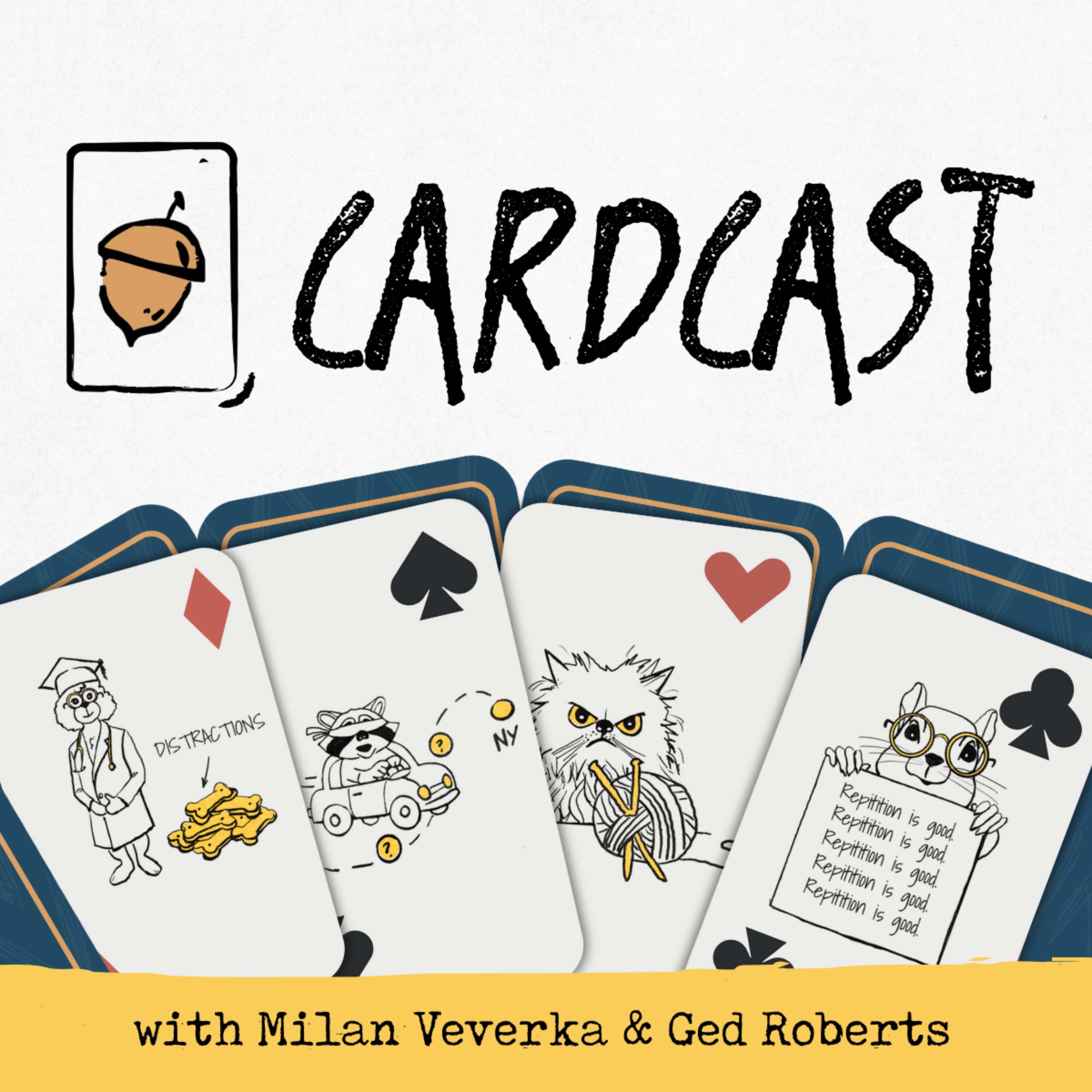
CardCast
by Milan Veverka and Ged Roberts
Welcome to CardCast! Inspired by Milan Veverka’s habit of jotting insights on blank playing cards, this practice grew into a digital archive and now a podcast. Hosted by Ged and Milan, each episode takes one card as a prompt to spark conversation on leadership, communication, and the human side of growth. The idea is simple: one card, one prompt, one meaningful conversation.
-
38
39. CEO Time Management: Why Busy Is Bad
I used to think “Luxury To Waste Time” sounded like something a CEO had to earn.Something you got to do once the inbox was empty, the team was aligned, the fires were out, and the business was finally running smoothly.But of course, that day rarely comes. There is always another message, another meeting, another customer issue, another decision waiting for attention. And somewhere along the way, many CEOs start to believe that being constantly busy is the same thing as leading well.That is why this card challenged me.Because the more we talked about it, the less it felt like a luxury. Sometimes, the time that looks unproductive from the outside may be the very time a CEO needs most. Time to think. Time to step back. Time to see what the business cannot see while everyone is trapped in the whirlwind.Busy has become a badge of honor. It has become a way of proving that we matter, that we are contributing, that we are needed. But busy can also be a warning sign.It can mean I have no time to think. No time to look ahead. No time to read, learn, plan, recharge, or imagine what is possible next. It can mean I am still holding onto work that should have been handed off months or years ago.A CEO might spend fourteen hours coding, checking customer support emails, or closing sales because that is where they feel competent. But if the real fire is in operations, strategy, team design, or the board, that busyness is not leadership. It is avoidance dressed up as productivity.The real work of a CEO often happens in the space between tasks.It happens while reading a book, walking the dog, going to a conference outside your industry, studying the market, spending time with family, or simply letting your mind get quiet enough to see what is next.That space is not laziness. It is not indulgence. It is where vision forms.I called this the CEO’s ability to “time travel”: to place yourself in the future, imagine the end state, and then work backward. It reminds me of something I learned in pilot school: never point the airplane somewhere you have not already been in your mind.If the business is flying you, you are not flying the business.And if you are too busy to think about where you are going, you may be wasting the most important time you have.Key-Card points:Busyness is not proof of leadershipThe real waste is doing work that is no longer yours White space is strategic work If you cannot step away, something is wrong The CEO must be able to “time travel.” Links & ResourcesLuxury To Waste TimeVeverka.caConnect with MilanVeverka.caLinkedInConnect with GedCrystalyzer.comLinkedInCardCast is produced by Lovemore Media.
-
37
38. Why Meeting Prep Is the First Sign of Accountability
I used to think meeting prep was just the responsible thing to do before a meeting. Read the dashboard. Check the agenda. Know your numbers. Show up ready.Useful, but not exactly profound.Then Damien Burn said something years ago that I have repeated more times than I can count:“I didn’t have time to prepare for a short meeting, so we are going to have a long one.”That line stuck with me because it names something every CEO has felt. You walk into a meeting expecting a decision, and instead, you spend half the time getting everyone caught up. The simple thing becomes complicated. The short meeting becomes a long one. And usually, it is not because the issue was unclear.It is because someone did not prepare.That is why this card is Meeting Prep.Meeting prep is not really about meetings. It is about accountability.Damien Burn joins us for this episode, and that feels especially fitting. He was my coach during a pivotal season when I was still a CEO, and his influence helped shape my own path into coaching. He brings a direct, practical lens to accountability, meeting rhythm, metric ownership, and the habits that turn strong individuals into a real leadership team.Because when someone shows up late, unprepared, or sees their numbers for the first time in the meeting, they are telling you something. They may not mean to, but they are saying, “I did not treat this as important enough before I walked in.”A prepared team can make decisions. An unprepared team creates more meetings. A prepared leader can own the number, name the issue, and ask for help early. An unprepared leader waits until someone notices, then offers an excuse.Meeting prep opens the door to the bigger conversation: peer accountability, metric ownership, first-team thinking, and culture. If you own a metric, you should know the number. If you sit on the leadership team, that is your first team. And if you are the CEO, culture is not something you delegate and hope for the best.Key-Card points:Meeting prep is a signal of respect Unprepared meetings create more meetings A players prepare differently Peer accountability matters Culture is the CEO’s accountability Links & ResourcesMeeting PrepVeverka.caConnect with MilanVeverka.caLinkedInConnect with GedCrystalyzer.comLinkedInCardCast is produced by Lovemore Media.
-
36
37. The #1 Interview Question to Ask Before You Hire Someone
I keep coming back to one simple hiring question: What DON’T you want to do?It sounds simple, but in a job interview, it can reveal what a polished resume never will. Most interviews focus on what someone is good at, what they’ve achieved, and what they want next. But this question flips the conversation. It asks for the truth behind the performance.That’s what I love about this card. It doesn’t try to trick anyone. It gives people room to be clear, and it belongs in every serious hiring conversation.A-players usually know what energizes them, but they also know what drains them. They are not trying to be everything to everyone. They know where they create value, and where they start to lose energy.And that kind of clarity matters.Because hiring for fit is not just about finding someone who can do the job. It is about finding someone who actually wants the work the role requires. A great hiring question should help both sides see the truth before day one.Hiring someone is only the beginning. Keeping them means giving them more of the work they came to do, and less of the work that quietly makes them want to leave.Sometimes what a candidate says matters. But how they answer tells you even more.Key-Card points:What A-players know about themselves Why “what don’t you want to do?” belongs in interviews How to spot role misalignment early Why vague answers are a red flag How leaders can hire for fit, not just skill Links & ResourcesWhat DON’T you want to do?Veverka.caConnect with MilanVeverka.caLinkedInConnect with GedCrystalyzer.comLinkedInCardCast is produced by Lovemore Media.
-
35
36. Reframe with Milan Veverka and Ged Roberts
Welcome back to CardCast! Today, we’re going to be talking about Reframe.There’s a moment I keep noticing in everyday scenarios where everything just stops… And it usually sounds like, “We can’t do that.”And the second that lands, the room changes, and the energy drops. It’s like we’ve all agreed to shut the door without even checking if it’s locked. That’s where Reframe steps in.Instead of accepting it, you flip it: “What would need to be true for this to work?”That one shift doesn’t guarantee anything, but it changes the posture completely. You move from defending the problem to actually exploring it. Because “we can’t” is almost never a fact. It’s usually a pile of assumptions we haven’t bothered to question.And then there are the harder moments, the ones no one wants to reframe, like layoffs. The shift there wasn’t to pretend it was good, but to recognize that the company was heading toward a restructure anyway. Now it was being forced to do it. So the question became how to do it well, without wasting the moment.That’s the thing about reframing. It doesn’t make situations easier. It just makes them usable.Key-Card points:“We can’t” is usually an assumption, not a factReframing shifts you from defensive thinking to creative thinkingConstraints can become strategic advantagesThe best reframes often involve who, not howComfort is the biggest enemy of better thinkingLinks & ResourcesReframeVeverka.caConnect with MilanVeverka.caLinkedInConnect with GedCrystalyzer.comLinkedInCardCast is produced by Lovemore Media.
-
34
34. Big Debate vs Big Decisions with Milan Veverka and Ged Roberts
Are we debating or are we deciding? That is the question.Welcome back to CardCast! Today, we’re going to be talking about Big Debate vs Big Decisions.This card takes me back to every meeting that somehow ends with… “let’s circle back.” It’s not because the team is lazy, but because no one ever decided what the meeting was actually for.The Big Debate, Big Decisions card draws a sharp (and surprisingly powerful) line between two very different modes: debate and decision. One is about exploring and questioning, while the other is about committing, choosing, and moving forward.The problem? Most teams try to do both at the same time and end up doing neither well.When you remove the pressure to decide, the debate gets better. When you separate the decision, commitment gets stronger. And when people feel heard in the debate, they’re far more willing to disagree and commit to the decision.It’s not about more meetings. It’s about a clearer intent.Key-Card points:Debate and decision are two completely different mental statesRemoving decision pressure creates better thinkingIf you only have two options, you probably don’t have optionsA short pause goes a long wayLinks & ResourcesBig Debate, Big DecisionsVeverka.caConnect with MilanVeverka.caLinkedInConnect with GedCrystalyzer.comLinkedInCardCast is produced by Lovemore Media.
-
33
33. The Impossible Goal with Milan Veverka and Ged Roberts
Welcome back to CardCast! Today, we’re going to be talking about The Impossible Goal.This card takes me back to a moment where something felt completely impossible: realizing the night before a flight that both my kids’ passports had expired.For a second, our trip was over… But then it wasn’t about options anymore. There was only one question: Is there a way?And there was. We didn’t have time to overthink the situation. All we could do was execute and see if it worked.And it did!That’s really what this card is about.That’s what The Impossible Goal is about. That situation only worked because it was constrained and forced quick thinking and execution.Most of the time, we give ourselves more time and flexibility, and ironically, that’s what slows us down. We create options we don’t need.But when you set something that feels almost unrealistic and ask, “What has to be true for me to achieve this goal?”, everything sharpens.You stop doing things that don’t move you forward, and you focus on the one path that does.Key-Card points:Impossible goals create clarity“What needs to be true?” is the unlockConstraints are not the enemyFocus requires sacrifice (or prioritization)You can manufacture urgencyLinks & ResourcesThe Impossible GoalVeverka.caConnect with MilanVeverka.caLinkedInConnect with GedCrystalyzer.comLinkedInCardCast is produced by Lovemore Media.
-
32
32. The Don’t Do List with Milan Veverka and Ged Roberts
Welcome back to CardCast! Today, we’re going to be talking about The Don’t Do List.We’re all great at building to-do lists. Adding. Expanding… But is anyone intentional about stopping?And that’s where the real leverage is.Because every low-value task we keep doing isn’t neutral, it’s actively stealing time and energy from something better. That’s the real cost. Not what we’re doing… but what we’re not doing because of it.The greatest thing about the “do not do” list is that it exposes hidden inefficiencies, and that the highest ROI move in most organizations isn’t adding something new, it’s removing what no longer matters.The takeaway is simple, but not easy:If you want better outcomes, don’t just ask what to do next. Ask what needs to stop.Key-Card points:Low-value work creates hidden opportunity costStopping often requires investmentThe best organizations treat the don’t do list as ongoingEven useful tasks can be harmful if they block higher-value workLinks & ResourcesThe Don't Do ListVeverka.caConnect with MilanVeverka.caLinkedInConnect with GedCrystalyzer.comLinkedInCardCast is produced by Lovemore Media.
-
31
31. On A.I. with Carter Jensen
Welcome back to CardCast! Today's episode sees us joined by our second guest, Carter Jensen, and the topic couldn’t be more relevant today:Everything A.I.This episode brings three AI cards together: AI, Not How, How to AI, and Value of AI.AI isn’t just another hype cycle like past tech trends; it’s a fundamental shift. The real divide isn’t between companies using AI and those that aren’t; it’s between those using it well and those using it poorly.AI is quickly becoming a new kind of workforce, one that can take on repetitive, research-heavy tasks, freeing humans to focus on their actual zone of genius. When it comes to actually using AI, the answer is surprisingly simple: start. Don’t chase every new tool or trend, but bring AI into your day-to-day workflow. Treat it like a co-pilot.Every task becomes a prompt: “How could AI help with this?” The real value of AI is leverage. It gives individuals and teams access to a level of knowledge and capability that simply wasn’t possible before.The cost of ignoring AI isn’t standing still, it’s falling behind.Key-Card points:AI is a “who,” not a “how.”AI should free humans to focus on their zone of geniusTreat AI like a co-pilot, not a shortcutThe winners are integrating AI into workflowsThe biggest risk isn’t using AI wrong, it’s not using it at allLinks & ResourcesAI, not HowHow to AI?Value of AIVeverka.caConnect with MilanVeverka.caLinkedInConnect with GedCrystalyzer.comLinkedInCardCast is produced by Lovemore Media.
-
30
30. Metric Ownership with Ged and Milan
Welcome back to CardCast! Today, we’re going to be talking about Metric Ownership.For a long time, metrics have been treated as something that simply exists. A number on a dashboard. A graph trending up or down. Useful, yes, but passive.Something you observe, and maybe even predict. But ownership changes that entirely. A metric is no longer just reporting what’s happening; it’s telling someone whether they are winning or losing.So who owns it? Not the person compiling the data or maintaining the system that produces the number. That’s a support function. Ownership belongs to the person or team whose actions directly influence the result.They are the ones who must understand what drives the number and what needs to change when it’s off track.To own a metric is to live it. You shouldn’t be surprised by it in a meeting. You should already know where it stands and what you’re doing about it. You’re not there to stare at the gauges, you’re there to fly the plane. The metric simply tells you if you’re on course.Key-Card points:A metric isn’t something you observe; it’s something you’re accountable forOwnership belongs to the person who can influence the outcomeEvery role should have a clear “this is how I’m doing” metricIf a metric is off track, the owner is responsible for changing the trajectoryYou should never be surprised by your own number in a meetingLinks & ResourcesMetric OwnershipVeverka.caConnect with MilanVeverka.caLinkedInConnect with GedCrystalyzer.comLinkedInCardCast is produced by Lovemore Media.
-
29
29. Haste and Hesitation with Ged and Milan
Welcome back to CardCast! Today, we’re doing something a little different. Instead of exploring a single card, we’re talking about two: The Art of Slowing (TF) Down and The Cost of Hesitation.At first glance, these cards are about opposite problems. One warns against rushing decisions under pressure, while the other highlights the damage caused when decisions are delayed until the opportunity has passed.But the real lesson lies somewhere in between.In business, speed is often celebrated. Bias for action and rapid growth are all treated as virtues. Yet acting too quickly can lead to poor choices and teams chasing urgent distractions instead of focusing on what truly matters.At the same time, hesitation has its own cost. Decisions can be debated endlessly when action would have actually made a difference. So how do leaders find the right balance?It all comes down to how to think more deliberately about the pace of decision-making. Sometimes the right move is to act quickly. Sometimes it’s to slow down and gain clarity before committing.The key is to move at the right pace, at the right moment, for the right reason.Key-Card points:Speed isn’t always the answerHesitation has a cost, tooLeadership requires balanceDecide how to decideCreate distance before reactingLinks & ResourcesThe Art Of Slowing DownThe Cost Of HesitationVeverka.caConnect with MilanVeverka.caLinkedInConnect with GedCrystalyzer.comLinkedInCardCast is produced by Lovemore Media.
-
28
28. Lovable Losers and the Other Ones with Ged and Milan
Welcome back to CardCast! Today, we’re going to be talking about Lovable Losers and the Other Ones.This is a concept I first heard from Greg Crabtree, who paired it with another memorable term: “terrorists.” Unfortunately, that title didn’t play nicely with search algorithms, but the idea behind it is still incredibly useful.These labels describe two very different, yet equally difficult leadership problems.A Lovable Loser is someone everyone likes. They embody the company’s values and are often deeply woven into the fabric of the organization. But when it comes to performance, they simply aren’t delivering. Because they’re well-liked and often long-tenured, leaders struggle to confront the reality that the role may have outgrown them.On the other side, there are the people Greg called terrorists. These are high performers who hold the organization hostage with their results. They may hit their targets and deliver strong outcomes, but they damage the culture around them. Leaders hesitate to act because the numbers look good on paper.Both situations force leaders to compromise their standards, either on performance or on culture.The truth is this: the only thing worse than not having someone in a role is having the wrong person in it.And the rest of your team already knows it.Key-Card points:Ask the uncomfortable questionThe challenge of “lovable losers”High performers who damage cultureThe cost of inactionNot every solution is terminationLinks & ResourcesLovable Losers & The Other OnesVeverka.caConnect with MilanVeverka.caLinkedInConnect with GedCrystalyzer.comLinkedInCardCast is produced by Lovemore Media.
-
27
27. Coach or Couch with Pamela Carrington Rotto
Welcome back to CardCast! Today's episode is a little different as we are joined by our very first guest, Dr. Pamela Carrington Rotto, and the topic is simple, but powerful:Coach… or Couch?Dr. Pamela Carrington Rotto, founder of Markay Advisors LLC, helps CEOs and leadership teams scale their companies and achieve legacy-driven success by overcoming misaligned teams, performance gaps, and stalled processes.She holds a Ph.D. and MS from the University of Wisconsin–Madison and is a Licensed Psychologist. Her background spans the Growth Institute, International Coaching Federation, NeuroLeadership Institute, Greatness U, and Inspired Outcomes (NLP), Sandler Sales Training, and ongoing advanced business education every year since 2013.In short, she sits in both worlds: coaching and psychology.Coaching is future-focused. It clarifies goals and defines action. Therapy, on the other hand, looks at what you are carrying and the emotional weight that may be slowing you down.If the conversation lives in the future, you are in coaching territory. If it keeps circling the past, something may need to be unpacked first.So the question is not whether you are “bad enough” to need therapy. The question is, are you trying to run while carrying unnecessary weight? Key-Card points:Coaching Drives Forward MomentumTherapy Increases CapacityHigh Performers Seek Therapy for Capacity, Not CrisisKey Red FlagsCoaching accelerates when emotional weight is removedLinks & ResourcesCoach or CouchVeverka.caConnect with MilanVeverka.caLinkedInConnect with GedCrystalyzer.comLinkedInCardCast is produced by Lovemore Media.
-
26
26. Valley of Death with Ged and Milan
Welcome back to CardCast! Today, we’re going to be talking about the Valley of Death.I keep coming back to this topic, not because it is a new idea, but because it is consistently encountered and often underestimated.At certain points in a company’s growth, what once felt natural begins to feel forced. Decisions that used to work… stop working. Leaders describe it the same way every time: “It used to be easy. Now it’s hard.”That is usually the signal.What I see most often is companies that optimize for the immediate climb. The focus becomes, “Let’s get to five million,” without asking whether the decisions made to get there will support hitting a target of 100 million.Systems are put in place to accelerate short-term output. Processes are layered in that solve today’s constraint while quietly hard-coding tomorrow’s ceiling. The company grows but only as far as those decisions allow.This is where the Valley of Death begins.Organizations mistake friction for failure when, in reality, they have simply reached the limits of the model that got them there.In order for companies to continuously grow, they have to build not for the next milestone, but for the ultimate destination and choose systems, pricing, people, and positioning that may slow early growth but sustain long-term ascent.Key-Card points:The Valley of Death is predictable, not accidental“It used to be easy, now it’s hard” is the signalBuild for the long term, not the next milestone Friction is often misdiagnosed as failureThe Valley is a design consequenceLinks & ResourcesValley of DeathVeverka.caConnect with MilanVeverka.caLinkedInConnect with GedCrystalyzer.comLinkedInCardCast is produced by Lovemore Media.
-
25
25. Lead or Leave with Ged and Milan
Welcome back to CardCast! Today, we’re going to be talking about Lead or Leave.There’s a tension behind this card. It lives in the CEO mindset suit, but it applies to anyone leading anything. At some point, what got you here stops being enough to get you there. Founders often build companies on grit, surrounding themselves with strong executors who can manage chaos. That works in the early stages… until the business outgrows that model.Then the signals start. Growth stalls. Energy drains. The work stops being fun. The organization fragments in small but telling ways. It’s rarely about the market; it’s about leadership capacity no longer matching company needs.At that fork, there are two paths: Lead or Leave.To Lead means transforming and upgrading skills, unlearning survival habits, making hard decisions, and building real leadership depth. To Leave means surrendering control and stepping aside for someone better suited to scale the business, whether by exiting or moving into a different role.Ironically, both paths start the same way: behavior must change. If you’re at the plateau, the first move is honesty. The second is change.Key-Card points:Plateaus are often leadership ceilingsWhat built the business won’t scale itBurnout is often misalignmentStepping aside isn’t always permanentSelf-awareness is the unlockLinks & ResourcesLead or LeaveVeverka.caConnect with MilanVeverka.caLinkedInConnect with GedCrystalyzer.comLinkedInCardCast is produced by Lovemore Media.
-
24
24. Setting Expectations with Ged and Milan
Welcome back to CardCast! Today, we’re going to be talking about Setting Expectations.One of the most common leadership failures is assuming that expectations are “obvious.”People are hired into roles, assigned projects, and even evaluated on outcomes without ever having an explicit understanding of what success looks like. When expectations are unclear or only assumed to be clear, disappointment and frustration are almost always guaranteed.Fear of difficult conversations or reluctance to ask clarifying questions only compounds the issue. Without deliberate checks, these issues can persist unnoticed until it shows up as underperformance or broken trust.The solution? Communicate! Slow down and define what the outcome is. What matters here is ensuring that both sides interpret the same words and numbers in the same way. Clear expectations create the foundation for trust and accountability. Expecting others to read your mind does not. Key-Card points:Leadership by osmosis doesn’t workUnclear expectations damage both sidesClarity requires slowing down upfrontFeedback loops are essentialExpectation-setting is a delegation skillLinks & ResourcesSetting ExpectationsVeverka.caConnect with MilanVeverka.caLinkedInConnect with GedCrystalyzer.comLinkedInCardCast is produced by Lovemore Media.
-
23
23. Time Audit with Ged and Milan
Welcome back to CardCast! Today, we’re going to be talking about Time Audits.Where does your time actually go, and does it align with what matters most?The Time Audit is a simple but revealing way to answer that question. Most people have a vague sense of which parts of their work energize them and which quietly drain them, but few ever slow down long enough to collect real evidence.By replacing guesswork with clarity, a time audit gives us a more honest picture of how our days are actually spent.At the end of the day, the goal isn’t to work less, but to work on the right things more often. When enjoyment and value overlap, work tends to feel lighter and more sustainable.Ultimately, the time audit is about reflection, not perfection. The insight comes from paying attention consistently, honestly, and without shortcuts.Those who take the time to do it tend to walk away surprised, clearer, and better equipped to make intentional changes. Key-Card points:Time audits create clarity by replacing assumptions with real dataTracking time reveals where control is being lost unintentionallyValue can mean dollars, impact, or long-term investmentReflection matters more than rigid frameworksConsistent audits reveal progress over timeLinks & ResourcesTime AuditVeverka.caConnect with MilanVeverka.caLinkedInConnect with GedCrystalyzer.comLinkedInCardCast is produced by Lovemore Media.
-
22
22. Clarity Before Feedback with Ged and Milan
Welcome back to CardCast! Today, we’re going to be talking about Clarity Before Feedback.Why is clarity so important? Because most of us experience the very human habit of answering too quickly, only to realize we’ve missed something important.We’ve all done this at some point in our lives. Especially under pressure or frustration, it’s tempting to jump straight to the answer because it feels right. Sometimes it can be the right thing to do, but the moments when it isn’t can be uncomfortable at best and quietly damaging at worst.Our conversation today looks at the ongoing practice of slowing down in those moments. Pausing just long enough to ask ourselves: Do I really have the full context? Is this obvious to them? Have they already tried this? Am I solving the problem they’re actually asking about? Without that clarity, even well-intended feedback can land as dismissive or condescending.That’s why clarity matters so much before feedback. Taking time here can be the difference between being supportive and unintentionally shutting someone down. Key-Card points:Jumping straight to solutions can lead to wasted effortFeedback given without clarity can feel dismissive or condescendingSlowing down creates space for better understandingInviting correction builds trust and signals respectClarity before feedback is about being more helpful.Links & ResourcesClarity Before FeedbackVeverka.caConnect with MilanVeverka.caLinkedInConnect with GedCrystalyzer.comLinkedInCardCast is produced by Lovemore Media.
-
21
21. What Do You Recommend? with Ged and Milan
Welcome back to CardCast! Today, we’re going to be talking about What Do You Recommend?Does your team come to you with every question?Do you feel like progress slows the moment you’re unavailable?This is usually not a people problem; it’s a leadership habit. Most leaders get promoted because they’re excellent at solving problems, so answering quickly feels helpful, efficient, and even generous. But over time, that instinct quietly trains teams to stop thinking and start asking for permission instead.The conversation centers on a simple but counterintuitive shift: stop answering and start asking. When leaders respond to questions with “What do you recommend?”, something surprising happens.In most cases, people already know the answer. They’re not lacking intelligence or skill; they’re lacking permission. By always providing solutions, leaders create dependency, learned helplessness, and ultimately become the bottleneck themselves.The next time a question lands on your desk, pause, because the fastest way forward may be giving permission, not answers.Key-Card points:Consistently answering questions trains dependencyAsking, “What do you recommend?” unlocks confidence and capability.Providing quick answers creates long-term bottlenecksGreat leadership uses results to develop peopleAsking for recommendations reveals how your team thinksLinks & ResourcesWhat Do You Recommend?Veverka.caConnect with MilanVeverka.caLinkedInConnect with GedCrystalyzer.comLinkedInCardCast is produced by Lovemore Media.
-
20
20. The Evil of Daily Huddle with Ged and Milan
Welcome back to CardCast! Today, we’re going to be talking about The Evil of Daily Huddle.The daily huddle often meets immediate resistance—people don’t want to do it. A daily huddle isn’t about adding meetings; it’s about creating a shared execution rhythm.What makes it feel “evil” to some is the accountability it introduces: when people say what they’ll do and are asked about it the next day, transparency becomes unavoidable, and patterns quickly emerge.Beyond accountability, daily huddles deliver powerful compounding benefits. They strengthen team cohesion, dramatically improve communication efficiency, and reduce constant interruptions by making priorities visible upfront. An effective daily huddle is short, held at an odd time, and tightly structured. The agenda is simple: good news, what was completed yesterday, the single most important priority for today, and any blockers or needs for help. Problems aren’t solved in the huddle; they’re identified and handled afterward, keeping the meeting fast and focused.When practiced consistently, daily huddles become one of the highest-return leadership habits available, and if someone isn’t willing to commit to them, it’s usually not because huddles don’t work, but because accountability makes them uncomfortable.Key-Card points:The daily huddle feels “evil” because it creates unavoidable accountabilityDaily huddles expose the say–do ratioWhen teams check in daily, the truth has nowhere to hideHuddles are short, structured, and focusedPurpose matters more than formatLinks & ResourcesThe Evil of Daily HuddleVeverka.caConnect with MilanVeverka.caLinkedInConnect with GedCrystalyzer.comLinkedInCardCast is produced by Lovemore Media.
-
19
19. The 10-80-10 Principle with Ged and Milan
Welcome back to CardCast! Today, we’re going to be talking about The 10-80-10 Principle.Do you feel that familiar pull of “I’ll just do it myself”?The 10-80-10 Principle exists precisely to interrupt that reflex. Borrowed from Dan Martell’s Buy Back Your Time, it’s a simple, practical way to let go of work without letting go of standards.It acknowledges the very real tension leaders feel: the work needs to be done, it needs to be done well, and it feels faster to do it yourself.The first 10% is where most delegation quietly fails. This is the work of clarity: defining the outcome, explaining why it matters, setting expectations, and sharing context that normally lives only in our heads. The truth is, if someone “can’t do it right,” very often it’s because we never truly showed them what “right” looks like.The 80% is the handoff. This is where someone else does the work. It won’t be perfect, and that’s the point! As Martell puts it, 80% done is 100% awesome. The real win here isn’t just time saved; it’s breaking the pattern of “I’ll do it myself”.The final 10% brings it back to us for review, feedback, and refinement. We make sure the result matches the intent, we close any gaps, and we help lock in learning for next time.Over time, this shifts us out of doing and into designing better systems, work that scales, develops people, and unties the business from us personally. The key question is: if you didn’t have to do the middle 80%, what higher-value work could you finally focus on?Key-Card points:The goal is to build systems, not personal dependenceDelegation is also about transferring learning, not just tasksMost delegation fails due to unclear outcomes, not weak executionDoing it yourself may feel faster, but it creates long-term dependenceDelegation done well grows people and frees leaders at the same timeLinks & ResourcesThe 10-80-10 PrincipleVeverka.caConnect with MilanVeverka.caLinkedInConnect with GedCrystalyzer.comLinkedInCardCast is produced by Lovemore Media.
-
18
18. The Loneliness Of A CEO with Ged and Milan
Welcome back to CardCast! Today, we’re going to be talking about The Loneliness Of A CEO.Being a CEO can be profoundly lonely. Loneliness at the top is far more common than most leaders admit. The role places you in a position where responsibility is absolute, yet support is limited. You can’t always speak freely with your board, your team, or even your family, and over time that isolation can become heavy, quiet, and deeply draining.CEOs live in a different space, mentally, emotionally, and often several quarters ahead of everyone else.Carrying that weight alone can lead to burnout, poor decisions, or serious mental health consequences if left unchecked. The key takeaway is simple: this isn’t a personal failure, it’s a structural reality, and it requires intentional prevention, not crisis management.Ultimately, leadership requires the same rule every airline teaches: put your oxygen mask on first. CEOs are the caretakers of their organizations, but someone has to take care of the caretakers.If you don’t invest in your own well-being and support network, you limit your ability to lead others. Become intentional about who supports you before loneliness turns into something far more costly.Key-Card points:Loneliness at the top is a structural realityLeaders need intentional support systems before things break downTherapy is maintenance, not a failureHealthy boundaries are essential to protect relationshipsCEOs are the caretakers of organizations Links & ResourcesThe Loneliness Of A CEOVeverka.caConnect with MilanVeverka.caLinkedInConnect with GedCrystalyzer.comLinkedInCardCast is produced by Lovemore Media.
-
17
17. Core Customer with Ged and Milan
Welcome back to CardCast! Today, we’re going to be talking about Core CustomersDo you know who your core customer really is?Most companies think they do. Many are wrong. Early on, it’s common to take any customer who will buy. Revenue feels sacred. But over time, this creates a portfolio full of customers who are hard to please, expensive to serve, and misaligned with what the business does best.Not all customers are worth the same effort. Teams often pour disproportionate energy into the least happy customers, trying to rescue the 2’s and 3’s. At best, they become 4’s. Meanwhile, the 5’s, the customers you already know how to serve well, are neglected.Those are the ones who can become 6’s and 7’s: repeat buyers, referrers, and advocates who grow your business with far less friction.A core customer is not a company. It’s a person. Someone who is profitable to serve and enjoyable to work with. They understand your value, are willing to pay your premium, come back again and again, and happily recommend you to others.This often leads to an uncomfortable conclusion: some customers should be let go. Many businesses discover that 10–20% of their customers actually cost money once all effort is accounted for.Sunsetting those relationships, gracefully, frees up time, energy, and people to focus on the customers that matter most. Do the work to define your core customer. Then double down. The shift is challenging, but the payoff is immediate and lasting.Key-Card points:Not all customers are worth equal effortA core customer is a person, not a companyLet go of non-core customersDoubling down on the right customer will lead to faster growthLinks & ResourcesCore CustomerVeverka.caConnect with MilanVeverka.caLinkedInConnect with GedCrystalyzer.comLinkedInCardCast is produced by Lovemore Media.
-
16
16. The 1-3-1 Principle with Ged and Milan
Welcome back to CardCast! Today, we’re going to be talking about The 1-3-1 PrincipleDo you ever feel like your day disappears into answering questions, making small decisions, and unblocking things your team should be able to handle?When you’re the one everyone relies on for answers, being “helpful” can quietly turn into becoming the bottleneck.The 1-3-1 Principle is a simple but powerful leadership tool that changes how problems are brought forward. Instead of arriving with a question alone, people come with:1 clearly defined problem3 solutions they’ve already thought through1 recommendation they believe is best.The focus shifts from asking for answers to demonstrating judgment and ownership.Shifting from “builder of the thing” to “builder of the team” creates leverage, improves decision quality, and frees leaders to work on what truly requires their perspective.The 1-3-1 Principle is about developing people who can think, decide, and act with confidence, so leaders can step out of the weeds and into the work of leading.Key-Card points:Being the answer creates a bottleneckAsking “What do you recommend?” builds ownership.Leaders evaluate judgment, not just solutions.Teams grow more confident and proactive.Links & ResourcesThe 1-3-1 PrincipleVeverka.caConnect with MilanVeverka.caLinkedInConnect with GedCrystalyzer.comLinkedInCardCast is produced by Lovemore Media.
-
15
15. Where Did All The Money Go? with Ged and Milan
Welcome back to Cardcast! Today, we’re going to be talking about Where Did All The Money Go?Are you growing year after year yet still wondering, “Where did all the money go?”Many founder-led companies celebrate revenue wins while their bank balance quietly tells a much harder truth. Without clear visibility into the financial mechanics of the business, success can feel like running faster just to stay in the same place, or worse, slipping backward.It becomes especially problematic when founders operate reactively: looking at financial results only after they’ve already happened. At that point, the numbers are no longer guidance; they’re a report card. And a painful one. Revenue may suggest progress, but if no cash is left in the bank, the model isn’t working the way you think it is.The encouraging news is this: once you surface the real financial signals and put a cash-focused system in place, the mystery evaporates quickly. You begin to see which decisions generate return… and which quietly drain resources month after month.A profitable business isn’t just one that sells well; it’s one where the CEO can confidently say the effort, investment, and risk are creating wealth, not eroding it. Key-Card points:Strong revenue doesn’t guarantee cashLabor inefficiencies and delayed performance decisions quietly erode profitGrowth consumes cash before it returnsAnnual accounting is too lateHealthy businesses produce wealth and sustain the CEOLinks & ResourcesWhere Did All The Money Go?Veverka.caConnect with MilanVeverka.caLinkedInConnect with GedCrystalyzer.comLinkedInCardCast is produced by Lovemore Media.
-
14
14. To Plan Or Not To Plan with Ged and Milan
Welcome back to Cardcast! Today, we’re going to be talking about To Plan Or Not To Plan.That’s the question… again. There’s a popular take floating around that planning is a waste of time because things always change, especially in early-stage companies.Sure, no plan survives first contact with reality. But to jump from that to “planning is useless” is a leap over a very important distinction.Plans rarely come true exactly as written. They aren’t meant to. The real value is in the planning: imagining where you want to go, working backward from that future to today, and making deliberate decisions based on that direction.As Greg Crabtree put it: “He who aims at nothing hits it with amazing accuracy.”Good planning assumes change. It gives you a baseline so that when new information inevitably shows up, and it most certainly will, you can adjust early instead of scrambling at the end. Strategy, planning, and plans are not interchangeable. Strategy defines how you’ll win. Planning is the process of turning that into a path. And the plan is simply today’s best guess at that path.Be stubborn about the goal. Be flexible about the details. Because without a plan, the plane flies you, and that’s not a strategy.Key-Card points:Plans will change, planning is what mattersStart with the future goal and work backwardStrategy = how you win. Planning = mapping the pathBe stubborn about the goal, flexible about the planLinks & ResourcesTo Plan Or Not To PlanVeverka.caConnect with MilanVeverka.caLinkedInConnect with GedCrystalyzer.comLinkedInCardCast is produced by Lovemore Media.
-
13
13. Reviews, Ratings, & Feedback with Ged and Milan
Welcome back to Cardcast! Today, we’re going to be talking about Reviews, Ratings, & Feedback.When I talk to leaders and teams about “reviews,” I know exactly what comes to mind. Traditional performance reviews are dreaded, confusing, often tied only to raises, and frankly, mostly useless.They take a ton of energy and produce almost nothing helpful. So I make it clear from the beginning: we are not doing performance reviews, we are doing coaching reviews. I always pair coaching reviews with consistent one-on-one leadership. Feedback works best when it happens frequently and close to the moment it matters. I love the way color ratings make expectations visible: red means something is not working and we need a real conversation, green means good, and super green deserves recognition.The most powerful rating is yellow, or as I explain it now, good for now. It signals that things are working today, and that we still need to talk to make sure they continue to work as the business grows. There is no element of surprise, no fear, just clarity and collaboration.And when we do this right, the team feels supported, coaching becomes simple, and reviews take minutes instead of hours. The goal is not to avoid difficult conversations but to create a structure that makes them easier and more constructive.Coaching reviews are a right of every team member and one of the easiest ways to build alignment, improvement, and momentum. So I ask leaders: how are you giving feedback, and what opportunities are you creating for your team to help you grow, too?Key-Card points:Are traditional performance reviews ineffective?How scorecards create clear expectations for each role.The ideal review cadence for real improvementEliminating surprise through frequent coachingLinks & ResourcesReviews, Ratings, & FeedbackVeverka.caConnect with MilanVeverka.caLinkedInConnect with GedCrystalyzer.comLinkedInCardCast is produced by Lovemore Media.
-
12
12. The Good News About Good News with Ged and Milan
Welcome back to Cardcast! Today, we’re going to be talking about The Good News About Good News.When I start a meeting, I always begin with good news, and I insist my clients do the same. Starting with positivity sets the tone for the rest of the conversation. Whether it’s personal or professional, it invites people to bring their energy, humanity, and optimism into the room. A meeting that begins on a high note naturally continues with more openness, creativity, and engagement.The bad news? Not everyone embraces it right away. I’ve heard every version of “I don’t have any good news” or “it’s hard to come up with something every day.” But that’s exactly the point! It forces you to look for the good, even when it’s not obvious.Over time, this trains your brain to think creatively instead of reactively, and that shift is where real performance begins. What I love most about good news is how it strengthens relationships. You learn what matters to your teammates, what they’re proud of, what they care about, what’s happening in their lives. That builds empathy and trust, two ingredients you can’t fake.I’ve seen teams transform from reserved and disconnected to open, cohesive, and genuinely supportive, all because they began to share a bit more of themselves each time they met.And here’s the deeper magic: good news is one of the best ways to live your Core Values. When someone recognizes a colleague for acting on a value, it reinforces that those words on the wall actually mean something. So if you’re still wondering how to start your meetings, here’s my advice: start with good news. Every time. It’s the simplest leadership tool with the biggest return.Key-Card points:Starting with good news lifts the energy in the roomThe point isn’t perfection, it’s building the habitThese moments reveal character, values, and shared humanityGood news reinforces culture and valuesLinks & ResourcesThe Good News About Good NewsVeverka.caConnect with MilanVeverka.caLinkedInConnect with GedCrystalyzer.comLinkedInCardCast is produced by Lovemore Media.
-
11
11. Function Scorecards with Ged and Milan
Welcome back to Cardcast! Today, we’re going to be talking about Function ScorecardsWhat is the purpose of Function Scorecards?A scorecard is meant to define the outcomes of a function, not to evaluate an individual’s personal performance. The key is understanding that the scorecard describes what a function within the organization is accountable for, not what one person does.This distinction helps prevent confusion and ensures that accountability is distributed correctly across the organization.Function Scorecards are one of the most powerful tools in the Metronomics system. I’ve been called a Scorecard Stickler—fair. I’ll take it. Because once you have clear scorecards, everything changes: hiring becomes easier, accountability sharper, and growth more intentional. Here’s the golden rule: build scorecards around functions, not people. It’s tempting to design them around whoever currently holds the role, but that limits your perspective. Step back from what you have and define what you need. Start with the mission, identify the competencies, and finally, add the metrics.Every function in your organization should have its own scorecard, including yours as CEO. Whether you’re hiring, restructuring, or conducting reviews, you’ll always know what “good” looks like and how to measure it.Key-Card points:Even experts need structureScorecards are foundationalScorecards should evolveThe focus is on the needs of the businessLinks & ResourcesFunction ScorecardsVeverka.caConnect with MilanVeverka.caLinkedInConnect with GedCrystalyzer.comLinkedInCardCast is produced by Lovemore Media.
-
10
10. Why Do A-Players Leave? with Ged and Milan
Welcome back to Cardcast! Today, we’re going to be talking about Why do A-Players Leave?When an A-player leaves, it’s rarely sudden. You feel the loss not just in performance, but in the quiet energy shift that follows, the meetings that drag, the spark that’s missing.These departures hurt because they’re almost always preventable. Most of the time, people don’t leave for better pay or titles; they leave because something in the environment made it impossible for them to keep giving their best.A-players thrive on vision and truth.They want to feel part of something meaningful and forward-moving. When leaders change direction too often, overpromise, or fail to back words with action, trust breaks down.The same thing happens when excellence isn’t protected. A-players draw energy from others who bring the same drive, but nothing demotivates faster than watching “sacred cows” coast by on tenure or politics. When accountability fades, so does ambition. Finally, there’s disempowerment: the quiet undermining of autonomy. Promises of authority and resources give way to micromanagement or disappearing support.High performers don’t stay where they can’t make an impact. Retaining them isn’t complicated: be clear, be fair, and mean what you say. Give them vision, trust, and a team that matches their pace, and they’ll not only stay—they’ll elevate everyone around them.Key-Card points:Losing A-players hurts because it’s almost always preventableA-players leave when expectations and reality stop aligningLack of vision erodes excitement and trustA-players leaving is often a reflection of leadership’s inaction or avoidanceLinks & ResourcesWhy Do A-Players Leave?Veverka.caConnect with MilanVeverka.caLinkedInConnect with GedCrystalyzer.comLinkedInCardCast is produced by Lovemore Media.
-
9
9. The Value of Values with Ged and Milan
Welcome back to Cardcast! Today, we’re going to be talking about The Value of Values.Do your company’s values live on the wall or in the day-to-day decisions of your people?It’s a question I wish more leaders would ask themselves. Too often, “values” are little more than a list of nice-sounding words: integrity, honesty, teamwork, printed on posters that inspire more eye-rolls than action. When employees hear them and groan, that’s a clear sign that your culture has a branding problem. Values that aren’t lived don’t build trust; they break it.The truth is, you don’t set values, you discover them. Every organization already has a set of guiding principles shaping behavior, whether or not anyone has named them. Your job as a leader is to bring those real values to the surface, test them, and make sure they align with the kind of organization you actually want to run. The payoff is huge! When values are visible and consistent, people know what “right” looks like. They start self-selecting in or out. Performance rises, misalignments fall away, and clarity replaces confusion. Jon Stewart once said, “If you don’t live your values when they’re being tested, they’re not values, they’re hobbies.” I’d take it even further: if your company’s values aren’t lived daily, they’re not hobbies, they’re lies.Help your people find meaning by making your values real, visible, and actionable. Otherwise, they’re just words on a wall.Key-Card points:Most organizations misunderstand valuesValues must be discovered, not setValues shape behavior and decisionsAlignment creates clarity and freedomCulture doesn’t change overnight; it evolvesLinks & ResourcesThe Value Of ValuesVeverka.caConnect with MilanVeverka.caLinkedInConnect with GedCrystalyzer.comLinkedInCardCast is produced by Lovemore Media.
-
8
8. The Art Of Leadership with Ged and Milan
Welcome back to Cardcast! Today, we’re going to be talking about The Art of Leadership.What makes YOU a great leader?Just the other day, I found myself speaking to a sharp group of business students at McGill University—future CEOs, founders, and innovators in the making. Somewhere between the talk of frameworks and execution, I kept coming back to two thinkers who’ve shaped my own view of leadership: Patrick Lencioni and Jim Collins. And Collins’ definition—one I first heard at his workshop not long ago—has stayed with me ever since:“Leadership is the art of getting people to want to do what must be done.”Leadership isn’t about command or compliance—it’s about inspiration. It’s about creating an environment where people want to act, not because they have to, but because they’re drawn to a shared vision. And like any true art form, leadership can’t be copied. As Collins puts it, if you’re simply imitating someone else’s style, that’s not art—it’s replication.Every leader carries a unique “encoding,” a blend of strengths, instincts, and quirks that make their leadership distinctly theirs. The work, then, isn’t about trying to become the next Richard, Steve, or Elon—it’s about becoming more of you.Self-awareness isn’t a luxury in leadership; it’s the foundation. The more you understand your own wiring, the better you can shape an environment where others thrive.Key-Card points:Leadership is an art, not a formulaThe goal is to inspire, not instructKnowing when to stop is part of the artFocus on amplifying strengths, not fixing weaknessesLinks & ResourcesThe Art Of LeadershipVeverka.caConnect with MilanVeverka.caLinkedInConnect with GedCrystalyzer.comLinkedInCardCast is produced by Lovemore Media.
-
7
7. Limiting Mindset with Ged and Milan
Welcome back to Cardcast! Today, we’re going to be talking about Limiting MindsetHow do you move beyond what you know to reach what you truly want?The Limiting Mindset. It’s that quiet voice that says, “We can’t do that because…” or “That’s not realistic given…” It’s the mindset that measures possibility by past performance, that looks backward to justify what’s ahead.As Metronomics coaches, we see it all the time. Our role, more often than not, is to help leaders notice where they’re unknowingly capping their own potential—and to shift that focus from what is to what could be.A Growth Mindset starts in the opposite direction. It begins with desire—with asking, “What do I actually want?” rather than “What’s possible based on what I have?” As Dr. Ben Hardy and Dan Sullivan describe in 10x Is Easier Than 2x and Be Your Future Self Now, this approach invites you to imagine your future self as if the goal were already achieved, and then work backward.When you start from that vantage point, the conversation changes. Suddenly, the question isn’t “Can we?” but “What needs to be true for this to happen?” That’s where real creativity and progress begin.Key-Card points:Limiting mindsets quietly shape decisionsGrowth starts with desire, not dataReframing transforms impossibility into strategyAwareness is the first step toward changeLinks & ResourcesDelegation vs AbdicationVeverka.caConnect with MilanVeverka.caLinkedInConnect with GedCrystalyzer.comLinkedInCardCast is produced by Lovemore Media.
-
6
6. Repetition with Ged and Milan
Welcome back to Cardcast! Today, we’re going to be talking about RepetitionSome people accuse me of repeating myself, but it’s not unconscious—I’m fully aware. When ideas return, I welcome them. They come through conversations, books, or clients, and I see that as the Universe saying, This is still relevant. Repetition isn’t laziness.Repetition is good.Each time we revisit a theme, it’s not the same river. Both the river and the person stepping in have changed. The context is new, the knowledge deeper, the perception altered. Coaches know this well: teams must hear values, purpose, and goals many times before they truly sink in. What feels like repetition is actually reinforcement, refinement, and learning from a new angle.Repetition is good.So don’t shy away from doing things again. Revisit values with your team, reread a favorite book, return to the same exercise or place. Every time, you arrive with a different knowledge set and a deeper understanding. That’s why repetition isn’t redundant—it’s essential. It’s how practice becomes mastery, how clarity takes hold, and how real change solidifies.Repetition is good.Key-Card points:Repetition is goodContext always changesRepetition builds masteryDoing things again creates progressRepetition is not redundancy; it’s reinforcementLinks & ResourcesDelegation vs AbdicationVeverka.caConnect with MilanVeverka.caLinkedInConnect with GedCrystalyzer.comLinkedInCardCast is produced by Lovemore Media.
-
5
5. Delegation vs Abdication with Ged and Milan
Welcome back to Cardcast! Today, we’re going to be talking about Delegation vs AbdicationThis card was born out of a conversation with a COO who asked whether a task had been delegated or abdicated. That distinction hit me hard, because I’ve seen abdication disguised as delegation many times. It shows up when leaders toss something off their desk and pretend it’s no longer their responsibility.The key difference here is accountability. I can hand off a task, a problem, or even a project, but I can’t hand off my accountability for the outcome—unless I’m doing a true handover to a peer. When you abdicate, you’re really creating a scapegoat, setting someone up to fail while excusing yourself if it doesn’t work out.Delegation, on the other hand, is an invitation to collaborate: “This is my accountability, and I’d like your help in delivering it.”When done well, delegation strengthens trust and performance. When done poorly, abdication undermines both. The challenge—and the opportunity—is to hold onto accountability while giving others meaningful responsibility, so they know I’ve got their back as they deliver.Key-Card points:Delegation vs AbdicationAccountability stays with the leaderDelegation requires supportCultivating collaborationLinks & ResourcesDelegation vs AbdicationVeverka.caConnect with MilanVeverka.caLinkedInConnect with GedCrystalyzer.comLinkedInCardCast is produced by Lovemore Media.
-
4
4. Love The Problem with Ged and Milan
Welcome back to Cardcast! Time zones may trip us up, but the real theme today is Love The Problem.Too often, entrepreneurs obsess over their clever solution while skipping the step that matters most: is there a real, painful problem worth solving? Greg Crabtree’s three stages—identify the problem, find a profitable way to solve it, and then tell everyone—are a clear reminder.When founders start from the solution, they risk building something nobody actually needs. The cheapest prototype isn’t the code, it’s the press release or landing page that tests whether anyone cares. Without evidence of a problem, even the flashiest tech is just noise.True strategy is about carving a unique and valuable position. That word—valuable—anchors everything. Value relative to your business model, your customers, and the size of their problems. It’s about talking to real customers, validating that the problem matters, and proving people will pay to solve it. Love the problem first, then the product. Key-Card points:Love the problem, not just the solutionThe best prototype is a press releaseBeware of building for yesterday’s marketValue is the core of strategyLinks & ResourcesThe Sandwich is deadVeverka.caConnect with MilanVeverka.caLinkedInConnect with GedCrystalyzer.comLinkedInCardCast is produced by Lovemore Media.
-
3
3. Metrics Matter with Ged and Milan
Welcome back to Cardcast! Today, we’re talking about the ever-loved Metrics.We love to hate them; they feel like a burden. Yet they’re essential. Metrics are simply what we choose to count, the signals that tell us how a business is operating. The trouble is, humans aren’t naturally good at picking the right ones. We often measure what’s easy, or what we’ve always tracked, rather than what truly matters.We’ve seen countless leadership teams struggle with this. Some metrics stick around long after they’ve served their purpose, while others—the ones that could drive better, faster decisions—go unmeasured because they’re hard or uncomfortable to capture. The exercise becomes asking three questions: What should we measure? What can we measure? And ultimately, what do we measure? The tension lies in those gaps.The best insights often come when we admit we’re measuring the wrong things or missing the right ones. Vanity metrics and legacy numbers add noise; leading indicators, though less certain, often provide the clarity to act before it’s too late. A metric, after all, is just what we’re counting. A target is where we want that number to land at a point in time. The real work is choosing wisely—because the wrong measures can demoralize, but the right ones can transform.Key-Card points:Metrics are necessary, but often flawed Beware of legacy and vanity in metricsAsk the 3 core questionsMetrics and targets are not the sameLinks & ResourcesThe Sandwich is deadVeverka.caConnect with MilanVeverka.caLinkedInConnect with GedCrystalyzer.comLinkedInCardCast is produced by Lovemore Media.
-
2
2. The 20 Mile March with Ged and Milan
Welcome back to Cardcast! You know the drill—one card, one idea, one conversation that somehow manages to switch from coaching to donuts to polar expeditions. Today’s pick from the deck? The 20 Mile March (which is also a concept based on the book “Great by Choice” by Jim Collins).The 20 Mile March is our way of saying: discipline beats drama. It’s about committing to steady, predictable progress—rain or shine, good day or bad—without sprinting so far ahead that you burn out. Think explorers crossing the South Pole, or Southwest Airlines patiently sticking to Texas before taking flight elsewhere. The magic here is in the rhythm: not too little, not too much, just the right pace to go the distance.In this episode, we unpack how this deceptively simple concept plays out everywhere—from building companies to writing books to sticking with your gym routine. We swap stories of success, failure, and even donuts (yes, really). The takeaway? The 20 Mile March isn’t about speed—it’s about consistency, resilience, and knowing when to push and when to pause.Key-Card points:Consistency beats intensitySet both lower and upper boundsPredictability creates resilienceCompounding is powerfulDesign your own marchLinks & ResourcesThe Sandwich is deadVeverka.caConnect with MilanVeverka.caLinkedInConnect with GedCrystalyzer.comLinkedInCardCast is produced by Lovemore Media.
-
1
1. The Sandwich Is Dead with Ged and Milan
Welcome to CardCast! Now, you might be thinking, “What on earth is a CardCast!?”. Let me explain…Cardcast was inspired by a curious habit developed by Milan Veverka—carrying a deck of blank playing cards to capture memorable quotes, ideas, and reflections from coaching sessions, books, and conversations. Over time, this analog deck evolved into a digital archive, and now, this very podcast - designed to explore the stories and insights behind each card.Hosted by Ged and Milan, each episode dives into one of these cards as a conversation starter, using it to unpack topics like leadership, communication, and the human side of professional growth. The idea is simple: one card, one prompt, one meaningful conversation.In this debut episode of Cardcast, Ged and Milan explore the card “The Sandwich Is Dead”—a critique of the well-worn “Feedback Sandwich” (aka: the Shit Sandwich) approach. They look into why this method often feels hollow or ineffective, and offer a more powerful alternative: a framework that turns confrontation into collaboration and helps leadership teams build trust and cohesion.Key-Card points:The flawed feedback sandwichThe S.A.F.E. methodThe role of cards as prompts Practice builds confidence Links & ResourcesThe Sandwich is deadVeverka.caConnect with MilanVeverka.caLinkedInConnect with GedCrystalyzer.comLinkedInCardCast is produced by Lovemore Media.
We're indexing this podcast's transcripts for the first time — this can take a minute or two. We'll show results as soon as they're ready.
No matches for "" in this podcast's transcripts.
No topics indexed yet for this podcast.
Loading reviews...
ABOUT THIS SHOW
Welcome to CardCast! Inspired by Milan Veverka’s habit of jotting insights on blank playing cards, this practice grew into a digital archive and now a podcast. Hosted by Ged and Milan, each episode takes one card as a prompt to spark conversation on leadership, communication, and the human side of growth. The idea is simple: one card, one prompt, one meaningful conversation.
HOSTED BY
Milan Veverka and Ged Roberts
CATEGORIES
Loading similar podcasts...
URL copied to clipboard!