
PODCAST · business
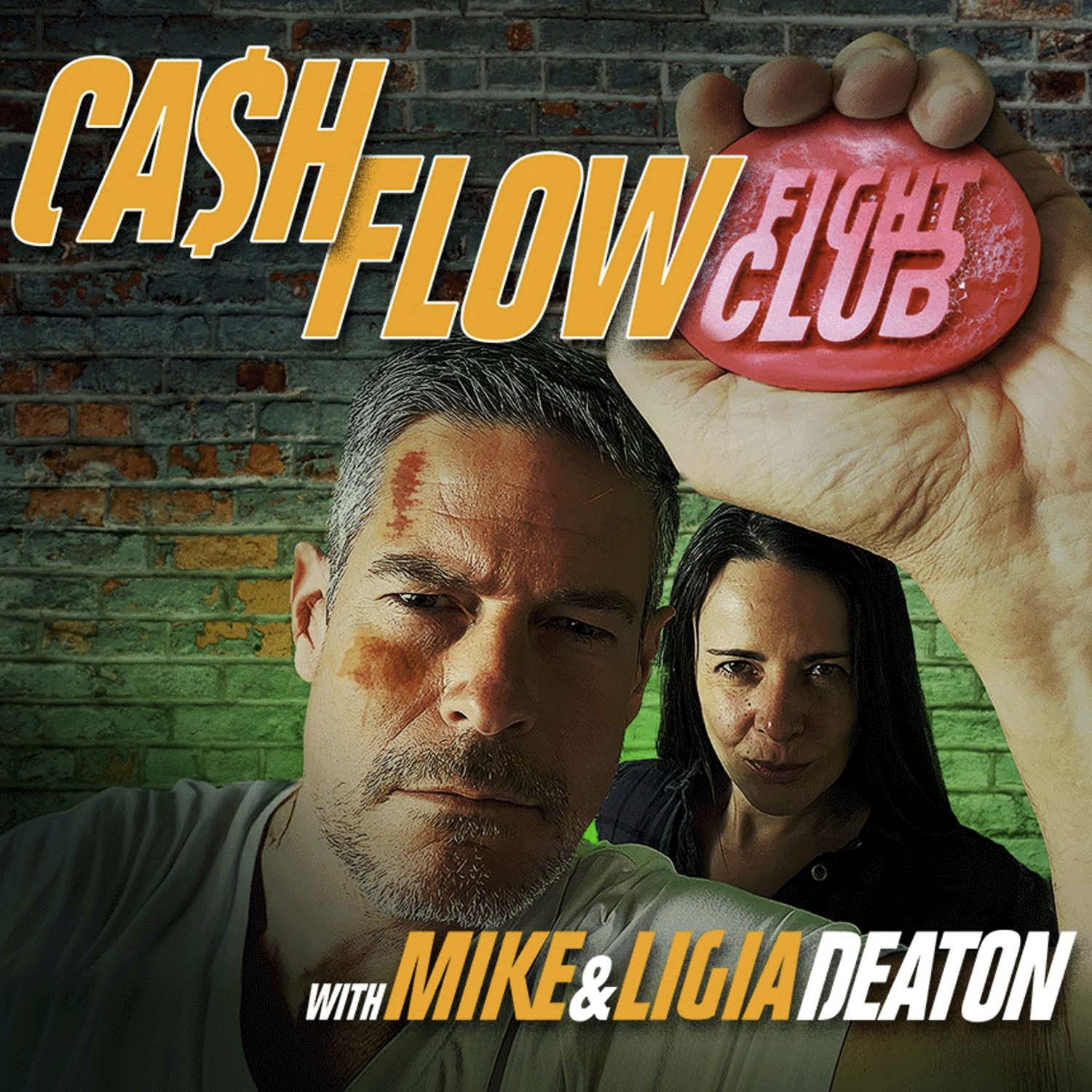
Cash Flow Fight Club
by Mike and Ligia Deaton
Cash Flow. You love it. You want it! We’re all seeking it, but what’s the best way to generate it?Google Cash Flow and get instantly overwhelmed.With so much noise and marketing hype out there, how do you know which approach is the best for you? We’ve wrestled with massive amounts of research, opinions and experimentation trying to find the best methods. Now we’re on a mission to find the best methods and give you all the dirty details - Fight Club style! In our signature Fight Club matchups, we bring together the heavyweights of business and investing to debate the risks, rewards and the inside scoop on the best ways to generate life-changing cash flow that can put you on the path to financial freedom. And after battling it out in the arena over 3 rounds, we crown the Champion. We alternate Fight Club matchups by going In the Champion’s Corner, where we’ll discover what it takes to forge a champion. Mindset, high performance habits, best-in-class behaviors and more of what it
-
83
Helping Locals Take Back Real Estate Development with Kristi Kandel
In this episode of Cash Flow Fight Club, we’re joined by Kristi Kandel, a powerhouse in local real estate development who’s flipped the script on who gets to lead the shaping of our communities. With nearly 20 years of experience and over $450M in developments, Kristi’s worked on everything from national retail rollouts to adaptive reuse and clean energy infrastructure. But today, she’s focused on helping locals take back control through her operating system for development, Dev-OS. She shares how the aftermath of Hurricane Ian in Fort Myers Beach transformed her mission — and how regular people can now lead impactful local real estate development without waiting for permission or outside capital. From funding tips to dealing with cities to repurposing vacant buildings, Kristi offers a playbook anyone can follow. We also dig into how she went from semi-pro beach volleyball to opening a regional office at 25, why developers blow millions unnecessarily, and the small-town coffee shop conversation that led to a 19-lot development. This episode is packed with practical advice, real stories, and next steps for anyone ready to build something meaningful where they live. Here are some power takeaways from today’s conversation: 00:00 - Introduction 02:45 - How Kristi got her first break in development 05:00 - Scaling retail projects across California 14:00 - Leaving corporate to start her own consulting firm 20:00 - The Hurricane Ian rebuild and her shift to local real estate development 25:00 - Why locals are key to long-term community stability 30:00 - How to get started with your own small-town project 33:00 - Building your five-person development team 35:00 - Why most developers don’t know what they’re doing So much power lies within communities, and communities are where real connections happen.
-
82
Land Flipping Master with Kendall LeJeune
Land investing is booming — but what separates those making $2K from those earning $120K per deal? In this episode of the Cashflow Fight Club podcast, we sit down with Kendall Lajeune, founder of the Only Land Fans podcast and Facebook community with over 9,000 members, to break down his rise from high school band director to land investing leader. Kendall shares the exact steps he used to scale up from zero to six-figure land flips — often without spending a dime. From his first infill lot to ditching houses entirely, he explains why land investing offers higher margins, less risk, and more scalability. He also discusses how he built a thriving community by focusing on education first — and what beginners get wrong when trying to enter the land space. We dive deep into the power of wholesaling, the truth about land investing competition, and how to stand out using stellar customer experience and creative deal structures. Plus, Kendall talks tech: how AI tools like ChatGPT are revolutionizing real estate operations — and how smart investors are already using them to build scalable systems and close more deals. If you’ve ever wondered how to start land investing, scale your deals, or build a brand around it — don’t miss this one. Here are some power takeaways from today’s conversation: 00:00 - Kendall’s journey from music teacher to real estate investor 02:26 - Why he left houses behind for land investing 04:45 - Breaking down his first “zero-risk” land flip 07:10 - Building Only Land Fans into a top podcast and Facebook group 13:08 - Standing out in a crowded market with customer experience 17:00 - How to create referral-worthy buying and selling journeys 20:00 - Why wholesaling and assignments are best for beginners 28:08 - Rural land trends and current state of the market 31:44 - Why nimbleness is the real key to land business success 38:00 - How AI is transforming real estate systems in 2024 43:00 - Leveraging ChatGPT and Claude to streamline real estate ops Check out the best kept real estate game in town - land flipping - with Kendall LeJeune.
-
81
The Secret to High Performance with Dovid Azerad
What if the biggest obstacle to your success wasn’t external, but internal? In this episode, high-performance coach Dovid Azerad joins us to talk about personal agency, leadership, and mindset mastery. Dovid’s background as an educator and school administrator gave him deep insight into human behavior, motivation, and the way people either claim control or give it away. Now, he helps professionals, especially new C-suite leaders, navigate self-doubt, decision-making, and high-stakes leadership roles. We discuss why so many people feel stuck in life or business, how to break free from limiting beliefs, and why curiosity is the most powerful tool for transformation. If you're looking for a mindset shift that will help you take action and own your success, this episode is for you. Here are some key takeaways from today’s conversation: 00:00 - Introduction 02:45 - How Dovid went from education to coaching 07:00 - Why people lose personal agency (and how to reclaim it) 14:00 - The power of curiosity in business and life 22:00 - Handling skepticism, doubt, and imposter syndrome 31:15 - Fear of failure vs. fear of success 39:00 - Building confidence and resilience 45:00 - Dovid’s advice for new leaders in high-pressure roles Through years of coaching and leadership, Dovid has found that confidence isn’t something you’re born with—it’s something you build. He shares how to cultivate self-trust and resilience through mindset shifts and strategic action. Connect with Dovid on LinkedIn For more about Dovid: https://nextarc.co/ Visit us at https://flippingdirt.us/ to discover the best cash flow secret in real estate.
-
80
EP78: Be A Financial Gangsta! with Drew Boyer
Hip Hop X Finance with Drew Boyer From Beats to Bankrolls: The Real Talk on Money Moves In this episode, we’re dropping bars with Drew Boyer, the financial planner who went from drummer to money maestro. He’s breaking down the game on how hip hop’s flashiest stars and regular folks alike can learn the rules of the money game—before they end up broke, busted, and disgusted. Drew’s 20+ years in financial planning and his love for music collide in his new book, Hip Hop X Finance. He’s using the lessons from 50 Cent, Jay-Z, and Ice Cube to school us on financial literacy, debt traps, and stacking paper the smart way. Here’s what went down: [00:00] Introduction to Drew Boyer and his journey from music to money [03:33] The inspiration behind Hip Hop X Finance [08:15] Why financial literacy is like learning the lyrics—know it or get played [12:45] The truth about credit cards: When minimum payments become maximum pain [17:30] Jay-Z’s advice: If you can’t buy it twice, you can’t afford it [22:15] Debt Remediation 101: How Drew negotiated his way out of $100K in debt [27:55] From flashy videos to bankrupt rappers—what you see ain’t always what they own [33:22] Budgeting like a boss: How to live your best life without fronting [38:10] Mindset over materialism: Why financial freedom is the real flex RESOURCES HipHopxFinance.com Facebook TikTok Instagram
-
79
EP77: Entrepreneurial Mindset Success Formulas with Chris Schwagerl
In this episode of the Cashflow Fight Club podcast, Chris Schwagerl shares his profound personal journey from the brink of despair to a life of triumph and fulfillment. After being diagnosed with chronic kidney disease, Chris faced major life challenges that dramatically shaped his path. Determined to live long enough to walk his daughter down the aisle, Chris transformed his mindset and took control of his destiny. Now a performance psychologist, Chris discusses how he helps others mold their identities and remove limiting beliefs to unlock their true potential. He emphasizes the power of vulnerability and storytelling, and how embracing one's authenticity can lead to remarkable success. This episode is rich with lessons on overcoming adversity, pursuing entrepreneurship, and achieving a fulfilled life. 00:00 Life-Changing Diagnosis and Determination 01:56 Introduction to Chris Schwagerl 03:18 Chris's Background and Career Journey 07:10 The Entrepreneurial Mindset 13:09 Overcoming Limiting Beliefs 27:32 Understanding Personal Identity 28:41 The Power of Moldable Identities 29:17 Exploring Childhood Influences 31:34 Facing Mortality and Legacy 35:04 The Impact of Vulnerability 35:34 Mindset and Coaching 46:05 Gratitude and Closing Thoughts RESOURCES Connect with Chris: https://www.linkedin.com/in/chris-schwagerl/ Chris' Performance Program: www.infiniteskies.life
-
78
EP76: Rising Up Stronger from a Real Estate Crash with Kevin Bupp
In this episode, seasoned real estate investor Kevin Bupp shares his journey from owning single-family homes to building a substantial portfolio in mobile home parks and parking lots. Kevin discusses the impact of the 2008 financial crisis on his investments and how he navigated the challenges to come out stronger. He highlights the value of health and fitness in maintaining resilience during tough times and the importance of focusing on controllable aspects of life. Kevin also dives into his criteria for selecting profitable investments in mobile home parks and parking facilities, offering valuable insights for investors looking to diversify their portfolios in various asset classes. Additionally, Kevin emphasizes the importance of mentoring and building a supportive team. KEY HIGHLIGHTS 00:00 Introduction to Kevin's Real Estate Journey 00:07 The 2008 Financial Crisis and Its Impact 00:51 Rebuilding and Shifting Focus to Mobile Home Parks 02:43 Kevin's Background and Early Real Estate Ventures 03:39 Mentorship and Early Investments 06:26 Challenges and Strategies in Real Estate Investing 12:40 Navigating the 2008 Crisis: Personal and Professional Struggles 23:02 Starting New Ventures: Craft Beer and Running Club 23:56 Rebuilding Phase: From Foreclosure to New Beginnings 24:43 Transition to Commercial Properties 26:59 Discovering Mobile Home Parks 28:35 First Mobile Home Park Purchase 29:25 Scaling Up: Proving the Business Model 36:23 Investment Strategies: Mobile Home Parks and Parking Lots 44:13 Gratitude and Final Thoughts Real estate and investing are not without turbulence and even deep crisis sometimes. Kevin delivers an inspiring message about how to maintain focus and resilience in the face of adversity and come out stronger for having been through it. RESOURCES Connect with Kevin on LinkedIn: https://www.linkedin.com/in/kevinbupp/ Sunrise Capital: https://sunrisecapitalinvestors.com/
-
77
EP75: Master Real Estate Marketing with AJ Jarrett
In this episode of the Cashflow Fight Club Podcast, we sit down with AJ, founder of Supercharged Offers, to talk about scaling a real estate business the right way. AJ shares her journey from a corporate career in human resources and leadership development to becoming a successful real estate investor in the U.S. She reveals how she built a marketing system out of necessity—one that now helps investors generate leads, close more deals, and grow their businesses without the overwhelm. If you’re struggling with marketing, lead generation, or scaling your real estate business, this episode is packed with insights on how to create a seamless system that works for you. Here are some key takeaways from today’s episode: 00:00 – Welcome AJ to the Cashflow Fight Club Podcast 01:08 – AJ’s background: From corporate life to real estate investing 02:55 – Fix-and-flip vs. vacant land: What led AJ to change strategies 05:00 – How AJ identified a massive gap in real estate marketing 07:30 – Why most real estate investors struggle with marketing 10:45 – The birth of Supercharged Offers: Turning a problem into a business 14:20 – The importance of testing and refining marketing strategies 18:50 – How to optimize cold calling, direct mail, and digital marketing 23:15 – The biggest mistakes investors make when outsourcing marketing 27:40 – AJ’s advice for scaling a real estate business efficiently 32:10 – Who should use Supercharged Offers (and who shouldn’t) 35:50 – Why having the right mindset and systems is the key to success AJ breaks down exactly how real estate investors can streamline their lead generation process, avoid common marketing pitfalls, and focus on closing deals rather than managing multiple vendors. If you want a more efficient, scalable real estate business, don’t miss this episode! Resources Mentioned: Supercharged Offers – Visit Website BuyerFinder.io – AJ’s tool for automated buyer outreach If you're interested in creating stress-free, consistent cash flow, you need to be Flipping Dirt. Check out more at https://flippingdirt.us
-
76
How to Go Full-Time Real Estate: Fire Your Boss with Joe Meares
In this episode of the Cashflow Fight Club podcast, we’re joined by Joe Meares, a former Wall Street professional turned real estate investor and mentor. Joe shares how a disappointing bonus at his finance job sparked a journey into real estate investing, leading him to create a thriving portfolio of rental properties. We dive into Joe’s practical approach to building wealth through real estate while maintaining a full-time job. From leveraging the BRRRR strategy to scaling up to multifamily and creative financing, Joe outlines actionable tips for anyone looking to break into real estate. Joe also discusses the importance of mentorship, the power of networking, and how living below your means can set the foundation for financial independence. Whether you’re a first-time investor or looking to take your portfolio to the next level, this episode is packed with insights to help you start and scale your real estate journey. Here are some key takeaways from today’s conversation: 00:00 - Introduction and Joe’s background in finance 06:49 - Lessons from early investing: From baseball cards to stocks 13:00 - The pivotal bonus event that inspired Joe’s real estate journey 20:10 - Mastering the BRRRR strategy to grow your portfolio 26:00 - Selecting the right real estate market: Joe’s criteria and experience 34:50 - Creative financing: How Joe leveraged seller financing for a 22-property portfolio 41:00 - The importance of mentorship, mindset, and building a strong network Episode Highlights: [13:00] The Bonus That Changed Everything Joe reflects on the moment a disappointing bonus made him rethink his financial future. This pivotal event pushed him to explore secondary income streams, leading him to real estate investing. [20:10] The BRRRR Strategy in Action Joe explains how the Buy, Rehab, Rent, Refinance, Repeat (BRRRR) method allowed him to grow his portfolio quickly while creating long-term cash flow. [26:00] Choosing the Right Market Joe shares his process for selecting markets, including focusing on properties under $100,000 and ensuring they meet the 1% rule. [34:50] Creative Financing for Large Deals Joe breaks down a 22-property portfolio acquisition where he used seller financing to close the deal. He emphasizes the importance of relationships in making creative financing possible. [41:00] Mentorship and Networking Joe talks about the role of mentorship in his success and how building relationships can open doors to deals and opportunities. Connect with Joe on LinkedIn and at KAYJAY consulting. Financial and lifestyle freedom can be yours, but you have to act!
-
75
EP73: How to Build Passive Income with Jason Balara
Passive income alone won't save you or make you wealthy! Dr. Jason Balara shares his fascinating journey from veterinary surgery to real estate investing in this engaging episode. As a multifamily syndicator and founder of Lark Capital, Jason opens up about his unique career transition, lessons learned in construction and real estate, and the strategies that have helped him scale his business. He also discusses work-life balance, the importance of adaptability, and how focusing on value creation has driven his success. Whether you're an aspiring investor, a seasoned pro, or someone looking for inspiration to chase your dreams, Jason’s story offers actionable insights and heartfelt reflections. Key topics discussed: How Jason balanced veterinary surgery with real estate investing Lessons from early DIY projects and house hacking The power of creating value in real estate Shifting strategies during market changes Finding work-life balance through entrepreneurship Power Takeaways: Create value in any market by solving problems or adding improvements. Keep an active income source while building passive wealth. Invest with a buffer—don’t stretch finances too thin. Leverage mentorship and networking to accelerate learning. Adapt and pivot when challenges arise. 00:00 Introduction: The Importance of Active and Passive Income 01:01 Meet Dr. Jason Ballara: A Multifaceted Professional 02:25 Jason's Journey: From Veterinary Surgeon to Real Estate Investor 04:08 The Power of Real Estate: Jason's Early Experiences 05:32 Balancing Careers: Construction and Veterinary Medicine 12:18 Mentorship and Personal Growth 21:09 The Role of Kindness in Success 23:40 Modern Business Models: Leading with Kindness 26:30 Transition to Multifamily Real Estate 26:54 Balancing Family and Career 28:46 Discovering Out-of-State Investing 29:55 The Syndication Revelation 30:57 Navigating Market Shifts 32:53 Overcoming Financial Challenges 34:16 Adapting Business Strategies 41:53 Future Plans and Reflections Resources www.larkcapital.com Jason on LinkedIn: https://www.linkedin.com/in/jasonbalara/
-
74
EP72: Personal Branding Success Secrets 2025 (Bradley Rausch)
Successful personal branding in 2025 is critical. In this episode, Bradley Rausch takes us behind the scenes of building a successful personal branding strategy for real estate professionals. Bradley has mastered the art of creating engaging, organic content that resonates with investors and clients on platforms like LinkedIn and Instagram. He shares his journey from sales to consulting and explains why personal branding is an essential asset for anyone looking to scale their business in real estate. Bradley’s insights on content creation, including how to craft short-form videos and leverage partnerships, provide a roadmap for standing out in today’s competitive market. The conversation also dives into LinkedIn’s untapped potential for real estate investors. Bradley predicts the platform’s “golden era” in 2025 and explains how professionals can position themselves as thought leaders and connect with high-quality leads. If you’re ready to transform your personal branding strategy and take your content to the next level, this episode is packed with actionable advice tailored to the real estate industry. EPISODE CHAPTERS 00:00 The Evolution of Social Media Eras 00:32 Introducing Bradley Rausch: Master of Personal Branding 01:50 Bradley's Journey: From Sales to Client Success 03:55 Building a Personal Brand: Bradley's Health Coaching Success 10:34 Effective Content Strategies for Social Media 18:53 The Power of Organic Content in Real Estate 22:53 Leveraging LinkedIn for Real Estate Success 29:32 Scaling on LinkedIn: The Sharing Game 29:46 Etiquette and Permissions for Tagging and Sharing 32:39 Documenting vs. Creating Content 33:33 The Rise of Video on LinkedIn 34:22 Personal Profiles vs. Business Pages 36:12 Moving Leads Off Social Media 37:22 Creating Engaging Video Content 46:20 The Importance of a Strong Hook 50:04 Building a Personal Brand for Real Estate Investors 53:26 Gratitude and Closing Remarks CONNECT Bradley on LinkedIn: https://www.linkedin.com/in/bradley-rausch/ Instagram: https://www.instagram.com/bradleyyrausch/ Bradley's top viral hooks #PersonalBranding #ContentCreation #LinkedInMarketing #RealEstateInvesting #RealEstateMarketing #OrganicContent #SocialMediaForInvestors #RealEstateContent #BuildingABrand #LinkedInTips #personalbranding2025 #RealEstateStrategy #ContentMarketingTips #ShortFormVideo #SocialMediaGrowth #BrandingForProfessionals #RealEstateConsulting #LinkedInRealEstate #GrowYourBrand #RealEstateInvestors #VideoMarketingTips #InvestorBranding #LinkedInForBusiness #RealEstateLeads #RealEstateVideoContent #RealEstateInfluencer
-
73
Patrick Grimes is Investing in Justice
Patrick Grimes joins the podcast to discuss an innovative approach to portfolio diversification: litigation investments. In this episode, Patrick shares his journey from overcoming real estate losses to leveraging unique, non-correlated assets for financial security. He explains how litigation funding provides meaningful settlements for those who can't afford legal representation, all while delivering solid, risk-adjusted returns to investors. Dive into the world of mass torts, late-stage litigation, and the ethical considerations behind supporting access to justice. Whether you're a seasoned investor or just exploring alternatives to traditional markets, this conversation offers valuable insights into balancing risk and reward. 00:00 Introduction to Social Good and Litigation Funding 00:39 Exploring the Legal Industry and Investment Opportunities 01:00 Guest Introduction: Patrick Grimes 02:09 Patrick's Journey and Investment Philosophy 04:51 Understanding Litigation Investments 09:15 Historical Context and Notable Cases 14:14 Ethical Considerations in Litigation Funding 16:25 Investment Model and Returns 22:12 Risks and Timelines in Litigation Funding 29:20 Investor Profile and Market Insights 33:09 Conclusion and Final Thoughts This is a unique way to invest in ethics, justice and diversification. RESOURCES Passive Income Mastery Patrick on LinkedIn * And as always, the show is educational and does not promote or represent this or other investments in a financial advisory way.
-
72
Escaping Wall Street for Main Street Real Estate with Derek Marlin
This week we hear from Derek Marlin, a real estate powerhouse managing $150 million in annualized revenue and leading Elevation Academy to teach others to do the same. Derek shares his journey from Wall Street to building a thriving real estate empire from HQ in Denver, CO. Learn about Elevation's various divisions, including property redevelopment, transparent wholesaling, institutional investment, and education. Derek offers valuable insights on house flipping, team building, and mentoring others. Get inspired with strategies on scaling a real estate business and listen in to more powerful advice Derek has to offer on entrepreneurship, coaching and life. 00:00 Introduction to Elevation and Property Redevelopment 02:19 Derek Marlin's Background and Journey 03:57 Transition to Real Estate Investing 06:18 Building a Real Estate Empire 10:07 The Importance of Formal Agreements in Family Ventures 18:44 Scaling Up and Team Building 20:26 Current Structure and Divisions of Elevation 27:35 Educational Programs and Future Plans 31:21 The Joy of Coaching and Mentorship 32:18 Navigating Virtual and In-Person Interactions 33:10 Influencers and Keeping Skills Sharp 34:39 The Value of Bringing Value 37:05 Accepting Private Investors 41:27 Maintaining a Healthy Entrepreneurial Mindset 48:39 Working with Your Spouse 55:17 Future of Real Estate and Personal Goals 59:12 Gratitude and Closing Thoughts Derek is thoughtful in his approach to life, business and real estate and this is born out through his service to others and the transparent way that he and his team work. This is a great episode for investors, entrepreneurs and anyone looking to build an elevated life. RESOURCES Elevation Real Estate: https://www.elevationinvest.com/ Elevation Academy: https://www.elevationinvest.com/education/elevation-academy Follow Derek on LinkedIn https://www.linkedin.com/in/derekmarlin Raising the Flipping Bar podcast Traction by Gino Wickman Buy Back Your Time by Dan Martell The Entrepreneurial Operating System (EOS)
-
71
Serial Scaler and Land Flipper: Robin Seib
Scaling Success in Land Investing: Robin Seib's Inspiring Journey on the Cashflow Fight Club Podcast In this episode of the Cashflow Fight Club podcast, Robin Seib, a German-born entrepreneur and experienced real estate investor, shares his compelling journey from house flipping in Germany to becoming a leading land investor in the U.S. Amidst various challenges, including working remotely due to travel restrictions, Robin successfully scaled his business to handle over 750 land deals annually. He emphasizes the importance of understanding business culture, effective marketing strategies, and building strong networks. Listeners will gain insights into innovative solutions for remote investing, the philosophy behind his service platform, the Land Pilot, and how to navigate the U.S. real estate market as a foreign investor. 00:00 Starting a Business During a Travel Ban 01:21 Introduction to Robin Seib 03:01 Robin's Background and Entrepreneurial Journey 06:10 Challenges and Learning Curves in Land Investing 08:48 Scaling Up and Overcoming Obstacles 14:05 The Importance of Problem-Solving and Persistence 23:10 Building a Disposition Platform 25:45 Understanding Funding and Equity Deals 25:58 Owner Financing and Market Strategies 27:43 Hard Money Program and Note Buying 28:37 Building a Note Buying Portfolio 32:46 Effective Disposition Channels 44:27 The Land Pilot Service Overview 50:34 Gratitude and Closing Remarks Robin Seib’s journey from a burned-out house flipper to a thriving land investor exemplifies how resilience and innovation can unlock unprecedented opportunities in real estate. Through the Land Pilot platform, he is not only capitalizing on the land market but also helping others find their own freedom through land investing. With a focus on problem-solving, effective marketing, and strategic partnerships, Robin’s story is a compelling narrative for anyone looking to delve into real estate with both eyes on achieving financial and personal liberation. RESOURCES Connect on LI: https://www.linkedin.com/in/robin-seib-74ba1699/ Facebook: https://www.facebook.com/robin.j.seib/ The Land Pilot: www.thelandpilot.com Learn to Flip Land: https://flippingdirt.us/land-video-series/
-
70
EP68: Your Corporate Escape Plan with Naeem Farokhnia
In this episode of the Cashflow Fight Club podcast, we sit down with Naeem Farokhnia, a former electrical engineer turned multifamily real estate capital raiser. Naeem shares his transformative journey, from working at Apple to discovering his entrepreneurial spirit in property management and multifamily investing. Naeem discusses how finding the right mentors has been a game-changer, particularly as an immigrant navigating a new business landscape. His story emphasizes the importance of mentorship, mindset, and the drive to continuously learn. Listeners will gain valuable insights on leveraging real estate to create freedom, strategies for raising capital, and tips on identifying trustworthy coaches and partners. Naeem also explores the psychological and relational side of sales, a skill he honed to thrive in the competitive world of multifamily investing. Tune in for actionable advice, inspiring stories, and a closer look at how Naeem built a path to success. Power Takeaways: 00:00 Introduction and Personal Reflections 00:54 Welcome to the Podcast 01:11 Naeem's Background and Career Transitions 01:44 The Importance of Mentorship 02:10 Starting the Conversation with Naeem 02:41 Early Life and Career Transitions 03:14 Discovering Personal and Professional Fit 06:42 Challenges in Corporate Management 10:21 Entrepreneurial Journey and Sacrifices 12:32 The Role of Mentorship in Success 13:50 Mindset and Coaching 14:47 Transition to Property Management 16:04 Exploring Multifamily Real Estate 17:16 Finding the Right Coach 18:50 The Importance of Vetting Mentorship Programs 23:59 Transitioning to Multifamily Capital Raising 26:56 Strategies for Raising Capital 30:47 Connecting with Naeem 31:49 Conclusion and Final Thoughts Naeem’s story of immigration, corporate success, leveraging coaching and pivoting into real estate and entrepreneurship is inspiring on so many levels. Tremendous insights and tips for anyone looking to level up their life. RESOURCES Connect with Naeem on LinkedIn: https://www.linkedin.com/in/naeem-farokhnia/ Facebook: https://www.facebook.com/naeem.farokhnia
-
69
EP67: Productivity Deep Dive with David Walters
In this episode of the Cash Flow Fight Club podcast, we explore productivity and efficiency with David Walters, a seasoned expert whose career spans roles as a weapons engineer on nuclear submarines to being a corporate turnaround specialist. David shares how these intense experiences shaped his current mission: helping small and medium-sized businesses simplify processes, access hidden tax credits, and increase profits—all with no upfront costs. David reveals his journey from serving in the British and Canadian Navies during the Cold War to running his own businesses. He dives into the importance of practical business automation, the surprising opportunities that tax credits offer, and why so many IT projects fail. This episode will leave small business owners with a fresh perspective on untapped resources and smarter ways to scale. Power Takeaways: 00:00 Introduction to Performance-Based Solutions for Small Businesses 01:41 Meet David Walters: From Nuclear Submarines to Business Efficiency 03:32 David's Journey: From Military to Corporate Turnaround Specialist 05:16 Transition to Helping Small and Medium-Sized Businesses 10:11 The Importance of Implementation in Business Success 12:23 Exploring Tax Credits and Financial Opportunities for Businesses 18:45 Business Process Automation: Streamlining for Success 24:10 Automating Existing Processes 24:56 Subscription Service and AWS Hosting 26:08 Coaching on Healthy Processes 27:14 Challenges with AI in Business Processes 30:44 The A to D to A Problem 32:50 Why IT Projects Fail 38:32 AI: Friend or Foe? 41:47 Reaching Out for Business Improvement 43:25 Leadership Lessons from the Submarine 46:07 Conclusion and Gratitude Resources Mentioned: Connect on LinkedIn: https://www.linkedin.com/in/davidjameswalters/ ---------------------- Find your freedom with us at www.flippingdirt.us ---------------
-
68
EP66: Passive Income Insights from a Hollywood Survivor with Brian Heller
In this episode of the Cash Flow Fight Club Podcast, Mike Deaton and co-host Ligia welcome Brian Heller, a seasoned real estate investor who transitioned from producing hit reality shows to managing a multimillion-dollar real estate portfolio. Brian shares his journey from Hollywood to Nashville, emphasizing the booming real estate market in Nashville and the impact of large companies setting up headquarters there. He provides invaluable insights into multifamily property investments, the importance of choosing the right markets, using fixed-rate financing, and building a reliable management team. Brian also discusses his commitment to helping busy professionals build generational wealth through real estate investments, divulging strategies for navigating the current market environment. The episode is filled with tips on fundamentals, value-add strategies, and the crucial role of mentors in a successful real estate investment career. 00:00 Nashville's Real Estate Boom 01:03 Welcome to Cashflow Fight Club 01:37 Introducing Brian Heller 02:07 Brian's Journey from Hollywood to Real Estate 03:03 The Transition to Real Estate 05:18 Building Wealth Through Real Estate 06:59 Challenges and Rewards in Real Estate 16:53 Life in Nashville 20:06 Real Estate Ventures in Nashville 23:03 Introduction to Fairway Equities 23:31 Geographical Reach and Strategic Partnerships 24:31 Networking and Forming Partnerships 25:29 Investment Strategies and Market Focus 28:19 Market Conditions and Investment Opportunities 33:10 Lessons Learned and Best Practices 35:29 Investor Relations and Asset Management 41:01 Contact Information and Resources 42:20 Gratitude and Mentorship 44:04 Closing Remarks and Podcast Outro RESOURCES - Fairway Equities: https://fairwayequities.com - Jake and Gino (Real Estate Investing Community) - Connect with Brian: https://www.linkedin.com/in/brianzheller/ Interested in consistent cash flow? Check us out at https://flippingdirt.us/
-
67
Passive Wealth-Building with Vacant Land (Brad Warrent)
In this episode of the Cashflow Fight Club Podcast, hosts Mike and Ligia Deaton delve into the world of land banking and passive land investments with Brad Warren. Brad, a former international business coach, shares his journey into land banking and the fundamentals of this passive investment strategy designed for patient investors aiming to build generational wealth. Key topics include the mutual benefits of coaching, land investment opportunities and where to find them, and the intricate processes involved in securing land for appreciation. Additionally, the episode covers potential returns, investment sizes, strategic land consolidation, and the economic and legislative factors driving the expansion of solar energy projects. Personal stories highlight the importance of patience, thorough due diligence, and continuous investor education. Resources mentioned include practical advice on using 1031 exchanges and retirement funds for land investments, as well as insights into managing property taxes and staying engaged through regular updates and community events. 00:00 Introduction to Land Banking 01:28 Meet Brad Warren: From Business Coach to Land Banking Specialist 01:57 Understanding Land Banking: Fundamentals and Benefits 03:18 Brad's Personal Journey into Land Banking 08:29 The Land Banking Business Model 13:05 Investment Strategies and Practicalities 23:02 Research and Acquisition Process 29:27 Understanding Escalation Clauses 30:15 Industries and Land Zoning 32:19 Investor Experience and Process 33:36 The Land Banking Presentation 35:42 Finalizing the Investment 36:26 Managing Property Taxes 38:07 Investor Communication and Updates 44:55 The Importance of Patience in Land Investment 50:39 Contacting Brad for Investment Opportunities 51:39 Gratitude and Career Transition RESOURCES AND CONTACT INFO Brad on LinkedIn: https://www.linkedin.com/in/bradleykwarren/ website: https://www.bradwarren.com/ Email: [email protected]
-
66
EP64: Invest Like the Ultra-Wealthy with Keshav Kolur
In this insightful episode of the Cash Flow Fight Club podcast, Keshav Kolur, founder and principal of Clive Capital, shares his journey from a software engineer to a real estate and private equity investor with investments in properties valued at over $40 million, projecting to nearly $200 million in the next five years. The conversation spans various investment strategies, emphasizing the significance of multifamily housing, industrial real estate, and oil and gas ventures. Listeners learn about the benefits and risks of asset diversification, the role of trusted partners, and the tax advantages of alternative investments. The episode further explores the Fund of Funds concept, delving into fund management and due diligence necessary for successful investing. With a focus on steady returns, avoiding panic selling, and embracing diversification, Keshav also highlights his mission to help tech employees build generational wealth. Closing remarks encourage listeners to stay composed, appreciate the value of mentors, and seek continuous learning in investment strategies. Key Moments in this episode: 00:00 The Key to Successful Investments 00:37 Introducing Keshav Kolur and Clive Capital 02:19 Keshav's Journey into Real Estate 04:23 The Birth of Clive Capital 05:14 Diversifying Investment Strategies 11:25 Exploring Oil and Gas Investments 16:14 Understanding Fund of Funds 22:11 Exploring Hot Asset Classes in the Current Market 22:41 Opportunities and Challenges in Multifamily and Development 24:11 The Rise of Private Credit and Its Benefits 25:53 Alternative Investments vs. Traditional 401k and Stocks 30:50 Understanding Fund of Funds and Investment Strategies 35:39 The Importance of Due Diligence in Investments 40:37 Gratitude and Final Thoughts Keshav has a great strategy for diversification and returns on alternative investments. He is mindful of understanding who is leading investments as well as the ancillary benefits such as taxable depreciation. This episode is packed with terrific insights that will help you invest wisely. References Mentioned: Keshav on LinkedIn: https://www.linkedin.com/in/keshavkolur/ Website: https://www.clivecap.com/ Investor Assets & 100 Questions to Ask: https://www.clivecap.com/alternative-assets Want more freedom? Flipping Dirt delivers https://flippingdirt.us/
-
65
Endurance in Business and Running with Mike Deaton
In this crossover Cash Flow Fight Club podcast episode, we're swapping seats. Podcast host of the CRE Rundown, Heather Ewing interviews Mike Deaton, founder of Flipping Dirt, who shares his inspiring journey from corporate life to success in land flipping and commercial real estate. Mike recounts his 2016 pivot after a corporate layoff and describes how he and his wife used it as a chance to create a more intentional, fulfilling life. They relocated to Colorado and embraced entrepreneurship through real estate. Mike explains the opportunities in land flipping and how it led to profitable growth in commercial real estate investing. Heather and Mike also discuss the crucial role of mindset, the importance of endurance in both business and personal growth, and why knowing your “why” is the key to sustaining momentum and resilience. Whether you're interested in land flipping, looking to make a career change, or curious about commercial real estate, this episode delivers invaluable insights and inspiration. --- Power Takeaways from Today’s Conversation: 00:00 - Introduction to Mike Deaton 02:00 - Embracing life changes and pursuing real estate 06:30 - Finding the right fit in commercial real estate 10:30 - The power of mindset and resilience 15:15 - Using endurance sports as a mindset tool for success 19:00 - What living fully means to Mike Let's do the show!!
-
64
EP62 Self-Storage Conversions with Clint Harris
In this episode of the Cashflow Fight Club podcast, Mike and Ligia Deaton host Clint Harris, a former medical sales professional who transitioned into real estate investing. Clint discusses his journey from being burned out managing Airbnb properties to discovering the lucrative market of self-storage conversions. Highlighting his aggressive pursuit of self-storage, Clint shares how he and his partners transform old, vacant big-box retail buildings into thriving self-storage facilities. He elaborates on the strategies and challenges faced, emphasizing the importance of networking and vertical integration. Clint also discusses his pathway to achieving financial, time, and location independence, underscoring the essence of pursuing freedom of purpose. The episode offers valuable insights into real estate as a means to create a lasting impact and live a fulfilling life. 00:00 Introduction to Self Storage Investments 01:12 Welcome to the Cashflow Fight Club Podcast 02:16 Clint Harris's Background and Real Estate Journey 04:20 The Spark That Ignited the Real Estate Passion 05:38 Networking and Building a Real Estate Portfolio 07:25 Transitioning to Self Storage Conversions 09:22 The Self Storage Conversion Strategy 30:48 Exploring Exit Strategies and Long-Term Vision 31:40 The Nomadic Lifestyle and Core Values 34:11 Vertical Integration and Operational Efficiency 37:16 Market Selection and Expansion Strategy 40:43 Fundraising and Investor Relations 45:09 The Importance of Diversification and Long-Term Planning 58:02 Concluding Thoughts and Gratitude Connect with Clint Website: https://nomadcapital.us LinkedIn: www.linkedin.com/in/clint-harris-543265139 YouTube: https://www.youtube.com/channel/UCe0F1abrRXQX2KpSl5qEnoA Podcast: https://podcasts.apple.com/us/podcast/truly-passive-income/id1693667029
-
63
EP61: Adventures in Real Estate with Emma Powell
In this episode of the Cash Flow Fight Club podcast, hosts Mike and Ligia Deaton interview Emma Powell, a seasoned real estate investor. They discuss market cycles, the importance of preparedness, and resilience in both high and low markets. Emma shares her journey from a photography business to real estate investing, emphasizing diversification, partnerships, and the critical role of cash flow versus yield. She also provides insights into homeschooling, mentorship, and navigating interpersonal conflicts within business partnerships. The episode offers valuable lessons on mindset, managing investments, and the intricate balance of personal and professional life. 00:00 Navigating Market Downturns: Strategies for Real Estate Investors 01:21 Introduction to the Cashflow Fight Club Podcast 01:56 Meet Emma Powell: From Early Retirement Dreams to Real Estate Success 02:56 The Journey Begins: From Photography to Real Estate 05:15 Learning the Ropes: Education and Early Investments 08:17 Building a Real Estate Empire: Strategies and Challenges 12:47 Balancing Family and Business: Homeschooling and Real Estate 20:32 Getting Started in Real Estate: Tips and Mentorship 28:48 Navigating Real Estate Challenges 29:38 Creative Financing Solutions 30:51 Off-Market Deals and COVID Impact 32:12 Scaling Up: From Small to Large Properties 34:49 The Importance of Partnerships 43:15 Communication and Conflict Resolution 49:08 Final Thoughts and Gratitude If you're looking to understand how to get started in real estate, build up for retirement or up your own real estate game, check out what Emma's experience has to offer.
-
62
EP60: Inside the Mind of a Startup Founder: Andrew Davies on Growth and Strategy
In this episode of the Cashflow Fight Club Podcast Champion's Corner edition, hosts Mike and Ligia Deaton talk with Andrew Davies, a successful entrepreneur with a broad career spanning various business ventures. Davies shares insights on his early entrepreneurial days, starting with a Deloitte scholarship, founding multiple businesses including a top-end women's fashion label, and moving on to his significant role at IDEO, a company focusing on personalization and algorithmic content classification. He emphasizes critical themes such as the importance of mindset mastery, resilience, and listening to the market. He also discusses how startups should focus their strategies including having a coherent customer vision, and shares his pivot from an agency model to a B2B tech solution that ultimately led to a successful acquisition. The conversation also highlights the value of having supportive partners and networks in the entrepreneurial journey. 00:00 Welcome to the Cashflow Fight Club Podcast 00:54 Introducing Andrew Davies 01:06 Early Days of Entrepreneurship 01:36 The Deloitte Scholarship Experience 02:35 First Business Ventures 03:56 Challenges and Lessons Learned 06:45 Building Through Digital 13:29 The Power of a Co-Founder 16:56 Transition to IDEO 19:18 Algorithmic Personalization and Pivot to B2B 20:40 Challenges and Strategies in B2B Market 23:33 Navigating Growth and Acquisition 32:15 Coaching and Mentoring Entrepreneurs 37:42 Final Thoughts and Gratitude Andrew is wealth of great information for founders and entrepreneurs. Connect with him on LinkedIn: @andjdavies
-
61
EP59: Building Legacy: Chris Angiolillo on Family, Franchise, and Real Estate
In this episode of the Cashflow Fight Club Podcast's Champion's Corner Edition, hosts Mike and Ligia Deaton interview Chris Angiolillo. Chris, based in Boston, balances running 11 Dunkin' franchises and investing in real estate, alongside cherishing his family life. He shares his journey from that of a self-motivated individual to prioritizing family goals and legacy building. Chris discusses the unique dynamics of family businesses, the importance of mentorship, and the evolving landscape of franchising, offering valuable insights into personal and professional growth. This conversation highlights the significance of mindset, the journey through various entrepreneurial ventures, and the pursuit of balance and success. 00:00 Introduction and Personal Journey 01:10 Welcome to the Cashflow Fight Club Podcast 02:03 Meet Chris Angelello 03:26 Chris's Background and Family Business 09:32 Franchise Life and Duncan's Evolution 19:41 Real Estate Ventures and Multifamily Investments 24:19 Reflecting on COVID's Impact 24:34 Business Resilience in Tough Times 25:13 Learning from Personal Experiences 27:27 The Importance of Mindset 28:50 Mentorship and Personal Growth 30:00 Family and Business Dynamics 39:37 Gratitude and Acknowledgements 45:23 Closing Thoughts and Contact Information Chris has an incredible outlook on life and shares many insights on how to run a franchise, navigate family businesses, and evolve as life and family do. You'll love this episode. Connect with Chris: https://www.linkedin.com/in/christopherangiolillo/ Partner with Chris: https://www.signiferventures.com/
-
60
EP58: Legacy Wealth Through Multifamily with Brian Briscoe
In this episode of the Cashflow Fight Club podcast, we're joined by Brian Briscoe, a retired Marine and the founder and CEO of Streamline Capital. Brian shares his journey from a career in the military to becoming a multifamily real estate investor, owning over 1,500 apartment units and successfully exiting nine properties since 2018. He discusses the importance of having a strong 'why', the challenges and rewards of syndication, and his strategies for scaling in the multifamily space. We also dive into his coaching initiatives through the Tribe of Titans, where he mentors aspiring syndicators. Tune in to hear Brian's valuable insights and tips for succeeding in the world of multifamily investing. 00:00 Introduction to Brian Briscoe 01:21 Brian's Early Life and Education 03:03 First Steps into Real Estate 04:58 Scaling Up: From Single Family to Multifamily 15:27 The Role of Partnerships in Real Estate 22:16 Current Strategies and Market Focus 25:27 Market Conditions and Predictions for 2024 25:48 Challenges in the Rental Market 27:30 Investment Strategies and Opportunities 29:19 Acquisition Strategy and Property Classes 33:02 Coaching and Mentorship Journey 35:13 Client Success Stories and Program Insights 39:21 The Importance of Market Analysis 43:16 Conservative Underwriting and Risk Management 46:16 Gratitude and Closing Thoughts Brian has unique investing philosophies that have allowed him to build lasting wealth and weather ups and downs in the market. RESOURCES MENTIONED Brian Briscoe on LinkedIn: https://www.linkedin.com/in/brian-briscoe-ut/ Streamline Capital Group: https://www.streamlinecapitalgroup.com/ Tribe of Titans Mentorship: https://www.thetribeoftitans.com/ Please subscribe to the show and leave a review if you found value out of this or other episodes. Thank you!
-
59
EP57: Productivity Masterclass with Avi Friedman
Master Time Management and Overcome Procrastination with Avi Friedman #efficiency #timemanagement #productivity #podcast #cashflowfightclub In this episode of the Cashflow Fight Club podcast's In the Champion's Corner edition, hosts Mike and Ligia Deaton welcome time management coach Avi Friedman. Avi shares his journey from being a marriage and family therapist overwhelmed by life's demands to becoming a coach who helps business owners use their time more effectively. The discussion delves into mindset mastery, high-performance habits, and practical tips for overcoming procrastination. Listeners will gain insights into building effective time management systems, setting focused work periods, and implementing accountability strategies. 00:00 Welcome to the Cashflow Fight Club Podcast 00:57 Introducing Avi Friedman: Time Management Coach 01:45 Avi's Journey to Time Management Mastery 03:24 The Importance of Systems and Organization 07:51 Common Challenges in Time Management and Procrastination 11:15 Avi's Coaching Approach and Client Success Stories 15:50 The Customized Coaching Process 23:03 Empowering Clients to Find Their Own Solutions 23:51 Breaking Down Actions to Overcome Procrastination 24:16 Dealing with Fear and Uncomfortable Tasks 26:31 Strategies for Accountability and Productivity 27:17 The Importance of Focus and Time Management 33:39 Practical Tips to Overcome Procrastination 42:21 Conclusion and Contact Information ### Episode Highlights: **[00:02:00] Avi’s Journey from Therapist to Time Management Coach** Avi Friedman began his career as a marriage and family therapist. However, juggling multiple responsibilities led him to feel overwhelmed, which eventually inspired his interest in time management. After a personal transformation, Avi decided to help others who struggle with organization and efficiency. **[00:05:00] Building Systems That Work** One of Avi’s key strategies is developing systems that help manage time and tasks effectively. He shares how creating a system for routine tasks, like paying bills and managing projects, can relieve the mental load and free up time for more important activities. **[00:13:17] Addressing Common Time Management Problems** Avi discusses the typical issues he encounters with clients, such as time management and procrastination. He shares examples of how even simple changes, like setting aside specific time slots for business development, can make a significant difference. **[00:26:06] Techniques for Overcoming Fear and Procrastination** Fear of failure, rejection, or even success can lead to procrastination. Avi explains how breaking down tasks into smaller, manageable steps and setting time limits can help overcome these fears and increase productivity. **[00:35:09] Staying Focused in a Distracting World** Focus is key to productivity, but distractions are everywhere. Avi offers practical advice, such as setting a timer for focused work sessions and minimizing notifications, to help stay on track and maximize efficiency. --- Resources Mentioned: - Visit Avi: https://managedminds.co/ - Connect on LinkedIn: https://www.linkedin.com/in/managedminds/ - Focusmate - Getting Things Done by David Allen - Eat That Frog by Brian Tracy - Atomic Habits by James Clear
-
58
Mastering 1031 Exchanges: A Guide to Lifetime Tax-Free Wealth with Dave Foster
The wealthy know how to invest in real estate and not pay taxes - EVER! #investing #podcast #realestate #1031exchange #taxes #cashflowfightclub In this episode of the Cashflow Fight Club podcast, hosts welcome Dave Foster, founder of The 1031 Investor and author of 'Lifetime Tax Free Wealth.' The discussion centers on the powerful benefits of the 1031 Exchange, a section of the tax code that allows real estate investors to defer payment of capital gains taxes when selling a property and reinvesting the proceeds into a new property. Dave shares personal stories, practical advice, and strategies on how real estate investors can utilize 1031 Exchanges to build wealth over time, avoid taxes, and achieve their dreams. The episode also covers the basics of 1031 Exchanges, the critical role of the Qualified Intermediary, the significance of proper timing, and case studies illustrating the potential for tax deferral and wealth generation. Tune in to learn how to make the most of your real estate investments! 00:00 Introduction to 1031 Exchange 00:56 Meet Dave Foster: Real Estate Expert 01:35 Dave's Journey into Real Estate 03:19 Understanding the 1031 Exchange 05:02 Rules and Limitations of 1031 Exchange 09:42 Timing and Identification in 1031 Exchange 19:06 The Role of Qualified Intermediaries 21:11 The Importance of a Good QI 22:26 Understanding Case Law and 1031 Nuances 23:02 Strategies for Real Estate Investing 24:44 Retirement and Tax Strategies 31:12 Combining 1031 with Retirement Accounts 32:27 Getting Started with 1031 Exchanges 37:32 Educational Resources and Final Thoughts Dave brings a career’s worth and decades of experience in how to leverage the tax code and real estate to your advantage. No matter where you are in your journey, you’ll come away with a better understanding of and be inspired by the power of the 1031 Exchange Resources mentioned: Dave’s book: Lifetime Tax-Free Wealth The 1031 Investor: https://www.the1031investor.com/
-
57
EP55: Mastering Niche Real Estate with Rav Singh (Dare to Be Different)
In this riveting episode of the Cash Flow Fight Club podcast's In the Champion's Corner edition, hosts Mike Deaton and Ligia chat with real estate and hospitality investment expert Rav Singh. With a background that spans graphic design, gas stations, and hotel brokerage, Rav shares his immigrant story from India to the Midwest, and his journey to becoming a hospitality division leader at KW Commercial. The discussion explores alternative investment types, mindset mastery, the importance of education, weathering economic downturns, and navigating hospitality investments post-pandemic. Tune in to uncover the intricacies of multifamily vs. hospitality assets, the significance of specialized real estate knowledge, and how to maximize investment opportunities. 00:00 Introduction to the Podcast 01:01 Guest Introduction: Rav Singh 01:09 Rav Singh's Background and Journey 02:53 Transition to Real Estate 12:12 Navigating the 2008 Financial Crisis 15:25 The Value of Education and Certification 22:01 Entering the Hospitality Sector 22:13 Introduction to Hospitality Investing 22:36 Specialization in Hospitality 23:11 Entering the Hospitality Industry 24:32 Differences Between Hospitality and Multifamily 28:43 Key Factors in Hospitality Investment 38:43 Fund Management and Investment Strategy 46:53 Impact of COVID-19 on Hospitality 48:51 Conclusion and Contact Information Discover how you can profit from niche real estate investments. Let's go!
-
56
EP54: Elevate Your Life and Career with Brandon Jenkins' Blueprint Process
In this episode of the Cash Flow Fight Club podcast, hosts Mike Deaton and Ligia chat with Brandon Jenkins, a professor at the U.S. Naval War College and the founder of Tier One Coaching. Brandon shares his journey, emphasizing the importance of team dynamics and leadership in the military and beyond. He discusses the blueprint process he uses in his coaching practice to help individuals gain clarity in their careers and lives. Brandon highlights the significance of a growth mindset, humility, and introspection, providing insights into tools and books that have influenced his personal and professional development. The episode is rich with practical advice on navigating transitions and aligning one's life with core values. 00:00 Navigating Career Transitions 00:24 Introducing the Blueprint Process 01:01 Escaping the Job Trap 02:20 Welcome to the Cashflow Fight Club Podcast 02:55 Meet Brandon Jenkins 04:03 The Importance of Team Dynamics in the Military 10:00 Transitioning to Civilian Life and Coaching 17:08 Understanding the Blueprint Process 18:49 Client Satisfaction and Blueprint Process 20:25 Leadership Paradigms and Coaching Mindset 23:49 Traits for Success in the Blueprint Process 26:40 Mindfulness and Personal Practices 28:46 Books and Reflection for Personal Growth 34:04 Applying Principles and Critical Reasoning 37:56 Gratitude and Closing Remarks Join us!
-
55
EP53: A Podcast Showdown - Guesting vs Hosting with Marukh Imtizand Trevor Oldham
The Ultimate Showdown: Hosting vs. Guesting on Podcasts In this episode of the Cashflow Fight Club podcast, we dive into an exciting debate on whether it's more beneficial to host your own podcast or be a guest on others. Representing the hosting side is Mahrukh 'the spicy queen of content coaching' Imtiaz, who has successfully leveraged her podcast 'Spicy Chai' for personal growth and revenue. On the guesting side, we have Trevor 'the podcast guesting guru' Oldham from Podcasting You, who has booked thousands of podcast interviews and champions guest appearances for brand exposure. The discussion covers key aspects like reach and exposure, time and resource commitment, and the benefits each approach offers. Tune in to gain valuable insights and decide which strategy suits you best. 00:00 The Best Benefit of Having Your Own Podcast 00:36 Generating Leads and Networking Through Podcasting 01:19 Debate: Hosting vs. Guesting on Podcasts 01:33 Introducing the Contenders 03:30 Mahrukh's Journey into Podcasting 06:42 Trevor's Experience in the Podcasting Space 09:51 Round One: Reach and Exposure 18:26 Round Two: Time, Effort, and Resources 26:50 A Human Moment in Podcasting 27:11 Cost and Effort in Podcasting 27:42 Essential Podcasting Equipment 30:23 The Value of Podcast Documentation 35:24 Benefits of Being a Podcast Guest 42:03 Hosting Your Own Podcast 49:32 Final Thoughts and Gratitude Resources: Mahrukh on LI: https://www.linkedin.com/in/mahrukh-imtiaz/ Spicy Chai Podcast Trevor Oldham on LI: https://www.linkedin.com/in/trevorjoldham/ Podcasting You Let's get ready to RUMBLLLLLLLLLE!
-
54
E52: Mobile Home Park Investing Secrets: Success Tips from Steve Johnson
Discover the secrets of mobile home park investing as we sit down with Steve Johnson, owner of 14 mobile home parks and expert note investor. Steve shares his journey from theater to real estate, offering valuable insights into the world of mobile home park investments, passive income strategies, and the power of leveraging virtual assistants for business growth. Whether you're looking to diversify your portfolio or learn about unconventional real estate opportunities, this episode is a must-listen. Tune in now and expand your investment horizons! Here are some power takeaways from today’s conversation: 02:16 - Steve's transition from theater to real estate investing 07:46 - The advantages of mobile home park investments 11:08 - Risks and red flags in mobile home park investing 23:47 - Passive income through note investing 45:01 - Leveraging virtual assistants for business growth 48:53 - The importance of finding the right partners in real estate Episode Highlights: [07:46] The Advantages of Mobile Home Park Investments Mobile home parks have a recession-resistant nature and role in providing affordable housing without government subsidies. Steve emphasizes the potential for value-add projects in older parks and the benefits of economies of scale when investing in larger parks with 70+ lots. He also points out the dual income streams from lot rent and home payments, as well as the reduced competition in certain markets, particularly in the Midwest. Steve discusses the opportunity to improve parks and increase value through infrastructure upgrades, ultimately leading to the potential for higher returns compared to traditional real estate investments. [11:08] Risks and Red Flags in Mobile Home Park Investing Steve emphasizes the challenges posed by aging infrastructure in older parks, particularly underground utilities and the impact of harsh climates in northern regions. He warns about the significant costs associated with major upgrades, such as replumbing entire parks. He also highlights the importance of understanding local market dynamics and the potential difficulties in implementing new policies with existing tenants. Steve stresses the critical need for thorough due diligence to identify these issues before investing in a mobile home park. [23:47] Passive Income Through Note Investing Steve describes how investors can purchase notes on mobile homes within parks, typically starting at around $25,000. These investments offer returns between 8-12% over a 7-year term. Steve highlights that this method allows passive investors to benefit from the mobile home park's income stream without direct involvement in park operations. These are secure investments as they're backed by both the mobile home payments and the park itself, providing a safety net for investors even in worst-case scenarios. [48:53] Finding the Right Partners in Real Estate Steve emphasizes how having the right partners allows for complementary skills and knowledge, especially when dealing with the many moving parts of commercial real estate. He describes how he found his current partners through networking and building relationships over time. Going through challenges together reveals each partner's character and ability to handle crises. Resources Mentioned: www.linkedin.com/connect-with-steve-johnson www.realestick.com
-
53
E51: Is AI or Ghostwriting the Best for Content Creation? Experts Go Head-to-Head
In this Cash Flow Fight Club podcast matchup, two expert content creators and coaches go head to head to uncover whether ghostwriting or coaching is the best way for entrepreneurs to produce compelling content and close more clients. These copywriting champions debate the merits of their respective business models - coaching you how to create your own content versus ghostwriting services. Which approach reigns supreme when it comes to helping entrepreneurs generate leads and grow their businesses? Here are some power takeaways from today’s conversation: 00:00 01:32 - Adam and Ryan’s backgrounds 05:49 - Round 1: cost structures and pricing models 15:36 - Round 2: flexibility and customization options 22:07 - Round three: customized client journeys: ensuring service flexibility 35:50 - Coaching success is measured by more than just revenue 46:45 - Their ideal clients Episode Highlights: [05:49] Round 1: Cost Structures and Pricing Models Ryan's coaching program provides an end-to-end service that aims to deeply develop clients through personalized guidance and workshops over several weeks. This done-with-you approach transforms entrepreneurs by helping them clarify their offers, craft effective content, establish lead flow events, and learn to convert leads into sustainable coaching businesses. Adam's ghostwriting service offers a passive, done-for-you model where specialized writers generate customized content for commercial real estate clients based on intake calls to understand their goals, stories and key performance metrics. Packages can be tailored over durations of 60 days to a year to focus on the unique metrics most important to each client. [15:36] Round 2: Flexibility and Customization Options Adam discusses how his ghostwriting could adjust content frequency and duration packages based on a client's goals. Ryan details his multi-week onboarding process covering offer clarity, content creation, lead flow planning and more. This highlights differences in their approaches, with Adam providing an outsourced content solution and Ryan offering an in-depth coaching program. However, both emphasize flexibility to meet clients where they are. Ryan structures his program systematically while Adam aims for a light-lift intake process. [22:07] Round Three: Customized Client Journeys: Ensuring Service Flexibility Adam discusses how clients receive weekly analytics and have consistent access to provide feedback to iteratively improve results. Ryan emphasizes developing clients through a rigorous yet supportive onboarding process tailored to their unique starting point and goals. Both prioritize ongoing communication and customization to clients. Adam aims to lift the burden of flexibility from clients onto his agency as the service provider. On the other hand, Ryan acknowledges that clients progress at different paces depending on their situation and commitment level. [35:50] Going Beyond Initial Client Expectations Adam notes that client success often involves unexpected revenue streams beyond their initial goals. Through the personalized guidance provided, clients end up launching additional monetization avenues like paid Substack newsletters or coaching programs that further boost their businesses. This highlights how the services can evolve client relationships in unforeseen, value-adding ways. Resources Mentioned: CRE Digital
-
52
E50: Surviving 5 Heart Surgeries Drove Dakota Malone to a Higher Perspective
Want to take your sustainability efforts to the next level? Check out this conversation with social entrepreneur Dakota Malone on the latest episode of the Cashflow Fight Club podcast. After surviving five heart surgeries as a child, Dakota went on to become a top salesperson before founding Community Solar Authority, and now helping organizations lower costs and pursue sustainability through commercial solar programs. Dakota emphasizes a holistic view of sustainability and shares insights on building sustainable business models. He also opens up about how shamanic practices have helped him integrate life's challenges into personal growth. He believes facing inner darkness and increasing self-awareness are keys to transformation. Tune in to hear all about Dakota's path to renewable energy entrepreneurship and view the world through a more interconnected lens. Here are some power takeaways from today’s conversation: 00:00 02:45 - Dakota’s early background 14:55 - Finding empowerment through your narrative 16:49 - The interconnection between internal and external sustainability 17:36 - The power of facing our shadows 20:52 - Awareness is the first step. 22:55 - Expanding our sense of self through initiation and integration 28:08 - The 4 pillars of sustainability 33:12 - Solar energy incentives and commercial solar brokerage 42:14 - Solar leasing opportunities for land investors Episode Highlights: [14:55] Finding Empowerment Through Your Narrative Dakota believes that the way we shape the meaning of our lives and talk about our stories greatly impacts the outcomes we experience. For him, it really doesn't matter what your story is – it's what it means to you and the way that you talk about it. By framing our experiences in an empowering light and using language that uplifts ourselves, we can take control of our narratives and work towards the realities we desire. [16:49] The Interconnection Between Internal and External Sustainability When considering sustainability, Dakota notes that most people only think of environmental factors. However, he believes true sustainability starts from within. We're not going to solve any of these problems in our external reality, until we start to go inside and work on our own personal stuff. Sustainability is interconnected with personal growth, mindset and introspection. [17:36] The Keys to True Transformation Dakota believes facing inner darkness and gaining self-awareness are keys to transformation. Confronting our shadows seems terrifying yet our darkest places hold the greatest value. True change begins with introspection to understand ourselves. Through introspection and awareness of strengths and weaknesses, we can expand our perspective with new ideas, energy, and movement. [28:08] Dakota’s Four Pillars of Sustainability Human - Focuses on personal empowerment, mindset, and how we operate in the world. Social - Taking care of vulnerable communities and promoting equity. Economic/Business - Building sustainable business models and practices like lean principles. Environmental - Working towards environmental goals like reducing emissions through commercial solar solutions. Resources Mentioned: Community Solar Authority Soulcraft: Crossing into the Mysteries of Nature and Psyche The Fourth Turning The Life You Can Save
-
51
E49: The BEST Way to Invest for Retirement: Parker Pursell, CEO of eQRP
Take control of your retirement savings and unlock new investment opportunities. In this episode, Parker Pursell of eQRP discusses how their platform is giving investors more power over their retirement savings through alternative investments. Parker outlines how eQRP provides educational resources, networking opportunities, and a marketplace where investors can discover new investment deals. He emphasizes the importance of exposing investors to different options so they can make confident financial decisions. Tune in to learn more about eQRP's mission to break financial barriers and how their community is empowering investors. Here are some power takeaways from today’s conversation: 00:00 01:35 - Parker’s background 14:14 - The genesis of eQRP 18:20 - Eligibility for an eQRP 401k plan 20:00 - Empowering self-directed investors through control and action 22:49 - The financial impact of choosing the right retirement vehicle 26:20 - Building an altruistic environment for investors and syndicators 28:31 - The educational component of eQRP 34:50 - Plugging syndicators into the eQRP investor community Episode Highlights: [14:14] The Genesis of eQRP Parker discusses the Genesis story of eQRP, founded by Damion Lupo after his father's retirement promises fell through. Parker emphasizes eQRP was created to address issues like lack of control and opportunities in traditional retirement systems. Parker emphasizes that eQRP was founded to give people more control over their money and break the "financial shackles" of being promised one thing but experiencing another in retirement. [20:00] Empowering Self-Directed Investors Through Control and Action Parker discusses how eQRP is designed for self-directed, self-responsible investors looking to move quickly with minimal friction. He notes eQRP is typically for those wanting control over their investments rather than a "do it for you" financial advisor service. Parker explains eQRP takes more of a "do it with you" approach through empowering people to take action and control of their finances, rather than having decisions made for them. This highlights how eQRP's structure is tailored for active investors focused on controlling their own path. [22:49] The Financial Impact of Choosing the Right Retirement Vehicle Parker discusses how the specific retirement vehicle used can significantly impact both the user experience and financial outcomes. He notes the 401k vehicle involves much less "friction" or barriers. Additionally, Parker points out traditional IRAs fail to fully disclose the tax implications of investing in deals with debt, which can minimize profits. Whereas the 401k allows investors to recoup profits that would otherwise be lost to taxes if using an IRA for deals involving debt, giving more "firepower" to compound returns over time. Resources Mentioned: eQRP
-
50
E48: Why Land Is the BEST Real Estate Strategy for WEALTH in 2024
Want to learn the secrets to building a lucrative land investing business from a seasoned pro? In this episode of the Champion’s Corner, we welcome Brent Bowers, a military veteran turned real estate mogul. Brent shares his proven strategies for finding discounted land deals, implementing creative financing, minimizing taxes, and scaling a profitable enterprise while maintaining a work-life balance. He also discusses how he now coaches others to achieve similar success through land. Here are some power takeaways from today’s conversation: 00:00 - Introduction 02:07 - Land investing and replacing military income 06:20 - Making his shift from house flipping to land investing 11:23 - Implementing tax-savvy strategies 14:57 - Revenue in the first position 17:23 - The power of seller financing 20:54 - The snowball effect in land investing 25:36 - Leveraging land notes for active income and passive investment 34:29 - Due diligence mistakes and legal issues 42:16 - Success factors in real estate investing Episode Highlights: [11:23] Implementing Tax-Savvy Strategies Brent faced a large tax bill that showed the need to diversify profits. He now uses land sale earnings to purchase industrial buildings eligible for cost segregation and additional depreciation. This minimizes taxes by offsetting ordinary income from land with write-offs from other real estate. His strategy demonstrates how analyzing tax benefits like depreciation can reduce liability for real estate investors. [17:23] The Power of Seller Financing Brent expresses his enthusiasm for seller financing real estate deals, providing an example where he and a partner purchased a parcel of land, then sold it while financing the majority of the sale price for the buyer over several years. Brent sees seller financing as an amazing opportunity that provides ongoing income and calls it one of the best strategies in real estate investing. [20:54] The Snowball Effect in Land Investing Brent provides a colorful analogy to explain the snowball effect concept when starting a land investing business. He recalls helping his son build a snowman and how rolling the snowball made it bigger and bigger. This reminded him of how doing one small land deal that generates an extra $100 per month can lead to doing another that makes $200, and so on until you're earning thousands each month. His story helps illustrate how consistently taking action and letting profits compound can rapidly grow a land investing venture over time through the powerful snowball effect. [34:26] A Painful Lesson in the Importance of Due Diligence Brent emphasizes the critical importance of thorough due diligence when purchasing real estate, as he learned from an expensive mistake. He lost $115,000 on a recent land deal due to unexpected access issues that tanked the property's value. This experience reinforced how properly vetting every detail, such as ensuring legal ingress/egress, is essential to avoid potential pitfalls. His costly lesson shows other investors the significance of comprehensive due diligence to uncover and mitigate risks on any real estate transaction. Resources Mentioned: The Land Sharks: https://www.thelandsharks.com Free resource - The Due Diligence Checklist: thelandsharks.com/dd - Wholesaling Inc. Podcast
-
49
E47: Winning Podcast Strategies for 2024 (Experts Weigh In)
In this episode, we've got podcasting powerhouses James Bishop and Ryan Sullivan in the ring, debating strategies for podcast success from their unique perspectives. James, founder of top UK podcast production company OneFinePlay, takes a polished, commercial approach. Meanwhile, Ryan of Podcast Principles argues for personal branding and lead generation. They'll also spar over attention spans in the age of TikTok and more! Tune in for this battle of podcasting pros as they school us on everything from production value to platform strategies – and walk away with game-changing insights no matter your podcasting goals. Here are some power takeaways from today’s conversation: 00:00 01:24 - Introduction 12:30 - A commercial approach to podcasting 15:30 - Podcasting for lead generation and personal branding 38:00 - Differing views on attention spans and short form content Episode Highlights: [12:30] A Commercial Approach to Podcasting James' background in live events and television led him to found OneFinePlay, a podcast production company taking a polished, commercial approach. With over 15 years of experience staging large-scale productions, James emphasized the importance of audience growth metrics and high production value when clients come to him expecting tangible results. While open to experimenting with new formats, James revealed his average podcast costs between $3,000-$4,000 to produce, requiring a business model focused on profitability rather than passion projects. This commercial viability means implementing strategies to attract sponsors through growing, engaged audiences - a model necessitated by OneFinePlay's overheads and team of full-time creatives. [15:30] Podcasting for Lead Generation and Personal Branding While Ryan agrees audience growth is important, he argues the primary goal of business podcasts should be lead generation and personal branding. As the founder of Podcast Principles, he helps companies launch podcasts as a marketing expense rather than a business in itself. Ryan primarily focuses on LinkedIn and YouTube to attract potential clients. The hosts debate attention spans in an age of short form content like TikTok. James is skeptical about the idea that attention spans are truly getting shorter, citing his ability to watch hours of TikTok videos in a sitting. Ryan partially agrees but also acknowledges the reality of micro content succeeding on platforms like LinkedIn, for better or worse. [38:00] Differing Views on Attention Spans and Short Form Content James and Ryan engage in a lively debate about the impact of platforms like TikTok on modern attention spans. While they disagree on whether attention spans have truly changed, both recognize the need to understand how different audiences are consuming media in a fragmented online world dominated by short videos and reels across social platforms. Resources Mentioned: OneFinePlay Podcast Principles
-
48
E46: The Smartest Way to Invest In Real Estate w/ Dr. Harry Nima Zegarra
Want to learn from a physician who found success through real estate investing? In this episode, we sit down with Dr. Harry Nima Zegarra, as he shares his journey and provides practical tips for evaluating investment types, selecting reliable partners, and maintaining focus during market challenges. As an owner of 11 properties in Dallas and partner in over 1000 multifamily units, Harry has navigated it all - from long-term rentals to syndication deals. Whether you're a healthcare professional looking to diversify or simply interested in commercial real estate, this episode is a must-listen for actionable insights from an expert in the field. Here are some power takeaways from today’s conversation: 00:00 - Introduction 02:18 - Harry's background and medical training 05:36 - Getting started in real estate with long-term rentals 16:31 - Pursuing multifamily investments and larger deals 20:40 - Finding reliable partners and navigating challenges 37:27 - Tips for different real estate investment strategies Episode Highlights: [02:18] From Long-Term Rentals to Apartment Syndication Harry discusses how he got his start in real estate investing with long-term single family rentals prior to the 2008 crash. As the market became more competitive, he explored commercial options like apartment syndication. He currently owns 11 properties in the Dallas area and has interests in over 1000 multifamily units. [20:40] Navigating Partnerships and Overcoming Challenges Harry stresses the importance of building relationships over time before large deals. It's crucial to align with those sharing similar work ethics and values. Regular communication during both good and bad times is key, as is having complementary skill sets. Harry maintains a long-term mindset, understanding real estate inherently has ups and downs. [37:27] Tips for Different Real Estate Investment Strategies When considering investment types, Harry emphasizes evaluating your goals, resources, and lifestyle. Active investments in single family rentals require more hands-on work managing properties, while syndications offer a more passive approach but come with liquidity constraints as investments are locked in for 5-7 years. Harry emphasizes considering factors like how much time an investor has available, their preferred level of involvement, and understanding the differences between active and passive investments. Resources Mentioned: Nima Equity YouTube: Nima Equity www.linkedin.com/in/harry-nima-zegarra-md
-
47
E45: Uncover the Hidden Potential of Land Notes Investing! [real estate]
Are you considering investing in land notes? Want to earn above-average returns without a lot of hassle? Our latest episode explores whether investing in real estate land notes is truly worth it. Join us as we explore the ins and outs of this investment opportunity; how it beats the stock market with lower risk; discussing the potential benefits and risks involved. Watch or listen in to gain valuable insights into the world of land notes as passive income investments and decide if it's right for you. Investors and developers Crystal and Rick Rumer, explain how they leverage owner financing to create monthly income streams for passive investors. Find out how you can diversify your portfolio through this set-it-and-forget-it type of real estate investment. Here are some power takeaways from today’s conversation: 00:00 02:50 - How Crystal and Rick got into the real estate industry 09:12 - Real estate investing during financial crisis 16:12 - The flexibility of real estate investing 20:09 - What is a real estate note? 23:20 - The benefits of a note 24:30 -The importance of thorough borrower vetting and underwriting for real estate notes 32:41 - The process of transferring real estate note documentation to new investor 54:42 - The power of steady, reliable investing Episode Highlights: [09:13] The Power of Adaptability in the Early Stages of Real Estate Investing When they started with real estate investing, Crystal and Rick started with fix and flips and wholesaling, taking an open-minded approach to allow each deal to guide their strategy of acquire and exit. By allowing each transaction to dictate the strategy, it helped spark their creativity and provided valuable lessons that optimized their process over time. [20:09] What is a Real Estate Note? A real estate note refers to the documentation involved in a property transaction that includes a promissory note, deed, and deed of trust. The promissory note outlines the terms of the loan between the borrower and lender such as the loan amount, interest rate, repayment period, and payment schedule. The deed transfers ownership of the property to the buyer. And the deed of trust provides collateral for the loan by placing a lien on the property which allows the lender to foreclose on the property if payments are missed, protecting their investment. [23:20] The Benefits of Notes Real estate notes provide benefits to both borrowers and investors. For borrowers, notes allow them to purchase property through owner financing without requiring strong credit or a large down payment. Investors are able to earn a fixed rate of return through monthly interest payments as outlined in the promissory note. Notes also offer limited downside risk for investors, as the property acts as collateral in case of default. Resources Mentioned: www.texassecurednotes.com You can contact Rick at [email protected] and 817-845-6764 You can contact Crystal at [email protected] and 907-342-2214 Check out the charity where you can donate at: Priceless - Home (pricelessalaska.org)
-
46
E44: From Layoffs to Land Barons - Our Story of Becoming Filthy Rich, Flipping Dirt
Tired of the daily grind? Ever dream of being your own boss? In this episode, Mike and Ligia share their story of transitioning from corporate jobs to becoming full-time real estate investors and coaches. After facing unexpected layoffs, they took the opportunity to reevaluate their lives and pursue their dream of financial independence through land flipping. They discuss the mindset shifts, strategies, and lessons learned along their entrepreneurial journey. Whether you start a side hustle or go all-in, we'll give you the mindset shifts and strategies you need to break free from the 9-5 trap and live life on your terms. Here are some power takeaways from today’s conversation: 00:00 01:43 - Traumatic job loss sparks career change 03:18 - Rethinking traditional retirement 04:23 - Research leads to discovering land investing 09:07 - Overcoming self-doubt and limiting beliefs 12:55- Importance of coaching and taking consistent action 16:18 - The formula for change and success 19:14 - Choosing between side hustle and full commitment 23:37 - A coaching program for land investing Episode Highlights: [04:23] Discovering Land Investing Mike details how he first discovered land investing through podcast research years prior. When he and Ligia unexpectedly lost their jobs, it gave them the flexibility to fully commit to their new venture. They decided to try land investing for 12 months, treating it as a full-time job. With help from a coaching program, they were able to achieve early success through dedicated action-taking. [09:07] Pushing Through Mental Struggles Ligia shares the mental struggles of transitioning from a steady paycheck to being fully self-employed. Criticism from friends and family added to the self-doubt. She learned to push through fears of failure by focusing on small wins and drawing encouragement from their like-minded community. [12:55] Coaching as an Investment, Not Expense Coaching should be viewed as an investment rather than an expense. While coaching programs may have an upfront cost, the return on investment can be significant. By investing in a coaching program early on, Mike and Ligia were able to avoid costly mistakes and the success they achieved outweighed the initial coaching costs. [13:50] The Importance of Taking Action Mike and Ligia emphasize that taking consistent action is key to any entrepreneurial endeavor. While research and planning have value, ultimately progress happens through real-world testing and iteration. They advise starting a side business first when possible but also not being afraid to fully commit, as they did, when the timing feels right. Resources Mentioned: Rich Dad Poor Dad
-
45
E43: A Business Coaching 1-2 Punch: Faster Success with Atomic Coaching
Are you an entrepreneur or business owner struggling with mindset barriers or operational challenges? In this episode, mindset experts Adam Hurd and Tom Marino share insights on mindset mastery, overcoming common entrepreneur challenges, and their unique collaborative coaching approach. Learn their strategies for overcoming limiting beliefs and achieving life harmony through Atomic Business Coaching. Hear real client success stories and how small daily tasks built one man's confidence, growing his business revenues exponentially. Here are some power takeaways from today’s conversation: 00:00 04:24 - More about Adam and Tom 09:43 - Finding harmony through purpose 15:52 - A look into their business process flow 18:15 - The value of dual perspectives in coaching 19:10 - Strategy for bringing clarity to clients 19:50 - The philosophy behind Atomic Business Coaching's approach 24:40 - The reality of uneven contribution in partnerships 45:26 - Embracing the reality of failure for success 48:15 - Embracing the reality that entrepreneurship is hard work Episode Highlights: [12:16] Finding Harmony Through Purpose Tom and Adam don't believe in the concept of work/-life balance, as it sets an unrealistic standard of perfectionism. They aim to help people experience harmony by aligning their actions with their deepest motivations. [13:41] Stepping Into Discomfort to Achieve Growth Tom and Adam help clients expand beyond limitations by thoughtfully challenging comfort zones. They explain how their coaching brings people outside safe routines. But they don't leave clients to face new fears alone. They walk alongside, guiding clients through uncertainty. This supportive process builds momentum so businesses and lives can progress powerfully. [15:52] Iterative Process Design for Optimal Client Outcomes Tom and Adam have carefully designed their coaching process through iterative testing and refinement. They ensure systems can be understood by all skill levels, even children. Their 90-day trials and regular evaluations have optimized a distinct yet complementary workflow - Adam focuses on strategy while Tom addresses mindsets. This delivers value to clients. [19:10] Gaining Clarity Through the "Believe-Behave-Become" Methodology Tom and Adam utilize a methodology called "Believe-Behave-Become" with their clients. First, they work to help clients gain a true belief that they can accomplish their goals. Once that belief is established, they assist with behaving following this newfound confidence. If clients believe and behave a certain way, they will then become who they envision. This staged approach aims to bring clarity around priorities and actions needed to achieve business and personal success. [24:40] The Reality of Uneven Contribution in Partnerships Tom explains that no relationship, including business partnerships, can truly be 50/50 split. People give differently depending on their capabilities. Some days one partner may only have 20% to contribute while the other covers 80%. The key is flexibility to go back and forth in levels of participation. This understanding is important for partnerships to function effectively over time, as circumstances change for each individual. [45:26] Embracing the Reality of Failure for Success Adam notes that even the most accomplished entrepreneurs fail 70% of the time. Being willing to take more risks and fail more than competitors separates the highly successful. This mindset is key for entrepreneurs, as experimenting, learning from mistakes, and continually trying new approaches lead to long-term growth. Resources Mentioned: Atomic Business Coaching
-
44
E42: Earning Millions from Land Development with Brandon Cobb
Real estate offers so much variety and many ways to earn outstanding returns, build wealth and generate passive income. Discover how adversity can spark success in real estate. In this episode, Brandon Cobb discusses his unexpected firing that led him to entrepreneurship. Now the owner of real estate firm HBG Capital, Brandon shares strategies for land acquisition, development approvals, and syndicating deals with investors. Plus, Brandon shares his outlook on real estate risks in 2024 and his goals to end veteran homelessness through development. Here are some power takeaways from today’s conversation: 00:00 02:43 - Brandon’s background in sales and sports medicine 06:40 - Getting fired and deciding to pursue entrepreneurship 11:18 - Strategies for land acquisition, development approvals, and syndicating deals 20:10 - Addressing the supply imbalance for first-time homebuyers 21:09 - Leveraging technology and relationships to find development sites 33:45 - Syndicating land deals with investors to fund development projects 42:11 - Daily mindset practices and advice for handling adversity 44:15 - Outlook on 2024 real estate risks and goals to end veteran homelessness Episode Highlights: [04:54] An Unexpected Career Pivot and Path to Real Estate Brandon began his career in medical device sales, enjoying his work in sports medicine. However, he was unexpectedly fired from his job one sunny Friday afternoon. Shocked and confused, Brandon decided to pursue entrepreneurship. He started a life coaching business and met his now business partner at a real estate meetup. Together, they invested in real estate deals in Colorado Springs. [20:10] Addressing the Supply Imbalance for First-Time Homebuyers Brandon discusses the growing opportunity in affordable housing development to address the supply imbalance for first-time homebuyers. He notes that 33% of home buyers are millennials seeking their first home, yet less than 10% of homes built cater to their price point. This creates a major supply and demand issue. Brandon also touches on how this presents opportunities for build-to-rent strategies due to the affordability of housing needed by this growing demographic. [27:03] Leveraging Technology and Relationships to Find Development Sites Brandon discusses his strategies for identifying land parcels for development. This includes using tools like LandGlide to map suitable properties and building relationships with local brokers and municipalities. He explains how to present initial concept plans to get verbal approvals before engaging engineers. [33:45] Syndicating Land Deals with Investors to Fund Development Projects Brandon syndicates land development deals with investors to fund projects. He raises capital from private investors and structures deals to purchase land through syndications. This allows Brandon to acquire land upfront while mitigating risk through equity funding rather than taking on debt. Resources Mentioned: HBG Capital LandGlide
-
43
E41: Learn the best way to fund real estate deals - Private Money vs. Investor Capital
This episode of Cashflow Fight Club features two great models for building a successful real estate empire: private lending with Jay Conner and syndication with Jen and Stacy Konkey. Jay shares how he financed over 500 single family rehab deals by educating private lenders on the benefits of backing his projects, providing passive investors high returns. Meanwhile, Jen and Stacy talk about how they have acquired and operated over 2,500 multifamily units by strategically raising capital from accredited investors through various structures like joint ventures and 506C funds. Both models showcase effective ways to leverage other people's money and acquire assets at scale, proving the adage that OPM is the true superpower of real estate. Here are some power takeaways from today’s conversation: 00:00 01:14 - Two great models to build your real estate empire 02:25 - About Jay Conner and Jen & Stacy Conkey 14:49 - Jay’s approach of raising private money through teaching investors 20:12 - Jen and Stacy’s approach to raising capital and scaling 28:12 - Eyeing new opportunities based on strategy and the economy 36:57 - Setting return expectations 43:08 - How Jay controls the terms for private lenders Episode Highlights: [01:14] Two Great Models to Build Your Real Estate Empire Using passive investors' capital - Investors' money can be pooled together via a syndication to make down payments on assets by taking a limited partnership stake. The remainder comes from bank loans. This model leverages the power of syndication to purchase and operate assets like apartment buildings and mobile home parks. 100% funding using private money - One or a few individuals provide the full capital to purchase assets outright, requiring no bank or financing. This direct private funding model is often used for house flipping, where a property is purchased, renovated, and quickly resold for profit. [14:49] How Jay Raised $2.15 Million in Private Money by Teaching Investors After losing bank financing in 2009, Jay Connor knew he needed to change his funding strategy. Rather than desperately pitching deals to investors, he chose to educate his network on private lending. This approach allowed investors to understand the opportunity and proactively commit funds. Within 90 days, Jay’s new "teacher hat" mindset successfully attracted $2.15 million from individuals simply by leading with knowledge, not salesmanship. [20:12] A Mindset Shift in Raising Capital Jen and Stacy discussed their evolution in raising capital over the years. Starting from her initial struggles securing funds for small deals, Stacy shared how her mindset shifted from feeling like she was asking for money to recognizing many people have capital sitting idle and desire real estate exposure. This helped Stacy view capital raising as providing an opportunity for passive investors rather than needing funds herself. The pair has since helped many new investors overcome similar hurdles by reframing the ask as giving others a chance to put their money to work. [36:57] Setting Return Expectations Jen discussed the typical returns investors can expect when investing in deals with her and Stacy. While stabilized assets alone offer lower cash-on-cash returns around 5-8%, they target properties that also have value-add potential to increase cash flow and property value. This allows them to provide average annual returns on investment of 11.5-13.5% including eventual sale proceeds. Resources Mentioned: Jay Conner Jen & Stacy Conkey
-
42
E40: Content Creators Clash: Coach Danny D vs Chay Fight to Create the Best Content
Video virtuosos Danny “Coach Danny D” DelVecchio and Chay Nott go head to head in the ultimate marketing showdown! These two creative entrepreneurs know the power of video content but have very different approaches. Danny helps clients easily create video content for LinkedIn using virtual interviews, while Chay handles full physical production for e-commerce brands. Tune in to see who emerges victorious in this epic clash of video business models! Here are some power takeaways from today’s conversation: 00:00 01:05 - Introducing for Danny and Chay 05:25 - Dan and Chay’s career backgrounds 13:18 - Round 2: Current business models for video content creation 16:47 - How Danny’s virtual studio works 25:23 - Round 3: Startup cost, challenges, and returns 39:50 - Strategies for finding clients 45:25 - Price points and finding their teams Episode Highlights: [05:25] About Dan and Chay Chay had no prior experience with cameras but used the pandemic downtime to intensely learn photography and videography skills on YouTube. He gained experience through many free early jobs of varying quality. Danny comes from a sales background and had an early podcast that taught him social media marketing. The podcast failed its second time, but he pivoted to coaching and saw opportunities in video content creation for clients. [13:18] Round 2: Their Current Business Models for Video Content Creation Danny runs a virtual studio model, conducting research-based interviews with clients and handing off editing. He shares pricing ranges from $1,000 for a starter package, up to $8,000 for premium clients. Chay handles full physical production for e-commerce brands, managing all aspects from locations to post-production. He works with brands doing $2.5-3M annually and prices his packages from $5,000-10,000 depending on content needs. Danny finds most clients through organic LinkedIn engagement, while Chay leverages the platform plus word-of-mouth and location-based Instagram hashtags. [25:23] Round 3: Startup Cost, Challenges, Risks, and Returns Danny and Chay both note client budget constraints and finding competent freelance help as the major challenges they face in running their video companies. Danny shares that clients often see video as a luxury rather than a necessity. Chay has invested more heavily in equipment due to physical production needs. While each has considered hiring employees, risks remain. They've relied on social media and referrals to build contractor networks. Dan and Chay are both optimistic that quality video content could deliver high returns in building brands and sales if marketed effectively. Resources Mentioned: Danny’s website: https://www.coachdannyd.com
-
41
E39: How to Protect Your Real Estate Investments with Jeremy Goodrich
Are you looking to maximize returns while protecting your commercial real estate investments? In this episode of In the Champion’s Corner, commercial real estate and insurance expert Jeremy Goodrich discusses the ins and outs of CRE investing. Jeremy shares his unique journey from elementary school teacher to insurance advisor for large CRE portfolios. He offers invaluable insights into risk management strategies, agency compliance, and navigating the changing insurance landscape. Learn how to properly assess insurance needs for deals, avoid costly surprises at closing, and maximize returns over the long run. Tune in to hear Jeremy's advice on partnering with the right insurance professional, setting clear standards, and achieving financial freedom through entrepreneurship. Here are some power takeaways from today’s conversation: 00:00 01:39 - Jeremey’s career background 03:45 - The value of prioritizing risk management 06:57 - Understanding agency compliance requirements 09:57 - Finding the right insurance agent 12:07 - The cost of cheap insurance 16:47 - Insurance rate increases and their impact on multifamily property investments 20:29 - Insurance claims and losses due to hail damage 29:21 - How local factors impact underwriting deals 35:13 - A mindset shift towards financial freedom 43:12 - The keys to running a business successfully with your spouse Episode Highlights: [03:45] Prioritizing Risk Management and Tenant Safety for Optimal Returns Jeremy emphasizes the importance of leading a discussion around risk management when engaging investors as an insurance advisor. He wants to ensure the safety of tenants, properties, and the investor's finances. By taking a proactive approach to risk management, an investor can achieve a better return on their sleep by knowing their assets are protected, as well as a better overall ROI. [06:57] Understanding Agency Compliance Requirements Jeremy discusses agency compliance for Fannie Mae/Freddie Mac loans. Inexperienced agents sometimes provide cheap estimates without understanding guidelines. This often causes problems at closing. Jeremy ensures compliance upfront to avoid any insurance issues delaying the closing process, emphasizing that agents need experience with agency debt to submit compliant policies for a seamless closing. [09:57] Finding the Right Insurance Agent for Your CRE Needs When assessing which insurance agent is right, Jeremy recommends they be a specialist in commercial real estate who understands the industry from both an investing and advisory perspective. It's important they can explain complex insurance concepts simply and have relationships with multiple carriers so they can access the best options for clients rather than being limited to one company. Trust also plays a key role, as investors need to feel confident relying on an agent's expertise and recommendations. [12:07] The Cost of Cheap Insurance Jeremy shares a story of a client who chose a cheaper insurance policy over his own more expensive quote, saving $15,000 annually but having major coverage gaps. The property suffered a $500,000 loss from a fire six months later, and the client only received a $150,000 payout versus the near $500,000 they would have gotten with Jeremy's policy due to its more robust coverage. This illustrates how opting for a low price can end up costing significantly more in the long run if a claim occurs. [29:21] How Local Factors Impact Underwriting Deals When underwriting deals, it's important to understand how local insurance market dynamics in a specific area may impact costs. Jeremy notes factors like weather events, replacement costs, and litigation environment can vary significantly between regions. Properly assessing these local considerations is crucial for accurately gauging insurance expenses when underwriting a property in a given market. Resources Mentioned: https://creclarity.com/
-
40
E38: Ground-Up Development vs. Renovations: Which Is the Best Investment?
In this episode, real estate investors Brandon Cobb and Alec Beardhall go head-to-head to compare the alternative investment opportunities of land development versus multifamily real estate. Brandon highlights the flexibility and multiple exit options of land investing whereas Alec notes the tax benefits and passive income potential of multifamily deals. Hear how Brandon forces value through rezoning vacant parcels while Alec increases rents and occupancy on apartment complexes. Get the inside scoop on these alternative investment strategies and learn which model comes out on top. Here are some power takeaways from today’s conversation: 00:00 02:23 - Brandon and Alec’s backgrounds 10:14 - How apartment syndication works 14:29 - Four strategies for forcing land value growth 19:00 - The benefits of pre-selling developed land 22:32 - Ways to find their best deals 25:30 - Benefits: Land investing vs. multifamily investing 39:00 - The importance of investor experience 41:37 - Multifamily and development operations and investor communications Episode Highlights: [10:16] How Apartment Syndication Works Alec explains how High Country Capital Partners does apartment syndication: they bring their own capital plus investor funds to purchase large apartment complexes. This allows individual investors to own real estate without hassles. They focus on "light value add" deals from 50-480 units, typically from 1980-2010. Investors receive 7-10% annual cash flow plus an equity payout when the property is later sold/refinanced. [14:29] Four Strategies for Forcing Land Value Growth Brandon outlines four ways to force appreciation in vacant land and extract value: Force-depreciate the value of the land through entitlements like rezoning, then sell it to another developer for a profit. Get the land entitled with utilities/infrastructure in place, then contract and pre-sell it to an end buyer who provides a down payment to fund development. Develop the land yourself by building homes or commercial properties to sell. Develop it and hold it as a build-to-rent community, using a multifamily-style business model to generate ongoing rental income. [25:30] The Benefits of Land Investing Flexibility with multiple exit strategies like reselling to another developer or building and selling homes individually. This provides more options than renting out an apartment complex long-term. Forced appreciation locks in land value upfront before purchasing. This protects investors from market forces that could impact a multifamily property, like rising interest rates. Investors can control 100% of the investment with no debt until development begins. This allows projects to be paused if needed rather than relying on bank financing. Land value is secured through entitlements and engineering work done ahead of time by the sponsor. This de-risks the investment compared to taking on a multifamily property requiring renovations. [30:27] The Benefits of Multifamily Investing Alec highlights two main benefits of investing in multifamily real estate: Cashflow: Investors receive a passive, recurring return of 6-8% through quarterly distributions. This provides ongoing income without needing to actively manage the property. Tax benefits: Large tax breaks are available through depreciation deductions and cost segregation studies. These can help offset other sources of income for investors. The government incentivizes multifamily investing through these tax advantages. Resources Mentioned: Alec Beardall and Multifamily Investing: High Country Capital Partners Brandon Cobb: HBG Capital For a free e-book: Education Recourses - HBG Capital
-
39
E37: How to Buy Real Estate without Using Your Money or Loans
Are your retirement funds stuck in the volatile stock market? Don't miss this exclusive opportunity to learn how private real estate investor Jay Conner has helped dozens of people grow their wealth through private lending on over 500 successful deals. Transitioning to real estate investing after leaving the manufactured housing industry, Jay now focuses on funding deals through private lending, bringing in capital from private lenders. Discover how you can take advantage of safe, steady returns through real property – without being a landlord. Jay walks us through the process of evaluating properties, making offers, renovating, and paying back lenders with profits. Here are some power takeaways from today’s conversation: 00:00 01:30 - Jay’s background 07:06 - Lessons learned from early mistakes 11:28 - The power of a like-minded community 17:44 - Your target audience for a private lending event 21:02 - Automating the private lending event process 28:33 - How private lending works for real estate deals 39:31 - Loan-to-value limits for private lending deals 46:57 - Leveraging technology and scaling your business 55:46 - The victor vs. victim mindset Episode Highlights: [07:06] The Value of Education: Avoiding Costly Lessons in Real Estate Jay stresses the importance of education when getting started in real estate investing. Despite his background, Jay lacked training specific to real estate mechanics and funding strategies. This resulted in expensive mistakes early on that could have been avoided. Arming yourself with knowledge from experienced investors up front can help you sidestep costly lessons. Formalizing your education pays dividends and sets the stage for success in your real estate endeavors. [16:15] Piquing Interest Without "Selling" Jay shares an effective strategy for inviting people to private lending events. Rather than directly asking for money, he frames it as needing their help and support. This subtle difference activates people's desire to be helpful. Combined with buying lunch and portraying the opportunity as high returns for others, it piques interest without pressure. Jay also casts a wide net by inviting people even if they can't invest presently, allowing for future opportunities. [18:30] Targeting the Right Audience for Your Private Lending Event Jay recommends the following key target people to invite to a private lending event: Retired individuals: They likely have retirement funds seeking better returns than traditional volatile options. Centers of influence in the community: People like mayors, Rotary Club members, etc. who are well-connected. Entrepreneurs/business owners: They understand business concepts like this private lending program. The goal is to generate a list of 40 people across these categories who may be open to learning about the opportunity, even if they can't invest immediately. Casting a wide net allows capturing future opportunities as people's situations change over time. [28:33] Private Lending for Real Estate Deals: How It Works The investor provides capital for the purchase and renovation. They receive a promissory note and recorded mortgage/deed of trust as collateral. The investor is also named as the mortgagee on insurance and title policies for added protection. When the property is sold, the investor gets their principal back plus any unpaid accrued interest, and the process repeats with new deals. Resources Mentioned: www.jayconner.com For a free book: https://www.JayConner.com/Book
-
38
E36: Gold vs Black Gold: A Wealth-Building Matchup
Tired of trading your time for money? Learn how to put your cash to work for you! Tonight we've got the ultimate masterclass on generating passive income through hard assets. Tune in for an epic matchup between two heavyweight investment strategies - precious metals and oil & gas production. Experts Ben Nadelstein of Monetary Metals and Rey Trevino of Pecos Country Operating go head to head in this episode of Cash Flow Fight Club to discuss how both gold and oil can be used to generate life-changing wealth and passive income. Listen in for insights on unlocking the cash flow potential of hard assets through leasing and private placement deals. Here are some power takeaways from today’s conversation: 00:00 01:23 - About Ben and Rey 09:46 - Generating monthly returns from precious metals 11:48 - How gold and silver leasing works 17:43 - Why gold holds value 19:55 - Understanding gold bonds 20:44 - Storage fees for physical gold 23:43 - Investing in oil production capabilities over the long term 32:42 - Returns on precious metals vs. oil & gas 43:06 - Analyzing potential risks and benefits 1:02:12 - The future of oil and gas 1:07:33 - Who wins today’s matchup? Episode Highlights: [09:46] Generating Monthly Returns from Precious Metals Ben explains how Monetary Metals is unlocking the cash flow potential of gold and silver through their unique leasing programs. Traditionally, precious metals are seen as static holdings. But through their innovative model, clients are able to rent out their gold and silver inventories to businesses. They’re able to generate monthly returns without having to worry about price fluctuations. By eliminating the risks and costs normally associated with ownership, Monetary Metals has found a way for even small investors to earn interest on their holdings paid back in physical ounces of gold and silver itself. [23:43] Investing in Oil Production Capabilities Over the Long Term Rey explains that a typical producing well is capable of generating oil for 30 years. This underscores how those who invest in Pecos Country Operating through its private placement deals have the potential to see investment returns not just over the short or medium term, but for decades into the future. By tapping into multi-decade production from successfully drilled wells, investors are able to benefit from a wealth-generating asset that continues paying them month after month for generations. [32:42] Returns on Precious Metals vs. Oil & Gas While both precious metals and oil & gas investments have the potential to generate strong returns, there are some key differences in the return profiles: Precious metals leasing through Monetary Metals aims to provide a more consistent, lower-risk return in the 2-5% range annually through interest paid in physical gold/silver. Oil & gas private placements with Pecos Country Operating take on more project-based risk but also offer potentially higher returns, with Ray citing examples of 40-100% returns in the first year and a goal of recouping investments within 12 months. [1:07:33] Why Oil & Gas Took Home the Gold Black gold was named the champion for this matchup based on its potential for higher overall returns within shorter timeframes, backed by valuable tax benefits that can further boost after-tax gains. While both investments have merit, oil & gas private placements offered by Pecos Country Operating edged out precious metals leasing due to cited examples of 40-100% first-year returns and the longevity of income over 30+ years from individual productive wells, mitigating risk through their focus on established, revenue-generating assets. Resources Mentioned: Monetary Metals Pecos Country Operating
-
37
E35: Communism vs. Capitalism - It’s Getting Personal!
How do you break free from an ingrained survival mentality of scarcity so you can begin to see prosperity, even in times of want? This week, we've got a heavyweight bout you won't want to miss as we enter the arena to go toe-to-toe with an ideological firsthand account of what life is like under dictatorial communism versus that of capitalism. Leading us through the rounds will be none other than our champions Mike and Ligia Deaton. Growing up during a time of communism and authoritarian rule in Romania, Ligia knows its power all too well. But after facing the revolution and immigrating to the US, she's also experienced capitalism's impact. Get ready for an epic clash of economic systems as Mike and Ligia share lessons from both sides to help you overcome any mindsets holding you back from financial freedom! Here are some power takeaways from today’s conversation: 00:00 03:21 - Growing up in Romania and what scarcity looked like 13:00 - Mike’s childhood in the U.S. 15:46 - The dangers of private property in communist Romania 20:56 - How their money stories shaped their mindsets 24:33 - Ligia’s transition out of poverty after the revolution 33:53 - How scarcity hinders creativity 38:02 - Breaking free from limiting beliefs 49:08 - Lifestyle differences in Romania vs. the US 54:53 - Exploring business and investment opportunities Episode Highlights: [03:23] Growing up in Scarcity Ligia takes us back to her childhood in communist Romania. She recalls living in a society tainted with fear and scarcity, with rationed food and utilities. Electricity and water were systematically cut off for undetermined periods. Through it all, her mother's resourcefulness helped the family survive. [20:56] How Their Money Stories Shaped Their Personality and Mentality Although Mike came from a background of entrepreneurship through his father, he was more influenced by his frugal, savings-focused mother in his youth, instilling a security mentality. Whereas Ligia grew up facing constant scarcity in communist Romania that ingrained a deep poverty mindset, believing wealth was unattainable as she focused solely on needs. Ligia struggled more with residual scarcity thinking until actively breaking free through entrepreneurship. Their differing backgrounds demonstrated how formative early life can be on our money stories if left unaddressed, and it takes conscious reflection to transform our perspectives. [33:53] How Scarcity Inhibits Creativity Living in constant survival mode profoundly impacted Ligia's creativity and ability to dream. With her focus solely on meeting basic needs from day to day, she did not have the mental space or energy to contemplate bigger goals and ambitions. The survival mentality left her feeling paralyzed and unable to envision a future beyond simply working to sustain herself. Scarcity can inhibit human potential by training the mind only on the immediate present rather than possibilities. In Ligia’s case, she had to break free of such a limited survival mindset for her to develop creative capacities and pursue prosperity.
-
36
E34: The Path to Financial Freedom with Bobby Larsen
Financial freedom leads to lifestyle freedom. Bobby Larsen is using the power of real estate and multifamily apartment investing to build wealth, create cash flow and ultimately create financial freedom for himself, his family and his investors. Most investors only dream of the kinds of returns Bobby Larsen has achieved in his 15+ year multifamily career. In this latest episode, this industry titan is spilling all his secrets to success. Learn how Bobby navigated the financial crisis with capital protection at the forefront. Discover his strategies for maximizing returns in any market. And get an insider's look at how he launched Vanamor Investments to generate a jaw-dropping 57% average ROI! Here are some power takeaways from today’s conversation: 00:00 02:39 - Bobby’s career background 07:20 - The benefits of partnerships 13:00 - The tortoise approach to maximizing returns 16:20 - Why Bobby remains bullish on Oregon's growth potential 24:15 - Embracing adaptability for real estate success 26:38 - The challenges of property management 29:45 - Bobby’s real estate outlook 33:11 - Multifamily's long-term appreciation potential Episode Highlights: [12:05] Bobby’s Investment Philosophy Bobby cites Warren Buffett's two famous rules of investing that have strongly influenced his approach: Don't lose money. This rule shapes Bobby's focus on capital protection over maximizing returns, taking a conservative approach to underwriting deals in order to withstand downturns without losing investor capital. Don't forget rule number one. This reinforces the importance of avoiding losses at all costs. Bobby applies meticulous risk analysis and debt management strategies to his properties to ensure they can weather disruptions like recessions. [13:00] The Tortoise Approach: Slow and Steady Wins the Race Bobby takes what he calls the "tortoise approach" to maximizing returns - going at a steady, conservative pace focused on long-term stability over quick gains. He underwrites deals to withstand potential downturns through a 7-10 year hold period. While others chase higher returns through riskier strategies, Bobby believes his measured tactics will generate strong, reliable performance over an entire real estate cycle. Just as the tortoise eventually surpasses the hare, Bobby is content to achieve steady growth in his portfolio without jeopardizing capital. [24:15] The Power of Adaptability There are many facets involved in running a business from an operational perspective like administration, asset management, and more. Bobby emphasizes the need for an adaptable mindset as an entrepreneur - being willing to take on different roles and responsibilities quickly as needs change. He stresses the importance of flexibility to transition between functions smoothly. This trait is especially crucial in the early days of a startup when learning on the job. [29:45] Where the Real Estate Cycle is Headed Bobby shares his outlook that the market is closer to bottoming out than peaking after recent disruption from rate hikes. With construction slowing from inflation and cap rates improving, he feels positioning is strong for a new upcycle over the next 7-10 years. However, Bobby retains a long-term view, aiming to navigate short-term fluctuations and optimize returns through the full real estate cycle. Resources Mentioned: Vanamor Investments
-
35
E33: Cracking the Code on Recession-Proof Investments with Patrick Grimes
Today on the Champion’s Corner, we're joined by real estate investor and educator Patrick Grimes. Patrick has lived an inspiring life journey going from engineering whiz to real estate millionaire, proving that with grit and determination, you can bounce back from even your hardest falls. Strap in for an adventure as we go behind-the-scenes of Patrick's engineering days, real estate ups and downs, and his ultimate reinvention through education, travel, and strategic partnerships. You won't want to miss this inspiring comeback story! Here are some power takeaways from today’s conversation: 00:00 01:38 - His career background 04:05 - Getting back up after losing everything during the real estate crash 07:51 - Patrick’s outdoor adventures 16:14 - Travel & entrepreneurship 20:38 - Real estate investing and risks 23:34 - Why tap into recession-proof markets 28:36 - A look into debt funds 31:07 - Finding complementary partners 37:16 - Giving back with passive investing strategies 41:30 - Tips for partnership success Episode Highlights: [16:14] The Benefits of Travel in Entrepreneurship Broad perspective: Travel allows entrepreneurs to gain a broader perspective by experiencing new places and cultures outside their normal bubble. This helps open their mindset to different ways of doing things that can be applied back to their business. Personal growth: Travel also aids in personal growth and realizing what's truly important beyond just profits. Facing the world independently through travel builds confidence, an important skill for those venturing out on their own as entrepreneurs. [24:09] Targeting “Hard to Move” Industries Patrick looks for areas with diversified employment across industries that are less vulnerable to sudden downturns, such as healthcare, finance and logistics. These "hard to move" sectors are more stable than those dependent on high tech, tourism or manufacturing. By not relying heavily on just one or two boom-based industries like hospitality, properties in these balanced markets hold their value better even when the broader economy contracts. This is because jobs, populations and demand remain more consistent. [29:55] A Look into Debt Funds Rather than focusing on risky construction or flip loans, his real estate asset-backed debt fund targets performing assets with conservative loan-to-value ratios around 50-65% of current property value. This approach aims to capitalize on banks pulling back from lending while minimizing risk. The properties are already cash flowing and any downturn would have to drop values significantly below current levels to threaten losing money. It generates steady income through short to medium term loans on low-risk performing assets in recession-resilient markets. [31:07] Finding Complementary Partners Finding the right complementary partners can dramatically accelerate any business venture. By leveraging different strengths and expertise, partnerships allow companies to scale more quickly and take advantage of new opportunities. The key is identifying partners who share the same vision and values to ensure long-term strategic alignment. Resources Mentioned: www.investonmainstreet.com www.passiveinvestingmastery.com For a free book check out www.passiveinvestingmastery.com/persistence-game-changer/
-
34
E32: Convert Your Passions Into Profits with Benjamin Nadelstein
Benjamin Nadelstein grew up in a supportive family with a passion in theater arts. As a young adult he was pulled away from his East Coast home in Martha’s Vineyard by the allure of the West Coast. Along the way, his interest in economics sparked and became a full-fledged passion, an obsession even. Benjamin dove deep into educational content and, encouraged by his mother, found a career with Monetary Metals, a company pioneering methods to create cash flow from gold and silver. While this conversation discusses the various ways Benjamin and Monetary Metals are creatively restructuring the gold and silver supply chain as well as how investors interact with it; it’s also a story about finding and following passions, reinventing ourselves, and finding purpose by saying yes to our intuition. Also in this episode, Ben Nadelstein explains how Monetary Metals is modifying the traditional metals industry model through innovative products like gold leases and bonds. As things are looking uncertain in the economic world lately with inflation skyrocketing and markets on a wild ride, more and more investors are looking for safer places to stash their cash. Tune in to discover how their platform is disrupting traditional banking and allowing investors to take control of their wealth in the safest way possible: through the ages-old stability of gold and silver. Here are some power takeaways from today’s conversation: 00:00 02:57 - Ben’s personal and career background 12:00 - The power of a strong support network 28:26 - How he got working at Monetary Metals 34:50 - Understanding monetary metals 36:08 - The superiority of gold and silver 40:00 - Divorce of currency from commodity 47:09 - Gold and silver supply chain management 55:08 - Gold leases and bonds with Monetary Metals Episode Highlights: [40:00] Currency vs. Commodity In 1971, the relationship between the U.S. dollar and gold underwent a significant change. Previously, American paper currency had been backed by and redeemable for physical gold reserves held by the Treasury. However, President Nixon made the consequential decision to end this convertibility, severing the final ties between the dollar and gold. This marked the emergence of modern fiat currency, where governments could increase the money supply without constraint from limited gold reserves. This pivotal moment fully divorced legal tender from the commodity backing it previously provided, establishing the fiat monetary system that defines currencies today. [40:51] Reviving the Gold Standard Monetary Metals aims to restart the cycle of earning returns through gold that existed under previous gold standards. While fiat currencies like dollars and yen are used globally in trade and finance, this activity does not extend to gold itself. By providing leasing and bonding products, Monetary Metals brings gold back into the realm of generating income, fulfilling its historic function as more than just a static asset. In this way, they seek to revive gold's role as a medium earning interest and powering economic exchange once removed from currencies no longer tied to precious metals. [55:08] Gold Leases and Bonds with Monetary Metals Monetary Metals offers gold leases and gold bonds to provide investors opportunities to generate returns from their precious metals holdings. Gold leases have a one year duration with interest rates from 2-5% paid in additional physical gold or silver. Gold bonds can have variable terms and pay higher rates from 5-19%, but require the initial metals to be sold for dollars. Both products allow gold and silver owners to earn income from their assets outside of traditional currency-based markets through Monetary Metals' platform which matches them with mining companies, jewelers and other businesses in need of non-fiat financing. Resources Mentioned: Monetary Metals The Gold Exchange Podcast Connect with Ben on LinkedIn
No matches for "" in this podcast's transcripts.
No topics indexed yet for this podcast.
Loading reviews...
ABOUT THIS SHOW
Cash Flow. You love it. You want it! We’re all seeking it, but what’s the best way to generate it?Google Cash Flow and get instantly overwhelmed.With so much noise and marketing hype out there, how do you know which approach is the best for you? We’ve wrestled with massive amounts of research, opinions and experimentation trying to find the best methods. Now we’re on a mission to find the best methods and give you all the dirty details - Fight Club style! In our signature Fight Club matchups, we bring together the heavyweights of business and investing to debate the risks, rewards and the inside scoop on the best ways to generate life-changing cash flow that can put you on the path to financial freedom. And after battling it out in the arena over 3 rounds, we crown the Champion. We alternate Fight Club matchups by going In the Champion’s Corner, where we’ll discover what it takes to forge a champion. Mindset, high performance habits, best-in-class behaviors and more of what it
HOSTED BY
Mike and Ligia Deaton
CATEGORIES
Loading similar podcasts...
URL copied to clipboard!