
PODCAST · kids
Cat Psychology Today
by Inception Point AI
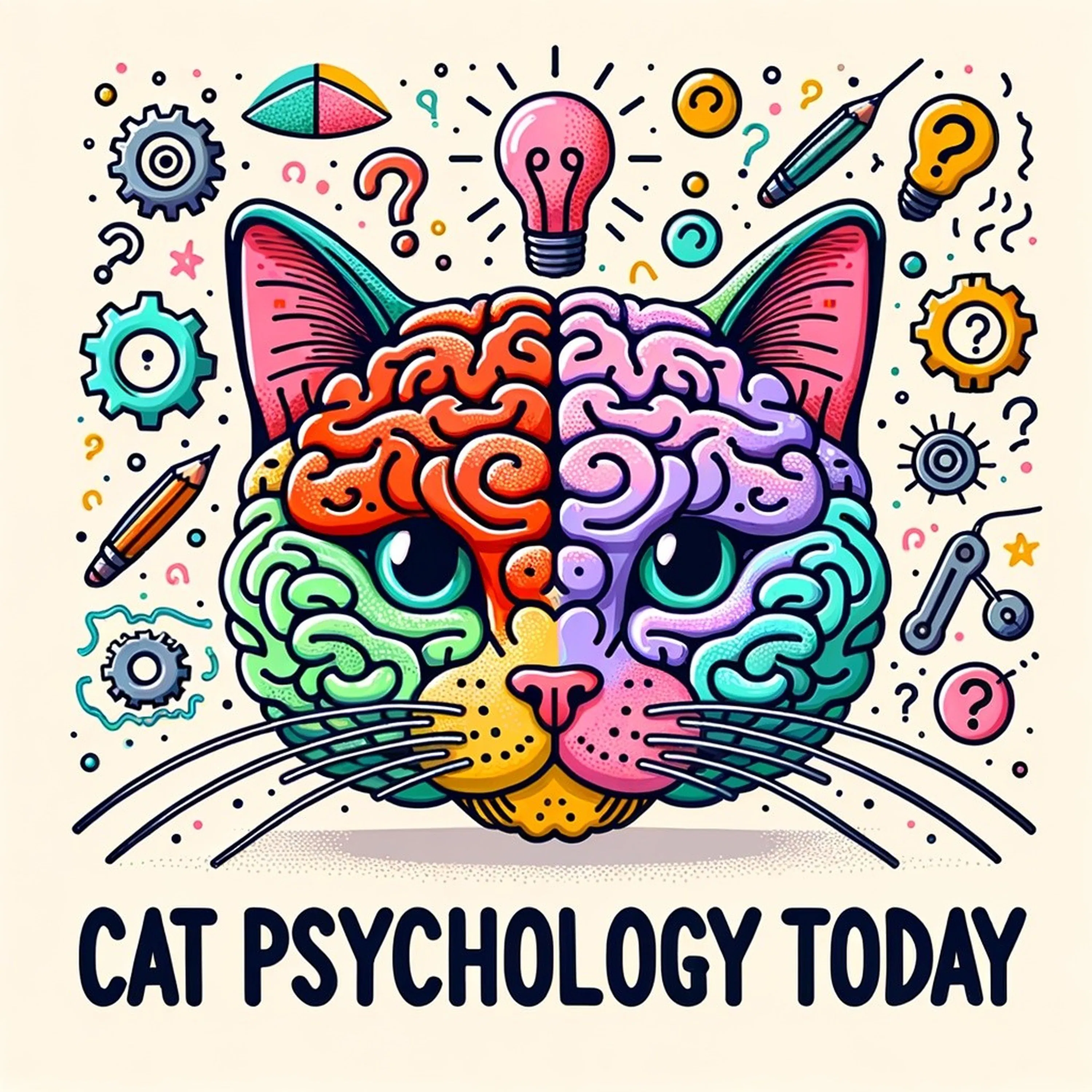
"Cat Psychology Today" is a captivating podcast that delves into the fascinating world of feline behavior and cognition. From the mysteries of cat communication to the psychological complexities of our furry companions, this podcast explores the latest research and insights from leading experts in the field of cat psychology. Listeners will gain a deeper understanding of their own cats, as well as a newfound appreciation for the inner workings of the feline mind. Whether you're a dedicated cat owner or simply curious about our feline friends, "Cat Psychology Today" promises an engaging and enlightening listening experience.For more info go to https://www.quietplease.aiCheck out these deals https://amzn.to/3zlo77eThis content was created in partnership and with the help of Artificial Intelligence AI.
-
235
Cat Psychology Today: Understanding Your Cat's Hidden World
Cat Psychology Today is a journey into the hidden mind of one of the world’s most familiar, and most misunderstood, animals. For listeners who share their lives with a cat, it can sometimes feel like you are living with a tiny, whiskered mystery. Modern research is finally catching up, revealing that cats are not aloof little aliens, but complex, social, emotionally sensitive beings. Psychology Today reports that cats display a surprising level of social intelligence, but they express it in subtle ways that many people miss. One recent article on the social lives of cats describes how they use something called rapid facial mimicry, tiny changes in the ears and mouth that mirror another cat’s expression and help smooth social interactions in cat groups. Researchers even used artificial intelligence to detect these micro‑expressions in cat cafés, showing that when one cat copied another’s face, friendly contact was more likely to follow. According to the Ohio State University Indoor Pet Initiative, understanding cats starts with remembering that, at heart, they are solitary hunters built to stalk, pounce, climb, and protect a territory. When those instincts are bottled up indoors with nothing to do, the result can look like “bad behavior” to a human: scratching furniture, late‑night zoomies, sudden bites, or litter box issues. From the cat’s perspective, though, these are attempts to meet normal feline needs in an environment that may not be designed for them. The Royal Society for the Prevention of Cruelty to Animals explains that changes in behavior are often a psychological distress signal. A cat that suddenly hides more, over‑grooms, sprays indoors, or becomes aggressive may be stressed, bored, or in pain, not spiteful or vengeful. Their advice is simple but powerful: provide safe hiding places, multiple resources like beds, bowls, and litter trays so cats don’t have to compete, and plenty of chances to play and stay active. Psychology Today and other feline behavior specialists emphasize that cats are individuals with distinct personalities: bold, shy, confident, anxious, highly social, or more reserved. A confident cat tends to explore and initiate contact. A nervous cat may watch from a distance and approach slowly over time. Respecting those differences is central to good cat psychology. Let the cat choose when to interact, use slow blinking instead of direct staring, and think of touch and play as invitations rather than demands. In the end, Cat Psychology Today is about shifting the question from “What is wrong with this cat?” to “What is this cat trying to cope with, using the only tools it has?” When listeners make that shift, the home turns from a battleground into a shared territory where a small predator and a large primate can actually understand each other. Thank you for tuning in, and don’t forget to subscribe. This has been a quiet please production, for more check out quiet please dot ai. For more http://www.quietplease.ai Get the best deals https://amzn.to/3ODvOta
-
234
Speaking Cat: The Language of Safety and Trust
Cat psychology is not a mystery so much as a different language, and once listeners start to speak it, everyday moments with their cats can feel completely transformed. Psychology Today often highlights how cats are emotionally complex, deeply sensitive to their environment, and far more social than their aloof reputation suggests. Instead of tiny house tigers plotting world domination, think of them as cautious optimists, constantly asking one question: Am I safe here? According to the Merck Veterinary Manual, cats evolved as solitary hunters, which is why they value control over their space, their routines, and their choices. That is the heart of cat psychology: safety through control. When a cat chooses the high shelf, the cardboard box, or the spot under the bed, they are managing their own stress. The RSPCA explains that hiding, extra grooming, or sudden changes in eating and toileting can all be signs of stress or fear, not stubbornness or spite. A cat that suddenly “acts out” is usually a cat that feels unsafe. Personality matters too. Psychology Today reports that cats show a wide range of personality types, from bold explorers to shy homebodies, and there is no single “right” way to be a cat. Confident cats tend to approach first, investigate new people, and claim the center of the room. More anxious cats hang back, watch from a distance, and warm up slowly. PAWS Chicago suggests the goal is not to change who your cat is, but to help them become their best version: relaxed, curious, and secure. Communication is constant, even when they are silent. Cats Protection notes that an upright tail, relaxed eyes, forward ears, and slow blinks are the feline equivalent of a friendly smile. A swishing tail, flattened ears, or a tense, low body are signs of irritation or fear. Many listeners have felt that electric moment when a cat slowly blinks at them; behaviorists often compare it to a trust signal, a quiet “I feel safe with you.” Everyday choices at home can become powerful tools of feline mental health. Companion animal psychologist Zazie Todd, writing for Psychology Today, recommends cat-centered “life hacks” like rotating toys to keep them novel, feeding several small meals a day to mimic natural hunting patterns, and giving cats tall scratching posts and safe high perches. These small adjustments respect a cat’s core needs: to stalk, pounce, scratch, and retreat on their own terms. Perhaps the most important insight from modern cat psychology is this: when behavior suddenly changes, listeners should first suspect pain or illness, not bad manners. Veterinarians and behaviorists consistently warn that aggression, withdrawal, or new litter box issues are often early warning signs of medical problems or serious stress. When listeners start to see the world from a cat’s eye view, the relationship shifts. The cat is no longer a “difficult pet” but a sensitive partner, constantly sending signals about comfort, fear, curiosity, and trust. Your job is not to dominate that little predator, but to become the safest thing in their universe. Thank you for tuning in, and be sure to subscribe so you never miss an episode. This has been a quiet please production, for more check out quiet please dot ai. For more http://www.quietplease.ai Get the best deals https://amzn.to/3ODvOta
-
233
What Your Cat Is Really Saying: Understanding Feline Intelligence and Communication
Cats are far more socially complex than their old reputation suggests, and recent Psychology Today coverage shows just how much subtle intelligence hides behind those calm faces. According to Psychology Today, new research on rapid facial mimicry suggests that cats are more likely to interact after copying one another’s ear and mouth movements, a sign that feline social life can be richer than many listeners expect. That matters because cat psychology is not just about moods or quirks; it is about communication, comfort, and choice. Merck Veterinary Manual explains that cats regulate social interaction through distancing, affectionate signals like rubbing and grooming, and defensive behaviors such as hissing. In other words, a cat is often saying quite a lot, even when it appears to be doing very little. Listeners who live with cats may notice that the clearest clues are often physical. MedVet notes that purring usually reflects contentment, head rubbing can be both affection and scent marking, and sudden bursts of energy known as zoomies are a normal release of stored-up energy. Psychology Today also emphasizes that cats prefer affection on their own terms, which means inviting rather than forcing contact often works better. The broader lesson from cat behavior experts is simple: the healthiest cat environments reduce stress and increase control. The RSPCA says changes such as hiding, grooming more than usual, altered eating or toileting, or new aggression can signal fear, pain, or illness and should be checked by a vet if they persist. The same guidance highlights the value of hiding places, scratching posts, toys, and regular activity for indoor cats. Psychology Today’s advice on happier cats points in the same direction. Keep toys rotating so they stay interesting, use play that taps into hunting instincts, and make carriers and litter areas feel safe rather than threatening. For cats, comfort is not luxury; it is behavioral fuel. For listeners, the takeaway is clear: a cat is not aloof because it lacks feeling. It is often communicating through timing, posture, movement, and space. The more carefully we watch, the more clearly the message comes through. Thank you for tuning in, and please remember to subscribe. This has been a quiet please production, for more check out quiet please dot ai. For more http://www.quietplease.ai Get the best deals https://amzn.to/3ODvOta
-
232
The Mystery of Cats Revealed: What Science Now Knows About Feline Emotions
Cat psychology is no longer a mystery box, because research is showing that cats are far more social and emotionally responsive than many people once assumed. According to Psychology Today, cats use rapid facial mimicry, meaning they subtly match another cat’s facial expression, and that behavior is linked to more successful social interaction, especially in the ears and mouth[1]. Listeners may be surprised to learn that feline intelligence does not always look obvious to humans. Psychology Today reports that cats are often highly social, but their signals are quieter and easier to miss than the expressive cues seen in dogs[1]. That helps explain why a cat may seem aloof one moment and deeply attentive the next: their communication style is subtle, selective, and highly context dependent. Recent cat behavior science is also reshaping how experts think about daily life with cats. Psychology Today notes that small changes in routine, increased caregiver presence, and better socialization can affect behavior and well-being[3][4]. In practical terms, that means enrichment matters. Play, puzzle feeding, tall scratching posts, quiet hiding spots, and predictable routines are not luxuries; they are part of a cat-centered life[3]. The science also pushes back on old stereotypes. Penn Today says feline behavior experts are actively debunking myths about cats being cold, spiteful, or impossible to understand[6]. Instead, many so-called problem behaviors are better understood as communication, stress, illness, or unmet environmental needs[6][10][14]. A sudden litter box change, for example, is a health signal worth checking, not a personal insult[3][10]. There is also growing interest in how cats think and feel about humans. Psychology Today reports that early socialization can influence how cats handle people and solve problems, while newer research is exploring grief, attachment, and even purring as a possible window into emotional state[2][8]. In other words, cats are not blank slates or tiny robots. They are adaptable, observant animals with their own social logic. For listeners who live with cats, the message is simple: pay attention, offer choice, and let the cat set the pace. That is often where the real understanding begins. Thank you for tuning in, and please subscribe. This has been a quiet please production, for more check out quiet please dot ai. For more http://www.quietplease.ai Get the best deals https://amzn.to/3ODvOta
-
231
The Hidden Language of Cats: Understanding Your Pet's Secret Social Intelligence
Cat psychology today is a story of a small predator trying to make sense of a human world, and doing it with far more social intelligence than many listeners realize. Psychology Today reports that modern research now describes cats as deeply social animals who can form secure attachment bonds to their people, similar to the way children bond to caregivers, and who often prefer human interaction over food or toys when given the choice. Penn Today notes studies showing that cats recognize their own names and respond differently to the voices of their guardians than to strangers, which means that when you speak, your cat is not only hearing you, but categorizing you as “my person.” According to Psychology Today, scientists have discovered that cats use something called rapid facial mimicry during their interactions, subtly mirroring each other’s ear and mouth movements the way dogs, horses, and even primates do. In a cat café study, researchers used artificial intelligence to analyze cat faces and found that cats were more likely to approach and interact peacefully after this split‑second mimicry, suggesting a quiet, invisible language of trust and agreement passing between them. But if cats are so socially savvy, why do humans still find them mysterious? CatWisdom101, describing recent research, explains that people misread feline signals of stress or discomfort roughly a third of the time, while doing much better at spotting signs of happiness. Psychologists call this a positivity bias: listeners want to believe their cat is fine, and in that hope, they overlook flicking tails, dilated pupils, or slightly flattened ears that say, “I’m overwhelmed.” The result is a species that often whispers when we’re expecting it to shout. Inside their minds, perception works in fascinating ways. Psychology Today describes a study using optical illusions, where cats chose to sit in the “illusory” square formed by shapes on the floor just as often as a real taped square. This suggests that cats, like humans, can complete shapes in their mind and act on what they infer, not just what they literally see. They are constantly running quiet calculations about spaces, hiding spots, and paths of escape. At home, all of this plays out in small daily rituals. When your cat weaves around your legs, blinks slowly, or perches just close enough to touch but not be grabbed, they are negotiating intimacy and safety. Psychology Today points out that individual cats show distinct personality types such as bold, shy, or highly sociable, and the healthiest relationships are those where listeners respect those boundaries instead of trying to force affection on human terms. Understanding cat psychology today is less about taming aloof creatures and more about meeting a thinking, feeling animal halfway, learning to see the world through a low‑to‑the‑ground, whisker‑sensitive lens. Thank you for tuning in, and don’t forget to subscribe. This has been a quiet please production, for more check out quiet please dot ai. For more http://www.quietplease.ai Get the best deals https://amzn.to/3ODvOta
-
230
Cats Are Smarter Than You Think: What Science Reveals About Feline Intelligence
Cats have a reputation for being mysterious, but modern science is finally starting to catch up with what many listeners already suspect: cats are emotionally rich, socially savvy, and constantly communicating with us in ways we are only beginning to decode. Psychology Today reports on research showing that cats use something called rapid facial mimicry when they interact with one another, subtly mirroring each other’s ear and mouth movements to keep the peace and deepen social bonds. In other words, when cats flash a quick matching expression, they are essentially saying, “I’m with you, not against you.” That tiny ear twitch between café cats or housemates on the couch can be the difference between a fight and a friendly coexistence. According to Penn Today at the University of Pennsylvania, cats recognize their own names and can form secure bonds with their humans, much like infants do with caregivers. They may not always come when called, but that is a choice, not a lack of understanding. Their independence is strategic, not emotional distance. Researchers writing for the journal Animals and summarized by Bartuke’s overview of cat behavior science note that early socialization shapes a cat’s problem‑solving skills. Kittens raised with gentle, consistent human contact tend to be more confident, more curious, and better at tackling puzzles for food. Listeners who play and train their cats are not spoiling them; they are literally building feline brainpower. Psychology Today also highlights work by cat behavior expert Mikel Delgado showing that play is essential, not optional. Regular, predator‑style play sessions help prevent anxiety, aggression, and even some health problems. A bored cat is more likely to scratch the furniture, pester you at night, or pick fights, while a cat who “hunts” feather wands and puzzle feeders is mentally satisfied and physically calmer. Modern technology is even joining the story. Bartuke describes how AI‑powered litter boxes and computer vision tools are being used to monitor subtle shifts in behavior and health, from changes in bathroom routines to tracking outdoor community cats over time. The more we measure, the clearer it becomes that mood, environment, and routine all leave fingerprints on feline behavior. Underneath the mystery, cat psychology today tells a simple truth: your cat is paying close attention, weighing choices, and negotiating a relationship that feels safe, respectful, and just independent enough. Thanks for tuning in, and don’t forget to subscribe. This has been a quiet please production, for more check out quiet please dot ai. For more http://www.quietplease.ai Get the best deals https://amzn.to/3ODvOta
-
229
The Secret Language of Cats: Understanding Trust, Independence, and Feline Affection
Cat psychology is a window into a creature that is both deeply emotional and fiercely independent, and understanding it changes the way listeners experience every purr, blink, and tail flick. Psychology Today and other behavioral scientists describe cats as complex social mammals whose inner lives are guided by safety, control, and subtle communication. At the heart of cat psychology is the idea of choice and security. The Ohio State University’s Indoor Pet Initiative explains that cats feel safest when they can choose where to rest, when to interact, and how to explore their territory. When a cat retreats to a hiding place, it is not rejection; it is emotional self‑regulation. Respecting that choice builds trust. According to the Humane Society and modern feline behavior guides, cats speak in a layered language of body and sound. Ears forward and a gently upright tail often signal curiosity and welcome. A slow blink is the feline equivalent of “I trust you,” an emotional handshake that invites a soft, quiet connection. Purring usually signals contentment, yet veterinarians note that cats may also purr when in pain or stressed, using the vibration as self‑soothing, so context is everything. Recent coverage in Psychology Today on the social lives of cats highlights research on rapid facial mimicry: cats subtly copy one another’s ear and mouth movements during friendly encounters in cat cafés, and this mimicry predicts more positive interaction. That suggests cats are far more socially attuned to each other than many listeners assume, reading tiny cues and responding almost instantaneously. Researchers writing for Psychology Today and PAWS Chicago point out that cats vary widely in personality: bold, shy, confident, anxious, affectionate, or aloof. A confident cat approaches and explores; an insecure cat reacts, hides, or avoids. Behavior problems often emerge when a sensitive cat feels trapped, overstimulated, or unheard. The RSPCA advises watching for sudden changes in behavior as emotional red flags that often have medical roots rather than “spite.” Happiness for a cat is not grand gestures but well‑designed daily life. Companion animal psychologists like Zazie Todd emphasize simple but powerful habits: multiple small meals, daily play that mimics hunting, vertical spaces to climb, scratching posts tall enough for a full stretch, and safe hideaways in quiet corners. These meet core feline psychological needs for predation, control of space, and escape from perceived threats. Over time, listeners who tune into this quiet emotional bandwidth discover something profound: when you honor a cat’s boundaries, they offer, in return, a very deliberate kind of affection. A head bump, a gentle knead, a nap taken at your side instead of across the room—all are a cat’s way of saying, in their own language, “I choose you.” Thank you for tuning in, and don’t forget to subscribe. This has been a quiet please production, for more check out quiet please dot ai. For more http://www.quietplease.ai Get the best deals https://amzn.to/3ODvOta
-
228
The Hidden Intelligence of Cats: What Science Reveals About Your Feline Friend
Cat psychology today is far richer and more surprising than the old stereotype of the aloof, independent feline. Modern research is revealing that cats are socially intelligent, emotionally complex, and far more tuned in to their humans than many listeners might guess. According to Psychology Today, over the last decade scientists have shown that cats display a wide range of social intelligence, but they express it in subtle, often easily missed ways. One recent study covered in Psychology Today looked at something called rapid facial mimicry, where one cat briefly copies another cat’s facial expression or ear and mouth movements during interactions. Researchers found that when this mimicry occurred, the cats were more likely to continue friendly contact, suggesting that these micro-expressions help hold feline social relationships together. Psychology Today also reports that cat personalities vary just as much as human personalities. Experts describe cats as shy or bold, confident or nervous, friendly or standoffish, each with their own consistent style of responding to the world. Far from being uniformly distant, many cats form deep emotional bonds. One article notes that feline attachment to their people can closely resemble the attachment young children feel toward their caregivers: cats use their humans as a secure base, feel safer when they are near, and can show distress when separated. When listeners see a cat staring into an empty corner, looking at “nothing,” there may be some science behind that, too. Psychology Today describes research using visual illusions, such as the Kanizsa square illusion, to test how cats perceive shapes. Cats often sit in the “invisible” square suggested by the illusion just as they do with real taped squares on the floor, suggesting they mentally complete shapes that are not physically there. This hints at a rich internal world of perception beyond what we notice. Understanding cat psychology also changes how we care for them. Companion animal psychologists featured in Psychology Today emphasize the importance of choice, gentle handling, and positive reinforcement. Studies summarized there show that cats are happier when they can control when and how they interact, when their environment includes vertical spaces, hiding spots, and puzzle feeders, and when their humans respect their boundaries instead of forcing affection. All of this points to a new way of seeing cats: not as tiny, indifferent roommates, but as emotionally sensitive, socially capable animals navigating life with their own logic and needs. When listeners slow down, read their body language, and respond with patience and curiosity, they are not just “owning” a cat; they are building a cross-species relationship grounded in modern science and quiet mutual trust. Thank you for tuning in, and remember to subscribe. This has been a quiet please production, for more check out quiet please dot ai. For more http://www.quietplease.ai Get the best deals https://amzn.to/3ODvOta
-
227
The Secret Social Life of Cats: What Science Reveals About Feline Emotions
Cat Psychology Today turns the familiar house cat into a far more socially aware and emotionally complex companion than many people expect. According to Psychology Today, a recent study found that cats use rapid facial mimicry, meaning they subtly copy one another’s expressions in ways that can help social interaction. Researchers observed cats in a cat cafe and used artificial intelligence to detect tiny changes in the ears and mouth. The result was striking: cats were more likely to interact after mimicking each other, suggesting that feline social life may be richer and more responsive than it appears at first glance. Psychology Today also reports that cats are not simply aloof or detached. They can show a wide range of personalities, from shy and nervous to bold, confident, and friendly. Other research highlighted by Penn Today shows that cats can recognize their names and form secure bonds with their owners, which helps explain why so many people feel such a deep connection with them. What makes Cat Psychology Today so engaging is the way it reframes everyday cat behavior. A pause before approaching, a playful twitch of the ears, or a slow blink may all be part of a sophisticated social language. Play matters too. Psychology Today notes that playful cats are often happier and healthier, reminding listeners that enrichment is not a luxury, but a real part of feline well-being. Even the way cats live with us can reflect our own behavior. Psychology Today has pointed out that a calm, stable home can support a cat’s stress levels and social comfort, while chaos can make life harder for them. In that sense, cats may be quietly observing us as much as we are observing them. So the next time a cat stares back, blinks slowly, or follows another cat’s lead, remember that there may be far more going on beneath the surface. Thank you for tuning in, and please subscribe. This has been a quiet please production, for more check out quiet please dot ai. For more http://www.quietplease.ai Get the best deals https://amzn.to/3ODvOta
We're indexing this podcast's transcripts for the first time — this can take a minute or two. We'll show results as soon as they're ready.
No matches for "" in this podcast's transcripts.
No topics indexed yet for this podcast.
Loading reviews...
ABOUT THIS SHOW
"Cat Psychology Today" is a captivating podcast that delves into the fascinating world of feline behavior and cognition. From the mysteries of cat communication to the psychological complexities of our furry companions, this podcast explores the latest research and insights from leading experts in the field of cat psychology. Listeners will gain a deeper understanding of their own cats, as well as a newfound appreciation for the inner workings of the feline mind. Whether you're a dedicated cat owner or simply curious about our feline friends, "Cat Psychology Today" promises an engaging and enlightening listening experience.For more info go to https://www.quietplease.aiCheck out these deals https://amzn.to/3zlo77eThis content was created in partnership and with the help of Artificial Intelligence AI.
HOSTED BY
Inception Point AI
Loading similar podcasts...
Frequently Asked Questions
How many episodes does Cat Psychology Today have?
Cat Psychology Today currently has 9 episodes available on PodParley. New episodes are automatically indexed when they're published to the podcast feed.
What is Cat Psychology Today about?
"Cat Psychology Today" is a captivating podcast that delves into the fascinating world of feline behavior and cognition. From the mysteries of cat communication to the psychological complexities of our furry companions, this podcast explores the latest research and insights from leading experts in...
How often does Cat Psychology Today release new episodes?
Cat Psychology Today is no longer actively publishing new episodes, but the existing catalog remains available.
Where can I listen to Cat Psychology Today?
You can listen to Cat Psychology Today on PodParley by clicking any episode. We provide an embedded audio player for direct listening.
Who hosts Cat Psychology Today?
Cat Psychology Today is created and hosted by Inception Point AI.
URL copied to clipboard!