
PODCAST · business
China Money Podcast - Video Episodes
by ChinaMoneyNetwork.com
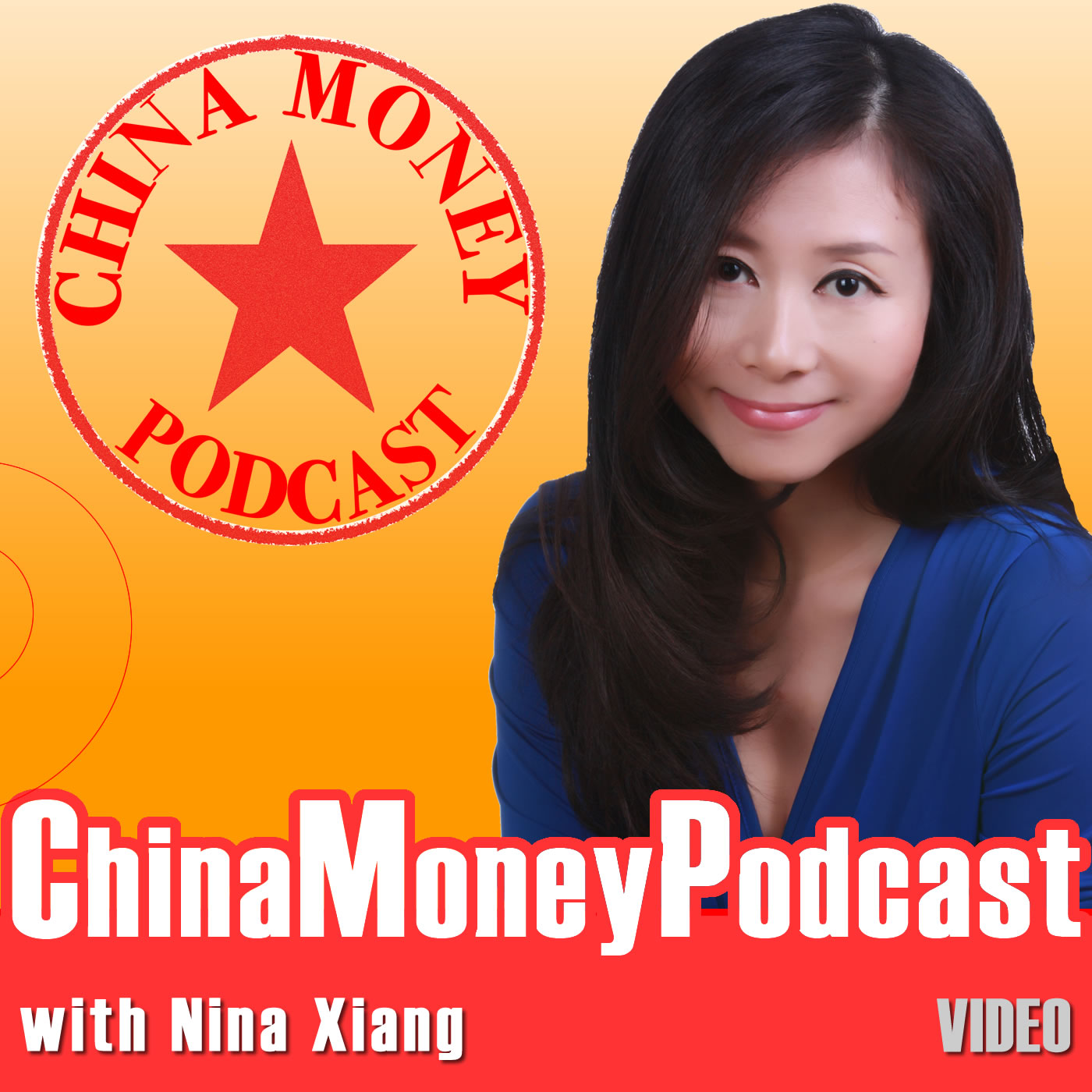
Watch China-based fund managers, analysts, dealmakers and economists discuss investment opportunities in China, with our host Nina Xiang. Subscribe for real local business knowledge and insights on investing in China. A service of China Money Network.
-
74
Andrew Teoh: BAT’s Acquisition Strategy Creates Potential Exits For Venture Funds
Andrew Teoh, founding partner of Ameba Capital, tells China Money Podcast host Nina Xiang that when he makes investment decisions, he would consider a sale to Chinese Internet giants, BAT (Baidu, Alibaba, Tencent), as potential exits. He shares his view on what assets BAT are likely to acquire in the next year.
-
73
Andrew Teoh: More Mergers In 2016 To Create Industry Number Twos
Andrew Teoh, founding partner of Ameba Capital, tells China Money Podcast host Nina Xiang that there will be more mergers among Chinese technology companies in 2016, which will create clear industry number twos. In particular, the O2O (online-to-offline) sector will see more mergers as the availability of capital decreases.
-
72
Andrew Teoh: We Like Social Network B2C Start-Ups As Chinese Consumers Mature
Andrew Teoh, founding partner of Ameba Capital, tells China Money Podcast host Nina Xiang that he likes social network-based B2C start-ups now as Chinese consumers become more sophisticated and want quality, brand and seamless shopping experience.
-
71
Andrew Teoh: RMB Will Become A More Important Currency In Early Stage Investments
Andrew Teoh, founding partner of Ameba Capital, tells China Money Podcast host Nina Xiang that as China's capital markets changes, the RMB will become a more important currency in both early stage and late stage investments in China, different from the past when the U.S. dollar dominated in both investment and exits.
-
70
Xia Mingchen: Distressed Debt, Special Situations Will Outshine As China Re-Balances
In this episode of China Money Podcast, guest Xia Mingchen, a Hong Kong-based principal at Hamilton Lane's fund investment team, spoke to our host Nina Xiang. Xia says Hamilton Lane likes distressed debt and special situations strategies in China. They will likely outperform as the Chinese economic transition provides plenty of opportunities for corporate restructuring. Don't forget to subscribe to China Money Podcast for free in the iTunes store, or subscribe to China Money Network weekly newsletters. You can also subscribe to China Money Podcast’s Youtube channel or Youku channel.
-
69
Xia Mingchen: Sector Expertise And Post-Investment Management Are Key For Success In China
In this episode of China Money Podcast, guest Xia Mingchen, a Hong Kong-based principal at Hamilton Lane's fund investment team, spoke to our host Nina Xiang. Xia says as the Chinese economy re-balances, private equity fund managers need to focus more on sector expertise and post-investment management of their portfolios. Don't forget to subscribe to China Money Podcast for free in the iTunes store, or subscribe to China Money Network weekly newsletters. You can also subscribe to China Money Podcast’s Youtube channel or Youku channel.
-
68
Xia Mingchen: We Prefer Country-Specific Funds Over Pan-Asian Peers
In this episode of China Money Podcast, guest Xia Mingchen, a Hong Kong-based principal at Hamilton Lane's fund investment team, spoke to our host Nina Xiang. Xia says he prefers country-specific private equity funds over pan-Asian vehicles, because local expertise is critical in achieving success in the region. Don't forget to subscribe to China Money Podcast for free in the iTunes store, or subscribe to China Money Network weekly newsletters. You can also subscribe to China Money Podcast’s Youtube channel or Youku channel.
-
67
Mark McFarland: We Favor Hong Kong-listed Chinese Internet And Banking Stocks
Mark McFarland, global chief economist at private bank Coutts & Co. Limited, tells China Money Podcast host Nina Xiang that Hong Kong-listed Chinese Internet leaders and banks are preferred sectors for gradual market re-entry.
-
66
Mark McFarland: China Has Plenty Of Room To Loosen Monetary Policy If Needed
Mark McFarland, global chief economist at private bank Coutts & Co. Limited, tells China Money Podcast host Nina Xiang that China has plenty of room to loosen monetary policy if needed, and is likely to cut bank reserve requirement ratio two or three times by the end of 2016.
-
65
Mark McFarland: RMB’s Future Devaluation Will Be Limited
Mark McFarland, global chief economist at private bank Coutts & Co. Limited, tells China Money Podcast host Nina Xiang that the RMB has limited space to depreciate further and the Chinese government will be able to keep a relatively stable exchange rate going forward.
-
64
Mark McFarland: China’s Slowdown Is Good For The World
Mark McFarland, global chief economist at private bank Coutts & Co. Limited, tells China Money Podcast host Nina Xiang that investors should look beyond the current slowdown to realize that an economic slowdown in China is good for everyone as there will be less waste of resources.
-
63
Leon Liao: Recommend Galaxy, SJM, Sands China, And MPEL
Leon Liao, gaming analyst at investment bank Jefferies & Co., tells China Money Podcast host Nina Xiang that he likes Macau casino operators Galaxy, SJM Holdings Limited, Sands China Limited, and Melco Crown Entertainment (ADR).
-
62
Leon Liao: Macau’s Junket System Is Consolidating, Weak Ones Will Fail
Leon Liao, gaming analyst at investment bank Jefferies & Co., tells China Money Podcast host Nina Xiang that Macau's junket system is consolidating as casinos' revenues plummet, with weak operators shutting down.
-
61
Leon Liao: Macau Gaming Sector May Have Reached Bottom
Leon Liao, gaming analyst at investment bank Jefferies & Co., tells China Money Podcast host Nina Xiang that Macau's gaming sector may have reached bottom range after a significant drop from its peak levels.
-
60
Tian X. Hou: Qihoo 360’s $9B Privatization Deal Will Complete At Reduced Price
Tian X. Hou, founder and CEO of T.H. Capital, tells China Money Podcast host Nina Xiang that Qihoo 360 Technology Co.'s US$9 billion take-private transaction will go through at a reduced price.
-
59
Tian X. Hou: US-Listed Chinese Healthcare And Hotel Firms Well-Suited For Privatization
Tian X. Hou, founder and CEO of T.H. Capital, tells China Money Podcast host Nina Xiang that U.S.-listed Chinese healthcare companies should consider returning to the Chinese domestic stock market as their listing venue.
-
58
Tian X. Hou: Privatization Deals Should Proceed Despite Correction And IPO Suspension
Tian X. Hou, founder and CEO of T.H. Capital, tells China Money Podcast host Nina Xiang that despite the market correction in China and the government's temporary suspension of the IPO market, most U.S.-listed Chinese companies with plans to go private should try to proceed to complete the transactions.
-
57
Tian X. Hou: Wave Of Privatization Deals Good For China’s Stock Market
Tian X. Hou, founder and CEO of T.H. Capital, tells China Money Podcast host Nina Xiang that even though some U.S.-listed Chinese companies are pursuing go-private deals for short-term profits, but the current wave of privatization deals will be beneficial for China's stock market in the long term.
-
56
Tian X. Hou: Baidu Should Consider Listing Its New Ventures Domestically
Tian X. Hou, founder and CEO of T.H. Capital, tells China Money Podcast host Nina Xiang that for big Chinese Internet companies listed in the U.S. such as Baidu and Sina, they should consider listing its new businesses branches domestically.
-
55
Manav Gupta: Hong Kong’s IoT Ecosystem Is The Best In The World
Manav Gupta, founder and chief executive officer of Hong Kong-based Internet Of Things (IoT) accelerator Brinc, tells China Money Podcast host Nina Xiang that Hong Kong is the best place in the world to ensure the success of an IoT start-up business.
-
54
Manav Gupta: Human Microchip Implants May Happen Sooner Than Expected
Manav Gupta, founder and chief executive officer of Hong Kong-based Internet Of Things (IoT) accelerator Brinc, tells China Money Podcast host Nina Xiang that wide-spread human microchip implants may happen sooner than expected.
-
53
Manav Gupta: Key Challenge For IoT Sector Is Global Integration
Manav Gupta, founder and chief executive officer of Hong Kong-based Internet Of Things (IoT) accelerator Brinc, tells China Money Podcast host Nina Xiang that the IoT sector's key challenge in the future is how to connect all the smart hardware and to integrate them via data centers and on the cloud globally.
-
52
Manav Gupta: The Future IoT 2.0 Will Connect All Facets Of Our Lives
Manav Gupta, founder and chief executive officer of Hong Kong-based Internet Of Things (IoT) accelerator Brinc, tells China Money Podcast host Nina Xiang that the IoT sector's future is what he calls IoT 2.0, where smart devices talk to each other and are integrated to enhance people's lives.
-
51
Manav Gupta: IoT Sector Could Be A $7 Trillion Market Opportunity
Manav Gupta, founder and chief executive officer of Hong Kong-based Internet Of Things (IoT) accelerator Brinc, tells China Money Podcast host Nina Xiang that the IoT sector could be a US$7 trillion market opportunity.
-
50
Theodore Shou: China Hedge Funds Will Continue To Outperform
Theodore Shou, chief investment officer at South Africa-based fund of hedge fund manager Skybound Capital, tells China Money Podcast host Nina Xiang that China-focused hedge funds will continue to outperform despite the recent market gyrations and the slowing economy.
-
49
Theodore Shou: China Macro Funds Suffer Losses From RMB Depreciation
Theodore Shou, chief investment officer at South Africa-based fund of hedge fund manager Skybound Capital, tells China Money Podcast host Nina Xiang that some Chinese macro strategy hedge funds suffered losses after the Chinese People's Bank of China devalued the RMB last week as they made big currency bets.
-
48
Theodore Shou: Investors Shift Focus To Risk Control After China Market Correction
Theodore Shou, chief investment officer at Cape Town, South Africa-based fund of hedge fund manager Skybound Capital, tells China Money Podcast host Nina Xiang that investors now value risk control more after the Chinese stock market correction.
-
47
Theodore Shou: China Hedge Funds Failed To Achieve Alpha In Market Crash
Theodore Shou, chief investment officer at Cape Town, South Africa-based fund of hedge fund manager Skybound Capital, tells China Money Podcast host Nina Xiang that the most recent Chinese stock market crash reveals that many Chinese hedge fund managers merely had exaggerated "beta" in the past, and they failed to achieve "alpha" during the past few months.
-
46
David Ji: China’s Ghost Cities Are Not A Problem Of Oversupply
David Ji, director, head of research and consultancy of Greater China at property consultancy Knight Frank, says China's ghost cities are not a problem of oversupply.
-
45
David Ji: Real Estate Related To China’s New Economy Still Attractive
David Ji, director, head of research and consultancy of Greater China at property consultancy Knight Frank says real estate in China relating to the country's new economy are still attractive.
-
44
David Ji: Chinese Property Market In Early Recovery Stage
David Ji, director, head of research and consultancy of Greater China at property consultancy Knight Frank says the Chinese property market is stabilizing and in early recovery stage.
-
43
Marc Faber: The Chinese Will Not Print Money
In this episode of China Money Podcast, guest Dr. Marc Faber, renowned investor and publisher of The Gloom, Boom & Doom Report, speaks with our host Nina Xiang. Dr. Faber shares his thoughts on why China's economic problems are solvable, explains the reasons behind his belief that China is likely to keep its currency stable, and rebukes the argument that capital may be flying out of China for a lack of confidence in the world's second largest economy. Read an excerpt or watch an abbreviated video version of the interview. Be sure to listen to the full interview in the audio podcast. Don't forget to subscribe to China Money Podcast for free in the iTunes store.
-
42
Benjamin Fanger: Ballooning Bad Loans In China Are The Next Great Opportunity
In this episode of China Money Podcast, guest Benjamin Fanger, co-founder of Chinese distressed debt investment firm Shoreline Capital, talks to our host Nina Xiang about the changes he saw in the distressed debt investing space over the past ten years, where he sees future opportunities, and how his firm controls downside risks in a highly specialized investment arena. Read an excerpt below, but be sure to listen to the full episode in audio. Don't forget to subscribe to the podcast for free in the iTunes store.
-
41
Eric Solberg: China’s Property And Steel Sectors Look Interesting Now
In this episode of China Money Podcast, guest Eric Solberg, founder and CEO of Asia-focused private equity and wealth management firm EXS Capital, talked to our host Nina Xiang. He discussed how he is preparing to invest in China's property sector in its downturn, and why he thinks there are attractive investment opportunities in the Chinese steel sector. Read an excerpt below, but be sure to listen to the full episode in audio. Don't forget to subscribe to the podcast for free in the iTunes store.
-
40
Chi Lo: Patient Investors Should Build Up China Exposure Now
In this episode of China Money Podcast, senior strategist for Greater China at BNP Paribas Investment Partners Chi Lo, talked with out host Nina Xiang about the future policy direction of the Chinese central bank; why he believes the biggest risk in the Chinese economy is a property correction and its knock-on effect on banks and other sectors; as well as his advice for investors on building exposure to China now. Read an excerpt below, but be sure to listen to the full episode in audio. Don't forget to subscribe to the podcast for free in the iTunes store.
-
39
Jim Rogers: We Will All Pay A Terrible Price For Today’s Artificial Liquidity
In this episode of China Money Podcast, returning guest and legendary investor Jim Rogers, chairman of Rogers Holdings, spoke with our host Nina Xiang in Singapore. Mr. Rogers shared his views on the world economy and markets, in particular, why people should be concerned about tough times ahead as the unprecedented artificial liquidity comes to an end. He also discussed bitcoins, and why he missed the best opportunity to invest in the virtual currencies. He shared some personal experiences about returning to his hometown of Demopolis, Alabama, and the joy of seeing his daughters excel in the Chinese language. Read an excerpt below, but be sure to listen to the full episode in audio. Don't forget to subscribe to the podcast for free in the iTunes store.
-
38
Bing Lin: Accounting Abuse Among Listed Chinese Companies Still Widespread
In this episode of China Money Podcast, guest Bing Lin, portfolio manager at Hong Kong-based $1.4 billion-under-management Keywise Capital Management, speaks to our host Nina Xiang about why he believes there are still many major overseas listed Chinese companies with fraudulent accounting practices, and how 2014 will be a great year for shorting certain overseas-listed Chinese stocks. Read an excerpt below, but be sure to listen to the full interview in audio, or watch an abbreviated video version. Don't forget to subscribe to the podcast for free in the iTunes store.
-
37
Theodore Shou: China-Focused Hedge Funds Will Continue To Outperform
In this episode of China Money Podcast, we feature guest Theodore Shou, chief investment office at Cape Town, South Africa-based fund of hedge fund manager, Skybound Capital. Shou talked with our host Nina Xiang about his projections for the development of China's hedge fund sector, why he is bullish for China-focused hedge funds' ability to continue to outperform global peers, and why fund of funds in emerging markets will remain relevant for limited partners for a long time. Read an excerpt below, but be sure to listen to the full interview in audio, or watch an abbreviated video version. Don't forget to subscribe to the podcast for free in the iTunes store.
-
36
Goodwin Gaw: China’s Property Market May See 10%-15% Price Drop
In this episode of China Money Podcast, our featured guest is Goodwin Gaw, managing principal and founder of Hong Kong-based private real estate management firm, Gaw Capital, which manages $7.5 billion. Gaw talked with our host, Nina Xiang, about where in the Chinese property market he sees price corrections this year, why his firm is staying on the sidelines investing in Hong Kong, and his thoughts on Gaw Capital's performance. Read an excerpt below, but be sure to listen to the full interview in audio, or watch an abbreviated video version. Don't forget to subscribe to the podcast for free in the iTunes store.
-
35
Kevin Parker: China Will Set Pace Of Environmental Policy In 2014
In this episode of China Money Podcast, we feature guest Kevin Parker, CEO of New York-based investment management firm, Sustainable Insight Capital Management. Parker was the global head of Deutsche Asset Management, which manages $750 billion, from 2004 to 2012. Parker shares his thoughts on the growth of sustainable investing, explains why China is setting the global environmental policy this year, and how China is likely to lower the cost of electric vehicle productions. Q: Let's start with something fun. You own and have run a bio-dynamic winery in Southern France called Chateau Maris Cru starting from the late 1990s. What's the best and the most difficult part about running your own winery? A: The best part is drinking (the wine), of course. After a career on Wall Street with a telephone in one hand and sitting in front of a computer and moving money around, (it's nice) to make something tangible. Something that people can taste, feel and enjoy. (Our) winery has been bio-dynamic, or organic, for 17 years. Being a sustainable farmer for 17 years gives me certain credibility (to discuss sustainability issues). But it takes about seven years to convert a vineyard away from the use of pesticides, fungicides and synthetic chemicals to a completely natural approach. You see that the soils really come alive. Being a New Yorker and naturally impatient, it taught me something about time and patience.
-
34
Tim Draper: Extraordinary Returns Are Coming Back To Venture Capital In The Next Three Years
In this episode of China Money Podcast, guest Tim Draper, founder and managing director of Menlo Park, California-based venture capital firm Draper Fisher Jurvestson (DFJ), speaks with our host Nina Xiang about the history of DFJ's investment activities in China, where he is focused on funding the next big tech companies, his big misses in China, and his views on the next tech bubble that he thinks is coming right now. Read an excerpt below, but be sure to listen to the full interview in audio or watch an abbreviated video version. Don't forget to subscribe to the podcast in the iTunes store. Q: Let's start with the Macro. Investors, particularly foreign investors, have been concerned about an economic slowdown in China. Do you share that sentiment? A: Even an economic slowdown in China means a growth rate much higher than most of the world. So I'm not concerned at all about a slight lowering of the Chinese growth rate. I actually think that the Chinese economy is one of the most promising in the world. Q: DFJ is closing down its China and India offices. Why? A: We found that we are better off working with affiliates in these countries, rather than (running) DFJ company owned (operations). We have DFJ Dragon, DFJ Compass and DFJ ePlanet in China. We found that trying to make decisions on companies that far away was a very difficult process. We want more local control, so that the local partners can make decisions. DFJ is still very active in China (through our affiliates). It's just that we've made a shift in strategy to make decision-making more local. This does not impact any of our global network (funds), including DFJ Dragon and DFJ Compass. Q: DFJ first entered the Chinese market in 1999 with a partnership with ePlanet Capital, running a $650 million fund. How did that fund get started? A: I have always wanted to invest in China. In the beginning, we invested in things that seemed to have good government connections. Those didn't work out. Then we started to invest in young, driven entrepreneurs who wanted to make great things happen. Then we invested in Baidu, Focus Media, ePay, Fastweb, Skype, etc. Q: This fund reportedly realized over 30% gross internal rate of return (IRR)? A: We never disclose this information. But the investors are very happy. The IRR would depend on when the investor sold their Baidu (stocks). If they are still holding (those shares), they are doing really, really well. Q: But DFJ ended the partnership, and started DFJ Dragon in 2006. Why did you move on with another partner? A: We had different approaches to venture capital. ePlanet went on to raise their own fund, and we set up DFJ Dragon, DFJ China and DFJ Compass. Q: DFJ Dragon's first fund was a $200 million vehicle raised in 2006… A: No, it's less than that. ........
-
33
Anla Cheng: China’s IPO Market Might Open Sooner Than You Expect
In this episode of China Money Network, guest Anla Cheng, partner at Sino-Century China Private Equity Partners, talks with our host Nina Xiang, about the importance of protecting intellectual property for companies in China's financial information sector, why she thinks China's IPO market might open sooner than expected, and her hopes for the realization of substantive reforms in China. Read an excerpt below, but be sure to listen to the full interview in audio or watch an abbreviated video version. Don't forget to subscribe to the podcast in the iTunes store. Q: Can you give us a brief introduction of Sino-Century China Private Equity Partners? A: Sino-Century was founded in 2005 by three partners. Our founder, Dr. Hong Chang, used to work at the municipality in Pudong, Shanghai. He was one of the 25 financial architects who built the Pudong district. Therefore, he's very close to the build-up of China's financial center. We launched our first RMB fund in 2007 focused on small and medium enterprises (SME). We focus on three sectors: financial information and services, which is the mainstay of our fund. About 50% of our assets are invested in this area. The other two are high-end manufacturing and sustainable environment. Q: Do you currently only manage one fund? A: We are onto our second fund. Our first fund initially planned to raise $150 million. Then the financial crisis hit and we closed at $73 million. It is mainly in RMB, but also has about 15% of assets in U.S. dollars. We had several exits already and were hoping for another exit last year. Then the IPO market got closed. But we are on the "queue," of which there are about 800 companies waiting to go public in China. There are about 40 to 80 companies that already received approval to list, one of which is a company we invested. We are in the final stage of marketing our second fund, which we are targeting $250 million. It's going to be predominately in U.S. dollars because our founder has always a vision to become an international fund. Q: There are media reports saying that Sino-Century invested RMB84 million in Wind Info for a stake of 7% to 9% in 2007. Are they accurate? A: Yes. Initially, we invested about $12.7 million for a stake above 7%. Two years after we made the investment, CITIC PE bought a share at about three times of our valuation, and our share got diluted a bit. Q: Intellectual property is critical in this sector. Wind Info has sued competitors for IP infringement last year, and others have sued Wind Info for the same cause. Do you think lawsuits are effective in protecting IPs in China? A: Probably not as effective as in other places, but at least it's a beginning. Wind Info's pending lawsuit (against Zhejiang Hithink Flush Information Network Co.) is dragging on a bit but I believe Wind Info has a strong case. ....... Anla Cheng is partner at Sino-Century China Private Equity Partners. Before joining Sino-Century in 2007, she was the founder of Centenium Capital. Previously, she was senior vice-resident of Robert Fleming for Asian investment; institutional head of the Asia desk for Prudential Bache and portfolio manager at Citibank Asia Asset Management. She started her career at Goldman Sachs.
-
32
Jim Rogers: China Should Open Up Its Financial Markets Now
In this episode of China Money Network, returning guest and veteran investor Jim Rogers, chairman of Rogers Holdings, talked with our host Nina Xiang on his reading of China's third plenum meeting, why China should open its financial markets completely "this afternoon", and what Chinese stocks he has been buying lately. Read an excerpt below, but be sure to listen to the full interview in audio or watch an abbreviated video version. Don't forget to subscribe to the podcast in the iTunes store. Q: The just completed third plenum meeting provided a road-map for China's future reforms. It created this renewed sense of optimism about China's future. Do you share that feeling? A: I was quite delighted to see what they said. The one overriding point is that the market is going to make the final decision. That is contrary to what is happening in the U.S., and that is why the world is moving to Asia. Q: The policy initiatives may look near perfect on paper, but no doubt the most challenging part will be implementation. What do you see as the biggest risk in implementation? A: In the past few years, the momentum (for reform) in China has slowed because of vested interests and their fear of losing power. The new leadership now says let's move on and just do it. But it won't happen with a snap of the finger. Q: What would you like to see in China's financial reform? A: They should make their currency, the RMB, convertible this afternoon. They started (currency reforms) in 2005 and have taken many small steps. But China is no longer a weak economy. It is the most successful country in the past thirty years. There is nothing to fear. Q: Interest rate liberalization, floating the currency and opening up capital accounts, which one should come first? A: I would think all of the above this afternoon. But they've been very slow and only taken small steps. Deng Xiaoping says you cross a stream by feeling one rock at a time. That's correct. But there comes a time when you get to the other side, and let's move ahead. China is on the other side now. Q: How worried are you about capital outflows if the capital accounts are opened now? A: Of course there will be capital outflows. The RMB may even go down for a while. But just do it and get it over with. There will be a lot of capital inflows as people like me want to put money into China. Have you ever heard of people smuggling money into a country with capital controls? No. People in China are trying to get their money out. But there are also many people who want to rush into China. This is the point of a free and open market. Trust me, it's not the end of the world. The Australians, Germans and Japanese used to worry about (opening up capital accounts). But somehow they all survived. Trillions of dollars flow in and out everyday in the foreign currency market. China will survive too. Q: You have been bullish on the RMB for a long time, but the RMB only appreciated for roughly 12% since 2008. You can't say that it's a great performance as an investment? A: That depends on what you compare with. There are many other currencies that were down. We presume one has earned interest as well even if it's just put into a CD (certificate of deposit). Don't forget that those interests get compounded. But you are right, there are many other investments that could have made a lot more money. But the point is the currency has continued to appreciate and will continue to appreciate. It may be double or triple in the next 10 to 20 years. Q: Are you buying Chinese company shares now? A: Yes. Q: Can you give us a couple of those names? A: I've never bought Chinese domestic A shares in my life because it's always more expensive. But I've been buying H shares and overseas-listed Chinese companies for the first time in a while. One company I bought was HollySys, a supplier of automation and control applications to China's subway and railway sectors. I owned it before and I've bought some more recently. Another company is Fab Universal, a mobile digital entertainment provider. I also bought a Chinese investment firm and companies in the defense sector. Q: There is a newly launched ETF tracking Chinese domestic stock market index, the CSI 300. Would you buy an ETF like this? A: Yes, maybe I will.
-
31
Stephen Roach: Fears Of A China Slowdown Are Vastly Overblown
In this episode of China Money Network, our guest is Stephen Roach, current senior fellow at Yale University’s Jackson Institute of Global Affairs and former chairman of Morgan Stanley Asia and the firm's chief economist. He spoke with our host, Nina Xiang, on the Fed's tapering of its quantitative easing programs and its impact on China; a potential U.S. default and what that means for China's over $3 trillion foreign reserves; and why he believes the fears of a China slowdown are vastly overblown. Listen to the full interview in the audio podcast, watch an abbreviated video version (coming soon) or read an excerpt below. Be sure to subscribe to the podcast in the iTunes store. Q: What impact will the U.S. Federal Reserve's reduction of its quantitative easing (QE) programs have on China? A: The policy experiment of the Fed is very risky. It's untested. It's unconventional. In my view, it's a big mistake. Initially, the policy grew out of a deep and legitimate concern of the U.S. and the world economy in crisis. Lacking a leeway in cutting interest rates, which were near zero, the Fed embarked on asset purchases, or liquidity injections. The Fed continued to do it even as the crisis ended and the economy attempted to recover. Last month, when the Fed surprised the market by backing off from QE, it found out that it might be difficult to get out from what could be a "policy trap" that it set itself. China would be adversely impacted if the global economy were dealt a blow by the Fed's policy withdrawal. Where China is exposed to any direct impact (from the U.S.) is if the U.S. were to default on its sovereign debt. China, with its $3.25 trillion foreign exchange reserves and the biggest share being U.S. dollar assets, could be hit very hard. Q: With the U.S. in the middle of a government shutdown, can you walk us through what you think is the worst-case scenario if a U.S. default takes place? A: It's pretty straightforward. The yields of U.S. treasuries will go up. They will no longer be given the premium of the riskless assets that lies at the core of the world's financial systems. How much it will go up, for how long? It's hard to know. That would certainly result in a loss in the value of any Treasury-based securities. Q: If you were the governor of the People's Bank of China (PBOC), how would you manage China's foreign reserves differently? A: The dollar-denominated concentration of China's reserves is very much tied to the currency policy of the PBOC. If the Chinese government were to significantly reduce their exposure to U.S. dollar-based assets, then the RMB would rise, possibly significantly, against the U.S. dollar. The RMB has risen close to 35% against the U.S. dollar since mid-2005. The Chinese exporters have dealt with it well and managed to maintain their competitiveness. If there were to be a sharp further appreciation of the RMB because of a U.S. default or other reasons, it would put pressure on Chinese exporters. A U.S. default, which I still believe is a low probability outcome for a sustained period of time, or intensification of U.S. trade frictions that could cause retaliatory reactions from the Chinese, could cause the RMB to appreciate suddenly. But ultimately, I think the best case is to expect gradual further appreciation of the RMB. Q: What policy initiative would you like to see coming from the Third Plenum of the Party Congress in November? A: I like to see initiatives aimed at providing broader support to Chinese consumers. The top of my list is to inject public funds into the social safety net institutions like social security and healthcare. The enrollment has increased a lot, but the assets in these plans are small and the benefit streams are limited. I like to see interest rate liberalization for deposits, and I'd like to see Hukou reform. Q: About China's property market, when do you think the bubble will burst? A: I think we make too much of the property bubble in China. There are clearly some speculative bubbles in the coastal and first-tier cities. But the broad story for the property market in China is rural-urban migration on a scale the world has never seen. About 15 to 20 million people every year moving to the city every year since 1980 and continuing probably to 2030. That creates a demand for shelter in China for a very long time. I don't share the view that China is a big construction bubble like Dubai or worse. Unlike Dubai, it's all speculation and no indigenous population; the urban share of China's population is over 50% in 2012 and heading up to 70% to 2025 or 2030. Q: Lastly, where do you see the best investment opportunities in China for the next five years? A: I'm a long-term optimist on China. The fears of the China slowdown are vastly overblown because today's Chinese economy is a different economy from one that has historically been growing at 10%. The opportunities will shift to a consumer sector, both goods but especially services. China's service sector is tiny compared to other economies in the world. As the Chinese services sector grows, there will be spectacular opportunities for foreign participation as investments or as foreign direct investment. Q: Can you tell us more about your new book? A: My new book is called Unbalanced. It will be available in bookstores in January 2014. It focuses on the co-dependencies of America and China. Co-dependency is not a stable relationship for two people, and it's not stable for two economies. Over time, both economies face re-balancing as a need to deal with this potentially unstable co-dependency. The book details the risks but most importantly the opportunities from the re-balancing of the two countries. There is no guarantee that both economies will re-balance at the time and at the same pace. I'm more optimistic that China will re-balance before America, and that will have implications for the U.S., on whom then do we depend on? About Stephen Roach: Stephen RoachStephen Roach is a senior fellow at Yale University's Jackson Institute of Global Affairs. He was formerly chairman of Morgan Stanley Asia and the firm's chief economist for the bulk of his 30-year career at Morgan Stanley. Prior to joining Morgan Stanley in 1982, Roach served on the research staff at the Federal Reserve and was a research fellow at the Brookings Institution.
-
30
William Shen: Headland Capital Is Bullish On Chinese 4S Auto Dealerships
In this episode of China Money Network, guest William Shen, senior partner and head of Greater China at Headland Capital Partners, talks with our host Nina Xiang, about why he sees 4S automotive dealerships in China as the next great opportunity, how Chinese consumers are changing, and what the impact of the economic slowdown has on Headland's investments. Listen to the full interview in the audio podcast, watch an abbreviated video version or read an excerpt below. Be sure to subscribe to the podcast in the iTunes store. Q: Can you give us a brief introduction of Headland Capital? A: Headland Capital was established in 1988. For the past 25 years, we have invested an aggregate of $2.7 billion into around 150 companies based in Greater China, South Korea and Southeast Asia. Our main focus is either providing growth capital for high growth companies or helping companies perform buyouts. We were part of the HSBC Group and did a spin out in 2010. Q: Headland has invested heavily in the Chinese consumer sector. How has the economic slowdown impacted the companies you've invested in? A: The Chinese consumers are still consuming. We are still talking about double-digit annual growth in retail sales. But there are far more choices today than five years ago. If someone's total budget for clothing, for example, has increased 40% or 50% than five years ago, the amount of choices may have doubled or tripled during the same time. Therefore, as a brand, maintaining their market share becomes more challenging. For example, in the apparel industry, the old model of operation is to use a good brand sponsor, advertise on TV and sell your products via a wholesale model. You, as the brand owner, do not operate the retail outlets. You rely on a few thousand wholesale distributors across China to sell your products. In the old days, when choices were few, this model worked for well-managed brands. But with the influx of fast fashion and foreign brands, consumers are becoming far more discerning. So without decent control at the retail level, you wouldn't know which design is selling faster or slower, and inevitably there will be inventory buildup. So in order to do well in the apparel industry, you need to operate your own stores or work very closely with selected distributors today. .......
-
29
Arthur Kroeber: Credit Curbs And Structural Reforms Will Heighten China Risk
In this episode of China Money Network, guest Arthur Kroeber, founding partner of GK Dragonomics, talks with our host Nina Xiang, about why he's less optimistic about china's growth in the next couple of years, how the alarmist headlines about capital outflows from china is overdone, and why the 7% number that everyone believes to be the minimum rate required to provide sufficient employment for China's labor force is total non-sense. Listen to the full interview in the audio podcast, watch an abbreviated video version or read an excerpt below. Q: Lately, there have been some media stories on capital outflows, or even capital flight, out of China. How concerned are you about this possibility? A: I'm not terribly concerned for two reasons. One is that the Chinese government still maintains significant capital control measures. There have been some talks that the government will eliminate these controls in the next few years, but I think it's unlikely. The broader point is that China has been used to having one-way capital flows for a long time. Everybody wanted to get their money into China, no one wanted to take it out. Many people thought it's a big problem for the world that China was like a Hotel California for capital: You could check in, but you could never check out. But now we are seeing capital flows in both ways, and with various volumes. Foreign reserve accumulation slowed down dramatically. Lately, we saw some net capital outflows. But this is part of the normal process of the economy adjusting from rapid economic growth on intensive investments to a slower one that's more consumer-driven. Q: What are the specific capital control measures in place right now? A: It's very difficult for Chinese institutions and individuals to move money out of China. Any outflow is regulated under the qualified domestic institutional investor program (QDII) and limited by an annual quota. For individuals, it's close to impossible to move large amount of money offshore. Chinese companies have been going out to do mergers and acquisitions or greenfield investment overseas. The outward foreign direct investment now run somewhere between $50 billion to $80 billion a year. These are regular capital outflows for every economy. The only concern is if people lose confidence in the economy and everyone takes his or her money out. But that's a very remote possibility. Arthur Kroeber is founding partner of Beijing-based research boutique firm Dragonomics since 2002. The firm was acquired in 2007 by Hong Kong-based research company GaveKal. Kroeber now manages GaveKal Dragonomics' research efforts in China and globally. Previously, he was a journalist covering economic affairs in Asia. He is also a fellow of the Brookings-Tsinghua Center in Beijing.
-
28
Tian X. Hou: Weibo Will Finally Bolster Sina’s Bottom Line
In this edition of China Money Network, Tian X. Hou, founder and CEO of T.H. Capital, shares her thoughts on why Qihoo's stock is just starting a major bull run, why Sina is undervalued and what Baidu should do to advance forward in a mobile world. Listen to the full interview in the audio podcast, watch an abbreviated video version or read an excerpt below. Q: How will China's economic slowdown impact Chinese overseas listed Internet stocks? A: Not that much. The Chinese Internet companies raise money from private funds and public markets. They spend their money buying advertising and traffic online. So the Internet becomes a self-feeding economy. China's credit crunch and liquidity issues have little to do with Chinese Internet companies. Q: In May, Qihoo 360's stocks were trading just above $40, and you had a buy rating with a price target of $52. Today, the stock is trading around $51. Where do you think it will go next? A: Currently, we are using 2014 earning projections. I think if we use forecast numbers further out, we could see the stock trading between $67 and $87 at the end of next year. Qihoo's strength comes from several places. One is its monopoly in PC security software, or its anti-virus software. It's literally used on every single PC in China. When users install the software, they are asked to use Qihoo's browser and set up a Qihoo personal page. This set-up enables Qihoo to gain search market share in a second. Qihoo launched search service last August. Over night, it gained 8% market share. Today, it has 16% of the search market. Another strength is Qihoo's web game hosting business. Because they have a lot of traffic, they are able to sell traffic to web game owners or developers. Even though each web game may be small, but the aggregate of all the games is huge. As the host, Qihoo is growing this business very rapidly. Lastly, Qihoo's Android app store is number one in China with 110,000 apps and billions of downloads. Just two months ago, it was number two. Qihoo can do two things with this platform. It distributes enterprises' mobile apps. Everybody needs a channel to distribute their apps. Qihoo plays that role and charge money. Qihoo also operates a mobile game hosting service. It's similar to web game hosting service but on mobile. There is great revenue potential in this business as well. So Qihoo's potential growth is just starting and the company is in a fast-moving upward trend. Q: What are some major risks you see with the company? A: The company could raise more money in a secondary offering, or they could buy other companies. These could cause the stock to set back temporarily. Also, the strong personality of Qihoo's CEO Zhou Hongyi could potentially create issues for the company. Q: For Sina, you've had a price target of $89 for some time, but the stock seems to suffer from a lack of direction. It's currently around $55. Are you still holding on to your projection? A: Very much. All the Chinese stocks that we recommended "buy" have enjoyed a good run. Sina is the only exception. Sina's Weibo is more than social media. It has a very authentic user base. Sina somehow thought it could monetize Weibo quickly so monetization schedule got pushed back several times. Some investors therefore doubt whether Sina can monetize Weibo. Weibo's traffic, including mobile, is 1 billion times a day. That compares with 800 million for Baidu and 400 million for Alibaba's Taobao. But if you look at advertisers, Baidu has about 400,000, Alibaba has almost 800,000 vendors. Weibo's advertisers are negligible. If we look at Weibo's recent strategic alliance with Alibaba, the potential value creation is being under-estimated. What you see now, display of Taobao vendors on Weibo, is just regular traffic direction. There will be another potential revenue source coming from a specially designed product that is likely to be launched in August. The alliance gives Sina's Weibo a minimum guarantee of $380 million over three years. The revenue will kick in starting in the third quarter. Current consensus uses $574 million total revenue for this year. But if we price in the alliance with Alibaba, the company can probably reach revenue of $600 million to $650 million this year. These potential revenue sources are not priced in the stock yet. We only priced in these factors conservatively, leading to our price target of $89 for Sina. Q: Baidu is facing challenges in the mobile market and also from increasing competition. Where do you think the company is headed? A: Baidu hasn't figured out its mobile market strategy yet. This year, Baidu launched a search app, which is growing rapidly. We believe it could see 40 million to 50 million downloads, though that is still tiny compared with other apps such as Weibo and Weichat. Some investors believe China will eventually follow the Google path in terms of mobile usage. But we don't think it will happen in China. We divide Chinese apps into two groups: necessary apps and in-case apps. Unfortunately, Baidu's search app is an in-case app, which means users will use it when they could not satisfy their needs from other necessary apps. We compiled the top most-used apps in China. Baidu Map is No. 17 and Baidu Search is nowhere to be found. Even if Baidu can successfully penetrate its search apps, it will be challenging to monetize it. Baidu monetizes its PC search service by recruiting small and medium-sized enterprises from city to city as their customers. But on mobile, it's not city-by-city, it's building-by-building. The potential individual customer will be so tiny that monetization will greatly bite into its profit margins. So this business might be big in size, but very thin in revenue. Q: What do you think Baidu should do then? A: Baidu should use its $500 million cash to buy company, such as UC Web, a mobile directory business. They can also buy Dianping.com. Baidu could also buy Sougou. Sougou has a browser, which is a channel that can increase Baidu's traffic.
-
27
Tristen Langley: Start-ups Within Chinese Internet Companies Generate Great Value
In this episode of China Money Network, co-founder of Amalfi Capital, Tristen Langley, talks with our host, Nina Xiang, on Alibaba Group's $586 million acquisition of an 18% stake of Sina's Weibo, her investment firm's winning and losing bets, and the future challenges facing China's e-Commerce industry. Listen to the full-interview in the audio podcast, watch the shortened video version or read an excerpt below. Q: Alibaba Group just bought 18% of Sina's Weibo for $586 million, valuing the Chinese twitter-like site at $3 billion. Do you think it's a fair valuation? A: Weibo has almost 500 million users, and is still growing. Compared to Twitter and other U.S. comparable, the valuation is probably modest. But this is a very strategic alliance. So a lot of the valuation is driven by Alibaba's motivation to leverage Weibo's audience. It's estimated that 14% of Weibo's traffic is being pushed onto Alibaba's Taobao site. That sort of potential synergy makes the valuation very reasonable for Alibaba. Q: Sina expects that the new strategic alliance will generate $380 million in extra revenue over the next 3 years. Do you think users' habits will be changed? A: Any group who communicates on a free platform and doesn't expect to be marketed to can be disengaged (when there is an effort to sell products to them). But by this alliance, Taobao has an opportunity to innovate around product discovery (among Chinese consumers). I think the ways consumers become aware of products still haven't been fully explored in China. Another thing is, Alibaba has a lot of cash. I did a quick tally of Tencent, Netease, Baidu, Focus Media, Qihu, Sina and Alibaba, there are all together $13 billion of cash sitting on their balance sheet. Q: Where do you see as some good new venues for these companies to invest the cash? A: We've seen (misjudgment) over time. Netease, for example, was putting their cash towards pig farms in 2010. Thank goodness that Netease is now looking to develop their own content and games. So I think the cash should go into their own innovations. It's estimated that about 18% of the options from 2010 to 2012 were given to Weibo's management team as an incentive to create value in essentially a start-up within a big public company. Tencent has proven that this kind of investment (into start-ups within a big company) can have a clear internal rate of return (IRR) and be extremely advantageous. Q: Alibaba is facing competition on all fronts. How do you see China's e-Commerce industry's competitive landscape evolving in the next few years? A: The offline and online worlds are going to meet in ways that present unprecedented challenges. For example, Suning Appliance bought Redbaby, an online e-Commerce site for baby goods and now expanded to other products. Redbaby started from catalog services, developed into online e-Commerce, to telephone ordering. This merger with Suning will present extreme challenges just integrating the back-end systems. But Alibaba and Taobao are still well ahead of the game. It's up for others to catch up, form alliances to take on the gorilla in the room. Q: Tell us some background on Amalfi Capital that you co-founded? A: Amalfi Capital is a global technology investment fund with a long-short equity strategy. Co-founder, Paul Weide, and myself founded the firm in 2010. We interview around 500 entrepreneurs, engineers and CEOs from around the world every year. We build this thematic approach to profile about 50 companies from that group. Then we choose about 20 to 30 companies that we invest in. Our portfolio has a 60% to 80% exposure in China. Q: When you were working at venture capital firm, DFJ (Draper Fisher Jurvetson), you led its investment in Skype. What was the most difficult judgment you had to make at that time? A: Back in 2003 when Skype was launched, Voice over IP was nothing new. When I saw the deal, it was 12 engineers who had already received $5 million in series A funding and have already acquired 1.7 million users. At that time, the big question was always the business model. Also, would the users stay with Skype or would a competing technology take away users? We invested $20 million alongside with Index Ventures in February 2004. We knew it was a race to capture the world quickly. After we invested, Skype ended up adding one million users a week from 100,000 users a week. What I learned is the importance of market entry and user acquisition. Skype had very low cost structure and low customer acquisition costs. Now at Amalfi Capital, we think about these two aspects all the time when we make our investment decisions. Q: What kind of performance you have been able to achieve so far? A: From August 2010, our accumulative return is 18% net of fees. The biggest contributor to our performance is Netease, a tremendously undervalued company sitting on a pile of cash. It also has strong assets between its online games, World of Warcraft and Fantasy Westward Journey. The other one is Alibaba, which we own indirectly through Yahoo. Tencent is another stock we like. We also shorted Millennial Media and Verifone. We own some of these stocks indirectly because we couldn't get exposure any other way. For example, we also invest in Australia-listed SEEK Australia. It now owns 74% — moving to 79% — of Zhaopin.com, the number two jobs searching website in China. You can't own Zhaopin because it's still privately held. Q: Can you share some investments that didn't work out as planned? A: One company is JiaYuan, an online dating website that IPOed at around $10 per share. The stock is now around $5. This company faces competitive pressures in mobile from MoMo and other free services. It has been misunderstood by the market and has suffered since its IPO. About Tristen Langley: Tristen LangleyTristen Langley is co-founder of Amalfi Capital, a long-short equity investment fund focused on technology and China. Previously, Langley was a business development and marketing manager at Skype Technologies for North America. From 2002 to 2005, she was an analyst at venture firm, Draper Fisher Jurvetson (DFJ) where she initiated the firm’s investment in Skype Technologies.
-
26
Simon Eckersley: HAO Capital-Invested Chinese Medical Equipment Maker Eyes Major Acquisitions
In this episode of China Money Network, founder and CEO of Beijing-headquartered, $500 million-under-management HAO Capital, Simon Eckersley, talks with Nina Xiang on HAO Capital's investments in the healthcare and environmental protection sectors, the firm's plans for future fundraising, and some key methods it uses to help portfolio companies grow. Listen to the full-interview in the audio podcast, watch the shortened video version or read an excerpt below. Q: First, give us a brief introduction of HAO Capital? A: HAO Capital is a Beijing-based private equity firm. We take minority stakes in growth businesses in China, and focus on healthcare, consumer and light industrial (including clean tech) sectors. We started raising our first fund in 2005, and closed in 2007 with $100 million. We raised our second fund of $400 million from 2007 to 2008. We've done a number of co-investments worth around $50 million as well, so we currently manage over $500 million. Q: Going back in history, can you share with us your experience of raising your first fund back in 2005 and 2006? A: At the time, there was less competition in terms of the number of (China-focused) funds. But then, a lot of LPs (Limited Partners) were also not really focused on China, as it's still a fledgling private equity market. It's different today. Looking at our own LPs, they are invested in (many more) China funds compared to back then. Q: What is the average size of your investment, and how many active investments do you have now? A: On average, we look at investments in the $20 million to $50 million range. We currently have 14 active investments between the two funds. The first fund is almost fully paid back. We've exited a lot of the investments from that 2006 and 2007 investment vintage, and are only managing a couple of investments from that fund. We started investing the second fund in 2008, and is now about 80% invested. We've exited or partially exited a couple of investments, but are still managing most of that portfolio. ...... Simon Eckersley is a co-founder and CEO of Beijing-based HAO Capital with over $500 million under management. Previously, he spent eight years at Goldman Sachs, and was an executive director in the investment management division of Goldman Sachs International in London. He also worked at Charterhouse Development Capital and Morgan Grenfell & Co. previously.
-
25
Daan van Aert: Logistic Warehouses And Car Parks Present Best Property Investment Opportunities In China
In this episode of China Money Network, head of non-listed real estate Asia in APG, one of the largest pension fund asset managers in the world with assets under management of approximately €325 billion, Daan van Aert, discusses APG's investments in China such as car parks and logistic warehouses, his views on the Chinese residential property market and if distressed properties in China present good opportunities for investors. Listen to the full-interview in the audio podcast, watch the shortened video version or read an excerpt below. Q: APG is one of the largest pension fund asset managers in the world with €325 billion under management. Give us some background on AGP's investments in Asia, and what kind of role does Asian real estate play in APG's overall strategy in Asia? A: APG started an office in Hong Kong in 2007 with a mandate for private equity real estate and infrastructure investments. Shortly after, we expanded our team to include listed real estate equity and emerging market equity. Since we started, our portfolio in Asia has grown from €1 billion to €9 billion under management. Of the €9 billion assets currently under management, €6 billion is in both listed (€4 billion) and private (€2 billion) real estate. In terms of geographical breakdown, about 70% to 75% of our total real estate portfolio is in developed markets such as Japan, Hong Kong and Australia. The rest is in emerging markets, and China takes about half of this portion. Q: How much capital are you deploying every year into private real estate? A: We don't have a target. What we do is to look at our already large existing portfolio and focus on strategies and the right partners to add value. If we can find interesting strategies and strong partners, then we will invest more money. During the last few years, we have been investing considerable amount of money continuously. Our real estate portfolio has grown from €1 billion in 2007 to €6 billion, from both investment appreciation and new allocations. That gives you a sense of our growth. Q: What is the average size of your investments and how many investments do you usually keep in your portfolio? A: We serve very large institutional clients, therefore we won't look at transactions under $75 million. In terms of the number of investments we have, we don't really have any preferences, as our global real estate portfolio is already very diversified..... Daan van Aert is head of non-listed real estate Asia of APG (Algemene Pensioen Groep NV) in the Netherlands, one of the largest pension fund asset managers in the world with assets under management of approximately €325 billion. Van Aert is responsible for APG’s €2 billion non-listed real estate investments in Asia Pacific.
We're indexing this podcast's transcripts for the first time — this can take a minute or two. We'll show results as soon as they're ready.
No matches for "" in this podcast's transcripts.
No topics indexed yet for this podcast.
Loading reviews...
ABOUT THIS SHOW
Watch China-based fund managers, analysts, dealmakers and economists discuss investment opportunities in China, with our host Nina Xiang. Subscribe for real local business knowledge and insights on investing in China. A service of China Money Network.
HOSTED BY
ChinaMoneyNetwork.com
Loading similar podcasts...
Frequently Asked Questions
How many episodes does China Money Podcast - Video Episodes have?
China Money Podcast - Video Episodes currently has 50 episodes available on PodParley. New episodes are automatically indexed when they're published to the podcast feed.
What is China Money Podcast - Video Episodes about?
Watch China-based fund managers, analysts, dealmakers and economists discuss investment opportunities in China, with our host Nina Xiang. Subscribe for real local business knowledge and insights on investing in China. A service of China Money Network.
How often does China Money Podcast - Video Episodes release new episodes?
China Money Podcast - Video Episodes has 50 episodes. Check the episode list to see recent publication dates and frequency.
Where can I listen to China Money Podcast - Video Episodes?
You can listen to China Money Podcast - Video Episodes on PodParley by clicking any episode. We provide an embedded audio player for direct listening, and you can also subscribe via your preferred podcast app using the RSS feed.
Who hosts China Money Podcast - Video Episodes?
China Money Podcast - Video Episodes is created and hosted by ChinaMoneyNetwork.com.
URL copied to clipboard!