
PODCAST · business
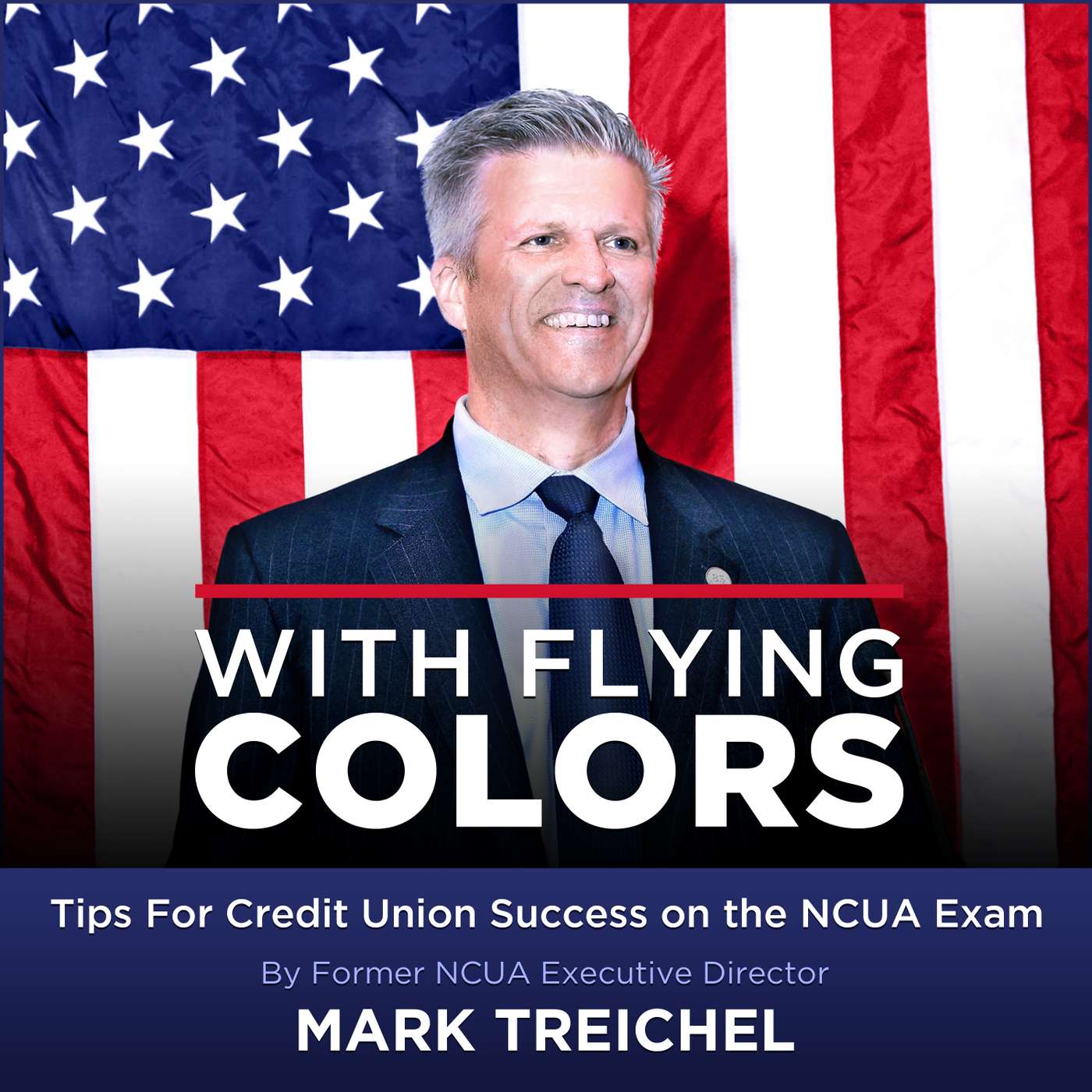
Credit Union Exam Solutions Presents With Flying Colors
by Mark Treichel's Credit Union Exam Solutions
Tips for Credit Unions Success on the NCUA Examination. Brought to you by Mark Treichel's Credit Union Exam Solutions.
-
351
State Interchange Laws and the Threat to the Dual Charter System with Jason Stverak of DCUC
www.marktreichel.comhttps://www.linkedin.com/in/mark-treichel/State-level interchange legislation is no longer a one-state story, and a federal preemption ruling has left credit unions on opposite sides of a line they did not draw. Mark Treichel, former Executive Director of the National Credit Union Administration (NCUA), talks with Jason Stverak, Chief Advocacy Officer of the Defense Credit Union Council (DCUC), about where interchange fights stand, what the NCUA board vacancies mean heading into budget season, and why every credit union should have a government shutdown plan ready before the end of September. Interchange at the state levelMassachusetts convened a commission to study interchange and has taken input from retailers, credit unions, card companies, and processors across multiple hearings — Jason testified at the third. Illinois passed an interchange law that has been delayed a year and is now in the courts. A federal judge, relying on the Office of the Comptroller of the Currency (OCC) position on federal preemption, ruled the law does not reach card networks, federally chartered banks, or other federally chartered savings institutions — but does reach federally chartered credit unions, state-chartered credit unions, and state-chartered banks. The NCUA has since moved on an interim rule extending the same exemption to federally chartered credit unions, with the comment period recently closed.That leaves state-chartered institutions carrying a compliance burden their federally chartered competitors do not. Jason's concern is structural: the strength of the credit union movement has always been the dual charter system, and a rule that effectively tells institutions to change charters to escape paperwork erodes it. Colorado's legislature passed an interchange bill that the governor vetoed; the issue has been introduced in a number of other states and in Puerto Rico. As more states pass their own versions, credit unions face the prospect of multiple interchange payment networks — and members who care about one thing only: whether the card works where they are. Marshall-Durbin in WashingtonThe Marshall-Durbin interchange legislation remains contained, but not dead. DCUC is watching the National Defense Authorization Act (NDAA), floor amendments, and any must-pass vehicle that could carry it. Jason's framing: the worry is not a fair fight, it is a provision slipping into a bill at two in the morning in December.For defense credit unions, the stakes are specific. Interchange revenue funds the ability to extend credit to eighteen-year-old service members with no credit history — a $1,000 card to fix a car or buy groceries until payday. Take that away and the alternative is the payday lender outside the front gate. The NCUA boardChairman Kyle Hauptman is set to depart. John Crews has had his nomination hearing. As of August 1, Hauptman will have served a year past the end of his term. The Senate has roughly three weeks before its August recess, and the practical hope is that a nominee package moves — or that Crews is processed individually before the August 6 recess. Mark's point from the Executive Director's chair: get him seated in August, because the budget is coming, and a new board member approving a budget in his second month is not the scenario that produces an optimal budget.Separately, Todd Harper and Tanya Otsuka are proceeding with their court case following the Supreme Court's decision in Trump v. Slaughter, which gave the president broad removal authority over independent agency heads with the Federal Reserve excepted. Their argument is that Slaughter is specific to the Federal Trade Commission. The case sits in the D.C. Circuit and may or may not resolve this year. Coast Guard pay and shutdown readinessThe Coast Guard is part of the military but is funded through the Department of Homeland Security (DHS), not the Department of Defense, absent a declared war. During the shutdowns, that meant Coast Guard members went unpaid. Credit unions filled the gap — Keesler Federal Credit Union committed its reserves to cover member paychecks; others set up food banks. Jason notes the balance-sheet reality: money going out increases, money coming in decreases, and examiners will see the reserve position. He credits the NCUA for working with credit unions through it.Looking ahead: no spending bills have been signed, and funding runs out September 30 at midnight. DCUC has already told its members to dust off their shutdown plans, because by mid-September members will be asking about mortgages and tuition, and members of Congress will be asking what programs are in place. Jackson Area and the banking tradesOn the alleged fraud at Jackson Area Federal Credit Union, both agree the issues are serious and warrant investigation, and that the industry should lead on governance, board training, and internal controls rather than wait to be led. What draws Jason's objection is the speed with which the banking trades pushed the story into congressional inboxes as evidence of an industry-wide problem, paired with the familiar asks: hearings, Form 990 filings, tax status. Mark adds a point from the record — the October 2025 Federal Deposit Insurance Corporation (FDIC) Inspector General report on Pulaski Savings Bank, a $45 million institution with two sets of books and a loss in the range of $28 to $30 million, a larger percentage loss than Jackson Area. Both push toward the same conclusion: identify the problem, fix the problem, and ask the board-level questions — why can one person control both inflow and outflow, and are we getting the audit we should be getting rather than the audit we are required to get? About DCUCNow in its 63rd year, DCUC was created as a council under CUNA to represent credit unions on military bases and has expanded well beyond them. Membership is open to any credit union — teacher, firefighter, oil and gas, and traditional charters are all in the mix. Dues are capped at $22,500 for the largest institutions, and the vast majority of members pay less than $1,000. The annual meeting runs August 3–6 in Aventura, Florida, with regional sub-councils bringing programming closer to members who cannot travel. Reach Jason Stverak: [email protected] more about DCUC: dcuc.org Credit Union Exam Solutions helps credit unions prepare for NCUA examinations, respond to Documents of Resolution, and navigate regulatory challenges. Learn more at creditunionexamsolutions.com.
-
350
WFC Classic: Model Risk, Credit Risk, Interest Rate Risk, ERM & More
All models are wrong. Some are useful.
-
349
Bank Buys, CUSO Acquisitions, and Mergers of Equals: The 2026 Acquisition Landscape with Mike Bell & Justin Gingerich
www.marktreichel.comhttps://www.linkedin.com/in/mark-treichel/Credit union acquisition activity in 2026 tells a story the headline numbers hide. Only four or five bank purchases have been announced so far this year — but according to Michael Bell of Honigman LLP, that is not a slowdown. It is a market in which banks are bidding more aggressively than ever, and credit unions are losing more bids than they win. Bell argues that outcome is actually evidence against the banking-lobby claim that credit unions overpay and compete unfairly: if credit unions were routinely overpaying, they would not be finishing in second place on roughly ten strong bids in the last few months.Mark Treichel talks with Bell and his Honigman partner Justin Gingerich about the full range of credit union non-organic growth: whole-bank purchases, bank branch deals, and — newer — the acquisition of mature CUSOs by large credit unions bringing services in-house. They dig into state-level friction, including Washington State’s tax law that Bell says has raised zero revenue while shutting down credit union bidding there and depressing bank valuations, and the parallel dynamic in Tennessee.The conversation turns to the biggest shift of all: credit union to credit union mergers of equals (MOEs). For most of Bell’s 23-year career these barely happened. Now he is having new MOE conversations weekly, and once a letter of intent is signed, roughly eight of ten close. Gingerich walks through the Wings/Ent transaction — a merger creating an institution north of $10 billion that won NCUA approval in four to five months, a timeline he calls unheard of — and credits Honigman regulatory partner Brandy Bruyere for navigating a process he describes as “baking a cake when the recipe is only half written.”Treichel adds the regulator’s view: NCUA honors the democratic member-vote process when disclosures are sound, and with roughly 30% fewer staff after retirements, deal teams are effectively re-educating the agency as volume rises. The takeaway from both guests: strategic non-organic growth is now a mainstream lever for institutions building 2027 strategy — and sticking your head in the sand is not a strategy.
-
348
WFC Classic: Corporate Governance in Credit Unions: What Matters Most to NCUA
This Archive Thursday episode of With Flying Colors revisits a timely and important topic: corporate governance. Mark is joined by former NCUA colleagues Todd Miller and Steve Farrar to explore why governance issues are at the heart of many troubled credit unions.They cover:How poor governance can sink an institution — and how strong governance can turn it around.The importance of tone at the top, ethics, and board oversight.Why diversity of skills, demographics, and perspectives matters for boards.The regulatory framework: NCUA’s limited guidance versus FDIC’s more robust tools.Resources for directors, including FDIC pocket guides, training, and self-assessments.Real-world stories from examinations, conservatorships, and boardrooms.Whether you’re a director, executive, or examiner, this episode highlights why governance is more than compliance — it’s culture, accountability, and the foundation of credit union safety and soundness.
-
347
Trust Is Not an Internal Control: David Reed on Fraud and the Supervisory Committee
www.marktreichel.comhttps://www.linkedin.com/in/mark-treichel/In this episode of With Flying Colors, host Mark Treichel welcomes back David Reed of Reed & Jolly, PLLC — a longtime credit union attorney, former general counsel, and self-described “recovering supervisory committee member” who served a decade on a supervisory committee, including six or seven years as chair. David reached out after listening to Mark’s earlier coverage of the Jackson Area Federal Credit Union case, just as he was kicking off a two-day national supervisory committee school, and the timing made for a rich conversation.The heart of the discussion is fraud prevention through the lens of the supervisory committee. Using the Jackson Area allegations as a teaching tool — and stressing repeatedly that everything is alleged, drawn from NCUA’s amended lawsuit — David walks through why trust is not an internal control, why insider accounts are the single greatest fraud risk at smaller credit unions, and why occasional reviews of senior executives’ own accounts (even just by volume) should be routine and done independently. He and Mark unpack the “clipboard audit” problem, the limits of pop teller audits, and the difference between a full CPA opinion audit, agreed-upon procedures, and a supervisory committee doing the work itself.David makes a direct case that the $500 million CPA opinion-audit threshold is outdated — arguing it should drop to $250 million — because technology has erased the product-and-service gap between small and large credit unions while leaving the same fraud exposure. He notes that many of his sub-$500 million clients already choose to get CPA audits because they add accountability and assurance, and that scope can be added to any audit like a cafeteria plan, including a targeted review of senior-executive and insider accounts.The conversation then broadens. On the NCUA board, David explores the implications of changes to Humphrey’s Executor — the prospect of removable board members, a possible “clean sweep” every administration, the chilling effect on recruiting qualified people to serve partial terms, and the resulting shift of power toward the permanent bureaucracy. On succession planning, he champions a “junior varsity governance” model with associate board and committee members, and reframes every incumbent nomination as a re-selection that deserves real evaluation. On collections, he urges credit unions to turn the same predictive analytics they use to find lending opportunities inward — reaching members before they fall two or three payments behind and stop answering the phone.Throughout, David returns to one theme: most credit unions already have the tools, processes, and even the results they need — the question is whether anyone is actually activating and reviewing them. Reach David Reed at [email protected].
-
346
WFC Classic: Liquidity — An NCUA Perspective
"Liquidity Management: Reading Between the Lines of NCUA's Latest Guidance"In this insightful episode, Mark Treichel and former NCUA Capital Markets Specialist Todd Miller analyze NCUA's April 2023 liquidity webinar and provide their expert take on the agency's current perspective on liquidity management.Episode Highlights:Todd Miller shares his 34-year experience at NCUA, including his roles as a regional capital market specialist and director of special actionsKey liquidity guidance documents discussed: 2010 Interagency Policy Statement on Funding and Liquidity Risk Management, 2013 CU 10 guidance on Regulation 741.12, and the 2023 addendum on contingency funding plansAnalysis of credit union deposit composition changes: from 55% in money markets, CDs, and wholesale funding in 2009 to 52% currentlyDiscussion of "reversion to the mean" in deposit mix and how credit unions have adapted to the rate environmentExamination inconsistencies: varying liquidity ratios and expectations from examiner to examinerThe importance of forward-looking liquidity management versus "rear-view mirror" approachesDisconnect between NCUA's public statements (e.g., "supervisory test is not how credit unions should manage interest rate risk") and examiner actionsHow improved analytics allow credit unions to operate with lower cash holdings while still managing risk effectivelyThe appropriate use of wholesale funding, borrowings, and non-member deposits in liquidity managementWhy well-capitalized credit unions with good asset quality will generally maintain access to liquidityResources Mentioned:2010 Interagency Policy Statement on Funding and Liquidity Risk Management2013 CU 10 guidance on NCUA Regulation 741.122023 addendum to the 2010 interagency statement on funding and liquidity risk
-
345
CAMELS Gets an Overhaul: Inside the NCUA’s Proposed Changes
www.marktreichel.comhttps://www.linkedin.com/in/mark-treichel/For the first time in 30 years, the CAMELS rating system is being rewritten. In this episode, Mark Treichel is joined by Todd Miller and Steve Farrar — all former NCUA — to break down the proposal moving through the Federal Financial Institutions Examination Council (FFIEC) and what it means for credit unions.The headline change: Management (the “M”) loses the special status that let it override the other five components. The agency’s own data showed Management was the most influential factor in composite ratings; under the proposal, it’s weighed alongside Capital, Asset quality, Earnings, Liquidity, and Sensitivity — not above them.Mark, Todd, and Steve dig into the new “material financial risk” threshold that must now be met to downgrade Management to a 3 or worse; the removal of judgment-heavy language like “resiliency” and “size and complexity”; the push toward fewer, sharper Documents of Resolution; and the compliance carve-outs that keep the system from being toothless. They also weigh the trade-off at the heart of the proposal — more objective, consistent ratings versus the loss of a forward-looking early warning system — with Signature Bank and Silicon Valley Bank as cautionary examples.The practical bottom line: most credit unions won’t see their composite change, but those sitting right at a rating boundary should pay close attention. Comments are open, and the notice doubles as a useful primer for boards and senior staff.
-
344
WFC Classic: What It Means When NCUA Requires an Organizational Review
This week we’re bringing back an archive episode of With Flying Colors that remains just as relevant today as when it was first recorded.I’m joined by Steve Farrar and Todd Miller, both longtime NCUA veterans and now part of my team at Credit Union Exam Solutions. Together, we break down what it means if NCUA directs your credit union to conduct an organizational review—and why this is one of the most serious signals an examiner can send.In this episode, we cover:Why an organizational review is almost always tied to serious management or governance weaknesses.How CAMELS codes connect to “unwilling or unable” management findings.The difference between NCUA’s approach and how the FDIC structures its organizational review requirements.The role of third-party consultants, approval requirements, and pitfalls boards must avoid.Why humility and proactive planning are key if your credit union receives this directive.War stories from our years at NCUA—including conservatorship cases and tough appraisal calls—that illustrate the real-world consequences.If you’ve ever wondered what this type of supervisory action means for a board, a CEO, or an examiner, this conversation will give you candid insight from those who have lived it.👉 Note: This is an archive episode—we’re resurfacing it because the lessons are timeless and many credit unions will benefit from a refresher.
-
343
Q1 2026 NCUA Data: A Quiet Quarter With One Loud Number
www.marktreichel.comhttps://www.linkedin.com/in/mark-treichel/Mark Treichel sits down with former NCUA colleagues Steve Farrar and Todd Miller to review the credit union industry data for the quarter ending March 31, 2026. The consensus: a quiet, healthy quarter with steady capital, improving earnings, and incrementally better liquidity — alongside a few signals worth a board’s attention.The conversation covers the macro backdrop (persistent inflation, a resilient economy, and widely varying state unemployment) before walking through the data CAMELS-style: capital, asset quality, earnings, and liquidity.Highlights include a 28% single-quarter jump in merger-related “phantom equity” from $9.2B to $11.9B; total delinquency falling 19.7% quarter over quarter even as commercial real estate delinquency climbs; the persistent loan-loss and operating-expense gaps between credit unions and community banks; and 639 credit unions reporting negative earnings, overwhelmingly those under $100 million in assets. The group closes on what a stable quarter means for an NCUA adjusting to a 25% staffing reduction.Topics: NCUA Q1 2026 call report data, net worth and PCA, mergers and intangible equity, delinquency by loan category, commercial real estate risk, credit union vs. community bank comparisons, liquidity and share growth, and small-credit-union earnings pressure.
-
342
WFC Classic: NCUA's Net Economic Value (NEV) Framework
Episode Summary:In this episode of With Flying Colors, host Mark Treichel is joined by former NCUA capital markets expert Todd Miller to discuss the latest updates to NCUA’s Interest Rate Risk (IRR) Supervisory Framework. Following NCUA’s recent stakeholder webinar, we break down key takeaways, including changes to risk categorization, the elimination of the extreme risk rating, and how these updates impact credit unions navigating today’s economic landscape.What You’ll Learn in This Episode:✅ The history and evolution of NCUA’s NEV framework✅ Why NCUA eliminated the “extreme risk” category and what it means for credit unions✅ The role of examiner judgment in assessing interest rate risk under the new guidance✅ How credit unions can mitigate risk and avoid a Document of Resolution (DOR)✅ The growing importance of liquidity management and how credit unions should prepare✅ Why examiner scrutiny of IRR is increasing, despite the removal of automatic DORsKey Takeaways from the NCUA Webinar:🔹 NCUA clarified that interest rate risk remains a top supervisory priority for 2023 and beyond.🔹 Credit unions must demonstrate strong risk management practices to avoid regulatory action.🔹 Liquidity risks are increasing due to rising rates and market shifts—credit unions should reassess their funding strategies.🔹 Open communication with examiners is essential—proactive discussions can help avoid surprises.Resources Mentioned in This Episode:📄 NCUA’s Letter to Credit Unions (22-CU-09): [Insert link if available]🎥 NCUA’s Stakeholder Webinar on Interest Rate Risk: [Insert link if available]🔍 Learn more about Credit Union Exam Solutions: marktretchel.comSubscribe & Stay Connected
-
341
Washington Roundtable: The NCUA Board in Flux With McKechnie, Bacino and Swann
www.marktreichel.comhttps://www.linkedin.com/in/mark-treichel/Mark Treichel hosts a Washington roundtable with John McKechnie, Geeff Bacino, and Alonzo Swann — each with deep NCUA and credit union experience — to break down the forces reshaping the agency this summer.The conversation opens with the NCUA board itself: nominee John Crews and his likely path through a Senate Banking confirmation hearing, and a pending Supreme Court removal-power case that could reinstate two dismissed members or clear the way for new appointments. The group weighs what a full versus divided board would mean for examination priorities, enforcement, and the pace of rulemaking.From there, the discussion turns to a Mississippi conservatorship that became a fraud. Mark explains the single balance-sheet signal — an unusually high cash position paired with heavy borrowing and low loans-to-assets — that pointed to trouble before the word “fraud” was ever used, and the panel discusses what it reveals about supervisory committees, external audits, and internal controls. All wrongdoing is alleged, and a material loss review by the Inspector General follows.The panel then makes the case for examiner presence — the “empty cop car” effect — and why on-site observation catches what data alone cannot, especially as staffing tightens. The episode closes with a look at the Credit Union Board Modernization provision moving through Congress, which would give qualifying, healthy credit unions relief from monthly board-meeting requirements, and a candid take on why credit unions still trail banks on legislative relief.Topics: NCUA board composition and the confirmation timeline; the pending removal-power case; the Jackson, Mississippi conservatorship and alleged fraud; internal controls and supervisory committee oversight; examiner presence and staffing; the material loss review process; and the Credit Union Board Modernization provision.
-
340
WFC Classic: Avoiding Document of Resolutions: 10 Essential Strategies
Episode Description:In this special archive episode of With Flying Colors, Mark shares valuable insights from his years of experience in credit union examination and consulting. Broadcasting straight from the beach, he breaks down the top 10 ways credit unions can avoid receiving a Document of Resolution (DOR) from the NCUA. Whether you're preparing for an exam or just looking to fine-tune your operations, these practical tips will help ensure compliance and maintain a smooth examination process.What You'll Learn in This Episode:Understanding Document Resolutions (DOR): What they are, why they occur, and how to avoid them.Key Triggers for DORs: Common issues such as violations of regulations, policies, or strategic plans.Proven Strategies: How to communicate, negotiate, and train effectively to avoid potential pitfalls.Best Practices: Mark’s insights on proactive planning, staying informed, and maintaining good examiner relationships.Top 10 Tips Highlighted in This Episode:Comply with the Federal Credit Union Act and NCUA regulations.Follow your organization's policies diligently.Stick to your approved strategic plan or adjust it responsibly.Communicate effectively with NCUA examiners.Negotiate issues identified during the examination process.Invest in training for staff, boards, and committees.Stay updated with regulatory changes by subscribing to NCUA Express.Listen to informative podcasts like With Flying Colors and Credit Union Regulatory Guidance.Avoid accounting problems by ensuring reconciliations and timely audits.Make senior leadership accessible to examiners during the examination process.Resources Mentioned:NCUA ExpressCredit Union Regulatory Guidance podcastMark’s consulting services for NCUA examination supportCall to Action:If you enjoyed this episode, don’t forget to subscribe to With Flying Colors for more actionable tips and insights into navigating NCUA exams and credit union compliance. Ratings and reviews on Apple Podcasts and Spotify are always appreciated!
-
339
NCUA Sues for $95 Million — and Names How the Money Vanished - Jackson Area FCU Revisited
www.marktreichel.comhttps://www.linkedin.com/in/mark-treichel/In May, NCUA conserved Jackson Area Federal Credit Union, and I recorded an episode saying I suspected the reported cash wasn’t real. This follow-up walks through what the public record now confirms.The institution reported about $162 million in assets and 9.2% net worth, but only 28% of assets in loans, roughly 66% in cash, and $41 million in non-member deposits it didn’t appear to need — the pattern that prompted my phantom-cash thesis. Since then, NCUA filed a restated call report recognizing a $91.7 million loss, cutting cash by $93.6 million, and swinging net worth from positive 9% to negative 107%, leaving the institution materially insolvent.On June 11th, NCUA filed a federal complaint alleging the former CEO diverted at least $95 million for personal use — roughly $51 million in false deposit entries plus overstated corporate-credit-union cash, the exact mechanism I had inferred from the 5300. The complaint also details alleged personal spending and a co-defendant spouse, and references an admission made to the board and NCUA in April.I cover the separation-of-duties failure at the center of the case (one person signed the filings and held wire authority), why an examiner is not a fraud auditor, the likely $77 million-plus hit to the share insurance fund, and the coming Inspector General material loss review. I close on the macro backdrop: fewer exams and a contemplated FFIEC change to CAMELS, and what that trade-off means for boards over the long run.
-
338
WFC Classic: What Should Be In Your Board Monthly Package
Episode SummaryIn this archive episode of With Flying Colors, Mark sits down with Todd Miller — longtime NCUA expert, former Director of Special Actions, and member of the CU Exam Solutions team — to break down one of the most misunderstood and under-optimized tools in credit union governance: the board package.Boards get in trouble not because they don’t care, Todd explains, but because they are often misinformed, overwhelmed, or kept in the dark. A well-designed board package solves that — if it’s built with the right mix of clarity, consistency, and candor.Todd explains:What high-performing board packages includeWhy “size and complexity” shape reporting expectationsThe danger of data dumps, inconsistent formatting, and detail overloadHow to pair dashboards with strong qualitative narrativesThe one question every executive should answer in their reportsWhy peer comparisons matterHow risk appetite, strategic plans, and deviation explanations must tie togetherReal-world stories from troubled and well-run credit unionsHow to avoid examiner criticism by aligning reporting with actual riskThis episode is full of practical actions your board and leadership team can apply immediately.Key Themes & Takeaways1. Great Board Packages Balance Qualitative + Quantitative ReportingTodd outlines a simple principle: Board reports should demonstrate management’s compliance with the business plan, board policies, and the credit union’s risk appetite. transcript Board Packages Todd …Boards need both data and narrative to understand where the credit union is, how it got there, and where it’s going.2. Consistency Builds Board TrustFrom formatting to color-coding to dashboards, consistency helps directors quickly understand risk without getting bogged down.Inconsistent layouts or disorganized reporting create confusion and can lead to micromanagement or oversight failures.3. Avoid the “Data Dump” TrapTodd highlights that many troubled credit unions had mountains of data… but no clarity. Board packets that keep expanding over time—without periodic pruning—bury critical insights.Annual reviews of what stays, what goes, and how information is summarized are essential.4. Dashboards Are Critical — But Must Be Thoughtfully BuiltDashboards should show:Where the CU has beenWhere it is nowWhere it’s trending nextThey must also be paired with narrative analysis to flag:VariancesDeviations from strategic/annual plansNew risksNew opportunities5. The Biggest Blind Spot: Credit Risk ReportingCredit risk is the No. 1 cause of failures. Todd explains how to reduce hundreds of pages into 2–3 meaningful pages with:Risk migration visualsLTV + credit score overlaysPortfolio trendsBusiness loan concentration & large-borrower exposure6. Committees Create Risk — and Reporting ObligationsALCO, lending, IT, risk committees… Boards need visibility but not minutiae.Todd walks through how well-run credit unions:Summarize committee outputElevate red flagsKeep the board focused on strategy, not operations7. Real-World Stories—The Good, The Bad, The UglyTodd shares examples of:39 unprofitable branches hidden in an overly detailed packetBoards blindsided by marijuana banking risk and resulting finesA $4 million depositor walking out because the board lacked contextThese stories underscore the need for transparency, context, and prioritization.Why This MattersA strong board package:Improves governanceEnhances regulator confidencePrevents surprisesSupports faster, cleaner examsKeeps boards strategicHelps management demonstrate competence and controlThis episode is a must-listen for CEOs, CFOs, lending executives, and directors looking to elevate their governance culture.
-
337
WFC Classic: Rating Commercial Credit Risk — What NCUA Expects
| WFC Classic: Rating Commercial Credit Risk — What NCUA Expects
-
336
NCUA’s 2026–2030 Strategic Plan: What Changed and Why It Matters
www.marktreichel.comhttps://www.linkedin.com/in/mark-treichel/Episode: NCUA’s 2026–2030 Strategic Plan: What Changed and Why It MattersIn this solo episode, Mark Treichel walks through NCUA’s newly released 2026–2030 Strategic Plan and compares it section by section against the prior 2022–2026 plan. The contrast tells credit union leaders exactly where the agency is going — and which of those decisions are now codified as five-year commitments rather than reversible management choices.What’s covered:• The framework requirements: OMB Circular A‑11 and which 19 items the plan needed to address.• What dropped out of the 2026 plan: the eight-page economic outlook, dedicated climate-related financial risk objective, full enterprise risk management section, standalone minority depository institution objective, diversity-equity-inclusion language, and the cross-agency collaboration narrative.• What’s new in 2026: AI as a standalone strategic objective, the GENIUS Act stablecoin rulemaking as a performance target, the reorganization codified as objective 3.2, real estate footprint reduction language, merit-based hiring as a deliverable, deregulation quantified at 30 actions, and a chartering automation target.• The political cycle behind the swings: every administration gets a year after inauguration to issue a new five-year plan, and the language reflects whoever is in office.• Practical implications for credit unions: AI-assisted exam scoping, the shift of stakeholder-facing work to the regions, what the 27% workforce reduction means for examination dynamics, and how to read the deregulation scoreboard for substance vs. headline count.• Mark’s takeaways: reorganization is now a five-year strategic commitment, safety and soundness remains the North Star, AI in examinations is coming and measurable, the deregulation scoreboard is mostly budget dust with a few real items, and the smaller examiner footprint creates short-term wins and longer-term structural questions.A practical episode for credit union CEOs, board members, CFOs, and senior staff who want to understand what NCUA has actually committed to over the next five years and what to do about it before the next board meeting.About the host:Mark Treichel is the principal of Credit Union Exam Solutions. He spent more than 33 years at NCUA, including eight as Executive Director and over five years on the senior leadership team. He hosts With Flying Colors to help credit unions navigate examinations and regulatory change.
-
335
WFC Classic: Conservatorship - When NCUA Removes the Board of Directors
WFC Classic: Conservatorship - When NCUA Removes the Board of Directors
-
334
From Appeal to Proposed Rule: How One Credit Union's Field of Membership Fight Reshaped NCUA Policy with Rick Mumm
www.marktreichel.comhttps://www.linkedin.com/in/mark-treichel/Mark Treichel sits down with Rick Mumm — a 34-year NCUA veteran who spent 26 of those years in field of membership work, including bylaws, mergers, liquidations, and charter expansions — to walk through NCUA's proposed rule change on customer-client relationships in field of membership decisions.This proposal is unusual in two respects. First, unlike most of NCUA's recent deregulation announcements, it has real practical impact for credit unions seeking to add fraternal organizations or associations with any customer-client element. Second, the rule is the direct result of an actual appeal that went all the way to the NCUA Board — an appeal pursued by POLAM Federal Credit Union, led by CEO Jennifer Audette, in which the Board denied the appeal but acknowledged inconsistencies in the existing rule and committed to a rewrite.Topics covered:• Why the current Chartering Manual creates inconsistency by specifically naming the Knights of Columbus as qualifying while excluding similar fraternal organizations that sell insurance• How Thrivent fits into the picture as another mutual insurance organization that converted from a mutual savings bank into a federal credit union• The affiliate-membership wrinkle: under both Knights and Thrivent, members who don't buy insurance are affiliate members without voting rights — which the Chartering Manual says shouldn't qualify for credit union membership• What the proposed rule actually says, why it's so sparse, and what's notably absent from it• Why concerns about NCUA's loss of corporate knowledge at the Office of Credit Union Resources and Expansion mean execution will matter more than the text• How credit unions should position applications under the new standard• Why credit unions with stalled or denied applications should consider submitting comment lettersRick can be reached at [email protected] or via rcservices.com.
-
333
WFC Classic: MBL Global Cash Flow & Credit Proposals
| WFC Classic: — MBL Global Cash Flow & Credit Proposals — Vin Vieten
-
332
$16 Million In Fraud from the Inside: A Walk Through NCUA’s Latest IG Report
www.marktreichel.comhttps://www.linkedin.com/in/mark-treichel/Mark Treichel walks through NCUA’s most recent Inspector General semi-annual report to Congress, covering the April through September 2025 reporting period. Seven credit union failures occurred during the cycle, with internal fraud driving the two largest losses for a combined total of more than $16 million. Mark breaks down the fraud triangle (pressure, opportunity, rationalization), examines what the failures reveal about supervisory committee performance, walks through the patterns NCUA examiners look for, and lays out a practical prevention playbook scaled to credit union size.In this episode:• The seven credit union failures from NCUA’s most recent Inspector General report• Why internal fraud accounted for the largest losses• The fraud triangle and why opportunity is the most controllable element• Record keeping failures as a force-multiplier for every other control breakdown• The supervisory committee as the first line of defense• What examiners pattern-match against during exams• Prevention strategies for credit unions under $50 million in assets• Prevention strategies for mid-size and larger credit unions• The living fraud risk assessment: member risk, product risk, enterprise risk• Why on-site exams will not be replaced by virtual examsMark Treichel spent 33 years at NCUA, including eight years as Executive Director. He is now principal of Credit Union Exam Solutions and host of the With Flying Colors podcast.
-
331
WFC Classic: So You Are A CAMELS 3 - Now What?
FC Classic: So You Are A CAMELS 3 - Now What?
-
330
Emergency Podcast - NCUA Conserves Jackson Area FCU: Reading Between the Call Report Lines
In this episode of With Flying Colors, Mark Treichel walks through NCUA’s May 6 conservatorship of Jackson Area Federal Credit Union of Jackson, Mississippi. Drawing on 33 years at NCUA — including responsibility for some of the agency’s largest historical conservatorships — Mark analyzes the publicly available call report data and explains why this case is unusual.The credit union reported 9.2% net worth at year-end 2025, alongside loan-to-assets of 27.8%, $108 million in cash on deposit at correspondent banks, and $41.8 million in non-member deposits. Mark works through why these patterns, taken together, are statistically extreme — Jackson Area is the only large credit union in the country with non-member deposits over 25% and loan-to-assets under 30%.The episode also covers a roughly $2.13 million Q4 net worth entry that lifted capital back above the well-capitalized threshold against just $42,000 in reported quarterly income, the timing of NCUA’s filing of an estimated March 31 call report the day before the conservatorship, and what the language in the press release may signal.Mark closes with five lessons for credit union boards: healthy ratios are not safety; the income statement can tell the truth the balance sheet hides; non-member deposits without lending growth deserve scrutiny; equity entries without income demand explanation; and NCUA examinations are not fraud audits.This is a solo episode — Mark’s analysis is based entirely on public data, with no insider information.
-
329
WFC Classic ALCO Part 2 & In Practice: Essential Reports Analysis and Risk Management
WFC Classic ALCO Part 2 & In Practice: Essential Reports Analysis and Risk Management
-
328
A New Way to Invest: How the ALM First Loan Fund Works
www.marktreichel.comhttps://www.linkedin.com/in/mark-treichel/In this episode of With Flying Colors, Mark Treichel sits down with Travis Goodman, CFA, Principal at ALM First Financial Advisors, and Mark Sun, Portfolio Manager at ALM First, to discuss the recent launch of the ALM First Loan Fund — the first non-registered investment fund approved by the National Credit Union Administration Board for federal credit unions, and the first trade just executed under it.The conversation covers:• How the loan fund structure differs from a traditional loan participation, and why standardization matters at scale.• The institutional discipline built into the structure: third-party loss estimates, third-party agreed-upon procedures, and third-party cash agent functions.• Eligibility and guardrails: the 30-credit-union lifetime cap, the complex-credit-union requirement, the 50% and 15% net worth limits, and how state-chartered credit unions with federal parity can participate.• The pilot timeline: seven years from approval, or five years from the first trade — whichever comes first — and what it means for the path to permanence.• The role of credit union deposits as a unique, counter-cyclical source of funding in the institutional capital markets.• Asset eligibility, including the under-10-year maturity rule and the focus on consumer loan products.• How smaller credit unions might eventually benefit from the structure even if they are not eligible for the current pilot.For credit unions interested in learning more about the ALM First Loan Fund, contact: [email protected]
-
327
WFC Classic: • ALCO Governance Essentials: Building an Effective Committee Structure
WFC Classic governance issue and ALCO In Practice: Essential Reports, Analysis & Risk Management
-
326
Inside the NCUA Annual Report — A Strong System with Quiet Warning Signs with Mike Macchiarola
www.marktreichel.comhttps://www.linkedin.com/in/mark-treichel/Mark Treichel is joined by Mike Macchiarola, Partner and CEO of Olden Lane, for a structured deep-dive into the most recent NCUA Annual Report. Mike organizes his analysis into seven interlocking themes — what he calls the Magnificent Seven — and the conversation walks through each one with quantitative detail and practical implications for credit union leadership.In this episode:• The system is strong but the tone of the report is cautious — and why that is the right posture• Consolidation math: credit union count down roughly 3.7% year over year, with losses concentrated on the small end of the barbell• Average age of a credit union member (53) versus the average U.S. resident (38.5), and what the widening gap implies• Member acquisition cost approaching $900, roughly double the level of two to three years ago• The median credit union has posted negative member growth for six consecutive quarters• Why return on assets and net worth are stronger than they look — and the one-time factors propping them up• Regulatory philosophy pendulum: elimination of reputational risk, rejection of regulation by enforcement, extended exam cycles, and ten-plus deregulation announcements• Innovation is now central to the agenda: stablecoin rulemaking, NCUA's historical pattern of being ahead on derivatives and non-member shares• FinTech competitive picture: SoFi, Robinhood, Wealthfront, and Coinbase deposits and growth rates against the credit union industry• The bigness question: 73% of credit unions hold 13% of assets; the top 21 credit unions hold 25%• How NCUA itself is changing — roughly 25% of staff exited through the departure plan, single-member board, and what that means for industry timing• The announcement that Olden Lane is joining Stifel NicolausMike's analysis at Olden Lane is built on quarterly tier-by-tier data on the credit union industry. This conversation is a concentrated version of the themes his team tracks and the practical conclusions they draw from them.
-
325
Credit Union Vs Banks: What You Need to Know About the Insurance Funds
www.marktreichel.comhttps://www.linkedin.com/in/mark-treichel/The NCUSIF and the DIF are similar but different. Today we do a deep dive on that and more.
We're indexing this podcast's transcripts for the first time — this can take a minute or two. We'll show results as soon as they're ready.
No matches for "" in this podcast's transcripts.
No topics indexed yet for this podcast.
Loading reviews...
ABOUT THIS SHOW
Tips for Credit Unions Success on the NCUA Examination. Brought to you by Mark Treichel's Credit Union Exam Solutions.
HOSTED BY
Mark Treichel's Credit Union Exam Solutions
CATEGORIES
Loading similar podcasts...
Frequently Asked Questions
How many episodes does Credit Union Exam Solutions Presents With Flying Colors have?
Credit Union Exam Solutions Presents With Flying Colors currently has 27 episodes available on PodParley. New episodes are automatically indexed when they're published to the podcast feed.
What is Credit Union Exam Solutions Presents With Flying Colors about?
Tips for Credit Unions Success on the NCUA Examination. Brought to you by Mark Treichel's Credit Union Exam Solutions.
How often does Credit Union Exam Solutions Presents With Flying Colors release new episodes?
Credit Union Exam Solutions Presents With Flying Colors has 27 episodes. Check the episode list to see recent publication dates and frequency.
Where can I listen to Credit Union Exam Solutions Presents With Flying Colors?
You can listen to Credit Union Exam Solutions Presents With Flying Colors on PodParley by clicking any episode. We provide an embedded audio player for direct listening, and you can also subscribe via your preferred podcast app using the RSS feed.
Who hosts Credit Union Exam Solutions Presents With Flying Colors?
Credit Union Exam Solutions Presents With Flying Colors is created and hosted by Mark Treichel's Credit Union Exam Solutions.
URL copied to clipboard!