
PODCAST · business
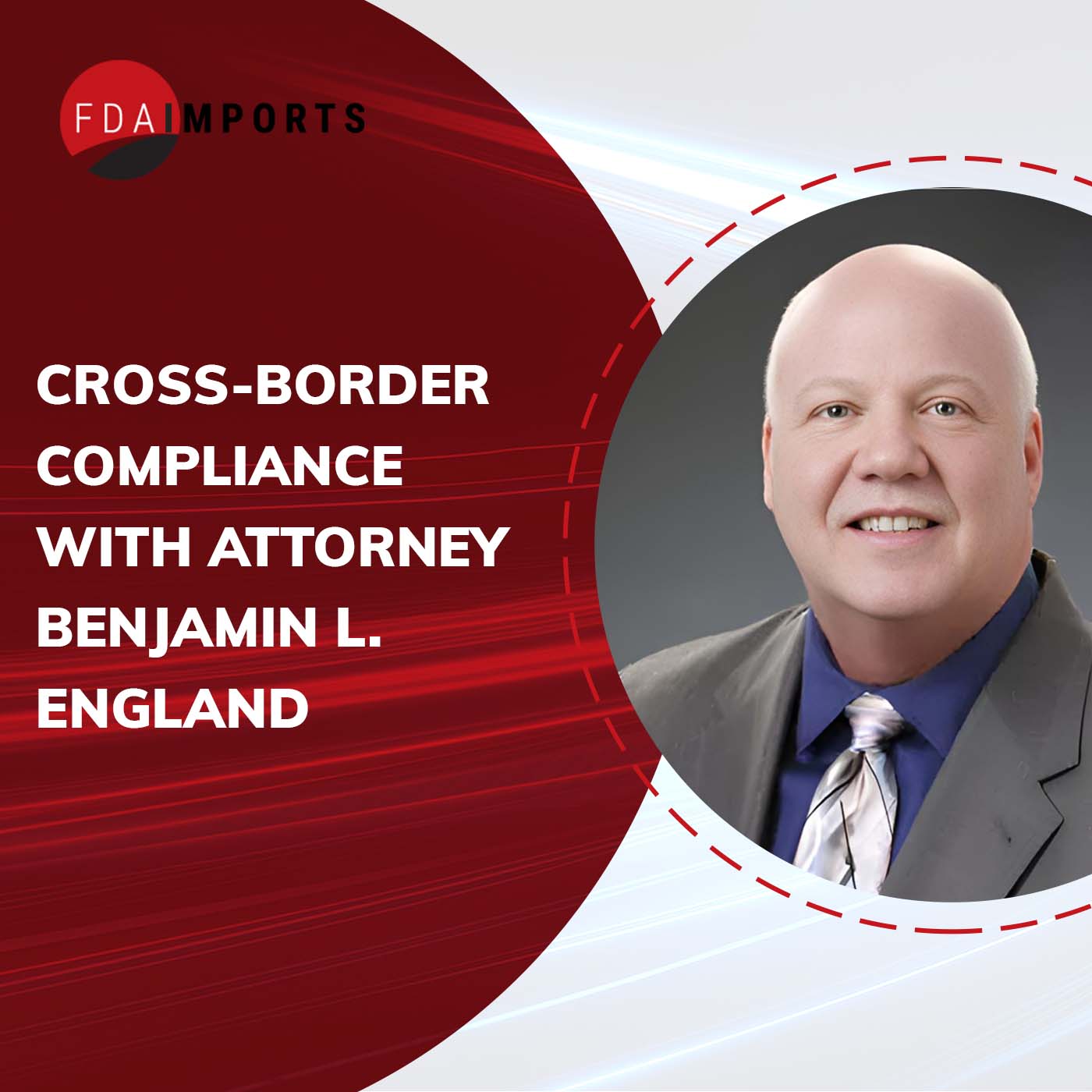
Cross Border Compliance with Attorney Benjamin L. England
by fdaimportsbenjaminengland
FDA Imports: Cross-Border Compliance is a podcast hosted by attorney Benjamin L. England, offering expert insights into the complex intersection of FDA and customs regulations. With decades of experience as a former FDA microbiologist and compliance officer, Benjamin shares practical advice and real-world strategies to help businesses navigate regulatory challenges. Each episode breaks down critical topics, from labeling and import compliance to emerging enforcement trends, making it an essential resource for companies in FDA-regulated industries.
-
33
TrumpRx.gov Explained: Why FDA and Customs Are Cracking Down on Drug Imports
Episode Summary: In this episode of *FDA Imports: Cross-Border Compliance* Benjamin England delves into the significance of TrumpRX.gov in the context of drug pricing policy and pharmaceutical importation. Exploring the complexities of pharmaceutical pricing disparities between the US and Europe, Ben sheds light on the regulatory changes initiated by the Trump administration to facilitate the importation of pharmaceuticals, offering a potential solution to high drug costs for American consumers. Key Timestamps: 00:00 – Introduction 02:30 – TrumpRX.gov: A Game-Changer in Pharmaceutical Pricing 06:45 – The Implications of Temporary Programs on Industry Players 10:15 – Enforcement Approaches to Gray Market Rx Drugs 14:50 – Mitigating Risks in Pharmaceutical Importation 18:25 – The Complexities of Regulatory Scrutiny and Sourcing Patterns About the Show: *FDA Imports: Cross-Border Compliance* provides expert insights into cross-border compliance issues related to FDA regulations and international trade. Led by Attorney Benjamin England, the show navigates the intricate landscape of FDA oversight, regulatory compliance, and importation challenges faced by businesses worldwide.
-
32
FDA’s ‘No Artificial Colors’ Shift: When Enforcement Changes but the Law Doesn’t
Episode Summary: In this episode of FDA Imports: Cross Border Compliance with Attorney Benjamin England sheds light on the FDA's recent enforcement discretion around color additives, impacting labeling regulations and creating confusion for importers. He clarifies the distinction between natural and synthetic colors, discusses the FDA's changing approach to artificial colors claims, and outlines the compliance challenges importers may face in light of this guidance. Key Timestamps: 00:00 – Introduction 02:15 – Differentiating between natural and synthetic colors 04:30 – FDA's enforcement discretion on artificial colors claims 07:45 – Compliance implications for importers 11:20 – Potential risks and considerations for companies 15:00 – Navigating FDA's evolving enforcement expectations About the Show: *FDA Imports: Cross Border Compliance with Attorney Benjamin England* is the go-to podcast for insights into cross-border compliance issues, hosted by industry expert Benjamin England. Join as the show unravel the complexities of FDA regulations and provide valuable guidance for businesses dealing with import compliance challenges.
-
31
Customs Brokers vs. FDA Compliance: Where Importers Get Bad Information
Episode Summary: In this episode, Benjamin England delves into the complexities of FDA compliance for importers and customs brokers. He highlights the common misunderstandings that lead to compliance breakdowns and emphasizes the crucial role importers play in ensuring regulatory adherence. From the responsibilities of customs brokers to the challenges faced at the border, this episode offers valuable insights for companies navigating FDA regulations in international trade. Key Timestamps: 00:00 – Introduction to FDA Compliance & Broker Responsibilities 01:20 – Importer vs. Customs Broker Roles Explained 03:00 – Where the Assumption Breaks Down 04:30 – Broker Limitations & Experience Gaps 06:00 – Common Communication Failures Before Shipment 07:30 – What Happens at the Border When Compliance Fails 09:00 – Missing Data, Approvals & Entry Errors 10:30 – Who Bears the Risk: Importer vs Manufacturer 12:00 – Consequences: Refusal, Export, or Destruction 13:30 – Broker Liability & Contract Limitations 14:50 – Managing Risk & Verifying Broker Accuracy 16:00 – Structuring Responsibilities & Contracts About the Show: *FDA Imports* is a podcast series hosted by Benjamin England, focusing on the intricate landscape of FDA compliance in cross-border trade. With expert insights and practical guidance, the show equips businesses with the knowledge needed to navigate regulatory challenges effectively.
-
30
FDA Corrective Action Plans: Why Most CAPAs Fail and What Actually Works
Episode Summary: Benjamin England delves into the intricate world of FDA corrective action plans, shedding light on why many plans fail to meet FDA standards despite companies' efforts. From understanding the root cause to the importance of documentation, Ben provides invaluable insights into creating effective action plans that satisfy FDA requirements. Key Timestamps: 00:00 – Introduction to FDA Imports & Corrective Action Plans 01:20 – What is a CAPA & When FDA Requires It 03:10 – Import Alerts, Root Cause Analysis & CAPA Process 05:00 – Why CAPAs Fail: Root Cause Challenges 06:40 – Investigations & Common Mistakes in CAPAs 08:20 – Importance of Documentation & Evidence 10:00 – Implementation Records & Proving Compliance 11:40 – Systemic Fix vs Temporary Fix 13:10 – Supplier Risks & Real-World Examples 14:40 – Timing of CAPA & Impact on Import Status 16:00 – Ongoing Imports & Strategic Timing Considerations 17:00 – FSVP, Verification & FDA Expectations About the Show: *FDA Imports* is your go-to resource for navigating the complex world of FDA compliance in international trade. Join us as we unravel the nuances of FDA regulations, offering expert guidance to ensure your company stays in line with FDA requirements.
-
29
Tariffs Update: Navigating the Latest Legal Landscape
Episode Summary: In this episode, attorney Benjamin England discusses the recent Supreme Court ruling on IEEPA tariffs and the implications for companies navigating the complex world of international trade and FDA oversight. From constitutional issues to refund mechanisms, Benjamin provides valuable insights into the evolving tariff landscape. Key Timestamps: 00:00 – Introduction 01:30 – IEEPA Tariffs Ruling 05:45 – Constitutional Implications 08:20 – Refund Mechanisms 11:10 – Legal Landscape Analysis ...continues with detailed insights About the Show: *FDA Imports* is a podcast hosted by attorney Benjamin England, focusing on cross-border compliance issues related to FDA regulations and international trade. Join us for expert insights and discussions on navigating complex legal challenges in the import industry.
-
28
Supreme Court Strikes Down Trump Part 4
This is just a quick update at the end of the week about what I think clients should be doing regarding #refunds of #IEEPA #tariffs post #SCOTUS ruling. We generally advise a belt-and-suspenders approach meaning a “me too” lawsuit in the #CIT sooner rather than later and protests. The lawsuit should be sooner because if there’s gonna be a roll up into a #consolidation, you want to be in that first group that’s consolidated. It increases chances of an earlier refund. And you can also sue later, but you will have to probably be consolidated in a later group which will cause delays. Also there’s the #protest option, which we are recommending as a back up plan. Remember you have unforgiving time frames on protests: 180 days after #liquidation. #CBP is advancing liquidation to try to cut off your rights on refunds. Watch the video for more. [email protected] -- don't hesitate and please send this to anybody that you know needs this general (not legal) advice.
-
27
Supreme Court Strikes Down Trump Part 2
Episode Summary: In this episode, Attorney Benjamin England delves into the aftermath of the Supreme Court ruling that struck down Trump's tariffs, leading to a maze of confusion for import-export businesses. He outlines strategies for clients, including filing lawsuits and utilizing the protest process to reclaim overpaid tariffs. Key Timestamps: 00:00 – Introduction 01:30 – Strategies for clients post-Supreme Court ruling 04:15 – Explanation of the protest process 07:20 – The importance of meeting protest deadlines 09:45 – Potential Trump administration appeals and strategies 12:30 – Congress's role and the "Release Act" 15:00 – Impact on small businesses and importers 17:45 – Client approach and the wait-and-see situation 20:10 – Advice on paying tariffs and post-entry corrections About the Show: *Cross Border Compliance with Attorney Benjamin L. England* is a podcast series hosted by legal expert Benjamin England, focusing on cross-border compliance issues in the realm of FDA oversight and international trade. Join the conversation on navigating regulatory challenges and trade complexities in today's global market.
-
26
Supreme Court Strikes Down Trump Part 1
Episode Summary: In this episode, attorney Benjamin England discusses the recent Supreme Court rulings on tariffs initiated by President Trump and their implications for businesses. From reciprocal tariffs to fentanyl tariffs, learn about the legal intricacies and potential refund processes involved. Key Timestamps: 00:00 – Introduction 01:30 – Overview of Trump's tariff actions 03:45 – Supreme Court's ruling on iEBA authority 05:20 – Impact on industry and potential refunds 08:10 – Strategies for seeking tariff refunds 11:45 – Potential supply chain implications About the Show: * Cross Border Compliance with Attorney Benjamin L. England* is a podcast series where regulatory attorney Benjamin England provides expert insights into FDA oversight and international trade compliance. Stay informed on legal matters affecting businesses worldwide.
-
25
Supreme Court Just Shut Down Trump's Tariff Strategy - Part 3
Still NO ONE has told #CBP to #refund #IEEPAtariffs including none of the Courts that have ruled. The day #SCOTUS knocked down Trump's #IEEPA tariffs, two Congresspersons introduced the #ReliefAct. It’s another example of why all new legislators (and some old ones) should be required to pass at least a high school level civics class before taking their seats. These two don’t know how to write a bill that actually makes #Customs do anything much less refund IEEPA tariffs in 90 days. Watch the video to see why. In this video, I also discussed: The 10-15% #section122 tariffs and their temporary application, Bringing lawsuits under the CIT‘s residual jurisdiction provision, and Why the administration has no incentive to do anything other than nothing. The SCOTUS and the #CIT and the #CAFC never addressed many outstanding questions and nobody including the Relief Act told customs to refund the money. Trump says he will litigate refunds for the next five years. I believe him and so should you. Send this to a friend who you know who paid IEEPA tariffs.
-
24
Supreme Court Just Shut Down Trump's Tariff Strategy - Part 2
SCOTUS did not change anything except the basis for the tariffs. It did not rule against the trump tariffs. It ruled against using IEEPA as a basis for the President to issue tariffs without congressional action. Now, Congress has a problem -- All SCOTUS did was drag Congress into the arena after the tariffs have not had the catastrophic effects all the doomsayers predicted. That debate will continue to the midterms and suddenly all the discussion will be about the economy -- not ICE, not rivers and seas, not the biology of men and women. The WH didn't back up or change direction -- it changed lanes -- from IEEPA to more USTR investigations under Section 301 and no doubt 232 and certainly 10% under Section 122. Remember, China is still paying 25% and Biden never reversed it. Comment below!
-
23
Supreme Court Just Shut Down Trump's Tariff Strategy - Part 1
SCOTUS RULES TRUMP ADMIN DROOLS! #scotus just issued a very broad defeat to the #Trump administration respecting the #IEEPA #tariffs ruling in agreement with the #CAFC that IEEPA is not a proper basis for any tariffs not just the ones that were in front of the court that everybody has been talking about. This ruling is so broad that it this extends all of the IEEPA-based tariffs, including #Brazil tariffs then #Russian-oil tariffs, #fentanyl tariffs all sorts of tariffs. So if you haven’t been listening to me before and didn’t already start, then now it’s time to actually try to get your money back. Don’t wait. Don’t hesitate. You’ve got to move because a lot of people are already in line and getting in line ahead of you. Please follow up quickly because my time is scarce too
-
22
Navigating FDA Imports and Compliance Risks
Episode Summary: Attorney Benjamin England delves into the complexities of FDA imports and cross-border compliance. From discussing the FDA's authority over imports to examining labeling enforcement and compliance risks, Ben sheds light on the regulations governing FDA-regulated products. Gain insights into the statutory basis for FDA oversight, the impact of state laws on federal regulations, and the evolving enforcement strategies affecting import cargo. Key Timestamps: 00:00 – Introduction to FDA Imports and Compliance 03:15 – FDA's Authority Over Imports and Exports 06:45 – Intersection of State and Federal Laws in Import Regulation 10:30 – Relevance of Federal Law in State Regulations 14:20 – Impact of Labeling Compliance on Import Cargo 18:05 – FDA's Harsher Stance on Imported Cargo 21:40 – Small Businesses and FDA Regulatory Challenges 26:15 – User Fees and Government Operations During Shutdowns 30:00 – Addressing Industry Concerns and Regulatory Guidance About the Show: *Cross Border Compliance with Attorney Benjamin L. England* is a podcast series hosted by attorney Benjamin England, offering expert guidance on navigating the complexities of FDA regulations governing importation and compliance. Explore the intersection of FDA oversight and international trade, providing actionable insights for businesses dealing with FDA-regulated products.
-
21
Post-Market Problems: When FDA Comes Knocking After Your Product Is Already on Shelves
Episode Summary: In this episode, attorney Benjamin England explores the complexities of postmarket issues that arise after products clear the border. From FDA investigations to recalls, Benjamin breaks down the challenges importers face when FDA scrutiny returns to their doorstep. Gain valuable insights into compliance strategies and the responsibilities importers hold in ensuring product safety and regulatory adherence. Key Timestamps: 00:00 – Introduction 01:30 – Understanding Customs and FDA Attention at the Border 05:15 – Post-Customs Questions and Investigations 09:45 – FDA's Broader Jurisdiction Beyond the Border 13:20 – The Importance of Compliance Post-Importation 17:05 – Triggers for FDA Scrutiny: Consumer Complaints and Events 20:40 – FDA Approaches to Postmarket Situations 24:10 – Importer and Distributor Responsibilities in Product Issues 28:55 – Voluntary vs. Mandatory Recalls: Decision-Making Factors 33:30 – Building a Compliance System for Long-Term Product Integrity 37:45 – Importance of Supplier Relationships and Recall Preparedness About the Show: FDA Imports delves into the intricacies of cross-border compliance with expert guidance from attorney Benjamin England. This series equips businesses with the knowledge and strategies needed to navigate the intersection of FDA oversight, customs enforcement, and international trade successfully.
-
20
Supreme Court IEEPA Tariff Challenge: How Importers Can Preserve Refund Claims (180 Day Protest Rule)
Episode Summary: In this episode, attorney Benjamin England sheds light on the Supreme Court challenge regarding tariffs under IEEPA and how companies can safeguard themselves amidst the legal uncertainties. Learn about potential refund strategies and crucial steps to take before and after the court ruling, offering actionable insight for importers facing tariff challenges. Key Timestamps: 00:00 – Introduction 02:45 – Overview of IEEPA and its implications 06:20 – Filing a protest with customs for tariff refunds 10:15 – Importance of filing a lawsuit for expedited refund process 14:30 – Acting before vs. after the Supreme Court ruling for optimal outcomes 18:00 – Addressing the time-sensitive nature of tariff refund processes 21:45 – Implications of SCOTUS decisions on export bans under IEEPA 26:10 – Wide-ranging impact of tariffs on various imports under IEEPA 30:55 – Understanding the asymmetric nature of modern warfare and tariff applications 36:40 – Exploring the rationale behind IEEPA tariffs and potential outcomes 40:15 – Closing remarks and call to action for impacted companies About the Show: *Cross- border Compliance with Attorney Benjamin England* delves into the complex world of FDA regulatory compliance and international trade with expert insights from attorney Benjamin England. Join us to stay informed on critical issues affecting importers and exporters in today's global market.
-
19
Supply-Chain Transparency 2.0: Tracing Every Ingredient from Source to Shelf
Episode Summary: Attorney Benjamin England, founder of FDAImports.com, delves into the intricacies of supply chain transparency in FDA-regulated importing. From FSMA-204 to the UFLPA, he highlights the critical need for importers to document ingredient origins and ensure compliance with FDA oversight. Learn how traceability plays a vital role in safeguarding against food safety events and recalls, offering essential insights for importers. Key Timestamps: 00:00 – Introduction 03:45 – Supply Chain Transparency 2.0 06:10 – FSMA-204 Traceability Requirements 09:25 – Future Expansion of Traceability Demands 12:15 – CBP's UF LPA and Forced Labor Documentation 15:40 – Maintaining Records for FDA and CBP Compliance 18:55 – Final Takeaways and Recommendations About the Show: FDA Imports is your go-to resource for understanding the complexities of FDA regulations and compliance in cross-border supply chains. Join us as we unravel the nuances of import documentation and regulatory requirements to ensure your business stays ahead in the global trade landscape.
-
18
Data-Driven Enforcement: How FDA’s New Screening Systems Are Changing Border Compliance
Episode Summary: In this insightful episode, Benjamin England, founder of FDA Imports and former FDA regulatory counsel, explores how artificial intelligence and predictive analytics are transforming the way the FDA and U.S. Customs evaluate imports. Ben breaks down how the PREDICT system—short for Predictive Risk-Based Evaluation for Dynamic Import Compliance Targeting—uses data-driven scoring to identify high-risk shipments and streamline inspections. He also discusses the role of machine learning in modern compliance systems, the critical importance of data accuracy for importers, and how technology continues to evolve the relationship between FDA, Customs, and other regulatory agencies. Key Timestamps: 00:01 – Show Introduction 00:56 – What Is the PREDICT System and How Does It Work 03:12 – Evolution of FDA’s Risk-Based Import Screening 05:00 – Incorporation of AI and Evolutionary Algorithms in PREDICT 07:42 – Comparing Early and Modern Screening Results 09:55 – Importance of Data Consistency for Importers 12:34 – Interagency Data Sharing Between FDA, Customs, and USDA 15:06 – Practical Steps for Small Importers to Avoid Unnecessary Holds 17:40 – The Future of AI and Human Judgment in FDA Inspections About the Show: "FDA Imports: Cross Border Compliance" delves into the complex intersection of FDA oversight, Customs enforcement, and international trade. Each episode features expert insights from Benjamin England, who helps global businesses navigate evolving compliance challenges through practical strategies and regulatory expertise.
-
17
Private Label Pitfalls: Customs and FDA Risks You Didn’t See Coming
Episode Summary In this episode of FDA Imports: Cross Border Compliance, attorney Benjamin L. England, founder of FDAImports.com and former FDA regulatory counsel, unpacks the complex world of private labeling and contract manufacturing. England explains how private label arrangements work in FDA-regulated industries, who holds responsibility at the border, and the hidden compliance risks brand owners often overlook. From contract structures to regulatory oversight, he provides a roadmap for U.S. brands sourcing overseas and highlights the pitfalls that can trigger costly FDA and Customs issues. Key Timestamps [00:01:00] What private labeling looks like in FDA-regulated industries [00:03:00] Who is legally responsible for compliance at the border [00:05:00] Common documentation and registration problems in private label arrangements [00:07:00] How formula or label changes by manufacturers can create risk for brand owners [00:09:30] What happens if shipments are detained and the brand owner isn’t listed as importer [00:11:00] How contracts can protect brand owners from regulatory risks [00:13:00] Why indemnification clauses don’t shield importers from FDA enforcement [00:15:00] Why many companies fail to draft contracts until after problems arise [00:17:00] Key advice for U.S. brands launching private label products sourced overseas About the Show: FDA Imports Cross-Border Compliance is a podcast hosted by attorney Benjamin L. England, founder of FDAImports.com. The show helps importers, exporters, and global businesses navigate the complex legal and regulatory landscape at the U.S. border. With expert insights on FDA, Customs, USDA, DEA, and trade compliance, listeners gain practical strategies to protect their products and keep supply chains moving.
-
16
Government Shutdown Impact: How FDA and Customs Operations Are Affected
Episode Summary: In this episode of FDA Imports: Cross Border Compliance, Benjamin England breaks down how the ongoing federal government shutdown is affecting the FDA and U.S. Customs and Border Protection. Drawing on his experience as a former FDA regulatory counsel, Benjamin explains how much of the FDA’s operations continue due to user fees and why import enforcement remains active even during a shutdown. He outlines which inspections are still taking place, which types of products are being prioritized, and how the shutdown impacts imported goods ranging from foods and drugs to cosmetics and medical devices. Benjamin also discusses how companies can manage communication delays with the FDA and Customs, what steps importers should take if their products are detained, and what to expect when the government eventually reopens. Key Timestamps: 00:55 – How the FDA continues operating during a government shutdown 02:30 – The role of user fees and why most FDA activities remain functional 04:20 – Which inspections and compliance functions are still active 06:10 – Why high-risk imports like seafood and ready-to-eat foods remain top priority 09:00 – How companies should handle delays and communication issues with the FDA 11:15 – The government’s response to health emergencies and contaminated imports 13:40 – How CBP manages inspections, seizures, and enforcement during a shutdown 16:00 – What importers and exporters can expect once the government reopens Show Description: Benjamin England provides an inside look at the real-world impact of a federal government shutdown on FDA and Customs operations. Despite the shutdown, he explains that the FDA continues to function at nearly 86% capacity, driven by user fees and essential import enforcement activities. He highlights how FDA inspectors prioritize higher-risk imports, such as ready-to-eat foods and seafood potentially contaminated with Cesium-137, while lower-risk products like cosmetics and animal food experience fewer inspections. Benjamin also discusses how the FDA’s risk-based matrix determines where limited resources are allocated and how Customs continues to perform mandatory inspections. For importers and manufacturers, Benjamin offers guidance on managing delays, communicating effectively with regulators, and ensuring compliance while operations are slowed. He warns that once the government reopens, backlogs and staffing shortages will likely extend delays for weeks or months. His advice emphasizes staying proactive, maintaining contact with compliance officers, and seeking experienced regulatory support to navigate the challenges.
-
15
Import Alerts & Red Flags: How to Stay Off FDA’s Watchlist
Episode Summary In this episode of FDA Imports: Cross Border Compliance, attorney Benjamin L. England, founder of FDAImports.com and former FDA regulatory counsel, breaks down the complexities of FDA import alerts. England explains what import alerts are, how companies get flagged, the risks of detention without physical examination, and what businesses must do to clear their products and restore compliance. He also shares real-world case examples, highlights industries most at risk, and provides practical strategies to reduce exposure to FDA enforcement. Key Timestamps [00:01:00] What FDA import alerts are and the industries they impact [00:03:00] The difference between one-time detention and detention without physical examination [00:05:00] Common reasons companies are added to the FDA import alert list [00:07:00] High-risk industries, products, and countries more frequently flagged [00:09:30] How companies are placed on import alerts and the lack of formal notice [00:11:00] Steps businesses must take to be removed from an import alert [00:13:00] Real case examples of companies removed from FDA alerts [00:15:00] Proactive strategies to monitor risks and avoid FDA red flags About the Show: FDA Imports Cross-Border Compliance is a podcast hosted by attorney Benjamin L. England, founder of FDAImports.com. The show helps importers, exporters, and global businesses navigate the complex legal and regulatory landscape at the U.S. border. With expert insights on FDA, Customs, USDA, DEA, and trade compliance, listeners gain practical strategies to protect their products and keep supply chains moving.
-
14
Country of Origin Confusion: Customs Declarations That Can Get You in Trouble
Episode Summary In this episode of FDA Imports: Cross Border Compliance, attorney Benjamin L. England, founder of FDAImports.com and former FDA regulatory counsel, unpacks the critical role of country of origin declarations in international trade. He explains why origin determinations go beyond simple labeling, how they impact tariffs, duty evaluations, and compliance risks, and why companies must be diligent in documenting and reviewing their practices. England also explores the overlap of customs law, FDA and USDA oversight, and FTC enforcement when origin claims are made. Key Timestamps [00:01:00] What country of origin declarations are and why they matter under customs law [00:04:00] The role of free trade agreements and why origin has always been important for CBP [00:06:00] Differences in FDA vs. USDA concerns over product origin [00:09:30] CBP enforcement actions, penalties, and the use of prior disclosures [00:13:00] Common mistakes companies make in declaring origin and the risks of misclassification [00:16:00] “Made in the USA” claims and FTC enforcement on misleading labeling [00:18:00] Best practices for businesses: conducting origin evaluations, HTS classification, and documentation About the Show: FDA Imports Cross-Border Compliance is a podcast hosted by attorney Benjamin L. England, founder of FDAImports.com. The show helps importers, exporters, and global businesses navigate the complex legal and regulatory landscape at the U.S. border. With expert insights on FDA, Customs, USDA, DEA, and trade compliance, listeners gain practical strategies to protect their products and keep supply chains moving.
-
13
Trump, Tarrifs, and the New FDA Import Inspectors
Episode Summary: In this episode of FDA Imports Cross-Border Compliance, regulatory attorney Benjamin L. England breaks down the evolving challenges importers face under shifting U.S. trade policies. With the return of Trump-era tariffs, FDA-regulated companies are encountering unexpected costs, heightened inspection activity, and more frequent supply chain disruptions. Ben shares insights on the growing role of FDA and Customs collaboration, labeling enforcement trends, and strategies importers can use to mitigate risk in an increasingly volatile regulatory environment. Key Timestamps: 00:01 – Show introduction 02:00 – The return of tariffs and long-term trade implications 05:30 – How FDA-regulated goods are impacted by tariff changes 08:15 – Increased FDA inspections and reallocation of resources 11:10 – Industries most affected: food, cosmetics, medical devices, pharmaceuticals 14:25 – The evolving relationship between FDA and Customs at U.S. ports 18:20 – Common issues triggering shipment holds: labeling, documentation, and new inspector errors 23:05 – Compliance risks when importing from China, India, and Mexico under USMCA 27:40 – Labeling enforcement as a leading cause of FDA detentions 31:10 – Practical steps importers can take to protect shipments and avoid costly delays 34:55 – Key advice for navigating FDA and Customs scrutiny in 2024 and beyond About the Show: FDA Imports Cross-Border Compliance is a podcast hosted by attorney Benjamin L. England, founder of FDAImports.com. The show helps importers, exporters, and global businesses navigate the complex legal and regulatory landscape at the U.S. border. With expert insights on FDA, Customs, USDA, DEA, and trade compliance, listeners gain practical strategies to protect their products and keep supply chains moving.
-
12
How to Reverse an FDA Import Refusal or CBP Seizure
Episode Summary: In Episode 12, attorney Benjamin L. England breaks down urgent developments impacting FDA-regulated importers. From rising tariffs on pharmaceuticals and small-package imports to FDA staffing delays, Benjamin offers deep insight into the regulatory trends reshaping international trade. The discussion also covers evolving dietary supplement enforcement, state drug importation from Canada, and how businesses can adapt in a volatile regulatory climate. Timestamps: 00:00 – Introduction and episode overview 01:00 – Pharmaceutical tariffs and valuation warnings 02:00 – De minimis abuse and postal surcharge increases 05:30 – FDA leadership shakeups and resulting delays 08:30 – ORA to OII: FDA reorganization and compliance officer authority 10:30 – FOIA backlogs and agency resource cuts 11:30 – CBP resources remain strong vs. FDA bottlenecks 12:00 – Operational impacts on importers: shipment delays, labeling scrutiny 13:30 – Ingredient disclosure, red dye regulations, and allergy concerns 14:30 – Consumer protection rationale for FDA involvement 15:00 – Peptides, Canadian drug imports, and upcoming policy shifts 17:00 – How importers can stay agile during regulatory uncertainty 18:00 – Final tips and why to monitor FDA budget and leadership About the Show: FDA Imports: Cross-Border Compliance with Benjamin L. England is your front-line podcast for real-world insights into FDA, CBP, and international trade regulations. Hosted by veteran FDA attorney and strategist Benjamin L. England, each episode offers critical guidance for companies navigating border compliance, import law, and global supply chain risks.
-
11
FDA, CBP, DJT: What’s News?
Episode Summary: In this tactical episode, FDA regulatory attorney Benjamin L. England explains the critical differences between FDA import refusals and Customs and Border Protection (CBP) seizures, and what businesses can do when their products are detained, refused, or seized. From legal definitions to strategic responses and mistakes to avoid, Ben outlines how to protect your goods, your company, and your import privileges. Whether you're facing a Notice of FDA Action or a CBP Seizure Notice, this episode provides a step-by-step breakdown of how to respond, and when to escalate. Timestamps: 00:00 – Introduction to Benjamin England and the topic 01:00 – Difference between an FDA refusal and a CBP seizure 02:30 – What triggers each enforcement action 04:00 – Deadlines and warning signs in detention notices 05:30 – First steps to take after receiving a notice 06:30 – Destruction vs. export procedures (including FDA supervision) 07:30 – Legal remedies: rescission, petition, or forfeiture 09:00 – Criteria for reversing FDA refusals 10:30 – When litigation is appropriate (or not) 12:30 – Why CBP is more litigation-friendly than FDA 13:30 – Most common mistakes importers make 15:00 – How CBP redelivery demands work after refusal 16:00 – When to hire an attorney for seizures or rescissions 17:00 – Compliance systems to avoid enforcement actions About the Show: FDA Imports: Cross-Border Compliance with Benjamin L. England is your go-to source for practical legal guidance on FDA, CBP, and global trade compliance. Hosted by attorney and regulatory strategist Benjamin L. England, each episode offers actionable insight for importers, manufacturers, and international companies facing regulatory enforcement.
-
10
Pharmaceutical Imports, Commerce & CBP Tariffs & that dreaded number: “232”
Episode Summary: In this episode, Benjamin L. England discusses recent developments in pharmaceutical imports, commerce, and CBP tariffs, particularly focusing on Section 232 investigations and reciprocal tariffs. The conversation covers the Department of Commerce's role in regulating international trade and its recent investigation into pharmaceutical imports. Key Timestamps: 00:00 - Show Introduction 00:34 - Discussion of reciprocal tariffs and previous predictions 03:53 - China's retaliation and precious metals trade 05:22 - Department of Commerce's role in trade regulation 08:21 - How Commerce investigations are initiated 11:10 - Impact on pharmaceutical development and import/export 15:24 - Future predictions for international trade relations About the Show: FDA Imports Cross-Border Compliance with Attorney Benjamin L. England is a podcast that explores legal challenges, compliance issues, and regulations affecting global trade. The show provides expert insights into FDA-related products including foods, drugs, cosmetics, and medical devices.
-
9
What’s Next for FDA Imports? Preparing for Policy Shifts in 2025
Episode Summary: In this episode of FDA Imports – Cross-Border Compliance, host Kevin continues the conversation with attorney Benjamin L. England on the complexities of food labeling compliance. They dive into the common mistakes companies make, misbranding risks, and the legal consequences of misleading claims. The discussion covers nutrient content claims, health claims, organic and natural labeling, and how businesses can avoid costly litigation and regulatory issues. Whether you're a food manufacturer, importer, or distributor, this episode provides crucial insights into ensuring label accuracy and compliance with FDA regulations. Timestamps: 00:00 – Introduction to the episode and guest Benjamin L. England 00:06 – Recap of the previous episode on food labeling basics 00:27 – Common mistakes in food labeling 01:09 – Technical misbranding risks: Front and side panel requirements 02:24 – Artificial flavoring, food colorings, and compliance issues 04:35 – Understanding nutrient content claims (e.g., "good source of vitamin D") 07:02 – The legal risks of false or misleading claims in food labeling 09:34 – Health claims: FDA regulation and enforcement 12:00 – What does "natural" mean? FDA policies vs. legal risks 13:58 – Organic labeling and USDA vs. FDA jurisdiction 14:09 – FDA’s enforcement at the border and compliance strategies 15:25 – How Benjamin L. England & Associates helps companies navigate compliance 16:03 – Avoiding violations and managing disputes with FDA About the Show: FDA Imports – Cross-Border Compliance is a podcast dedicated to helping businesses navigate U.S. regulatory compliance for imported foods, drugs, medical devices, and cosmetics. Hosted by industry experts, each episode provides practical insights on FDA, USDA, and CBP regulations, helping manufacturers, importers, and exporters stay compliant and competitive in the U.S. market.
-
8
Tariff Talk: Navigating Reciprocal Trade Laws
Episode Summary: In this episode of FDA Imports: Cross-Border Compliance, Host Abigail Vaca welcomes attorney Benjamin L. England and customs broker Sergio Lozano to discuss reciprocal tariffs and their impact on international trade. Ben explains that these tariffs respond to how other countries impose tariffs on U.S. exports, differing from standard tariff structures. Sergio notes the lack of a clear legal definition and how true reciprocity is rare. They explore how reciprocal tariffs can be unpredictable, leading to trade disputes and policy shifts. Businesses must stay informed, assess supply chain risks, and work with experts to understand evolving regulations and compliance challenges. In a world of ever-changing trade policies, knowledge is the key to staying ahead. About the Show: FDA Imports: Cross-Border Compliance is a podcast dedicated to helping businesses navigate the complexities of U.S. food, drug, and medical device imports. Hosted by industry experts, the show provides in-depth discussions on regulatory compliance, enforcement trends, and best practices to ensure seamless cross-border trade.
-
7
Behind the Scenes: Customs Brokers and FDA Regulations
Episode Summary: In this episode of FDA Imports: Cross-Border Compliance, attorney Benjamin L. England breaks down the complex regulations governing food imports into the U.S. He explains the distinct roles of the FDA and USDA, focusing on key compliance areas such as adulteration, misbranding, and the pre-import permit process. Listeners will gain insight into how food safety regulations apply to different products, including high-risk categories like seafood, fresh produce, and canned foods. England also discusses the FDA’s sampling and enforcement process, labeling requirements, and the consequences of non-compliance at the border. Timestamps: 00:00 – Introduction to FDA Imports: Cross-Border Compliance 00:06 – Overview of U.S. food import regulations 00:31 – Key FDA regulations for imported food 00:41 – The roles of FDA and USDA in food regulation 02:00 – USDA’s permit requirements and import restrictions 03:30 – FDA’s focus on adulteration and misbranding 05:00 – The pre-approval process for canned and shelf-stable foods 06:17 – Breaking down food adulteration risks 07:53 – What happens when the FDA detects a violation? 08:01 – FDA’s sampling and detention process 10:27 – How FDA selects shipments for inspection 12:59 – FDA’s targeted approach to food safety enforcement 14:20 – Labeling violations: The most common import issue 16:08 – Understanding food labeling requirements About the Show: FDA Imports: Cross-Border Compliance is a podcast dedicated to helping businesses navigate the complexities of U.S. food, drug, and medical device imports. Hosted by industry experts, the show provides in-depth discussions on regulatory compliance, enforcement trends, and best practices to ensure seamless cross-border trade.
-
6
Beyond The Border: What's Happening in FDA & Customs
Episode Summary: In this episode of FDA Imports – Cross-Border Compliance, host Kevin Rosenquist speaks with attorney Benjamin L. England about the latest regulatory updates affecting FDA and USDA-regulated industries from mid-January to mid-February 2025. They discuss the impact of new tariffs on imported goods from China, potential increases to pharmaceutical tariffs, and the consequences for the food, drug, and medical device industries. Additionally, they examine significant layoffs at the FDA following leadership changes in the Department of Health and Human Services (HHS) and how these staffing reductions may impact regulatory oversight, product approvals, and food safety enforcement. If you're an importer, manufacturer, or stakeholder in the FDA-regulated space, this episode provides critical insights into evolving policies and compliance challenges. Timestamps: 00:00 – Introduction to the episode and guest Benjamin L. England 00:06 – Overview of recent regulatory developments (mid-January to mid-February 2025) 00:27 – Benjamin’s update from El Salvador; Kevin reports on freezing temperatures in Colorado 00:49 – Background on Benjamin L. England and FDAImports.com 01:52 – Discussion on new tariffs affecting FDA and USDA-regulated imports 02:07 – Breakdown of China tariffs: seafood, pharmaceuticals, medical devices, and consumer goods 04:35 – Why pharmaceuticals are particularly vulnerable to tariff increases 07:02 – Possible escalation of tariffs to 25–35% and what it means for industry costs 08:22 – Predictions on future U.S.-China trade policies under the Trump administration 09:28 – FDA layoffs and restructuring under new HHS Secretary Robert F. Kennedy Jr. 09:48 – Impact of mass firings on medical device and pharmaceutical approvals 12:00 – FDA’s approach to regulating food additives and recent leadership resignations 14:09 – Compliance concerns for importers as FDA resources shift 15:10 – Closing thoughts on key issues to monitor in the coming months About the Show: FDA Imports – Cross-Border Compliance is a podcast designed to help businesses navigate the complex world of U.S. regulatory compliance for imported foods, drugs, medical devices, and cosmetics. Each episode provides expert analysis on FDA, USDA, and CBP regulations, helping manufacturers, importers, and exporters stay informed, compliant, and competitive in the U.S. market.
-
5
Importing FDA-Regulated Products: Understanding FDA and Customs Enforcement Actions
Episode Summary In this episode, Benjamin England discusses the complexities of FDA import regulations, enforcement actions, and the risks that businesses face when importing FDA-regulated products into the U.S. He covers the authority FDA has at the border, how FDA detains or refuses shipments, the importance of bonds, and the consequences of non-compliance. Benjamin also provides insight into how importers can navigate FDA enforcement, handle violations, and prevent future issues. Timestamps: [00:00-00:30] Introduction to the topic of FDA import regulations and enforcement. [00:31-02:50] Benjamin England discusses the scope of FDA’s regulatory authority at the border. [02:51-04:30] Importance of having a system in place to monitor suppliers and ensure compliance. [04:31-06:00] The process of detaining and refusing shipments based on the appearance of violations. [06:01-08:00] FDA's approach to handling violations and the consequences of detentions, including the impact on future shipments. [08:01-10:00] Recidivism and how FDA can take more severe enforcement actions, like issuing import alerts. [10:01-12:00] Detailed discussion on the bond system used for importing goods and Customs' role in enforcing compliance. [12:01-14:00] Consequences of failure to export or destroy goods after FDA refusal, including bond claims. [14:01-16:00] Civil penalties and Customs' ability to seize goods versus FDA’s role in enforcement. [16:01-18:00] Explanation of FDA detention vs. refusal, and how importers can navigate these situations. [18:01-20:00] Strategies for resolving issues with detained or refused shipments, including correcting the violation or removing the product from FDA jurisdiction. [20:01-22:00] Detailed explanation of the bond system and the financial risks involved for importers. [22:01-24:00] Consequences of not handling FDA’s refusal properly and how Customs enforces compliance through bond claims. [24:01-25:00] Conclusion and contact information for further guidance on FDA import regulations. About The Show The "FDA Imports" podcast offers expert insights into navigating the complexities of FDA import regulations for businesses involved in importing FDA-regulated products. Hosted by Kendall Trosky and featuring FDA regulatory expert Benjamin England, the show covers essential topics such as FDA enforcement actions, compliance strategies, and the legal landscape surrounding imports. Each episode provides practical advice and real-world examples to help manufacturers, importers, and distributors avoid costly mistakes and ensure smooth operations when crossing U.S. borders. Whether you're a seasoned professional or new to the industry, the podcast delivers valuable guidance on managing FDA import requirements.
-
4
FDA Detentions Unpacked: Navigating Import Regulations
Episode Summary: In this episode of FDA Imports Cross-Border Compliance, attorney Benjamin L. England provides valuable insights into the regulatory shifts under the Trump administration, focusing on FDA, customs, and the potential impacts of new tariffs on the import industry. He discusses how the regulatory landscape is changing with the return of Trump to the White House, including the effects of previous policy reversals and new tariffs on imports from countries like China, Canada, and Mexico. Benjamin explains how the FDA and customs regulations may evolve in response to these changes, and he also touches on the practical challenges importers face navigating these updates. Timestamp Highlights: 00:00 – Introduction to the podcast and Benjamin L. England 00:39 – What changes to expect in FDA and customs regulations with Trump back in office 02:41 – Reduction of regulations and the impact on FDA compliance 04:30 – Changes in the loophole for goods valued at less than $800 for personal use 05:23 – FDA's increased regulatory requirements and challenges with government communication 06:21 – Impact of tariffs and the enforcement of regulations, including the $800 import rule 08:46 – Tariffs on Chinese goods, Canada, and Mexico, and the effect on FDA-regulated products 10:56 – Potential impact of tariffs on fresh produce imports from Mexico and Canada 12:39 – Focus on tariffs affecting imports from China, Canada, and Mexico 13:23 – How tariffs affect the availability and cost of goods, especially fresh produce 15:44 – FDA's future regulatory changes under the Trump administration's appointees 16:44 – The Trump administration’s strategy with political appointees in the FDA and other departments About the Show: FDA Imports Cross-Border Compliance with attorney Benjamin L. England is a podcast that delves deep into the complexities of customs and FDA-regulated imports. Each episode provides expert advice on navigating the intricate world of international trade, import regulations, and compliance, helping businesses stay informed and compliant as regulations evolve. Hosted by Benjamin L. England, a seasoned attorney with extensive experience in the field, this show brings clarity to the often confusing world of imports, food and drug regulations, medical devices, and more.
-
3
FDA and Customs: The Dynamic Duo Behind Smooth Imports
Episode Summary In this episode, Benjamin England, founder of FDAImports.com, provides an in-depth look at the FDA and customs regulations for importing FDA-regulated products into the U.S. He explains the roles of customs brokers, the FDA, and Customs and Border Protection (CBP), outlining key steps importers need to take for smooth and compliant importation. Benjamin also shares valuable tips on maintaining product safety, meeting regulatory requirements, and ensuring truthful labeling and marketing. Whether you’re importing food, pharmaceuticals, or medical devices, this episode is packed with actionable insights for navigating the complexities of U.S. import laws. Timestamps: [00:00–00:45] Introduction and Benjamin’s background. [00:46–02:30] The importance of a customs broker for FDA-regulated imports. [02:31–05:30] Data transmission process and FDA screening methods. [05:31–07:45] Key challenges faced by FDA importers. [07:46–09:10] Role of attorneys and consultants in resolving FDA detentions. [09:11–11:10] Examples of FDA import issues and solutions. [11:50–12:45] What to expect from FDA and CBP when importing products. [12:46–14:20] Steps in the FDA detention process and outcomes. [14:21–15:10] Handling relabeling, reprocessing, or product refusals. [15:11–16:45] Key steps for preparing FDA-regulated imports. [16:46–18:30] How the FDA collaborates with CBP for compliance. [18:31–20:25] Differences between FDA and CBP’s responsibilities. [20:26–22:36] Top three priorities for reducing risks and staying compliant. [22:37–24:11] How to contact Benjamin England and his team. About The Show In this episode of the podcast, Benjamin England, founder of FDAImports.com, breaks down the complexities of importing FDA-regulated products into the U.S. He discusses the critical roles played by customs brokers, the FDA, and U.S. Customs and Border Protection (CBP) in ensuring compliance with import regulations. Benjamin shares essential steps for importers to navigate the regulatory process, including the importance of accurate documentation, understanding tariff codes, and meeting safety and labeling requirements. With practical insights on dealing with FDA detentions and refusals, this episode is a must-listen for businesses involved in importing regulated products.
-
2
Navigating the Complexities of Importing FDA-Regulated Products
Episode Summary In this episode, Benjamin L. England, founder of FDAImports.com, dives deep into the intricacies of navigating FDA regulations and compliance challenges for cross-border imports. From the complexities of importing foods and medical devices to the responsibilities of foreign suppliers and FSVP importers, Benjamin provides invaluable insights. A special highlight includes a humorous and eye-opening discussion about Santa Claus’ recent run-in with FDA authorities, emphasizing the importance of proper certifications and compliance—even for St. Nick. Timestamps: [00:00-00:30] Welcome and introduction to Benjamin L. England. [00:31-02:16] Overview of FDA challenges in importing regulated products. [02:17-03:23] Santa Claus’ FDA troubles: A humorous twist. [03:24-05:18] Regulatory complexities for foods and medical devices sold online. [05:19-07:21] Common mistakes in compliance for importers. [07:22-11:30] FDA’s expectations and the Foreign Supplier Verification Program. [11:31-15:15] Complexities in importing medical products for testing and clinical trials. [15:16-19:01] Santa Claus’ arrest: How it highlights broader FDA regulatory issues. About The Show FDA Imports Cross-Border Compliance with attorney Benjamin L. England offers an insightful look into the complexities of importing FDA-regulated products, focusing on the challenges faced by businesses navigating FDA and Customs regulations. In each episode, Benjamin provides expert guidance on issues like food safety, medical devices, pharmaceuticals, and the intricacies of selling FDA-regulated products through online platforms. The show offers real-world examples, practical advice, and a touch of humor, all while helping companies understand and manage the complex regulatory landscape to ensure smooth importation and compliance with U.S. laws.
-
1
At the Crossroads of FDA & Customs Law
Episode Summary In this episode, Benjamin L. England shares his extensive experience working at the intersection of FDA and customs regulations. The discussion covers key compliance issues for imported goods, including the importance of understanding labeling laws, common mistakes businesses make, and how changing administrations may impact enforcement trends. Benjamin also provides actionable advice for small businesses navigating regulatory challenges and emphasizes the value of consulting experts for guidance. Timestamps: [00:30-01:27] Benjamin’s background: from microbiologist at the FDA to regulatory consultant and attorney [01:27-02:44] How FDA and customs regulations intersect and why businesses must understand both [02:44-03:53] Common compliance mistakes businesses make when importing FDA-regulated goods [03:53-05:06] High-risk industries and goods: food, cosmetics, drugs, and medical devices [05:06-06:36] Misbranding and labeling violations: how they’re detected and resolved [06:36-08:34] Impact of labeling mistakes at the border and the importance of accuracy [08:34-12:16] Enforcement trends: stricter compliance and the effects of administrative changes [12:16-13:48] Special considerations for imports vs. domestic products [13:48-15:29] Advice for small businesses: understanding risks, regulations, and seeking expert help [15:29-16:31] Importance of reading regulations and finding the right compliance resources About The Show FDA Imports: Cross-Border Compliance is a podcast hosted by attorney Benjamin L. England, offering expert insights into the complex intersection of FDA and customs regulations. With decades of experience as a former FDA microbiologist and compliance officer, Benjamin shares practical advice and real-world strategies to help businesses navigate regulatory challenges. Each episode breaks down critical topics, from labeling and import compliance to emerging enforcement trends, making it an essential resource for companies in FDA-regulated industries.
We're indexing this podcast's transcripts for the first time — this can take a minute or two. We'll show results as soon as they're ready.
No matches for "" in this podcast's transcripts.
No topics indexed yet for this podcast.
Loading reviews...
ABOUT THIS SHOW
FDA Imports: Cross-Border Compliance is a podcast hosted by attorney Benjamin L. England, offering expert insights into the complex intersection of FDA and customs regulations. With decades of experience as a former FDA microbiologist and compliance officer, Benjamin shares practical advice and real-world strategies to help businesses navigate regulatory challenges. Each episode breaks down critical topics, from labeling and import compliance to emerging enforcement trends, making it an essential resource for companies in FDA-regulated industries.
HOSTED BY
fdaimportsbenjaminengland
CATEGORIES
Loading similar podcasts...
Frequently Asked Questions
How many episodes does Cross Border Compliance with Attorney Benjamin L. England have?
Cross Border Compliance with Attorney Benjamin L. England currently has 33 episodes available on PodParley. New episodes are automatically indexed when they're published to the podcast feed.
What is Cross Border Compliance with Attorney Benjamin L. England about?
FDA Imports: Cross-Border Compliance is a podcast hosted by attorney Benjamin L. England, offering expert insights into the complex intersection of FDA and customs regulations. With decades of experience as a former FDA microbiologist and compliance officer, Benjamin shares practical advice and...
How often does Cross Border Compliance with Attorney Benjamin L. England release new episodes?
Cross Border Compliance with Attorney Benjamin L. England has 33 episodes. Check the episode list to see recent publication dates and frequency.
Where can I listen to Cross Border Compliance with Attorney Benjamin L. England?
You can listen to Cross Border Compliance with Attorney Benjamin L. England on PodParley by clicking any episode. We provide an embedded audio player for direct listening, and you can also subscribe via your preferred podcast app using the RSS feed.
Who hosts Cross Border Compliance with Attorney Benjamin L. England?
Cross Border Compliance with Attorney Benjamin L. England is created and hosted by fdaimportsbenjaminengland.
URL copied to clipboard!