
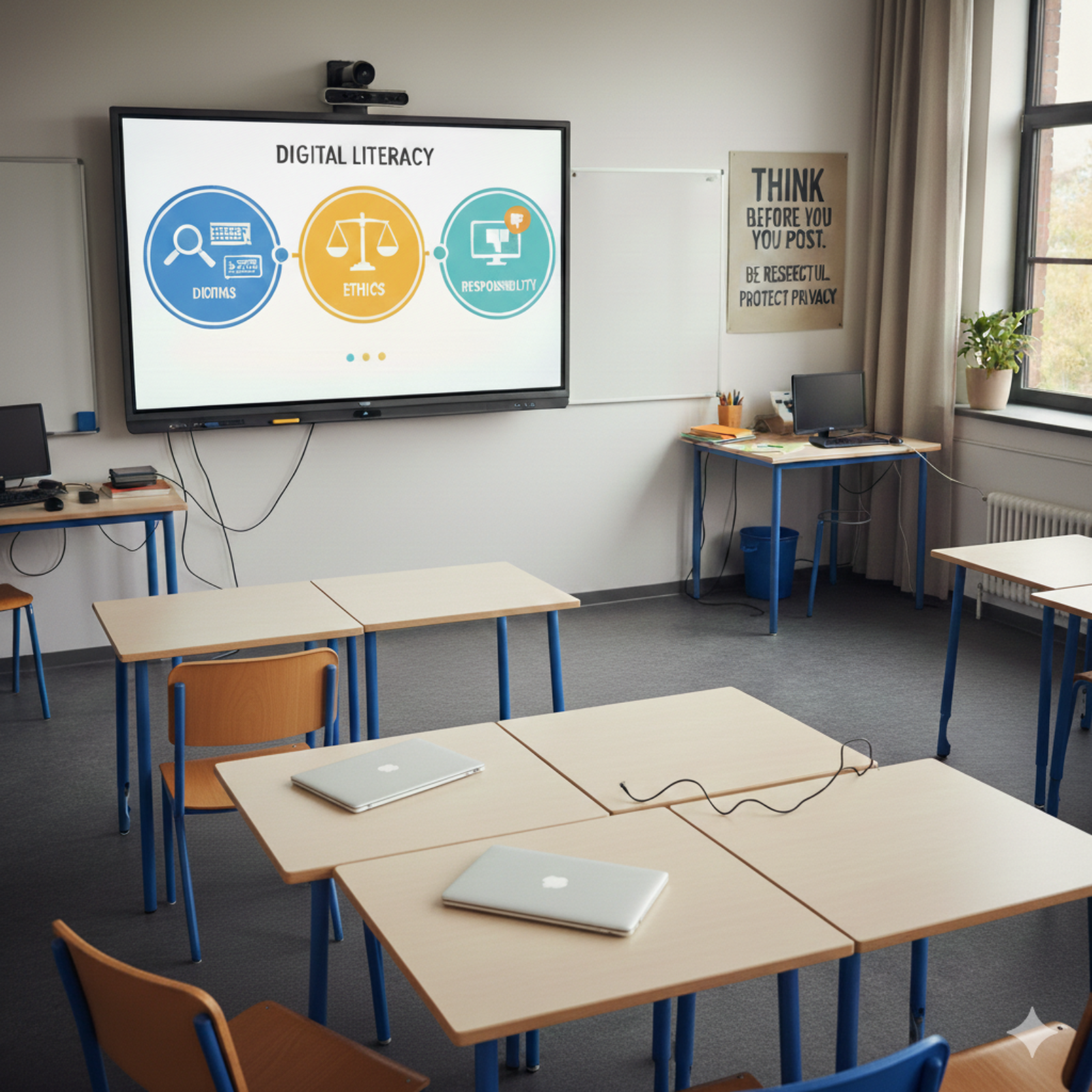
PODCAST · education
Digital Literacy, Ethics, and Responsibility in the Classroom
by Danielle Madden
In this thought-provoking episode, we explore the ethical considerations and professional responsibilities that come with using technology in today’s classrooms. As digital tools become increasingly embedded in teaching and learning, educators must move beyond technical skills and consider the broader implications for student wellbeing, safety, and equity.This episode reflects on key themes including student privacy, online safeguarding, digital citizenship, and equitable access to technology. We discuss the responsibility of educators to protect sensitive data, create safe digital learning environments, and model responsible online behaviour. The conversation also examines how technology can both bridge and widen the digital divide, challenging teachers to design inclusive and accessible learning experiences.Ultimately, this episode redefines digital literacy as more than technological competence. It is about critical thinking, ethical awareness, professional judgemen
-
1
Digital Literacies, Ethics and Responsibilty in the Classroom
In this thought-provoking episode, we explore the ethical considerations and professional responsibilities that come with using technology in today’s classrooms. As digital tools become increasingly embedded in teaching and learning, educators must move beyond technical skills and consider the broader implications for student wellbeing, safety, and equity.This episode reflects on key themes including student privacy, online safeguarding, digital citizenship, and equitable access to technology. We discuss the responsibility of educators to protect sensitive data, create safe digital learning environments, and model responsible online behaviour. The conversation also examines how technology can both bridge and widen the digital divide, challenging teachers to design inclusive and accessible learning experiences.Ultimately, this episode redefines digital literacy as more than technological competence. It is about critical thinking, ethical awareness, professional judgement, and empowering learners to participate safely and responsibly in an increasingly digital world. Whether you are a classroom teacher, school leader, or education professional, this episode offers reflective insights into what it truly means to teach responsibly in the digital age.References:European Union. (2016). General Data Protection Regulation (EU) 2016/679. Official Journal of the European Union.Haleem, A., Javaid, M., Asim Qadri, M., & Suman, R. (2022). Understanding the role of digital technologies in education: A review. Sustainable Operations and Computers, 3, 275–285. https://doi.org/10.1016/j.susoc.2022.05.004Jisc. (2022). Building digital capability: The six elements defined. Jisc.Livingstone, S., & Smith, P. K. (2014). Annual research review: Harms experienced by child users of online and mobile technologies. Journal of Child Psychology and Psychiatry, 55(6), 635–654. https://doi.org/10.1111/jcpp.12197OECD. (2021). 21st-century readers: Developing literacy skills in a digital world. OECD Publishing.Selwyn, N. (2016). Education and technology: Key issues and debates (2nd ed.). Bloomsbury Academic.UNESCO. (2018). A global framework of reference on digital literacy skills for indicator 4.4.2. UNESCO.
We're indexing this podcast's transcripts for the first time — this can take a minute or two. We'll show results as soon as they're ready.
No matches for "" in this podcast's transcripts.
No topics indexed yet for this podcast.
Loading reviews...
ABOUT THIS SHOW
In this thought-provoking episode, we explore the ethical considerations and professional responsibilities that come with using technology in today’s classrooms. As digital tools become increasingly embedded in teaching and learning, educators must move beyond technical skills and consider the broader implications for student wellbeing, safety, and equity.This episode reflects on key themes including student privacy, online safeguarding, digital citizenship, and equitable access to technology. We discuss the responsibility of educators to protect sensitive data, create safe digital learning environments, and model responsible online behaviour. The conversation also examines how technology can both bridge and widen the digital divide, challenging teachers to design inclusive and accessible learning experiences.Ultimately, this episode redefines digital literacy as more than technological competence. It is about critical thinking, ethical awareness, professional judgemen
HOSTED BY
Danielle Madden
CATEGORIES
Loading similar podcasts...
Frequently Asked Questions
How many episodes does Digital Literacy, Ethics, and Responsibility in the Classroom have?
Digital Literacy, Ethics, and Responsibility in the Classroom currently has 1 episodes available on PodParley. New episodes are automatically indexed when they're published to the podcast feed.
What is Digital Literacy, Ethics, and Responsibility in the Classroom about?
In this thought-provoking episode, we explore the ethical considerations and professional responsibilities that come with using technology in today’s classrooms. As digital tools become increasingly embedded in teaching and learning, educators must move beyond technical skills and consider the...
How often does Digital Literacy, Ethics, and Responsibility in the Classroom release new episodes?
Digital Literacy, Ethics, and Responsibility in the Classroom has 1 episodes. Check the episode list to see recent publication dates and frequency.
Where can I listen to Digital Literacy, Ethics, and Responsibility in the Classroom?
You can listen to Digital Literacy, Ethics, and Responsibility in the Classroom on PodParley by clicking any episode. We provide an embedded audio player for direct listening, and you can also subscribe via your preferred podcast app using the RSS feed.
Who hosts Digital Literacy, Ethics, and Responsibility in the Classroom?
Digital Literacy, Ethics, and Responsibility in the Classroom is created and hosted by Danielle Madden.
URL copied to clipboard!