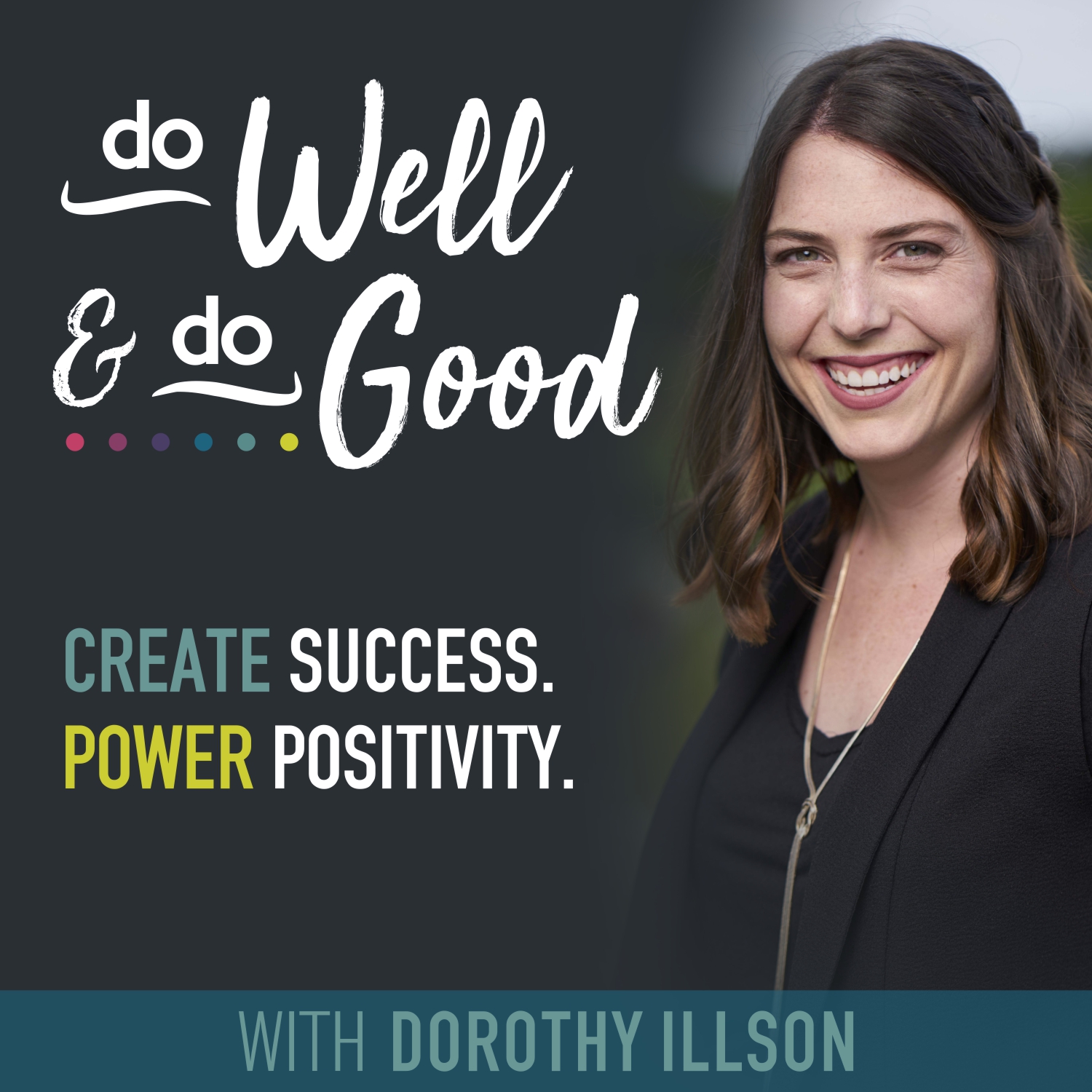
Do Well & Do Good podcast artwork

PODCAST · news

Do Well & Do Good

This podcast tells the stories of people who have created financial freedom and leveraged it to increase their positive impact on the world. Hosted on Acast. See acast.com/privacy for more information.

  1. 117

    Finding Your Tribe with Tim Rhode of GoBundance

    This week’s guest is Tim Rhode. Tim is the co-founder of GoBundance and the author of Tribe of Millionaires. He is also Founder of 1Life Fully Lived, a nonprofit dedicated to helping people find their vision and take control of their lives.Tim’s work with GoBundance is designed to engineer quality peer groups for people that will help them hold each other accountable. This is a great companion to the work he does at 1Life Fully lived, which helps kids plan their future while driving a positive change in the way that they are taught in our school system.In this episode, Tim joins the podcast to talk about how he got his money mindset, the importance of finding your tribe, and what financial freedom really means.In this episode we cover the following topics with Tim:[1:26] What life was like for Tim growing up and how he developed his money mindset[3:57] The core purpose of Tim’s book Tribe of Millionaires[7:41] The importance of surrounding yourself with people who are both ahead of you and behind you on your journey[9:06] The Six Key Pillars of GoBundance[13:50] There are two sides to accountability[17:30] What Financial Freedom really means[21:50] Putting your money to work for you through Real Estate investing[23:05] Finding the right Tribe and the importance of relationships[29:11] A life fully lived[32:45] Where to start your journeyWhere to Follow Tim:GoBundanceTribe of MillionairesLinkedIn for Tim1Life Fully LivedWhere to Find Dorothy:Join the email list and have a donation made on your behalf to a featured non-profit. You can join here, where you will also find a listener survey to fill us in on how we can bring you the most value!Follow Dorothy on Instagram @dorothyillson to keep up with episode premiers and all things Do Well and Do Good! Hosted on Acast. See acast.com/privacy for more information.

  2. 116

    Prioritizing Values in Business with Jonathan Keyser

    This week’s guest is Jonathan Keyser. Jonathan is the Founder of Keyser, a commercial real estate firm, and the author of the Wall Street Journal #1 bestseller You Don’t Have to Be Ruthless to Win: The Art of Badass Selfless Service. Jonathan is also a keynote speaker and creator of the Keyser Institute, which trains and empowers future generations to selfless leadership.Early in his career in commercial real estate, Jonathan found success. He didn’t like the cutthroat nature of the industry, however, and wanted to prioritize his values over his success. Jonathan then became a champion of conscious capitalism and wants to train others to do the same. In this episode, Jonathan joins the podcast to talk about what it means to be “ruthless”, what changed his mindset about making money, and how kindness has a way of coming back around.In this episode we cover the following topics with Jonathan:[2:53] Childhood for Jonathan Keyser and his early mindset on money[11:26] What does it mean to be “ruthless”?[15:45] People aren’t happy being ruthless[17:42] How people can bring Jonathan’s mindset into their own careers[22:50] Kindness will come back around[26:02] What is the Keyser Institute?[29:05] Examples of what Jonathan means by “service”Where to Follow Jonathan:Website for JonathanKeyser InstituteYou Don’t Have to Be Ruthless to Win: The Art of Badass Selfless Service, by Jonathan KeyserWhere to Find Dorothy:Join the email list and have a donation made on your behalf to a featured non-profit. You can join here, where you will also find a listener survey to fill us in on how we can bring you the most value!Follow Dorothy on Instagram @dorothyillson to keep up with episode premiers and all things Do Well and Do Good!  Hosted on Acast. See acast.com/privacy for more information.

  3. 115

    Uplifting Entrepreneurs in Marginalized Communities with Allen Woods

    This week’s guest is Allen Woods. Allen is a successful entrepreneur and Co-Founder of MORTAR in Cincinnati, OH. He and his team are creating diverse communities by helping historically marginalized entrepreneurs get access to much-needed resources so that they may build successful businesses. Allen has the amazing goal of uplifting 1000 entrepreneurs in the next three years through the MORTAR Entrepreneurship Academy. Join Dorothy this week as she welcomes Allen to the podcast to talk about what drew him to becoming an entrepreneur, the difficulties of raising capital, and what the future holds for his company.In this episode we cover the following topics with Allen:[2:08] What Allen’s life was like growing up[4:15] When Allen decided to become an entrepreneur[5:55] The genesis of MORTAR and why it was created[13:53] The difficulties of raising capital[17:08] Attracting the first class of entrepreneurs[20:55] Success stories from the program[29:52] What the future holds for MORTARWhere to Follow Allen:MORTARAllen Woods on LinkedInAbout the Mortar TeamWhere to Find Dorothy:Join the email list and have a donation made on your behalf to a featured non-profit. You can join here, where you will also find a listener survey to fill us in on how we can bring you the most value!Follow Dorothy on Instagram @dorothyillson to keep up with episode premiers and all things Do Well and Do Good! Hosted on Acast. See acast.com/privacy for more information.

  4. 114

    Protecting Your Assets with Bud Lethbridge

    This week’s guest is Bud Lethbridge. Bud is an asset protection specialist, professional speaker, and trainer. He is a successful entrepreneur and author of “A Practical Guide to Asset Protection”. Bud is a serial entrepreneur, and the talk of his I attended on asset protection was incredibly valuable. Bud is a Managing Member at Veil Corporate, which provides asset protection services for Real Estate Professionals. He is also the Co-Founder and President at Power Perx, which helps members save money on common, everyday expenses by finding discounts for them.Listen in this week as Dorothy is joined by Bud to talk about the ways people lose money, the importance of having a professional file an entity such as an LLC, and the accident that nearly cost Bud his life.In this episode we cover the following topics with Bud:[2:45] The two areas people tend to lose money[4:47] Bud’s journey as an entrepreneur[8:51] The first business that Bud started[11:50] Challenging moments during Bud’s time as an entrepreneur[15:49] Book suggestions from Dorothy and Bud[18:03] It isn’t enough to just file an LLC[21:28] What is a Family Limited Partnership (FLP)?[28:14] The devastating accident that almost killed Bud[40:59] Bud’s advice for up and coming entrepreneursWhere to Follow Bud:Veil websiteLinkedIn for BudWhere to Find Dorothy:Join the email list and have a donation made on your behalf to a featured non-profit. You can join here, where you will also find a listener survey to fill us in on how we can bring you the most value!Follow Dorothy on Instagram @dorothyillson to keep up with episode premiers and all things Do Well and Do Good! Hosted on Acast. See acast.com/privacy for more information.

  5. 113

    Underdog Empowerment, From Prison to Prosperity with Zachary Babcock

    This week’s guest is Zachary Babcock. He has an amazing story of redemption, having spent five years in prison before starting Underdog Empowerment and building a successful personal brand. Zachary helps entrepreneurs grow and monetize top-shelf passive income businesses and develop their own brands. Zachary’s podcast, Underdog Empowerment, is an Apple top-rated show. He has interviewed over 100 world-class entrepreneurs such as Andy Frisella, Grant Cardone, and Neil Patel. Zachary speaks all over the world, bringing his unique experience and perspective to inspire audiences from all areas of life. In this episode we cover the following topics with Zachary:[2:20] Zachary’s childhood and background[5:12] The difficulty of finding a job with a prison record[10:12] Zachary’s experience with network marketing[12:01] Underdog Empowerment and going all in on podcasting[14:24] Being an underdog can be an advantage[17:31] How to build confidence when you feel like an underdog[21:20] Why podcasting is a powerful tool for building a business[28:03] Zachary’s advice for underdogs who are just starting out on their journeyWhere to Follow Zachary:Underdog EmpowermentLinkedIn for ZacharyWho is Zachary BabcockWhere to Find Dorothy:Join the email list and have a donation made on your behalf to a featured non-profit. You can join here, where you will also find a listener survey to fill us in on how we can bring you the most value!Follow Dorothy on Instagram @dorothyillson to keep up with episode premiers and all things Do Well and Do Good!  Hosted on Acast. See acast.com/privacy for more information.

  6. 112

    The Importance of Giving Back to the Community with Dr. Reuben Rutland

    This week’s guest is Dr. Reuben Rutland. Dr. Rutland is the Co-Founder of Premier Urgent Care, the first and only black-owned urgent care facility in the city of Chicago. After graduating from medical school Dr. Rutland served as a medical officer in the United States Navy before moving on to receive training as a surgeon. After completing his postdoctoral research at Yale, Dr. Rutland went back to school and earned an MBA in 2016.Dr. Rutland is one of three doctors who joined together to create Premier Urgent Care. The facility has a mission to bridge the healthcare gap on the Chicago Southside, help to curb violence, and mentor at-risk teens. Dr. Rutland is married with three children.One of the many great things about Dr. Rutland’s work at Premier is the patient-first methods they employ. He believes that a well-informed patient will make the best choices for their health, which has a positive effect on their life and the life of the community.  In this episode we cover the following topics with Dr. Rutland:[2:47] What inspired Dr. Rutland to get into medicine[4:18] The importance of representation in medicine and all professions[8:08] Why Dr. Rutland went back for his MBA[9:55] The inspiration behind Premier Urgent Care[12:55] Giving back to the community is important[14:37] The biggest challenges in launching Premier Urgent Care[21:08] The benefits of having three founders who have different strengths[22:55] The long-term vision for the company[24:47] Where to learn more about Premier Urgent Care Where to Follow Dr. Rutland:Premier Urgent CareBio for Dr. RutlandPremier Urgent Care Phone #: 773-891-2890Premier Urgent Care Address: 1301 East 47th Avenue Where to Find Dorothy:Join the email list and have a donation made on your behalf to a featured non-profit. You can join here, where you will also find a listener survey to fill us in on how we can bring you the most value!Follow Dorothy on Instagram @dorothyillson to keep up with episode premiers and all things Do Well and Do Good! Hosted on Acast. See acast.com/privacy for more information.

  7. 111

    Accessing the Top Talent in Freelancers with Nathan Hirsch

    This week’s guest is Nathan Hirsch. Nathan has been an entrepreneur since 2006 when he started his first venture from his college dorm room, buying and selling student textbooks. He and his company experienced rapid exponential growth, soon becoming a multi-million dollar Amazon seller. Nathan is the founder and CEO of FreeeUp, a virtual assistant marketplace that connects business owners with the top 1% of the talent pool of freelancers and virtual assistants. He found that despite his rapid growth in his business, he had trouble finding reliable, skilled virtual assistants to help him grow. Nathan decided to take the initiative and build a network of freelancers that can be accountable for those who need top talent.Finding quality help is always difficult, so the fact that Nathan has already done the vetting process on freelancers provides immense value. In this episode we cover the following topics with Nathan:[2:52] Nathan’s experience using platforms like Fiverr and Upwork, and why he decided to start Freeeup[7:18] The biggest mistakes businesses make when hiring talent[9:02] The difference between followers, doers, and experts[11:29] How to screen freelancers [16:13] Communication is key when working with freelancers, and red flags to watch out for[19:30] Background on the Freeeup platform[22:30] Nathan’s advice on how to correct problems and part ways with underperforming freelancers[24:43] Working with people who are in vastly different time zones[26:55] Culture is still important even when working with remote talent[29:00] Why Freeeup is different than other platforms[31:24] Final thoughts and advice from NathanWhere to Follow Nathan:FreeeupLinkedIn for Nathan Where to Find Dorothy:Join the email list and have a donation made on your behalf to a featured non-profit. You can join here, where you will also find a listener survey to fill us in on how we can bring you the most value!Follow Dorothy on Instagram @dorothyillson to keep up with episode premiers and all things Do Well and Do Good!  Hosted on Acast. See acast.com/privacy for more information.

  8. 110

    The Psychology of Entrepreneurship with Ronsley Vaz

    This week’s guest is Ronsley Vaz. Ronsley is a speaker, author, and the Founder of Amplify, an award-winning content marketing agency. Ronsley is also a prolific podcaster who has over 4 million combined listeners. Ronsley is the host of the new audio documentary The Psychology of Entrepreneurship, which brings insights from entrepreneurs and best selling authors together on a fascinating topic: what happens in the inner workings of the mind of an entrepreneur? I believe it is an incredibly beneficial endeavor to really take some time and critically look at how our minds work. It is something that has really helped me in the past and continues to do so today.  In this episode we cover the following topics with Ronsley:[4:07] The Psychology of Entrepreneurship and what Ronsley is focusing on lately[7:05] Our thoughts determine our lives, but we have to follow through with effort[11:38] Our mental state affects more than just ourselves, and what “Imposter Syndrome” is[17:01] How Ronsley’s understanding of Impostor Syndrome has changed over time[19:03] The effects of stress and guilt on our mindset and feelings of self-worth[22:30] Psychology of Entrepreneurship is about what goes on in the mind of an entrepreneur[27:07] Where Ronsley and The Psychology of Entrepreneurship can be found Where to Follow Ronsley:AmplifyPsychology of EntrepreneurshipTwitter for RonsleyLinkedIn for Ronsley VazWhere to Find Dorothy:Join the email list and have a donation made on your behalf to a featured non-profit. You can join here, where you will also find a listener survey to fill us in on how we can bring you the most value!Follow Dorothy on Instagram @dorothyillson to keep up with episode premiers and all things Do Well and Do Good! Hosted on Acast. See acast.com/privacy for more information.

  9. 109

    Creating The Ideal Business Around Your Lifestyle with Tim Meuchel

    This week's guest is Tim Meuchel. Tim is the creator, bestselling author, and podcast host of The 10 Factor.Like so many successful entrepreneurs that you’ve heard me talk to here on the show, Tim failed his way to success. In 2008, he lost over $300,000 after resigning from a twelve-year corporate management career to pursue his side business full-time. His business grew exponentially, but one bad deal left Tim’s company almost bankrupt. Tapping into emergency funds, he fought back and restructured; resulting in a new profit producing model requiring less than 40% of the effort.Tim then reverse engineered his process, validated it with top entrepreneurs, and created a 10-Month Roadmap – The 10 Factor, that he now uses as the success blueprint to help others engineer their business around their ideal lifestyle, all of this while he gives back extensively to support the fight against Prostate Cancer. Where to Find Tim:Check out his book and podcast via the 10 Factor website.On Instagram @TimMeuchel Show Notes:[3:00] minute: What was life like for you growing up and what were the beliefs around money and success that were instilled in you as a child?Middle class, tight knit family, very stable. Engineering was first love and work post college. [4:45] minute: Was entrepreneurship always in your mind or did it come about at some point?Watched his Dad lose his job as the number two person at his company. His pivot was to start his own business, and that was one of many seeds planted for Tim that entrepreneurship had its benefits.[7:00] minute: There’s a comfort that comes with managing your own destiny that comes with entrepreneurship would you agree with that?You get to create the lifestyle you want for you and your family, and that is what's important.[8:30] minute: You leave a 12 year career to pursue your side business, tell me what that was and about the time when you almost lost it?Left because of extended travel that kept him away from his soon-to-be-wife, and because he knew he wanted to make the equivalent of two salaries so his soon-to-be-wife could stay at home for future children’s early life.Once he went full-time with his own contracting company it exploded. The business then started to eb and flow with what he could do on his own.One bad deal left the company nearly bankrupt. This is what led to sit down and create 10 Factor.[14:30] minute: What was your headspace like at this time, were you able to stay positive while you sat down to figure this all out or did you get into any bad places with that?Avoided any dark places because he knew he had already built something really fast and that gave him confidence that he could do it again.Worked backwards to reverse engineer what he needed to be doing to make the exact amount in the exact time he wanted.[16:45] minute: What so often kills businesses is too much opportunity, which is not what you expect going in, and it sounds like that is a large part of what you do now is help entrepreneurs figure out what opportunities are the right ones?Going to one thing and being the best at it, there are enough people that need that one thing that you can be wildly successful doing just that. Having the “right of refusal” and having control of your time. [21:00] minute: What is that first step, how do you in a practical sense get clear on what to be focused on?If your business is still around and profitable, you are closer than you think, just need some fine-tuning. A good coach would have gotten him to where he is so much faster, and now he has a coach year-round. [25:30] minute: There are an abundance of coaches out there, how would you advise someone to evaluate the coaches out there and find the right one for them?Someone will peak your interest, something that makes you want to talk to them. Resonation usually means you will fit. A know you, like you, trust you sales funnel just like anything else. [27:00] minute: Who is the ideal client at the 10 Factor?At the stage where they are starting a family and care about spending quality time with them. At the stress point when they are working they are stressed about not being with their family, and when they are with their family they are stressed they are not with their business.Double down and improve on your successes. [30:00] minute: Switching gears, you give back a lot, specifically to the fight against prostate cancer. You have built this in to your life, can you talk about that?Tim’s connection to the disease.Set up a way to donate through all of Tim’s websites to Johns Hopkins to research treatments.  Where to Find Dorothy:Join the email list and have a donation made on your behalf to a featured non-profit. You can join here, where you will also find a listener survey to fill us in on how we can bring you the most value!Follow Dorothy on Instagram @dorothyillson to keep up with episode premiers and all things Do Well and Do Good! Hosted on Acast. See acast.com/privacy for more information.

  10. 108

    The Art of Story Selling with Harry Maziar

    This week’s guest Harry Maziar. Harry served as President of Zep Manufacturing Company for 27 years and during his tenure, Zep became an international leader in the specialty chemical industry. As a sales representative, Harry was so successful he was named the company’s first director of sales and he led 2,000 salespeople to produce double-digit growth for 25 straight years. Bernie Marcus, co-founder of The Home Depot called Harry one of the greatest salesmen of all time. Harry eventually retired as Chairman of the Chemical Division of National Service, then a publicly traded NYSE company.  Where to follow Harry:To find Harry’s book, Story Selling, go here. In this episode we cover the following topics with Harry:[3:30] minute: What was life like for you growing up and what were the beliefs around money and success that were instilled in you as a child?First generation American growing up with an air of expectation and personal responsibility.Self disciplined and staying on the straight and narrow was a part of life.[4:20] minute: The idea of “I’m not going to hold your hand, you’ve got to get this done,” that helps make a great salesperson would you agree?Ten two letter words: “If it is to be, it is up to me.”You need teachers, coaches, a pat on the back, but it comes down to your commitment. [5:30] minute: How did you get into sales at the start of your career?Began selling coca-cola on his front lawn (from Atlanta, home of Coca-Cola). Always was selling things. Didn’t know what he wanted to do but knew he didn’t want to wear an apron as lots of adults around him growing up did. Sales was an entry to something else.No prototype to a salesperson, not born that way, just need to be committed. [8:00] minute: What was the transition like going from a salesperson yourself to managing a team of 2000 salespeople instead. Was that difficult going from leading yourself to leading others to the same results?A lot of the principles still applied; treating people well and setting them up for success.Was good enough to recognize what worked for sales and what didn’t, and while he may not have been the top ranked salesperson he was capable of creating those people.[10:50] minute: What did you see missing from the landscape of selling that you wanted to bring to the conversation with your book?Selling is passion, emotions, building friendships. Wrote a weekly newsletter that laid the groundwork and the audience for a book. Each chapter of the book has a purpose.“It’s not a how-to sell a product, it’s a why to sell a product.”[13:15] minute: For practitioners turned business owners who feel a little icky about selling, how would you recommend they get comfortable with sales?No simple success pattern. If they are uncomfortable it’s likely because they don’t recognize the importance of what they are doing to the people they are calling on.“People that don’t get carried away, should be.”[16:00] minute: What tips would you have around how to differentiate yourself in the marketplace when you are selling? When they could get so many similar products, how do you show you are differentiated?There is no such thing as a commodity. The interest in the customer should be paramount; prove the value to the customer.[19:00] minute: I’ve found it valuable to hold back the urge to talk about features and benefits until I’ve asked plenty of questions, any thoughts around that?80/20 is a good measure of how much you should be listening (80) and talking (20) during a sales meeting. This way you learn the customer.[21:00] minute: In your experience in leading such a massive salesforce, what are one or two of the most common pitfalls sales people fall into and how do you avoid that?Most fail because of lack of focus. Most are just not willing to pay what is required for success; it’s not easy work.[23:00] minute: I know giving back has been very important to you since your retirement, how have those philanthropic efforts played into your sense of fulfillment and what does that mean to you?You make a life by what you give.  Where to Find Dorothy:Join the email list and have a donation made on your behalf to a featured non-profit. You can join here, where you will also find a listener survey to fill us in on how we can bring you the most value!Follow Dorothy on Instagram @dorothyillson to keep up with episode premiers and all things Do Well and Do Good! Hosted on Acast. See acast.com/privacy for more information.

  11. 107

    Trading Apathy & Conformity for Freedom & Fulfillment with Curt Mercadante

    This week’s guest is Curt Mercadante. Curt left the “corporate” world at age 30 to start his own agency that he scaled to consistent 7 figures. But, like many business owners, he eventually found himself overwhelmed and frustrated so Curt fired half of his clients, started charging more, and created an outcomes-focused strategy that gave him freedom.Then came dramatic shift number 2. Curt realized he lacked fulfillment. This led him to shut down his agency at peak revenue, instead turning his side hustle of coaching into a full time career. Today, Curt runs a media, speaking and lifestyle transformation company aimed at fighting apathy and conformity — and helping individuals fight for lives of freedom and fulfillment. Not only that, but he is also a fellow podcast host, as the man behind the popular show Freedom Club Podcast. Where to follow Curt:Fivepillarsoffreedom.com to find the book and order it.Freedom Club Podcast can be found here.On Instagram @curtmercadante In this episode we cover the following topics with Curt:[3:30] minute: What was life like for you growing up and what were the beliefs around money and success that were instilled in you as a child?Grew up in the suburbs of Chicago in a middle class familyHad siblings but all much older and out of the house as he grew up.Story of his Father switching careers in his fifties and reinventing himself.[7:30] minute: Your Dad starting this second career and reinventing himself, did that have an effect on you? Did you always want to be an entrepreneur because of that?Spent time in the corporate world, but when his Father passed away he decided he needed to make a change.Always been an “eat what you kill” type person; didn’t wait for permission to do his own things.[10:30] minute: Working on the limiting belief of not being qualified or worthy.“Believe in everyone, count on no one.” mindset; bet on yourself and count on yourself more it’s going to build that abundance mindset.Abundance vs scarcity; scarcity pimps.[13:30] minute: back and forth between Dorothy and Curt on scarcity, abundance, and privilege. [17:20] minute: Let’s talk about the point when you were overworked and overwhelmed, and you said you made a lot of drastic decisions to change things. Take us to that point, what was your mindset and what did you do?Overwhelmed and stressed. Spent little time not working. Taking money as people offered it; let clients rule his life.Clients are Pavlovian, they will learn when you respond and expect that. Learning to work with less clients for more money.Working within your strength zone as much as possible. [21:30] minute: When you came to this realization that you were lacking fulfillment, what were the actions steps you took, or did it take time to turn that realization into action?Took some time because he didn’t know where to go.Coaching became a side-hustle that turned out to be what he really felt he was meant to do.His 4-year plan became a 4-week plan; jumped off the titanic without a life preserver.[25:00] minute: For people listening who don’t feel like they have freedom in their business or that fulfillment, what would you say to those people and what does your company do for those type of people?Being in a comfort zone of misery, or as Henry David Thoreau said, “quiet desperation”.5 pillars of the freedom lifestyle, explained. Superpowers; figuring out what your strengths are.Vision; identify that one to two sentence guiding star for your life.Alignment; relationships, self, and worth in alignment.Outcomes; reverse engineer that vision to know where you need to be every year, month, week, and day.Flow; cumulative effect of the first four pillars.[28:00] minute: explanation of Curt’s new book, “5 Pillars of the Freedom Lifestyle”. Where to Find Dorothy:Join the email list and have a donation made on your behalf to a featured non-profit. You can join here, where you will also find a listener survey to fill us in on how we can bring you the most value!Follow Dorothy on Instagram @dorothyillson to keep up with episode premiers and all things Do Well and Do Good! Hosted on Acast. See acast.com/privacy for more information.

  12. 106

    Elevate Yourself and Your Team with Robert Glazer

    This week’s guest is Robert Glazer. Robert is the founder & CEO of global performance marketing agency Acceleration Partners. His company has received numerous industry & company culture awards from Glassdoor, Ad Age, Entrepreneur, and Inc. Magazine. Robert is the author of international bestseller Performance Partnerships, and is currently anticipating the release of his next book, Elevate which comes out on October 1st. Bob is a regular contributor for Entrepreneur, Forbes, and Inc., and his inspirational Friday Forward column is read by 100,000+ leaders around the world each week.  Where to follow Robert:To learn more about Robert you can visit this site just for listeners of Do Well & Do Good.You can find the sign up for Robert’s Friday Forward column here.His new book, Elevate, can be found here.Listen to the Elevate Podcast on any podcast platform. In this episode we cover the following topics with Robert:[3:30] minute: What was life like for you growing up and what were the beliefs around money and success that were instilled in you growing up?Had familiar entrepreneurial path of pushing back on traditional academics.Found his love for learning in his early 20s. [6:30] minute: Did you recognize yourself as entrepreneurial when you were in High School or did that come when looking back later?Not until later. No entrepreneurial person in his orbit as a kid to know it was a thing.Parents both worked one job their entire lives, all children now own their own companies.[8:00] minute: For listeners building a business, what is it about you or the culture you created at your agency that led to all these awards for company culture?AP is a great place to work for a certain group of people, it isn’t a great culture for everyone which is a key part of the answer.Finding people that match your values, and know what those values are.“The things that we say we value, we value. We do what we say.”[12:45] minute: In looking to go from a higher six-figure business towards a 7-figure business where you are starting to do your first big hires, how do you make that first big step?Need vision, values, and goals and all three need to come with consistency and clarity.When you have that for 3 to 5 years out, those people coming in can know what they are working for and toward.[15:30] minute: You have a new book coming out called, Elevate. Who is this book for and what are people going to get from it?Based around the “Friday Four” columns he has written for a few years.Playbook or framework for self improvement. Breaks it down into areas that you can improve 1% a day.[18:10] minute: What are these four elements of capacity?First is spiritual. What are your values and what do you want most?Second is intellectual. How do you learn, plan, execute with discipline. “Upgrading your processor”.Third is physical. Your health and wellness.Fourth is emotional. How do you relate to the world around you?[22:45] minute: Say someone is looking at those four and thinking, “I’ve got to work on all of these”. Should they focus on one area at a time or try to do them all at once?Spiritual is a bigger, long-term project.The other three are just about doing the work to get better at it. You could start all of those in the same day. Small incremental improvements really do add up. Put a little pressure on each of these areas every day.[25:00] minute: Having come from running a business that has remote employees, how do you cultivate this kind of growth in a team when you are working remotely?It is a disadvantage, which forces us to be really intentional. His companies on-boarding is very specific for three full weeks. Have random calls set up between employees to create interaction and other tricks like that.[28:20] minute: Where can people go to find this book?Robertglazer.com/elevate[28:45] minute: How does fulfillment play a part in everything you do and tell us a little about your work with Build Boston?Gratitude is very important to him and to success.A percentage of the book profits will be given to Build Boston, which is a program that adds entrepreneurial programs to schools in at-risk areas of Boston. Where to Find Dorothy:Join the email list and have a donation made on your behalf to a featured non-profit. You can join here, where you will also find a listener survey to fill us in on how we can bring you the most value!Follow Dorothy on Instagram @dorothyillson to keep up with episode premiers and all things Do Well and Do Good! Hosted on Acast. See acast.com/privacy for more information.

  13. 105

    Think and Grow Rich in 12 Minutes a Day with John Mitchell

    This week’s guest is John Mitchell. John spent 20 years as an entrepreneur earning in the low six figures when something drastic happened. He created what is today recognized as the “Top Practical Application in the World” of the legendary book Think and Grow Rich by Napoleon Hill.When John applied his technique to his own life, he saw his income skyrocket to over $5 million a year. The 20 times difference happened because his 12 minute daily process “Think It Be It” led to him simply operating every day at a higher level than he ever had before, and naturally that change showed up in his income. The science behind his technique was profiled in a Time Magazine cover story, and now he’s here to share it with us today.  Where to follow John:Theunfairedge.com is where you will find John’s free webinar explaining his 12 minutes a day technique. Think It, Be It website. In this episode we cover the following topics with Jeff:[3:00] minute: Set the stage for us, what was life like growing for you growing up and what were the beliefs about money and success instilled in you as a child?Learning to get to a place where he thought he deserved a great life.[4:00] minute: Tell us the story of reading Think and Grow Rich and developing this technique and becoming an entrepreneur?Turned 50 and wanted more; desired an exceptional life.Decided to pick the top personal success book and full apply what it said to his own life; that book was Think and Grow Rich by Napoleon Hill.“What you envision in detail on a daily basis is what shows up in your life”Developed a technique from the book that drove his life to new heights and now shares that with others.[9:30] minute: Dorothy shares her experience with the book and trying to apply it herself.[14:00] minute: What does this application you’ve created look like?Take your life and compress it down to one sheet of paper, front and back.Ideal you on the front page, broken into categories.Back page is for top three goals for quarter, and improvements you want in your life.Bottom we track your key behaviors of your goals.“Everyday you are feeding yourself exactly the person you want to be, exactly what you want to accomplish, and precisely how you are going to achieve your clearly defined goal.” Your subconscious accepts this after around 21 days and helps these things start showing up in your life.[17:30] minute: Could you give an example of what one of those categories look like on the front side and the goals and action steps look like on the back? Let’s take money or career for example?Your feeding yourself four things: succinct business plan, your strategy for success, the three things that move the needle, and the lynchpin issue that day to day brings you to the next level. Consistent daily readings are crucial.[20:00] minute: Are you reading this out loud every day or what does that process look like?Reading it everyday, parts are meant to be read out loud as that has been shown to have a significant impact.You do what you say you are going to do.[22:10] minute: Where does the 12 minutes come from? Is that how long it should take to read your document?Free webinar explains the template, find that here.[23:00] minute: I struggle to determine how far I want to push my goals, where do you feel like people should be setting their goals at?Three years out is his preferred time to be looking at, and then keeping actual goal setting at each quarter.[25:00] minute: What is the most common pitfalls you here from others?If you read it, it works. It’s science. The visualization is the tool we use to apply the science. We are focusing the mind.[29:00] minute: You’ve taught this to so many people, are there any stand out stories you’d like to share?John shares some stories of current clientele. Where to Find Dorothy:Join the email list and have a donation made on your behalf to a featured non-profit. You can join here, where you will also find a listener survey to fill us in on how we can bring you the most value!Follow Dorothy on Instagram @dorothyillson to keep up with episode premiers and all things Do Well and Do Good! Hosted on Acast. See acast.com/privacy for more information.

  14. 104

    Finding Your Lane with Jeff Goins

    This week’s guest is writer, speaker and entrepreneur Jeff Goins. He is widely known as the best-selling author of five books, including The Art of Work and Real Artists Don’t Starve. His award-winning blog, Goinswriter.com, is visited by millions of people every year, and through his online courses, events, and coaching programs, he helps thousands of writers to find success. Where to follow Jeff:Goinswriter.com to find his blog and podcast.Purchase Jeff’s books here.On Instagram @jeffgoins In this episode we cover the following topics with Jeff:([3:00]) Jeff’s early life and learning to be ok with making money.([6:00]) Clarity only comes with action.([8:30]) Finding your lane and pursuing it.([15:00]) Being known for one thing.([19:00]) Listening to your life.([29:30]) Contribution vs fulfillment.([37:00]) Your work is a gift of its own. Hosted on Acast. See acast.com/privacy for more information.

  15. 103

    Creating Heaven on Earth with Martin Rutte

    This week’s guest is Martin Rutte. Martin is president of Livelihood, a management consulting firm in Santa Fe, NM, that has worked with such organizations as The World Bank, Sony Pictures Entertainment, and Virgin Records. Martin’s aim is to provide the insights and tools necessary to overcome obstacles, adapt to changing circumstances, re-frame perspectives and solve seemingly impossible problems. One way he’s doing this is through his newest book, Project Heaven on Earth: The 3 simple questions that will help you change the world … easily. Where to follow Martin:Project Heaven on Earth website.Purchase Martin’s book, Heaven On Earth, here.On Facebook @MartinRutte In this episode we cover the following topics with Martin:([2:30] minute) Dorothy has an offer for the listener.([4:00] minute) Growing up in a lower working class neighborhood and developing the mindset he was going to change the world.([8:00] minute) It is not necessary to believe, it is necessary to start.([14:00] minute) Naming our vision; Heaven on Earth concept.([18:00] minute) Three questions to define your Heaven on Earth.([27:00] minute) The notion of simple and it’s enormous power.([32:00] minute) Role of entrepreneurs in creating Heaven on Earth.([35:00] minute) Buy 3 books, not 1, and if you buy a case of 20, Martin will do a free webinar for you or your organization. Where to Find Dorothy:Join the email list and have a donation made on your behalf to a featured non-profit. You can join here, where you will also find a listener survey to fill us in on how we can bring you the most value!Follow Dorothy on Instagram @dorothyillson to keep up with episode premiers and all things Do Well and Do Good! Hosted on Acast. See acast.com/privacy for more information.

  16. 102

    How To Be An Inclusive Leader with Jennifer Brown

    This week's guest is Jennifer Brown. Jennifer is a leading diversity and inclusion expert, dynamic keynote speaker, best-selling author, and host of The Will To Change podcast, which uncovers true stories of diversity and inclusion. As the founder and CEO of Jennifer Brown Consulting, Jennifer’s workplace strategies have been employed by some of the world’s top Fortune 500 companies like Walmart, Microsoft, and Starbucks, and as a successful LGBT entrepreneur, she’s been featured in media including the New York Times, Bloomberg Business week, Forbes, the Wall Street Journal and many more. Where to follow Jennifer:Her website can be found here.On Instagram @JenniferBrownSpeaksHer latest book, “How To Be An Inclusive Leader”, can be found here. In this episode we cover the following topics with Jennifer:([2:30] minute) Growing up in a frugal financial environment and learning to take the best skills from each parent.([7:30] minute) Her story of coming out; finding that career sweet spot.([16:00] minute) The myth of meritocracy and our collective troubles with comfort. ([24:30] minute) How we show up to work.([26:00] minute) Building community and diversity in the workplace.([38:00] minute) Helping create a grassroots event for LBTQ leaders to come together and combine resources to learn and grow together. Hosted on Acast. See acast.com/privacy for more information.

  17. 101

    Thank You For 100 Episodes!

    This is episode 100! That is a statement that seems crazy to make, but it’s true! A massive thank you goes out to all who have listened and helped grow Do Well and Do Good to where it is today.This episode covers a few changes to the show and how it gives back. Listen for details, and then head over to dowellanddogood.co/join to find the listener survey and to sign up for our brand new email list. When you sign up for the email list a donation to this month’s featured non-profit will be made on your behalf.That link one more time is dowellanddogood.co/join. Thank you to all for the support! Where to Find Dorothy:Join the email list and have a donation made on your behalf to the current featured non-profit. You can join here, where you will also find a listener survey to fill us in on how we can bring you the most value!Follow Dorothy on Instagram @dorothyillson to keep up with episode premiers and all things Do Well and Do Good!  Hosted on Acast. See acast.com/privacy for more information.

  18. 100

    Combating Gender Bias In The Workplace with Andie Kramer

    This week's guest is Andrea Kramer. Andie is a lawyer, keynote speaker, artist, women's rights activist, author, and all around rockstar! She balances a successful and demanding legal career with her passion to help women navigate both the obvious and subtle gender biases they encounter in career settings. This passion has led to co-authoring two incredible books on the topic, “It's Not You, It's the Workplace” and “Breaking Through Bias”, as well as co-founding the Women's Leadership and Mentoring Alliance, which recruits senior women to mentor and support our younger women on their way up. Among all of that, Andie still found time in 2012 to found Andie K, a business through which she makes and sells one-of-a-kind, handmade jewelry, and whose stated mission is to support charities that are empowering women and promoting gender equality. Places to Find Andie:Interested in learning more? Check out Andie’s website here.Andie and Al’s first book, Breaking Through Bias, found here.Andie and Al’s book, It’s Not You It’s The Workplace, found here.Women’s Leadership and Mentor Alliance website.Andie K jewelry website. Episode Topics:Andie’s upbringing and an upsetting introduction to the legal world. ([2:30] minute)Andie’s motivation and early bias she herself faced. ([4:30] minute)Evolution of gender bias in the workplace. ([6:00] minute)Proactive role women can take in reducing the impact of this bias. ([10:30] minute)Andie’s journey to go beyond her law work to the life of an entrepreneur. ([13:00] minute)Her for-purpose jewelry company, Andie K. ([16:30] minute)Founding of and the purpose behind the Women’s Leadership and Mentoring Alliance. ([18:30] minute)Advantages of sponsorship inside and mentorship outside of your company. ([22:00] minute)Time management when you have so many projects going at once. ([24:00] minute)Topics covered in Andie’s two books [linked above]. ([27:00] minute) Hosted on Acast. See acast.com/privacy for more information.

  19. 99

    Don’t Wait To “Do Good” with Carrie Paxton

    This week’s guest is Carrie Paxton. Carrie was raised in a typical family and was the epitome of traditional school success, but she’s chosen a far-from-typical lifestyle. As an entrepreneur fueled by her passion for education, she wants to break the mold of classroom-based learning to show children and their families that real life and learning isn’t limited to school. Through her mastermind groups and tutoring business, Carrie is proving that kids who don’t fit into the system can still be wildly successful at life by learning something different, learning somewhere different, and learning differently.In this episode we cover the following topics with Carrie:Her very “normal” childhood and learning the basics of personal finance ([2:30] minute).Starting Carrie’s Saturday Side School as an elementary school student and other early entrepreneurial ventures ([4:00] minute).Doing good right away; not waiting until your business or personal wealth is a particular size ([7:00] minute).Scholarship and mastermind groups that she runs to give back; modeling that giving habit for others ([9:00] minute).How to disrupt the education system and some thoughts around homeschooling ([12:00] minute).Masterminds: how they’ve changed Carrie’s life and how she is trying to incorporate them into the lives of the students she works with ([17:30] minute).Feeling lost while scaling a business ([20:00] minute). Places to Find Carrie:On Facebook and Instagram, send a message and connect! Where to Find Dorothy:Visit Do Well and Do Good’s free Facebook community here and arrange a one-on-one with Dorothy herself!Follow Dorothy on Instagram @dorothyillson to keep up with the latest Do Well & Do Good news! Hosted on Acast. See acast.com/privacy for more information.

  20. 98

    Healing From Depression As An Entrepreneur with Steve Arneson

    This week’s guest is Steve Arneson. In 2015, Steve co-founded a real estate investment and education company called “The REINVESTORS”, that specializes in educating investors on how to build recession-proof portfolios. In less than 3 years, The REINVESTORS have partnered with investors to acquire millions in high-return real estate assets, including apartment buildings and development projects, and have educated thousands of people on how to properly invest in any real estate market.Most recently, Steve has become an outspoken advocate for those dealing with depression, having had his own battle with it that he continues to learn and grow from today. His ability to be open and vulnerable is inspiring and has become a real tool in his entrepreneurial belt as well. In this episode we cover the following topics with Steve:Childhood in Victoria, Ontario. Using sport as a release from the pain of his parent’s divorce. ([3:00] minute)Beginnings and growth in the real estate world. ([5:00] minute)First two real estate deals and the basics of doing it yourself. ([9:30] minute)Battle with depression, and his reasons for sharing that battle. ([19:00] minute)How traumatic childhood events shaped those depressed feelings and his journey towards resolving those. ([22:30] minute)How the communication methods he has learned dealing with depression has translated to benefits as an entrepreneur. ([25:00] minute)Learning to ask for help and the immense benefits of doing so. ([28:00] minute)Steve’s moment on the edge and his offer to help anyone out there going through their own struggle. ([32:00] minute) Places to Find Steve:On Instagram @steve_arnesonOn LinkedIn @stevearnesonRE Investors websiteRE Investors on Facebook Where to Find Dorothy:Visit Do Well and Do Good’s free Facebook community here and arrange a one-on-one with Dorothy herself!Follow Dorothy on Instagram @dorothyillson to keep up with the latest Do Well & Do Good news! Hosted on Acast. See acast.com/privacy for more information.

  21. 97

    Building Real Relationships Through Online Engagement with Chris Strub

    Chris Strub is the creator beyond “50 States, 100 Days: The Film”, a documentary that chronicles the life-changing adventure that Chris Strub took to work with nonprofits nationwide in the summer of 2015. Chris also authored '50 States, 100 Days: The Book' and today is known as the Giving Day Guy, partnering with communities of nonprofits around the United States to help them use live-streaming video to connect in real time with their audiences during 24-hour online giving days. Beyond his work with nonprofits, Chris is a sought-after speaker, a Forbes contributor, and is widely known as an expert on creating engagement through organic social media.During our interview we discuss the origins of Chris’ mindset, how to leverage social media to create real relationships, giving out loud, and much, much more. Places to Find Chris:On Instagram @ChrisStrubOn Twitter @Chris Strub Show Notes:[3:00] minute: Set the stage for us first, what was life like for you growing up, and what was the mindset around money and success and giving that was instilled in you?Raised in a healthy family with a close relationship with his parents.Treat people how you want to be treated, use respect.Morals most important; work hard to create larger financial return.Where and how Chris met Dorothy.Meeting someone in real life so important.[7:30] minute: You are really known for being an expert at creating relationships with people through social media. If someone is in a position where they are just starting a business and don’t have the ability to travel to a lot of events right away, how can they leverage social media to create relationships?Creating local meet ups through social media. See that return on investment locally and then move onto regional travel after that.Don’t be intimidated by the larger events as the smaller ones can often be the most impactful.[10:00] minute: So let’s shift gears and tell me the story of how this 50 States, 100 days adventure, how was that inspired and what sorts of organizations were you working with?In 2015 Chris quit his job and visited non-profits in all 50 states in a 100 day road trip. Made a film about it. Inspired by his friend and his organization Payaway Layaway, decided he needed to change more people's lives. “Why not go? What’s stopping me? Nothing.”Worked with organizations of all sizes and all different types.[13:45] minute: When you give out load, you inspire other people. The perception of giving in secret has downsides. The power in giving out loud is immense.Most are shy about wanting their stories told or their efforts noticed. Explanation of Giving Days[16:45] minute: You have a backround in newspapers and you said in your book that you knew how to make a story compelling, so could you share with our listeners what some of those elements are?Did all his own PR and messaging during his trip.Local news outreach; they didn’t need to care where else he had been because he is there and with them.Having someone else do it for him would have felt sterile.[19:30] minute: Majority of my listeners are online business owners, so for them, how can they leverage the power of storytelling with media and their own content? Starts with video. People want to connect with people. Businesses want to support the other businesses around them.What are you creating? Not just a video, but a series of videos.[21:45] minute: I’m curious what your strategies are in creating consistent engaging content. Your time can be pulled in so many directions, so what tips do you have for busy entrepreneurs who struggle with getting that content out day to day?Keep up with the people who reach out to you.Don’t create content to create content. Important to be responsive, that is first.Doing “Twitter and treadmill” to respond to everyone that reaches out to him.Shifting the governance of that content creation out to others.[26:00] minute: Want to talk about what you are doing now with Giving Days, can you tell us more about that?Doing places around the country and helping facilitate “Giving Days”. Go to one place that has a day long giving fundraiser and create attention spikes in the community. [28:30] minute: What advice would you give to a business owner who is producing content, and likely video content, what advice can you give them on how to amplify what they are already doing and reach more people interested in hearing their message?Story from recent event in Lima, OH.Can’t top the content of people and places with immense resources, but you can always top your engagement and authenticity.“We are all famous to a few people.”[36:00] minute: Chris’ Mother’s birthday is on the day this episode releases, July 29th, so tweet him a message for her and he will re-post them all. @ChrisStrub Do Well & Do Good Challenge Nominee:Salvation Army USAWebsite | DonateWeb Description: The Salvation Army, an international movement, is an evangelical part of the universal Christian Church. Its message is based on the Bible. Its ministry is motivated by the love of God. Its mission is to preach the gospel of Jesus Christ and to meet human needs in His name without discrimination. Where to Find Dorothy:Visit Do Well and Do Good’s free Facebook community here and arrange a one-on-one with Dorothy herself!Follow Dorothy on Instagram @dorothyillson to keep up with the latest Do Well & Do Good news! Hosted on Acast. See acast.com/privacy for more information.

  22. 96

    The Art of the Evolutionary Entrepreneur with Tabita Dietrich

     Places to Find Tabita:Website for The Art of the Evolutionary Entrepreneur.  Show Notes:[3:30] minute: Where are you from and what was life like for you growing up?Grew up in Switzerland in an abusive family. “No matter where you come from, it's not an excuse for continuing on that path.”“These things can heal within a lifetime.”Taking responsibility and deciding to live.[8:00] minute: I imagine there was a lot of anger there, how did you move from this place of whatever you were feeling, anger or something else, to actually recognizing you had the power to change how you react and how you respond?Five near death experiences forced her to make that change. Moving out of her family’s house when she was a teenager.Began to devour any personal development and self improvement content she could get access to.[13:00] minute: The fact you were able to turn those struggles you went through into your strength and use that to form a business is incredible. Take us back to the experience where you’ve started to build a business and end up in prison, tell us about that?Had drugs planted in her bag on way to airport resulting in two years in prison abroad.Had to give up on the false image of success she had prior to this experience.[17:00] minute: Were you able to recognize in the moment as this was happening that you needed to make a change mentally or was it not until after it was all over? How did you create the mental fortitude to make it through those two years?Made the decision she was going to make the best of it, was going to use it as a way to grow.[19:30] minute: How do you get to a place of forgiveness for your friend who got you into this?The only harm you are doing is to yourself, not the person who you won’t forgive. “Whatever happens in my life, I’m not a victim of the circumstances I always get to choose how I react and what I make out of the situation.”[23:00] minute: You’ve transformed yourself to be able to support other people in their own journeys and help them get to the same place of healing and power that you have found. In your experience working with entrepreneurs do you believe it is necessary for someone to heal their personal and emotional wounds in order to reach success in their business?The benefits of working on these things for everyone, entrepreneurs included.[28:00] minute: What are the changes you tend to see happen in someone's business once they go through this process of getting in touch with their inner child and healing themselves?“You step into bigger awareness of what's coming next and you allow yourself to go after it and know it is meant for you.”[33:00] minute: You touched on the money mindset, what do you see as being the biggest shift that most entrepreneurs need to make around money or their relationship with money?This is not about you, this is about change that can happen globally.Knowing your worth; delivering a transformation. Hosted on Acast. See acast.com/privacy for more information.

  23. 95

    Finding Opportunity in Team Conflict with Sue Dyer

    My guest this week is Sue Dyer. Sue has been a leader in the construction industry for over 30 years. That industry is one known for being rife with conflict among stakeholders working on projects in the 8, 9, or even 10 figure ranges. Cleaning up that conflict is Sue’s life’s work. Through her company, OrgMetrics, and supported by her podcast, Construction Dream Team, she is working to change the culture of construction from combative to collaborative. She has served as Executive Director for 10 different construction trade associations, and founded two 501 c3 nonprofits.During her interview Sue tells us how she adapted a positive money mindset at a young age, how she came to be in the construction industry, and stories from her early triumphs leading trade associations. She then dives into conflict resolution, and explains the things she has learned and what her consulting organization preaches to get results and change the construction industry.  Places to Find Sue:On LinkedIn @SueDyerPodcast – Construction Dream Team Show Notes:[3:30] minute: What was the mindset around money and success that was instilled in you as a child?Grew up middle class with parents who had lived very different lives; she was able to learn from both types of circumstances and both types of mindsets.First job before high school, graduated high school a year early, and bought her first house at age 20. “I know I can create it, and I know I can control it.”[5:30] minute: So tell me the story of how you got into the construction industry?Had construction and development in her family history, so she always loved it.Opportunity came to be executive director of a construction trade organization in California.It was near bankruptcy, but Sue got them in the black within three months. Had to change the culture; had to convince different construction groups that beating each other wasn’t the answer and they should be working together instead.Used this as a launching pad that eventually led to her consulting agency.[11:30] minute: How does the collaboration play into your consulting work now, what are you doing for these firms?Engage the owner, designer, and contractor to make an executive team that will commit to being successful. Using group set goals with tracking mechanisms for progress. Working to get alignment across the organization; reduce complexity.[16:15] minute: That co-creation seems key to getting buy-in from people, would you agree?People don’t argue with what they helped to create.Have to be a part of the creation to get them to buy in fully.[17:00] minute: How should entrepreneurs approach conflict within their team?Non-adversarial. Use the Aikido approach.[19:00] minute: When you have a team with big personalities and ideas people, communication can be a big problem, so how can we communicate better to avoid these conflict within teams?Don’t be so inwardly focused, look outward. A lot of the conflict comes from that internal focus.Some conflict is glorious conflict, it’s necessary. [21:20] minute: Where is the opportunity in conflict?If you don’t judge it as being bad then it will push you to somewhere an opportunity is open, and you never would have seen it before.Transform any conflict into opportunity based on how you approach it.[24:30] minute: I came across an article you wrote and one of the points that stuck out to me was you said in conflict it is always personal, can you expand on that?Whatever the conflict is about, it isn’t really about. It’s ALWAYS about something personal related to what has happened.Too often people want to make people wrong. The truth is that they are probably right, and they are right from their perspective, but we are not willing to listen to their perspective to see that they are right. [27:15] minute: Any final tips around dealing with conflict and different personalities for our listeners?Don’t judge conflict too quickly. There is a hidden possibility, make sure to wait and see it. Do Well & Do Good Challenge Nominee:International Partnering InstituteWebsite | Web Description:The International Partnering Institute (IPI) is a member-focused 501(c)(3) nonprofit.Comprised of more than 150 member organizations, we serve Owners, CM Firms, Designers, Contractors, and Facilitators. Our mission is to transform the construction industry to achieve exceptional results through a culture of collaboration.IPI Provides the Following:Education: We bring the Construction Partnering model to new agencies, organizations, and academic institutions to broaden their understanding of Construction Partnering as a means to improve construction project outcomes. Our regular virtual forums engage members with innovative topics on Construction Partnering.Research and Development: We conduct research to increase the body of knowledge on Construction Partnering and develop tools that the industry can use to improve project delivery.Recognition: We recognize teams who achieve exceptional outcomes through Construction Partnering by highlighting their success stories in our newsletter and Partnering Magazine and by honoring them at our Annual IPI Partnering Awards Ceremony.Guidance: We guide our members by connecting them with a network of mentors, and by providing them access to research and other resources.Facilitator Certification and Professional Development: We certify the experience of facilitators who demonstrate their qualifications and knowledge of Construction Partnering. We also provide a forum for professional development to improve standards of practice in Construction Partnering.Where to Find Dorothy:Visit Do Well and Do Good’s free Facebook community here and arrange a one-on-one with Dorothy herself!Follow Dorothy on Instagram @dorothyillson to keep up with the latest Do Well & Do Good news! Hosted on Acast. See acast.com/privacy for more information.

  24. 94

    The Art of Conquering Something New

    A conversation with a friend regarding their big career pivot led Dorothy to revisit a lesson regarding that same topic. Back in episode 080, Dorothy interviewed Legacy Perez who had pivoted from one of the best dance careers in the world to running a 7-figure real estate business. During the discussion, Legacy broke down three key factors that allowed him to thrive in a brand new environment, and in this minisode Dorothy will revisit these three keys and discuss how they are applicable for anyone. Show Notes:[1:00] minute: Moving into a new field; making a total shift.[2:00] minute: Lesson learned from Legacy Perez in episode 080 on making a big shift.[3:15] minute: Approached new venture with large degree of self-awareness.[4:15] minute: What are you really looking for?[5:15] minute: Zero certainty; obsession necessary.[7:30] minute: Put down your ego and get a mentor.[9:30] minute: Summary of keys to making a massive pivot. Where to Find Dorothy:Visit Do Well and Do Good’s free Facebook community here and arrange a one-on-one with Dorothy herself!Follow Dorothy on Instagram @dorothyillson to keep up with the latest Do Well & Do Good news! Hosted on Acast. See acast.com/privacy for more information.

  25. 93

    Restoring Earth’s Dying Coral Reefs with Gator Halpern

    My guest this week is Gator Halpern. Gator is the founder of coral Vita, a mission-driven company that is working to restore our world’s dying coral reefs. He’s a Forbes 30 under 30 Social Entrepreneur, a United Nation’s Young Champion of the Earth, and currently lives and works in the Bahamas on the front lines of coral reef restoration.His company, Coral Vita, just built the world’s first commercial land-based coral farm for reef restoration. In our conversation you will hear about how Gator first got involved with this issue, why he and his co-founder decided on a for-profit business, and so much more. The work Gator and his team are doing is truly phenomenal and I couldn’t be more excited to share his story with you all! Places to Find Gator:On Instagram @coralvitareefsOn Facebook @coralvitareefsCoralvita.co Show Notes:[2:45] minute: What was the mindset around money and success that was instilled in you as a child?Grew up in San Diego with a loving family. Deep connection to the ocean and nature. Encouraged by his family to find what made him happy and create a life in that. [4:30] minute: I know you met your business partner while getting your Masters, what was it that made you go back to school to want to get that degree?Was the best path to be able to research and explore the topics he loved. Allowed him to study while getting his Masters and have the expertise needed to continue after that in a career setting.[6:00] minute: Why is this coral reef degradation the issue you decided to focus on for your career?It wasn’t the focus until late in his tenure at Yale. A wide range of water based issues were in his sights early on.Coral reefs are a bit of a canary in the coalmine letting us know how quickly effects of climate change are taking place. [8:30] minute: For anyone not as aware of this issue, could you give us a brief overview of why coral reef is so important to our planet, and how your restoration process works?Coral reefs are one of the world’s most important environments. They cover .1% of the ocean floor, but house near 25% of the life in the ocean.Fisheries are ravaged when coral reefs go away. Coral reefs are a coastal protectant, creating a natural sea wall.We’ve lost 50% of coral reefs already, with estimates that 90% will be gone by 2050 at current pace.Coral Vita (his company) is the first to grow corals on land and then take and plant them in the reefs in the ocean.[14:00] minute: Talk to me about this process that you went through to get this company off the ground, how did you take this goal of restoring coral reefs and turn that in to an actual business?Created the vision while at grad school.A number of great foundations are doing in-water coral farms in small areas around the world. They face limits though, so Gator’s goal was to figure out how to scale it up.Teamed up with some other scientists to create a micro-fragmentation process that allows them to grow coral exponentially faster. Their farm grows about 12 types of coral at this point. Cutting edge science is allowing them to create corals that can withstand the temperatures and acidic levels that we project our oceans to be moving towards.[19:30] minute: Where is the funding coming from for Coral Vita?Commercial company. Working with shareholders who benefit from the reefs: hotels, cruise lines, dredging companies, governments, insurance companies who insure coastal properties. Adopt-a-coral program where you can adopt some coral via their website.[21:30] minute: Tell me about the decision to make Coral Vita a commercial company vs a non-profit, I think that is really great and powerful, for anyone listening who might have interest in attacking a large-scale problem like this from an entrepreneurial perspective, tell us how you went about doing it?Without a commercial industry developing, the issue is too big to be funded by donations and grants. To make the impact that is needed in the next 10 to 15 years there needs to be a lot of capital pushed into the industry.Mission driven company with priority number one being saving as much reef as possible. We will make the returns we want because we are making the impact that we need to.[24:00] minute: How do you market the business to these funding partners who might not see the urgency for them as it’s more long term negatives for them?Creating a new market, so there is a challenge in education for these people of why it is so important for them to help with the coral reefs. Some of further along in knowledge and are more low hanging fruit for them that understand the issue and that a response is needed. Eco-tourism space and eco-development. [27:50] minute: So Gator, is there hope for our coral reefs? Is it possible to restore them to the place we need it to be?Not every reef is possible to be restored, but if an industry can be created around reef restoration then we can bring many reefs back to life and get them thriving and benefiting us. Do Well & Do Good Challenge Nominee:Living on OneWebsite | DonateWeb Description: From living in a tent in a Syrian refugee camp to working as radish farmers and surviving on $1 a day in Guatemala, we’ve had the privilege of meeting incredible people from all walks of life, and to share those experiences with you through film. We’ve made short and feature documentaries, digital series, virtual reality films, curriculums, and an interactive web experience for Google. All of our work is designed to change lives.Our journey getting here has been typically a-typical. Our first film Living on One Dollar, was mostly unexpected. What began as a fascinating research project about how a billion people survive on $1 a day, resulted, a couple difficult years later, in a film that was featured on the homepage banner of Netflix. The reaction has amazed us. Beyond informing and inspiring viewers, thanks to little donations from people like you, $850,000 has been given to education and microfinance work in the village in which we filmed!As time went on, we kept coming back to one issue that was too big to avoid — Syria. To better understand the reality facing the millions of Syrian refugees, we embedded as the first filmmakers ever to be given a tent and registered inside a refugee camp. The resulting feature film is called Salam Neighbor. We think it’s intimate, raw, and solution-oriented, and set to challenge misconceptions around refugees. You can get involved here.After doing hundreds of screenings and events with the film, including on Capitol Hill and at Homeland Security, we were lucky to get to collaborate with Google and the UN Refugee Agency to create Searching for Syria, an immersive online hub that answers the world’s top searched questions about Syria. The project was featured on the homepage of Google and reached over 5 million people in the first two weeks! Where to Find Dorothy:Visit Do Well and Do Good’s free Facebook community here and arrange a one-on-one with Dorothy herself!Follow Dorothy on Instagram @dorothyillson to keep up with the latest Do Well & Do Good news! Hosted on Acast. See acast.com/privacy for more information.

  26. 92

    Let Stress Be Your Alarm Clock

    Dorothy recently attended the Millionaire Mind Intensive, a three day training seminar created by T. Harv Ecker, the author of Secrets of the Millionaire Mind. She has shared lessons learned from this event over the course of June and today tackles one last thing: stress.We all have it. We all want to be rid of it, right? Or is there another way to look at it. That is the question Dorothy poses and dives in to on this minisode. Show Notes:[1:00] minute: Are you stressed out?[2:15] minute: Let stress be your alarm clock.[3:45] minute: Problems are bigger than you; time to learn and grow.[4:25] minute: Change your reaction to stress. Where to Find Dorothy:Visit Do Well and Do Good’s free Facebook community here and arrange a one-on-one with Dorothy herself!Follow Dorothy on Instagram @dorothyillson to keep up with the latest Do Well & Do Good news! Hosted on Acast. See acast.com/privacy for more information.

  27. 91

    Building A Generation of Leaders with Kenrick Wagner

    My guest this week is Kenrick Wagner. Kenrick is a social entrepreneur, hip hop artist, keynote speaker and has been featured in Forbes. His life's work has been dedicated to providing top-quality youth programming and building a generation of leaders that will use creativity to learn and thrive. During our interview Kenrick gives us some background on where he came from and how the social entrepreneurship bug was planted in him. He then takes us through the founding of his first non-profit and the pivot to his second business moving to the for-profit side.  Places to Find Kenrick:On Instagram @projectgametimeProjectGametime website. Show Notes:[2:30] minute: Set the stage for us, what was life like for you growing up and what was the mindset around money and success that was instilled in you?Grew up in Queens, NY. Access was limited to resources, so the stage was set mostly by TV.Having material items equated to success.[3:20] minute: Was that a positive association with wealth or a negative one?Only negative was a bit of jealousy.[4:00] minute: How did you get into the social entrepreneurship world?Pathway sparked by tragedy; lost his sister when she was 23. Found an application for a camp counselor in the paper, and wanting to get out of the city, he applied and went.Began working for many non-profits around the city from there.Turn towards entrepreneurship came when he started looking at the money he made inside a business vs creating the business. [6:45] minute: Doesn’t need to be an “or” situation between money and doing good, you can make it an “and”.[7:30] minute: So what was the first thing you started?Started an after-school program for kids called Embassy kids (Enhancing the Mind Body And Soul for Successful Youth)Reached a conclusion that the difference between nonprofit and for-profit wasn’t as great as it seemed before.Project Gametime came next, a training and transformational experience for others to do what he had done.[9:50] minute: Tell me what Project Gametime does?We engage, we build, and we empower.A professional development company, and after-school and summer camp consultant. [11:00] minute: What were the biggest challenges in taking Project Gametime from an idea to a reality and getting it off the ground?Funding and network.Unique set up made for more difficult funding through normal channels for kids programs.[12:50] minute: Any tips for someone in this place who is looking for funding to get something off the ground?You are going to get out what you put in, so go all out.Don’t burn any bridges; keep your integrity.[14:00] minute: Now that it is a few years in, has positioning the company as a for-profit been a strength or weakness?I’m not sure if it has been either more than the other. Project Gametime is setting the leadership in being another way to do good work.[16:00] minute: You can have it all in business and life. For-profit and For-cause  works great.[17:00] minute: How do you see Project Gametime evolving in the coming years?Moving digital; programming, gaming, anything that matches up with the way the world is moving.Client wise moving more towards corporate.[18:40] minute: What does fulfillment mean to you at this point in your career?If I died today, I’d be ok with all that I’ve done and all that I’ve given. [19:10] minute: Talk to me about any major transformations in your mindset that you’ve had to make as you went down the entrepreneurial path?Financial literacy was the biggest one.Making the things and people around him sustainable without him.[20:15] minute: How did you make that financial shift in your 30’s?Online research and leaning on mentors who knew and had done it.Three books that are big for him: Black Fortunes by Shomari WillsSeven Habits of Highly Effective People by Stephen CoveySwitch: How to Change Things When Things Are Hard by Chip Heath[22:30] minute: What is the most important lesson that you seek to instill in your children as they grow up?Build your legacy by being honest and being who you are, it’ll push you in the direction to where you are happy with what you are doing.You can’t put a price on peace of mind. Do Well & Do Good Challenge Nominee:BALSA | WebsiteWeb Description: We are the Big And Little Skills AcademyWe exist to elevate youth through basketball. We don't just develop athletes, we holistically develop people. Founded in 2012 in New York City by professional basketball player Jamael Lynch, BALSA has evolved into a premier national youth development organization. As a 501c3 certified non-profit, we leverage our leadership abilities, athletic expertise and strong partnerships to impact as many youth as possible. Where to Find Dorothy:Visit Do Well and Do Good’s free Facebook community here and arrange a one-on-one with Dorothy herself!Follow Dorothy on Instagram @dorothyillson to keep up with the latest Do Well & Do Good news! Hosted on Acast. See acast.com/privacy for more information.

  28. 90

    Why You MUST Be A Leader To Achieve Your Goals

    Dorothy recently attended the Millionaire Mind Intensive, a three day training seminar created by T. Harv Ecker, the author of Secrets of the Millionaire Mind. She is sharing lessons learned from this event over the course of June. In this episode Dorothy looks at how imperative leadership is to success. She asks you to consider the difference between a manager and a leader, as well as being a business vs being a business owner. She also shares some of the things effective leaders do, and the idea of the 50/50 rule.  Show Notes:[1:00] minute: Achieving success requires being a leader.[1:30] minute: First question to ask; leader or manager?[2:30] minute: Being the business vs being a business owner.[4:00] minute: Dorothy’s personal experience with this.[5:30] minute: What does an effective leader do?[6:15] minute: Systems, systems, systems.[7:15] minute: 50 – 50 rule. [8:00] minute: Confrontation is a part of leadership.[8:45] minute: Conclusion. Where to Find Dorothy:Visit Do Well and Do Good’s free Facebook community here and arrange a one-on-one with Dorothy herself!Follow Dorothy on Instagram @dorothyillson to keep up with the latest Do Well & Do Good news! Hosted on Acast. See acast.com/privacy for more information.

  29. 89

    088: Transforming The Influencer Marketplace with Jason Will

    Jason is the CEO and Founder of Zipkick, a company that matches digital influencers with brands looking to ignite their growth. The company is known for exclusivity, accepting just 7% of influencer applications. This commitment to culture and quality has led to partnerships with brands such as Benihana, Blue Apron, Dunkin’, and Uber. Jason himself is passionate about giving back, especially to the MS society, an organization he’s been involved with for over a decade. Places to Find Jason:On Instagram @jasonbwillZipkick on Instagram @zipkickZipkick on Facebook @zipkickZipkick’s website. Show Notes:[1:00] minute: Introduction[3:00] minute: What was life like for you growing up and what was the mindset around money and success instilled in you as a child?Only thing he thought about was playing hockey the rest of his life until a bad injury took away that opportunity.Channeled that competitive energy into entrepreneurship.Worked for parents to learn the brick and mortar entrepreneurship world, but saw that as a limited business.[4:30] minute: So tell me the story of the start of Zipkick?Three guys in San Francisco writing a plan on a napkin.Constant evolution over the first seven years.[5:30] minute: My understanding is that the Zipkick you originally created is very different from what it is today, so tell me about how that changed and evolved?Used to use travel booking sites every week and found them to not be intuitive in recommending options.Created the first recommendation algorithm for the travel industry. Received an offer to purchase and turned it down so they could continue to grow it on their own.[9:00] minute: At some point you made a major pivot then, when and why was that?The platform relied on TripAdvisor’s reviews that they purchased for use. Overnight, TripAdvisor removed those reviews and increased rates dramatically making Zipkick’s model not sustainable. “I will never give up, I will never waive the white flag” mentality kicked in.[11:30] minute: It’s easy to be resilient in the abstract, but how did you move forward from this and what did the pivot look like?Had started to build a small community of influencers prior to this overnight change.Reached out to one major influencer and brought him in to help him grow the idea and business.[15:00] minute: What advice would you give to someone who is starting a business based around a community to successfully see the community and get it off the ground?Brand ambassadors are essential. Everyone is leveraging ambassadors and influencers, so to be the one not doing it leaves you at a drastic disadvantage.[17:00] minute: For all of these influencers who are building these personal brands on a specific platform, how do you see the future of influencer marketing changing as new platforms move in and out of vogue?First is that the personal brand needs to be you. Not a location or a thing, but you, because you are transferable.Second, you need to be on two platforms minimum. Zipkick side is a move toward a marketplace more than a platform.[24:30] minute: So what does that business model look like for Zipkick?Total subscription model, not fees being pulled from both sides. [26:45] minute: Could you talk a bit about how you’ve been able to give back more and what your success has allowed for you?Started getting involved during his first job where he decided it was good to pay it forward.The cause from that original company was MS, and while he doesn’t have a personal connection to the problem he has adopted it as the one he likes to support. Do Well & Do Good Challenge Nominee:Angel BagsWebsite | SupportWeb Description:Helping The World One Bag At A Time!Creating jobs for individuals in transitional homesHelping the HomelessSupporting people in under – developed countriesEnhancing the environmentThe satisfaction you feel knowing you helped many people and the environment by passing out one bag. Where to Find Dorothy:Visit Do Well and Do Good’s free Facebook community here and arrange a one-on-one with Dorothy herself!Follow Dorothy on Instagram @dorothyillson to keep up with the latest Do Well & Do Good news! Hosted on Acast. See acast.com/privacy for more information.

  30. 88

    087: The Roots Create The Fruits

    Dorothy recently attended the Millionaire Mind Intensive, a three day training seminar created by T. Harv Ecker, the author of Secrets of the Millionaire Mind. She is sharing lessons learned from this event over the next few weeks. This episode discusses the four worlds we live in: physical, mental, emotional, and spiritual. Dorothy explains the relationship between the four, and how the internal roots you grow ultimately create the external fruits you see. Show Notes:[1:00] minute: Attending Millionaire Mind Intensive.[2:00] minute: Cause and effect; a focus on results.[3:00] minute: Four worlds we operate in.[4:00] minute: Inner worlds and outer world.[5:15] minute: The roots create the fruits.[6:15] minute: Inner work is non-negotiable.[7:00] minute: Take stock of the work you need to do.[8:15] minute: Showing up. Where to Find Dorothy:Visit Do Well and Do Good’s free Facebook community here and arrange a one-on-one with Dorothy herself!Follow Dorothy on Instagram @dorothyillson to keep up with the latest Do Well & Do Good news! Hosted on Acast. See acast.com/privacy for more information.

  31. 87

    086: Inspiring Women & Girls in STEM with Kayte Malik

    Kayte Malik is CEO of Dresscode Tech, a company that is merging fashion and technology to excite and educate women and girls about computer science, coding and STEM. Over the last 18 months Dresscode has exposed almost 3000 women and girls to STEM, and the company also gives back financially to fund STEM education. Kayte previously held strategy, tech, and marketing roles for Fortune 100 companies, but has found her passion with Dresscode and in 2018 was named to Remodista's list of Women2Watch in Business Disruption. Places to Find Kayte:On Instagram @kaytemalikDresscode Tech on Instagram @dresscodetechDresscode Tech’s website Show Notes:[2:40] minute: Set the stage, what was life like growing up and what was the mindset around money and success that was instilled in you as a child?Growing up in a very large family that taught her support and community.[3:30] minute: Was entrepreneurship specifically instilled in you or was it more just success in a general sense?Born with the drive to create something out of nothing.Had one side of the family that showed her risk and building new things, with the other side showing her stability at a large corporation.The mindset of “just get a job and stay there forever” won out in the beginning of her career.[6:30] minute: You worked at a number of massive corporations and then decided to go back to business school, so what prompted that decision?Mentor from one of the large corporations advised her it would be the best decision. Used business school as a launching point to start a company herself vs going back to the large corporation. [8:45] minute: How was the idea behind Dresscode born?Started as a class project; wasn’t even the first idea to try in the class.Decided right before her pitch to change to a brand new idea that became Dresscode.[13:00] minute: Trusting your gut.[14:00] minute: Could you explain a little bit about how Dresscode works and the product works?Bracelets for girls that will give them an inspiring message each day, delivered in code that they have to go type into the website to decipher and open the first portion of the curriculum. [14:50] minute: Why is it more important to get more women in tech?In general, it's more important to get more people involved to know what is going on and be in the know. From a job perspective there are hundreds of thousands of jobs a year that go unfilled because there are not enough people with the skills. If only men are created tech, then we are only going to get one audience creating things that help them. [17:15] minute: I know Chicago has been a hotbed of Female founders in start-ups (where Dorothy and Kayte both live), what has been your experience founding a start-up in this environment?The infrastructure is really great. 1871, ranked as one of the best incubators in the world, has a female founder focused program that has been huge.The numerous quality business schools around the city are a luxury.[19:00] minute: What advice would you have for a woman who is looking to start or grow there company?Just start. Don’t contemplate or think to much, just start.Make sure it has a good business case and you can get to profitability.Engage the community; network and leverage those around you. [20:10] minute: Were there any lessons from your time working with fortune 100 companies that have been especially valuable for you in starting Dresscode?Miserable in her jobs, but taking a step back you realize that you learned so much.Ecommerce and product management were two big ones. [21:45] minute: How have mentors affected your journey? Haven’t sought them out, but realized she had them after the fact. Now she seeks out those she wants to emulate and ask them for help.Going through the Chicago Innovation mentors for women program. [24:15] minute: What is your vision for Dresscode in the next 5, 10 years, and beyond?Beauty in innovation.Big announcement coming soon on the next step into fashion tech.Expand assortment, have a large retail presence.  Do Well & Do Good Challenge Nominee:Chicago Innovation & 1871Website“Chicago Innovation’s mission is to empower the Chicago innovation ecosystem by educating, connecting, and celebrating innovators.” Where to Find Dorothy:Visit Do Well and Do Good’s free Facebook community here and arrange a one-on-one with Dorothy herself!Follow Dorothy on Instagram @dorothyillson to keep up with the latest Do Well & Do Good news! Hosted on Acast. See acast.com/privacy for more information.

  32. 86

    085: Have You Been Brainwashed?

    This past weekend Dorothy attended the Millionaire Mind Intensive this past weekend. This is a three day training seminar created by T. Harv Ecker, the author of Secrets of the Millionaire Mind. She is sharing lessons learned from this event over the next few weeks. This episode dives into our subconscious conditioning around money and wealth and where it comes from.  Show Notes:[1:00] minute: Attending the Millionaire Mind Intensive.[2:30] minute: Subconscious conditioning around money and wealth.[3:15] minute: Where this conditioning comes from.[3:45] minute: Three types of programming. [4:00] minute: Verbal Programming.[5:00] minute: Modeling.[6:30] minute: Specific incidents.[8:00] minute: Journal on your own beliefs; awareness is key. Where to Find Dorothy:Visit Do Well and Do Good’s free Facebook community here and arrange a one-on-one with Dorothy herself!Follow Dorothy on Instagram @dorothyillson to keep up with the latest Do Well & Do Good news! Hosted on Acast. See acast.com/privacy for more information.

  33. 85

    084: From Dancing In The Streets To 7-Figure Entrepreneur with Legacy Perez

    Legacy is a world renowned bboy & breakdancer that has inspired street dancers all over on how to turn their skills into real income. He made it to the finals of the hit TV show ‘So You Think You Can Dance’, before going on to work with an endless list of artists, including Gwen Stefani, Mariah Carey, Justin Bieber and Rihanna, just to name a few. He’s also appeared on ABC’s ‘Dancing With The Stars’ and feature films such as the ‘Step Up’ franchise, but Legacy’s ambitions eventually took him beyond dancing to today where he is founder of a 7-figure real estate business, a sought after-speaker, and a transformational coach for other entrepreneurs.  Places to Find Legacy:On Instagram @legacyperez1On Facebook, Behind the MovementInterested in coaching? Email [email protected] and mention this podcast. Show Notes:[3:00] minute: Set the stage for us Legacy, what was life like for you growing up and what was the mindset around money and success instilled in you?Grew up in Miami learning that money was evil and you shouldn’t be around people with money. “The justification to be humble is the fact you didn’t have money”.Wanted to break the status quo; dance was his path to do that.A walk through his dance career and the lessons learned at each step. [12:00] minute: As you went through this process of making money and then losing it, how did your emotional relationship with money shift, and was that tied into your deeper feelings about yourself?We all have a relationship with money, good or bad.Realizing what his value was.Abundant mentality.[15:00] minute: You made it to the top 2% of paid dancers but then made a massive shift to real estate, what created that shift and how did it go?“The perfect combination of having proof that what I did in one industry can allow me to see success in a completely different industry.”Knowing what you are in love with and applying it to your business.[17:00] minute: What was the experience like when you first started in real estate, what was it about you, your confidence, or your mindset that allowed you to make such a shift that is likely terrifying right?Zero certainty, all the fear anyone would have. The exact moment he realized he could obsess over something other than dance and it would create the same results. [20:30] minute: This idea of mentorship and self education. How did you get that initial momentum and learn the skills, vocabulary, and what to do to make this dream happen?Started with truly no knowledge of real estate.Process started with self-acknowledgment. Sold everything he had and could to afford his first mentorship programs.[25:30] minute: You have moved into coaching entrepreneurs as well, so I’m curious, what do you see as the biggest or most common thing holding people back?The first thing is the humility to allow someone to mentor you. Fear from things that were planted as a kid. Breaking those beliefs.We give ourselves what we feel we deserve, not what we think, what we assume, what we would like. Need to change those feelings.[30:00] minute: fixing what’s going on in your head is the most important thing over everything else.[31:00] minute: What has the success you’ve created allowed you to give back in a way that is meaningful to you and have an impact?Used to think happiness is a mindset. It’s a series of small actions that eventually create a feeling. Don’t be prideful and not ask for help.Fulfillment in helping others find fulfillment. Giving away homes in Mexico. Do Well & Do Good Challenge Nominee:Claire’s PlaceWebsite | DonateWeb Description: Vision: Providing emotional and financial support to families living with cystic fibrosisMission: The specific purpose of Claire’s Place Foundation is to provide heart felt help to children and young adults diagnosed with Cystic Fibrosis, as well as their families, for the purpose of improving their quality of life.  We hope to accomplish this by heightening awareness and providing education, skills, financial and emotional support.Values: Prompt processing of grant applications and responses to support requests;Wise stewardship of resources;Vetting trusted avenues in the community in order to raise awareness about cystic fibrosis on a national and global level. Where to Find Dorothy:Visit Do Well and Do Good’s free Facebook community here and arrange a one-on-one with Dorothy herself!Follow Dorothy on Instagram @dorothyillson to keep up with the latest Do Well & Do Good news! Hosted on Acast. See acast.com/privacy for more information.

  34. 84

    083: Are You Financially Sober?

    On this week’s minisode Dorothy revisits a topic brought up by her episode 62 guest, Luke Storey. Luke had told us about a time in his life where he had to get financially sober, and that idea has stuck with Dorothy ever since. In this 10 minute episode she walks you through the idea of financial sobriety, why it is important, and tools to help you get there yourself. Show Notes:[1:00] minute: Listened back to episode 062 with Luke Storey.[2:00] minute: Financial sobriety and examples.[3:30] minute: Lifestyle creep.[4:45] minute: Dorothy’s experience with these issues.[5:30] minute: Profit first mindset.[6:30] minute: Tools to help.[7:45] minute: Getting honest. Where to Find Dorothy:Visit Do Well and Do Good’s free Facebook community here and arrange a one-on-one with Dorothy herself!Follow Dorothy on Instagram @dorothyillson to keep up with the latest Do Well & Do Good news! Hosted on Acast. See acast.com/privacy for more information.

  35. 83

    082: Turning Mistakes Into Massive Successes with Louis Spagnuolo

    Louis Spagnuolo is a serial entrepreneur and currently serves as the Chairman of Illuminati Trust, LLC, a diversified company, as well as Chief Executive Officer for Don't Look Media LLC, a highly recognized privately held Internet Monetization Company.During his career Louis has worked with Professional Athletes, Entertainers, National Business Leaders, Heads of State and countless genuinely fantastic people, while sharing in the financial dreams of all his clients to the tune of over $884 Million Dollars in deal participations.Recognized in over 278 major media publications, Louis is a nationally sought after expert in Internet Monetization, with an emphasis on asset acquisitions that can be leveraged to generate liquidity events.Louis is also an active contributor to such charities as the Make-A-Wish Foundation, The Special Olympics, Camp Fiesta Children's Cancer Caring Center, The Caring Bridge, The Haven Home For Boys, Stop Hunger, Habitat For Humanity and Charley's Fund. Places to Find Louis:On LinkedIn, Louis SpagnuoloShow Notes:[3:00] minute: Set the stage for us, what was life like for you growing up and what was the mindset around money and success that was instilled in you as a child?Wasn’t aware of where they fell on the financial spectrum. Grew up in Boston and the struggles they had helped him later on in life.Grew up in a neighborhood of first generation immigrants who were mostly happy to be there, which left him without a real business role model during childhood.Louis was the one who was ambitious and wanted to see and do more, one of the main places that helped him out was the library.[5:00] minute: The benefits of a library and reading.[6:20] minute: The abundance of free education that is out there.[7:00] minute: Tell me about your first big success in the business world, I believe it had to do with selling batteries in college is that right?Cell phones were brand new in the United States. The battery only lasted six months and were the biggest hardship of owning a phone. Was upset one time and broke his phone; doing so allowed him to notice that it was actually just AAA batteries in the battery pack, which gave him a business idea. Replicated all the major phone brands batteries for significantly lower price. Couldn’t sell them in the United States because of how the big phone companies worked, so instead he sold internationally in South America.[10:30] minute: What’s especially cool about the start of that business is this idea that so many companies are born out of people looking at the things that are annoying them, that are frustrating, so for those who are looking for an idea the biggest thing to do is just look around you and see what you see. Would you agree with that?First thing Louis tells someone pitching him a product or business is “what problem does it fix.”[12:30] minute: You spoke in another interview about allowing your lifestyle to expand with your income, so while you were making a lot more suddenly in your 20’s you were still living month to month, tell me about that?Huge void in education on how to handle success. Naive to the fact that it isn’t guaranteed to keep rising and that you can’t plan for everything that is going to happen to you.[14:15] minute: Dorothy had a similar experience and explains how she learned the same lesson.[15:20] minute: What advice do you have to someone in this place whose income is rising and they are becoming successful and want to avoid the trap of mismanaging their money?Lot of people that help with investments but no real education for someone who is growing their income through their business or job. Try to live off of 25% of what you make.The more successful you become, the more exposure you have to these high ticket variable costs that can be unexpected. [17:30] minute: What happened in that cell phone business, I believe there was a little bit of a crash or setback?Went from making $161 a week to $60,000 a month, and as a young kid he was spending money like a drunken sailor. Confident the money would never end. A lot of his money and inventory for the business was in Venezuela during the time when Hugo Chavez forcibly took over the government. The new regime caused interest rates to spike and created drastic issues that essentially shut down the company and caused them to lose a lot of their money. [21:20] minute: I appreciate you sharing and think it is so key that people learn from their mistakes and that the most we can learn from someone like yourself is through hearing about their own failures.Totally agree. After the cell phone business Louis joined an investment firm where the first 30 companies that they put money into failed. He considered this the best education he could have ever gotten.[24:00] minute: What’s the balance between focus and diversification in your portfolio and how should someone know when it is the right time to go for that second or third business or revenue stream?If you have a winning horse, ride that horse to the finish line. Have finite focus. [25:40] minute: I read that every day for the last four plus years you’ve done three random acts of kindness, can you tell me about that?Something really basic can make a big impact, for them and for yourself as it is so gratifying. Everybody that is listening could be doing this. [28:10] minute: At this point in your career, what does fulfillment mean to you, what does it mean to be able to give back the way you do?You have an obligation to help those who haven’t been as fortunate. The person that benefits is you.[31:00] minute: Who has been the most impactful person on your journey to do well and achieve financial success?Family as a whole.It’s really hard to do it on your own.[31:50] minute: Who has been the most impactful person on feeding your drive to do good and have an impact?Himself.Self motivation is key, you’ve got to want to. [32:30] minute: When you are having a bad day, what do you do to get out of a funk?Everyone has a bad day, it’s normal, so don’t panic about it.Wash his face with cold water, which is shown to help your endorphins.Walk for 10 minutes.[34:00] minute: What book do you find yourself recommending to people most often?The Power of the Subconscious Mind by Joseph Murphy[35:00] minute: What is the best piece of advice on happiness you’d give our listeners?Have a purpose.  Do Well & Do Good Challenge Nominee:Make-A-Wish FoundationWebsite | DonateWeb Description:Wishes are more than just a nice thingA wish experience can be a game-changer for a child with a critical illness.This one belief guides us in everything we do at Make-A-Wish®. It inspires us to grant wishes that change the lives of the kids we serve. It compels us to be creative in exceeding the expectations of every wish kid. It drives us to make our donated resources go as far as possible.Most of all, it's the founding principle of our vision to grant the wish of every eligible child.Wishes are more than just a nice thing. And they are far more than gifts, or singular events in time. Wishes impact everyone involved – wish kids, volunteers, donors, sponsors, medical professionals and communities. The impact varies. For wish kids, just the act of making their wish come true can give them the courage to comply with their medical treatments. Parents might finally feel like they can be optimistic. And still others might realize all they have to offer the world through volunteer work or philanthropy.Whatever the odds, whatever the obstacles … wishes find a way to make the world better. Where to Find Dorothy:Visit Do Well and Do Good’s free Facebook community here and arrange a one-on-one with Dorothy herself!Follow Dorothy on Instagram @dorothyillson to keep up with the latest Do Well & Do Good news! Hosted on Acast. See acast.com/privacy for more information.

  36. 82

    081: How To Handle The Critics

    Dorothy recently attended a conference where she was one of the first speakers of the day, allowing her the ability to network with attendees after her speech and receive some instant and in-person feedback. One such bit of feedback led to a valuable takeaway, which became the focus of this week’s minisode. Show Notes:[1:00] minute: Critics are going to be a part of your life. [2:00] minute: Dorothy’s recent experience with a critic. [5:00] minute: One interaction can shake you; don’t let it.[6:00] minute: Often, critics just want to be critics. [7:00] minute: Handling those critics in the best possible way.[8:30] minute: You can’t please everyone.[9:30] minute: DWDG Challenge information and donation opportunity. Where to Find Dorothy:Visit Do Well and Do Good’s free Facebook community here and arrange a one-on-one with Dorothy herself!Follow Dorothy on Instagram @dorothyillson to keep up with the latest Do Well & Do Good news! Hosted on Acast. See acast.com/privacy for more information.

  37. 81

    080: Turning Adversity Into Strength with Lance Essihos

    From Almost playing pro hockey, to travelling the world running some of the top bars in Australia, Lance Essihos has never lived a dull moment, but he also has had to face some inner demons and difficult times. He battled with drugs and alcohol for many years and having to overcome the losses of his younger brother to suicide and his father to cancer both within a span of 18 monthsHe made a promise to himself to create a new life that was going to have meaning, value and fulfillment, and show that even when faced with adversity at the worst possible moment, that there is always light at the end of the darkness.Today Lance runs the top 200 podcast University of Adversity and is co-founder of IGNiTE – podcasting with purpose – to help others bring their ideas to the masses through podcasting. He continues to follow his passion of connecting with people and help build an inspirational influence that he can share with the world and bring value to their lives. Places to Find Lance:On Instagram @lancewessihosPersonal website.Ignite Podcast Production website.University of Adversity on iTunes.  Show Notes:[3:00] minute: What was life like for you growing up and what was the mindset around money and success that was instilled in you?Grew up in Edmonton in a good family but one that struggled financially, creating a scarcity mindset.Moved across the country with his Father at 11 years old, separating him from the rest of his family and support.Became lost during his teenage and high school years as he tried to make it pro in hockey, and found drinking to be his only escape. Bartended through his 20’s, “partied to work, worked to party”.Had a Brother commit suicide, followed by losing his Dad to cancer in a short period of time. This inspired Lance to want to make a change.[10:15] minute: What is it about you or your mindset or what you did after you lost those people close to you that allowed you to make it through that experience and learn from that adversity instead of crumbling under the weight of it?Had gotten sober prior to his Father passing, and that allowed him to react differently when it happened, he was already on a path of transformation.Gratitude practices helped. “I can use the adversity as fuel, or I can let it absolutely destroy it.” [12:10] minute: What is the common thread that you see from your guests on University of Adversity in the way that they turn that adversity into a strength ultimately? Has realized how similar we all are.Every single human being that has been successful has gone through something. [13:30] minute: Dorothy briefly explains the “Hero’s journey”.Learning to enjoy the journey and the process.“You are going to get thrown curveballs.”[15:00] minute: Talk to me about podcasting, you’ve had incredible success with your show the University of Adversity, what is it about podcasting that gets you so fired up and what would you say to someone interested in the field that hasn’t taken the leap?Everyone needs to understand the levels of magnitude it can have.Started for him as a way to build an audience. Hired someone else to help him build it, that way all the little things that would normally stop people from doing it were done for him.He wanted to help others do the same thing as was done for him, so created IGNiTE productions, podcasting with a purpose. [20:00] minute: For someone thinking about starting a show, what would you say to that person who is having trouble quieting that inner voice that is telling them all the reasons they can’t do it?Personalized to everyone. Need to jump in. If you are scared it’s normal. There is competition everywhere in life, focus on you not them.[23:00] minute: You’ve built the idea of giving back directly into IGNiTE, could you tell me about that?Put back some of the money that comes in back into social causes. “As entrepreneurs your main focus should be helping others get what they want. It’s all about value.”[25:00] minute: Who has been the most impactful person on your journey to do well and achieve financial success?First mentor that got him into everything was Balazs Kardos.[25:40] minute: Who has been the most impactful person in feeding your drive to do good and wanting to have an impact?His girlfriend who has supported him through a lot and always goes with his ideas.[26:10] minute: If you are having a bad day what do you do to get yourself out of the negative headspace?Change my state. Go for a workout, sauna, or cold shower to help switch that state.[27:00] minute: What book do you find yourself recommending to people most often?A Happy Pocket Full of Money by David Cameron GikandiSimilar to Think and Grow Rich, with really thorough steps and really detailed. [28:00] minute: What is the best piece of advice related to happiness that you would give our listeners?Be Yourself.You can’t be wearing a mask. Don’t cover yourself up, stay true to who you are and follow your heart. Do Well & Do Good Challenge Nominee:Aprons for GlovesWebsite | DonateWeb Description:Founded in 2012, Aprons for Gloves Boxing Association is a non-profit organization focused on providing community outreach through the sport of boxing.Based in Vancouver’s Downtown eastside community Gastown, the organization was developed by a small group of professionals and entrepreneurs who seized an opportunity to re-establish a historic boxing program for at-risk women and youth. The program offers free mentorship and training to individuals who may otherwise not have the resources or support to participate in such activities.The sport of boxing teaches discipline, respect, hard work and self-control. Training results in positive self-esteem, good health and camaraderie for its practitioners. Where to Find Dorothy:Visit Do Well and Do Good’s free Facebook community here and arrange a one-on-one with Dorothy herself!Follow Dorothy on Instagram @dorothyillson to keep up with the latest Do Well & Do Good news! Hosted on Acast. See acast.com/privacy for more information.

  38. 80

    079: Don’t Forget To Look Up

    In this week’s solo show Dorothy tells you all about some recent visits to the gym and how the fitness challenge she was presented with created an incredible learning opportunity.  Show Notes:[1:00] minute: Episode inspiration came from an experience at the gym.[2:30] minute: Dorothy’s moment of looking up.[3:30] minute: Forgetting to look up.[4:30] minute: You are where you once wanted to be.[5:30] minute: Scaling that next mountain. Where to Find Dorothy:Visit Do Well and Do Good’s free Facebook community here and arrange a one-on-one with Dorothy herself!Follow Dorothy on Instagram @dorothyillson to keep up with the latest Do Well & Do Good news! Hosted on Acast. See acast.com/privacy for more information.

  39. 79

    078: Becoming The Naked Agent with Brandon Straza

    Brandon began his career in the financial services sector, but coming from a family of business owners, he believed that controlling his own path was valuable. So after meeting his wife, they founded American Option Insurance Group in 2011.Fast forward to 2017, Brandon realized he wanted to bring more value to their business partners, so he launched The Naked Agent, an initiative to highlight his business partners through video and storytelling. Today Brandon runs his insurance business, produces The Naked Agent, and even facilitates mentorship programs to connect seasoned pros with newer insurance agents needing support. Places to Find Brandon:Real Naked Agent website.On Facebook @RealNakedAgentOn Instagram @realnakedagent Show Notes:[3:00] minute: Tell me what life was like for you growing up and what was the mindset around money instilled in you?Family had a restaurant growing up, which created an entrepreneurial mindset.Family went bankrupt when Brandon was 10 or 11 years old, his father left at that point, and they didn’t have anything left. Having everything taken away was what created that hunger in him today.[5:20] minute: Did you parents talk to you about what was going on, or what was the conversation around money like in your household around money after this bankruptcy?Didn’t talk about it much at all. Felt like outcasts in their own town.[6:40] minute: Going forward to your life working in the financial services sector and then leaving that to start your own business, what was the impetus for you to make that jump?Made good money but didn’t love any part of what he was doing.His Wife told him, “Shit or get off the pot”.Was told no by almost everyone, and that built the motivation.[11:00] minute: You mentioned this was right when you got married, what was it about the two of you, or any things you did in your relationship that allowed you to sustain through those first 18 months?Belief. Knowing it was not BS. Learning every day still how to make being an entrepreneur work for a family.[13:30] minute: What has been the biggest transformation in terms of mindset that you’ve had to make to grow your insurance business over the years?The industry was really stuck doing the same thing over and over and it no longer completely worked. Led to the creation of The Naked Agent. First time learning that doing it differently can work, and that helped change his mindset on being willing to do things different.[15:45] minute: And what has the response been to The Naked Agent?Easy segway into having a conversation, and shines a light on him and his company that no other insurance companies are getting.Story of one of the first interviews that showed him what he was doing was going to work.[19:35] minute: The skills you are needing to leverage to pull off The Naked Agent, they are very different than what you needed to build the insurance company. I’m curious what that has been like and if there are any habits that have been the most helpful to work both these skill sets?Always have had the creative side. Found a partner he knew had the skill set he needed and moved that person to Texas to be in the same place as him.[23:40] minute: Outsourcing your lowest value tasks.Real world lawn-mowing example.[25:45] minute: Helping others is really a cornerstone of your values, and I know one way you do that is through Shades of Hope, can you tell me about that?Met a woman who had started this foundation and needed help.Shades of Hope is a scholarship foundation to help students whose families can’t support them to continue their education.[28:30] minute: What does fulfillment mean to you in business?Fulfillment has changed in his scope of things in the last year or so.It was just money, like a lot of people. But that didn’t make him happy.“Being able to go where I want, when I want, without having to have restraints on me.” Being able to spend more time with family and friends when he wants.[30:00] minute: Who has been the most impactful person on your journey to do well and achieve financial success?Wife[30:30] minute: Who has been the most impactful person on your journey to do good and make an impact?His Son. He is challenged by him everyday. Teaching and simplifying things to a four year old's perspective has taught him a lot.[31:10] minute: When you are having a bad day what do you do to get yourself out of a negative headspace, any regular personal development practices?Go for a walk and try to forget about what is going on at the office for a few minutes.[31:35] minute: What book do you find yourself recommending most often?Bluefishing by Steve Sims[32:10] minute: What is the best piece of advice related to happiness that you’d give our listeners?Actually listening to what other people are saying once you’ve surrounded yourself with those smarter people than you. Do Well & Do Good Challenge Nominee:Shades of HopeWebsite | DonateThe Shades of Hope Foundation was established to recognize young women and men who have displayed grace, charisma, positivity and professionalism in their hometown, school and extracurricular activities. Where to Find Dorothy:Visit Do Well and Do Good’s free Facebook community here and arrange a one-on-one with Dorothy herself!Follow Dorothy on Instagram @dorothyillson to keep up with the latest Do Well & Do Good news! Hosted on Acast. See acast.com/privacy for more information.

  40. 78

    077: Why You Need To Live Your Purpose

    Are you living your purpose? This solo show is straight from the heart as Dorothy shares the story of her Aunt who has exemplified a purpose driven life in a magnificent way.  Show Notes:[1:00] minute: Living our life’s purpose. [1:45] minute: The Life of Sally Adams, Dorothy’s Aunt and Godmother.[4:00] minute: Fulfilling your calling. [5:30] minute: Anything can happen; be grateful. Where to Find Dorothy:Visit Do Well and Do Good’s free Facebook community here and arrange a one-on-one with Dorothy herself!Follow Dorothy on Instagram @dorothyillson to keep up with the latest Do Well & Do Good news! Hosted on Acast. See acast.com/privacy for more information.

  41. 77

    076: Homeless to Billionaire with Andres Pira

    Originally from Stockholm, Andres bought a one way ticket to Thailand at the age of 20, and soon found himself homeless, sleeping on public beaches and unsure of what to do next. Fast forward to age 30 and Andres had made himself a millionaire and went on to develop a real estate development empire called Blue Horizon, which today has over 240 employees across 19 companies and is worth nearly 2 billion dollars, and he just launched his new book “Homeless to Billionaire”. Not only has Andres amassed incredible wealth, but the way he did it speaks to me on a deep level and I am so excited for you to hear the story straight from the man himself. Places to Find Andres:His website.His book on amazon.On Instagram @andrespira.official Show Notes:[3:00] minute: What was life like growing up and what was the mindset around money ingrained in you while you were young?Money was evil and life just happens to you.Those who had money were evil.[3:45] minute: When you were 20 years old and moved to Thailand, what prompted that move?Depressed in Sweden. Dropped out of school at 14 and thought he had no future.Wanted to start a new chapter in life.[4:40] minute: What happened when you got to Thailand then?Got there with $100 in pocket. Saw the tropical paradise he had always wanted so he was happy right away. Got a job giving out brochures for a resort in Phuket.[5:40] minute: And at what point did you find yourself homeless?One year in he was thrown out of his one room apartment because he hadn’t paid rent in four months. His mindset was off. His distracted living wasn’t going to get him anywhere.[6:15] minute: What was that experience like, getting thrown out on the streets with nowhere to go, does that shake your world?It was the worst days of his life, but it was also the best thing that ever happened. [6:40] minute: So I’ve read other places then that the story goes you called a friend back home in Sweden for advice and it changed things, tell me that story.He already owed money to all the people he knew in Phuket so no one could help him. He was too proud to call his family in Sweden, so instead he called a friend that didn’t have any connection to his family. That friend didn’t have money to send but said he would send a book instead. Printed out the pdf of the book and it made him more angry. The book was The Secret by Rhonda Byrne.Set out to prove the book wrong by doing everything it said thinking he would get no results, but it turned out the opposite.[10:00] minute: For anyone who is not familiar with the book, can you give a general overview of what the book was telling you to do?Visualization, controlling your mind, controlling your thoughts. The two things people do wrong is they start so big and so perfect which causes your unconsciousness mind to create limiting beliefs. Andres started small by visualizing a cup of coffee and two days later a man working on the beach brought him a cup of coffee. [12:40] minute: I love that you said to start small, that you’ve got to get to the place of believing it’s possible and already done. Setting those goals so far beyond what we’ve ever done makes it incredibly hard to get ourselves on a subconscious level to a place of belief. [13:40] minute: The question I have for you is that the push back I get when mentioning the Secret or the Law of Attraction is that people think it’s just about wishful thinking, I’m curious how did the Law of Attraction play out for you in a practical sense and where does action come in to the picture?“Action is the key to any transformation” “Action creates attraction”[14:40] minute: What did that look like for you, you went from handing out brochures to 10 years later and you’ve started creating a massive real estate empire, and I’m curious to hear it in the light of how you leveraged the Law of Attraction to get there?Started to visualize himself getting a job and being in an office, and then took massive action. Asked every bar and every resort and every hotel for jobs. The job was to give out real estate brochures and paid just enough to get him off the beach and into an apartment again. Built himself up within that company and within real estate.[16:30] minute: What did that path look like for you, how did your career unfold, how did you go from handing out brochures to developing properties?Began getting role models inside the organization. First was the sales agents. Instead of being envious and jealous, he admired them and wanted to be just like them. Copied how they walked, talked, dressed, acted, and six months later a customer walked in and approached him about purchasing a property. Showed that customer two properties, which he bought one, and that created a new sales job for Andres. Used the same methods to look up to a Sales Manager and became that in one year, then to Sales Director. Knew he could do it himself at that point and took the leap and went out on his own.[19:45] minute: You mentioned growing up you had these beliefs about people who had money and what that meant about them, when did those beliefs change and how did they change?Began understanding that we are creators of our reality.The more money we have the more he can help others reach their goals.[21:00] minute: This podcast is all about the way that creating success in our own lives gives us leverage to go out and have an impact on the world, so tell me how this success you’ve created in the real estate world allowed you to go out and impact other people?Became successful when he started to put other people first. “If I want success then I need to help other people get success”Whatever you put out there and the good you do in the world comes back to you 10 fold.[22:15] minute: You mentioned in an interview I listened to the idea of vibrational giving, can you tell me about that?We are all energy beings. Fill yourself with joy and happiness when you give to others, and don’t expect anything back from them. The universe will take care of you. [23:50] minute: When people have been living in scarcity for so long it can be challenging to change that mindset, how would you advise them to start putting new mindsets in place and focus on abundance? Start with small things, baby steps to build up that belief. You will be wishing in the beginning, then you will believe, then you will know. Those are frequency changes that need to happen step by step.[26:00] minute: Dorothy tells an example of this same strategy working for her when she got her first client. [27:00] minute: You mentioned four steps, what are these four steps you are referring to?We start with wishing it will happen. Then we start to hope. Then you believe. Then you know, there is no doubt. The knowing is the strongest frequency without any negative side effects.[28:00] minute: I know you just released your book, “Homeless to Billionaire”, could you tell us a little bit about it and why people should go pick it up and who it is written for?Autobiography of his trials, failures, successes and everything in between. Would love for people to try to prove him wrong like he had tried to do with The Secret, because the same thing that happened to him will happen to you.[29:30] minute: Dorothy offers to buy this book for the first 5 people that reach out to her on Instagram.[30:10] minute: What do you want to be your legacy?I don’t want to be remembered as the one who built this massive real estate company and had all these wonderful things. Want to be remembered as someone who changed people, who made others better, and gave others lifetime experiences. [31:00] minute: Who has been the most impactful person on your journey to do well and achieve financial success?Napoleon Hill (Think and Grow Rich) and his Mother.[31:30] minute: Who has been the most impactful person on your drive to do good and have an impact?His daughter.[31:45] minute: When you are having a bad day what do you do to get yourself out of the funk, any regular personal development practices?Stop to think about all the things that make him happy, all the memories and friends and family.[32:00] minute: What book do you find yourself recommending to people most often?The Master Key System by Charles F. HaanelThink and Grow Rich by Napoleon Hill[32:15] minute: What is the best piece of advice related to happiness you’d give our listeners?It is not about money, it’s about the balance of life. You need growth, health, relationships, and financial freedom. The financial part is only part of the wheel. Do Well & Do Good Challenge Nominee:Phuket Has Been Good To Us FoundationWebsite | DonateWeb Description:Phuket Has Been Good To Us Foundation works to improve the economic opportunities and life chances of young people, by funding and implementing high quality, practical English language education in government schools on Phuket Island.Classroom The Foundation creates vocational opportunities by developing English skills both through formal education as well as after school and non-curricula activities. The Foundation teaches English to over 1200 children in three Government schools; by working with qualified, fluent English-speaking teachers to provide the best possible English language education. We also run an extracurricular program, Coconut Club, for 175 children who are orphans or whose families are not able to look after them. Each day after school and on Saturdays the children come to the club to join in sports, arts and crafts programs. The aim of the organisation is to help Thai youth become capable and confident English speakers so they can secure well-paid employment in Phuket’s tourism industry. Where to Find Dorothy:Visit Do Well and Do Good’s free Facebook community here and arrange a one-on-one with Dorothy herself!Follow Dorothy on Instagram @dorothyillson to keep up with the latest Do Well & Do Good news! Hosted on Acast. See acast.com/privacy for more information.

  42. 76

    BONUS: How Ida Found Her Voice with Dr. Kate Anderson Foley & Jenifer Anderson Smith

    Bonus episode of Do Well & Do Good featuring our guest from episode 054 Dr. Kate Anderson Foley as well as Jenifer Anderson Smith who are the two women behind the upcoming children's book, Ida Finds Her Voice, which advocates inclusivity and tolerance.Check out the Kickstarter campaign beginning May 13th, you can find it here. About Kate & Jenifer: Dr. Kate Anderson Foley is a special education expert with over thirty years of experience guiding public school districts and states toward equitable and integrated services for all. She has witnessed the very best and the very worst education has to offer, and her work has really been grounded in social justice and in breaking down the barriers for children who historically have been marginalized. Now as CEO of The Education Policy & Practice Group, Kate partners with local, state, and national organizations, education agencies, and various industries providing her expertise and consulting services. Jenifer Anderson Smith lives a life committed to activism and to community service. She has worked with underprivileged teens, jumped into grassroot efforts to promote racial justice and other social causes, and helps lead the Racial Justice Group and the Havertown Community Action Network to address social ailments in a positive and proactive way. Places to Find Kate & Jenifer:Connect on LinkedIn – Kate Anderson Foley, PhD &The Education Policy & Practice Group – WebsiteOn Instagram @kafphd (Kate) @jenifer.a.smith (Jenifer) Where to Find Dorothy:Visit Do Well and Do Good’s free Facebook community here and arrange a one-on-one with Dorothy herself!Follow Dorothy on Instagram @dorothyillson to keep up with the latest Do Well & Do Good news! Hosted on Acast. See acast.com/privacy for more information.

  43. 75

    075: Power Thinking vs. Positive Thinking

    On this week’s solo show Dorothy shares a lesson she learned from the book, Secrets of the Millionaire Mind by T. Harv Eker. The lesson is about our choice of thought, and how a lot of us default to “positive thinking” when in fact that may not be the correct focus. Listen to this 10 minute episode to learn about positive thinking vs. power thinking, how much choice of thought we have, and how to apply the lesson to shift your focus.  Show Notes:[1:30] minute: Do you choose your thoughts?[2:30] minute: Defaulting to “Positive Thinking”.[3:15] minute: The problem with positive thinking alone.[4:30] minute: Looking at our thoughts differently; looking at how we feel.[5:00] minute: Shifting from Positive Thinking to Power Thinking.[6:00] minute: Example from Dorothy’s life.[8:00] minute: The shift Dorothy made.[9:00] minute: A shift in focus. Where to Find Dorothy:Visit Do Well and Do Good’s free Facebook community here and arrange a one-on-one with Dorothy herself!Follow Dorothy on Instagram @dorothyillson to keep up with the latest Do Well & Do Good news! Hosted on Acast. See acast.com/privacy for more information.

  44. 74

    074: Turning Employees Into Lottery Winners With Dwayne J. Clark

    Dwayne's obsession with health and longevity led him on an incredible journey of research into finding every conceivable way to live a richer, healthier & more fulfilled life. He’s the CEO of Aegis Living, which is one of the most sought-after assisted living facilities in the US with over 30 locations. He's also the producer of two Award-winning films, and author of several books including his most recent, '30 Summers Left', which shares the “lessons from longevity” that Dwayne has amassed from the latest health and wellness research on living the best life possible. Places to Find Dwayne:Dwayne’s personal website.On Facebook, at A Big LifeOn Instagram, @dwaynejclark Show Notes:[3:25] minute: What is the context for your story, what was life like growing up and what was the mindset around money instilled in you?Youngest of 4 children by eight years.Going to “Poverty School”.His Mother moved them while he was in High School to get him in a better school, but that caused them to run out of money.The potato soup moment that led to a foundation later in life. Good companies need for sensitivity.[9:20] minute: You mentioned fulfillment, I think that at the end of the day comes from the degree to which we feel like we are contributing, would you agree with that?We are all the best cheerleader on our own bandwagon. Having empathy matters.[11:20] minute: Could you expand on how your Mother instilled confidence in you? How she did that and the way it influenced you and your vision for yourself?Modeled the behavior. Comparisons to famous families to create that ambition.Entrepreneurial ventures in High School.Confidence is the best gift a parent can give a child.[15:00] minute: Our mindsets are malleable. Fixing it is the only real way to get to where you are trying to go.All the good CEOs believe they are going to succeed no matter what.The ones who don’t succeed have trouble with self doubt.“Part of being a great leader is getting people to do above and beyond what they think they can do.” “You’ve got to elevate them in a way that they didn’t think they could possibly do that.”Jack Welch lesson on being bold.[17:10] minute: What habit or set of habits has had the most significant impact on your results as you’ve grown Aegis.Trusting your gut. Explanation of the company’s Lottery System for employees.“When you believe in something that's really true and you think no this can work if we do it this way, you’ve got to follow through on it.”[20:20] minute: How many of these grand prize winners have you had so far?The day after the interview was recorded was the 5th one of $50k. [21:10] minute: Your staff are the lives you can impact the most. What does it mean for you to be able to do something like this lottery for the people that work for you?It’s everything. Our Customer is #2, behind the staff, you’ve got to delight your staff.The Seattle secret. His company was impacted by all the other big companies around him being so great in the service industry and learning from them.[24:30] minute: Tell us some of the ways you compete on that service front, I was reading about soft benefits? What does that mean?Hard benefits are your paycheck, medical, retirement funds. Soft benefits are everything else.Transportation passes, good food at a low price in the office, partnerships with other companies to get discounts and perks. One of your jobs is advocating for our employees every day, it’s a mindset.[27:45] minute: Think about this from the start, think about how you can keep your employees happier so that they can keep your customers happier.Point of delivery. The person touching the customer, doing the exchange with the customer. Learning from the Ritz Carlton training staff. [29:00] minute: Who has been the most impactful person in your journey to do well and achieve financial success?His Mother.[29:15] minute: Who has been the most impactful person in your drive to do good and have a positive impact?His Wife.[29:30] minute: When you are having a bad day or in a negative headspace what do you do to get yourself out of the funk?Meditate.Transcendental Meditation explanation. Effectiveness of meditation in his life.[32:00] minute: What is the book you find yourself recommending to to others the most often, and then can you tell us about your book, 30 Summers More?The Popcorn Report by Faith Popcorn.30 Summers More goes deep on living long, great lives (book comes out Father’s Day weekend).Has traveled to 82 countries asking people what the secret to longevity is.[34:45] minute: What is the best piece of advice related to happiness you’d give our listeners?“I’ve been poor in my life and I’ve been wealthy in my life. Neither has an effect on happiness.”Longest study ever done on longevity (from Harvard) showed the biggest impact was being in a loving relationship at the age of 50.  Do Well & Do Good Challenge Nominee:The Potato Soup FoundationWebsite | DonateWeb Description:Though Clark is now one of Seattle’s best-known and most successful CEOs, he grew up poor with often not enough money for food. The family solution was to make a potato soup meant to last the week.Clark says that something his mother said to him about those times has stuck with him and guided his entire life: “Dwayne, no matter what you do, don’t ever forget where you came from and that you had to eat potato soup every day for a week. When you have employees, be there for them, and they will always be there for you.”The Potato Soup Foundation is a not-for-profit organization serving the needs of Aegis Living line staff and their families during times of crisis. The Foundation has helped people with emergency medical treatment, emergency housing, funeral expenses and a variety of other crisis situations. Where to Find Dorothy:Visit Do Well and Do Good’s free Facebook community here and arrange a one-on-one with Dorothy herself!Follow Dorothy on Instagram @dorothyillson to keep up with the latest Do Well & Do Good news! Hosted on Acast. See acast.com/privacy for more information.

  45. 73

    073: Erasing the Stigma of Mental Illness with Mike Young (Re-air of Ep 007)

    Mike Young is an expert in visual branding known as the “Makeover Master,” designing logos and other iconic elements for six figure entrepreneurs. In this episode, Mike discusses his years of financial struggle before finding success, the way in which his philosophy has changed over the years, how his kids enabled him to keep pushing forward, and how he and his wife now give back to the community through organizations that work to reduce the stigma around mental illness. Where to Find Mike:Makeover Master websiteOn Instagram @mikeyoungmakeoversCheck out his book, Made Over Show Notes:What is Mike most excited about in his life right now?Everything: his family and professional lives are both incredibly fulfilling right now.How did Mike launch his career, and why did he change tracks to working in visual branding?Started a mortgage company right out of college, leading to ten offices and over 250 employeesJust before the 2008 recession, however, revenue took a downturn and business gradually dwindled.How did his next business venture fare?Took online marketing courses and acquired investor capital for an online literacy program.Unfortunately he used up the capital within a few months and was left bankrupt.What was his relationship with money like during those years?Flawed. Had poor self-esteem at the time and would sabotage his own opportunities.Nowadays, his emotions are no longer tied to his bank account.What was the turning point for Mike?There were hundreds for him, but the biggest was his kids. He couldn’t give up on himself because he didn’t want them to give up on themselves in the future.He also realized that none of his failures were steps back, but steps to the left or right that would still lead him to where he wanted to be eventually.What advice does Mike have for people caught in self-inhibiting or self-destructive patterns?Decide what your ideal financial situation is like, seek out for someone who is in that situation, use them as a mentor and model their behaviour.If you can’t have a mentor in person, look up courses online.How did his branding business begin?During a period of low business, helped other businesses make logos for free.Realized he wanted to help other business owners avoid mistakes that he and others had made.How did Mike meet his lead designer?Hired a designer online to assist with a project who made him realize how unoriginal his own logo was.Now they focus on completely original logo designs.Learned that a logo alone doesn’t make a difference; it’s your entire visual brand.Why does your visual brand matter so much, and how does it impact how customers evaluate you?It’s the first impression any customer or client will have of your business or organization.A cheap logo or website can give the impression that the product or service itself is cheap, even if it isn’t.What cause is Mike most passionate about and why?Mental health, due to experiences with suicide and anxiety in his family.Now gives to ActiveMinds.org and the American Foundation for Suicide Prevention.What is Mike’s advice for people in a dark place and struggling?Get help. Professionals have helped many people with these issues, so they can definitely help you.This feeling is temporary. It’s just a matter of getting through that moment.Who has been the most impactful person in Mike’s journey to do well and achieve financial success?Mitch Miller.Who has been the most impactful person in your drive to do good?His parents.When Mike is having a bad day, what does he do to get himself out of his funk?Reframing his brain. Realizes his thought patterns can change and does activities like exercise to change his headspace.What book does Mike recommend to those seeking a more successful path in life?The Law of Success in Sixteen Lessons, by Napoleon HillWhat is one thing on Mike’s bucket list?Take his family to Japan, Jamaica and Thailand.What are the worst and best pieces of advice Mike has received?Worst: You can do it all on your own.Best: You’ve got one life and you’re worth living the life that you deserve. Do Well & Do Good Challenge Nomination:Active MindsWebsite | DonateWeb Description:Active Minds has since become the premier organization impacting college students and mental health. Now on more than 600 campuses, we directly reach close to 600,000 students each year through campus awareness campaigns, events, advocacy, outreach, and more.In addition to a 450+ strong chapter network of passionate student advocates, Active Minds’ programs include Send Silence Packing®, an award-winning suicide prevention exhibit; a speaker’s bureau featuring professional speakers who provide encouraging and safe mental health education for students and other audiences; and the Healthy Campus Award, which honors colleges that are prioritizing student health and well-being. Our consistent message, amplified by more than 15,000 students each year, is that mental health needs to be talked about as easily as physical health. Only then can we bring suicide and mental health into the open so no one struggles alone. Where to Find Dorothy:Visit Do Well and Do Good’s free Facebook community here and arrange a one-on-one with Dorothy herself!Follow Dorothy on Instagram @dorothyillson to keep up with the latest Do Well & Do Good news! Hosted on Acast. See acast.com/privacy for more information.

  46. 72

    072: How A Brooklyn-Born Bag Brand Is Changing Kid’s Lives with Scot Tatelman

    Scot defines the term ‘social entrepreneur’ and has made it his life’s work to balance profitable business ventures with making the world a better place. After creating two non-profit summer camps serving kids from New York City, Boston and Chicago's most underfunded neighborhoods, he set out to build a for-profit company with a non-profit pedigree, and launched STATE Bags with his wife, Jacqueline – a Brooklyn-born bag brand built on supporting American kids and families in situations of need. Places to Find Scot:Check out STATE Bags via their website.Or on Instagram @statebags Show Notes:[3:00] minute: Set the stage for us, what was life like for you growing up and what beliefs around money and success were instilled in you at an early age?Grew up with a very successful Father who supported the community around him in large ways.Older sister that worked with kids running summer camps and other things.Was taught to think he was rich because of his loving family, not anything to do with the money they had. Money is just a thing, and not the most important thing.[6:00] minute: Tell me about how this passion started for you to give that opportunity to kids whose families couldn’t afford it?During his time running a summer camp in Maine he wondered why the gift that they were giving to kids who could pay for it couldn’t be given to kids whose parents can’t afford it. Next summer they launched Camp Northbound to serve underfunded neighborhoods. [8:30] minute: How did you fund these camps in the beginning?The first one was fully funded by the Mark Wahlberg Foundation, who has since made Camp Northbound a signature investment of theirs.When Scot started another camp, Camp Power, he used his network to raise funding to get the money to have served over 11,000 kids the last few years. [10:00] minute: Tell me the story then of how STATE bags was created? Where did you get this idea from?A few years into running Camp Power his wife and him noticed that a lot of kids were coming to camp carrying their things in trash bags or shopping bags.Wanted to serve those kids in our own back yards with more than just a handout of going to a camp. Created a one for one model bag company where every bag purchased from their company allows them to give one bag away via mass events called Bag Drops.[12:15] minute: What were some of the biggest challenges in taking STATE from a concept to a reality and creating the physical products?Any entrepreneur can attest to the fact that the challenges are endless.One of the largest was he and his wife, Jacq, figuring out how to work together while being married and raising kids. Trying to break away from the grouping of socially conscious businesses to really shine and innovate.[14:40] minute: Why did you retire the one for one model?Trying to show customers that they do so much more than just this one for one.First big initiative was an event in Flint, MI, to help with the water crisis that is going on there.Retiring the one for one allowed them to be more flexible with how they donated and what they supported. [16:45] minute: You have a really unique perspective going from non-profit first to for-profit and for-cause business second, so could you tell us about your perspective on the limitations of a non-profit and how creating a for-profit and cause business gives you leverage to do more?Different types of storytelling. Your tone is different when raising funds for a non-profit. With the for-profit business you are able to use avenues and channels that you just can not use with a non-profit. It allows it to be multi-faceted.[22:45] minute: You really have leveraged the power of partnerships in a pretty great way that amplify your voice in the marketplace. Could you talk a little about how you create these partnerships and what that has done for your business?Started with a Beyonce partnership, then on to a lot of incredible people and organizations. Authenticity is the key. Leading with how they are going to support people and tapping into what drives the partners emotionally. Example of working with Chance the Rapper in Chicago. Challenge is leveraging those moments so more people know about them to keep driving the impact higher and higher.[26:30] minute: I’m curious, through what you’ve done with Camp Power or with your work at STATE, tell me the story of one of your most meaningful moments of giving?Story of creating the, “What do you tell the kids” program. Helping to educate instructors and others how to talk with kids when they bring up difficult topics, such as the Black Lives Matter movement which was where the initial idea for the program came from.[33:00] minute: Who has been the most impactful person in your journey to do well and achieve financial success?His Father[33:15] minute: Who has been the most impactful person in feeding your drive to do good and have a meaningful impact?Roger Redhead, who helped Scot start Camp Power. [33:30] minute: When you are having a bad day what do you do to get out of the funk? Any regular habits or personal development practices that really work for you?Used to go on long walks with his dog, but now that he has children he has transitioned to spending time with them when he needs a boost.[33:45] minute: How do you instill in your kids the importance of contribution and giving back?Find the littlest things, moments, or opportunities to engage your kids in giving. Created three piggy banks for his kids that they can put money into, one is for investing, one for saving, one for donating. Creates that mentality that it isn’t all about them. [36:00] minute: What book do you find yourself recommending to people most often?The Short and Tragic Life of Robert Peace[37:00] minute: What is the best piece of advice related to happiness you would give our listeners?Every day when he drops his kids off at school he says, “be good, learn lots, have fun, do your best.” Do Well & Do Good Challenge Nominee:Camp PowerWebsite | DonateWeb Description: Camp Power provides kids from NYC's most underfunded and underserved neighborhoods with freedom and encouragement that are often lacking in their communities back in the city. Our signature program is a week long camp at one of the country's most beautiful camp facilities, providing the summer camp experience to kids who otherwise would never have had the opportunity. The Camp Power experience enriches the mind, exercises the body, and bolsters the soul.The main goal of camp is to simply let kids be kids for a week because children from these communities are often forced to grow up too fast. Camp takes place in late August so that campers start the school year feeling empowered and beaming with self-confidence. Camp encourages respect for themselves, their peers, and their environment. In addition, we host year-round events for campers such as Thanksgiving feasts, outings to Brooklyn Bowl, Broadway shows, and sporting events to keep the magic alive the other 51 weeks of the year.In a world where so many of us are angered and confused by the fact that we need to reinforce that these kids lives matter, it is now extra important that we give them a chance to connect with their incredible potential. Where to Find Dorothy:Visit Do Well and Do Good’s free Facebook community here and arrange a one-on-one with Dorothy herself!Follow Dorothy on Instagram @dorothyillson to keep up with the latest Do Well & Do Good news! Hosted on Acast. See acast.com/privacy for more information.

  47. 71

    071: Why You Need to ACT on Your Impulses

    Have you ever had an inspired thought? The kind that zooms into your head and fills you with so much confidence? That “YES” energy that “this is what I need to do?”This inspired thought is the topic of this week’s minisode. I discuss the value of those thoughts, how most people react to them vs. how we should be reacting to them, and how to create the space for this inspired thought to happen. Show Notes:[1:30] minute: Inspired thoughts – defining them and examples of them.[2:45] minute: How most of us treat those inspired thoughts.[3:30] minute: The times these thoughts most often come to us.[4:20] minute: Dorothy’s challenge for the listener. [5:45] minute: Holding yourself accountable and creating the space for thought.[7:30] minute: Where to find and communicate with Dorothy. Where to Find Dorothy:Visit Do Well and Do Good’s free Facebook community here and arrange a one-on-one with Dorothy herself!Follow Dorothy on Instagram @dorothyillson to keep up with the latest Do Well & Do Good news! Hosted on Acast. See acast.com/privacy for more information.

  48. 70

    070: How To Permanently Change Your Habits with Maneesh Sethi

    Maneesh is the founder of Pavlok and Shock Clock, products designed to help people change their habits for good. In 2008 Maneesh took a 2 year break from studying at Stanford to travel and start hackthesystem.com, a travel blog about credit card hacking/digital nomads. In 2012 his article, titled “Why I Hired A Girl On Craigslist to Slap Me In The Face — And How It Quadrupled My Productivity” on HTS went viral.Naturally in 2013 he took that slapping idea to start a company that has earned almost 8 figures in revenue, building devices that use psychology and sensory stimuli to help you change habits and wake up early. Places to Find Maneesh:Pavlok websiteFollow on Facebook at Maneesh SethiInstagram @Pavlok Show Notes:[2:30] minute: Set the stage for us, what was life like for you growing up and what beliefs around money and success were ingrained in you early on?Grew up in suburb of Sacramento with immigrant parents. Entrepreneurial at a very young age with multiple businesses during his school years.Tells the story of his idol telling him a person his age could never write a programming book and then Maneesh going out writing a bestseller.“Make money but don’t worry about having stuff”[6:30] minute: What did you take from your hero telling you something like that, that had to build some self-confidence, has that served you well?How we respond to negative criticism.Negative reinforcement vs positive reinforcement.Examples of why people respond to different cues. [9:45] minute: I think the accountability piece is so crucial there. Take me back to when you wrote this article about hiring a girl on craigslist to slap you, how did you get that idea and what was that like? Previously wrote a blog called hackthesystem.com where he wrote about experiments he was doing on himself to try to create habits. Would ask followers to pick a random thing for him to go figure out how to do, and this turned into an interest in biohacking.Went viral for a blog about him paying someone off of craigslists to hold him accountable for writing all day long. Using the app RescueTime his productivity score went from 38% productive to 98% productive. Became famous for a 3 day news cycle. Decided he should try something else interesting, so he built a shock collar for himself to help form new habits, and that turned into his business, Pavlok.[15:20] minute: Dorothy tells the story of her first interaction with Pavlok. [16:00] minute: What is the psychology behind Pavlok that makes it work so well in breaking these bad habits?Behavioral training device that can vibrate for positive reinforcement, beep for warnings, and zap for negative reinforcements. Three areas they work in: breaking bad habits, creating good habits, and helping people wake up in the morning.[17:00] minute: Walk me through breaking bad habits.Aversion therapy explanation, history, and benefits.Explanation of one of the biggest aversion therapy experiments conducted on heavy cigarette smokers. Tested their product on cigarette smokers first to large success.[21:45] minute: How does the component of self policing play into it? How do you make sure people stay accountable to themselves and zap themselves?Everyone goes through a course that is training your brain. It’s a 5 day course, and the success rate for those who do the full course are very high.[24:15] minute: Eliminating bad habits with Pavlok makes a lot of sense so talk to me now about creating good habits, does there have to be the negative reinforcement involved there too?Pavlok is world class when it comes to stopping bad habits, but is not a magic pill for creating good habits. Negative reinforcement can help you start to form a good habit, but positive reinforcement is what will solidify that habit. Secrets to habits is the variable of consistency. Explainer of Pavlok habit creating apps and products.How the alarm clock works and the science behind it.[31:30] minute: Want to change course to the impact you are having outside of your business, could you tell us a little about your journey in giving back?First felt the power of giving back when he was teaching others to program when he was young. Shares a story of a large school related project in India while running his NGO.[33:00] minute: How has your success with Pavlok has impacted your ability to give back?Pavlok is a big way to give back. Helping others change habits is what he was put here to do.[34:25] minute: Who has been the most impactful person in your journey to do well and achieve financial success?His brother, Ramit Sethi who runs I Will Teach You To Be Rich.[34:45] minute: Who has been teh most impactful person in feeding your drive to do good and have a meaningful impact?His parents.[35:00] minute: When you are having a bad day what do you do to get out of the funk? Any regular habits or morning routines that really work for you?It is almost always because he hasn’t slept enough, meditated, eaten correctly, and talking to someone he likes.[35:45] minute: That reminds me, your Facebook post about drinking some water really worked on me yesterday.Importance of water and how many of us don’t get nearly enough.[36:30] minute: What book do you find yourself recommending to people most often?Antifragile by Nassim Nicholas Taleb.Brief synopsis of the book. Second one would be Sapiens by Yuval Noah Harari[38:45] minute: What is the best piece of advice related to happiness you would give our listeners?Make sure you are following the big six habits: Sleeping enough, drinking water, eating healthy, exercising three times a week, meditating, conversing with people you like.“If you create a solid morning routine you can naturally create habits as a byproduct.” Do Well & Do Good Challenge Nominee:American Red CrossWebsite | DonateWeb Description:Mission StatementThe American Red Cross prevents and alleviates human suffering in the face of emergencies by mobilizing the power of volunteers and the generosity of donors.​Vision StatementThe American Red Cross, through its strong network of volunteers, donors and partners, is always there in times of need. We aspire to turn compassion into action so that……all people affected by disaster across the country and around the world receive care, shelter and hope;…our communities are ready and prepared for disasters;…everyone in our country has access to safe, lifesaving blood and blood products;…all members of our armed services and their families find support and comfort whenever needed; and…in an emergency, there are always trained individuals nearby, ready to use their Red Cross skills to save lives.Where to Find Dorothy:Visit Do Well and Do Good’s free Facebook community here and arrange a one-on-one with Dorothy herself!Follow Dorothy on Instagram @dorothyillson to keep up with the latest Do Well & Do Good news! Hosted on Acast. See acast.com/privacy for more information.

  49. 69

    069: How to Overcome Every Obstacle

    Dorothy recently finished the new book, Made Over, by Mike Young. Among the many great takeaways from the book, there was one lesson that really stood out and resonated with Dorothy. That lesson was about obstacles in life and in business, and the proper way to view them to achieve success. Listen to the episode below, and check out the links in the show notes below if you find yourself interested in Mike’s book! Show Notes:1:30 minute: Explanation of a lesson learned from the book Made Over by Mike Young (Makeover Master).[3:00] minute: Trying to tackle all of the obstacles at once.[4:30] minute: The obstacle directly in front of you.[5:30] minute: Connection between self-confidence and your obstacle outlook.[6:30] minute: Developing that belief.[7:15] minute: Release those thoughts about far away obstacles. Where to Find Dorothy:Visit Do Well and Do Good’s free Facebook community here and arrange a one-on-one with Dorothy herself!Follow Dorothy on Instagram @dorothyillson to keep up with the latest Do Well & Do Good news! Hosted on Acast. See acast.com/privacy for more information.

  50. 68

    068: From Celebrity Stylist to The Life Stylist with Luke Storey

    Luke is a former Hollywood Celebrity Fashion Stylist and founder of School of Style, a 7-figure per year business that is known industry-wide as the world’s leading school for stylists. In recent years Luke has been using himself as a human research lab, exploring a broad and sometimes extreme variety of measures to obtain optimal health, performance, and well-being. From surviving being injected with poisonous Amazonian frog venom, to enduring weeks of neurofeedback meditation in an isolation chamber, Luke has scoured the earth for the most cutting edge as well as ancient technologies of healing and personal transformation. Luke has tenaciously applied the results of his field research and used them to not only completely transform his own life but also that of others through speaking engagements, his hit podcast The Life Stylist, and more. Places to Find Luke:Lukestorey.comLife Stylist podcastFacebook Community The Life Stylist PodcastOn Instagram @Lukestorey Show Notes:[2:45] minute: What was life like for you growing up and what beliefs about money and success were instilled in you?Father was a self-made millionaire by age 30. Mother was very sound in financial terms. It took him until later in life than some to gain a healthy relationship with money.Entrepreneurial spirit came early and likely thanks to his Father.[7:00] minute: Where does the term “getting financially sober” come from?Got physically sober when he was 26. Felt protected and spiritually safe, which allowed him to let his grip on his finances go. Cycle of currency [10:00] minute: You touched on the fact that you went through a bit of a dark period before finding success in business, could you touch on that and then what was it that turned it around for you and set you on the path to be the life stylist?Experienced some trauma as a kid and that caused him to self-medicate.Dropped out of high school the day he turned 18 and moved to Hollywood. Drug abuse started to creep in during his early 20’s. Knew there was no slow movement off of this lifestyle, he had to go sober and put himself through rehab at 26. Became an assistant for a stylist friend whose biggest client was Aerosmith, who encouraged his sobriety.[18:00] minute: How did your relationship with money evolve as you were a celebrity stylist and more specifically as you launched the School of Style?First job as an assistant felt like a lot of money at the time, but the fluctuation in work as a freelancer and the need to be very financially organized caused some issues. Got into some debt and took a long time to learn how detrimental that was.While attending real estate seminars he took notice of the business model of the speaker / teacher, and decided he needed to do that with his knowledge.Launched a fashion school that would train and get jobs for students in a really efficient manner. Continued to be a stylist while running the school for years but eventually gave up being a stylist altogether. Added a partner that helps him to scale.[29:00] minute: How important it is to really look for a partner that is complementary and not just convenient, I totally agree.Had to learn to not hire just because you like them but because they are the right person in the right seat on the bus. [30:00] minute: In these last few years now that you’ve achieved this financial sobriety and taken control, how has that impacted your ability to give back?Sharing the lessons he has learned through mentorship and knowledge share. Freedom of energy and freedom of time to be there for people. Bandwidth to give back and belief in his value to contribute.[33:45] minute: I do wish we had more time to get in to your experience as being what you describe as a “human research lab”, if you could briefly let my audience know if they want to learn more about your experiences with biohacking and optimizing performance and well being, where can they go for that?His podcast, the Life Stylist. Half about spirituality and half about wellness.Humans disconnect from nature. [38:00] minute: Who has been the most impactful person in your journey to do well and achieve financial success?His Father. Grew up with divorced parents so didn’t spent a ton of time with his Father, but he learned so much when he was with him. [39:00] minute: Who has been the most impactful person in your journey to do good and make an impact?Two founders of Alcoholics Anonymous. Learned very important lessons from them and their program. [39:45] minute: When you are having a bad day what do you do to get yourself out of the funk, any regular personal development practices?Connecting to breathe.Getting back to the now.[41:00] minute: What book do you find yourself recommending to people most often?Avid reader turned avid listener of books.David Hawkins’ book, “Letting Go: The Pathway of Surrender”Key to having success that is real comes from our ability to understand and have some creative will over our thoughts and feelings. [43:35] minute: What is the best piece of advice on happiness that you would give our listeners?Don’t believe everything you think. Do Well & Do Good Challenge Nominee:Wellness for Humanity FoundationWebsite | DonateWeb Description:Who We Are: Wellness for Humanity Foundation provides life enhancing wellness platforms to those crushed under the financial weight of an extended illness. We believe that vibrant health and wellness is a priority. We believe everyone deserves to thrive. We provide innovative technologies and programs to empower vital health for humanity.Here to Help: Created by a visionary team of medical and scientific professionals, Wellness for Humanity Foundation works to identify, and increase access to, life affirming, health restoring technologies from around the globe through our Lyme-to-Wellness and Mobile Wellness Unit programs. These programs support our ongoing clinical research allowing us to improve healthcare for future generations. Where to Find Dorothy:Visit Do Well and Do Good’s free Facebook community here and arrange a one-on-one with Dorothy herself!Follow Dorothy on Instagram @dorothyillson to keep up with the latest Do Well & Do Good news! Hosted on Acast. See acast.com/privacy for more information.

Type above to search every episode's transcript for a word or phrase. Matches are scoped to this podcast.

Searching…

We're indexing this podcast's transcripts for the first time — this can take a minute or two. We'll show results as soon as they're ready.

No matches for "" in this podcast's transcripts.

Showing of matches

No topics indexed yet for this podcast.

Loading reviews...

ABOUT THIS SHOW

This podcast tells the stories of people who have created financial freedom and leveraged it to increase their positive impact on the world. Hosted on Acast. See acast.com/privacy for more information.

HOSTED BY

Dorothy Illson

CATEGORIES

Frequently Asked Questions

How many episodes does Do Well & Do Good have?

Do Well & Do Good currently has 50 episodes available on PodParley. New episodes are automatically indexed when they're published to the podcast feed.

What is Do Well & Do Good about?

This podcast tells the stories of people who have created financial freedom and leveraged it to increase their positive impact on the world. Hosted on Acast. See acast.com/privacy for more information.

How often does Do Well & Do Good release new episodes?

Do Well & Do Good has 50 episodes. Check the episode list to see recent publication dates and frequency.

Where can I listen to Do Well & Do Good?

You can listen to Do Well & Do Good on PodParley by clicking any episode. We provide an embedded audio player for direct listening, and you can also subscribe via your preferred podcast app using the RSS feed.

Who hosts Do Well & Do Good?

Do Well & Do Good is created and hosted by Dorothy Illson.
URL copied to clipboard!