
PODCAST · business
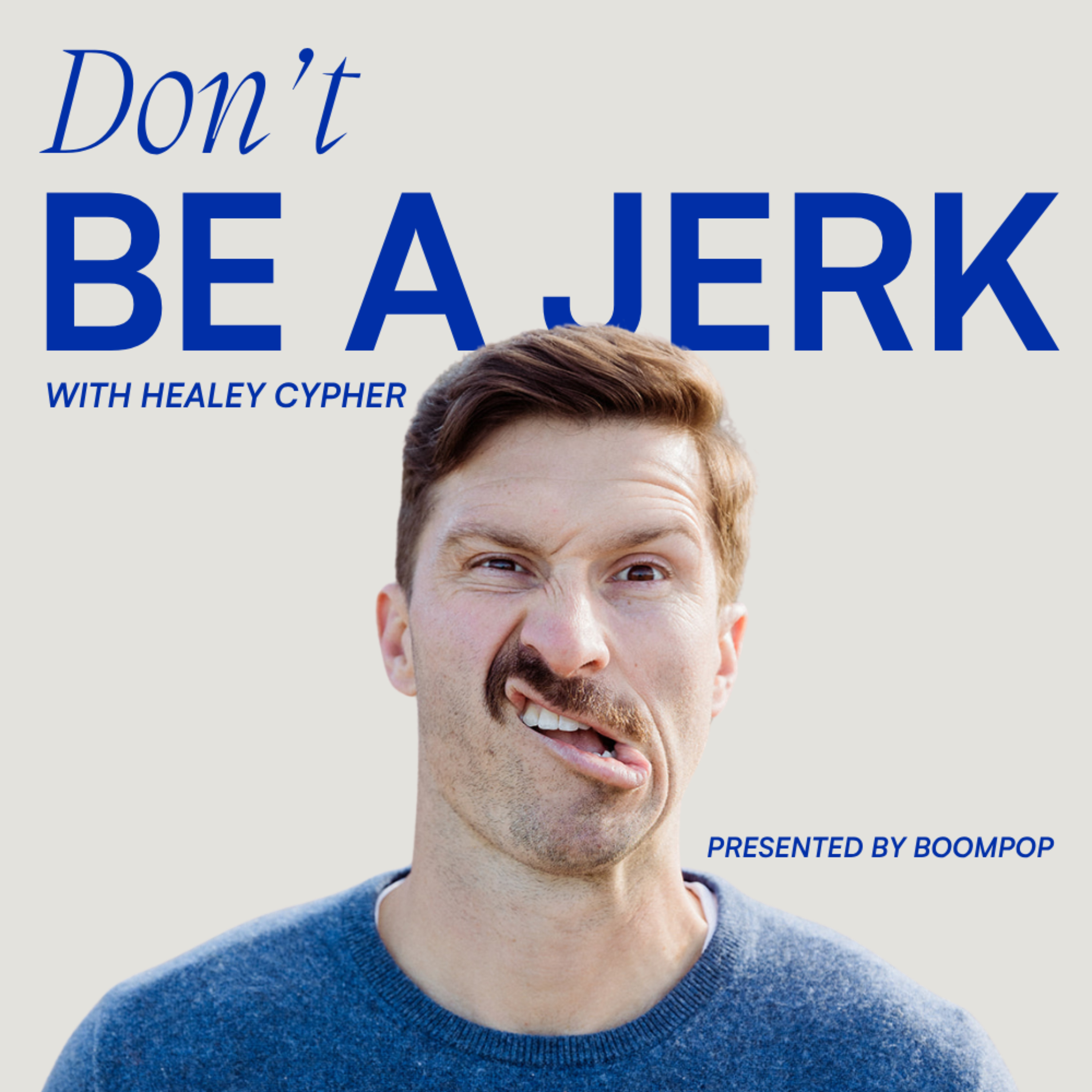
Don't Be a Jerk
by Healey Cypher
👋 Hey there, Healey Cypher here. My brother once said all CEOs are inherently bad, and I get it. Headlines glamorize ruthless success, but there’s another story: leaders who win because they’re good people. “Don’t Be a Jerk” explores real-world examples and tactical insights proving kindness and integrity aren’t just nice; they’re strategic advantages. Each episode reveals actionable lessons to build success without compromising values. Let’s rewrite the narrative of leadership, one story at a time.
-
46
The Lost Art of Building Relationships: A Masterclass in Selling Without Selling | Kalina Bryant
Most people think selling is about the pitch. Kalina Bryant built $9 million in six months doing the opposite through relationships, built so well that the customers came to her. As she puts it, once you learn the art of relationships, you'll never sell a day in your life.Kalina is the Founder and CEO of UnapologeTECH and was the first head of customer advocacy at Asana, where she turned community into one of the company's highest-converting revenue engines. She's a Forbes 30 Under 30 honoree and now an Executive in Residence at First Round Capital. In a moment when every inbox is flooded and every message sounds AI-generated, she makes the case that genuine human connection is the last real advantage left in business.Healey and Kalina get into why the hard sell is dead, how she courts a customer like it's a first date, and what the best salespeople do that makes you forget you're being sold at all.In this episode:- Why "always be closing" is the worst advice in modern sales- How she built $9M in six months with "dinners that weren't really dinners"- Why she treats every customer relationship exactly like dating- The reason the best salespeople never sound like they're selling- How to turn a single cup of coffee into a deal that lasts years- Why your credibility is the one asset you can't afford to spend carelessly- What it actually means to be human in a transactional worldSubscribe to Don't Be a Jerk for more on the business case for being a good human.
-
45
The Social Skill Every Great Founder Has (That Nobody Teaches You) with Paul Bakaus
Paul Bakaus started coding at 11, sold his first company to Zynga, and spent years at Google working on Search, Chrome, and ultimately as their first head of creator relations with a focus on bringing creators back to the open web. Later on at Spotter, he built AI tools for creators like Dude Perfect and MrBeast. He's now the founder of Renaissance Geek and building Impeccable, an AI-powered creative tool for YouTube creators.In this episode, Paul and Healey get into the social skill that separates good leaders from great ones, why most people are terrible at asking the right questions, and why being nice at work can be the unkindest thing you do.In this episode, we get into:- Why everyone in the room is the main character of their own story, and how the best communicators use that to win every room they walk into- The pitch deck trick Paul watched a colleague use at Google to get promoted every single time, and what it actually reveals about how people make decisions- Why being nice and being kind are completely different things, and how California's passive-aggressive culture gets this exactly backwards- What FBI hostage negotiators and top Google executives have in common when it comes to getting people to say yes- Why the world's best car salesman outperformed everyone else by 10x using a single postcard- How AI sycophancy is actively making you worse at thinking, and what to do about it- Why Paul's team at Renaissance Geek now needs a one-hour standup just to stay aligned, and what that tells us about where product teams are headed- The open source move that made Paul "criminally" generous, and why it kept coming back to him in ways money couldn't buy- Why most early managers kingdom-build out of fear, and what Paul did when he flipped the script entirelyThis full episode of Don’t Be a Jerk is live on Spotify, Apple Podcasts, and YouTube.
-
44
Why 65% of Co-Founders Fail (and How to Prevent That) with BoomPop Co-Founder Blake Hudelson
Blake Hudelson is my co-founder at BoomPop (and we probably spend more time with each other than we do with our wives). We met at a startup studio in San Francisco six years ago. I proposed we try three companies simultaneously to see what clicked. He said yes without hesitating. That tells you everything about him.Six years, a lot of 11pm calls, a few near-death moments, and one company (BoomPop) we're really proud of later… Blake is our Chief Product & Design Officer and still one of my favorite people to talk to every single day.65% of high-potential startups fail because co-founders can't get along. We’re grateful we found a way to get along (and thrive) on this crazy journey. If you’re a co-founder (or looking for a co-founder), you’re going to want to tune into this one.Here's what we get into:1. How we actually met and why we tried three companies first2. Why our most pivotal moments always came from disagreement3. The "Swoop and Poop” problem 4. The pre-parade and pre-mortem: two exercises every co-founding pair needs5. Why telling your team the real problem is your strongest tool6. Why being too similar is the actual danger zone for co-founders7. Integrity in the micro-decisions and why it's the whole architecture8. The outsider advantage, and when it runs outSubscribe and listen to this episode of “Don’t Be a Jerk” wherever you get your podcasts!
-
43
The 4’2” VC Who Ran Boston 7 Times and Spots Potential Before Everyone Else | Danh Trang
Danh Trang was standing near the finish line when the 2013 Boston Marathon bombs went off. He was watching friends and family. He came back the following year and ran it. At 4'2", in 5:36. Raised $14,000 for Little People of America. He's done it seven times since and cut 73 minutes off his time. He also won gold representing Team USA in para-badminton in 2016.Professionally: Citigroup, Bridgewater Associates, early product hire at Blend (IPO at $4B), years quietly helping his wife Dr. Ilana Nankin build Breathe for Change, which trained 20,000+ teachers and reached 20 million students. Now he's a partner at South Park Commons, a $275M fund that invests in founders before they've decided what to build. Portfolio includes Gamma, Baseten, Render, and Profound, among many others.Danh and I went to Wharton together. He's one of my closest friends. Somehow I had never asked him most of what we talked about in this conversation.In this episode, we get into:- Why SPC watches founders for 9-12 months before writing a check, and what you actually learn when someone can't perform anymore- What Danh reads in body language during a pitch and why he trusts it less than 9 months of watching someone in the wild- Why the #1 cause of startup failure is team dysfunction, not the product or the timing- Marshall Rosenberg's four-step nonviolent communication framework and why the smallest word swap changes everything- What happened when a CEO called him the M word, and how he responded with more grace than most of us could manage- Why the first three minutes of a hard conversation determine the entire outcome- What his parents taught him about belief and persistence and how it now shapes everything about how he invests- Why the best thing SPC gives a founder is the room full of the right people.Danh has spent his entire career running toward the hard thing. This one is going to stay with you.Full episode is live on Spotify, Apple Podcasts, and YouTube.Follow Danh at: https://x.com/danh_trangCheck out South Park Commons at: https://www.southparkcommons.com/
-
42
The Former Prosecutor Who Built a Legal System to Bring Prisoners Home with Hillary Blout @ For The People
What happens when a prosecutor walks into a prison, sits across from someone she could have sent there, and realizes she can't say she wouldn't have done the same thing in their shoes?That's the story of Hillary Blout. She spent six years as a prosecutor in the San Francisco DA's office handling violent crimes against women and children. She was good at her job. Then she visited a prison, heard the stories of the people inside, and couldn't keep going.So she left. And she built something that had never existed: a legal pathway for prosecutors to bring people back to court and recommend shorter sentences. She drafted the nation's first Prosecutor-Initiated Resentencing law, founded the nonprofit For The People, and has since helped resentence over 1,000 people across six states.In this conversation, Hillary and Healey explore:- Why she couldn't sit in judgment after hearing the full stories of incarcerated people- The 500% increase in women in American prisons and the trauma-to-prison pipeline- Why perspective-taking outperforms emotional empathy in changing minds (76% success rate, per Stanford/Kellogg research)- The data: 3-8% recidivism for resentenced people, up to $287M saved in one county, 97% court success rate- Why everyone loves a comeback story, except in the one place people need it mostThis is a conversation about justice, leadership, and what happens when you choose partnership over combat. Whether you're running a company, managing a team, or trying to change someone's mind about anything, Hillary's playbook applies.
-
41
7 Ways to be a Great Person and 5 Traps That Can Make You Seem Like a Jerk
What separates the people everyone wants to be around from the people who quietly drive others away?In this solo episode, Healey Cypher breaks down the 7 behaviors that make someone genuinely great to be around and the 5 traps that make you look like a jerk, even when you have the best intentions. The science is real, and the examples are specific. And none of it costs you a thing.You'll learn why the brain treats criticism like physical danger (and what to do instead), how smiling triggers a chain reaction of dopamine in everyone around you, why real listening has become one of the rarest skills in business, the one word that activates more brain regions than anything else in language, and why arguing almost always makes things worse.You'll also hear about the weird trap of being "too polished," why trying to convince someone is the least effective way to change their mind, and the billboard study that increased voter turnout by 41% just by asking a single question.This episode is about how people feel when they walk away from you and whether they want to come back. Listen wherever you get your podcasts!
-
40
How Brianne Kimmel Built a $45M Fund Around the Founders Nobody Else Believed In
Brianne Kimmel is the founder and managing partner of Worklife Ventures, a $45M early-stage venture firm backed by Marc Andreessen and Eric Yuan. Her portfolio includes Deel, Supabase, Public, and Metronome (zero to $1B exit). She recently opened Worklife Studios: a physical gathering space for founders, creators, and technologists who believe the best work happens when real humans are in the room together.But before all of that: Youngstown, Ohio. Rust belt. Ukrainian immigrant family. A journalism degree from Kent State. A move to Sydney, Australia alone at 22 and four years there, chasing something she couldn't quite name. She came back and started writing $1,000 angel checks to founders most people hadn't heard of, helping them get into rooms with Andreessen Horowitz before she had any leverage to offer.She had a philosophy instead: lead with generosity before you have anything else.In 2019, inspired by Robert Putnam's Bowling Alone and a personal craving for real connection she couldn't shake, she launched Worklife Ventures. The mission: make work more human.This episode is about a thesis Brianne has been building her entire career: that corporate culture stripped something essential out of us, that the internet took another 100 things we haven't gotten back, and that the best founders are the ones Silicon Valley keeps overlooking: the ones with zigzag lives, real taste, and a reason that's bigger than the exit.In this conversation, Brianne and I get into:- Why the MBA founder almost always builds a generic company and what the zigzag life produces that no business school can teach- The "culture sourcing" strategy that gave her more deal flow than anyone chasing it the conventional way- Why Gen Z hates dating apps for the exact same reason they hate bad workplaces and what it tells us about the future of work- Why the "next door millionaire" (the plumber, the contractor, the skilled tradesperson) has more job security in the AI era than the Ivy League entry-level software engineer- The science of luck and why the unlucky person is usually trying too hard- Why vulnerability in the workplace isn't a nice-to-have but actually the foundation of high-performing teams- How becoming unrelatable is the number one thing that kills careers, even wildly successful ones- Why a mission without a "why" can't attract great people, no matter how good the salary is- What it means to "get outside the bubble" and why it's the most important leadership move of this decadeBrianne is one of the most original thinkers I've had on this show. She leads like she believes humans actually matter. This one is going to stay with you.Full episode is live on Spotify, Apple Podcasts, and YouTube.
-
39
What Happens When an 11-Year-Old Decides to Stop Waiting for Better News and Make It Himself with Sam
Sam started a podcast because he was tired of feeling helpless.He was consuming the news the way most of us do… headlines that made him anxious, stories that seemed designed to make the world feel like it was falling apart, a constant drip of fear and outrage that left him feeling worse, not better. And at some point, instead of just complaining about it, he made something.Sam built No Bad News: a podcast for kids and families that specifically spotlights what's working, who's solving problems, and where communities are getting things right. He was 10 years old. He pitched his own guests, scheduled his own interviews, edited his own audio, and published it himself.He's now 11. He's gearing up for the NPR Student Podcast Challenge. And he's on this show not as a novelty, not because it's heartwarming to watch a young person do grown-up things… but because his philosophy is EXACTLY what Don't Be a Jerk is about.In this episode, Sam and I dig into why negativity dominates media (and why the system is literally built to reward fear), what "good news" actually means versus fake positivity, how he runs his show like a real founder, and what adults might be missing about the relationship between what we consume and how we feel.This is one of my favorite conversations in the history of this show.What We Cover in This Episode:- Why bad news wins: the economics of negativity bias and how the attention economy turned news into an anxiety machine- What Sam was feeling that made him say "I'm not just going to complain, I'm going to make something"- The difference between solutions journalism (agency-building) and denial (toxic positivity) and why Sam understands the difference intuitively- How No Bad News is structured and what makes a story Sam will actually cover- Sam's full production workflow: pitching, booking, recording, editing, publishing, repeat- What repeated exposure to distressing news is doing to kids and what the research actually says- The one media rule Sam would teach every adult if he could- Why hope isn't something you wait for… it's something you engineer- What Sam is building toward with the NPR Student Podcast Challenge- What I learned about my own media habits from a conversation with an 11-year-oldIf you've ever felt like the news is making you worse, this episode is for you. And if you've got kids who consume media, this conversation will change how you think about their information diet too.
-
38
Why Trust Beats Product: How Avni Barman Built a 60-Million-View Media Empire by Giving Everything Away
Avni Barman joined Don’t Be a Jerk this week. she already has 1 million people in her community, 60 million monthly views, a 150,000-subscriber newsletter, and a venture fund where her own audience is the real investment thesis.She's the founder and CEO of Gen She: a media company and venture fund reimagining what it looks like to lead as a woman in business today. And the way she built it? By doing almost everything the conventional playbook says not to.Give everything away for free. Lead with generosity before you have leverage. Tell people what you admire about them before you know if they'll respond.In this episode, we talk about what it actually means to run a business, and a life, with that philosophy as the foundation.You'll hear:- Why "give someone their flowers while they can still smell them" is more than a nice idea… it's how she built her entire business- The one-sentence DM she sent to a self-made female billionaire and the 8-hour, one-on-one meeting that followed- The character test that never lies: what the way you treat a server at lunch reveals about how you lead- Why we actually DO care what other people think and what to do about it- Why venture capital is going to matter far less in the next decade and what's replacing it- How to guarantee you're in the top 1% of something without being the most talented person in the room- Why posting 8 times a day and having "negative minutes" for bad comments is a philosophy, not just a scheduleAvni is one of the most generous and clear-eyed operators I've come across. Full episode is live everywhere you get your podcasts.
-
37
Why Nice Leaders Fail with Andrew Dudum, CEO and Founder of Hims & Hers
Andrew Dudum built Hims & Hers from zero into a multi-billion-dollar consumer publicly-traded consumer health company by doing something most founders avoid: leaning directly into discomfort. He’s able to lead the hard conversations that most leaders avoid.In this episode, Andrew and I talk candidly about what it actually takes to scale a company and stay grounded while doing it. We unpack the lessons he learned by understanding mortality early, the emotional whiplash of running a public company, and why “being nice” is often the least kind thing a leader can do.Andrew shares the moment at age 12 that shaped his entire worldview, what it’s really like leading a public company through wild emotional and financial swings, and why the leaders who scale fastest are often the ones most willing to admit what they don’t know.What We Cover in This Episode:- How Andrew built Hims & Hers from an idea into a multi-billion-dollar public company without losing his values- Why learning to be comfortable being uncomfortable became his greatest leadership skill- The moment at age 12 that shaped how he thinks about responsibility, truth, and hard conversations- What running a public company actually feels like during extreme highs and brutal lows- Why the best leaders obsess over details most people dismiss- The difference between niceness vs. kindness and why avoiding conflict hurts teams long-term- Why the strongest CEOs hire people smarter than themselves and expect roles to evolve every year- How crisis reveals who truly belongs in your inner circle- Why success just amplifies who you already areIf you’re a founder, operator, or leader trying to build something meaningful without losing yourself in the process, we hope this one will stick with you.Timestamps:00:02 — How Andrew and I first met06:45 — Building Hims & Hers from scratch without a medical background09:30 — The moment at age 12 that changed Andrew’s view on responsibility forever14:20 — Why information isn’t scary and why avoidance is17:40 — Niceness vs. kindness (and why leaders get this wrong)23:10 — Hiring people smarter than you31:00 — What it actually feels like running a public company38:45 — Why obsession over small details scales better than most strategies46:30 — How hardship reveals who truly belongs in your life56:10 — Andrew’s advice to founders riding extreme highs and lows
-
36
The Rules of Rule Breaking: David Flink on Why the System Was Never Built for You
David Flink got kicked out of four schools. Then he went to Brown, then Columbia and spent the next 28 years building systems so that nobody else has to earn their humanity through performance.David is the founder of the Neurodiversity Alliance (reaching 600+ schools nationwide), author of Thinking Differently, CNN Hero, and recipient of the Bezos Courage & Civility Award, which came with $5 million to direct toward the cause he's dedicated his life to. His second book, 20% Smarter, drops in 2027.But more than any of that, David is one of the most practically wise people I've ever sat across from.The throughline of everything David believes: misalignment isn't a personal failure. It's a design failure. And the moment you internalize that (about your employees, your kids, yourself) everything about how you lead and live starts to shift.In this episode, we cover:— Why there's no such thing as a bad employee (only a bad manager, a broken expectation, or a context nobody updated)— The critical difference between expectations and agreements and why one of them is silently destroying your team— The "work IEP": the user manual every person on David's team fills out, and why you'd be "nuts" to lead someone without it— His get-out-of-jail-free card framework: how to give people the benefit of the doubt before you spiral into assumption and blame— The one-liner that stops you mid-trigger: "It's hard work being a person, which means it's hard work for everyone else you're talking to too"— The three gates every story you tell yourself has to pass through— Why psychological safety has to be rebuilt every time the team changes— What the invention of the newspaper has to do with Gen Z's cognitive decline— Why curiosity is the single most underrated tool for both leadership and conflict resolution— What it means to truly leave every interaction better than you found itThis one is for you if you're a founder, manager, teacher, or parent who wants to lead the actual humans in front of you, not the idealized, neurotypical, always-performing version of them.David talks about kindness with spine. The kind that still demands excellence, still holds standards, but starts from a place of genuine curiosity about who's actually in the room.Don't Be a Jerk is hosted by Healey Cypher — founder, CEO of BoomPop, and someone who believes that being a good leader and being a good human are the same job.New episodes every week. Subscribe so you never miss one.
-
35
The Man Who Quietly Decides What Billions See On Google: Rafael Burde
Rafael Burde holds one of the most quietly powerful jobs on the planet. As Co-Lead of Global Search Policy at Google, he helps decide what information billions of people see (or don't see) when they search online. Google processes 14 billion searches per day, and Raf's team writes the policies that govern all of it.His guiding principle? "Safeguarding without sanitizing." He navigates the ultimate high-wire act: keeping the internet open and useful while protecting users from harm.But this conversation goes far beyond tech and trust. Raf and I met at Penn, lost touch for years, then randomly reconnected at Whole Foods in 2019. Since then, I've had a front-row seat to watching someone navigate immense responsibility with remarkable humility.In this episode, we explore:- The framework Raf uses to make decisions affecting billions: "What's the harm? What's our role? What's proportionate?"- Resume virtues vs. eulogy virtues and why most of us are optimizing for the wrong one- The meaning crisis, and Raf's definition: "The things you want to endure once you're gone and the contributions you're going to make to it"- Suffocation vs. abdication in parenting, leadership, and platform governance- Why 54% of Americans don't know their neighbors and what we're losing- Why intergenerational friendships are the most underinvested asset- The Two Pockets Principle: "The world was created for you" AND "You are nothing but dust and ashes"Rafael is also a Bay Area community leader, father, and someone who's proof that you can hold immense power and still lead with humility, nuance, and care.This conversation on ‘Don’t Be a Jerk’ changed how I think about meaning, responsibility, and what actually matters. I hope it does the same for you.Resources Mentioned in the Episode:- Eulogy vs resume virtues - Brooks, Road to Character- "Not your duty to finish the work, nor are you at liberty to neglect it" - Pirkei Avot 2:16- Two pockets teaching: Carry two slips of paper, one in each pocket. One reads "the world was created for me", the other "I am but dust and ashes" (ancient Jewish teaching - no consensus source)- "Meaning = what you care about enduring once you're gone, and the contributions you make to it" (John Vervaeke)- "If you want to succeed once, set a goal. If you want to succeed over time, build a system" (Clear, Atomic Habits)- Effective platform regulation avoids the extremes of both abdication and suffocation (Jonathan Zittrain)Timestamps0:00 - Intro1:19 - Co-leading global search policy at Google8:37 - The AI search race & the war for how we make sense of the world16:22 - The two pockets teaching: confidence vs. humility17:37 - Why community is Rafael's secret weapon24:29 - Résumé virtues vs. eulogy virtues29:53 - How Rafael defines meaning36:55 - The case for intergenerational friendships41:03 - Abdication vs. suffocation in parenting & leadership47:28 - Advice for anyone stepping into a seat of power
-
34
Why No One Has Quit Her Company in 5 Years with Dr. Ilana Nankin
In a world where employees change jobs every 18 months, Dr. Ilana Nankin has had zero voluntary resignations in five years at Breathe For Change.Ilana is a former public school teacher, holds a PhD in education, and is the co-founder and co-CEO of Breathe For Change, an organization dedicated to educator well-being and human-centered leadership. Since she stated the organization 10 years ago, they have trained over 20,000 educators to become more mindful, grounded leaders. What started as research into burnout has evolved into a company culture so strong that people simply don’t want to leave.In this episode of Don’t Be a Jerk, we go deep into the specific practices behind that culture and why they work even in high-pressure, remote-first environments.We cover:Why Ilana starts meetings with a two-word emotional check-in and how it takes less than 30 secondsHow gratitude and appreciation rituals actually increase performance instead of lowering the barThe hiring mistake she made early on that nearly broke her cultureWhy psychological safety is the foundation for honest feedback and real accountabilityThe moment she led a room of skeptical investors through a two-word check-in and why one later called it the best pitch he’d ever seenHow these practices don’t cost time… they give time backThis conversation isn’t about being “nice.” It’s about building teams that perform with gratitude in mind, stay connected, and don’t burn out when things get hard.If you’re a founder, leader, or manager trying to build something that actually lasts, this episode will change how you think about culture.
-
33
Why Most Wellness Brands Lose Trust and How to Avoid It with Dan Cox
Too many wellness brands try to sell a feeling. Dan Cox decided to sell the truth.You might recognize Dan as the ultra-fit guy from The Bachelorette. What you probably don’t know is that instead of riding the influencer wave, he opened nutrition stores, built multiple supplement brands, and quietly made integrity the core of his business.In this episode, we talk about what it actually looks like to do things the “right” way when it’s harder, slower, and more expensive.We get into:- Why Dan barely spends on ads and relies on trial and word-of-mouth instead- The real tension between profit and integrity when deadlines hit- How wellness trends go from “helpful for a few” to misleading for everyone- Why expectations, not effort, derail most weight loss journeys- What it means to build a brand you can sleep at night runningThis is a grounded conversation about building trust, resisting shortcuts, and choosing the long game in an industry that rewards the opposite.If you’re building something and trying not to lose yourself in the process, this one’s for you.
-
32
Why Most Goal Setting Fails (and the Exercise That Fixed It for Me)
Every January, we’re told to set goals. More goals. Bigger goals. Smarter goals.And yet… most of us still feel weirdly unclear about what we actually want.In this solo episode of Don’t Be a Jerk, I share a goal-setting exercise that completely reframed how I think about my life. It started with a single line from a friend that stopped me cold: “Most people set goals for their resume. You should be setting goals for your tombstone.” Then, I stumbled across a book called Creative Visualization by Shakti Gawain while I was on vacation, and it changed everything for me.These ideas sent me down a rabbit hole of reflection, journaling, and some uncomfortable honesty about what I’ve been optimizing for (and what I haven’t).In this episode, we talk about:- Why traditional goal setting often leaves people feeling empty- The difference between resume goals and life goals- The five most common regrets people have at the end of their lives- Why clarity about the end can change how you live right now- And how a simple writing exercise helped me realign my priorities around love, family, work, and fulfillmentThis is about designing a life you’d be proud to look back on. If you’ve ever felt successful but still slightly off, I think this one will resonate with you.
-
31
Why the Best Founders Don’t Try to Sound Smart with Mike Jones
What if the most important skill for founders isn’t intelligence, hustle, or speed but empathy?In this episode of Don’t Be a Jerk, I sit down with Mike Jones, co-founder and CEO of Science Inc., former CEO of MySpace, and early backer of companies like Dollar Shave Club and Liquid Death. Mike has spent decades working with founders at every stage. What he’s learned runs counter to most startup advice.The best founders aren’t the loudest in the room. They don’t try to prove how smart they are. And they definitely don’t lead with ego.Instead, they lead with curiosity, humility, and a deep connection to the people they’re building for.We talk about why there’s a growing global empathy problem in tech, how that shows up in products and leadership, and what founders can actually do to fix it. This episode is a breakdown of why empathy, mission, and humility quietly outperform raw IQ and brute force.In this episode, we cover:- Why a University of Washington study found humility beats IQ as a predictor of performance- The difference between mercenary founders and missionary founders- Why trying to sound smart in a pitch is usually a losing strategy- How to evaluate decisions using the “deathbed test”- Why founders who ask better questions win more often- How mission clarity makes hiring, marketing, and decision-making easier- Why asking for help early can save companies from dying quietly- How Mike designs his life around focus, family, and long-term thinkingThis conversation is especially relevant if you’re a founder, operator, or leader who’s tired of the “brilliant jerk” myth and wants to build something meaningful without burning bridges or yourself.If you care about building great companies and being a decent human along the way, this one’s for you.
-
30
Why Inclusion Wins in the Long Run with Damian Pelliccione
What if the thing investors call a “liability” is actually your biggest edge?In this episode of Don’t Be a Jerk, I sit down with Damian Pelliccione, co-founder & CEO of Revry, an LGBTQ+ streaming network built on a simple, powerful belief: diversity isn’t charity… it’s a competitive advantage.We talk about what it really takes to lead diverse teams across generations, build an identity-driven business that’s also ruthlessly pragmatic, and keep going when the world tells you “no” (over and over again). Damian is hilarious, sharp, and deeply real about the operator journey.You’ll learn:- Why Damian believes “no is a motivator” and how to reframe rejection into momentum- Why diversity of thought beats “more resources” (and how to build teams that challenge assumptions)- The investor red flags Damian wishes they’d seen earlier and how to avoid “poster child” capital- The business case behind the $1.7T “rainbow economy” and why “June-only” marketing is a trap- The intersectionality lesson every B2C brand needs right now: “It drives dollars.”- The mindset pattern that separates elite performers (and founders): your bounce-back after a miss- Why “founder therapy” (aka your cohort/tribe) can be the difference between quitting and surviving🎧 If you’re a founder, exec, marketer, or anyone building teams in 2025, this one will change how you think about inclusion, performance, and leadership.Watch / listen now and if it resonates, send it to one person on your team who needs to hear it.Timestamps00:00 — “Diversity is the ultimate competitive advantage” (opening theme)00:05 — Meet Damian + the most intersectional founding team I’ve met00:08 — Sheryl Sandberg / “pods” + why diverse teams outperform00:10 — “Diversity is not charity.”00:13 — VCs, bias, and the comment Damian will never forget00:15 — Fundraising lesson: don’t chase money, choose partners00:19 — “I’m motivated by no.” The rejection reframe00:20 — Top 5 vs Top 25 tennis players: the bounce-back mindset00:22 — Near-death startup moments + how Revry survived00:28 — The scrappy SF Pride launch (yes… porta-potties)00:32 — The $1.7T rainbow economy + why Pride-month-only is “rainbow washing”00:39 — Founder neutrality: having a voice vs fiduciary reality00:47 — Leading across generations + building a mission-driven culture00:52 — “Founder therapy” + why you need a tribe00:54 — Damian’s advice to their 25-year-old self
-
29
A Letter From My 80-Year-Old Self
This episode started with a hard moment of self-awareness.It was a quiet comment from my wife and a security camera clip I didn’t expect to watch. Then, I had a realization that I was rushing through the very moments I’ll one day miss the most.So I tried an exercise that stopped me in my tracks. I wrote a letter, as if I were 80 years old, waking up in my 41-year-old body for one single day.What came out was emotional, grounding, and deeply clarifying. In this solo episode, I slow everything down and walk through the exercise, the moments that inspired it, and the mindset shifts that followed. This isn’t a productivity episode. It’s a presence episode.If you’ve ever felt like life is moving too fast, you’re always optimizing for “later”, or you’re succeeding on paper but missing something real: this one is for you.In this episode, we explore:- The moment I saw myself clearly (and didn’t like what I saw)- The letter I wrote from my 80-year-old self (and why it broke me open)- Why the “arrival fallacy” keeps us chasing the next milestone- A simple daily prompt that changed how I show up as a father, partner, and leader- How imagining the ending can radically improve the way you live today- Why helping others may be the clearest path to a meaningful lifeThis episode is raw, personal, and intentionally slower than usual. You don’t need to be a parent to listen. You don’t need to be 41. You just need to be human.If it changes even one ordinary day for you, it did its job.⏱️ TIMESTAMPS00:00 – A hard conversation & an uncomfortable realization02:00 – Watching myself through someone else’s eyes04:30 – The exercise that changed everything05:00 – Reading the letter from my 80-year-old self13:30 – Why ordinary days are the ones we’ll miss most19:50 – A dark career moment and the mindset shift that saved me26:00 – “Everything works out in my favor” (and why it works)37:50 – Imagining the ending as a daily decision-making tool40:30 – The question I ask before every moral decision42:00 – The one lesson I hope my kids remember45:00 – A quiet closing invitation to try this yourself
-
28
The Hidden Success Behind 100 No. 1 Debuts and the The YouTube Creator Economy, with Bing Chen
What if your success has nothing to do with you? That is the worldview of Bing Chen. And it has shaped two massive revolutions: the YouTube creator economy and the rise of Asian representation in Hollywood.Bing and I go all the way back to Wharton. We were in the same senior society. After college we’d grab coffee in New York and he’d casually say things like, “I think millions of people will make their full-time living on YouTube.” He was right. He helped build it.Today he is the CEO and Co-Founder of Gold House. Under his leadership the collective has supported over 600 projects, helped 100 films and shows reach #1 total debuts, and driven billions in revenue.But none of that is why this conversation blew me away. The real story is Bing’s philosophy.This is a conversation about generosity, legacy, culture, and what leadership actually looks like when you center it on others.⏱️ Timestamps00:00 – Why Bing and I still feel like caffeinated college kids03:00 – The early YouTube years and the birth of the creator economy07:00 – Bing’s definition of success and how losing his father changed everything10:00 – Why real givers never count who owes them11:30 – Naming the “creator.” The internal battles inside YouTube15:00 – How Gold House accidentally came to life16:00 – The strategy behind rallying a global diaspora17:00 – The three universal human desires (health, love, meaning)20:00 – The truth behind #GoldOpen and engineering cultural wins23:00 – Why 100 films and shows reached number one in total debuts25:00 – How community movements are intentionally built28:00 – The manifesto of Gold House and why it is built on giving29:30 – Why they chose the color gold and how brand identity shapes culture31:00 – Being “the first call” when people win or fall33:00 – Building a Marvel-scale creative universe about death36:00 – Why contemplating mortality makes you more generous41:00 – How to design community experiences that spark real impact44:30 – Ethics, character checks, and the courage to excommunicate the wrong people47:00 – The leadership principle Bing wishes he learned earlier50:00 – How to be “the only one,” not the best one55:00 – Final reflections on kindness, ambition, and legacyThis episode is a masterclass in impact, community, and leadership.If you’ve ever wondered how to build something bigger than yourself, Bing is the blueprint.🎧 Listen to the full episode of “Don’t Be a Jerk” now on Spotify, Apple, YouTube, or wherever you get your podcasts.
-
27
The Quantum Physicist Who Proves Soft Skills Beat IQ
Most people meet a quantum physicist and think they have nothing in common.But Anastasia Marchenkova is built different.She went from breaking the servers at Georgia Tech to building quantum chips at Rigetti, to investing in deep-tech startups, to teaching introverts how to communicate. And along the way she discovered something surprising.Being smart is not the hard part. Being human is. In this episode, we talk about how Anastasia rewrote her entire identity. From shy scientist to founder to creator to someone who believes empathy is a core technology.You will hear:- The night she accidentally took down Georgia Tech’s internet and got seed funding for it- Why scientists struggle to admit “I don’t know” and how it kills innovation- The “misogyny is a skill issue” problem in tech and what confident people do differently- Why 85 percent of career success comes from people skills, not IQ- How she taught herself charisma using physics-level study habits- Why scientists should fire clients faster- The rule she lives by online: never punch down- How to handle haters who can’t spell “your”- The moment she realized asking for help is a superpower- How boundaries make you kinder, not harsher- The real cost of being the smartest person in the roomThis conversation is part science, part philosophy, and part survival guide for anyone who has ever felt like their intelligence outran their communication skills.EPISODE TIMESTAMPS00:00 — The supervillain origin story03:00 — Breaking Georgia Tech’s servers and starting a company07:00 — The academic mindset vs the startup mindset11:30 — Why saying “I don’t know” increases innovation15:00 — The danger of needing to be the smartest person in the room17:30 — Why founders should fire faster20:00 — People skills as a competitive advantage27:00 — Misogyny as a skill issue30:00 — Handling online hate and setting boundaries35:00 — The psychology of communication in deep tech40:00 — What scientists can teach founders (and vice versa)48:00 — The most important question every technical leader should ask🎧 Listen to this episode of Don’t Be A Jerk wherever you get your podcasts.Follow along for more conversations on leadership, kindness, and the future of work:IG: @healeycypher | @dontbeajerkpodcastLinkedIn: linkedin.com/in/healeycypher
-
26
How Jesse Pujji Rewired His Mind (and Built Multiple 8-Figure Companies)
What happens when you build everything you ever wanted… and still feel empty?For Jesse Pujji, that moment came after bootstrapping Ampush to a multi-eight-figure exit and realizing that money and titles weren’t enough.So he stepped back, did the inner work, and started Gateway X, a venture studio built around one radical idea: you can scale businesses and stay human.Jesse and I met as college kids at Wharton 20+ years ago. He was the calm, wise one. Let’s just say I was… not that. That’s why this conversation felt like a full circle moment for me.In this conversation, Jesse and I talk about what happens behind the curtain of “success” and how fear, ego, and self-awareness shape everything from our leadership style to our happiness.You’ll hear:Why fear and extrinsic motivation (money, titles, status) will get you far but can’t take you all the way.The 5 motivators that drive every founder (and how to choose yours consciously).How to find your “one thing you can’t NOT do.”Why Jesse left a $1M offer on the table to start his company.How to turn anxiety into presence: in real time, even in a meeting.The difference between treating people like employees vs. adults.What it means to run your business as a spiritual practice.The moment humility became Jesse’s superpower.This episode is for for anyone building something big and trying to stay grounded while they do it.⏱️ TIMESTAMPS00:00 — How Healey and Jesse met at Wharton (and the TA story that started it all)03:30 — Why Jesse left Wall Street to build a company from scratch06:00 — The crash after the win: what happens when external success stops working07:30 — The 5 motivators that drive all human behavior (and how to choose your fuel)10:00 — When money stopped motivating and what filled the gap11:50 — “What’s the one thing you can’t not do?” Finding purpose through practice13:20 — From purpose to play: how to live in your “zone of genius”18:00 — The decision to leave a $1M job offer and follow intuition25:30 — “Fear is excitement without breath.” How to reframe fear as energy27:00 — Aliveness as the compass: how to know you’re on your path30:00 — Work as a spiritual pursuit (and how to turn frustration into curiosity)33:00 — Mirrors, ego, and the parts of ourselves we don’t want to see38:00 — The moment Jesse said “I feel scared” in a meeting (and how it changed the room)42:00 — Why presence is contagious and awareness builds trust44:30 — Treating people like adults (and why “loving candor” works better than control)47:00 — How humility became Jesse’s leadership advantage50:00 — What he wishes someone told him earlier about money, fear, and fulfillment52:30 — Where to find Jesse today and what he’s building next—🎧 Listen now to Don’t Be a Jerk wherever you get your podcasts. Follow for more conversations on leadership, kindness, and the inner work of building something that lasts.IG: @healeycypher | @dontbeajerkpodcastLinkedIn: Healey Cypher
-
25
Personal Branding for Introverts: What Every Leader Can Learn from Goldie Chan
What happens when authenticity becomes your superpower?For Goldie Chan, she turned her authentic, vulnerable story into a personal brand everyone wants. She’s the founder of Warm Robots, a Forbes contributor, and the author of Personal Branding for Introverts, a guide to building influence without pretending to be someone you’re not.Dubbed the “Oprah of LinkedIn,” Goldie built one of the most trusted voices in storytelling and leadership by doing something revolutionary in the age of algorithms: leading with heart.In this episode, Healey Cypher sits down with Goldie to talk about how stories shape trust, why vulnerability is magnetic, and what it really takes to connect in a world run by metrics.You’ll hear:How emotional intelligence beats IQ in leadership and influenceThe two versions of every great story (and when to use each)Why authenticity builds more trust than perfection ever couldHow to make one-to-many communication feel one-to-oneWhy “Yes, and…” might be the secret to better teams and conversationsHow Goldie’s cancer story became a masterclass in vulnerabilityThe storytelling framework that every founder should stealThis conversation is equal parts strategy and soul. It’s about turning your humanity into your advantage and proving that empathy, not ego, is the real growth engine.⏱️ EPISODE TIMESTAMPS00:00 — The story behind Don’t Be a Jerk (and Adam Grant’s advice)05:00 — Meet Goldie Chan: from poetry to the “Oprah of LinkedIn”10:00 — Why storytelling is the most human skill we have left14:30 — “Broetry,” bad writing, and how to actually hook your reader19:00 — Vulnerability as a superpower: Goldie’s cancer story22:00 — The two versions of every story: short vs. long26:30 — Authenticity → Trust → Performance: the leadership loop31:00 — The improv rule that transforms conversations34:00 — How to make one-to-many feel one-to-one40:00 — Confidence vs. ego — and why both are contagious47:00 — Storytelling as a muscle: how to keep it strong55:00 — Goldie’s final lesson: tell the story that resonates🎧 Listen now to this episode of Don’t Be a Jerk wherever you get your podcasts.Follow along for more conversations on leadership, empathy, and storytelling in the age of AI:IG: @healeycypher@dontbeajerkpodcastLinkedIn:Healey Cypher
-
24
What 50 Cent, Disneyland, and Cancer Taught Lucy Aragon About Happiness
What happens when life throws you something you can’t control?For Lucy Aragon, the answer was to keep dancing.She’s been to 105 countries, built a life around optimism and adventure, and faced her husband’s cancer diagnosis with humor, perspective, and a contagious belief that joy isn’t luck. It’s work.In this episode, Healey Cypher sits down with Lucy to talk about the art of staying light when life gets heavy. From her solo travels through war zones to the lessons she learned about resilience, confidence, and perspective, Lucy’s story is a reminder that happiness isn’t something you find. It’s something you create.You’ll hear:- How travel rewires your empathy and your brain- Why “the rules were invented by people way stupider than you”- The moment in Yemen that changed how she sees courage- How humor became her greatest survival tool- Why optimism is a health advantage, not a personality trait- The 50 Cent quote that helped her beat anxiety and depression- What lighting poop on fire taught her about leadership and joyThis conversation is equal parts philosophy and laughter. It’s about choosing perspective over panic, humor over fear, and joy as a daily act of rebellion.⏱️ EPISODE TIMESTAMPS00:00 — How Healey and Lucy met (and why she lights up every room)04:00 — Travel as a teacher: empathy, perspective, and the Yemen story10:00 — “The rules were invented by people way stupider than you”15:30 — Disneyland, the 8-year-old, and the moment Lucy realized most rules are fake24:30 — Facing cancer with confidence, humor, and perspective31:00 — Why optimism isn’t denial35:45 — How comparison became the thief of modern joy39:00 — Travel, gratitude, and the psychology of happiness45:20 — “Depression is a luxury” from 50 Cent49:00 — Anxiety, control, and the mental rewiring that joy requires55:00 — The loneliness epidemic and how to fight it with connection01:05:00 — The art of humor (even when life is serious)01:10:00 — Lighting poop on fire (yes, really) and parenting through joy01:17:00 — Why intention matters more than perfection01:22:00 — Lucy’s final lesson: You can just be happy, without being rich or successful—🎧 Listen now to this episode of Don’t Be a Jerk wherever you get your podcasts.Follow along for more conversations on leadership, kindness, and the science of joy:IG: @healeycypher | @dontbeajerkpodcastLinkedIn: https://www.linkedin.com/in/healeycypher/
-
23
Why True Leadership Starts with Loving Yourself, with Espree Devora
What does it take to build a real community in a world that rewards hustle over humanity?Espree Devora has spent over a decade answering that question.She’s the founder of We Are LA Tech and host of Women in Tech, where she’s spent thousands of hours connecting entrepreneurs, creators, and founders (and learning the hard way what it means to lead with empathy).In this episode, Healey Cypher sits down with Espree to explore the science and soul of connection. From raising venture capital with no introduction to Sequoia, to learning the power of boundaries, breathwork, and burnout recovery, Espree shares how to build communities that last, starting with yourself.You’ll hear:- Why community is a human survival tool, not a marketing strategy- The simple mindset shift that made Espree fall in love with herself- How to set boundaries without shutting people out- Why “curious compassion” can fix almost any conflict- The real reason most founders burn out- What Tony Hsieh taught her about culture and core values- How to build belonging without losing yourself in the processThis conversation is equal parts tactical and deeply human. It’s about self-worth, leadership, and why the most successful communities are built on something simple but radical: love.🎧 Listen now to this episode of Don’t Be a Jerk on Spotify, Apple Podcasts, or wherever you get your shows.Follow along for more conversations on empathy, leadership, and the art of human connection:@healeycypher | @dontbeajerkpodcast
-
22
Why Stillness Beats Hustle (and Other Lessons from a $400 Million Rise and Fall) with James Beshara
What happens when you build a $400 million startup and then lose it all?For James Beshara, the answer wasn’t another company. It was a complete rewiring of how to live.In this episode, Healey Cypher sits down with the founder of Tilt (acquired by Airbnb) and Magic Mind to talk about the unseen side of ambition: the waves you catch, the ones you miss, and the peace that comes when you stop fighting the current.James shares how public failure became the best thing that ever happened to him, why stillness is the ultimate competitive advantage, and how a decade of studying philosophy (Advaita Vedanta) reshaped his definition of success.You’ll hear:- How to build mental wealth the same way you build physical health- Why “we don’t see the world as it is; we see it as we are”- The founder trap of external validation and how to escape it- The 90-minute morning ritual that keeps him calm in chaos- Why work without attachment is a form of worship- The story behind my $100 million mistake and what it taught him about ego- The simple, radical truth that changed his life: “It’s not out there.”This conversation is a rare blend of practicality and philosophy. It’s about ambition without anxiety, growth without ego, and finding meaning in the middle of the mess.🎧 Listen now to this episode of “Don’t Be a Jerk” on your favorite podcast platform.
-
21
Radical Transparency: The CEO’s Shortcut to Trust with Robert Yuen, Co-founder and CEO @ Monograph
What if telling the truth faster could make your company more profitable, your culture stronger, and your life easier?Robert Yuen, CEO of Monograph, believes it can. He has built an entire business around it.In this episode of Don’t Be a Jerk, Healey sits down with Robert to unpack what radical transparency really looks like in practice. They discuss everything from open dashboards and revenue lines visible to every employee, to investor meetings where Robert leads with the hard stuff first.Together, Healey and Robert explore:- Why transparency is the ultimate trust accelerant and the only sustainable culture strategy- How to communicate bad news without breaking morale- When to hold back information and how to do it without eroding trust- Why asking for help early saves startups from silent collapse- How Monograph uses visual dashboards, revenue transparency, and consistent cadences to eliminate surprises- The money conversation script architects and founders should use to make pricing fair, firm, and drama-free- How transparency with investors flips power dynamics and attracts the right partners faster- The surprising reason radical honesty is also a form of self-careRobert’s leadership philosophy is simple but bold: “Transparency might backfire sometimes, but it always nets positive.”This episode is part tactical playbook, part therapy session for founders who are tired of carrying everything alone. If you have ever wondered how to build a company that runs on trust rather than politics, this conversation is your blueprint.Listen and subscribe wherever you get your podcasts!
-
20
The War for Kindness: Why Empathy Is a Superpower with Jamil Zaki, Psychology Professor @ Stanford
Empathy is one of the most powerful tools we have for survival, leadership, and connection.In this episode of Don’t Be a Jerk, Healey Cypher sits down with Jamil Zaki — Stanford psychology professor, empathy researcher, and author of The War for Kindness — to explore why empathy is under siege and how we can build it back, stronger than ever.Jamil shares:Why empathy has declined 40% in the past few decades and why that’s reversible.How reading fiction can be a “gateway drug” for empathy.A simple tactic to de-escalate conflict (marriage fights included): list what you don’t know and what you already agree on.Why organizations that lead with empathy have lower turnover, more innovation, and stronger profits.How to move from a “warrior mentality” to a guardian mentality in leadership.Why nobody says hi… but everybody says hi back (and what that reveals about loneliness).The contagious nature of kindness and how to spark a ripple effect in your team.Why Jamil believes the empathy deficit is less about supply, and more about demand.This is empathy with receipts: science, data, and tactical frameworks you can use today. Whether you’re running a company, managing a team, or just trying to argue better with your spouse, this episode is for you.
-
19
The Life-Changing Power of Service with Shakirah Simley
When you think about “service,” you might picture a volunteer day with matching T-shirts or a line on a résumé. But for Shakirah Simley, service is deeper. It’s generational. It’s survival. And it’s the force that has guided her life and leadership.Shakirah grew up in Harlem and the South Bronx, raised by a family of Black women leaders, social workers, and activists. Today, she’s the Executive Director of the Booker T. Washington Community Service Center in San Francisco, where she’s quintupled the budget, quadrupled the staff, and transformed the center into a thriving hub of housing, education, food justice, and wellness.In this conversation, Shakirah and Healey explore:- Why research shows service makes us healthier, happier, and even live longer- The difference between “resume service” and service that truly transforms communities- Why low-income and marginalized communities are often the most generous- How to prevent burnout when your job is helping others- Shakirah’s framework for service: time, treasure, and talent- The connection between service, empathy, and stronger democracies- Why humility isn’t optional if you want to lead with impactThis conversation is about building trust, resilience, and joy through the act of giving back.If you’ve ever thought “I’m too busy to volunteer” or wondered how to make service a real part of your life, this episode will change how you think.
-
18
The Relationship OS: Young Han’s System for Human Connection
When I first met Young Han, he wasn’t coming on my podcast. He was stepping in as a fractional CFO to help me lead through one of the hardest stretches of my career.Within 15 minutes of our first meeting, he scrapped his entire plan and said: “We’re meeting three nights a week at 7pm until we get through this.” And then he did. Night after night, Young sat down with me and helped me push through. That’s who he is.Today, Young is a serial founder, fractional COO/CFO, coach, and host of The Girl Dad Show. He’s on a mission to build 20 businesses to $1M ARR each. But more importantly, he’s built an operating system for human connection.In this episode we cover:- Why Starbucks taught him that relationships can outweigh even product quality- His 4-step framework for building trust instantly- The Rule of 100 and how it increases your surface area for luck- Why the future belongs to the emotionally fluent, not just the technically brilliant- Why diversity is a competitive advantage- How to prepare for interactions without being transactionalYoung’s story is part playbook, part inspiration, and all high-energy. If you want to learn how to scale not just your business but your relationships, this one’s for you.Full episode is live now on Spotify, Apple Podcasts, and YouTube.
-
17
The ROI of Generosity: Aaron Schwartz @Orita.ai on Luck, Boundaries, and Building People
Aaron Schwartz has built and scaled companies you know — Modify Watches, Passport, Loop Returns — and now Orita.ai, helping 100+ brands land in inboxes instead of spam. But ask anyone who’s worked with him, and they’ll tell you his real superpower isn’t just building businesses. It’s building people.In this conversation, we dig into:- Why sharing problems faster leads to better solutions (and stronger relationships).- The inner circle of advisors that Aaron has relied on for years, and how you can build one too.- His personal framework for paying it forward without burning out.- Why he only advises founders he’d be willing to work for himself.- The surprising ROI of generosity (including the story of how a casual meeting in Bryant Park turned into co-founding Orita).- How to be authentic without oversharing, and the boundaries that protect trust.- Balancing the weight of being a founder with the realities of family, guilt, and joy.- The books Aaron rereads to stay focused and grounded when life gets loud.This one’s about generosity, luck, boundaries, and the human side of building. I walked away with a new perspective on who I help, how I help, and what I say yes to. And I think you will too.Full episode is live now on Spotify, Apple Podcasts, and YouTube.
-
16
Why I Started Don’t Be a Jerk (and the Questions You’ve Been Asking Me)
This one’s different. No guests, no interviews. Just me, your questions, and a few stories from the trenches.Over the last few weeks of Don’t Be a Jerk, I’ve had incredible conversations with founders, VCs, coaches, and comedians. But behind the scenes, I’ve also been getting a flood of DMs, texts, and Slack messages with questions about leadership, empathy, and what it actually means to “not be a jerk” at work.So in this special solo episode, I sit down to answer them. We get into:- Why I started this podcast in the first place- How to be conflict-seeking without being an asshole- The #1 mistake early leaders make that kills credibility- How to repair when you realize you were the jerk- The difference between expectations and agreements- How to fire someone without being cruel- The art of debriefs and BLUFs (bottom line up front)- Two things you can do tomorrow to become a better person- How to rebuild trust once it’s been brokenThis episode is part playbook, part confession, part experiment, but at the core it’s about the same idea that launched this whole show: kindness in leadership isn’t weakness. It’s strategy.If you’ve got more questions you want me to tackle in a future solo episode, drop them in the comments, DM me, or send a carrier pigeon. You never know, maybe your question makes the next one.
-
15
From Blind at Birth to Million-Dollar Founder: Sam Maddula’s People-First Playbook
Born legally blind in rural India, Sam Maddula’s life changed forever thanks to a single act of kindness: a corneal transplant that restored his sight.That early gift shaped everything that came after, including his philosophy as founder of Bank’s Apothecary Specialty Pharmacy, a company he scaled to $300M in annual revenue before selling at an industry-leading valuation.In this episode of Don’t Be a Jerk, Sam shares the radical leadership principles that fueled his success, from paying employees 2–3x the market rate to designing company outings where work talk is banned. His approach flips traditional corporate logic on its head — and proves that taking care of your people isn’t just “nice,” it’s the smartest business strategy there is.We cover:- The incredible origin story that shaped Sam’s people-first leadership style.- Why paying 2–3x market rate can *increase* profitability.- How to build “unreasonable loyalty” in your team.- The tactic Sam uses to make offshore employees feel true ownership in the company.- Why culture eats strategy for breakfast and how to make sure yours is strong.- What private equity can learn from people-first companies.If you’ve ever wondered whether you can “do good” and still scale big, Sam’s story is proof that you can. And that it might even be the fastest way to win.Listen now on Spotify, Apple Podcasts, or YouTube.
-
14
Why “Nice” Negotiators Win More: Master the Soft Skills That Close Big Deals, with Derek Blazensky & Todd Camp @ The Pareto Group
Most people dread negotiations, whether it’s salary discussions, sales deals, or even personal conflicts. But what if negotiating didn’t have to feel stressful, combative, or uncomfortable? What if you could negotiate like an elite expert without ever feeling like a jerk?In this episode of Don’t Be a Jerk, Healey sits down with Derek Blazensky and Todd Camp, negotiation advisors who’ve coached executives from some of the largest companies in the world, helping them navigate billion-dollar deals with ease and empathy.Here’s just a taste of the practical negotiation tactics and strategies you’ll walk away with:- The Four Reasons People Say No: Learn exactly why someone rejects your idea or offer (hint: it’s never personal), and discover how to address each issue to get to “yes.”- How to Ask Better Questions: Small adjustments to your phrasing can immediately disarm defensiveness and make tough conversations collaborative instead of combative.- Why Saying “No” Is Essential (and Powerful): Derek and Todd break down why the most successful negotiators actively embrace hearing and saying “no” — turning rejection into opportunity.- Advanced Negotiation Mindset: Discover how to stay calm, confident, and clear-headed even in tense situations, transforming challenging conversations into win-win outcomes.If you’ve ever struggled with negotiations, felt stuck after a rejection, or simply want to become a more confident, empathetic negotiator, this episode is your tactical playbook.Tune in to the episode now wherever you get your podcasts (Spotify, Apple, YouTube, and more).
-
13
The Psychology of High-Performing Founders, with Dr. Faith Cohen
What do rage rooms, co-founder breakups, and high-stakes feedback have in common?They're all windows into how our brains process stress, and how most leaders are flying blind without even realizing it.In this episode, Healey Cypher sits down with Dr. Faith Cohen, one of the top executive coaches in the world, to explore the neuroscience behind great leadership. Dr. Cohen has coached leaders at companies like Harry’s, Athletic Greens, Warby Parker, and IVP, helping them navigate stress, scale companies, and build emotionally intelligent teams.Together, they unpack:- Why 65% of startups fail due to co-founder dysfunction- How to give feedback without triggering fight-or-flight- What displaced aggression looks like in the workplace- The surprising power of self-compassion as a leadership advantage- The CUBE framework for handling difficult conversations- Why creating a sense of psychological safety isn’t just ethical—it’s smart businessThis is part science, part story, and all real talk for anyone building or leading something ambitious🎧 Listen to this episode if you:- Lead a team under pressure- Struggle with giving hard feedback- Want to build a more emotionally intelligent culture- Believe leadership starts with how you treat yourselfFull episode is live wherever you get your podcasts!
-
12
Ben Gleib on Why Humor is the Best Therapy and How to Laugh Through Life’s Messiest Moments
Ever wondered how comedians manage to laugh their way through heartbreak, anxiety, or even funerals?In Episode #3 of Don’t Be a Jerk, comedian Ben Gleib (Netflix, Comedy Central, host of “Idiotest”) shares how humor has been his ultimate self-therapy, saving him from life’s most painful moments and turning struggles into strength.Ben reveals the surprising power behind self-deprecation, why being authentically flawed makes you a better public speaker, and how comedy helped him handle being bullied as a kid. He even hilariously breaks down Barack Obama’s public speaking, proving nobody, not even the greatest orators, nails it every time.In this conversation, Ben also discusses:Why laughing through heartbreak can turn pain into your best material.How humor creates genuine safety (not just for others, but for yourself).Why canned lines will never outperform genuine listening and connection.How even the darkest moments can become lighter once you find the joke.Recorded after Healey and Ben hit it off at a recent conference, this episode feels less like an interview and more like two friends jamming about life, love, and the comedic absurdity of it all. If you’ve ever felt nervous about speaking up, overwhelmed by tough situations, or just need proof that laughing at yourself can heal pretty much anything — this one’s for you.Tune in now on Spotify, Apple Podcasts, YouTube, or wherever you listen.
-
11
Winning the War Within: How Adam Greenfeld Silenced His Inner Critic
In this episode of Don’t Be a Jerk, host Healey Cypher sits down with Adam Greenfeld, co-founder of Frij and former co-founder of Thesis, to explore how his greatest obstacle wasn’t building companies… it was his relentless inner critic.Known for transforming brands into thriving businesses, Adam opens up about his battle with self-doubt and perfectionism, revealing powerful insights and practical tools for founders and leaders to cultivate true self-compassion, clarity, and success.In this honest and eye-opening conversation, you’ll discover:How Adam realized the inner voice pushing him to be perfect was actually holding him back—and the practical steps he took to break free from it.Why an “exit lifestyle” isn’t something you need to wait until your company is acquired to experience—and exactly how Adam started living his ideal life decades ahead of schedule.How intentional pauses can radically transform your day-to-day interactions, relationships, and overall happiness.Why Adam believes self-love isn’t just a nice-to-have. It’s the essential foundation of sustainable success and happiness.Adam’s unique daily journaling practice that helped him uncover hidden truths, reduce anxiety, and clarify his real purpose.How your internal state and mindset directly shape your external leadership style—and why your “vibe” matters far more than your words.Powerful lessons Adam learned from working closely with high-profile entrepreneurs like Adam Neumann, including how visionary leaders consistently inspire excitement rather than chase happiness.If you’re tired of the endless hustle, internal negativity, and chasing false definitions of success, Adam’s story is your invitation to step into a kinder, more intentional way of leading and living.Join Healey and Adam for this vulnerable yet empowering episode—and learn how silencing your inner critic can be your greatest competitive advantage, both professionally and personally.Listen and subscribe wherever you get your podcasts!
-
10
Why Nice Guys Win: Jules Maltz on The Power of Imperfection in Venture Capital
In the very first episode of Don’t Be a Jerk, host Healey Cypher sits down with legendary investor Jules Maltz, the VC behind investments in iconic companies like Slack, Dropbox, Grammarly, Zendesk, and more.Jules breaks every stereotype of the typical cutthroat investor. Known for his kindness and humility, Jules reveals why authenticity, vulnerability, and imperfection are strategic superpowers.In this honest and insightful conversation, you’ll discover:Why perfection can actually make people trust you less—and how embracing your imperfections deepens connections and increases likability.Powerful stories from Jules’ experiences, including how Slack’s Stewart Butterfield instantly created trust by leading with authenticity and humor instead of a traditional pitch.How Jules’ humble upbringing — from Eugene, Oregon, to feeling out of place at Yale — shaped his unique approach to business, life, and investing.Why Jules naturally chooses humility over status signaling (like driving a 2010 Prius and wearing a $20 Casio watch), and how this genuine approach has unexpectedly helped him build trust and rapport in Silicon Valley.Practical advice for founders on exactly when and how to show vulnerability to investors… without losing credibility.Insights on the crucial balance between warmth and competence—and why many entrepreneurs underestimate the power of warmth in leadership and pitches.Jules’ personal reflections and experiences, including the painful lesson of passing early on Slack and the surprising value of openly acknowledging and discussing mistakes.Why genuine authenticity is increasingly important in an AI-driven world that prioritizes polish and scripted perfection.Communication and negotiation insights, including how to remove neediness from conversations, build genuine confidence, and achieve dramatically better outcomes.Why founders who openly acknowledge challenges and imperfections often become more investable and successful in the long run.If you’re tired of superficial bravado and looking for a radically honest, thoughtful take on leadership, venture capital, and building real trust, this episode is a must-listen.Join Jules and Healey as they redefine success and reveal why kindness, humility, and authenticity might just be the most powerful competitive advantages you can have, both in business and in life.
We're indexing this podcast's transcripts for the first time — this can take a minute or two. We'll show results as soon as they're ready.
No matches for "" in this podcast's transcripts.
No topics indexed yet for this podcast.
Loading reviews...
ABOUT THIS SHOW
👋 Hey there, Healey Cypher here. My brother once said all CEOs are inherently bad, and I get it. Headlines glamorize ruthless success, but there’s another story: leaders who win because they’re good people. “Don’t Be a Jerk” explores real-world examples and tactical insights proving kindness and integrity aren’t just nice; they’re strategic advantages. Each episode reveals actionable lessons to build success without compromising values. Let’s rewrite the narrative of leadership, one story at a time.
HOSTED BY
Healey Cypher
CATEGORIES
Loading similar podcasts...
Frequently Asked Questions
How many episodes does Don't Be a Jerk have?
Don't Be a Jerk currently has 37 episodes available on PodParley. New episodes are automatically indexed when they're published to the podcast feed.
What is Don't Be a Jerk about?
👋 Hey there, Healey Cypher here. My brother once said all CEOs are inherently bad, and I get it. Headlines glamorize ruthless success, but there’s another story: leaders who win because they’re good people. “Don’t Be a Jerk” explores real-world examples and tactical insights proving kindness and...
How often does Don't Be a Jerk release new episodes?
Don't Be a Jerk has 37 episodes. Check the episode list to see recent publication dates and frequency.
Where can I listen to Don't Be a Jerk?
You can listen to Don't Be a Jerk on PodParley by clicking any episode. We provide an embedded audio player for direct listening, and you can also subscribe via your preferred podcast app using the RSS feed.
Who hosts Don't Be a Jerk?
Don't Be a Jerk is created and hosted by Healey Cypher.
URL copied to clipboard!