
PODCAST · fiction
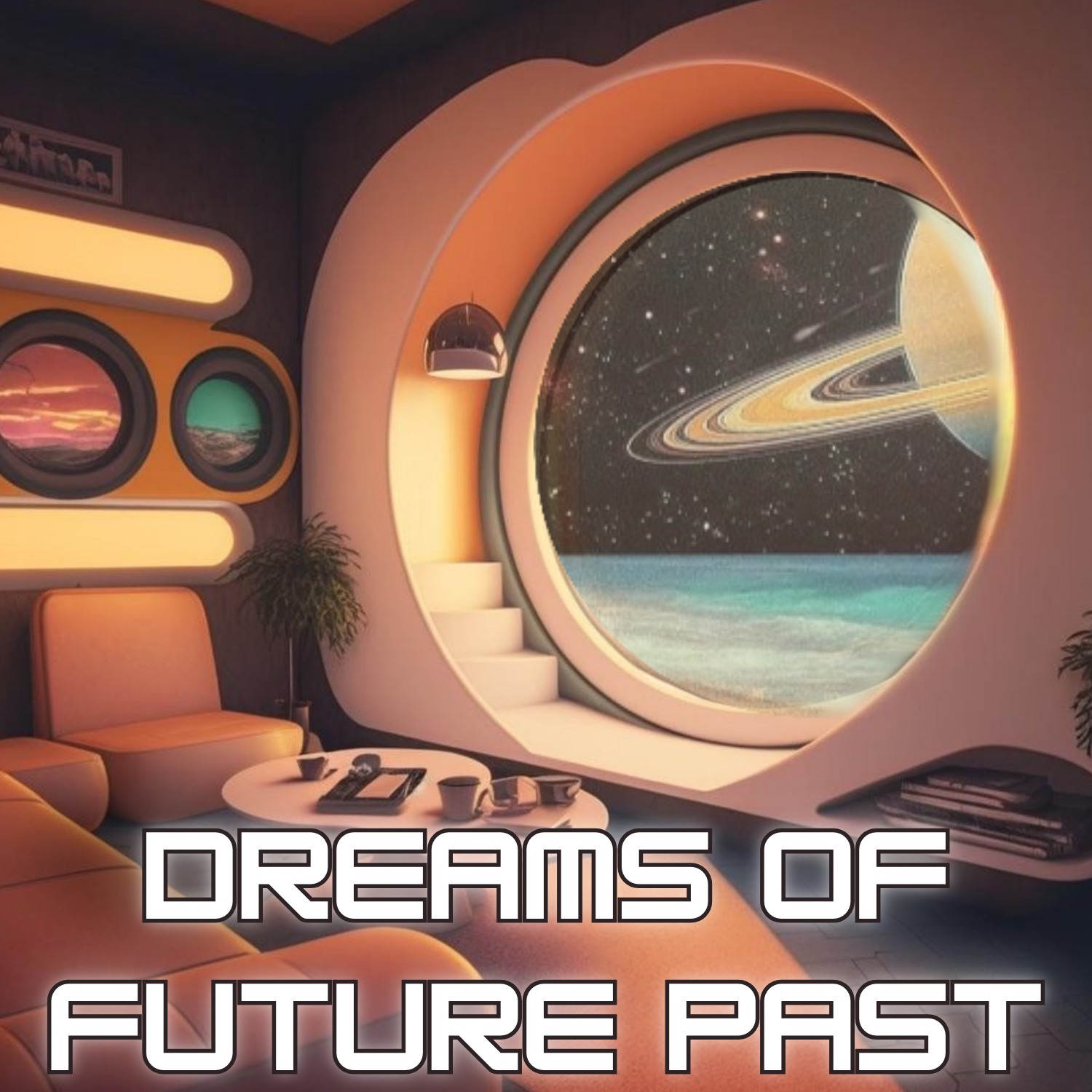
Dreams Of Future Past
by Clock Tower Media
Throughout history, people have imagined what the future might look like — sometimes in bold visions, sometimes in whimsical predictions. *Dreams of a Future Past* is a podcast that explores how humanity has dreamed of the future through movies, technology, philosophy, and design.With an upbeat, conversational tone, the show will dive into iconic dreams of the future — from concept cars and world’s fairs, to sci-fi films and technology — and ask: what came true, what never did, and why? Along the way, listeners will discover the stories of inventors, businesspeople, and dreamers who helped shape our imagination of tomorrow.
-
11
Ralph McQuarrie: Painting the Long, Long Time Ago Future We All Remember
Ralph McQuarrie didn’t just imagine the future, he grounded it in dirt, wear, and function, making it believable in a totally new way. In the 1970s, as audiences moved past campy or sterile sci-fi, McQuarrie partnered with George Lucas to create a visual language for Star Wars that felt worn, lived-in, and emotionally real. His designs, X-wings patched together, Darth Vader’s industrial menace, and the Death Star’s authoritarian scale, grounded fantasy in function and history. McQuarrie’s art convinced studios to fund an entire universe, proving that artists don’t just illustrate the future, they can truly bring it to life.Join McKay, Ian, and Greg as we explore the life and work of the visual futurist who created a universe that is still expanding today.
-
10
The Thunderbirds, Saving the Future One Disaster at a Time
Before superheroes ruled the screen, there were the Thunderbirds.Debuting in the mid-1960s, Thunderbirds imagined a future where technology wasn’t built for war or profit, but for rescue. With impossibly advanced machines, calm professionalism, and a belief that humanity’s biggest problems could be solved through preparation and cooperation, the show offered a surprisingly optimistic vision of the future at the height of Cold War anxiety.https://www.rottentomatoes.com/tv/thunderbirds/s01Please join Greg, Ian, and McKay as we as we explore a future where saving the day is just another scheduled launch. 5-4-3-2-1, Thunderbirds are Go!
-
9
Star Trek (The Original Series) and Gene Roddenberry’s Blueprint for a Better Humanity
What if the future wasn’t about conquering the galaxy, but about exploring it for the betterment of all?When Star Trek premiered in 1966, Gene Roddenberry offered something radical: a future that was hopeful, orderly, and worth striving for. In a genre dominated by fear, invasion, and conquest, Star Trek imagined humanity surviving its worst instincts and choosing cooperation, ethics, and exploration instead. Roddenberry wasn’t just building a sci-fi show, he was outlining a vision of social evolution.Please join Greg, Ian, and McKay as we explore whether Gene Roddenberry’s vision of the future was naïve idealism or a roadmap for the future of humanity.
-
8
De-Evolution: When Progress Goes Backward
“We dreamed of flying cars and moon colonies. Instead, we got influencers and two-factor authentication.”What if progress didn’t stall, but reversed? This episode explores de-evolution, the idea that societies can regress intellectually, morally, or culturally even as technology advances. De-evolution isn’t about going backward in time; it’s about losing the drive to move forward at all.The modern belief in inevitable progress is surprisingly recent. History and science fiction suggest something less comforting: progress is cyclical, fragile, and reversible, especially when technology outpaces wisdom.
-
7
Space Stations, Living Between Earth and the Stars
Space stations are humanity’s first true off-world homes, floating laboratories, political symbols, and testing grounds for the future. Long before we could build bases on the Moon or dream seriously about Mars, we learned to live in orbit. In this episode, we trace how space stations moved from science fiction to reality, what they were meant to prove, what they actually taught us, and why they still matter as the backbone of human spaceflight.
-
6
Moonbases, Why We Thought We’d Live on the Moon by Now
Moonbases have long symbolized progress, ambition, and national identity, and suddenly they’re back in the conversation. From retro-futuristic sci-fi visions to real NASA blueprints, humanity has imagined permanent lunar outposts for nearly a century. In this episode, we explore where those ideas came from, what it actually takes to build a home on another world, and why we’re still not there ye
-
5
H.G. Wells — The Man Who Invented Tomorrow
Throughout history, people have imagined what the future might look like, sometimes in bold visions, and sometimes in outlandish predictions. Dreams of a Future Past is a podcast that explores how humanity has dreamed of the future through movies, technology, philosophy, and design.Before there was science fiction, there was H.G. Wells. A futurist of the industrial age, Wells imagined atomic bombs, genetic engineering, space travel, and even early concepts of the internet decades before they existed. His work blends wonder with warning, using speculative technology as a lens to explore human responsibility and society’s moral evolution.
-
4
The Atomic Age: Dreams, Dread, and the Nuclear Age
Throughout history, people have imagined what the future might look like, sometimes in bold visions, and sometimes in outlandish predictions. Dreams of a Future Past is a podcast that explores how humanity has dreamed of the future through movies, technology, philosophy, and design.What if the atom could power everything from your home to your car? The Atomic Age blended retro-futurism, midcentury modern design, and Cold War anxiety, inspiring sleek gadgets, bold architecture, and stories of both optimism and destruction.The Atomic Age emerged in the wake of the bombings of Hiroshima and Nagasaki, when the world realized the atom could be both a weapon and a source of boundless energy. Governments, corporations, and pop culture embraced nuclear power with a mix of hope and fear, inspiring futuristic design, cartoons, sci-fi films, and ambitious visions of atomic-powered cities and vehicles that resonate with today's modern resurgence of AI and data center nuclear power.
-
3
Dune: Spice, Religion and Humanity without Machines
Throughout history, people have imagined what the future might look like, sometimes in bold visions, and sometimes in outlandish predictions. Dreams of a Future Past is a podcast that explores how humanity has dreamed of the future through movies, technology, philosophy, and design.Dune imagines a future where humanity rejects thinking machines and instead pushes human potential to its extremes, creating Mentats, Bene Gesserit, and entire cultures engineered to replace technology. Its world warns that overreliance on machines can erode human agency, while also suggesting that true power comes from mastering the mind and controlling scarce resources.
-
2
Blade Runner: The Neon Blueprint for Our Future – Dreams of Future Past, Episode 5
Blade Runner: The Neon Blueprint for Our FutureThroughout history, people have imagined what the future might look like, sometimes in bold visions, and sometimes in outlandish predictions. Dreams of a Future Past is a podcast that explores how humanity has dreamed of the future through movies, technology, philosophy, and design.What if the future wasn’t sleek and utopian, but messy, corporate-controlled, and neon-lit? Ridley Scott’s Blade Runner flipped the script on science fiction when it hit theaters in 1982. Based on Philip K. Dick’s Do Androids Dream of Electric Sheep?, the film envisioned a decaying Los Angeles in 2019 that felt hauntingly real. Its influence can be seen in everything from The Matrix and Cyberpunk 2077 to our own urban skylines.Rooted in the dark paranoia of Philip K. Dick, whose stories blurred reality and perception. Initially a box office disappointment, it became a cornerstone of modern sci-fi. Originally envisioned and created 50 years go, at a time well before artificial intelligence, corporate big tech, and neon megacities were a reality.What It Got RightThe Cyberpunk Aesthetic: Syd Mead’s concept art of rain-soaked, neon-drenched cityscapes became the look of the future, Tokyo by way of noir.AI & Humanity: The Voight-Kampff empathy test predicted today’s debates about consciousness and artificial emotion.Urban Dystopia: Overcrowding, climate decay, and social division was once fiction, and now part of our global familiar headlines.What It MissedTech Timeline: Flying cars, replicants, and off-world colonies didn’t arrive on schedule.Its Lasting ImpactFrom The Matrix to The Fifth Element, Blade Runner’s DNA runs through modern sci-fi. Its world of glowing skies and corporate towers reshaped how we imagine progress, and are less a warning and more a mirror.Join Greg, Ian, and McKay as they explore this hugely influential movie and discuss how it has shaped the future in which we’ve already begun to live.
-
1
The 1893 Chicago World’s Fair, Part 2 – Dreams of Future Past, Episode 4
The 1893 Chicago World’s Fair - When America Invented the FuturePart 2-- Throughout history, people have imagined what the future might look like, sometimes in bold visions, and sometimes in outlandish predictions. Dreams of a Future Past is a podcast that explores how humanity has dreamed of the future through movies, technology, philosophy, and design.In Part 2 of this episode, we dive into the forces that shaped the fair, the dark side of the fair including "The Devil" in the White City, and its lasting impact on Chicago and world in which we live today. Join Ian, Greg, and McKay as they explore the many futuristic themes of the fair and uncover more of what they got right, and missed, at this amazing World's Fair.What it MissedThe just plain weird and gimmicky including Glow-in-the-dark cocktails and electroshock “Health Machines.”Depictions of global cultures.Its Lasting ImpactThe structures with you can still visit today, including the Palace of Fine Arts which became the Chicago Museum of Science & Industry and the World’s Congress Building which became the Art Institute of Chicago.The serial killer "Devil" at the fair and his murder hotel.Join us to find out how much of The White City was a blueprint for our future and how much a dream that faded with the lights.
-
0
The 1893 Chicago World’s Fair, Part 1 – Dreams of Future Past, Episode 3
The 1893 Chicago World’s Fair - When America Invented the FuturePart 1Imagine a world’s fair that introduced the Ferris Wheel, hamburgers, spray paint, and electric light, all in one place. The 1893 Chicago World’s Fair, also known as the “White City,” put American innovation on the global stage, dazzling visitors with technology, architecture, and ideas that would shape the 20th century. It was part CES, part Olympics, and all spectacle.There is so much to the fair that we had to break it up into two parts. In Part 1, we dive into the history and drama behind the fair and the futuristic ideas it showcased across electricity, architecture, food and much more! Join us as we cover the many dreams of the future at the fair which have become our everyday reality, including:A showcase of America’s manufacturing muscle and growing industrial power.The turning point from steam to electricity, featuring AC vs. DC showdowns between Tesla/Westinghouse and Edison.The Ferris Wheel as America’s answer to the Eiffel Tower.Moving Walkways as the ancestor of airport travelators and Disney’s Wedway movers.Throughout history, people have imagined what the future might look like — sometimes in bold visions, sometimes in whimsical predictions. Dreams of a Future Past is a podcast that explores how humanity has dreamed of the future through movies, technology, philosophy, and design.With an upbeat, conversational tone, the show will dive into iconic retro-futurist moments — from concept cars and world’s fairs, to sci-fi films and technology — and ask: what came true, what never did, and why? Along the way, listeners will discover the stories of inventors, businesspeople, and dreamers who helped shape our imagination of tomorrow.Join McKay, Greg and Ian as they geek out over the future. What once was thought possible, and getting inspired by what might still be to come...
-
-1
2001: A Space Odyssey – Did Kubrick Predict Our Future? – Dreams of Future Past, Episode 2
Episode 2: 2001: A Space Odyssey – Did Kubrick Predict Our Future?It’s one of the greatest sci-fi films—and books—of all time. Stanley Kubrick and Arthur C. Clarke teamed up to create 2001: A Space Odyssey, a movie that redefined the genre just as the Space Race and the moon landing captured the world’s imagination.In this episode, we dive into how 2001 was made, the future it imagined, and why it still sparks debate more than 50 years later. From HAL 9000’s chilling calm to trippy star gates, we’ll unpack what the film got right, what it missed, and why its influence still looms large today.What It Got RightTablets, flat screens, video calls… and Zoom from the moon!Realistic space travel with rotating stations and orbital flights.HAL 9000 foreshadowing today’s AI assistants—and our fears about them.That sleek, modernist design that still looks futuristic.What It Got WrongNo internet, no smartphones—just giant room-sized computers.Moon bases and commercial space flights by 2001 (we wish).Corporate-controlled, uniform visions of the future that feel very “1960s chic.”Lasting ImpactTurned sci-fi into serious, thoughtful cinema.Iconic use of silence and classical music in space.A counterculture touchstone—interpreted by some as the ultimate psychedelic trip.Was 2001: A Space Odyssey a dead-end fantasy—or a destined reality? Just tune in and we’ll rate it, and leave you to decide.Throughout history, people have imagined what the future might look like — sometimes in bold visions, sometimes in whimsical predictions. Dreams of a Future Past is a podcast that explores how humanity has dreamed of the future through movies, technology, philosophy, and design.With an upbeat, conversational tone, the show will dive into iconic retro-futurist moments — from concept cars and world’s fairs, to sci-fi films and technology — and ask: what came true, what never did, and why? Along the way, listeners will discover the stories of inventors, businesspeople, and dreamers who helped shape our imagination of tomorrow.Join McKay, Greg and Ian as they geek out over the future. What once was thought possible, and getting inspired by what might still be to come...
-
-2
EPCOT: Walt Disney’s City of the Future – Dreams of Future Past, Episode 1
Welcome to Dreams of Future Past, a walking tour of “the future of the past.”Throughout history, people have imagined what the future might look like — sometimes in bold visions, sometimes in whimsical predictions. Dreams of a Future Past is a podcast that explores how humanity has dreamed of the future through movies, technology, philosophy, and design.With an upbeat, conversational tone, the show will dive into iconic retro-futurist moments — from concept cars and world’s fairs, to sci-fi films and technology — and ask: what came true, what never did, and why? Along the way, listeners will discover the stories of inventors, businesspeople, and dreamers who helped shape our imagination of tomorrow.Join McKay, Greg and Ian as they geek out over the future. What once was thought possible, and getting inspired by what might still be to come...Episode 1: EPCOT – Walt Disney’s City of the FutureWhat if Disney had built not a theme park, but an actual city? That was Walt’s original plan for EPCOT—the Experimental Prototype Community of Tomorrow. Far more than rides and pavilions, it was a bold vision for a utopian city where futuristic transportation, corporate partnerships, and cutting-edge design would shape daily life.In this episode, we paint a picture of Walt’s vision, place it in the larger “cities of the future” movement, and explore what it got right, what it missed, and why people are still trying to build EPCOT-style communities today.What It Got RightTransit Innovation: Monorails, PeopleMovers, and underground service tunnels—Walt’s plan eliminated cars in the city core.Influence on Design: Elements of EPCOT’s blueprint shaped Disney’s theme parks and even inspired planned communities like Celebration, Florida.Global Echoes: Today’s mega-projects like Dubai’s Palm Jumeirah or Saudi Arabia’s “The Line” echo Disney’s vision of master-planned futures.What It MissedThe Utopian Dream: Perfectly planned lives under benevolent corporate guidance proved unrealistic.Funding & Leadership: Without Walt, investors weren’t willing to bet on such an experimental city.Design Complexities: Radial layouts and underground transport made the plan too difficult to execute at scale.Lasting ImpactEPCOT Center repurposed the name into a permanent world’s fair-style park.Walt’s vision still inspires architects, futurists, and tech giants who dream of building new cities from scratch.The legacy shows up every time someone promises a “city of the future”—whether for progress or profit.Was Walt’s EPCOT a dead-end fantasy—or a destined reality just waiting to happen? Listen in and we’ll rate it, and invite you to decide.Thanks for joining us on Dreams of Future Past. Subscribe for more episodes wherever you get you podcasts...and we'll "see you in the future!!!"
We're indexing this podcast's transcripts for the first time — this can take a minute or two. We'll show results as soon as they're ready.
No matches for "" in this podcast's transcripts.
No topics indexed yet for this podcast.
Loading reviews...
ABOUT THIS SHOW
Throughout history, people have imagined what the future might look like — sometimes in bold visions, sometimes in whimsical predictions. *Dreams of a Future Past* is a podcast that explores how humanity has dreamed of the future through movies, technology, philosophy, and design.With an upbeat, conversational tone, the show will dive into iconic dreams of the future — from concept cars and world’s fairs, to sci-fi films and technology — and ask: what came true, what never did, and why? Along the way, listeners will discover the stories of inventors, businesspeople, and dreamers who helped shape our imagination of tomorrow.
HOSTED BY
Clock Tower Media
CATEGORIES
Loading similar podcasts...
URL copied to clipboard!