
PODCAST · health
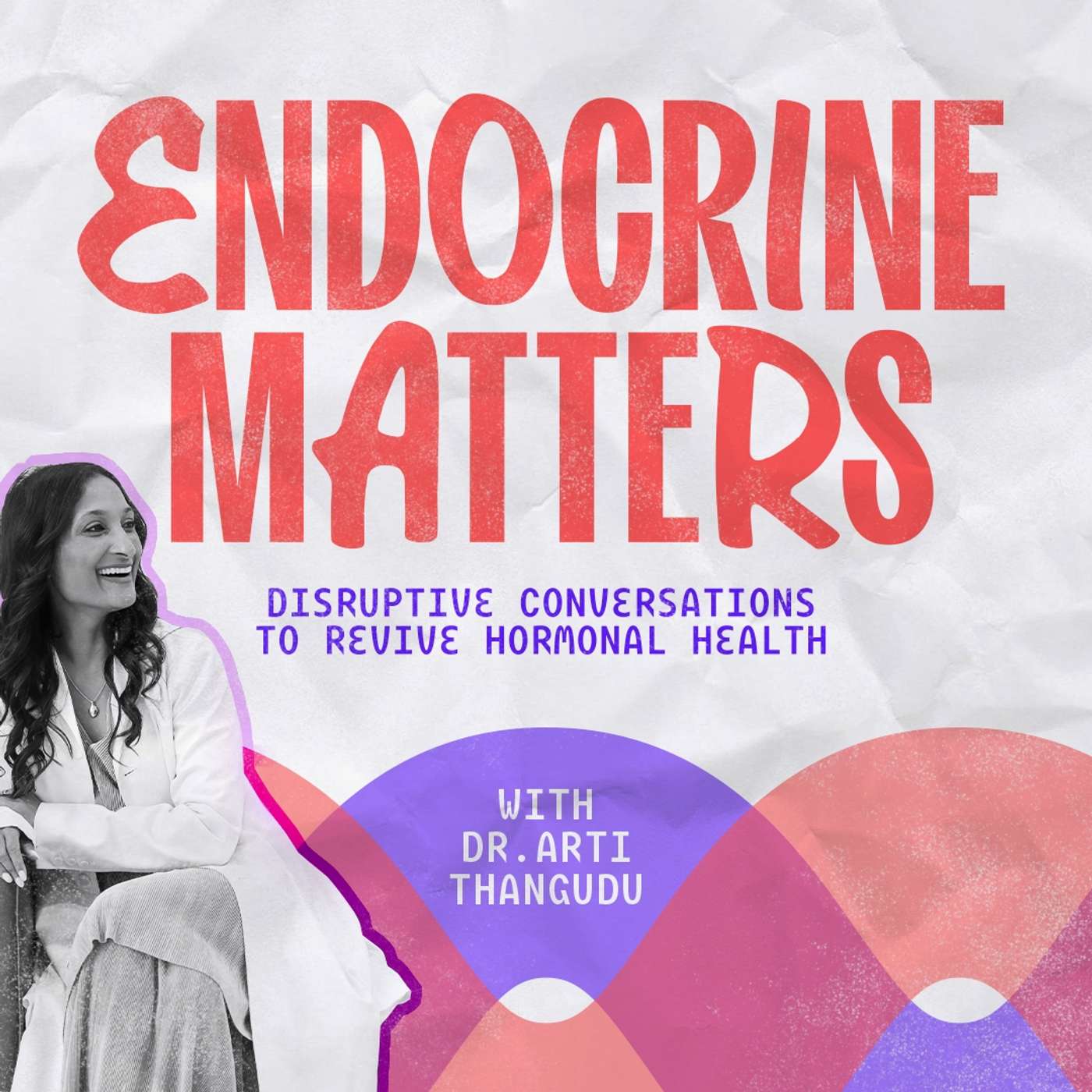
Endocrine Matters
by Dr. Arti Thangudu
Endocrine matters empowers women physicians to challenge conventional norms and enhance patient relationships. Through deep discussions, we aim to elevate the specialty and inspire future generations of women physicians, driving meaningful change in hormonal health.
-
47
This Isn't Burnout, It's Biology
You have been doing everything right for everyone except yourself.You are not burned out because you are weak, ungrateful, or bad at managing stress. You are depleted because your body is carrying a physiological load that no one has actually looked at closely. There is a difference. This episode names it.Dr. Arti Thangudu, board-certified endocrinologist and mother of two school-aged kids, breaks down what is actually happening inside the bodies of high-achieving women in their late 30s and 40s when the wheels start to feel like they are coming off. Not vague "stress talk." A specific, layered, biological explanation with a real clinical checklist at the end.---## 🔍 This episode explores:• 🧩 Why "it's just stress" is incomplete, not wrong• 🧩 The perimenopause layer: why it starts earlier than most women expect, and why the timing is brutal• 🧩 What progesterone withdrawal actually does to your sleep (and why journaling won't fix it)• 🧩 Chronic cortisol elevation: what it measurably does to your body when stress never fully resolves• 🧩 The thyroid layer: why hypothyroidism and Hashimoto's get missed or under-treated for years in this group• 🧩 The iron layer: why a normal CBC is not the same as a normal ferritin, and why this matters• 🧩 Sleep as a clinical priority, not a lifestyle aspiration• 🧩 Why the most competent women are often the last to seek care for themselves• 🧩 A concrete clinical checklist: what Dr. Thangudu looks for when a patient like this walks into her office---## 👩 This episode is for you if:• You are a woman in your late 30s or 40s and you cannot remember the last time you felt genuinely rested• Your labs keep coming back "normal" but you do not feel normal• You have been told it's stress, it's the season of life, come back if it gets worse• Your sleep has changed, your mood has changed, your brain feels slower, and no one has used the word perimenopause with you yet• You have been triaging your own health to next month for longer than you can account for• You are the person everyone else brings their problems to, and you are quietly running on empty• You want evidence-based answers, not wellness platitudes---## ⚖ The bottom lineWhat you are experiencing is not a failure of resilience or gratitude.It is a physiological response to extraordinary demand occurring at a biologically vulnerable window.Perimenopause, cortisol dysregulation, thyroid disease, iron deficiency, and chronic sleep deprivation do not announce themselves separately. They arrive together, in the same body, in the same decade of life. The sum looks like burnout. But it is not only that.The question is not why you cannot handle this better.The question is whether anyone has actually looked.---## 🎙 About the Host**Dr. Arti Thangudu** is a board-certified endocrinologist specializing in women's hormonal health, thyroid disease, metabolism, and menopause. She is the founder of Complete Medicine and the host of Endocrine MattersShe practices evidence-based medicine and sees the patients who have been told their labs are fine when they do not feel fine.---## 📚 Resources Mentioned• CBT-I (Cognitive Behavioral Therapy for Insomnia): first-line, evidence-based treatment for insomnia with no side effects• Ferritin: the iron storage marker to ask for specifically, separate from a standard CBC• Thyroid workup: TSH, free T4, free T3, thyroid peroxidase antibodies (TPO), thyroglobulin antibodies• Protein target: at least 0.7 grams per pound of body weight daily, more if strength training• Resistance training: 2 to 3 times per week, progressive, does not require a gym or an hour---## 🔗 Learn More / Connect🩺 **Complete Medicine**completemedicine.comDr. Thangudu's clinical practice. Evidence-based endocrinology and women's hormonal health.📩 **Newsletter + Blog**subscribe at completemedicine.comClinical context without the noise. Straight to your inbox.🎙 **Endocrine Matters Podcast**New episodes every WednesdaySubscribe wherever you listen so you never miss a release.📲 **Instagram**@drartithanguduDaily clinical perspective. Real answers. No wellness-influencer energy.▶ **YouTube**Arti Thangudu MDDeeper dives on perimenopause, thyroid health, metabolic medicine, and more.Subscribe, leave a review, and share this episode with the woman in your life who is holdingthe most and saying the least about how she feels.---## 🎙 About Endocrine Matters*Endocrine Matters* is a weekly podcast hosted by Dr. Arti Thangudu, board-certified endocrinologist. Each episode brings evidence-based medicine to the questions patients are actually asking. No hype. No misinformation. No "heal your hormones naturally" shortcuts. Just the clinical clarity you deserve.New episodes drop every Wednesday.---## ⏱ Chapters**00:01**Introduction: This Isn't Burnout, It's Biology**01:00**The question nobody is asking: when did you last feel genuinely rested?**01:17**What burnout has been standing in for, and what it may actually be**02:03**The specific population: professional women in their late 30s and 40s at peak career and peak parenting**03:11**Why the most competent women are the least likely to seek care**03:58**The perimenopause layer: why timing is the problem**05:21**Progesterone, sleep architecture, and why 3 a.m. wakefulness may not be anxiety**05:21**The cortisol layer: chronic stress versus acute stress, and what it does to the body**06:47**The thyroid layer: why hypothyroid symptoms get attributed to stress and missed for years**07:46**The iron layer: ferritin versus hemoglobin, and why this single test matters**09:12**The sleep layer: why sleep runs through every other variable on this list**09:54**The paradox of high-achieving women and the triage trap**10:56**The identity piece: why admitting depletion feels threatening**11:55**Something personal from Dr. Thangudu: the knowing does not automatically protect you**13:19**The clinical checklist: thyroid workup, ferritin, perimenopause conversation, sleep, resistance training, protein**17:13**Closing: your symptoms are a signal. Signals are meant to be read.
-
46
The Thyroid Truth: What Sounds Right Online vs. What Actually Keeps You Safe
The most dangerous thyroid advice online doesn't sound dangerous. It sounds confident, validating, and like someone finally gets it. That's exactly what makes it so easy to follow. But what sounds right and what keeps you safe are not always the same thing.In this episode of Endocrine Matters, board-certified endocrinologist Dr. Arti Thangudu breaks down why the most dangerous thyroid misinformation isn't a lie. It's a partial truth, stretched out of context and applied to everyone.She opens with a patient she calls Sarah, who was told her suppressed TSH was "just a lab value" and ended up having a stroke at 51. Because a suppressed TSH is not just a number, and knowing the difference can protect your heart, your bones, and your life.🔍 This episode explores:🧠 What the most dangerous health misinformation really is (a partial truth, not a lie)💊 The real evidence on T3 and desiccated thyroid, and who they may and may not be right for🧪 Why routine "full panels, " reverse T3, and the free T3 obsession often lead to overtreatment⚠ What "thyroid support" supplements actually contain, and the accountability gap behind them🫀 What happens when thyroid disease goes really wrong: myxedema coma, thyroid storm, atrial fibrillation, bone loss🔎 A 5-question framework for vetting anyone giving you thyroid advice online🩺 What a thorough, evidence-based thyroid workup should actually include👩 This episode is for you if:You've been told your TSH is "normal" but you still feel exhausted or foggy You've seen desiccated thyroid, T3 protocols, reverse T3, or "thyroid support" promoted online You have Hashimoto's or hypothyroidism and wonder if you're being treated right You've felt dismissed bya doctor and aren't sure who to trust You want a straight, evidence-based answer from a board-certified endocrinologist⚖ The bottom lineBeing dismissed by one inadequate system does not make a charismatic alternative the right answer. You deserve care that is both compassionate and competent. Those are the same value, not opposing ones. A suppressed TSH is not a win, and "natural" does not mean safer. About the HostDr. Arti Thangudu is a board-certified endocrinologist specializing in hormone health, metabolism, thyroid disease, and menopause care. She focuses on evidence-based medicine and helping women understand what's actually happening in their bodies.📚 Resources MentionedRelated Endocrine Matters episodes:Compassionate Thyroid CareThyroid with Dr. Ruchi Gaba at Baylor College of MedicineIodine episodeAmerican Thyroid Association (ATA) and American Association of Clinical Endocrinology (AACE) guidance on treating hypothyroidismAmerican Geriatrics Society guidance on desiccated thyroid in adults 65 and olderA simple way to vet a provider: board certification, completed residency and fellowship, financial conflicts, and evidence vs. anecdote🔗 Learn More / Connect ✨Clinic: Complete Medicine | https://www.sacomplete.com/ 💌 Newsletter: Blog |https://www.sacomplete.com/complete-medicine-blog 📲 Instagram:instagram.com/drartithangudu 👉 Subscribe for evidence-based conversations on women's health, hormones, and thyroid care.🎙 About Endocrine MattersEndocrine Matters is a podcast dedicated to women's hormone health, metabolism, thyroid disease, menopause, and evidence-based care. Each episode breaks down complex medical topics so you can make informed decisions about your health.⏱ Chapters0:00 Sarah's story: a suppressed TSH and a stroke at 512:02 Why this keeps happening: misinformation as a partial truth3:27 T3 and desiccated thyroid: kernel of truth vs. overgeneralization5:45 The free T3 and reverse T3 obsession7:10 "Thyroid support" supplements and the accountability gap8:00 What happens when thyroid disease goes really wrong11:00 How to vet thyroid advice online: the 5 questions14:50 Women have been dismissed, and both things can be true16:00 What good thyroid care actually looks like18:30 The takeaway and where to go next#ThyroidHealth #WomensHealth #Hashimotos #HealthMisinformation #EndocrineMatters
-
45
Ambition, Motherhood & Burnout - Why So Many Women Feel Stuck in Their 40s
We were told ambition looks like one thing: a ladder, climbed in one direction, without stopping. So what happens when you step off it?For a lot of women — especially mothers — stepping back from a career feels like stepping down. The guilt is loud. The "are you giving up?" questions start fast. And "stay-at-home mom" still carries baggage it never earned.In this episode of Endocrine Matters, Dr. Arti Thangudu sits down with Neha Ruch, founder of The Power Pause, to challenge all of it — and to share her own story of pausing a 35-patient-a-day practice when her newborn needed her. Because the decision to pause, pivot, or recalibrate isn't a failure. It's one of the most intentional things a woman can do.🔍 This episode explores:🧭 What ambition actually means — and why it was never just a ladder ⏸ Why a career pause is not a career ender💬 How to answer "what do you do?" without shrinking💰 The financial conversation every couple should have before a pause😞 Why guilt is a signal to examine your values — not a verdict on them👶 How the skills of motherhood translate directly into leadership🤝 Why the "working mom vs. stay-at-home mom" divide hurts everyone🩺 Arti's own story — leaving the hamster wheel when her newborn needed her👩 This episode is for you if:You've ever felt behind for choosing a different pathYou're considering stepping back from work for familyYou've tied your identity tightly to your job titleYou're a mother navigating guilt around work decisionsYou want to rethink what ambition means in midlife⚖ The bottom lineA career pause is not a career ender. Ambition was never one ladder pointed in one direction. It's the determination to do what you actually care about — and that can be recalibrated again and again across a lifetime of work and family.If you've ever felt behind for choosing differently, you're not behind. You're choosing. And you're allowed to.About the HostDr. Arti Thangudu is a board-certified endocrinologist specializing in hormone health, metabolism, and menopause care. She focuses on evidence-based medicine and helping women understand what's actually happening in their bodies.🎤 About the GuestNeha Ruch is the founder of The Power Pause, a platform reframing the narrative around career pauses and modern motherhood. She helps women approach stepping back from work as an intentional, empowered choice rather than a step down.📚 Resources Mentioned If you're navigating a career pause or pivot, consider:The Power Pause by Neha RuchReal Self-Care by Pooja Lakshmin — mentioned in the episode as a recommended readMapping your household budget together before a pauseKeeping professional bridges and relationships warmSetting personal, professional, and family goals during the pauseThe Power Pause membership and free resources at thepowerpause.com🔗 Learn More / Connect ✨ Clinic: Complete Medicine | Endocrinology Care and Education💌 Newsletter: Blog | Complete Medicine 📲 Instagram: instagram.com/drartithangudu🎙 About Endocrine MattersEndocrine Matters is a podcast dedicated to women's hormone health, metabolism, thyroiddisease, menopause, and evidence-based care. Each episode breaks down complex medicaltopics so you can make informed decisions about your health.⏱ Chapters0:00 Introducing Neha Ruch and The Power Pause2:02 The career escalator — and missing the forest for the trees3:08 "What do you do?" — why the question feels so loaded6:04 Language that helps: "right now, I get to…"7:30 Arti's story — leaving a 35-patient-a-day practice9:05 Redefining ambition — it was never just a ladder12:22 Setting yourself up: the financial conversation18:00 Don't abandon professional goals during a pause20:27 Financial dignity and having a voice in your marriage24:53 Handling overwhelm and the myth of the "super mom"30:13 Rethinking guilt and the gift of childcare33:39 Your network doesn't dry up — it expands34:38 Letting yourself be seen as "messy"37:33 Running on empty — the hormonal shift in your 30s and 40s44:13 Real self-care and making time that's actually on the calendar46:05 Re-entry — confidence, resume gaps, and "serious self-study"54:50 The takeaway: working moms and stay-at-home moms aren't so different57:10 Where to find Neha#WomensHealth #CareerPause #WorkingMotherhood #Ambition #EndocrineMatters
-
44
Perimenopause In Your 40s: Here's What You Need To Know
You’re working out more.Eating better.Doing everything “right.” And yet — the weight is going up, your sleep is off, your mood feels different, and no one has an explanation. You’re told it’s stress. Aging. Life. But for many women, this is actually perimenopause — and no one has connected the dots. In this episode of Endocrine Matters, Dr. Arti Thangudu explains what perimenopause actually is, why it affects your metabolism, and why so many women are dismissed during this transition.This episode explores: What perimenopause actually is (and when it starts) Why hormone levels fluctuate — not just decline The real reason weight gain happens in your 40s How estrogen affects insulin resistance and metabolism Changes in cholesterol and cardiovascular risk Why bone loss starts earlier than you think Sleep disruption and its metabolic impact The truth about hormone therapy (MHT) The most effective lifestyle changes for this phase This episode is for you if:• You’re in your late 30s or 40s and feel “off”• You’re gaining weight despite doing everything right• Your sleep, mood, or cycles have changed• You’ve been told your labs are “normal” but you don’t feel normal• You want real answers — not vague reassurance The bottom linePerimenopause is not just a hormone story. It’s a metabolic transition — one that affects how your body stores fat, uses insulin, and regulates energy.And most women are never told what’s happening until they’re already in the middle of it. This isn’t about willpower.It’s physiology. And when you understand it, you can actually do something about it. About the HostDr. Arti Thangudu is a board-certified endocrinologist specializing in hormone health, metabolism, and menopause care. She focuses on evidence-based medicine and helping women understand what’s actually happening in their bodies. Resources MentionedIf you think you may be in perimenopause, consider discussing:• Lipid panel (cholesterol testing)• Blood sugar and insulin resistance• Bone health and DEXA screening• Thyroid function (especially if on medication)• Menopausal hormone therapy (MHT) Learn More / Connect Clinic: SacompleteComplete Medicine | Endocrinology Care and Education Newsletter: SacompleteBlog | Complete Medicine Instagram: Instagraminstagram.com/drartithangudu About Endocrine MattersEndocrine Matters is a podcast dedicated to women’s hormone health, metabolism, thyroid disease, menopause, and evidence-based care. Each episode breaks down complex medical topics so you can make informed decisions about your health. Chapters0:00 The patient story every woman relates to2:00 What perimenopause actually is4:00 Why hormones fluctuate (not just decline)6:00 Weight gain and insulin resistance explained9:00 Cholesterol and cardiovascular changes11:00 Bone density and long-term risk13:00 Thyroid changes during perimenopause15:00 Why sleep disruption matters17:00 What actually helps (lifestyle)20:00 Hormone therapy explained24:00 What to ask your doctor
-
43
Thyroid Hormones & the FDA Decision Causing Debate
If you’re taking Armour Thyroid, NP Thyroid, or any compounded thyroid medication — this episode is for you. Because over the past year, something major has happened:→ The FDA changed how these medications are regulated.→ Insurance companies are changing what they cover.→ And patients are being left confused, frustrated, and in some cases — forced to switch medications. In this episode of Endocrine Matters, Dr. Arti Thangudu breaks down what’s actually happening, what it means for your care, and what your real options are if you’re still symptomatic on levothyroxine.🔍 This episode explores:⚖️ What the FDA actually did to desiccated thyroid medications💊 Why NP Thyroid is being removed from some insurance formularies📊 The difference between NDT (Armour/NP) and levothyroxine🧠 Why some patients still feel unwell on standard thyroid treatment🔬 The truth about T3 therapy and who it may help⚠️ Risks of excess thyroid hormone (heart, bone, and metabolic health)🚫 Misinformation around reverse T3, TSH, and “thyroid optimization”💡 What a real, evidence-based approach to persistent symptoms looks like👩 This episode is for you if:• You take Armour Thyroid, NP Thyroid, or compounded thyroid meds• Your medication coverage recently changed• You still feel tired, foggy, or “off” despite normal labs• You’ve been told “your labs are fine” but don’t feel fine• You’re considering T3 therapy or online thyroid programs⚖️ The bottom lineThere is no one-size-fits-all thyroid treatment.Levothyroxine works for many patients — but not all. Desiccated thyroid isn’t inherently “better” — and comes with real limitations.And high-dose T3 protocols being sold online are not the same as evidence-based care. There is a middle ground. One that’s personalized, monitored, and grounded in real physiology — not extremes. You deserve that level of care.👩⚕️ About the HostDr. Arti Thangudu is a board-certified endocrinologist specializing in thyroid disease, hormone health, and metabolic health. She focuses on evidence-based, patient-centered care and helping women navigate complex health decisions with clarity.📚 Resources MentionedIf you’re navigating thyroid treatment, consider discussing with your physician:• Thyroid panel (TSH, Free T4, Free T3 when appropriate)• Iron studies (ferritin)• Vitamin D levels• Insulin resistance and metabolic health• Whether combination T4/T3 therapy is appropriate🔗 Learn More / Connect✨ Clinic: SacompleteComplete Medicine | Endocrinology Care and Education💌 Newsletter: SacompleteBlog | Complete Medicine📲 Instagram: Instagraminstagram.com/drartithangudu🎙️ About Endocrine MattersEndocrine Matters is a podcast focused on women’s hormone health, thyroid disease, metabolism, menopause, and evidence-based medicine. Each episode breaks down complex topics so you can make informed decisions about your health — without misinformation.⏱️ Chapters0:00 Why this matters right now1:30 FDA changes explained4:00 What this means for your medication6:00 Insurance and formulary changes8:00 NDT vs levothyroxine11:00 Why symptoms persist14:00 T3 therapy explained18:00 What wellness clinics get wrong21:00 Risks of overtreatment24:00 What you should actually do#ThyroidHealth #WomensHealth #HormoneHealth #EndocrineMatters #Hypothyroidism
-
42
Osteoporosis Isn't About Calcium | The Real Culprit
One in two women over the age of 50 will have a fracture related to osteoporosis in their lifetime.Not a rare disease. Not a niche issue. A near certainty for half of women. And the decisions that determine whether that fracture happens are being made decades earlier — in your 30s and 40s.In this episode of Endocrine Matters, Dr. Arti Thangudu breaks down what osteoporosis actually is, why it’s called a silent disease, and what women should be doing now to prevent it.Because by the time a fracture happens, the window for prevention has already narrowed.🔍 This episode explores:🦴 What osteoporosis actually is and how it’s diagnosed📉 Why bone loss accelerates during menopause⏳ Why your 30s and 40s are critical for prevention⚠️ Risk factors most women don’t realize they have🏋️ The most effective way to protect your bones (and it’s not cardio)🥛 The truth about calcium and vitamin D💉 GLP-1 medications and their impact on bone health📊 When you should ask for a DEXA scan💊 What osteoporosis treatment actually looks like👩 This episode is for you if:• You’re in your 30s or 40s and thinking about long-term health• You’ve never had a conversation about bone health• You’ve been told to focus on weight, but not strength• You’re approaching or going through menopause• You want to prevent disease — not react to it later⚖️ The bottom lineOsteoporosis doesn’t start when you’re older.It becomes visible then — but the groundwork is laid decades earlier.Bone health is not just about aging.It’s about what you do before the problem shows up.And for most women, that conversation is happening far too late.👩⚕️ About the HostDr. Arti Thangudu is a board-certified endocrinologist specializing in hormone health, metabolism, and menopause care. She focuses on evidence-based medicine and helping women understand what’s actually happening in their bodies.📚 Resources MentionedIf you’re concerned about bone health, consider discussing:• Bone density testing (DEXA scan)• Calcium intake (preferably from diet)• Vitamin D levels• Strength training and resistance exercise• Risk factors like early menopause or steroid use🔗 Learn More / Connect✨ Clinic:SacompleteComplete Medicine | Endocrinology Care and Education💌 Newsletter: SacompleteBlog | Complete Medicine📲 Instagram: Instagraminstagram.com/drartithangudu🎙 About Endocrine MattersEndocrine Matters is a podcast dedicated to women’s hormone health, metabolism, thyroid disease, menopause, and evidence-based care.Each episode breaks down complex medical topics so you can make informed decisions about your health.⏱ Chapters0:00 Why 1 in 2 women will fracture a bone2:00 What osteoporosis actually is5:00 Peak bone mass explained8:30 Why menopause accelerates bone loss12:00 Hidden risk factors16:00 Exercise for bone health (most important section)20:00 Calcium and vitamin D24:00 GLP-1 medications and bone health29:00 When to get a DEXA scan34:00 Treatment options explained
-
41
Midlife Transformation: Dermatology and Hormonal Intersections with Dr. Anita Gill
Hair thinning. Acne in your 30s or 40s. Skin that suddenly feels dry, sensitive, or completely different.These changes can feel random — but they’re not.For many women, these are some of the earliest visible signs of hormonal shifts, especially during perimenopause and menopause. And yet, most women are told it’s just “aging” — or handed skincare products without any real explanation.In this episode of Endocrine Matters, board-certified endocrinologist Dr. Arti Thangudu is joined by dermatologist Dr. Anita Gill to break down what’s actually happening beneath the surface — and why your skin and hair deserve a real medical conversation.Because these aren’t just cosmetic concerns. They’re signals.🔍 *What You’ll Learn*🧠 Why hair thinning increases in women during perimenopause and menopause 📉 How estrogen decline impacts collagen, elasticity, and skin health ⚠️ Why acne can show up in your 30s and 40s (even if you never had it before) 🩺 How thyroid disease, PCOS, and hormonal shifts show up in your skin and hair 💊 The truth about supplements like biotin, collagen, and “hair growth” products 🧴 What dermatologists actually recommend (and what’s just marketing) 🚫 Why using too many skincare “actives” can make your skin worse 💉 What to know about trending treatments like peptides, exosomes, and red light therapy 📊 When hormone therapy can actually improve skin and hair changes*This Episode Is For You If:*• You’ve noticed hair thinning and don’t know why • Your skin changed suddenly in your 30s or 40s • You’re dealing with adult acne, dryness, or sensitivity • You’ve been told it’s “just aging” but that doesn’t feel like the full answer • You want real, evidence-based guidance instead of trial-and-error products⚖️ *The Bottom Line*Your skin and hair are not separate from your health.They’re often the first place your hormones show up.And while the skincare and wellness industries offer endless products and promises, the real answer is understanding what’s happening inside your body — and treating that first.👩⚕️ *About the Guest*Dr. Anita Gill is a board-certified dermatologist with nearly 20 years of experience in medical and cosmetic dermatology. She specializes in treating women through hormonal transitions, focusing on evidence-based care that connects internal health with external changes.*Learn More & Follow Dr. Anita Gill:*On her website - https://www.thegillcenter.com/about/Instagram - https://www.instagram.com/thegillcenter/Youtube - https://www.youtube.com/user/pgill2001👩⚕️ *About the Host:*Dr. Arti Thangudu is a board-certified endocrinologist specializing in hormone health, metabolism, and menopause care. She focuses on evidence-based medicine and helping women understand what’s actually happening in their bodies.📚 *Resources & Recommendations Mentioned:*If you’re experiencing hair or skin changes, consider discussing:• Thyroid function testing • Iron deficiency and ferritin levels • Vitamin D levels • PCOS evaluation • Perimenopause and menopause assessment🔗 *Connect & Learn More:*✨ Clinic: https://www.sacomplete.com/ 💌 Newsletter: https://www.sacomplete.com/complete-medicine-blog 📲 Instagram: https://www.instagram.com/drartithangudu🎙 *About Endocrine Matters:*Endocrine Matters is a podcast focused on women’s hormone health, metabolism, thyroid disease, and evidence-based care.Each episode helps you understand your body clearly — without misinformation, fear, or oversimplification.⏱ *Chapters*00:00 Meet Dr Anita Gill01:35 Midlife Skin Concerns02:49 Why Hair Thins04:33 Hormones and Skin Issues05:48 Collagen Loss Explained08:06 HRT and Topical Estrogen11:30 Supplements Hype vs Evidence14:58 Biotin Lab Interference17:05 Derm and Endo Overlap19:12 Hair Loss Treatments21:14 LED Masks and Red Light21:29 Red Light Results22:17 How Red Light Works23:21 Too Many Actives25:02 Skin Barrier Basics25:44 Simple Routine Essentials26:50 Exosomes Explained28:23 Choosing Safe Providers30:54 Peptides Hype Check33:47 Evidence Over Trends39:15 Start Skin Care Early41:46 Where To Find Them#WomensHealth #HormoneHealth #Perimenopause #HairLossInWomen #EndocrineMatters
-
40
Adrenal Fatigue Isn't Real: Endocrinologists Explain
We are living in a time where “adrenal fatigue” is one of the most common explanations given for fatigue, stress, and burnout — and one of the most misleading.It sounds medical. It sounds validating. But it’s not a real diagnosis.In this episode of Endocrine Matters, Dr. Arti Thangudu is joined by two fellow endocrinologists to break down what adrenal fatigue actually is (and isn’t), what real cortisol disorders look like, and how patients are being misled by unvalidated testing and supplements.What We Cover:🔬 How the adrenal glands and cortisol actually work — and why "fatigue" of the glands is physiologically implausible❌ Why adrenal fatigue is not recognized by endocrinology — and who benefits from the label⚠ Adrenal insufficiency vs. adrenal fatigue — a critical distinction that affects your safety💊 Why adrenal supplements can suppress your natural cortisol production (and cause real harm)🧪 What valid cortisol testing looks like — and why online salivary tests don't qualify🩺 Real patient cases: money spent, symptoms worsened, and what proper care looked like insteadDr. Thangudu and her colleagues also walk through real patient scenarios — including patients who spent significant money on testing and supplements, only to feel worse or develop actual medical conditions as a result.This episode is about clarity in a very noisy space.Because your symptoms are real — but the explanation you’re given needs to be real too.About the HostDr. Arti Thangudu is a board-certified endocrinologist specializing in endocrinology, diabetes, and metabolism, with additional certification in Lifestyle Medicine and menopause care. She focuses on evidence-based care, metabolic health, hormone health, and improving transparency in healthcare.In This Episode You’ll Learn• Why adrenal fatigue is not a real medical diagnosis• How cortisol actually works in the body• The difference between adrenal fatigue and adrenal insufficiency• The risks of adrenal supplements (including steroid exposure)• What proper cortisol testing looks like• How to find credible, evidence-based careResources MentionedIf you’ve been told you have adrenal fatigue, consider discussing proper evaluation with a qualified physician, including:• 8am cortisol testing• ACTH stimulation testing• 24-hour urine cortisol (if indicated)• Thyroid function testing• Evaluation for anemia, sleep disorders, or hormonal changesLearn More / Connect✨ See Dr. Thangudu in clinic:Complete Medicine → https://www.sacomplete.com/💌 Stay connected:Newsletter → https://www.sacomplete.com/complete-medicine-blog📲 Follow Dr. Arti ThanguduInstagram →🎧 Listen to the podcast:Endocrine Matters →About Endocrine MattersEndocrine Matters is a podcast dedicated to hormone health, metabolic health, thyroid disease, menopause, obesity medicine, and evidence-based healthcare education.Each episode breaks down complex medical topics so patients can make informed, empowered decisions about their health.
-
39
The Iodine Question: Are Americans Getting Enough Without Supplements?
We are living in a time where supplements are often marketed as essential for “optimal health” especially when it comes to thyroid function.And iodine is one of the most commonly recommended. It sounds simple. It sounds preventative. But for most women in the U.S., it’s unnecessary — and in some cases, harmful.In this episode of Endocrine Matters, Dr. Arti Thangudu breaks down what iodine actually does, why most women don’t need supplementation, and how taking too much can lead to real thyroid disease.This episode explores:🧠 What iodine actually does in the body and thyroid function📊 Why the United States is considered iodine sufficient⚠ How iodine supplementation can cause both hypothyroidism and hyperthyroidism🔍 Why iodine testing is often misleading and not clinically useful💊 The risks of high-dose iodine and kelp-based supplements📈 How excess iodine can trigger or worsen autoimmune thyroid disease🩺 What to look for on supplement labels and when to avoid themDr. Thangudu also shares real patient cases where unnecessary iodine supplementation led to serious thyroid dysfunction — including situations where patients were told they needed surgery for a problem caused entirely by a supplement.This episode is about understanding risk in a space that is often oversimplified. Because more is not always better — and when it comes to your thyroid, too much iodine can be just as harmful as too little.About the HostDr. Arti Thangudu is a board-certified endocrinologist specializing in endocrinology, diabetes, and metabolism, with additional certification in Lifestyle Medicine and menopause care. She focuses on evidence-based care, metabolic health, hormone health, and improving transparency in healthcare.In This Episode You’ll Learn• Why most women in the U.S. do not need iodine supplements• The difference between iodine deficiency and iodine excess• How excess iodine can cause thyroid dysfunction• Why iodine testing is not reliable for individuals• What to look for in thyroid and supplement labels• When iodine supplementation is actually appropriate (pregnancy)Resources MentionedIf you’re concerned about your thyroid or iodine intake, consider discussing:• Thyroid function testing (TSH, Free T4, etc.)• Evaluation for autoimmune thyroid disease (Hashimoto’s, Graves’)• Review of supplement use and ingredient labels• Prenatal vitamins with iodine if pregnant or breastfeedingLearn More / Connect✨ See Dr. Thangudu in clinic:Complete Medicine → https://www.sacomplete.com/💌 Stay connected:Sign up for the newsletter → https://www.sacomplete.com/complete-medicine-blog📲 Follow Dr. Arti ThanguduInstagram → https://www.instagram.com/drartithanguduAbout Endocrine MattersEndocrine Matters is a podcast dedicated to hormone health, metabolic health, thyroid disease,menopause, obesity medicine, and evidence-based healthcare education.Each episode breaks down complex medical topics so patients can make informed, empowereddecisions about their health.
-
38
What Does Hormone Imbalance Really Mean?
We are living in a time where “hormone imbalance” is one of the most common diagnoses givento women —and one of the least helpful.It sounds medical. It sounds validating.But it tells you absolutely nothing about what is actually wrong.In this episode of Endocrine Matters, Dr. Arti Thangudu breaks down why the term “hormoneimbalance” is not a real medical diagnosis — and what it’s often being used to cover up.This episode explores:🧠 Why “hormone imbalance” is not a recognized diagnosis in medicine📊 The difference between real endocrine conditions and vague symptom labels⚠ How this term is used to oversimplify complex medical issues🔍 The truth about adrenal fatigue and why it’s not a real diagnosis💊 The risks behind unregulated hormone and adrenal support supplements📈 Why hormone testing like the DUTCH test is often misunderstood or misused🩺 What a proper hormonal evaluation should actually look likeDr. Thangudu also explains how women often end up with this label — not because theirsymptoms aren’t real, but because the healthcare system frequently fails to provide thorough,individualized evaluation.And when that happens, it creates space for vague diagnoses, unnecessary supplements, andmissed conditions that deserve real treatment.This episode is about reclaiming clarity in your health.Because your symptoms are real —but the explanation you’re given needs to be real too.About the HostDr. Arti Thangudu is a board-certified endocrinologist specializing in endocrinology, diabetes,and metabolism, with additional certification in Lifestyle Medicine and menopause care. Shefocuses on evidence-based care, metabolic health, hormone health, and improvingtransparency in healthcare.In This Episode You’ll Learn• Why “hormone imbalance” is not a real medical diagnosis• The difference between vague symptom labels and true endocrine disorders• What adrenal fatigue actually is (and isn’t)• The risks of hormone and adrenal supplements• How proper hormone testing and diagnosis should be doneResources MentionedIf you’ve been told you have “hormone imbalance,” consider discussing proper evaluation with aqualified physician, including:• Thyroid function testing• PCOS evaluation• Menopause and perimenopause assessment• Adrenal function testing when appropriateLearn More / Connect✨ See Dr. Thangudu in clinic:Complete Medicine → https://www.sacomplete.com/💌 Stay connected:Sign up for the newsletter → https://www.sacomplete.com/complete-medicine-blog📲 Follow Dr. Arti ThanguduInstagram → https://www.instagram.com/drartithanguduAbout Endocrine MattersEndocrine Matters is a podcast dedicated to hormone health, metabolic health, thyroid disease,menopause, obesity medicine, and evidence-based healthcare education.Each episode breaks down complex medical topics so patients can make informed, empowereddecisions about their health.
-
37
Do You Need To Go Gluten-Free For Hypothyroidism? Evidence Based Answer
We are living in a time where thyroid advice is everywhere — and much of it is oversimplified, misleading, or just plain wrong.If you have Hashimoto’s or hypothyroidism, you’ve probably been told to go gluten-free. But is that actually necessary?In this episode of Endocrine Matters, Dr. Arti Thangudu breaks down the science behind one of the most common recommendations in the thyroid world — and explains why the truth is far more nuanced than what you see online.This episode explores: 🧠 What Hashimoto’s thyroiditis actually is and how autoimmune disease works 📊 The real relationship between gluten, celiac disease, and thyroid disorders ⚠️ Why “go gluten-free” became such common advice — and where it falls short 🔍 What the latest research actually shows about gluten and thyroid health 🩺 When a gluten-free diet is necessary — and when it’s not 💡 Why proper diagnosis and treatment matter more than restrictive dietsDr. Thangudu also addresses the growing problem of misinformation in thyroid care — and how to identify whether someone is giving you evidence-based medical guidance or simply repeating popular wellness narratives.The goal of this episode is not to dismiss patient experiences, but to bring clarity, context, and science back into the conversation.Because your thyroid care should be based on your diagnosis — not internet trends.About the Host Dr. Arti Thangudu is a board-certified endocrinologist specializing in endocrinology, diabetes, and metabolism, with additional certification in Lifestyle Medicine and menopause care. She focuses on evidence-based care, metabolic health, hormone health, and improving transparency in healthcare.In This Episode You’ll Learn • Whether gluten causes Hashimoto’s or hypothyroidism • The difference between celiac disease and non-celiac gluten sensitivity • Why thyroid patients are often told to go gluten-free • What the evidence actually says about diet and thyroid disease • How to approach thyroid treatment in a personalized, evidence-based wayResources Mentioned Episodes referenced: • Compassionate Thyroid Care • Thyroid Treatment & T3 Therapy with Dr. Ruchi GabaLearn More / Connect✨ See Dr. Thangudu in clinic: Complete Medicine →https://www.sacomplete.com/💌 Stay connected: Sign up for the newsletter → https://www.sacomplete.com/complete-medicine-blog📲 Follow Dr. Arti Thangudu Instagram → https://www.instagram.com/drartithanguduAbout Endocrine Matters Endocrine Matters is a podcast dedicated to hormone health, metabolic health, thyroid disease, menopause, obesity medicine, and evidence-based healthcare education.Each episode breaks down complex medical topics so patients can make informed, empowered decisions about their health.
-
36
Women’s Libido: Hormones, Stress, Relationships & Evidence-Based Ways to Improve Desire (with Dr. Anu Sdu)
Women’s libido is one of the most misunderstood topics in medicine.For decades, low libido in women has been oversimplified into a hormone problem, a menopause problem, or something women are just expected to tolerate in silence.But women’s sexual desire is far more complex than that.In this episode of Endocrine Matters, Dr. Arti Thangudu sits down with Dr. Anu Sidhu, a family medicine and Lifestyle Medicine physician, to talk about the real causes of low libido in women, what actually affects female sexual desire across the lifespan, and why a woman’s libido should never be reduced to a single hormone level or a one-size-fits-all prescription.This episode explores: 🧠 Why women’s libido is different from men’s libido 💊 How hormones, stress, sleep, medications, relationships, and mental health all affect sexual desire ⚠️ Why low libido is often misunderstood in medical care 📚 The role of Bibliotherapy and erotic reading as an evidence-based treatment option 💉 When Testosterone may help — and when it may not 🩺 Which medications commonly lower libido, including antidepressants, blood pressure medications, and oral contraceptives 🤝 Why women deserve whole-person, nuanced care for sexual healthDr. Thangudu and Dr. Sidhu also discuss how shame, embarrassment, and lack of education keep women from talking about libido concerns — even though millions of women experience low sexual desire at different stages of life.This is a conversation about women’s sexual health, women’s libido, low libido treatment, hormones, relationships, body image, medication side effects, and why libido should be approached as a whole-body, whole-life issue.If you’ve ever wondered: Why is my libido low? Can stress cause low libido? Does Testosterone help women’s libido? Do antidepressants affect libido? What causes low libido in perimenopause or menopause? Can low libido be treated without medication?This episode is for you.Women deserve better conversations about sexual health.And they deserve clinicians who understand that libido is not just about hormones — it is about biology, psychology, relationships, safety, stress, and context.About The HostDr. Arti Thangudu is a board-certified Endocrinologist specializing in Endocrinology, Diabetes, and Metabolism, with additional certification in Lifestyle Medicine and menopause care. She focuses on evidence-based care, metabolic health, hormone health, and improving transparency in healthcare.About The GuestDr. Anu Sidhu is a Family Medicine and Lifestyle Medicine physician with nearly 20 years of clinical experience. She is the founder of Spring Monarch Primary Care, a direct primary care practice in Houston, Texas, and she is passionate about helping women become agents of their own health.Learn more about Dr. Sidhu here: Spring Monarch Primary Care →https://www.springmonarchmd.com/Follow Dr. Sidhu: Instagram → https://www.instagram.com/anu.sidhu.md TikTok → https://www.tiktok.com/@anu.sidhu.mdIn This Episode You’ll Learn• What really causes low libido in women • Why women’s libido is highly responsive and multifactorial • How stress, sleep, body image, and relationships shape desire • Which medications commonly lower libido • The role of Testosterone in women’s sexual health • Why Bibliotherapy may help improve libido • How physicians can approach women’s sexual health more effectivelyLearn More / Connect✨ See Dr. Thangudu in clinic: Complete Medicine →https://www.sacomplete.com/💌 Stay connected: Sign up for the newsletter → https://www.sacomplete.com/complete-medicine-blog📲 Follow Dr. Arti Thangudu Instagram → https://www.instagram.com/drartithanguduAbout Endocrine MattersEndocrine Matters is a podcast dedicated to hormone health, metabolic health, thyroid disease, menopause, obesity medicine, and evidence-based healthcare education.Each episode breaks down complex medical topics so patients can make informed, empowered decisions about their health.
-
35
Women Are Not Being Dismissed in Healthcare by Accident — It Is Structural
Women are not being dismissed in healthcare by accident — it is structural.One of the most universal transitions in a woman’s life, menopause, remains one of the most under-taught topics in medical training.And the consequences are showing up in exam rooms every single day.In this episode of Endocrine Matters, Dr. Arti Thangudu breaks down a critical and often unspoken gap in medicine: the lack of menopause education, the legacy of outdated research, and how medical training environments shape the way physicians care for women.This episode explores: 🧠 Why only a small percentage of physicians feel prepared to manage menopause 📉 The long-term impact of the Women’s Health Initiative (WHI) on hormone therapy and medical education ⚠️ How gaps in training contribute to dismissed symptoms and misdiagnoses in women 📚 Why women’s health is still underrepresented in medical curricula 🤝 The shift from paternalistic medicine to collaborative, patient-centered care 🌐 How social media and online health information are reshaping the doctor-patient relationship 🤖 The role of AI in medicine — and what it still cannot replaceDr. Thangudu also discusses how medical culture, training environments, and systemic healthcare structures contribute to the experience many women have of not being heard.This is not about blaming individual physicians.It is about understanding the system — and building something better.You will walk away with a clearer understanding of why menopause care often feels fragmented, why your symptoms may have been dismissed, and what true collaborative, evidence-based care should look like.Your health is not the problem. The system was never designed with you at the center.About the HostDr. Arti Thangudu is a board-certified endocrinologist specializing in endocrinology, diabetes, and metabolism, with additional certification in Lifestyle Medicine and menopause care. She focuses on evidence-based care, metabolic health, hormone health, and improving transparency in healthcare.In This Episode You’ll Learn• Why menopause education is lacking in medical training • How the Women’s Health Initiative shaped modern menopause care • Why many women feel dismissed in healthcare settings • The difference between paternalistic and collaborative medicine • How to advocate for yourself in a system not designed for you • What good menopause care should actually look likeLearn More / Connect✨ See Dr. Thangudu in clinic: Complete Medicine →https://www.sacomplete.com/💌 Stay connected: Sign up for the newsletter → https://www.sacomplete.com/complete-medicine-blog📲 Follow Dr. Arti Thangudu Instagram → https://www.instagram.com/drartithanguduAbout Endocrine MattersEndocrine Matters is a podcast dedicated to hormone health, menopause, metabolic health, thyroid disease, obesity medicine, and evidence-based healthcare education.Each episode breaks down complex medical topics so patients can make informed, empowered decisions about their health.
-
34
Metformin Is One Of The Most Prescribed — And Most Misunderstood — Medications In Modern Medicine.
Despite decades of research and real-world evidence, Metformin is constantly criticized online by influencers, wellness personalities, and people who do not understand insulin resistance, metabolism, or diabetes care.Yet Metformin remains one of the most effective, safest, and most accessible medications in Endocrinology.In this episode of Endocrine Matters, Dr. Arti Thangudu explains why Metformin still plays a central role in the treatment of Type 2 Diabetes, Prediabetes, Insulin Resistance, and PCOS, and why misinformation about this medication continues to spread online.Dr. Thangudu also discusses an issue that often gets ignored in social media health conversations: affordability.Diabetes medications can cost hundreds to thousands of dollars per month. For many patients, access to treatment is determined not just by science, but by cost, insurance barriers, and real-life financial decisions.Metformin, which can cost about $10 for 90 days even without insurance, remains one of the most accessible evidence-based tools physicians have to improve metabolic health and prevent long-term complications.This episode explores:🧠 Why Metformin has developed a negative reputation online 📚 What the research actually shows about Metformin safety and effectiveness ⚠️ Common fears about Metformin and kidney function, lactic acidosis, and side effects 📉 How Metformin lowers A1C and improves insulin sensitivity 👩⚕️ The role of Metformin in Prediabetes, Type 2 Diabetes, PCOS, fertility, and pregnancy 💰 Why affordability and accessibility matter in diabetes treatment 📊 What the Diabetes Prevention Program revealed about long-term diabetes preventionDr. Thangudu also addresses how misinformation spreads when confident voices online oversimplify complex metabolic science, and why evidence-based medicine still supports Metformin as a foundational therapy in many patients.Metformin may not be trendy. It may not be expensive. But it continues to change lives.And in a healthcare system where access to treatment is often limited by cost, that matters enormously.About The HostDr. Arti Thangudu is a board-certified Endocrinologist specializing in Endocrinology, Diabetes, and Metabolism, with additional certification in Lifestyle Medicine and menopause care. She focuses on evidence-based care, metabolic health, hormone health, and improving transparency in healthcare.In This Episode You’ll Learn• Why Metformin is still widely used by Endocrinologists • How Metformin works to improve insulin resistance • The truth about Metformin side effects and safety concerns • How Metformin helps patients with Prediabetes and Type 2 Diabetes • The role of Metformin in PCOS, fertility, and pregnancy outcomes • Why affordability and access matter in modern diabetes careResources MentionedKey research discussed includes the Diabetes Prevention Program (DPP), one of the largest and longest studies on diabetes prevention and Metformin therapy.Learn More / Connect✨ See Dr. Thangudu in clinic: Complete Medicine →https://www.sacomplete.com/💌 Stay connected: Sign up for the newsletter → https://www.sacomplete.com/complete-medicine-blog📲 Follow Dr. Arti Thangudu Instagram → https://www.instagram.com/drartithanguduAbout Endocrine MattersEndocrine Matters is a podcast dedicated to hormone health, metabolic health, thyroid disease, menopause, obesity medicine, and evidence-based healthcare education.Each episode breaks down complex medical topics so patients can make informed, empowered decisions about their health.
-
33
How to Find Trustworthy Health Information Online (and Spot Misinformation)
We are living in the golden age of health information — and the dark age of discernment.Today, anyone can post medical advice online. Some of it comes from highly trained physicians and scientists. But much of it comes from influencers, wellness personalities, or under-credentialed voices presenting simplified answers to complex biological problems. So how do you know who to trust?In this episode of Endocrine Matters, Dr. Arti Thangudu breaks down how to evaluate health information online, why medical training and credentials matter, and how patients can learn to navigate health advice in a world flooded with content.This episode explores:🧠 Why misinformation spreads so easily in modern healthcare📚 What physicians actually learn during medical school, residency, and fellowship⚠️ The “dangerous confidence curve” and why confident voices aren't always the most qualified🔍 How to verify medical credentials, licensing, and board certification📊 The difference between evidence-based medicine and anecdotal health advice🤖 The role of AI and social media in shaping modern health information🩺 Why having a trusted physician relationship matters more than ever Dr. Thangudu also explains why many patients turn to the internet for answers — and how systemic problems in U.S. healthcare, including rushed visits and limited access to physicians, create an environment where misinformation can thrive.The goal of this episode is not to make patients cynical about health information, but to give them tools for discernment, curiosity, and critical thinking.You don’t need to go to medical school to be an informed patient. But you deserve transparency about who you are listening to, what their training is, and how medical decisions are made.Your health deserves more than viral content.It deserves rigor, humility, and trustworthy care.About the HostDr. Arti Thangudu is a board-certified endocrinologist specializing in endocrinology, diabetes, and metabolism, with additional certification in Lifestyle Medicine and menopause care. She focuses on evidence-based care, metabolic health, hormone health, and improving transparency in healthcare.In This Episode You’ll Learn• How physicians are trained and why that training matters• How to evaluate health influencers and online health claims• The difference between medical expertise and personal experience• Why confident health advice can sometimes be misleading• How to safely consume health content onlineResources MentionedYou can verify physician credentials and licensing through:State Medical Board websitesAmerican Board of Medical Specialties (ABMS)Board certification lookup toolsLearn More / Connect✨ See Dr. Thangudu in clinic:Complete Medicine →https://www.sacomplete.com/💌 Stay connected:Sign up for the newsletter →https://www.sacomplete.com/complete-medicine-blog📲 Follow Dr. Arti ThanguduInstagram →@drartithanguduAbout Endocrine MattersEndocrine Matters is a podcast dedicated to hormone health, metabolic health, thyroid disease, menopause, obesity medicine, and evidence-based healthcare education.Each episode breaks down complex medical topics so patients can make informed, empowered decisions about their health.
-
32
Menopause & Heart Disease Risk: The Lipid Changes Doctors Miss (LDL, Triglycerides, ApoB, Lp(a) + What To Do)
👉 Come see me in clinic:https://www.sacomplete.com/💌 Sign up for my newsletter:https://www.sacomplete.com/complete-medicine-blog🎧 Listen to the Endocrine Matters podcast:https://www.sacomplete.com/podcast🎙️ Welcome to the Endocrine Matters podcast.This podcast episode is sponsored by Complete Medicine and HeyHealthy.Welcome back to Endocrine Matters. I’m your host, Dr. Arti Thangudu, board-certified endocrinologist, menopause society certified practitioner, and founder of Complete Medicine, where we care for high-achieving women living with obesity, prediabetes, diabetes, thyroid disease, and metabolic conditions.Menopause & Heart Disease Risk: The Lipid Changes Doctors Miss (LDL, Triglycerides, ApoB, Lp(a) + What To Do)On Endocrine Matters, Dr. Arti Thangudu joins endocrinologists Dr. Munira Mehta and Dr. Vidhya Illuri and dietitian Ana Mendez to discuss the often-overlooked rise in cardiovascular risk during the menopausal transition, when LDL, total cholesterol, ApoB, and triglycerides increase most sharply from about one year before to one to two years after the final menstrual period, independent of age and environmental factors. They explain how estrogen loss shifts lipids toward a more atherogenic profile, how HDL quantity and function can change, and why triglycerides above 200 predict worse cardiovascular health while goals are typically fasting levels under 150. They review who may need earlier screening (premature ovarian insufficiency, PCOS, early menopause, strong family history, some ethnic groups), lifestyle strategies (Mediterranean/DASH, fiber, fatty fish), and add-on tests like ApoB and Lp(a), plus coronary calcium scoring and statins for risk-based treatment.Our goal is to help you understand the science, the nuance, and the ethics behind prescribing powerful metabolic medications—so patients can get safe, effective, and compassionate care.If you’d like support navigating weight loss medications, metabolic health, menopause, or complex endocrine care, we’d love to help you at Complete Medicine.📍 Learn more about becoming a patient:https://www.sacomplete.com/📲 Follow along on Instagram: @drartithanguduThank you so much for listening and for supporting Endocrine Matters.
-
31
Travel as Medicine: Co-Regulation, Connection, and Family Health
👉 Come see me in clinic:https://www.sacomplete.com/👉 Other ways to work with me & stay connected:✨ Sign up for my newsletter: https://www.sacomplete.com/complete-medicine-blog🎧 Listen to the Endocrine Matters podcast: https://www.sacomplete.com/podcastWelcome to the Endocrine Matters Podcast.This episode is sponsored by Complete Medicine and HeyHealthy.Hello and welcome back to Endocrine Matters. I’m Dr. Arti Thangudu—endocrinologist, diabetes specialist, and someone who truly lives and breathes blood sugar.Dr. Arti Thangudu reflects on two recent international trips—India with her family and Vietnam with friends—and explores travel through the lens of health, connection, and long-term wellbeing. In India, she describes her children’s first experience meeting extended family, visiting her mother’s childhood home, and witnessing a culture built around shared meals, childcare, and interdependence, prompting reflections on how structural isolation in the U.S. contributes to stress, anxiety, and loneliness. In Vietnam, she recounts learning about the Vietnam War and grappling with the contrast between historical trauma and the kindness, warmth, and generosity she experienced, leading to questions about societal healing, compassion, and public health. She then reviews research linking travel to stronger parent-child bonds, resilience, social and cognitive growth in children, and reduced stress, improved mood, and increased creativity in adults, with potential impacts on cortisol, sleep, inflammation, and insulin resistance. A central theme is co-regulation—the two-way emotional and physiological regulation between connected people—explaining how family travel uniquely strengthens self-regulation and resilience through shared novelty, uncertainty, problem-solving, and repair after conflict. She concludes with a reframe that travel is not escape but expansion, emphasizing that even small trips can provide meaning, perspective, and connection.Thank you for being here and for being part of this community.If you’d like to become a patient, visit https://www.sacomplete.comIf you enjoyed this episode, please subscribe to the channel—it truly means the world to me.And for daily education and support, follow me on Instagram @drartithanguduUntil next time—take care of your blood sugar, and take care of yourself. 💙
-
30
Type 1 Diabetes Explained - How Insulin Really Works (Basal, Bolus, CGMs & Pumps)
👉 Come see me in clinic:https://www.sacomplete.com/👉 Other ways to work with me & stay connected:✨ Sign up for my newsletter: https://www.sacomplete.com/complete-medicine-blog🎧 Listen to the Endocrine Matters podcast: https://www.sacomplete.com/podcastWelcome to the Endocrine Matters Podcast.This episode is sponsored by Complete Medicine and HeyHealthy.Hello and welcome back to Endocrine Matters. I’m Dr. Arti Thangudu—endocrinologist, diabetes specialist, and someone who truly lives and breathes blood sugar.This episode is deeply personal and incredibly important to me. Over the past few months, I’ve felt a strong call to return to type 1 diabetes education and awareness in a more urgent way. In my clinic, I continue to meet adults who have lived with type 1 diabetes for decades but were never truly taught how insulin works in real life—with food, stress, sleep, illness, hormones, and emotions all happening at once.At the same time, type 1 diabetes has touched my own family. And when it hits close to home, you feel the weight of it differently—the fear, the constant decisions, the loneliness. I’ve also become acutely aware of how much community support is missing for children, teens, college students, adults, and parents living with type 1 diabetes.One thing I want to be crystal clear about from the very beginning:High blood sugars are not your fault. Low blood sugars are not a moral failure.Type 1 diabetes cannot be managed from the outside. No doctor, pump, or algorithm can fully understand your body without you at the center. When patients understand why insulin doses are adjusted, fear decreases, shame fades, and confidence grows. The goal is not perfection—it’s understanding and empowerment.In this episode, we walk through:Basal vs bolus insulin and how they truly workWhy overnight highs don’t always mean you need more basal insulinThe dangers of hypoglycemia and why we always treat lows firstInsulin-to-carb ratios, insulin sensitivity factors, and insulin stackingHow fat, protein, stress, exercise, hormones, and sleep affect blood sugarThe role of CGMs, insulin pumps, and hybrid closed-loop systemsWhy A1C alone doesn’t tell the whole storyNavigating diabetes burnout and the transition from childhood to adulthoodType 1 diabetes is demanding—but it does not define your future. With education, support, compassion, and community, you can live a long, healthy, fulfilling life.Thank you for being here and for being part of this community.If you’d like to become a patient, visit https://www.sacomplete.comIf you enjoyed this episode, please subscribe to the channel—it truly means the world to me.And for daily education and support, follow me on Instagram @drartithanguduUntil next time—take care of your blood sugar, and take care of yourself. 💙
-
29
Oral Semaglutide for Weight Loss | New NEJM Study Explained
👉 Come see me in clinic:https://www.sacomplete.com/💌 Sign up for my newsletter:https://www.sacomplete.com/complete-medicine-blog🎧 Listen to the Endocrine Matters podcast:https://www.sacomplete.com/podcast🎙️ Welcome to the Endocrine Matters podcast.This podcast episode is sponsored by Complete Medicine and HeyHealthy.Welcome back to Endocrine Matters. I’m your host, Dr. Arti Thangudu, board-certified endocrinologist, menopause society certified practitioner, and founder of Complete Medicine, where we care for high-achieving women living with obesity, prediabetes, diabetes, thyroid disease, and metabolic conditions.In today’s episode, we’re doing something a little different—we’re bringing you inside a real endocrinology journal club, but in a way that’s practical, relatable, and meaningful whether you’re a clinician, trainee, or someone living with obesity or metabolic disease.I’m joined by two incredible endocrinologists and colleagues, Dr. Vidhya Illuri and Dr. Munira Mehta, as we break down a major new study published in the New England Journal of Medicine on oral semaglutide for weight loss.Together, we discuss:How this randomized, placebo-controlled trial was designedWhy placebo and blinding matter in clinical researchWhat the results actually show about weight loss outcomesClinically significant weight loss and why even 5% mattersSide effects, tolerability, and real-world prescribing challengesOral vs injectable GLP-1 medicationsAccess, pricing, pharmacy barriers, and why knowledgeable prescribing mattersWhy obesity is a chronic metabolic disease—not a cosmetic issueThe importance of nutrition, muscle preservation, bone health, and long-term follow-upIf you’ve been hearing a lot about GLP-1 medications and wondering what’s real, what’s hype, and how this applies to everyday endocrine practice and patient safety, this episode is for you.Our goal is to help you understand the science, the nuance, and the ethics behind prescribing powerful metabolic medications—so patients can get safe, effective, and compassionate care.If you’d like support navigating weight loss medications, metabolic health, menopause, or complex endocrine care, we’d love to help you at Complete Medicine.📍 Learn more about becoming a patient:https://www.sacomplete.com/📲 Follow along on Instagram: @drartithanguduThank you so much for listening and for supporting Endocrine Matters.
-
28
Exposing the Realities of U.S. Healthcare: A Conversation with Chris Deacon, Author of The Great American Healthcare Heist
Welcome back to Endocrine Matters with Dr. Arti Thangudu! In this compelling episode, Dr. Arti dives into the complexities of the U.S. healthcare system with Chris Deacon, author of The Great American Healthcare Heist, and a celebrated healthcare reformer. Together, they discuss the financial and systemic challenges facing healthcare in America, including why extraordinary medical care often leads to financial devastation for patients and burnout for physicians. Chris shares her unique experiences from within public and private health systems, highlighting who profits, why meaningful reform is difficult, and actionable steps patients and clinicians can take to regain control. This episode is a must-watch for anyone looking to understand the intricate power structures in healthcare and the urgent need for reform. Don't miss out on this honest, illuminating discussion!
-
27
Alcohol, Well-Being, and Giving Yourself Permission Not to Drink
Come see me in clinic: https://www.sacomplete.com/Other ways to stay connected:🩺 Sign up for my newsletter: https://www.sacomplete.com/complete-medicine-blog🎙️ Listen to my podcast “Endocrine Matters”: https://www.sacomplete.com/podcastWelcome to Endocrine Matters, where we explore the science, stories, and self-discovery that shape women’s metabolic health.This episode is sponsored by Complete Medicine and HeyHealthy.I’m Dr. Arti Thangudu, a board-certified endocrinologist, diabetes and metabolism specialist, and menopause society certified practitioner. At my practice, Complete Medicine, I help high-achieving women navigate metabolic challenges like prediabetes, diabetes, thyroid disease, menopause, and weight concerns — with compassion, science, and deep respect for the whole person.In today’s episode, we’re diving into something that sits at the intersection of health, hormones, culture, and self-awareness: alcohol.This isn’t about judgment, addiction medicine, or moral choices. It’s about listening to your body, breaking free from cultural expectations, and reclaiming the power to choose what truly supports your energy, hormones, and long-term wellbeing.We’ll talk about:✨ Why not drinking is a valid and empowered choice🧠 What the science says about alcohol and women’s health💛 How to meet your needs for connection, calm, and joy without numbing your body🌿 How to reconnect with yourself — grounded, present, and fully aliveYou are allowed not to drink. You are allowed to feel well, to be clear-headed, and to protect your future self. You are not the odd one out — you’re ahead.If this episode resonated with you, please like, subscribe, and share it with another woman who deserves to feel her best.Follow me on Instagram and YouTube @drartithangudu for more conversations on hormones, metabolism, and thriving through every season of womanhood.
-
26
South Asian Women & Midlife Health: Diabetes, Menopause, PCOS, Metabolism & Reclaiming Power
South Asian women are strong, resilient, and brilliant — yet we carry some of the highest metabolic health risks in the world, often without being told why or what to do about it.In this deeply personal and science-driven episode of Endocrine Matters, endocrinologist Dr. Arti Thangudu speaks directly to South Asian women about midlife health, menopause, diabetes, PCOS, and the generational biology that shapes our bodies. This is a conversation about truth, compassion, and empowerment — not blame or shame.If you’ve ever been told “But you’re not overweight”, “Everyone in our family has diabetes”, or “It’s just age” — this episode is for you.🎧 In this episode, we discuss:✔️ Why South Asian women have one of the highest rates of type 2 diabetes globally✔️ The “skinny fat” body composition common in South Asian women✔️ Why BMI often fails South Asian women✔️ Visceral fat, insulin resistance, and fragile beta cells✔️ How multigenerational undernutrition shaped South Asian metabolism✔️ Why diabetes and metabolic disease develop at lower body weights✔️ PCOS in South Asian women: earlier onset, more severe insulin resistance, higher risk✔️ How decades of insulin resistance impact menopause and midlife health✔️ Why South Asian women reach menopause 3–5 years earlier on average✔️ Early menopause and increased lifetime risk of heart disease, diabetes, and bone loss✔️ Why midlife is a critical turning point, not the end of the story💪 What South Asian women can do to change their health trajectory:✔️ Why strength training is medicine (especially for the “thin fat” body type)✔️ How muscle protects against diabetes, belly fat, bone loss, and menopause symptoms✔️ Protein goals for South Asian diets (vegetarian & non-vegetarian options)✔️ Why carbs alone accelerate metabolic decline in midlife✔️ Key labs every South Asian woman should know: • A1C • Lipids (ApoB, Lp(a)) • Liver enzymes • Blood pressure • Vitamin D • Thyroid function • Bone density (DEXA)✔️ Why body composition matters more than weight✔️ When medications like metformin, GLP-1s (Ozempic, Mounjaro, Zepbound, Wegovy), statins, blood pressure meds, or menopause hormone therapy can be life-saving — not a failure🌱 Healing culture, stress & identity:✔️ Food as love — and pressure✔️ How to modernize South Asian meals without abandoning culture✔️ Refined carbs, protein gaps, and ultra-processed foods✔️ Stress, perfectionism, caregiving, and guilt as metabolic risk factors✔️ Why rest, boundaries, and asking for help are acts of health — not selfishness💡 The truth every South Asian woman needs to hear:There is nothing wrong with you.Your body is not broken — it is brilliant, shaped by generations of resilience, survival, and adaptation.Midlife isn’t your decline — it can be your most powerful chapter.👩⚕️ About the Host:Dr. Arti Thangudu is a board-certified endocrinologist and founder of Complete Medicine, specializing in women’s hormonal and metabolic health, diabetes, and menopause care outside the broken traditional healthcare model.📲 Stay Connected:🔹 Follow Dr. Thangudu on Instagram: @drartithangudu🔹 Subscribe to Endocrine Matters Podcast🔹 Share this episode with a friend, sister, auntie, or cousin — we change outcomes when we change conversations
-
25
🔥 Perimenopause & Menopause Explained: Hormones, Myths, Weight Gain & Real Solutions
Perimenopause and menopause affect every woman, yet most are never taught what’s actually happening in their bodies — or how to navigate this transition with confidence and science-based care.In this powerful solo episode of Endocrine Matters, endocrinologist Dr. Arti Thangudu breaks down what perimenopause and menopause really are, why symptoms go far beyond hot flashes, and how misinformation has harmed women for decades. This episode challenges outdated myths, explains hormone therapy with clarity, and empowers women to take control of their long-term health.🎧 In this episode, you’ll learn:✔️ What perimenopause is and why hormone fluctuations cause widespread symptoms✔️ Why menopause affects every organ system, not just reproduction✔️ The many recognized symptoms of perimenopause and menopause✔️ Why symptoms can last 4–14 years (and sometimes longer)✔️ Why every woman’s menopause experience is different✔️ The Top 10 myths about menopause and hormone therapy — debunked✔️ The truth about estrogen, progesterone, heart disease, and breast cancer✔️ FDA-approved bioidentical hormones vs compounded hormones✔️ Non-hormonal treatment options for menopause symptoms✔️ Why early menopause often requires hormone replacement✔️ Weight gain in menopause: hormones, metabolism, and insulin resistance✔️ How GLP-1 medications (like semaglutide and tirzepatide) can help — and when they’re appropriate✔️ Why protein intake + strength training are essential in midlife✔️ How to protect your bones, brain, heart, and metabolic health after menopause💡 Key Takeaway:Menopause is inevitable. Suffering is not.With the right education, personalized care, and support, menopause can be a powerful and healthy new chapter — not something to “just push through.”👩⚕️ About the Host:Dr. Arti Thangudu is a board-certified endocrinologist and founder of Complete Medicine, specializing in hormonal health, diabetes, and metabolic care outside the broken traditional healthcare model.📲 Stay Connected:🔹 Follow Dr. Thangudu on Instagram: @drartithangudu🔹 Subscribe to Endocrine Matters Podcast for science-based, empowering conversations🔹 Share this episode with a woman who needs better menopause education
-
24
When Your Premium Jumps 500%- Why Insurance Is Exploding — and the Alternatives No One Is Telling You About
Come see me in clinic: https://www.sacomplete.com/Stay connected & explore more: Sign up for my newsletter: https://www.sacomplete.com/complete-medicine-blog Listen to my podcast Endocrine Matters: https://www.sacomplete.com/podcast When Your Premium Jumps 500%: Why Insurance Is Exploding — and the Alternatives No One Is Telling You AboutWelcome back to Endocrine Matters. I’m Dr. Arti Thangudu, a board-certified endocrinologist, diabetes and metabolism specialist, lifestyle medicine physician, and founder of Complete Medicine — where I help high-achieving women take control of their metabolic health through personalized, compassionate, and evidence-based care.In this episode, I’m speaking not just as a physician — but as a small-business owner, employer, and patient — about something that’s terrifying so many right now: skyrocketing health insurance premiums.Many Americans are seeing their premiums jump 40%, 50%, even 500% as enhanced ACA subsidies expire — leaving individuals and small business owners facing impossible choices. In this episode, we’ll unpack:Why premiums are exploding and who’s being hit hardestWhere your premium dollars actually go — and why so little reaches real careWhat alternatives exist that can help you protect yourself, your family, and your employees, including:• Medical cost sharing (like Sedera) for catastrophic events• Direct care and transparent cash pricing for day-to-day healthcare• Self-funding strategies for employers that put money back into care — not profitsMy goal isn’t to make you an insurance expert — it’s to help you see that you are not powerless. There are real, practical alternatives to the traditional insurance system, and with a little knowledge and courage, you can make them work for you. Topics Covered:Introduction: Why insurance costs are explodingWhere your premium dollars really goHow this crisis impacts small businesses and the self-employedAlternatives: cost sharing, direct care, and self-fundingBecoming a better steward of your healthcare dollarsIf you’ve ever opened your renewal and felt your stomach drop — this episode is for you.You are not crazy. You are not alone. And this is not your fault. About Dr. Arti ThanguduDr. Arti Thangudu is a triple board-certified endocrinologist, diabetes and metabolism specialist, lifestyle medicine physician, and North American Menopause Society Certified Practitioner. She’s the founder of Complete Medicine, a direct specialty care clinic in San Antonio, Texas, where she helps women thrive with metabolic health, hormonal balance, and personalized, compassionate care.
-
23
My Journey, The System, The Mission By: Dr. Arti Thangudu
✨ Come see me in clinic:https://www.sacomplete.com/💌 Sign up for our newsletter:https://www.sacomplete.com/complete-medicine-blog 🎧 Listen to our podcast:https://www.sacomplete.com/podcast🎙️ Endocrine Matters – Solo Episode: My Journey, The System, The Mission By: Dr. Arti ThanguduHi friends — welcome back to Endocrine Matters. In this episode, I’m doing something a little different. I’m telling my own story — how I went from a little girl watching her dad survive a heart attack to becoming an endocrinologist and founder of Complete Medicine, a direct-care endocrinology practice changing how metabolic care is delivered.You’ll hear how I: 💡 Found my passion for people’s stories long before I found medicine 💪 Chose endocrinology for the patients, not the prestige 🔥 Burned out in the traditional system that rewards volume over value 🌱 Built my own practice to restore integrity, time, and compassion in medicine 💻 Discovered that telemedicine isn’t the future of diabetes care — it’s the present 💔 Learned how the system broke (and who it really serves) 💖 And why I believe Direct Care and telemedicine can rebuild trust, access, and outcomes in endocrinologyThis is a deeply personal episode — about purpose, moral injury, transformation, and the movement to bring heart and humanity back to medicine.If you’ve ever felt like the system is broken — or wondered if better care is possible — this one’s for you.⏱️ CHAPTERS Intro: My Journey, The System, The Mission How It All Began (Age 3 and My Family’s Story) Journalism Major Turned Doctor?! Why I Walked Away from Surgery The Traditional Practice That Broke Me Why Direct Care Saves Medicine Telemedicine: Not the Future. The Present. Why Diabetes Care in America Is Failing The Employer Story That Changed My Life What Broke the System Why Direct Care + Telemedicine Are the Future Closing Thoughts👩🏽⚕️ About Me I’m Dr. Arti Thangudu — a triple board-certified endocrinologist in diabetes, metabolism, and lifestyle medicine, and a certified menopause practitioner. I founded Complete Medicine to help high-achieving women overcome metabolic challenges like prediabetes, diabetes, thyroid disease, obesity, and menopause through compassionate, evidence-based, and patient-centered care.If this episode resonated, please like, comment, and share it with someone who needs hope that better care is possible. Together, we can disrupt what’s broken — and build a healthier, more humane future in medicine. 💫#EndocrineMatters #DrArtiThangudu #DirectCare #Endocrinology #DiabetesCare #Telemedicine #MetabolicHealth #WomenInMedicine #LifestyleMedicine
-
22
GLP-1 Price Cuts: What Lower Costs, Transparent Pricing, and Big Pharma Deals Mean for Patients
In this solo episode, Dr. Arti Thangudu breaks down the sweeping changes in GLP-1 medication pricing—and what these shifts truly mean for patients, clinicians, and the future of metabolic health. With new deals struck between the Trump administration, Eli Lilly, and Novo Nordisk, millions of Americans will soon gain access to medications like Zepbound and Wegovy at significantly lower prices. But behind the headlines lies a complex story of political strategy, pharmaceutical incentives, patient safety, and the ongoing dysfunction of the U.S. drug pricing system.Arti offers a clear, compassionate, and candid look at how transparent cash pricing could finally bring competition—and lower costs—to the GLP-1 market, why patients must still be cautious about compounded versions, and why safe prescribing is more important than ever as access expands. This episode is a must-listen for anyone navigating metabolic health, obesity treatment, diabetes care, or the realities of a healthcare system undergoing rapid change.Key Topics CoveredThe details behind the newly announced GLP-1 price reductionsWhat $245 Medicare pricing and $299–$499 cash-pay options mean for real patientsWhy pharmaceutical companies benefit from transparent pricing—and why that still benefits patientsHow transparent pricing may finally introduce price competition and drive costs downThe risks of compounded GLP-1s and why they’re not equivalent to brand-name medicationsHow the GLP-1 craze exposed the inner workings of PBMs, inflated list prices, and drug pricing dysfunctionWhy safe, expert prescribing is essential as these drugs become widely accessibleThe impact of social media, aesthetics-driven prescribing, and misuse of GLP-1sThe political strategy behind pharma–White House dealsThe future of metabolic care as oral GLP-1s and broader access enter the marketWho This Episode Is ForPatients using or considering GLP-1 medicationsIndividuals with obesity, diabetes, prediabetes, PCOS, fatty liver disease, or metabolic syndromeClinicians aiming to understand the evolving GLP-1 landscapeEmployers and health plan leaders evaluating future coverageAnyone interested in drug pricing, PBMs, or healthcare policyKey TakeawaysLower GLP-1 prices are significant progress—but still highTransparent cash pricing opens the door to true competitionSafer, regulated brand-name medications should be prioritized over compounded alternativesExpanded access must be paired with clinician expertiseThe GLP-1 moment is exposing—and reshaping—the drug pricing systemPatients deserve care that is safe, evidence-based, and rooted in long-term healthConnect with Dr. Arti ThanguduWebsite: https://www.sacomplete.com/HeyHealthy https://www.heyhealthy.comInstagram: https://www.instagram.com/drartithanguduEndocrine Matters Podcast
-
21
Protecting Your Future Brain: Alzheimer’s Prevention for Women in Midlife
Welcome back to Endocrine Matters, the show where we tell the truth about hormonal health, call out the broken systems that keep women from getting the care they deserve, and build a new model of medicine rooted in evidence, empowerment, and human connection.I’m your host, Dr. Arti Thangudu—endocrinologist, disruptor, and believer that women’s health should never be an afterthought in any exam room, policy discussion, or scientific study.Today, we’re diving into a topic that deserves every woman’s attention: Alzheimer’s prevention. I’m joined by Barbie Boules, RDN—also known as The Cognition Dietitian—a registered dietitian, speaker, and writer with over 20 years of experience and 1,800 clients served.Barbie blends rigorous, evidence-based science with deeply practical lifestyle strategies that help women actually change their lives—not just their intentions. She’s developed corporate wellness programs for more than 200 organizations worldwide, mentors future dietitians at Loyola University Chicago, and connects with a thriving global community through her bestselling Substack The Synapse and her influential Instagram platform.Her mission aligns perfectly with ours at Endocrine Matters: empowering women to protect their brain health through nutrition, movement, sleep, stress mastery, meaningful connection, and purpose-driven living.In this conversation, we explore:What women aren’t being told about Alzheimer’s preventionWhy the standard care model is failing usHow midlife creates a “window of opportunity” for brain healthThe link between metabolic resilience, muscle, and cognitive longevityActionable steps women can take now—long before symptoms arise—to safeguard their most vital organThis is the conversation every woman deserves.Let’s get into it. 💫🧠 Conversation HighlightsThe personal story behind Barbie’s mission to protect women’s cognitive healthThe science behind midlife as a pivotal stage for brain resilienceHow nutrition, movement, and lifestyle choices reshape women’s cognitive outcomesRethinking menopause care and prevention through a female-focused lens👩⚕️ About Dr. Arti ThanguduDr. Arti Thangudu is a triple board-certified endocrinologist, lifestyle medicine physician, and menopause society certified practitioner. She’s the founder of Complete Medicine, a patient-centered practice empowering high-achieving women to reverse metabolic disease and thrive in midlife and beyond.Follow her for honest conversations on hormonal health, longevity, and the future of women’s medicine:Instagram: @drartithanguduPodcast: Endocrine Matters
-
20
Compassionate Thyroid Care
✨ Come see me in clinic: SacompleteComplete Medicine | Endocrinology Care and Education 💌 Stay connected:Sign up for our newsletter → SacompleteBlog | Complete Medicine Thyroid disease should not be a battlefield — but for millions of people, that’s exactly what it has become.Patients are exhausted, discouraged, and searching for answers in places they never imagined. And somewhere along the way, endocrinology lost their trust.I’m Dr. Arti Thangudu, board-certified in Endocrinology, Diabetes & Metabolism, Lifestyle Medicine, and Menopause Society Certified. Today I’m joined by my extraordinary colleagues Dr. Vidhya Illuri and Dr. Munira Mehta, all of us board-certified endocrinologists, to talk openly—and honestly—about why so many thyroid patients are walking away from mainstream medicine, and what it will take to earn their trust back.We’re diving into:💔 Why thyroid patients often feel dismissed or unheard⚖️ How 15-minute, insurance-driven visits shape care (and trust)🌿 Why alternative and functional medicine feel more validating—even when not evidence-based💡 The role of social media in shaping who patients see as “experts”🩺 The dangerous realities we see as endocrinologists: thyrotoxicosis, heart failure, and strokes🤝 And what collaboration, curiosity, and compassion could look like moving forwardThis is not a debate about who’s right.It’s a conversation about what patients deserve—care that is evidence-based, empathetic, and truly complete.If you’ve ever felt unheard in your thyroid journey, this episode is for you.🔔 Subscribe to learn how we’re reimagining thyroid, metabolic, and hormonal health with compassion and science.Follow me on Instagram → @drartithangudu
-
19
Continuous Glucose Monitors (CGMs): Who Should Use Them and When to Be Careful | Dr. Arti Thangudu
🎥 About this episode:Have you ever seen someone wearing a little sensor on their arm and wondered — should I be using a continuous glucose monitor (CGM) too?In this episode of Endocrine Matters, Dr. Arti Thangudu, endocrinologist and founder of Complete Medicine, breaks down everything you need to know about CGMs — what they are, who they help, and when they might not be right for you.You’ll learn:What CGMs are and how they work (Dexcom, Freestyle Libre, and new OTC options)Why CGMs can be life-changing for people with diabetes and prediabetesThe biggest pitfalls of using CGMs without proper medical guidanceWhat’s normal for glucose patterns after meals, exercise, and sleepHow to interpret your data wisely — without anxiety or obsessionDr. Thangudu also discusses the rise of “wellness” companies promoting CGMs to the general public and why this can sometimes backfire — leading to confusion, fear, or even metabolic harm.If you’re curious about glucose monitoring, data-driven health, or simply want to understand your body better, this episode will empower you with knowledge and balance — not fear.👩⚕️ About Dr. Arti Thangudu:Dr. Arti Thangudu is a board-certified endocrinologist, diabetes and metabolism specialist, and lifestyle medicine physician. She’s also a Menopause Society Certified Practitioner and founder of Complete Medicine, a direct care practice in San Antonio, Texas.Dr. Thangudu helps high-achieving women and professionals thrive through personalized, expert-led care for conditions likediabetes, thyroid disease, obesity, and menopause.Follow her for compassionate, science-based insights on Instagram @drartithangudu, or tune into her podcast Endocrine Matters for real conversations about hormones, metabolism, and modern healthcare.📚 Chapters:Intro: Should you be using a CGM?What is a Continuous Glucose Monitor?Why I love CGMs for my patientsThe pitfalls and common misconceptionsUnderstanding normal glucose patternsThe current CGM technology landscapeThe misuse and misunderstanding trendPractical advice for CGM usersThe bottom line: How to use CGMs wisely💡 Learn more:Complete Medicine: https://www.sacomplete.com/Newsletter: https://www.sacomplete.com/complete-medicine-blogPodcast: https://www.sacomplete.com/podcastInstagram: https://www.instagram.com/drartithangudu👍 If you found this video helpful, please like, comment, and subscribe — it helps more people find real, expert-led conversations about endocrine and metabolic health.Because technology is powerful — but only when guided by wisdom. 💙#CGM #DiabetesCare #MetabolicHealth #EndocrinologyLoved your experience with us? Please consider leaving us a 5-star review — your kind words help others find care they can trust.
-
18
Direct Care vs Concierge Medicine: The Future of Personalized Diabetes & Hormone Care | Dr. Arti Thangudu
🎥 About this episode:What’s the difference between Direct Care and Concierge Medicine — and how can these models completely transform your healthcare experience?In this episode, Dr. Arti Thangudu, board-certified endocrinologist, diabetes and metabolism specialist, and founder ofComplete Medicine, breaks down how Direct Care puts the focus back where it belongs — on you.She explains:Why traditional, insurance-based healthcare often fails patientsHow Direct Care gives you time, access, and transparencyThe key differences between Direct Care and Concierge MedicineHow this model transforms diabetes, thyroid, and metabolic health outcomesIf you’re tired of rushed visits, confusing bills, and feeling like just another number in the system, this episode will show you a better way — one built on access, trust, and partnership.👩⚕️ About Dr. Arti Thangudu:Dr. Arti Thangudu is an endocrinologist, diabetes and metabolism specialist, and lifestyle medicine physician. She’s also a menopause society–certified practitioner and the founder of Complete Medicine, a direct care practice in San Antonio, Texas, designed for high-achieving women with conditions like prediabetes, diabetes, obesity, thyroid disease, and menopause.Through her clinic, podcast (Endocrine Matters), and Instagram community @drartithangudu, she empowers patients to take charge of their health with expert, compassionate, and personalized care.💡 Learn more:Complete Medicine: https://www.sacomplete.com/Newsletter: https://www.sacomplete.com/complete-medicine-blogPodcast: https://www.sacomplete.com/podcastInstagram: https://www.instagram.com/drartithangudu👍 If you found this episode helpful, please like, comment, and subscribe to support expert-led, patient-centered medicine.Thank you so much for watching! 💕 I’d love to know — have you ever experienced Direct Care or Concierge Medicine? What do you think works (or doesn’t) in our current healthcare system? Let’s start a conversation below 👇Loved your experience with us? Please consider leaving us a 5-star review — your kind words help others find care they can trust.✨ Come see me in clinic: www.sacomplete.com/💌 Sign up for our newsletter: www.sacomplete.com/complete-medicine-blog🎙️ Listen to our podcast: www.sacomplete.com/podcast
-
17
Managing Post-Acute Hyperglycemia: Insights from Leading Endocrinologists
💻 Come see me in clinic: 👉 SacompleteComplete Medicine | Endocrinology Care and Education Sign up for our newsletter: www.sacomplete.com/complete-medicine-blogListen to our podcast, Endocrine Matters: www.sacomplete.com/podcastHave you noticed your blood sugars running high after surgery, illness, or medications like steroids or chemotherapy? In this video, Dr. Arti Thangudu, triple board-certified in Endocrinology, Diabetes & Metabolism, Internal Medicine, and Lifestyle Medicine, brings Dr. Vidhya Illuri and Dr. Munira Mehta on to discuss what post-acute hyperglycemia is, why it happens, and how to manage it safely — without going back and forth to the ER or hospital.💬 You’ll learn:Why stress, illness, surgery, or medications like immunosuppressants and steroids cause high blood sugarsHow post-acute hyperglycemia differs from chronic diabetesWhat to do when your sugars spike — and when to seek medical careHow Complete Medicine provides direct, personalized endocrine care so you can stabilize your blood sugar and recover safely📚 Resources Mentioned in the Video:💡 Learn more about Direct Care Endocrinology: SacompleteHow Direct Specialty Care Can Save You Time, Money, and Sanity | Complete Medicine 🌐 Follow me on other platforms:Instagram: instagram.com/drartithangudu💖 About Dr. Arti Thangudu & This Channel:I’m Dr. Arti Thangudu, a board-certified endocrinologist, diabetes and metabolism specialist, lifestyle medicine physician, and menopause society-certified practitioner. At Complete Medicine, I help high-achieving women with metabolic disease, thyroid issues, and menopause take back control of their health. Subscribe to learn how to manage your metabolism, balance hormones, and live your healthiest, most empowered life.🕒 Topics Covered:IntroductionWhat is Post-Acute HyperglycemiaCauses: Surgery, Illness, Steroids, ChemotherapyWhen to Worry and When to Seek CareHow Complete Medicine Can HelpKey Takeaways⚠️ Disclaimer:This video is for educational purposes only and is not medical advice. Please consult your healthcare provider for personalized care.#postacutehyperglycemia #bloodsugar #endocrinology
-
16
Everything You Know About Diabetes and Diet Is Wrong
In this episode of Endocrine Matters, Dr. Arti Thangudu sits down with Dr. Adrian Chavez, PhD in Nutrition — a leading nutrition scientist, educator, and host of The Nutrition Science Podcast. With his background in exercise science, nutrition, and health promotion, Dr. Chavez has spent over a decade translating complex nutrition research into practical, evidence-based strategies for better health.Together, Dr. Thangudu and Dr. Chavez dive deep into one of the most misunderstood topics in medicine and wellness: What is the right diet for diabetes?Key Points:Why there’s no one-size-fits-all diet for diabetes.How to cut through the noise of nutrition misinformation.The importance of nuance and personalization in metabolic health.How evidence-based nutrition can transform diabetes care — and patient outcomes.Why your individual experience and preferences matter just as much as the science.This conversation is a refreshing reminder that nutrition isn’t about perfection — it’s about progress, context, and understanding what truly works for you.🎧 Listen and Learn:Follow Dr. Adrian Chavez on Instagram: @dr.adrian.chavezTune in to The Nutrition Science Podcast: thenutritionsciencepodcast.com💡 Endocrine Matters is hosted by Dr. Arti Thangudu — endocrinologist, founder of Complete Medicine and HeyHealthy, and advocate for direct specialty care. Through bold, honest conversations, the show challenges the status quo and redefines what great endocrine care looks like. We’d love to see you in our clinic: get started here!
-
15
Modern Marriage & Medicine: Redefining Success as a High-Achieving Woman with Sydney Ashland - Part 2
In this candid and wide-ranging conversation, Dr. Arti Thangudu sits down with intuitive consultant Sydney Ashland to explore the emotional, relational, and professional challenges facing high-achieving women—particularly in medicine. They unpack the unseen costs of leadership, cultural expectations around gender roles, and the ways women often internalize unrealistic standards.From navigating relationship dynamics to financial empowerment, Arti and Sydney share personal insights, mindset shifts, and practical strategies for living a more authentic, balanced life. Whether it’s planning shared calendars with a partner or advocating for financial autonomy, this episode offers a deep and compassionate look at what it takes to thrive in today’s world—without losing yourself in the process.Key Takeaways:Marriage is challenging, but also a beautiful adventure.High-achieving women often struggle with self-criticism and unrealistic comparisons.Compartmentalizing can lead to emotional disconnection and burnout.Authenticity in your career can deepen professional relationships.Cultural narratives can create tension for women who are primary earners.Healthy communication and shared planning reduce resentment and decision fatigue.Leadership carries invisible costs—like eroded self-confidence and physical exhaustion.Self-care means refilling your cup, not just checking a box.Financial literacy is essential for reducing stress and gaining freedom.Defining your own values and removing toxic influences is key to fulfillment.Resources & Links:Connect with SydneySydney Ashland CoachingFacebookInstagramLinkedInConnect with Dr. Arti: Instagram: @drartithanguduLinkedIn: Arti Thangudu, MD YouTube: @drartithangudu
-
14
Modern Marriage & Medicine: Redefining Success as a High-Achieving Woman with Sydney Ashland - Part 1
In this candid and wide-ranging conversation, Dr. Arti Thangudu sits down with intuitive consultant Sydney Ashland to explore the emotional, relational, and professional challenges facing high-achieving women—particularly in medicine. They unpack the unseen costs of leadership, cultural expectations around gender roles, and the ways women often internalize unrealistic standards.From navigating relationship dynamics to financial empowerment, Arti and Sydney share personal insights, mindset shifts, and practical strategies for living a more authentic, balanced life. Whether it’s planning shared calendars with a partner or advocating for financial autonomy, this episode offers a deep and compassionate look at what it takes to thrive in today’s world—without losing yourself in the process.Key Takeaways:Marriage is challenging, but also a beautiful adventure.High-achieving women often struggle with self-criticism and unrealistic comparisons.Compartmentalizing can lead to emotional disconnection and burnout.Authenticity in your career can deepen professional relationships.Cultural narratives can create tension for women who are primary earners.Healthy communication and shared planning reduce resentment and decision fatigue.Leadership carries invisible costs—like eroded self-confidence and physical exhaustion.Self-care means refilling your cup, not just checking a box.Financial literacy is essential for reducing stress and gaining freedom.Defining your own values and removing toxic influences is key to fulfillment.Resources & Links:Connect with SydneySydney Ashland CoachingFacebookInstagramLinkedInConnect with Dr. Arti: Instagram: @drartithanguduLinkedIn: Arti Thangudu, MD YouTube: @drartithangudu
-
13
Telemedicine’s Impact on Endocrinology and Physicians with Dr. Munira Mehta - Part 2
Telemedicine isn’t just changing the way patients receive care—it’s reshaping the way physicians practice medicine, especially for women in endocrinology. In this episode, Dr. Munira Mehta joins Dr. Arti Thangudu to share how virtual care has created new opportunities for endocrinologists to provide high-quality, patient-centered care while also gaining more autonomy and work-life balance.With 75% of U.S. counties lacking a single endocrinologist, access to specialty care is a significant challenge. Telemedicine is bridging that gap, making expert endocrine care more accessible to patients—while also allowing physicians to practice in a way that aligns with their values, schedules, and personal lives.Dr. Mehta reflects on her journey from traditional practice to telemedicine, navigating non-competes, and redefining her career on her own terms. This conversation explores how telemedicine fosters longer, more meaningful patient interactions, greater flexibility for physicians, and a work culture that prioritizes well-being—especially for women physicians who often face systemic barriers in medicine.Whether you’re a physician, healthcare leader, or just curious about the evolution of medical practice, this episode is an inspiring look at how technology can support better care, stronger physician-patient relationships, and a more sustainable future for medicine.Key Topics & Timestamps:06:30 Improving patient care & physician well-being12:30 Addressing the endocrinology shortage19:30 Overcoming skepticism & building patient trust28:30 Work-life balance & career fulfillment40:00 Gender disparities & systemic challenges in medicine51:00 Rethinking patient access & prevention strategiesEpisode Highlights:The power of telemedicine in improving access to endocrine careHow virtual practice enables more meaningful patient interactionsChallenges women physicians face—from non-competes to work-life integrationThe importance of workplace culture in building fulfilling medical careersWhy flexibility and autonomy matter for physician well-being and patient outcomesHow telemedicine is reshaping the future of endocrinologyResources and Links:Connect with Dr. MehtaLinkedInComplete MedicineSimon Sinek’s book, Leaders Eat LastConnect with Dr. Arti: Instagram: @drartithanguduLinkedIn: Arti Thangudu, MD YouTube: @drartithangudu
-
12
Telemedicine’s Impact on Endocrinology and Physicians with Dr. Munira Mehta - Part 1
Telemedicine isn’t just changing the way patients receive care—it’s reshaping the way physicians practice medicine, especially for women in endocrinology. In this episode, Dr. Munira Mehta joins Dr. Arti Thangudu to share how virtual care has created new opportunities for endocrinologists to provide high-quality, patient-centered care while also gaining more autonomy and work-life balance.With 75% of U.S. counties lacking a single endocrinologist, access to specialty care is a significant challenge. Telemedicine is bridging that gap, making expert endocrine care more accessible to patients—while also allowing physicians to practice in a way that aligns with their values, schedules, and personal lives.Dr. Mehta reflects on her journey from traditional practice to telemedicine, navigating non-competes, and redefining her career on her own terms. This conversation explores how telemedicine fosters longer, more meaningful patient interactions, greater flexibility for physicians, and a work culture that prioritizes well-being—especially for women physicians who often face systemic barriers in medicine.Whether you’re a physician, healthcare leader, or just curious about the evolution of medical practice, this episode is an inspiring look at how technology can support better care, stronger physician-patient relationships, and a more sustainable future for medicine.Key Topics & Timestamps:06:30 Improving patient care & physician well-being12:30 Addressing the endocrinology shortage19:30 Overcoming skepticism & building patient trust28:30 Work-life balance & career fulfillment40:00 Gender disparities & systemic challenges in medicine51:00 Rethinking patient access & prevention strategiesEpisode Highlights:The power of telemedicine in improving access to endocrine careHow virtual practice enables more meaningful patient interactionsChallenges women physicians face—from non-competes to work-life integrationThe importance of workplace culture in building fulfilling medical careersWhy flexibility and autonomy matter for physician well-being and patient outcomesHow telemedicine is reshaping the future of endocrinologyResources and Links:Connect with Dr. MehtaLinkedInComplete MedicineSimon Sinek’s book, Leaders Eat LastConnect with Dr. Arti: Instagram: @drartithanguduLinkedIn: Arti Thangudu, MD YouTube: @drartithangudu
-
11
The Feminization of Endocrinology with Dr. Francine Kaufman - Part 2
Dr. Francine Kaufman joins the podcast to share her wealth of experience in endocrinology, offering a deep dive into the evolving landscape of the field and the unique challenges women face in medicine. From the shifting demographics of endocrinology to the growing influence of technology in patient care, she reflects on the past, present, and future of the specialty. This conversation unpacks critical issues such as gender disparities in medicine, the impact of feminization on pay and leadership opportunities, and the importance of advocating for oneself in negotiations. Dr. Kaufman also shares her perspective on maintaining clinical practice, fostering strong patient relationships, and navigating career advancement while balancing personal and professional demands. Whether you’re an aspiring endocrinologist or a seasoned physician, this discussion offers invaluable insights into the progress made—and the work still to be done—to create a more equitable and supportive environment for women in medicine.Key Topics & Timestamps:04:05 Experiences in a Male-Dominated Field09:04 Career Trajectory and Technological Advancements13:01 The Importance of Clinical Practice16:01 Building Relationships with Patients19:16 Changes in Endocrinology Over the Decades22:44 The Shift in Patient Ownership29:35 The Feminization of Endocrinology32:45 Gender Parity in Academia39:01 The Impact of Feminization on Pay44:34 Supporting Women in Endocrinology51:22 Finding Meaning in EndocrinologyEpisode Highlights:A Changing Landscape – Endocrinology has seen a shift toward more women entering the profession, reshaping its future.Challenges for Women in Medicine – Work-life balance, negotiation disparities, and increased clinical workloads remain persistent hurdles.Technology’s Impact on Diabetes Care – Innovations have transformed treatment approaches, leading to better patient outcomes.Gender Pay Disparities – Historically, women in endocrinology earned less than their male counterparts, though progress is being made.The Importance of Mentorship – Support systems and mentorship are crucial in advancing women’s careers in medicine.Hospitalists and Changing Care Dynamics – The rise of hospitalists has altered how patient care is managed within hospital settings.Gender Parity in Academia – While progress has been made, true equity in leadership and pay structures is still a work in progress.Job Sharing and Flexibility – Alternative work models like job sharing can create better balance between career and family life.Creating a Supportive Environment – Systemic changes can lead to greater job satisfaction and career longevity.Connect with Dr. Arti: Instagram: @drartithanguduLinkedIn: Arti Thangudu, MD YouTube: @drartithangudu
-
10
The Feminization of Endocrinology with Dr. Francine Kaufman - Part 1
Dr. Francine Kaufman joins the podcast to share her wealth of experience in endocrinology, offering a deep dive into the evolving landscape of the field and the unique challenges women face in medicine. From the shifting demographics of endocrinology to the growing influence of technology in patient care, she reflects on the past, present, and future of the specialty. This conversation unpacks critical issues such as gender disparities in medicine, the impact of feminization on pay and leadership opportunities, and the importance of advocating for oneself in negotiations. Dr. Kaufman also shares her perspective on maintaining clinical practice, fostering strong patient relationships, and navigating career advancement while balancing personal and professional demands. Whether you’re an aspiring endocrinologist or a seasoned physician, this discussion offers invaluable insights into the progress made—and the work still to be done—to create a more equitable and supportive environment for women in medicine.Key Topics & Timestamps:04:05 Experiences in a Male-Dominated Field09:04 Career Trajectory and Technological Advancements13:01 The Importance of Clinical Practice16:01 Building Relationships with Patients19:16 Changes in Endocrinology Over the Decades22:44 The Shift in Patient Ownership29:35 The Feminization of Endocrinology32:45 Gender Parity in Academia39:01 The Impact of Feminization on Pay44:34 Supporting Women in Endocrinology51:22 Finding Meaning in EndocrinologyEpisode Highlights:A Changing Landscape – Endocrinology has seen a shift toward more women entering the profession, reshaping its future.Challenges for Women in Medicine – Work-life balance, negotiation disparities, and increased clinical workloads remain persistent hurdles.Technology’s Impact on Diabetes Care – Innovations have transformed treatment approaches, leading to better patient outcomes.Gender Pay Disparities – Historically, women in endocrinology earned less than their male counterparts, though progress is being made.The Importance of Mentorship – Support systems and mentorship are crucial in advancing women’s careers in medicine.Hospitalists and Changing Care Dynamics – The rise of hospitalists has altered how patient care is managed within hospital settings.Gender Parity in Academia – While progress has been made, true equity in leadership and pay structures is still a work in progress.Job Sharing and Flexibility – Alternative work models like job sharing can create better balance between career and family life.Creating a Supportive Environment – Systemic changes can lead to greater job satisfaction and career longevity.Connect with Dr. Arti: Instagram: @drartithanguduLinkedIn: Arti Thangudu, MD YouTube: @drartithangudu
-
9
Why Physician Moms Are Leaving Medicine with Dr. Alia Hussain - Part 2
The journey of new motherhood is challenging enough, but for physician moms, the demands of medical training and clinical work can make it even harder—especially when it comes to breastfeeding. The cultural and systemic barriers in healthcare often leave women feeling like they have to choose between their careers and their families. But does it have to be this way?In this episode, Dr. Arti Thangudu sits down with Dr. Alia Hussain, a direct care pediatrician and lactation advocate, to discuss the vital need for better maternity leave policies, workplace flexibility, and a culture that truly supports physician moms. As a mother herself, Dr. Hussain has experienced firsthand the struggles of balancing a demanding medical career with raising children. Through her work, she’s helping to change the conversation and offer solutions that keep women thriving in medicine.This conversation is about more than just breastfeeding—it’s about rethinking how we support the people who care for us. If we want a healthier future, we have to invest in keeping talented, compassionate physicians in the workforce.Key Topics & Timestamps:04:46 Importance of Breastfeeding07:31 Breastfeeding Challenges and Solutions20:46 Support for Breastfeeding Moms27:47 Training and Education in Breastfeeding Medicine35:07 Challenges of Pumping at Work37:39 The Impact of Workplace Support38:39 Physician Retention and Motherhood41:16 Advocating for Breastfeeding Rights43:49 The Need for Maternity Leave and Daycare55:59 The Motherhood PenaltyEpisode Highlights:The Reality of Breastfeeding in Medicine – Physician moms face unique challenges, from inadequate maternity leave to the lack of time and space to pump at work.Workplace Culture Needs to Change – Supporting breastfeeding isn’t just about personal choices; it’s about creating an environment that allows women to stay in medicine.The Role of Breastfeeding in Preventive Health – Despite the health benefits for both mom and baby, breastfeeding is often overlooked in our current healthcare model.Retention Crisis in Medicine – 25% of female physicians leave practice or go part-time within six years of finishing training. Without systemic change, we risk losing invaluable members of the workforce.Solutions for a More Supportive Future – From hospital-based childcare to better lactation accommodations, there are actionable steps institutions can take to retain women in medicine.Resources & Links:Connect with Dr. Hussain:LinkedInInstagram“Why Women Leave Medicine” American Medical AssociationResearch by Paula England on the Motherhood PenaltyWhen Companies Support Pumping Breastmilk at Work, Everyone Benefits - Harvard Business Review Association Between Length of Maternity Leave and Breastfeeding Duration in the United States: A Systematic Review - NIH The Economic Benefits of Paid Leave: Fact Sheet - Joint Economic Committee, U.S. Congress Gender-Based Requests for Physician Care - American Family Physician Occupational Feminization and Pay: Assessing Causal Dynamics Using 1950–2000 U.S. Census Data Connect with Dr. Arti: Instagram: @drartithanguduLinkedIn: Arti Thangudu, MD YouTube: @drartithangudu
-
8
Why Physician Moms Are Leaving Medicine with Dr. Alia Hussain - Part 1
The journey of new motherhood is challenging enough, but for physician moms, the demands of medical training and clinical work can make it even harder—especially when it comes to breastfeeding. The cultural and systemic barriers in healthcare often leave women feeling like they have to choose between their careers and their families. But does it have to be this way?In this episode, Dr. Arti Thangudu sits down with Dr. Alia Hussain, a direct care pediatrician and lactation advocate, to discuss the vital need for better maternity leave policies, workplace flexibility, and a culture that truly supports physician moms. As a mother herself, Dr. Hussain has experienced firsthand the struggles of balancing a demanding medical career with raising children. Through her work, she’s helping to change the conversation and offer solutions that keep women thriving in medicine.This conversation is about more than just breastfeeding—it’s about rethinking how we support the people who care for us. If we want a healthier future, we have to invest in keeping talented, compassionate physicians in the workforce.Key Topics & Timestamps:04:46 Importance of Breastfeeding07:31 Breastfeeding Challenges and Solutions20:46 Support for Breastfeeding Moms27:47 Training and Education in Breastfeeding Medicine35:07 Challenges of Pumping at Work37:39 The Impact of Workplace Support38:39 Physician Retention and Motherhood41:16 Advocating for Breastfeeding Rights43:49 The Need for Maternity Leave and Daycare55:59 The Motherhood PenaltyEpisode Highlights:The Reality of Breastfeeding in Medicine – Physician moms face unique challenges, from inadequate maternity leave to the lack of time and space to pump at work.Workplace Culture Needs to Change – Supporting breastfeeding isn’t just about personal choices; it’s about creating an environment that allows women to stay in medicine.The Role of Breastfeeding in Preventive Health – Despite the health benefits for both mom and baby, breastfeeding is often overlooked in our current healthcare model.Retention Crisis in Medicine – 25% of female physicians leave practice or go part-time within six years of finishing training. Without systemic change, we risk losing invaluable members of the workforce.Solutions for a More Supportive Future – From hospital-based childcare to better lactation accommodations, there are actionable steps institutions can take to retain women in medicine.Resources & Links:Connect with Dr. Hussain:LinkedInInstagram“Why Women Leave Medicine” American Medical AssociationResearch by Paula England on the Motherhood PenaltyWhen Companies Support Pumping Breastmilk at Work, Everyone Benefits - Harvard Business Review Association Between Length of Maternity Leave and Breastfeeding Duration in the United States: A Systematic Review - NIH The Economic Benefits of Paid Leave: Fact Sheet - Joint Economic Committee, U.S. Congress Gender-Based Requests for Physician Care - American Family Physician Occupational Feminization and Pay: Assessing Causal Dynamics Using 1950–2000 U.S. Census Data Connect with Dr. Arti: Instagram: @drartithanguduLinkedIn: Arti Thangudu, MD YouTube: @drartithangudu
-
7
The Hidden Costs of Healthcare with Dr. Eric Bricker - Part 2
Dr. Eric Bricker started his career as a physician, but over time, he found himself drawn into the world of healthcare finance—unpacking the complexities of insurance, drug pricing, and hospital consolidation to help people better understand the system. In this episode, he breaks down how pharmacy benefit managers (PBMs) influence medication costs, why hospital mergers drive prices up, and what physicians can do to be better stewards of their patients’ financial health. We also talk about the power of transparency in healthcare and how both doctors and patients can work together to make more informed, cost-conscious decisions.Key Topics & Timestamps:05:51 Understanding Drug Pricing and Market Dynamics12:00 The Complexity of Copay Cards and Patient Costs18:13 Stewardship in Healthcare: A Physician's Responsibility23:52 Final Thoughts and Resources for Patients and PhysiciansEpisode Highlights:From Physician to Finance Expert – Dr. Bricker shares his journey from clinical practice to healthcare finance, offering a unique perspective on the system.The Complexities of Healthcare Costs – Breaking down how insurance, pharmacy benefit managers (PBMs), and hospital consolidation drive up expenses.Transparency in Healthcare – Why patients and physicians struggle to understand pricing and how greater transparency could lead to better decision-making.The Impact of Drug Pricing – How PBMs and manufacturers influence medication costs, often at the expense of patients.Hospital Mergers & Patient Care – The unintended consequences of consolidation, from rising prices to decreased physician autonomy.The Role of Physicians in Financial Stewardship – Why doctors need to consider the economic impact of their decisions on patients and the healthcare system.Collaboration is Key – How doctors, patients, and policymakers can work together to create a more sustainable and patient-friendly healthcare system.Links & Resources:Connect with Dr. BrickerLinkedInYouTubeDr. Bricker’s AHealthcareZConnect with Dr. Arti: Instagram: @drartithanguduLinkedIn: Arti Thangudu, MD YouTube: @drartithangudu
-
6
The Hidden Costs of Healthcare with Dr. Eric Bricker - Part 1
Dr. Eric Bricker started his career as a physician, but over time, he found himself drawn into the world of healthcare finance—unpacking the complexities of insurance, drug pricing, and hospital consolidation to help people better understand the system. In this episode, he breaks down how pharmacy benefit managers (PBMs) influence medication costs, why hospital mergers drive prices up, and what physicians can do to be better stewards of their patients’ financial health. We also talk about the power of transparency in healthcare and how both doctors and patients can work together to make more informed, cost-conscious decisions.Key Topics & Timestamps:05:51 Understanding Drug Pricing and Market Dynamics12:00 The Complexity of Copay Cards and Patient Costs18:13 Stewardship in Healthcare: A Physician's Responsibility23:52 Final Thoughts and Resources for Patients and PhysiciansEpisode Highlights:From Physician to Finance Expert – Dr. Bricker shares his journey from clinical practice to healthcare finance, offering a unique perspective on the system.The Complexities of Healthcare Costs – Breaking down how insurance, pharmacy benefit managers (PBMs), and hospital consolidation drive up expenses.Transparency in Healthcare – Why patients and physicians struggle to understand pricing and how greater transparency could lead to better decision-making.The Impact of Drug Pricing – How PBMs and manufacturers influence medication costs, often at the expense of patients.Hospital Mergers & Patient Care – The unintended consequences of consolidation, from rising prices to decreased physician autonomy.The Role of Physicians in Financial Stewardship – Why doctors need to consider the economic impact of their decisions on patients and the healthcare system.Collaboration is Key – How doctors, patients, and policymakers can work together to create a more sustainable and patient-friendly healthcare system.Links & Resources:Connect with Dr. BrickerLinkedInYouTubeDr. Bricker’s AHealthcareZConnect with Dr. Arti: Instagram: @drartithanguduLinkedIn: Arti Thangudu, MD YouTube: @drartithangudu
-
5
The Hidden Incentives Shaping Healthcare with Brian Klepper
In this episode, Arti sits down with Brian Klepper, a nationally recognized healthcare analyst, strategist, and entrepreneur, to discuss the deep-rooted challenges within the healthcare system. They examine how financial incentives shape care quality, why chronic disease management—particularly for conditions like diabetes—often falls short, and the overlooked role of primary care in improving outcomes.Brian, who advises healthcare organizations and employers on high-performance solutions, shares his perspective on the dysfunction of traditional insurance models and how data-driven approaches can realign incentives to benefit both providers and patients. He and Arti explore the public’s misconceptions about healthcare costs, the hidden barriers preventing physicians from fully understanding their own performance, and why endocrinologists must actively demonstrate their value in patient care.This insightful discussion sheds light on the systemic issues at play and offers a vision for a more effective, patient-centered healthcare system—one where collaboration, transparency, and smart data tracking drive real change.Key Topics & Timestamps:03:00 The State of Chronic Disease Management05:54 Understanding the Healthcare System's Failures09:09 The Role of Data in Patient Care11:58 The Impact of Financial Incentives on Care Quality14:58 The Importance of Primary Care18:02 The Need for Collaboration in Healthcare20:58 Tracking Outcomes and Patient Engagement24:11 The Future of Healthcare Solutions40:49 The Hidden Incentives in Healthcare Systems44:08 Challenges in Traditional Insurance Models48:00 The Perception of Healthcare Costs51:40 The Role of Endocrinology in Patient Care56:55 The Future of Endocrinology as a Specialty01:01:58 Demonstrating Value in Endocrinology01:06:42 The Drive for Change in HealthcareEpisode Highlights: • The Healthcare System is Failing Patients: Chronic disease management, especially for conditions like diabetes, remains inadequate, with only 10% of patients under control. • Financial Incentives Prioritize Profit Over Care: The current system rewards volume over value, limiting patient access to the best treatment options. • Data is Key to Better Outcomes: Tracking patient health metrics can improve care quality, but physicians often lack the time or tools to do so effectively. • Primary Care Must Go Beyond Gatekeeping: Physicians should act as patient advocates, ensuring comprehensive and proactive care rather than simply referring cases. • Collaboration Among Providers Leads to Better Care: A team-based approach improves patient outcomes and efficiency across the system. • Physician-Led Solutions Are Underutilized: Doctor-run companies could transform healthcare delivery, but barriers prevent their widespread adoption. • Endocrinology is Undervalued and Underfunded: Despite its complexity, the specialty faces inadequate reimbursement and limited recognition. • Aligning Incentives Can Drive Meaningful Change: When providers and patients share goals for better outcomes, the healthcare system functions more effectively. • The System Must Prioritize Patient Well-Being: Until structural changes shift focus from financial gain to patient health, achieving sustainable, high-quality care will remain a challenge.Resources & Links:Connect with Brian:LinkedInConnect with Dr. Arti: Instagram: @drartithanguduLinkedIn: Arti Thangudu, MD YouTube: @drartithangudu
-
4
Revolutionizing Thyroid Care with Dr. Ruchi Gaba
In this episode, Dr. Ruchi Gaba, an Associate Professor of Medicine at Baylor College of Medicine, renowned thyroid expert, and thyroid cancer survivor, shares her unique perspective on thyroid care. From her personal journey navigating a missed thyroid cancer diagnosis to her work as the Director of the Thyroid Therapy Center at Baylor, Dr. Gaba highlights the pressing need for empathetic, patient-centered approaches in endocrinology.Tune in to hear Dr. Gaba’s insights into bridging the gap between endocrinologists and their patients, tackling thyroid care challenges, and fostering a collaborative and compassionate approach to endocrinology.Key Topics & Timestamps:3:12 - The Importance of Listening to Patients - How thoughtful listening and empathy transformed Dr. Gaba’s approach to care.6:45 - Challenges in Thyroid Care - Why nonspecific symptoms and a TSH-centric approach can leave patients feeling dismissed.10:30 - Diagnosing Hypothyroidism - Key tests for hypothyroidism: TSH, free T4, and free T3. When additional testing like reverse T3 is necessary.15:20 - The Role of T3 in Treatment - When T3 therapy can benefit hypothyroid patients, and why it’s essential to use it responsibly.21:00 - The Dangers of Overtreatment - Potential complications of unnecessary thyroid hormone therapy, including cardiovascular risks, anxiety, and bone loss.25:40 - Addressing Misinformation - Navigating the challenges of alternative practitioners, supplements, and patient misconceptions.30:55 - Functional Medicine and Patient Support - Acknowledging the value of functional medicine while ensuring evidence-based care.35:10 - Shared Decision-Making and Trust - Building trust through empathy, education, and collaboration with patients.40:00 - Holistic Approaches to Thyroid Care - How lifestyle, nutrition, and referrals to other specialists can complement thyroid treatment.Episode Highlights:Listening to Patients as Whole People: Dr. Gaba discusses how her experience as a thyroid cancer patient reshaped her approach to patient care, emphasizing thoughtful, empathetic listening.Complexities of Thyroid Care: Understanding hypothyroidism, its nuanced symptoms, and why a TSH-centric approach isn’t always enough.Testing and Diagnostics: The role of TSH, free T4, free T3, and when additional tests like reverse T3 may (or may not) be useful.The Role of T3 Therapy: Exploring when and why adding T3 to treatment plans can benefit certain hypothyroid patients.Addressing Misinformation: Challenges posed by alternative practitioners, overemphasis on supplements, and unproven therapies. Dr. Gaba shares strategies for guiding patients through the noise of misinformation.The Importance of Connection: How endocrinologists can rebuild trust with patients by focusing on empathetic listening, patient education, and collaborative decision-making.Dangers of Overtreatment: Potential complications of excessive or unnecessary thyroid hormone therapy, including cardiovascular risks and bone health concerns.Leveraging Functional Medicine Strengths Responsibly: Recognizing the value of nutrition and lifestyle counseling while addressing the lack of standardization in some alternative practices.Resources & Links:Learn more about Dr. Gaba’s work at the Thyroid Therapy Center at Baylor College of MedicineConnect with Dr. Arti: Instagram: @drartithanguduLinkedIn: Arti Thangudu, MD YouTube: @drartithangudu
-
3
Transforming Diabetes Care with Dr. Sandra Indacochea-Sobel
This episode features Dr. Sandra Sobel, a board-certified endocrinologist, lifestyle medicine specialist, and obesity expert based in Pittsburgh. With a passion for metabolic health, Dr. Sobel shares her journey from practicing in traditional clinical settings to founding her direct care practice, Summon Health, where she delivers comprehensive, patient-centered care.Dr. Sobel also highlights the need for cultural and systemic change in the medical field, encouraging physicians to explore innovative models to better serve their patients.Learn more about Dr. Sandra Sobel and her work at Summon Health and discover how lifestyle interventions can lead to better outcomes for patients living with metabolic diseases.Key Topics & Timestamps:06:30 Challenges in Traditional Practice: How administrative pressures hinder patient care.12:45 Lifestyle Medicine in Endocrinology: The importance of addressing nutrition, sleep, and exercise.20:15 Moving Beyond Diabetes Management: Why focusing on root causes can lead to diabetes remission.27:00 Direct Care Benefits: How personalized care improves patient outcomes.33:45 Barriers in Insurance-Based Systems: Why lifestyle medicine struggles in traditional models.40:10 Personal Health Transformation: Dr. Sobel’s own experience with lifestyle changes.47:15 Advice for Physicians: Encouraging exploration of nontraditional practice models.54:00 Closing Reflections: The critical need for systemic change in healthcare.Episode Highlights: • The limitations of traditional endocrinology practices, including time constraints and administrative pressures. • The role of lifestyle medicine and nutrition in improving metabolic health, diabetes care, and overall patient outcomes. • The lack of formal nutrition training in medical education and its impact on endocrinology practice. • How direct care enables deeper patient relationships, personalized care, and the flexibility to address root causes rather than merely managing symptoms. • The challenges and rewards of transitioning to an alternative practice model, focusing on aligning patient care with professional values.Resources & Links:Follow Dr. SobelLinkedInInstagramhttps://www.summonhealth.com/Connect with Dr. Arti: Instagram: @drartithanguduLinkedIn: Arti Thangudu, MD YouTube: @drartithangudu
-
2
Moral Injury in Healthcare with Dr. Wendy Dean
In this thought-provoking episode of Endocrine Matters, we are joined by the insightful and compassionate Dr. Wendy Dean to explore the concept of moral injury in healthcare. Dr. Dean is a physician, leader, author, and podcaster whose work has illuminated the emotional and ethical challenges physicians face in today’s healthcare systems. Together, we discuss her groundbreaking book If I Betray These Words, the complexities of moral injury, and actionable ways to reclaim humanity in medicine.Key Topics & Timestamps: • 03:12 Defining moral injury and how it differs from burnout. • 09:46 The systemic factors that perpetuate moral injury in healthcare. • 18:15 Dr. Dean’s personal journey from psychiatry to moral injury advocacy. • 29:03 The impact of hospital consolidation and vertical integration. • 41:27 Patients’ misconceptions about billing and the challenges of transparency. • 54:12 Why direct primary care is a win-win for physicians and patients. • 01:10:45 How physicians can address moral injury and advocate for change. • 01:22:18 The power of collective action and building coalitions in healthcare.Episode Highlights: • Moral Injury vs. Burnout: Burnout suggests exhaustion from the work itself, but moral injury stems from systemic pressures forcing physicians to compromise their ethical commitment to patient care. • The Cost of Healthcare Systems: Hospital consolidation, vertical integration, and profit-driven motives have created barriers to ethical care, leaving physicians struggling to fulfill their oaths. • Direct Care as a Solution: Dr. Dean advocates for direct patient care models, which offer transparency, stronger relationships, and better outcomes for both physicians and patients. • Building Trust in Healthcare: The importance of restoring the physician-patient relationship and challenging the systemic issues that harm both.Resources & Links:https://wendydeanmd.com/ Dr. Dean’s Book: If I Betray These WordsDr. Dean’s organization: Moral Injury of HealthcareMoral Matters Podcast: Explore deeper conversations about moral injury43 CCs Podcast: Healthcare insights with a twist of humor Follow Dr. Dean: LinkedIn: Wendy Dean, MDConnect with Dr. Arti: Instagram: @drartithanguduLinkedIn: Arti Thangudu, MD YouTube: @drartithangudu
-
1
The Power of the Physician-Patient Relationship in Diabetes Care
In this episode of Endocrine Matters, we delve into the transformative impact of empathy and collaboration in diabetes care. Dr. Vidhya Illuri, an endocrinologist and type 1 diabetes expert, joins diabetes advocate Mila Clark (The Hangry Woman) to discuss Mila’s journey from misdiagnosis to proper treatment, the challenges of navigating healthcare, and how endocrinologists and patients can work together to achieve better outcomes. This episode is a must-listen for anyone navigating the complexities of diabetes care—offering insight, inspiration, and actionable advice for patients, caregivers, and healthcare providers alike.Key Topics & Timestamps: • 01:31 Celebrating women in medicine and their unique contributions. • 09:36 Dr. Illuri’s transition from traditional practice to direct care. • 18:30 Mila’s experience navigating systemic barriers in healthcare. • 31:13 Understanding LADA and its distinction from type 2 diabetes. • 38:28 The importance of empathy and trust in patient care. • 51:00 The critical role of female physicians in fostering compassionate care. • 58:01 Addressing the shortage of endocrinologists and its impact on diabetes management. • 01:18:27 Recognizing and addressing diabetes distress. • 01:22:34 Empowering patients through advocacy and validation.Episode Highlights: • Mila’s Misdiagnosis: Misunderstood for four years, Mila shares how persistence and finding the right physician transformed her care. • Endocrinologists’ Role: Dr. Illuri explains why nuanced, frequent, and patient-centered care is critical for diabetes management. • Women in Medicine: How female physicians, like Dr. Illuri, bring empathy and understanding to improve patient outcomes. • Advocacy Tips: The importance of self-advocacy and how patients can empower themselves to achieve better care.Resources & Links:Follow Mila: @thehangrywoman https://hangrywoman.com/ Follow Dr. [email protected] Study that showed patients treated by women doctors had better outcomesExplore Mila’s App: Glucose Guide for diabetes tips, recipes, and coaching.This episode is sponsored by CeQur Simplicity. Connect with Dr. Arti: Instagram: @drartithanguduLinkedIn: Arti Thangudu, MD YouTube: @drartithangudu
-
0
Endocrine Matters Podcast Coming February 5!
Join us for the all new season of the Endocrine Matters Podcast beginning February 5th.Endocrine matters empowers women physicians to challenge conventional norms and enhance patient relationships. Through deep discussions, we aim to elevate the specialty and inspire future generations of women physicians, driving meaningful change in hormonal health.
We're indexing this podcast's transcripts for the first time — this can take a minute or two. We'll show results as soon as they're ready.
No matches for "" in this podcast's transcripts.
No topics indexed yet for this podcast.
Loading reviews...
ABOUT THIS SHOW
Endocrine matters empowers women physicians to challenge conventional norms and enhance patient relationships. Through deep discussions, we aim to elevate the specialty and inspire future generations of women physicians, driving meaningful change in hormonal health.
HOSTED BY
Dr. Arti Thangudu
Loading similar podcasts...
Frequently Asked Questions
How many episodes does Endocrine Matters have?
Endocrine Matters currently has 48 episodes available on PodParley. New episodes are automatically indexed when they're published to the podcast feed.
What is Endocrine Matters about?
Endocrine matters empowers women physicians to challenge conventional norms and enhance patient relationships. Through deep discussions, we aim to elevate the specialty and inspire future generations of women physicians, driving meaningful change in hormonal health.
How often does Endocrine Matters release new episodes?
Endocrine Matters has 48 episodes. Check the episode list to see recent publication dates and frequency.
Where can I listen to Endocrine Matters?
You can listen to Endocrine Matters on PodParley by clicking any episode. We provide an embedded audio player for direct listening, and you can also subscribe via your preferred podcast app using the RSS feed.
Who hosts Endocrine Matters?
Endocrine Matters is created and hosted by Dr. Arti Thangudu.
URL copied to clipboard!