
PODCAST · business
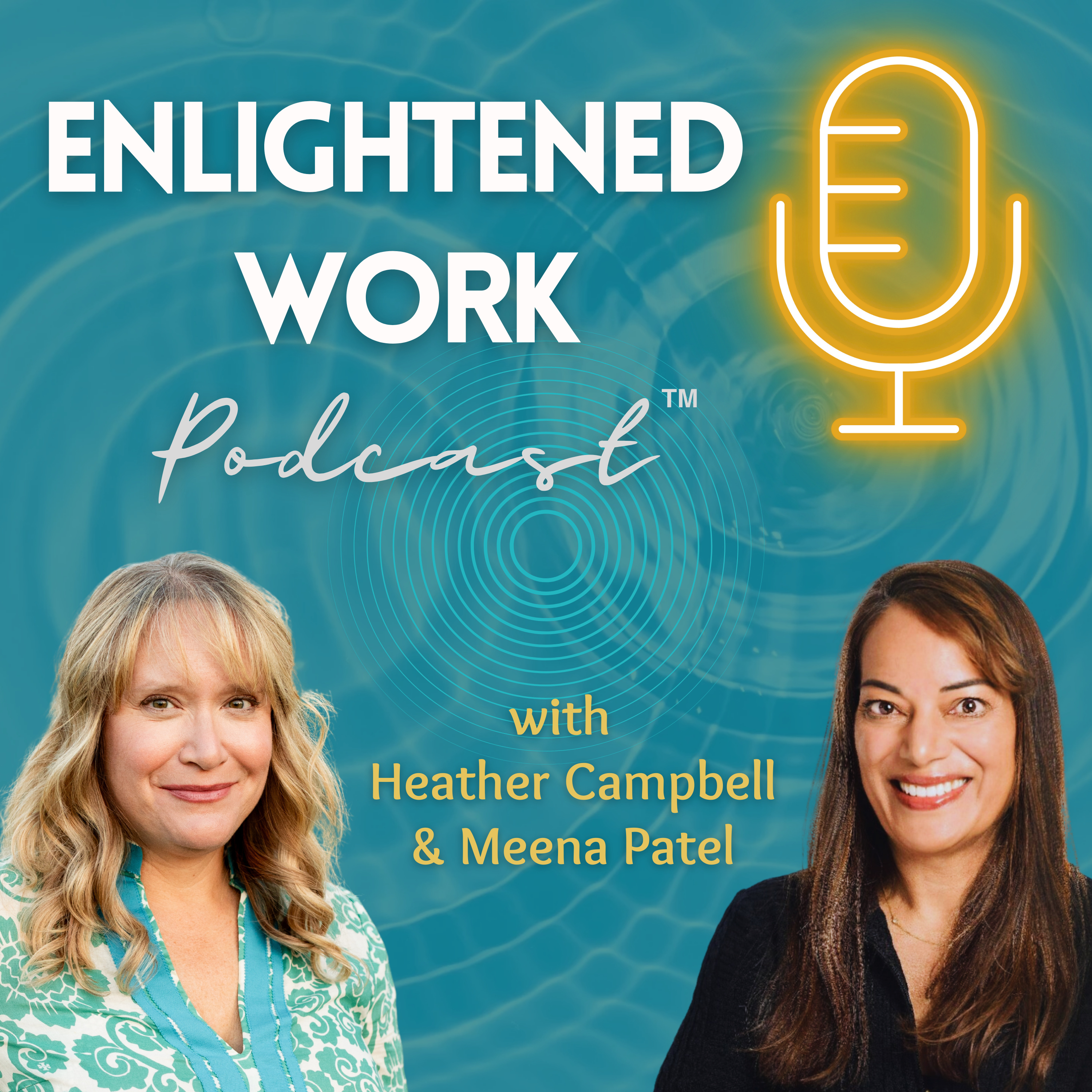
Enlightened Work Podcast
by CultureQI
Welcome to the Enlightened Work Podcast where co-hosts and workplace advocates Heather Campbell and Meena Patel challenge emerging and established leaders to deepen their self-awareness and evolve their leadership skills. If you don't consider yourself a leader, think again. The definition of a leader is not limited to title or hierarchy. All humans have the capacity and opportunity to influence others in their daily interactions.
-
7
Authenticity vs. Genuineness: The Leadership Behavior That Builds Trust
In this episode of The Enlightened Work Podcast, Heather and Meena explore genuineness and why it builds trust more reliably than performative authenticity. While authenticity is often described as “being yourself,” genuineness is about alignment: between values, intentions, words, and actions. Drawing from neuroscience, leadership research, and real‑world examples, they unpack how people instinctively sense when leadership is real versus rehearsed and how even subtle misalignment erodes trust, engagement, and psychological safety. Key Takeaways: 1. Genuineness is alignment, not oversharing 2. The nervous system detects incongruence before logic does 3. Trust is built through consistency, not perfection 4. Genuine leadership creates safety for honesty, learning, and real work 5. If you want to build trust without performance or pretense, this episode offers a grounded, practical look at what genuine leadership actually requires. Additional Reading and References: Authentic Leadership Development | Harvard Business Review Behavioral Integrity and Trust in Leadership The Neuroscience of Trust in Organizations Psychological Safety and Leader Consistency
-
6
Optimism & Hope…The Leader’s Dual Superpower
In this episode of The Enlightened Work Podcast, Heather and Meena unpack the surprising science and practical leadership power of optimism and hope, the fourth of their top 10 Enlightened Leadership Behaviors (ELB). Although people often treat them as interchangeable, these mindsets operate differently in the brain. And together, they dramatically shape how teams think, feel, act, and persevere.Drawing from neuroscience, organizational psychology, and real-world leadership examples, Heather and Meena explore why optimism calms and steadies teams, while hope activates resilience, problem-solving, and meaningful action. You’ll learn why optimism alone can wobble under pressure, and why hope is often the more durable and actionable mindset leaders need in uncertainty.4 Key Takeaways to Lead with Optimism & Hope1. Optimism and hope are not the same, and leaders need both. Optimism predicts positive outcomes and lowers anxiety; hope fuels possibility, agency, and perseverance even when the future is unclear.2. Hope activates the brain’s action systems. Optimism lights up outcome-oriented regions that help us expect good results, while hope engages the planning and motor areas that turn intention into action, shifting “I want to” into “I will.”3. The absence of optimism and hope creates organizational spirals. When leaders operate from threat or fear, psychological safety collapses, creativity shrinks, engagement declines, and burnout rises. Emotional contagion is real, especially from leaders.4. Leaders can cultivate both mindsets through intentional behaviors. Use optimism to create clarity and calm; use hope to create movement and direction. Model emotional regulation, speak with a future-oriented tone, and build cultural practices that reinforce agency, learning, recovery, and resilience.If you’re ready to strengthen your leadership presence, stabilize your team through uncertainty, and build workplaces where people stay creative, motivated, and future-focused, this episode is your guide.Additional Reading and References:What's the Difference Between Optimism and Hope? | Psychology Today The Strategic Power of Hope What Leading with Optimism Really Looks LikeWhy Hope is THE Strategy for Leaders in 2026
-
5
Growth Mindset…The Leader’s Brain Advantage
In this episode of The Enlightened Work Podcast, Heather and Meena cut through the buzzwords and get to the real science and practice of developing a growth mindset, one of the top 10 Enlightened Leadership Behaviors.Drawing from Dr. Carol Dweck’s research, modern neuroscience, and real workplace examples, they explore how mindset shapes learning, resilience, decision-making, and the culture leaders create around them. You’ll learn why a growth mindset isn’t about forced positivity, but rather it’s about how your brain responds to challenge, learning, and change.4 Key Takeaways to Build a Growth Mindset:Focus on the process, not just the outcomes. Celebrate effort, strategy, persistence, and learning, not just performance.Re-frame mistakes as data. Your brain literally learns when you review errors. Fixed mindsets shut down this process.Create a learning-rich environment. Invest in development, encourage curiosity, and make skill-building part of the culture.Model it as the leader. Ask questions, challenge your own assumptions, try again, improve publicly, and praise effort in others.If you’re ready to expand your leadership capacity and build teams that learn, adapt, and elevate together, this episode is your fuel.Referenced Resources:Growth Mindset | Center for Teaching and Learning5 Mistakes Companies Make About Growth Mindsets (Harvard Business Review)The Decision Lab — Growth Mindset & NeuroscienceGrowth Mindset vs. Fixed Mindset: What’s the Difference?Growth Mindset: Why It’s Needed for Successful LeadershipWhat Having a Growth Mindset Actually Means (Harvard Business Review)The 10,000 Hour Rule (and Why It’s Wrong) — Six Seconds
-
4
Empathy in Leadership: The Science, the Skills, and How to Build Them (EQ Part 2)
Empathy isn’t just a feel-good concept—it’s a leadership superpower. In this episode of Enlightened Work, Heather Campbell and Meena Patel unpack what empathy really means, why it’s essential for high-performing teams, and how leaders can build it without burning out. You’ll learn about the three types of empathy—emotional, cognitive, and compassionate—plus practical strategies backed by neuroscience and organizational research. They will also dig into social awareness and motivation to round out this two-part series on emotional intelligence (EQ).Whether you’re leading a team, advancing your professional relationships, or shaping culture in your workplace, this episode will help you turn empathy and EQ into a strategic advantage. Episode Takeaways:Deepening your empathy by practicing these simple actions:--Seek feedback from others - this can be from what I like to call your personal advisory board--Identify your values --Read fiction--Practice gratitude--Examine your knee-jerk emotional reaction--Practice mindful meditationPractice self-awareness with these behaviors:--Be present socially with others. Get off your phone, make eye contact, turn on your camera in virtual meetings, stay aware of and engage in what’s going on around you in the conversation.--Practice active listening. Show you’re listening through your non-verbal cues, nodding, paraphrasing or asking questions. And STOP interrupting when someone else is speaking. --Prioritize observing versus reacting. Be aware of your and other’s tone, body language, and what’s not being said as well as HOW things are being said. This also means not reacting in your head and deferring your judgement to better understand the other person’s perspective.--Be aware that what’s happening in the world is impacting how people feel and are able to show up at work. Additional Reading & References:It’s cool to be kind: The value of empathy at work https://greatergood.berkeley.edu/article/item/the_evolution_of_empathy Harnessing the Power of Social Awareness | Psychology Today Cultivating empathy in an unjust world | Stanford Report 7 Tips for Improving Your Self-Awareness | Psych Central The emergence of empathy: A developmental neuroscience perspective. Music by: Geek ChorusStreaming on Spotify and Apple MusicYou can also watch the Enlightened Work Podcast on YouTube
-
3
Leadership Requires Emotional Intelligence (EQ Part 1)
Welcome back to Episode 3: Leadership Requires EQ where we break down our second critically important Enlightened Leadership Behavior (ELB). Emotional intelligence, most commonly called EQ, was introduced to the business world by Daniel Goleman in the mid-1990s. Goleman asserted, and now leadership study after study has proven, that while IQ is a prerequisite to success, EQ is what enables people to successfully lead teams and lead organizations. EQ is a set of skills that capture our awareness of our own emotions, our awareness of the emotions of others, and how we use this awareness to manage ourselves effectively to interact and lead others.This is part one of a two-part series designed to build your leader EQ. This episode focuses on how to grow self-awareness and improve self-regulation skills.Episode 3 Takeaways/Actions:--Next time you’re in an emotionally charged situation, write down what you saw and observed in yourself. If there was someone in the room you trust, ask what they felt and observed about your behaviors and actions.--To better understand your triggers, think about a challenging situation at work where you lost your composure. Write down specifics about what happened, how did you react, how did the person who witnessed your reaction react. Do you see any patterns in how you reacted? --If you find yourself in an emotionally charged situation, practice the box breathing technique. You can start with 4 or 5 seconds for each stage of the box:-Inhale for 5 seconds-Hold your breath for 5 seconds-Exhale for 5 seconds-Hold again for the same duration. -Repeat to slow your breathing, manage your emotions, and get your executive brain function back online.Additional Reading & References:Emotional Intelligence in Leadership: Why It's Important What is Self-Regulation? (+9 Skills and Strategies)Eurich Explores Why Self-Awareness Matters | NIH Record How to Recognize Emotional Triggers and Manage Reactions | Samba RecoveryMusic by: Geek ChorusStreaming on Spotify and Apple MusicYou can also watch the Enlightened Work Podcast on YouTube
-
2
Desire to Make an Impact
There’s a reason why “Desire to Make an Impact” is the first enlightened leadership behavior (ELB). Before you can start implementing the other ELBs, you first need to foster the right mindset to lead others and start sharing that desire with those you want to influence. In this episode, we challenge each other and you to think deeply about what is a behavior, does a leader’s motive matter to the outcome, and what does the brain and social science say about having meaning and impact in the work you do. For Your Leader Development JourneyEpisode 2 Takeaways/Actions:--Reflect on and know your personal mission/why and tie it to your work. If you don’t know it yet, take some time to reflect on these questions. Journal about it, process it and refine a statement that resonates with you. -How do I currently contribute to this world? -What do I want to contribute to this world? -How do I want to be remembered when I am gone? -What are my top five values that I want to be sure I’m modeling through action in my life?--Share that mission and why statement with your team, your colleagues and network. It will help inspire those you want to influence.--Know and share the positive IMPACT your work has on others. No matter how small, it’s meaningful! Talk about that impact with your team and make sure everyone understands it.--Empower others to find their purpose. Help those on your team identify their own personal why statements for their work to drive their intrinsic motivation. Helping them find meaning and purpose in what they do will help them, you, and the collective group succeed. Additional Reading & References:Trait Theory vs Process Theory of Leadership.Leadership and Motivation | EBSCO Research Starters The Evolution of Social Connection as a Basic Human NeedHardwired for Fear and Connection: How Our Brain Impacts Our Equity Journeys - Social CurrentWhy are humans altruistic? | HowStuffWorksAltruistic behavior: mapping responses in the brain - PMCProject Aristotle for Effective Teams - MutomorroMusic by: Geek ChorusStreaming on Spotify and Apple MusicYou can also watch the Enlightened Work Podcast on YouTube
-
1
Join the Uprising
The world of work is changing rapidly and the workforce is demanding leaders show up in different ways than have been traditional taught and modeled. Whether you are a seasoned or aspiring leader of people, it’s time to learn about and put into practice new leadership behaviors that are needed in this new landscape. In this premier episode, learn about your co-hosts, the definition of leadership, and Heather and Meena’s 10 enlightened leadership behaviors (ELBs).
We're indexing this podcast's transcripts for the first time — this can take a minute or two. We'll show results as soon as they're ready.
No matches for "" in this podcast's transcripts.
No topics indexed yet for this podcast.
Loading reviews...
ABOUT THIS SHOW
Welcome to the Enlightened Work Podcast where co-hosts and workplace advocates Heather Campbell and Meena Patel challenge emerging and established leaders to deepen their self-awareness and evolve their leadership skills. If you don't consider yourself a leader, think again. The definition of a leader is not limited to title or hierarchy. All humans have the capacity and opportunity to influence others in their daily interactions.
HOSTED BY
CultureQI
CATEGORIES
Loading similar podcasts...
Frequently Asked Questions
How many episodes does Enlightened Work Podcast have?
Enlightened Work Podcast currently has 7 episodes available on PodParley. New episodes are automatically indexed when they're published to the podcast feed.
What is Enlightened Work Podcast about?
Welcome to the Enlightened Work Podcast where co-hosts and workplace advocates Heather Campbell and Meena Patel challenge emerging and established leaders to deepen their self-awareness and evolve their leadership skills. If you don't consider yourself a leader, think again. The definition of a...
How often does Enlightened Work Podcast release new episodes?
Enlightened Work Podcast has 7 episodes. Check the episode list to see recent publication dates and frequency.
Where can I listen to Enlightened Work Podcast?
You can listen to Enlightened Work Podcast on PodParley by clicking any episode. We provide an embedded audio player for direct listening, and you can also subscribe via your preferred podcast app using the RSS feed.
Who hosts Enlightened Work Podcast?
Enlightened Work Podcast is created and hosted by CultureQI.
URL copied to clipboard!