
PODCAST · history
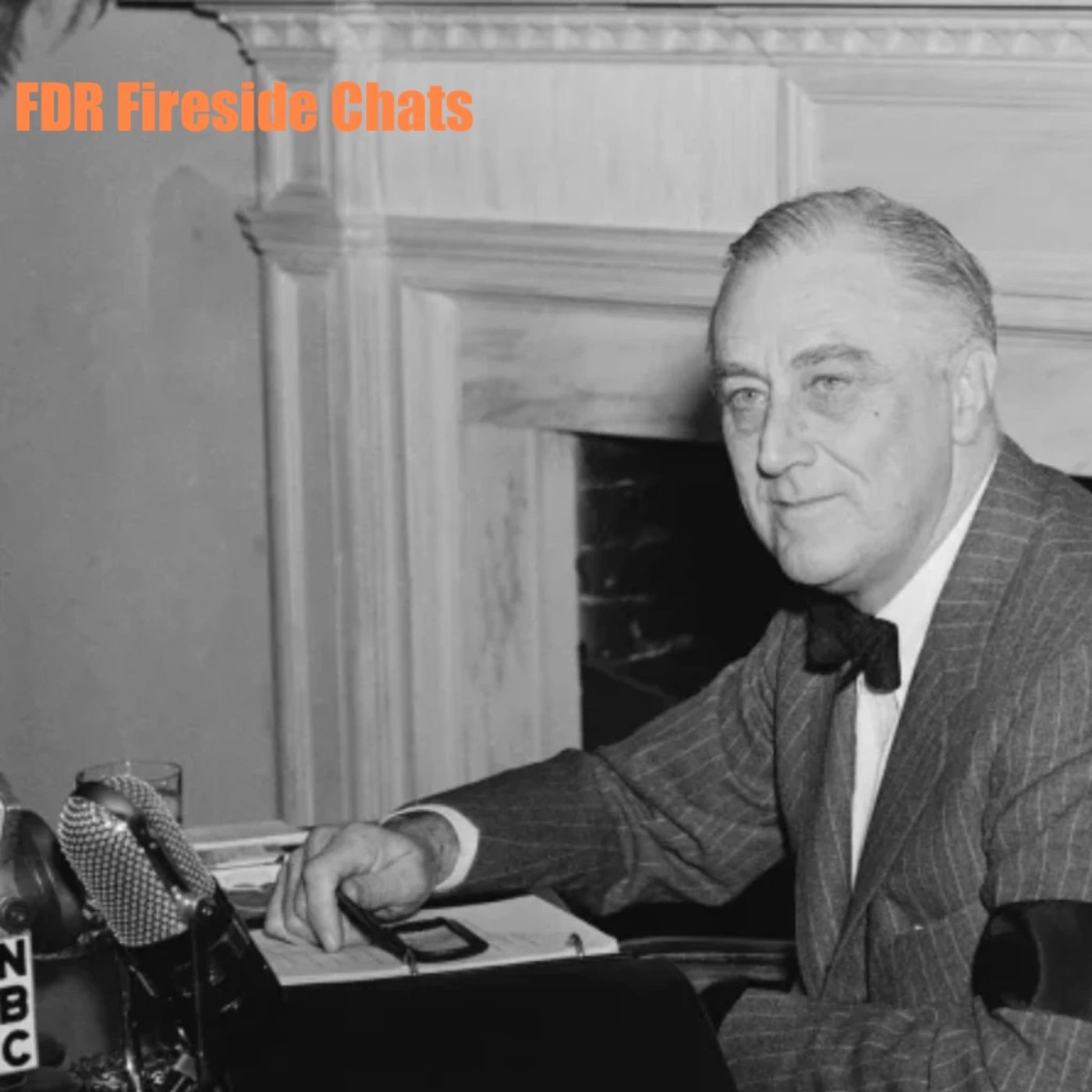
FDR Fireside Chats & Other Radio Addresses
by Inception Point Ai
FDR's Fireside Chats: A Nation United Over Radio Waves In the throes of the Great Depression and World War II, America faced its darkest chapters. Yet, amidst the despair, a singular voice resonated from living rooms across the nation: Franklin Delano Roosevelt. More than just a president, FDR became a trusted friend, delivering his famous "Fireside Chats" directly through the magic of radio. These weren't mere pronouncements from on high; they were intimate conversations, Roosevelt speaking candidly as both leader and confidante. With his calm, reassuring tone and flashes of humor, he reminded Americans of their "hopes and values," the resilience woven into the very fabric of their democracy. The impact of these broadcasts was unprecedented. Aired around 10 pm Eastern on nationwide networks, they drew millions of listeners who gathered around crackling radios, united by Roosevelt's words. He invited them to write, to share their anxieties and aspirations, turning the White House into
-
10
FDR Dem Convention Accepting Nomination President
FDR's Fireside Chats: A Nation United Over Radio Waves In the throes of the Great Depression and World War II, America faced its darkest chapters. Yet, amidst the despair, a singular voice resonated from living rooms across the nation: Franklin Delano Roosevelt. More than just a president, FDR became a trusted friend, delivering his famous "Fireside Chats" directly through the magic of radio. These weren't mere pronouncements from on high; they were intimate conversations, Roosevelt speaking candidly as both leader and confidante. With his calm, reassuring tone and flashes of humor, he reminded Americans of their "hopes and values," the resilience woven into the very fabric of their democracy. The impact of these broadcasts was unprecedented. Aired around 10 pm Eastern on nationwide networks, they drew millions of listeners who gathered around crackling radios, united by Roosevelt's words. He invited them to write, to share their anxieties and aspirations, turning the White House into a giant town hall. Millions responded, their letters a testament to the profound connection forged over the airwaves. Roosevelt's Fireside Chats transcended the limitations of mass media. They became a beacon of hope, a shared experience that stitched a nation together during its most trying times. From the depths of economic despair to the horrors of global conflict, FDR used the radio to unite Americans, reminding them of their inherent strength and the future they could build together. More than just a historical footnote, the Fireside Chats stand as a testament to the power of communication and empathy. They demonstrate how a leader, speaking frankly and authentically, can inspire a nation to rise above adversity and find common ground. In the face of hardship, Roosevelt didn't just inform; he connected, offering solace and forging a collective spirit that continues to echo through the annals of American history. Thanks for listening to Quiet Please. Remember to like and share wherever you get your podcasts.This content was created in partnership and with the help of Artificial Intelligence AIThis episode includes AI-generated content.
-
9
FDR Dem Party Lucky Strike Program
FDR's Fireside Chats: A Nation United Over Radio Waves In the throes of the Great Depression and World War II, America faced its darkest chapters. Yet, amidst the despair, a singular voice resonated from living rooms across the nation: Franklin Delano Roosevelt. More than just a president, FDR became a trusted friend, delivering his famous "Fireside Chats" directly through the magic of radio. These weren't mere pronouncements from on high; they were intimate conversations, Roosevelt speaking candidly as both leader and confidante. With his calm, reassuring tone and flashes of humor, he reminded Americans of their "hopes and values," the resilience woven into the very fabric of their democracy. The impact of these broadcasts was unprecedented. Aired around 10 pm Eastern on nationwide networks, they drew millions of listeners who gathered around crackling radios, united by Roosevelt's words. He invited them to write, to share their anxieties and aspirations, turning the White House into a giant town hall. Millions responded, their letters a testament to the profound connection forged over the airwaves. Roosevelt's Fireside Chats transcended the limitations of mass media. They became a beacon of hope, a shared experience that stitched a nation together during its most trying times. From the depths of economic despair to the horrors of global conflict, FDR used the radio to unite Americans, reminding them of their inherent strength and the future they could build together. More than just a historical footnote, the Fireside Chats stand as a testament to the power of communication and empathy. They demonstrate how a leader, speaking frankly and authentically, can inspire a nation to rise above adversity and find common ground. In the face of hardship, Roosevelt didn't just inform; he connected, offering solace and forging a collective spirit that continues to echo through the annals of American history. Thanks for listening to Quiet Please. Remember to like and share wherever you get your podcasts.This content was created in partnership and with the help of Artificial Intelligence AIThis episode includes AI-generated content.
-
8
FDR Victory In 1932 Presidential Election
FDR's Fireside Chats: A Nation United Over Radio Waves In the throes of the Great Depression and World War II, America faced its darkest chapters. Yet, amidst the despair, a singular voice resonated from living rooms across the nation: Franklin Delano Roosevelt. More than just a president, FDR became a trusted friend, delivering his famous "Fireside Chats" directly through the magic of radio. These weren't mere pronouncements from on high; they were intimate conversations, Roosevelt speaking candidly as both leader and confidante. With his calm, reassuring tone and flashes of humor, he reminded Americans of their "hopes and values," the resilience woven into the very fabric of their democracy. The impact of these broadcasts was unprecedented. Aired around 10 pm Eastern on nationwide networks, they drew millions of listeners who gathered around crackling radios, united by Roosevelt's words. He invited them to write, to share their anxieties and aspirations, turning the White House into a giant town hall. Millions responded, their letters a testament to the profound connection forged over the airwaves. Roosevelt's Fireside Chats transcended the limitations of mass media. They became a beacon of hope, a shared experience that stitched a nation together during its most trying times. From the depths of economic despair to the horrors of global conflict, FDR used the radio to unite Americans, reminding them of their inherent strength and the future they could build together. More than just a historical footnote, the Fireside Chats stand as a testament to the power of communication and empathy. They demonstrate how a leader, speaking frankly and authentically, can inspire a nation to rise above adversity and find common ground. In the face of hardship, Roosevelt didn't just inform; he connected, offering solace and forging a collective spirit that continues to echo through the annals of American history. Thanks for listening to Quiet Please. Remember to like and share wherever you get your podcasts.This content was created in partnership and with the help of Artificial Intelligence AIThis episode includes AI-generated content.
-
7
FDR Campaign Speech From Madison Square Garden
FDR's Fireside Chats: A Nation United Over Radio Waves In the throes of the Great Depression and World War II, America faced its darkest chapters. Yet, amidst the despair, a singular voice resonated from living rooms across the nation: Franklin Delano Roosevelt. More than just a president, FDR became a trusted friend, delivering his famous "Fireside Chats" directly through the magic of radio. These weren't mere pronouncements from on high; they were intimate conversations, Roosevelt speaking candidly as both leader and confidante. With his calm, reassuring tone and flashes of humor, he reminded Americans of their "hopes and values," the resilience woven into the very fabric of their democracy. The impact of these broadcasts was unprecedented. Aired around 10 pm Eastern on nationwide networks, they drew millions of listeners who gathered around crackling radios, united by Roosevelt's words. He invited them to write, to share their anxieties and aspirations, turning the White House into a giant town hall. Millions responded, their letters a testament to the profound connection forged over the airwaves. Roosevelt's Fireside Chats transcended the limitations of mass media. They became a beacon of hope, a shared experience that stitched a nation together during its most trying times. From the depths of economic despair to the horrors of global conflict, FDR used the radio to unite Americans, reminding them of their inherent strength and the future they could build together. More than just a historical footnote, the Fireside Chats stand as a testament to the power of communication and empathy. They demonstrate how a leader, speaking frankly and authentically, can inspire a nation to rise above adversity and find common ground. In the face of hardship, Roosevelt didn't just inform; he connected, offering solace and forging a collective spirit that continues to echo through the annals of American history. Thanks for listening to Quiet Please. Remember to like and share wherever you get your podcasts.This content was created in partnership and with the help of Artificial Intelligence AIThis episode includes AI-generated content.
-
6
FDR President Elect FDR Comments Upon His Arrival
FDR's Fireside Chats: A Nation United Over Radio Waves In the throes of the Great Depression and World War II, America faced its darkest chapters. Yet, amidst the despair, a singular voice resonated from living rooms across the nation: Franklin Delano Roosevelt. More than just a president, FDR became a trusted friend, delivering his famous "Fireside Chats" directly through the magic of radio. These weren't mere pronouncements from on high; they were intimate conversations, Roosevelt speaking candidly as both leader and confidante. With his calm, reassuring tone and flashes of humor, he reminded Americans of their "hopes and values," the resilience woven into the very fabric of their democracy. The impact of these broadcasts was unprecedented. Aired around 10 pm Eastern on nationwide networks, they drew millions of listeners who gathered around crackling radios, united by Roosevelt's words. He invited them to write, to share their anxieties and aspirations, turning the White House into a giant town hall. Millions responded, their letters a testament to the profound connection forged over the airwaves. Roosevelt's Fireside Chats transcended the limitations of mass media. They became a beacon of hope, a shared experience that stitched a nation together during its most trying times. From the depths of economic despair to the horrors of global conflict, FDR used the radio to unite Americans, reminding them of their inherent strength and the future they could build together. More than just a historical footnote, the Fireside Chats stand as a testament to the power of communication and empathy. They demonstrate how a leader, speaking frankly and authentically, can inspire a nation to rise above adversity and find common ground. In the face of hardship, Roosevelt didn't just inform; he connected, offering solace and forging a collective spirit that continues to echo through the annals of American history. Thanks for listening to Quiet Please. Remember to like and share wherever you get your podcasts.This content was created in partnership and with the help of Artificial Intelligence AIThis episode includes AI-generated content.
-
5
FDR NYC Remarks To Democratic National Convention
FDR's Fireside Chats: A Nation United Over Radio Waves In the throes of the Great Depression and World War II, America faced its darkest chapters. Yet, amidst the despair, a singular voice resonated from living rooms across the nation: Franklin Delano Roosevelt. More than just a president, FDR became a trusted friend, delivering his famous "Fireside Chats" directly through the magic of radio. These weren't mere pronouncements from on high; they were intimate conversations, Roosevelt speaking candidly as both leader and confidante. With his calm, reassuring tone and flashes of humor, he reminded Americans of their "hopes and values," the resilience woven into the very fabric of their democracy. The impact of these broadcasts was unprecedented. Aired around 10 pm Eastern on nationwide networks, they drew millions of listeners who gathered around crackling radios, united by Roosevelt's words. He invited them to write, to share their anxieties and aspirations, turning the White House into a giant town hall. Millions responded, their letters a testament to the profound connection forged over the airwaves. Roosevelt's Fireside Chats transcended the limitations of mass media. They became a beacon of hope, a shared experience that stitched a nation together during its most trying times. From the depths of economic despair to the horrors of global conflict, FDR used the radio to unite Americans, reminding them of their inherent strength and the future they could build together. More than just a historical footnote, the Fireside Chats stand as a testament to the power of communication and empathy. They demonstrate how a leader, speaking frankly and authentically, can inspire a nation to rise above adversity and find common ground. In the face of hardship, Roosevelt didn't just inform; he connected, offering solace and forging a collective spirit that continues to echo through the annals of American history. Thanks for listening to Quiet Please. Remember to like and share wherever you get your podcasts.This content was created in partnership and with the help of Artificial Intelligence AIThis episode includes AI-generated content.
-
4
FDR Philosophy Social Justice Through Social Action
FDR's Fireside Chats: A Nation United Over Radio Waves In the throes of the Great Depression and World War II, America faced its darkest chapters. Yet, amidst the despair, a singular voice resonated from living rooms across the nation: Franklin Delano Roosevelt. More than just a president, FDR became a trusted friend, delivering his famous "Fireside Chats" directly through the magic of radio. These weren't mere pronouncements from on high; they were intimate conversations, Roosevelt speaking candidly as both leader and confidante. With his calm, reassuring tone and flashes of humor, he reminded Americans of their "hopes and values," the resilience woven into the very fabric of their democracy. The impact of these broadcasts was unprecedented. Aired around 10 pm Eastern on nationwide networks, they drew millions of listeners who gathered around crackling radios, united by Roosevelt's words. He invited them to write, to share their anxieties and aspirations, turning the White House into a giant town hall. Millions responded, their letters a testament to the profound connection forged over the airwaves. Roosevelt's Fireside Chats transcended the limitations of mass media. They became a beacon of hope, a shared experience that stitched a nation together during its most trying times. From the depths of economic despair to the horrors of global conflict, FDR used the radio to unite Americans, reminding them of their inherent strength and the future they could build together. More than just a historical footnote, the Fireside Chats stand as a testament to the power of communication and empathy. They demonstrate how a leader, speaking frankly and authentically, can inspire a nation to rise above adversity and find common ground. In the face of hardship, Roosevelt didn't just inform; he connected, offering solace and forging a collective spirit that continues to echo through the annals of American history. Thanks for listening to Quiet Please. Remember to like and share wherever you get your podcasts.This content was created in partnership and with the help of Artificial Intelligence AIThis episode includes AI-generated content.
-
3
FDR Democratic Party Platform
FDR's Fireside Chats: A Nation United Over Radio Waves In the throes of the Great Depression and World War II, America faced its darkest chapters. Yet, amidst the despair, a singular voice resonated from living rooms across the nation: Franklin Delano Roosevelt. More than just a president, FDR became a trusted friend, delivering his famous "Fireside Chats" directly through the magic of radio. These weren't mere pronouncements from on high; they were intimate conversations, Roosevelt speaking candidly as both leader and confidante. With his calm, reassuring tone and flashes of humor, he reminded Americans of their "hopes and values," the resilience woven into the very fabric of their democracy. The impact of these broadcasts was unprecedented. Aired around 10 pm Eastern on nationwide networks, they drew millions of listeners who gathered around crackling radios, united by Roosevelt's words. He invited them to write, to share their anxieties and aspirations, turning the White House into a giant town hall. Millions responded, their letters a testament to the profound connection forged over the airwaves. Roosevelt's Fireside Chats transcended the limitations of mass media. They became a beacon of hope, a shared experience that stitched a nation together during its most trying times. From the depths of economic despair to the horrors of global conflict, FDR used the radio to unite Americans, reminding them of their inherent strength and the future they could build together. More than just a historical footnote, the Fireside Chats stand as a testament to the power of communication and empathy. They demonstrate how a leader, speaking frankly and authentically, can inspire a nation to rise above adversity and find common ground. In the face of hardship, Roosevelt didn't just inform; he connected, offering solace and forging a collective spirit that continues to echo through the annals of American history. Thanks for listening to Quiet Please. Remember to like and share wherever you get your podcasts.This content was created in partnership and with the help of Artificial Intelligence AIThis episode includes AI-generated content.
-
2
FDR Happy Warrior Speech
FDR's Fireside Chats: A Nation United Over Radio Waves In the throes of the Great Depression and World War II, America faced its darkest chapters. Yet, amidst the despair, a singular voice resonated from living rooms across the nation: Franklin Delano Roosevelt. More than just a president, FDR became a trusted friend, delivering his famous "Fireside Chats" directly through the magic of radio. These weren't mere pronouncements from on high; they were intimate conversations, Roosevelt speaking candidly as both leader and confidante. With his calm, reassuring tone and flashes of humor, he reminded Americans of their "hopes and values," the resilience woven into the very fabric of their democracy. The impact of these broadcasts was unprecedented. Aired around 10 pm Eastern on nationwide networks, they drew millions of listeners who gathered around crackling radios, united by Roosevelt's words. He invited them to write, to share their anxieties and aspirations, turning the White House into a giant town hall. Millions responded, their letters a testament to the profound connection forged over the airwaves. Roosevelt's Fireside Chats transcended the limitations of mass media. They became a beacon of hope, a shared experience that stitched a nation together during its most trying times. From the depths of economic despair to the horrors of global conflict, FDR used the radio to unite Americans, reminding them of their inherent strength and the future they could build together. More than just a historical footnote, the Fireside Chats stand as a testament to the power of communication and empathy. They demonstrate how a leader, speaking frankly and authentically, can inspire a nation to rise above adversity and find common ground. In the face of hardship, Roosevelt didn't just inform; he connected, offering solace and forging a collective spirit that continues to echo through the annals of American history. Thanks for listening to Quiet Please. Remember to like and share wherever you get your podcasts.This content was created in partnership and with the help of Artificial Intelligence AIThis episode includes AI-generated content.
-
1
FDR Washington Press Club
FDR's Fireside Chats: A Nation United Over Radio Waves In the throes of the Great Depression and World War II, America faced its darkest chapters. Yet, amidst the despair, a singular voice resonated from living rooms across the nation: Franklin Delano Roosevelt. More than just a president, FDR became a trusted friend, delivering his famous "Fireside Chats" directly through the magic of radio. These weren't mere pronouncements from on high; they were intimate conversations, Roosevelt speaking candidly as both leader and confidante. With his calm, reassuring tone and flashes of humor, he reminded Americans of their "hopes and values," the resilience woven into the very fabric of their democracy. The impact of these broadcasts was unprecedented. Aired around 10 pm Eastern on nationwide networks, they drew millions of listeners who gathered around crackling radios, united by Roosevelt's words. He invited them to write, to share their anxieties and aspirations, turning the White House into a giant town hall. Millions responded, their letters a testament to the profound connection forged over the airwaves. Roosevelt's Fireside Chats transcended the limitations of mass media. They became a beacon of hope, a shared experience that stitched a nation together during its most trying times. From the depths of economic despair to the horrors of global conflict, FDR used the radio to unite Americans, reminding them of their inherent strength and the future they could build together. More than just a historical footnote, the Fireside Chats stand as a testament to the power of communication and empathy. They demonstrate how a leader, speaking frankly and authentically, can inspire a nation to rise above adversity and find common ground. In the face of hardship, Roosevelt didn't just inform; he connected, offering solace and forging a collective spirit that continues to echo through the annals of American history. Thanks for listening to Quiet Please. Remember to like and share wherever you get your podcasts.This content was created in partnership and with the help of Artificial Intelligence AIThis episode includes AI-generated content.
We're indexing this podcast's transcripts for the first time — this can take a minute or two. We'll show results as soon as they're ready.
No matches for "" in this podcast's transcripts.
No topics indexed yet for this podcast.
Loading reviews...
ABOUT THIS SHOW
FDR's Fireside Chats: A Nation United Over Radio Waves In the throes of the Great Depression and World War II, America faced its darkest chapters. Yet, amidst the despair, a singular voice resonated from living rooms across the nation: Franklin Delano Roosevelt. More than just a president, FDR became a trusted friend, delivering his famous "Fireside Chats" directly through the magic of radio. These weren't mere pronouncements from on high; they were intimate conversations, Roosevelt speaking candidly as both leader and confidante. With his calm, reassuring tone and flashes of humor, he reminded Americans of their "hopes and values," the resilience woven into the very fabric of their democracy. The impact of these broadcasts was unprecedented. Aired around 10 pm Eastern on nationwide networks, they drew millions of listeners who gathered around crackling radios, united by Roosevelt's words. He invited them to write, to share their anxieties and aspirations, turning the White House into
HOSTED BY
Inception Point Ai
CATEGORIES
Loading similar podcasts...
Frequently Asked Questions
How many episodes does FDR Fireside Chats & Other Radio Addresses have?
FDR Fireside Chats & Other Radio Addresses currently has 10 episodes available on PodParley. New episodes are automatically indexed when they're published to the podcast feed.
What is FDR Fireside Chats & Other Radio Addresses about?
FDR's Fireside Chats: A Nation United Over Radio Waves In the throes of the Great Depression and World War II, America faced its darkest chapters. Yet, amidst the despair, a singular voice resonated from living rooms across the nation: Franklin Delano Roosevelt. More than just a president, FDR...
How often does FDR Fireside Chats & Other Radio Addresses release new episodes?
FDR Fireside Chats & Other Radio Addresses has 10 episodes. Check the episode list to see recent publication dates and frequency.
Where can I listen to FDR Fireside Chats & Other Radio Addresses?
You can listen to FDR Fireside Chats & Other Radio Addresses on PodParley by clicking any episode. We provide an embedded audio player for direct listening, and you can also subscribe via your preferred podcast app using the RSS feed.
Who hosts FDR Fireside Chats & Other Radio Addresses?
FDR Fireside Chats & Other Radio Addresses is created and hosted by Inception Point Ai.
URL copied to clipboard!