
PODCAST · health
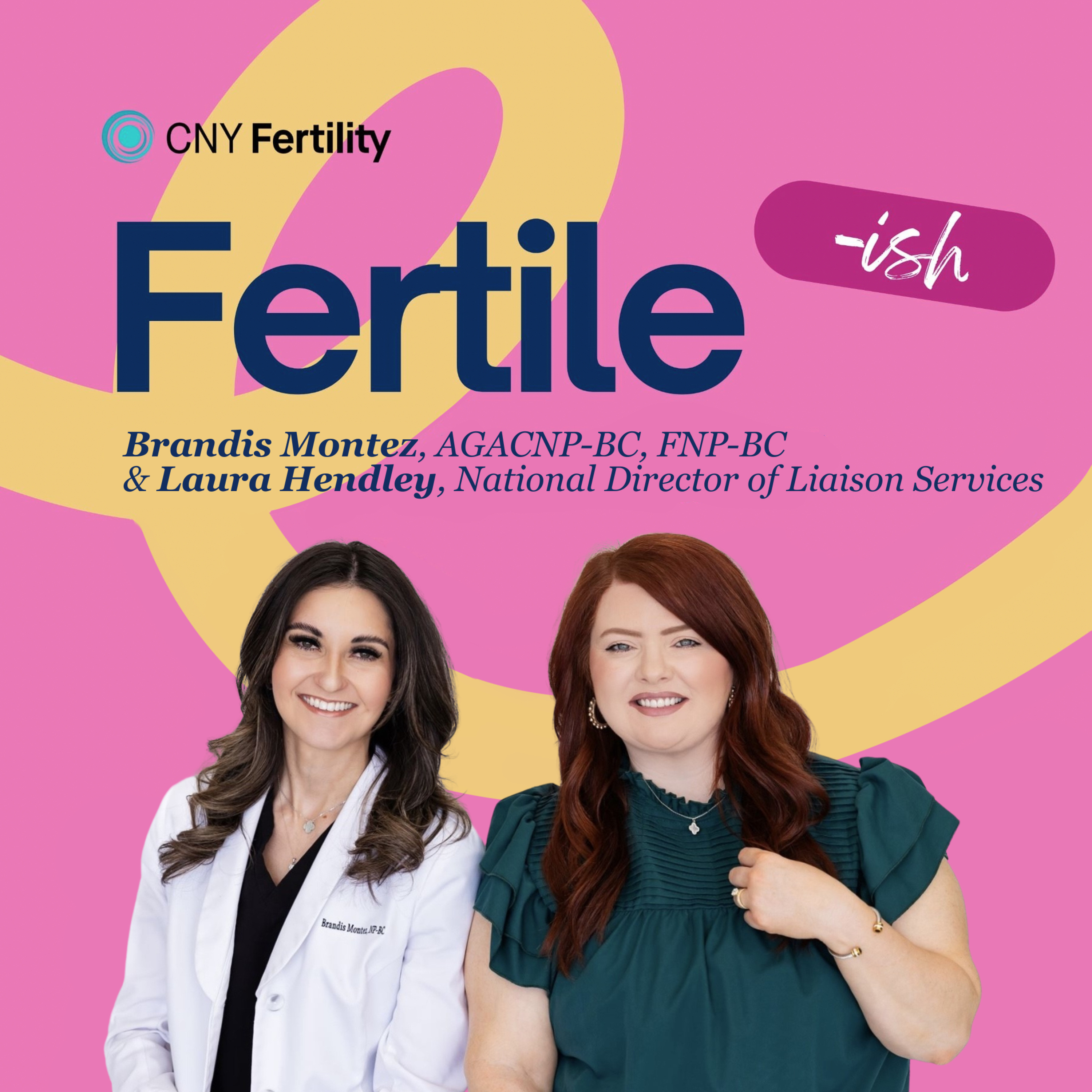
Fertile-ish
by Fertile-ish
Welcome to Fertile-ish- the unfiltered fertility podcast for anyone navigating baby-making and fertility preservation in the 21st century. Whether you're deep in IVF, freezing-curious, or just spiraling from yet another, "So when are you having kids?" convo, we've got you. Hosted by fertility industry insiders, Brandis Montez and Laura Hendley of CNY Fertility, Fertile-ish breaks down the science, the stigma, and the real-life chaos of reproductive health with humor, heart, and zero sugarcoating. Think less textbook, more group chat at 2am.
-
56
Say It With Your Chest...Fertility Edition
🎙️ Say It With Your Chest...Fertility Edition 💭🔥Welcome back to Fertile-ish—the space where we say the quiet parts out loud about fertility, IVF, and everything in between. This episode dives straight into the spicy takes 🌶️ that so many people think during infertility… but rarely feel safe saying.If you’ve ever been told to “just relax” 😅 or heard “at least you know you can get pregnant,” this one is going to hit home. We’re unpacking why those comments aren’t just unhelpful—they can actually be harmful. Infertility is a real medical diagnosis, not something you caused by stress, diet, or that one time you drank out of a plastic water bottle 🙃.We get into the pressure of toxic positivity ✨ and why constantly trying to “stay positive” can feel exhausting—and sometimes completely unrealistic. You’ll hear honest reflections on how infertility can shift your personality, your relationships, and how you move through the world. There’s a real before-and-after, and it’s okay to acknowledge that.We also talk about the misconceptions around IVF—especially the idea that it guarantees a baby. The truth? It often takes multiple cycles, and even when everything looks perfect on paper, it still might not work. That doesn’t mean you did anything wrong 💔.Social media gets a spotlight too 📱—how IVF can look “cute” or even trendy online, while the reality is often filled with grief, trauma, and uncertainty. Not every moment is a milestone worth posting, and not every story gets shared.Support (or lack of it) is another big theme. From well-meaning but clueless comments to the emotional labor of educating others, we explore why even “supportive” people can sometimes miss the mark. And on the flip side, how isolating it can feel to constantly explain your experience.We also normalize the complicated emotions—being genuinely happy for someone else while grieving your own situation at the same time 🤍. Both can exist. Both are valid.There’s space here too for boundaries 🚧—whether that’s taking a break from treatment, stepping back from relationships, or simply protecting your peace. Taking a pause isn’t giving up. It’s choosing yourself.And a reminder we all need: doing everything “right” doesn’t guarantee success. You are not a formula. You are a human going through something incredibly hard.Don’t forget to like, share, follow, and rate us 5 stars ⭐⭐⭐⭐⭐ so we can keep bringing these real, unfiltered conversations to more people who need them.
-
55
TTC 101...But Make It Real Life
🎙️ TTC 101…But Make It Real LifeTrying to conceive sounds simple… until you’re actually trying 😅 In this episode, we’re getting real about what TTC at home actually looks like—no fluff, no myths, just the stuff people wish they knew sooner. From coming off birth control to figuring out your cycle (because why were we only taught how NOT to get pregnant??), we’re breaking down the basics in a way that actually makes sense.We talk through how to set yourself up for success before you even start trying—like why starting a prenatal early matters, what should actually be in it (👀 folic acid is non-negotiable), and how a preconception visit can give you way more clarity than guessing your way through it. We also get into genetic carrier screening and why having that info upfront can completely change your plan—or at least give you peace of mind.Then we get into the timing—aka the part that stresses everyone out. When should you actually be having sex? Are apps enough? What even is the fertile window? We explain why sperm can hang out for up to five days but the egg is on a strict 24-hour timeline, and how to make sure you’re not missing your shot. We also break down ovulation predictor kits (OPKs), what a true positive looks like (hint: it’s not just “two lines”), and why tracking your cycle beyond an app can make a big difference.Of course, we had to bust some myths too. 🙃 No, you don’t need to put your legs up after sex. No, position doesn’t matter. No, Mucinex isn’t a magic fertility hack. And yes… some lubes can actually hurt sperm (so choose wisely 👀). We’re separating what’s actually helpful from what’s just internet noise.We also talk about when it’s time to get help—because there are guidelines, but there are also situations where you don’t need to wait at all. Whether you’re just starting out or feeling unsure where you stand, this episode is your reality check + roadmap all in one.Basically, if you’ve ever thought “am I even doing this right?”—this one’s for you! 💗Don’t forget to like, follow, share, and rate us ⭐⭐⭐⭐⭐ it helps more people find Fertile-ish and feel a little less alone in all of this. 💕
-
54
The OG IVF Baby: With SPECIAL Guest Elizabeth Carr!!
🎙️ The OG IVF BabyIn honor of National Infertility Awareness Week, this episode of Fertile-ish is one we’ll never forget. 💛 We’re joined by Elizabeth Carr — the first IVF baby in the United States — and her story is equal parts mind-blowing, emotional, and deeply hopeful.Elizabeth takes us back to the very beginning of IVF in the U.S., when the technology was brand new, experimental, and honestly… a total leap of faith. Her parents' fertility doctors went through 42 failed attempts before her success, her parents traveled across state lines just to access care, and navigated a process with no roadmap, no support groups, and no guarantees. IVF as we know it today? It exists because of stories like hers.We talk about what it’s like to grow up as “the first,” from childhood curiosity to national headlines, and the pressure of representing an entire community of families built through IVF. Elizabeth shares how she’s turned that pressure into purpose, becoming a fierce advocate for patients and access to care — and why she feels protective of every IVF baby that’s come after her.This episode also puts into perspective just how far IVF has come. From two retrieved eggs and no embryo freezing… to today’s advanced technology, genetic testing, and improved success rates — the evolution is unreal. And yet, the emotional experience? Still very real, still very raw, and still something so many people are navigating every day.We also get into the power of community. 🤍 The friendships, the support systems, and the reminder that even when this journey feels isolating… you are not alone. Elizabeth shares a message that hit us hard: if you reach out your hand, someone will grab it.And as if we couldn’t love her more, she shares her newest project — a children’s book called Petri Dish Princess 👑 — helping the next generation understand their origin stories in a way that feels empowering and seen.This episode is about more than just where IVF started. It’s about how far we’ve come, the people who made it possible, and the hope that still exists for anyone in the middle of their journey. ✨If this episode resonated with you, don’t forget to like, follow, and rate Fertile-ish 5 stars.⭐️ It helps us reach more people who need to hear these stories. 💛
-
53
The Comparison Trap No One Talks About in Infertility
🎙️ The Comparison Trap No One Talks About in InfertilityInfertility has a way of turning comparison into a constant background noise… and before you even realize it, it’s stealing your joy 💔 This episode dives into the very real, very human tendency to measure your journey against someone else’s—and why that can feel so overwhelming when you’re already carrying so much.We talk openly about the thoughts so many people have but don’t always say out loud… Why did it work for her and not me? Why am I on my fourth cycle when someone else got pregnant on their first? Why does their life seem easier, faster, or more supported? The truth is, even when two stories look similar on the surface, there are countless factors behind the scenes that make every fertility journey completely unique.This episode also breaks down the reality of IVF expectations vs. what actually happens. From attrition rates to multiple transfers, we get honest about the fact that IVF is not a guarantee—and why so many people are shocked when it doesn’t work the first time. That disconnect can make comparison even louder, especially when social media is filled with highlight reels and positive tests without the full story. 📱✨We also share personal moments of navigating jealousy, grief, and the complicated emotions that come up when someone close to you has a different (or seemingly “easier”) outcome. Because here’s the truth: someone else’s success doesn’t invalidate your pain—and your pain doesn’t diminish theirs. Both can exist at the same time. 🤍You’ll hear real talk about online support groups, unsolicited advice, and how easy it is to spiral when you’re deep in Reddit threads or Facebook groups. We talk about setting boundaries, protecting your mental space, and giving yourself permission to step back when it becomes too much. Sometimes the healthiest thing you can do is mute, unfollow, and refocus inward. 🧠✨Most importantly, this episode is a reminder that there is no “right” timeline, no perfect protocol, and no universal path to building a family. Your story is yours—and it’s still unfolding. Even in the moments where it feels uncertain, heavy, or never-ending… you are not behind, and you are not alone. 💫If this episode resonated with you, we’re always here for support, conversation, and community. 🤍Follow, like, and rate us ⭐⭐⭐⭐⭐ wherever you get your podcasts!
-
52
Adenomyosis: The Uterine Condition You've Probably Never Heard Of
🎙️ Adenomyosis: The Uterine Condition You've Probably Never Heard OfAdenomyosis is one of those conditions that so many people have… but so few have actually heard about until they’re deep in their fertility journey. In this episode of Fertile-ish, we’re breaking down what adenomyosis really is, why it’s often overlooked, and how it can impact your body, your cycles, and your path to pregnancy. 🤍We talk about how adenomyosis occurs when endometrial tissue grows into the muscular wall of the uterus, and why that can lead to symptoms like painful periods, heavy bleeding, pelvic pain, or sometimes… no symptoms at all. It’s often confused with endometriosis or fibroids, which makes diagnosis tricky and sometimes delayed. We also get into why MRI is considered the gold standard for diagnosis and why many people don’t find out they have it until much later in life.This episode dives into the “why” behind adenomyosis, including theories around uterine trauma, prior pregnancies or procedures, and even potential genetic links. We unpack how inflammation plays a major role and what that might mean for implantation, uterine receptivity, and overall fertility outcomes. If you’ve ever been told “everything looks normal” but still feel like something is off, this conversation will hit home. 💭We also walk through treatment approaches, including when hormonal suppression might be helpful, why surgery is rarely recommended for those trying to conceive, and how individualized fertility care really is. Not everyone with adenomyosis will struggle to get pregnant, but for those who do, understanding the full picture can make all the difference. This is one of those episodes that empowers you to ask better questions, advocate for yourself, and feel a little less in the dark. ✨And because we’re always keeping it real… we also talk about how under-discussed this condition is, why awareness matters, and how even in 2026 there’s still so much we’re learning. If you’ve never heard of adenomyosis before, or if you’ve been quietly wondering if it could be part of your story, you are absolutely not alone. 🤍If this episode helped you feel more informed, supported, or seen, it would mean so much if you took a moment to rate us ⭐️⭐️⭐️⭐️⭐️, follow, and like Fertile-ish wherever you listen 💕
-
51
The Partner Perspective: The Feelings No One Talks About
🎙️ The Partner Perspective: The Feelings No One Talks AboutInfertility is so often centered around the person undergoing treatment… the injections, the appointments, the procedures, the losses. But behind every one of those moments is someone else sitting beside them… holding their hand, showing up, trying to stay strong while watching someone they love go through something incredibly hard. 🤍In this episode of Fertile-ish, we’re shifting the focus to the partner perspective… the feelings that don’t always get said out loud. The quiet grief. The helplessness. The pressure to be the strong one while carrying emotions of your own. Because even if the roles look different, both partners are experiencing this journey in very real ways.We talk about what it’s like to love someone through infertility while not being able to fix it. That instinct to solve, to make it better, paired with the reality that you can’t. The emotional weight of watching your partner go through injections, procedures, and loss… and the guilt that can come with not being able to take that burden from them.In this episode, Laura shares something incredibly personal… a letter written by her husband from his perspective of infertility. It’s raw, honest, and gives voice to emotions that so many partners feel but don’t always express. From feelings of inadequacy and anger to love, resilience, and unwavering support, his words are a powerful reminder that this journey is deeply felt on both sides.We also get into how infertility can impact identity and self-worth, especially when stigma enters the conversation. Whether it’s male factor infertility, unexplained diagnoses, or failed cycles, there can be this internal narrative of blame, inadequacy, and “why us?” that both partners carry in different ways.We talk about communication… how it can break down, how it can grow, and how important it is to say the things that feel hard. The difference between fixing and listening. The importance of checking in with your partner, creating space outside of fertility, and holding onto the “why” that brought you together in the first place. 💛This episode is a reminder that infertility is not “you vs. me”… it’s “us vs. this.” That resentment, silence, and isolation can quietly build if we’re not careful… but so can connection, understanding, and strength when we choose to face it together.If you’re in this season, we see you. If you’re the partner trying to hold it all together, we see you too. 🤍If this episode resonated, share it with your partner, send it to someone who needs it, and don’t forget to follow, rate us ⭐⭐⭐⭐⭐, and subscribe wherever you get your podcasts. 🎧
-
50
Birth Control Breakup: When to Make the Call
🎙️ Birth Control Breakup: When to Make the CallThinking about coming off birth control and not sure when to do it? This episode is your no-BS, actually helpful guide to breaking up with birth control the right way. 💊➡️👋🏼Laura and Brandis dive into one of the most common questions they hear from patients, DMs, and consult calls: “When should I stop birth control if I want to get pregnant?” And spoiler… it’s not always as simple as “just stop and try.” 👀In this episode, we break down how different types of birth control actually work in your body 🧠🧬 and why that matters when you’re planning your timeline to conceive. From the pill to hormonal IUDs to Depo-Provera, not all methods are created equal when it comes to how quickly your body rebounds—and some require a lot more planning than people realize. ⏳We’re also clearing up some of the biggest myths floating around social media 🚫 There is no such thing as a “birth control cleanse,” and your body does NOT need detox teas, supplements, or some dramatic reset to “wake back up.” Most methods leave your system quickly, and what happens after stopping is often just your body returning to its natural baseline—not something birth control caused. 💥This episode also gets into the importance of actually knowing your cycle before trying to conceive 📅 Learning what’s normal for you can help identify potential issues early, saving you months (or years) of frustration. Preventative fertility awareness? We’re here for it. 👏🏼We also talk about why birth control is often prescribed in the first place (hint: it’s not random), how it can actually be fertility-supportive in some cases, and why understanding the “why” behind your medications is one of the most powerful things you can do for your health. 💛If you’re thinking about trying to conceive soon—or even someday—this episode will help you map out your timeline, avoid unnecessary stress, and make informed decisions that actually support your goals. ✨Because this isn’t just about stopping birth control… it’s about setting yourself up for what comes next. 🫶🏼⭐️ If you loved this episode, don’t forget to give us 5 stars and follow along wherever you get your podcasts—it helps us reach more people who need this info! 💕
-
49
One Negative Test. The Next 24 Hours.
🎙️✨ One Negative Test. The Next 24 Hours. 🤍🧬The morning after a negative pregnancy test can be one of the quietest and heaviest moments in the fertility journey. The world outside keeps moving exactly the same, but inside, everything can feel different. In this episode of Fertile-ish, Laura and Brandis walk through the emotional timeline of the first 24 hours after a negative pregnancy test, offering compassion, perspective, and support for one of the hardest moments in infertility. 🤍🌧️Instead of trying to rush past the disappointment, this episode slows things down and breaks the day into smaller pieces—because sometimes the only way forward is minute by minute, hour by hour. ⏳ From the initial shock of seeing a negative test to the emotional spiral that can follow later in the day, the conversation blends patient experience with clinical perspective. 💬🩺Laura and Brandis talk about the instinct many people have to search for answers immediately—replaying every detail of the cycle, questioning every decision, or blaming themselves for something small. 🧠💭 The truth is that most outcomes are outside of our control, but the mind naturally looks for reasons in an attempt to regain certainty. 🔍The focus of this episode is regulation and self-compassion. The hours immediately after a negative test are about stabilizing emotionally and physically—taking a breath, sitting with the disappointment, eating something small, hydrating, and allowing yourself to feel whatever emotions come up without judgment. 🌬️🫶 Grief, anger, numbness, embarrassment, and exhaustion are all normal responses when a hoped-for future suddenly disappears. 💔The hosts also discuss the mental “spiral window”—when the brain wants to compare pregnancy tests online, scroll through support groups, or overhaul an entire treatment plan. 📱 During this time, it can help to pause instead: step outside, get fresh air, move your body gently, and give your nervous system time to settle. 🌿☀️🚶♀️Another powerful moment in the episode focuses on grieving the imagined future that briefly felt real during the two-week wait—the baby names, the imagined announcement, the moment you pictured hearing “you’re pregnant.” 🍼✨ Losing that vision can be deeply painful, and acknowledging that grief is part of healing. 💛As the day turns to night, Laura and Brandis talk about protecting your mental space. 🌙 Avoid pregnancy content, step away from comparison, and remember: today is not a decision day. Big choices about treatment plans, clinics, or next steps can wait until emotions settle.The message at the heart of this episode is simple:A negative test does not define your strength, your body, or your future. 🤍 It reflects only one cycle in a much bigger story. And if today is a survival day, that’s enough. Getting through today counts. 💪🫶If you’re listening on one of those heavy mornings, this conversation is meant to remind you that you’re not alone. 🌎 The fertility journey can feel isolating, but there is an entire community walking through it together. 🤝💛⭐ Follow the show and leave a 5-star review on Spotify or Apple Podcasts—it helps more people find the support they need. 🎧✨#FertileishPodcast #FertilitySupport #IVFJourney #TTCCommunity #InfertilitySupport 💛🧬
-
48
Your Cycle Decoded: Why One Week You're a Goddess and the Next You're Crying in Target
🎙️ Your Cycle Decoded: Why One Week You’re a Goddess and the Next You’re Crying in TargetEver notice how one week you feel unstoppable, glowing, and ready to conquer the world… and the next week you’re crying in the Target parking lot because they’re out of your favorite snack? You’re not imagining things — your menstrual cycle plays a huge role in your mood, energy, appetite, and overall vibe throughout the month.In this episode of Fertile-ish, Laura and Brandis break down the menstrual cycle in a way that actually makes sense — no confusing high-school health class diagrams required. From hormones to ovulation to why your body sometimes feels like it has multiple personalities in a single month, we’re decoding what’s really happening behind the scenes of your cycle. 🧬Your menstrual cycle is much more than the few days you spend on your period. It’s a continuous hormonal rhythm that your body moves through every single month. The cycle begins on the first day of full menstrual flow, which is considered cycle day one, and continues until the next period begins.Throughout that cycle, your body moves through several phases — each driven by different hormones that influence everything from your mood and libido to your productivity and energy levels.During the follicular phase, your brain sends signals to the ovaries to begin developing follicles that contain eggs. Estrogen begins to rise, your uterine lining starts building again, and many people notice higher energy, clearer thinking, and increased motivation. This is often the phase where you feel like your most confident self — the “goddess era.” ✨Next comes ovulation, when a surge of luteinizing hormone (LH) triggers the ovary to release an egg. The egg only survives for about 24 hours, but sperm can survive in the reproductive tract for up to five days, which is why the fertile window is typically the five days leading up to ovulation and the day of ovulation itself.After ovulation, the cycle shifts into the luteal phase, when progesterone rises to prepare the body for a possible pregnancy. If fertilization does not occur, progesterone levels drop and the uterine lining sheds, beginning a new cycle.This hormonal shift is also why many people experience PMS symptoms like bloating, fatigue, mood swings, irritability, and increased hunger. One week you’re thriving and feeling amazing… the next week you’re crying in the candle aisle at Target wondering what just happened. Totally normal. 🕯️😭Understanding your cycle isn’t just helpful when trying to conceive — it’s an important part of understanding your overall health. Your menstrual cycle is often considered a vital sign, and changes in cycle length, bleeding patterns, or severe symptoms can sometimes indicate underlying conditions like hormonal imbalances, ovulation disorders, thyroid issues, endometriosis, or adenomyosis.Tracking your cycle can help you learn what’s normal for your body and identify patterns over time. Whether you’re trying to conceive, preserving fertility, learning about your hormones, or supporting someone on a fertility journey, understanding the menstrual cycle is the foundation for it all.Because when you understand your hormones, the monthly emotional rollercoaster starts to make a lot more sense. 💛If you enjoyed this episode, please take a second to rate Fertile-ish ⭐⭐⭐⭐⭐ and leave us a review wherever you listen to podcasts. Those five-star ratings help more people find the show and help us continue bringing honest conversations about fertility, hormones, and everything in the “ish.” 🎙️🧬💗And don’t forget to follow and share the podcast with someone who could use a little fertility education — or just a reminder that they’re not alone in this journey.
-
47
Unexplained Infertility: When All the Tests Are "Fine"
🎙️ Unexplained Fertility: When All the Tests Are “Fine”Sometimes the hardest diagnosis to receive is… no diagnosis at all.In this episode of Fertile-ish, we dive into one of the most frustrating, confusing, and emotionally exhausting realities in fertility care: unexplained infertility. When your labs are “normal,” your cycles look textbook, your partner’s analysis checks out, your tubes are open… and yet, you’re still not pregnant.If you’ve ever been told “everything looks fine” while your heart is breaking month after month, this episode is for you 🤍What We Cover:🧬 We break down what “unexplained infertility” actually means. It’s not that nothing is wrong. It means our current testing hasn’t identified the cause. Fertility is complex, and sometimes the issue lives in microscopic details we simply cannot measure yet.📊 We talk about why “normal” doesn’t always equal optimal. Hormone levels can fall within normal ranges but still not function optimally for conception. Timing, egg quality, sperm function, and implantation dynamics all play a role, and basic labs do not tell the entire story.🔬 We explore the limitations of fertility testing. Even with advanced diagnostics, we cannot directly measure egg quality, embryo chromosomal status without IVF and genetic testing, subtle sperm functional issues, or the intricate cellular process of implantation. There are still pieces of reproduction that medicine cannot fully see.💔 We address the emotional toll of having no clear answer. Unexplained infertility often brings a unique type of grief — self-doubt, frustration, feeling dismissed, and the mental exhaustion of constantly wondering what to try next. Hearing “at least nothing’s wrong” can feel anything but comforting.✨ We discuss treatment paths forward. Even without a defined cause, there are proactive options including ovulation support, IUI to improve sperm delivery, IVF to maximize egg and embryo potential, and genetic testing when appropriate. In many cases, treatment becomes both diagnostic and therapeutic.🗣️ We talk about advocacy and mindset. Asking thoughtful questions, seeking clarity from your provider, and remembering that unexplained does not mean hopeless. It simply means medicine has limits — not that your body has failed.Key Takeaway: 💛🤍 Unexplained fertility is not a dismissal. It is a category that acknowledges the complexity of reproduction. You deserve thoughtful care, a provider who listens, and a plan that feels proactive instead of passive.If you’re in the “everything is fine but nothing is working” phase, you are deeply seen here.🎧 If this episode resonated with you, share it with someone who needs to hear it.⭐ Rate and review the podcast — it helps us reach more people navigating the “ish” of it all.📲 Follow along for more real talk on fertility, science, and the emotional side of growing a family.You’re not crazy. You’re not broken. And you’re definitely not alone 🤍
-
46
Understanding OHSS: Ovaries in Overdrive
🎙️ Understanding OHSS: Ovaries in Overdrive 🥚⚡If you’re preparing for an egg retrieval, you’ve probably heard about OHSS and maybe even a few scary stories. 😅 In this episode, we break down what it actually is, who’s at risk, how we prevent it, and why modern IVF has made it far less common than it used to be.OHSS, or Ovarian Hyperstimulation Syndrome, happens when the ovaries over-respond to stimulation medications. 💉 In a natural cycle, one egg grows, estrogen rises to a moderate level, and ovulation occurs. In IVF, many follicles grow at once and estrogen levels can rise much higher. 📈 That hormone surge can make blood vessels more permeable, allowing fluid to shift out of the bloodstream and into the abdomen and, in rare cases, the lungs. It’s this fluid shift, not simply “high estrogen,” that causes symptoms.The reassuring part is that OHSS is uncommon. 🤍 It occurs in about 3 to 6 percent of cycles, and severe cases happen in less than 1 to 3 percent. With modern protocols and close monitoring, most patients will never experience it.Symptoms can range from mild bloating and abdominal discomfort to nausea and fluid in the abdomen. Severe cases, which are rare, may include shortness of breath 😮💨, low blood pressure, thickened blood, electrolyte imbalances, or kidney concerns. Patients should contact their clinic if they experience rapid weight gain, severe pain, persistent vomiting, decreased urination, fever 🌡️, one-sided leg swelling, or shortness of breath. When in doubt, call. 📞 Reassurance is never a burden.The trigger shot plays an important role in OHSS risk. 💉 An hCG trigger has a longer half-life and continues stimulating the ovaries, which can increase the risk of worsening symptoms, especially if pregnancy occurs.🤰 A Lupron trigger works at the level of the brain and has a shorter effect, lowering the risk of severe OHSS, although not everyone is a candidate. In some cases, a dual trigger is used. These decisions are thoughtful and individualized, not random.If a patient is at higher risk, a provider may recommend freezing all embryos rather than doing a fresh transfer. ❄️ Pregnancy produces additional hCG, which can intensify OHSS. A freeze-all approach in this situation is about safety, not taking away an opportunity.Modern IVF significantly reduces the risk of severe OHSS through careful medication dosing, close estrogen monitoring, thorough follicle measurements, coasting when necessary, using Lupron triggers when appropriate, and adjusting plans if safety requires it. Monitoring appointments are essential safety checkpoints and should never be skipped. 🗓️If OHSS does develop, it is typically self-limiting and improves once hormone levels fall, usually 10 to 14 days after retrieval .⏳ Treatment is supportive and may include electrolyte fluids 🥤, medications such as cabergoline or letrozole, and close follow-up. In more serious cases, fluid drainage or IV support may be needed. Time and monitoring are key.The bottom line is that OHSS is real but rare, and severe cases are even rarer. 💛 There are multiple safeguards in place to prevent it. Ask questions, understand your protocol, advocate for thorough monitoring, and communicate symptoms early. This episode is meant to empower you with knowledge so you can move forward confidently.🧠✨If this episode helped you, don’t forget to like ❤️, follow 🎧, and rate ⭐⭐⭐⭐⭐ the show. Share it with someone prepping for retrieval and help us normalize informed fertility care. 🫶
-
45
Embryo Banking: Delayed Gratification, Fertility Edition
🎧 Embryo Banking: Delayed Gratification, Fertility EditionIn this episode of Fertile-ish, Laura and Brandis dive into a topic that doesn’t get talked about nearly enough: embryo banking 🧊🧬—what it is, who it’s for, and why thinking long-term can make all the difference when it comes to building the family you’ve always envisioned.While the goal often feels like “just get me pregnant now,” this conversation zooms out to look at fertility as a full family-planning strategy, not just a single cycle or transfer. From age and ovarian reserve to genetics, finances, insurance limitations, and emotional burnout—this episode breaks it all down in a way that’s honest, empowering, and judgment-free.✨ In this episode, we cover:What embryo banking actually means (and how it’s different from egg freezing)Why banking embryos before transfer can protect future family-building goalsHow age impacts egg quality—but not the uterus 🕰️The role of PGT/PGD testing and how it changes success ratesReal statistics on live birth rates with and without genetic testingHow many embryos are typically recommended per child you hope to haveReligious, ethical, and emotional concerns around embryo banking—and the options availableWhat happens if you have embryos left after completing your familyCompassionate transfers explained 🤍How insurance requirements can complicate embryo bankingFinancing options and how multiple retrievals can still be manageableWhy “leaving options open” matters—even if you’re unsure about future children💭 Big takeaway:Embryo banking isn’t about delaying joy—it’s about protecting future possibilities. Whether you’re early in treatment, mid-journey, or reflecting after transfers, this episode encourages you to ask bigger questions, advocate for yourself, and design a fertility plan that aligns with the life you want—not just the moment you’re in.🎙️ If you’re navigating IVF, unexplained infertility, or long-term family planning, this one’s for you.💗 As always, we see you. You’re not alone in the ish of it all.📌 Helpful reminder:Write your questions down before appointments ✍️Think beyond one cycle 🌱Your journey. Your timeline. Your choices.
-
44
Fresh vs Frozen: Let's Break This Down
🎙️ Fresh vs Frozen: Let’s Break This DownFresh embryo transfer or frozen embryo transfer… which one is actually better? 🤔In this episode of Fertile-ish, Laura and Brandis break down one of the most common (and confusing) IVF questions we hear: fresh vs frozen embryo transfers. From success rates and hormone levels to OHSS risk, genetic testing, and cost misconceptions, we’re separating facts from fertility folklore.Whether you’re eager to move fast, trying to minimize risk, or planning ahead for future family building, this episode walks you through how to decide what’s best for you—not your friend, your Facebook group, or someone else’s protocol.✨ In this episode, we cover:What a fresh embryo transfer actually isWhat a frozen embryo transfer involves and why clinics now favor itWhy “fresh” doesn’t automatically mean “better”How hormone levels impact implantation and pregnancy outcomesWhen fresh transfers can make senseWhy genetic testing requires frozen transfersOHSS risks and the real story behind “McDonald’s fries after transfer” 🍟Cost myths, transfer pricing, and timing considerationsHow embryo banking can protect future fertilityWhy protocols are so individualized—and why that’s a good thing💡 Key takeaway:There is no one-size-fits-all answer. The best transfer option depends on your age, diagnosis, hormone response, genetic testing plans, and long-term family goals. The most important step? Asking your provider why they recommend a specific approach for you.🎧 If you’ve ever felt torn between fresh vs frozen—or wondered if you’re missing out by not doing a fresh transfer—this episode is for you.💌 Have a question you want us to tackle next?Send it to the Fertile-ish inbox or DM us on social. We’re always holding space 🤍🔗 Listen, rate, and share to help us keep breaking down the science—without the stigma.
-
43
Dear Fertile-ish: The Inbox Episode
🎙️ Dear Fertile-ish: The Inbox EpisodeWelcome back to Fertile-ish—and this one is special. In this episode, Laura and Brandis open the inbox and respond directly to your most honest, vulnerable, and deeply relatable questions. From grief and burnout to communication struggles, intimacy, age-related anxiety, and learning how to advocate for yourself, this episode is a reminder that if you’re feeling it… you’re not alone.This “Dear Fertile-ish” episode is raw, validating, and packed with compassionate, real-life perspective from two people who live and breathe this work and this journey .💌 What We’re Talking About:In this inbox-style episode, we dive into questions like:Mourning the person you were before infertilityWhen infertility feels heavier for one partner than the otherLiving in survival mode and constantly bracing for bad newsFeeling burned out versus knowing it’s time for a breakMaking sense of fertility statistics after 40Advocating for yourself without feeling “difficult”When sex becomes scheduled, pressured, or transactionalLetting go of control when your life revolves around cycles and appointmentsUnderstanding the why behind treatment plans and protocolsSeparating what you truly want from what you feel obligated to continue🧠 Key Takeaways:Grief and gratitude can coexist—and that doesn’t make you ungrateful or weakPartners often cope differently, and that doesn’t mean they care lessYou are never wrong for asking questions about your careStatistics inform expectations, not destinyTaking a break is not giving up—it can be an act of self-preservationIntimacy deserves space outside of ovulation windows and calendarsYou do not owe anyone justification for your family-building decisions🤍 A Gentle Reminder:Infertility is traumatic. Burnout is real. And being “strong” all the time is exhausting. This episode isn’t about fixing anything—it’s about naming what so many people feel but rarely say out loud.📩 Want to Be Part of a Future Inbox Episode?Submit your questions, stories, or topic ideas—anonymously or not—through our listener form at:👉 cnyfertility.com/fertileishYou can also request to be a guest on the show through the same link.🎧 Listen & Support:If this episode resonated with you:Follow Fertile-ish on Apple Podcasts, Spotify, YouTube, or wherever you get your podcastsLeave us a ⭐⭐⭐⭐⭐ review—it helps more people find this communityShare this episode with someone who needs to hear they’re not aloneWe’re so glad you’re here. We’ll see you next week 💕
-
42
Surviving the Crash After a Failed FET
🎙️ Surviving the Crash After a Failed FETThe days after a failed frozen embryo transfer can feel like an emotional and physical free-fall — and it’s not “all in your head.” In this episode, Laura and Brandis talk openly about the very real hormonal crash that happens when estrogen and progesterone levels suddenly drop, especially after stopping meds, and how that biological shift collides with the heartbreak of an unsuccessful cycle.We break down:What’s actually happening hormonally after an FET and why the “luteal phase crash” can feel so intenseHow IVF amplifies normal PMS/PMDD symptoms and emotional vulnerabilityWhy grief after a failed transfer is real, valid, and layered (even when you “knew it might not work”)Managing expectations without toxic positivityCoping tools for the spiral: self-care, support systems, therapy, journaling, movement, rest, and reconnecting with your partnerWhy you’re not weak, broken, or overreacting — your body and brain are responding to a massive hormonal shift plus lossWhether you’re in the thick of a post-beta crash, recovering from a chemical pregnancy, or bracing for what might come after a transfer, this conversation is here to remind you: you are not alone, you are not crazy, and this season will pass.💗 Need support?You can reach out to us anytime through our Fertile-ish support page at:cnyfertility.com/fertileish🎧 Love the show?Please follow Fertile-ish on Apple Podcasts, Spotify, YouTube, or wherever you get your podcasts, and leave us a ⭐⭐⭐⭐⭐ 5-star review. It helps more than you know and allows us to keep bringing real, honest fertility conversations to this community.If this episode resonated, share it with someone who might be in their own post-transfer crash. You don’t have to carry this alone.
-
41
Semen Analysis Decoded: From Cup to Clinic
🎧 Semen Analysis Decoded: From Cup to ClinicIn this episode, Laura and Brandis break down everything you’ve ever wanted to know (and maybe didn’t want to know 😅) about semen analysis—what it measures, why it matters, and how it can save time, money, and heartache on your fertility journey. From abstinence timing and collection options to lifestyle factors that impact sperm health, this is your no-shame, no-stigma guide to the male side of fertility.🧬 What We Cover:Why Semen Analysis Is So ImportantMale factor infertility is the sole cause ~20% of the time and a contributing factor in up to 30–50% of cases.Even if someone has children already, sperm quality can change over time.It’s one of the least expensive and most informative fertility tests—and can prevent costly surprises later.Before the Test: How to PrepareAbstain from ejaculation for 2–3 days (longer is not better).Avoid heat exposure (hot tubs, saunas, tight cycling gear) in the months leading up.Remember: sperm you see today were made ~90 days ago, so lifestyle from three months prior matters.Collection OptionsIn-clinic collection rooms 🪑💻At-home collection with sterile cup (must arrive within 1 hour)Mail-in kits (like Fellow or Legacy)Tips on what not to do (no non-sterile containers, no contamination).🔍 What a Semen Analysis Looks At:VolumeNormal: ≥ 1.5 mLLow volume may suggest retrograde ejaculation or incomplete collection.Concentration (Count)Lower limit of normal: ≥ 15 million/mLAverage: ~73 million/mLPregnancy rates plateau around 40–50 million—after that it’s mostly ego. 😏Motility (Movement)Normal: ≥ 40% motileAffected by heat, illness, infection, varicocele, prolonged abstinence, and lifestyle.Morphology (Shape)Normal (Kruger strict): ≥ 4%Influenced by genetics, THC, oxidative stress, environmental toxins, and possibly microplastics.pHNormal: ≥ 7.2 (semen is alkaline to protect sperm in the acidic vagina).Round CellsMay indicate infection, inflammation, or immature sperm; often prompts urology referral and repeat testing.⚠️ Things a Standard Semen Analysis Does Not Test:DNA FragmentationCan be affected by THC, smoking, heat, chemotherapy, oxidative stress.Often treated with ICSI or testicular sperm extraction rather than lifestyle alone.🚫 Big Myths Busted“We only need one sperm.” → You need millions to get that one to the egg.Testosterone helps sperm.” → External testosterone can shut sperm production down completely.“He has kids already.” → Sperm health changes with age, illness, hormones, and lifestyle.🛠 Modifiable Factors That Can Improve Sperm Health:Alcohol: ≤ 4–5 drinks/weekAvoid THC (all forms)Stop smoking/vapingLimit heat exposure (hot tubs, saunas, laptops on laps)Reduce endocrine disruptors (plastics, fragrances, BPA)Consider antioxidants:Vitamin C, Vitamin E, Zinc, Selenium, CoQ10, L-Carnitine, L-Arginine (under medical guidance)💬 Key Takeaway:Sperm is one of the most changeable parts of fertility. With a ~90-day production cycle and millions made daily, lifestyle and medical interventions can often make a real difference. A simple semen analysis can guide smarter, faster, and more effective treatment decisions.📣 Connect With Us:Have questions about semen analysis, male factor fertility, or future episode ideas?DM us on Instagram, submit through our form on cnyfertility.com/fertileish, and don’t forget to:⭐ Follow⭐ Rate (5 stars, please!)⭐ Share with someone in the “ish” of trying to conceiveBecause fertility is a team sport. 💕
-
40
When the Village Isn't Villaging
🎙️When the Village Isn’t VillagingIn this deeply honest and emotional episode, Laura and Brandis talk about one of the most painful — and least discussed — parts of the fertility journey: when the people you expect to show up… don’t. 💔After sharing a personal experience with pregnancy loss during the holidays, Laura opens up about how infertility, miscarriage, and prolonged uncertainty can strain relationships with friends, family, in-laws, and even lifelong best friends. The conversation explores what it feels like when your “village” goes quiet, says the wrong things, avoids the topic, or simply can’t meet you where you are.Together, they discuss:✨ How grief and fertility struggles can reshape friendships and family dynamics✨ Why well-intended people sometimes disappear or mishandle hard conversations✨ The emotional toll of unmet expectations and feeling unsupported✨ Setting boundaries to protect your mental health and heart✨ How new, unexpected relationships can become your chosen village✨ The power of community found in shared experience — even with people you never expected to meetThis episode is for anyone who has ever felt isolated during infertility, miscarriage, or loss — and for those learning that sometimes your village changes, but you are never truly alone. 🤍💬 If this episode resonates, we’d love to hear from you. Share your story, your support tips, or how you’ve rebuilt your village.📍 Follow, rate, and review Fertile-ish on Spotify, Apple Podcasts, YouTube, and wherever you listen.📩 Submit listener stories and questions at: cnyfertility.com/fertileishBecause even when the village isn’t villaging… you still deserve love, understanding, and support. 🌱
-
39
Embryo Testing Without the Doom Spiral
🎙️ Embryo Testing Without the Doom Spiral 🧠🧬If the words PGT, PGD, carrier screening, or genetic testing immediately send your brain into overdrive… this episode is for you. 💭😵💫In this rerun of Season 1, Episode 13, Laura and Brandis break down embryo testing and genetic screening in a way that’s informative, balanced, and—most importantly—free of fear-mongering.Because knowledge is power… not a panic attack. ✨💡 What We Cover (Without the Doom Spiral):🧬 The difference between carrier screening, karyotype testing, NIPT, and embryo testing🧪 What PGT-A, PGT-M, and PGT-SR actually mean (and who they’re for)📊 What test results like euploid, mosaic, aneuploid, and “no result” really tell you🤍 Why embryo testing is a tool—not a requirement⚖️ How personal values, past loss, finances, and emotional readiness all factor into decisions👶 Family balancing, embryo prioritization, and informed consent🧘♀️ Why more data doesn’t always mean more peace—and how to decide what’s right for you🌈 Key Takeaway:There is no universally “right” choice when it comes to embryo testing—only the choice that aligns with your body, your history, and your comfort level.Some people want every data point possible.Some people want fewer variables.Some people want to transfer every embryo they have.✨ All of those paths are valid.⚠️ Gentle Note:This episode discusses pregnancy loss, genetic conditions, and fertility testing. Please listen with care and take breaks as needed. 🤍📬 We’d Love to Hear From You:Have you done embryo testing—or chosen not to?Did results bring clarity… or more questions?You can reach out anonymously or share your story at:🌐 cnyfertility.com/fertile-ish📱 Or DM us on Instagram or TikTok🎧 Listen, Breathe, Repeat:If embryo testing has ever sent you spiraling, this episode is your reminder that information is meant to support you—not scare you.You’re doing your best.You’re allowed to ask questions.And you’re not alone in the ish. 💕✨ See you next week, Fertile-ish fam.
-
38
Love Them Loudly: How to Support Friends & Family Through Infertility
🌸 Love Them Loudly: How to Support Friends & Family Through InfertilityFertile-ish – Season 2, Episode 12(Season 1 Rerun)✨ Sometimes the most meaningful support isn’t saying the perfect thing — it’s simply showing up.In this special rerun episode, Laura and Brandis revisit one of the most shared and impactful conversations from Season 1: how to truly support someone navigating infertility, pregnancy loss, or fertility treatment.This episode is intentionally designed to be sent directly to friends, family members, partners, or loved ones who want to help — but aren’t always sure how. 💌Whether you’re in the thick of infertility or loving someone who is, this episode offers compassion, clarity, and real-life guidance on what support actually looks like.💛 In This Episode, We Talk About:⭐ Why well-intentioned comments like “just relax” or “why don’t you adopt?” can be deeply hurtful⭐ The emotional, physical, and hormonal toll of fertility treatment⭐ Why asking “Did it work?” after a transfer can be painful⭐ The difference between toxic positivity and real support⭐ How to ask “How can I support you?” — and truly mean it⭐ Small, thoughtful gestures that often matter more than big words⭐ Navigating pregnancy announcements when someone you love is struggling⭐ How partners can better support each other through treatment🌈 Listener Insight Shared in This Episode:A fellow fertility warrior and CNY patient shares powerful advice for loved ones:Be present consistently — not just once in a whileAsk thoughtful, educational questions if invitedGive space after losses or failed transfersAvoid pressuring timelines or future-focused questionsExtend grace — hormones are real⚠️ Trigger AwarenessThis episode includes discussion of:InfertilityIVF & fertility treatmentsPregnancy loss and failed transfersEmotional responses including grief and jealousyListener discretion is encouraged. Pausing, skipping, or coming back later is always okay 🤍💌 Why We’re Re-Sharing This EpisodeWe continue to hear from listeners who say:“I sent this to my mom.”“I shared this with my best friend.”“This finally helped my partner understand.”Because infertility doesn’t just affect one person — it affects entire relationships — this message deserves to be heard again.🎧 Listen, Share, & Love LoudlyIf someone in your life wants to support you but doesn’t know how, this episode is for them.🎙️ Fertile-ish📲 Available wherever you listen to podcasts💗 If this episode resonates, please subscribe, rate, and share.💬 Want to tell us what support helped you — or hurt you? DM us anytime.✨ You’re not alone — and you never have to explain your pain perfectly to deserve compassion.
-
37
PGT-P: Just Because We Can...Should We?
🎙️ Fertile-ish | Season 2, Episode 11PGT-P: Just Because We Can…Should We? ⭐Genetic testing in IVF keeps evolving—and with that evolution comes big questions. In this episode, Laura and Brandis dive into PGT-P (polygenic preimplantation genetic testing), one of the most controversial and talked-about developments in reproductive medicine right now.PGT-P claims to estimate an embryo’s relative risk for developing complex conditions later in life—but just because science can do something, does that mean we should? 👀This is a thoughtful, ethics-meets-science conversation meant to inform, not persuade—because when it comes to family building, nuance matters.🧬 What We Cover in This Episode⭐ What PGT-P actually is (and what it isn’t)⭐ How PGT-P differs from PGT-A, PGT-M, and PGT-SR⭐ What “polygenic risk scores” really mean⭐ Conditions currently included in PGT-P risk models (and their limitations)⭐ Why most data is based on populations of European descent⭐ Nature vs. nurture: genetics vs. environment⭐ Why these scores are not guarantees or diagnoses⭐ Ethical concerns: stress, stigma, and embryo ranking⭐ Are we heading toward “designer babies”—or is that fear overblown?⭐ Why major professional organizations do not recommend PGT-P for routine use⭐ How this information could impact parents—and future children—emotionally⭐ Why “more testing” doesn’t always mean “better outcomes”⚠️ Important Takeaways✨ PGT-P provides relative risk, not certainty✨ Many conditions tested are multifactorial (genes + lifestyle + environment)✨ Long-term accuracy data would take decades to validate✨ Ethical considerations are just as important as scientific capability✨ Not widely offered—and not currently recommended for routine IVF use✨ CNY Fertility does not offer PGT-P at this time💭 The Bigger QuestionIf embryos are ranked by hypothetical future health risks…Who decides which risks matter more?And what does that mean for how we define a “healthy” or “worthy” life?This episode isn’t about having the right answer—it’s about asking the right questions.📣 Join the ConversationHave thoughts? Questions? A different perspective?We want to hear it.📩 DM us on Instagram💬 Drop a comment🎧 Subscribe, rate, and review wherever you listenBecause fertility is never black-and-white—and neither is the science behind it.
-
36
Rainbow Roads: Surviving the Storm of Miscarriage
⚠️ Content Note / Trigger Warning:This episode contains discussion of miscarriage, pregnancy loss, ectopic pregnancy, and related emotional experiences. Please listen with care and skip if this topic is not right for you today.🎙️ Fertile-ish PodcastSeason 2, Episode 10Rainbow Roads: Surviving the Storm of MiscarriageMiscarriage is one of the most common — and most misunderstood — parts of the fertility journey. In this deeply honest and compassionate episode, Laura and Brandis sit down to talk openly about pregnancy loss, the emotional aftermath, and how to survive a road no one ever expects to walk.Whether you’ve experienced a chemical pregnancy, a missed miscarriage, an ectopic pregnancy, or a later loss — this episode is for you. We break down the medical and emotional realities of miscarriage, explain why it happens, and remind you (over and over again): nothing you did caused this.You are not broken. You are not alone. And your loss matters.💔 In This Episode, We Cover:Why miscarriage is far more common than most people realize (affecting up to 1 in 4 pregnancies)The emotional weight of pregnancy loss — grief, guilt, anxiety, and the hormonal crash no one prepares you forWhy miscarriage is not your fault, even when your brain tries to convince you otherwiseCommon unhelpful things people say — and why “at least you can get pregnant” isn’t comfortingThe most common medical causes of miscarriage, including:Chromosomal abnormalitiesAge-related egg quality changesBlood clotting disorders (like Factor V Leiden)Autoimmune and inflammatory conditionsUterine abnormalities (fibroids, septum, bicornuate uterus)Balanced chromosomal translocationsThe different types of pregnancy loss, including:Chemical (biochemical) pregnanciesSpontaneous miscarriagesMissed miscarriagesBlighted ovumIncomplete miscarriagesPregnancy of unknown location / ectopic pregnancyMolar pregnancyWhen (and how) it’s medically safe to try again — and why emotional readiness matters just as much as physical healingWhat to expect with HCG levels, periods returning, and timing after:Natural miscarriageMedication-assisted miscarriageD&CMethotrexate treatmentWhy recurrent pregnancy loss testing usually doesn’t begin until after multiple lossesCoping strategies that actually help — therapy, hobbies, rest, rituals, boundaries, and giving yourself permission to grieveMeaningful ways people memorialize pregnancy loss, from planting trees to Pregnancy & Infant Loss Awareness Month traditionsHow to advocate for yourself when you’re not ready to talk about “next steps”Why fear in subsequent pregnancies is normal — and why worry doesn’t cause loss🌈 A Gentle ReminderThere is no “right” way to grieve.There is no timeline for healing.There is no hierarchy of loss.Whether your pregnancy lasted days, weeks, or months — it mattered.If you’re walking this rainbow road right now, please know:✨ You are seen✨ You are supported✨ You are not alone💬 Share With UsHave you experienced pregnancy loss?Did something help you cope, heal, or remember?We’d love to hear your story — anonymously or openly.You can submit directly through the Fertile-ish form at www.cnyfertility.com/fertileish, send us a message on Instagram, or simply sit with us through this episode.🎧 Listen now wherever you get your podcasts and we would love if you could leave us a 5 ⭐rating💗 Follow @FertileishPodcast for support, education, and community
-
35
Inside the Lab: The Science Behind Your Embryos
🎧 Season 2, Episode 9Inside the Lab: The Science Behind Your EmbryosSpecial Guest: Olivia Pavlik, Embryology Lab ManagerWhat actually happens to your eggs, sperm, and embryos once they disappear behind the lab doors? 👀In this episode, Laura and Brandis sit down with Olivia Pavlik, CNY Fertility’s Embryology Lab Manager, for a deep (but approachable) dive inside the IVF lab — answering the questions patients ask all the time but rarely get explained in plain English.From fertilization methods to embryo grading, PGT testing myths to why embryologists work holidays, this episode pulls back the curtain on the science, precision, and heart behind embryology.🧬 What We Cover in This Episode✨ Meet the Embryologist:Olivia shares her journey into embryology — including the full-circle moment of being an IUI baby herself and now helping others build families.🔬 ICSI vs. Conventional IVF – What’s the Real Difference?Why CNY uses ICSI for nearly all IVF cycles, the risks of conventional fertilization, and why ICSI isn’t “less natural” than people think.🧪 Zymōt, PICSI & DNA FragmentationWhat sperm-selection add-ons actually do, which ones show benefit, and why Zymōt may be a smarter option than expensive DNA fragmentation testing for some patients.⚡ Calcium Ionophore: When Is It Used?Why this add-on is reserved for specific cases like failed fertilization — and why more isn’t always better.📊 Embryo Grading (A Real-Talk Breakdown)What embryo grades actually mean, why they’re subjective, and why lower-graded embryos can still become healthy babies.🧠 PGT Testing, Mosaicism & MisconceptionsWhat’s tested, what’s debated, why mosaic embryos can still work, and why genetics matter more than looks.🧯 Assisted Hatching & Embryo GlueWhat they are, when they’re used, and how embryologists help embryos implant without harming them.🧾 Embryo Safety & Witnessing ProtocolsHow CNY ensures the right embryo goes to the right patient — with multiple layers of human verification and redundancy.❤️ The Human Side of the LabWhy embryologists work weekends, holidays, blizzards, and hurricanes — and how deeply they understand the weight of their work.🧊 What Happens to Unused Embryos?A compassionate, honest discussion about embryo storage, donation, training, research, and disposal — and why there is no “dumpster full of embryos.”💬 Key Takeaways• Embryo grading is a prioritization tool, not a prediction• “Pretty” embryos don’t guarantee pregnancy — genetics matter most• Not all add-ons are equal (and some are just trendy 👀)• Embryologists treat your embryos with the same care they’d want for their own• Knowledge = power when navigating IVF decisionsIf you’ve ever wished you could just talk to the lab, this episode is for you.Grab your coffee ☕, your curiosity 🧠, and let’s get into the science behind your embryos.🎙 Listen now wherever you get your podcasts
-
34
From Consult to Cycle: How to Get Started Without Losing Your Mind
🎙️ Fertile-ish PodcastSeason 2, Episode 8From Consult to Cycle: How to Get Started Without Losing Your MindSpecial Guest: Justine Taylor, Chief Nursing Officer at CNY FertilityStarting fertility treatment can feel like stepping into a maze with no map. In this episode, Laura and Brandis sit down with the ultimate insider—CNY Fertility’s Chief Nursing Officer, Justine Taylor, aka Queen Justine—to walk you through exactly what happens from your very first consult to your first cycle (and beyond).With nearly 30 years in reproductive medicine and almost two decades at CNY, Justine spills everything patients wish they were told sooner—from how to book the right appointments to ordering meds without panic, using your portal the right way, and knowing who to contact and when.This episode is a must-listen for:✨ New patients✨ IVF first-timers✨ Travel patients✨ Those restarting treatment✨ Anyone who has ever asked “am I doing this right??”🧭 In This Episode, We Cover:✅ Intro Calls: Your First StepLearn how free, 15-minute introductory calls help you decide if CNY is right for you—and what questions you should be asking before you book a consult.✅ What Happens During a Consult (And After)Understand how consults work, what information you should upload beforehand, and why your portal setup matters way more than you think.✅ The Nurse Navigator Call ExplainedWhat it is. When to schedule it. Why it’s your secret weapon for moving forward smoothly (and stress-free).✅ Medications & IVF Bundles (Demystified)Justine breaks down:Why bundles save you moneyHow long meds actually take to arriveWhat to do if you’re running lowWhy two people never have the same protocolHow insurance vs. self-pay changes everything✅ Communication Hacks You NEEDNot sure who to call? When to message? What’s an emergency?Justine spills:Best times to call the clinicWhen not to use the portalHow to report Cycle Day 1 properlyWhy Instagram isn’t the place for medical questionsThe reality of weekend messaging✅ Fresh vs. Frozen TransfersWhy your clinic may recommend freezing embryos before transfer—and how this can improve your chances.✅ How to Advocate for Yourself Without FearNo question is stupid. No concern is silly. Learn how to speak up, ask for add-ons, and navigate protocols without comparison paralysis.Justine’s most powerful insight:✅ Emotional Survival Mode“Nobody wants to walk through our doors—but we want to walk with you.”Quote Worth Remembering:“Communication is the key. Just connect. We truly want this for you.” – Justine Taylor🎧 Where to ListenAvailable now on:SpotifyApple PodcastsAmazon MusicWherever you get your podcasts💬 Listener Reminder:⭐ Don’t forget to rate, review, and share with someone who needs this episode.If today’s episode helped you, consider sharing it with someone who’s just starting out. Sometimes the hardest part isn’t treatment—it’s taking the first step.
-
33
Let's Talk IUI - Because TikTok Isn't Explaining it Right
🎙️ Fertile-ish – Season 2, Episode 7“Let’s Talk IUI - Because TikTok Isn’t Explaining It Right”In this episode, Laura & Brandis break down everything you actually need to know about IUI — minus the TikTok oversimplification. From how the process works, to who’s a good candidate, to real success rates based on age and diagnosis, this is your go-to episode if you’re trying to decide whether to keep trying IUI or move on to IVF. 💉✨We keep it real, compassionate, and judgment-free… just like always. 💛💡 What We Cover in This EpisodeWhat IUI really is (in normal-people language)Step-by-step: meds, monitoring, timing, and the insemination itselfSuccess rates by age — and why TikTok leaves this part outWhen IUI is worth trying… and when IVF may be a better investmentThe emotional side of “How many IUIs should I do?”TikTok myths vs. actual medical realityWhen “one more IUI” becomes more expensive than IVFListener-asked questions about timing, prepping, and expectations🧬 Key TakeawaysIUI can be a great option — for the right candidate.Success rates vary widely depending on age, diagnosis, and history.Social media often makes IUI sound simpler and more universal than it is.It’s okay if you feel confused or overwhelmed — that’s why this episode exists.Whatever path you choose, you deserve clear information and real support.❤️ Listener Q&A HighlightsWe answer real questions from the Fertile-ish community, including:“How many IUIs should I try before switching to IVF?”“Does timing have to be perfect?”“Why do success rates drop so much after age 35?”“If my friend got pregnant on IUI #1, why isn’t it happening for me?”“Can I do IUI without meds?”📌 Episode MoodInformative, compassionate, myth-busting, and full of those “Ohhh… THAT makes sense now!” moments. 🤯✨📱 Resources MentionedVisit CNY Fertility to learn more about IUI, IVF, costs, and timelinesFollow along on Instagram & TikTok for more Fertile-ish updatesCheck out past episodes:Season 2, Episode 5 – “Am I the Fertility A-hole?”Season 2, Episode 6 – “The Birth of CNY Fertility: How One Doctor Changed Fertility Forever”💖 Final ThoughtsIf you’re navigating the IUI vs. IVF decision, we hope this episode gives you clarity, confidence, and the reassurance that you’re not alone in this process. We see you. We’re rooting for you. And your journey is valid — no matter how many steps it takes.
-
32
The Birth of CNY Fertility: How One Doctor Changed Fertility Forever
Fertile-ish — Season 2, Episode 6“The Birth of CNY Fertility: How One Doctor Changed Fertility Forever”Episode SummaryIn this milestone episode, Laura and Brandis welcome their very first guest: Dr. Robert Kiltz, founder and owner of CNY Fertility. Recorded live at ASRM in San Antonio 🎤✨, this conversation dives into the origins of CNY, Dr. Kiltz’s philosophy on healing, accessibility, and the mission that has guided him for nearly four decades in reproductive medicine. If you’ve ever wondered what makes CNY so different, this episode tells the full story.In This Episode🌱 The Birth of CNY FertilityDr. Kiltz shares how early suffering, witnessing illness, and even losing a job at 41 became the catalyst for creating a clinic rooted in compassion. Borrowing $150,000, he launched CNY with one purpose: help people build families, regardless of circumstance.💸 Making Fertility AffordableHe explains why CNY chose a different path when IVF costs skyrocketed nationwide. From low-cost IVF to financing and inclusive packages, affordability remains a core pillar of CNY’s mission.🧘♀️ Mind–Body–Spirit MedicineOnce a numbers-only surgeon, Dr. Kiltz describes how his personal journey led him to embrace acupuncture, meditation, visualization, carnivore/keto nutrition, and fasting. Today, these practices are integrated into CNY’s holistic approach.💛 The Power of ListeningFertility is more than lab work—it's emotional, personal, and deeply human. Dr. Kiltz discusses why he prioritizes patient stories and even shares his real cell phone number so patients never feel alone.🌍 Building a CommunityFrom CNY Healing Arts to Molecular Fertility, Kiltz Health, and the Mighty Tribe, Dr. Kiltz highlights how these programs grew from a desire to provide accessible education, supplements, coaching, and community support.🤝 The Heart of CNY’s CultureLaura and Brandis reflect on the unique teamwork and compassion within the CNY family. Dr. Kiltz credits the staff, partners, and worldwide community, emphasizing that CNY’s success is about people—not profit.💬 What He Wants Every Patient to KnowAbove all: “We care about you.” And if it ever doesn’t feel that way, he encourages patients to text him directly.Key TakeawaysCNY was created to make fertility care accessible to everyone 💕Mindset, faith, nutrition, and holistic tools matter on this journeyCommunity and connection are central to CNY’s mission 🤍Every patient deserves to be heard, supported, and cared for📚 Resources MentionedFavorites from Dr. Kiltz: Think and Grow Rich, The Power of Positive Thinking, The Alchemist, Jesus Calling, and The Fertile Secret, among others.
-
31
Am I the Fertility A-hole?
🎙️ Fertile-ishSeason 2, Episode 5 — “Am I the Fertility A-hole?”Description:This week, Laura and Brandis are tackling one of the most relatable questions in the fertility world: Am I the fertility a-hole? From skipping baby showers and dodging pregnancy announcements to setting boundaries with family and friends, the hosts weigh in on real listener-submitted scenarios that hit way too close to home.It’s a mix of humor, honesty, and heartfelt truth-telling — because sometimes protecting your peace makes you feel like the a-hole, when really, it just makes you human.💬 What We DiscussWhen to share (or not share) your fertility journeySaying “no” without guilt — from baby showers to Mother’s Day brunchNavigating awkward family comments (“science babies,” anyone?)Dealing with comparison, jealousy, and emotional burnoutPartner disconnect after loss or failed cyclesThe art of muting, unfollowing, and boundary-setting for your sanity✨ Favorite Moments💭 “You don’t owe anyone your fertility story — not your mom, not your in-laws, not your best friend.”💭 “Sometimes you’re not the fertility a-hole… you’re just trying to survive something impossibly hard.”💭 “Boundaries aren’t mean — they’re maintenance.”💌 TakeawayThis episode is your permission slip to honor your emotions, guard your energy, and do what’s best for you — even if others don’t get it. Because in the messy, emotional world of fertility… you’re allowed to put yourself first.🎧 Listen now on Spotify, Apple Podcasts, or wherever you get your podcasts.💬 Got your own “Am I the Fertility A-hole?” moment? DM us on Instagram @FertileishPodcast or submit at cnyfertility.com/fertileish — we might feature it in a future episode!
-
30
So...My AMH is Low. Now What?
🎙️ Episode Title:So…My AMH Is Low. Now What?💬 Episode Description:You got your labs back… and your AMH is low. Now what does that actually mean? In this episode, Laura & Brandis break down AMH (anti-Müllerian hormone) in plain English — what it measures, what it doesn’t predict, and how it fits into the bigger picture of your fertility journey.They unpack:The science behind AMH and ovarian reserve 🧬Why a “low” result isn’t the same as “infertile” 🙅♀️The difference between quantity vs quality of eggsWhat to know about diminished ovarian reserve (DOR)Why many OBGYNs don’t routinely test AMH —and why maybe they shouldCNY Fertility’s inclusive philosophy of giving everyone a chance, regardless of AMH, age, or BMIEmotional realities of hearing “low AMH” and finding hope through knowledge, support, and next stepsIf you’ve ever felt defeated by a number on a lab report, this episode will remind you: AMH is information — not a verdict. 💗🩺 Key Takeaways:AMH measures how many eggs you’re likely releasing monthly — not how good those eggs are.Your AMH can fluctuate ~30 % from month to month.Age remains the #1 predictor of fertility and IVF success.Even with low AMH, pregnancy is possible — it may just take more cycles.Advocate for yourself: ask for your AMH to be checked and get proper counseling.You deserve full information and autonomy in your fertility journey.🧠 Bonus Insights:Why AMH isn’t checked routinely during annual physicalsWhat can cause low AMH (genetics, environment, surgery, endocrine disruptors, etc.)How birth control can temporarily suppress AMH resultsWhen to explore genetic screening or autoimmune workupsHow emotional burnout — not biology — is the #1 reason people stop IVFEmotional Support:Hearing “low AMH” can be scary — but you are not alone. Seek out fertility-informed therapists, peer support groups, or virtual communities to process grief and find hope.Fertile-ish Tip:“Knowledge is power — not pressure. Checking your AMH isn’t about panic; it’s about planning.”🔗 Listen & Connect:🎧 Listen on Spotify, Apple Podcasts, or wherever you stream.💻 Learn more at CNYFertility.com/Fertileish📸 Follow along @FertileishPodcast for clips and community conversations.
-
29
Lining Check: Not Thick Enough
🎙️ Fertile-ish — Season 2, Episode 3: “Lining Check: Not Thick Enough”Episode OverviewIn this week’s episode of Fertile-ish, Laura and Brandis dive deep into one of the most common — and frustrating — fertility concerns: a thin endometrial lining. Whether you’ve had a cancelled transfer, are anxiously waiting for that “trilaminar” ultrasound report, or just trying to understand why your lining won’t thicken — this episode breaks down the science, the causes, and the real-life stories behind the numbers.They’ll answer questions like:What is a healthy lining thickness?Why does “trilaminar” matter more than just the millimeters?Can you still get pregnant with a thin lining?And what can you actually do to help thicken it?What You’ll Learn💡 Anatomy Refresher:Laura and Brandis explain the layers of the uterus — the serosa, myometrium, and endometrium — and why only the innermost layer (the one that sheds each month) really matters for implantation.🩺 Lining Goals & Measurements:For frozen transfers: ideal lining ≥ 7mm and trilaminarFor fresh cycles: ≥ 8mm and trilaminarWhy measurement consistency (same sonographer, same technique) is keyAnd why organization (that three-layer trilaminar look) can matter more than pure thickness💊 Common Causes of Thin Lining:Hormonal birth control and prolonged progesterone exposure (like Depo-Provera or Mirena)Scar tissue and Asherman’s syndrome from D&C, C-section, or retained placentaUterine abnormalities (polyps, fibroids, septum)Long-term suppression of ovulation or endometrial regeneration issues🧬 Solutions & Treatment Options:Estrogen therapy (oral, vaginal, patch, or injectable)Sildenafil (Viagra) to boost blood flowPRP or Neupogen washesVitamin E supplementationSwitching to a natural or modified natural protocol if your body responds better to its own estrogenReal Talk: Why Every Case Is Different:From Facebook group myths to “what worked for her” advice, Laura and Brandis explain why fertility protocols can’t be copy-pasted. Even patients with identical labs may respond completely differently. Your baseline lining, hormone response, and surgical history all shape your protocol — and no single “magic number” applies to everyone.Patient-to-Patient Tips:✨ Advocate for Yourself: Ask why your provider recommends certain meds, protocols, or tests.🩻 Don’t Skip the SHG or Hysteroscopy: It’s quick, simple, and can reveal polyps, fibroids, or scar tissue that may be silently affecting implantation.💗 Remember: Thickness isn’t everything. A 6mm trilaminar lining might be more promising than an 8mm that’s disorganized.The Fertile-ish Takeaway:A thin lining doesn’t mean it’s the end of your fertility journey — it’s just another piece of the puzzle. The key is understanding your baseline, working closely with your team, and staying proactive about testing and timing.Join the Conversation:If this episode resonated with you, share it with a fellow fertility warrior or leave a review to help more listeners find Fertile-ish.💬 Have a topic you’d love Laura and Brandis to tackle next? DM them on Instagram or drop a comment on Spotify!🎧 Listen on: Spotify | Apple Podcasts | Amazon Music📱 Follow: @fertileishpodcast
-
28
Egg Donation: Inside Edition
🎙️ Episode TitleEgg Donation: Inside EditionSeason 2, Episode 2💬 Episode SummaryIn this week’s episode, Laura and Brandis pull back the curtain on egg donation—what it is, who can donate, and how the process really works at CNY Fertility. Whether you’ve thought about donating eggs yourself, are curious about using a donor, or just want to understand what “open ID” means, this episode offers a transparent, compassionate, and empowering look inside the world of egg donation.They break down the qualifications, medical steps, compensation, and emotional considerations of becoming an egg donor—plus, they share personal experiences from their own egg retrievals to help listeners know what to expect.🧬 Key Topics CoveredCNY’s In-House Donor Program: How it works and what makes it unique.Qualifications for Egg Donors:Ages 21–32BMI between 18–35Non-smoker/non-drug userAMH level of 1.5 or greaterOpen ID Policy Explained: What “open ID” means, how donor privacy is maintained, and how donor-conceived individuals can access medical information at age 18.The Donation Process:Medical screening and genetic testingThe IVF cycle timeline (injections, monitoring, egg retrieval)Recovery tips and aftercare (yes—bring sweatpants!)Compensation & Split Cycles:Donors earn $4,000 per cycleOption to split cycles—freeze or use half of your eggs while donating the restKnown vs. Anonymous Donors:How it works if you’re donating to someone you knowWhy “anonymous” donation is evolving with DNA testing and transparencyEthical and Emotional Aspects:The selflessness behind donationHow donors give families the chance to growPersonal reflections from Laura and Brandis on their own fertility experiences💡 TakeawaysEgg donation is an incredibly generous and life-changing act that helps individuals and couples create families.The process is safe, structured, and supported—with donor privacy, medical safety, and emotional care at the forefront.If you’re considering becoming an egg donor, CNY Fertility makes the process accessible with options that can also support your own fertility goals.Resources & LinksLearn more or apply: cnyfertility.com/become-an-egg-donorAsk a question or share your story: Submit anonymously at cnyfertility.com/fertileishConnect with Laura & Brandis: DM @fertileish_podcast on Instagram🎧 Listen NowAvailable on Spotify, Apple Podcasts, YouTube, or wherever you get your podcasts.
-
27
Cannabis & Conception: The Science & Stories
🎙️ Season 2: Episode 1Cannabis & Conception: The Science & Stories🧠 Episode SummaryIn the Season 2 premiere, Laura and Brandis dive deep into one of the most frequently asked questions in fertility care — how does marijuana use affect fertility, conception, and pregnancy? From breaking down the science of how THC interacts with reproductive hormones to sharing real-life stories of patients who’ve seen the impact firsthand, this candid conversation gets to the truth about cannabis and conception, without judgment, stigma, or shame.The hosts discuss:How marijuana impacts both male and female fertilityThe effects of THC on ovulation, sperm production, and hormone regulationThe link between cannabis use and lower IVF success ratesWhat current research shows about THC exposure in pregnancy and child developmentWhy being honest with your fertility provider matters and how to have that conversationWhether you’re using cannabis medicinally, recreationally, or considering conception in the near future, this episode arms you with the knowledge to make informed choices and optimize your fertility health.🔬 Key Topics CoveredThe Science: How THC disrupts FSH, LH, and testosterone production and what that means for egg and sperm quality.Male Fertility: Why men who stop THC use 3 months before conception often see dramatic sperm improvements.Female Fertility: How marijuana can delay ovulation, affect menstrual regularity, and reduce egg quantity and quality.IVF Outcomes: Studies linking THC use to 25% fewer eggs retrieved and higher miscarriage risks.Pregnancy & Beyond: The risks of THC exposure to the placenta, fetal growth, and long-term child development.Real Talk: Why “my friend smoked and got pregnant fine” isn’t the full story and how fertility outcomes are more complex than we think.Empowerment, Not Judgment: Creating an open dialogue between patients and providers to improve outcomes and support all fertility journeys.💬 Memorable Moments“The sperm you see today actually started developing 90 days ago.”“Even short-term THC use can affect sperm count and egg quality.”“Just because you have regular cycles doesn’t mean you’re ovulating normally.”“We’re not asking to judge; we’re asking so we can help you optimize your chances.”“THC doesn’t just affect conception; it can affect a child’s development for years after birth.”🩺 Takeaway MessageFertility is complex, and while THC may be natural, its impact on reproductive health is very real. Knowledge and transparency are key. The goal isn’t judgment — it’s empowerment, understanding, and helping you take the best possible steps toward your family-building goals.💕 Episode ResourcesLearn more about CNY Fertility and our comprehensive fertility and reproductive immunology programs.Explore research on marijuana use and fertility via ASRM, NIH, and Fertility & Sterility Journal.Listen to past episodes of Fertile-ish for related topics like preconception testing, sperm health, and reproductive hormones.🎧 Listen & SubscribeListen to Fertile-ish on Spotify, Apple Podcasts, or wherever you get your podcasts.Follow along on Instagram @fertileishpodcast for behind-the-scenes clips, fertility tips, and TMI Tuesday stories.
-
26
Preconception Testing: Glow Up Starts Here
🎙️ Episode 25: “Preconception Testing: Glow Up Starts Here”💡 Episode SummaryBefore you jump into treatment—or even start trying—it’s time for your fertility glow-up. In this episode, Laura and Brandis walk listeners through preconception testing: what it is, why it matters, and how to make the most of it. From bloodwork and imaging to sperm health and hormone tracking, they unpack the essentials that can help you understand your fertility baseline and optimize your health for conception success.Whether you’re TTC, freezing your eggs, or just curious about your reproductive health, this episode is your roadmap for understanding your body before the first shot, scan, or supplement.🧬 What You’ll LearnThe Basics of Preconception Testing:Why testing before treatment can save time, money, and heartbreak later.Bloodwork Breakdown:Understanding AMH, FSH, thyroid, glucose, vitamin D, and more—and what those numbers really mean.Imaging Insights:What’s the difference between an HSG, saline sonogram, and hysteroscopy (and when do you need them)?Semen 101:Why sperm health reflects the past three months, and how lifestyle factors can impact results.When to Test (and Retest):Ideal cycle days, how often to repeat labs, and when old results are still valid.Common Myths & Misconceptions:“I’ve had kids before, so I don’t need testing” — and other fertility fallacies.Partner Participation:Why fertility is a team sport and both partners need a checkup.Bonus:How birth control, stress, and even your gym routine can affect your fertility numbers.🩺 Key TakeawaysPreconception testing isn’t just for those struggling with infertility—it’s for anyone who wants to know their fertility health.Bloodwork and imaging help providers customize your care and improve success rates.AMH and antral follicle count (AFC) give powerful insight into ovarian reserve.Even if you’re not ready to conceive, knowing your numbers early helps you plan your family on your terms.Male fertility matters too—sperm health can fluctuate every 90 days.Avoid skipping baseline testing—it’s your foundation for smarter, faster treatment decisions.🧾 Mentioned in This EpisodePreconception Testing List: Fertility Testing Directory | CNY Fertility🎧 Listen & SubscribeFollow Fertile-ish wherever you get your podcasts:🎵 Spotify | 🍎 Apple Podcasts | 💗 CNYFertility.com/Fertileish📲 Join the Conversation💬 What preconception tests surprised you most?📸 Tag us @fertileishpodcast on Instagram and share your #FertilityGlowUp moments.🩷 Don’t forget to rate & review; it helps more listeners find hope, humor, and help on their fertility journey.
-
25
Affording Hope: Fertility & Finances
🎙️ Episode 24: Affording Hope: Fertility & FinancesPaying for IVF can feel overwhelming, sometimes even impossible. In this episode of Fertile-ish, Laura and Brandis get real about the financial side of fertility treatment and share resources, strategies, and stories to help make hope more affordable. 💛From the shocking national averages to creative fundraising ideas and CNY’s unique approach to affordability, this episode covers everything you need to know about navigating fertility costs without losing your sanity (or your savings).What We Cover in This Episode:💸 The true cost of IVF: why $20–30K per cycle is the national average—and why it often doesn’t include meds.🏷️ Breaking down costs: medications, monitoring, anesthesia, and all those “surprise” fees that can sneak up.🧩 Creative funding options: from IVF puzzle pieces and bake sales to crowdfunding and grants.🌍 CNY’s affordability model: transparent pricing, medication bundles, and packages designed to make treatment accessible worldwide.💳 Financing & discounts: in-house 100% approval financing, gift card promos, military discounts, pay-in-full savings, and more.🎁 Grants & giveaways: how to apply for CNY’s monthly IVF grant and where to find other nationwide opportunities.📊 Helpful tools: the online pricing calculator, insurance worksheets, and financial packets every patient should know about.🔄 Guarantee programs: how CNY’s Fertile Guarantee refund program offers peace of mind.Why This Episode Matters:Fertility treatment is more than a medical journey; it’s an emotional and financial one too. Understanding your options can help you feel empowered, prepared, and supported. Whether you’re just beginning your path or already deep in treatment, this conversation is packed with practical takeaways (and a little hope).Resources & Links:🌐 CNY Fertility – Pricing & Affordability📝 Apply for the CNY IVF Grant🧘 Fertile Hope Yoga Membership📑 Financial Welcome Packet & Resources👉 Don’t forget to subscribe, rate, and leave a review if this episode resonated with you. Your support helps us continue bringing real, raw, and hopeful conversations to the fertility community.
-
24
Doing the Most: Immune Protocols Edition
🎙️ Episode 23: Doing the Most: Immune Protocols EditionWhen it comes to IVF, add-ons and immune protocols can feel like a never-ending menu of “should I or shouldn’t I?” treatments. From PRP therapies and uterine washes to IV infusions and immune-modulating meds, there’s a lot of science, a lot of opinions, and even more patient questions.In this episode, Laura and Brandis break it all down: what immune protocols actually are, why they’re sometimes recommended, and which scenarios they can make a difference in. We’re covering:✨ PRP (platelet-rich plasma) therapies: intra-ovarian, high-volume, and uterine washes✨ Infusions like IVIg, intralipids, and Omegaven✨ Add-ons including Neupogen, HCG washes, endometrial scratch, and more✨ The four levels of CNY’s immune protocols, and who might benefit from each✨ Real-life patient experiences and what’s hype vs. what’s helpfulWe also get real about the cost, the controversy, and the fact that *spoiler alert* sometimes it’s just about finding the right embryo.Whether you’re dealing with unexplained infertility, recurrent loss, autoimmune conditions, or just want to know what “immune protocol” even means, this episode is for you.🔗 Learn more at cnyfertility.com/fertileish📱 Follow along on IG: @fertileishpodcast⭐ Don’t forget to rate, review, and subscribe so you never miss an episode!
-
23
Faith + Fertility (or not)
🎙️ Episode 22: Faith + Fertility (or not)Faith and fertility - it’s a conversation many avoid, but one that so many of us are living. 🌿 Whether your beliefs shape how you pursue treatment, cause hesitation, or provide strength through the struggle, faith is deeply intertwined with fertility journeys.In this episode, Laura and Brandis open up about:Navigating the sometimes-controversial intersection of faith and fertility treatmentHow religious beliefs can influence decisions around IVF, IUI, sperm collection, embryo creation, genetic testing, and compassionate transferProvider perspectives on supporting patients without bias while honoring personal valuesCommon fears about judgment, shame, or conflict with family or faith communities; and how to find supportThe unique ways CNY Fertility accommodates religious preferences, from natural IVF to alternative sample collection to prayer and music during transfersThe importance of informed choice, respect, and knowing you’re not alone - whatever your beliefs may (or may not) be✨ Whether you find strength in faith, science, community, or all of the above, this episode is here to remind you: your journey is valid, your beliefs matter, and there’s space for everyone at the table.🔗 Learn more: cnyfertility.com/fertileish📲 Follow along on Instagram: @fertileishpodcast💬 If this episode resonated with you, please rate, review, and subscribe to Fertile-ish wherever you listen to podcasts.
-
22
Endo: She's Expensive, She's Exhausting, She's Extra
🎙️Episode 21: Endo: She’s Expensive, She’s Exhausting, She’s ExtraEndometriosis isn’t just “bad cramps.” She’s a whole personality-loud, dramatic, and unfortunately, way too common. In this episode, Laura and Brandis get real about the reality of endo: how it shows up, why it often takes 7+ years to diagnose, and what it means for fertility.What You’ll Hear in This Episode:🚩 Why painful, heavy periods shouldn’t be brushed off as “normal”🔍 Theories on what causes endometriosis (spoiler: it’s still misunderstood)🩸 How endo impacts ovarian reserve, egg quality, and implantation💊 Birth control, Lupron, surgery, and other treatment options -what helps and when📉 The connection between endo and infertility, including what IVF outcomes really look like💡 When to push for a second (or third) opinion if you feel unheardEndo affects 1 in 10 women, but symptoms vary from none at all to completely debilitating.The stage of endo doesn’t always match the level of pain; tiny lesions can equal massive impact.Early recognition and proactive treatment can protect fertility and improve quality of life.Your pain is valid. Don’t let anyone minimize it-advocate for yourself.✨ Whether you’re managing endo, suspect you might have it, or just want to understand it better, this episode is packed with candid conversation, medical insight, and plenty of “she’s doing the most” energy.🎧 Listen now at cnyfertility.com/fertileish and wherever you get your podcasts.👉 Follow along on Instagram @fertileishpodcast for bonus clips, reels, and behind-the-scenes chaos.💖 If you loved this episode, please rate, review, and subscribe-it helps more people find the pod and join the conversation.
-
21
TMI Tuesday: Unhinged Edition
Episode 20: TMI Tuesday: Unhinged Edition 🤯💀We asked, you delivered. 🚨 TMI Tuesday spiraled out of control (in the best way possible), so we turned your submissions into a full episode.From Icy Hot mishaps and Disney meltdowns to Cardi B in the embryo transfer room, pineapple burn disasters, and semen sample parking lot fumbles, we’re reading the wildest, most unhinged fertility stories you shared with us. 💌In this episode, Laura and Brandis cover:🔥 The infamous Icy Hot “scheduled intimacy” incident🎢 Aunt Flo crashing Disneyland dreams🎶 Manifesting a baby with Cardi B (oops)🍍 Pineapple core chemical burns & TTC myths🥗 Progesterone oil leaks in public places🌙 Moon water, womb affirmations, and fertility Etsy scams🧪 Pregnancy tests in the office bathroom (and awkward boss encounters)💍 A surprise proposal mid-PIO shot🐐 Goat yoga gone wrong…and way more stories we’ll never forgetThis one is chaotic, hilarious, and oh-so-relatable. Because sometimes the only way through this fertility journey is to laugh at the mess.✨ Got your own TMI Tuesday story? Submit it at cnyfertility.com/fertileish or DM us on Instagram @fertileishpodcast.🎧 Listen now on Spotify, Apple Podcasts, or wherever you get your podcasts.
-
20
Beyond Biology: All the Ways to Baby
Episode 19 – Beyond Biology: All the Ways to Baby 🌈👶✨When most people picture fertility treatment, they imagine a heterosexual couple going through IVF together. But the truth is, family building comes in so many forms—and today, we’re diving into all the ways to baby.In this episode, Laura and Brandis break down the diverse paths to parenthood—from single parents by choice to same-sex couples, from gestational carriers and surrogates to donor eggs, donor sperm, and embryo donation. We also talk about the role of reproductive attorneys, navigating sperm banks safely, and how epigenetics shows that motherhood is so much more than DNA.What You’ll Hear in This Episode:💡 Options for single moms and dads by choice🏳️🌈 Fertility pathways for LGBTQ+ couples (including reciprocal IVF!)👩👩👧👦 The difference between surrogates vs. gestational carriers🧬 Why embryo donation can be such a beautiful option📋 The importance of legal protection in donor and carrier arrangements🌱 How CNY Fertility supports inclusivity and accessibility for every familyWhether you’re just starting to explore your options or deep in the decision-making process, this episode is packed with insight, compassion, and real talk about building families beyond biology.🔗 Resources & Links:Learn more about CNY’s donor and surrogacy programs: cnyfertility.comSend us your thoughts or TMI Tuesday stories: cnyfertility.com/fertileishFollow along on Instagram: @fertileishpodcast💬 Loved this episode? Share it with a friend, rate us ⭐⭐⭐⭐⭐ on Spotify/Apple/Amazon/YouTube and help us break the stigma around fertility one story at a time.
-
19
Secondary Infertility: The Sequel No One Asked For
🎙️ Episode 18: Secondary Infertility: The Sequel No One Asked ForHaving one baby doesn’t always mean the road to baby #2 will be smooth. This week, we’re diving into the often-overlooked topic of secondary infertility - what it is, why it happens, and how it feels when the sequel isn’t playing out the way you imagined. 💔➡️💪In this episode, we talk about:✨ What secondary infertility actually means (and why it’s not just about big age gaps)🧬 Common causes - from sperm changes to diminished ovarian reserve to “unexplained” mysteries💭 The emotional toll: guilt, grief, and unsolicited “just be grateful” comments💡 Coping strategies + advice if you’re just starting to wonder if something’s up❤️ Why grief + gratitude can (and should) coexist in this journeyLaura also shares her personal story of facing secondary infertility - from surprise pregnancy in her twenties to IVF years later - and what she’s learned along the way.🎧 Listen in if…You’re trying for another child after having one, supporting a friend through it, or just want to understand the nuances of infertility better.Because sometimes the sequel is harder, messier, and way more emotional than the original - but you don’t have to go through it alone. 💕👉 Share your story or questions with us at CNYFertility.com/fertile-ish or on Instagram @fertileishpodcast. We see and appreciate every message you send! 💌
-
18
PCOS Isn't Just Cysts, Babe
🎙 Episode 17 – PCOS Isn’t Just Cysts, Babe 💁♀️PCOS is way more than just cysts on your ovaries - and in this episode, we’re breaking down all the myths, facts, and real-life experiences that come with it.We’re talking:✨ What PCOS actually is (spoiler: you can have it without cysts!)🌀 Why your menstrual cycle matters & what “normal” really means🥗 The role of insulin resistance and why diet + movement are huge💊 Treatments that actually help - from metformin to myo-inositol to birth control🧬 How PCOS affects fertility (and why it’s still possible to conceive!)💡 Practical tips whether you’re TTC or just want your body in balancePlus, Brandis gets personal about her own PCOS journey - the symptoms that get ignored, the advice we wish we’d gotten sooner, and the tools that make life so much easier now.If you’ve ever been told “just lose weight” or “it’s just a cyst,” this one’s for you, babe. 💖📩 Got PCOS tips, questions, or stories? DM us on IG/TikTok or email us at CNYfertility.com/fertileish - we might share your story in a future episode!🎧 Listen now on Spotify, Apple Podcasts, Amazon, or wherever you get your pods!#PCOSAwareness #FertileishPodcast #PCOSIsntJustCysts #WomensHealth #TTCCommunity 💬
-
17
From TSA to TSH: Traveling for Treatment at CNY Fertility
🎙️ Episode 16 — From TSA to TSH: Traveling for Treatment at CNY FertilityThinking about hopping on a plane (or a road trip) for IVF? You're not alone. In this episode, Laura and Brandis unpack everything you need to know about traveling for fertility treatment at CNY Fertility, from how remote monitoring works to flying with meds, booking flights, and making your trip as stress-free as possible.With nearly 70% of CNY patients traveling in from out of state (or country), we dive deep into the logistics, costs, planning tips, and what to expect—plus a few hacks we’ve learned along the way.✈️ What We Cover:Why so many people travel for treatment to CNYHow to find local monitoring partners (OBs, labs, ultrasounds)Understanding full-service vs. satellite clinicsTips for booking flights around retrievals or transfersWhat to pack: comfort must-haves, heating pads, and travel-safe med storageHow to fly with meds, needles, and syringes (spoiler: TSA won’t bat an eye)Discounts on hotels and Airbnbs for CNY patientsWhen to fly in and out to avoid mishapsWhat happens if your clinic location changes last-minuteChoosing your provider regardless of clinic locationResources on the CNY website, portal tools, and nurse access for travel patients💡 Bonus Tips:Bring all your meds, even if you don’t think you’ll need themBook adjustable flights to reduce stressDownload your airline’s app to easily modify flightsUse the CNY website’s monitoring map and travel info sectionPack sweatpants. Always.🧳 TL;DR:Traveling for fertility treatment may sound daunting, but with a little planning, flexibility, and the right tools, it’s absolutely doable. Whether you’re flying in from across the country or crossing state lines, CNY’s inclusive care, affordability, and extensive resources make it worth the trip.🎧 Tune in now and learn how to make your fertility travel journey as smooth as possible—because you’ve got enough to worry about already.Have a fertility travel tip, hack, or disaster story to share? We’d love to hear it! Submit your story at cnyfertility.com/fertileish
-
16
The Transfer Didn't Take...Again
🎙 Episode 15 - "The Transfer Didn't Take...Again"💔 Recurrent Implantation Failure & What Comes NextIn this candid and deeply supportive episode, Laura and Brandis dive into the emotionally draining and often misunderstood experience of recurrent implantation failure (RIF) - when seemingly perfect embryo transfers just… don’t work.They break down:The official definition of recurrent implantation failureCommon causes: embryo quality, uterine factors, endometriosis, adenomyosis, and moreWhat testing can uncover (ERA, ReceptivaDX, ALICE, EMMA, HSG, saline sonogram)Immune factors and inflammation that could be impacting implantationWhy some protocols (like Lupron suppression) are recommended even when tests come back normalThe risks of transferring multiple embryos without answersWhen to consider additional options like reproductive immunology consults, donor eggs, or gestational carriersWhy advocating for yourself and communicating with your provider is everything👯♀️ Plus, Laura shares her own IVF experience and how she navigated treatment decisions, fear, and loss with honesty, humor, and hope.📌 Whether you're in the thick of it or supporting someone who is, this episode offers validation, next steps, and a gentle reminder: you’re not alone-and your pain is real.📩 Want to share your story, a question, or TMI Tuesday tale? Submit at cnyfertility.com/fertileish
-
15
Chronically Clocked: Age & Your Fertility Timeline
🎙️ Episode 14: Chronically Clocked — Age & Your Fertility TimelineAge ain’t just a number - especially when it comes to fertility.In this episode, Laura and Brandis get real about one of the most asked (and misunderstood) topics in reproductive health: how age affects fertility. From egg quality and AMH to sperm fragmentation and the shady side of TikTok fertility scams, we break it all down.Whether you're 25, 35, or 45+—this episode is your fertility reality check without the shame or scare tactics.💬 In this episode, we discuss:Why your eggs are aging right along with you, even on birth controlThe truth about AMH, egg quantity vs. quality, and why it fluctuatesThe “vault” analogy + why IVF can’t unlock itHow sperm quality declines with age too (yes, men have a clock)The importance of knowing your long-term family goals earlyEgg and embryo banking: who it’s for and when to consider itHow CNY approaches treatment without strict age cutoffsDonor eggs, combo cycles, and the epigenetic magic of pregnancyFertility scams, psychic predictions, and pineapple Band-Aids 🙃✨ Quote of the Week:"Fertility isn't a switch—it’s a dimmer."👯♀️ Relatable, real, and refreshingly honest, this episode is your friendly reminder that it’s okay to explore your options and ask the hard questions - no matter what age the calendar says.📩 Questions? DMs open. Need support? We’ve got you.📲 Follow @fertileish.pod on Instagram🌐 Learn more: cnyfertility.com/fertile-ish
-
14
Embryo Red Flags? Let's Talk PGT
🎙 Episode 13: Embryo Red Flags? Let’s Talk PGTEmbryo testing can feel like decoding an alphabet soup-and in this episode, we’re finally breaking it all down. Laura and Brandis get real about preimplantation genetic testing (PGT), who it’s for, and how to decide if it’s right for you.🧬 What We Cover:What PGT-A, PGT-M, and PGT-SR actually meanThe difference between carrier screening, karyotypes, and embryo testingWhy some patients test every embryo-and others don’t test at allHow PGT can impact embryo selection, miscarriage risk, and live birth ratesWhat “mosaic embryos” are and why they’re controversialCompassionate transfers, family balancing, and navigating clinic policiesThe ethics of emerging tech like polygenic testing (aka embryo red flag overload)💬 This episode is packed with insights to help you have informed convos with your doctor-and make decisions that actually align with your values and goals.📬 Want to weigh in?We want to hear your experience with PGT, carrier screening, mosaic embryos, or even your decision not to test. Submit your story (anonymous or not!) at CNYfertility.com/fertileishBecause let’s be honest: in fertility, there are no one-size-fits-all answers—only informed choices.
-
13
BRB. Being an Emotional Support Human
🎙️ Episode 12: BRB. Being an Emotional Support Human- 💡 In This Episode:How not to say the wrong thing 101. This week, Laura and Brandis dive into the dos, don’ts, and “pls stop talking” moments of supporting someone going through fertility struggles. Whether you’re a well-meaning mother-in-law, a confused bestie, or a pregnant sister trying to navigate this emotional tightrope-this episode is your crash course in being a great friend/family member through the throes of infertility.🔥 Hot Takes:How to actually show up for your friend or loved one TTC (trying to conceive)What not to say (looking at you, “Just relax!” and “Why don’t you just adopt?”)Navigating support when you're pregnant and your loved one is strugglingThoughtful ways to offer help-without being invasiveActs of love: from casseroles to baby dust bottlesThe power of asking: “How can I support you?”Partner talk: checking in on each other through the chaosGuest voice: Fertility friend Krystal shares advice from the other sideToxic positivity ≠ helpfulPlease don’t ask “Are you pregnant yet?” 3 days after a transferSupport isn’t always about fixing-it’s about being presentSmall gestures > unsolicited advice💌 Listener Love Assignment:Got a story about something helpful-or hilariously unhelpful-a loved one did during your fertility journey? Send it in! DM us on Instagram @fertileish or submit anonymously at cnyfertility.com/fertileish🛎️ New episodes drop every Tuesday!📱 Follow, rate, and subscribe on Spotify, Apple Podcasts, YouTube, Amazon, iheartradio, or wherever you get your pods.
-
12
Acronym Overload: WTF is IUI, IVF, AMH, & More
🎙️ Episode 11: Acronym Overload: WTF is IUI, IVF, AMH, & MoreLet’s be real - fertility feels like a whole new language. Whether you're deep in the TTC world or just trying to figure out WTF your doctor meant when they said, “Your AMH looks good, but we still recommend an FET,” we’ve got you.In this episode, Laura and Brandis break down the fertility alphabet soup - decoding the most common (and confusing) acronyms and medical lingo you’ll run into on your journey.📚 What We Cover:TTC, BFP, CD, DPO… What all the letters mean (and why they matter)The difference between IUI and IVFHormone crash course: AMH, LH, E2, P4, and why they fluctuateWhat’s a “Beta” and why everyone’s obsessed with itHSG vs. SIS vs. HSC (yes, those are all real things and no, you’re not crazy)The truth about sperm (yep, it affects miscarriage risk and pregnancy symptoms too!)Bonus: BD = baby dance. We didn’t make it up. The internet did.Whether you're tracking OPKs or wondering if your RE suggested PGT-A or ICSI, this episode is your fertility dictionary. Because informed = empowered, and no one should need Google Translate for their own uterus.💌 Connect With Us:Have an acronym we missed? Or one you totally made up? DM us @fertileishpod or submit it at cnyfertility.com/fertileish. We just might start the trend for you.🔊 Listen on Spotify, Apple, iHeartRadio, YouTube, or wherever you get your pods.#TTC #FertilityPodcast #IUI #IVF #OPK #AMH #FertilityAcronyms #Fertileish #FET #BFP #BFN #BetaIsLife #PGTA #ICSI #Fertility #FertilityJourney #TTCJourney #Infertility #InfertilityAwareness #FertilityTreatment #TWW #IVFWarrior #Embryo #EmbryoTransfer #HSG #SHG #SIS #HSC #Beta #CNYFertility
-
11
TWW - Currently in My Delulu Era
🎙️ Episode 10: TWW – Currently in My Delulu EraThe Two Week Wait: It’s not two weeks—it’s two years (emotionally, at least). In this milestone 10th episode, Laura and Brandis crack open the chaotic, emotional, and often delulu reality of life during the TWW.Whether you’re refreshing your patient portal every five minutes, lining up 12 home pregnancy tests with timestamps, or just vibing with your hydrangeas, this episode is a warm hug for anyone trying to survive the limbo between transfer and test day.🧠 What We Cover:What exactly is the TWW, and why is it so mentally brutal?The temptation (and spiral) of testing earlyCoping with obsessive Googling, Reddit rabbit holes, and false hopeManaging expectations: toxic positivity vs. emotional preparednessFinding your peace: walks, art therapy, diamond art embryos (yes, really)How to build a support system (even if it’s not IRL)Why therapy and grounding tools are clutch—even after the TWWHow CNY Fertility’s team gets it because we’ve lived it too💡 Fertile-ish Tips for Surviving the TWW:Get a “transfer buddy” to talk you down from the ledgeGo for a nightly walk, water your plants, romanticize your peaceTry crafts, books, or diamond art to pass the time creativelyKnow that feeling delulu is valid—and totally normalProtect your peace by choosing what and when to shareTherapy = self-care, not a last resort💬 Listener Call-In:Going through the TWW? Share your funniest, weirdest, or most delulu moment with us—we might feature it in a future episode! Got a go-to distraction technique? Spill the tea.📩 Submit via cnyfertility.com/fertileish or DM us on Instagram.📲 Follow Us:IG: @fertileishpodcastSubmit questions & episode ideas: cnyfertility.com/fertileish✨ Whether you're clinging to hope, resisting the urge to test, or deep in your Pinterest baby clothes board... you're not alone. We're here. We get it. And we’re cheering for you. 💕
-
10
Main Character Energy: Embryo Transfer Edition
🎙️ Episode 9 — Main Character Energy: Embryo Transfer EditionIt’s giving transfer day icon. Whether it’s your first rodeo or you’ve done this dance before, we’re breaking down what to expect when you’re expecting...to implant.This episode is your go-to guide on:🧬 Fresh vs. frozen embryo transfers - what’s the difference?🧻 What’s the deal with the full bladder and will I pee on someone?💉 Transfer protocols explained: medicated, modified natural, and natural🔬 What affects your uterine lining and why it matters🩺 Testing before transfer: saline sonos, hysteroscopy, TSH levels, and more🧠 Managing expectations and staying sane during the dreaded two-week wait🔁 When it’s time to switch things up (protocol changes, testing, or just vibes)🧘🏽♀️ How to bring your own energy to transfer day - socks, music, TikToks, whatever makes it yours✨ Plus: Laura shares real-life TTC feels, and Brandis drops the stats you actually want to hear. Because failed transfers suck - but they aren’t the end of the story.💌 Got questions or ideas for the pod? Hit us up:Instagram & TikTok: @fertileishpodcastSubmit anonymously at cnyfertility.com/fertileish🧚♀️ PSA: You are the main character - even with a bloated bladder and progesterone butt shots.
-
9
Therapy, Tears, & TTC
🎙️ Episode 8 – Therapy, Tears, & TTCAKA: IVF is hard, our relationships are tired, and yes-we cried (again).This week, Laura and Brandis get real about the emotional rollercoaster of fertility treatments. From IVF breakdowns to relationship strain, therapy breakthroughs to those dreaded brunch pregnancy announcements-this episode dives into the messy, honest, and healing side of TTC.💔 Topics We Cover:Why fertility struggles can rock your relationshipCouples therapy wins (and awkward first date flashbacks)Setting boundaries with people, social media, and your own brainGuilt, grief, and the myth of the perfect pregnancy timelineTips for managing emotional overload (journaling, yoga, cocktails... we said what we said)📣 Listener Confessions:We read your stories-from crying in the brunch bathroom to feeling left behind while everyone else moves forward. You're not alone. Ever.🛠️ Coping Tools We Mention:Fertile Hope Yoga (virtual support + meditations)Journaling with photo stickers (hello, future fertility scrapbook)Therapy (individual & couples)Setting “no fertility talk” breaksMaking the journey your own💌 Need support?Hit us up at cnyfertility.com/fertileish or DM us on Instagram. We’ve got you.
-
8
Hollywood Fertility Fantasyland: What They Get Wrong (and Right)
🎬 Episode 7: Hollywood Fertility Fantasyland: What They Get Wrong (and Right)👯♀️ Hosted by: Laura & Brandis🎧 Listen now on Spotify I Apple I YouTube I Amazon I iheartradio🔗 More at cnyfertility.com/fertileishAbout the Episode:Welcome to the chaotic fertility crossover episode we had to do: Hollywood vs. reality. From matcha miracles to miracle babies at 50+, Laura and Brandis are calling out the mixed messages, magic timelines, and media-fueled misconceptions that have us all screaming “HOW?!”We’re breaking down:✨ Celebs who “just stopped trying and got pregnant”🧬 Designer baby myths & yoni steams🕰️ The ticking clock trope (we see you, Bachelor Nation)📺 IVF portrayed in 30 seconds or less🤯 Why “natural” isn’t always betterWhether it’s Kardashians, Teen Mom, or tabloid headlines, we’re setting the record straight on what’s actually possible—and what’s just ✨TV magic✨.Hot Takes & Real Talk:Fertility facts don’t care about your Hollywood inspo boardNo, you can’t pick your baby’s eye color (yet)IVF ≠ instant pregnancyTherapy is hot. Unrealistic expectations are not.💌 Have a fertility myth or media moment you want us to unpack? Slide into our DMs or drop it in our Thursday Q&A!🫣 Got a TMI fertility moment? Send it in for next week’s TMI Tuesday (we’ll keep it anonymous, promise) at www.cnyfertility.com/fertileish
-
7
Sorry, Not Sorry. CNY's Doing It Better (and Cheaper)
✨ Episode 6- Sorry, Not Sorry. CNY's Doing It Better (and Cheaper) ✨(aka the one where we spill why our clinic is the Costco‑level steal of IVF, minus the $1.50 hot‑dog combo)Budget babes, rejoice: CNY’s base IVF package starts around $4K (meds + anesthesia included) instead of the usual $20‑30K bag‑breaker. Zero gate‑keeping: No hard cut‑offs on BMI, AMH, or age. If you want a shot with your own eggs, we’ll cheer you on (and be real about the odds). Financing that actually approves you: 100 % in‑house plans (6‑24 mo) with no credit check. Extra sciencey add‑ons: Immune protocols, PRP, acupuncture, & Fertile‑Hope yoga for the mind‑body glow‑up. DIY monitoring: New at‑home ultrasound collab (SAMA) for the road‑warriors and WFH‑girlies. Doc on speed‑dial: Dr. Kiltz literally drops his cell on IG Lives and texts back at 5 AM. Love it. Affordability isn’t a gimmick — low overhead + private ownership lets CNY keep prices spicy‑low without cutting corners.Patient‑led everything — from anesthesia for HSGs to playlist choices (yes, blast Taylor Swift during scopes).Whole‑human care — mental‑health groups, Fertile‑Hope yoga, webinars, and meditations mean you’re never stuck doom‑scrolling alone at 2 AM again.Choice ≠ chance — we’ll lay out stats honestly, then hand you the steering wheel. Closure or miracles… both valid.Show site + resource hub: cnyfertility.com/fertileishImmune protocol cheat‑sheet: cnyfertility.com/boosting-female-fertilityNeed a 15‑min “is CNY for me?” Zoom? 👉 cnyfertility.com/intro-callGot a spicy TMI Tuesday story, IVF meme, or random late‑night cry question? DM @fertileishpodcast on IG or drop a voice note via Spotify Q&A. We might read you on air (anonymously, unless you’re into fame).Rate ⭐⭐⭐⭐⭐, follow, and share with the friend who still thinks IVF costs more than a down payment. Catch you next week, fam! 🎧
No matches for "" in this podcast's transcripts.
No topics indexed yet for this podcast.
Loading reviews...
ABOUT THIS SHOW
Welcome to Fertile-ish- the unfiltered fertility podcast for anyone navigating baby-making and fertility preservation in the 21st century. Whether you're deep in IVF, freezing-curious, or just spiraling from yet another, "So when are you having kids?" convo, we've got you. Hosted by fertility industry insiders, Brandis Montez and Laura Hendley of CNY Fertility, Fertile-ish breaks down the science, the stigma, and the real-life chaos of reproductive health with humor, heart, and zero sugarcoating. Think less textbook, more group chat at 2am.
HOSTED BY
Fertile-ish
Loading similar podcasts...
URL copied to clipboard!