
PODCAST · society
For anyone bruised by modern dating or outdated scripts, we offer a healthier lens to look through.
by The Connection Audit
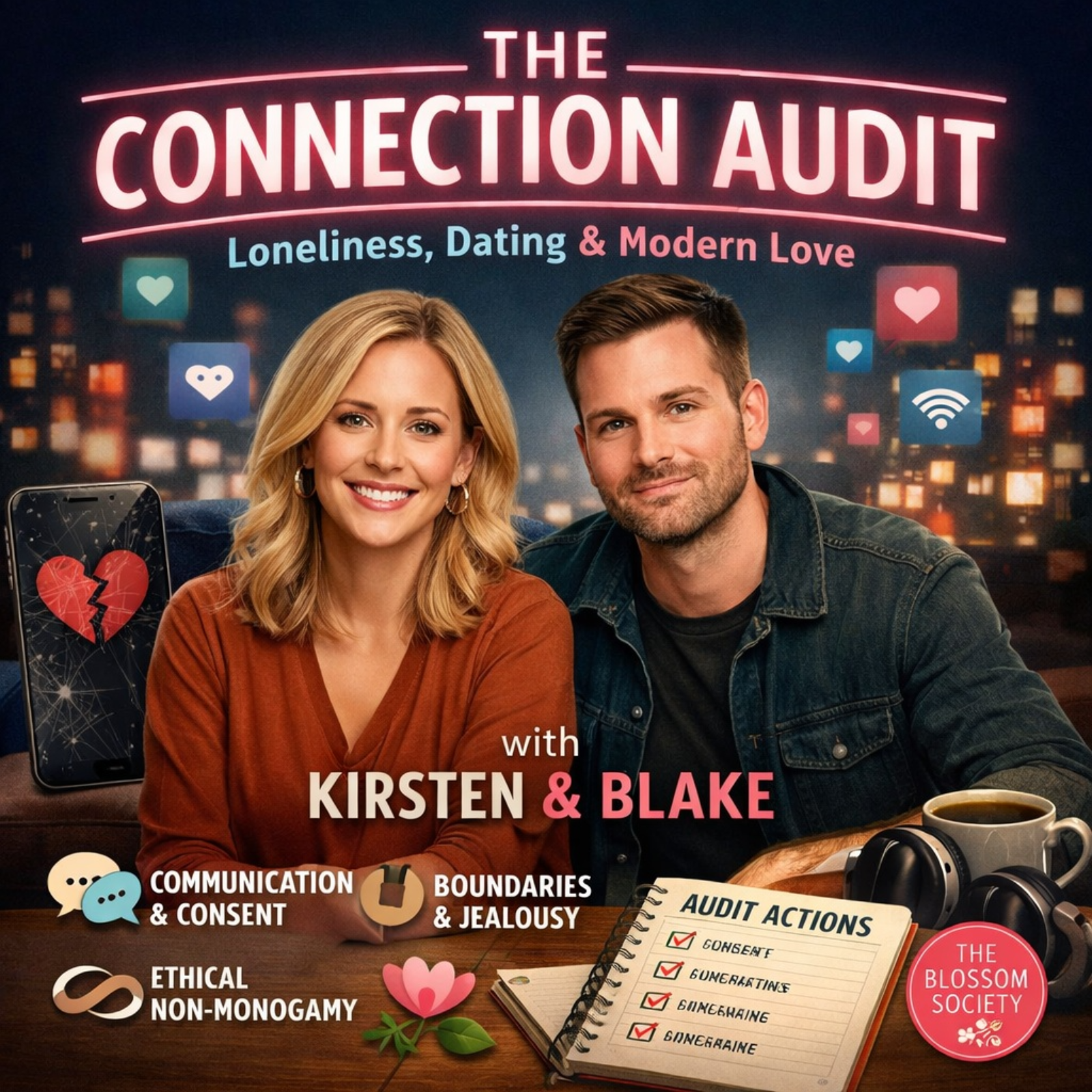
The Connection Audit is a clear-eyed podcast about modern relationships—what’s changed, what’s broken, and what actually helps people connect with respect. Hosted by Kirsten and Blake, it cuts through the noise around dating culture and ethical non-monogamy (ENM) and focuses on the emotional skills most of us were never taught.What we coverConsent, boundaries, and clear agreementsCommunication that actually works (before, during, and after difficult moments)Dating culture, “app fatigue”, rejection, and emotional burnoutJealousy, insecurity, attachment, and repair after conflictENM fundamentals: pacing, aftercare, and ethical behaviour in the lifestyleThe real-world standards that keep women safer and connection healthierWhy listenIf you’re tired of chaos, mixed messages, and performative “relationship advice”, this is for you. Each episode offers practical language, grounded frameworks, and a
-
30
When Openness Moves Faster Than Truth
When Openness Moves Faster Than TruthWhat happens when a couple opens their relationship before the truth has caught up?In this episode of The Connection Audit, Kirsten & Blake audit one of the quieter risks in ENM, swinging & open relationships: the gap between what a couple says they are ready for & what they are actually able to hold emotionally.Because openness can look exciting from the outside. It can sound progressive, liberated & confident. But if one person is saying yes while swallowing fear, uncertainty or resentment, the relationship may not be expanding — it may be outrunning honesty.This episode looks at the difference between genuine consent & quiet accommodation. Between curiosity & pressure. Between a shared adventure & one partner trying to keep up because they are scared of losing the relationship.Kirsten & Blake explore why couples can move too quickly into rules, apps, events or play before doing the slower work: naming fears, checking desire, agreeing pace, building repair skills & making sure both people feel safe enough to tell the truth.They also challenge a common cultural myth: that being “open” automatically means being evolved. In reality, openness without emotional honesty can become another performance. The question is not simply, “Are we allowed to do this?” It is, “Can we talk about what this is bringing up without punishment, withdrawal or collapse?”Through the TBS lens, this conversation is not anti-ENM. It is pro-truth, pro-consent & pro-relationship integrity. Ethical non-monogamy is not proven by how quickly people say yes. It is proven by how carefully they listen when one person says, “I’m not sure.”This episode is for couples considering ENM, people already in the lifestyle, anyone who has felt left behind by the pace of a relationship, & anyone who wants connection with more honesty, less performance & better repair.You’ll hear:• Why readiness is not the same as curiosity • How one partner can appear “fine” while quietly shutting down • Why pressure can hide inside excitement • The difference between consent, compliance & emotional safety • What couples should audit before opening further • Why TBS places education, pacing & standards before accessBecause better relationships do not happen by accident. They need truth, timing, care & the courage to slow down before something breaks.
-
29
Romance Fraud: Why It Targets Trust, Not Intelligence
Romance fraud is not about stupidity. It targets trust, attachment, hope & the human wish to be seen.In this episode of The Connection Audit, Kirsten & Blake audit what happens when connection becomes extraction. We look at how scam behaviour can appear emotionally fluent, patient, values-led, sexually plausible & even respectful at first — before money, crypto, gift cards, identity documents, urgent favours, secrecy, off-platform pressure or sexual-image coercion enter the conversation.This is not a fear-led episode. It is a practical, compassionate look at staged trust capture: accelerated intimacy, plausible distance, secrecy, urgency, shame, & why capable people can become caught in a pattern that feels less like a transaction & more like protecting a relationship.We also explore why ENM, CNM, swinging & lifestyle spaces need a more nuanced safety conversation. Privacy can be legitimate. Discretion can be healthy. But secrecy used to stop reality-testing is different. Privacy protects a boundary; secrecy can protect the scam.You’ll hear a clear audit of the culture, the behaviour, & the solution: how to pause without becoming cynical, how to spot extraction points, why “verified” does not mean “safe”, & how The Blossom Society thinks about fraud-aware connection as part of safety-by-design.Audit actions from this episode:Treat requests for money, crypto, investments, gift cards, ID documents, parcels, bank accounts, secrecy or urgent off-platform contact as a hard pause.Remember that emotional fluency is not proof of safety.Keep connection warm, but make extraction difficult, visible & reportable.Less Scrolling. More Soul.
-
28
The truth behind the so-called “vanilla tourist” label
Why are so many people feeling exhausted by mainstream dating? In this episode of The Connection Audit, Kirsten & Blake explore what is really driving people away from conventional dating culture & towards ENM, swinging, & other alternative spaces.Is it just novelty? Or are people stepping away from systems that feel high volume, low trust, emotionally draining, & thin on real connection?This episode audits the shift beneath the headlines. From dating app fatigue & low-effort interactions to the growing desire for clearer boundaries, better context, slower pace, & more honest forms of relating. Kirsten & Blake unpack why what gets dismissed as thrill-seeking is often something far more thoughtful: a search for safety, self-authorship, discernment, & connection that actually feels human.They also explore what changes when women stop performing & start choosing. Why standards sharpen. Why selectivity is not the same as lack of desire. Why calm, fit, discretion, consistency, & emotional intelligence now matter more than generic pursuit or surface-level confidence.The conversation also examines the shadow side of curiosity. What is the difference between respectful curiosity & extractive curiosity? Why should single women never be expected to become the curriculum for someone else’s awakening? & why do so many couples mistake interest for readiness when opening up?This episode offers a clear-eyed look at what people are moving away from, what they are hoping to find instead, & what safer, more intentional spaces need to do differently.
-
27
The Hidden Dynamic Behind “Women Choose, Men Are Chosen”
Why does it so often feel as though women choose, while men have to be chosen?In this episode of The Connection Audit, Kirsten & Blake unpack one of the most repeated phrases in swinging, ENM, & modern sexual culture — & ask what really sits underneath it.Because this is not just a story about desirability, status, or attention. More often, it is a story about risk, trust, pacing, filtering, & emotional steadiness.Kirsten & Blake audit the gap between how many men experience non-selection, how many women experience attention, & why those two realities are so often misunderstood. They explore why women are rarely screening only for looks, charm, or chemistry, but for something more fundamental: does this person feel safe, calm, discreet, respectful, socially aware, & easy to be around — or do they feel like work?The episode looks closely at how repeated non-selection can trigger shame, comparison, ego threat, & reactivity in men — & why some men then start solving the wrong problem. Instead of building trust, they push harder. They posture. They escalate. They mistake attraction for a sales process, when what is often being assessed is trustworthiness.Kirsten & Blake also examine the real behavioural patterns that make people harder to choose: pressure after uncertainty, entitlement after silence, rushing private access too soon, & retaliatory tone when rejection lands badly. They show why these patterns are rarely signs of strength, but often armour responses to discomfort, status anxiety, & poor emotional regulation.This audit also turns inward to couples. Because the same dynamic can show up inside relationships opening into non-monogamy, where one partner moves fast, the other slows down, & caution gets misread as obstruction instead of protection.Across the conversation, the hosts offer a clearer framework: women are sovereign over pace & access, men earn trust through conduct, & couples protect the unit through clarity & alignment.This episode is for anyone who wants to understand: how women often filter for safety before chemistry, why some men become reactive when they are not chosen, how pressure quietly kills trust, & what it would take to shift the culture away from performance & towards presence.Because confidence is not force. Attention is not invitation. Chemistry is never entitlement. & better connection does not usually come from trying harder to get picked. It comes from becoming safer to trust.Audit actions in this episode: notice where pace feels like a threat rather than information, spot the difference between pressure & presence, & ask what makes someone easier to trust, not just easier to notice.If you’ve ever felt confused by these dynamics in dating, swinging, or ENM, this episode will help you see the culture more clearly — & move through it with more steadiness, self-awareness, & respect.
-
26
Curiosity Isn’t Readiness: How to Open Your Relationship Without Breaking Down
What happens when a couple says, “Maybe we should open up,” before they’ve built the trust, pacing, clarity, or emotional steadiness to hold it?In this episode, Kirsten & Blake audit the gap between curiosity & readiness. Because wanting to open a relationship is not the same as being ready to do it well. Opening can be connective, ethical, expansive & honest — but it can also expose weak agreements, uneven desire, hidden pressure, poor pacing, unresolved resentment, or fear dressed up as freedom.Kirsten & Blake unpack the cultural myths that push couples to move too fast, including the idea that non-monogamy is proof of being more evolved, progressive, or emotionally advanced. They explore why opening up does not fix insecurity, boredom, or disconnection — it magnifies whatever is already there.This audit covers the real risks behind closed doors: velocity, emotional flooding, accommodation mistaken for consent, curiosity mistaken for readiness, & the damage caused when people talk about rules before they talk about motives. It also tackles one of the hardest truths in ENM: you cannot build ethical openness on top of un-repaired betrayal.You’ll also get practical tools couples can actually use: a traffic-light readiness check, “motives before mechanics” questions, an agreements canvas, weekly check-ins, pause scripts, repair language, stop conditions, & a clear reminder that the slower pace is the pace.Whether you are exploring ENM, swinging, polyamory, or a more open structure, this episode will help you slow down, tell the truth, & build from consent, accountability, safety, & mutual care — not fantasy, urgency, or avoidance.Because better connection rarely comes from moving faster. It usually comes from slowing down enough to tell the truth.
-
25
Dating App Fatigue: Too Much Choice, Too Little Trust
Why do dating apps feel so flat, so tiring, so lifeless — even when they are full of people?In this episode of The Connection Audit, Kirsten & Blake examine the “dead feeling” so many people describe after swiping, matching, messaging, & still ending up feeling unseen, overwhelmed, or emotionally cold. This is not an attack on technology or the people using it. It is an audit of the systems, incentives, & behaviours shaping modern dating.The episode explores whether dating apps feel dead because connection has been pushed through a high-volume, low-trust machine — one that rewards speed, performance, optimisation, & endless choice, while leaving users to carry the burden of safety, vetting, context, rejection, & emotional admin.Kirsten & Blake look at the cultural forces behind the fatigue: emotional capitalism, consumer logic in romance, disappearing third places, casino-style app mechanics, choice overload, rejection mindset, “the ick”, & the way intimacy has started to sound like HR language. They unpack how people are being taught to manage one another rather than relate to one another.They also examine the very different pressures placed on women, men, couples, & those exploring ENM. For many women, dating apps can feel like a threat matrix disguised as opportunity. For many men, they can feel like a desert of silence, scarcity, & performance pressure. For couples or people exploring ethical non-monogamy, the challenge is often context, disclosure, boundaries, pace, & clarity in systems that were never built for nuance.Most importantly, this episode asks what a healthier alternative might look like.What would happen if platforms absorbed more of the labour they currently dump on users? What if connection was designed around trust, accountability, pacing, better context, & earned access rather than endless noise? What if fewer, better interactions mattered more than raw activity?This is where the audit turns toward solution. Kirsten & Blake explore the rise of slow dating, the growing rejection of swipe culture, & why safer, more intentional infrastructure may matter more than more features, more messages, or more matches.If you have ever stared at a dating app & thought, “Why does this feel so dead?”, this episode will help you understand why. More than that, it will show what becomes possible when we stop designing for volume & start designing for living, breathing human connection.Because better connection rarely comes from faster swiping. It comes from more context, more honesty, more accountability, & safer ways of relating.
-
24
When people say, “I’m jealous,” is that really what they mean? Name the Feeling Before You Solve the Problem
When people say, “I’m jealous,” is that really what they mean?In this episode of The Connection Audit, Kirsten & Blake unpack the emotional language people reach for in love, dating, & ethical non-monogamy when something hurts, stings, or feels suddenly unsafe. Because not every difficult feeling is jealousy. Sometimes it is envy. Sometimes it is exclusion. Sometimes it is shame, activation, comparison, fear of loss, or the disorientation that follows a broken expectation.This audit explores why naming the wrong feeling often leads to the wrong solution. We ask for reassurance when we need repair. We reach for control when we need clarity. We blame ourselves for “being triggered” when the real issue may be a broken agreement, pressure, or conduct that needs to be addressed directly.Kirsten & Blake examine the modern pressure to appear unbothered, especially in spaces shaped by the myth of the “evolved” partner. They break down the difference between jealousy as threat, envy as lack, exclusion as disconnection, shame as self-attack, & activation as nervous-system alarm, then show how those distinctions can change the conversation entirely.The episode also offers practical tools you can use straight away: a structured pause, 2 anchor questions, proportionate requests, calmer scripts, & a clearer way to tell the difference between an emotional wobble, an agreement issue, & a genuine conduct problem.If you have ever struggled to explain what you were really feeling in a relationship, this episode will help you get more accurate, more honest, & more skilful with the truth.Follow The Connection Audit for more clear-eyed conversations on modern intimacy, consent, boundaries, repair, & the relationship skills most people were never taught.
-
23
What ENM Gets Right About Modern Dating
What if some of the things people find most difficult in mainstream dating — mixed signals, ambiguity, performance, ghosting, pressure, & the fear of saying what they actually want — are exactly the things some people in ethical non-monogamy are learning to handle more directly?In this episode of The Connection Audit, Kirsten & Blake explore whether some people in E&M experience more autonomy, honesty, confidence, clarity, & belonging than they do in mainstream dating culture — & what might explain that difference.This is not a romanticised take on E&M, nor a dismissal of monogamy. It is a careful audit of relational culture. We examine the gap between public assumptions & the emerging evidence, including the way mononormativity shapes what people think a “healthy” relationship should look like.Kirsten & Blake unpack key distinctions between cheating & consensual non-monogamy, explain terms like polyamory, solo polyamory, kitchen table polyamory, swinging, & relationship anarchy, & explore why explicit agreements matter so much when inherited scripts no longer do the heavy lifting.They also look at the practical skills that often sit underneath healthier relating: clearer boundaries, ongoing consent, better conflict resolution, more honest conversations about jealousy, safer sex responsibility, routine check-ins, & a greater willingness to define relationships deliberately rather than perform them by default.The episode asks an important question: are some of the reported benefits of E&M really about the structure itself, or are they partly about community, intention, selection effects, & the fact that these spaces sometimes demand more emotional literacy than mainstream dating does?Along the way, the conversation explores: how jealousy can be treated as information rather than catastrophe, why compersion is often a learned skill rather than a personality trait, how singles in E&M may find belonging without forced pair-bonding, & what anyone — monogamous or not — can borrow from these relational tools.This is an episode about honesty over performance, intention over assumption, & why better connection rarely comes from pretending less matters. It usually comes from more care, more skill, & more truthful conversation.If you’ve ever felt bruised by modern dating, pressured by outdated scripts, or curious about what healthier relational culture could look like, this audit is for you.
-
22
The Bloom Myth: Why Love Cannot Stay at Full Intensity Forever
What if feeling exhausted in your relationship does not mean the connection is failing? In this episode, Kirsten and Blake audit the cultural myth that love should stay in constant full bloom. They unpack why “when petals wilt” is often not a warning of collapse, but a maintenance signal from an overloaded nervous system. From lifestyle fatigue and unintegrated intensity to performed consent, amber-to-red burnout, and the pressure to stay the “cool partner”, this conversation explores what really happens when people ignore their limits. Most importantly, it offers practical tools for repair, including the 48-hour maintain first aid, aftercare, and seasonal pacing. A thoughtful, honest episode for anyone navigating dating, ENM, or simply trying to love with more clarity, steadiness, and self-respect.
-
21
The Friendship Recession & Why Loneliness For Men In Their Mid-30's Hurts So Much
Loneliness is not just about being alone. It is the ache of not feeling seen, safe, or truly known. In this episode, Kirsten & Blake audit the modern loneliness epidemic: why a crowded life can still feel empty, why younger people are reporting some of the highest loneliness rates, why men in their mid-30's often hit a friendship recession, & how modern culture keeps people performing connection rather than actually living it.They explore the difference between social isolation & subjective loneliness, the “loneliness loop” that turns disconnection into hyper-vigilance, & why attention, sex, or endless messaging can feel like relief without ever becoming real repair. The conversation also looks at consent under vulnerability, the impossible pressure placed on romantic partners to be an entire village, & the hidden physical cost of chronic disconnection.Most importantly, this episode offers a way forward. Kirsten & Blake unpack protective friction, predictable belonging, side-by-side friendship, low-pressure ways to reconnect after silence, & the small relational moves that help retrain a nervous system expecting rejection. If you have ever felt lonely in a relationship, lonely in a crowded room, or lonely while scrolling through endless conversations, this episode will land.Stay with us to the end for practical audit actions you can use straight away, plus a grounded look at how The Blossom Society is building safer, more thoughtful spaces for genuine connection. Because loneliness is not solved by more noise, more options, or more attention. It is eased through trust, structure, honesty, & the courage to grow deeper roots.
-
20
Non-Monogamy Is Not a Resuscitation Tool
What happens when a relationship hasn’t fully broken down… but it no longer feels alive?In this episode of The Connection Audit, Kirsten and Blake examine a pattern unfolding quietly in thousands of homes: couples who are exhausted, co-parenting more than connecting, and wondering whether opening the relationship might bring back the spark.This is a compassionate, clear-eyed conversation about why non-monogamy is not a resuscitation tool. Because when a relationship is already running on silence, low-level conflict, emotional exhaustion, and administrative survival mode, adding more complexity rarely repairs what is missing. It amplifies it.Together, Kirsten and Blake unpack the cultural myths that set couples up to fail — the pressure of the “everything partner”, the dopamine trap of modern dating, and the fantasy that novelty can fix internal distance. They explore what survival mode really looks like behind closed doors, from dishwasher arguments that are never about the dishwasher, to the slow disappearance of curiosity, intimacy, and warmth.Most importantly, this episode offers a more grounded path forward. Instead of using other people as a solution to disconnection at home, the hosts explore how couples can rebuild safety, friendship, and emotional connection first. Expect practical ideas around micro-moments, honest conversations, phone-free check-ins, and what it means to build “Season 2” of a relationship rather than chasing the ghost of Season 1.If you’ve ever wondered whether ENM can save a struggling relationship, this episode will help you ask a better question: what needs rebuilding before anything new is invited in?Because connection without consciousness is chaos. But connection with awareness, honesty, and structure can become art.
-
19
What Peter’s Story Reveals About Modern Commitment
What happens when a man who looks steady, capable, and “a great catch on paper” feels quietly trapped by the very relationship script he is supposed to want?In this episode of The Connection Audit, Kirsten and Blake unpack the story of Peter — a 38-year-old ex-soldier whose life appears solid from the outside: career, fitness, friendships, discipline, loyalty. But beneath that composure sits a deeper conflict. Peter is not afraid of love. He is not afraid of commitment. He is afraid of confinement.Together, we explore how twelve formative years in the army shaped his psychology, why traditional dating left him feeling paralysed, and how the pressure of the relationship escalator — date, move in, merge, marry, repeat — created dread rather than security. This is a conversation about masculinity, autonomy, loyalty, and the hidden cost of forcing people into roles that do not fit.We also examine the turning point: a friendship built on radical clarity, explicit boundaries, and zero hidden agendas. That unexpected shift opened Peter’s eyes to a different model of connection — one where structure does not feel like a cage, and where honesty, consent, and chosen boundaries create room to breathe.This episode challenges lazy labels like “commitment-phobic” and asks a more intelligent question: what if some people are not resisting intimacy, but resisting scripts that confuse love with surrender?If you have ever felt the weight of unwritten rules, questioned the future you were told to want, or wondered whether there might be a more honest way to build connection, this episode is for you.Follow The Connection Audit for grounded conversations on modern relationships, emotional clarity, ENM, boundaries, and the skills most of us were never taught.
-
18
Sally’s Story: From Invisible Wife to Sovereign Woman
What happens when a woman does everything she was told would make her happy — the degree, the job, the house, the marriage, the baby — and still ends up feeling invisible inside her own life?In this episode of The Connection Audit, Kirsten and Blake explore Sally’s story: a single mother, coder, and woman who followed the accepted script to the letter, only to find herself emotionally unseen, isolated, and carrying a life that looked perfect on paper but felt deeply hollow in reality.Together, they unpack the pressure of the relationship escalator, the quiet erasure of identity in motherhood, the damage caused when women’s emotions are dismissed as “just hormones”, and the devastation of betrayal when relational truth is avoided for too long. They also look at the exhaustion of mainstream dating culture, why so many spaces prioritise access over depth, and what it means to finally find a community built around emotional literacy, boundaries, and genuine safety.This is a conversation about social conditioning, loss of self, divorce, healing, and the radical act of choosing clarity over compliance.If you have ever felt trapped inside a life that looked right from the outside but felt wrong on the inside, this episode will stay with you.Follow The Connection Audit for thoughtful conversations on modern relationships, dating burnout, emotional literacy, boundaries, consent, repair, and the quiet ways The Blossom Society is reshaping connection.
-
17
The Hidden Scripts Running Your Love Life
What if the biggest thing sabotaging connection isn’t your chemistry, your app, or even your communication style — but the invisible script you’ve been handed about how love is “supposed” to work?In this episode of The Connection Audit, Kirsten and Blake unpack the golden cage: the subtle but powerful system of social expectations that promises safety, approval, and belonging — but often at the cost of authenticity, desire, and honest connection.They audit the culture shaping modern relationships, from gender roles and monogamy defaults to shame, status management, and the pressure to perform rather than relate. They explore how these inherited scripts show up in real life: confusing desire, turning intimacy into performance, making honesty feel risky, and blurring the line between true consent and quiet compliance.The episode also tackles the mainstream misunderstanding of ethical non-monogamy (ENM). Instead of the chaos and sensationalism often portrayed in the media, Kirsten and Blake show how healthy ENM actually demands high standards: communication, reflection, boundaries, consent fluency, and emotional responsibility.Most importantly, this is not just diagnosis — it is practical. The episode introduces the idea of earned agency and offers a toolkit for stepping out of the cage and into more conscious connection. Expect clear, grounded takeaways on:spotting inherited scriptsnoticing the cost of complianceupgrading your understanding of consentre-framing boundaries as carerepairing well after rupturecreating living agreements that evolve with real lifeThey also highlight how The Blossom Society is designing for this kind of healthier relating through coaching-led growth, protective friction, and a women-first model that puts safety, self-knowledge, and respect at the centre.If you have ever felt like you were doing relationships “right” on paper but still felt unseen, resentful, exhausted, or strangely disconnected, this episode will give language to that experience — and a way forward.Because better connection does not come from performing harder. It comes from choosing more consciously.
-
16
Connection Without Chaos: The ENM Skills Audit - The Relationship Skills Modern Dating Never Taught You
Modern dating keeps promising freedom, choice, and connection — but for many people it delivers noise, burnout, and confusion instead. In this episode of The Connection Audit, Kirsten and Blake take a clear-eyed look at the relationship skills people actually need if they want ethical non-monogamy to be safe, respectful, and sustainable.They begin by auditing the culture: why today’s platforms reward speed, performance, and snap judgement over patience, character, and emotional honesty. From swipe fatigue and choice overload to the collision between modern consent values and outdated gender scripts, this episode explores why so many people feel exhausted before anything real has even begun.Then they audit behaviour. Why do so many men fall into the status versus character trap? Why do women so often end up carrying the emotional labour of enforcing boundaries? And why do ghosting, boundary drift, safety theatre, and avoidant silence leave people second-guessing themselves instead of building trust?Finally, Kirsten and Blake audit the solution. They unpack how The Blossom Society approaches connection differently: women are sovereign, education comes before access, and respect is treated as a learnable skill set rather than a slogan. Using TBS’s garden framework — the Vestibule, Tool Shed, Hive Mind, and Garden — they show what it looks like to build a calmer, safer, more conscious relationship ecosystem.You’ll also hear practical tools you can use straight away, including the two yes principle, repair rituals, and the green, amber, red check-in system — simple frameworks that help couples and individuals slow down, communicate clearly, and protect trust before it breaks.This episode is for anyone who is tired of chaos, curious about ENM, rebuilding trust, or simply trying to create healthier, more honest relationships. Because connection without consciousness is chaos — but connection with awareness can become an art form.
-
15
How Loneliness Lowers Your Dating Boundaries
In this episode of The Connection Audit, Kirsten and Blake take a clear-eyed look at the one topic quietly shaping modern dating and ENM spaces: loneliness. Not “being alone” — the felt absence of meaningful connection. We unpack the loneliness loop (hypervigilance, threat-scanning, shame, withdrawal), how it changes your body and identity, and why online attention can feel like medicine while actually deepening dependency. Then we audit what loneliness does to decision physics: attachment hunger, consent drift, rapid trust escalation, secrecy, and tolerating poor treatment just to avoid the void. Finally, we lay out the ethical solution: belonging with boundaries — helping people connect better, not attach faster — using protective friction, staged access, readiness checks, practical scripts, and offline scaffolding that keeps your life grounded beyond the screen. Less scrolling, more soul.
-
14
The 12 DM Mistakes That Kill Attraction (and How to Fix Them)
DMs, Rejection, and the Architecture of RespectModern dating inboxes aren’t just “a bit messy” — they’re built on a huge, unspoken imbalance: single women and couples end up doing the unpaid emotional labour of managing strangers’ feelings. In this episode, Kirsten and Blake audit what’s really happening in early direct messages (DMs) and why “just be polite” often feels weirdly dangerous.We unpack rejection sensitivity — the psychological reality where even a micro-rejection can trigger a pain response and a fast, hostile “hot-state” reaction. Online spaces have zero friction, so embarrassment turns into instant volatility with no social brakes.From there, we audit behaviour (not people) and name 12 teachable DM patterns that reliably ruin early connection — without shaming, sensationalism, or judgement:Pacing & boundariesCommunication & toneEmotional regulationENM-specific logistics & safetyThen we audit the solution: The Blossom Society’s DM Feedback Loop — a behaviour-shaping system designed around women are sovereign and education before engagement. TBS_Vision_Story_Ethos_V2_ENM_v… Instead of forcing members to craft delicate rejections, the system shifts emotional labour back onto the platform:The two-lane model: Coaching vs SafetySafety lane: coercion after a “no”, angry/shaming language, entitlement, privacy threats, minimising sexual health protocols, hostile triangulation → straight to human moderation with strict response targets.Coaching lane: non-malicious missed standards → the recipient taps “Not for me” (10 seconds), and the sender receives a face-saving “Garden Standard” coaching note focused on behaviour, not character — with better examples and a micro-lesson link.Protective friction that prevents retaliationOpening the coaching note triggers a 120-minute reply lock (cool-down).A clear 24-hour no-recontact boundary is displayed — no debate, no negotiation.Accountability that escalates with patternsA couple of notes = guidance.3 notes in 14 days = rate limits + a short reflection unlock (micro-quiz).5 notes in a month = mandatory refresher module before messaging again.Audit Actions (takeaways you can use today)Separate behaviour from identity: critique the message pattern, not the person.Keep pacing sacred: if you’re unsure, slow down and ask for consent to explore.Replace chasing with clarity: one message, then wait — silence isn’t a negotiation.Treat safety logistics as non-negotiable: anyone who minimises them is telling on themselves.
-
13
Why Ethical Non Monogamy (ENM) Requires Female Sovereignty
Modern dating isn’t exhausting because you’re broken — it’s exhausting because the environment is engineered for speed, performance, and disposability.In this kickoff episode, Kirsten and Blake audit the “water we’re all swimming in” and name the hidden mechanisms driving dating burnout and the loneliness paradox: we’re more digitally connected than ever, yet more isolated in real life.We unpack:“Speed replaces judgement”: split-second swipes force complex humans into flat adverts — rewarding posturing over character.Choice overload: infinite options create a background anxiety that “someone better is one swipe away”, killing patience for normal friction and repair.Ghosting as ambiguous loss: when silence becomes rejection, the nervous system spirals — replaying texts, self-blaming, and losing closure.Context collapse: the fear of being recognised (work, neighbours, school gates) pushes people into secrecy — and secrecy makes trust and accountability harder.Lifestyle fatigue: ENM can be exhilarating, but the pace, logistics, and emotional labour can burn people out fast without pacing and aftercare.The hundred-year shift: modern ideals (equality, consent, emotional literacy) collide with old scripts (status signalling, “cool girl” accommodation, gendered double standards).ENM in plain English: not a loophole for cheating — it’s consent, clarity, and the freedom to say “no” without punishment.Common traps we see repeatedly:the maturity trap (“we opened up, so we must be evolved”)status signalling over character (motorbikes/gym shots/read-as-performance)the cool girl trap (suppressing needs to be chosen)gatekeeping without dignity (hotness-screening + ghosting)couples’ panic response (treating jealousy or a dip as “failure” instead of a cue to slow down, repair, and reset)Finally, we introduce a calmer alternative: The Blossom Society — a coaching-led, standards-first community built on education before access and the design principle “Women are sovereign” (women set the pace and tone; trust is earned and visible). You’ll hear how the Garden metaphor (Vestibule → Tool Shed → Hive Mind → Garden) creates protected pacing, better vetting, and a culture where doing the work is attractive.Audit actions (try these this week):Slow the interface down: set a “two-message rule” before deciding yes/no.Closure script (anti-ghosting): “Thank you — I don’t feel the right fit. Wishing you well.”Context plan: decide what you’ll reveal when, and what stays private until trust is earned.Couples’ Two-Yes check: one “maybe” = “not yet” (and that’s valid).Profile audit: swap status symbols for warmth, context, and evidence of emotional maturity.
-
12
The Credibility Gap: When Good Men Look Like Red Flags
Dating apps feel like visual noise — and it’s not your imagination. In this episode of The Connection Audit, Kirsten and Blake unpack why the attention economy rewards peacocking (motorbikes, gym mirrors, luxury flex, aggressive poses) while women are screening for warmth, safety, and emotional regulation. We break down the ‘mistranslation’ problem: men signal competence; women read risk — creating cognitive-load burnout for women and a rejection feedback loop for men. Then we audit the fix: the Two-Second Rule (safe / neutral / on-guard), the ‘feeling intention’ exercise, and a 5-photo Trust Stack (clear face, honest full-body, ‘doing life’, warm social proof, values-in-context). We also do a caption makeover — swapping ‘no drama’ and ‘prove you’re real’ for accountable, consent-led language. Audit actions: run your lead photo through the safety test, rebuild your stack, and rewrite your bio for clarity.
-
11
Un-integrated Intensity: Why We Crash
Ever hit that sudden wall where the spark in your relationship (or social life) just… dies? In this episode, Kirsten and Blake audit TBS’s internal playbook “When Petals Wilt” — a hard-nosed strategy disguised as softness. We unpack unintegrated intensity: the NRE sprint → overscheduling → nervous-system crash → shame → silent churn (or silent breakup). The twist: wilting isn’t failure, it’s a maintenance signal — a check-engine light.You’ll hear how TBS builds protective friction (a 48-hour Maintain First Aid), consent-led pacing, and copy-paste scripts that act like a prosthetic prefrontal cortex when you’re overwhelmed. Plus: why Women are Sovereign means saying no is power, not proof you don’t belong.Audit actions: spot your Amber signs, run a 48-hour reset, and borrow a script before you spiral.
-
10
Privacy Panic: What To Do When You Spot Your Boss
When your “private life” collides with your public one, your nervous system treats it like a threat. In this episode, Kirsten and Blake unpack context collapse: the gut-drop moment you spot your boss, neighbour, or school parent on an ENM app or in a club. We explore why recognition triggers fight/flight/freeze, how reputational harm and power dynamics hit women harder (“women are sovereign”), and why “soft blackmail” is often about leverage, not threats.Then we audit the practical protections: the 90-second protocol (Pause → Regulate → Choose), a 10-minute partner check-in script, and a green/amber/red triage so moderators support behaviour without sliding into therapy. On the product side: protective friction, consent-before-disclosure, no outing/no hinting, fast block + cool-down mode, and calm micro-copy that helps you “protect your future self”.Audit Actions: 1) Write your next-safest-step plan. 2) Remove identifiers from photos. 3) Practise Pause-Regulate-Choose.
-
9
If You Reward Volume, You Get Noise!!
Kirsten and Blake look in to how The Blossom Society are thinking about group chats and group chat fatigue. This episode audits group chat fatigue as a design problem, not a personal failure. Using an internal strategy stack from The Blossom Society (TBS) — including a consulting psychologist’s report — we unpack “social attentional demand”, context reconstruction, and why newcomers get crushed by belonging pressure and the “status treadmill”. Then we turn it practical: a coping playbook built around Pace, Purpose, Position, and Sense-making (including the 30-message catch-up limit). Finally, we zoom out to platform solutions: front-gate announcements, default-muted timeboxed chats, slow chats, weekly digests, and rewarding conduct over volume — all framed as “consent with attention”. (Education only, not therapy.)
-
8
Education Precedes Engagement: The Testing Conversation Done Right
In this episode, we unpack the behind-the-scenes debate inside The Blossom Society (TBS) — a coaching-led community for ethical non-monogamy — as the team wrestles with a deceptively simple question: how do you talk about sexual health and testing in a way that keeps people safer without drifting into medical advice, legal exposure, or privacy catastrophe?You’ll hear how the Head of Coaching draws a hard line: we don’t prescribe testing intervals or interpret results — we coach the courage and language to have the conversation. The Marketing Director re-frames the message so it doesn’t feel like a clinic waiting room, tying it to a core principle: women are sovereign — boundaries aren’t “killing the mood”, they’re leadership. And the COO brings the cold realities: duty creep, GDPR “special category” health data, defamation risks, and why “verified” safety badges can create a dangerous illusion of certainty.The conclusion is blunt and surprisingly liberating: there is no app for courage. Real safety isn’t a green tick — it’s the skill to look someone in the eye, state your boundary, ask the awkward question, and walk away when values don’t match.
-
7
Replacing dating bios with competency tests
Dating profiles are all talk—so what if trust came from proof? In this Deep Dive, we unpack internal memos from The Blossom Society proposing to replace dating bios with competency tests. Men earn a Verified Conduct mark by completing scenario-led assessments across consent & safety, tone, emotional regulation, etiquette, and the underrated skill of “aftercare & repair”—how you own mistakes and rebuild trust. The system includes zero-tolerance critical fails (ignore a “no” and you fail) plus 180-day re-certification to keep standards alive. We explore why the team embraces “protective friction” (hard on purpose), and why their guiding principle shifts from “women first” to “women are sovereign.” In a world of AI-written bios and endless noise, could verified behavior become the new currency of modern dating?Replacing dating bios with competency testsVerified Conduct badge / verified behavior in datingDating app accreditation systemScenario-based dating safety assessmentConsent and boundaries “critical fail” testEmotional regulation and rejection resilience for menAftercare and repair as relationship skillsProtective friction in dating app designWomen are sovereign (autonomy and consent framework)Proof before payment / trust-building on-boarding funnel
-
6
The Psychology Behind Safer Dating Apps (Reactance, Rage, and Resilience)
Can a dating app be safe without turning into a joyless ghost town—and can it stay fun without becoming a toxic wasteland? In this episode of Deep Dive, we unpack a raw internal strategy thread from the team behind “The Blossom Society,” reacting to fresh research on young men, masculinity, and online behavior.You’ll hear how they translate psychology into product design: cluster-based risk tiers, scenario-based on-boarding, and “protective friction” like cool-downs, message scaffolds, and language nudges—plus a bold idea they call psychological inoculation: teaching users to spot rage-bait, resist algorithm distortion, and build rejection resilience.If you care about trust & safety, community health, dating culture, or the future of online interaction, this one will stick with you—especially the line: “Attraction is not a debt.”In this episode:Why “broad shaming” backfires (reactance + behavioral leakage)Risk stratification that tests behavior, not opinionsCoaching modules that build “antibodies” to toxic narrativesFriction as a feature: slowing users down to prevent harm
-
5
The Safety Algorithm: How Platforms Score “Risk”
Platforms are stuck between a “safe ghost town” and a “toxic wasteland.” This Deep Dive unpacks a raw internal strategy thread from the Blossom Society, a dating/social platform trying to reduce harassment without broad shaming. Using insights from the 2025 YouGov study on young men and misogyny, they propose cluster-based risk tiers, scenario-based onboarding, and a psychological “inoculation” course that teaches algorithm literacy and rejection resilience (“attraction is not a debt”). We explore protective friction—rate limits, guided first messages, cool-down timeouts, and language nudges—and ask: can better interface design civilize online behavior?
-
4
Inoculating Men Against Toxic Dating Behavior
A CEO faces the classic moderation trap: lock down too hard and you get a safe ghost town; loosen up and you get a toxic wasteland. Using an internal strategy thread from The Blossom Society (TBS), the episode explores a third way: engineer culture proactively. Drawing on YouGov’s 2025 study on young men, the team rejects “young men = misogyny” and instead builds a cluster-based risk model (low/medium/high) driven by scenario performance, not self-report. Medium-risk users get guardrails and coaching; high-risk users are restricted pending remediation and human review. The “inoculation” module teaches men to spot algorithm distortion, selection bias, and build rejection resilience (“attraction is not a debt”). Post-accreditation “protective friction” adds rate limits, first-message scaffolds, cool-downs after rejection, and language nudges. Success metrics: reports per 1,000 conversations by tier, repeat-offender rate, time-to-restriction, women-first trust signal in 14 days, and gate completion
-
3
Couples Re-Meet Strategy - Before Opening Up The Relationship
Podcast Notes — Protective Friction (The Blossom Society’s “earned access” design)Modern dating platforms optimise for low friction: fast sign-ups, instant messaging, high volume. The audit finding is blunt — when access is effortless, women (especially single women) absorb the cost in safety, overwhelm, and emotional labour. When they leave, the whole ecosystem fails.This episode explores Protective Friction: intentional design that slows people down on purpose — not to be awkward, but to protect the most exposed users and reward mature behaviour.Key ideas coveredWhy single women carry disproportionate risk in open-message environments (pressure, flooding, being treated like a commodity).Why “more access” doesn’t equal better connection — it often produces noise, entitlement, and burnout.How The Blossom Society uses friction as teaching: the barrier is the lesson.The mechanisms (what makes the friction “protective”)The Gate (men’s accreditation before messaging): Messaging is blocked until a 7-module accreditation is completed — a competency framework built around consent, boundaries, scenario judgement, and respectful communication. No “pay, join, message” pipeline.Couples’ higher standard when contacting single women: Couples can message couples and single men freely, but messaging single women requires both partners to be verified and accredited — with ongoing compliance, not a one-time tick.Maintain / “Current” status (recertification every 180 days): Trust is treated as a living behaviour. If recertification lapses, access to message single women is paused immediately. Standards are something you keep, not something you claim.Petals economy (earned access, not purchasable): Petals are required to message single women — and crucially, you can’t buy them. They’re earned through reflection and focus modules, pushing members to slow down and ask: “Is this connection worth the work?” A quality loop is built in: rebates return Petals when messages are responded to or marked as respectful, rewarding intention over spam.Sender Tag Integrity (who’s actually typing): Prevents a common deception: thinking you’re speaking to a woman, then discovering it was the male partner. Sender tags (M/F) are tied to authenticated identity. Misrepresentation is treated as a major breach and triggers remediation.Critical Fail screening (no progress with coercive patterns): Pressuring language, boundary-testing, or commodifying women triggers a hard stop in training. Progress requires remediation and a re-test — protecting the space before harm is normalised.The takeawayProtective friction reframes access as a privilege earned through skill, consistency, and accountability. The platform is designed like a garden — curated for health — not a nightclub queue optimised for throughput.Core closing line: Skills, standards, and the courage to be honest.
-
2
Negotiated Intimacy: Autonomy and Design in Modern Relationships
Modern relationships are shifting from institutional roles to negotiated intimacy driven by women's autonomy. This transition makes ethically non-monogamous structures more viable. Success requires men to develop emotional competence over traditional "provider" signals
-
1
Deep Dive - The Connection Audit - The Epidemic of Modern Loneliness & Dating Burnout
The Connection Audit explores the modern loneliness epidemic and dating burnout — and the quiet ways The Blossom Society is reshaping intimacy, commitment, and desire. Hosts Kirsten and Blake examine how technology and its incentives can erode genuine connection, reward performative behaviour, and leave people stuck in outdated relationship scripts.Each episode audits a real theme in modern relating — communication, consent, boundaries, jealousy, attachment, and repair — including the realities of ethical non-monogamy (ENM) without sensationalism or judgement. You’ll leave with practical takeaways: clear frameworks, boundary scripts you can borrow, and “audit actions” you can apply immediately.The show highlights The Blossom Society (TBS), a women-first, standards-led platform designed around education, trust, and accountability — because better relationships don’t happen by accident.
We're indexing this podcast's transcripts for the first time — this can take a minute or two. We'll show results as soon as they're ready.
No matches for "" in this podcast's transcripts.
No topics indexed yet for this podcast.
Loading reviews...
ABOUT THIS SHOW
The Connection Audit is a clear-eyed podcast about modern relationships—what’s changed, what’s broken, and what actually helps people connect with respect. Hosted by Kirsten and Blake, it cuts through the noise around dating culture and ethical non-monogamy (ENM) and focuses on the emotional skills most of us were never taught.What we coverConsent, boundaries, and clear agreementsCommunication that actually works (before, during, and after difficult moments)Dating culture, “app fatigue”, rejection, and emotional burnoutJealousy, insecurity, attachment, and repair after conflictENM fundamentals: pacing, aftercare, and ethical behaviour in the lifestyleThe real-world standards that keep women safer and connection healthierWhy listenIf you’re tired of chaos, mixed messages, and performative “relationship advice”, this is for you. Each episode offers practical language, grounded frameworks, and a
HOSTED BY
The Connection Audit
CATEGORIES
Loading similar podcasts...
Frequently Asked Questions
How many episodes does For anyone bruised by modern dating or outdated scripts, we offer a healthier lens to look through. have?
For anyone bruised by modern dating or outdated scripts, we offer a healthier lens to look through. currently has 30 episodes available on PodParley. New episodes are automatically indexed when they're published to the podcast feed.
What is For anyone bruised by modern dating or outdated scripts, we offer a healthier lens to look through. about?
The Connection Audit is a clear-eyed podcast about modern relationships—what’s changed, what’s broken, and what actually helps people connect with respect. Hosted by Kirsten and Blake, it cuts through the noise around dating culture and ethical non-monogamy (ENM) and focuses on the emotional skills...
How often does For anyone bruised by modern dating or outdated scripts, we offer a healthier lens to look through. release new episodes?
For anyone bruised by modern dating or outdated scripts, we offer a healthier lens to look through. has 30 episodes. Check the episode list to see recent publication dates and frequency.
Where can I listen to For anyone bruised by modern dating or outdated scripts, we offer a healthier lens to look through.?
You can listen to For anyone bruised by modern dating or outdated scripts, we offer a healthier lens to look through. on PodParley by clicking any episode. We provide an embedded audio player for direct listening, and you can also subscribe via your preferred podcast app using the RSS feed.
Who hosts For anyone bruised by modern dating or outdated scripts, we offer a healthier lens to look through.?
For anyone bruised by modern dating or outdated scripts, we offer a healthier lens to look through. is created and hosted by The Connection Audit.
URL copied to clipboard!