
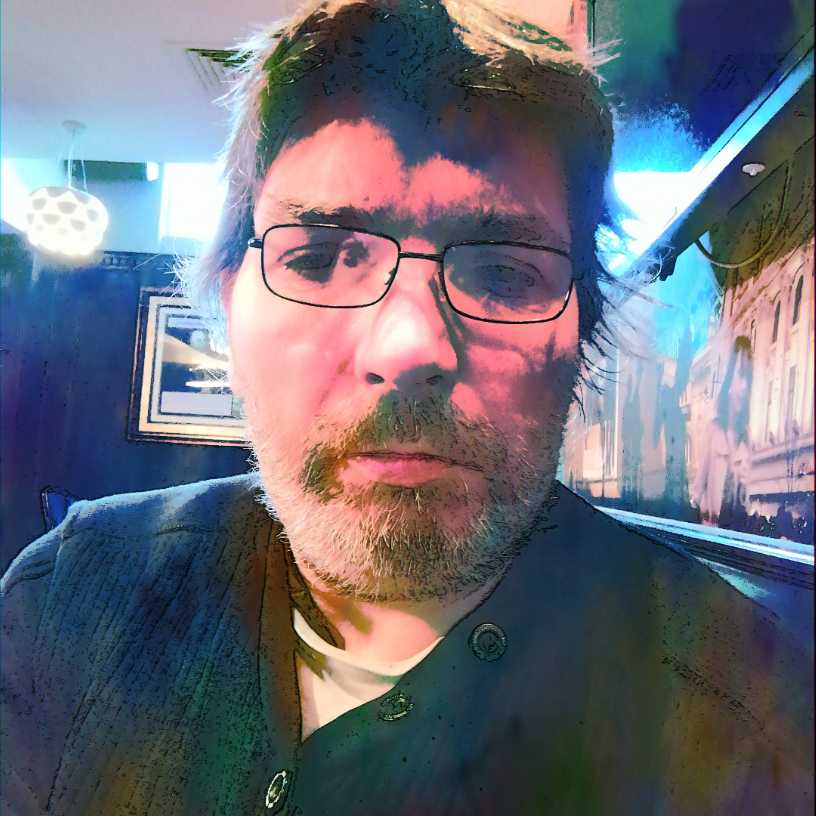
PODCAST · education
Free Association Podcast Radio Show And Roundtable
by radioprojects Dennis Barker
A combination of my thoughts and responses to other peoples thoughts.
-
100
-
99
Wake Up, Remember Your Divinity: Free Association Unleashed
Tune in for a raw, wide-ranging episode of Free Association where Dennis Barker, Karen, and Dr. Lenny Time explore AI music, free will and Russian roulette, the failures of modern healthcare, governance, and the need to reimagine systems through role-play and community. Expect personal stories, philosophy, and practical reflections on end-of-life decisions, technology, and building alternative models. Catch the show every Thursday at 9 a.m. in Studio A on Revolution Radio — no scripts, no limits, just unfiltered thought.
-
98
Neon and Rust: Stories From the Corner
On a rain-streaked corner where neon meets rust, the episode follows an old street vendor, a young factory-born guitarist, and a wandering narrator, revealing small, poignant moments of ordinary lives. Against a backdrop of fading lights and forgotten songs, it explores hope, struggle, and the quiet dignity in everyday people — the beautiful and the busted.
-
97
Relentless Frontlines: Daily Strikes and Slow Gains in Donetsk and Zaporizhia
Heavy fighting continues in Donetsk and Zaporizhia with hundreds of strikes daily and modest territorial shifts as both sides grind for position. Ukrainian forces are mounting thousands of drone strikes to blunt Russian assaults while making incremental gains in some sectors. Ukraine’s drone and port attacks have damaged Russian oil-export capacity, while Russia fields large formations and new FPV drone tactics reaching Kramatorsk. The Zaporozhye nuclear plant remains a frontline concern after strikes near its monitoring facilities, and civilian casualties from aerial bombardment remain significant.
-
96
Summer in My Veins: A Brave New World
This episode explores a dystopian future where manufactured happiness and emotional conditioning shape everyday life. Labs, coded creeds (alpha, beta, gamma), and hypnopatic whispers replace authentic feeling and family bonds. Through characters like a longing lover and a savage who’s seen another way, the story examines control, illusion, and the cost of losing genuine emotion. It poses a stark choice: accept the promised serenity or reclaim what’s been taken.
-
95
Eyes in Every Wall
This episode plunges into an Orwellian world of constant surveillance, propaganda and erased truths. Winston and Julia fight quietly against a Party that rewrites reality while the proles sleep. Haunting images—Room 101, doublethink and the Party’s slogans—frame a tense portrait of control, fear and a fading hope for resistance.
-
94
Round World in a Square Box
This episode examines how everyday comforts and cultural habits are fading into contradictions: media noise, capitalist excess, and groupthink that mask deeper unease. Through poetic imagery—mornings, music, fungi, mountains, and the journey of a water molecule—it explores the search for truth in nature, science, and inward reflection.
-
93
The Mountain Calls My Name
A lone wanderer and ancient forces collide as a haunting journey unfolds—songs of loss, prophecy, and a mountain that calls him home. Through ravens, rivers, and thunderous light, the episode follows themes of fate, memory, and the pull of the natural and mystical world.
-
92
A Painless Year — The Cost of Manufactured Happiness
In a sterile dystopia where emotions are suppressed and happiness is chemically enforced, three outsiders—Bernard, Helmholtz, and John the Savage—challenge a society that trades freedom for comfort. The episode follows their struggle and the tragic consequences of resisting a world built to eliminate pain, culminating in a solitary death at the lighthouse that exposes the cost of a painless, controlled existence.
-
91
800,000 Years From Now: The Traveler's Lament
A lone traveler builds a vessel of brass and bone and drifts 800,000 years into a dying future, where the sun hangs red and the Eloi dance while the Morlocks rule below. He loses a loved one, witnesses humanity's decline, and tries to return to warn the past—only to find wisdom doesn't always travel with time.
-
90
Free Association: AI, Anger & Reclaiming Freedom
Free Association host Dennis Barker chats with Dr. Lenny Time and Karen in an unfiltered two-hour episode exploring AI and music, politics and voter skepticism, personal anecdotes, and pagan culture. The show mixes tech critique (OpenAI, Grok), creative experiments with AI music and poetry, candid life stories, and reminders that Revolution Radio is listener-supported and open to audience participation.
-
89
Knowledge Beyond Science: Interpreting the Facts
This episode explores how knowledge goes beyond scientific facts, arguing that scientific knowledge is only part of a larger interpretive whole. It shows that uncertainty about science often stems from doubts about interpretation rather than a lack of understanding. It examines metaphysics as a philosophical grounding that includes physics, and presents psychology as the ongoing interaction between mind and world. The episode challenges the view of philosophy as merely deconstructive. Ultimately it presents philosophy as a constructive effort to conceptualize knowledge so people can feel more secure in what they know.
-
88
Deconstruction: From Default Construction to Design
This episode explores how deconstruction does not destroy its subject but reveals and refines it, stripping away layers to reveal a truer design. It contrasts unthinking construction with a thinking mind that enables ideas to become fully realized concepts. Listeners are invited to consider the freedom of thought, the relationship between subject and object, and the clear choice to commit to conceptual emergence rather than settle for an unexamined constructed world.
-
87
Ideas vs Concepts vs Constructs: What's the Difference?
Ideas are closer to concepts than constructs because both are abstract mental representations. Concepts are foundational mental categories we use to understand the world, while ideas are creative and novel applications of those concepts. Constructs are more structured frameworks—deliberate models built for specific purposes, like psychological constructs such as intelligence or self-esteem. An idea may arise from a concept (for example, justice inspiring the idea of a fair society), but ideas are more fluid and intuitive compared to the engineered rigidity of constructs.
-
86
Breakdown: When Systems Unravel
This episode examines societal breakdown—corruption, concentrated power, resource hoarding, and the erosion of trust across institutions and relationships. Through stark images of control, misinformation, and economic strain, it highlights the rise of resistance and civil disobedience as a response to an unjust system.
-
85
Dennis Barker Is Back — Live on X!
Dennis Barker announces he's active again on X (Twitter) with a Premium Plus subscription and will host live Twitter Spaces that he previously ran on Podbean. Follow him (username: D-E-N-N-I-S-B-A-R-K-E-R) to join upcoming discussions, apply to be a speaker or co-host, and watch for new spaces hosted by Dennis.
-
84
Kidney Hope & Radio Ramblings: Free Association Unfiltered
Tune in for what's really happening every Thursday. That's Thursday at 9 a.m. in Studio A on Revolution Radio. They keep us in fear to manipulate us. They want us ignorant so we're easier to enslave. They make us murder one another so they don't have to do it themselves. Only you can break their mind control by healing the contradictions within your belief systems that allow you to accept their lies in the first place. The time has come for us to remember our divinity, who we really are, to return to what we are meant to be, a service to others, to return to nature, and to reclaim our birthright, that which is freedom. The truth? The truth will sound belligerent because it is in direct opposition to lies. So get angry, because anger is sacred, and together we can unite and rise. Rise from this darkness. Humanity, assemble. Do you want to really get to the roots of good health and stay strong for the storms ahead? Then listen to Brigid's Well, healing with the elements of life, Tuesdays 8 p.m. to 10 p.m. Eastern Time on Studio A, where stories are shared about traditional foods, Chinese medicine, and simple, healthy living skills. Listen to Brigid's Well, Tuesdays 8 p.m. to 10 p.m. Eastern Time, Studio A, right here on Revolution Radio. You're tuned to something different. No scripts, no limits, just pure, unfiltered thought. This is Free Association. Your host, Dennis Barker, brings you the ideas, the questions, and the tangents that matter. Joined by the sharp wit and insight of Karen and The One, the only Dr. Lenny Time. Three minds, two hours, zero guardrails. Free Association, because the best conversations never stay on topic. Join Dennis, Karen, and Dr. Lenny Time, Thursdays at noon, Eastern Studio B, here on Revolution Radio. Join Revolution Radio every Sunday at 5 p.m. Studio B for Strange Universe. Strange Universe. All right, thanks for listening. Why don't we take that short break here at Revolution Radio, FreedomSource.com, and yeah, we're going to get back to your host. All right, welcome, welcome, welcome. You're tuned to Revolution Radio, as the man said. This is Free Association, and I think the bump turned out really well. It was on about 30 seconds ago, but it sounds really good to me. So, I think I did a good job on the bumper, and Monster did a good job on the bumper. Between the two of us, we worked it out. So, thanks to the staff, thanks to the volunteers at Revolution Radio, we have a bumper, and I don't need to worry about this for a couple of years. We've got two guests here this afternoon. I've got the magnificent and multi-dimensional Karen, and we've got the mad Dr. Lenny Time with us as well for the next couple of hours. So, say hello folks, welcome in. Hello folks, welcome here. Howdy, howdy. Excellent. So, the only place I've really got to start is my conversation with my kidney consultant yesterday, but that's as good a place as any to start. So, I might, I'll just tell you, tell you about that really. So, they called me in at five o'clock when my normal start time for dialysis is 6.30. So, the way the system works over here is they'll send an ambulance for you, but it can be up to two hours before your appointment time. So, I could potentially have been picked up at three o'clock for a five o'clock appointment, which would have been mighty annoying. As it turned out, they came at about half past four. So, it was almost exactly right timing. I got in at exactly five o'clock and the woman I was seeing, the consultant was already, was seeing another patient. So, I had to sit and wait for 20 minutes anyway. When that appointment had finished, she called me in and we had a chat. She's basically just reading through my medical record, making sure that everything's accurate on the medical record. The main thing was that my prostate operations happened since the last time I saw her. So, that was the key thing that had to happen to allow me to have a kidney transplant. So, they've got to do some more tests on my heart and stuff. She said she's going to send me for an EKG or whatever, or lie in a tube and get a heart rhythm readout or whatever that is. I don't know exactly what it is, but that seems to be what it is. I remember being in a tube once before. So, it looks like I'm going to be on the list very shortly. So, you're not on the list yet. You still have a couple more, I call it the um, to-do list. Because it's like, you get sent, you need like dental clearance, heart clearance. I used to work on the transplant team for a year. I was like, I'm going to go back to emergency room. Nothing against transplant, but mostly the social work role was people who would call like Friday at 3 p.m. and say, I'm out of Cellcept and if I don't get the medication, I'm going to lose the kidney and it's going to be your fault. It's like, I need this. That's in the book. Yeah, so it's, yeah, I'm not, technically I'm not on the transplant list yet, but I'm getting very close to it. Once I've had me, me heart rhythm, so once I've made sure there's nothing going on with my heart, then I should be able to get on the list. And she said there's about a three and a half year waiting list for a, for a dead person's kidney. And, uh, there is the option of, of friends and family, but I don't really want to take that. There'll still be some, uh, I know what my mother's like. I know what my sister's like. There will be some, there will be some emotional blackmail involved if I took a kidney from either of them. So I'm not going to do it. What blood type do we have to match? To be honest, Lenny, I don't know what my blood type is. Um, it's the right match has to do, not a blood type, has to do with, um, six antigens. And so I can't really delve more, but just having sat in the kidney conferences every week and determining, deciding list, list, take them off the list, have them get this, you know, that kind of stuff. Um, it, it, it was the, the matching process has to do with six antigens. Right. Yeah. It's, uh, so the closer you can get it genetically, the better I think is the, is the way it kind of works. Cause friend and friends and family was better than random dead people as far as I can make out. So, uh, I'm open. I've been, I've been in the process for two years. I'm open. She didn't mean three and a half years from now. I'm hoping she meant three and a half years from two years ago. Don't worry. It's the medical profession that can tell you anything that doesn't have to be true. That's true. But I can say that from my observation, um, it is a very crazy algorithm that is followed. So when a viable kidney comes, what they're doing is matching the antigens with all the people on the waiting list. And sometimes every once in a while, there's like this amazing, uh, you know, like, Oh my gosh, five out of six antigens match, whatever. There's no doubt that this is going to Dennis, you know, but it's not just based on antigens. They, they give you points. How long has the person been on the list? Um, you know, so you get these little points and there's like little itty bitty, bitty, tiny fractions of points that separate and you know, the person that gets the call for kidney is, you know, the one that's got like 21.1 and you could be like 20.5. But here's the other thing. I've also seen people get kidneys when hold their pager and respond. And when you've got a viable kid, you can't say, well, call me back, you know? So there's so many factors. It's so complicated, but regardless, I think in this situation, the bulk of the people just, I think hope like you do, Dennis, you know, just good vibes, sending out frequency, you know, um, that kind of thing. So, but it's hard to get through that whole to do list. So kudos to you. Yeah, we're getting this. It's been a slow process, but we're, we're a major step along the way now. Uh, my relationship with the kidney consultant was getting better. I didn't have a row with her about anything yesterday. So I'm quite happy with that. Uh, she didn't challenge me on anything. So you just, you just had a history of a row with her or him? Well, no, it's a, it's a woman, a woman called Lynn. Um, I wasn't really having a row, but when they put me on war for him, she assumed it was going to be for the rest of my life. And I assumed it was going to be for six months with a review at the end of six months. So she kind of, she went off and not being happy because I challenged her authority. But as it turns out, yeah, what happened with the Walker and was six months with a review at the end of it. So I was right. Warfarin is a rat poison. What are they doing? Giving people rat poison and pretending it's blood thinner. Yeah, probably has quite a few different effects. You want one on your blood. It all depends on the dosage really. It's all, it's all completely dependent on whether it's poison. Well, I guess if they figure you're already dead, it's okay to give you poisons because it's not going to make any difference in the long run. And in the long run, I have a feeling most deaths that occur due to hospitals and doctors, not diseases, but that's just an opinion. That's quite a well-founded opinion. I think there's evidence to back it up, but it's not, it's not everything. It's, it's a percentage the same as everything is. Everything's a, everything's a percentage. Everything's relative to whatever's above and below it. So doctors do have a causal relationship with patients dying sometimes, but how are you going to prove it? Is that anything in our world that is absolute? Vodka. Good vodka is absolute. Wow. Dr. Lenny, that was so witty and fast. He's fascinating. It happens. No, it's one of those things where, where you're asking for a revolution. We all try and change the world as the Beatles once said, but the world doesn't change because there's too many players in the game that are set in their ways. And I don't know. I wonder if there's a way that we could keep the system intact and change the faces in every position, have a different process for choosing who gets what role in governance because elections don't work and every country can keep what they have now, just replace all the corrupt people, which is 98% of the people there. I'm not sure the percentage is quite that high, but it's, it's a, it's a reasonably high percentage, I think, but not, I wouldn't say it was 98%. Not where I live anyway. Are you governed by that Sturmer character? Yes, I am. Okay. You have my sympathy. He's got a bit of trouble at the moment, so he won't last very much longer. I don't think we've got local elections coming up and he's got some questions that he can't answer about Peter Mandelson. When are your elections? May the, whatever the first Thursday in May is, or the second Thursday in May, it's either the 7th or the 9th. So about three or four weeks time, three weeks time. Local elections though, not a national election. This is for local councils. Oh, okay. So I've already had the, the, the local councillor at the door, leafleting me and asking me what, who I was going to vote for. And I told him I took the polling card away because he didn't, he didn't believe that I wouldn't be voting. He was trying to convince me to vote. I'm like, no, I've already took the card away. I'm not doing it. And they wouldn't let me anyway, because I don't have any photo ID. You don't need ID in the United States. I don't vote either. I won't vote. I won't go near it. The only time I'll vote is if somebody I personally already know is running for something, but now I'm not registered. So nobody's going to ask me to vote for them. I live in a different state. I live in a state of confusion or is that California or is that one of the same? I don't know. Have you experienced the text messages? Because I'm no longer registered as well. And so I get text messages and texts for the left and the right. I just spam, spam, spam. Yeah, I could put virtually everything I get in the email and the text messages into spam and I wouldn't miss much. I don't know. Government is supposed to function with the consent of the government. And I don't know too many people who consent to any government any longer. And and anarchy is not going to work because people don't understand it and go in biased. But gee, voting sure doesn't work. And you look at the immigration problems in the United States due to voting and you shake your head and you say, that's just plain wrong. But what can a non-voter do about it? And people say, well, if you don't vote, you don't have any right. We sometimes have lefts instead of rights, but gee, I don't want to play the game anymore on the turf that has already been staked out. So maybe we can change. Maybe we can find a different way of having the system actually represent the people like it sort of was supposed to. I don't know about that, but I do want to say this, Dennis. I'm excited for you that you are close to your being done with your two. You keep you keep cutting out frequency. You're in my my vibrations and frequency hoping for a listing soon. Just I'm praying for you because I know it's hard to be a dialysis. So just I want the best for you. I just wanted to say that. I appreciate that, Karen. I know, you know, I know you've been you've been around the block a few times with dialysis kidney patients. So yeah, it's very, it's very boring and very dull. And I spent a lot of time watching Netflix or YouTube, but you can get through it. You can get through it. It's all it's a matter of perspective. It's a matter of how you approach everything in life, how you approach it that makes a difference. If you go in being miserable and complaining all the time, then you're going to come out being miserable and complaining all the time. Yep, I agree. In fact, I just made a post recently. Not that I'm social media hungry, but it's on Substack that the you are an extension of your attention. Does that make sense? It makes total sense to me. My attention jumps all over the place. So I'm connected to a lot of different things with my attention. So it can be anything from geopolitics to what on earth is going on in the next next door or downstairs flat or whatever it is. But yeah, look, the local situation is pretty calm. The local elections will shake out a lot of the political stuff for a couple of years. Starmer goes after the local election results, that at least we've got a fresh face in there. It might not make very much difference to the policies, but at least we've got a fresh face in there. So I think everybody's pretty much had enough of Starmer now. Yeah, I guess you have to give your attention with intention to get the desired results. So I think the world leadership is ridiculously awful, but I'm not sure that I could do any better given the framework. It would be nice to have a shot at it, though. I think we get the leadership that we deserve. I think we get the leadership that matches the consciousness of the country, ultimately. I don't know. I'm unconscious to the political events. So I guess I'm never going to get any politicians that I actually can respect because the process to get to be a politician is broken. I do have a friend who is now running for state senate in Oregon in November. That campaign is just starting up, but since I don't live in Oregon, there's not much I can do except donate. What year is it? 2026? I'll send him $20.26. I have a saying that I came up with in my 30s after just over a decade of working in dysfunctional systems. I used to tell the students that I supervised and whatnot to always understand you can only be as effective as the system within which you operate allows you to be. I know that's a mouthful, but it's true. Yeah, it is absolutely true. There are limitations. There are limitations to everything that every position that people hold. If you step outside of the boundaries of the role you're playing, then somebody's going to kick up a fuss. Somebody could call you in for a disciplinary hearing and ultimately you might get sacked. So you have to be aware of these things. Well, it came from working the emergency room on a Saturday while also covering the upper floors. That's like apples to oranges, right? But the emergency room is always going to dominate because it's now. It's emergent. The request for a patient needs a nebulizer at home or set up O2, it's just like, put them on the list. And at one point I was like, okay, I could possibly go clinically insane trying to fulfill all of these people's needs in a 900-bed facility. Or I prioritize and that which I don't get to is not a personal failure. It's a result that if you wanted all of this done, I wasn't set up for success. I can only be as effective as the system within which I work allows me to be. And so, I don't know, maybe think about having a second social worker, you know, like that does just in-house, you know, or there's solutions, right? But I'm on the front line. They're not going to listen to my solutions and ideas. So, it's just like, look, I did my best. I'm one person. You try to manage crazy emergency like overdoses, stabbings, gunshots, heart attacks, the whole shebang while also getting 53 pages from 10 floors above of units that want things like a person doesn't have transportation home, a person needs a nebulizer, a person needs to be set up with home oxygen, home health orders for wound care dressing. And it's like, I'm one person. There's a movie once called Multiplicity. I haven't seen that in a while. You can't multiply yourself, can you? No, you can't. But when I was working at Reuters, we had 12 people on the shift rotor. We were covering 24 hours a day, which meant that the bulk of the people on the rotor were covering out-of-hour shifts because they had to, because that was the job. That was part of why they were employed to work there. But what it meant was that we have three or four people during the day when we needed 10 people during the day. When they actually got a budget and they looked at it, they decided they needed an extra six temporary staff. So the three of us had been doing the work of nine people. And then people are surprised when things don't work according to plan quite, or it gets a bit stress-eating. The three of you chose to do the work of nine people. At a certain point, I said, I'm not going to be exploited. I'm not a fool. I'm not saying that you're a fool, Dennis. I'm sorry. I didn't mean to insinuate that, but that was my attitude towards leadership. Unfortunately, that particular role, it went with the job store. It was literally being bombarded. Every five or six seconds, you'd get a phone call. It's the world headquarters. So there's people falling in from all over the world, 24 hours a day. It's not very busy overnight or the weekends is calm, calmish after about three o'clock. But apart from that, it's a bit, they're busy shifts. They're very busy during the week. They're busy enough for one, one person at the weekend to be active all the time, taking faults and call outs and what have you. But yeah, I got well paid for it. Overlords would say, oh good, they're busy. Like you're working at a bottle factory, putting bottle caps on. I'm thinking of the opening to Laverne and Shirley where they're bottle capping, like micro brewery beer bottles. And I mean, I'm sorry, but when I'm just working with tangible, I don't know. I don't know, but you know what? Focusing on this is draining me. All right, let's change its objective. Let's focus on something else for a while. Chess club last night, I got to give a short conversational talk on J Edgar Hoover, the musical, because people are thinking of putting on a stage play for chess as a musical. So the concept was delivered farther abroad because we had talked about it here on the show. Excellent. Excellent. It was my chess club. Oh my God. Half the people had no idea who J Edgar Hoover was. But young people don't know about the story. So when you tell them, well, he was a blackmailing FBI director who cross-dressed, they look at you funny. Don't ask me, go look it up in Wikipedia. But we did choose a lot of good music. So I proposed that the chess club for their chess musical choose things by the same method. See what modern songs have to do with chess or strategy or something. There's already a musical called Chess, but don't ask me. I can't remember what the big big songs are from it, but I'm sure it was written by a couple of people from ABBA or Andrew Lloyd Webber or somebody, one of those people. What's your favorite musical movie? I like Rocky Horror show. I was thinking the same thing myself. And I love the music man. He's a music man and he sells clarinets to the kids in the town. Yep. And I played the clarinet. I played a role in the music man on stage when I was in high school. Learned all the songs. And who did you play? Were you the music man? No, no, I was just a minor role as a 16 year old kid and who helped me with the clarinet. As a 16 year old kid and who helped move things around on stage and got to be there and singing in the chorus, which wasn't good because I'm off key. I've done that a few times. You've run it on and off stage wearing different tunics and being being six different people, delivering lines from six different characters with exactly the same accent. And the only difference is you wear a different a different jacket or a different hat or something. That's the way I'm at it. Great fun though. You know, what's really embarrassing is I got a text message from a friend about four or five years ago, maybe. And they said, Hey, somebody from my hometown uploaded 1987 Wizard of Oz. I was like, no. They remade the Wizard of Oz? No. In 1987, my sister was a senior in high school and she played Glinda, the good witch. And I was cast, they used the middle school students to be munchkins. And I was one of the Lullaby League girls. We represent the Lullaby League, the Lullaby League. Okay. So, all right, great. May not ever even think about it unless I happen to go through a photo album. And, you know, your friend texts you and says, hey, there's a video online uploaded by somebody from your hometown of the whole musical. Oh, wow. I watched it. The first thing I did was send it to my niece and nephew. I would hate to think that anybody was uploading video of my dramatic performances because they were awful. Well, I had a very small part, but you know, it's funny. Joel watched it with me. And the girl that was playing Dorothy, he's like, wow, she's really bad. I couldn't stop laughing because she really was bad. It was monotone. I mean, she didn't know how to embrace character. But then Glinda, the good witch comes. He goes, we need to let your sister know that the reason she was chosen as Glinda, the good witch is because she was probably one of the only students that could actually carry believability as, like, in an adult role. Like, because Glinda, the good witch, isn't like a 16-year-old girl displaced from her Kansas home. I said, I can't believe we are analyzing this. This is insane. This happened in 1987. I remember once reading a book called Wicked that was the Wizard of Oz from the perspective of the wicked witch and how she was just trying to do her job and she was totally wronged by Dorothy. They killed her sister. They stole the ruby slippers and everything had the opposite perspective of good and bad. I think they made it into a movie. I know I read it as a book. Okay, but here's my question to you, Dr. Lenny. Are there any videos online of you in your awkward teen years? No, they didn't have videos back then. I guess people had cameras that could take stills, but video cams were just coming out when I was in middle school, mid-60s. So if somebody had a video cam, that was kind of cool, but I don't think it was until the early 70s that people actually had them to the point where you could see them. It's not like today where everybody's got their phone and anything that goes on can instantly get caught if you think about it. I could have gotten a video of my black cat beating up the neighbor's dog a couple weeks ago, but I don't have my phone in my hands. I have it on the charger when I'm home, but the cat was protecting her turf and the dog poked its head in and tried to come into the trailer, and she chased it out of the trailer, then saw it sitting in the lawn and went after it. So she was like, Muhammad Ali, sting like a butterfly, no, act like a butterfly, sting like a bee. Dennis, go ahead. Yeah, yeah, float like a butterfly, sting like a bee was, I think. Yeah. Yeah. I find that the world I live in now is populated more by animal species than it is by people, and that there's only a few people that I deal with anymore in my circle of people that I know, and they all know each other, but I'm the common unit in the middle that gets them to think about each other. So I think it all works good. Everybody's scrambling to try and create something local, and as long as everybody just does it, it works fine. It's only when they try and coordinate that things go wonky. But we have a theater in town, and they do stage plays every so often, and so I do have the opportunity if I wanted to act where I could get in with the local folks, but I don't think so. I think my stage days are over. Arnie, you kind of strike me more of like a stage crew type person. Yeah. I basically was a stage crew type person and just filled in roles on stage because I wasn't tongue-tied like most of the other younger people, but I don't know. As I was growing up, my mom and my younger brother both were big into theater, so I often got dragged along to take the role of stagehand. Where did you go? Oh, it's just Pennsylvania, but they had… Are we talking about downtown Pittsburgh? No, we're talking about Allentown, which, I don't know, Allentown might be fifth or sixth largest city in the state, but it was only maybe 100,000, 150,000 back then. I don't know what the population is anymore, and I don't really pay much attention to it. It's over 50 years ago that I graduated high school. No, it's 50 years this year for graduation of high school. Wow. I didn't even realize that. That means that maybe I better pay attention to the notices they're sending. How about you, Dennis? Oh, there's a… I'm at the theater not too far. It's kind of halfway between me and the hospital, so I go past it three times a week. I have been in to see one of their plays. I went in to see a production of Uncle Vanya, I think it was a Decoff play a few years ago. That's the only one I've been to as well. There was one other that I went to in Gateshead. That's called the Stoltwell Theater in Gateshead, which has got amateur productions as well. So they do one a month, I think, but I'm not in a position really to do anything public at the moment apart from radio. I was thinking about putting on a philosophy meeting, like a bigger philosophy meeting, a public philosophy meeting sometime in the autumn. So I've started thinking about ticketing for that, and I volunteered to pay for it if the philosophy people want to put it on for me. But it would have to be based on my ideas. It can't be based on what they always do. Okay, so what do you imagine this to look like? Because if you're in Rouse with just a handful of people in a pub and you're in a philosophy meeting, I'm just thinking of conflicts. Oh, yeah, this one would be a slightly bigger meeting. The meetings, they do meetings in Gosforth, which is just up the road from me, about three miles, in a church and a community hall, which I don't know whether they get it at a reduced rate because they're an educational charity or something like that, but it'll hold about 40 people. We got 25 people for the event that I went to up there, and we worked really hard to promote it, but there was only like two or three of us actually promoting the event. Everybody else just gets around talking about stuff and doesn't actually do anything. So it gets quite annoying. So what I thought I would do is I'll just provide the money for the leaflet and tell them what to do, and then if they don't do it, I can complain about them instead of them complaining about me. Well, I can tell you, as a social worker, people always do what they're told. Well, clearly. Do they not? Yes, there's not much chance of it actually working out the way I want it to, but it's a possibility that you could do it in the literature and philosophy library on a Saturday library on a Saturday morning, a couple of hours, and then we could move to Gosford for the afternoon. That might work. So then there'd be two different venues, two different topics, two different sets of speakers, and possibly two different sets of audience. I don't know, but I know the literature and philosophy library is just around the corner from where I live, and it's not very expensive. It's a bit limited, but it's okay for what it is. You may want to budget for security. Say that again, Karen? I would budget for security. Yeah, well, I'm going to talk to the philosophy people about doing an event at their preferred location, which is the Trinity Centre in Gosford, because that's where they've done the last couple of meetings. So if I can work out how much the budget is on the last one, the one I went to, they were doing food for people and not charging anybody, so that doesn't really work as a long-term proposition. To me, you need to charge people a little bit on the door, make sure you can cover the cost of the next meeting, and then if there's anything left over, you pay for food. So I want to do it a completely different way to the way that they do it, but because everybody's used to having free stuff, nobody really wants to pay. Did you ever have your Geordie Pounds meeting? No, that hasn't really happened yet, Lenny. I was in the middle of a prostate operation when it was due to start, but nobody's been really coming to the Sunday. The Sunday afternoon meeting was kind of a precursor to that, but nobody's been showing up for it. I haven't even been going to the pub myself, I've just been announcing it online to see if anybody responds, and nobody's been responding to it. So I think it's dead in the water for the time being, but it'll come back. And the challenge is that there is an expectation for immediacy by all generations, not just the younger ones, I'm saying by all generations at this point in time. And thoughtful planning and strategizing. I don't know. Whatever you're writing, come out. Yeah, if I can get it working in my head, that'll take me a month of thinking about it. Unless I do a workshop, I could do a workshop at the Lit and Phil and then have a lecture meeting or something at the Trinity Centre. Plus the room at the Lit and Phil that I want can hold about 15 people, so it's kind of workshop size. Would you then charge for attendance at the workshop? I could potentially charge something on the door for the workshop. It wouldn't be more than about the five or 750 or something like that. Right, if it's anything substantial, you'd chase everyone away. Yeah, exactly. I'd rather have a room full of two pound contributions than one person paying 20 quid. Yeah, here they put glass jars out and people can donate, and that usually works better than having prices for anything other than restaurants. Restaurants have to follow the rules, but I don't know. It would be fun to be part of a supper club where you went around and tasted other people's foods. I was thinking about, I was looking at how to ticket it online, somewhere like Eventbrite, where you can just post the event online and they'll take a small percentage for giving people tickets and protesting fees and such like. Well, they take a little bit of money, but it's all right for what you've got. It's like you'll get a certain, quite a high percentage of the door money. So we could potentially make it donate things on the door or tickets in advance and make it a fiver in advance and 10 pounds on the door or something like that. 10 pounds suggested donation as opposed to a charge. But yeah, I don't know that it's even worth engaging the public anymore. Everybody is off in their own world, and I don't have any common basis to deal with public. I'll see other people in restaurants, but I don't know. I usually eat with a friend, and if there's a larger table next to us that gets filled, the conversations at that table move into my table, and it's just annoying. People don't behave considerably at restaurants around here, and here is a rather polite place. I hesitate to think of what they do in cities. Hey, I'm going to check out for the next hour. I'm a little off today. I have some tinnitus that has me working harder than I should have to pay attention and talk, so I will catch up to you both next week after the break. No worries, Lenny. That's fine. It's all good. Feel better. So that's probably my cue to remind people that you listen to Revolution Radio, which is listener-supported, and as we've been talking about donations, there's an opportunity at the website to make a donation, to make a contribution to how the radio station is run, to pay for bandwidth and technical support and what have you. Whatever needs to be paid for still has to be paid for. It's one of those things where we all donate our time for free, but the technology needs to be paid for. So you can make a contribution either monthly or as a one-off donation at revolution.radio or it's freedomslips.org. And both of those places, they go to different websites now, I think. I checked a couple of weeks ago and they look different, so they go to different places, but they've got the same information on there, and you'll be able to make a donation by cryptocurrency or by sending PayPal or whatever it is, donation box, I think it is, as a one-off, or you can make a contribution through Patreon monthly. So yeah, there's plenty of ways to help out, or you can just come along to the Discord and join in the conversation there. That's all making a contribution. Doesn't really matter how you do it. If you can afford to give $10 or $20 or $26 or however much you can afford to give, then it's all welcome. It all pays the bandwidth, so we're not turning any of it away. Yeah, and if you want to start a show, there's the option to do that as well. Have a word with the management and they'll talk you through the process. It's a relatively painless process. Even if you've got no experience at all, they'll give you an opportunity to do it, and then it's up to you to learn. You can learn by your own mistake as you go along, the way that I did, and you get better as you go along. So we've got a break coming up, so I appreciate everyone for coming out. EvolutionRadio at freedomflips.com. We'll be right back after this message. Through everything, we have to remember that we have more in common than not in common. And to find this common ground, tune in to Conversations with Eagleflower, Wednesdays, 4pm to 5pm Eastern Time on Studio A. Because we come to this table of life to learn in the best possible way, and experience this gift of life from our mutual creator. So let's learn together and build our best future with Conversations with Eagleflower, Wednesdays, 4pm to 5pm Eastern Time, Studio A on Revolution Radio. Studio A for Omnium Gatherum, a kaleidoscope of discussion, Thursdays at 4pm and Saturdays at 10pm, only at Revolution Radio. Mountain High Time, two hours of an organization to the madness, discussing the ever-changing dynamics of being both physically and mentally prepared for a plethora of possible outcomes to our future and present. A look into the latest technologies, new scientific discoveries and how they might be used in connection to the human domain and controlling it, ancient cultures and places. Be warned, this is an opinionated look through headlines, guests that are not afraid to question the narrative. A little bit of crazy ramblings of a stoner conspiracy factus that pushes constitutional concepts. The place and the time are the same, another dimension we call Mountain High Time. Saturdays 8pm Eastern Time, 6pm Mountain High Time, right here on Revolution.Radio, where information never sleeps and truth breaks the spell. Are you angered by the injustices inflicted upon the innocents of the world? Do you have a message you'd like to share? Any knowledge you'd like to impart to those willing to learn? Have you ever listened to our shows and thought, Hey, I could do this. But you just don't know how to kickstart your hosting ambitions? Or are you an established professional host, thwarted by censorship in other areas, seeking pastors new? Contact us here at the world's number one free speech network, Revolution.Radio. We provide the platform, the training and the airtime to any budding host wanting the chance to take those first talk show steps. Established hosts can find a safe and secure home here, where their message can ring out loud and clear. Unencumbered, free from sponsorship overreach. Drop us a line via our email, support at Revolution.Radio, or head into our Discord server to say hello. We'll take everything from there. Revolution.Radio, where hosting dreams become actualized reality. Are you a fan of rock and roll? Well then get your feet tapping and your hands clapping, and be sure to check out Crip Rick's rock and roll hour every Friday night, 7 to 8 p.m. Eastern and Standard Time on Studio B, right here at RevolutionRadio.com, where we get down and talk all things live. I want to thank everybody for listening to RevolutionRadio at freedomslips.com, the one place where information never sleeps. Revolution. Revolution. Radio. Radio. The opinions expressed on this radio station, its programs, and its website by the hosts, guests, and call-in listeners or chatters are solely the opinions of the original source who expressed them. They do not necessarily represent the opinions of RevolutionRadio and freedomslips.com, its staff or affiliates. You're listening to RevolutionRadio, freedomslips.com, 100% listener supported radio, and now we return you to your host. Okay, welcome, welcome, welcome. Welcome back to Free Association. This is the second hour. Lenny's gone, but we do still have Karen here with us. So, Karen, is there anything burning, any burning issues on your mind that you want to talk about? No, if I want them all on the radio, can you give me a thought, like a second to ponder? Yes, of course, yeah, no worries. Okay, okay. So, when you and I grew up, there were rules, there was structure, and, I don't know, I felt like we kind of knew where the boundaries were, and we knew what to do. And we knew what to do. Recently, I'm a big, like, I'm a fanatic for, like, true crime, because I'm, imagine this, interested in human behavior. And landed upon a user on the internet who, over time, demonstrated patterns that were indicative, I would say, of not being wholly honest. And, well, let's just say, possibly a scam, but you know how I am. Remember the time I told you about in Las Vegas, when I saw Anthony Michael Hall, and he had strippers, and Prince was there that night, too, but I missed Prince, because I was in the midst of trying to talk stripper into leading our profession, and maybe becoming a school teacher, or doing something like that. So, you know how I am, right? Yeah. So, I'm beginning to see, I'm observing behavior that is, well, first of all, very depressing. Like, alluding to, I don't know what we're allowed to say on our video, but everybody on YouTube is unaliving. And I don't know. All of a sudden, about a week ago, people started going above and beyond, seeking receipts to show inconsistency, lies, this, that, you know, everything. And they're hard to ignore, you know. But regardless, at the end of the day, as a person, as human, I don't know. What do you do in that situation? You know what I'm saying? Like, this is not an issue that would come up in the 1980s. Sorry. Right. You might have to describe the situation a little bit more to me. I might have to what? Describe the situation a little bit more. What's the question you're asking? Let's see. Um, if you see, okay. So, it's a conundrum. You've got kind of like proof that there's somebody that is not being transparent about money being donated. At the same time, there's observation of obvious, um, imbalance, depression. And, you know, like, it's really actually annoying because I can watch and say, okay, this person is using this, this, this, you know, it's really annoying. But regardless, I see what I see. And so, all of a sudden, I find myself, well, what do I do? Like, stop the bullies or report, like, a safety concern. And, honestly, neither one of those would actually result in any kind of meaningful result. So.
-
83
Podbean Retires Live: A Pop-Up Free Association Update
Host Dennis gives a brief pop-up update explaining that Podbean is retiring its live show system in mid-May, noting he enjoys live interaction but there has never been much audience participation. He outlines that the regular radio show will continue, considers other platforms for short live updates, and thanks listeners before signing off.
-
82
Free Association: KPIs, Calm, and the Golden Wizard
Join Dennis Barker with Karen and Dr. Lenny Time for an unscripted, wide-ranging episode that moves from personal stories about the Golden Wizard to a lively debate on peace versus resilience. They critique education, media manipulation and corporate power, discuss economics, rising precious metals and practical community responses like composting and local resilience, and voice strong reactions to celebrity hospital visits. Expect humor, sharp opinions and real-world ideas — listen live Thursdays at noon Eastern on Studio B, Revolution Radio, or catch the full podcast for the complete conversation.
-
81
Ramble On: Corporations, Hospitals and the Peter Principle
Hosts riff across a wide-ranging Free Association episode, unpacking corporate incompetence (the Peter Principle), healthcare and insurance failures, the Affordable Care Act experience, and ideas for local-scale alternatives. Along the way they wander into lighter tangents — spiders, radio memories, drugs, sports and community life — delivering candid, unfiltered conversation and personal stories.
-
80
Free Association: Agency, AI and the New Social Chemistry
On this episode of Free Association the hosts explore agency, group dynamics and how social systems are shaped — from political manipulation and consumerism to leadership and the life cycle of groups. Conversations weave together chemistry analogies, Kirlian/aura technology, and the promise and pitfalls of AI-driven creativity. They also experiment with AI music ideas, debate how to rebuild human-scale communities, and reflect on practical steps for reclaiming autonomy and new ways of organizing beyond entrenched systems.
-
79
Free Association: Riding the Waves of Chaos
On this episode of Free Association, hosts Dennis Barker, Karen, and Dr. Lenny Time lead an unfiltered conversation about fear, manipulation, and reclaiming personal freedom. The discussion ranges from safety in cities versus rural life and personal stories about bomb threats and trauma, to the opioid and tranquilizer crises, corporate influence in medicine, and questions of intent and ethics like the doctrine of double effect. They also explore healing traditions, community resilience, and practical ways to build alternatives to broken systems — all delivered with candid storytelling, sharp humor, and a call to reconnect with local solutions and personal agency. Broadcast live on Revolution.Radio.
-
78
Rise from Darkness: Break Their Mind Control
This episode exposes manipulation and mind control while urging listeners to heal belief contradictions, remember their divinity, and reclaim freedom through service and unity. Expect unfiltered conversation on truth, anger as a catalyst, and practical talk on health and resilience — tune in Thursdays on Revolution Radio.
-
77
Is Anger Sacred? A Free-Association Dive into Truth and Control
Hosts and guests engage in two hours of free-association exploring whether anger can be sacred, what constitutes truth, and how media and narratives shape perception. They examine trauma, nervous-system regulation, and the influence of big stories on everyday life. The conversation ranged from speculative ideas about free energy and societal change to personal anecdotes about pets, community radio, and the need for individual discernment. Listeners are invited to question assumptions, support independent media, and consider practical ways to build resilience.
-
76
When Food Becomes a Weapon: Inside NSSM 200
This episode examines NSSM 200, a declassified 1974 U.S. national security memorandum. The hosts discuss how the report framed population growth in developing countries as a strategic threat, proposed family planning and coercive measures tied to food aid, and predicted large-scale famines as possible outcomes of Western financial policies. Listeners are invited to reconsider modern foreign aid and development programs in light of this historical context and the ethical implications of using food and assistance as instruments of national power.
-
75
Daily News Brief: Key Developments Shaping Today’s World
Welcome to podcast name, I’m your host, host name. Today’s episode brings you a concise roundup of some of the most relevant developments making headlines right now. Let’s get you up to speed. We begin with developments in the global economy: markets are showing mixed signals as investors react to shifting interest rate expectations and ongoing uncertainty around inflation, with potential implications for borrowing costs and consumer prices. In technology, artificial intelligence dominates the conversation as major companies roll out updates to improve accuracy and expand real-world applications, signaling deeper integration of AI into work and daily life. Environmental reports highlight growing urgency for climate action amid more frequent extreme weather, prompting renewed focus on renewable investments and emissions reductions. On public health, officials are monitoring seasonal trends and emerging concerns, stressing preparedness and continued research. Internationally, diplomatic talks continue on economic cooperation and regional stability, shaping global policy directions. That’s your brief overview of today’s key stories. For more updates and deeper analysis, be sure to tune in to future episodes of podcast name. I’m host name. Thanks for listening, and we’ll see you next time.
-
74
When Population Became a Threat: Inside the Kissinger Report
Host Dennis plays an AI-generated summary of the declassified 1974 National Security Study Memorandum 200 (the Kissinger Report) and explores how U.S. policymakers framed population growth in developing countries as a national security threat. The episode examines the report’s concept of "demographic gravity," the 13 targeted countries, proposed measures like family planning and covert intervention, and the ethical and geopolitical implications. This is part one of the discussion.
-
73
Resignation: Conscience vs. The War Machine
An officer and veteran recounts deployments, the role of intelligence and media in manufacturing fear, and how repeated interventions repeat the same tragic patterns. Convinced Iran posed no imminent threat and haunted by the cost of war, he refuses to send more young people to die and resigns on grounds of conscience, calling for truth and for the republic.
-
72
Psychohistory's Last Equation
At Tranter's Hall a mathematician uses psychohistory to predict the inevitable fall of the Empire, centuries of darkness, and the rise of chaos as Terminus burns and the Mule seizes power. Hidden plans and a secret Second Foundation endure as ten thousand scholars quietly shape a future built on knowledge and trust, walking the long spiral toward a new order.
-
71
Twists & Turns: The Episode That Changes Everything
In this episode, characters face hidden truths that upend their relationships and plans. Tension rises as decisions lead to unexpected consequences, building to a dramatic cliffhanger that leaves viewers wanting more.
-
70
Echoes of Baguio: Directions to the Botanical Garden
This episode consists of repeated directional announcements indicating the Baguio Botanical Garden to the left and right. The short, rhythmic lines create a looping, echo-like effect focused entirely on the garden's presence.
-
69
Free Association Radio: No Scripts, No Limits
Join host Dennis Barker with Karen and Dr. Lenny Thyme for Free Association Radio: an unscripted, unfiltered hour of conversation that ranges from philosophy and politics to the strange beauty of everyday life. Expect sharp wit, unexpected tangents, and big ideas that go wherever the conversation needs to go. Tune in Thursdays at noon Eastern for three minds, zero guardrails — you never know where it will go, but you'll be glad you came along.
-
68
Feel the Beat: A Tribute to Music's Soul
This episode is a celebration of music’s power to connect and heal, honoring legends like Ella, Miles, Ray, and Nina while tracing rhythm from small-town streets to global stages. Through vivid imagery of drums, bass, and keys, it shows how songs carry dreams, bridge life and loss, and lift spirits when nights are long. Uplifting and heartfelt, the episode reminds listeners that music is a shared language and a lasting gift that keeps us together.
-
67
Turning Right onto Session Road — Stay With Us
This episode is a short drive along Session Road, featuring repeated checks whether the viewer is still watching and thank-you messages for joining the drive. Enjoy the ambient road footage and gentle commentary as the host keeps inviting you to stay and enjoy the journey.
-
66
Lost Souls in the Unconscious Stream
A poetic, introspective episode that follows two lost souls as they confront masks, shadows, and archetypes while searching for wholeness. Through vivid imagery and repeated refrains, it explores identity, the safety of roles, and the courage to meet the stranger within.
-
65
Iron Horizon: Rise of the Conqueror
In a winter-frozen land, an iron-armored leader vows to build an empire while rockets and marching columns bring ruin to ancient towns. Families hide in shelters and count the seconds as the conqueror dreams of monuments. Against the violence, ordinary people hold onto hope — sunflowers, children learning to read, and the desire to wake under an open sky. This episode contrasts the cruelty of power with the quiet resilience that waits for spring’s return.
-
64
Give Love a Chance: Voices Over Borders
In this episode, people debate politicians, religion, immigration, and the future while a repeated plea rises above the noise: give love a chance. Through stories of divisions, fears, and hopes for the children, the episode urges understanding, unity, and compassion as the path forward.
-
63
The Weight of Glass
This episode explores themes of dissociation and introspection through vivid imagery—clocks, mirrors, and the tide—portraying a person who feels detached from themselves and the world. It contrasts the quiet internal struggle with the indifferent, consuming machine of society, capturing a haunting, poetic journey toward acceptance.
-
62
Down at the River Mouth
A solitary narrator trudges along a cold riverbank, haunted by lost reputation and memory, speaking with a man who seems to have no soul. Snow, smoke, and an uncaring road frame a story of burden, family memory, and the quiet truths a loyal dog refuses to hide.
-
61
Rivers of Starlight: A Morning Song
A lyrical journey beside an amber river where a soft voice and a keeper of the silver gate share stories of a young, free world and the light that remembers its glory. Through images of seasons, rivers, and dancers, the episode explores memory, belonging, and the calling to come home.
-
60
Neon Nightfall: I Feel It Now
A pulsating, neon-soaked track that follows a journey through electric nights and rising energy, where bodies, light, and longing collide. Layered with imagery of ignition, heat, and reaching for the light, the episode captures a relentless, euphoric momentum of desire and transformation.
-
59
Session Road: Are You Still There?
A contemplative, unsettling episode that mixes repeated drive-time announcements with poetic reflections on security, anonymous decisions, and the unseen consequences on children. It questions priorities—why clinics came before bread and funding favored needles—showing how science and progress can fold up the human cost and leave society 'comfortably arranged.'
-
58
Amber River, Silver Gate: Songs of Return
A lyrical episode following a narrator beside an amber morning river who listens to a keeper of the silver gate share wondrous stories of the world’s youth, light, and memory. Through images of rivers, mountains, and a calling to come home, the episode explores longing, discovery, and the promise of finding answers before night falls.
-
57
Twists in the Dark: Episode Reveal
This episode follows the protagonists as tensions rise and long-hidden secrets come to light, forcing difficult choices and shifting alliances. Packed with emotional beats, unexpected twists, and a cliffhanger that leaves viewers eager for the next installment.
-
56
Are You Still There? — A Drive Through Memory and Doubt
This episode blends a repetitive roadside monologue with stark, poetic reflections on institutional choices and their human toll. Fragments—questions of presence, security, and unknown fates—build into a critique of how 'science' and funding can obscure moral consequences. Through repeated phrases and haunting images, the episode traces how decisions labeled as progress can fold up human lives and file them away, asking listeners to confront what is sacrificed in the name of convenience and control.
-
55
She Walks Where the Herons Forget to Fly
A mysterious woman who carries a bone-and-reed lantern wanders the reeds and lakeside, calling to the lost and the awake. Through imagery of willow, ravens, and tide, the episode follows her journey and the echoes of what she once was. The episode explores themes of freedom, memory, and transformation as the lantern lights the boundary between land and water, revealing a figure who is both guardian and enigma.
-
54
Dialysis Beats: AI-Made Tunes from the Machine
Dennis Barker explains how Free Association has shifted to AI music production—short AI-created tunes he makes while on dialysis, posted mainly Mondays, Wednesdays, and Fridays. He blends keywords, styles, and lyrics to create new pieces, plans to combine music and talk in future episodes, and is enjoying the process as a way to reclaim life during treatment.
-
53
Behind the Glass: Drift into Silence
A haunting, intimate episode that follows a narrator cut off from the world, slowly losing sensation and connection while watching life slip by from behind a window. Through vivid images of shadows, glass, and fading light, it explores memory, pain, and the quiet erosion of dreams.
-
52
State Akin to Sleep: Manifesting the Morning
This episode follows a speaker who explores the practice of entering a "state akin to sleep" to shape reality by feeling outcomes as already true. Through vivid inner imagery and deliberate revision of past and future, the narrator describes how the subconscious accepts what is imagined and brings it into the waking world. The core message is that creation begins inside: by feeling, knowing, and holding an outcome as real, the outer world aligns. The episode blends spiritual instruction with poetic reflection on manifestation, presence, and the "eternal now."
-
51
The Silent Flame: Dialogue of Seeker and Sage
A compact Upanishadic-style dialogue where a seeker questions the nature of self, death, and birth, and the sage leads the inquiry toward silence. Vivid imagery of fire, the sea, and the smallest grain reveal the paradox of the Self as both hidden and infinite. The poem moves from questioning to the final unspoken knowing — Tat tvam asi — inviting the reader into a quiet, inward recognition.
We're indexing this podcast's transcripts for the first time — this can take a minute or two. We'll show results as soon as they're ready.
No matches for "" in this podcast's transcripts.
No topics indexed yet for this podcast.
Loading reviews...
ABOUT THIS SHOW
A combination of my thoughts and responses to other peoples thoughts.
HOSTED BY
radioprojects Dennis Barker
CATEGORIES
Loading similar podcasts...
Frequently Asked Questions
How many episodes does Free Association Podcast Radio Show And Roundtable have?
Free Association Podcast Radio Show And Roundtable currently has 50 episodes available on PodParley. New episodes are automatically indexed when they're published to the podcast feed.
What is Free Association Podcast Radio Show And Roundtable about?
A combination of my thoughts and responses to other peoples thoughts.
How often does Free Association Podcast Radio Show And Roundtable release new episodes?
Free Association Podcast Radio Show And Roundtable has 50 episodes. Check the episode list to see recent publication dates and frequency.
Where can I listen to Free Association Podcast Radio Show And Roundtable?
You can listen to Free Association Podcast Radio Show And Roundtable on PodParley by clicking any episode. We provide an embedded audio player for direct listening, and you can also subscribe via your preferred podcast app using the RSS feed.
Who hosts Free Association Podcast Radio Show And Roundtable?
Free Association Podcast Radio Show And Roundtable is created and hosted by radioprojects Dennis Barker.
URL copied to clipboard!