
PODCAST · business
Friends and Family Capital: First Principles Finance
by Friends and Family Capital
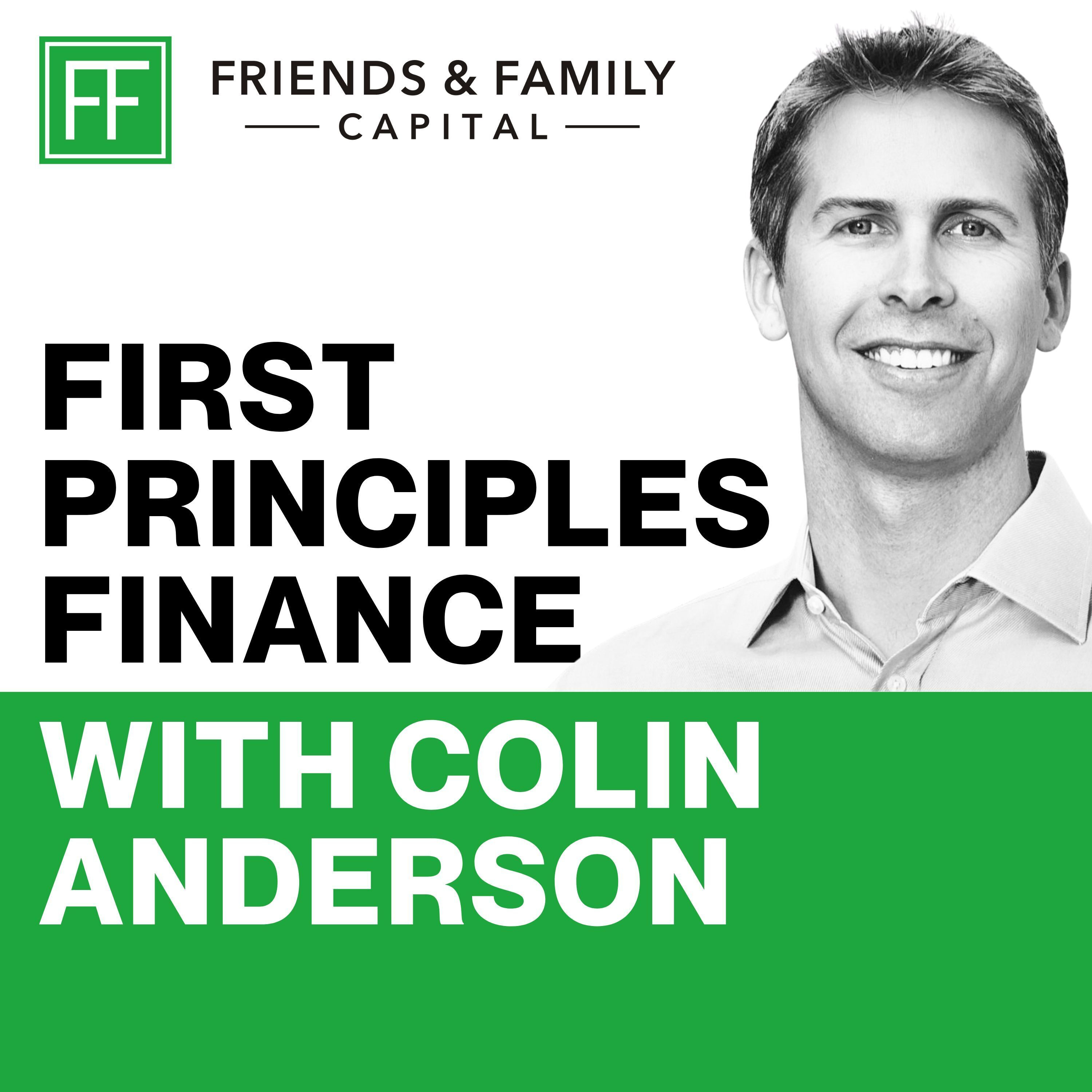
Friends & Family Capital’s First Principles Finance is the show where founders receive candid answers to the finance questions that matter most when building a world-class technology company. Hosted by Colin Anderson — founding partner of Friends & Family Capital and former CFO of Palantir Technologies — the show pulls directly from the conversations Colin has each week with founders at the coal face.Every episode tackles the critical finance decisions that shape a company’s path: when to bring on a first finance lead, how to keep a cash war chest safe, and how to use debt and equity.
-
6
Theory vs. Practice: Designing Your Org for What Actually Works
In this episode of First Principles Finance, Colin Anderson tackles a critical challenge founders face as they scale: the tension between what sounds right in theory and what actually works in practice. Drawing on real questions from founders in the network, Colin explores how organizational design decisions—like layering leadership or upgrading finance functions—often look clean on paper but break down in reality. He walks through two core scenarios: structuring go-to-market teams across different business lines, and deciding when to transition from outsourced finance to an in-house function. Along the way, he introduces a powerful first-principles framework rooted in understanding the “physics” and rhythm of your business—emphasizing experimentation, risk isolation, and designing for your specific stage, not someone else’s playbook. This episode is a practical guide to cutting through conventional wisdom, trusting your own judgment, and building organizations that actually work in the real world. Key Points From This Episode: · 00:00 Intro: First Principles Finance & Episode Setup · 00:47 The Core Theme: Theory vs. Practice in Organizational Design · 01:27 The Trap of Clean Org Charts vs. Operational Reality · 02:01 First Principle: Design Around the Rhythm of Your Business · 03:06 Why Premature Layering Kills Insight and Increases Risk · 04:55 When to Transition from Outsourced to In-House Finance · 06:05 The Three Core Finance Skill Sets: Past, Present, Future · 07:20 Final Framework: Build for Your Business, Not the Average Learn more: https://www.fafc.com/
-
5
Understanding and explaining the atomic units of your business
In this episode of First Principles Finance, Colin Anderson addresses a common challenge founders face when answering questions that don’t align with how they run their business. He examines how external stakeholders often focus on output metrics like revenue or net revenue retention, while operators focus on the underlying drivers. Colin breaks down how to reframe these moments by focusing on the “atomic units” of a business—the controllable inputs like hiring, sales activity, and product delivery. He explains how translating these inputs into expected outcomes allows founders to communicate clearly, maintain conviction, and bring others into their thinking. Key Points From This Episode: 00:00 Intro: First Principles Finance & Episode Setup 00:29 The Core Problem: Misaligned Questions from Investors & Stakeholders 00:47 Common Examples: Revenue, NRR, and Profitability Pressure 01:18 First Principles: Finding the “Atomic Units” of Your Business 01:38 Independent vs. Dependent Variables Explained 02:05 Sales Example: Why Founders Don’t Think in NRR 02:47 What Operators Actually Track (Hiring, Product, Customers) 03:12 Internal Metrics vs. External Questions 03:29 Reframing Answers Using What You Control 03:54 Moving Beyond Binary Outcomes (Hit vs. Miss) 04:10 Case Study: Answering the “125% NRR” Question 04:40 Identifying Your True Levers (Hiring, Contracts, Demos) 05:09 What Investors Really Mean When They Ask About NRR 05:25 How to Answer: Translate Into Your Operating Metrics 05:58 Turning Inputs Into Outputs (Bridging to Their Question) 06:26 Building Credibility Through Deeper Explanations 06:49 Bringing Investors “Into the Boat” 07:07 Why “Wrong Questions” Aren’t Actually Wrong 07:32 Final Framework: Understand → Translate → Parameterize 07:53 Outro & Call to Action Links: Learn more: https://www.fafc.com/
-
4
Governance = Power: How Founders Stay in Control
In this episode, Colin Anderson, founding partner of Friends and Family Capital and former CFO of Palantir Technologies, addresses a common set of governance questions from founders. Using a first-principles lens, he reframes governance as a question of power and control across three groups: founders, investors, and employees. Colin walks through how founders should think about board composition, voting structures, and option plans, emphasizing how control is negotiated, preserved, and diluted over time. He also explores how to balance defensive governance decisions with the more important goal of surrounding yourself with people who can help you win—through talent, customers, and capital. Key Points From This Episode: [00:00:00] Governance framed as a question of power and control. [00:00:45] Terms reflect negotiating leverage—avoid raising from a position of weakness. [00:01:30] Board structure determines who can remove you as a founder. [00:03:10] Investor control: early terms matter, but dilution shapes outcomes over time. [00:04:45] Employee equity provides upside without needing governance control. [00:05:55] Governance also enables value creation through talent, customers, and capital. [00:07:10] Choosing board members based on their ability to actively contribute. [00:07:55] Core principle: staying in control is key to executing your mission. Learn more: https://www.fafc.com/
-
3
The Role of Secondary: First Principles of Employee Liquidity and Tender Offers
In this episode, Colin Anderson, founding partner of Friends and Family Capital and former CFO of Palantir Technologies, addresses a common question from founders: how to structure a tender offer. Drawing from first principles, Colin examines how liquidity events affect three key groups—employees, founders, and investors. He explains why selective liquidity can help employees handle life expenses while staying focused on the company mission. The episode also covers practical considerations such as participation rules, sale limits, investor mechanics, and the timing of tender offers. Colin closes by outlining communication strategies and structural choices that help founders support their teams without creating unintended tax or accounting consequences. Key Points From This Episode:[00:00:00] Introduction to First Principles Finance and the goal of helping entrepreneurs turn finance into a force multiplier. [00:00:36] The common founder question: how to think about and run a tender offer for employees. [00:01:19] The three key groups involved in tender offers: employees, founders, and investors. [00:01:36] Why employee liquidity helps people manage life events while staying focused on the company mission. [00:02:30] Tender offers as a tool to retain talent when employees receive competing offers from larger companies. [00:03:15] Founder considerations and the “Wall Street Journal test” when deciding how to structure liquidity. [00:03:49] Investor incentives and the option to convert purchased shares to preferred stock. [00:04:52] Tactical framework for founders evaluating whether to run a tender offer. [00:05:15] Using cap table analysis to calculate how liquidity would distribute across employees. [00:06:05] Deciding who can participate and why participation often self-selects through vesting structures. [00:07:01] Determining what shares employees can sell based on vesting and grants. [00:07:52] Structuring sale limits using both percentage caps and dollar caps. [00:08:41] Choosing liquidity limits that allow employees to handle life expenses without losing motivation. [00:09:13] How frequently companies should run tender offers and why flexibility matters. [00:10:23] Accounting and tax considerations when committing to recurring tender offers. [00:11:38] Final framework: help employees live their lives while keeping them focused on the mission.Learn more: https://www.fafc.com/
-
2
Help Me Hire a CFO: A First-Principles Guide to Building Your Finance Team
Founders often ask, “Help me hire a CFO.” But the better question is: Why do you think you need one?In this episode, Colin Anderson (Founding Partner of Friends and Family Capital and former CFO of Palantir Technologies) breaks down how to think about your first — or next — finance hire using first principles.Instead of defaulting to a big title, Colin shares three practical frameworks to help founders diagnose the real problem, hire for stage, and build a finance function that acts as a force multiplier.If you're between 20 and 100 employees, feeling financial blind spots, or preparing to raise capital, this episode is for you.0:00 – Show intro and episode overview0:29 – The real question behind “Help me hire a CFO”0:54 – External vs. internal motivation for hiring1:23 – Framework #1: The quantitative lens (past, present, future)2:47 – Framework #2: Pilot vs. airplane builder3:25 – Framework #3: “Peak theory” and splitting roles4:04 – Moving from frameworks to tactical hires4:49 – The three common first finance hires5:14 – Staff accountant: Bringing accounting in-house5:29 – Financial analyst: Systems, clean data, and forecasting5:58 – Fundraiser profile: Hiring for capital markets execution6:39 – Scaling from one to N in finance7:25 – Experienced operator vs. high-aptitude athlete8:12 – Conclusion: Solve the problem before hiring the title9:13 – DisclaimerLearn more at https://www.fafc.com/
-
1
Friends & Family Capital: First Principles Finance (TRAILER)
Friends & Family Capital’s First Principles Finance is the show where founders receive candid answers to the finance questions that matter most when building a world-class technology company. Hosted by Colin Anderson — founding partner of Friends & Family Capital and former CFO of Palantir Technologies — the show pulls directly from the conversations Colin has each week with founders at the coal face.Every episode tackles the critical finance decisions that shape a company’s path: when to bring on a first finance lead, how to keep a cash war chest safe, and how to use debt and equity.https://www.fafc.com/
We're indexing this podcast's transcripts for the first time — this can take a minute or two. We'll show results as soon as they're ready.
No matches for "" in this podcast's transcripts.
No topics indexed yet for this podcast.
Loading reviews...
ABOUT THIS SHOW
Friends & Family Capital’s First Principles Finance is the show where founders receive candid answers to the finance questions that matter most when building a world-class technology company. Hosted by Colin Anderson — founding partner of Friends & Family Capital and former CFO of Palantir Technologies — the show pulls directly from the conversations Colin has each week with founders at the coal face.Every episode tackles the critical finance decisions that shape a company’s path: when to bring on a first finance lead, how to keep a cash war chest safe, and how to use debt and equity.
HOSTED BY
Friends and Family Capital
Loading similar podcasts...
URL copied to clipboard!