
PODCAST · news
Gas-Pump Expansionism
by Copyright © 2026 Castalia Holdings. All rights reserved.
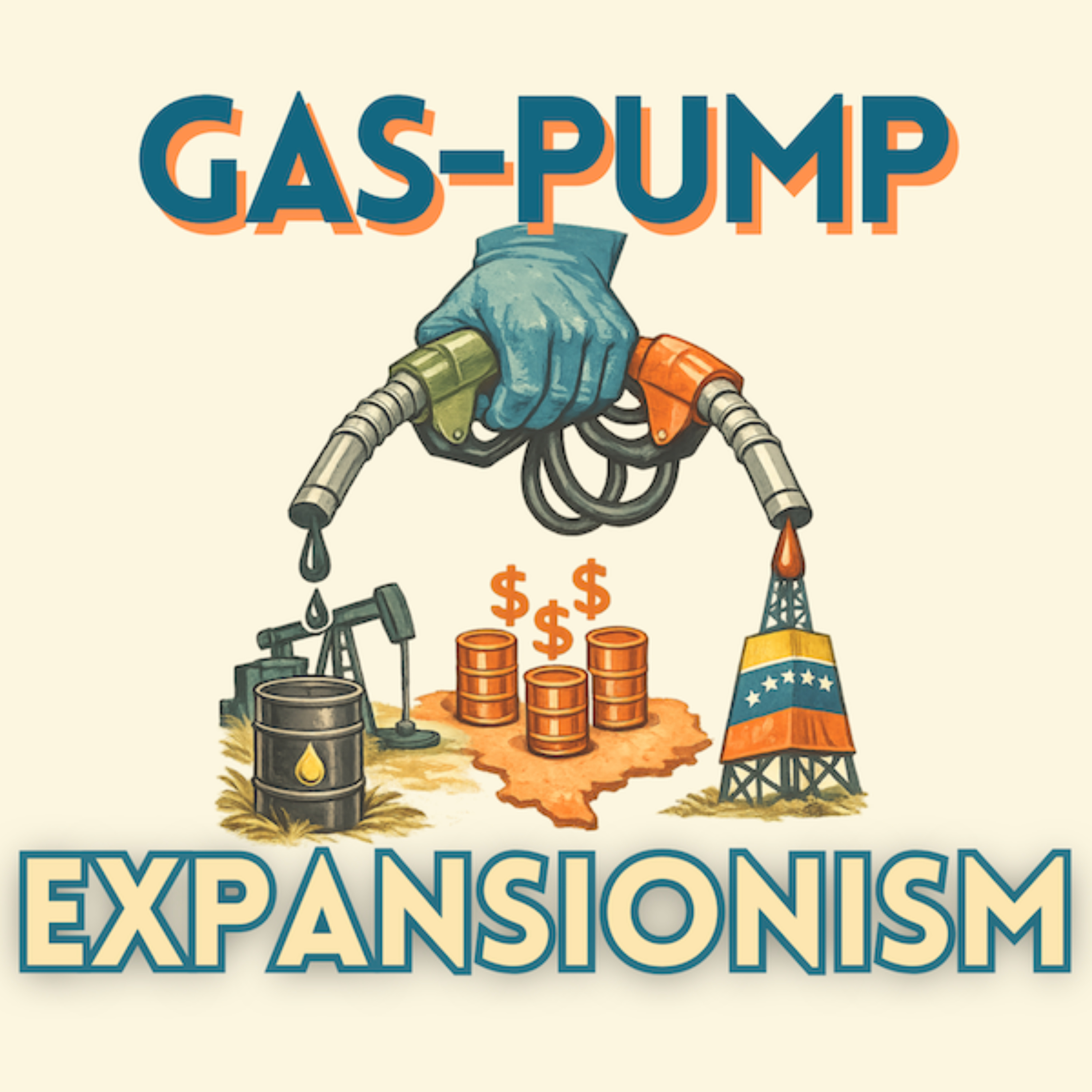
This series of two-minute briefings summarizes articles from the "Gas-Pump Expansionism" series in The Geopolitical Economist. Each short episode explores a recent article in the series to observe how modern power actually works by examining U.S. domestic and foreign policy through the lens of energy, trade, and political incentives. The podcast and article series connect politics, economics, and global leverage to explain why world events unfold as they do, and why official explanations are often inadequate for those who may be seeking to understand major players' underlying strategies.
-
8
The Iran deal will be measured in gold, not uranium
The eighth episode of Gas-Pump Expansionism explores a provocative possibility: that the emerging Iran deal is not really about uranium at all, but about oil, shipping, and money. In just two minutes, we examine why the real bargain may already have been struck through the quiet reopening of Hormuz and the staged release of frozen Iranian assets, leaving nuclear negotiations as little more than political theatre while economic normalization gradually takes hold beneath the headlines. Gas-Pump Expansionism on Medium.com
-
7
How the Iran war will end, and what comes next
The seventh episode of Gas-Pump Expansionism explains how the Iran conflict will conclude through a negotiated settlement rather than decisive military victory, how Red Sea risk dynamics shape bargaining leverage, and why energy affordability will drive diplomatic timing. The episode outlines why U.S. political incentives favor rapid stabilization of global supply expectations, how regional actors position themselves ahead of negotiations, and why the trajectory of gasoline prices remains one of the most powerful constraints shaping near-term foreign policy decisions. Gas-Pump Expansionism on Medium.com
-
6
Tehran’s emerging role in American politics
The sixth episode of “Gas-Pump Expansionism” explores how a sudden military opportunity in February 2026 may have pushed the United States and Israel into a high-stakes gamble against Iran’s leadership before a clear political endgame had formed. In two minutes, this episode outlines the strategic dilemma behind the strike, the risk of regional escalation, and why rising energy prices and casualties could reshape the political battle ahead of the U.S. midterm elections.Gas-Pump Expansionism on Medium.com
-
5
The answer was in America’s back yard all along
The fifth episode of Gas-Pump Expansionism examines why U.S. policy may pivot from tariffs to North American energy cooperation as the 2028 election approaches. In just two minutes, it explains how Mexican oil production, Pemex partnerships, and cross-border integration could lower fuel prices, create U.S. jobs, and stabilize inflation faster than trade wars. A concise look at how energy, not tariffs, may become the decisive lever of economic policy and voter sentiment in the years ahead. Gas-Pump Expansionism on Medium.com
-
4
Regime change in Tehran is the means, not the end
The fourth episode of Gas-Pump Expansionism explains why US policy toward Iran is being driven less by ideology and more by petrol prices, inflation, and voter tolerance. It explores shadow oil flows, calibrated military pressure, succession dynamics around Mojtaba Khamenei, and parallels with Venezuela, explaining how Washington seeks lower volatility and legible energy markets rather than regime change.Gas-Pump Expansionism on Medium.com
-
3
Maduro’s collaboration will be visible only in hindsight
The third episode of Gas-Pump Expansionism examines why Maduro’s removal looks less like regime change and more like a negotiated transaction. By focusing on oil, trade, and political sequencing, it explains how continuity was preserved, chaos avoided, and U.S. priorities quietly revealed. The episode shows how modern power operates through optics, incentives, and hindsight rather than public declarations.Gas-Pump Expansionism on Medium.com
-
2
How Cuba fits into the 2028 agenda
The second episode of Gas-Pump Expansionism explores how Cuba fits into a broader U.S. strategy of leverage without occupation. It explains how rhetoric, energy dependence, and infrastructure fragility create opportunities for control without regime change. By examining Cuba through the lenses of energy, trade, and election timing, the episode shows how sovereignty can remain intact on paper while real authority quietly shifts elsewhere.Gas-Pump Expansionism on Medium.com
-
1
The real reason Trump invaded Venezuela, and why Mexico could be next
The first episode of Gas-Pump Expansionism reframes the U.S. intervention in Venezuela as an energy and leverage play rather than a moral crusade or failed regime change. It explains why oil production, trade control, and institutional continuity mattered more than elections, and how domestic political timing shaped foreign policy decisions. The episode sets the foundation for understanding modern power without occupation. Gas-Pump Expansionism on Medium.com
We're indexing this podcast's transcripts for the first time — this can take a minute or two. We'll show results as soon as they're ready.
No matches for "" in this podcast's transcripts.
No topics indexed yet for this podcast.
Loading reviews...
ABOUT THIS SHOW
This series of two-minute briefings summarizes articles from the "Gas-Pump Expansionism" series in The Geopolitical Economist. Each short episode explores a recent article in the series to observe how modern power actually works by examining U.S. domestic and foreign policy through the lens of energy, trade, and political incentives. The podcast and article series connect politics, economics, and global leverage to explain why world events unfold as they do, and why official explanations are often inadequate for those who may be seeking to understand major players' underlying strategies.
HOSTED BY
Copyright © 2026 Castalia Holdings. All rights reserved.
CATEGORIES
Loading similar podcasts...
Frequently Asked Questions
How many episodes does Gas-Pump Expansionism have?
Gas-Pump Expansionism currently has 8 episodes available on PodParley. New episodes are automatically indexed when they're published to the podcast feed.
What is Gas-Pump Expansionism about?
This series of two-minute briefings summarizes articles from the "Gas-Pump Expansionism" series in The Geopolitical Economist. Each short episode explores a recent article in the series to observe how modern power actually works by examining U.S. domestic and foreign policy through the lens of...
How often does Gas-Pump Expansionism release new episodes?
Gas-Pump Expansionism has 8 episodes. Check the episode list to see recent publication dates and frequency.
Where can I listen to Gas-Pump Expansionism?
You can listen to Gas-Pump Expansionism on PodParley by clicking any episode. We provide an embedded audio player for direct listening, and you can also subscribe via your preferred podcast app using the RSS feed.
Who hosts Gas-Pump Expansionism?
Gas-Pump Expansionism is created and hosted by Copyright © 2026 Castalia Holdings. All rights reserved..
URL copied to clipboard!