
PODCAST · education
Global Souths Hub Podcast
by Global Souths Hub
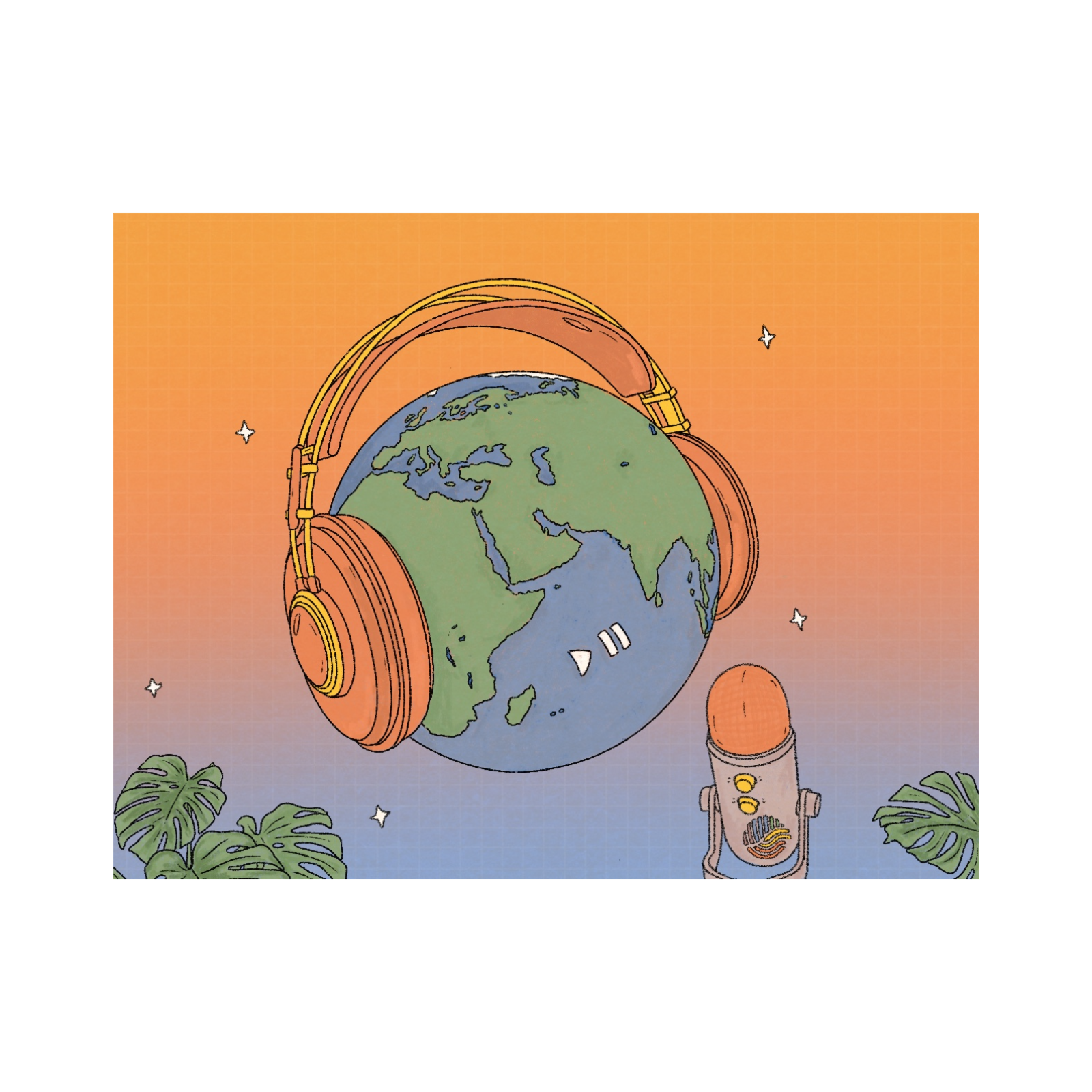
Series One: Decolonising AccessHost: Bethlehem Attfield, Community Engagement Coordinator & Contributing WriterSeries one of the Global Souths Hub podcast focuses on decolonising access. The series shares inspiring stories from professionals closely connected to the Global South who are challenging exclusion and reshaping what access really means. Through powerful personal stories, the series exposes how knowledge systems continue to marginalise – and how they can be transformed. When we aim to make information accessible, we typically rely on frameworks created within dominant Eurocentric systems. Thus, decolonising this approach involves removing the barriers that these systems impose on us. Decolonising Access means dismantling inherited frameworks and centering lived experience, justice, and human rig
-
2
Preserving Indigenous Knowledge and Data Sovereignty with Maria Alvarez Malvido
“There’s a common goal of taking care of the land and mapping the knowledge that already exists in the collective memory of the community.”María Alvarez Malvido In this episode, Bethlehem Attfield talks to Maria Alvarez Malvido about her experience researching indigenous radio stations, digital storytelling and community-based uses of digital technologies. María was born in Mexico City and currently lives in London. She holds an M.A. in Communication and Technology from the University of Alberta and a B.A. in Social Anthropology from Universidad Autónoma Metropolitana–Iztapalapa. During her graduate studies, she collaborated with DigitalNWT, a train-the-trainer initiative supporting community networks across Canada’s Northwest Territories. María is also a member of the Research Centre on Technology and Community Knowledge (CITSAC) and Tierra Común, and has published a number of journalistic pieces on community media and technological autonomy. As a member of Redes A.C she collaborated on research and participatory methodologies for the design and development of community networks to access, share and preserve local content. She also collaborates with Rising Voices, co-writing journalistic articles with Indigenous researchers and digital linguistic activists from communities in Asia, Africa, and Latin America involved in the project. She currently works at Awana Digital, supporting local partners in East Africa who use participatory mapping and monitoring tools to protect their territories.
-
1
Beyond Visual Impairment: Why Mindset Matters with Chimuanya Pearl Ngele
Dr. Chimmuanya Pearl was not born blind, losing her sight later in life presented a daunting challenge. In this podcast, Pearl touches on the importance of maintaining a positive mindest, how Ai can facilitate access, and her TedTalk, Excelling in blindness.A graduate of the University of Nigeria, Nsukka, Dr. Pearl emerged as the best graduating student in her class in 2005. Since then, she has risen to become one of the youngest Associate Professors at the University. Her career demonstrates both academic distinction and a sustained engagement with issues of inclusion and accessibility within higher education.Living with visual impairment for over two decades, Dr. Pearl draws on her lived experience in her advocacy and counselling work with persons with disabilities and their caregivers. Her work reflects a commitment to expanding access, strengthening support systems, and encouraging resilience among individuals facing structural and personal barriers.In this episode, Pearl highlights the broader importance of inclusive practices in institutional contexts.
-
0
Anni Domingo on Ageism and Doing a PhD in your 70s
"You can't make a difference unless you have a seat at the table." – Anni DomingoIn our first Global Souths Hub podcast, our host Bethlehem Attfield talks to actress, director and writer, Anni Domingo on what it's like to study a PhD in your 70s.Anni Domingo was born in London, England, to Sierra Leonean parents, who when she was four years old decided to travel back to Africa. After spending her early years in Sierra Leone, Anni returned to the UK. She was accepted onto a drama course to train as a performer and, in her early twenties, qualified as a teacher of Speech and Drama at Rose Bruford College. During her three years of study, she worked with the BBC at Bush House, contributing to radio plays broadcast across the Commonwealth.In her mid-fifties, Anni completed a first-class BA (Honours) in Literature, a further first-class BA (Honours) in Humanities with Creative Writing from The Open University, and an MA in Creative Writing from Anglia Ruskin University, Cambridge. She later received an honorary Doctor of Humanities degree. She is now working on Ominira, her second novel, as part of her PhD at Kings College London.Anni's acting career spans theatre, television, radio, and film. You may know her from her appearance on screens in numerous television series and feature films, including Outland (1981) to Wondrous Oblivion (2003) and more recently, in 2019, she appeared in several episodes of EastEnders on BBC One. Her extensive theatre work includes productions such as Blood Wedding at the National Theatre, Treasure Island at Birmingham Rep, The Last Bloom at the Traverse Theatre, The Crucible at Regent’s Park, The Children’s Hour and Yerma at the Royal Exchange, Blithe Spirit at the Leicester Haymarket, and No Boys Cricket Club at Theatre Royal Stratford East and she has performed on stage in Inua Ellams’ adaptation of Three Sisters at the National Theatre.
We're indexing this podcast's transcripts for the first time — this can take a minute or two. We'll show results as soon as they're ready.
No matches for "" in this podcast's transcripts.
No topics indexed yet for this podcast.
Loading reviews...
ABOUT THIS SHOW
Series One: Decolonising AccessHost: Bethlehem Attfield, Community Engagement Coordinator & Contributing WriterSeries one of the Global Souths Hub podcast focuses on decolonising access. The series shares inspiring stories from professionals closely connected to the Global South who are challenging exclusion and reshaping what access really means. Through powerful personal stories, the series exposes how knowledge systems continue to marginalise – and how they can be transformed. When we aim to make information accessible, we typically rely on frameworks created within dominant Eurocentric systems. Thus, decolonising this approach involves removing the barriers that these systems impose on us. Decolonising Access means dismantling inherited frameworks and centering lived experience, justice, and human rig
HOSTED BY
Global Souths Hub
Loading similar podcasts...
Frequently Asked Questions
How many episodes does Global Souths Hub Podcast have?
Global Souths Hub Podcast currently has 3 episodes available on PodParley. New episodes are automatically indexed when they're published to the podcast feed.
What is Global Souths Hub Podcast about?
Series One: Decolonising AccessHost: Bethlehem Attfield, Community Engagement Coordinator & Contributing WriterSeries one of the Global Souths Hub podcast focuses on decolonising access. The series shares inspiring stories from professionals closely connected to the Global South who are challenging...
How often does Global Souths Hub Podcast release new episodes?
Global Souths Hub Podcast has 3 episodes. Check the episode list to see recent publication dates and frequency.
Where can I listen to Global Souths Hub Podcast?
You can listen to Global Souths Hub Podcast on PodParley by clicking any episode. We provide an embedded audio player for direct listening, and you can also subscribe via your preferred podcast app using the RSS feed.
Who hosts Global Souths Hub Podcast?
Global Souths Hub Podcast is created and hosted by Global Souths Hub.
URL copied to clipboard!