
PODCAST · science
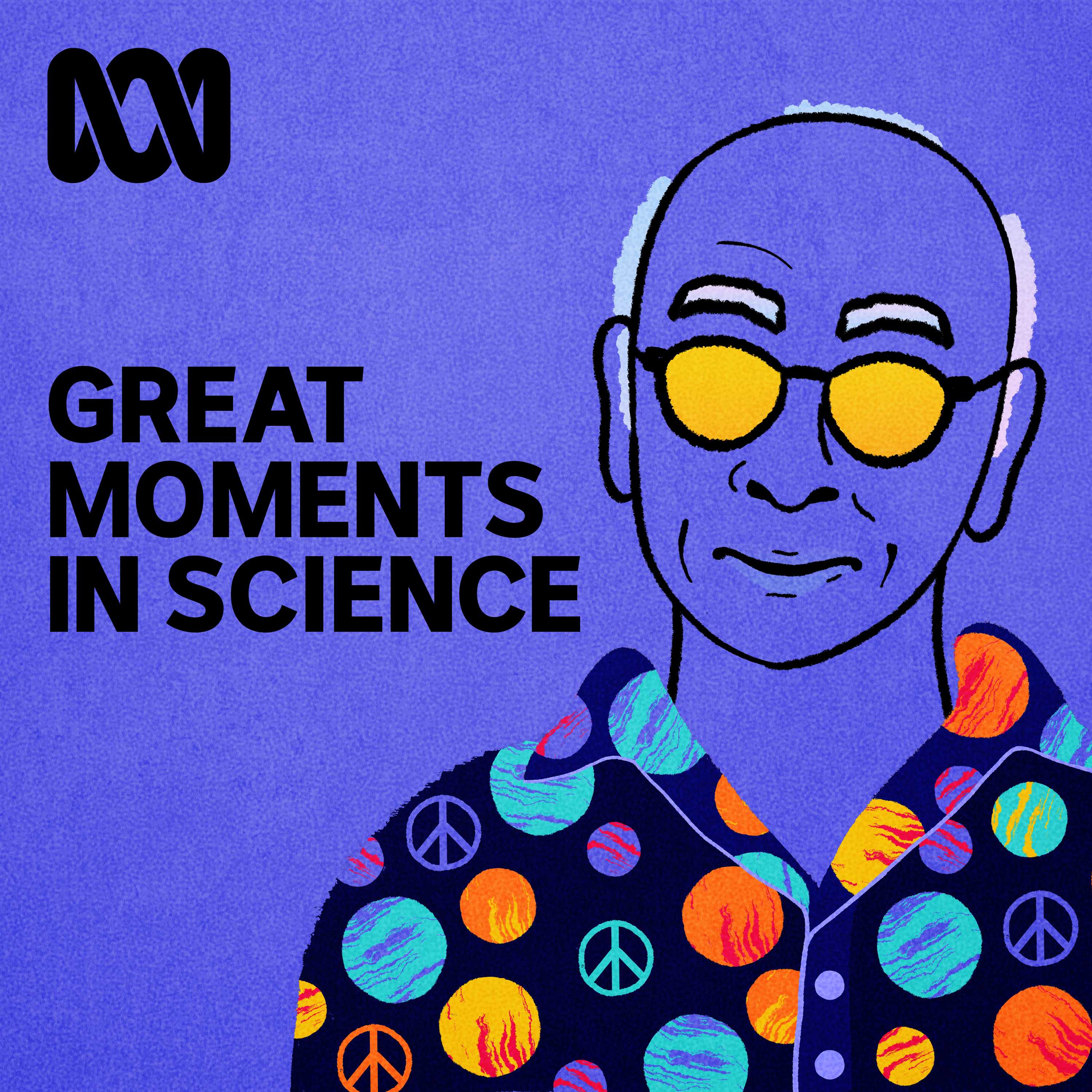
Great Moments In Science
by ABC
From the ground breaking and life saving to the wacky and implausible, Dr Karl Kruszelnicki reveals some of the best moments in science.
-
249
The Greatest Moment in Science
Dr Karl was first heard on the wireless in 1981 when he convinced Triple J that a talk about the space shuttle would be good listening because he had applied to be a NASA astronaut. The shuttle did (eventually) launch ... and along with it, the all-science-media career of one Dr Karl Kruszelnicki.This is Dr Karl's last Great Moment in Science, as we know it—but don't worry, he'll still be around and firing on all cylinders—including on Triple J's Science with Dr Karl podcast.Science with Dr Karl
-
248
Why the 'marijuana munchies' make you feel good
We know that the drug called cannabis, or marijuana, increases the appetitecommonly called the 'Marijuana Munchies', and we are finally getting closer to knowing what makes it happen. Half-a-billion years ago a biological system evolved to make sure that hungry animals would eat.
-
247
Insects fly to the light
The ancient Romans thought that insects were attracted to bright light, and then there's the well-known phrase, "drawn like a moth to a flame", so it seems like people over many years have spotted insects coming into the lights, at night. But what's the real reason?Host: Dr Karl Kruszelnicki
-
246
Dreaming a diagnosis with Dr Karl
Some sleepers who act out their dreams are later diagnosed with Parkinson's disease. As Dr Karl explains, it's one of a few slightly odd new diagnostic tools.
-
245
Sniffing out disease with Dr Karl
The power of smell can't be understated — our noses don't just sniff out tasty treats, they can also alert us to danger. In this episode of Great Moments in Science, Dr Karl tells the story of a super-sniffer who might've unlocked a powerful diagnostic tool.
-
244
How tall is time? Well, it's all relative
Atomic clocks are the most precise time-keepers we have.But that doesn't mean they can escape the timey wimey effects of gravity. In this episode of Great Moments in Science, Dr Karl explains how this enables super-accurate clocks to not just measure time, but height as well.
-
243
The physics of dunking biscuits
Humans have been dunking biscuits for as long as biscuits have existed. But why do we do it? Why are soggy biscuits so darn good?In this archive episode of Great Moments in Science, Dr Karl submerges himself into the mechanics of this age-old activity.
-
242
Want to see an eclipse without travelling? You might be waiting a while
Thousands of people will descend on the tiny WA town of Exmouth later this month to witness the Moon block out the Sun for a whopping one minute. But if you're a homebody not all that keen on a road trip, how long might it take to see a total solar eclipse from where you are right now?Dr Karl investigates in this archive episode of Great Moments in Science.
-
241
I do not like green eggs and ham... or potatoes?
Green potatoes — would you like them here or there? Would you like them anywhere?Well as Dr Karl taught us last week, potatoes contain a potentially deadly chemical, and a green tinge is its greatest tell. In this archive episode, we explore why green potatoes are best avoided.
-
240
Potentially poisonous potato no small fry
Given the right (or wrong) circumstances, the humble potato packs a punch. It contains a chemical that could kill if ingested in large amounts. The catch-22? That chemical is exactly why potatoes taste so good. In this archive episode of Great Moments, Dr Karl digs into the science.
-
239
Of Mice and Milk
What you eat or drink just after you finish pumping iron is crucial to laying down muscle. Dr Karl weighs up the best way to bulk up, in this archive episode of Great Moments in Science from 2011.
-
238
Avalanche under the sea
The destructive force of a wall of snow is well known. Major avalanches can not only kill, they can also completely reshape a landscape. But it's not just mountainsides we need to worry about. There are also avalanches happening under the surface of the ocean — forging canyons and threatening our telecommunications.
-
237
A slip of the tongue
There are plenty of reasons why a person might poke their tongue out. Sometimes it can be a rude or cute gesture. Maori warriors do it as a sign of defiance, and Tibetans do it as a greeting.But many times it's a sign of concentration. So here’s why your tongue helps your brain think.Host: Dr Karl Kruszelnicki
-
236
Speaking your mind—with AI
In development is an amazing new technology which may, eventually, turn your thoughts into speech. It's being designed to help people who can’t speak, turn what they're thinking into speech. But it’s still early days.
-
235
Athlete deaths—and COVID vaccines
Athletes are not just fit, they also attract a lot of media attention, especially if stories are put around that COVID vaccines are a cause of death in this group. In late 2021 such claims were being made - and they’re plainly not true.
-
234
Neanderthal DNA kills superbugs
In 2022 we found that Neanderthal DNA could kill superbugs. Wait, what ... didn't Neanderthals die out? Yes, but their hidden power could make them important in modern medicine.
-
233
Why hangovers happen, Part 2
Continuing the story about the effects of alcohol we arrive at the “drunchies”—short for the “drunken munchies”. They’re what occur after a bout of too much drinking. You become very hungry and much your way through any fast food within reach.Host: Dr Karl Kruszelnicki
-
232
Why hangovers happen, Part 1
Alcohol in small quantities can make people sociable; but too much of it can mean hangovers and associated consumption of non-nutritional foodstuffs. There's a whole chemical family of 'alcohols', so what's the deal with the one that humans kinda like—ethanol.
-
231
How to snap spaghetti: Pt 2
For some snapping spaghetti is sacrilege — but for others it’s science.
-
230
How to snap spaghetti: Pt 1
From spaghetti strands to trees to nanotubes — we need to know about the physics of rod-like structures.
-
229
Trees have senses too
How do trees face an incoming threat if they can't move, see, or hear?
-
228
Trees are made from air
Trees are solid and dense. However, they're made from air. Wait, what?
-
227
Dark matter
About 95 per cent of the mass in the universe seems to be missing — what's going on!?
-
226
Elastin in our skin and body
Our skin is like a personal space suit protecting us from the outside world. Skin is best when you are a child—because of the elastic protein keeping it fresh and supple—but, unfortunately, that freshness doesn’t last.Host: Dr Karl KruszelnickiProducer: Diane Dean
-
225
The number of humans ever born
An interesting demographics exercise is to add up the number of humans who've existed. This is different from how many people are in a population—which in late November 2022, is about 8 billion. But using data going back as far as possible, the number of people who've existed is reckoned at over 100 billion.Host: Dr Karl Kruszelnicki
-
224
Why we wear masks—and the N95 is a good one, Part 2
One might imagine that face masks work because the multiple layers will stop a virus getting through. But no, that's not it—they use a high-tech 'melt-blown' material, developed from a technique first noticed in volcano eruptions.Host: Dr Karl KruszelnickiProducer: Diane Dean
-
223
Why we wear masks—and the N95 is a good one, Part 1
Nowadays we're pretty familiar with wearing a face mask to reduce infection rates, and that some masks are better than others.But understanding why the N95 mask is a really good mask one came as a surprise.Host: Dr Karl KruszelnickiProducer: Diane Dean
-
222
Nuclear war would be pointless
Nuclear weapons carry enormous destructive power in a very small package. A nuclear weapon weighing about a quarter of a ton can release as much energy as exploding 1.2 million tons of TNT – that’s a multiplication factor of about five million. During the Cold War the combined numbers of US and Soviet nuclear weapons reached about 70,000. There are not so many these days but there are still enough to end civilisation as we know it.
-
221
Gamma ray bursters, Part 2
The further adventures of some of the most powerful events in our Universe: Gamma Ray Bursts. The biggest one recorded was in October 2022, in a galaxy far, far away. What would have happened if it had exploded inside our Milky Way galaxy?
-
220
Gamma ray bursters, Part 1
First on the list of Most Energetic Events Ever in our universe is The Big Bang. No mean contender for top ranking is the "Gamma Ray Burst" - aka the GRB. GRBs can put out more energy in a few seconds than our Sun produces in its 10-billion-year lifetime.
-
219
Lifts and their new-fangled destination despatching
The invention of the elevator made city-living possible. It made possible a rapid mixing of cultures and concepts, efficient use of energy—and ultimately, increased economic output. And now there's a further improvement called 'destination despatching'.
-
218
Dogs 101—your canine companion
The first definite proof of a link between humans and dogs is a 15,000-year-old grave holding a dog, a man and a woman. Intensive breeding of dogs began about 200 years ago, which resulted in most of today's 450-or-so breeds. And there's a definite mutual appreciation society between people and canines
-
217
Testes taste test
In 2013 the academic journal published an article called, “Taste perception: from the tongue to the testis”. It looked at some of the distinct taste sensations that we register in the Gustatory Cortex - the taste centre of our brain which are picked up by taste buds on the tongue. However, there's a difference between taste buds and taste receptors ... which is where the testis enters the story.
-
216
Close encounters of the asteroid kind
Earth's defence against the existential threat of extraterrestrial rocks has been bolstered. But is it really all that important for humanity to have a plan of attack for an asteroid ambush?
-
215
Why did Tonga's huge volcanic eruption affect Australia's surf?
It wasn't the first, second or even third issue to come up in the wake of this year's huge undersea volcanic eruption in Tonga. But the eruption, and the ensuing tsunamis, did have a far-reaching impact on the kingdom's neighbours and beyond — including on Australia's coastline.
-
214
The Solar System Is Weird
For a long time our home solar system was all we knew. But since we’ve gotten a better look at other systems near and far, it has become apparent... our solar system is weird.
-
213
Doubling down — taking a second look at the mystery of doppelgängers
Dr Karl explains how artificial intelligence detects and distinguishes between look-alikes.
-
212
Look twice — why it's worth doing a double-take on your doppelgänger
The term 'doppelgänger' goes back centuries, but in recent years the internet has made it much easier to find your look-alike
-
211
Can a coin falling from a great height be lethal?
There's a precise science behind the impact of small, falling objects. Some can be deadly. Others don't pack much of a punch.
-
210
Earth is accelerating, Pt 3
The final installment of why the Earth is suddenly speeding up—after more than a billion years of slowing down. How do we measure the rate of the Earth’s revolution, and what happens when the time on our clocks doesn’t quite match up?
-
209
Earth is accelerating, Pt 2
Part 2 of the explanation about the accelerating spin of the Earth - which is against the trend of the last one-and-a-half billion years.
-
208
Earth is accelerating, Pt 1
Part 1 about how the Earth is unexpectedly speeding up, and has recorded its shortest day ever – 1.59 milliseconds shorter than the standard 86,400 seconds
-
207
Electric battery = car + house
Electricity supply is shifting to renewables, so batteries are important. It might even be cheaper to power your house with the battery from your electric car, rather than batteries specifically designed for houses.
-
206
Adventures in nose-picking
Nose-picking is something that people find disgusting—yet we still do it. And how about the gunk that’s in your nose—is it ok to eat that?
-
205
-
204
Brain hotter than body
The highest standard for measuring body temperature is via a heart sensor—after that, it's from inside a body cavity; and you can do it from inside the mouth or the ear, but that's not as accurate, and even less so when measured on the skin. Measuring brain temperature is different again—and be astonished that the temperature of the human brain differs from the rest of the body.
-
203
What happens when you get winded?
Have you ever been winded? You suddenly lose the ability to do something you've done 15 times each minute of your life. It's one part anatomy, one part physiology, and one part don't panic.
-
202
Dogs tilt their heads
Dogs tend to hang around humans but do they really love us—and what’s with the head tilt? Their affability might be due to two genes known to influence sociability in mammals. Gradually genetics turned dogs and humans into best friends.
-
201
Measles erases immune system memory
Measles is a nasty infection that you don't want to get. It can cause death and, what's more, it can also erase your immune system's memory. Only relatively recently scientists have measured this directly - by concentrating on antibodies – which can be generated by natural infection, and by vaccines.
-
200
Anticipation
Anticipation is a strange experience. It can take you all the way from hope and trust, to anxiety and fear. But there’s a happy balancing point where anticipation can enrich your life.
We're indexing this podcast's transcripts for the first time — this can take a minute or two. We'll show results as soon as they're ready.
No matches for "" in this podcast's transcripts.
No topics indexed yet for this podcast.
Loading reviews...
Loading similar podcasts...
Frequently Asked Questions
How many episodes does Great Moments In Science have?
Great Moments In Science currently has 50 episodes available on PodParley. New episodes are automatically indexed when they're published to the podcast feed.
What is Great Moments In Science about?
From the ground breaking and life saving to the wacky and implausible, Dr Karl Kruszelnicki reveals some of the best moments in science.
How often does Great Moments In Science release new episodes?
Great Moments In Science has 50 episodes. Check the episode list to see recent publication dates and frequency.
Where can I listen to Great Moments In Science?
You can listen to Great Moments In Science on PodParley by clicking any episode. We provide an embedded audio player for direct listening, and you can also subscribe via your preferred podcast app using the RSS feed.
Who hosts Great Moments In Science?
Great Moments In Science is created and hosted by ABC.
URL copied to clipboard!