
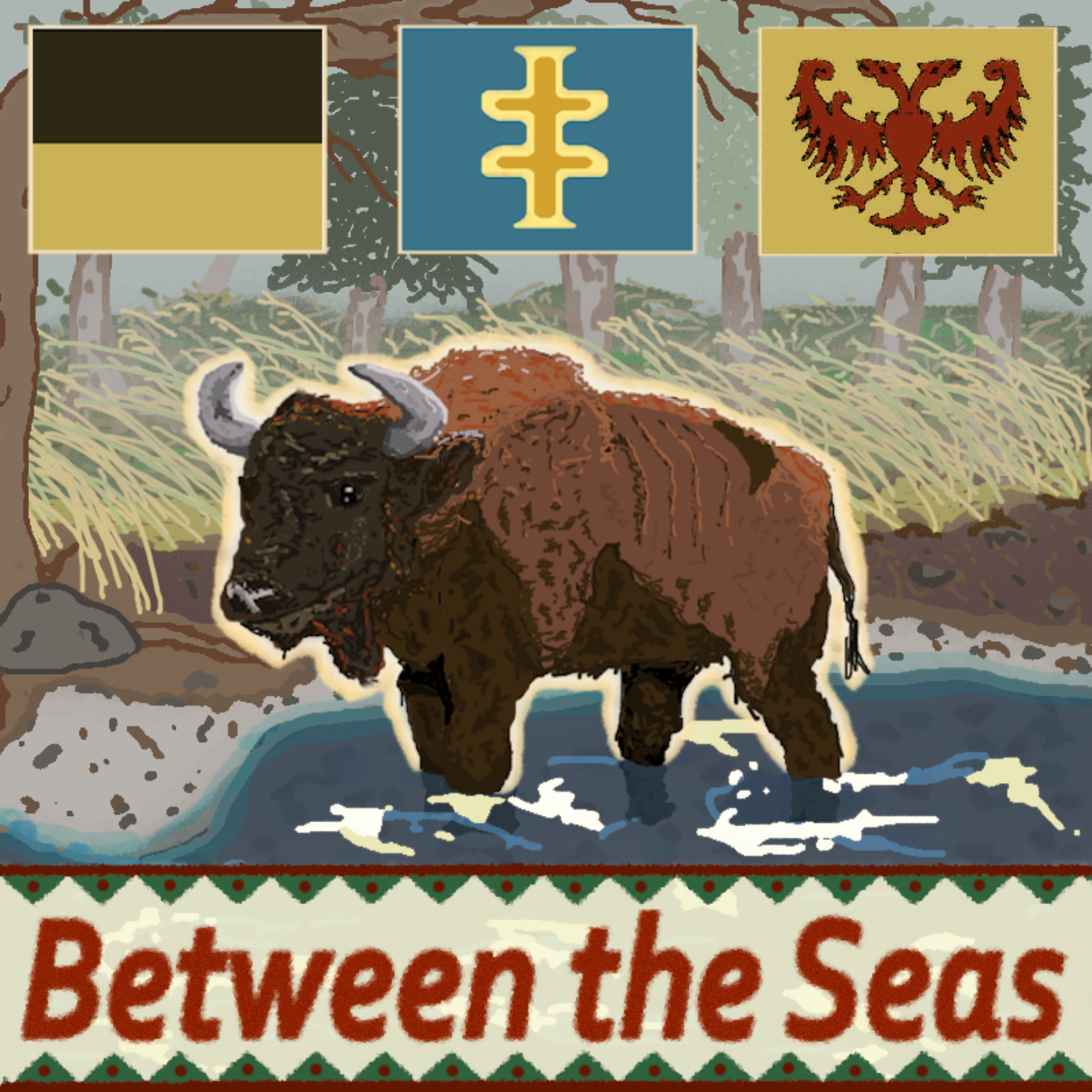
PODCAST · history
History of Central Europe
by Jacob Wheeler
Follow a narrative history of the vast lands of Central Europe through new episodes every Monday. Here, we learn the traditions of the many rich cultures of the region, and follow them through their political highs and lows.In the show, we'll gain an intimate union with the histories of modern day Poland, Lithuania, Belarus, Ukraine, Moldova, Romania, Bulgaria, Serbia, Montenegro, Bosnia, Croatia, Slovenia, Hungary, Slovakia, Czechia, Austria, Germany, Liechtenstein, and Switzerland from the Early Medieval Period to the Modern Day.Have questions or comments? Contact me at [email protected]
-
46
Late Kievan Russia
In this episode, we descend upon the Greater Riverlands, to discuss the last century of organized political life in the Kievan Rus. Like elsewhere in Inner Europe, it is a time of political fragmentation and dynastic struggle, but also one of rapid development, and a flourishing culture. There truly was no society quite like the Medieval Kievan Rus, before or since.Have a question or comment? Contact me at [email protected]: Zachary Wheeler and Nathaniel Scarborough, "Hej, Sokoły" folk tuneOutro: Antonín Dvořák, Serenade for Strings, Op. 22 (London Symphony Orchestra 1960)Vernadsky, George. Kievan Russia. Yale University Press, 1948.Berend, Nora. Urbanczyk, Przemyslaw. Wiszewski, Przemyslaw. Central Europe in the High Middle Ages: Bohemia, Hungary, and Poland, C.900-C.1300. Cambridge University Press, 2014.Obolensky, Dimitri. The Byzantine Commonwealth: Eastern Europe 500-1453. Praeger Publishers, 1971.Christiansen, Eric. The Northern Crusades: Second Edition. Penguin Books, 1998.
-
45
The Medieval Polish Patchwork
In this episode, we descend into the first 100 years of the Polish Fragmentation Period, wherein Boleslaw III Wrymouth's Seniorate System cracks, and then dissolves into an abundance of warring principalities. Ultimately, the period would not be all decline, as several important social and cultural changes would find the room they needed to grow, and later strengthen a Polish revival.New episodes every Thursday!Have a question or comment? Contact me at [email protected]: Zachary Wheeler and Nathaniel Scarborough, "Hej, Sokoły" folk tuneOutro: Antonín Dvořák, Serenade for Strings, Op. 22 (London Symphony Orchestra 1960)Berend, Nora. Urbanczyk, Przemyslaw. Wiszewski, Przemyslaw. Central Europe in the High Middle Ages: Bohemia, Hungary, and Poland, C.900-C.1300. Cambridge University Press, 2014.Davies, Norman. Moorhouse, Roger. Microcosm: A Portrait of a Central European City. Jonathan Cape, 2002.Davies, Norman. God’s Playground: A History of Poland Volume 1: Origins to 1795. Columbia University Press, 2005.
-
44
Series 12: Feudalization of the Frontier (1125 - 1241 AD)
In this Series Introduction, we discuss the rising western influence within Inner Europe, and talk more conceptually about how cultural influences manifest themselves into real organizational systems, and what this will mean for Inner Europe. In this series, we will aim to discover these grand changes by focusing on three civilizations in turn: A Fragmented Poland, the Kievan Rus, and the Kingdom of Hungary.New episodes every Thursday!Have a question or comment? Contact me at [email protected]: Zachary Wheeler and Nathaniel Scarborough, "Hej, Sokoły" folk tuneOutro: Antonín Dvořák, Serenade for Strings, Op. 22 (London Symphony Orchestra 1960)Rady, Martyn. The Middle Kingdoms. Basic Books, 2023.Berend, Nora. Urbanczyk, Przemyslaw. Wiszewski, Przemyslaw. Central Europe in the High Middle Ages: Bohemia, Hungary, and Poland, C.900-C.1300. Cambridge University Press, 2014.Cantor, Norman. The Civilization of the Middle Ages. Harper Perennial, 1993.
-
43
Royal Bohemia and Fall of the Staufers
In this episode, we recount the changing customs and organization of the Bohemian duchy in the 12th century, and witness its elevation to kingdom in the 13th. Throughout, it presents a useful case study in imperial politics as a whole, through the reign of Barbarossa and Frederick II, whose conflicts would usher in the fall of the Staufers.New episodes every Thursday!Have a question or comment? Contact me at [email protected]: Zachary Wheeler and Nathaniel Scarborough, "Hej, Sokoły" folk tuneOutro: Antonín Dvořák, Serenade for Strings, Op. 22 (London Symphony Orchestra 1960)Wilson, Peter H. Heart of Europe. Belknap Press: An Imprint of Harvard University, 2020.Bazant et al. The Czech Reader. Duke University Press, 2010.Durant, Will. The Age of Faith. Simon and Schuster, 1950.Haverkamp, Alfred. Medieval Germany 1056-1273. Oxford University Press, 1988.Cantor, Norman. The Civilization of the Middle Ages. Harper Perennial, 1993.
-
42
Emperor Barbarossa; the Welf-Staufer Divide
In this episode, we look at the latter half of the 12th century within Inner Europe; namely, this means looking at the rule of Frederick I "Barbarossa", perhaps the most powerful Staufer emperor, and one who would change much about how the empire worked, and how it perceived itself compared to the powers around it. Part of this change meant dealing with pan-elite factions which had risen in perennial opposition to Imperial power, materialized most in the Welf threat within Saxony and Bavaria led by Henry the Lion. The efforts to remake the Empire would in effect also remake Inner Europe, as we shall see in later episodes.New episodes every Thursday!Have a question or comment? Contact me at [email protected]: Zachary Wheeler and Nathaniel Scarborough, "Hej, Sokoły" folk tuneOutro: Antonín Dvořák, Serenade for Strings, Op. 22 (London Symphony Orchestra 1960)Haverkamp, Alfred. Medieval Germany 1056-1273. Oxford University Press, 1988.Cantor, Norman. The Civilization of the Middle Ages. Harper Perennial, 1993.Davies, Norman. Moorhouse, Roger. Microcosm: A Portrait of a Central European City. Jonathan Cape, 2002.Wilson, Peter H. Heart of Europe. Belknap Press: An Imprint of Harvard University, 2020.
-
41
The Wendish Crusade
In this episode, we begin our series on the High Medieval Empire by focusing first on its northeastern frontier, where many factors would coalesce into a sudden, and permanent, push to the east by Saxons and Danes into the lands of the Slavic Wends. The whole phenomenon has been summarized into the "Wendish Crusade", despite the crusade only lasting a single season of a many decades long process. Over the course of these momentous decades, warring forest tribes would transfer into a vast amount of pluralistic, though German, identities, including the rising Hanseatic League.New episodes every Thursday!Have a question or comment? Contact me at [email protected]: Zachary Wheeler and Nathaniel Scarborough, "Hej, Sokoły" folk tuneOutro: Antonín Dvořák, Serenade for Strings, Op. 22 (London Symphony Orchestra 1960)Christiansen, Eric. The Northern Crusades: Second Edition. Penguin Books, 1998.Haverkamp, Alfred. Medieval Germany 1056-1273. Oxford University Press, 1988.Davies, Norman. Europe: A History. Oxford Press, 1996.Schildhauer, Johannes. The Hansa: History and Culture. Dorset Press, 1988.Wilson, Peter H. Heart of Europe. Belknap Press: An Imprint of Harvard University, 2020.
-
40
Series 11: Staufer Revival (1125 - 1250 AD)
In this series, we discuss how the Holy Roman Empire will change in the long term from its warrior foundings, to a transpersonal and permanent institution of Inner Europe. This process would be personified by the Staufer dynasty, who would work to pick up the fragments of the investiture struggle and rebuild a new society.New episodes every Thursday!Have a question or comment? Contact me at [email protected]: Zachary Wheeler and Nathaniel Scarborough, "Hej, Sokoły" folk tuneOutro: Antonín Dvořák, Serenade for Strings, Op. 22 (London Symphony Orchestra 1960)Wilson, Peter H. Heart of Europe. Belknap Press: An Imprint of Harvard University, 2020.Berend, Nora. Urbanczyk, Przemyslaw. Wiszewski, Przemyslaw. Central Europe in the High Middle Ages: Bohemia, Hungary, and Poland, C.900-C.1300. Cambridge University Press, 2014.Obolensky, Dimitri. The Byzantine Commonwealth: Eastern Europe 500-1453. Praeger Publishers, 1971.Christiansen, Eric. The Northern Crusades: Second Edition. Penguin Books, 1998.Haverkamp, Alfred. Medieval Germany 1056-1273. Oxford University Press, 1988.
-
39
Hungarian-Croatian Union; A New Danube
In this episode, we continue our survey of Inner Europe during the Investiture Struggles by examining the rules and administrations of many consolidating duchies and kingdoms, including Swabia, Bavaria, Austria, Carantania, Hungary, Croatia, and Duklja. As survival becomes less of a concern, confirming the co-rule of a region's traditions takes the top priority.New episodes every Thursday!Have a question or comment? Contact me at [email protected]: Zachary Wheeler and Nathaniel Scarborough, "Hej, Sokoły" folk tuneOutro: Antonín Dvořák, Serenade for Strings, Op. 22 (London Symphony Orchestra 1960)Fine, John VA Jr. The Early Medieval Balkans. University of Michigan Press, 1991.Berend, Nora. Urbanczyk, Przemyslaw. Wiszewski, Przemyslaw. Central Europe in the High Middle Ages: Bohemia, Hungary, and Poland, C.900-C.1300. Cambridge University Press, 2014.Obolensky, Dimitri. The Byzantine Commonwealth: Eastern Europe 500-1453. Praeger Publishers, 1971.Vernadsky, George. Kievan Russia. Yale University Press, 1948.
-
38
Twilight of the Warband States (Saxony, Bohemia, Poland, Kievan Rus)
In this episode, we look at 4 independent short stories, linked through a similar setting and time, that of the warband states of Eastern Central Europe in the changing times of the Investiture Controversy. All will face an interesting historical cycle, a fall and rebirth, which will result in a new place for the warriors of the realm in a greater and lesser military aristocracy.New episodes every Monday!Have a question or comment? Contact me at [email protected]: Zachary Wheeler and Nathaniel Scarborough, "Hej, Sokoły" folk tuneOutro: Antonín Dvořák, Serenade for Strings, Op. 22 (London Symphony Orchestra 1960)Berend, Nora. Urbanczyk, Przemyslaw. Wiszewski, Przemyslaw. Central Europe in the High Middle Ages: Bohemia, Hungary, and Poland, C.900-C.1300. Cambridge University Press, 2014.Vernadsky, George. Kievan Russia. Yale University Press, 1948.Haverkamp, Alfred. Medieval Germany 1056-1273. Oxford University Press, 1988.Christiansen, Eric. The Northern Crusades: Second Edition. Penguin Books, 1998.Davies, Norman. God’s Playground: A History of Poland Volume 1: Origins to 1795. Columbia University Press, 2005.
-
37
The Investiture Controversy
In this episode, we finally reach the climax of simmering tensions between papal and imperial authority over the western church. A reform movement, built on reaction against urban decadence in the Mediterranean, Burgundy, and Lorraine, clashes with the imperial church, built on converting, militarizing, and bringing order to the rough Inner European frontier. Some of the largest personalities in Medieval History become involved, and the consequences will take a couple episodes to unpack.New episodes every Monday!Have a question or comment? Contact me at [email protected]: Zachary Wheeler and Nathaniel Scarborough, "Hej, Sokoły" folk tuneOutro: Antonín Dvořák, Serenade for Strings, Op. 22 (London Symphony Orchestra 1960)Wilson, Peter H. Heart of Europe. Belknap Press: An Imprint of Harvard University, 2020.Cantor, Norman. The Civilization of the Middle Ages. Harper Perennial, 1993.Haverkamp, Alfred. Medieval Germany 1056-1273. Oxford University Press, 1988.
-
36
Series 10: Great Schisms; Conquerors' Penance (1054 - 1138 AD)
In the introduction for series 10 of the show, we speak of the responses that societies will face due to the dramatic changes wrought in by the High Middle Ages. Among them, we single out the Great Schism as an introduction to the scene, and go over its short and long term reasons for occurring, as well as what a few of the many consequences would be for Inner Europe.Source ListNew episodes every Monday!Have a question or comment? Contact me at [email protected]: Zachary Wheeler and Nathaniel Scarborough, "Hej, Sokoły" folk tuneOutro: Antonín Dvořák, Serenade for Strings, Op. 22 (London Symphony Orchestra 1960)Fine, John VA Jr. The Early Medieval Balkans. University of Michigan Press, 1991.Wilson, Peter H. Heart of Europe. Belknap Press: An Imprint of Harvard University, 2020.Durant, Will. The Age of Faith. Simon and Schuster, 1950.Obolensky, Dimitri. The Byzantine Commonwealth: Eastern Europe 500-1453. Praeger Publishers, 1971.Cantor, Norman. The Civilization of the Middle Ages. Harper Perennial, 1993.
-
35
High Medieval Identity and Society
In this episode, we set up the context in which our next few series are to take place. The High Middle Ages will be a time of immense transformation for Inner Europe, a time where the world before and after would be almost unrecognizable. Still, it affected Inner Europe's many different societies in many different ways, and would present challenges as well as opportunities.New episodes every Monday!Have a question or comment? Contact me at [email protected]: Zachary Wheeler and Nathaniel Scarborough, "Hej, Sokoły" folk tuneOutro: Antonín Dvořák, Serenade for Strings, Op. 22 (London Symphony Orchestra 1960)Cantor, Norman. The Civilization of the Middle Ages. Harper Perennial, 1993.Wilson, Peter H. Heart of Europe. Belknap Press: An Imprint of Harvard University, 2020.Davies, Norman. Moorhouse, Roger. Microcosm: A Portrait of a Central European City. Jonathan Cape, 2002.Davies, Norman. Europe: A History. Oxford Press, 1996.
-
34
The Wars of Lech, Czech, Rus (and Arpad)
In this episode, we catch up with the development and Christianization of Rus Civilization, and discuss its hybridization with the other societies of Inner Europe. In doing so, we introduce some of the dynastic conflicts, rapidly changing peripheral strongholds, and family ties that the non-imperial powers of Inner Europe would develop amongst themselves just prior to the flourishing of the High Middle Ages.New episodes every Monday! (Excepting this October!)Have a question or comment? Contact me at [email protected]: Zachary Wheeler and Nathaniel Scarborough, "Hej, Sokoły" folk tuneOutro: Antonín Dvořák, Serenade for Strings, Op. 22 (London Symphony Orchestra 1960)Vernadsky, George. Kievan Russia. Yale University Press, 1948.Schmidt, Knud Rahbek. The Social Structure of Russia in the Early Middle Ages. University of Aarhus. 1960.Obolensky, Dimitri. The Byzantine Commonwealth: Eastern Europe 500-1453. Praeger Publishers, 1971.Wilson, Peter H. Heart of Europe. Belknap Press: An Imprint of Harvard University, 2020.Davies, Norman. Moorhouse, Roger. Microcosm: A Portrait of a Central European City. Jonathan Cape, 2002.Berend, Nora. Urbanczyk, Przemyslaw. Wiszewski, Przemyslaw. Central Europe in the High Middle Ages: Bohemia, Hungary, and Poland, C.900-C.1300. Cambridge University Press, 2014.
-
33
Ottonian Legacy and the Salian Transfer
In this episode, we continue the political narrative of the Renewed Roman Empire in the West by talking about the later Ottonians and the early Salians, the "Holy Emperors" who would transform the empire into its second major phase of political development, that of Imperial Autocracy, the "Salian Command Monarchy". We will also look at the gradual transformation and development of Imperial Identity. The general trend would be territorialization in the west, and the pursuit of hegemony in the East...New episodes every Monday!Have a question or comment? Contact me at [email protected]: Zachary Wheeler and Nathaniel Scarborough, "Hej, Sokoły" folk tuneOutro: Antonín Dvořák, Serenade for Strings, Op. 22 (London Symphony Orchestra 1960)Wilson, Peter H. Heart of Europe. Belknap Press: An Imprint of Harvard University, 2020.Berend, Nora. Urbanczyk, Przemyslaw. Wiszewski, Przemyslaw. Central Europe in the High Middle Ages: Bohemia, Hungary, and Poland, C.900-C.1300. Cambridge University Press, 2014.Rady, Martyn. The Middle Kingdoms. Basic Books, 2023.Apostolic Majesty. 5. Formation of the Holy Roman Empire. Youtube.com, 2021.Schwerpunkt. Conrad II and his Time. Youtube.com, 2023.
-
32
Series 9: The Creation of Central Europe (983 - 1061 AD)
In this series, we begin to see Inner Europe as a more defined society, interacting with entities as recognized entities, and with a shared Romano-German and Romano-Greek approach to relations. This will lead to the next chapter of development, and a new struggle for identity between public and private powers in the 11th century.New episodes every Monday!Have a question or comment? Contact me at [email protected]: Zachary Wheeler and Nathaniel Scarborough, "Hej, Sokoły" folk tuneOutro: Antonín Dvořák, Serenade for Strings, Op. 22 (London Symphony Orchestra 1960)Berend, Nora. Urbanczyk, Przemyslaw. Wiszewski, Przemyslaw. Central Europe in the High Middle Ages: Bohemia, Hungary, and Poland, C.900-C.1300. Cambridge University Press, 2014.Rady, Martyn. The Middle Kingdoms. Basic Books, 2023.
-
31
The Founding of Hungary
In this episode, we investigate the political overhauls that occurred after the end of the Magyar time of adventures. These would come hand in hand with the christianization of the clans, and the establishment of the Kingdom of Hungary with the concurrence of the pope and Emperor Otto III. The newly honored king though, St. Stephen of Hungary, would have a momentous challenge of reconquest ahead to stand a chance at successful consolidation. Around Hungary, other powers, namely the Kingdom of Croatia, would also undergo immense change as a result of the fates of the Empires around them.New episodes every Monday!Have a question or comment? Contact me at [email protected]: Zachary Wheeler and Nathaniel Scarborough, "Hej, Sokoły" folk tuneOutro: Antonín Dvořák, Serenade for Strings, Op. 22 (London Symphony Orchestra 1960)Berend, Nora. Urbanczyk, Przemyslaw. Wiszewski, Przemyslaw. Central Europe in the High Middle Ages: Bohemia, Hungary, and Poland, C.900-C.1300. Cambridge University Press, 2014.Obolensky, Dimitri. The Byzantine Commonwealth: Eastern Europe 500-1453. Praeger Publishers, 1971.Wilson, Peter H. Heart of Europe. Belknap Press: An Imprint of Harvard University, 2020.Fine, John VA Jr. The Early Medieval Balkans. University of Michigan Press, 1991.Moravcsik, Gyula. The Role of the Byzantine Church in Medieval Hungary. Association for Slavic, East European, and Eurasian Studies. 1947.
-
30
The Founding of Poland
In this episode, we weave together the few sources of the Riverlands in the 10th and early 11th centuries with what we have already learned about Slavic societal development to tell a narrative of Poland's foundation and consolidation under Mieszko I, Bolesław the Brave, and Mieszko II. In a mere half-century, they would go from a single semi-consolidate tribe under the Piasts in greater Poland, to a northern hegemony taking on and gaining victories over such powers as the Holy Roman Empire and the Rus. Of course, this would not happen without much difficulty, near total collapse, and permanent implications for the future.Source ListNew episodes every Monday!Have a question or comment? Contact me at [email protected]: Zachary Wheeler and Nathaniel Scarborough, "Hej, Sokoły" folk tuneOutro: Antonín Dvořák, Serenade for Strings, Op. 22 (London Symphony Orchestra 1960)Davies, Norman. God’s Playground: A History of Poland Volume 1: Origins to 1795. Columbia University Press, 2005.Davies, Norman. Moorhouse, Roger. Microcosm: A Portrait of a Central European City. Jonathan Cape, 2002.Wilson, Peter H. Heart of Europe. Belknap Press: An Imprint of Harvard University, 2020.Berend, Nora. Urbanczyk, Przemyslaw. Wiszewski, Przemyslaw. Central Europe in the High Middle Ages: Bohemia, Hungary, and Poland, C.900-C.1300. Cambridge University Press, 2014.Reports of the Slavs from Muslim Lands Part I, Ibrahim Ibn Ya'Qub's Account. Jassa.org, 2015.
-
29
The Founding of Bohemia
In this episode, we focus in on the subregion of Bohemia, surrounded by the Sudetan mountains. We will summarize the early growth of its societies, specifically focusing on the period following the dissolution of Great Moravia and consolidation of the Bohemian Basin under the first Christian Přemyslid Dukes in the 10th century. Through their stories, we aim to learn how Bohemia was able to be consolidated into a strong and autonomous power for centuries to come, and what models will come to be applied to the other growing powers of Inner Europe.New episodes every Monday!Have a question or comment? Contact me at [email protected]: Zachary Wheeler and Nathaniel Scarborough, "Hej, Sokoły" folk tuneOutro: Antonín Dvořák, Serenade for Strings, Op. 22 (London Symphony Orchestra 1960)Berend, Nora. Urbanczyk, Przemyslaw. Wiszewski, Przemyslaw. Central Europe in the High Middle Ages: Bohemia, Hungary, and Poland, C.900-C.1300. Cambridge University Press, 2014.Davies, Norman. Moorhouse, Roger. Microcosm: A Portrait of a Central European City. Jonathan Cape, 2002.Rady, Martyn. The Middle Kingdoms. Basic Books, 2023.Wilson, Peter H. Heart of Europe. Belknap Press: An Imprint of Harvard University, 2020.
-
28
Series 8: Conversions of the East (921 - 1038 AD)
In this series, we introduce finally the stories of the native-led conversions of the influential dyansties of eastern Inner Europe, namely, the Přemyslids of Bohemia, the Piasts of Poland, and the Arpads of Hungary. With them will come the "birth" of their unique societies and written histories. To set up these stories in this introduction, we summarize a few of the important parallels in worldview between the traditional beliefs of Inner Europe and 10th century Catholic Christianity, which help to explain why these rulers underwent such sweeping change, and why this change was largely successful.New episodes every Monday!Have a question or comment? Contact me at [email protected]: Zachary Wheeler and Nathaniel Scarborough, "Hej, Sokoły" folk tuneOutro: Antonín Dvořák, Serenade for Strings, Op. 22 (London Symphony Orchestra 1960)Davies, Norman. God’s Playground: A History of Poland Volume 1: Origins to 1795. Columbia University Press, 2005.Wilson, Peter H. Heart of Europe. Belknap Press: An Imprint of Harvard University, 2020.Berend, Nora. Urbanczyk, Przemyslaw. Wiszewski, Przemyslaw. Central Europe in the High Middle Ages: Bohemia, Hungary, and Poland, C.900-C.1300. Cambridge University Press, 2014.Obolensky, Dimitri. The Byzantine Commonwealth: Eastern Europe 500-1453. Praeger Publishers, 1971.
-
27
The Byzantine Conquest of Bulgaria
In this episode, we focus once more on the southern frontier of Inner Europe, to see the bloody resolution of conflict between the First Bulgarian Empire and a revived Byzantium. This includes the rule of the tsar Peter I, but also the unexpected rise of the Cometopuli, led by the ambitious and talented conqueror and later Tsar Samuel. We will also discuss Byzantine administration during this time, the "Byzantine Golden Era", and how it was adapted for rule in the Balkans, and what influences it would begin to show within Inner Europe.New episodes every Monday!Have a question or comment? Contact me at [email protected]: Zachary Wheeler and Nathaniel Scarborough, "Hej, Sokoły" folk tuneOutro: Antonín Dvořák, Serenade for Strings, Op. 22 (London Symphony Orchestra 1960)Fine, John VA Jr. The Early Medieval Balkans. University of Michigan Press, 1991.Obolensky, Dimitri. The Byzantine Commonwealth: Eastern Europe 500-1453. Praeger Publishers, 1971.Krsmanovic, Bojana. The Byzantine Province in Change (On the Threshold Between the 10th and the 1th Century). Serbian Academy of Sciences and Arts, Institute for Byzantine Studies, 2008.Moravcsik, Gyula. The Role of the Byzantine Church in Medieval Hungary. Association for Slavic, East European, and Eurasian Studies. 1947.Heath, Ian. McBride, Angus. Byzantine Armies 886-1118. Osprey Publishing, 1979.Schwerpunkt, Basil II Porphyrogenitus. Youtube.com, 2023.Apostolic Majesty, The Byzantine Golden Age. Youtube.com, 2021.
-
26
Founding of the Holy Roman Empire
In this episode, we tell the narrative of the Renewal of the Roman Empire into the form later known as the "Holy Roman Empire", through following the narrative of the Saxon Ottonians of East Frankia from 918 to 983. In it, we break down the new society being created within the Germany of the 10th century, one based on consensus Kingship, and talk about the ideals of an Ottonian Emperor.New episodes every Monday!Have a question or comment? Contact me at [email protected]: Zachary Wheeler and Nathaniel Scarborough, "Hej, Sokoły" folk tuneOutro: Antonín Dvořák, Serenade for Strings, Op. 22 (London Symphony Orchestra 1960)Wilson, Peter H. Heart of Europe. Belknap Press: An Imprint of Harvard University, 2020.Rady, Martyn. The Middle Kingdoms. Basic Books, 2023.Christiansen, Eric. The Northern Crusades: Second Edition. Penguin Books, 1998.Nicolle, David. McBride, Angus. The Age of Charlemagne. Osprey Publishing. 1984.Apostolic Majesty. 5. Formation of the Holy Roman Empire. Youtube.com, 2021.
-
25
The Saxon-Slavic Frontier
In this episode, we descend to the marshes and forests of the Saxon-Slavic Frontier east of the Elbe, to introduce the development Saxon society through the lens of the brutal campaigns launched back and forth across the river. In this episode, we both set up the future conflicts that will take place in this buffer area of the Western Riverlands, and learn more about the hardened soldiers who will restore the Roman Empire in the West.New episodes every Monday!Have a question or comment? Contact me at [email protected]: Zachary Wheeler and Nathaniel Scarborough, "Hej, Sokoły" folk tuneOutro: Antonín Dvořák, Serenade for Strings, Op. 22 (London Symphony Orchestra 1960)Wilson, Peter H. Heart of Europe. Belknap Press: An Imprint of Harvard University, 2020.Berend, Nora. Urbanczyk, Przemyslaw. Wiszewski, Przemyslaw. Central Europe in the High Middle Ages: Bohemia, Hungary, and Poland, C.900-C.1300. Cambridge University Press, 2014.Christiansen, Eric. The Northern Crusades: Second Edition. Penguin Books, 1998.Nicolle, David. McBride, Angus. The Age of Charlemagne. Osprey Publishing. 1984.Schwerpunkt. Henry the Fowler's 929 Campaign against the Slavs, Otto I's campaigns against the Slavs, and The Margraviate of Meissen (965-1423). Youtube, 2024.medievalelbe.org
-
24
Series 7: Renovatio Imperii Romanorum (911 - 1018 AD)
In this series, we will look at the incredible stories of Imperial rebirth, which defined the Ottonian founding of what would become the Holy Roman Empire, as well as the Golden Age of the Macedonian Dynasty among the Balkans. In the introduction, we introduce the themes of cultural values and moral forces, immaterial motivations which will help these actors to overcome the stacking factors of fragmentation in Europe.New episodes every Monday!Have a question or comment? Contact me at [email protected]: Zachary Wheeler and Nathaniel Scarborough, "Hej, Sokoły" folk tuneOutro: Antonín Dvořák, Serenade for Strings, Op. 22 (London Symphony Orchestra 1960)Rady, Martyn. The Middle Kingdoms. Basic Books, 2023.Fine, John VA Jr. The Early Medieval Balkans. University of Michigan Press, 1991.Wilson, Peter H. Heart of Europe. Belknap Press: An Imprint of Harvard University, 2020.Schwerpunkt. The Ottonian Renovatio Imperii. Youtube.com, 2024.
-
23
Rise of the Rus
New episodes every Monday!Have a question or comment? Contact me at [email protected]: Zachary Wheeler and Nathaniel Scarborough, "Hej, Sokoły" folk tuneOutro: Antonín Dvořák, Serenade for Strings, Op. 22 (London Symphony Orchestra 1960)Schmidt, Knud Rahbek. The Social Structure of Russia in the Early Middle Ages. University of Aarhus. 1960.Nicolle, David. McBride, Angus. Armies of Medieval Russia 750-1250. Osprey Publishing, 1984.Stefanovich, Petr. The Political Organization of the Rus in the 10th Century. Jahrbucher fur Geschichte Osteuropas. 2016.
-
22
Vikings and the Pagan Baltic
We continue the series on the 2nd Time of Invasions by looking at the Scandinavians and Northern Europe during the Viking Age. We will examine what caused this expulsion of men and material into the pursuit of loot across the trading routes of Europe, as well as what the effects were of their sustained influence along the Southern Baltic Coast, which makes up part of Inner Europe. Along with this, we more formally introduce ourselves to the Pagan cultures of this Baltic Coast, from the Wendish Slavs in the West to the many Baltic Tribes of the East.New episodes every Monday!Have a question or comment? Contact me at [email protected]: Zachary Wheeler and Nathaniel Scarborough, "Hej, Sokoły" folk tuneOutro: Antonín Dvořák, Serenade for Strings, Op. 22 (London Symphony Orchestra 1960)Christiansen, Eric. The Northern Crusades: Second Edition. Penguin Books, 1998.Nicolle, David. McBride, Angus. The Age of Charlemagne. Osprey Publishing. 1984.Davies, Norman. Moorhouse, Roger. Microcosm: A Portrait of a Central European City. Jonathan Cape, 2002.Schwerpunkt. Medieval Baltic Warfare (XI-XIV Centuries): A Very Short Introduction. Youtube, 2025
-
21
The Magyar
In this episode, we finally introduce the looming threat to Carpathia which has book-ended several of our previous episodes - the Magyar. We trace their mysterious origins near the Ural Mountains, the confederation of tribes which made them up, their migration into Pannonia, and their series of raids and domineering throughout Europe in the early 10th century, to ultimately answer the question: how was this confederation able to build a civilization within Pannonia?New episodes every Monday!Have a question or comment? Contact me at [email protected]: Zachary Wheeler and Nathaniel Scarborough, "Hej, Sokoły" folk tuneOutro: Antonín Dvořák, Serenade for Strings, Op. 22 (London Symphony Orchestra 1960)Berend, Nora. Urbanczyk, Przemyslaw. Wiszewski, Przemyslaw. Central Europe in the High Middle Ages: Bohemia, Hungary, and Poland, C.900-C.1300. Cambridge University Press, 2014.Nicolle, David. McBride, Angus. The Age of Charlemagne. Osprey Publishing. 1984.Fine, John VA Jr. The Early Medieval Balkans. University of Michigan Press, 1991.Rady, Martyn. The Middle Kingdoms. Basic Books, 2023.Szabo, Christopher. The Magyar Raids: Fact and Fable. Jounral of Eurasian Studies, Vol 4:4.Schwerpunkt. The Magyar and the origins of Hungary (IX-XI Century). Youtube.com, 2022.
-
20
Series 6: The 2nd Dark Age (892 - 955 AD)
In this series, we will see the aftermath of the disintegration of the Frankish Empire, through the eyes of its challengers within Inner Europe, namely the Magyar and the Pagans of the Baltic Coast (Scandinavian Vikings, Polabian Slavs, Balts). This will be the last push of peoples from East to West for some time, before that direction shifts into West to East. From this extended clash though, would come the profound hybridization of Inner European civilizations, into the High Medieval Age.New episodes every Monday!Have a question or comment? Contact me at [email protected]: Zachary Wheeler and Nathaniel Scarborough, "Hej, Sokoły" folk tuneOutro: Antonín Dvořák, Serenade for Strings, Op. 22 (London Symphony Orchestra 1960)Rady, Martyn. The Middle Kingdoms. Basic Books, 2023.Wilson, Peter H. Heart of Europe. Belknap Press: An Imprint of Harvard University, 2020.Davies, Norman. Moorhouse, Roger. Microcosm: A Portrait of a Central European City. Jonathan Cape, 2002.
-
19
Vlastimirovic Serbia and the First Bulgarian Empire
In this final episode of the Trial and Error Series on the 9th and early 10th centuries, we focus on two Balkan identities which are created in the tumultuous wars of the era: the Serbs and the Bulgarians. Both will find a way to unite many Slavic tribes of the Balkans, and both will incorporate Christianity into their new identity, though one will be built for autonomy, and one for imperial glory.The Series will take a few months break, but will return in late June with Series 6!Have a question or comment? Contact me at [email protected]: Zachary Wheeler and Nathaniel Scarborough, "Hej, Sokoły" folk tuneOutro: Antonín Dvořák, Serenade for Strings, Op. 22 (London Symphony Orchestra 1960)Fine, John VA Jr. The Early Medieval Balkans. University of Michigan Press, 1991.Iorga, Nicolae. A History of Romania. Center for Romanian Studies, 2018.Wilson, Peter H. Heart of Europe. Belknap Press: An Imprint of Harvard University, 2020.Obolensky, Dimitri. The Byzantine Commonwealth: Eastern Europe 500-1453. Praeger Publishers, 1971.Schwerpunkt. Principality of Serbia (780-960). Youtube.com. https://www.youtube.com/watch?v=YPKPwOWZ6CU
-
18
Great Moravia
In this episode, we introduce the Rise and Fall of Great Moravia, a 9th century Slavic "Imperial Confederacy" which would attempt to unify several of the frontier slavic tribes of Pannonia and the Carpathians into an organization set against both the East Franks and the Bulgarians. Unlike previous confederacies, this one would be organized also around Christianity, which the missions of Cyril and Methodius would help to spread and make unique for Moravia.New episodes every Monday!Have a question or comment? Contact me at [email protected]: Zachary Wheeler and Nathaniel Scarborough, "Hej, Sokoły" folk tuneOutro: Antonín Dvořák, Serenade for Strings, Op. 22 (London Symphony Orchestra 1960)Rady, Martyn. The Middle Kingdoms. Basic Books, 2023.Fine, John VA Jr. The Early Medieval Balkans. University of Michigan Press, 1991.Obolensky, Dimitri. The Byzantine Commonwealth: Eastern Europe 500-1453. Praeger Publishers, 1971.Berend, Nora. Urbanczyk, Przemyslaw. Wiszewski, Przemyslaw. Central Europe in the High Middle Ages: Bohemia, Hungary, and Poland, C.900-C.1300. Cambridge University Press, 2014.Hlavica, Michal. Prochazka, Rudolf. Basic Principles of the Great Moravian Economy. Great Moravian Elites from Mikulcice, 2020.Schwerpunkt. Great Moravia (833-907). Youtube, 2024. https://www.youtube.com/watch?v=9HAXnTHjw5Q
-
17
The Gord System / White Croatia
In this episode, we pivot north, onto the great plains and swamps of the Riverlands. Here, we examine the Pagan Slavic culture and the patterns of its settlement. The 9th and 10th centuries would bring change to all aspects of the tribal societies, as international trade reopens, a force which will invite both wealth and increased attention from foreign threats on all sides. These forces will then force societies to adapt and stratify, or perish as so many others had.New episodes every Monday!Have a question or comment? Contact me at [email protected]: Zachary Wheeler and Nathaniel Scarborough, "Hej, Sokoły" folk tuneOutro: Antonín Dvořák, Serenade for Strings, Op. 22 (London Symphony Orchestra 1960)Davies, Norman. God’s Playground: A History of Poland Volume 1: Origins to 1795. Columbia University Press, 2005.Gawell, Donna. Our Galician Ancestors. 2024.Davies, Norman. Moorhouse, Roger. Microcosm: A Portrait of a Central European City. Jonathan Cape, 2002.Schmidt, Knud Rahbek. The Social Structure of Russia in the Early Middle Ages. University of Aarhus. 1960.
-
16
Series 5: Trial and Error (832 - 927 AD)
In this 5th series introduction, we talk about some of the more abstract foundations of state formation, specifically two types of "order", the state, and culture. Both present stated or unstated limitations that promote cooperation between groups of people, but in different ways. Only the state can be changed directly. The 9th and 10th centuries for Inner Europe will be a time of waxing and waning "states", each struggling to find an identity that legitimizes it across the wider region, and this series will focus on some examples.New episodes every Monday!Have a question or comment? Contact me at [email protected]: Zachary Wheeler and Nathaniel Scarborough, "Hej, Sokoły" folk tuneOutro: Antonín Dvořák, Serenade for Strings, Op. 22 (London Symphony Orchestra 1960)Wilson, Peter H. Heart of Europe. Belknap Press: An Imprint of Harvard University, 2020.
-
15
Marches of the Sava Anarchy
In this episode, we take a focused look at the tribes and alliances which take place in the fall of the Avar confederacy, specifically along western Pannonia and the Dinaric Range. Here, societies are fully introduced to Frankish institutions, Christianity, and back and forth great power conflict. We also cover origins of political organization among Croats, Dalmatian cities, and the Slavs of Lower Pannonia.New episodes every Monday!Have a question or comment? Contact me at [email protected]: Zachary Wheeler and Nathaniel Scarborough, "Hej, Sokoły" folk tuneOutro: Antonín Dvořák, Serenade for Strings, Op. 22 (London Symphony Orchestra 1960)Fine, John VA Jr. The Early Medieval Balkans. University of Michigan Press, 1991.Wilson, Peter H. Heart of Europe. Belknap Press: An Imprint of Harvard University, 2020.Nicolle, David. McBride, Angus. The Age of Charlemagne. Osprey Publishing. 1984.Obolensky, Dimitri. The Byzantine Commonwealth: Eastern Europe 500-1453. Praeger Publishers, 1971.
-
14
Fall of the Carolingians
In this episode, we dissect Charlemagne's Empire, along with the aristocracies of the time. We look at how his successors attempted to hold it together, and the blend of formal institution and traditional ritual which would dominate its politics. We also follow its inevitable fragmentation, and the tell the story of the final Carolingians of East Francia.New episodes every Monday!Have a question or comment? Contact me at [email protected]: Zachary Wheeler and Nathaniel Scarborough, "Hej, Sokoły" folk tuneOutro: Antonín Dvořák, Serenade for Strings, Op. 22 (London Symphony Orchestra 1960)Wilson, Peter H. Heart of Europe. Belknap Press: An Imprint of Harvard University, 2020.Nicolle, David. McBride, Angus. The Age of Charlemagne. Osprey Publishing. 1984.Rady, Martyn. The Middle Kingdoms. Basic Books, 2023.
-
13
Charlemagne's Imperium
In this extended episode, we take a look at the life and influence of Charlemagne, the Frankish hegemonic leader who would create the Frankish Empire. HIs reign will overhaul the structure of the Catholic church, kickstart the spread of writing, forge a new christian identity across Europe, and bring the power of the plateau to the level of the Byzantines. We will look at how Charlemagne's armies were so successful and how he secured his legitimacy, as well as examine his several military campaigns of course.New episodes every Monday!Have a question or comment? Contact me at [email protected]: Zachary Wheeler and Nathaniel Scarborough, "Hej, Sokoły" folk tuneOutro: Antonín Dvořák, Serenade for Strings, Op. 22 (London Symphony Orchestra 1960)Rady, Martyn. The Middle Kingdoms. Basic Books, 2023.Wilson, Peter H. Heart of Europe. Belknap Press: An Imprint of Harvard University, 2020.Nicolle, David. McBride, Angus. The Age of Charlemagne. Osprey Publishing. 1984.
-
12
Series 4: The Question of Empire (774 - 911 AD)
Today, we introduce the 4th series of the podcast, where we will look at the history of the Frankish Empire, focusing specifically on what ideas led to its creation, and how these ideas will interact with the changing Inner European world around them. Would Charlemagne succeed in restoring Rome, the seeming standard for civilization? Or would he, the church, and the rising aristocracy create something new entirely?New episodes every Monday!Have a question or comment? Contact me at [email protected]: Zachary Wheeler and Nathaniel Scarborough, "Hej, Sokoły" folk tuneOutro: Antonín Dvořák, Serenade for Strings, Op. 22 (London Symphony Orchestra 1960)Wilson, Peter H. Heart of Europe. Belknap Press: An Imprint of Harvard University, 2020.Rady, Martyn. The Middle Kingdoms. Basic Books, 2023.
-
11
Austrasia and the Carolingians
We turn back to the Franks in this episode, in order to see how Clovis' successors utilize the new political formula which has been created. The Merovingians will have several devastating and fratricidal civil wars, and yet the influence of their civilization will solidify and spread all the same. We will also compare the Merovingians to the Carolingians, who will begin to gain power in the 8th century, preparing the next phase of our story.New episodes every Monday!Have a question or comment? Contact me at [email protected]: Zachary Wheeler and Nathaniel Scarborough, "Hej, Sokoły" folk tuneOutro: Antonín Dvořák, Serenade for Strings, Op. 22 (London Symphony Orchestra 1960)Wilson, Peter H. Heart of Europe. Belknap Press: An Imprint of Harvard University, 2020.Fine, John VA Jr. The Early Medieval Balkans. University of Michigan Press, 1991.Clothar I, Brunhilda, Clothar II, Dagobert I, The World History Encyclopedia
-
10
The Avars and their Time
In this episode, we rejoin the drama of Carpathia, as the Avars face a serious internal crisis during the 7th century. From this crisis, we get the birth of several states and cultures, some of which will last, and some of which won't. Regardless, their stories will inspire the future of Inner Europe, especially for the Western and Southern Slavs. We also talk about the 250 year reign of the Avars themselves, a society that will prove remarkably adaptable to changing climates, consistent revolts, and powerful external states.New episodes every Monday!Have a question or comment? Contact me at [email protected]: Zachary Wheeler and Nathaniel Scarborough, "Hej, Sokoły" folk tuneOutro: Antonín Dvořák, Serenade for Strings, Op. 22 (London Symphony Orchestra 1960)Rady, Martyn. The Middle Kingdoms. Basic Books, 2023.Fine, John VA Jr. The Early Medieval Balkans. University of Michigan Press, 1991.Obolensky, Dimitri. The Byzantine Commonwealth: Eastern Europe 500-1453. Praeger Publishers, 1971.
-
9
The Frankish Tapestry
Here, we move away from Carpathia and on to the plateau, in order to introduce the story since the dissolution of the Roman Empire in the West. Many tribal super-confederations finally settle, and begin to permanently influence the land around them. One particular confederation of the west meanwhile, the Franks, will come to find unique ways to blend the Latin and Germanic populations, through the actions of Clovis and the merging of the old and new elites in Gaul.New episodes every Monday!Have a question or comment? Contact me at [email protected]: Zachary Wheeler and Nathaniel Scarborough, "Hej, Sokoły" folk tuneOutro: Antonín Dvořák, Serenade for Strings, Op. 22 (London Symphony Orchestra 1960)Rady, Martyn. The Middle Kingdoms. Basic Books, 2023.Wilson, Peter H. Heart of Europe. Belknap Press: An Imprint of Harvard University, 2020.Clovis. Salic Law. 5th centuryApostolic Majesty. The Empire of the Franks from Clovis to Charlemagne, YouTube 2022.
-
8
Series 3: The 1st Dark Age (600 - 774 AD)
In this series introduction, we catch up with the story of Christianity since its founding, and talk about the state of the church going into the "long 8th century". In particular, we'll look at what characterized the Latin Church, Celtic/Anglo-Saxon Church, and Byzantine Church, and how they would each aim to influence Inner Europe differently through their shared efforts of converting the pagans. We'll also introduce some context for the world of Inner Europe following the dissolution of Roman presence there.New episodes every Monday!Have a question or comment? Contact me at [email protected]: Zachary Wheeler and Nathaniel Scarborough, "Hej, Sokoły" folk tuneOutro: Antonín Dvořák, Serenade for Strings, Op. 22 (London Symphony Orchestra 1960)Rady, Martyn. The Middle Kingdoms. Basic Books, 2023.Wilson, Peter H. Heart of Europe. Belknap Press: An Imprint of Harvard University, 2020.
-
7
Sclavinia
In this episode, we contract from the sweeping dramas that encompassed the migration periods, to focus on a few fundamental things: What was the village life that now encompassed the majority of Inner Europe like? How did these entities structure themselves? What were the rural roles of villagers in the early medieval ages? How had the institution of slavery changed from the Fall of Rome and the Rise of the Caliphate? In addition to these questions, we also attempt to answer some difficult questions about the nature of warfare, and what made a force effective in the Early Medieval Ages, looking at some case studies from our narrative.New episodes every Monday!Have a question or comment? Contact me at [email protected]: Zachary Wheeler and Nathaniel Scarborough, "Hej, Sokoły" folk tuneOutro: Antonín Dvořák, Serenade for Strings, Op. 22 (London Symphony Orchestra 1960)Demetrios, John. Translation by Lemerle, Paul. The Miracles of Saint Demetrius, Book 1. 600s. https://www.jassa.org/?p=9987Rady, Martyn. The Middle Kingdoms. Basic Books, 2023.Fine, John VA Jr. The Early Medieval Balkans. University of Michigan Press, 1991.
-
6
The Broken Levee
In this episode, we begin to explore the Germanic order left behind in the ashes of the Roman Dominion, introducing aspects which enabled this change to take place. We also introduce monumental challengers to the stage of the Inner European story - the Slavs. Together with the Avars, they will bookmark the migration periods, and open the door to a new age for Inner Europe.New episodes every Monday!Have a question or comment? Contact me at [email protected]: Zachary Wheeler and Nathaniel Scarborough, "Hej, Sokoły" folk tuneOutro: Antonín Dvořák, Serenade for Strings, Op. 22 (London Symphony Orchestra 1960)Davies, Norman. God’s Playground: A History of Poland Volume 1: Origins to 1795. Columbia University Press, 2005.Iorga, Nicolae. A History of Romania. Center for Romanian Studies, 2018.Fine, John VA Jr. The Early Medieval Balkans. University of Michigan Press, 1991.M Laser History. The Slavic Venetic Connection. Youtube. 2020.
-
5
The Winds of Carpathia
In this episode, we will refocus our scope on Inner Europe, and Carpathia in particular, as we witness the clash of worlds across the Danube. The Romans will take the south, while the Germanic tribes will take the north. With the ebb and flows of the Roman state, its only a matter of time before a major shift occurs...New episodes every Monday! We will return in January from the Christmas break.Have a question or comment? Contact me at [email protected]: Zachary Wheeler and Nathaniel Scarborough, "Hej, Sokoły" folk tuneOutro: Antonín Dvořák, Serenade for Strings, Op. 22 (London Symphony Orchestra 1960)Rady, Martyn. The Middle Kingdoms. Basic Books, 2023.Davies, Norman. God’s Playground: A History of Poland Volume 1: Origins to 1795. Columbia University Press, 2005.Iorga, Nicolae. A History of Romania. Center for Romanian Studies, 2018.Fine, John VA Jr. The Early Medieval Balkans. University of Michigan Press, 1991.
-
4
Series 2: The Migration Period (200 - 600 AD)
In this series introduction, we return to the depths of Inner Europe to go over the fate of the Celts during and after the Roman Conquests, and introduce the groups of people who will form their successors and launch the plots of the Migration Period, the Germans.New episodes every Monday!Have a question or comment? Contact me at [email protected]: Zachary Wheeler and Nathaniel Scarborough, "Hej, Sokoły" folk tuneOutro: Antonín Dvořák, Serenade for Strings, Op. 22 (London Symphony Orchestra 1960)Rady, Martyn. The Middle Kingdoms. Basic Books, 2023.Fine, John VA Jr. The Early Medieval Balkans. University of Michigan Press, 1991.
-
3
The Italo-Celts
In this episode, we narrow our focus specifically to the Italo-Celts, and their legacy on Inner Europe and the wider world. The Celts would create a decentralized system that would come to lay foundations for many Inner European identities, while Rome would lay the foundations for what was seen as civilization in Europe for millennia to come. Here, we dissect them both.New episodes every Monday!Have a question or comment? Contact me at [email protected]: Zachary Wheeler and Nathaniel Scarborough, "Hej, Sokoły" folk tuneOutro: Antonín Dvořák, Serenade for Strings, Op. 22 (London Symphony Orchestra 1960)Davies, Norman. God’s Playground: A History of Poland Volume 1: Origins to 1795. Columbia University Press, 2005.Iorga, Nicolae. A History of Romania. Center for Romanian Studies, 2018.Fine, John VA Jr. The Early Medieval Balkans. University of Michigan Press, 1991.Wilson, Peter H. Heart of Europe. Belknap Press: An Imprint of Harvard University, 2020.Arrow of Time. How Italian Allies built the Roman Empire. 2024. https://www.youtube.com/watch?v=TujGoQjrn3Y&t=1s. (I highly recommend this video for learning more about the Roman confederal system)
-
2
Soil, Salt, Amber
In this episode, we rewind our story to talk about the introduction of agriculture to Inner Europe, looking at how agriculture works and how it affects societies based on their surroundings. We then combine the two stories into one, going over the melding of steppe and agrarian influences on early cultural formation in Inner Europe, looking at the convoluted processes that spring the more well known identities of antiquity.New episodes every Monday!Have a question or comment? Contact me at [email protected]: Zachary Wheeler and Nathaniel Scarborough, "Hej, Sokoły" folk tuneOutro: Antonín Dvořák, Serenade for Strings, Op. 22 (London Symphony Orchestra 1960)Davies, Norman. God’s Playground: A History of Poland Volume 1: Origins to 1795. Columbia University Press, 2005.Iorga, Nicolae. A History of Romania. Center for Romanian Studies, 2018.Fort, Joaquim. Demic and Cultural Diffusion Propagated the Neolithic Transition across Different Areas of Europe. PMC, 2015. https://pmc.ncbi.nlm.nih.gov/articles/PMC4424695/Linderholm, Anna et al. Corded Ware Cultural Complexity uncovered using genomic and isotopic analysis from SE Poland. Nature, 2020. https://www.nature.com/articles/s41598-020-63138-wVarying reports of Germanic/Baltic/Celtic origins and traditions
-
1
Between the Seas
In this introductory episode, we discuss just which lands we mean to learn the history of on the show, using geography as a guide. We also again return to some of the themes to expect from the rest of the series, by looking at all the seas which Central Europe lay between.New episodes every Monday!Have a question or comment? Contact me at [email protected]: Zachary Wheeler and Nathaniel Scarborough, "Hej, Sokoły" folk tuneOutro: Antonín Dvořák, Serenade for Strings, Op. 22 (London Symphony Orchestra 1960)Davies, Norman. God’s Playground: A History of Poland Volume 1: Origins to 1795. Columbia University Press, 2005.Iorga, Nicolae. A History of Romania. Center for Romanian Studies, 2018.Wilson, Peter H. Heart of Europe. Belknap Press: An Imprint of Harvard University, 2020.Fine, John VA Jr. The Early Medieval Balkans. University of Michigan Press, 1991.
-
0
Series 1: Introduction (to 200 AD)
Welcome to a History of Central Europe, a show we call Between the Seas! In this introduction, we go over what makes studying the history of Central Europe so unique, motivations for starting the show, and how the themes we see in the history of this vast land can be applied to a great variety of subjects.New episodes every Monday!Have a question or comment? Contact me at [email protected]: Zachary Wheeler and Nathaniel Scarborough, "Hej, Sokoły" folk tuneOutro: Antonín Dvořák, Serenade for Strings, Op. 22 (London Symphony Orchestra 1960)
We're indexing this podcast's transcripts for the first time — this can take a minute or two. We'll show results as soon as they're ready.
No matches for "" in this podcast's transcripts.
No topics indexed yet for this podcast.
Loading reviews...
ABOUT THIS SHOW
Follow a narrative history of the vast lands of Central Europe through new episodes every Monday. Here, we learn the traditions of the many rich cultures of the region, and follow them through their political highs and lows.In the show, we'll gain an intimate union with the histories of modern day Poland, Lithuania, Belarus, Ukraine, Moldova, Romania, Bulgaria, Serbia, Montenegro, Bosnia, Croatia, Slovenia, Hungary, Slovakia, Czechia, Austria, Germany, Liechtenstein, and Switzerland from the Early Medieval Period to the Modern Day.Have questions or comments? Contact me at [email protected]
HOSTED BY
Jacob Wheeler
Loading similar podcasts...
Frequently Asked Questions
How many episodes does History of Central Europe have?
History of Central Europe currently has 47 episodes available on PodParley. New episodes are automatically indexed when they're published to the podcast feed.
What is History of Central Europe about?
Follow a narrative history of the vast lands of Central Europe through new episodes every Monday. Here, we learn the traditions of the many rich cultures of the region, and follow them through their political highs and lows.In the show, we'll gain an intimate union with the histories of modern day...
How often does History of Central Europe release new episodes?
History of Central Europe has 47 episodes. Check the episode list to see recent publication dates and frequency.
Where can I listen to History of Central Europe?
You can listen to History of Central Europe on PodParley by clicking any episode. We provide an embedded audio player for direct listening, and you can also subscribe via your preferred podcast app using the RSS feed.
Who hosts History of Central Europe?
History of Central Europe is created and hosted by Jacob Wheeler.
URL copied to clipboard!