
PODCAST · arts
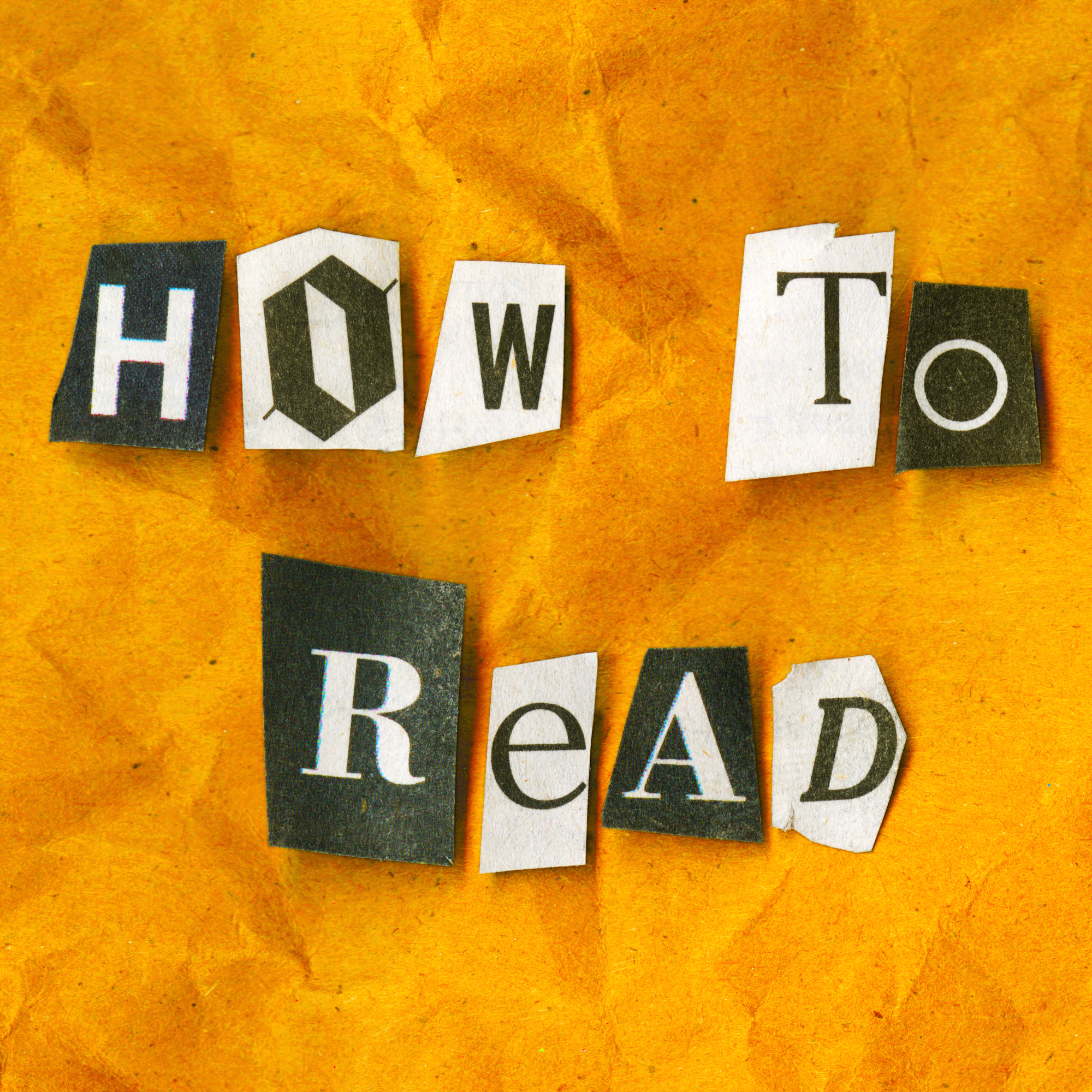
How to Read
by The HTR team
Conversations with professional over-thinkers for over-thinkers of all kinds
Episodes
-
In Sacred Spaces 3: The Pier (with The House of Louboutin)
Welcome to In Sacred Spaces, a three-episode series in which we visit spaces around New Click here for more about the episode...In Sacred Spaces 3: The Pier (with The House of Louboutin)
-
In Sacred Spaces 2: Grace Congregational Church of Harlem (with Nigel and Lisa Pearce)
Welcome to In Sacred Spaces, a three-episode series in which we visit spaces around New Click here for more about the episode...In Sacred Spaces 2: Grace Congregational Church of Harlem (with Nigel and Lisa Pearce)
-
In Sacred Spaces 1: St James Presbyterian (With Derrick McQueen)
Welcome to In Sacred Spaces, a three-episode series in which we visit spaces around New Click here for more about the episode...In Sacred Spaces 1: St James Presbyterian (With Derrick McQueen)
-
The sounds of medieval books (with Andrew Albin)
Reading today is typically silent - whether reading a book in a library or reading messages on our phones, we don’t expect the activity to be noisy. At most, we expect the sound of a page quietly turning. But Andrew Albin is interested in the medieval period, when books made all kinds of sounds....
-
Reenacting the past (with Catherine Grant)
When you think about historical reenactment, you probably think about reenacting Civil War battles or performing a character at a Renaissance fair. But Catherine Grant is interested in artists who use reenactment to ask questions about the history of feminist and queer activism, and the role of...
-
The history of homemade books (with Deidre Lynch)
We may think of reading and writing as opposite activities, but there’s a long history of people reading with blank books by their side so they could write out their favorite passages as they went. Deidre Lynch is interested in what these homemade books can tell us about the people who filled…
more -
Why apocalypse isn’t all bad (with Jennifer M. Wilks)
In the Bible, the Apocalypse is the end of the world as we know it, but it’s also the beginning of a new one. Jennifer Wilks argues that major catastrophes can be apocalyptic in the same way. A disaster like Hurricane Katrina or the COVID-19 pandemic can shed new light on the world’s social...
-
Musical storytelling with repurposed texts (with Randall Eng)
Music can tell stories in a variety of ways: operas and musicals have characters and plots, a song can tell a short story, and even music without words can take listeners on a journey. But Randall Eng is interested in using unexpected texts like photocopier manuals and legal pamphlets to produce...
-
The hidden politics of translation (with Lamyu Maria Bo)
During the Cold War, the US and Chinese governments didn’t drop bombs on each other, but they did drop translated works of literature. In fact, national governments put a lot of effort into creating translations that covertly served their political agendas. In the case of the US, this meant...
-
One-sided relationships (with Elaine Auyoung)
A one-sided relationship is a bad relationship, right? Not necessarily, says Elaine Auyoung. She’s interested in what are called parasocial relationships, where we know and care a lot about someone but they don’t directly engage with us – like a celebrity, for example, or even a fictional...
-
Language and injustice in the classroom (with Nelson Flores)
What we notice about someone else’s language is less to do with language itself than with our perception of the person’s social status. This happens with kids in classrooms too, where teachers police the language of students with lower social status, while students with higher social status can…
more -
Understanding chronic pain (with Travis Chi Wing Lau)
Chronic pain is pain that lasts for months, years or even a lifetime, and doctors have a hard time understanding it. Not only is it sometimes impossible to cure, but doctors also tend to fixate on bodily pain and not address the ways pain is also psychological and emotional. In fact, Travis Chi...
-
The politics of chill (with Robin James)
You may have noticed that music has been sounding more chilled out recently, with softer voices, slower tempos, and fewer instruments. From famous artists like Taylor Swift to background music for working and studying to, chill vibes are all around us. But Robin James argues that chill isn’t just…
more -
Communities of readers (with Janice Radway)
The classic image of a reader is someone alone with their eyes on a book, ignoring the world around them. But Janice Radway argues that the communities we’re in can shape what we read and how we read. Reading is not something that only takes place in our individual minds, but an activity that...
-
Cheerleading and the history of sport (with Frank Guridy)
When you picture a cheerleader, you probably imagine a woman. But in the early twentieth century, cheerleading was all done by men. Frank Guridy argues that the association of cheerleading with women is due to the growth of the sports industry, which has drawn ever more diverse people into sports...
-
Predictability in life and art (with Caroline Levine)
Do you want to live a predictable life? Can great art ever be predictable? Most people would probably say no to both, but Caroline Levine thinks predictability is more valuable than we usually recognize. Predictability is like putting on your own oxygen mask before helping others: we need to…
more -
Why we click with art (with Rita Felski)
Why do we click with some works of art and not others? Why does it bother us when we feel deeply connected to a song, painting, movie or book that our friends don’t connect with? Rita Felski uses the word attunement for this process of ‘clicking’, and she’s interested in how unpredictable it is....
-
The value of local knowledge (with Paige West)
When you think of an expert or specialist, you might picture a scientist with a lab coat and test tubes. Science likes to claim that its knowledge applies everywhere - like gravity or evolution - which makes scientific knowledge superior to local knowledge about one specific place. But Paige West...
-
Readers under lockdown (with Leah Price)
What’s happened to reading during the COVID-19 pandemic? Some people are too busy or stressed to read, while others are reading more than ever but in different ways. Leah Price is interested in historical precedents for what we’re experiencing now, from anxieties about catching diseases from...
-
Images of protests (with Colin Wayne Leach)
Images of protest have a visceral power to grab our attention. Colin Leach has been studying how we react to different kinds of protest images. For example, an image of many police holding down one protester and an image of many protesters facing off against a few police convey very different...
-
Season 4 trailer
Milan, Olivia and Colby talk about season 4, the challenges of recording remotely and why… Click here for more about the episode...Season 4 trailer
-
How (not) to read arrogantly (with Paula Moya)
The world doesn’t revolve around you! Many children, and plenty of adults too, have heard this from parents, friends or partners. It’s easy and kinda satisfying to view others around you as minor characters in the drama of your life. But Paula Moya wants us to recognize that this arrogant...
-
The appeal of crystals through the ages (with Marisa Galvez)
Many people today surround themselves with crystals, whether for healing properties or as part of their spirituality. But the question of whether crystals can affect the body or the spirit goes back millennia. Marisa Galvez has identified two distinct traditions for understanding crystals. First,...
-
Pauses in Japanese and American literature (with Andrew Leong)
We usually don’t pay much attention to pauses in language - it’s easy to assume they’re just meaningless gaps between the meaningful words. But pauses are everywhere in spoken language - and, as Andrew Leong has been studying, in written language too. Pauses are not just an absence of meaning…
more -
Atmospheres in literature and life (with Dora Zhang)
Atmospheres are both insubstantial and yet very palpable - for example, think about tension that feels so thick you could cut it with a knife. Whether you’re decorating a room or throwing a party, creating the right atmosphere can mean the difference between success and failure. But Dora Zhang...
-
Dancing stars in Indian cinema (with Usha Iyer)
Spectacular dance sequences are one of the most recognizable elements of Indian cinema, and female dancers are the biggest stars. Although some critics view dance sequences as just interruptions that don’t push the story forward, Usha Iyer argues that distracting from the story is actually a good...
-
Poetry, prayer and paying attention (with David Marno)
It’s difficult to maintain attention when surrounded by distractions. Even if we’re just trying to focus on our own thoughts, distracting words have a way of popping into our head uninvited. David Marno has been studying early Christian thinkers, for whom prayer meant paying attention to God,...
-
The art of bingeing (with Michaela Bronstein)
For many people, binge-watching is a guilty pleasure. In the Golden Age of Television, we might feel guilty because great tv shows deserve to be watched slowly and thoughtfully, not rushed through. If we’re just watching for what happens next in the story, we’ll probably miss out on subtler kinds...
-
Not having time to read (with Christina Lupton)
It’s hard to find time for undistracted reading, and it's easy to blame modern developments like digital technology. But Christina Lupton says that people have been feeling this way for more than 200 years. For centuries, people have been struggling to balance a desire for undistracted reading…
more -
Why it’s good to read like a teenager (with Juno Jill Richards)
There’s a negative stereotype of teenage readers as naively absorbed in their favourite books - think of young readers obsessed with Harry Potter. But Juno Jill Richards believes that the best books and films aimed at teenagers actually create space to think for yourself. These works invite us to...
-
How art can transform us (with Laurie Paul)
Life experiences can transform us in many ways, and Laurie Paul wants us to appreciate how experiencing works of art can be powerfully transformative too. Works of fiction can change how we understand our own lives going forwards, or experiences we’ve already had. But art doesn’t always transform...
-
The idea of dirtiness (with Stephanie Newell)
We tend to have a visceral response to someone we think is dirty. But Stephanie Newell argues that judging other people as dirty is more in our minds than it is about medical reality. Through examples ranging from the travel diaries of colonial British traders in West Africa to the surprising…
more -
What we remember after reading (with Andrew Elfenbein)
After we finish reading a book, our memories of it quickly fade and can even get distorted. Andrew Elfenbein has studied how the things we read get transformed in memory. What we remember may diverge from what’s in the book, but that doesn't mean we're sloppy readers - we're actually using highly...
-
Policing reading in colonial Egypt (with Michael Allan)
It might seem obvious that it’s good to read in ways that are literary, critical and modern. But Michael Allan argues that viewing certain ways of reading as literary, critical and modern also involves constructing a stereotype of a bad reader who is unliterary, uncritical and backwards. In...
-
Weird ways poems address their readers (with Jonathan Culler)
Many poems speak to a “you” who is not you the reader. And when a poem addresses an inanimate object - like an urn or even a bar of soap - it’s especially clear that readers aren’t being addressed directly. But Jonathan Culler argues that these poems do address their readers, it’s just indirect....
-
Remakes, sequels and other story expansions (with Sarah Chihaya)
What do we want when we revisit a beloved story? Sarah Chihaya suggests we’re drawn back by contradictory desires: on the one hand we want to relive what we experienced the first time, but we also want something fresh and new. From recent movie sequels and remakes to the experimental novel Life...
-
How illustrations reshaped the Romantic legacy (with Tom Mole)
When we think about the generation before us, we might feel that their cultural touchstones aren't relevant today. But Tom Mole argues that the literature of the past only survives because the next generation find new ways to make it relevant. In the Victorian era, new illustrations for the...
-
Why Eve got blamed (with Stephen Greenblatt)
The basic story of Adam and Eve is that Eve was tempted by a serpent, ate the forbidden fruit and thus caused humans to be kicked out of Paradise. But does she really deserve the blame? Stephen Greenblatt says this question isn’t a new one – Eve has had her defenders from the very start. From…
more -
Identifying with characters (with Merve Emre)
Some academics think that reading a book just to identify with a character is self-centred and shallow. When you’re only reading for characters you can identify with, you’re projecting yourself onto the book. But Merve Emre thinks that’s unfair. Far from being shallow, who readers do and don’t...
-
Literature from speech to writing and back (with Martin Puchner)
We tend to think of literature as something that’s written down. But Martin Puchner is interested in cases where the spoken word precedes, coexists with or even comes after the written word. From Ancient Greece to medieval Mali to Stalinist Russia, he explores why certain literary artists have...
-
The history of the chapter (with Nicholas Dames)
Pick up a novel today, and it’s almost guaranteed to be divided up into chapters. But that hasn’t always been the case. The chapter had to be invented. English professor Nick Dames has been studying this history. In this episode, he talks with us about how the chapter first came to be -- and how...
-
How to read philosophy (with Kwame Anthony Appiah)
You might not think writing style matters in philosophy. But Kwame Anthony Appiah - a philosopher who’s also a literary scholar - argues that style is crucial for understanding almost all the great philosophers. He shows how a single strange sentence from the American philosopher Quine unsettles...
-
Philadelphia’s utopian roots (with Bethany Wiggin)
A utopia presents an ideal world that has overcome the problems of the present. For the original Utopia, written by Thomas More in the 16th century, one of those problems was the division of land into public and private. His solution was shared ownership of the land. But what sounded good on the...
-
Global currents in US literature (with Wai Chee Dimock)
What connects Langston Hughes to Hong Kong, Malcolm X to Mecca, and Syrian merchants to the 9/11 memorial? In this episode, English professor Wai Chee Dimock shows us how to read quintessentially American writers from an international perspective. From this angle, major American concerns like…
more -
The long history of reading aloud (with Roger Chartier)
The idea of putting spaces between written words didn’t develop until thousands of years after writing itself was invented. Before then, even literate people could only recognize words by reading aloud. And since then, we've read aloud for many different reasons. Our guest Roger Chartier walks us...
-
The politics of disobedient wives (with Julie Crawford)
During the Renaissance, a writer could be imprisoned just for claiming that a husband beating his wife should show mercy. It wasn’t that the authorities wanted merciless wife-beatings. The issue was that they understood criticism of a tyrannical husband as criticism of a tyrannical king. English...
-
Social networks in novels (with Paul Saint-Amour)
What happens when we apply today's ideas about social networks back onto literature of the past? It's easy to think of these networks as a new feature of 21st century life -- but our guest Paul Saint-Amour argues that 19th century novels also had a profound understanding of how information travels.
-
Why description matters (with Heather Love)
Our guest Heather Love is out to convince us of the value of description -- yep, plain old description. In our conversation today, she argues that description has gotten a bad reputation in literary studies. Lately, Heather has been reading sociology books from the 1950s and 60s. She thinks that...
-
Atrocity, time, and the novel (with Bruce Robbins)
We live in a world with a long history of atrocity -- from the colonization of the Americas to the Japanese massacre at Nanking. Our guest Bruce Robbins is curious about how these past atrocities show up in novels. In our conversation today, he focuses on how the novel plays with time. By paying...
-
Intriguing opening sentences (with Jenny Davidson)
Sometimes it pays to zoom in. Today, we focus on some opening sentences which reward close attention. Our guest is Jenny Davidson -- an English professor who’s also a novelist herself. She shows us how these carefully-crafted opening sentences can orient, intrigue or even mislead us.
We're indexing this podcast's transcripts for the first time — this can take a minute or two. We'll show results as soon as they're ready.
No matches for "" in this podcast's transcripts.
No topics indexed yet for this podcast.
Loading reviews...
Loading similar podcasts...
Frequently Asked Questions
How many episodes does How to Read have?
How to Read currently has 50 episodes available on PodParley. New episodes are automatically indexed when they're published to the podcast feed.
What is How to Read about?
Conversations with professional over-thinkers for over-thinkers of all kinds
How often does How to Read release new episodes?
How to Read has 50 episodes. Check the episode list to see recent publication dates and frequency.
Where can I listen to How to Read?
You can listen to How to Read on PodParley by clicking any episode. We provide an embedded audio player for direct listening, and you can also subscribe via your preferred podcast app using the RSS feed.
Who hosts How to Read?
How to Read is created and hosted by The HTR team.
URL copied to clipboard!