
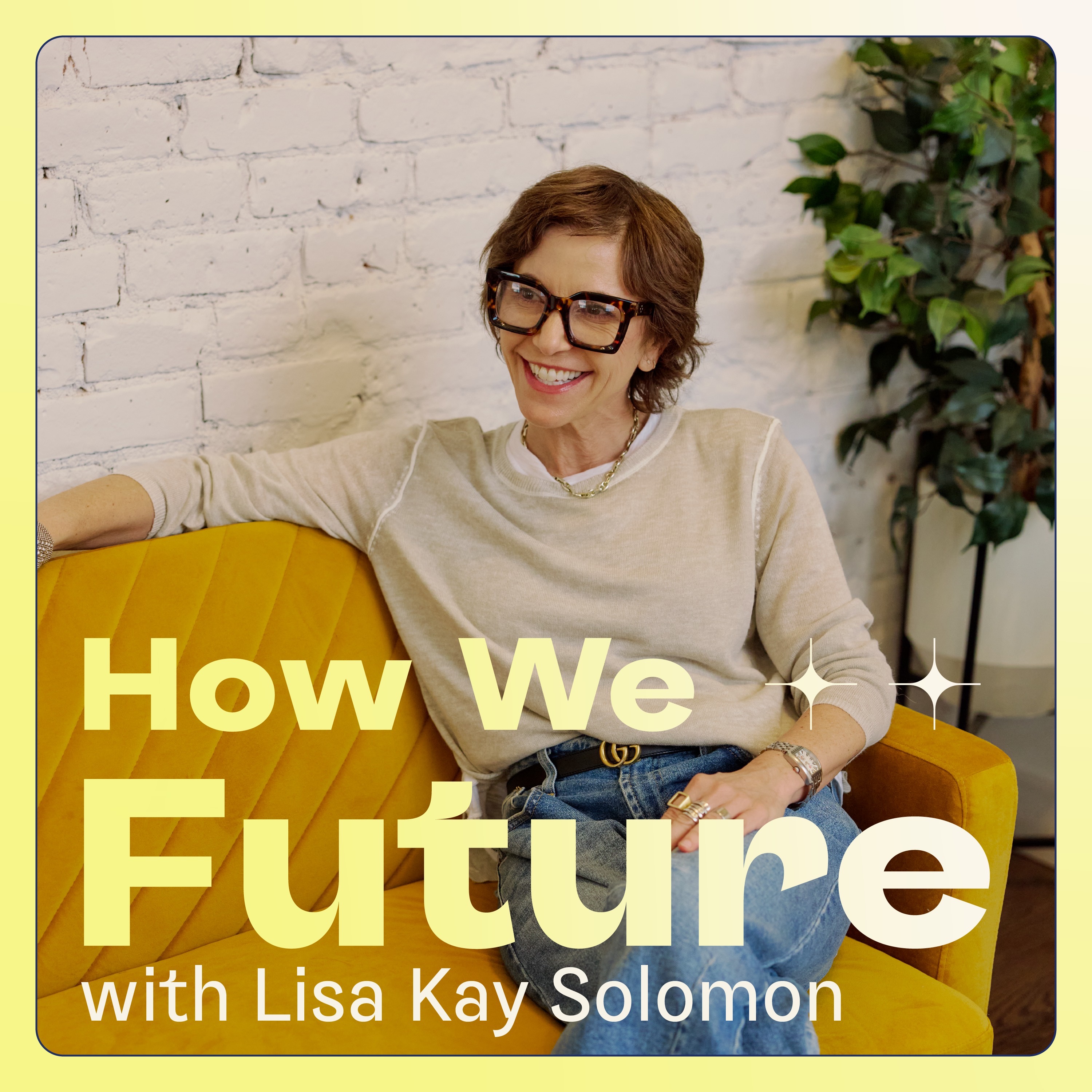
PODCAST · society
How We Future: Stories of Hope, Hype, and Gratitude
by Lisa Kay Solomon
There is no "they" who should determine our future. We are the "they."Futurist, author, and educator Lisa Kay Solomon believes in doing hard things, optimistically. Each week, Lisa and her remarkable guests illuminate the skills and practices we all need to develop hope, hype, and gratitude: traits that are crucial to build towards a more positive future.As Futurist in Residence at the Stanford d.school, where she teaches courses like "View from the Future" and "Futures Thinking for Strategic Decision Making," Lisa has spent her career making the tools of futures thinking accessible to everyone from K-12 educators to global executives. Now, through How We Future, she's bringing that same approach to you.You'll hear from architects rethinking how we build, educators transforming how we learn, artists expanding what we create, coaches revealing what it takes to lead
-
22
Make the Right Stuff Easier and the Wrong Stuff Harder with Friction Project’s Bob Sutton
Is your time being wasted? Or are you wasting others’ time? So often, it seems that calendars fill up, processes multiply, and simple tasks become unnecessarily hard.In this episode, Bob Sutton joins Lisa Kay Solomon to examine how friction shows up at work: the meetings that shouldn’t exist, the processes that are way too complicated, and the small design choices that quietly shape whether people feel respected or drained.Drawing from years of research behind The Friction Project, Bob breaks down why leaders often add instead of subtract, and why that instinct creates hidden costs across teams and organizations. Bob shares why some forms of friction are worth protecting, how savoring plays a role in good design, and why clarity (not certainty) has become a leadership advantage.In this conversation, you’ll learn:Why to treat time as something you’re accountable for, not entitled to spendHow “sham participation” quietly erodes trustHow leaders unintentionally magnify friction through weak signalsWhen slowing down actually improves performance and experienceThis episode is for anyone who wants to make work feel more humane without adding another framework, meeting, or tool.Links from the episode: Bob’s websiteThe Friction Project by Bob Sutton & Huggy RaoBob’s other booksSubtract by Leidy KlotzFollow How We Future: Lisa Kay Solomon on LinkedIn@lisakaysolomon on Instagram @howwefuture on TikTokhowwefuture.substack.com Want to contact us? Email [email protected]
-
21
How to Redesign Fixed Systems with Pro Volleyball Player Cassidy Lichtman
What happens when you stop accepting the rules you’ve been handed and start redesigning the game itself?Cassidy Lichtman is a former U.S. National Team volleyball player, gender equity advocate, and the leader of professional volleyball at Athletes Unlimited. In this episode, Cassidy and Lisa explore what it takes to build futures that don’t yet exist, even when the system seems rigid.Cassidy shares the story of reimagining professional women’s sports in the U.S. What if athletes were centered as partners, not commodities? She breaks down how Athletes Unlimited is building leagues differently and why those choices matter far beyond sports.The conversation also dives into moments of decision-making in complicated moments, including how Athletes Unlimited responded when its values were tested, and how constraints, frustration, and “this doesn’t make sense” moments can become catalysts for systemic change. Cassidy models what it looks like to question “used futures” and create something better.In this conversation, you’ll learn:How to spot systems that feel “off” and start redesigning themHow values can show up in business modelsWhy women’s sports offer a powerful blueprint for future-facing leadershipThis episode is a masterclass in agency, imagination, and long-term thinking—and a reminder that if a future doesn’t exist yet, maybe it’s yours to build. Links from the episode:Athletes Unlimited Lisa interviews Cassidy about Athletes UnlimitedVIdeo Recap: Look at this Thing We’ve BuiltThe P/ athCassidy Lichtman’s TED Talk, “The Power of My Voice”Follow How We Future: Lisa Kay Solomon on LinkedIn@lisakaysolomon on Instagram @howwefuture on TikTokhowwefuture.substack.com Want to contact us? Email [email protected]
-
20
Use Your Opportunities to Benefit Everyone with Athlete and Entrepreneur Chase Griffin
How can you use your opportunities to benefit everyone?In this episode of How We Future, Lisa talks with Chase Griffin, former quarterback at UCLA, 2x NIL Male Athlete of the Year, and a leading voice in the evolution of college athletics.Chase shares how he learned to navigate moments of change—from NIL to civic engagement—by centering and designing for collective value. Together, they explore how leadership can happen from inside systems you didn’t create, and how athletes (and non-athletes alike) can turn personal opportunity into shared impact.This conversation is a course on turning influence into impact, and “me” into “we.”In this episode, we explore:Lessons from being early in the NIL era—and why preparation mattered more than luckHow to structure partnerships that create real community benefitWhy athlete voices are often missing from conversations about college sports and Chase is changing thatThis week, maybe reflect on where in your own life you can redesign success so it benefits more than just you.If this episode resonated with you, leave a comment or review and share it with someone who’s navigating change—or creating it—from the inside.Links from the Episode:The Athletes Bureau (TAB) — Chase's newsletter by athletes, for athletesThe Team — the civic engagement organization Chase partnered with during the 2020 electionFind Chase on LinkedIn and InstagramLearn about NIL (Name, Image, Likeness)Follow How We Future:Lisa Kay Solomon on LinkedIn@lisakaysolomon on Instagram@howwefuture on TikTokhowwefuture.substack.comWant to contact us? Email [email protected]
-
19
How to Speak Effectively Under Pressure with Communication Expert Matt Abrahams
Communication anxiety is real. It’s time to start practicing.This episode of How We Future, features Matt Abrahams, Stanford lecturer and host of the Think Fast, Talk Smart podcast. Lisa and Matt explore how effective communication is a learnable skill and why we’re rarely taught how to practice it.Matt shares the frameworks he teaches to every incoming Stanford MBA to help them speak more confidently in spontaneous, high-stakes moments. From managing anxiety to the importance of clarifying your intentions, the episode focuses on practical tools for showing up with clarity, presence, and purpose when the pressure is on.In this conversation, you’ll learn:The mindsets and methods of effective communicationsSimple ways to practice spontaneous speaking before the stakes are highHow to structure answers so people actually remember what you sayWhy listening and pausing are powerful leadership toolsCommunication is about connection. It will never be perfect, but like all skills, it gets better with practice.Please rate and leave a comment, we’d really love to hear from you!Links from the episode:Matt’s website Matt’s Podcast: Think Fast, Talk Smart Matt’s Book: Think Faster, Talk SmarterFollow How We Future: Lisa Kay Solomon on LinkedIn@lisakaysolomon on Instagram @howwefuture on TikTokhowwefuture.substack.com Want to contact us? Email [email protected]
-
18
How to Make Your Own Luck with Neuroscientist Tina Seelig
What if you can learn to be lucky? In our first episode of season 3, Lisa Kay Solomon is joined by author, educator, and neuroscientist Tina Seelig to explore how curiosity, generosity, and small daily choices can dramatically expand what’s possible over time. Drawing from decades of teaching at Stanford and her forthcoming book What I Wish I Knew About Luck, Tina reframes luck as a skill that can be cultivated rather than an accident we stumble into.Tina shares how taking risks, showing appreciation, and staying open to unexpected opportunities can create compounding advantages. She also reflects on what she’s learned from teaching thousands of students, leading the Knight-Hennessy Scholars program, and watching ideas evolve when people are given permission to experiment.In this conversation, you’ll learn:Why luck often shows up at the intersection of preparation and opennessThe role generosity and curiosity play in long-term successHow to design environments that make luck more likelyThe future is something we shape through the questions we ask, the risks we take, and the people we choose to learn alongside. If you’ve ever wondered how to tilt the odds in your favor, Tina offers practical wisdom and hopeful perspectives on how to get started.Please rate and leave a comment letting us know what classes you wish you had taken!Links from the Episode: Preorder What I Wish I Knew About Luck: A Crash Course on Turning Aspirations into Achievements by Tina SeeligWhat I Wish I Knew When I Was 20: A Crash Course in Making Your Place in the World by Tina SeeliginGenius: A Crash Course on Creativity by Tina SeeligCreativity Rules: Get Ideas Out of Your Head and into the World by Tina SeeligTina’s Ted Talk: The Little Risks You Can Take to Increase Your LuckTina’s WebsiteFollow How We Future: Lisa Kay Solomon on LinkedIn@lisakaysolomon on Instagram @howwefuture on TikTokhowwefuture.substack.com Want to contact us? Email [email protected]
-
17
The Creative Hustle that Strengthens Communities with Change Maker Olatunde Sobomehin
Build the bridge to connect your community’s gaps.Lisa is closing out season 2 with Olatunde Sobomehin (Tunde), co-founder and CEO of StreetCode Academy and co-author of Creative Hustle. Tunde believes that underrepresented communities should be participating in the upside of technology instead of being excluded from it. StreetCode's mission is to hack, hustle, and design the future to bridge that gap, starting in East Palo Alto and expanding outward.Tunde started out experimenting how to uplift those underrepresented communities. He designed business computer camps in Portland, basketball programs mixed with tech education, and community organizing around music and technology. In 2014, StreetCode Academy took form.StreetCode Academy has evolved over the years from a program that includes younger students, parents, and other disciplines like entrepreneurship and design. The tagline "Hack, Hustle, Design the Future" captures the mindset, skills, and access are the three outcomes they're building toward.In this conversation, you'll learn:Why tech education works better when whole families learn togetherWhat college basketball and tech education have in commonHow to map your gifts to your goals through principles, people, and practice.Tunde is taking both StreetCode and Creative Hustle on the road to places like Hong Kong, Finland, Botswana, and cities across the U.S. If you're inspired, visit streetcode.org or creativehustle.org. Or reach out! As Tunde says, building community is how the work gets done.Links from the episode:Creative HustleGet the Creative Hustle BookStreetCode AcademyHack Hustle Design The Future, article by Lisa Kay SolomonStreetCode Tech Journey @ Stanford Men’s BasketballPeople Mentioned:Reverend Jesse JacksonCoach Eric Reveno - General manager and associate head coach of Stanford men's basketballCoach Kyle Smith - Stanford basketball coach known for using statistics and dataEbuka Okorie - Stanford freshman basketball player mentioned as generational talentsam seidel - Co-author of Creative HustleHope Meng - Designed custom lettering for Creative HustleJori Tytus - Designed custom art for Creative HustleKhristopher "Squint" Sandifer - Featured in Chapter 1 of Creative Hustle, film directorBryant Terry - Award-Winning Chef featured in Creative HustleSarahi Espinoza Salamanca - Community organizer featured in Creative Hustle, Forbes 30 Under 30Jennifer Brandel - Previous How We Future guest, civic entrepreneurHakeem Olajuwon - NBA legend
-
16
How Sci-Fi Fuels Positive Futures with Imagination Ambassadors Ruth Wylie and Ed Finn
Are sci-fi stories the key to a better future?This week’s episode of How We Future features Ruth Wylie and Ed Finn, co-directors of the Center for Science and the Imagination at Arizona State University. For nearly 15 years, they've been running what might be the most unusual university center in the country, one that brings together science fiction writers, scientists, artists, and engineers to imagine hopeful, yet practical, futures.Ruth and Ed describe how they turn imagination into practice: Kids building Scribble Bots and debating who deserves credit when a robot makes art. Commissioning writers worldwide to explore what human flourishing looks like in a warming world. Pairing speculative fiction with expert essays and original artwork, creating story packages that explore what might actually be possible down the line.In this conversation, you'll learn:How collaborative worldbuilding helps experts ask each other new questionsWhat happens when you pair exciting stories with science-backed factsWhy reflecting on the futures you consume in media matters more than you thinkLinks from the Episode:Center for Science and ImaginationSmithsonian Futures ExhibitBook and Articles:Frankenstein at 200, Ed Finn, New York TimesStep Into the Free and Infinite Laboratory of the Mind, Ed Finn, Issues in Science and TechnologyCollaborative Imagination: A Methodical Approach, Ruth Wylie and Ed Finn, Science DirectClimate Imagination: Dispatches from Hopeful Futures, edited by Joey Escrich and Ed FinnA Rewilded Mind, Corey Pressman, CSI Imagination FellowWhen Robot and Crow Saved East St. Louis by Anna Lee NewitzExercises and Resources:Frankenstein Kit, Resources created by CSIFutures by Choice, Futures by Chance, CSICSI Resources for TeachersSolar Tomorrow Resources, CSI (Great for Educators!)Postcards from the Future, Futures Exercise from CSI
-
15
How to be a Good Ancestor with Public Philosopher Roman Krznaric
Are you being a good ancestor?This episode of How We Future features public philosopher Roman Krznaric, author of The Good Ancestor and History for Tomorrow, to explore how we can break free from short-term thinking and start planning in generations, not quarters.Roman argues we all have two competing forces. The marshmallow brain seeks instant gratification. The acorn brain enables long-term thinking, the kind that built sewers in 19th century London for a much larger future population. History shows what's possible when we activate that capacity. Roman shares practical steps to become better ancestors, from giving children your vote to building social cohesion through community action. He offers examples of things that went right in history and the importance of recognizing what we should repeat, not just what we shouldn’t. In this conversation, you'll learn:Why long-term thinking is wired into our brains and how to activate itWhat it takes for real transformative change to happenWhy social trust matters more than technology for our survivalRoman sees signs of change, from the EU creating an Intergenerational Fairness Index to educators teaching students to think like futurists, not just historians. The future is ours to create together.Links from the episode:Roman Krznaric Site Roman’s new online course: Long-Term Thinking for a Short-Term WorldBook: The Good Ancestor: A Radical Prescription for Long Term Thinking Book: History for Tomorrow: Inspiration from the Past for the Future of HumanityBook: Empathy: Why It Matters, and How to Get ItTED Talk: Lessons from History for a Better TomorrowTED Talk: How to be a Good AncestorNew View EDU podcast for school leaders with Roman KrnaricLong Now Talk: Roman Kzrnaric and Kate Raworth
-
14
Becoming Antifragile in a World of Constant Change with Disruption Expert Pascal Finette
The future is a paradox we have to learn to hold.In this episode of How We Future, Lisa Kay Solomon is joined by Pascal Finette, Co-Founder of radical, an organization that offers strategic advice to help leaders build organizations that strengthen under stress instead of breaking. Over nearly three decades, Pascal has led transformations at eBay, Mozilla, and Google, and he brings refreshing honesty about what it really takes to navigate uncertainty.The conversation centers on a simple question Pascal asks thousands of executives: "The future is ___." How you fill in that blank reveals everything. Some say bright. Some say terrifying. Pascal argues we need to hold both views at once because the future genuinely is contradictory. He and Lisa talk about the danger of the "official future," that narrow path organizations and people lock themselves into that leaves them brittle when inevitable shocks arrive.In this conversation, you'll learn:Why holding opposing views of the future at once is essentialWhy curiosity is the most important muscle for navigating changeWhat anti-fragility means in practice and how it differs from resiliencePascal encourages listeners to ask more meaningful questions about their role in society rather than just focusing on quarterly profits. The future, he reminds us, is ours to create.Links from the episode:Radical BriefingThe Heretic x GYSHIDOThe Official Future TrapPascal’s Disruption Mapping Exercise
-
13
Why We Need to Look 50 Years Ahead with Democracy Futurist Aditi Juneja
The best way to unstick the present is to think further into the future.In this episode of How We Future, Lisa Kay Solomon sits down with Aditi Juneja, Executive Director of Democracy 2076, to explore how thinking 50 years ahead can break down current obstacles and make seemingly unrealistic hopes feel very possible. Democracy 2076 helps us plan democracy not for the next election cycle, but for the next 50 years.The conversation reveals how the media we consume shapes our perception of what democracy looks like. From Scandal normalizing election fraud to The West Wing making some viewers think our government is running smoothly, Aditi's research uncovers how TV shows and movies are quietly teaching us civics.You'll also hear:Why a 50-year timeline makes change feel possible instead of impossibleWhat happens when people sit down to design constitutional amendments togetherWhy we need to give people a menu of possibilities, not just ask them to imagine the futureThe episode closes with practical advice for staying resilient in noisy political times. Thank you, Aditi, for joining How We Future!Links from the episode:Democracy 2076Report co-authored with Harmony Labs on how media shapes people’s attitudes about the problems facing democracyThe Long-Term Futures Work of Building a Better DemocracyA Constitution for 2076Pro-Democracy Political Coalitions for 2076
-
12
How Design Brings Us Together with Creative Director Franzi Sessler
Can graphic design be a force for good?In this episode of How We Future, Lisa sits down with Franzi Sessler, the co-founder of global design agency Kreatives, to explore how design, storytelling, and creativity can shape better futures.Recently, Franzi, and her team have made stunning sports explainers for the Milano Cortina 2026 Paralympic Winter Games. Their collaboration with Allianz and the International Paralympic Committee started in 2024, when her team created animated explainers for all 22 Paralympic sports, helping millions of viewers understand and enjoy the amazing athletes and games.The conversation also touches on projects like All Vote No Play and Futures Happening, revealing how design can activate civic imagination, build momentum, and turn uncertainty into possibility. Throughout, Franzi shows what’s possible when constraints are treated as creative fuel and when imagination is taken seriously.In this conversation, you’ll learn:How design can close the gap between confusion and connectionWhy constraints often unlock the best ideasWhat it takes to design with trust, empathy, and impactLinks from the episode:KreativesMilano Cortina 2026 Paralympic Sports Explainer VideosMilano Cortina 2026 Olympic Sports Explainer VideosFranzi’s favorite Paralympic Disciplines to Design for: Boccia and SwimmingParis 2024 Paralympic Sports Explainer VideosFranzi’s All Vote No Play designsThe Team
-
11
What Hollywood's Cars Can Teach Us About the Future with Architect Chad Oppenheim
“Life moves pretty fast. If you don’t stop and look around once in a while, you could miss it.”For our first-ever live audience recording of How We Future, Lisa Kay Solomon sat down with architect and author Chad Oppenheim at Book Passage in San Francisco.The conversation centers around Chad’s book RIDE: The Iconic Wheels of the Silver Screen and the vehicles that became emotional anchors in film history. From the Back to the Future DeLorean to Ferris Bueller’s Ferrari, these cars were modes of transportation, meaning, and possibility.Chad shares how childhood Matchbox cars sparked a lifelong fascination with design and storytelling, and how those early influences still shape his architecture today. This live episode explores the importance of imagination and why the things that once made us feel limitless can still guide how we build the future.You’ll hear:Why movie cars function as emotional charactersHow nostalgia shapes creative visionChad’s favorite movie carThis week, take Ferris Bueller’s advice and slow down. Revisit a movie that meant something to you as a kid.Ask yourself:What did this story, or this machine, make me feel back then?What part of that feeling do I want more of in my future?And if you’re up for it, share with us: What was the iconic ride that changed how you saw the world?Links from the show: Oppenheim ArchitectureLAIR: Radical Homes and Hideouts of Movie VillainsRIDE: Most Iconic Wheels of the Silver ScreenWatch 1 minute Trailer: RIDE
-
10
Special: Announcing How We Future Live!
Film's most iconic cars are also invitations to the future.On January 28, Lisa will be hosting a live taping of How We Future featuring architect and cultural visionary Chad Oppenheim, celebrating his new book RIDE: The Iconic Wheels of the Silver Screen. They'll be gathering at Book Passage in San Francisco's Ferry Building for an evening that blends design, film, and imagination.Chad’s work explores how bold ideas come to life, whether through architecture, storytelling, or the unforgettable vehicles that have defined cinema. From the DeLorean to the Batmobile, these cars are visions of possibility. Together, Lisa and Chad will dig into how imagination shapes the futures we hope for.If you’re curious about how creative worlds are designed, we'd love to see you there.The full conversation will be released next week (February 3rd). If you want to get involved, we would love to hear what questions YOU have for Chad. Plus, we'll send you a free RIDE postcard!Fill out this short survey to be a part of an unforgettable evening.As always, thank you for tuning in to How We Future.
-
9
How to Solve Complex Problems with Simple Pictures with Visual Thinking Expert Dan Roam
Sometimes the fastest way to clarity is to start drawing.In this episode of How We Future, Lisa Kay Solomon sits down with visual thinking pioneer Dan Roam to explore how simple sketches can bring clarity to complexity. Dan, author of The Back of the Napkin and five other bestselling books, shares how visual thinking strengthens problem-solving, communication, and our sense of agency in an uncertain world.In this conversation, you’ll learn:Why drawing helps us slow down and make sense of complex problemsHow Dan’s “six by six” framework supports clearer thinking and communicationWhat visual thinking has to do with personal agency and influenceDan's philosophy on AI and its impact on storytellers Lisa and Dan trace the roots of visual thinking back to how our brains naturally process the world, then bring those ideas into real life. The conversation also looks ahead as they reflect on what visual thinking means in an era of generative AI, and why human judgment, ethics, and curiosity still matter deeply.Links from the showThe Back of the Napkin: Solving Problems and Selling Ideas by Dan RoamBlah, Blah, Blah: What to Do When Words Don't Work by Dan RoamShow and Tell: How Everybody Can Make Extraordinary Presentations by Dan RoamNapkin Academy
-
8
How Play Works with Social Entrepreneur Jill Vialet
In serious times, play can be one of our most powerful tools.In this episode of How We Future, Lisa talks with Jill Vialet, social entrepreneur, author of Why Play Works, and founder of Playworks, about why play belongs at the center of how we lead, learn, and navigate complexity. Jill covers her journey to building an organization that transformed recess into a source of connection, trust, and resilience for millions of kids.Their conversation explores how play helps people regulate their nervous systems, build relationships across differences, and see new possibilities when problems feel stuck. Jill shares lessons from Playworks, why trust is a prerequisite for learning, how unstructured play supports emotional growth, and what leaders can borrow from playgrounds.You’ll hear about:How play helps us navigate chaos and uncertaintyThe connection between play, trust, and feeling safeHow small, unexpected tweaks can unlock entirely new futuresThis episode proves that creativity, empathy, and experimentation often emerge when people feel safe enough to engage. If you are leading through uncertainty or looking for new ways to bring people together, Jill offers practical insight and hopeful perspectives on how play can help us move forward.Links from the episode:Jill Vialet personal siteJill’s Substack, “Workswell”Jill’s Tee’s ShopWhy Play Works by Jill VialetPlay: How it Shapes the Brain, Opens the Imagination, and Invigorates the Soul by Stuart Brown
-
7
Why Life Gets Better with Age with Modern Elder Chip Conley
Can changing your mindset increase your lifespan?To kick off season two of How We Future, Lisa sits down with Chip Conley, entrepreneur, bestselling author, and founder of Modern Elder Academy. Chip has spent decades helping people rethink aging, midlife, and what it really means to live life to the fullest.In their conversation, Chip and Lisa explore the idea of the “midlife chrysalis” and why the years around 45 to 55 can be a powerful period of transformation rather than decline. Drawing from his own near-death experience, his work in hospitality, and his time at Airbnb, Chip offers a hopeful and grounded reframing of aging.You’ll hear about:How wisdom is distilled from experience and why it matters now more than everHow curiosity and energy can counter ageism at workWhat hospitality, community, and belonging have to teach us about the futureFrom emotional equations to regenerative communities, this episode is a reflection on learning, leadership, and designing a life with intention. If you are navigating change or wondering how to grow older with more joy and agency, Chip offers language, frameworks, and perspective to help you maximize your life.Links from the episode: Modern Elder AcademyChip’s podcast, The Midlife ChrysalisLearning to Love Midlife: 12 Reasons why Life gets better with Age by Chip ConleyEmotional Equations: Simple Steps for Creating Happiness + Success in Business + Life by Chip ConleyChip Conley on Lenny Rashinsky’s podcastChip’s post on LinkedIn celebrating his 65th birthday!10 Commandments or Commitments, by Chip Conley
-
6
How to Take the Best and Leave the Rest with Lifelong Learner Dr. Bonnie Kay (Lisa's mom!)
You can’t be a leader unless you’re a continuous learner.In this special Season 1 closer, Lisa is joined by her mom, Dr. Bonnie Kay! Bonnie is many things: consultant, psychologist, continuous learner, competitive golfer, and lifelong inventor of her own path. Together, they revisit the choices, relationships, and philosophies that shaped Bonnie’s unconventional career and deeply influenced Lisa’s own work in futures thinking and design.During the conversation, Bonnie shares stories from her early days as an English teacher, her leap into psychology during a major turning point for women, the “shortest dissertation ever” on gender roles and marital satisfaction, and her later career helping leaders grow through quality management and emotional intelligence.You’ll hear:How “continuous learning” became her north starWhy the circle of influence still matters in chaotic timesThe power of great conversationsHer signature philosophies like “take the best and leave the rest” It’s a warm, funny conversation about ambition, family, reinvention, and the lifelong practice of creating a meaningful life on your own terms. A perfect end to Season 1.Some of Bonnie’s Favorite books and resources:7 Habits of Highly Effective People Stephen CoveyFierce Conversations by Susan ScottWomen Who Run with Wolves, by Clarissa Pinkola EstésThink Again by Adam Grant (my mom literally gives everyone in her life Adam Grant’s calendar) 9 lifetime Hole in Ones, Impressive! An informal account of golf highlights by Bonnie Kay The Rise of the full Stack Learning Organization, Lisa Kay Solomon
-
5
Strengthening the Connective Tissue Between Us with Journalist Jennifer Brandel
The future is being built in the spaces most of us never learned to see.In this episode, Lisa talks with journalist and entrepreneur Jennifer Brandel. Jennifer is the co-founder of Zebras Unite, and creator of the Interstitium, a theory of the hidden connective work that keeps communities, movements, and systems alive. Jenn has spent her career naming the “in-between” roles that make change possible and giving shape to the people who do them.They explore:The Interstitium Jenn's new framework for the unseen connective tissue of societyHexagon people those who bridge local life and global ideasSacred hospitality how to create spaces where real transformation can happenWhy connection is the real antidote to loneliness, polarization, and overwhelmZebras Unite a model for building companies that are profitable and regenerativeJenn shares stories from journalism, civic innovation, and community building, showing how naming and noticing these patterns helps people feel less alone.This conversation is an invitation to reconnect with each other, design healthier ways of working together, and imagine futures built on reciprocity, meaning, and resilience.Links from the show:Jennifer’s websiteThe IntersitiumHexagon PeopleZebras UniteZebras Fix what Unicorns Break
-
4
Training Champions for Life with Stanford Water Polo Coach John Tanner
Great coaches train better people, not just better athletes.Coach John Tanner (JT) is about to start his 29th season as the Stanford women’s water polo coach. On this episode of How We Future, JT and Lisa explore how coaching goes far beyond the pool. Over decades of leading championship teams, JT has developed a coaching style that focuses on resilience, communication skills, and the value of practice.He helps athletes become confident, empathetic, and thoughtful leaders. Whether it’s having his athletes make TED Talks for each other or facilitating weekly check-ins about how his team is feeling about their academics, JT prioritizes training methods that will help his students long after their athletic careers.JT and Lisa discuss:How high-pressure sports environments can cultivate empathyWhy JT integrates storytelling and reflection into his team’s daily routineHow intentional, consistent practice is crucial to navigating the highest-pressure momentsThe mindset behind coaching for long-term growth, not just short-term victoriesWays to translate JT’s coaching strategies into personal or professional leadership practicesLeadership isn’t only forged in the workplace. It’s practiced every day in the ways we connect, communicate, and lift others.Links from the show:Coaching Citizens Athletes, Stanford Report Article The Coaches Wore Cardinal, Stanford MagazineThe Right Call by Sally Jenkins (Lisa’s favorite book about sports and leadership) Stanford Women’s Water Polo Speaker Series See JT on Wu Tsai Human Performance Alliance Female Athlete Research Meeting (FARM)
-
3
How Joy can Save the Planet with Food Maven Dana Cowin
Pleasure isn’t the enemy of sustainability. It might be the path to it.Today, Lisa Kay Solomon is joined by Dana Cowin, longtime Food & Wine editor-in-chief, storytelling innovator, and founder of Progressive Hedonist, to talk about how creativity, curiosity, and continual reinvention shape a meaningful life.From leading one of the most influential food magazines in the world to uplifting underrepresented voices and sustainable culinary practices, Dana has spent her career expanding our understanding of what “good food” means.You’ll learn:Why reinvention is less about starting over and more about listening to what excites you nowHow Progressive Hedonism helps us rethink pleasure, connection, and long-term well-beingThe role sustainable food practices play in shaping a healthier future for people and the planetWhat Dana discovered when she left her “dream job” after 21 yearsWhy curiosity is the engine that keeps creativity aliveTogether, Lisa and Dana dive into the idea of being a Progressive Hedonist: the belief that pleasure and responsibility can coexist. Dana shares how eating deliciously can also mean eating ethically, and how sustainability becomes far more compelling when it’s rooted in joy rather than guilt.This episode is a reminder that pleasure isn’t frivolous, it’s fuel. And when paired with intention, it becomes a powerful force for shaping a better future.Links from the show:Progressive Hedonist manifestoAre you a Progressive Hedonist? Take the quiz!Learn how to throw your own Progressive Hedonist dinner party!Check out Dana’s book: Mastering My Mistakes: Learning to Cook with 65 Chefs and Over 100 RecipesDana’s TED Talk: How ugly, unloved food can change the world
-
2
How to Have a Good Day (backed by science!) with Leadership Expert Caroline Webb
The science of a good day is also the science of a better future.This week’s episode of How We Future with Lisa Kay Solomon features Caroline Webb: leadership coach, behavioral science expert, McKinsey Senior Advisor, and bestselling author of How to Have a Good Day.Caroline’s work sits at the intersection of neuroscience, psychology, and practical leadership. She shares how we can prepare for chaotic times and gain agency by understanding the ways our brains handle uncertainty, stress, and decision-making.You’ll learn:Why attention is your most precious resourceA simple three-part framework (“Know. Be. Do”) that helps leaders navigate chaosHow naming what you’re feeling instantly reduces stressWhy imagining a future scenario trains your brain to respond better in real lifeWhy realistic optimism, not blind positivity, is the mindset leaders need right nowThis conversation is a practical, hopeful guide for anyone trying to lead with more clarity, calm, and positivity. Caroline shows that the skills we need to navigate the future aren’t abstract. They’re learnable, repeatable, and rooted in how we manage our minds today.Links from the show:Learn more about Caroline and her projects on her websiteBuy the book: How To Have a Good Day by Caroline WebbTake Caroline’s LinkedIn Learning Courses: Science-based Habits for Modern Leadership and How to Have a Great Day at WorkLink to HBR Chapter: Guide to Dealing with Conflict by Caroline WebbEven more resources from Caroline Webb to help you thrive!Psychologist Podcast with Scott Barry Kauffman
-
1
Prototyping Futures Through Play and Games with Futures Facilitator Jeff Rogers
What if the future makes more sense when we treat it like a game?In this episode of How We Future, Lisa Kay Solomon is joined by Jeffrey Rogers—futures facilitator, lifelong learner, and co-founder of PROJECTORY—to explore how play, prospection, and curiosity help people prepare for inevitable uncertainty. Jeff is an expert at designing experiences, workshops, and games that help leaders feel the future, not just think about it.Together, Lisa and Jeff unpack why the future is “too important to leave to the futurists,” and how all of us can build their capacity to imagine, experiment, and act with more confidence.Jeff shares stories from youth leadership trips, corporate workshops, and global facilitation work that reveal how people learn best when they’re invited to experiment, reflect, and play their way into new futures.You’ll learn:Why prospection, or an ability to imagine forward, is a superpower we’re all naturally equipped with How games create low-stakes environments for exploring high-stakes ideasHow simple imaginative activities (like interviewing a child about their future) promote agency and perspectiveWhy designing your future self is just as important as designing future strategiesJeff’s favorite books and games, so that YOU can put his great ideas into actionThis episode will encourage you to stay open, curious, and willing to try things that might not work (yet). Jeff’s approach makes the future feel expansive, collaborative, and wonderfully human.Links from the show: Chair Zombie GameGamestorming (practices by David Gray and Sunni Brown)Hal Hirshfield’s work at UCLA PROJECTORYBonus! Jeff’s recommendations for diving into futures practices:How to Future by Scott Smith and Madeline Ashby – an accessible toolkit for futures facilitationTimefulness by Marcia Bjornerud – a geologist's perspective on thinking across vastly different time scalesBorne: A Novel by Jeff VanderMeer – science fiction that builds deep empathy for non-human entities (and yes, he cried at the end)
-
0
Building Attachment Through Trust in an Unattached World with Next Gen Leader Zoë Jenkins
Is trust the foundation of the future?In this episode of How We Future, Lisa Kay Solomon sits down with Zoë Jenkins, Director of Civic Trust and Recruitment at Civics Unplugged, to talk about how the next generation is reimagining democracy from the ground up.Zoë’s journey started early—she joined Civics Unplugged as a high school fellow, went on to write her own job description fresh out of college, and now leads programs helping young people build community through civic trust, a term you’ll learn all about in this episode.Zoë and Lisa cover:Why democracy depends on trusting your neighbors, not just voting with themHow young people are turning frustration into innovationThe difference between attachment and affection, and why it mattersHow flattening hierarchies and “breaking the model” unlocks leadership at every ageThis episode is a call to action for anyone who wants to strengthen the bonds that hold our communities—and our futures—together. Zoë reminds us that democracy isn’t just a system. It’s a daily practice of showing up, listening, and believing in one another.Links from the show: Zoë’s TEDx Talk on “Saving the World in an Empathy Crisis”CBS This Morning segment featuring Zoë and Generation ChangeLearn more about Zoë on her websiteZoë’s partnership with Aerie to speak about “How to Contribute to Social Justice”Article from More in Common about the role of sports fans in democracy
-
-1
How Imagination and “The Force” Can Shape the Future with Star Wars Actor Ahmed Best
How do we reclaim our imagination as a force for freedom?You might know Ahmed Best from his role as Jar Jar Binks in the Star Wars universe– He is also the creator of AfroRithms from the Future and a lifelong champion of imagination as liberation. From the streets of the South Bronx to the worlds of the Jedi, Ahmed has spent his life proving that creativity can rewrite what’s possible.You'll learn:Why imagination isn’t a luxury—it’s a rightHow watching the birth of hip-hop in the 70’s taught him that the future can be built from nothingThe origin of AfroRithms from the Future and the joy of collective playWhat Afrofuturism reveals about freedom, history, and self-determinationHow his Jedi character, Kelleran Beq, teaches that The Force is loveAhmed and Lisa trace a throughline from ancient Egypt to Dynamic Land to the Star Wars galaxy, showing that the power to future is in all of us.This conversation is a reminder that joy, creativity, and imagination are the real tools of freedom—and that the best way to shape the future is to play it into being.Read Lisa's thoughts on the episode on the How We Future Substack.Links from the show:Learn about Afrofuturism from Ahmed's AfroRithm Futures GroupBuy Ahmed's game: AfroRithms from the FutureThe Long Now Foundation Talk: When is Wakanda: Imagining AfrofuturesThe Long Now Foundation: Feel the Future with Ahmed BestNew York Times Article: The Actor Who Played Jar Jar Binks is Proud of his Star Wars LegacySneak Peak of Marvel Comics: Jar Jar, written by Ahmed BestDisney’s Lego Star Wars: Rebuild the Galaxy Series
-
-2
Setting Your Partner Up for Success with Improviser Dan Klein
When you celebrate failure loudly enough, you stop fearing it.In this episode, Lisa sits down with Dan Klein, improviser, Stanford lecturer, and master of helping people unlock creativity through play. Dan has spent two decades teaching improv at Stanford, and his work goes far beyond the stage—it's about listening, adapting, and building something together in real time.You'll discover:How celebrating failure (loudly and cheerfully) can transform teamsThe "oh, good" principle: finding opportunity in whatever comes your wayWhy your job is to make your partner look like a geniusHow practicing flexibility in low-stakes moments prepares you for high-stakes lifeDan shares wisdom from improv legends Patricia Ryan Madson and Keith Johnstone, revealing how accepting offers—from others, from the world, and from yourself—creates connection and possibility. Whether it's a mistake, an unexpected curveball, or just life throwing you something new, improvisers are trained to see it all as creative fuel.This conversation is about building resilience, reducing loneliness, and designing a life where everyone wins. If you've ever wished you could get more comfortable with the unknown, Dan shows you how practice, presence, and generosity can change everything.Read Lisa's thoughts on the episode on the How We Future Substack.Links from the show:Two books in Dan’s improv classes syllabusPatricia Ryan, Improv Wisdom: Don’t Prepare, Just Show UpKeith Johnstone, Impro Improvisation and the TheatreMore about DanDan’s Stanford profile
-
-3
Finding Power and Presence Amid Ambiguity with Leadership Coach Rae Ringel
What if the key to leading better isn't doing more—it's getting clearer about what you can actually control?In this first episode of How We Future with Lisa Kay Solomon, Lisa is joined by leadership coach Rae Ringel to talk about showing up authentically in “swirly” times. Rae has spent decades helping C-suite leaders and teams become their best selves, and she's sharing the tools that actually work.You'll learn:Why "for now is not forever" is the mantra you need right nowHow to spot the unarticulated request behind every complaintSimple reframes that can change your entire dayWhy spontaneity favors the practiced mindRae brings warmth, wisdom, and practical strategies to help you focus on what you can control. From teaching at Georgetown to coaching leaders as president of the Ringel Group, she's mastered the art of helping people show up better. Whether you're stressed about uncertainty, leading a team, or trying to be more present in daily life, this conversation will remind you: there's so much more in your control than you think.Read Lisa's thoughts on the episode on the How We Future Substack.Links from the show:HBR Mastering the Art of the RequestHBR Plan a Better Meeting with Design ThinkingHBR Please stop using these phrases in meetingsHBR 5 Pandemic-Era Lessons on Leadership Through Dramatic Change (co-authored with Lisa Kay Solomon)Rae’s new facilitation certification for professionals program is going live soon at UVA!More about Rae: The Ringel Group: Where Leaders TurnBonus: Learn about Camp Robindel for Girls (because that’s where Lisa and Rae met and where magic happens)
-
-4
Welcome to How We Future
What if the future doesn’t have to be something that just happens to you? Welcome to How We Future with Lisa Kay Solomon, where we flip the script on how we think about tomorrow. Drawing on 25 years as an educator, author, and strategic designer at Stanford's d.school and beyond, Lisa makes a compelling case: we don't have to just brace for the future. We get a say in how it unfolds.Coming up on the show:An NCAA-winning coach on being a good teammate off the courtA Star Wars Jedi master on using the force to stay hopefulOther amazing changemakers who believe our choices today genuinely shape tomorrowThis isn't about blind optimism or ignoring reality. It's about recognizing that we're not passive bystanders- we get a say.How We Future is for you if you're:Stuck between anxiety about tomorrow and excitement for what could beLeading a team, building a career, or simply making sense of rapid changeReady to think differently about what's possibleEach week, Lisa brings her signature energy to joyful, curious conversations packed with actionable insights. Ready to stop waiting for the future to arrive and start creating it instead? Let's explore how we future, together.
No matches for "" in this podcast's transcripts.
No topics indexed yet for this podcast.
Loading reviews...
ABOUT THIS SHOW
There is no "they" who should determine our future. We are the "they."Futurist, author, and educator Lisa Kay Solomon believes in doing hard things, optimistically. Each week, Lisa and her remarkable guests illuminate the skills and practices we all need to develop hope, hype, and gratitude: traits that are crucial to build towards a more positive future.As Futurist in Residence at the Stanford d.school, where she teaches courses like "View from the Future" and "Futures Thinking for Strategic Decision Making," Lisa has spent her career making the tools of futures thinking accessible to everyone from K-12 educators to global executives. Now, through How We Future, she's bringing that same approach to you.You'll hear from architects rethinking how we build, educators transforming how we learn, artists expanding what we create, coaches revealing what it takes to lead
HOSTED BY
Lisa Kay Solomon
Loading similar podcasts...
URL copied to clipboard!