
PODCAST · news
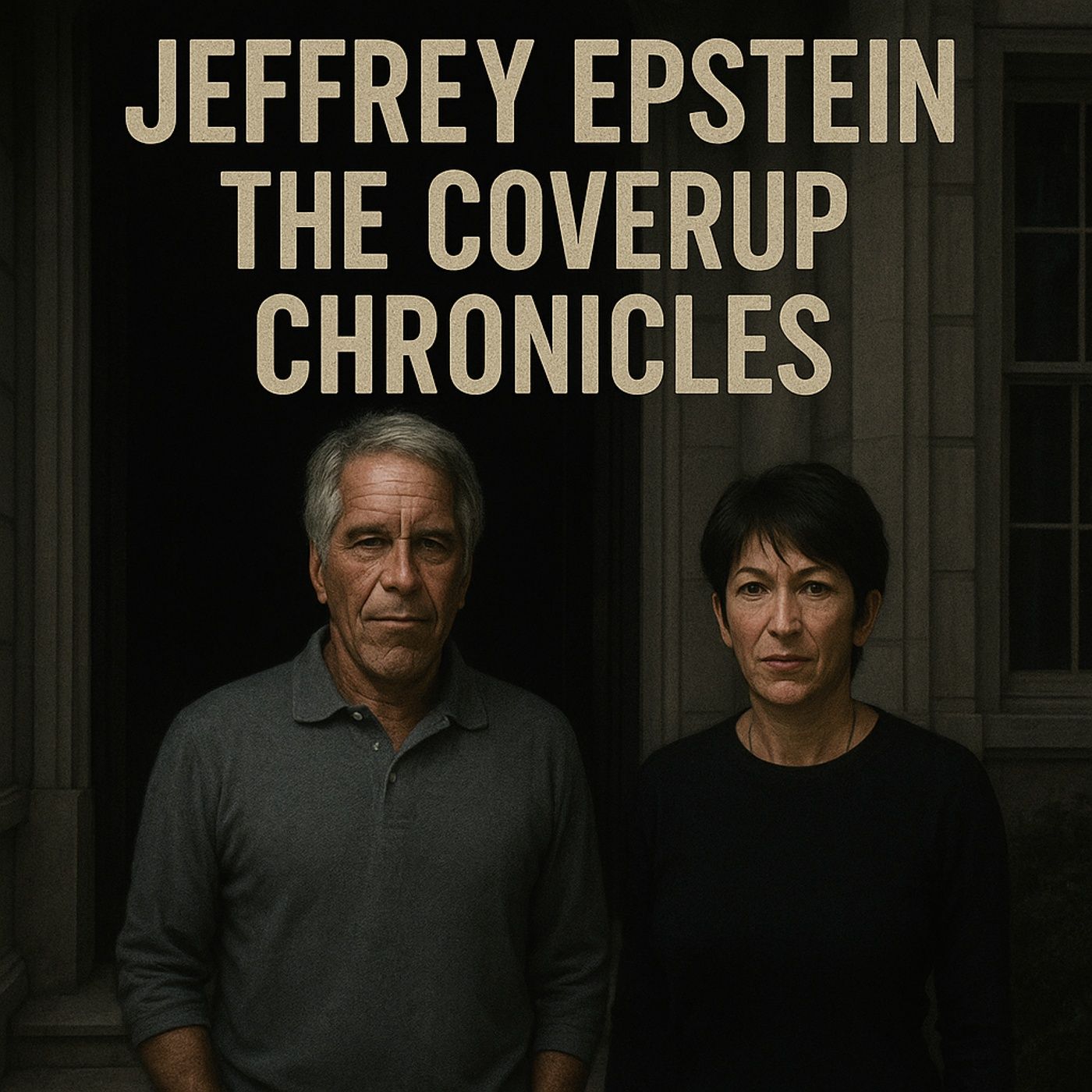
Jeffrey Epstein: The Coverup Chronicles
by Bobby Capucci
Jeffrey Epstein: The Coverup Chronicles is a podcast dedicated to examining not just who Epstein was and what he did, but how so many people and institutions worked—then and now—to keep it all hidden. This series cuts past the headlines and digs into the documentation: court filings, deposition transcripts, plea deals, sealed exhibits, and the bureaucratic paper trail that still tells the real story. Our focus isn’t on speculation or recycled outrage. It’s on facts—and the deliberate efforts to keep those facts out of public view.Each episode will feature in-depth analysis of newly surfaced records and underreported legal developments, alongside expert commentary that connects them to the broader machinery of power that shielded Epstein for decades. We’ll revisit the timeline from his first arrests through his 2008 plea deal, and into the re-investigations that followed his 2019 death in federal custody. And we won’t stop there—we’ll look closely at the current state of aff
-
1000
Hillary Clinton And The Transcript From Her Epstein Related Talk With Congress (Part 9) (9/16/26)
Hillary Clinton’s February 26, 2026 deposition before the House Oversight Committee centered on how much she knew about Jeffrey Epstein, Ghislaine Maxwell and Bill Clinton’s relationship with them. Clinton repeatedly testified that she had never met Epstein, never flew on his plane, never visited Little St. James and knew nothing about his crimes before they became public. She described Maxwell as no more than a “casual acquaintance,” said she did not consider her a friend and attributed Maxwell’s presence around the Clinton family largely to her relationship with longtime Clinton friend Ted Waitt. Clinton acknowledged that Maxwell attended Chelsea Clinton’s 2010 wedding, but said she had no specific recollection of speaking with her there and believed Maxwell attended as Waitt’s guest. She also said she did not remember Maxwell visiting the Clintons’ Chappaqua home, despite Maxwell later saying she had been there several times, and said she had no knowledge of Epstein having connections to American or foreign intelligence services.The questioning became much more contentious when lawmakers turned to Bill Clinton’s documented relationship with Epstein. Hillary characterized her husband’s relationship with Epstein as “limited” and primarily connected to his use of Epstein’s airplane, said she had no knowledge of Bill visiting Little St. James and maintained there was no evidence connecting him to Epstein’s crimes. When lawmakers pressed her about photographs showing Bill Clinton with Epstein, Maxwell and young women during trips, Clinton acknowledged seeing some of those photographs but said she had not become curious enough to investigate the circumstances herself, calling it simply “unfortunate” that her husband ever had dealings with Epstein. She also denied personally soliciting money from Epstein and said she was unaware of anyone doing so on her behalf, while acknowledging she knew little about whether Epstein played any role around Clinton Foundation or Clinton Global Initiative activities. The transcript therefore presented a consistent Clinton defense: she said she personally had essentially no relationship with Epstein and only a peripheral relationship with Maxwell, while repeatedly separating herself from questions about Bill Clinton by telling lawmakers that he would have to answer for his own conduct.to contact me:[email protected]
-
999
Hillary Clinton And The Transcript From Her Epstein Related Talk With Congress (Part 8) (9/16/26)
Hillary Clinton’s February 26, 2026 deposition before the House Oversight Committee centered on how much she knew about Jeffrey Epstein, Ghislaine Maxwell and Bill Clinton’s relationship with them. Clinton repeatedly testified that she had never met Epstein, never flew on his plane, never visited Little St. James and knew nothing about his crimes before they became public. She described Maxwell as no more than a “casual acquaintance,” said she did not consider her a friend and attributed Maxwell’s presence around the Clinton family largely to her relationship with longtime Clinton friend Ted Waitt. Clinton acknowledged that Maxwell attended Chelsea Clinton’s 2010 wedding, but said she had no specific recollection of speaking with her there and believed Maxwell attended as Waitt’s guest. She also said she did not remember Maxwell visiting the Clintons’ Chappaqua home, despite Maxwell later saying she had been there several times, and said she had no knowledge of Epstein having connections to American or foreign intelligence services.The questioning became much more contentious when lawmakers turned to Bill Clinton’s documented relationship with Epstein. Hillary characterized her husband’s relationship with Epstein as “limited” and primarily connected to his use of Epstein’s airplane, said she had no knowledge of Bill visiting Little St. James and maintained there was no evidence connecting him to Epstein’s crimes. When lawmakers pressed her about photographs showing Bill Clinton with Epstein, Maxwell and young women during trips, Clinton acknowledged seeing some of those photographs but said she had not become curious enough to investigate the circumstances herself, calling it simply “unfortunate” that her husband ever had dealings with Epstein. She also denied personally soliciting money from Epstein and said she was unaware of anyone doing so on her behalf, while acknowledging she knew little about whether Epstein played any role around Clinton Foundation or Clinton Global Initiative activities. The transcript therefore presented a consistent Clinton defense: she said she personally had essentially no relationship with Epstein and only a peripheral relationship with Maxwell, while repeatedly separating herself from questions about Bill Clinton by telling lawmakers that he would have to answer for his own conduct.to contact me:[email protected]
-
998
House Panel Votes 41-0 to Hold Leon Black in Contempt (9/16/26)
The House Oversight Committee voted unanimously, 41-0, to recommend that billionaire financier Leon Black be held in contempt of Congress for refusing to fully comply with subpoenas issued as part of its Jeffrey Epstein investigation. Chairman James Comer said Black’s testimony was important because of his long relationship with Epstein during the period when Epstein was engaged in sex trafficking. Black had previously appeared voluntarily for a transcribed interview, but that session ended after lawmakers said he refused to answer questions about nondisclosure agreements. The committee later subpoenaed him for both testimony and all NDAs to which he was a party. According to Comer, Black ultimately produced only one NDA and then failed to appear for a scheduled September 3 deposition. The contempt recommendation now moves to the full House, which would have to decide whether to formally hold him in contempt.Black has fought the subpoenas in federal court, arguing that they exceed the committee’s lawful authority and improperly seek private information unrelated to any legitimate legislative purpose. His lawyers also argued that producing the NDAs could expose women who had negotiated confidentiality and had no public connection to Epstein, while accusing Comer and ranking Democrat Robert Garcia of abusing congressional power. Black has denied wrongdoing, denied knowing about Epstein’s criminal conduct and said he regrets ever doing business with him. The committee, however, pointed to the roughly $170 million Black paid Epstein for tax and estate-planning services between 2013 and 2017 and to repeated appearances of Black’s name in Epstein-related records. More than a dozen Epstein survivors had also urged Black to comply, arguing that the NDAs could shed light on his relationship with Epstein and others in Epstein’s orbit.to contact me:[email protected]:House panel recommends Leon Black be held in contempt over Epstein inquiry subpoenas | House of Representatives | The Guardian
-
997
The Clinton Epstein Depositions and the Failure of Congressional Oversight (Part 2) (9/16/26)
The congressional depositions of Bill and Hillary Clinton expose a broader problem with the House investigation into Jeffrey Epstein: lawmakers appear to apply different levels of scrutiny depending on the political identity of the witness. Democratic members repeatedly characterize the Clinton depositions as political theater and spend significant portions of their public messaging attacking Republican motives rather than aggressively testing the Clintons’ answers against the documentary record. Bill Clinton’s documented relationship with Epstein, including travel aboard Epstein’s aircraft and years of social contact, provides ample ground for detailed questioning, yet the deposition often lacks the kind of sustained follow-up that would normally accompany discrepancies, failures of memory, or assertions that conflict with other known evidence. Hillary Clinton’s testimony receives similar defensive treatment, with Democratic members appearing more interested in challenging the legitimacy of the proceeding than independently examining what she knew about Epstein and Ghislaine Maxwell. Republicans contribute to the dysfunction with irrelevant and theatrical questioning of their own, but that does not excuse Democratic members from their responsibility to conduct serious oversight. The result is an investigation that too often resembles competing political defense teams rather than a disciplined effort to establish facts.The Clinton depositions also highlight a larger credibility problem for Congress, which spends months demanding testimony and threatening contempt proceedings only to allow partisan loyalty to dominate the questioning once witnesses finally appear. The committee releases hours of Clinton deposition video while providing searchable written transcripts for numerous other Epstein-related witnesses, making independent examination of the Clinton testimony more difficult and leaving the public increasingly dependent on selectively edited clips and partisan summaries. Instead of methodically comparing testimony with flight records, photographs, calendars, communications, financial records, and other evidence, lawmakers repeatedly turn the investigation into another battle between Democrats and Republicans. That approach does little for survivors and even less to explain how Epstein maintained access to powerful people and institutions for so long. Bill and Hillary Clinton should not receive harsher treatment because of who they are, but neither should political allies shield them from the same level of scrutiny applied to other witnesses. Congress claims that nobody is above investigation, yet the Clinton depositions raise an uncomfortable question about whether lawmakers are willing to apply that principle when the witness belongs to their own political camp.to contact me:[email protected]
-
996
The Clinton Epstein Depositions and the Failure of Congressional Oversight (Part 1) (9/16/26)
The congressional depositions of Bill and Hillary Clinton expose a broader problem with the House investigation into Jeffrey Epstein: lawmakers appear to apply different levels of scrutiny depending on the political identity of the witness. Democratic members repeatedly characterize the Clinton depositions as political theater and spend significant portions of their public messaging attacking Republican motives rather than aggressively testing the Clintons’ answers against the documentary record. Bill Clinton’s documented relationship with Epstein, including travel aboard Epstein’s aircraft and years of social contact, provides ample ground for detailed questioning, yet the deposition often lacks the kind of sustained follow-up that would normally accompany discrepancies, failures of memory, or assertions that conflict with other known evidence. Hillary Clinton’s testimony receives similar defensive treatment, with Democratic members appearing more interested in challenging the legitimacy of the proceeding than independently examining what she knew about Epstein and Ghislaine Maxwell. Republicans contribute to the dysfunction with irrelevant and theatrical questioning of their own, but that does not excuse Democratic members from their responsibility to conduct serious oversight. The result is an investigation that too often resembles competing political defense teams rather than a disciplined effort to establish facts.The Clinton depositions also highlight a larger credibility problem for Congress, which spends months demanding testimony and threatening contempt proceedings only to allow partisan loyalty to dominate the questioning once witnesses finally appear. The committee releases hours of Clinton deposition video while providing searchable written transcripts for numerous other Epstein-related witnesses, making independent examination of the Clinton testimony more difficult and leaving the public increasingly dependent on selectively edited clips and partisan summaries. Instead of methodically comparing testimony with flight records, photographs, calendars, communications, financial records, and other evidence, lawmakers repeatedly turn the investigation into another battle between Democrats and Republicans. That approach does little for survivors and even less to explain how Epstein maintained access to powerful people and institutions for so long. Bill and Hillary Clinton should not receive harsher treatment because of who they are, but neither should political allies shield them from the same level of scrutiny applied to other witnesses. Congress claims that nobody is above investigation, yet the Clinton depositions raise an uncomfortable question about whether lawmakers are willing to apply that principle when the witness belongs to their own political camp.to contact me:[email protected]
-
995
Mega Edition: How Have The Dubin Family Dodged Real Epstein Scrutiny? (9/15/26)
Jeffrey Epstein’s relationship with the Dubin family remains one of the more difficult relationships in his orbit to fully explain because it was unusually deep, long-running and resilient even after his crimes were publicly known. Eva Andersson-Dubin had dated Epstein years before marrying hedge-fund billionaire Glenn Dubin, but Epstein remained close to the family long afterward. Flight records showed Glenn and Eva traveling on Epstein’s aircraft, court filings documented frequent calls and communications with both Epstein and Ghislaine Maxwell, and Eva later testified that Epstein had been so close to the family that her children called him “Uncle F.” Most strikingly, Glenn and Eva wrote to Epstein’s probation officer after his 2008 conviction and said they were comfortable having him around their children. The relationship was not merely social, either. Epstein had financial dealings with Glenn, including connections to Highbridge Capital, and the U.S. Virgin Islands later subpoenaed Dubin for records involving travel, money, Little St. James, women in Epstein’s orbit and communications with Epstein associates.What remains unresolved is why the relationship endured so strongly despite everything the Dubins knew or should have known about Epstein by that point. Virginia Giuffre alleged that Maxwell directed her to have sex with Glenn Dubin, an allegation Dubin has repeatedly and categorically denied, and no criminal charges were brought against him. At the same time, Epstein was woven deeply enough into the family’s life that investigators later wanted records concerning not only Glenn and Eva but also Epstein’s interactions with their children. Eva even appeared as a defense witness for Maxwell in 2021 and said she had never seen Epstein behave inappropriately with teenage girls. The contradiction is hard to ignore: Epstein had already been convicted of soliciting a minor, yet the Dubins continued treating him as a trusted family intimate. That does not by itself prove criminal conduct by the Dubins, but it leaves a central question hanging over the entire relationship: why did a family this close to Epstein continue embracing him after the rest of the world had every reason to know exactly what kind of man he was?to contact me:[email protected]
-
994
Mega Edition: Bill Gates And The Transformation Of His Epstein Story Over The Years (9/16/26)
In his August 2021 interview with CNN’s Anderson Cooper, Bill Gates described his association with Jeffrey Epstein as a serious mistake and said the relationship grew out of Epstein’s claims that he could help raise enormous sums of money for global-health philanthropy. Gates said he had “several dinners” with Epstein after first meeting him in 2011, despite Epstein already having been convicted of soliciting a minor. Gates told Cooper that once it became clear Epstein’s promised philanthropic connections were not producing anything, he ended the relationship. He acknowledged that simply spending time with Epstein had given the convicted sex offender credibility and called that decision a “huge mistake.” Cooper raised the issue in the context of reports that Melinda French Gates had been deeply troubled by her husband’s dealings with Epstein and that the relationship had become one of several issues surrounding the Gates marriage. Gates did not offer a detailed explanation for why repeated meetings were necessary beyond the proposed philanthropy and instead emphasized regret over having associated with Epstein at all.Gates gave a similar but noticeably terse account during a September 2021 PBS NewsHour interview with Judy Woodruff. When Woodruff asked what Gates knew about Epstein’s criminal background while meeting with him, Gates said Epstein claimed to know wealthy people who might contribute to global health initiatives and again characterized the meetings as a mistake that produced nothing. Woodruff pressed him on reports that the relationship involved multiple meetings over several years and specifically asked what Gates did after learning about Epstein’s background. Gates largely repeated that he regretted the dinners and said there was “absolutely nothing new” to add. When Woodruff asked what lesson he took from the experience, Gates responded that Epstein was dead and said people generally had to be careful before pivoting back to the accomplishments of the Gates Foundation. Taken together, the Cooper and PBS interviews presented the same basic explanation: Gates said Epstein was useful to him only as a potential conduit to philanthropic money, admitted that associating with him was a major error, but offered relatively little detail about why the relationship continued as long as it did after Epstein’s sex-offense conviction was already public.to contact me:[email protected]
-
993
Mega Edition: Ghislaine Maxwell's Motion To Compel Attorney Work Product From Virginia Roberts (9/15/26)
Ghislaine Maxwell’s motion for attorney–client and work product protection in her lawsuit with Virginia Roberts Giuffre sought to shield a wide range of documents and communications from disclosure during discovery. Maxwell argued that certain materials requested by Giuffre were protected because they reflected legal strategy, attorney communications, or preparations made in anticipation of litigation. Her filing emphasized that forcing disclosure would unfairly expose her defense strategy and violate long-standing legal privileges designed to protect confidential legal consultation. Maxwell’s attorneys framed the motion as a necessary safeguard against what they characterized as overbroad and invasive discovery demands. They contended that without these protections, defendants in high-profile civil litigation would be placed at a systemic disadvantage. The motion leaned heavily on precedent affirming the sanctity of attorney–client privilege and work product doctrine. Maxwell’s team positioned the issue as procedural rather than substantive, arguing it was about legal fairness, not hiding facts. The filing attempted to narrow what Giuffre could access while preserving Maxwell’s litigation posture.In response, the dispute highlighted broader tensions in the case over transparency versus privilege. Giuffre’s side argued that Maxwell was using privilege claims too expansively to block relevant evidence, particularly materials that could shed light on Epstein’s operations and Maxwell’s role within them. The motion became part of a recurring pattern in the litigation, where Maxwell sought to limit discovery that could expose damaging details under the guise of legal protection. Courts were asked to balance legitimate privilege against the need for factual development in a case involving serious allegations of sexual abuse and trafficking. The issue underscored how privilege claims can function as both a shield for legal strategy and a barrier to accountability. Ultimately, the motion reflected Maxwell’s broader legal strategy of tightly controlling information flow. It also reinforced the adversarial nature of the lawsuit, where discovery itself became a central battleground. The fight over work product was less about isolated documents and more about how much of Maxwell’s conduct would be subject to scrutiny.to contact me:[email protected]
-
992
Prince Andrew's High Powered Lawyer Andrew Brettler
Andrew Brettler built a reputation as one of Hollywood’s go-to attorneys for famous men facing explosive allegations, representing clients including Armie Hammer, Chris Noth, Danny Masterson, Bryan Singer and Prince Andrew. Brettler told Variety that he strongly believed in due process and the principle that everyone was entitled to legal representation, regardless of how badly a client had already been judged in public. His work frequently involved allegations of sexual assault or misconduct that generated enormous media attention before any courtroom resolution, and he described the practice as challenging but enjoyable because of the combination of high stakes, aggressive litigation and public-relations pressure. Rather than distancing himself from controversial clients, Brettler argued that defending unpopular people was precisely when the right to counsel mattered most.Prince Andrew was one of Brettler’s most prominent clients. He represented Andrew against Virginia Giuffre’s civil sexual-assault lawsuit, in which Giuffre alleged that Jeffrey Epstein and Ghislaine Maxwell trafficked her to Andrew when she was 17, allegations Andrew denied. Brettler aggressively tried to defeat the case before trial, first challenging procedural issues surrounding service and later arguing that Giuffre’s 2009 settlement with Epstein released Andrew as a “potential defendant.” Judge Lewis Kaplan rejected the effort to dismiss the lawsuit, leaving Andrew facing discovery and the prospect of giving sworn testimony. Brettler ultimately helped negotiate the February 2022 settlement that ended Giuffre’s case without Andrew admitting liability, preventing the dispute from reaching a public trial. The Andrew representation illustrated exactly the kind of work for which Brettler had become known: stepping into cases involving internationally famous clients, devastating allegations and intense public scrutiny, then using every available procedural and substantive defense to keep the client out of a courtroom showdown.to contact me:[email protected]
-
991
Jeffrey Epstein’s Catwalk to Hell: How Jean-Luc Brunel Used MC2 to Feed the Monster (Part 5)
Maritza Vazquez, who worked as a bookkeeper for MC2 Model Management, provided critical testimony placing Jean‑Luc Brunel and Jeffrey Epstein at the center of a carefully managed system of underage recruitment and abuse. In her deposition, she identified Brunel as a regular passenger on Epstein’s private jet and noted that Epstein often traveled with girls recruited through MC2—some as young as 14. Vazquez testified that flight logs deliberately omitted the names of some female passengers, suggesting efforts to conceal underage trafficking. She recounted Brunel’s active role in sourcing vulnerable girls from abroad and introducing them into Epstein’s orbit, effectively operating as a global trafficking coordinator.Vazquez further corroborated that Epstein frequently displayed controlling behavior: he referred to Brunel’s recruits as inventory rather than people, casually discussing having “slept with over a thousand of Brunel’s girls,” according to court documents. Her detailed bookkeeping records and firsthand accounts of scheduling, money flow, and logistics provided prosecutors with evidence of a pipeline feeding Epstein’s sex ring. The deposition exposed how MC2 transactions and Brunel’s agency served as the administrative and logistical backbone for Epstein’s exploitation operation.to contact me:[email protected]:Maritza Vasquez Deposition - Discussing Jeffrey Epstein, Jean-Luc Brunel, Donald Trump | DocumentCloud
-
990
Tyler Robinson Preliminary Hearing Transcripts (Day 1 Part 18) (9/15/26)
Day one of Tyler Robinson’s preliminary hearing on July 6, 2026, largely centered on prosecutors beginning to construct a timeline of Charlie Kirk’s killing at Utah Valley University and establishing the authenticity of the surveillance footage and investigative records they intended to use against Robinson. Former UVU police officer Chris Bagley described the moment the gunshot rang out during Kirk’s September 10, 2025 event and the chaos that followed, while Utah State Bureau of Investigation agent David Hull walked the court through the enormous video-review effort undertaken after the shooting. Hull testified that investigators examined hundreds of hours of surveillance footage and ultimately tracked a person they believed was Robinson moving around the UVU campus at several different points that day. Prosecutors introduced surveillance recordings from multiple locations as they attempted to connect the person seen approaching the campus, moving toward the area surrounding the Losee Center, and later leaving the area to Robinson. Three separate videos depicting Kirk being shot were admitted, although Judge Tony Graf determined that their graphic nature warranted restricting their display to the attorneys’ and judge’s monitors rather than broadcasting them throughout the courtroom. Kirk’s widow, Erika, and his parents left the courtroom while the videos were reviewed. Prosecutors also introduced Kirk’s autopsy report through Hull, which listed his cause of death as a gunshot wound to the neck and the manner of death as homicideThe defense spent much of the first day attacking the manner in which the prosecution was getting its evidence into the record rather than attempting to disprove the entire prosecution theory at that stage. Kathryn Nester and Robinson’s attorneys repeatedly raised hearsay, foundation and authentication objections, arguing that investigators were being permitted to introduce reports, statements and records created by other people without those individuals appearing personally to testify. Judge Graf overruled most of those objections, reflecting the substantially lower evidentiary threshold governing a Utah preliminary hearing, whose purpose was only to determine whether probable cause existed to send Robinson to trial rather than whether prosecutors could prove guilt beyond a reasonable doubt. One significant exception involved an edited compilation of surveillance footage, which Graf declined to admit in that form and required prosecutors to replace with the underlying unedited material. Hull’s testimony also revealed the scope of the prosecution’s surveillance theory: investigators claimed Robinson had appeared on or around the UVU campus multiple times on September 10 and that they were attempting to stitch those appearances together into a continuous identification of the alleged shooter. By the end of day one, prosecutors had established the killing itself, the medical cause of Kirk’s death, the existence and authenticity of substantial video evidence and the beginnings of their effort to identify Robinson as the person captured in that footage. They had not yet presented many of the pieces expected to become more consequential later in the hearing, including the rifle and DNA evidence, Robinson’s alleged communications and admissions, and testimony concerning his roommate Lance Twiggs.to contact me:[email protected]
-
989
Tyler Robinson Preliminary Hearing Transcripts (Day 1 Part 17) (9/15/26)
Day one of Tyler Robinson’s preliminary hearing on July 6, 2026, largely centered on prosecutors beginning to construct a timeline of Charlie Kirk’s killing at Utah Valley University and establishing the authenticity of the surveillance footage and investigative records they intended to use against Robinson. Former UVU police officer Chris Bagley described the moment the gunshot rang out during Kirk’s September 10, 2025 event and the chaos that followed, while Utah State Bureau of Investigation agent David Hull walked the court through the enormous video-review effort undertaken after the shooting. Hull testified that investigators examined hundreds of hours of surveillance footage and ultimately tracked a person they believed was Robinson moving around the UVU campus at several different points that day. Prosecutors introduced surveillance recordings from multiple locations as they attempted to connect the person seen approaching the campus, moving toward the area surrounding the Losee Center, and later leaving the area to Robinson. Three separate videos depicting Kirk being shot were admitted, although Judge Tony Graf determined that their graphic nature warranted restricting their display to the attorneys’ and judge’s monitors rather than broadcasting them throughout the courtroom. Kirk’s widow, Erika, and his parents left the courtroom while the videos were reviewed. Prosecutors also introduced Kirk’s autopsy report through Hull, which listed his cause of death as a gunshot wound to the neck and the manner of death as homicideThe defense spent much of the first day attacking the manner in which the prosecution was getting its evidence into the record rather than attempting to disprove the entire prosecution theory at that stage. Kathryn Nester and Robinson’s attorneys repeatedly raised hearsay, foundation and authentication objections, arguing that investigators were being permitted to introduce reports, statements and records created by other people without those individuals appearing personally to testify. Judge Graf overruled most of those objections, reflecting the substantially lower evidentiary threshold governing a Utah preliminary hearing, whose purpose was only to determine whether probable cause existed to send Robinson to trial rather than whether prosecutors could prove guilt beyond a reasonable doubt. One significant exception involved an edited compilation of surveillance footage, which Graf declined to admit in that form and required prosecutors to replace with the underlying unedited material. Hull’s testimony also revealed the scope of the prosecution’s surveillance theory: investigators claimed Robinson had appeared on or around the UVU campus multiple times on September 10 and that they were attempting to stitch those appearances together into a continuous identification of the alleged shooter. By the end of day one, prosecutors had established the killing itself, the medical cause of Kirk’s death, the existence and authenticity of substantial video evidence and the beginnings of their effort to identify Robinson as the person captured in that footage. They had not yet presented many of the pieces expected to become more consequential later in the hearing, including the rifle and DNA evidence, Robinson’s alleged communications and admissions, and testimony concerning his roommate Lance Twiggs.to contact me:[email protected]
-
988
Hillary Clinton And The Transcript From Her Epstein Related Talk With Congress (Part 7) (9/15/26)
Hillary Clinton’s February 26, 2026 deposition before the House Oversight Committee centered on how much she knew about Jeffrey Epstein, Ghislaine Maxwell and Bill Clinton’s relationship with them. Clinton repeatedly testified that she had never met Epstein, never flew on his plane, never visited Little St. James and knew nothing about his crimes before they became public. She described Maxwell as no more than a “casual acquaintance,” said she did not consider her a friend and attributed Maxwell’s presence around the Clinton family largely to her relationship with longtime Clinton friend Ted Waitt. Clinton acknowledged that Maxwell attended Chelsea Clinton’s 2010 wedding, but said she had no specific recollection of speaking with her there and believed Maxwell attended as Waitt’s guest. She also said she did not remember Maxwell visiting the Clintons’ Chappaqua home, despite Maxwell later saying she had been there several times, and said she had no knowledge of Epstein having connections to American or foreign intelligence services.The questioning became much more contentious when lawmakers turned to Bill Clinton’s documented relationship with Epstein. Hillary characterized her husband’s relationship with Epstein as “limited” and primarily connected to his use of Epstein’s airplane, said she had no knowledge of Bill visiting Little St. James and maintained there was no evidence connecting him to Epstein’s crimes. When lawmakers pressed her about photographs showing Bill Clinton with Epstein, Maxwell and young women during trips, Clinton acknowledged seeing some of those photographs but said she had not become curious enough to investigate the circumstances herself, calling it simply “unfortunate” that her husband ever had dealings with Epstein. She also denied personally soliciting money from Epstein and said she was unaware of anyone doing so on her behalf, while acknowledging she knew little about whether Epstein played any role around Clinton Foundation or Clinton Global Initiative activities. The transcript therefore presented a consistent Clinton defense: she said she personally had essentially no relationship with Epstein and only a peripheral relationship with Maxwell, while repeatedly separating herself from questions about Bill Clinton by telling lawmakers that he would have to answer for his own conduct.to contact me:[email protected]
-
987
Hillary Clinton And The Transcript From Her Epstein Related Talk With Congress (Part 6) (9/15/26)
Hillary Clinton’s February 26, 2026 deposition before the House Oversight Committee centered on how much she knew about Jeffrey Epstein, Ghislaine Maxwell and Bill Clinton’s relationship with them. Clinton repeatedly testified that she had never met Epstein, never flew on his plane, never visited Little St. James and knew nothing about his crimes before they became public. She described Maxwell as no more than a “casual acquaintance,” said she did not consider her a friend and attributed Maxwell’s presence around the Clinton family largely to her relationship with longtime Clinton friend Ted Waitt. Clinton acknowledged that Maxwell attended Chelsea Clinton’s 2010 wedding, but said she had no specific recollection of speaking with her there and believed Maxwell attended as Waitt’s guest. She also said she did not remember Maxwell visiting the Clintons’ Chappaqua home, despite Maxwell later saying she had been there several times, and said she had no knowledge of Epstein having connections to American or foreign intelligence services.The questioning became much more contentious when lawmakers turned to Bill Clinton’s documented relationship with Epstein. Hillary characterized her husband’s relationship with Epstein as “limited” and primarily connected to his use of Epstein’s airplane, said she had no knowledge of Bill visiting Little St. James and maintained there was no evidence connecting him to Epstein’s crimes. When lawmakers pressed her about photographs showing Bill Clinton with Epstein, Maxwell and young women during trips, Clinton acknowledged seeing some of those photographs but said she had not become curious enough to investigate the circumstances herself, calling it simply “unfortunate” that her husband ever had dealings with Epstein. She also denied personally soliciting money from Epstein and said she was unaware of anyone doing so on her behalf, while acknowledging she knew little about whether Epstein played any role around Clinton Foundation or Clinton Global Initiative activities. The transcript therefore presented a consistent Clinton defense: she said she personally had essentially no relationship with Epstein and only a peripheral relationship with Maxwell, while repeatedly separating herself from questions about Bill Clinton by telling lawmakers that he would have to answer for his own conduct.to contact me:[email protected]
-
986
Jeffrey Epstein’s Fellow Inmate Says He Believes Epstein Killed Himself (9/16/26)
A former inmate who spent hours with Jeffrey Epstein while Epstein was under suicide watch at Manhattan’s Metropolitan Correctional Center said he believed Epstein killed himself and rejected the idea that he was murdered. William “Dollar Bill” Mersey had volunteered as an inmate companion, a program that placed prisoners near inmates on suicide watch, and said he spoke with Epstein for at least 15 to 20 hours. Mersey recalled watching Epstein’s mood deteriorate, describing him as increasingly defeated and withdrawn. In one of their final encounters, Epstein was sitting on the floor of his cell eating chicken from a Styrofoam container and offered to put money on Mersey’s commissary account. Mersey later interpreted that offer as a possible goodbye and said Epstein’s demeanor convinced him that he had reached a point of hopelessness.Mersey also said another inmate housed nearby told him he heard Epstein tearing up sheets during the night and believed Epstein had killed himself, not been attacked. Mersey argued that a murder conspiracy inside the jail would have required too many people to coordinate and remain silent, and said he was nearly certain the official suicide finding was correct. His account is significant because he was one of the relatively few inmates who had sustained direct contact with Epstein in the weeks before his death, but it does not erase the extraordinary failures documented at MCC. Guards failed to perform required checks for hours, Epstein was left without a cellmate, records were falsified, and surveillance problems continued to fuel suspicion about what happened. Mersey’s testimony therefore adds firsthand support for the suicide explanation while sitting alongside the institutional failures and unresolved questions that have kept Epstein’s death controversial years later.to contact me:[email protected]:Jeffrey Epstein's suicide watch 'companion' insists paedophile financier DID kill himself after becoming 'defeated' in his final days | Daily Mail Online
-
985
Epstein and the Blurred Line Between Government and Influence (Part 2) (9/16/26)
Recent disclosures have raised new questions about how the federal government and politically aligned online influencers respond to damaging developments involving Jeffrey Epstein. Released messages show FBI Director Kash Patel pressing bureau communications officials to counter Epstein-related criticism on social media, demonstrating that senior federal officials are actively monitoring and attempting to shape the online conversation. At the same time, it became public that Jennica Pounds, the operator of the influential DataRepublican account, was serving as a special government employee with the Department of Defense. There is no public evidence proving that DataRepublican was directed or funded by the government to promote Epstein-related messaging, but the overlap between federal employment and a major political influence operation raises legitimate questions about disclosure, independence, and whether other prominent accounts have similar undisclosed government relationships.Those questions have become more urgent following the removal of journalist Tara Palmeri and three Epstein survivors from a Republican political convention after Palmeri questioned a congressional candidate about the Epstein files. The episode was followed by another familiar wave of social-media attacks and pro-administration messaging, adding to a recurring pattern in which Epstein controversies are quickly met by large political accounts defending the government, attacking critics, or diminishing survivors. None of that, by itself, proves a coordinated propaganda network, but the Patel messages and the DataRepublican revelation provide enough documented evidence to justify a deeper investigation into who these influencers work for, who pays them, whether they communicate with federal officials, and whether taxpayer-funded government personnel are helping shape supposedly independent political messaging surrounding Epstein.to contact me:[email protected]
-
984
Epstein and the Blurred Line Between Government and Influence (Part 1) (9/16/26)
Recent disclosures have raised new questions about how the federal government and politically aligned online influencers respond to damaging developments involving Jeffrey Epstein. Released messages show FBI Director Kash Patel pressing bureau communications officials to counter Epstein-related criticism on social media, demonstrating that senior federal officials are actively monitoring and attempting to shape the online conversation. At the same time, it became public that Jennica Pounds, the operator of the influential DataRepublican account, was serving as a special government employee with the Department of Defense. There is no public evidence proving that DataRepublican was directed or funded by the government to promote Epstein-related messaging, but the overlap between federal employment and a major political influence operation raises legitimate questions about disclosure, independence, and whether other prominent accounts have similar undisclosed government relationships.Those questions have become more urgent following the removal of journalist Tara Palmeri and three Epstein survivors from a Republican political convention after Palmeri questioned a congressional candidate about the Epstein files. The episode was followed by another familiar wave of social-media attacks and pro-administration messaging, adding to a recurring pattern in which Epstein controversies are quickly met by large political accounts defending the government, attacking critics, or diminishing survivors. None of that, by itself, proves a coordinated propaganda network, but the Patel messages and the DataRepublican revelation provide enough documented evidence to justify a deeper investigation into who these influencers work for, who pays them, whether they communicate with federal officials, and whether taxpayer-funded government personnel are helping shape supposedly independent political messaging surrounding Epstein.to contact me:[email protected]
-
983
Mega Edition: How Ghislaine Maxwell Planned On Dealing With Government Experts At Her Trial (9/15/26)
Ghislaine Maxwell’s defense planned to deal with the prosecution’s expert witnesses by attacking both their admissibility and the assumptions behind their opinions, while bringing in its own experts to give jurors competing explanations. The government’s most important expert was psychologist Dr. Lisa Rocchio, who was prepared to explain grooming, delayed disclosure, secrecy, trauma and the way another adult could help facilitate the sexual abuse of minors. Maxwell’s lawyers first tried to keep Rocchio’s testimony out under the federal rules governing expert evidence, arguing that concepts such as grooming risked turning ordinary behavior into proof of criminal intent and could effectively tell jurors how to interpret the accusers’ testimony. When Judge Alison Nathan allowed much of Rocchio’s testimony, the defense planned to counter her with forensic psychiatrist Dr. Park Dietz, who argued that “grooming” lacked a settled scientific definition and could be applied retrospectively in a way that transformed innocent conduct into evidence of predatory intent. Nathan allowed Dietz to criticize those limitations but barred him from simply telling the jury that there was insufficient evidence Maxwell herself intended to groom anyone.The defense also intended to use renowned memory expert Dr. Elizabeth Loftus to challenge the reliability of decades-old recollections, including how memory can be altered by suggestion, repeated interviews and the passage of time. More broadly, Maxwell noticed eight experts for trial, covering subjects ranging from memory and psychology to other specialized areas, while simultaneously moving to prevent law-enforcement witnesses from slipping expert opinions into the case under the label of ordinary factual testimony. Her strategy was therefore twofold: keep as much prosecution expert testimony away from the jury as possible, and where exclusion failed, surround it with competing experts who could undermine the government’s interpretation of grooming, trauma and memory. It fit neatly with Maxwell’s larger defense theory that prosecutors were asking jurors to reinterpret decades-old interactions through the lens of Epstein’s later-established crimes, while the defense wanted jurors to see ambiguity, memory problems and innocent explanations where the government saw grooming and facilitation.to contact me:[email protected]
-
982
Mega Edition: Epstein’s Operation Wasn’t Wholesale — It Was Targeted (9/15/26)
Jeffrey Epstein’s trafficking operation was not built like a traditional street-level sex-trafficking ring focused on volume and direct profit. It was a targeted exploitation network designed around access, influence, leverage, and elite protection. Epstein allegedly used vulnerable girls and young women as currency inside a world of wealthy and powerful people, where secrecy and proximity mattered more than ordinary commercial gain. Jean-Luc Brunel and MC2 mattered because the modeling industry allegedly provided the perfect cover: promises of opportunity, travel, housing, introductions, and career advancement that could be used to lure young women into Epstein’s orbit while making the arrangement appear legitimate from the outside.Immigration fraud was central to that machinery because foreign girls and young women could allegedly be brought into the United States under false pretenses, then controlled through fear, dependency, paperwork, and threats tied to their legal status. Once inside the system, the promise of modeling work could turn into coercion, isolation, abuse, and silence, with immigration vulnerability functioning like an invisible leash. The larger indictment is that Epstein’s operation required more than one predator; it required recruiters, facilitators, professional covers, institutional failure, and powerful people willing to look away. Epstein may be dead, and Brunel may be dead, but the machinery they used did not run on ghosts, and until the visa fraud, modeling pipeline, money trail, and protected associates are fully exposed, the coverup remains alive.to contact me:[email protected]
-
981
Mega Editon: Roza Gilles And Brazilian Models And The Epstein trap They Fell Into (9/15/26)
Roza Gilles was an 18-year-old aspiring model from Uzbekistan when she came to the United States in 2009 and became financially indebted to MC2 Model Management for her visa and housing. She was offered weekend administrative work at Jeffrey Epstein’s Florida Science Foundation office in West Palm Beach while Epstein was supposedly serving his jail sentence under an extraordinarily permissive work-release arrangement. Gilles said that during one of her first encounters with Epstein, he ordered her to undress, and when she froze, another woman removed her blouse and bra. She later realized that the device on Epstein’s ankle was a monitoring bracelet and that the man abusing her was technically still an inmate.Gilles’s account offers a disturbing illustration of how Epstein’s 2008 plea agreement and work-release privileges allowed him to continue operating in an environment filled with employees, vulnerable young women and even uniformed law-enforcement officers. She recalled seeing a sheriff at Epstein’s Palm Beach residence and concluding that Epstein was so protected that nothing she did could stop him. After eventually leaving his orbit, moving to New York and becoming financially independent, Gilles married, settled in the Midwest and became a fitness trainer. She is now speaking publicly in the hope that greater transparency will expose the people and institutions that enabled Epstein and finally deliver meaningful accountability for survivors.Several Brazilian women have come forward describing how a modeling recruiter connected to Jeffrey Epstein allegedly attempted to recruit them while they were teenagers pursuing careers in the fashion industry. According to accounts gathered by journalists, French modeling agent Jean-Luc Brunel, a longtime associate of Epstein, approached young women in Brazil and other parts of South America with offers of modeling opportunities abroad. One Brazilian woman said Brunel visited her family home when she was 16 to persuade her mother to allow her to travel for a modeling contest in Ecuador. At the time, the family believed the opportunity was legitimate, unaware of Brunel’s connections to Epstein. Investigators later found evidence that modeling agencies tied to Brunel were used to identify and recruit young women from South America and help arrange visas for them to travel to the United States.The accounts form part of a broader picture of how Epstein’s network allegedly used the international modeling industry as a recruitment channel. Several women said they were approached with promises of fashion work, travel, or contests that could launch their careers, only later realizing they had been targeted by people linked to Epstein’s circle. Brunel, who worked closely with Epstein and received financial backing from him for the agency MC2 Model Management, was later arrested in France on accusations including rape of a minor and trafficking-related offenses. He denied wrongdoing but died in a Paris prison in 2022 before standing trial, leaving many of the allegations about his role in recruiting young women for Epstein unresolved in court.to contact me:[email protected]
-
980
Jeffrey Epstein’s Catwalk to Hell: How Jean-Luc Brunel Used MC2 to Feed the Monster (Part 4)
Maritza Vazquez, who worked as a bookkeeper for MC2 Model Management, provided critical testimony placing Jean‑Luc Brunel and Jeffrey Epstein at the center of a carefully managed system of underage recruitment and abuse. In her deposition, she identified Brunel as a regular passenger on Epstein’s private jet and noted that Epstein often traveled with girls recruited through MC2—some as young as 14. Vazquez testified that flight logs deliberately omitted the names of some female passengers, suggesting efforts to conceal underage trafficking. She recounted Brunel’s active role in sourcing vulnerable girls from abroad and introducing them into Epstein’s orbit, effectively operating as a global trafficking coordinator.Vazquez further corroborated that Epstein frequently displayed controlling behavior: he referred to Brunel’s recruits as inventory rather than people, casually discussing having “slept with over a thousand of Brunel’s girls,” according to court documents. Her detailed bookkeeping records and firsthand accounts of scheduling, money flow, and logistics provided prosecutors with evidence of a pipeline feeding Epstein’s sex ring. The deposition exposed how MC2 transactions and Brunel’s agency served as the administrative and logistical backbone for Epstein’s exploitation operation.to contact me:[email protected]:Maritza Vasquez Deposition - Discussing Jeffrey Epstein, Jean-Luc Brunel, Donald Trump | DocumentCloud
-
979
Jeffrey Epstein’s Catwalk to Hell: How Jean-Luc Brunel Used MC2 to Feed the Monster (Part 3)
Maritza Vazquez, who worked as a bookkeeper for MC2 Model Management, provided critical testimony placing Jean‑Luc Brunel and Jeffrey Epstein at the center of a carefully managed system of underage recruitment and abuse. In her deposition, she identified Brunel as a regular passenger on Epstein’s private jet and noted that Epstein often traveled with girls recruited through MC2—some as young as 14. Vazquez testified that flight logs deliberately omitted the names of some female passengers, suggesting efforts to conceal underage trafficking. She recounted Brunel’s active role in sourcing vulnerable girls from abroad and introducing them into Epstein’s orbit, effectively operating as a global trafficking coordinator.Vazquez further corroborated that Epstein frequently displayed controlling behavior: he referred to Brunel’s recruits as inventory rather than people, casually discussing having “slept with over a thousand of Brunel’s girls,” according to court documents. Her detailed bookkeeping records and firsthand accounts of scheduling, money flow, and logistics provided prosecutors with evidence of a pipeline feeding Epstein’s sex ring. The deposition exposed how MC2 transactions and Brunel’s agency served as the administrative and logistical backbone for Epstein’s exploitation operation.to contact me:[email protected]:Maritza Vasquez Deposition - Discussing Jeffrey Epstein, Jean-Luc Brunel, Donald Trump | DocumentCloud
-
978
Tyler Robinson Preliminary Hearing Transcripts (Day 1 Part 16) (9/14/26)
Day one of Tyler Robinson’s preliminary hearing on July 6, 2026, largely centered on prosecutors beginning to construct a timeline of Charlie Kirk’s killing at Utah Valley University and establishing the authenticity of the surveillance footage and investigative records they intended to use against Robinson. Former UVU police officer Chris Bagley described the moment the gunshot rang out during Kirk’s September 10, 2025 event and the chaos that followed, while Utah State Bureau of Investigation agent David Hull walked the court through the enormous video-review effort undertaken after the shooting. Hull testified that investigators examined hundreds of hours of surveillance footage and ultimately tracked a person they believed was Robinson moving around the UVU campus at several different points that day. Prosecutors introduced surveillance recordings from multiple locations as they attempted to connect the person seen approaching the campus, moving toward the area surrounding the Losee Center, and later leaving the area to Robinson. Three separate videos depicting Kirk being shot were admitted, although Judge Tony Graf determined that their graphic nature warranted restricting their display to the attorneys’ and judge’s monitors rather than broadcasting them throughout the courtroom. Kirk’s widow, Erika, and his parents left the courtroom while the videos were reviewed. Prosecutors also introduced Kirk’s autopsy report through Hull, which listed his cause of death as a gunshot wound to the neck and the manner of death as homicideThe defense spent much of the first day attacking the manner in which the prosecution was getting its evidence into the record rather than attempting to disprove the entire prosecution theory at that stage. Kathryn Nester and Robinson’s attorneys repeatedly raised hearsay, foundation and authentication objections, arguing that investigators were being permitted to introduce reports, statements and records created by other people without those individuals appearing personally to testify. Judge Graf overruled most of those objections, reflecting the substantially lower evidentiary threshold governing a Utah preliminary hearing, whose purpose was only to determine whether probable cause existed to send Robinson to trial rather than whether prosecutors could prove guilt beyond a reasonable doubt. One significant exception involved an edited compilation of surveillance footage, which Graf declined to admit in that form and required prosecutors to replace with the underlying unedited material. Hull’s testimony also revealed the scope of the prosecution’s surveillance theory: investigators claimed Robinson had appeared on or around the UVU campus multiple times on September 10 and that they were attempting to stitch those appearances together into a continuous identification of the alleged shooter. By the end of day one, prosecutors had established the killing itself, the medical cause of Kirk’s death, the existence and authenticity of substantial video evidence and the beginnings of their effort to identify Robinson as the person captured in that footage. They had not yet presented many of the pieces expected to become more consequential later in the hearing, including the rifle and DNA evidence, Robinson’s alleged communications and admissions, and testimony concerning his roommate Lance Twiggs.to contact me:[email protected]
-
977
Tyler Robinson Preliminary Hearing Transcripts (Day 1 Part 15) (9/14/26)
Day one of Tyler Robinson’s preliminary hearing on July 6, 2026, largely centered on prosecutors beginning to construct a timeline of Charlie Kirk’s killing at Utah Valley University and establishing the authenticity of the surveillance footage and investigative records they intended to use against Robinson. Former UVU police officer Chris Bagley described the moment the gunshot rang out during Kirk’s September 10, 2025 event and the chaos that followed, while Utah State Bureau of Investigation agent David Hull walked the court through the enormous video-review effort undertaken after the shooting. Hull testified that investigators examined hundreds of hours of surveillance footage and ultimately tracked a person they believed was Robinson moving around the UVU campus at several different points that day. Prosecutors introduced surveillance recordings from multiple locations as they attempted to connect the person seen approaching the campus, moving toward the area surrounding the Losee Center, and later leaving the area to Robinson. Three separate videos depicting Kirk being shot were admitted, although Judge Tony Graf determined that their graphic nature warranted restricting their display to the attorneys’ and judge’s monitors rather than broadcasting them throughout the courtroom. Kirk’s widow, Erika, and his parents left the courtroom while the videos were reviewed. Prosecutors also introduced Kirk’s autopsy report through Hull, which listed his cause of death as a gunshot wound to the neck and the manner of death as homicideThe defense spent much of the first day attacking the manner in which the prosecution was getting its evidence into the record rather than attempting to disprove the entire prosecution theory at that stage. Kathryn Nester and Robinson’s attorneys repeatedly raised hearsay, foundation and authentication objections, arguing that investigators were being permitted to introduce reports, statements and records created by other people without those individuals appearing personally to testify. Judge Graf overruled most of those objections, reflecting the substantially lower evidentiary threshold governing a Utah preliminary hearing, whose purpose was only to determine whether probable cause existed to send Robinson to trial rather than whether prosecutors could prove guilt beyond a reasonable doubt. One significant exception involved an edited compilation of surveillance footage, which Graf declined to admit in that form and required prosecutors to replace with the underlying unedited material. Hull’s testimony also revealed the scope of the prosecution’s surveillance theory: investigators claimed Robinson had appeared on or around the UVU campus multiple times on September 10 and that they were attempting to stitch those appearances together into a continuous identification of the alleged shooter. By the end of day one, prosecutors had established the killing itself, the medical cause of Kirk’s death, the existence and authenticity of substantial video evidence and the beginnings of their effort to identify Robinson as the person captured in that footage. They had not yet presented many of the pieces expected to become more consequential later in the hearing, including the rifle and DNA evidence, Robinson’s alleged communications and admissions, and testimony concerning his roommate Lance Twiggs.to contact me:[email protected]
-
976
Hillary Clinton And The Transcript From Her Epstein Related Talk With Congress (Part 4) (9/14/26)
Hillary Clinton’s February 26, 2026 deposition before the House Oversight Committee centered on how much she knew about Jeffrey Epstein, Ghislaine Maxwell and Bill Clinton’s relationship with them. Clinton repeatedly testified that she had never met Epstein, never flew on his plane, never visited Little St. James and knew nothing about his crimes before they became public. She described Maxwell as no more than a “casual acquaintance,” said she did not consider her a friend and attributed Maxwell’s presence around the Clinton family largely to her relationship with longtime Clinton friend Ted Waitt. Clinton acknowledged that Maxwell attended Chelsea Clinton’s 2010 wedding, but said she had no specific recollection of speaking with her there and believed Maxwell attended as Waitt’s guest. She also said she did not remember Maxwell visiting the Clintons’ Chappaqua home, despite Maxwell later saying she had been there several times, and said she had no knowledge of Epstein having connections to American or foreign intelligence services.The questioning became much more contentious when lawmakers turned to Bill Clinton’s documented relationship with Epstein. Hillary characterized her husband’s relationship with Epstein as “limited” and primarily connected to his use of Epstein’s airplane, said she had no knowledge of Bill visiting Little St. James and maintained there was no evidence connecting him to Epstein’s crimes. When lawmakers pressed her about photographs showing Bill Clinton with Epstein, Maxwell and young women during trips, Clinton acknowledged seeing some of those photographs but said she had not become curious enough to investigate the circumstances herself, calling it simply “unfortunate” that her husband ever had dealings with Epstein. She also denied personally soliciting money from Epstein and said she was unaware of anyone doing so on her behalf, while acknowledging she knew little about whether Epstein played any role around Clinton Foundation or Clinton Global Initiative activities. The transcript therefore presented a consistent Clinton defense: she said she personally had essentially no relationship with Epstein and only a peripheral relationship with Maxwell, while repeatedly separating herself from questions about Bill Clinton by telling lawmakers that he would have to answer for his own conduct.to contact me:[email protected]
-
975
Hillary Clinton And The Transcript From Her Epstein Related Talk With Congress (Part 3) (9/14/26)
Hillary Clinton’s February 26, 2026 deposition before the House Oversight Committee centered on how much she knew about Jeffrey Epstein, Ghislaine Maxwell and Bill Clinton’s relationship with them. Clinton repeatedly testified that she had never met Epstein, never flew on his plane, never visited Little St. James and knew nothing about his crimes before they became public. She described Maxwell as no more than a “casual acquaintance,” said she did not consider her a friend and attributed Maxwell’s presence around the Clinton family largely to her relationship with longtime Clinton friend Ted Waitt. Clinton acknowledged that Maxwell attended Chelsea Clinton’s 2010 wedding, but said she had no specific recollection of speaking with her there and believed Maxwell attended as Waitt’s guest. She also said she did not remember Maxwell visiting the Clintons’ Chappaqua home, despite Maxwell later saying she had been there several times, and said she had no knowledge of Epstein having connections to American or foreign intelligence services.The questioning became much more contentious when lawmakers turned to Bill Clinton’s documented relationship with Epstein. Hillary characterized her husband’s relationship with Epstein as “limited” and primarily connected to his use of Epstein’s airplane, said she had no knowledge of Bill visiting Little St. James and maintained there was no evidence connecting him to Epstein’s crimes. When lawmakers pressed her about photographs showing Bill Clinton with Epstein, Maxwell and young women during trips, Clinton acknowledged seeing some of those photographs but said she had not become curious enough to investigate the circumstances herself, calling it simply “unfortunate” that her husband ever had dealings with Epstein. She also denied personally soliciting money from Epstein and said she was unaware of anyone doing so on her behalf, while acknowledging she knew little about whether Epstein played any role around Clinton Foundation or Clinton Global Initiative activities. The transcript therefore presented a consistent Clinton defense: she said she personally had essentially no relationship with Epstein and only a peripheral relationship with Maxwell, while repeatedly separating herself from questions about Bill Clinton by telling lawmakers that he would have to answer for his own conduct.to contact me:[email protected]
-
974
Prince Andrew Whistleblower Says British Detectives Ignored His Evidence (9/14/26)
Former royal protection officer Paul Page said British investigators looking into Andrew Mountbatten-Windsor had effectively ignored evidence he was trying to provide about Andrew’s conduct at Buckingham Palace, so Page instead took the material to the FBI and also sent it to U.S. Rep. Thomas Massie. Page, who worked as a protection officer at the palace for six years, alleged that from roughly 1997 to 2007 the normal security rules around Andrew were relaxed and that women, including Ghislaine Maxwell and other young female visitors, were sometimes allowed into Buckingham Palace without their names being properly entered into official visitor logs. He said Andrew’s guests were treated differently from ordinary visitors and claimed that protection officers were expected to accommodate the prince rather than rigorously document everyone coming and going. Page said he contacted Thames Valley Police, which has been investigating Andrew, but became frustrated by what he described as a lack of response, leading him to send his account and supporting material to American authorities instead.Page’s account became especially significant because it fed directly into the long-running question of whether Andrew used royal properties and privileges to facilitate relationships with women connected to Jeffrey Epstein and Maxwell. His claims did not establish that every woman who entered the palace was being trafficked or that a crime occurred inside Buckingham Palace, and Page himself has a criminal history, including a 2009 fraud conviction, which will inevitably be used to challenge his credibility. But his allegations were specific enough to raise uncomfortable questions about security procedures, missing or incomplete visitor records and whether royal status allowed Andrew to bypass scrutiny that would have applied to almost anyone else. Thames Valley Police said it was working through a substantial volume of information, but Page’s decision to bypass British investigators and provide his evidence to the FBI underscored his central complaint: he believed potentially important firsthand evidence about Andrew’s access to women through Buckingham Palace was not being taken seriously enough at home.to contact me:[email protected]
-
973
Tara Palmeri Says Epstein Question Got Her Booted From the RNC (9/14/26)
Independent journalist Tara Palmeri said she was removed from the Republican Midterm Convention in Dallas and had her press credential revoked shortly after she questioned Republican congressional candidate Robert Burke about the Jeffrey Epstein files. Palmeri entered the American Airlines Center with a valid media credential, accompanied by her producer and three Epstein survivors who had been admitted with guest passes. She said the group was not protesting, carrying signs or disrupting the event. Instead, they spoke briefly with Burke, who told them he supported releasing the Epstein information and wanted to know what had happened. Roughly nine minutes after that exchange, security approached Palmeri, and within about 35 minutes of entering the building she and the survivors had been escorted outside. Palmeri said officials never clearly identified what rule she had violated, and she was later told she could be arrested for trespassing if she tried to return.The incident immediately fed criticism that Republican officials were trying to suppress uncomfortable questions about Epstein rather than confront them. The optics were especially damaging because Palmeri had been accompanied by survivors of Epstein’s abuse, including Marijke Chartouni, and because the question that apparently preceded the removal was not hostile or disruptive but concerned whether a congressional candidate supported releasing more Epstein records. Palmeri said she repeatedly sought an explanation from the RNC afterward and received none, while the RNC had not publicly explained the decision when the story broke. The episode therefore became about more than one reporter losing a credential: it reinforced the perception that Epstein had become such a politically toxic subject that even raising it at a Republican convention could trigger removal, with survivors themselves being escorted out alongside the journalist asking the question.to contact me:[email protected]:Reporter Kicked Out of RNC Over Epstein Files Question - Newsweek
-
972
Kash Patel’s Epstein Damage-Control Operation Revealed (9/14/26)
FBI Director Kash Patel was shown in newly obtained internal text messages ordering aides to push back aggressively against online criticism of the Justice Department’s handling of the Jeffrey Epstein files, including criticism coming from accounts that appeared to be trolls or provocateurs. According to the messages reviewed by the Daily Mail, Patel became enraged over social-media claims suggesting the FBI was hiding information or failing to deliver on promises of transparency, and he instructed staff to respond “continuously” rather than let the attacks go unanswered. The exchange offered a rare behind-the-scenes look at how personally Patel was reacting to the Epstein backlash and how much attention senior FBI leadership was paying to the online narrative surrounding the files. The texts also reportedly showed Patel trying to emphasize what he considered the bureau’s successes under the Trump administration while privately venting about the criticism generated by the Epstein controversyThe larger problem exposed by the messages was that the FBI director appeared to be spending significant energy fighting a public-relations war over Epstein rather than simply letting the evidence and investigative record speak for themselves. The criticism had been fueled by frustration over delayed releases, redactions and earlier promises from administration figures that the Epstein material would produce major revelations. Patel’s texts showed that he was acutely aware of that anger and wanted the FBI to counter claims that it was participating in a cover-up, even when those claims were being amplified by dubious online accounts. That made the episode particularly striking: instead of the Epstein controversy remaining an external headache for the bureau, the released messages showed it reaching directly into the FBI director’s office, where Patel was personally directing a response to the growing suspicion and hostility surrounding the government’s handling of the case.to contact me:[email protected]:Read the texts Kash Patel never wanted you to see: FBI boss rages at an Epstein fury facilitated by troll account | Daily Mail Online
-
971
Mega Edition: The Former Palm Beach Cop And The Epstein Tape Allegations (9/14/26)
Attorney L. Lin Wood made a series of explosive and largely unsubstantiated claims tying Jeffrey Epstein to a broader blackmail operation involving powerful public figures. Wood said he had received information from what he described as a credible confidential source concerning supposed Epstein “blackmail video files,” and he publicly circulated what he claimed was a password or key connected to those files. He also made far more dramatic allegations involving Chief Justice John Roberts, including claims that Roberts had some connection to Epstein and even suggesting Epstein was still alive and could expose powerful people. Those accusations were never substantiated with publicly verified evidence, and Wood’s broader Epstein claims became part of the wave of conspiracy-laden allegations he was promoting after the 2020 election. The important distinction is that Wood was asserting that compromising Epstein material existed and that his source had knowledge of it, but he never produced authenticated videos proving the extraordinary claims he was making.Former Palm Beach County sheriff’s deputy John Mark Dougan made a separate but related set of claims about alleged Epstein recordings. Dougan said a Palm Beach detective connected to the original Epstein investigation, Joseph Recarey, had allowed him to copy investigative material for safekeeping and that Dougan eventually possessed a hard drive containing hundreds of alleged Epstein recordings. He later claimed there were hundreds of tapes, possibly including compromising footage involving Prince Andrew and other prominent people, and said the FBI seized his computers during a 2016 raid but did not realize he had retained a copy that later ended up with him in Russia. Journalist Craig Unger reported that Dougan told him he possessed 478 Epstein sex tapes, while Dougan himself has repeatedly suggested Epstein’s properties were wired for systematic blackmail. But despite years of making those claims, Dougan has never publicly produced authenticated footage establishing that he possesses what he says he does. That leaves his story in a very different category from the documented evidence that Epstein used extensive surveillance at his properties: the existence of surveillance is well established, while Dougan’s claim that he personally holds hundreds of explosive sex tapes remains unverified.to contact me:[email protected]
-
970
Mega Edition: The Lawyer, The New York Times And The Mysterious Man (9/14/26)
The story begins with a shadowy figure using the alias “Patrick Kessler,” who contacted high-profile lawyers claiming he had access to an encrypted archive of Epstein’s surveillance footage — including videos allegedly implicating powerful individuals. Kessler persuaded respected attorneys like David Boies and John Pottinger to engage with him, proposing schemes in which those incriminated would pay large private settlements (some proceeds earmarked for victims) to keep the footage hidden. The lawyers—even while representing Epstein’s accusers—were accused of attempting to profit by holding this “evidence” hostage. Over months of negotiations, The New York Times was brought in as a possible media outlet to pressure the men on the so-called “hot list.” But none of the promised videos ever materialized, and Kessler later claimed his servers were destroyed in a fire, forcing him to flee.Critics argue that Boies’s deep involvement in the Kessler scheme blurred ethical lines: a lawyer advocating for victims who also appeared poised to monetize secret evidence placed him in a conflicted position. The Times, meanwhile, has been faulted for its handling of the story—reporting Kessler’s claims without sufficiently flagging how unverified they were, or how they played into an opportunistic playbook of legal maneuvering over actual justice. Some see the Kessler-Boies-Times saga as illustrative of how even institutions considered pillars of integrity can become complicit in obfuscation, leveraging sensational claims for influence rather than holding the powerful accountable.Former Palm Beach County sheriff’s deputy John Mark Dougan made a separate but related set of claims about alleged Epstein recordings. Dougan said a Palm Beach detective connected to the original Epstein investigation, Joseph Recarey, had allowed him to copy investigative material for safekeeping and that Dougan eventually possessed a hard drive containing hundreds of alleged Epstein recordings. He later claimed there were hundreds of tapes, possibly including compromising footage involving Prince Andrew and other prominent people, and said the FBI seized his computers during a 2016 raid but did not realize he had retained a copy that later ended up with him in Russia. Journalist Craig Unger reported that Dougan told him he possessed 478 Epstein sex tapes, while Dougan himself has repeatedly suggested Epstein’s properties were wired for systematic blackmail. But despite years of making those claims, Dougan has never publicly produced authenticated footage establishing that he possesses what he says he does. That leaves his story in a very different category from the documented evidence that Epstein used extensive surveillance at his properties: the existence of surveillance is well established, while Dougan’s claim that he personally holds hundreds of explosive sex tapes remains unverified.to contact me:[email protected]
-
969
Mega Edition: The Deal That Should Have Never Been Given To Epstein (9/14/26)
Jeffrey Epstein’s 2007 non-prosecution agreement ran against the grain of how the Justice Department ordinarily handles a wealthy, repeat sexual predator facing serious federal exposure. Federal prosecutors had developed evidence involving dozens of underage girls and had prepared for a potentially substantial federal prosecution, yet instead of indicting Epstein, forcing him to plead to federal charges or requiring meaningful cooperation against others, the Southern District of Florida agreed not to prosecute him federally if he pleaded to comparatively minor state charges. The deal was negotiated in secret, kept from the victims and structured so Epstein served a remarkably lenient county-jail sentence with extensive work-release privileges. DOJ’s own prosecution principles say non-prosecution agreements should not be used routinely or indiscriminately and generally contemplate them as tools to obtain necessary cooperation from someone whose assistance serves the public interest. Epstein, by contrast, was the central target of the investigation, not a lower-level participant being flipped against someone more culpable. Years later, DOJ’s Office of Professional Responsibility concluded that then-U.S. Attorney Alexander Acosta exercised poor judgment in resolving the federal investigation through the NPA and that Epstein’s victims were not treated with the forthrightness and sensitivity expected of federal prosecutors.The agreement became even more extraordinary because prosecutors also promised not to prosecute Epstein’s “potential co-conspirators,” language broad enough to become the subject of years of litigation. DOJ guidance specifically warns prosecutors to exercise extreme caution so that a non-prosecution agreement does not confer blanket immunity, yet Epstein’s deal extended protection beyond Epstein to unnamed third parties without the kind of documented cooperation bargain normally associated with such extraordinary protection. The later OPR investigation found that the language had expanded during negotiations with Epstein’s lawyers with surprisingly little internal analysis; one prosecutor essentially concluded that the broader provision did not hurt the government. OPR did not find professional misconduct or evidence that prosecutors deliberately wrote the clause to protect famous or politically connected associates, but it criticized Acosta for approving the agreement without adequately considering its potential consequences. That is what made the NPA so difficult to square with ordinary federal practice: the government had a wealthy defendant accused of serially abusing minors, substantial evidence, multiple victims and possible co-conspirators, yet the end product was a secret agreement that shut down the federal case, protected Epstein from prosecution, extended protection to others and excluded the victims from the process almost entirely.to contact me:[email protected]
-
968
Jeffrey Epstein’s Catwalk to Hell: How Jean-Luc Brunel Used MC2 to Feed the Monster (Part 2)
Maritza Vazquez, who worked as a bookkeeper for MC2 Model Management, provided critical testimony placing Jean‑Luc Brunel and Jeffrey Epstein at the center of a carefully managed system of underage recruitment and abuse. In her deposition, she identified Brunel as a regular passenger on Epstein’s private jet and noted that Epstein often traveled with girls recruited through MC2—some as young as 14. Vazquez testified that flight logs deliberately omitted the names of some female passengers, suggesting efforts to conceal underage trafficking. She recounted Brunel’s active role in sourcing vulnerable girls from abroad and introducing them into Epstein’s orbit, effectively operating as a global trafficking coordinator.Vazquez further corroborated that Epstein frequently displayed controlling behavior: he referred to Brunel’s recruits as inventory rather than people, casually discussing having “slept with over a thousand of Brunel’s girls,” according to court documents. Her detailed bookkeeping records and firsthand accounts of scheduling, money flow, and logistics provided prosecutors with evidence of a pipeline feeding Epstein’s sex ring. The deposition exposed how MC2 transactions and Brunel’s agency served as the administrative and logistical backbone for Epstein’s exploitation operation.to contact me:[email protected]:Maritza Vasquez Deposition - Discussing Jeffrey Epstein, Jean-Luc Brunel, Donald Trump | DocumentCloud
-
967
Jeffrey Epstein’s Catwalk to Hell: How Jean-Luc Brunel Used MC2 to Feed the Monster (Part 1)
Maritza Vazquez, who worked as a bookkeeper for MC2 Model Management, provided critical testimony placing Jean‑Luc Brunel and Jeffrey Epstein at the center of a carefully managed system of underage recruitment and abuse. In her deposition, she identified Brunel as a regular passenger on Epstein’s private jet and noted that Epstein often traveled with girls recruited through MC2—some as young as 14. Vazquez testified that flight logs deliberately omitted the names of some female passengers, suggesting efforts to conceal underage trafficking. She recounted Brunel’s active role in sourcing vulnerable girls from abroad and introducing them into Epstein’s orbit, effectively operating as a global trafficking coordinator.Vazquez further corroborated that Epstein frequently displayed controlling behavior: he referred to Brunel’s recruits as inventory rather than people, casually discussing having “slept with over a thousand of Brunel’s girls,” according to court documents. Her detailed bookkeeping records and firsthand accounts of scheduling, money flow, and logistics provided prosecutors with evidence of a pipeline feeding Epstein’s sex ring. The deposition exposed how MC2 transactions and Brunel’s agency served as the administrative and logistical backbone for Epstein’s exploitation operation.to contact me:[email protected]:Maritza Vasquez Deposition - Discussing Jeffrey Epstein, Jean-Luc Brunel, Donald Trump | DocumentCloud
-
966
Hillary Clinton And The Transcript From Her Epstein Related Talk With Congress (Part 2) (9/13/26)
Hillary Clinton’s February 26, 2026 deposition before the House Oversight Committee centered on how much she knew about Jeffrey Epstein, Ghislaine Maxwell and Bill Clinton’s relationship with them. Clinton repeatedly testified that she had never met Epstein, never flew on his plane, never visited Little St. James and knew nothing about his crimes before they became public. She described Maxwell as no more than a “casual acquaintance,” said she did not consider her a friend and attributed Maxwell’s presence around the Clinton family largely to her relationship with longtime Clinton friend Ted Waitt. Clinton acknowledged that Maxwell attended Chelsea Clinton’s 2010 wedding, but said she had no specific recollection of speaking with her there and believed Maxwell attended as Waitt’s guest. She also said she did not remember Maxwell visiting the Clintons’ Chappaqua home, despite Maxwell later saying she had been there several times, and said she had no knowledge of Epstein having connections to American or foreign intelligence services.The questioning became much more contentious when lawmakers turned to Bill Clinton’s documented relationship with Epstein. Hillary characterized her husband’s relationship with Epstein as “limited” and primarily connected to his use of Epstein’s airplane, said she had no knowledge of Bill visiting Little St. James and maintained there was no evidence connecting him to Epstein’s crimes. When lawmakers pressed her about photographs showing Bill Clinton with Epstein, Maxwell and young women during trips, Clinton acknowledged seeing some of those photographs but said she had not become curious enough to investigate the circumstances herself, calling it simply “unfortunate” that her husband ever had dealings with Epstein. She also denied personally soliciting money from Epstein and said she was unaware of anyone doing so on her behalf, while acknowledging she knew little about whether Epstein played any role around Clinton Foundation or Clinton Global Initiative activities. The transcript therefore presented a consistent Clinton defense: she said she personally had essentially no relationship with Epstein and only a peripheral relationship with Maxwell, while repeatedly separating herself from questions about Bill Clinton by telling lawmakers that he would have to answer for his own conduct.to contact me:[email protected]
-
965
Hillary Clinton And The Transcript From Her Epstein Related Talk With Congress (Part 1) (9/13/26)
Hillary Clinton’s February 26, 2026 deposition before the House Oversight Committee centered on how much she knew about Jeffrey Epstein, Ghislaine Maxwell and Bill Clinton’s relationship with them. Clinton repeatedly testified that she had never met Epstein, never flew on his plane, never visited Little St. James and knew nothing about his crimes before they became public. She described Maxwell as no more than a “casual acquaintance,” said she did not consider her a friend and attributed Maxwell’s presence around the Clinton family largely to her relationship with longtime Clinton friend Ted Waitt. Clinton acknowledged that Maxwell attended Chelsea Clinton’s 2010 wedding, but said she had no specific recollection of speaking with her there and believed Maxwell attended as Waitt’s guest. She also said she did not remember Maxwell visiting the Clintons’ Chappaqua home, despite Maxwell later saying she had been there several times, and said she had no knowledge of Epstein having connections to American or foreign intelligence services.The questioning became much more contentious when lawmakers turned to Bill Clinton’s documented relationship with Epstein. Hillary characterized her husband’s relationship with Epstein as “limited” and primarily connected to his use of Epstein’s airplane, said she had no knowledge of Bill visiting Little St. James and maintained there was no evidence connecting him to Epstein’s crimes. When lawmakers pressed her about photographs showing Bill Clinton with Epstein, Maxwell and young women during trips, Clinton acknowledged seeing some of those photographs but said she had not become curious enough to investigate the circumstances herself, calling it simply “unfortunate” that her husband ever had dealings with Epstein. She also denied personally soliciting money from Epstein and said she was unaware of anyone doing so on her behalf, while acknowledging she knew little about whether Epstein played any role around Clinton Foundation or Clinton Global Initiative activities. The transcript therefore presented a consistent Clinton defense: she said she personally had essentially no relationship with Epstein and only a peripheral relationship with Maxwell, while repeatedly separating herself from questions about Bill Clinton by telling lawmakers that he would have to answer for his own conduct.to contact me:[email protected]
-
964
The USVI Unleashes More Exhibits Detailing JP Morgan's Ties To Jeffrey Epstein (9/13/26)
Jeffrey Epstein, a wealthy financier and convicted sex offender, had significant connections to the United States Virgin Islands (USVI). Epstein owned a private estate called "Little Saint James" located on the island of Saint Thomas, which he frequently visited. This property gained notoriety as a site where Epstein allegedly engaged in illicit activities involving underage girls.Epstein's presence in the USVI drew attention from local authorities and residents due to rumors and reports of suspicious activities taking place on his private island.It was alleged that Epstein used the secluded location to operate a sex trafficking ring, exploiting underage girls for the pleasure of influential individuals, including politicians, businessmen, and celebrities.Investigations into Epstein's activities intensified in the USVI after he was arrested in July 2019 on federal sex trafficking charges in New York. Following his arrest, federal agents conducted a raid on Little Saint James, uncovering evidence that supported the allegations against him.In August 2019, Epstein was found dead in his jail cell under controversial circumstances, officially ruled as suicide. His death raised numerous questions and led to widespread speculation and conspiracy theories regarding the potential involvement of high-profile individuals in his criminal activities.After Epstein's death, legal proceedings continued, focusing on his vast estate, which included multiple properties, luxury vehicles, and extensive financial assets.The victims of Epstein's crimes pursued civil lawsuits against his estate seeking compensation and justice.The USVI government also took action to address the situation. In January 2020, the government created the Virgin Islands Epstein Victims' Compensation Fund to provide financial restitution to Epstein's victims within the territory. The fund was established to assist victims in their recovery and provide an alternative to lengthy court battles.to contact me:[email protected]:V.I. Releases New Exhibits Detailing JPMorgan’s Epstein Ties | St. Thomas Source (stthomassource.com)
-
963
The USVI And Their Motion In Opposition To JP Morgan's Request For Dismissal (Part 4) (9/13/26)
The U.S. Virgin Islands (USVI) filed a motion opposing JPMorgan Chase's request to dismiss the lawsuit related to Jeffrey Epstein. The USVI argues that JPMorgan played a crucial role in enabling and facilitating Epstein's illegal activities by maintaining his accounts and providing financial services, despite knowing about his criminal conduct. The motion asserts that the bank ignored numerous red flags and allowed Epstein to conduct transactions that supported his sex trafficking operation.The USVI contends that JPMorgan's actions or lack thereof contributed significantly to the harm caused by Epstein and his network. The motion further emphasizes that the lawsuit is valid and should proceed, as it seeks to hold the bank accountable for its alleged complicity in Epstein's activities, despite JPMorgan's efforts to dismiss the case. The USVI aims to prove that the bank's involvement goes beyond mere negligence, arguing that it knowingly benefited from its relationship with Epstein.to contact me:[email protected]:gov.uscourts.nysd.591653.48.0.pdf (courtlistener.com)
-
962
The USVI And Their Motion In Opposition To JP Morgan's Request For Dismissal (Part 3) (9/13/26)
The U.S. Virgin Islands (USVI) filed a motion opposing JPMorgan Chase's request to dismiss the lawsuit related to Jeffrey Epstein. The USVI argues that JPMorgan played a crucial role in enabling and facilitating Epstein's illegal activities by maintaining his accounts and providing financial services, despite knowing about his criminal conduct. The motion asserts that the bank ignored numerous red flags and allowed Epstein to conduct transactions that supported his sex trafficking operation.The USVI contends that JPMorgan's actions or lack thereof contributed significantly to the harm caused by Epstein and his network. The motion further emphasizes that the lawsuit is valid and should proceed, as it seeks to hold the bank accountable for its alleged complicity in Epstein's activities, despite JPMorgan's efforts to dismiss the case. The USVI aims to prove that the bank's involvement goes beyond mere negligence, arguing that it knowingly benefited from its relationship with Epstein.to contact me:[email protected]:gov.uscourts.nysd.591653.48.0.pdf (courtlistener.com)
-
961
Mega Edition: Prince Andrew And The Silence That Told Us Everything We Needed To Know (9/13/26)
The U.S. Virgin Islands’ lawsuit against JPMorgan was unusually aggressive because it did not merely accuse the bank of missing warning signs around Jeffrey Epstein; it accused JPMorgan of knowingly becoming part of the infrastructure that allowed his trafficking operation to function. The territory alleged that the bank continued serving Epstein for years despite repeated red flags, suspicious cash withdrawals, payments to young women, internal compliance concerns and Epstein’s 2008 conviction for a sex offense involving a minor. The complaint painted JPMorgan as an institution that valued Epstein’s money, connections and business potential more than the obvious risks surrounding him, and it singled out senior figures such as Jes Staley for allegedly protecting and advocating for Epstein inside the bank. The USVI’s theory was essentially that JPMorgan was not a passive financial institution that happened to have a bad client, but an enabler whose banking services helped Epstein move money, pay associates and maintain the network that surrounded his abuse.The lawsuit became especially nasty because the USVI accused JPMorgan of continuing the relationship while people inside the bank allegedly understood that Epstein presented serious criminal and reputational dangers. It attacked the bank’s internal controls, accused executives of ignoring or overriding compliance concerns and argued that JPMorgan financially benefited while Epstein’s victims continued to be exploited. JPMorgan responded by accusing the USVI itself of hypocrisy, arguing that territorial officials had welcomed Epstein, granted him lucrative tax benefits and maintained relationships with him even after his conviction. The litigation therefore became a brutal institutional blame fight, with the USVI portraying JPMorgan as a corporate facilitator of Epstein’s crimes while JPMorgan effectively answered that the territory had been far closer to Epstein than it wanted the court to believe. The case ultimately exposed how many powerful institutions had reasons to point fingers at one another once Epstein was dead and the survivors began forcing the machinery around him into public view.to contact me:[email protected]
-
960
Mega Edition: The Epstein Survivors And Their Secondary Role In Their Own Story (9/13/26)
From the very beginning of the Jeffrey Epstein scandal, survivors were repeatedly treated as secondary to the reputations, careers and legal interests of the powerful people and institutions surrounding him. In Palm Beach, girls who came forward were subjected to aggressive scrutiny while Epstein received an extraordinarily favorable non-prosecution agreement negotiated in secret. Federal prosecutors failed to tell victims that the deal was being finalized, even while some were being led to believe the investigation remained active. Years later, survivors had to fight in court simply to establish that their rights had been violated. The same pattern followed them into civil litigation, media coverage and congressional investigations: enormous attention was devoted to Epstein’s famous friends, his money, his intelligence connections and the political consequences of the scandal, while the women who had actually been abused were often reduced to background characters in a story built around powerful men. Even after Epstein’s death and Maxwell’s conviction, survivors repeatedly complained that institutions still seemed more concerned with protecting names, managing liability and controlling disclosure than with giving them answers.That marginalization continued through the modern fight over the Epstein files. Survivors have watched governments, banks, lawyers and politicians argue over transparency while their own private information has sometimes been exposed in document releases and the identities of other people connected to Epstein remained hidden or heavily redacted. They have had to pressure Congress to investigate, challenge institutions in civil court, fight over compensation, and repeatedly remind the public that Epstein’s operation was not an abstract political scandal but a trafficking enterprise that damaged real lives. Many survivors have described addiction, depression, financial instability, broken relationships and decades of trauma, yet public debate routinely drifts back toward celebrity names, partisan warfare and conspiracy theories. The recurring failure of the establishment has therefore not simply been that it failed to stop Epstein when it had the chance. It has also been that, even after the scale of his crimes became undeniable, the people he harmed have repeatedly had to force themselves back into a conversation that should have centered them from the beginning.to contact me:[email protected]
-
959
Mega Edition: The Federal Government And The Epstein Related CVRA Disaster (9/13/26)
The federal government violated the Crime Victims’ Rights Act by secretly negotiating Jeffrey Epstein’s 2007 non-prosecution agreement without consulting the girls and young women he had abused, even though prosecutors had already identified dozens of victims and had drafted a lengthy federal indictment. The CVRA gave victims the right to confer with prosecutors and to be treated fairly, but the U.S. Attorney’s Office never told them that a deal was being negotiated, never gave them an opportunity to object and then actively kept the agreement hidden after it had been signed. Even worse, prosecutors continued telling victims that the federal investigation was ongoing when, in reality, Epstein had already secured the agreement that protected him from federal prosecution. Judge Kenneth Marra ruled in 2019 that, at a minimum, the government had been required to tell the victims it intended to enter into an agreement not to prosecute Epstein. He found that the government’s decision to conceal the deal while telling victims to remain patient was “particularly problematic” and inconsistent with the protections Congress had created under the CVRA.The rebuke became even sharper as the case moved through the courts. The Eleventh Circuit record laid out just how extraordinary the government’s conduct had been: prosecutors said they had proof beyond a reasonable doubt that Epstein had victimized more than 30 minors, negotiated extensively with his lawyers, secretly granted him federal immunity, worked to keep the deal from his victims and failed to tell them about it until after Epstein had already pleaded guilty in state court. One appellate opinion described the survivors as having suffered horrific abuse only to be left in the dark and “affirmatively misled” by government lawyers. Marra stopped short of ruling that prosecutors lacked discretion to make the deal itself, but he made clear that they had violated the law in the way they made it. The bitter irony was that the survivors ultimately won recognition that the government had treated them unlawfully, yet later appellate rulings severely limited the remedy available to them because Epstein had never been federally charged. In other words, prosecutors secretly structured the deal in a way that denied the victims their rights, and the absence of a federal prosecution later became one of the very reasons the courts said those victims could not obtain the full relief they sought.to contact me:[email protected]
-
958
Mega Edition: Ghislaine Maxwell And The Jury That Convicted Her (9/12/26)
The jury that convicted Ghislaine Maxwell in December 2021 spent several days deliberating after a monthlong federal trial and ultimately found her guilty on five of six counts, including sex trafficking of a minor and multiple conspiracy charges. Jurors repeatedly asked to review testimony and evidence as they worked through the case, including material connected to Jeffrey Epstein’s pilots and the movements of Maxwell and Epstein over the years. Their verdict was a sweeping rejection of Maxwell’s central defense that prosecutors had turned her into a substitute for the dead Epstein and were relying on unreliable memories from events decades earlier. The jury instead accepted the government’s case that Maxwell had knowingly helped recruit, groom and facilitate the abuse of underage girls.The controversy came afterward with Juror 50, later identified as Scotty David. David publicly revealed that he had been sexually abused as a child and said he discussed that experience during deliberations to help other jurors understand why abuse survivors might not remember every detail consistently. The problem was that he had answered “no” on the jury questionnaire when asked whether he or someone close to him had experienced sexual abuse. Maxwell’s lawyers argued that the omission undermined the integrity of the verdict and demanded a new trial. David later testified that he had rushed through the questionnaire and had not intentionally concealed his history, and Judge Alison Nathan ultimately accepted that explanation and refused to overturn the conviction. Even so, the episode became one of the most serious challenges to the verdict because a juror’s undisclosed personal experience with sexual abuse had not only gone unreported during jury selection, but had also become part of the discussion inside the jury room.to contact me:[email protected]
-
957
Mega Edition: The Backyard Brawl Between The USVI And JP Morgan (9/13/26)
The U.S. Virgin Islands’ lawsuit against JPMorgan was unusually aggressive because it did not merely accuse the bank of missing warning signs around Jeffrey Epstein; it accused JPMorgan of knowingly becoming part of the infrastructure that allowed his trafficking operation to function. The territory alleged that the bank continued serving Epstein for years despite repeated red flags, suspicious cash withdrawals, payments to young women, internal compliance concerns and Epstein’s 2008 conviction for a sex offense involving a minor. The complaint painted JPMorgan as an institution that valued Epstein’s money, connections and business potential more than the obvious risks surrounding him, and it singled out senior figures such as Jes Staley for allegedly protecting and advocating for Epstein inside the bank. The USVI’s theory was essentially that JPMorgan was not a passive financial institution that happened to have a bad client, but an enabler whose banking services helped Epstein move money, pay associates and maintain the network that surrounded his abuse.The lawsuit became especially nasty because the USVI accused JPMorgan of continuing the relationship while people inside the bank allegedly understood that Epstein presented serious criminal and reputational dangers. It attacked the bank’s internal controls, accused executives of ignoring or overriding compliance concerns and argued that JPMorgan financially benefited while Epstein’s victims continued to be exploited. JPMorgan responded by accusing the USVI itself of hypocrisy, arguing that territorial officials had welcomed Epstein, granted him lucrative tax benefits and maintained relationships with him even after his conviction. The litigation therefore became a brutal institutional blame fight, with the USVI portraying JPMorgan as a corporate facilitator of Epstein’s crimes while JPMorgan effectively answered that the territory had been far closer to Epstein than it wanted the court to believe. The case ultimately exposed how many powerful institutions had reasons to point fingers at one another once Epstein was dead and the survivors began forcing the machinery around him into public view.to contact me:[email protected]
-
956
Robert Maxwell Was Allegedly Paranoid Before His Untimely Demise
In the months and years leading up to his death, Robert Maxwell became increasingly distrustful and paranoid, convinced that those closest to him were plotting behind his back. He had his offices secretly wired so he could eavesdrop on his employees and even his own family members, creating an atmosphere of fear within his empire. Once known as a charismatic and domineering media tycoon, Maxwell’s behavior grew erratic—he would lash out at staff, accuse them of betrayal, and micromanage even the smallest details of his companies. His paranoia extended to his financial affairs, where he grew obsessed with hiding the truth about his massive debts and pension fund manipulations, leading him to retreat further into secrecy and denial.By the final months of his life, Maxwell had become almost delusional in his distrust. He isolated himself aboard his yacht, the Lady Ghislaine, surrounded by loyalists and bodyguards while cutting off communication with anyone he didn’t fully control. Reports and tapes from that period show a man consumed by suspicion, believing that enemies in government, media, and even within his own business circle were conspiring to bring him down. His death at sea—officially ruled accidental but still clouded in mystery—seemed to encapsulate the final unraveling of a man trapped in his own web of lies, surveillance, and fear.to contact me:[email protected]
-
955
Will The Epstein Testimony From Those Subpoenaed Be Public?
In July 2025, a subcommittee of the House Oversight Committee voted 8–2 to authorize subpoenas for the Department of Justice’s complete cache of files related to Jeffrey Epstein’s sex trafficking investigation. The move came just before Congress’s summer recess, following growing public pressure and bipartisan calls for transparency on how Epstein was investigated, who he was connected to, and why certain prosecutorial decisions were made. Lawmakers framed the action as an accountability measure aimed at uncovering potential government mishandling or preferential treatment, while the timing suggested an intent to keep the issue in public focus during the legislative break.On August 5, 2025, Committee Chair James Comer formally issued the subpoenas, setting strict deadlines. The DOJ was ordered to produce documents by August 19. A series of deposition subpoenas were also sent to high-profile figures with dates spanning late summer into the fall: William Barr (Aug. 18), Alberto Gonzales (Aug. 26), Jeff Sessions (Aug. 28), Robert Mueller (Sept. 2), Loretta Lynch (Sept. 9), Eric Holder (Sept. 30), Merrick Garland (Oct. 2), Hillary Clinton (Oct. 9), and Bill Clinton (Oct. 14). This schedule positioned the investigation to unfold in stages, with a steady cadence of witness appearances leading into October.to contact me:[email protected]:Jeffrey Epstein testimony: Will D.C. testimony be public or private?
-
954
Murder In Moscow: The Experts Behind The case Against Bryan Kohberger (Part 14) (9/11/26)
The State’s amended supplemental expert disclosure for Idaho State Police forensic scientist Tina Walthall outlined the latent-print testimony prosecutors expected to present in Bryan Kohberger’s case. Walthall was identified as a forensic science expert specializing in fingerprints and friction-ridge evidence, and the disclosure said she would explain how latent prints were deposited, developed, preserved and compared, as well as the limitations that affected whether usable prints could be recovered from an object. Most importantly, Walthall processed the Ka-Bar leather knife sheath recovered from Madison Mogen’s bedroom and did not observe or develop any latent fingerprints from it. She also processed several other items in the case, identified as items 66, 68 and 69, with the details contained in separate laboratory reports.The disclosure also laid the groundwork for Walthall to explain why the absence of a fingerprint did not necessarily mean an object had never been handled. She was expected to testify that latent-print recovery depended on numerous variables, including the texture and condition of the surface, pressure and duration of contact, sweat and oil production, contamination, smearing, environmental exposure and what happened to the item after it was touched. Walthall would also explain the ACE-V comparison process, verification procedures and the Multi-Modal Biometric Identification System used to search fingerprint databases when necessary. The significance for the Kohberger case was straightforward: prosecutors were preparing to acknowledge that the knife sheath contained no usable latent prints while using Walthall to explain scientifically why the absence of fingerprints could not, by itself, establish that Kohberger or anyone else had never handled it.to contact me:[email protected]:030326+REDACTED+Exhibits+S-1+through+S-13+to+States+Amended+Supp+Resp+to+Rqst+for+Disc+RE+Expert+Testimony.pdf
-
953
The USVI And Their Motion In Opposition To JP Morgan's Request For Dismissal (Part 2) (9/12/26)
The U.S. Virgin Islands (USVI) filed a motion opposing JPMorgan Chase's request to dismiss the lawsuit related to Jeffrey Epstein. The USVI argues that JPMorgan played a crucial role in enabling and facilitating Epstein's illegal activities by maintaining his accounts and providing financial services, despite knowing about his criminal conduct. The motion asserts that the bank ignored numerous red flags and allowed Epstein to conduct transactions that supported his sex trafficking operation.The USVI contends that JPMorgan's actions or lack thereof contributed significantly to the harm caused by Epstein and his network. The motion further emphasizes that the lawsuit is valid and should proceed, as it seeks to hold the bank accountable for its alleged complicity in Epstein's activities, despite JPMorgan's efforts to dismiss the case. The USVI aims to prove that the bank's involvement goes beyond mere negligence, arguing that it knowingly benefited from its relationship with Epstein.to contact me:[email protected]:gov.uscourts.nysd.591653.48.0.pdf (courtlistener.com)
-
952
The USVI And Their Motion In Opposition To JP Morgan's Request For Dismissal (Part 1) (9/12/26)
The U.S. Virgin Islands (USVI) filed a motion opposing JPMorgan Chase's request to dismiss the lawsuit related to Jeffrey Epstein. The USVI argues that JPMorgan played a crucial role in enabling and facilitating Epstein's illegal activities by maintaining his accounts and providing financial services, despite knowing about his criminal conduct. The motion asserts that the bank ignored numerous red flags and allowed Epstein to conduct transactions that supported his sex trafficking operation.The USVI contends that JPMorgan's actions or lack thereof contributed significantly to the harm caused by Epstein and his network. The motion further emphasizes that the lawsuit is valid and should proceed, as it seeks to hold the bank accountable for its alleged complicity in Epstein's activities, despite JPMorgan's efforts to dismiss the case. The USVI aims to prove that the bank's involvement goes beyond mere negligence, arguing that it knowingly benefited from its relationship with Epstein.to contact me:[email protected]:gov.uscourts.nysd.591653.48.0.pdf (courtlistener.com)
-
951
JP Morgan And Their Opposition To Jes Staley Dismissing The Lawsuit (Part 4) (9/12/26)
JPMorgan Chase’s memorandum of law opposed Jes Staley’s effort to dismiss the bank’s third-party claims against him in the Epstein litigation, arguing that Staley’s own conduct was central to why JPMorgan faced massive legal exposure in the first place. The bank portrayed Staley as far more than an executive who happened to know Jeffrey Epstein, alleging that he was Epstein’s principal internal advocate at JPMorgan, maintained an extraordinarily close personal relationship with him and repeatedly supported keeping Epstein as a client despite mounting internal concerns. JPMorgan argued that Staley had access to information about Epstein that he failed to disclose to the bank, while simultaneously using his senior position to reassure colleagues about the relationship. According to the bank, those circumstances supported claims that Staley breached his fiduciary duties, failed to act in JPMorgan’s interests and concealed information that would have been highly relevant to the bank’s decisions about whether to continue doing business with Epstein.JPMorgan also rejected Staley’s argument that the bank was simply trying to shift responsibility for its own failures onto him. Instead, it maintained that the settlements, litigation costs and reputational damage arising from the Epstein relationship were precisely the kinds of losses for which Staley could potentially be held responsible if the allegations against him were proven. The bank emphasized that its claims rested on Staley’s individual duties as a senior executive and on allegations that his undisclosed personal relationship with Epstein conflicted with those obligations. In practical terms, JPMorgan was telling the court that if Staley knew more about Epstein than he revealed, advocated internally for Epstein while withholding that knowledge and exposed the bank to enormous liability as a result, he should not be allowed to walk away from the litigation at the pleading stage. The filing therefore represented a remarkable reversal in the Epstein story: JPMorgan, which had spent years defending its own relationship with Epstein, was now arguing that one of its most powerful former executives bore significant personal responsibility for keeping Epstein inside the bank.to contact me:[email protected]:gov.uscourts.nysd.591653.140.0.pdf (courtlistener.com)
We're indexing this podcast's transcripts for the first time — this can take a minute or two. We'll show results as soon as they're ready.
No matches for "" in this podcast's transcripts.
No topics indexed yet for this podcast.
Loading reviews...
ABOUT THIS SHOW
Jeffrey Epstein: The Coverup Chronicles is a podcast dedicated to examining not just who Epstein was and what he did, but how so many people and institutions worked—then and now—to keep it all hidden. This series cuts past the headlines and digs into the documentation: court filings, deposition transcripts, plea deals, sealed exhibits, and the bureaucratic paper trail that still tells the real story. Our focus isn’t on speculation or recycled outrage. It’s on facts—and the deliberate efforts to keep those facts out of public view.Each episode will feature in-depth analysis of newly surfaced records and underreported legal developments, alongside expert commentary that connects them to the broader machinery of power that shielded Epstein for decades. We’ll revisit the timeline from his first arrests through his 2008 plea deal, and into the re-investigations that followed his 2019 death in federal custody. And we won’t stop there—we’ll look closely at the current state of aff
HOSTED BY
Bobby Capucci
CATEGORIES
Loading similar podcasts...
Frequently Asked Questions
How many episodes does Jeffrey Epstein: The Coverup Chronicles have?
Jeffrey Epstein: The Coverup Chronicles currently has 50 episodes available on PodParley. New episodes are automatically indexed when they're published to the podcast feed.
What is Jeffrey Epstein: The Coverup Chronicles about?
Jeffrey Epstein: The Coverup Chronicles is a podcast dedicated to examining not just who Epstein was and what he did, but how so many people and institutions worked—then and now—to keep it all hidden. This series cuts past the headlines and digs into the documentation: court filings, deposition...
How often does Jeffrey Epstein: The Coverup Chronicles release new episodes?
Jeffrey Epstein: The Coverup Chronicles has 50 episodes. Check the episode list to see recent publication dates and frequency.
Where can I listen to Jeffrey Epstein: The Coverup Chronicles?
You can listen to Jeffrey Epstein: The Coverup Chronicles on PodParley by clicking any episode. We provide an embedded audio player for direct listening, and you can also subscribe via your preferred podcast app using the RSS feed.
Who hosts Jeffrey Epstein: The Coverup Chronicles?
Jeffrey Epstein: The Coverup Chronicles is created and hosted by Bobby Capucci.
URL copied to clipboard!