
PODCAST · society
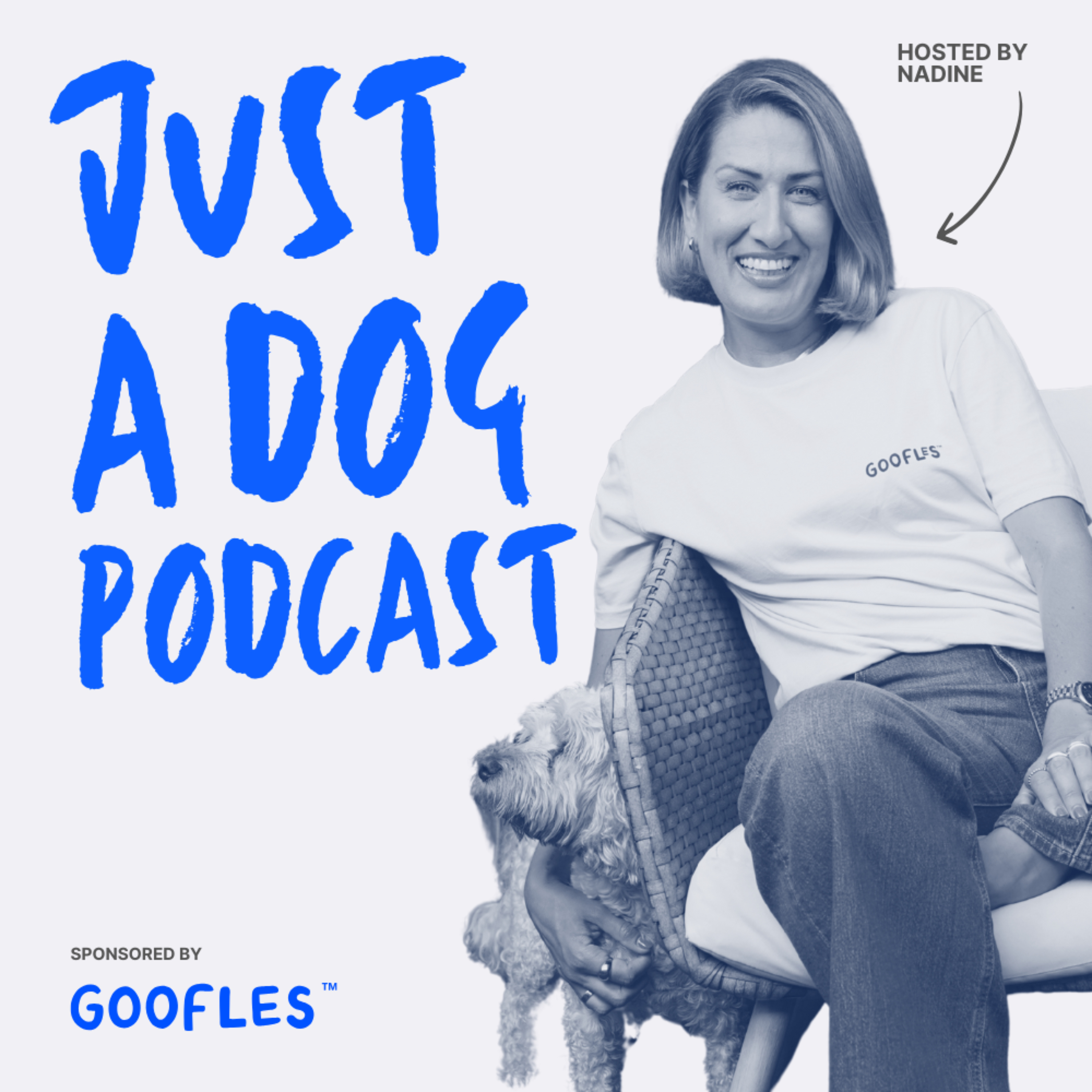
Just a Dog Podcast
by Nadine
Just a Dog Podcast is a dog-centred podcast for thoughtful dog lovers and guardians who want to understand dogs beyond obedience, training tips, or quick fixes.Hosted by Nadine, a long term volunteer dog walker and galgo fosterer, the podcast explores the dog world through conversations with people whose lives and work are shaped by dogs. Each episode examines behaviour, welfare, ethics, and inherited beliefs, using a dog centred lens to reflect what our relationship with dogs reveals about us as individuals and as a society. | https://www.instagram.com/justadogpodcast
-
27
Behaviour is information | Why what we read as 'bad' behaviour is usually a dog in pain | Dr Lisa Radosta DVM, DACVB
In this episode, we look at why dogs behave in ways that confuse or worry us. Dr. Lisa explains how pain, fear, and the way we treat dogs at home can show up as behaviour we'd otherwise call "bad". It's a conversation that asks you to look again at what your dog might be trying to tell you.Dr. Lisa Radosta is a board-certified veterinary behaviourist based in Florida. She's one of a small number of specialists worldwide trained both as a vet and as a behaviourist. With over 25 years of clinical experience, she's also the current president of the American College of Veterinary Behaviorists.If you have a dog who's anxious, reactive, or hard to live with, this conversation will give you a different way to look at what's going on. Dr. Radosta also breaks down when to call a trainer versus a behaviourist, and why it matters. And if you just want to understand your dog better, you'll come away with plenty to think about.Connect with Dr. Lisa RadostaWebsite | LinkedIn | Instagram | Facebook | YouTube
-
26
Cashmere from dogs | Turning discarded dog undercoat into luxury yarn | Sebastian Salvat, Chiora
Every spring, a double-coated dog sheds enough undercoat to knit a jumper. Most of it goes in the bin, or worse, on the garden fence for the birds, where flea treatment residue can kill hatchlings. Sebastian Salvat wants a better option.Sebastian is a fashion marketing student at London College of Fashion and the founder of Chiora, a project turning brushed-out dog undercoat into a cashmere-like yarn. He's been working in dog rescue since he was sixteen, lives with two rescues from Romania (Chai and Ora, who the brand is named after), and is backed by LCF's startup programme. The British Dog Wool Association was doing something similar for soldiers in hospitals over a hundred years ago. So the idea isn't new. The question is whether it should exist now.We get into the ethics of building a luxury material from a living animal, the economics that keep the model honest, and what Sebastian is doing differently this time around. If you live with a double-coated dog, pause before you throw the brush-outs away. Send your dog's brushed-out undercoat to Chiora [email protected] | chiora.org
-
25
Good owners, unhappy dogs | The gap between good intentions and what dogs actually need | Dr. Jessica Pierce | Bioethicist & Author
This week, I sit down with renowned American bioethicist and author Dr. Jessica Pierce.Jessica has spent decades writing about dogs. Not from our side of the leash, but from theirs. And what emerges is both humbling and fascinating: a world of sound we can't hear, smells we can't fathom, and a daily sensory experience that is nothing like our own.Think about your home for a moment, but through your dog's ears. The microwave, the traffic, the TV, the sirens. Now imagine your hearing is so acute that you can essentially smell someone's DNA. That's Tuesday for your dog.And that barking you've been trying to stop? The pulling toward every lamppost? The counter surfing, the chasing, the so-called "bad behaviours"? Jessica makes a compelling case that these aren't problems to be fixed. They're dogs doing exactly what dogs do, in a world built entirely for humans.This episode is an invitation to get low, look around, and ask a question most of us never think to ask: what is life actually like for my dog?Dr. Jessica Pierce is a bioethicist and the author of multiple books on the ethics of living with animals, including Unleashing Your Dog and Who's a Good Dog.
-
24
Dog rescue starts before the shelter: Tom Candy on prevention and responsibility
In this episode, I speak with clinical animal behaviourist Tom Candy BSc Hons MSc CCAB CSBS CDBC CBATI KA, whose career began in rescue at 15 and has spanned 15 years of frontline shelter work, behaviour support and staff development.Tom has worked across multiple rehoming centres within the UK’s largest dog welfare organisation. He now supports clinical animal behaviourists in their professional development and runs Simplifying Shelter Behaviour, an educational platform focused on improving behavioural health within rescue systems.This conversation moves beyond individual adoption stories. It examines the structural pressure facing dog rescue today.We explore:→ Why rescue is reactive, not preventative→ Why building more kennels does not solve the problem→ How rising expectations placed on dogs are contributing to behavioural fallout→ The misunderstood role of behaviour modification and medication→ The economic and cultural systems that shape surrender, acquisition and demandTom explains why prevention must sit upstream of rescue. Ethical breeding, accessible behaviour support, veterinary affordability and honest public education all shape whether a dog ever reaches a kennel.This is not a conversation about blame. It is a conversation about responsibility.If you work in rescue, behaviour or welfare, you will recognise the tension described here. If you live with a dog, you will recognise yourself in it.Rescue matters. But rescue cannot carry the weight of everything culture keeps producing.Website | Instagram | Simplifying Shelter Behaviour Podcast
-
23
Your dog isn't broken | What no one told you about behaviour | Andrew Hale
You've done the classes. Watched the videos. Tried the tools. And your dog is still struggling. What if the answer isn't another training method?Andrew Hale is a certified canine behaviourist with a background in human psychology. He specialises in dogs labelled aggressive, reactive, difficult or broken. And he'll tell you straight: they're none of those things. They're trying to communicate something. We're just not listening.In this conversation, Andrew shares his own story - childhood trauma, a breakdown in his thirties, and two dogs who forced him to rethink everything he thought he knew about behaviour. We get into why behaviour is a communication of need, not a problem to solve. Why guilt can actually be your friend. Why your dog might be struggling with emotional and social pain you can't see. And why the journey to understanding your dog starts with understanding yourself.This one's personal. It's raw. Its honest. Enjoy xGuest: Andrew Hale BSc, ISCP.Dip.Canine.Prac - Certified Canine Behaviourist, founder of Dog Centred Care, behaviour consultant for Pet Remedy, and creator of Your Safe Space for animal care professionals.
-
22
Fluent In Dog | Why dogs need understanding not control | Marc Bekoff | Jane Goodall Institute
What does it really mean to understand a dog?In this conversation, Dr Marc Bekoff explores how dogs experience the world and what helps them thrive emotionally, socially, and psychologically.Marc Bekoff is Professor Emeritus at the University of Colorado Boulder and one of the world’s leading voices on animal emotions. He is a long time collaborator and close friend of the late Dr Jane Goodall through the Jane Goodall Institute. His research has helped expand scientific understanding of animal sentience, emotion, and social intelligence.In this episode, Marc explains why every dog is an individual shaped by personality, history, and context. He shares why choice, safety, and trust sit at the centre of healthy relationships and how dogs communicate continuously through movement, scent, posture, and behaviour.We discuss what it means to become fluent in dog. How learning their language deepens connection. How agency supports emotional wellbeing. And why observing dogs in natural social settings reveals behaviours that cannot be seen in isolation.Marc also reflects on his decades of fieldwork with dogs, wolves, coyotes, and other social mammals, and on the influence of Jane Goodall’s approach to observation, patience, and respect.This episode explores:→ How dogs express emotion and social intelligence→ Why individual personality matters more than labels→ What agency looks like in everyday life→ How dogs communicate through scent, movement, and choice→ The role of trust in learning and connection→ What long term observation reveals about behaviour→ The legacy of Jane Goodall’s work and its relevance todayThis is a conversation about attention, curiosity, and relationship. About learning to see the dog in front of you.And about how understanding another being can quietly change the way we live alongside them.
-
21
Dog behaviour science | How biology, environment and human relationships shape dogs | Professor Ádám Miklósi | Eötvös Loránd University
In this episode of Just A Dog Podcast, I speak with Ádám Miklósi, Professor of Ethology and one of the most influential researchers in dog behaviour and cognition.Professor Miklósi is the founder of the Family Dog Project in Hungary and has spent decades studying how dogs think, learn, and form relationships with humans. His work has shaped much of what we now understand about dog human attachment, social behaviour, and the role of environment in behavioural development.In our conversation, we explore how dogs are shaped by biology, environment, and the human relationships they live within. We discuss why dog behaviour must be understood in context, why dogs do not exist in isolation, and how human expectations and living conditions influence behaviour.We also talk about individuality, attachment, and what scientific research can realistically tell us about the inner lives of dogs.G Dogs research projectProfessor Miklósi’s team runs the G Dogs project, a long term scientific study of dogs who can recognise the names of objects and reliably retrieve specific items when asked.Dogs of any age may be eligible if they already know between 5 and 8 object names. Participation is remote, with full guidance provided.For more information or to enquire about taking part, contact:[email protected]
-
20
Care is political | Changing the systems that harm dogs | Dr. Marc Abraham OBE
What does it actually take to change a law that harms dogs?In this episode of Just A Dog Podcast, I speak with Dr Marc Abraham OBE, the veterinary surgeon and campaigner behind Lucy’s Law, which banned the third party sale of puppies and kittens in England.Marc shares the moment that shifted him from treating individual dogs to challenging the system itself, how grassroots campaigning really works, and why patience, strategy, and kindness matter more than outrage alone. We talk about puppy farming, ethical breeding, rescue, political lobbying, celebrity influence, and what ordinary people can do when they feel powerless in the face of injustice.Marc is the author of several books, including Be More Mosquito, a practical guide to grassroots campaigning and creating change with limited resources. He is also the presenter and co creator of the documentary Dogspiracy, which examines irresponsible breeding, puppy mills, and the systems that allow them to continue, while also highlighting how change can happen.You can follow Marc and his work onlineFacebook | Instagram | X | Website
-
19
Pedigree dog health | What we normalised without noticing | Extreme Conformation | Marisa Heath | APGAW | Innate Health Assessment
Marisa Heath has spent over 15 years working inside UK Parliament to improve the lives of dogs. She runs the All-Party Parliamentary Group for Animal Welfare (APGAW), leads the Canine and Feline Sector Group, and co-founded the Innate Health Assessment, a tool that helps people recognise extreme conformation before buying a puppy or choosing which dogs to breed from. Extreme conformation refers to physical features that have been bred so far from a dog's natural form that they cause pain, discomfort or difficulty doing basic things like breathing, walking or playing. In 2009, Marisa published A Healthier Future for Pedigree Dogs. Sixteen years later, she is still asking the same questions.This is not a conversation about bad breeders or irresponsible owners. It is a conversation about all of us. Somewhere along the way, we stopped noticing. Noses got shorter. Skin folds got deeper. Legs bowed. Spines curved. Breathing became laboured. And we called it normal. We called it cute. We shared videos of dogs snoring and struggling and we laughed. This happened to the animals we say we love most, and it happened right in front of us. If you have ever looked at a dog and thought nothing of how they were built, this conversation might change what you see.🔗 Try the Innate Health Assessment: https://www.innatehealthassessment.org/
-
18
When optics dominate | The fight to protect Morocco’s dogs before FIFA World Cup 2030 | Les Ward MBE | Debbie Wilson | IAWPC
Morocco agreed in 2019 to manage free roaming dogs through catch, neuter, vaccinate and return. That agreement was never made law, and many regions continued killing instead. Since Morocco secured co hosting rights for the FIFA World Cup 2030, the pace and scale of killings have increased. The IAWPC has documented shootings, poisonings and mass removals near proposed stadium cities including Tangier, Marrakesh, Rabat, Agadir, Fez and Casablanca. Les Ward MBE and Debbie Wilson explain the evidence, the political pressures, the impact on rabies control, and why systemic violence toward dogs harms children and whole communities. This episode explores what happens when image wins over science and what can still be done to change the direction of an entire nation.IAWPC Website | Sign the Petition | IAWPC on Instagram | IAWPC on Facebook | IAWPC on X
-
17
Building safety together | Understanding fear, trust and the weight of expectation | Sam Walker-Arends | Sam the Dog Coach
This episode looks at what happens when a dog’s inner world does not match the life we imagine for them. Sam Walker-Arends is a force free trainer who works with dogs carrying fear, uncertainty or history in their bodies, and our conversation keeps returning to one truth. Every dog is an individual. Their needs, thresholds and ways of feeling safe are never the same.We talk about Ivy the ex racer and Reyna the timid Galgo, and how raising two children alongside two very different dogs forced Sam to confront stress, expectation and the limits of tolerance.She shares openly about recognising when a dog is no longer coping and why safety matters more than any ideal of the perfect family dog.At its core, this episode asks a quiet but important question. What does safety look like for an individual dog, and what does our response to that individuality reveal about us.Follow Sam here: Website | Instagram | Facebook
-
16
Tools or companions | The quiet activism for Spain’s forgotten Galgos and Podencos | Gemma & Adva | Free Spanish Hounds & Hope for Podencos
Every February, as Spain’s hunting season ends, thousands of Galgos and Podencos are discarded. Some are abandoned, some are killed, and most are simply forgotten. They are fast, intelligent and deeply sensitive, yet still treated as disposable tools rather than sentient companions.In this week’s episode, I speak with Gemma and Adva, the organisers behind Free Spanish Hounds, a UK-based movement that marches each year to raise awareness of Spain’s hunting dogs and the cultural systems that allow their suffering to continue.We talk about how empathy becomes action, what it means to show up for animals we may never meet, and the quiet power of people who refuse to look away.This conversation asks:→ What does it say about us when one species can be both pet and tool?→ Can empathy travel across borders when laws and traditions divide it?→ What happens when love for one dog changes the course of a life?It is an episode about compassion as resistance and the quiet hope that collective action still matters.Follow Free Spanish HoundsWebsite | Facebook Group | Instagram Follow Hope for PodencosWebsite | Facebook | Instagram | TikTok
-
15
Dog rescue reality | What really happens behind the scenes and the quiet hope that keeps it going | Jenna Miller | Spirit of the Dog Rescue
In this episode, I speak with Jenna Miller, Chair of the Board of Trustees at Spirit of the Dog Rescue, an independent charity run entirely by volunteers.With more than fifteen years of experience in animal care and rescue, Jenna offers an honest look at what really happens behind the scenes — far beyond the social media snapshots and success stories we usually see.We talk about what it takes to run a rescue responsibly, the emotional weight of decision-making, and the systems that often fail both people and dogs.Jenna shares what surrendering a dog actually involves, how rescues decide who they can help, and the ongoing battle to balance compassion with sustainability.This is a conversation about reality, not rescue romanticism.It is about fatigue, bureaucracy, and the moments that make it all worth it. It is about humans trying to do right by dogs in a system that is stretched to breaking point.If you are moved by this conversation and would like to support the work being done by Spirit of the Dog Rescue, you can learn more or make a donation here:Website: www.spiritofthedog.org.ukDonate: www.spiritofthedog.org.uk/donateInstagram: @spiritofthedogrescueFacebook: Spirit of the Dog RescueFollow Jenna’s work and stories: @dogrescuediaries
-
14
Fostering as an Antidote to Disposable Dog Culture | Lisa | Long Term Foster Carer
In this episode I sit down with Lisa, a long term foster carer for Galgos, Podencos, and mixed breeds to explore what fostering really means in the middle of today’s rescue crisis.Lisa shares the quiet routines that help traumatised dogs begin to trust again and the reality of letting them go so that another dog can take their place.But this is about more than one person’s foster story. It is about a wider culture that treats dogs as disposable, fuelling gridlocked kennels and a constant demand for foster homes. Together we unpick what fostering reveals about us as a society, how it challenges the mindset of dogs as lifestyle accessories, and why opening your home is an act of resistance as much as it is an act of care.If you have ever wondered whether fostering is for you, or if you want to think more deeply about what our treatment of dogs says about us, this conversation is for you.
-
13
Tools, Training and Trust: A Balanced Trainer's Defense of Aversives | Jack Tutty | J&P Canine Academy | Part 2
Jack Tutty returns to defend the most controversial tools in dog training, arguing they're kinder than alternatives we accept without question.This conversation challenges how we think about training tools and animal welfare. Jack breaks down what "aversive" actually means and questions why we accept certain methods whilst condemning others that may be less harmful.He argues our emotional reactions to specific words prevent objective evaluation of what actually helps dogs.The discussion reveals the gap between expensive "positive" solutions and the reality of working with difficult cases. Jack examines the billion-pound industry built around these distinctions and questions whether our standards are based on evidence or emotion.We explore what separates good trainers from exceptional ones, the culture around competitive dog sports, and why Jack believes some dogs need clear boundaries backed by consequences. The conversation touches on regulation, expertise, and who gets to decide what's ethical in animal training.Jack's perspective forces uncomfortable questions about the difference between what makes us feel good and what actually serves dogs. Whether you agree with his methods or not, his arguments challenge assumptions about kindness, control, and effectiveness in training.The question isn't whether you'll use these tools. It's whether you're willing to examine why certain approaches make you uncomfortable whilst others don't.This episode discusses training tools and methods some listeners may find controversial.
-
12
The Tools We Use | A Balanced Trainer's Perspective on Dogs, Control, and Controversy | Jack Tutty | J&P Canine Academy | Part 1
Jack Tutty from J&P Canine Academy works with severe behavioural cases and trains competition dogs using methods many find controversial.In this two-part conversation, we explore the divide in dog training and what it reveals about how we approach difficult conversations.Jack specialises in reactivity and resource guarding cases.He trains his Rottweiler in IGP sport and uses tools like prong collars alongside positive reinforcement.His approach raises questions about genetics, urban environments, and what different dogs actually need to thrive.This conversation isn't about adopting any particular method. It's about examining our assumptions - like why we bring working dogs into cities then expect them to behave like pets, or whether our emotional reactions to certain tools prevent us from seeing the full picture.Jack argues that every dog decides what's reinforcing to them, and that suppressing genetic drives doesn't eliminate them - it redirects them.He believes some dogs need clear boundaries backed by consequences, whilst others thrive with gentler approaches.The discussion challenges us to think beyond categories like "positive" or "balanced" training toward understanding individual dogs. Whether you agree with Jack's methods or not, his perspective forces us to examine what we actually know versus what we assume about canine behaviour and learning.We explore why this industry has become so polarised, and what happens when ideology meets the reality of powerful, driven animals in our human-centric world.Sometimes understanding different viewpoints helps us make better decisions for the dogs in our care.Join the conversation on this episode and others on our Just a Dog Podcast Instagram page. Part two available Thursday, September 11, 2025❗️This episode discusses various training approaches. We believe examining different perspectives contributes to thoughtful decision-making for dog owners.
-
11
Taking the Government to Court | XL Bully Ban | Sophie Coulthard | Don't Ban Me License Me | DBMLM
When the UK government announced the XL Bully ban in September 2023, Sophie Coulthard went from posting dog training videos on TikTok to founding a grassroots movement that would raise over £200,000 and challenge the government in court.In this episode, Sophie reveals what really happens when breed-specific legislation becomes law - the hidden consequences that go far beyond what most people imagine, and why the system of identifying "dangerous" dogs might not work the way you think it does.We explore how an ordinary dog owner became an accidental activist, the personal costs of taking on the government, and what she learned about building a campaign from scratch. Sophie also shares what she'd do differently if she could design dog policy, and why the legal challenge continues despite the odds.This conversation goes beyond the headlines to examine what breed bans actually mean for families, communities, and the dogs caught in the middle.Find Don't Ban Me License Me: @dontbanmelicenseme (Instagram/Facebook)Please note: This episode contains discussion of dog attacks and related legislation that some listeners may find concerning.
-
10
Dogs deserve better | When good intentions meet broken systems | Nina May | Wunderdog Magazine
In Episode 4, Nina May, founder of Wunderdog magazine, exposes the maddening contradictions in dog welfare. You can impulse-buy a puppy on Instagram and have it delivered like a takeaway. Yet rescue charities reject potential adopters for not having gardens in London. The system makes it easier to buy a poorly bred puppy from a dodgy dealer than to save a dog's life from a rescue.Nina herself - who runs a rescue dog magazine and knows more about dog welfare than most - was rejected by 12 different dog charities. Despite her expertise and passion, she couldn't adopt from UK charities and had to get her dog from Romania instead.This episode reveals the brutal reality behind the 72% of lockdown pets abandoned after the pandemic. A crisis so predictable that charities kept their kennels ready, knowing the dogs would return. Thousands of impulse purchases became unwanted problems when life returned to normal.Through her personal journey from failed foster to dog advocate, Nina shares why we desperately need dog licences to stop impulse buying. She argues that if you need a licence to drive a car, you should need one to own a living creature that depends on you for everything.Charities mentioned in this episode:
-
9
Art as Advocacy | How Art Can Change the Way We See Rescue Dogs | Elena Marci | Pawtiqe
⚠️ This episode contains discussion of distressing topics including animal cruelty and mistreatment in the racing and hunting industries.Can beautiful photography change hearts and minds about rescue dogs? Elena Marci, the award-winning photographer behind Pawtiqe, believes it can.With a unique monochrome approach, Elena creates elegant, minimalistic black and white portraits that celebrate the subtle art of being a dog in London. After several failed greyhound adoption attempts, Elena is committed to raising awareness around these dogs and their potential for adaptability, showing how they can thrive in urban environments if they are given the chance.As an animal welfare advocate, Elena believes that "dog is art" and treats every subject with the same care and reverence as any fine art portrait. Her work highlights the individuality of each dog, embracing their imperfections and quirks, while stripping away the unnecessary - including colour - to let them take centre stage.In this episode, we explore Elena's journey from university photography student to creating stunning portraits that treat every dog as a living masterpiece. Her current project photographs adopted greyhounds and galgos across London's boroughs, using art to advocate for animal welfare.We also explore how her upcoming book aims to raise awareness without showing distressing images, and the therapeutic power of slowing down and working at a dog's pace.Elena's work goes beyond traditional pet photography. She's creating collector's pieces that celebrate dogs as the sentient beings they truly are, whilst raising funds for Project Galgo rescue charity.Find Elena: @pawtiqe on social media | www.pawtiqe.com
-
8
When Caring Hurts: Protecting Your Mental Health While Advocating for Dogs | Just a Dog Podcast
We've all been there scrolling through social media, witnessing questionable advice or practices, and feeling that familiar surge of helplessness and frustration.With so much suffering in the world right now, from global conflicts to environmental destruction, many of us are experiencing what some are calling "global mourning."When we're already carrying this collective sadness, how do we honour our deep care for dogs without burning ourselves out?In this episode, I sit down with Dr. Tara Quinn, a chartered psychologist with over 20 years of experience and founder of the Human Animal Welfare Alliance.We explore the emotional toll of witnessing animal suffering and discuss practical tools for staying grounded when our compassion threatens to overwhelm us.Dr. Tara shares insights from her work supporting those on the front lines of animal welfare, revealing why understanding our nervous system responses is crucial for sustainable advocacy. You'll discover simple, portable techniques for self-soothing that you can use anywhere, from coffee shop queues to heated Facebook debates.Because here's the truth: we can't pour from an empty cup. Learning to care for ourselves isn't selfish; it's essential for creating the change we want to see.This conversation might just shift how you approach both your own wellbeing and your advocacy for dogs.New episodes drop every Thursday.
-
7
The Question That Changed Everything | Just a Dog Podcast
What happens when a dog's grief forces you to question everything you thought you knew about dogs? Host Nadine shares the moment that changed her assumptions about canine emotions and launched her down a rabbit hole of discovery that's taken her from Parliament to greyhound tracks to rescue centres across the UK.After witnessing a black cockapoo named Lola mourn the death of her father, Nadine realised she'd been fundamentally wrong about dog behaviour, dog psychology, and what it really means to share our lives with these sentient beings.If dogs can grieve, something that seemed obvious in hindsight but revolutionary in the moment, what else are we getting wrong about our relationships with them?This isn't your typical dog training podcast. It's an exploration of how humans and dogs actually live together, examining everything from dog welfare and rescue to the systems that help or harm dogs.Through conversations with dog behaviourists, rescue workers, researchers, and everyday dog guardians, we'll question inherited beliefs about dog care, dog training, and what it truly means to advocate for animals who can't speak for themselves.Whether you're a dog owner questioning your approach, someone considering dog adoption, or simply curious about the relationship between humans and animals, this episode will make you see dogs and maybe yourself differently.Because no sentient being is ever "just" anything.
We're indexing this podcast's transcripts for the first time — this can take a minute or two. We'll show results as soon as they're ready.
No matches for "" in this podcast's transcripts.
No topics indexed yet for this podcast.
Loading reviews...
ABOUT THIS SHOW
Just a Dog Podcast is a dog-centred podcast for thoughtful dog lovers and guardians who want to understand dogs beyond obedience, training tips, or quick fixes.Hosted by Nadine, a long term volunteer dog walker and galgo fosterer, the podcast explores the dog world through conversations with people whose lives and work are shaped by dogs. Each episode examines behaviour, welfare, ethics, and inherited beliefs, using a dog centred lens to reflect what our relationship with dogs reveals about us as individuals and as a society. | https://www.instagram.com/justadogpodcast
HOSTED BY
Nadine
Loading similar podcasts...
Frequently Asked Questions
How many episodes does Just a Dog Podcast have?
Just a Dog Podcast currently has 21 episodes available on PodParley. New episodes are automatically indexed when they're published to the podcast feed.
What is Just a Dog Podcast about?
Just a Dog Podcast is a dog-centred podcast for thoughtful dog lovers and guardians who want to understand dogs beyond obedience, training tips, or quick fixes.Hosted by Nadine, a long term volunteer dog walker and galgo fosterer, the podcast explores the dog world through conversations with people...
How often does Just a Dog Podcast release new episodes?
Just a Dog Podcast has 21 episodes. Check the episode list to see recent publication dates and frequency.
Where can I listen to Just a Dog Podcast?
You can listen to Just a Dog Podcast on PodParley by clicking any episode. We provide an embedded audio player for direct listening, and you can also subscribe via your preferred podcast app using the RSS feed.
Who hosts Just a Dog Podcast?
Just a Dog Podcast is created and hosted by Nadine.
URL copied to clipboard!