
PODCAST · business
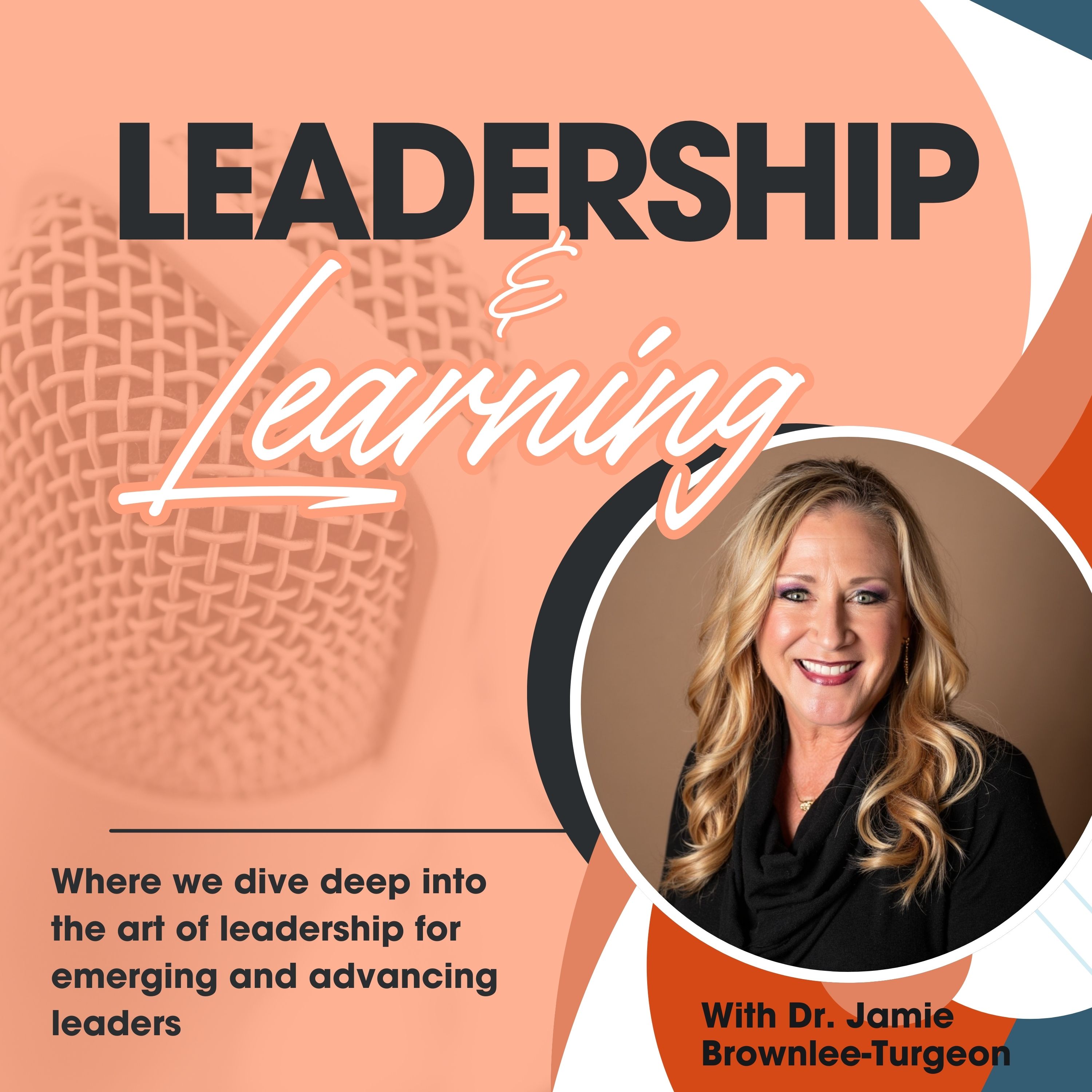
Leadership & Learning w/Dr. JBT
by Dr. Jamie Brownlee-Turgeon
Welcome to the Leadership and Learning podcast with Dr. JBT, where we dive deep into the art of leadership for emerging and advancing leaders. Whether you're just starting out or looking to sharpen your skills, this podcast is your go-to resource. We'll explore real-world scenarios, actionable solutions, and expert advice, with insights drawn from Jamie's own experiences and interviews with seasoned leaders. If you're serious about growing as a leader, you've come to the right place.
-
49
Episode 48: Interview with Lindsay Powell on Onboarding New Hires
🎙️ Leadership & Learning with Dr. JBT Designing Onboarding That Actually Works with Lindsay Powell In this episode, I sit down with Lindsay Powell, Manager of Learning & Development, to unpack one of the most underestimated leadership levers in any organization: onboarding. What quickly becomes clear in this conversation is that onboarding is not an event; it's a signal. A signal about culture. About expectations. About leadership. And ultimately, about whether someone sees a future in your organization. Lindsay brings both strategic clarity and practical insight as we explore what it really takes to design onboarding experiences that move beyond checklists and compliance and instead create connection, clarity, and contribution from day one. 💡 5 Key Takeaways 1. Onboarding Is More Than Orientation—It's Integration The most common mistake leaders make is treating onboarding as a short-term administrative process. Effective onboarding is about helping people understand how to succeed, how to build relationships, and how to navigate the organization beyond the org chart. 2. Culture Isn't Caught by Accident—It's Designed on Purpose Onboarding is one of the most powerful moments to intentionally shape culture. What new employees experience in their first days and weeks communicates far more than any stated values. 3. Managers Make or Break the Experience Even the best-designed onboarding programs fall apart without strong manager engagement. We discuss the critical role managers play and how organizations must equip them to lead onboarding effectively. 4. Small Moments Create Lasting Impact Feeling welcomed, seen, and supported doesn't require large budgets or complex systems. Often, it's the small, intentional behaviors that shape whether someone feels like they belong. 5. If You're Not Measuring It, You're Guessing From time to productivity to retention and engagement, Lindsay emphasizes the importance of aligning onboarding metrics to broader organizational goals and using that data to continuously improve. 🎯 Closing Reflection Onboarding is one of the earliest and most defining leadership moments in the employee experience. It shapes trust, engagement, and long-term commitment faster than most leaders realize. If we got onboarding right across organizations, we wouldn't just see faster ramp-up, we'd see stronger cultures, deeper alignment, and more people choosing to stay and grow. The mindset shift? Stop thinking of onboarding as a process to complete… …and start seeing it as a strategic opportunity to lead. 🎧 Listen in and rethink how you welcome, develop, and retain your people from day one.
-
48
Episode 47: Interview with author, Joe Baffa - Leadership Lessons from the Front Lines of HR - Part 2
Leadership Lessons from the Front Lines of HR with Joe Baffa — Part 2 In this second part of my conversation with Joe Baffa, we move beyond frameworks and into the realities of leadership—where culture, judgment, and character shape outcomes far more than policies or processes ever could. What stands out most in this conversation is Joe's unwavering focus on the human side of leadership. Whether we're talking about avoiding litigation, making tough decisions, developing talent, or navigating complexity, the common thread is clear: leadership effectiveness is built—or broken—in how we show up with people every day. From tone and trust to role clarity and hiring decisions, Joe challenges leaders to rethink what actually drives performance and organizational health. This is not about theory. It's about the accumulated wisdom of decades in the field—where the stakes are real and the consequences are lasting. 💡 5 Key Takeaways 1. Culture is Built on Respect—Not Policy Most workplace issues don't start as legal problems—they start as people feeling unseen, unheard, or undervalued. Respect shows up in how leaders communicate, how they handle disagreement, and whether they create environments where people feel both supported and challenged. 2. Tone and Self-Awareness Are Leadership Multipliers You can be right and still be ineffective. Leaders who lack awareness of their tone often undermine their own message. The ability to self-correct, seek feedback, and communicate with intention is a critical differentiator. 3. The Middle Drives the Organization Sustainable success doesn't come from focusing only on top performers. The "middle 60%" is the operational backbone—and often the most overlooked source of future leaders. Great leaders invest broadly, not selectively. 4. Pride is the Silent Killer of Good Decisions When leaders stop listening, organizations stop improving. Seeking counsel, inviting perspective, and being willing to challenge your own thinking are essential to sound decision-making and healthy leadership. 5. Hire and Lead for Character, Not Just Competence Skills can be developed—character is harder to build. The best leaders look beyond resumes to assess teachability, integrity, and how individuals show up in moments that matter. 🎯 Final Thought This episode is a reminder that leadership is rarely about having the right answer—it's about creating the kind of environment where the right outcomes can emerge. And that starts with something simple, but not easy: how we treat people. 📚 Reference, Find on Amazon Baffa, Joe. XR: A Real and Sometimes Humorous, and Somewhat Irreverent Look at Human Resources. Praslova, Ludmila N. (2024). The Canary Code: A Guide to Neurodiversity, Dignity, and Intersectional Belonging at Work. Oakland, CA: Berrett-Koehler Publishers.
-
47
Episode 46: Interview with Joe Baffa - Leadership Lessons from the Front Lines of HR - Part 1
Leadership Lessons from the Front Lines of HR with Joe Baffa - Part 1 In this episode of Leadership & Learning with Dr. JBT, I sit down with Joe Baffa to discuss his new book, XR: A Real and Sometimes Humorous, and Somewhat Irreverent Look at Human Resources. Joe brings decades of experience across industries, and he doesn't hold back. This conversation pulls back the curtain on the real world of HR: messy, complex, and deeply human. With a mix of candor and humor, Joe challenges traditional thinking and invites leaders to rethink how they engage people, navigate tension, and operate as true business partners. 🔍 What We Explore in This Episode Why HR Gets a Bad Reputation Joe explains how compliance-driven mindsets, lack of operational exposure, and over-identifying as employee advocates can position HR as the "Office of Business Prevention", and what it takes to shift that perception. From Rules to Relationships: The "XR" Mindset A compelling case for moving from "letter of the law" to "spirit of the law," emphasizing judgment, partnership, and business alignment over rigid rule enforcement. The Power of Business Immersion Practical advice for leaders: get into operations, learn the language of the business, and align your goals with organizational priorities to build credibility and influence. Performance Management Reimagined Joe challenges traditional models and encourages leaders to focus on coaching, development, and future aspirations, not just evaluation. Creating space for employees to talk about their dreams (inside and outside the organization) can unlock engagement and performance. Leadership and Self-Awareness From redefining the "Peter Principle" as finding your "sweet spot" to understanding personal limitations, Joe emphasizes the importance of aligning roles with strengths to maintain effectiveness and credibility. Hiring, Onboarding, and Letting People Go A candid look at the realities of talent management: Hiring is often imperfect, even on the best day Onboarding is undervalued but critical to long-term success The Leadership Responsibility in Failure One of the most powerful reminders in this conversation: many employee failures are actually leadership failures. Leaders must invest in developing others or risk perpetuating cycles of turnover and disengagement. 💡 Key Takeaways Leadership requires judgment, not just policy adherence HR, and leadership more broadly, must operate as a strategic partner to the business Coaching and development should outweigh evaluation in performance management The best leaders understand their sweet spot and build teams accordingly Culture is shaped not just by who you hire but by how you onboard, develop, and exit people 📚 Reference, Find on Amazon Baffa, Joe. XR: A Real and Sometimes Humorous, and Somewhat Irreverent Look at Human Resources.
-
46
Episode 45: Ethical Leadership: It's Daily. It's Complex. It's Tested.
We talk about ethical leadership often, but it's not defined in the obvious moments. It's revealed in the gray. In this episode, Dr. JBT uses a framework from Gary Yukl (Leadership in Organizations) to break down eight practical criteria that distinguish ethical leadership from unethical leadership through everyday decisions, not just intentions. The 8 Criteria of Ethical Leadership: Power & Influence — Serving others vs. serving self Stakeholders — Balancing voices vs. playing favorites Vision — Built with people vs. imposed on people Integrity — Alignment vs. expedience Risk — Courage vs. avoidance Communication — Clarity vs. distortion Dissent — Inviting challenge vs. silencing voices Development — Building others vs. creating dependency Key Takeaway: Ethical leadership is a daily practice. And the greatest risk isn't obvious failure, it's the slow drift into the gray. Your Challenge: Pick one criterion. Ask yourself: Where am I out of alignment? Then take one action this week to close the gap. Reference: Yukl, G. (2013). Leadership in Organizations (8th ed.). Pearson Education.
-
45
Episode 43: Interview w/ Dr. Paul Turgeon - Crisis Leadership Part 2
In Part 2 of this conversation with Dr. Turgeon, we dive deeper into one of the most critical elements of effective leadership during difficult seasons: communication. When organizations face crisis, uncertainty, or rapid change, leadership is tested in profound ways. Yet many crises are not worsened by the event itself, they are worsened by how leaders communicate, respond, and create (or fail to create) an environment where people feel safe to speak up. In this episode, we explore why some leaders struggle during crisis situations and how communication can either stabilize a team or amplify fear and confusion. Dr. Turgeon shares insights on the common mistakes leaders make, including shutting down dissent, reacting defensively to concerns, or unintentionally discouraging transparency. A central theme of the conversation is the importance of psychological safety. Strong leaders cultivate cultures where team members feel safe raising risks, surfacing problems early, and sharing difficult information. When leaders respond with curiosity instead of punishment, they create an environment where potential crises can often be identified and addressed before they escalate. We also discuss the role of emotional self-awareness in leadership. During moments of uncertainty, teams instinctively look to leaders for cues on how to interpret what is happening. Emotional contagion is real; a leader's emotions often become the organization's emotions. When leaders react with panic, frustration, or defensiveness, those emotions quickly spread. But when leaders demonstrate steadiness, thoughtful reflection, and emotional discipline, they create stability for the entire team. Dr. Turgeon emphasizes that effective crisis leadership requires leaders to manage their own reactions before responding publicly. Self-awareness allows leaders to pause, regulate their emotions, and communicate in ways that build confidence rather than amplify anxiety. In this episode, we discuss: Why communication often determines whether a crisis escalates or stabilizes The most common reasons leaders fail when managing difficult situations How defensive leadership behaviors can silence important information The role of psychological safety in effective leadership Why leaders must become the person people feel safe bringing concerns to The impact of emotional contagion and why leaders must manage their own reactions How trust and transparency strengthen organizations during uncertainty Crisis reveals leadership. The leaders who navigate it well are not necessarily the ones with all the answers; they are the ones who create the conditions where the truth can be spoken, problems can surface early, and teams can move forward together. Reflection Question: As a leader, do the people around you feel safe bringing you difficult information or do they hesitate because they fear the response they might receive?
-
44
Episode 42: Interview w/ Dr. Paul Turgeon - Crisis Leadership Part 1
Crisis Leadership — Leading Before, During, and After the Storm (with Dr. Paul Turgeon) Crisis doesn't create leadership; it reveals it. In this episode, Dr. JBT interviews Dr. Paul Turgeon about what it truly means to lead when stakes are high and uncertainty is real. Early in the conversation, Paul defines crisis, distinguishing it from normal operational stress. A crisis is a disruptive event that threatens the safety, stability, reputation, or viability of an organization and requires immediate, coordinated response. This episode centers on what leaders must build before disruption ever occurs. About Dr. Paul Turgeon Dr. Paul Turgeon is a crisis leadership and business continuity expert with extensive experience helping organizations anticipate, prepare for, and respond to high-impact disruptions. His work focuses on crisis prevention, risk mitigation, leadership visibility, and building organizational resilience so teams can respond with clarity and confidence when pressure rises. Key Insights from the Conversation 1. Expect Crisis Crisis is not an "if," but a "when." Leaders must anticipate risk, assess vulnerabilities, and prepare to avert or mitigate impact. 2. Be Visible Silence fuels anxiety. During crises, leaders must increase visibility, communicate consistently, and model calm resolve. 3. Build Trust Early Credibility cannot be improvised mid-crisis. Trust built over time becomes the foundation teams rely on when pressure rises. 4. Crisis Requires Different Skills Leading in volatility demands rapid decisions, clear prioritization, emotional regulation, and steady communication — competencies distinct from routine operations. 5. Develop Crisis Competency Prepared organizations identify warning signals, clarify roles in advance, and build a response culture before disruption hits. 📚 Book Recommendation Paul recommends Blindsided by Bruce T. Blythe. In Blindsided, Blythe explores how leaders often miss early warning signs and provides practical frameworks for crisis prevention, response planning, and communication when the stakes are highest.
-
43
Episode 41: Crisis Leadership Is a Habit, Not a Heroic Moment
🎙️ Crisis Leadership Crises are inevitable. The real question is whether you're prepared when they arrive. In this episode of Leadership & Learning with Dr. JBT, Dr. Jamie Brownlee-Turgeon explores what it means to lead through disruption — not with heroics, but with discipline. Drawing on the research of Dr. James and Dr. Wooten, authors of Leading Under Pressure: From Surviving to Thriving Before, During, and After a Crisis, this episode walks through the five stages of crisis leadership: Signal Detection – noticing early warning signs Preparation and Prevention – building resilience before impact Damage Containment – leading with clarity during chaos Business Recovery – bouncing forward, not just back Reflection and Learning – turning disruption into growth Crisis leadership isn't developed in the middle of chaos. It's built in the quiet through awareness, preparation, communication, and intentional learning. This episode sets the foundation for a deeper conversation next week with a leader who lives this work every day. 📚 Referenced: James, E. H., & Wooten, L. P. (2010). Leading Under Pressure. Reflection Question: If disruption hit tomorrow, what leadership habits have you already built, and what would you wish you had?
-
42
Episode 40: Anatomy of Change
In this episode of Leadership & Learning with Dr. JBT, Dr. Jamie Brownlee-Turgeon reflects on an early leadership experience that reshaped how she understands change. What began as a seemingly simple workflow adjustment—changing how a team managed a shared email inbox—quickly unraveled into confusion, frustration, and resistance. The logic of the change was sound, but the outcome was not. Why? Because change doesn't fail at implementation. It fails when leaders underestimate readiness. Drawing on the Anatomy of Change model, this episode explores the human side of change leadership and why even small shifts can provoke big emotional responses. Listeners are guided through five foundational conditions that must be present for change to succeed—not as a checklist, but as lived experiences that shape how people respond to uncertainty. In this episode, you'll explore: Why all change, big or small, creates emotional disruption How confusion, anxiety, frustration, and false starts signal missing readiness The five conditions people need to move through change successfully: A clear sense of direction Confidence in their ability to succeed Understanding the personal benefits of the change Adequate support and resources A clear, shared path forward Why readiness is relational, not procedural How leaders can prepare people for change rather than pushing change onto them Key takeaway: Successful change is not something leaders announce. It's something they prepare people for—intentionally, patiently, and humanely. This episode is a follow-up to conversations on leading change and offers a critical reminder: the pace of change is set not by strategy, but by people. Reflection question for leaders: Before launching your next change initiative, ask yourself: Am I assuming readiness because I feel ready or have I truly prepared my people for what's coming?
-
41
Episode 39: Part 2 Interview with Sharon Ayala - Leading Change
Today's conversation is part 2 with Sharon Ayala, a leader who doesn't shy away from the real work of leading change. Sharon has stepped into complex environments where expectations are high, priorities are competing, and the pace is relentless. And she's honest about what that actually feels like. In this conversation, Sharon shares openly about the challenges leaders face when everything feels urgent, and everyone needs something. She talks about how she thinks through priorities, how she makes tough decisions without losing sight of the people doing the work, and how she stays grounded when change is constant. What stood out most to me is this: no matter how intense the pressure, Sharon refuses to sacrifice psychological safety. She believes trust isn't a "nice to have" during change; it's the foundation that makes change possible. If you're leading in a season change, this conversation offers grounded insight into how to move forward without losing your people.
-
40
Episode 38: Interview with Sharon Ayala - Leading Change Part 1
Leading Change Through Listening: Building Trust, Buy-In, and Collaboration Special Guest: Sharon Ayala, Vice President for Marketing, Abilene Christian University Change rarely fails because of strategy. It fails because of misalignment, lack of trust, and leaders moving too fast without truly listening. In this episode of Leadership & Learning, Dr. JBT sits down with Sharon Ayala, Vice President for Marketing at Abilene Christian University, to explore what it really takes to lead meaningful change, especially when that change extends beyond your own department. Sharon brings deep experience leading teams through disruption and transformation, reimagining marketing not simply as a service function, but as a driver of institutional momentum, influence, and growth. Throughout the conversation, she shares how clarity of vision, intentional listening, and cross-functional collaboration become essential leadership tools when the path forward is still emerging. Together, they unpack what it looks like to: Gain buy-in from stakeholders outside your direct authority by building shared understanding rather than pushing agendas Create a collaborative mindset across departments with competing priorities Build trust with your own team by listening deeply both to what is said and what remains unspoken Identify the root problem before jumping to solutions, especially in moments of tension or resistance Lead change with confidence, even when outcomes are not yet fully defined This episode is a powerful reminder that listening is not passive; it is one of the most strategic acts of leadership. When leaders slow down to listen well, they create clarity, alignment, and the conditions for others to move forward with confidence. Whether you are leading a department, stepping into a new role, or navigating institutional change that requires influence across boundaries, this conversation offers practical insight and grounded wisdom for leading change that lasts. 🎧 Listen in and reflect: How often do you pause to truly listen before you lead?
-
39
Episode 37: The Habits that Hold Leaders Back
Book Recommendation: What Got You Here Won't Get You There by Marshall Goldsmith In this episode of Leadership & Learning with Dr. JBT, I explore key insights from What Got You Here Won't Get You There by Marshall Goldsmith—a powerful reminder that the behaviors that helped us rise as leaders can quietly limit our impact at the next level. Rather than focusing on competence or credentials, this conversation centers on behavioral awareness, relational impact, and the discipline of leadership growth. A Few Behaviors That Often Hold Leaders Back Below highlights a few of the 20 behaviors that frequently surface at senior levels: Winning too much – when collaboration turns into competition Adding too much value – unintentionally shutting down others by always jumping in first Failing to listen – listening to respond instead of listening to understand Withholding recognition – assuming appreciation is implied rather than expressed Refusing to apologize – protecting ego at the expense of trust These behaviors are rarely intentional—and often invisible to the leader—but they have a cumulative effect on culture, engagement, and trust. A Simple Framework for Reflection and Growth Awareness alone is not enough. In this episode, I introduce a practical framework leaders can use to move from insight to action: Notice the pattern – identify when and where the behavior shows up Understand the cost – shift from intent to impact Choose one behavior to work on – focus creates momentum Replace, don't just remove – intentionally practice a new behavior Leadership growth at this level is not about adding more skills; it's about letting go of habits that no longer serve. Reflection Question What is one behavior that once helped you succeed but may now be limiting your leadership impact?
-
38
Episode 36: Reflecting Forward: Who I Was and Who I Am Becoming
As leaders, we often measure growth by outcomes - titles, achievements, and wins we can point to. But real leadership growth rarely feels linear. More often, it happens in the uncomfortable space between who we were and who we are becoming. In this reflective year-end episode, Dr. JBT introduces the practice of reflecting forward—looking back with honesty, not to dwell, but to learn and lead with greater intention. Drawing from a year shaped by personal loss, professional headwinds, and meaningful leadership lessons, she explores how vulnerability, trust, and discomfort can become catalysts for growth rather than signs of failure. This episode invites you to pause, reflect, and consider how the experiences of the past year are shaping the leader you are becoming next. Reflecting Forward: A Leadership Framework Use these questions to guide your own year-end reflection or to prompt conversation with your team: Who was I as a leader at the beginning of this year? What strengths did I rely on the most? What moments stretched me the most—and what did they reveal about my leadership? Where did discomfort signal growth rather than failure? What leadership habits or instincts no longer serve me? Who am I becoming as a leader—and what behaviors must align with that future? Whether you're closing out a challenging year or preparing for a season of change ahead, this episode will help you reflect with purpose and move forward with clarity. Reflection Question: Who are you becoming as a leader and are your daily choices aligned with that future?
-
37
Episode 35: The Courage to Curate Curiosity - Transformational Leadership Part 2
In this episode of Leadership & Learning with Dr. JBT, we unpack one of the four "I's" of transformational leadership: Intellectual Stimulation. This practice isn't about proving you're the smartest person in the room; it's about creating the environment where the best thinking can emerge. When leaders dominate conversations or rush to provide answers, teams quickly retreat. Ideas fade. Innovation slows. And people stop taking ownership because they assume the leader already has the "right" solution. But when leaders shift from "I must know" to "We will figure this out together," everything changes: engagement rises, confidence grows, and teams begin to think more boldly. In this episode, we explore what it looks like to cultivate curiosity, welcome experimentation, and normalize learning through trial and error. You'll hear real stories of team members developing their own solutions, discovering better processes, and gaining clarity not because they were told what to do but because they were empowered to think. We discuss how leaders can: Ask better questions that unlock deeper thinking Invite ideas early, rather than after decisions are made Celebrate effort and experimentation, not just perfect outcomes Model curiosity by admitting you don't have all the answers Respond to new ideas in ways that encourage more of them These small shifts create psychological safety and help build a culture where people are willing to try, refine, and grow. Intellectual Stimulation isn't about expertise — it's about empowerment. It's about strengthening the thinkers on your team, not just the doers. Reflection Question: When was the last time you said, "That's a great idea — let's try it"? If it's been a while, this episode will help you reignite curiosity and multiply the intelligence around you. If today's message resonated, share the episode with a colleague or someone you mentor. Let's keep building leaders who create environments where curiosity thrives and excellence follows. Leadership & Learning with Dr. JBT
-
36
Episode 34: The Four Forces of Transformational Leadership
In this episode of Leadership & Learning with Dr. JBT, we explore one of the most powerful frameworks for elevating leadership beyond task management — The Four I's of Transformational Leadership: Idealized Influence, Inspirational Motivation, Intellectual Stimulation, and Individualized Consideration. If you've ever wondered how to inspire deeper commitment, strengthen culture, or fuel real change, these Four I's offer a practical roadmap for doing just that. What We Cover How Idealized Influence helps leaders model the behaviors they want to see Why Inspirational Motivation connects everyday work to purpose, hope, and shared vision How Intellectual Stimulation builds a culture of curiosity, innovation, and safe experimentation Why Individualized Consideration is essential for coaching, developing, and caring for people as individuals Key Takeaway Transformational leadership isn't about doing more; it's about leading with intention. When leaders model their values, share the "why," encourage new ideas, and invest in people, they create meaningful culture shifts that last. Your Leadership Challenge This Week Choose one of the Four I's to intentionally practice: Model → Inspire → Stretch → Care If this episode resonated with you, share it with a colleague or someone you mentor. Let's keep growing leaders who lead with purpose and create impact that endures. Subscribe, review, and stay connected — Leadership & Learning with Dr. JBT.
-
35
Episode 33: Legacy Isn't An Event; It's a Daily Choice
Legacy Isn't an Event; It's a Daily Choice In this episode of Leadership & Learning with Dr. JBT, we explore a question every leader should ask: What legacy am I building...today? Inspired by the retirement celebration of John, a colleague and friend whose leadership has exemplified humility, consistency, and deeply lived values, this episode examines how the small choices we make each day shape the way people experience us, and ultimately, how they will remember us. Legacy isn't formed at the end of a career. Legacy is created in real time. And whether we recognize it or not, we're writing our legacy in every meeting, every decision, every conversation, every moment of pressure, and every act of grace. In this episode, we cover: How retirement celebrations reveal the true legacy a leader leaves behind Why daily decisions matter more than major accomplishments The difference between claiming values and living values A powerful reflection question: If your retirement party were today, what would you want people to say about you? A takeaway to sit with: You don't build a legacy at the end. You build it every day. In the quiet choices no one sees, and in the consistent behaviors everyone feels. Call to Action: Take five minutes today to reflect on the legacy you want to leave, and one step you can take right now to move toward the leader you want to become.
-
34
Episode 32: Lateral Leadership: The Hidden Engine of Organizational Success
In this episode, Dr. JBT explores one of the most overlooked and most powerful dimensions of leadership: lateral influence. New leaders often focus on leading their direct reports. But as you rise through the organization, your success depends less on positional authority and more on your ability to collaborate, align, and build trust with your peers. Dr. JBT unpacks why leading across is just as important as leading down, and how strong peer relationships shape decision-making, culture, and overall organizational health. Through personal stories, practical insights, and a real example from her own leadership team, she illustrates how lateral leadership transforms competition into collaboration and silos into synergy. In This Episode, You'll Learn: Why your first team isn't the one you lead; it's the peers you lead alongside. How rising in leadership increases your reliance on cross-departmental relationships. What happens when peers align around shared priorities instead of competing ones. Why lateral influence is essential when you have no authority, only trust and credibility. The subtle but powerful ways silos create friction, and how relationships dissolve them. Practical Strategies to Build Peer Influence: Be Curious, Not Competitive Learn your peers' goals, challenges, and pressures before pushing your own priorities. Assume Positive Intent Most peers aren't resisting you; they're advocating for their teams. Start from trust. Share Credit Generously Celebrate collaboration. Name contributions. Build partnership over rivalry. Create Space to Connect Leadership happens in hallway conversations, coffee chats, and real friendships. Closing Thought: Your peers are not obstacles to navigate; they are partners in achieving the mission. When you strengthen those relationships, you strengthen your influence, your leadership, and your entire organization.
-
33
Episode 31: The Gratitude Gap
Episode: The Gratitude Gap — Why Leaders Forget to Express It & How We Close It In this Thanksgiving-week episode of Leadership & Learning, Dr. Jamie Brownlee-Turgeon explores what she calls the Gratitude Gap—the distance between what leaders feel and what they actually express. As the holiday season fills our schedules and drains our emotional bandwidth, even the most appreciative leaders can unintentionally slip into "gratitude silence," assuming people know they're valued while racing from meeting to meeting and goal to goal. Jamie unpacks why this happens, how silence from a leader can be misinterpreted as indifference, and the real cost of unexpressed gratitude—lower engagement, increased burnout, and the slow erosion of trust. She also shares honest reflections from her own leadership journey and highlights what changes when leaders intentionally acknowledge the work and heart of their teams: belonging grows, motivation rises, and trust deepens. The episode closes with simple, sustainable practices to close the Gratitude Gap, from micro-moments of appreciation to weekly habits that take less than ten minutes. Jamie challenges listeners to choose just one gratitude action this month, reminding us that "gratitude unspoken is gratitude wasted," and that the people we lead deserve to know they matter.
-
32
Episode 30: When Words Cross a Line
When Words Cross a Line In this episode of Leadership & Learning with Dr. JBT, Jamie shares two powerful leadership stories — one she wishes she could redo and one she's proud of — both centered around how to handle moments when someone says something inappropriate, rude, or disrespectful in the workplace. These moments can catch any leader off guard. Do you address it immediately? Do you let it go? What's the right balance between confidence and composure? Through her honest storytelling, Jamie invites listeners to reflect on their own leadership reactions and discover how humility, curiosity, and calmness can turn tense interactions into opportunities for growth and understanding. 🔑 Key Takeaways You're not alone. Every leader faces difficult or disrespectful moments, even experienced ones. Pause before reacting. You don't have to "win" the moment. Sometimes, ending a meeting or taking a break is the most powerful move you can make. Be comfortable with awkward. Growth and respect often start in uncomfortable conversations. Stay calm and curious. When emotions run high, choose to listen first. Curiosity disarms defensiveness. It's not always about you. People's frustration often stems from something deeper — loss, change, or misalignment — not necessarily your leadership. Ask, "Could it be me?" Humility opens the door to understanding. 🪞 Reflection Questions When was the last time someone said something disrespectful or hurtful to you at work? How did you respond? How comfortable are you with awkward silence or resistance in meetings? What might change if, instead of reacting, you paused to ask, "What's really going on here?" "You can't control what someone else says or does, but you can control your composure. Sometimes, what sounds like defiance is really disappointment, and what feels like conflict might just be a cry for clarity." — Dr. Jamie J. Brownlee-Turgeon If you've ever been caught off guard by a team member's words, this episode will remind you that leadership isn't about being perfect, it's about being prepared to learn.
-
31
Episode 29: Stop Talking, Start Advocating
🎙️ Episode Title: Advocacy in Action: Turning Words into Movement Podcast: Leadership & Learning with Dr. JBT Episode Summary: In this episode, Dr. Jamie J. Brownlee-Turgeon explores what real advocacy looks like in the workplace, and why saying there's a need isn't enough. Too often, "advocacy" stops at awareness or conversation, when true advocacy requires evidence, effort, and follow-through. Dr. JBT shares why she has a love-hate relationship with the word advocate, how leaders can move from talking about challenges to acting on them, and why the best advocates, at every level, combine conviction with data and persistence. Using real leadership examples, she unpacks how advocacy reveals what people value most and how great leaders listen beyond the complaint to solve for those values. Key Takeaways: Advocacy isn't about noise; it's about movement. The best advocates support their case with data, clarity, and alignment to institutional goals. True advocacy is intentional: it's communication and action. Leaders must create cultures where advocacy is welcomed, not dismissed as a complaint. "People complain about that which they value" — listen for what matters most, not just what's said loudest. Reflection Questions: Where in your organization are you waiting for someone else to advocate for you — instead of taking action yourself? How can you strengthen your advocacy through evidence, collaboration, and follow-through? As a leader, how can you create an environment where people feel empowered to move from talking about the need to meeting the need? Memorable Quote: "Advocacy without action is noise. Advocacy with action creates progress." — Dr. JBT Listen, Reflect, Lead. 🔗 Tune in to learn how to transform your advocacy into action and your action into impact.
-
30
Episode 28: Snorkel & Goggles - Learning to Lead When You're Underwater
Snorkel and Goggles — Learning to Lead When You're Underwater In this episode, Dr. JBT shares a deeply personal leadership story about a season in her career when she felt completely underwater. The story begins with a moment in her office — a team member sighs, "I need a snorkel." That simple statement sparks a memory from over a decade ago, when Jamie herself was newly promoted into a role that felt like moving from a step stool to a 20-foot ladder. Everything was new. Everything was hard. And every day, she felt like she needed a snorkel just to breathe. Through this story, Jamie unpacks two powerful leadership metaphors — the snorkel and the goggles — and how they shaped her growth and perspective as a leader. The Snorkel: Why feeling underwater isn't failure — it's where resilience, grit, and growth are built. The Goggles: How narrowing your focus helps you see clearly amid distractions and competing priorities. The Reality of Growth: Leadership isn't about always being in control. It's about learning to breathe and see clearly even when the water feels rough. "Great leaders aren't the ones who never struggle; they're the ones who learn how to breathe and see clearly while they do." Growth rarely happens in calm, shallow waters. It happens when you're stretched, uncertain, and learning to stay afloat. So if you're in deep water right now — breathe, focus, and keep going. You're becoming the kind of leader who thrives in the deep end.
-
29
Episode 27: The Power of Fairness - What Leaders Miss About Equity
Have you ever worked hard, looked around, and thought, "Wait… this doesn't feel fair"? That reaction is more than frustration; it's a human response rooted in Equity Theory. In this episode of Leadership & Learning with Dr. JBT, we dig into why fairness matters so deeply and what leaders can do about it. I unpack the ways employees respond when work feels inequitable — from pulling back effort to negotiating for better outcomes, reframing their mindset, finding new comparisons, or even quitting altogether. You'll learn: What equity theory is and why it matters for engagement and retention. Five common ways people respond when they feel work isn't fair. How leaders can communicate decisions clearly and head off frustration. Practical tips for showing appreciation and inviting honest dialogue about fairness. Whether you're leading a team or reflecting on your own work, this episode will help you spot inequity early and restore balance before great talent walks away. 🎧 Listen now and join me in building a culture of trust, transparency, and motivation.
-
28
Episode 26: Leading with Care, with Dr. Ian Slater (Part 2)
In this second conversation with Dr. Ian Slater, we go deeper into what it means to lead with care and why doing the foundational work early matters so much. Dr. Slater shares how intentionally investing in relationships and trust on the front end equips leaders to navigate the harder, more honest conversations that inevitably come. We explore: Building Trust Before It's Tested — why investing in authentic relationships creates space for healthy dialogue when challenges arise. Inviting Truth Into Our Leadership — how asking trusted colleagues to speak honestly into your leadership helps you see blind spots and grow. Courageous Vulnerability — why leaders must be willing to truly hear hard feedback and embrace the discomfort that leads to real transformation. This episode is a reminder that caring leadership isn't soft; it's intentional, relational, and courageous. When we prepare the ground with trust and openness, we create space for meaningful growth and stronger teams. 💡 Reflection Prompt: Who do you trust to speak truth into your leadership? How can you strengthen relationships now so that hard conversations later feel safe and productive?
-
27
Episode 25: Leading with Care with Dr. Ian Slater (Part 1)
🎙️ Episode Title: Caring Leadership: Casting More Light Than Shadows – A Conversation with Dr. Ian Slater In this episode of Leadership & Learning, Dr. Ian Slater shares his perspective on caring leadership—a style of leading that is deeply relational, self-aware, and committed to the growth of others. He reminds us that leadership is not static; it is dynamic, evolving, and episodic, shaped by seasons of life and the contexts in which we serve. Dr. Slater emphasizes the importance of inner leadership, knowing both our strengths and our challenge areas—so that we can lead authentically and bring others to the table. As he puts it, "our leadership should cast more light than shadows," a reminder that while all leaders influence in both directions, the goal is to shine light that helps others thrive. At its core, leadership is about inviting others into the journey: recognizing their giftedness, creating space for their contributions, and helping them learn and grow. Titles may provide authority, but true leadership is earned through care, humility, and the ability to help others flourish. What You'll Learn in This Episode Why leadership is dynamic, evolving, and shaped by context The role of inner leadership in knowing your strengths and growth areas How to cast more light than shadows through authentic influence Why caring leadership is about bringing others along, not leading from title alone About Dr. Ian Slater Dr. Ian Slater is a thoughtful leader, educator, and mentor with deep experience in guiding individuals and organizations through growth and transformation. His insights challenge us to lead with care, authenticity, and a commitment to helping others thrive.
-
26
Episode 24: Leading Change with Dr. Ava Jones (Part 2)
🎙️ Episode Title: Leading Change is About the People – A Conversation with Dr. Ava Jones (Part 2) Episode Summary In this second part of my conversation with Dr. Ava Jones, we dive deep into the heart of leading change. Dr. Jones reminds us that effective change leadership isn't about systems, strategies, or checklists first; it's about people. At the foundation of it all is trust: leaders must genuinely care for their people if they expect them to step into change with confidence and commitment. Dr. Jones challenges us to consider three critical practices that make change not only possible but sustainable: Highlighting What is Not Changing – Amid uncertainty, teams need anchors. Dr. Jones calls this focusing on "what endures." By naming the values, mission, or cultural commitments that remain steady, leaders create security and stability during transitions. Inviting Co-Creation – Change is most successful when it is not dictated to people but developed with them. Dr. Jones shares how leaders can invite their teams to become co-creators of the change process, sparking ownership, innovation, and shared accountability. Building Trust through Care – Trust isn't built in a single conversation; it's earned through consistent actions that show people they are valued. Dr. Jones emphasizes that when leaders demonstrate care, they create the conditions where teams will follow them, even through uncertainty. What You'll Learn in This Episode Why clarity about "what endures" provides stability during times of change Practical ways to communicate both continuity and transformation How to move from top-down mandates to shared co-creation with your team Why trust and genuine care are non-negotiable for lasting change About Dr. Ava Jones Dr. Ava Jones is a respected leader and voice in organizational transformation. With years of experience guiding institutions through growth and transition, she offers practical wisdom for leaders navigating complexity while keeping people at the core.
-
25
Episode 23: Authentic Leadership with Dr. Ava Jones (Part 1)
🎙️ Episode 23: Authentic Leadership with Dr. Ava Jones (Part 1) Welcome back to Leadership and Learning with Dr. JBT. In today's episode, I sit down with Dr. Ava Jones, a Senior Workforce Transformation Consultant whose career spans over 25 years of leading large-scale change across healthcare, higher education, banking, non-profits, and federal systems—including the Department of Defense, Navy Medicine, and the Veterans Health Administration. Dr. Jones holds a Ph.D. in Organizational Leadership, along with deep expertise in culture, leadership, and organizational effectiveness. She is widely recognized for her ability to translate workforce data into decisions that drive performance and long-term transformation. She designs and facilitates executive workshops, authors thought leadership, and delivers keynote presentations that define best practices in leadership and employee experience. In this first part of our conversation, Dr. Jones shares powerful insights on authentic leadership, with a focus on: Moral Courage — making decisions based on values, not convenience. People First Leadership — why caring for people is the cornerstone of authentic leadership. Authenticity in Action — how leaders can align values, behavior, and culture to create trust and transformation. Her perspective is both practical and inspiring, reminding us that leadership is less about position and more about character and consistency. 🔗 Tune in now to hear Part 1 of this conversation with Dr. Jones, and discover what it means to lead with courage, authenticity, and a people-first mindset. 💭 Question for you: How do you ensure your leadership decisions are driven by values rather than convenience?
-
24
Episode 22: Delegation Without the Seagull Effect
In this episode of Leadership and Learning with Dr. JBT, we dig into one of the trickiest skills for leaders to master: delegation. Handing off tasks isn't enough. True delegation is about empowering people with clarity, structure, and trust. But as I learned the hard way, how we provide feedback after delegating can make or break the process. I share a personal story about what one of my team members called my "seagull effect," swooping in on a project mid-flight, leaving untimely feedback, and flying away. It was a wake-up call that shifted how I approach delegation. We'll unpack three key practices to avoid the seagull effect and delegate with impact: Give Clear Direction Upfront – Define the "why," clarify expectations, and outline decision-making authority. Agree on Checkpoints – Build intentional touchpoints that provide support without micromanaging. Provide Confidence-Building Feedback – Refine work with encouragement that strengthens trust and ownership. Key Takeaway: Great leaders don't swoop in to critique; they delegate with clarity, support, and feedback that empowers their teams to soar. 🎧 Listen in to learn how you can turn delegation into a tool for growth, not frustration.
-
23
Episode 21: Running the Room
In this episode of Leadership and Learning with Dr. JBT, we explore one of the most overlooked but critical parts of leadership: how to manage participation in meetings. Too often, leaders walk away from meetings wondering: Why did only a few people speak? Were others disengaged? Did the louder voices dominate while others stayed silent? Here's the truth: people want to participate. But not everyone knows how, and it's the leader's role to create the conditions where every voice can be heard. In this episode, Dr. JBT breaks down four common reasons people don't participate in meetings: The same person always talks first. Some people need processing time before they're ready to share. Others hesitate because they're not sure their ideas are "good enough." Someone dominates the discussion and takes up all the oxygen in the room. You'll hear practical strategies to address each of these barriers, from setting expectations and allowing silence, to modeling vulnerability, and even interrupting respectfully when necessary. Dr. JBT also speaks directly to the "offenders" in the room with simple reminders that can transform the way meetings run. "What's one change I can make to draw out more voices in the room?"
-
22
Episode 20: Working "In" versus "On" the Business
In this episode of Leadership and Learning, I explore a challenge every leader faces: balancing the urgent demands of working in the business with the strategic responsibility of working on the business. Too often, leaders get caught in "firefighter mode", constantly putting out emergencies, solving day-to-day problems, and reacting to what's right in front of them. While necessary at times, this approach can leave little space for vision, prevention, and long-term growth. That's where the mindset of the fire marshal comes in. Instead of reacting to every blaze, the fire marshal anticipates risks, puts systems in place, and creates the conditions that reduce the number of fires in the first place. In this conversation, I unpack how leaders can: Recognize when they're stuck in firefighting Create space to think strategically and proactively Build systems that prevent issues before they arise Lead their teams with a balance of responsiveness and foresight Whether you're leading a team, a division, or an entire organization, learning when to be the firefighter and when to be the fire marshal can transform how you lead and how your organization thrives.
-
21
Episode 19: Interview with Alby Salsa - Part 2
In Part 2 of my conversation with Alby Salsa, Founder & CEO of Raven Eye Consulting, we dive deeper into what it means to lead boldly in today's world of higher education and beyond. Alby challenges us to embrace unconstrained thinking by breaking free from self-imposed limits and imagining what's truly possible when we remove the barriers we place on ourselves and our teams. He also unpacks the dangers of leading from the shadows, reminding us that effective leadership requires courage, visibility, and intentional presence. We also discuss the importance of personal branding. Why putting yourself out there isn't just about self-promotion, but about owning your story, amplifying your values, and modeling authenticity for others. Whether you're an emerging leader or a seasoned executive, this episode will push you to think bigger, step into the light, and lead with confidence.
-
20
Episode 18: Interview with Alby Salsa, Founder and CEO of Raven Eye (Part 1)
Failing Fast, Putting People First, and Unlocking Hidden Strengths with Alby Salsa In this episode of Leadership and Learning, I sit down with Alby Salsa, Founder and CEO of Raven Eye, and a thought leader in higher education enrollment and student success. Alby brings more than 20 years of experience guiding institutions in building enrollment teams, designing large-scale student coaching programs, and strengthening retention. His leadership journey has included roles as Regional Vice President at InsideTrack, Vice Chancellor of Enrollment Operations at Brandman University, and Senior Director of Enrollment and Retention at Blackboard. Today, through Raven Eye and his podcast Going the Distance, he continues to shape best practices that impact learners nationwide. Our conversation explores: Failing Fast: Why speed and learning matter more than perfection. People First Leadership: Start with your people. Overcoming Self-Doubt: How to unlock what's already within you. The Row Team Analogy: What rowing teaches us about team placement, alignment, and the difference between winning and losing. Whether you're leading a team, navigating higher education, or simply seeking ways to bring out the best in people, Alby's insights will challenge and inspire you. 🔗 Listen now and join the conversation on how we can lead with care, confidence, and strategy.
-
19
Episode 17: Leading with Influence - A Conversation with Tyler Maskiewicz
In this episode of Leadership and Learning with Dr. JBT, I sit down with Tyler Maskiewicz, a leader who thrives in a matrix structure where influence, collaboration, and vision are essential. Unlike traditional vertical leadership, Tyler leads horizontally, working across teams and functions to align people toward shared goals. Tyler shares how he: Builds rapport and trust to gain momentum when he doesn't hold direct authority. Uses stakeholder mapping and a deep understanding of his audience to move projects forward. Casts a compelling vision of what's possible to inspire others to invest time and energy. Approaches conversations with intentionality, knowing that when he shows up, he's often asking people to take on more work. This conversation is a masterclass in the power of influence over authority. Tyler reminds us that in complex organizations, leadership isn't about titles; it's about relationships, strategy, and the ability to move people toward a shared future. Tune in to learn practical ways to strengthen your influence, especially if you lead across functions, roles, and priorities.
-
18
Episode 16: Spokesperson, Disseminator, Liaison
🎙️ Leadership and Learning with Dr. JBT Episode 16: Spokesperson, Disseminator, Liaison Communication is one of the most vital skills for any leader, yet one of the most challenging. In this episode, Dr. JBT explores three essential dimensions of leadership communication: downward, upward, and across. Disseminator (Downward): As a leader, your team depends on you to share information that helps them succeed. Think of yourself as a lighthouse keeper - shining light on what's ahead so your team can navigate with clarity and confidence. Without that light, confusion and frustration set in. Spokesperson (Upward): Your team needs you to be their microphone - amplifying their accomplishments, advocating for resources, and voicing their challenges so decision-makers hear them. If you don't speak up for your team, who will? Liaison (Across): No team operates in isolation. Organizations are interconnected systems, much like the digestive system of the body. Each part must work together or the whole suffers. Leaders must communicate across functions, share insights, and align strategies to prevent breakdowns and inefficiencies. Through powerful analogies and real-life examples, Dr. JBT shows why these three roles are non-negotiable for effective leadership. Key Takeaways: Be a lighthouse: Shine clarity and build trust through consistent dissemination. Be a microphone: Amplify your team's voice to secure recognition and resources. Be a system-thinker: Act as a liaison to strengthen interdependence across teams. Leadership is about more than managing tasks; it's about stewarding communication to empower people and strengthen the whole organization.
-
17
Episode 15: Facing Your Fears
Episode 15: Facing Your Fears In this episode of Leadership and Learning, Dr. JBT gets personal and shares her own massive fear of heights, and what it taught her about leadership. Leadership isn't about avoiding discomfort; it's about moving forward even when fear is present. Whether it's making tough decisions, stepping into new responsibilities, or leading change, we all face moments that feel daunting. Dr. JBT explores how leaning on colleagues, mentors, and other experienced leaders can provide the support and confidence we need to keep climbing (sometimes literally!). Facing fear doesn't make it disappear, but it does strengthen resilience, courage, and confidence in our leadership. Key Takeaways: Leadership often means doing the uncomfortable thing anyway. Fear is a normal part of growth—what matters is how we respond. Relying on peers and mentors can transform fear into confidence. Facing fears builds stronger, more resilient leaders. Tune in and reflect: What fears are holding you back, and how might stepping into them grow your leadership?
-
16
Episode 14 Stay Interviews and 21st Century Leadership with Dr. Scott (Part 2)
In this second conversation with leadership scholar and practitioner Dr. Scott, we dive into the power of Stay Interviews, and why embracing the reality that your team members may not always be with you is not only okay, but healthy. Dr. Scott shares how great leaders see their role as helping people prepare for their next step, even if that journey takes them beyond your organization. We explore what it means to be a 21st century leader, one who invests in others, actively seeks out mentors, and understands that leadership is about multiplying impact through people. Whether you're leading a small team or an entire organization, this episode will inspire you to approach leadership with an open hand, a growth mindset, and a commitment to the long-term success of those you serve. Key Takeaways: How Stay Interviews can strengthen trust and retention Why it's okay (and even rewarding) when people grow beyond your organization What defines a successful 21st century leader The importance of both mentoring others and finding mentors for yourself
-
15
Episode 13: Leadership Philosophy and Earning Trust with Dr. Scott (Part 1)
Episode 13: Building a Leadership Philosophy & Earning Trust – with Dr. Scott In this episode of Leadership and Learning with Dr. JBT, I'm joined by Dr. Scott, a respected leadership practitioner and scholar, for an inspiring conversation about what it really takes to lead with authenticity and integrity. We explore: Why every leader needs a personal leadership philosophy, and how to build one that aligns with your values and vision. Practical ways to earn trust in the workplace and sustain it over time. How trust and clarity in leadership philosophy create healthier, more engaged teams. Whether you're an emerging leader or a seasoned executive, this episode will help you clarify your own leadership approach and strengthen the trust that fuels your team's success.
-
14
Episode 12: Inclusive Decision-Making
As leaders, we're constantly making decisions, but are we making them the right way? In this episode, Dr. JBT introduces a practical framework for making smarter, more inclusive decisions using the Vroom-Jago-Yetten decision-making model. You'll learn how to assess when to decide on your own, when to consult a few trusted voices, and when to fully engage or even delegate to your team. From quick top-down calls to full team ownership, this continuum-based approach can help you lead with intention while balancing time, expertise, and buy-in. In this episode, we explore: The 5 approaches for decision-making and when to use each 3 key questions to guide your decision-making process: Who holds the information or expertise? Is buy-in essential for implementation? Is this decision time-sensitive? How to manage conflicting priorities (time vs. buy-in, expertise vs. authority) Whether you're a seasoned executive or an emerging leader, this episode will help you pause, assess, and choose the best decision-making approach for your context. #Leadership #DecisionMaking #InclusiveLeadership #TeamEngagement #LeadershipAndLearning #DrJBT
-
13
Episode 11: Transparency Needs Context
In this episode, Dr. JBT explores a leadership essential: transparency. While transparency builds trust and respect, sharing information without the right context can create confusion, frustration, and even resistance. Through two real-life examples, one that caused misalignment and another that led to team buy-in, Dr. JBT breaks down the importance of timing, communication method, and stakeholder involvement when sharing decisions. Key takeaways: Why when and how you share information matters as much as what you share How to prevent misinterpretation by involving your team early The power of 1x1s, strategic timing, and feedback loops in the decision-making process Practical questions to ask before sharing updates with your team If you've ever struggled with how much to say, when to say it, or how to say it, this episode is for you.
-
12
Episode 10: Team Togetherness
In this episode of Leadership and Learning, I talk about the value of stepping away from daily routines to invest in your team. Whether it's a two-day retreat or a two-hour off-site, intentional time together can strengthen relationships, spark growth, and create space for strategy. I share how I structure our annual leadership retreat around three goals: education, team building, and strategic planning. From using books to prompt reflection, to incorporating fun activities and honest dialogue, these moments help transform individuals into a stronger team. Even small efforts can go a long way if they're done with purpose. If you're planning your own team retreat—or even just brainstorming how to build connection and strategy into your meetings—I'd love to hear what you're trying or help you think through it. Feel free to reach out at [email protected]. I've included a list of past books we've used at our retreats—great options if you're looking to inspire your team. Retreat Reading List: Inclusify by Stephanie K. Johnson, Ph.D. Multipliers by Liz Wiseman The 4 Disciplines of Execution by Chris McChesney, Sean Covey, and Jim Huling Think Again by Adam Grant The Prepared Leader by Erika H. James and Lynn Perry Wooten The Leadership Challenge by James M. Kouzes and Barry Z. Posner
-
11
Episode 9: You're The Inspiration
In this episode of Leadership and Learning, I'm talking about something I'm deeply passionate about—inspiring your team. Inspiration is one of those leadership buzzwords that's often talked about but rarely broken down into something practical. So I take a step back and ask: When was the last time you were inspired by a leader? What did they do? What did they say? I walk you through how reflecting on your own experiences—good and bad—can help you build your own approach to inspiring others. I share the story of a past leader who shaped the way I lead today, and how her storytelling still motivates me decades later. I also get personal about my own efforts to become a more effective storyteller—how I've studied, practiced, and refined the craft to better connect with my team. Then, I bring you into a real-life example of how we brought inspiration to life in my department: through a fall road trip theme. It included vision-setting, shared goals, a wall of wins, ice cream (yes, really), and—most importantly—ownership and creativity from team leaders who made the vision meaningful for their own people. The truth is, numeric goals alone don't inspire—but vision, storytelling, celebration, and personal connection do. So here's my challenge for you: reflect on what inspires you—and then go try it with your team. Start today. Don't wait for the perfect moment or the perfect words. Put in the time. Be intentional. And yes, have some fun along the way. Want to share what's worked for you? Reach out anytime at [email protected]
-
10
Episode 8: Committed, Compliant, Resistant
In this episode of Leadership and Learning, I unpack one of the most critical dynamics leaders face during times of change: understanding how your team feels about what you're asking them to do. I introduce a simple but powerful framework, a mindset continuum: Committed, Compliant, and Resistant. Each group requires a different approach, and as a leader, your job is to identify where your team members fall and respond accordingly. I share how I literally map this out for myself, and then offer practical strategies I've used to shift people from resistant to compliant, and from compliant to committed. You'll hear real stories of how listening to concerns, involving influential team members, and celebrating early wins helped me lead smoother change, and even improved the process along the way. I also talk about the reality that not everyone will come along for the ride, and why that's okay. If you're leading change, or about to, this episode will give you tactical steps to better understand your team's mindset and lead with greater clarity and intention.
-
9
Episode 7: A Father's Day Tribute
In this special episode, I share a tribute to my father, who passed away suddenly last month. I had always hoped to have him as a guest on this podcast, and while that moment never came, I wanted to honor him by sharing the three core lessons he lived by—lessons that shaped who I am as a leader and a person. My dad wasn't a leader by title, but he led through quiet influence. He believed deeply in three things: Know everyone's name – because people feel seen. Practice active listening – because people need to feel heard. Joy is a choice – and we have the power to choose it every day. In this episode, I reflect on the stories, values, and impact my father had—not just on me and my sisters, but on everyone who knew him. This one is personal. It's for anyone who has been shaped by the quiet strength of someone who led with love. Happy Father's Day, Dad. This one's for you.
-
8
Episode 6: The Invisible Door
In this episode, I explore the concept of the invisible door—when a leader's body language, tone, or reactions unintentionally shut down communication, even if their physical door is open. An open-door policy only works if people truly feel safe walking through it. Through personal stories from the workplace, the classroom, and even my own home, I share how small moments and everyday responses can either build or break psychological safety. When we dismiss feedback, react harshly, or avoid tough conversations, we miss out on valuable insights and trust. Creating space for feedback, questions, and disagreement—without judgment or penalty—is essential to a thriving team. As leaders, it's our responsibility to open the invisible door—and keep it open.
-
7
Episode 5: Emotions are Contagious
In this episode, I dive into the concept of emotional contagion—specifically, how emotions can spread in the workplace, often without us even realizing it. I explore how the emotions of just one person, especially a leader, can deeply influence the emotional state of others, for better or worse. That's why self-awareness isn't just a nice-to-have for leaders anymore—it's essential. Today, being an effective leader requires both a strong sense of self and the ability to regulate your emotions. I talk about how our moods, body language, and overall presence can quietly shift the atmosphere in a room or across an entire team. I also share a few real-world examples of how both positive and negative emotions can ripple through a group—even when those emotions aren't directly communicated. Whether it's a silent tension or a quiet confidence, people pick up on it. As leaders, it's our responsibility to recognize our emotional patterns, understand our "tells," and intentionally work to minimize the spread of negativity. Emotional contagion is real, and our teams feel it—so we need to lead with intentionality and emotional discipline.
-
6
Episode 4: Why Leaders Should Provide Career Counseling - It Motivates
In this episode of Leadership and Learning, I dive into a topic that I believe every leader needs to take seriously: career counseling. As leaders, it's no longer optional—we must take the time to invest in our employees' career aspirations. When we stop to truly listen to what our team members want in their careers, and we make intentional efforts to support that growth, we create more than just a workplace—we create an environment where people feel valued and motivated. I talk about the joy that comes from watching others grow and thrive. Whether it's offering stretch assignments, mentoring conversations, or just asking thoughtful questions about their future goals, we have the power to shape a culture of professional development. And here's the key—when people feel like their leaders care about their long-term success, they're more likely to stay, contribute, and push themselves to grow. Tune in as I share practical ways to start these conversations and why this kind of investment pays off—for both your team and your organization.
-
5
Episode 3: What Impacts Motivation
In this episode, I explore the different forces that impact motivation—from organizational policies to personal life challenges and leadership behaviors. We'll talk openly about how things like pay, flexibility, and remote work shape the way people show up—and why leaders need to feel comfortable addressing these topics, even if they don't control them. I also dive into the personal side: child care, life events, and the unseen struggles that affect focus and drive. And finally, I reflect on the leader's role in fostering motivation through kindness, appreciation, and trust. Sometimes, a single encouraging moment can be the reason someone stays. Tune in for practical reminders and real talk on what really fuels your team's motivation.
-
4
Episode 2: Motivation Direction Matters
In this episode, I dive into one of the most misunderstood concepts in leadership: motivation. We often label employees as "unmotivated," but the truth is—everyone is motivated by something. The real question is: in what direction is that motivation going? As leaders, it's our responsibility to understand what drives our team members, whether it's career goals, personal challenges, or something entirely different. I talk about how we can shift our mindset to focus on alignment instead of judgment, and why recognizing the direction of someone's motivation can be the difference between disengagement and high performance.
-
3
Episode 1: Welcome to Leadership and Learning
In this brief introduction, discover what this podcast is all about. Join me as we explore the journeys of inspiring leaders, uncover valuable insights, and share stories that motivate and educate. Whether you're an aspiring leader or a seasoned professional, this podcast offers something for everyone.
No matches for "" in this podcast's transcripts.
No topics indexed yet for this podcast.
Loading reviews...
ABOUT THIS SHOW
Welcome to the Leadership and Learning podcast with Dr. JBT, where we dive deep into the art of leadership for emerging and advancing leaders. Whether you're just starting out or looking to sharpen your skills, this podcast is your go-to resource. We'll explore real-world scenarios, actionable solutions, and expert advice, with insights drawn from Jamie's own experiences and interviews with seasoned leaders. If you're serious about growing as a leader, you've come to the right place.
HOSTED BY
Dr. Jamie Brownlee-Turgeon
CATEGORIES
Loading similar podcasts...
URL copied to clipboard!