
PODCAST · science
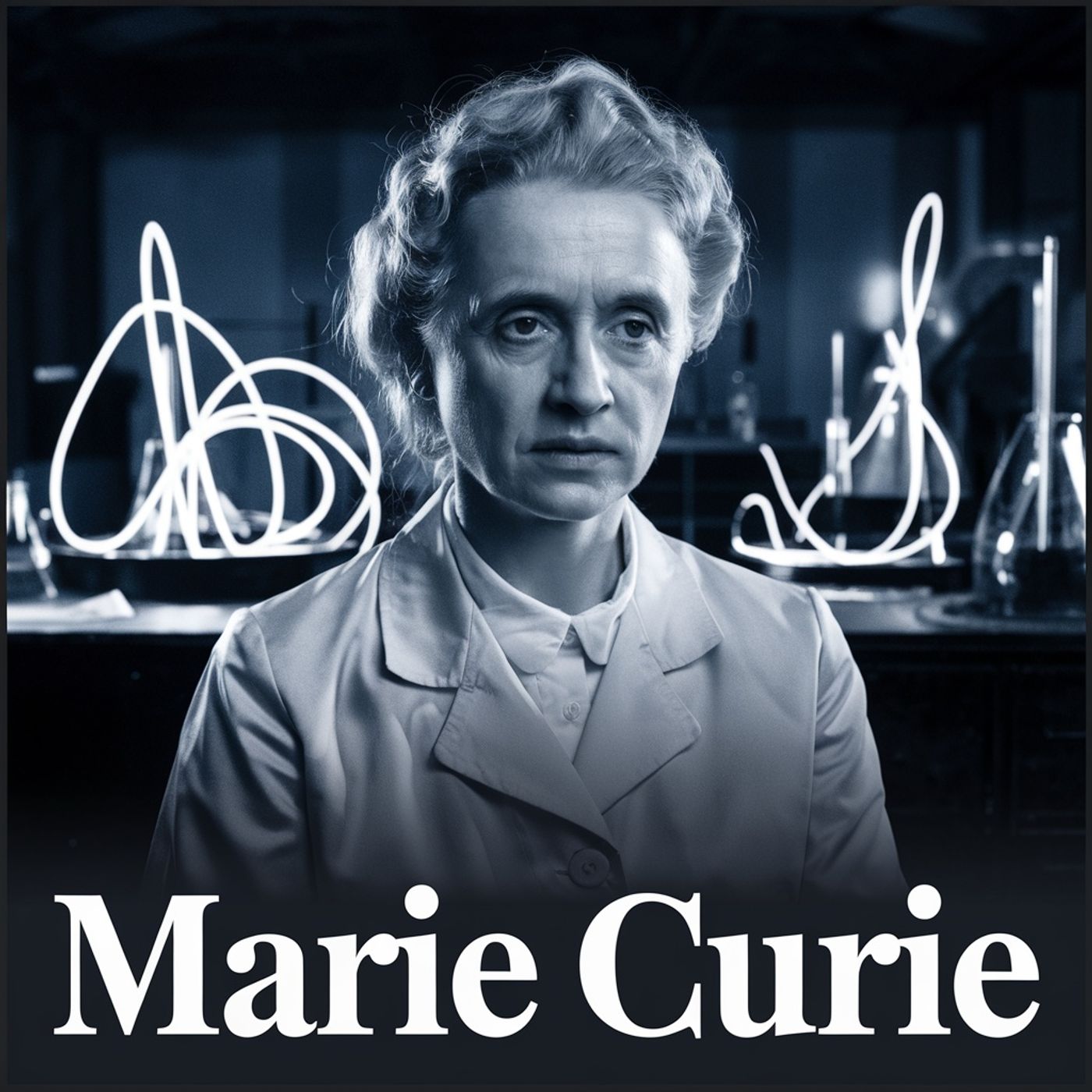
Marie Curie
by Podra Network
Two Nobel Prizes and a lifetime of barriers broken — the extraordinary life and science of Marie Curie.
-
6
Breaking Barriers: A Woman in the Boys' Club of Science
Join Dr Sarah Quinn as she explores Marie Curie's extraordinary journey through the male-dominated scientific establishment of the early 1900s. This episode examines how Maria Sklodowska transformed from a struggling Polish student in Paris to becoming the first woman Nobel Prize winner and the only person to win Nobel Prizes in two different sciences. Discover the institutional barriers, social prejudices, and personal challenges Marie faced as she revolutionized our understanding of radioactivity and nuclear chemistry. From her freezing garret as a university student to her groundbreaking research with Pierre Curie, from facing exclusion by the French Academy of Sciences to developing mobile X-ray units during World War One, Marie's story reveals the true cost of scientific pioneering for women. This episode highlights how Marie's persistence not only advanced scientific knowledge but fundamentally changed who could be considered a scientist. Perfect for listeners interested in women's history, scientific breakthroughs, gender equality, and stories of remarkable perseverance against overwhelming odds. Learn about the Nobel Prize history, early radioactivity research, women in STEM fields, and the social challenges faced by female scientists in the early twentieth century.
-
5
Element Hunter: The Quest for Polonium and Radium
Join Dr Sarah Quinn as she explores Marie Curie's groundbreaking discovery of polonium and radium, two elements that revolutionized modern science. This episode delves into the painstaking process behind isolating these radioactive elements from tons of pitchblende ore in a converted shed laboratory. Learn how Marie Curie's observation that pitchblende was more radioactive than pure uranium led to her hypothesis about unknown elements. Discover the grueling four-year process of chemical separation that resulted in the 1898 announcements of polonium - named after Marie's homeland Poland - and radium. The episode covers Marie's innovative laboratory techniques, the beautiful blue-green glow of radioactive samples, and her determination to prove these discoveries to the skeptical scientific community. Following Pierre Curie's tragic death in 1906, Marie continued working alone, eventually isolating pure radium chloride by 1910. These discoveries earned her two Nobel Prizes - the 1903 Physics Prize shared with Pierre and Henri Becquerel, and the 1911 Chemistry Prize for discovering the elements. Marie Curie remains the only person to win Nobel Prizes in two different scientific fields. The podcast explores how these discoveries transformed our understanding of atomic structure, launched the field of radiochemistry, and demonstrated that atoms could spontaneously transform. Perfect for science enthusiasts, students, and anyone interested in the history of scientific discovery and Marie Curie's remarkable legacy in chemistry and physics.
-
4
The Glowing Discovery: Unraveling Radioactivity
Explore Marie Curie's groundbreaking discovery of radioactivity in this captivating episode of the Marie Curie podcast. Join Dr Sarah Quinn as she uncovers the story behind one of science's most important breakthroughs, from Henri Becquerel's accidental discovery of uranium rays to Marie's years of backbreaking work in a freezing Paris shed. Learn how Marie coined the term 'radioactivity' and discovered two new elements - polonium and radium - through processing tons of pitchblende ore with primitive equipment. Discover the magical glow of radium that lit up their laboratory at night, and understand how Marie's meticulous scientific methods revolutionized our understanding of atomic structure. This episode examines the personal sacrifices behind the science, Marie's commitment to sharing knowledge freely with humanity, and her historic achievement as the only person to win Nobel Prizes in two different scientific disciplines. From challenging the fundamental principles of chemistry and physics to laying the groundwork for nuclear medicine and atomic theory, Marie Curie's discovery of radioactivity changed science forever. Perfect for science enthusiasts, history lovers, and anyone inspired by stories of perseverance and groundbreaking discovery.
-
3
Love, Loss, and Laboratory Partners: Marie and Pierre
Explore the remarkable love story and scientific partnership between Marie and Pierre Curie in this compelling episode of the Marie Curie podcast. Host Dr Sarah Quinn delves into how their meeting in 1894 sparked both romance and revolutionary scientific discovery. Learn about their courtship through scientific discussions, their unconventional honeymoon spent cycling and discussing physics, and their groundbreaking collaboration that led to the discovery of polonium and radium. This episode examines how their intellectual equality formed the foundation of both their marriage and their Nobel Prize-winning research into radioactivity. Discover how Marie overcame devastating personal tragedy when Pierre was killed in a street accident in 1906, becoming the first female professor at the University of Paris and going on to win an unprecedented second Nobel Prize. The story of Marie and Pierre Curie demonstrates how shared passion for discovery can create partnerships that transcend professional collaboration, combining intellectual brilliance with deep emotional connection. Their legacy continues through their daughter Irène, who also became a Nobel laureate, establishing the Curie family as one of science's greatest dynasties. Perfect for listeners interested in scientific history, inspiring partnerships, and stories of resilience in the face of loss. Join Dr Quinn for this intimate look at two of science's most influential figures.
-
2
From Warsaw to Paris: The Making of a Scientist
Explore the remarkable journey of Maria Sklodowska from her birth in Russian-controlled Warsaw in 1867 to her transformation into Marie Curie, one of Paris's most celebrated scientists. This episode chronicles her early life in Poland, where political oppression and family tragedies shaped her character, through her years as a governess funding her sister's education, to her eventual arrival at the Sorbonne in 1891. Discover how Marie overcame gender barriers, financial hardship, and social restrictions to pursue her passion for physics and mathematics. Learn about her educational background, the family pact that made her Paris education possible, and her fateful meeting with Pierre Curie. Dr Sarah Quinn examines the cultural and historical context of late 19th-century Poland and France, highlighting how Marie's determination and intellectual curiosity laid the foundation for her future groundbreaking discoveries in radioactivity. This episode provides essential background for understanding how a young Polish woman became one of history's most important scientists, setting the stage for the revolutionary research that would earn her two Nobel Prizes and change our understanding of physics and chemistry forever.
No matches for "" in this podcast's transcripts.
No topics indexed yet for this podcast.
Loading reviews...
ABOUT THIS SHOW
Two Nobel Prizes and a lifetime of barriers broken — the extraordinary life and science of Marie Curie.
HOSTED BY
Podra Network
CATEGORIES
Loading similar podcasts...
URL copied to clipboard!