
PODCAST · education
Medicine and the Healing Arts
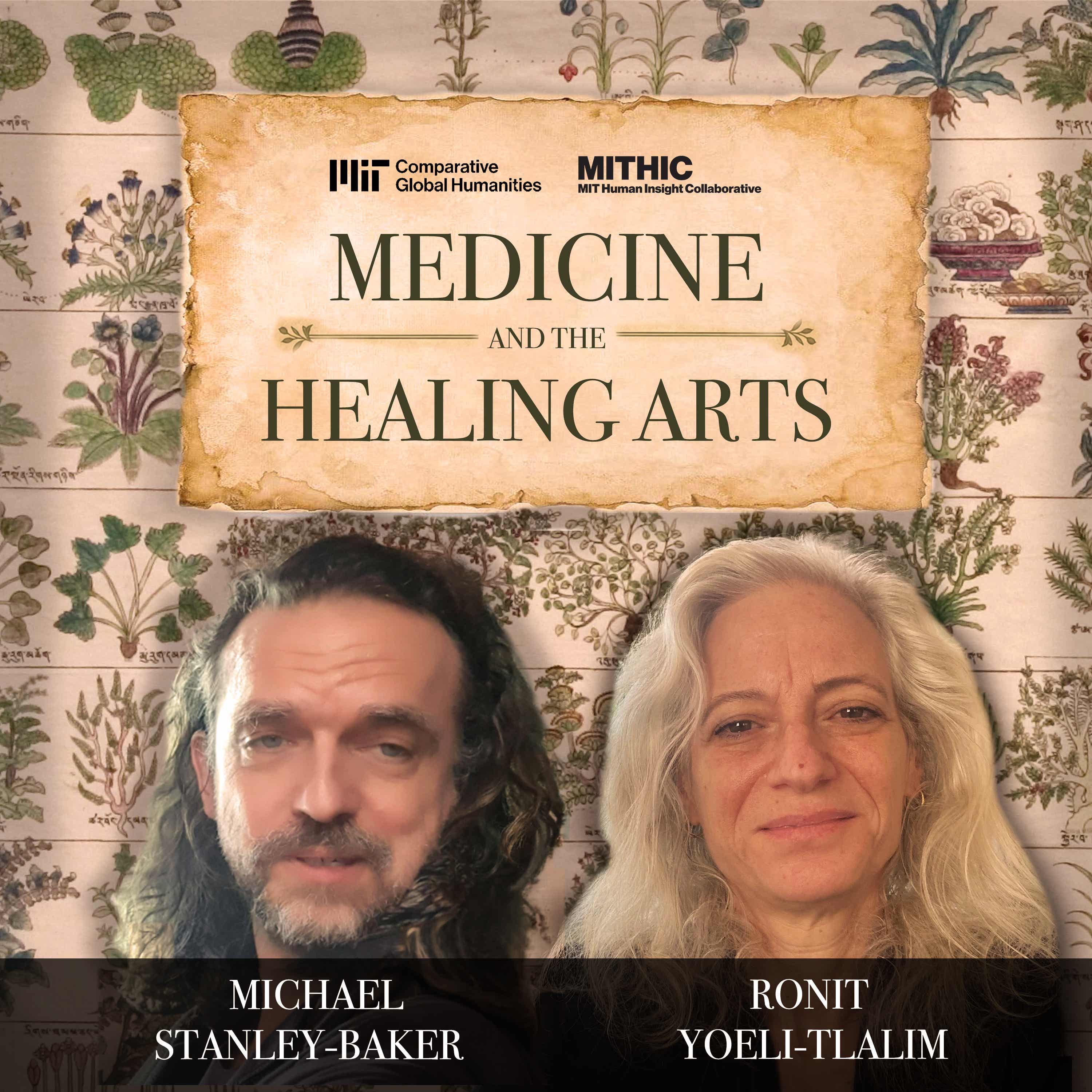
by Hosted by Michael Stanley-Baker and Ronit Yoeli-Tlalim, and presented by the MIT Global Humanities Initiative
A podcast from the MIT Global Humanities Initiative tapping into historically rooted medical knowledge as a resource to think about medical practice and public understanding of health and well-being. Hosted by Michael Stanley-Baker and Ronit Yoeli-Tlalim, the series brings together scholars and practitioners to discuss what history can teach us about the big challenges faced by medicine in the world today. www.asianmedicinezone.com
-
4
Health, Culture and the Arts: A Conversation with Dr. Nils Fietje of the WHO
In this episode of Medicine and the Healing Arts, hosts Profs. Michael Stanley-Baker and Ronit Yoeli-Tlalim speak with Dr. Nils Fietje about the role of culture, arts and the humanities in shaping health and well-being.Dr. Fietje is based at the Behavioural and Cultural Insights unit at the WHO Regional Office for Europe. With a background in English literature and the cultural history of medicine, he now works at the intersection of culture, public health and policy, asking how cultural contexts affect the ways people understand illness, care, pain, treatment and well-being.Together, Michael, Ronit and Nils explore how someone with a PhD in English literature came to work at the WHO; what culture has to do with public health; and why the humanities matter for medicine today. They discuss the growing field of arts and health, including the evidence that artistic and cultural participation can support mental health, social connection and physical well-being.The conversation also looks at social prescribing, the idea that a GP might one day prescribe a museum visit, a choir, a nature walk or another form of cultural engagement alongside more conventional forms of care. More broadly, the episode asks how culture can help us rethink what counts as evidence, what kinds of knowledge matter in medicine, and how health systems might better respond to the complexity of human experience.Subscribe to Medicine and the Healing Arts wherever you get your podcasts for thoughtful conversations with scholars and practitioners on Asian medicine, religion, history, healing and the questions they raise for health today.Links and resources:Dr. Nils Fietje profile from the Culture for Health project:https://www.cultureforhealth.eu/inspiration/how-the-arts-entered-the-who/The evidence on the role of the arts in improving health and well-being — scoping review:https://bci-hub.org/documents/what-evidence-role-arts-improving-health-and-well-being-scoping-reviewThe Lancet article on arts, health and well-being:https://www.thelancet.com/journals/lancet/article/PIIS0140-6736(15)60226-4/fulltextThe BCI Hub, an online resource centre and knowledge repository for emerging research on behavioural and cultural factors that affect health behaviour, in collaboration with the WHO Collaborating Centre at the University of Exeter:https://bci-hub.org/NHS Social prescribing (England):https://www.england.nhs.uk/personalisedcare/social-prescribing/UK Department for Culture, Media and Sport 2024 report on culture, health and wellbeing:https://www.gov.uk/guidance/culture-and-heritage-capital-research-and-outputsDaniel Moerman, Meaning, Medicine and the ‘Placebo Effect’:https://www.cambridge.org/core/books/meaning-medicine-and-the-placebo-effect/C189929ABE972E5D4C7FE32008EE8838Subscribe to be notified when future episodes are released:https://www.asianmedicinezone.com/s/medicine-and-the-healing-arts This is a public episode. If you would like to discuss this with other subscribers or get access to bonus episodes, visit www.asianmedicinezone.com
-
3
Introducing the Medicine and the Healing Arts Podcast: Ancient Medicine, Modern Questions
Welcome to the very first episode of Medicine and the Healing Arts, presented by the MIT Global Humanities Initiative.In this opening episode, hosts Profs. Michael Stanley-Baker and Ronit Yoeli-Tlalim introduce the podcast and reflect on the paths that brought them to the history of medicine and the healing arts. They share how their thinking and scholarly practice have developed over time, the questions that continue to animate their work, and some of the encounters, insights and formative moments that have shaped the way they understand medicine, healing, history and care.Across the series, Michael and Ronit will be joined by scholars, practitioners and thinkers to explore historically rooted medical knowledge as a resource for rethinking health, illness, care and well-being in the present. Together, they consider how different cultures and traditions have understood the body, healing, suffering, environment and the meaning of health.This first episode sets out the central questions of the podcast: what can ancient Asian medicine, global healing traditions and the long history of medical knowledge teach us about the challenges facing medicine today?Subscribe to Medicine and the Healing Arts wherever you get your podcasts for thoughtful conversations with scholars and practitioners on Asian medicine, religion, history, healing and the questions they raise for health today.Links and resources:* MIT Global Humanities Initiative- Medicine and the Healing Arts pillar: https://comparativeglobalhumanities.mit.edu/pillars/healing-arts-and-human-well-being/* Life of Breath project: https://lifeofbreath.webspace.durham.ac.uk/ * Asian Medicine and COVID 19 Special Issue: https://brill.com/view/journals/asme/16/1/asme.16.issue-1.xml* IASTAM: https://iastam.org/* IASTAM COVID webinars: https://iastam.org/category/webinars/* NTU and Max-Planck Center for Bio-Cultural Worlding: https://ntu.ccasingapore.org/researchs/max-planck-ntu-singapore-centre-for-biocultural-worlding/ This is a public episode. If you would like to discuss this with other subscribers or get access to bonus episodes, visit www.asianmedicinezone.com
We're indexing this podcast's transcripts for the first time — this can take a minute or two. We'll show results as soon as they're ready.
No matches for "" in this podcast's transcripts.
No topics indexed yet for this podcast.
Loading reviews...
ABOUT THIS SHOW
A podcast from the MIT Global Humanities Initiative tapping into historically rooted medical knowledge as a resource to think about medical practice and public understanding of health and well-being. Hosted by Michael Stanley-Baker and Ronit Yoeli-Tlalim, the series brings together scholars and practitioners to discuss what history can teach us about the big challenges faced by medicine in the world today. www.asianmedicinezone.com
HOSTED BY
Hosted by Michael Stanley-Baker and Ronit Yoeli-Tlalim, and presented by the MIT Global Humanities Initiative
Loading similar podcasts...
Frequently Asked Questions
How many episodes does Medicine and the Healing Arts have?
Medicine and the Healing Arts currently has 2 episodes available on PodParley. New episodes are automatically indexed when they're published to the podcast feed.
What is Medicine and the Healing Arts about?
A podcast from the MIT Global Humanities Initiative tapping into historically rooted medical knowledge as a resource to think about medical practice and public understanding of health and well-being. Hosted by Michael Stanley-Baker and Ronit Yoeli-Tlalim, the series brings together scholars and...
How often does Medicine and the Healing Arts release new episodes?
Medicine and the Healing Arts has 2 episodes. Check the episode list to see recent publication dates and frequency.
Where can I listen to Medicine and the Healing Arts?
You can listen to Medicine and the Healing Arts on PodParley by clicking any episode. We provide an embedded audio player for direct listening, and you can also subscribe via your preferred podcast app using the RSS feed.
Who hosts Medicine and the Healing Arts?
Medicine and the Healing Arts is created and hosted by Hosted by Michael Stanley-Baker and Ronit Yoeli-Tlalim, and presented by the MIT Global Humanities Initiative.
URL copied to clipboard!