
PODCAST · arts
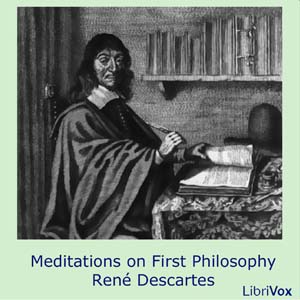
Meditations on First Philosophy by René Descartes (1596 - 1650)
by LibriVox
After several years working on a treatise putting forth his mechanistic philosophy and physics, Descartes shelved the project when his contemporary, Galileo, was charged with heresy. That work, The World, was only published after Descartes’ death. It seems that Descartes must have had this, in part at least, in mind when writing his more famous philosophical works. This is especially clear in the Meditations, not only in the obsequiousness of the Letter of Dedication, but also in the specific mode of argument, which does not seek merely to found science upon grounds acceptable to religious authority, but to specifically found a mathematical science; one which clearly privileges mathematical demonstrations even over common sense judgments based upon everyday and constant experience. His Copernicanism, put forth posthumously in The World, would require just such a defense.The Meditations are a central work of early modern philosophy, and play a crucial role in t
-
9
-
8
-
7
-
6
-
5
-
4
-
3
-
2
-
1
No matches for "" in this podcast's transcripts.
No topics indexed yet for this podcast.
Loading reviews...
ABOUT THIS SHOW
After several years working on a treatise putting forth his mechanistic philosophy and physics, Descartes shelved the project when his contemporary, Galileo, was charged with heresy. That work, The World, was only published after Descartes’ death. It seems that Descartes must have had this, in part at least, in mind when writing his more famous philosophical works. This is especially clear in the Meditations, not only in the obsequiousness of the Letter of Dedication, but also in the specific mode of argument, which does not seek merely to found science upon grounds acceptable to religious authority, but to specifically found a mathematical science; one which clearly privileges mathematical demonstrations even over common sense judgments based upon everyday and constant experience. His Copernicanism, put forth posthumously in The World, would require just such a defense.The Meditations are a central work of early modern philosophy, and play a crucial role in t
HOSTED BY
LibriVox
CATEGORIES
Loading similar podcasts...
URL copied to clipboard!