
PODCAST · business
Microsoft Insiders Podcast
by JoAnn Garbin, Dean Carignan, and Regenerous Labs
Continuing the conversation from The Insider's Guide to Innovation at Microsoft (book). Actionable insights and thought-provoking questions for forward-thinking professionals. Join our community of Insiders shaping a better future. joanngarbin.substack.com
-
13
Putting the Patterns to Work
*clip from this month’s live IOL session with our guest, Leo Chan, LEGO® SERIOUS PLAY®Last month I shared the founding story of Regenerous Labs — how a moment of clarity in a chemo chair led to a two-year exploration with trusted collaborators, and an architecture nobody predicted. Start With Who, practiced.Since then, the weekly Innovating Out Loud series has shifted. For the first three months of 2026, I was exploring ideas — building vocabulary, testing frameworks against research, finding the connective tissue between the book’s four patterns and what I’m learning as a venture builder. That exploration produced concepts like dormancy, vital signs, complementary constraint, and the factory-versus-forest metaphor for how we organize AI.Over the past month, the work changed. I stopped writing about innovation and started showing it. Three experiments went public. Each one tested the book’s frameworks in the real world. And each one taught me something the frameworks alone couldn’t.[Links to all three below]Experiment 1: Innovation CoachI built a diagnostic tool with the 77 innovation frameworks from The Insider’s Guide embedded in its architecture, powered by a stripped-down version of our behavioral intelligence engine. I ran the same problem — a real recruiting challenge the Lab is facing — through Innovation Coach and through several leading LLMs.The LLM output was genuinely useful. Competent, structured, actionable. A smart strategy.Innovation Coach did something different. It didn’t answer the question I asked. It questioned my question — then answered with an analysis that addressed what I actually needed.The difference isn’t the knowledge. It’s the perception. Innovation Coach runs on the same underlying AI models. What’s different is the architecture: multiple expert lenses at different apertures running in a diagnostic sequence before looking for answers. Diverge-Converge-Synthesize — the rhythm from the book — operationalized in software.Readers of the book will recognize what I was doing: developing in the open, the practice from the VS Code story. What gets seen gets tested. 150 people tried it. The feedback was honest: the reframe was something no general LLM produced. But the actionable output needed work.Fair. So I built the next one.Experiment 2: CANOPYCANOPY is a four-step decision intelligence journey built in a single day using Claude as my full IDE — chat to design to code to deployment. Multiple expert lenses run independently, then converge. The tool reframes your question and coaches you through creating a commissioning brief and a 90-day action plan.The architecture held. The pipeline worked.But here’s what I lost.On the Friday before the build, I sat in a design session with my partners Dan and Kent for one of the Lab’s expert products. What I built alone on Saturday over eight hours isn’t in the same league as what they produced in ninety minutes — and you wouldn’t need an expert eye to see it.Worse: privacy by design, transparent AI, confidence scoring — requirements I know matter — fell out of my head entirely while I was designing the core workflow. I bolted some back on at the end. But bolting things on after the fact undermines the whole discipline of Diverge-Converge-Synthesize. I know that better than anyone. Building alone, even with excellent tools, I could only actively hold so much.The lesson underneath the lesson: the expert building alone, even with AI that extends her capability, loses signal that the expert building with complementary collaborators wouldn’t.That’s not a failure of the tools. That’s Pattern #3 — Innovating With Everyone — proved from the inside.Experiment 3: The Data Center BlueprintFor three years I’ve had a technical and commercial blueprint for a community-scale regenerative data center. Modular, flatbed-deliverable, deployable in 90 to 120 days. AI-class compute with waste heat routed into greenhouses and district heating. Grid-interactive, community-embedded, and more economically viable over a ten-year horizon than hyperscale warehouses.Every component is commercially available. Microsoft’s own Fairwater architecture — connecting the Wisconsin and Atlanta campuses via 120,000 miles of dedicated fiber as a single distributed supercomputer — proved the networking layer works at scale. An April 2026 study showed 3 to 21 percent cost reduction in grid investment from geographically shiftable AI workloads. FERC is advancing rules to expedite interconnection for flexible loads.Everyone I walk through the blueprint says yes, obviously. Then nothing happens.Four actors are each defending structures the current system rewards. Utilities defending a capex-driven rate base. Developers defending a construction-company operating model. Communities defending themselves from extraction — reasonably, given that $156 billion in data center projects were blocked by local opposition in 2025. Capital defending a hyperscale thesis committed in 2023.Each one is rational. Each one reinforces the others. None unlocks alone. The technology isn’t the barrier. Behavior is the barrier. The line Dean and I wrote about 70 percent of transformations — it holds at infrastructure scale.I published the full blueprint as prior art and coalition invitation. Because hiding the specification is the surest way to guarantee it stays unbuilt. The behavioral lock that’s kept the obvious solution unbuilt for three years is the same lock that protects it from capture. No utility, developer, or hyperscaler will take it to market — because their internal incentive structure forbids it.The lock is the moat. And the coalition needs more minds than mine.Where the Patterns StandThree experiments. Four patterns tested.Pattern #1 — Innovating Every Day. The weekly IOL practice itself. Seventeen pieces. Saying it ugly, sharing before it’s perfect, learning in public. The vocabulary has grown from five terms to more than thirty — none existed in the book, all grew from the book’s root system.Pattern #2 — Innovating Over the Years. We’re fourteen months into the adaptive cycle. Seedling is becoming young forest. The tools are in the wild. The vocabulary is accumulating. The experiments are teaching us things we couldn’t learn any other way.Pattern #3 — Innovating With Everyone. CANOPY proved it by accident. The expert building alone drops things the team wouldn’t. The architecture holds. The principles need more eyes.Pattern #4 — Innovating More Than Technology. The data center piece is the sharpest case. Every technical component exists. The missing innovation is the integrated system, the governance model, and the coalition.The patterns hold. They’re generating new tools. And the community that uses them and pushes back on them is what makes them sharper.That’s you.Try the ToolsBoth are experiments, not products. Your data stays local. We can’t see what you do.Innovation Coach — Give it a real problem. See what it reframes that a general LLM doesn’t. www.regenerouslabs.com/innovationcoachCANOPY — Walk through a four-step decision intelligence journey with multiple expert lenses. A preloaded test case lets you experience it without bringing your own. www.regenerouslabs.com/canopyTell me what I got wrong. Help me build them better.Go deeper:📖 The Insider’s Guide to Innovation at Microsoft🎓 LinkedIn Learning course📬 Innovating Out Loud weekly series — where all of this lives between monthly updates here, including our live webcast every 4th Thursday of the Month🎤 Speaking and workshops — Dean and I bring the patterns to leadership teams and conferences. For internal events at Microsoft, reach out to Dean on Teams!AI Disclosure: This piece was created with the help of AI — specifically Claude and a team of expert personas built by Regenerous Labs. Direction, judgment, and final decisions by me. Say it ugly, build it better. Onward! This is a public episode. If you would like to discuss this with other subscribers or get access to bonus episodes, visit joanngarbin.substack.com
-
12
One Vision. Three Practices. Zero Freezing.
One Vision. Three Practices. Zero Freezing.You know you need a big vision. You’ve heard it a thousand times.And you know you need to do the work. That’s not news either.But sometimes the vision gets so big, so personal, so loaded with consequence, that you can’t look at it directly anymore.You freeze.Not dramatically. Not obviously. You just... get busy. You tinker around the edges. You call it progress. You avoid the thing you actually want because wanting it that much feels dangerous.I’ve learned to hold big visions without freezing—it took years of practice. But this week, three conversations gave me clearer language for how it actually works. Language I wish I’d had sooner.Keep listening to learn moreResources🎥 Michael Gervais webcast — Vision that’s big enough to scare you🧭 Rita McGrath — Early warning signals & strategic inflection points🎥 Innovating Out Loud with Dean Carignan — Navigating AI with practice, not panic📘 The Insider’s Guide to Innovation at Microsoft — Patterns that make innovation repeatable, scalable, and sustainable.Question for you:What’s the vision you’ve been avoiding looking at—and what signal would tell you if you’re still on course? This is a public episode. If you would like to discuss this with other subscribers or get access to bonus episodes, visit joanngarbin.substack.com
-
11
Innovating Out Loud - November 2025 Replay
Taryn Kutches and JoAnn Garbin in conversation with Dan Greenwald (CEO, White Rhino) highlighted: — The psychological decision-making journey we all move through as we make decisions. — Why emotion is the necessary, and often missing, ingredient for successful innovation.— A real-life innovation and behavior change case study from JoAnn and Dan's work at Microsoft. Follow here, on YouTube, or LinkedIn to never miss an episode. Next live webcast is on Friday, December 12th at 9 AM PT/12 PM ET. We'll be talking with Microsoft leader and JoAnn's co-author, Dean Carignan, about the massive AI transformation happening inside Microsoft. This is a public episode. If you would like to discuss this with other subscribers or get access to bonus episodes, visit joanngarbin.substack.com
-
10
Let's Talk About What's Actually Happening
If you only followed the headlines, you’d think regenerative innovation is stalling. But here’s what’s actually happening: the gap between idea and impact is closing. Not because the work got easier. Because the infrastructure to support execution is finally being built.Three things happened recently that show the difference between the narrative and the reality:How to Use External Pressure as Internal PermissionLast weekend, I wrote a LinkedIn post about local opposition to data centers and the execution gap it highlights—a post that went viral for a variety of reasons based on the comments. But the main point I was trying to make is: those communities just handed innovators inside tech companies the business justification they’ve been waiting for.When breakthrough designs sit unshipped inside organizations, it’s rarely because the solution doesn’t work. It’s because of internal inertia. Everyone from leadership to legal to finance want proof that the market demands it.External pressure creates that proof.Communities blocking datacenter projects unless they include regenerative design aren’t just protecting their interests—they’re changing the business case for internal teams who’ve been trying to ship those designs for years. Suddenly, regenerative design isn’t a “nice to have.” It’s a market requirement for project approval.This is a transferable pattern. When you’re trying to deliver breakthrough work, asking “who outside our organization has leverage over our success?” can reveal unexpected allies. Regulators. Communities. Customers. Investors. Employees.The innovation move isn’t fighting external pressure. It’s translating it into internal permission.And “external” can also be another group within your company. We demonstrated this at Microsoft with water foot-printing. When the sustainability team framed it as voluntary reporting, they couldn’t get funding. When we reframed the same work as operational waste solved through innovation, the money showed up. Same solution. Different leverage points.Where’s the external pressure in your work? And how could you translate it into the business driver for the transformation that’s already sitting on your shelf?The Opportune MomentEarlier this week, I was in London at the Thinkers50 summit and gala. Dean and I were named to the 2025 Radar List earlier this year—30 people Thinkers50 identified as shaping the future of management thinking—and then shortlisted for the Innovation Award. Huge honors! But the real fun was that I got to spend two days in a room packed with the world’s leading management thinkers, academics, and coaches. And even though this was not a sustainability audience, everyone was talking about regenerative solutions.Here are three reasons why that matters for all of you, not just the sustainability folks in this community:* Most of the value created throughout history has come from business model innovation.* Regenerative business is a business model innovation.* Andrew Winston and Paul Polman’s taking the #1 spot on the Thinkers50 list for Net Positive: How Courageous Companies Thrive by Giving More Than They Take validates regeneration as the leading management practice of our time.But as we talked about in the first section, validation isn’t enough. We need external pressure to create internal permission.Generative AI is that pressure.Think about what happened when smartphones arrived. Companies had to figure out mobile-first business models—not just add mobile features. The technology itself forced business model transformation.GenAI is doing the same thing, only bigger. It’s forcing even the companies building it (like Microsoft) to rethink their business models. You can’t bolt GenAI onto an old business model and expect it to add value.This is the opportune moment. Regenerative business models aren’t just good for people and planet. They’re the business model innovation that meets the transformation GenAI is demanding. Aiming for positive requires that we ask different questions, which the readers of The Insider’s Guide to Innovation at Microsoft know is step one in finding innovative answers.Innovating Out Loud: Where Leaders Say It Ugly and Build BetterThis brings me to something new we’re launching through Regenerous Labs.Taryn Kutches and I are starting Innovating Out Loud—a live monthly webinar series where leaders have real conversations about regenerative—scalable, repeatable, net positive—innovation. Not polished keynotes. Not safe corporate messaging. Real talk about what it actually takes to drive transformation.If you read the Visual Studio Code chapter in the book, you know how effective their “develop in the open” method has been. That’s exactly why we’re adopting it in the Lab. Learning together, iterating in public, building better by being willing to say it ugly out loud, in conversation with our community. You!Our first episode features Dan Greenwald, CEO & Chief Creative Officer at White Rhino—and the timing couldn’t be better. The datacenter story I just told you? It’s fundamentally about behavior change. You can’t innovate without behavior change. And you can’t drive behavior change without understanding decision-making.Dan has spent his career translating behavioral science into business action. He’s going to help us understand why smart organizations keep announcing new programs instead of implementing existing solutions. Why innovation theater feels safer than execution. And what it takes to shift from “we should” to “we did.”Episode 1 will be hosted live November 19th at 10:00 AM PT / 1:00 PM ET.Register HereIf you’ve ever wondered why your organization talks about innovation more than it does it—and want to learn how to change that—this conversation is for you.Why This Matters NowThese three pieces—the external pressure pattern, the Regenerative-Generative AI transformation, and Innovating Out Loud—aren’t separate stories. They’re the same story told from different angles.Transformational innovation starts with collaborations that ask different questions. The question right now isn’t “should we transform our business model?” GenAI already answered that. The question is: “what business model innovation do we build toward?”Regeneration gives you direction. External pressure gives you permission. And this community, now open for live conversations via Innovating Out Loud, gives you the support to succeed at it.See you November 19th.Onward,JoAnnRegister for Innovating Out Loud - Episode 1 Here Note: Article read by AI-JoAnn created with ElevenLabs This is a public episode. If you would like to discuss this with other subscribers or get access to bonus episodes, visit joanngarbin.substack.com
-
9
Behind the scenes: Innovating with AI
Note: The Training Course is a real offering from Regenerous Labs. If you’d like more information, reach out: [email protected] article below is an example of the powerful collaboration possible between humans and AI. In a matter of hours, I crafted it using NotebookLM, synthesizing insights from my Labs’ training documents, "The Insider's Guide to Innovation at Microsoft," and additional sources on emergent strategy, adaptive thinking, design and systems thinking, and behavior science (see source notes below). It wasn't a one-click process but a true iterative co-creation: I provided initial content and engaged in multiple rounds of questions to refine it further. NotebookLM generated the foundational draft, which I edited and exported. Then, my custom GPT (via OpenAI) refined it to align with my personal brand and voice, after which I finalized the editing and polishing.One particularly surprising feature of NotebookLM is its "Audio Deep Dive," which I used to create the 5-minute audio overview shared above. What I like about it is that it’s not just a simple reading of the article we wrote. It compliments the article and adds new insights. I was genuinely surprised.Beyond article summaries, there's a deeper innovation use case: I leveraged this audio feature to summarize several weeks of detailed research and ideas visually organized on a Miro board for another project. The resulting audio summary gave my teammates an accessible entry point—one even listened during his commute. All responded with excitement about the concept! This burst of enthusiasm was essential, exactly what the B2Me framework (Pattern #3 in the book) identifies as critical to gaining buy-in and moving towards adoption.I also hypothesize that having the concept presented by someone other than me (AI, in this case) might have amplified its impact—though that's TBD.I'm curious—how are you experimenting with AI in your own work? How might these tools shape the way we think, communicate, and innovate together? Let's discuss!Additional Sources:Peter Compo - Emergent StrategyGerd Gigerenzer - Adaptive ThinkingSystems Thinking - Integrating Design and Systems ThinkingBehavioral Scientist - Integrating Behavior Science and DesignUpwork’s 2025 Most In-Demand Skills This is a public episode. If you would like to discuss this with other subscribers or get access to bonus episodes, visit joanngarbin.substack.com
-
8
E4: Divergence in Practice
Referenced in this episode:Our LinkedIn Learning Course: * 1hr quickstart to the lessons of the book. Free for now!* Give away: Limited edition signed bonus chapter. We’ll pick 5 learners from the first 500 who complete the course AND share that they completed it on LinkedIn. Current count of learners is 380.* Course: http://bit.ly/3ZIuHhW Dean’s article on the “Divergence Dilemma”: http://bit.ly/4k7ht5EEarly Access to Regenerous Lab’s Qurious app - sign up here: https://www.regenerouslabs.com/contactNot yet an Insider? Join here: https://www.innovationatmicrosoft.com/contact This is a public episode. If you would like to discuss this with other subscribers or get access to bonus episodes, visit joanngarbin.substack.com
-
7
Paradigm Shifts Require Culture Shifts
Culture is a Verb: Learn what it means, why it matters, and how you can create transformations like Satya Nadella.Early in his tenure as CEO of Microsoft, Satya Nadella made one of his most enduring declarations. In his book Hit Refresh he wrote, "I like to think that the C in CEO stands for culture. The CEO is the curator of an organization’s culture. Anything is possible for a company when its culture is about listening, learning, and harnessing individual passions and talents to the company’s mission."At the time, it may have raised eyebrows. Culture? That sounded soft—almost off-topic—for the tech behemoth known as much for its internal competition as its products.But Satya knew better. He understood something too many leaders still miss: your culture is your innovation infrastructure. It doesn’t matter what your strategy says if your culture can’t support it. If risk is punished, learning is performative, or success is narrowly defined, even your best ideas won’t survive first contact with the org chart.That’s why at modern-day Microsoft we say Culture is a Verb. This is a public episode. If you would like to discuss this with other subscribers or get access to bonus episodes, visit joanngarbin.substack.com
-
6
What Regenerative Innovation Is—and Why It’s the Future of Work
Regenerative Innovation is the practice of creating value in ways that restore, renew, and revitalize the systems it touches—economic, social, environmental, and organizational. It’s innovation that doesn’t just sustain what exists, but actively improves it.It’s not a tradeoff. It’s a multiplier.Looking inward, regenerative innovation also refers to an innovation culture that sustains itself. It’s not just about the value created out in the world—it’s about how that value is created inside the organization.It’s not just repeatable—it’s replenishing. Innovation begets innovation. Culture becomes the fuel, not the brake.That kind of fuel—creative, collaborative, resilient—is the real work of the future. And learning how to do that regeneratively is the key to long-term success and thriving. For individuals. For teams. For companies.This article kicks off a new series on the What and How of Regenerative Innovation. Each week, we’ll explore a different dimension—from mindset and models to methods and measurement.Follow along as we map the path from extractive to generative growth—one post, one practice at a time.If you are enjoying Microsoft Insiders, please share it with your friends. This is a public episode. If you would like to discuss this with other subscribers or get access to bonus episodes, visit joanngarbin.substack.com
-
5
E3: You Asked, We Answered - Let's Discuss!
Way back on February 18th, at the Microsoft Garage NYC, 100 friends new and old gathered to help us launch The Insider’s Guide to Innovation at Microsoft. It’s been a mad dash since, full of interesting conversations (check out our media page to see/hear our conversations with an extraordinary list of hosts). We’ve learned so much and found some interesting new angles on the book, our work, even ourselves!But before any of that, our party-guests submitted these seriously thoughtful questions.At long last, here are our answers. Let these be starting points for conversation! We’d love to hear from you in the comments. Agree, Disagree, Expand - Say it Ugly! The more we share, the more we can learn together.Episode Guide:* Intro (0:00-1:30)* Q1 - How should top-league universities think about maximizing impact/value from their intellectual capital going forward? (1:40-)* Q2 - You write “Innovation is a whole-company effort” but it also seems you innovated networks and even mental models. What lessons can you pass on about that? (4:20-)* Q3 - What have been the motivations for Microsoft to invest in innovation from sustainability? How have the motivations or business drivers changed over time? How does Microsoft anticipate the current administration’s priorities will impact innovation in the coming 4 years? (9:43-)* Q4 - How do you see AI impacting the way we innovate? (14:58-)* Q5 - How can leaders innovate, embrace dilemmas, and implement the tactics of the book in a future that may look nothing like the past? (22:32-)* Q6 - What guardrails to fast change have hindered innovation the most? (26:44-)* Q7 - What did you most enjoy about the collaboration while writing the book? (30:51-)* Q8 - How do you get other people to believe in your innovation? How did your careers set up this book? (36:41-)* Q9 - How does Microsoft decide to kill a project? (44:50-)* Q10 - Could you talk more about how you see sustainability questions integrated into the innovation process? (48:41-)* Q11 - Who has inspired your creativity & innovation the most? (56:50-)* Q12 - Could you please share your learnings on the incentives to apply or that restrict innovation? (1:00:10-)* Outro - (1:09:25-1:10:30) This is a public episode. If you would like to discuss this with other subscribers or get access to bonus episodes, visit joanngarbin.substack.com
-
4
Reid Hoffman’s "Superagency" + "The Insider's Guide to Innovation at Microsoft"
In Superagency, Reid Hoffman shares his vision of a future where AI stretches what’s possible—and makes the case that how we show up in that world matters more than ever.We agree.Are you a Doomer, Gloomer, Zoomer… or Bloomer?What skills should [people] build now to become more innovative in their careers?Two books. One future.Superagency gives us the vision, the what and why.The Insider’s Guide to Innovation @ Microsoft gives you the how.Together, they can shape the next wave of T-shaped Bloomers—lifelong learners, creative and intentional builders, and bold collaborators in an AI-powered world. This is a public episode. If you would like to discuss this with other subscribers or get access to bonus episodes, visit joanngarbin.substack.com
-
3
Before You Build, Ask: What's the Story You Want to Tell?
At the recent GeekWire event celebrating Microsoft’s 50th, Dean and I had the chance to hear Nathan Myhrvold, CTO of early Microsoft, speak. During his fireside chat, he said something that’s really struck a chord in me:“There’s a class of human ideas that people just love having, and yet they have a history of always being wrong... The notion that progress is going to destroy us has come up over and over again throughout history.”He gave the example of the Luddites in England—an old fear with a familiar ring.That line hit because we’ve seen it up close. Every innovation brings with it some version of this anxiety. Not because the change is bad—but because it’s unfamiliar. And when people don’t understand something, they fear it. That’s human.Which is why the work of the innovator isn’t just to build the future. It’s to narrate it. This is a public episode. If you would like to discuss this with other subscribers or get access to bonus episodes, visit joanngarbin.substack.com
-
2
E2: Say it Ugly: Myths, Dilemmas, and Fools
This week, Dean and JoAnn share their biggest takeaways from the first month of the book launch and answer questions from The Garage NYC launch party on February 18. From the myths of innovation to the power of Say it Ugly, tune in for fresh insights and real talk. Check your Insider inbox for the full story—and if you’re not yet an Insider, sign up at www.innovationatmicrosoft.com or subscribe here on Substack.Thanks for reading Microsoft Insiders! Subscribe for free to be the first to receive new stories, insights, and access to tools as they are released This is a public episode. If you would like to discuss this with other subscribers or get access to bonus episodes, visit joanngarbin.substack.com
-
1
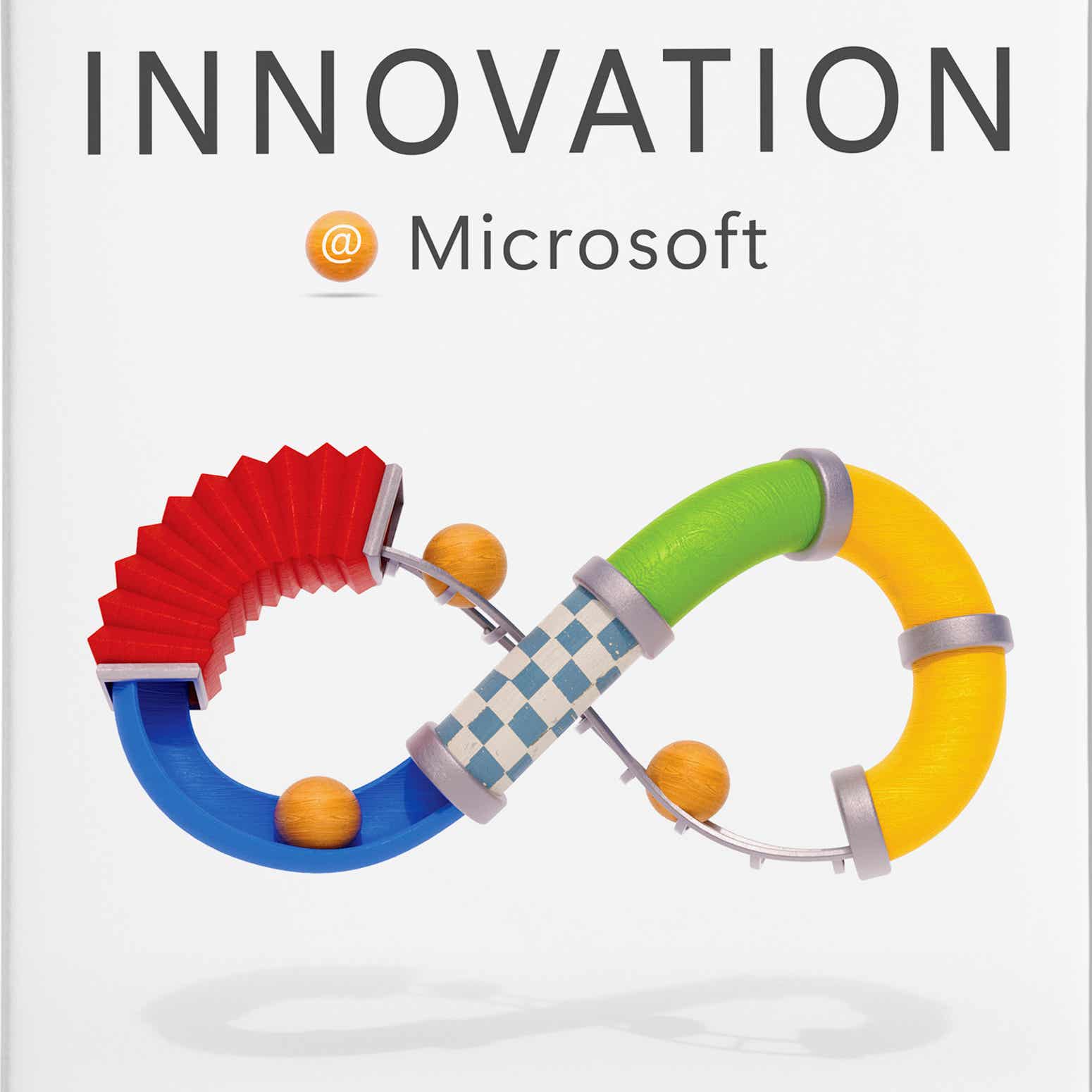
Innovation is Loopy - Narrated
One of the top questions we get about the book? The cover. It’s more than just a striking design—it captures a fundamental truth: Innovation is loopy.Curious what that means? Check out our latest Insider article to find out. It's a 7.5 min summary of Pattern #2 from the book: Innovating Over the Years - Achieving Continuous, Adaptive Innovation.Thanks for listening! Subscribe for free to join the Insiders community. This is a public episode. If you would like to discuss this with other subscribers or get access to bonus episodes, visit joanngarbin.substack.com
We're indexing this podcast's transcripts for the first time — this can take a minute or two. We'll show results as soon as they're ready.
No matches for "" in this podcast's transcripts.
No topics indexed yet for this podcast.
Loading reviews...
ABOUT THIS SHOW
Continuing the conversation from The Insider's Guide to Innovation at Microsoft (book). Actionable insights and thought-provoking questions for forward-thinking professionals. Join our community of Insiders shaping a better future. joanngarbin.substack.com
HOSTED BY
JoAnn Garbin, Dean Carignan, and Regenerous Labs
CATEGORIES
Loading similar podcasts...
Frequently Asked Questions
How many episodes does Microsoft Insiders Podcast have?
Microsoft Insiders Podcast currently has 13 episodes available on PodParley. New episodes are automatically indexed when they're published to the podcast feed.
What is Microsoft Insiders Podcast about?
Continuing the conversation from The Insider's Guide to Innovation at Microsoft (book). Actionable insights and thought-provoking questions for forward-thinking professionals. Join our community of Insiders shaping a better future. joanngarbin.substack.com
How often does Microsoft Insiders Podcast release new episodes?
Microsoft Insiders Podcast has 13 episodes. Check the episode list to see recent publication dates and frequency.
Where can I listen to Microsoft Insiders Podcast?
You can listen to Microsoft Insiders Podcast on PodParley by clicking any episode. We provide an embedded audio player for direct listening, and you can also subscribe via your preferred podcast app using the RSS feed.
Who hosts Microsoft Insiders Podcast?
Microsoft Insiders Podcast is created and hosted by JoAnn Garbin, Dean Carignan, and Regenerous Labs.
URL copied to clipboard!