
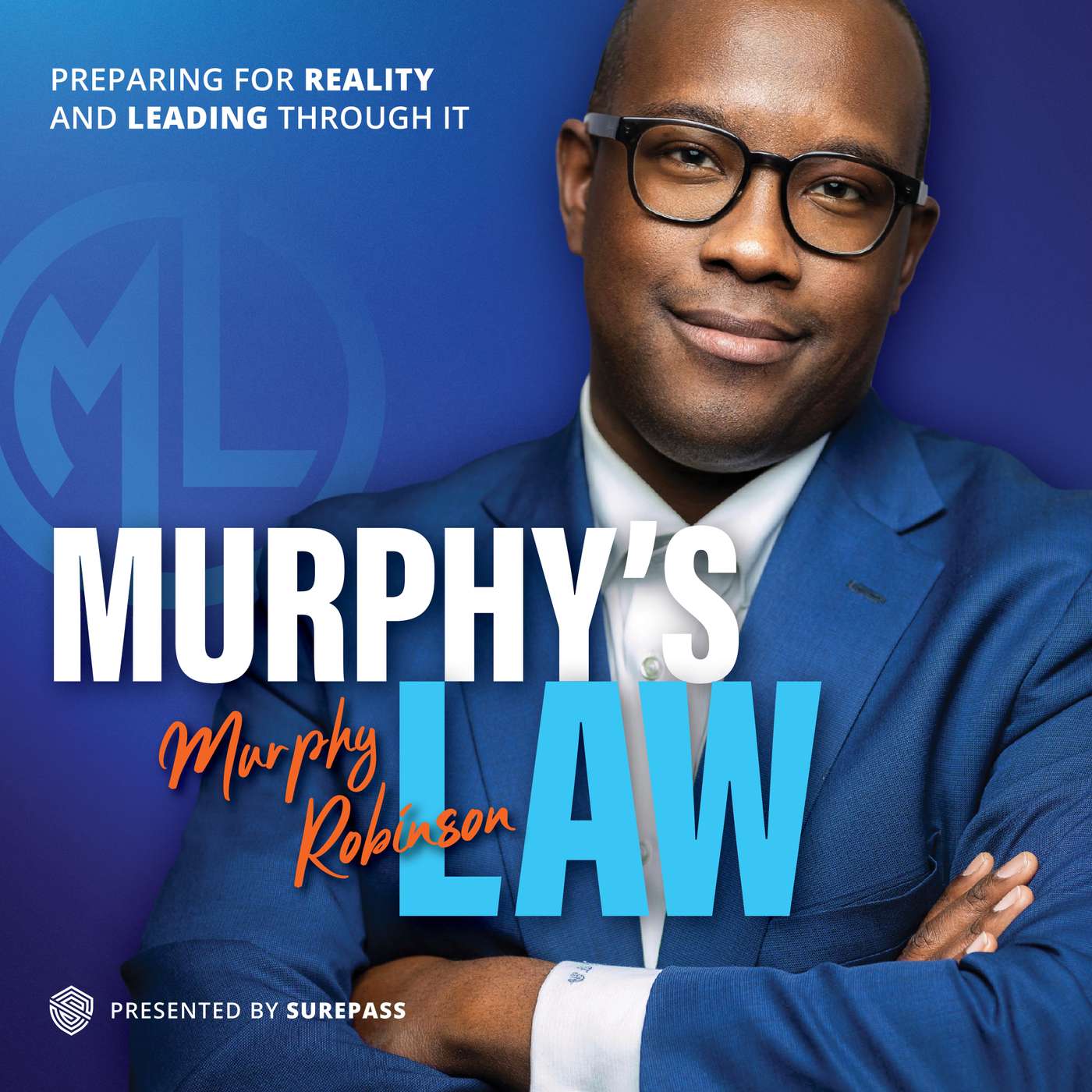
PODCAST · education
Murphy's Law
by Murphy Robinson
In high-stakes environments, leaders can’t afford illusions—they must face reality head-on andguide their teams through it. Murphy’s Law explores how public safety and security leadersprepare for the unpredictable and lead with clarity when every decision counts.
-
20
They Protect Colorado. Almost Nobody Knows They Exist.
In this episode of Murphy's Law, host Murphy Robinson sits down with Colonel Ronald Abramson — Harvard-educated lawyer, renewable energy entrepreneur, descendant of Napoleon, and the man who built one of Colorado's most unique and quietly powerful law enforcement agencies entirely from scratch. This is the story of the Colorado Rangers — and the vision it took to bring them back.Most people have never heard of the Colorado Rangers. But they should. Born in 1861 as Colorado's original statewide law enforcement agency, defunded after a dramatic miners' strike shootout in the 1920s, resurrected during World War II as an all-volunteer auxiliary, and completely reimagined as a full government reserve police agency in 2018 — the Rangers are now one of the top 10 largest law enforcement agencies in Colorado. And they don't get paid a single dollar.Colonel Abramson didn't set out to build a government. He wanted to help kids cross the street after school. But when he walked into the Colorado Mounted Rangers as a lawyer in 2010 and saw the liability, the gaps, and the potential — he spent the next eight years lobbying the legislature, rewriting the rules, and building something that had never existed before. Today the Colorado Rangers serve nearly three dozen agencies across the state — from one-person marshal offices to the Denver Police Department — providing expert law enforcement planning, surge capacity, and community presence that most departments simply couldn't afford on their own.Murphy and Colonel Abramson unpack what it takes to build trust in a government nobody asked for, why accountability makes better officers not fewer, and why the Colorado Rangers might just be the model for the future of American policing.Key Themes & TakeawaysBuilding a Government From Zero In 2018 Colonel Abramson stood up a brand new government agency with $800,000 from the legislature and a vision nobody else could see. Eight years and 250 trained police officers later the Colorado Rangers are closing in on the top 10 largest law enforcement agencies in Colorado. This is what institutional courage looks like.The Best Kept Secret in Colorado Law Enforcement Most people don't know the Rangers exist. The agencies that use them can't imagine operating without them. From Broncos games to Taylor Swift concerts to small town departments with three officers — the Rangers show up when nobody else can.Nobody Gets Paid. Nobody Complains. Every Ranger — from the street officer to the colonel himself — serves without a paycheck. Murphy unpacks why that model actually attracts higher quality people and what it says about the power of servant leadership.Doctors, Lawyers, Pilots and Preachers With Badges The average Colorado Ranger is in their mid-forties with a career, a life, and a reason to serve. Three medical doctors. Airline pilots. An emergency room doctor. A Harvard-educated lawyer running the whole thing. This isn't your average police reserve.Zero Traffic Deaths. Three Years Running. A major Colorado bike race had a traffic death every single year for over a decade — until the Rangers took over planning operations. Three years in a row with zero fatalities. That's what expertise deployed with purpose looks like.SurePass and the Future of Verified Authority The Colorado Rangers were one of the first agencies in the country to implement SurePass — and Colonel Abramson explains exactly why a statewide agency that deploys officers everywhere needs verified identity technology more than almost anyone.Accountability Over Immunity One of the most surprising moments in the episode. Colonel Abramson was one of the only chiefs in Colorado who publicly supported the legislation that removed full immunity from police officers. Find out why he believes higher accountability makes better officers — not fewer.Who This Episode Is ForLaw enforcement officers and command staffAnyone interested in reserve policing and volunteer serviceGovernment leaders and legislatorsCommunity members who want to understand how policing actually worksBusiness leaders interested in building organizations from scratchAnyone with a servant's heart looking for a way to give backColorado residents who want to know who's keeping their events safeLeaders who believe accountability and excellence go hand in handConnect With the Show Murphy's Law is presented by SurePass — Confidence in every ID. Stay tuned for weekly conversations with leaders across public safety, justice, government, faith, and high-stakes leadership spaces.Follow SurePass on Social LinkedIn | Facebook
-
19
From A Backyard Tragedy To Leading Colorado's Finest
In this episode of Murphy's Law, host Murphy Robinson sits down with one of his closest friends and most trusted colleagues in law enforcement — Colorado State Patrol Lieutenant Colonel Brandon Means. This isn't just a conversation about policing. It's about purpose, faith, brotherhood, and what it truly means to hold the line when everything around you is falling apart.Brandon Means didn't choose law enforcement because it sounded good. He chose it at nine years old when a car flew off a highway and landed on top of his nine-month-old brother's playpen. In that moment of absolute terror and helplessness, he heard sirens in the distance — and decided that someday he wanted to be that sound for someone else. From that backyard in Lakewood, to the Marine Corps, to 22 years with the Colorado State Patrol, that calling has never wavered.But this episode goes far beyond origin stories. Murphy and Brandon take you inside some of the most chaotic and consequential moments in Colorado law enforcement history — the 2020 George Floyd protests in Denver, where troopers were shot at on day one, pipe bombs were thrown at police memorials, and over a million dollars of damage was done to the Capitol in a single night. Murphy reveals for the first time publicly that he wept in his office watching his officers get hurt — and Brandon shares what it felt like to see that viral press conference and feel like a leader had finally stood up.This is a conversation about what real leadership looks like when the cameras are rolling, the bullets are flying, and nobody has a playbook for what comes next.Key Themes & TakeawaysThe Nine Year Old Who Heard Sirens Brandon Means didn't find law enforcement — law enforcement found him at age nine when a car crashed into his backyard and landed on his baby brother's playpen. The moment he heard sirens coming, he knew exactly what he wanted to do with his life.The Best Recruiters Wear the Uniform Murphy and Brandon make the most compelling case yet for why law enforcement recruitment starts not with job fairs and sign-on bonuses — but with one person in a uniform investing in one kid. Plant the seed early and watch what grows.Running Toward the Gunfire Day one of the George Floyd protests in Denver. Shots fired at the Capitol. Concrete falling. And a sea of blue trooper uniforms sprinting toward the danger while everyone else hit the ground. Brandon was there. This is that story.The Night Murphy Wept For the first time publicly, Murphy Robinson reveals that in the middle of the 2020 protests — watching his officers get hurt, coordinating between the mayor, the governor, and the White House — he sat in his office and cried. Not out of weakness. Out of love for his people and his city.SurePass Born From Chaos It was during the 2020 protests that Murphy first asked his police chief how they were verifying the officers on scene — and got the answer: a written log. That moment planted the seed for SurePass. Brandon explains how the Colorado State Patrol now uses it at the Capitol today.Hold The Line Brandon's message to every person considering law enforcement right now — in an era where society is more critical of the badge than ever before. If you're willing to show up anyway, God bless you. We need you. Hold the line.Who This Episode Is ForLaw enforcement officers at every rankPublic safety and government leadersAnyone who lived through or wants to understand 2020Faith-driven leaders navigating impossible decisionsYoung people considering a career in serviceParents, mentors, and coaches investing in the next generationAnyone who believes leadership is forged in the hardest momentsCitizens who want to understand what their officers actually go throughConnect With the Show Murphy's Law is presented by SurePass — Confidence in every ID. Stay tuned for weekly conversations with leaders across public safety, justice, government, faith, and high-stakes leadership spaces.Follow SurePass on Social LinkedIn | Facebook
-
18
The Reporter Powerful People Lost Sleep Over
In this episode of Murphy's Law, host Murphy Robinson flips the script — and turns the tables on one of the most feared investigative reporters in Colorado history. Tony Kovaleski spent decades holding the powerful accountable, winning Emmy after Emmy, and showing up — whether you called him back or not. Today, he's in the hot seat.Tony Kovaleski is a legend in local news. Over a 40-plus year career, he changed laws, exposed corruption, forced resignations, and showed up at Pebble Beach when a governor-appointed board thought nobody was watching. A superintendent recently walked out the back door of a meeting to avoid his questions — and 15 days later resigned his $340,000 a year job. That's the Tony Kovaleski effect.But this episode isn't just about war stories. It's about what investigative journalism and public leadership actually have in common — accountability, trust, relationship building, and the courage to own the truth even when it's hard. Murphy and Tony unpack the real reason some leaders survive media scrutiny and others don't, why the erosion of media trust is one of the most dangerous things happening in America right now, and what AI is doing to a world that's already struggling to tell fact from fiction.This is a conversation between two people who've been on opposite sides of the camera — and found out they were fighting for the same thing all along.Key Themes & TakeawaysOption A or Option B — You Choose Tony's famous two-option system: sit down for a professional interview on your terms, or get found in public on his. It's not ambush journalism if you were warned. Murphy breaks down why leaders who choose option A almost always come out ahead.The Murphy Robinson School of Media Relations Before a single question was asked, Tony already respected Murphy — because Murphy never ran, never hid, and never lied. Find out the exact philosophy Murphy used to turn every tough interview into a trust-building moment instead of a crisis.The Superintendent Who Walked Out the Back Door Dozens of insiders. Weeks of texts and emails. One school superintendent who grabbed his backpack and disappeared — on camera. Fifteen days later, he resigned a $340,000 a year job. This is what happens when you choose option B.The Pebble Beach Moment A governor-appointed board. A secret golf trip. A $180,000 bonus. And Tony Kovaleski standing on the 18th hole under the famous tree ready to ask questions. One of the most legendary ambush — sorry, option B — moments in Colorado journalism history.Body Cams, Cell Phones & The Death of He Said She Said Murphy and Tony align on one of the most important shifts in public accountability — the rise of video evidence. From body cams to cell phones, the world has changed. And mostly for the better.AI & The Trust Crisis in Media One of the most urgent conversations in the episode. When every video could be fake and every headline could be generated, how do credible journalists earn and keep trust? Tony makes the case that local, verified media has never mattered more.What Journalism Looks Like in 30 Years Tony's daughter is already a senior investigative reporter. His grandchildren are growing up in a world where information is instantaneous. Where does it all go? Tony's answer is equal parts hopeful and honest.Who This Episode Is ForJournalists, reporters, and media professionalsPublic leaders and government officials navigating media scrutinyCommunications and PR professionalsAnyone who has ever faced a tough interview or press inquiryLeaders who want to understand accountability from both sidesDemocracy advocates and First Amendment believersAnyone who thinks media and government have to be enemiesCurious minds who love a great war storyConnect With the Show Murphy's Law is presented by SurePass — Confidence in every ID. Stay tuned for weekly conversations with leaders across public safety, justice, government, faith, and high-stakes leadership spaces.Follow SurePass on Social LinkedIn | Facebook
-
17
They Got In With a Fake Badge. And Nobody Stopped Them.
In this episode of Murphy's Law, host Murphy Robinson goes solo — and pulls back the curtain on one of the most dangerous and overlooked vulnerabilities in American security today. It doesn't matter if you're at a Taylor Swift concert, a presidential event, a wildfire evacuation zone, or a hospital emergency room. If someone walks in with purpose and a convincing badge, chances are — they're getting in.And that is a problem that has gone unaddressed for far too long.From a man who impersonated a security guard to get onto Taylor Swift's concert floor, to a suspended police officer who allegedly walked into a presidential event in full gear claiming to be on Donald Trump's advance detail, to two people from Oregon who drove a fire truck into an active wildfire evacuation zone posing as firefighters — Murphy breaks down real, documented cases of credential impersonation that expose a gaping hole in how America verifies authority.This isn't a hypothetical. This isn't a what-if. This is happening right now, at the biggest events, in the most secure venues, at the most critical moments — and the person at the front line tasked with stopping it is often the lowest-paid, least-equipped person in the building.That's why Murphy built SurePass. And this episode is the most compelling case yet for why verified authority isn't just a nice idea — it's a national security necessity.Key Themes & TakeawaysThe Badge Flash ProblemFor millennia, one of the most critical layers of security has been almost completely ignored — what happens when someone bypasses the checkpoint entirely. Murphy breaks down exactly how and why this keeps happening across the country.Taylor Swift, Trump & A Fire TruckThree real, documented cases of credential impersonation at major events and emergencies — and what each one reveals about the systemic vulnerability hiding in plain sight at every venue in America.The Self-Deployment DangerWhen chaos hits — a wildfire, a school shooting, a mass casualty event — well-meaning but unverified personnel flood the scene. Murphy explains why self-deployment without verified authority doesn't just fail to help. It can actively make things worse.The Fake EMT ProblemA man near NC State falsely claimed to be an off-duty EMT and intervened in the care of an unconscious person — even after real responders arrived. If there was a simple way to verify his authority in real time, it never would have gotten that far.Why the Low-Level Security Guard Shouldn't Have to DecideThe most powerful argument in the episode. Murphy makes the case that the burden of verifying authority should never rest on the shoulders of the least equipped person at the checkpoint. Technology should do that work.Why Murphy Built SurePassThe personal story behind why Murphy Robinson — former Public Safety Director, Deputy Mayor, and 19-year law enforcement veteran — decided the only way to fix this problem was to build the solution himself.Who This Episode Is ForLaw enforcement officers and public safety leadersEvent security and venue operations professionalsHospital and school security administratorsGovernment officials and elected leadersAnyone responsible for credentialing and access controlFirst responders and emergency management professionalsBusiness leaders invested in workplace and public safetyAnyone who has ever wondered how someone just walks inConnect With the ShowMurphy's Law is presented by SurePass — Confidence in every ID. Stay tuned for weekly conversations with leaders across public safety, justice, government, faith, and high-stakes leadership spaces.Follow SurePass on SocialLinkedIn | Facebook
-
16
One Sheriff. One Rule. ALWAYS Say Yes.
In this episode of Murphy's Law, host Murphy Robinson sits down with Arapahoe County Sheriff Tyler Brown — one of Colorado's youngest ever elected sheriffs, leader of over 800 personnel, and one of the most forward-thinking law enforcement executives in the country — for a conversation about community trust, adaptive leadership, and what it really means to serve a county of 700,000 people that's headed toward a million.Sheriff Brown didn't take the traditional path. He chased college baseball across the country, earned a degree in political science, nearly went to law school, almost sold real estate, and learned to fly airplanes — before deciding that the only job that married his love of community service and people was the one that required him to earn it every four years at the ballot box. He lost the first time. He came back. He won. And now, almost eight years later, he's running for his third and final term with a department that reflects exactly who he is — humble, hungry, and built around the word yes.Together, Murphy and Sheriff Brown unpack what it means to lead a massive county sheriff's office in an era where trust in law enforcement is being questioned at every level. The conversation moves beyond patrol cars and 911 calls into deeper questions of community engagement, technology adoption, elected versus appointed leadership, and the powerful but simple philosophy that has defined Sheriff Brown's tenure: this isn't my sheriff's office — it's ours.This episode reframes law enforcement leadership not as authority alone, but as a long-term community trust responsibility — one that requires transparency, innovation, compassion, accountability, and the courage to show up in places law enforcement has traditionally been afraid to go.Key Themes & TakeawaysThe Yes PhilosophySheriff Brown built his entire command culture around one word: yes. Yes to new technology. Yes to surrounding agencies needing help. Yes to a deputy who wanted to bring therapy dogs into schools. Find out why defaulting to yes — until it has to be a no — is one of the most powerful leadership decisions he ever made.Would You Let Your Kids Work Here?One of the most honest moments in the episode. Sheriff Brown flipped the script on the old law enforcement mindset of "I don't want my kids doing this job" — and decided instead to build a department he'd be proud to have his own daughters work in. That shift changed everything.Elected vs. Appointed: The Difference Nobody Talks AboutMurphy and Sheriff Brown break down one of the most misunderstood dynamics in public safety — the fundamental difference between a sheriff who answers to every voter in the county and a police chief who answers to a city manager. The accountability is different. The pressure is different. And the community connection is everything.Trust After George FloydWhen Centennial pushed back and said they didn't know how Arapahoe County policed their city, Sheriff Brown didn't get defensive. He hit the road. Citizens academies, open houses, community roadshows — and a commitment to going to the community instead of waiting for them to come to him.Therapy Dogs, Technology & The Future of PolicingFrom six therapy dogs accompanying school resource officers to SurePass verification technology being used at the Colorado State Capitol — Sheriff Brown is betting on innovation to build trust and keep his people safe. And he's winning.Verifying the BadgeOne of the most important conversations in the episode. In a world where anyone can print a credential at home, how do you actually know the person standing in front of you is who they say they are? Sheriff Brown breaks down why verified identity technology isn't just convenient — it's critical.Who This Episode Is ForLaw enforcement officers and sheriff's office personnelElected officials and public safety leadersCommunity advocates and neighborhood organizersTechnology leaders working in public safetyAnyone who wants to understand how modern sheriffs operateParents raising kids who want to serve their communitiesLeaders who believe saying yes opens more doors than saying noAnyone invested in the future of trusted, transparent law enforcementConnect With the ShowMurphy's Law is presented by SurePass — Confidence in every ID. Stay tuned for weekly conversations with leaders across public safety, justice, government, faith, and high-stakes leadership spaces.Follow SurePass on SocialLinkedIn | Facebook
-
15
War Story: The Attack Nobody Heard About
In this episode of Murphy's Law, host Murphy Robinson goes solo — and gets personal. It's War Story Time, and the story he's telling today has never fully been told until now.It's 2021. Denver is hosting the MLB All-Star Game — the first major national event after COVID, a symbolic moment for an entire country desperate to return to normal life. Murphy Robinson is the Public Safety Director and Deputy Mayor of Denver, responsible for the safety of thousands of people flooding into the city for one of the biggest events in recent memory.And then the call comes in.A hotel maid. A room overlooking Coors Field. More firearms than anyone should ever find in a hotel room. And a group of people with no good reason to be there.What happened next — the SWAT response, the arrests, the meeting with the MLB Commissioner, the President of the United States — never made national headlines. Because Murphy and his team made sure it didn't have to. They stopped it before it started. And then they made one of the hardest calls in leadership: knowing when to stay quiet so the city could keep moving forward.This episode is a masterclass in what real public safety leadership looks like — not the press conferences and headlines, but the split-second decisions, the community trust that made it possible, and the quiet courage it takes to protect people without ever letting them know how close it got.Key Themes & TakeawaysThe Threat Nobody Saw Coming It wasn't a foreign operative or a known suspect. It was a small group of bad actors hiding in plain sight — and the only thing standing between them and a catastrophic attack was a hotel maid who trusted her instincts and made a call.Community Trust as a Security Strategy Before a single officer was deployed, Murphy and his team spent weeks building relationships with hotels, restaurants, and venues — telling them their eyes and ears mattered. That investment saved lives.When to Be Loud and When to Be Quiet One of the most underrated leadership skills in crisis management is knowing when NOT to speak. Murphy breaks down why keeping this story quiet was just as important as stopping the threat itself.The Weight of the Room Murphy, the MLB Commissioner, the FBI's special agent in charge, the Mayor of Denver — all in one room, all making a decision that would affect thousands of people. This is what leadership under pressure actually looks like.Nothing Happened — And That Was the Win In public safety, the greatest victories are the ones nobody hears about. Murphy reframes what success looks like when your job is to make sure normal life continues uninterrupted.Who This Episode Is ForPublic safety and law enforcement leadersGovernment officials and city managersEvent security and operations professionalsCommunity leaders and neighborhood advocatesAnyone who believes prevention is more powerful than responseLeaders navigating high stakes decisions under pressureAnyone who wants an inside look at what really happens behind the scenesConnect With the Show Murphy's Law is presented by SurePass — Confidence in every ID. Stay tuned for weekly conversations with leaders across public safety, justice, government, faith, and high-stakes leadership spaces.Follow SurePass on Social LinkedIn | Facebook
-
14
Columbine. Aurora. Boulder. One Chief's Story
In this episode of Murphy's Law, host Murphy Robinson sits down with Boulder Police Chief Stephen Redfern — a 25-year law enforcement veteran, former Aurora PD Division Chief of Operations, and one of Colorado's most tested crisis leaders — for a conversation that cuts straight to the heart of what it means to lead when everything is on the line.From dispatching during Columbine at 18 years old, to being a sergeant on the ground during the Aurora theater shooting — the largest mass shooting in U.S. history at the time — to navigating the King Soopers tragedy and a terrorist attack on Pearl Street Mall, Chief Redfern has led through moments that most people only read about in headlines. And through all of it, he's never stopped showing up for his people and his community.Together, Murphy and Chief Redfern unpack what it truly means to lead a police department in an era of eroding public trust, political polarization, and rapidly evolving technology. The conversation moves beyond badge and rank into deeper questions of accountability, community relationship-building, media pressure, and the quiet but powerful leadership philosophy that has defined Redfern's career: take care of your people.This episode reframes policing not as enforcement alone, but as a long-term community trust responsibility — one that requires transparency, moral courage, accessibility, and the wisdom to know that the sergeant in the briefing room often holds the answers the chief is looking for.Key Themes & TakeawaysThe Weight of the Number One SeatChief Redfern breaks down the moment leadership truly hit him — not as chief, but as a district commander in Aurora — and what it felt like to realize that his decisions carried real, lasting consequences for real people.Wartime vs. Peacetime LeadershipMurphy's framework of wartime and peacetime chiefs comes alive in this conversation. Chief Redfern is a rare hybrid — someone who thrives in peacetime but is built for chaos. His career proves it.Leading Through the UnthinkableFrom Columbine to the Aurora theater shooting to the Pearl Street terrorist attack, Chief Redfern shares the raw, unfiltered account of what it's like to make decisions in real time when the world is watching and lives are on the line.The Trust Crisis in PolicingA frank conversation on why the benefit of the doubt that once came naturally to law enforcement has quietly eroded — and what chiefs like Redfern are doing every single day to earn it back, one relationship at a time.The Sergeant Is the Most Important RoleBoth Murphy and Chief Redfern agree — the sergeant is the heartbeat of any police department. Find out why accessing your mid-managers isn't just good leadership, it's the difference between a thriving department and a disconnected one.The simplest and most powerful piece of advice Chief Redfern would leave for the next chief. Not strategy. Not technology. People first — always.Who This Episode Is ForLaw enforcement officers and command staffPublic safety and government leadersCommunity advocates and trust buildersAnyone navigating leadership during crisisCitizens who want to understand policing from the insideLeaders who believe accountability and compassion belong togetherAnyone invested in the future of safe, trusted communitiesConnect With the ShowMurphy's Law is presented by SurePass — Confidence in every ID. Stay tuned for weekly conversations with leaders across public safety, justice, government, faith, and high-stakes leadership spaces.Follow SurePass on SocialLinkedIn | Facebook
-
13
The Trust Crisis in Our Communities
In this episode of Murphy's Law, host Murphy Robinson gets personal — taking us back to the Southwest Denver neighborhood where he grew up, where neighbors genuinely knew each other, trusted each other, and showed up for one another in ways that shaped who he is today.From sitting at the kitchen table of his elderly neighbor Marty at just five years old, to learning how to hunt, fish, and fix things from retired police officer Terry — Murphy reflects on what intentional neighborly relationships actually look like, and what it costs us as a society when we stop building them.This episode is a candid, heartfelt call to action around one of the most overlooked crises in America today: the quiet erosion of community trust. Not the kind of trust we talk about in boardrooms or policy meetings — but the street-level, front-porch, knock-on-the-door kind of trust that built this country and is slowly disappearing in a world of busy schedules, technology, and visceral reactions.Murphy challenges every listener to look inward and ask: Am I intentional about the relationships I'm building with the people right around me? Because the answer to that question, multiplied across every neighborhood in America, might just be the secret sauce to changing a nation.Key Themes & TakeawaysThe Generational Cost of DisconnectionWhen we stop intentionally building relationships with our neighbors, we don't just lose convenience — we lose a generational blueprint for trust, safety, and community that is nearly impossible to rebuild once it's gone.Intentionality Over BusynessGymnastics, horses, plays, and packed schedules are pulling us away from the simple act of knocking on a neighbor's door. Murphy makes the case that without intentional effort, community doesn't just fade — it disappears.The Marty and Terry EffectTwo neighbors. Two very different relationships. One lasting impact. Murphy shares how an elderly man with a cup of tea and a retired cop with a toolbelt modeled what it means to invest in the people around you — and why that kind of mentorship is priceless.Trust as a National StrategyThis isn't just a neighborhood conversation. Murphy connects the dots between street-level trust and national identity — arguing that the way we treat our next-door neighbors is a direct reflection of the health of our democracy.Who This Episode Is ForCommunity leaders and neighborhood advocatesParents raising kids in disconnected environmentsAnyone who grew up in a tight-knit neighborhood and misses itLocal government and public safety leadersFaith leaders and community organizersAnyone who believes small acts of intentionality can change the worldConnect With the ShowMurphy's Law is presented by SurePass — Confidence in every ID. Stay tuned for weekly conversations with leaders across public safety, justice, government, faith, and high-stakes leadership spaces.Follow SurePass on SocialLinkedIn | Facebook
-
12
What Healthcare Could Look Like With Jandel Allen-Davis
In this episode of Murphy's Law, host Murphy Robinson sits down with Dr. Jandel Allen Davis — physician, OB-GYN of 25 years, former Kaiser Permanente executive, nationally recognized healthcare leader, and current CEO of Craig Hospital — for a conversation that sits squarely at the intersection of medicine, leadership, community service, and the urgent need to reimagine American healthcare.Together, Murphy and Jandel unpack what it truly means to lead within a healthcare system that is fractured, expensive, and increasingly disconnected from the people it was built to serve. The conversation moves beyond hospital walls into deeper questions of upstream health investment, economic opportunity, community trust, and the responsibility leaders have to protect not just patients, but the generations that follow. From the TED Talk that reframed healthcare as a river rescue problem to the miracle recoveries happening daily at Craig Hospital, this episode is raw, informed, and deeply human.This episode reframes healthcare not as sick care alone, but as a long-term leadership responsibility — one that requires innovation, moral courage, community investment, and the wisdom to know when the system itself needs to change.Key Themes & TakeawaysThe Roots of ServiceHow Jandel's grandmother — a hotel maid with no title and no wealth — modeled time, talent, treasure, and testimony in ways that shaped a physician, executive, and CEO. A powerful reminder that leadership has nothing to do with what's on your business card.Healthcare vs. Sick CareA frank, experience-based conversation on why good jobs, safe neighborhoods, and quality education are healthcare interventions — and why pouring more money into the broken system without addressing root causes will never move the needle.Supply-Driven DemandThe counterintuitive truth about healthcare markets: more doctors don't lower costs — they raise them. Jandel unpacks the data and what it means for how we think about access, quality, and reform.The Craig Hospital DifferenceWhat happens when an entire organization — from the CEO to the environmental services team — aligns around one mission: hope. Jandell breaks down why Craig's model of whole-person, team-based, independence-focused rehabilitation is what all of healthcare should look like.Leadership Without EgoFrom Kaiser to Craig, Jandell's leadership philosophy is simple: get clear on what you uniquely bring, fuel the people doing the work, remove barriers, and have a heck of a lot of fun doing it. The dirty little secret? It's not as hard as we make it sound.Who This Episode Is ForHealthcare professionals, administrators, and executivesPublic health advocates and policy makersCommunity leaders and nonprofit directorsPatients, families, and caregivers navigating the healthcare systemBusiness leaders who believe mission and margin can coexistLeaders navigating innovation within legacy institutionsAnyone who has ever felt let down by a system that should have said yesParents, mentors, and community members invested in healthier generationsConnect With the ShowJandel Allen-Davis' Ted Talk: https://www.youtube.com/watch?v=oYpS4qQNmSsMurphy's Law is presented by SurePass — Confidence in every ID. Stay tuned for weekly conversations with leaders across public safety, justice, government, faith, and high-stakes leadership spaces.Follow SurePass on SocialLinkedIn | Facebook
-
11
The Science of Justice
In this episode of Murphy's Law, host Murphy Robinson sits down with Mitch Morrissey — three-term Denver District Attorney, nationally recognized pioneer in DNA technology, and a 33-year veteran of criminal prosecution — for a conversation that sits squarely at the intersection of justice, innovation, leadership, and human dignity.Mitch's journey — from interning under Denver's first Black district attorney, Norm Early, to becoming the leading U.S. advocate for familial DNA searches, to dropping Denver's burglary rate by 43% across an entire metro area — is a masterclass in what happens when a leader combines deep expertise, relentless curiosity, and an unwavering commitment to doing what's right, even when it's hard.Together, Murphy and Mitch unpack what it truly means to lead within a justice system that is constantly evolving. The conversation moves beyond courtroom procedure into deeper questions of accountability, rehabilitation, community trust, and the responsibility leaders have to protect not just the public, but the future of the young people caught in broken systems. From the first DNA case ever tried in Denver to the generational cost of pro-criminal legislation, this episode is raw, informed, and deeply human.This episode reframes justice not as punishment alone, but as a long-term leadership responsibility — one that requires innovation, moral courage, mentorship, and the wisdom to know when the system itself needs to change.Key Themes & TakeawaysLeadership Through Innovation How Mitch Morrissey went from avoiding math and science to becoming the nation's leading DNA prosecution pioneer — and what that journey teaches us about the courage to learn what you don't know in service of something bigger than yourself.DNA & The Evolution of Justice From a shoebox-sized cell phone to the device in your pocket — DNA evidence followed the same trajectory. Mitch breaks down how it changed criminal justice forever, what OJ really showed us, and why the CSI effect became a courtroom problem.Accountability Without Politics A frank, experience-based conversation on why taking professional criminals off the street works — regardless of who gets the credit — and why prosecution standards matter as much as policing.The Economics of Crime Why Murphy and Mitch both believe that crime is fundamentally an economic problem — and how the revolving door of PR bonds and weak prosecution doesn't just fail victims, it manufactures habitual criminals out of young people who could have been saved.Saving Kids Before the System Gets Them One of the most powerful segments of the episode — Mitch's juvenile diversion program, the kid who kept acting out just to stay in it, and why mentorship isn't optional if we want a different future.The Ground Game of Leadership From winning a DA race by petitioning his way onto the ballot to managing one of Denver's most storied prosecution offices — Mitch's political and professional journey is a textbook on what it means to out-work, out-learn, and out-last.Who This Episode Is ForLaw enforcement officers and prosecutorsPublic servants and government leadersTrue crime enthusiasts and criminal justice reform advocatesEducators, mentors, and youth development professionalsBusiness leaders who believe in data-driven decision makingLeaders navigating innovation within legacy institutionsAnyone who believes accountability and compassion are not oppositesParents, coaches, and community members invested in the next generationConnect With the Show Murphy's Law is presented by SurePass — Confidence in every ID. Stay tuned for weekly conversations with leaders across public safety, justice, government, faith, and high-stakes leadership spaces.Follow SurePass on Social LinkedIn | Facebook
-
10
There Are No Sides Just Standards
In this episode of Murphy's Law, host Murphy Robinson — former police commissioner and deputy mayor of public safety for Denver — speaks directly to one of the most pressing and polarizing conversations in America today: the state of law enforcement, immigration enforcement, and the right to protest.As someone who has led through COVID-19, civil unrest, and some of the most high-stakes public safety decisions in Denver's recent history, Murphy brings a perspective that is rare — equally informed by lived experience in the seat of leadership and by the emotional reality of being a citizen watching it all unfold in real time.This isn't a political take. It's a human one. Murphy breaks down what normal looks like, what accountability requires, and why the answer isn't choosing a side — it's choosing humanity.Key Themes & TakeawaysWhat Is and Isn't NormalWhy the fact that we're talking about police violence and community harm means something — and why we should never normalize it, no matter who is responsible.Protests, Democracy, and the LineWhy protest is a healthy and vital part of American democracy — and where it stops being productive. Murphy draws a clear, experience-based distinction between expression and destruction.ICE, Immigration, and Our Common ThreadA nuanced, firsthand perspective on immigration enforcement, the role of ICE in protest environments, and why immigrants — documented or not — are not the enemy. Every American derives from immigrants. That shared thread matters.Accountability Without SidesWhy there are no sides in this conversation — only the right side. Law enforcement cannot assault citizens. Citizens cannot assault law enforcement. Accountability has to run both ways or democracy loses.The Inner Work of CommunityWhy the path forward starts with individual reflection, personal responsibility, and a recommitment to treating every person — regardless of badge, border, or background — with basic humanity.Who This Episode Is ForLaw enforcement officers and public safety professionalsCommunity organizers and activistsImmigrants and first-generation AmericansPolicy makers and government leadersCitizens trying to make sense of what they're seeingAnyone who believes in democracy and wants to protect itLeaders navigating public trust in divided communitiesConnect With the ShowMurphy's Law is presented by SurePass — Confidence in every ID. Stay tuned for weekly conversations with leaders across public safety, justice, government, faith, and high-stakes leadership spaces.Follow SurePass on SocialLinkedIn | Facebook
-
9
Leading in Race, Equity & Christianity in America Part 2
In Part 2 of this powerful conversation on Murphy's Law, host Murphy Robinson continues his sit-down with Dr. Ben Sanders — and if you thought Part 1 went deep, this episode goes deeper.Where Part 1 laid the foundation — Dr. Sanders' journey from Evanston, Illinois, through Hope College, Union Theological Seminary, a doctorate in Christian theology and social ethics, and into public leadership as head of Denver's Mayor's Office of Social Equity and Innovation — Part 2 is where the gloves come off. The conversation shifts from framework to fire, tackling the current political moment head-on, the origins of race as a modern construct, the psychology of abusive systems, and what it will actually take for America to reckon with itself.Together, Murphy and Dr. Sanders unpack what it truly means to lead in a divided society. The conversation moves beyond politics and ideology into deeper questions of human dignity, access, responsibility, and belonging. They explore the tension between personal relationships and systemic realities, the invention of race as an economic and theological tool, the psychological weight of generational trauma, and what Dr. King's dream actually looks like in 2026 — and what it still doesn't.This episode reframes equity not as a slogan or policy alone, but as a long-term cultural transformation — one that requires courage, humility, education, and generational responsibility.Haven't seen Part 1 yet? Watch it first — the link is below.https://youtu.be/0p9a40pkVPA Key Themes & TakeawaysFaith, Power, and Public LifeThe Origin of RaceAmerica as an Abusive RelationshipIdentity, History, and Healing. A raw conversation on race, culture, and generational trauma — including the psychological and generational weight of 5,000 lynchings between 1880 and 1940, and what it means that that was yesterday.Democracy, Algorithms, and Civic DisengagementWhy the greatest threat to democracy may not be any one leader, but a generation that doesn't know who their governor is — and doesn't care.Acknowledgment vs. Ownership — RevisitedBuilding on Part 1's most viral moment, Murphy and Dr. Sanders go further — exploring why ownership isn't about guilt, but about accessing a superpower that comes from facing hard truths.Who This Episode Is ForPublic servants and government leadersFaith leaders and community organizersEquity, DEI, and social impact professionalsEducators and scholarsLeaders navigating complex cultural and social tensionsEntrepreneurs and executives building inclusive organizationsListeners seeking a human—not political—conversation about race, faith, power, and responsibilityAnyone wrestling with identity, belonging, and purpose in leadershipConnect With the ShowMurphy's Law is presented by SurePass — Confidence in every ID. Stay tuned for weekly conversations with leaders across public safety, justice, government, faith, and high-stakes leadership spaces.Follow SurePass on SocialLinkedIn | Facebook
-
8
Race, Equity & Christianity in America
In this episode of Murphy’s Law, host Murphy Robinson sits down with Dr. Ben Sanders for a wide-ranging, deeply human conversation on faith, leadership, equity, identity, and the moral responsibility of public service.Dr. Sanders’ journey—from growing up in Evanston, Illinois, to studying at Hope College and Union Theological Seminary in New York City, to earning his doctorate and teaching theology and social ethics, to now serving in public leadership in Denver—offers a rare intersection of faith, scholarship, and civic responsibility. His story reveals how belief systems, history, and identity shape leadership long before titles, policies, or institutions ever do.Together, Murphy and Dr. Sanders unpack what it truly means to lead in a divided society. The conversation moves beyond politics and ideology into deeper questions of human dignity, access, responsibility, and belonging. They explore the tension between personal relationships and systemic realities, the evolution of equity in America, and the difference between acknowledgment and ownership in the national conversation on race, justice, and history.This episode reframes equity not as a slogan or policy alone, but as a long-term cultural transformation — one that requires courage, humility, education, and generational responsibility.This is Part 1 of the full Conversation Stay Tuned for the next part next Wednesday!Key Themes & TakeawaysFaith, Power, and Public LifeHow belief systems shape leadership, policy, and public responsibility — and the danger of power when disconnected from moral grounding.Equity Beyond PoliticsWhy equity isn’t about quotas or labels, but about access, belonging, and systems that allow people to bring their full humanity into work, leadership, and community.Identity, History, and HealingA raw conversation on race, culture, and generational trauma — including the distinction between acknowledgment and ownership in America’s historical reckoning.Access as TransformationHow access to education, opportunity, mentorship, and community changes life trajectories — and why responsibility must follow access.Leadership in Divided SystemsWhat it means to lead when institutions are fractured, trust is eroding, and reality itself feels contested.Who This Episode Is ForPublic servants and government leadersFaith leaders and community organizersEquity, DEI, and social impact professionalsEducators and scholarsLeaders navigating complex cultural and social tensionsEntrepreneurs and executives building inclusive organizationsListeners seeking a human—not political—conversation about race, faith, power, and responsibilityAnyone wrestling with identity, belonging, and purpose in leadershipConnect With the ShowMurphy’s Law is presented by SurePass — Confidence in every ID.Stay tuned for weekly conversations with leaders across public safety, justice, government, faith, and high-stakes leadership spaces.Follow SurePass on SocialLinkedInFacebook
-
7
Restoring Trust In The Legal System
In this episode of Murphy’s Law, host Murphy Robinson sits down with Judge Don Toussaint of the Arapahoe County District Court for a wide-ranging, deeply human conversation on justice, leadership, public trust, and the unseen weight of public service.Judge Toussaint’s journey—from growing up as the child of Haitian immigrants in New Jersey, to being inspired by civil rights-era judges, to serving on the Colorado bench—offers a rare inside look at the human side of the judicial system. His story reveals how integrity, community, and character shape leadership long before a title ever does.Together, Murphy and Judge Toussaint unpack what it truly means to lead inside institutions that carry enormous responsibility. The conversation moves beyond courtrooms and cases into the emotional toll of decision-making, the burnout facing public servants, the erosion of trust in institutions, and the critical role community plays in building safer, healthier societies. This episode reframes justice not as a system alone, but as a human responsibility carried by real people with real lives.Key Themes & Takeaways:Leadership Under PressureJudge Toussaint shares the personal and emotional weight of making decisions that permanently affect lives, families, and communities — and what leadership looks like when there are no easy answers.The Human Side of the BenchA rare look into the mental health, burnout, and personal sacrifices judges face, including the toll public service can take on family, health, and identity.Trust in the Legal SystemHow public perception of the judiciary has been shaped by media, politics, and misinformation — and what it will take to rebuild confidence and credibility.Community as Public SafetyWhy real safety doesn’t start in courtrooms — it starts in neighborhoods, relationships, accountability, and shared responsibility.Who This Episode Is ForPublic servants, judges, and government professionalsLeaders carrying high-stakes responsibilityLaw enforcement and justice system professionalsCommunity organizers and civic leadersAnyone interested in justice, leadership, and institutional trustListeners who want a human—not political—conversation about power and responsibilityCitizens seeking deeper understanding of how justice systems actually functionConnect With Judge Don Toussainthttps://www.coloradojudicial.gov/contact/don-j-toussaintConnect With the ShowMurphy’s Law is presented by SurePass — Confidence in every ID.Stay tuned for weekly conversations with leaders across public safety, justice, government, and high-stakes industries.Follow SurePass on SocialLinkedInFacebook
-
6
Protecting What Matters with Jimmy Graham, Founder, Able Shepherd
In this episode of Murphy’s Law, host Murphy Robinson sits down with his longtime friend and brother-in-service Jimmy Graham for a wide-ranging, deeply personal conversation about leadership, protection, faith, and legacy.Jimmy’s journey—from growing up “a mess,” to serving in the Navy SEALs and as a CIA protective officer, to founding Able Shepherd—reveals a powerful truth: leadership isn’t about force, status, or titles. It’s about responsibility, order, and the willingness to stand when it matters most.Together, Murphy and Jimmy unpack what it truly means to protect—physically, mentally, spiritually—and why so many leaders today have forgotten that protection starts at home, in families, workplaces, and communities. This episode challenges the idea that leadership must be loud or political, and instead makes the case for disciplined, values-driven leadership rooted in service, courage, and consistency.Key Themes & TakeawaysProtection Has an Order: Physical protection matters—but it comes last. Jimmy explains why spiritual and mental strength must come first, and how leaders fail when they ignore that order.Leadership Starts With Responsibility: Whether you’re a parent, a business owner, or a public servant, leadership begins the moment you accept responsibility for others—not when someone gives you authority.Raising Formidable People: Being loving doesn’t mean being passive. Leaders must model strength, boundaries, and the willingness to stand—especially when children and vulnerable people are watching.The Cost of Service Today: Murphy and Jimmy confront a hard truth: service has become costly, thankless, and distorted—yet it remains essential for a healthy society.Why the World Feels Unanchored: We don’t need new laws—we need moral courage, enforcement of what already exists, and leaders willing to do what’s right instead of what’s convenient.Legacy Isn’t What You Say—It’s What You Model: From “green-pin calendars” to nightly promises made to children, Jimmy shares how legacy is built through daily, intentional choices.The Quiet Professional Needs a Voice: The era of staying silent is over. Today’s moment requires leaders who are twice the professional—and willing to be seen.Who This Episode Is ForLeaders operating in high-trust or high-risk environmentsParents navigating responsibility in uncertain timesVeterans and first responders redefining service after uniformed rolesEntrepreneurs and executives building values-based organizationsAnyone asking: What does it actually mean to lead right now?Connect With the Guesthttps://www.linkedin.com/in/jimmygraham1/https://ableshepherd.com/Connect With the ShowMurphy’s Law is presented by SurePass — Confidence in every ID.Stay tuned for weekly conversations with leaders across public safety, government, and high-stakes industries.Follow SurePass on SocialLinkedInFacebook
-
5
Leading at the Edge: Why Trust Is the Strongest Defense
Murphy Robinson sits down with Ian Craig, Kenyan conservation leader and Senior Director for Africa at WildLandscapes International, whose work has helped reshape how wildlife conservation and community stability intersect across the continent. Ian shares his unlikely path—from professional hunting to pioneering conservation—and explains how the hardest part of protecting endangered species isn’t just logistics or funding… it’s security, trust, and community partnership.This conversation goes beyond ecology and gets into what leadership looks like when the stakes are real: armed conflict, illegal firearms, poaching cartels, cultural dynamics, and the need to build systems that hold under pressure. Ian’s message is clear: the most advanced tools matter—but trust is the ultimate force multiplier.Who This Episode Is ForLeaders in public safety, government, security, emergency management, and high-accountability environments who want a real-world case study in building stability through relationships, layered security, and mission-first leadership.In This EpisodeIan’s roots: a multi-generation Kenyan ranching family and early life in the wildStarting as a professional hunter—and how it shaped a conservation mindsetKenya’s 1977 hunting ban, and why Ian supports it (even as a “pro-hunter”)The rhino crisis: Kenya’s population dropping from 20,000 to 200 in under a decadeBuilding a rhino sanctuary model focused on 24/7 protection—before modern tech existedWhy Ian became a Kenya National Police Reserve officer to support conservation securityThe breakthrough lesson: security isn’t mainly “guns and guards”—it’s community trustA stark leadership case study: how community disengagement led to losing 17 rhinos in two yearsThe reality of Northern Kenya: illegal firearms, ethnic conflict, cattle theft, and climate-driven pressure on resourcesHow conservation can reduce instability through jobs, infrastructure, and shared benefitModern conservation security: radio networks, drones, thermal tech, surveillance, and intelligence coordinationWhat public safety leaders can learn from conservation: layers of security + community feedback loopsKey ThemesTrust as Security: The most effective protection layer is community buy-in and continuity.Mission Focus: Drift from purpose creates vulnerability—fast.Layered Security: Deterrence, intelligence, community engagement, and government response all matter.Stability Through Opportunity: Jobs, water, education, and healthcare aren’t side benefits—they’re security strategy.Leadership Under Complexity: Culture, climate, conflict, and crime overlap—and leaders must navigate all of it.Connect With the Guesthttps://wildlandscapes.org/ https://www.linkedin.com/company/wildlandscapes-international/ Connect With the ShowMurphy’s Law is presented by SurePass — Confidence in every ID.Stay tuned for weekly conversations with leaders across public safety, government, and high-stakes industries.Follow Us on SocialLinkedInFacebook
-
4
Where Leadership Begins: Murphy’s Story
For the very first episode of Murphy’s Law, host Murphy Robinson takes the mic solo to share the origin story behind his career in law enforcement, public safety, and civic leadership—and the mission of this podcast. From becoming one of the youngest police officers in Ohio at age 19, to stepping into senior city management, to leading Denver’s Public Safety Department through some of the most turbulent years in modern history, Murphy reflects on the mentors, defining moments, and hard-earned lessons that shaped his approach to leadership under pressure.This episode sets the foundation for the series: leadership in official capacity requires courage, humility, preparation, and the willingness to “stick your neck out” when the stakes are high.Who This Episode Is For?Leaders and aspiring leaders in public safety, government, business, and civic life who want a real look at leadership when responsibility is heavy, influence matters more than authority, and preparation shapes outcomes.In This EpisodeGrowing up around public safety and choosing a life of serviceBecoming a police officer at 19—and the determination it took to get thereThe mentorship moments that changed everythingLeaving policing to pursue city managementLearning to lead without a title and influence teams at every levelThe “turtle lesson” that became a leadership mantraRising quickly through Colorado municipalities and embracing hard decisionsBecoming COO and later Public Safety Director for DenverLeading through COVID, George Floyd protests, and unprecedented civic challengesWhy Murphy’s Law isn’t about what goes wrong—but what you do nextKey ThemesInfluence Over Authority: The higher you rise, the less direct control you truly have.Mentorship & Opportunity: Great leaders invest early and open doors for others.Courageous Decision-Making: Leadership often requires sticking your neck out.Preparation for Chaos: Success comes not from avoiding crisis, but preparing for it.Service in Official Capacity: Leadership in government and public safety carries unique weight—and requires deep responsibility.Connect With the ShowMurphy’s Law is presented by SurePass — Confidence in every ID.Stay tuned for weekly conversations with leaders across public safety, government, and high-stakes industries.Follow Us on SocialLinkedInFacebook
-
3
Murphy's Law Podcast Season 1 Trailer
Murphy’s Law is a seasonal leadership podcast hosted by Murphy Robinson, former Public Safety Director for Denver and CEO of SurePass. Each season tackles one major theme facing public safety leadership—from crisis response to building institutional trust. Through candid conversations with chiefs, commissioners, and innovators, Murphy explores what it takes to prepare for reality and lead through it.
We're indexing this podcast's transcripts for the first time — this can take a minute or two. We'll show results as soon as they're ready.
No matches for "" in this podcast's transcripts.
No topics indexed yet for this podcast.
Loading reviews...
ABOUT THIS SHOW
In high-stakes environments, leaders can’t afford illusions—they must face reality head-on andguide their teams through it. Murphy’s Law explores how public safety and security leadersprepare for the unpredictable and lead with clarity when every decision counts.
HOSTED BY
Murphy Robinson
Loading similar podcasts...
Frequently Asked Questions
How many episodes does Murphy's Law have?
Murphy's Law currently has 18 episodes available on PodParley. New episodes are automatically indexed when they're published to the podcast feed.
What is Murphy's Law about?
In high-stakes environments, leaders can’t afford illusions—they must face reality head-on andguide their teams through it. Murphy’s Law explores how public safety and security leadersprepare for the unpredictable and lead with clarity when every decision counts.
How often does Murphy's Law release new episodes?
Murphy's Law has 18 episodes. Check the episode list to see recent publication dates and frequency.
Where can I listen to Murphy's Law?
You can listen to Murphy's Law on PodParley by clicking any episode. We provide an embedded audio player for direct listening, and you can also subscribe via your preferred podcast app using the RSS feed.
Who hosts Murphy's Law?
Murphy's Law is created and hosted by Murphy Robinson.
URL copied to clipboard!