
PODCAST · education
Myth at the heart of the Roman Empire - for iPod/iPhone
by The Open University
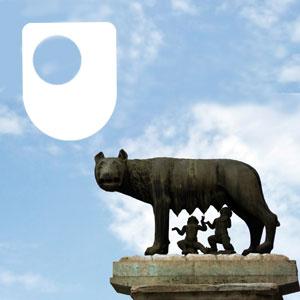
How and why did ancient Romans use myth to validate their power? Emperor Augustus legitimised his rule by entwining his own ancestry with the mythical stories of Rome's foundation, and created a divine aura around Rome as capital of the vast empire. This album visits key emblems associated with Rome's beginnings: the Forum and the Capitoline Hill with its statue of the she-wolf and Romulus and Remus; the Emperor Augustus's palace and ceremonial altar, and the 17th Century D'Arpino frescos of foundation myths commissioned by Pope Innocent X to underpin his authority. By monumentalising and glorifying their real and legendary past, Romans painted their own history and this continues to encapsulate Roman identity today. This material forms part of The Open University course A330 Myth in the Greek and Roman worlds.
-
20
Myth at the heart of the Roman Empire
A short introduction to this album.
-
19
The foundation of Rome
An introduction to the stories of the foundation of Rome and how these myths reinforce Roman identity even today.
-
18
The House of Augustus
Insights into how Emperor Augustus connected himself to the foundational myths and gods of Rome.
-
17
The Ara Pacis
How this monument conveys messages of the abundance and power of the Roman Empire under Augustus.
-
16
The wolf and twins sculpture
How this statue embodies the beginnings of the illustrious history of the Roman Empire.
-
15
The Lapis Niger
How the Lapis Niger, within the Roman Forum, becomes a significant memorial for the foundation myths of ancient Rome.
-
14
The D'Arpino frescoes
How the 17th century Pope Innocent X stressed his own continuity with ancient Rome's foundational myths by commissioning these stunning pictures.
-
13
A330: Myth in the Greek and Roman worlds
How story and myth are embedded into the monuments and artefacts of ancient Greece and Rome.
-
12
Myth and the Roman Empire
Open University academic Valerie Hope talks about choices behind the material in this album.
-
11
Why study myth?
Chris Emlyn-Jones, Valerie Hope and Paula James reveal the enduring importance of myth.
We're indexing this podcast's transcripts for the first time — this can take a minute or two. We'll show results as soon as they're ready.
No matches for "" in this podcast's transcripts.
No topics indexed yet for this podcast.
Loading reviews...
ABOUT THIS SHOW
How and why did ancient Romans use myth to validate their power? Emperor Augustus legitimised his rule by entwining his own ancestry with the mythical stories of Rome's foundation, and created a divine aura around Rome as capital of the vast empire. This album visits key emblems associated with Rome's beginnings: the Forum and the Capitoline Hill with its statue of the she-wolf and Romulus and Remus; the Emperor Augustus's palace and ceremonial altar, and the 17th Century D'Arpino frescos of foundation myths commissioned by Pope Innocent X to underpin his authority. By monumentalising and glorifying their real and legendary past, Romans painted their own history and this continues to encapsulate Roman identity today. This material forms part of The Open University course A330 Myth in the Greek and Roman worlds.
HOSTED BY
The Open University
CATEGORIES
Loading similar podcasts...
Frequently Asked Questions
How many episodes does Myth at the heart of the Roman Empire - for iPod/iPhone have?
Myth at the heart of the Roman Empire - for iPod/iPhone currently has 10 episodes available on PodParley. New episodes are automatically indexed when they're published to the podcast feed.
What is Myth at the heart of the Roman Empire - for iPod/iPhone about?
How and why did ancient Romans use myth to validate their power? Emperor Augustus legitimised his rule by entwining his own ancestry with the mythical stories of Rome's foundation, and created a divine aura around Rome as capital of the vast empire. This album visits key emblems associated with...
How often does Myth at the heart of the Roman Empire - for iPod/iPhone release new episodes?
Myth at the heart of the Roman Empire - for iPod/iPhone has 10 episodes. Check the episode list to see recent publication dates and frequency.
Where can I listen to Myth at the heart of the Roman Empire - for iPod/iPhone?
You can listen to Myth at the heart of the Roman Empire - for iPod/iPhone on PodParley by clicking any episode. We provide an embedded audio player for direct listening, and you can also subscribe via your preferred podcast app using the RSS feed.
Who hosts Myth at the heart of the Roman Empire - for iPod/iPhone?
Myth at the heart of the Roman Empire - for iPod/iPhone is created and hosted by The Open University.
URL copied to clipboard!