
PODCAST
Natural Wonders
by WDRT
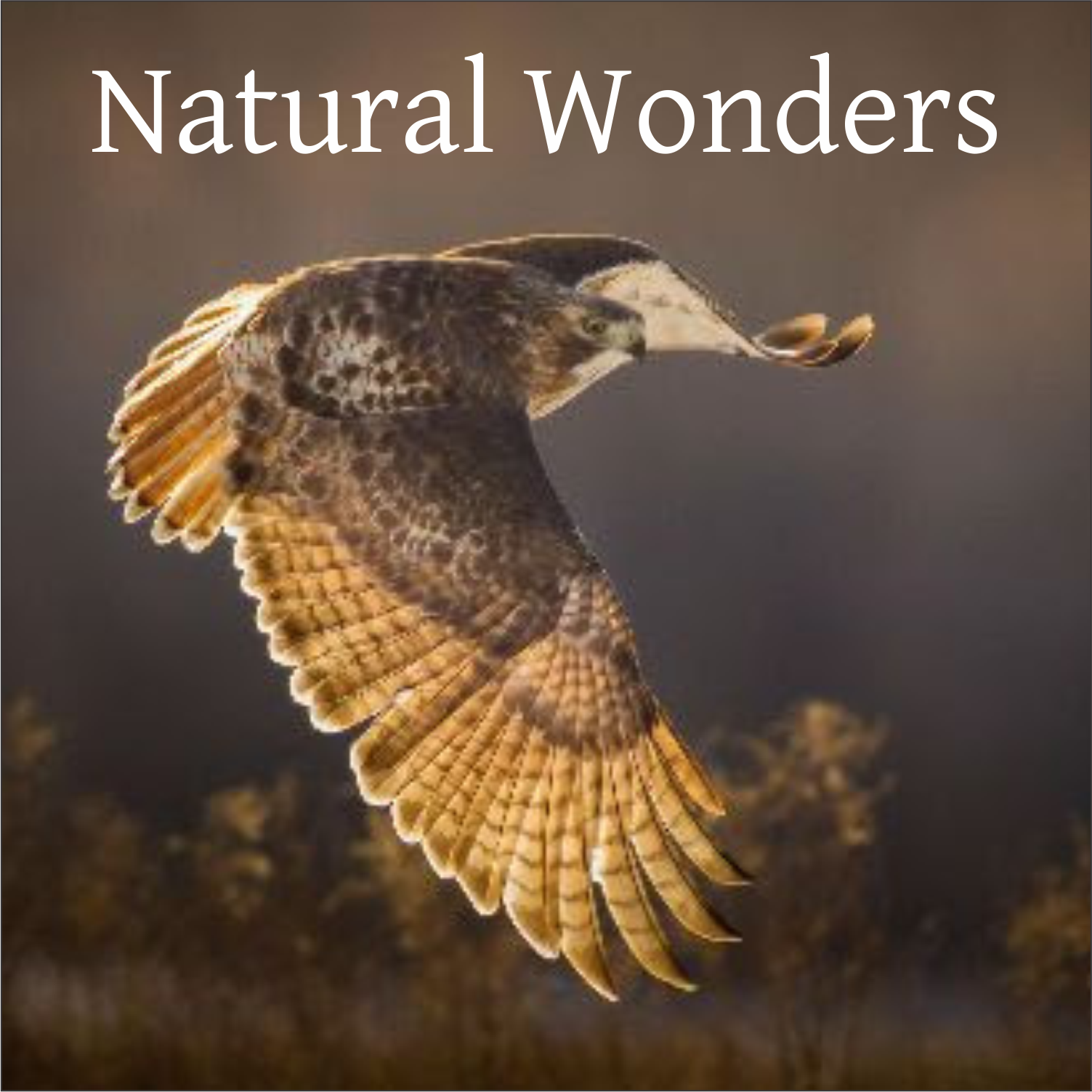
In the summer of 1972, I wandered out of a newly rented farm house, looked up, and saw 2 red-tailed hawks soaring over woods and pasture. They were so beautiful, so other-worldly, I was overcome with a desire to know everything about them.Years later I became a wildlife rehabilitator and a falconer and was able to have close hands-on experience with them. Today that desire to learn about the natural world has only broadened and intensified. I'll read some of my favorite biologists' writings and occasionally include my own thoughts.
-
10
June 16th, 2026
Two fun topics today, how to build a simple effective turtle nest protector, something very important to have on hand even if you think you'll never need it. The need is so great because the raccoon population is soaring and they love nothing more than to dig up freshly laid turtle eggs for a meal. It's a fun easy project. Check out turtlesfortomorrow.org for lots of information by Wisconsin's experts on turtles. And have you ever wondered which woodpecker you hear drumming? Here are nifty tips and audio about telling the difference between the downey and hairy, and the flicker, sapsucker and pileated are sounded out here too. After hearing and reading this from the Cornell Lab of Ornithology, I think I can tell these birds by their drumming.!
-
9
June 9th, 2026
The black-billed cuckoo and yellow-billed cuckoo are marvels of the bird world, I am besotted~! and then a fun way to enjoy bees in a pile of wood and rocks in your garden, bee hotels.
-
8
June 2nd, 2026
The birds we see so many of in summer, the cliff swallows, fly long distances to come to North America to raise their young. They nest under bridges and culverts and have many fascinating secrets. I'll read from a wonderful book, Swallow Summer by the researcher who has studied these fascinating birds for many decades, Charles Brown.
-
7
May 26th, 2026
Neil Diboll of Prairie Nursery has a 600 plus page book, The Gardener's Guide to Prairie Plants. I'll read a review by Laurel Bennett, https://theprairieenthusiasts.org/book-review-the-gardeners-guide-to-prairie-plants/and I'll read about the nifty tool for quickly killing parsnip without chemicals, , the Parsnip Predator, invented and made by the Prairie Bluff chapter of TPE.I use mine more and more. It's very handy,,look out burdock too!~
-
6
May 19th, 2026
We will delve into the reasons for prescribed burning of various landscapes; prairies, wetlands, sedge meadows and oak forests are fire dependent and will lose native species over time if fire disappears. Thanks to Mississippi Valley Conservancy and The Aldo Leopold Foundation for information about their burning activities. Fire is an essential tool to restore Wisconsin’s fire-adapted ecosystems. from the WI DNR : Prescribed fire is the intentional application of fire to a specific pre-planned area, under specific environmental conditions, to accomplish planned land management objectives. Without the use of prescribed burning as a management tool, Wisconsin could lose many of its native grassland, wetland and savanna plant communities. And Brent Anderson has written on theprairieenthusiasts.org website, about a molecule found in the smoke of burned native grasses and forbs called karrikins. These molecules trigger seed germination and enhance seedling development. Identified in 2004, these compounds act as signaling molecules at very low concentrations, acting as chemical cues that prompt "fire-followers" to emerge after wildfires
-
5
May 12th, 2026
I'm looking at The Prairie Enthusiasts website, theprairieenthusiasts.org and finding a wealth of stories, information, identification help, management tips and techniques, and have picked 2 to read, one about the timber rattlesnake by Brian Bielema, and the other about the carrot family host plants of the black swallowtailed butterfly, among that family is the problematic plant the wild parsnip. Should we worry when we try to get rid of the parsnip? We hear Dan Carter, the TPE Ecologist's, response to this question. From Bielema's article, "One surprising benefit rattlesnakes provide humans is that eating their main food species, white-footed mice, reduces Lyme disease. Up to 90% of white-footed mice carry the Lyme bacteria, and tick larvae and nymphs become infected by biting the mice. If the mouse is consumed, both the disease carrier and its tick load is eliminated. It’s estimated a single rattlesnake may consume more than 1,000 ticks annually, thus reducing Lyme disease in rattlesnake inhabited areas."
-
4
May 5th, 2026
Two great stories, the first by Kenny Salwey, The Gray Shadow; we spend a year with a gray fox vixen; a beautiful written portrait, published Big River Magazine, November December 2016. www.bigrivermagazine.com Then, the many trials, errors and successes of a man who bought a rundown farm in the 1950's and discovered many beautiful butterfly weeds with their bright orange blooms, seen brightly a quarter mile away. He became devoted to finding out how to get more of these plants, how to get the seeds to germinate? He tackled spiderwort and lead plant propagation,,this before the internet--imagine that! This was the beginning of Prairie Nursery in Westfield. I'm reading the fascinating introduction from The Prairie Garden 70 Native Plants You Can Grow in Town or Country, published in 1980 by University of Wisconsin Press. Also mentioned; The Prairie in Seed, Identifying Seed-bearing Prairie Plants in the Upper Midwest, by Dave Williams, published by University of Iowa Press, 2016
-
3
April 28th, 2026
One of the most important topics for us to be aware of, the impact of the relatively new and pervasive insecticide, neonicotinoid seed treatment; persistent in our water, wind and soils. Farmers have little choice, in the seeds they buy, to avoid it. This is the terrific article in Big River Magazine issue Jan-Feb 2025, "Where are the Mayflies" by John Lyons with a fascinating introduction my Reggie McLeod. Also we hear from Ellen Voss of the River Alliance of Wisconsin and her talk recently in Boscobel about neonics. She is the Climate Resilience Director with the River Alliance of Wisconsin and co-coordinator of Wisconsin Neonicotinoid Workgroup.
-
2
April 21st, 2026
From the Xerces Society, and xerces.org my favorite group of insect lovers, here are some fun things they suggest we can do to create some simple habitat for our native insects; make a rock pile, and a mud puddle! These are great things to do with kids. Butterflies will love the water and mineral source, and many insects will hide out in your rock pile. And "Leave the Leaves" Don't let our fastidious human nature have sway in your garden, let it be messy! Learn more here!
-
1
April 14th, 2026
I'm reading 2 columns by outdoor journalist Patrick Durkin. These are from March 2026 and found on his website, patrickdurkinoutdoors.com; the first about important issues we can address at the Conservation Congress Spring hearings, especially how to continue funding our state natural resource agency, the Wisconsin DNR, which has been severely underfunded for years. The WI DNR Conservation Congress Spring Hearings are right now, in fact the in person meeting was Monday the 13th, but you can comment online until the end of Wednesday the 15th. Go to https://dnr.wisconsin.gov/about/wcc/springhearing A great idea is on the ballot; to involve all citizens of Wisconsin in funding, rather than relying on declining hunting and fishing license fees, by instituting a 1/8 cent sales tax. We all benefit from an excellent, well funded natural resource state agency, we should all be part of funding it. https://www.savetheboundarywaters.org/our-blog The second column by Durkin is a cautionary tale about the Avoca River in Ireland, continuously polluted for 7.5 miles along its course to the ocean, by an 800 foot tall sulfide mining tailings pile from many years ago. He compares this with the current threat of sulfide mining in the Superior National Forest in Minnesota. Its water flows north to the Boundary Waters Canoe Area, and on north towards Hudson Bay, its toxins potentially affecting a vast area.
-
0
April 7th, 2026
Reading from one of Ken Lange's lyrical books about the Baraboo Hills, Song of Place, A Natural History of the Baraboo Hills; this chapter about amphibians; salamanders, frogs and toads. I hope you are hearing deafening sounds of singing frogs from their wetland breeding areas. Song of Place is published by the Ballindalloch Press in Baraboo, Wi. in 2014. I have included some frog sounds for your listening pleasure. For me, the sound of toads is one of the most stirring to the soul, of all the sounds of nature.
-
-1
March 31st, 2026
I'm reading 2 stories from Big River magazine, and calling this a Big River Sampler; one, a thought provoking story of homelessness by Reggie McLeod, and a story by Fritz Funk of maneuvering a ferry designed for summer work, during winter 30 degree below temperatures - running between Lansing and Wisconsin after the demolition of the bridge over the Mississippi River. This beautiful magazine is one of my favorite things to see arriving in the mailbox. They have been publishing stories about the Upper Mississippi River and the surrounding Driftless Area for 32 years and recently they have launched a non profit, Big River Voice that will play a more diverse role in our communities in the future. Look for more info on bigrivermagazine.com and bigrivervoice.org. Big River Magazine dot com has available many stories from older issues; check out Restoring Driftless Area Prairies, by Pam Eyden, Effigy Mounds of the Wisconsin River Valley by Sara Millhouse, Nature Reawakens at Nahant Marsh, by Emily Styron and many many more.
-
-2
March 24th, 2026
Spring will bring chimney swifts to Viroqua, and with them will come the people who love to watch them and learn their habits here in town. Where do they nest? (only a single nest in a chimney, so only 2, maybe as many as 5 birds, will be observed there) and where do they roost in large numbers? Do they move from chimney to chimney a lot? If you see a group of people watching a chimney do join them if you can. Thanks to David Krier for his essay. I'll also delve a little into Cornell's Birds of the World and into early 1900's accounts from Bent's Life Histories of N.A. Birds to see what other people have had to say over the years.
-
-3
March 17th, 2026
Choices; One last treat from Jeff Wilson's Wrong Tree, Adventures of a Wildlife Biologist, published by the Cornerstone Press in Stevens Point Wi. In 1999, possible sightings of the extinct ivory billed woodpecker were had, but no confirmations in the form of photos or DNA had been found, so ornithologists started to search, including Jeff and Terry in the Panhandle of Florida. They camped for 8 days in the extensive bottomland hardwood swamp habitat there; a completely new type of forest for them to explore. Also I read an essay by Margaret Renkl, from the NY Times, March 2, 2026 about her trip and thoughts along the way, to see the rare whooping cranes at Wheeler Wildlife Refuge in north Alabama. One species, the woodpecker, we chose not to save, the other, the whooping crane, we did choose to save.
-
-4
March 10th, 2026
I'm reading Wrong Tree, Adventures in Wildlife Biology, by Jeff Wilson, published in 2022 by Cornerstone Press in Stevens Point. We follow Jeff and Terry and Jeff's son Zach, to the coastal plain of Hudson Bay Canada, and its wet willow tundra habitat, where thousands of birds breed. They helped for a month with a long term snow goose study during the month of June. Think walking over wet hummocks to check 200 nests each day (each person) and getting swarmed by mosquitos. This was the beginning of a wonderful trip around the world they took in 1995 and 1996, all the while finding biologists and research projects to help with. November found them in Nepal where they trekked for days and found a researcher from Wales studying riparian birds.
-
-5
March 3rd, 2026
Today we hear the Epilogue of the Book, Wrong Tree Adventures in Wildlife Biology, by Jeff Wilson and published by Cornerstone Press in Stevens Point Wi. The importance of science and scientists has been diminished by recent political shifting winds. Learn how some thoughtful biologists have been bucking this trend by forming a band of people devoted to applying their life long work and considerable knowledge to our state. They are working to make sure scientific facts are raised and promoted to be a part of Wisconsin's conservation practices . Meet Wisconsin's Greenfire and learn how it all started during a day of despairing over some coffee, ruminations and swimming some laps. Thank you Terry Daulton!
-
-6
February 24th, 2026
Reading from the book Wrong Tree Adventures in Wildlife Biology by Jeff Wilsonand published in 2022 by Cornerstone Press in Stevens Point; To have heard loons calling on a lake in northern Wisconsin is to be spellbound. We will learn what work has been done to understand their unique physiology and their lives from raising chicks in summer to their migration routes and wintering areas. One study using implanted satellite transmitters resulted in deeper knowledge of their lives wintering in the Gulf of Mexico. In addition, a story of a rescue in a remote area because someone DID bring their cell phone.
We're indexing this podcast's transcripts for the first time — this can take a minute or two. We'll show results as soon as they're ready.
No matches for "" in this podcast's transcripts.
No topics indexed yet for this podcast.
Loading reviews...
ABOUT THIS SHOW
In the summer of 1972, I wandered out of a newly rented farm house, looked up, and saw 2 red-tailed hawks soaring over woods and pasture. They were so beautiful, so other-worldly, I was overcome with a desire to know everything about them.Years later I became a wildlife rehabilitator and a falconer and was able to have close hands-on experience with them. Today that desire to learn about the natural world has only broadened and intensified. I'll read some of my favorite biologists' writings and occasionally include my own thoughts.
HOSTED BY
WDRT
Loading similar podcasts...
Frequently Asked Questions
How many episodes does Natural Wonders have?
Natural Wonders currently has 17 episodes available on PodParley. New episodes are automatically indexed when they're published to the podcast feed.
What is Natural Wonders about?
In the summer of 1972, I wandered out of a newly rented farm house, looked up, and saw 2 red-tailed hawks soaring over woods and pasture. They were so beautiful, so other-worldly, I was overcome with a desire to know everything about them.Years later I became a wildlife rehabilitator and a falconer...
How often does Natural Wonders release new episodes?
Natural Wonders has 17 episodes. Check the episode list to see recent publication dates and frequency.
Where can I listen to Natural Wonders?
You can listen to Natural Wonders on PodParley by clicking any episode. We provide an embedded audio player for direct listening, and you can also subscribe via your preferred podcast app using the RSS feed.
Who hosts Natural Wonders?
Natural Wonders is created and hosted by WDRT.
URL copied to clipboard!