
PODCAST · history
NSFC History
by Dr A D Curry
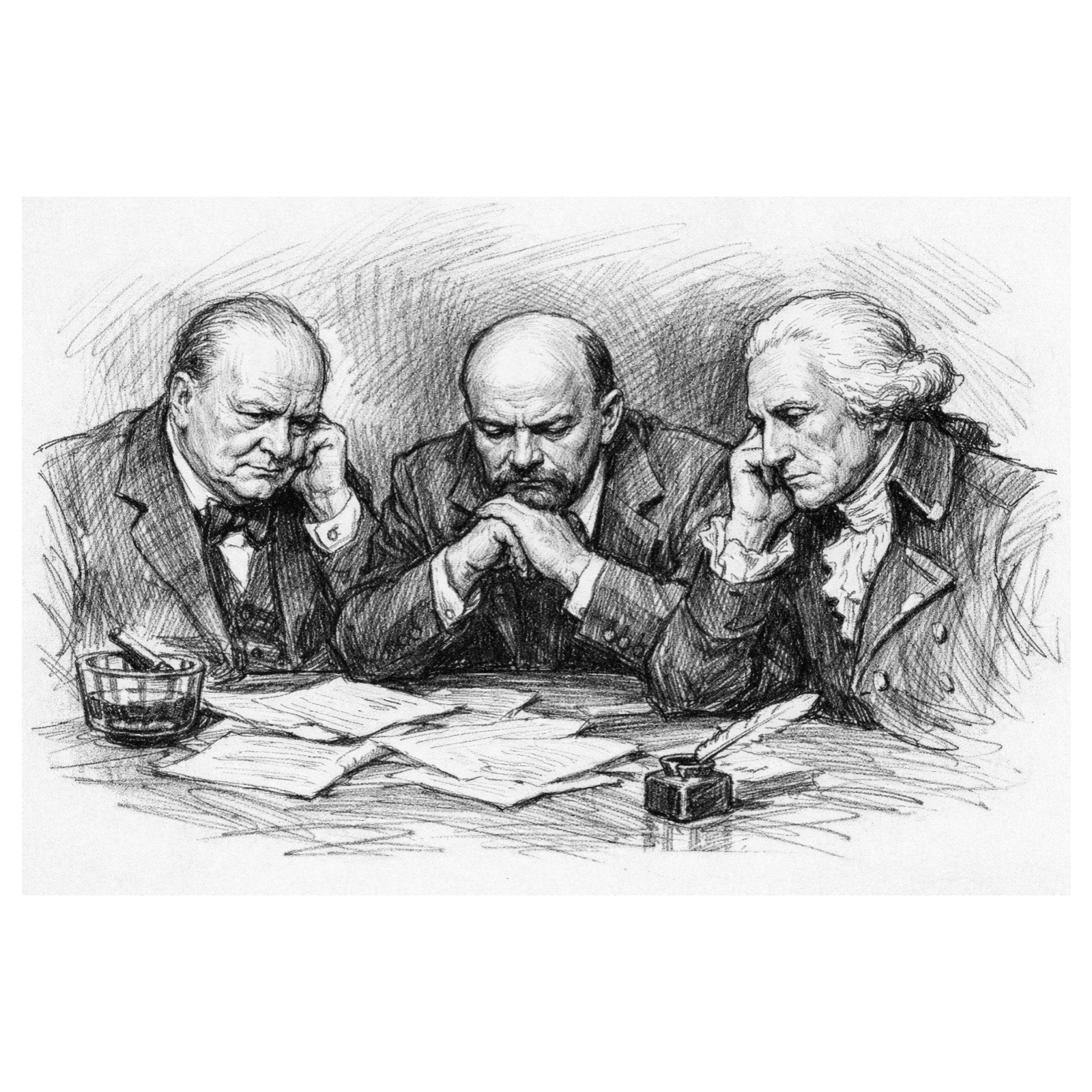
This podcast series journeys through the major turning points of modern history explored in OCR A‑Level History, tracing Britain’s transformation from the crises of the 1930s to the political reinvention of 1997, uncovering the dramatic rise and fall of Russian rulers from Alexander II to Khrushchev, and charting the ideological, economic and military struggles that shaped the American Revolution between 1740 and 1796. Blending political drama, social change and international conflict, the series brings together three continents, three centuries and three defining narratives to reveal how power, protest and leadership reshaped nations and the wider world.(This project includes AI‑generated voices, but all content is based entirely on research and material created by researchers.)
-
39
American Revolution: Minds on Fire: Ideas and Leaders of the Revolution
Revolutions are born from ideas — and from the people who champion them. This episode introduces listeners to the intellectual foundations of the Revolution, from Locke’s theories of natural rights to the republican ideals circulating in pamphlets and assemblies. We meet the emerging leaders who shaped colonial resistance: Jefferson, Dickinson, John Adams, Samuel Adams, and others. Their writings, speeches, and political strategies reveal how abstract philosophy became a practical blueprint for challenging imperial authority.
-
38
Russia and Its Rulers: Ukraine
Ukraine was one of the empire’s most valuable—and most contested—regions, and this episode explores how Russian and Soviet rulers tried to dominate a nation with a strong cultural identity and deep strategic importance. From Alexander II’s early Russification drives to the trauma of Stalin’s Holodomor and Khrushchev’s attempts at limited reform, Ukraine reveals the recurring tension between imperial ambition and national resistance. Across the period, it stands as a powerful example of how far rulers would go to secure control—and how fiercely Ukrainians pushed back.
-
37
Russia and its Rulers: Poland
Poland was the empire’s most persistent challenge, and this episode tracks how Russian and Soviet rulers—from Alexander II to Khrushchev—used repression, Russification, and later satellite‑state control to contain a nation that continually pushed back. From the 1863 revolt to Stalin’s post‑war domination and Khrushchev’s uneasy concessions, Poland exposes the limits of Russian authority across the whole period.
-
36
Britain and the Wider World
Britain’s place on the world stage was repeatedly tested across the Cold War era, and this episode dives into the defining international crises that shaped its global role — from the Berlin Blockade and the Korean War to the humiliation of Suez, the shock of the Falklands, and the multinational response to the Gulf War. Drawing on the course guide’s detailed accounts — including Britain’s fear that “a divided Germany would not work” during the Berlin Blockade and the stark reminder in the Korean War that Britain was a “junior partner” to the USA — this episode explores how each crisis exposed the limits of British power, reshaped alliances, and forced governments to confront the realities of post‑imperial influence. Through these turning points, we trace how Britain navigated pressure, prestige, and partnership in a rapidly changing world.
-
35
Russia and Its Rulers: Mastering the 30-Mark Depth Study Essay - The Provisional Government
Dive into a sharp, skills‑driven guide designed to help students master the 30‑mark Depth Study essay for OCR A‑Level Russia and Its Rulers (1855–1964). This podcast unpacks exactly what examiners want when students analyse a focused period in depth, weaving together precise evidence, contextual understanding, and sustained argument.This episode will explore the Provisional Government. This shows you how to turn depth knowledge into top‑band essays. With clear examples, model structures, and practical strategies, it’s ideal for exam preparation.
-
34
Russia and Its Rulers: Mastering the 30-Mark Depth Study Essay - Khrushchev in power 1956–1964
Dive into a sharp, skills‑driven guide designed to help students master the 30‑mark Depth Study essay for OCR A‑Level Russia and Its Rulers (1855–1964). This podcast unpacks exactly what examiners want when students analyse a focused period in depth, weaving together precise evidence, contextual understanding, and sustained argument.This episode will explore Khrushchev in power 1956–1964. This shows you how to turn depth knowledge into top‑band essays. With clear examples, model structures, and practical strategies, it’s ideal for exam preparation.
-
33
American Revolution 1740-1796: Mastering the 10-Mark Short Essay
Dive into a sharp, skills‑driven guide designed to help students master the 10-Mark Short Essay for OCR A‑Level American Revolution 1740-1796. This podcast unpacks exactly what examiners want when students are required to consider the importance of two issues or factors and reach a supported judgement as to which of the issues or factors is of greater importance or significance in relation to the event in question.This episode will show you how to turn your knowledge into top‑band analysis. With clear examples, model structures, and practical strategies, it’s ideal for exam preparation.
-
32
American Revolution 1740-1796: Mastering the 20-Mark Period Study Essay
Dive into a sharp, skills‑driven guide designed to help students master the 20-Mark Period Study Essay for OCR A‑Level American Revolution 1740-1796. This podcast unpacks exactly what examiners want when students analyse a series of sources related to America 1740-1796, weaving together precise evidence and contextual understanding across the period.This episode will show you how to turn your knowledge into top‑band analysis. With clear examples, model structures, and practical strategies, it’s ideal for exam preparation.
-
31
Britain 1930-1997: Mastering the 20-Mark Period Study Essay
Dive into a sharp, skills‑driven guide designed to help students master the 20-Mark Period Study Essay for OCR A‑Level Britain 1930-1997. This podcast unpacks exactly what examiners want when students analyse a series of sources related to Britain 1951-1997, weaving together precise evidence and contextual understanding across the period.This episode will show you how to turn your knowledge into top‑band analysis. With clear examples, model structures, and practical strategies, it’s ideal for exam preparation.
-
30
Britain 1930-1997: Mastering the 30-Mark Source Enquiry Essay
Dive into a sharp, skills‑driven guide designed to help students master the 30-Mark Source Enquiry Essay for OCR A‑Level Britain 1930-1997. This podcast unpacks exactly what examiners want when students analyse a series of sources related to Winston Churchill, weaving together precise evidence and contextual understanding.This episode will show you how to turn your knowledge into top‑band source analysis. With clear examples, model structures, and practical strategies, it’s ideal for exam preparation.
-
29
Russia and Its Rulers: Mastering the 25-Mark Thematic Essay - War and Revolution
An OCR A-Level History Skills PodcastEnter a sharp, high-impact guide designed to help students master the 25-mark thematic essay on one of the most dramatic threads running through the Russia and Its Rulers course: war and revolution. This podcast breaks down what examiners expect when students analyse how conflict and upheaval reshaped Russia’s political, economic, and social landscape from Alexander II to Khrushchev.Each episode focuses on a key skill—building thematic breadth across major conflicts, integrating precise evidence from the Crimean War to the Cold War, and evaluating the transformative impact of the 1905 and 1917 revolutions. Students learn how to compare rulers’ responses to crisis, assess continuity and change in wartime governance, and craft judgement-led arguments that move confidently across a century of turmoil. Clear examples, model structures, and practical strategies help turn complex events into analytical, comparative essays.Whether you’re revising the consequences of the Crimean War, the pressures of World War I, the seismic shock of 1917, the brutality of the Civil War, or the total mobilisation of the Great Patriotic War, this series shows you how to connect conflicts, rulers, and long-term themes to reach the top bands.
-
28
Russia and Its Rulers: Mastering the 30-Mark Depth Study Essay - Alexander II's Reforms
Dive into a sharp, skills‑driven guide designed to help students master the 30‑mark Depth Study essay for OCR A‑Level Russia and Its Rulers (1855–1964). This podcast unpacks exactly what examiners want when students analyse a focused period in depth, weaving together precise evidence, contextual understanding, and sustained argument.This episode will explore the reforms of Alexander II. This shows you how to turn depth knowledge into top‑band essays. With clear examples, model structures, and practical strategies, it’s ideal for exam preparation.
-
27
Russia and Its Rulers: Mastering the 25-Mark Thematic Essay - Nature of Government
Step inside a focused guide to succeeding in the toughest part of the OCR A-Level Russia and Its Rulers (1855–1964) exam: the 25-mark thematic essay. This podcast focuses on the nature of Government, and breaks down exactly what examiners want, how to build analytical range across a century of Russian rule, and how to craft arguments that feel confident, comparative, and convincing.The episode tackles a core skill—from developing thematic breadth to integrating precise evidence, from evaluating continuity and change to constructing judgement-led conclusions. You’ll hear clear examples, model structures, and practical strategies that help students move from narrative to analysis, and from analysis to argument.Whether you’re revising autocracy under Alexander II, repression under Stalin, or political reform under Khrushchev, this series shows you how to connect rulers, themes, and time periods into essays that score in the top bands.
-
26
Russia and Its Rulers: Mastering the 25-Mark Thematic Essay - Economy and Society
An OCR A-Level History Skills PodcastStep into a focused, high-impact guide to mastering one of the most demanding elements of the OCR A-Level Russia and Its Rulers (1855–1964) course: the 25-mark thematic essay. This podcast unpacks exactly what examiners look for when students tackle long-term economic and social change across a century of Russian history.Each episode explores a core skill—from building thematic breadth across industrialisation, agriculture, urbanisation, and social structure, to integrating precise, comparative evidence that spans from the emancipation era to Khrushchev’s reforms. You’ll learn how to evaluate continuity and change in living standards, class relations, economic priorities, and the state’s impact on everyday life. Clear examples, model structures, and practical strategies help students move beyond narrative into confident, judgement-led argument.Whether you’re revising the effects of emancipation, the social upheaval of War Communism, Stalin’s transformation of the economy, or Khrushchev’s attempts to reshape society, this series shows you how to connect rulers, themes, and time periods into essays that reach the top bands.
-
25
Russia and Its Rulers: Mastering the 25-Mark Thematic Essay - Empire, Nationalities, and Minorities
An OCR A-Level History Skills PodcastStep into a focused, high-impact guide designed to help students master the 25-mark thematic essay on one of the most complex and revealing themes in the Russia and Its Rulers course: The impact of dictatorial regimes on the economy and society of the Russian Empire and the USSR. This podcast unpacks what examiners expect when students analyse how different rulers managed diversity, controlled borderlands, and shaped the experiences of ethnic and religious groups across a century of imperial rule.Each episode explores a core exam skill—building thematic breadth across Russification, repression, reform, and resistance; integrating precise evidence from Poland to Central Asia; and evaluating continuity and change in how rulers balanced control with concession. Students learn how to compare approaches from Alexander II’s cautious concessions to Stalin’s brutal deportations, and how to craft judgement-led arguments that move confidently across time. Clear examples, model structures, and practical strategies help turn a vast, multi-ethnic empire into sharp, analytical essays.Whether you’re revising the Polish Revolt, the rise of nationalism, the treatment of Jews under the tsars, Soviet nationalities policy, or Khrushchev’s attempts to stabilise the union, this series shows you how to connect rulers, regions, and long-term themes to reach the top bands. Ideal for independent revision, flipped learning, or classroom reinforcement.
-
24
Russia and Its Rulers: Mastering the 25-Mark Thematic Essay - Introduction
An OCR A-Level History Skills PodcastStep inside a focused, high-impact guide to succeeding in the toughest part of the OCR A-Level Russia and Its Rulers (1855–1964) exam: the 25-mark thematic essay. This podcast breaks down exactly what examiners want, how to build analytical range across a century of Russian rule, and how to craft arguments that feel confident, comparative, and convincing.The episode tackles a core skill—from developing thematic breadth to integrating precise evidence, from evaluating continuity and change to constructing judgement-led conclusions. You’ll hear clear examples, model structures, and practical strategies that help students move from narrative to analysis, and from analysis to argument.Whether you’re revising autocracy under Alexander II, repression under Stalin, or agricultural policy under Khrushchev, this series shows you how to connect rulers, themes, and time periods into essays that score in the top bands.
-
23
Who is Responsible for the Holocaust?
In this episode, we examine the complex question of responsibility for the Holocaust, beginning with Adolf Hitler’s central role in shaping the vision, rhetoric, and authorisation for genocide, and moving through the actions of key Nazi leaders whose initiatives, rivalries, and bureaucratic efficiency turned ideology into systematic murder. We explore the varied forms of responsibility among ordinary people—those who participated, those who enabled events through silence or compliance, and those who resisted or attempted to help—while also considering the wider international context that allowed persecution and genocide to unfold with limited intervention. Finally, we highlight the many forms of resistance, from armed uprisings to acts of cultural, spiritual, and everyday defiance, revealing how choices, structures, and circumstances intersected in one of history’s darkest chapters.
-
22
Hitler's Rise to Power and Nazi Jewish Laws
In this episode, we explore Adolf Hitler’s rise to power in the early 1930s, tracing how political instability, economic crisis, and calculated propaganda enabled the Nazis to dismantle democracy and establish a dictatorship. We examine the tightening web of pre‑war Jewish legislation that steadily stripped German Jews of their rights, as well as the regime’s aggressive foreign policy that both emboldened Nazi ambitions and shaped its racial agenda. The episode also delves into the powerful role of anti‑Jewish propaganda and state‑orchestrated terror in normalising persecution, culminating in the 1938 Kristallnacht pogrom—a violent turning point that signalled the shift from discrimination to open brutality. Join us as we uncover how ideology, policy, and orchestrated violence converged to lay the foundations for the Holocaust.
-
21
Evolution of the Holocaust
In this episode, we trace the radicalisation of Nazi policy toward Europe’s Jews, beginning with early efforts to force emigration before examining the regime’s first mass‑killing programme, Aktion T4, and how its methods and personnel became a blueprint for later atrocities. We explore how the invasions of Poland, France, and the USSR each transformed Nazi strategy, expanding both opportunity and intent as occupation brought millions more Jews under German control and unleashed unprecedented violence in the east. From there, we follow the path to systematic genocide, including the coordination and bureaucratic clarity provided by the Wannsee Conference, before charting the evolving machinery of mass murder from 1942 to 1945. Join us as we uncover how war, ideology, and administrative planning converged to create the most destructive phase of the Holocaust.
-
20
Foundations on the Holocaust
In this episode, we lay the foundations for understanding the Holocaust by defining what it was, how it unfolded, and why it remains a central event in modern history. We explore some of the most common myths and misconceptions that distort public understanding, replacing them with clear, evidence‑based context. The episode also traces the long history of European antisemitism—from medieval prejudice to modern racial ideologies—and paints a vivid picture of pre‑war Jewish life as diverse, vibrant, and deeply rooted in European society. Finally, we examine the social, cultural, and political landscape of Weimar Germany, showing how instability, democratic fragility, and rising extremism created the conditions in which Nazi ideology could take hold. Join us as we build a crucial introductory framework for studying one of the darkest chapters in human history.
-
19
Churchill's War Years
In this episode, we chart Winston Churchill’s dramatic ascent to Britain’s wartime leadership in 1940 and follow his turbulent journey through the Second World War—his defiant oratory, his strategic choices, his clashes with allies, and his unyielding determination to see the conflict through to victory. As Britain emerged triumphant in 1945, we explore the surprising political shift that followed: how the very leader who had steered the nation through its darkest hour was swept from office in a landslide Labour victory. Join us as we unravel the paradox of Churchill’s wartime heroism and post-war rejection, revealing what these pivotal years tell us about leadership, public expectation, and the changing face of Britain at the dawn of peace.
-
18
Churchill's Wilderness Years
In this episode, we delve into Winston Churchill’s dramatic “Wilderness Years” (1929–1939), a turbulent decade when he found himself out of government and out of favour, yet more determined than ever. We explore how Churchill—dismissed by many as a political relic—used this period to hone his writing, reassess his beliefs, and warn the nation about the rising threat of Nazi Germany while others preferred complacency. Through political isolation, personal struggle, and relentless perseverance, Churchill’s time in the wilderness forged the convictions and clarity that would later define his wartime leadership. Join us as we uncover how these overlooked years shaped the man who would eventually lead Britain through its darkest hour.
-
17
Russia and its Rulers: Empire
This episode explores how Russian and later Soviet rule shaped the lives, identities and political destinies of national minorities and satellite states from 1855 to 1964, tracing the shift from tsarist Russification and repression in Poland, the Baltic regions and Central Asia to the Bolsheviks’ contradictory mix of national self‑determination and centralised control. We examine how Stalin’s dictatorship intensified this dynamic through forced population movements, purges, cultural suppression and the creation of tightly controlled satellite states in Eastern Europe after 1945, transforming entire societies under the weight of Soviet ideology and security concerns. The episode concludes with Khrushchev’s attempts to ease repression while maintaining dominance, revealing how empire, ideology and coercion shaped the complex relationship between the Russian core and the diverse peoples under its rule.
-
16
Thatcher, Major, and the end of consensus 1979–1997
This episode explores how Margaret Thatcher’s arrival in 1979 shattered the post‑war consensus and reshaped Britain through a bold programme of monetarism, free‑market reforms, privatisation and supply‑side economics, transforming industry, weakening trade union power and provoking deep social and political divisions. We trace her election victories, the impact of unemployment and social unrest, and the confrontation with the miners that came to define her premiership, before examining the factors behind her dramatic fall from power in 1990. The episode then follows John Major’s attempts to steady a fractured Conservative Party amid economic pressures, internal conflict and disputes over Europe, culminating in the party’s electoral defeat in 1997 and the end of an era in British politics.
-
15
Britain’s position in the world 1951–1997
This episode explores how Britain’s global role evolved between 1951 and 1997, tracing the nation’s shift from imperial power to modern European state as it navigated decolonisation, the Cold War, the Suez Crisis, nuclear diplomacy, and the search for a new international identity. We examine Britain’s relationships with the United States and Europe, its attempts to maintain influence through the Commonwealth, its changing defence commitments, and the political debates surrounding EEC entry and membership. From post‑war retreat to Thatcher’s assertive foreign policy and Major’s efforts to redefine Britain’s place in a rapidly changing world, the episode reveals how successive governments grappled with the challenge of maintaining global relevance in the second half of the twentieth century.
-
14
Russia and its Rulers: The nature of government
This episode explores how the nature of government in Russia evolved from the reign of Alexander II to the Khrushchev era, tracing the tension between autocracy, reform and repression across a century of upheaval. We examine the shifting structures of power under the tsars, from Alexander II’s limited reforms to Alexander III’s reaction and Nicholas II’s struggle to preserve autocracy amid revolution, before analysing the dramatic transformation brought by the Provisional Government and the Bolshevik seizure of power. The episode follows how Lenin built a one‑party state, how Stalin expanded it into a highly centralised dictatorship through terror, economic control and a pervasive cult of personality, and how Khrushchev attempted to reshape Soviet governance through de‑Stalinisation and cautious reform. Across these contrasting regimes, the episode reveals the enduring themes of continuity and change in Russian rule, and the ways leaders used ideology, coercion and reform to maintain authority.
-
13
Russia and its Rulers: Economy and Society
This episode explores how successive dictatorial regimes transformed the economy and society of Russia and the USSR from Alexander II to Khrushchev, tracing the shift from a largely agrarian empire to a highly centralised socialist state. We examine how the tsars used limited reform, repression and state‑driven modernisation to maintain control, before analysing the Bolsheviks’ radical restructuring of the economy through War Communism, the NEP and the creation of a command system under Stalin. The episode investigates the human impact of collectivisation, industrialisation, famine and terror, alongside the emergence of new social hierarchies, propaganda and the cult of personality. Finally, we consider Khrushchev’s attempts to reform both society and the economy through de‑Stalinisation, housing expansion and agricultural experimentation, revealing how dictatorship shaped everyday life, class structure and economic development across a century of upheaval.
-
12
Russia and its Rulers: War and Revolution
This episode explores how war and revolution repeatedly reshaped the political, economic and social development of Russia and the USSR from 1855 to 1964, beginning with the shock of the Crimean War and its role in pushing Alexander II toward reform, before tracing how later conflicts—from the Russo‑Turkish War to the Russo‑Japanese War and the First World War—exposed the weaknesses of tsarist rule and fuelled revolutionary pressures. We examine how the 1905 and 1917 revolutions transformed the state, how the Civil War entrenched Bolshevik authoritarianism, and how the Second World War accelerated Stalin’s centralisation of power, industrial expansion and control over society. The episode concludes with Khrushchev’s attempts to rebuild and reform a nation shaped by decades of conflict, revealing how war and revolution acted as catalysts for both dramatic change and enduring continuity in Russian governance and society.
-
11
Labour and Conservative governments 1964–1979
This episode explores the turbulent years between 1964 and 1979, beginning with Harold Wilson’s Labour governments as they grappled with economic crises, rising inflation, strained relations with the trade unions and deepening party divisions, before examining the 1970 Conservative victory and Edward Heath’s ambitious but troubled programme of reform, industrial relations battles and the miners’ strike that defined his premiership. We then trace the return of Labour under Wilson and Callaghan from 1974, charting their struggles with unemployment, inflation, union unrest and the mounting pressures that culminated in the Winter of Discontent. Across these years of instability, shifting leadership and economic turmoil, the episode reveals how Britain moved from optimism to crisis, setting the stage for a dramatic political shift at the end of the 1970s.
-
10
Conservative domination and decline 1951–1964
This episode explores how the Conservatives secured dominance between 1951 and 1964, beginning with their return to power on the back of rising prosperity, improved living standards and a message of stability, before tracing the social changes, immigration, tensions and educational reforms that reshaped Britain during the period. We examine the economic landscape of Butskellism, industrial growth and the early signs of stagflation, alongside the contrasting leadership styles of Churchill, Eden, Macmillan and Home. The episode also delves into the scandals—from Vassall and Philby to Argyll and Profumo—that eroded public trust, and considers how Labour’s internal divisions and electoral weaknesses helped sustain Conservative rule until the party’s eventual decline, paving the way for a shift in British politics by 1964.
-
9
The Early American Republic 1783-1796
Dive into the turbulent birth of the United States in this episode exploring the Early Republic, as we trace how a fragile new nation of three million people—“one‑sixth of whom were enslaved”—struggled to govern itself after 1783, wrestling with deep social divisions, crushing war debts, interstate rivalries and the weaknesses of the Articles of Confederation. We unpack the crises that pushed Americans toward reform, from Britain’s refusal to abandon frontier forts to Spain’s closure of the Mississippi, from economic collapse and runaway inflation to the eruption of Shays’ Rebellion in 1786–87, when “several hundred men” marched on the federal arsenal at Springfield. The episode follows the road to the 1787 Philadelphia Convention, the creation of a new Constitution balancing federal and state power, and the fierce ratification battle between Federalists and Anti‑Federalists, before turning to the challenges of launching the first government in 1789 under George Washington, the adoption of the Bill of Rights in 1791, and the political storm that made finding his successor in 1796 such a national dilemma.
-
8
The Events of the American Revolution 1775-1783
Step back into the turbulent world of the American Revolution as this episode traces how a political dispute over taxes and imperial authority erupted into full‑scale war, beginning with the gunfire at Lexington and Concord—where “sixty‑five men were dead and 180 wounded”—and accelerating through the rise of the Continental Congress, the creation of a makeshift national army, and the dramatic early battles from Bunker Hill to the failed invasion of Canada. We follow Washington’s struggle to forge discipline from “15,000 poorly trained, poorly equipped” troops, the ideological shift toward independence fuelled by Enlightenment ideas and Thomas Paine’s Common Sense, and the bold decision to declare the colonies “free and independent States” in July 1776. The episode then charts the war’s turning points—from Washington’s daring victories at Trenton and Princeton to Burgoyne’s disastrous 1777 campaign and the decisive American triumph at Saratoga, which helped bring France, Spain and the Netherlands into a global conflict that stretched Britain’s resources thin. As the fighting spreads south and west, culminating in the siege of Yorktown and the 1783 Treaty of Paris, we explore how the Revolution reshaped politics, society and international power, leaving the new United States triumphant yet burdened with debt, divided loyalties and the daunting task of building a nation from the ruins of empire.
-
7
Causes of the American Revolution 1763-1775
This episode explores how Britain’s triumph in the Seven Years’ War unexpectedly fractured its relationship with the American colonies, tracing the shift from loyalty to rebellion as new taxes, tighter imperial control, and the presence of a standing army collided with colonial expectations of liberty and self‑government. Drawing on the Proclamation Act, Sugar Act, Stamp Act, and the surge of popular protest led by figures like Patrick Henry and Samuel Adams, we unpack how fears of “despotism,” inspired by Whig thought and Locke’s ideas on natural rights, transformed local grievances into a revolutionary movement that reshaped the Atlantic world.
-
6
The Development of British Hegemony up to 1763
This episode explores how Britain rose to dominance in North America by 1763, tracing the contrasting character of British, French, and Spanish colonies, the explosive population growth that reshaped society, and the increasingly complex relationships between settlers and Native American nations. We unpack the economic diversity of the thirteen colonies, the political freedoms fostered by representative assemblies, and the cultural mix created by waves of European and African migration. From frontier conflict to imperial rivalry, and from the fur‑trading networks of New France to Britain’s expanding agricultural and commercial power, this episode reveals how demographic strength, economic dynamism, and military success—culminating in victory over France in the Seven Years’ War—laid the foundations for British hegemony across the continent.
-
5
Nikita Khrushchev 1953-1964
This episode explores Khrushchev’s bold but turbulent attempt to reform the Soviet system after Stalin’s death, beginning with de‑Stalinisation and the Secret Speech. We examine his economic and agricultural reforms, the Virgin Lands campaign, and his efforts to ease repression while maintaining party control. The episode also covers Cold War flashpoints—from the Cuban Missile Crisis to tensions in Eastern Europe—and the political missteps that led to his removal in 1964.
-
4
Joseph Stalin 1924-1953
This episode examines Stalin’s rise to dominance and the transformation of the Soviet Union through rapid industrialisation, collectivisation and ruthless political control. We explore the Five-Year Plans, the human cost of collectivisation, the Great Terror and the cult of personality, as well as Stalin’s wartime leadership and post‑war expansion of Soviet influence. The episode highlights how Stalin reshaped the USSR into a global superpower at immense social and human cost.
-
3
Vladimir Lenin 1917-1924
This episode explores Lenin’s leadership from the October Revolution to his death in 1924, focusing on how he consolidated Bolshevik power through the Civil War, War Communism and the Red Terror. We assess the creation of a one‑party state, the role of the Cheka, and the introduction of the New Economic Policy as a pragmatic retreat.
-
2
The Provisional Government 1917
This episode investigates the short‑lived Provisional Government of 1917, analysing its attempts to stabilise Russia after the fall of the monarchy while facing war weariness, economic breakdown and growing Bolshevik opposition. We examine its key decisions—continuing the war, delaying land reform, sharing power uneasily with the Petrograd Soviet—and how these weaknesses, combined with Lenin’s return and the rise of the Bolsheviks, paved the way for its overthrow in October.
-
1
Nicholas II 1894-1917
This episode explores the troubled reign of Nicholas II, a ruler committed to autocracy yet overwhelmed by the pressures of industrialisation, social unrest and rising revolutionary movements. We trace the impact of the 1905 Revolution, the creation and limitations of the Duma, the strains of World War I, and the tsar’s political misjudgements—from Rasputin’s influence to military failures—that culminated in the collapse of the Romanov dynasty in 1917.
-
0
Alexander III 1881-1894
This episode examines the reactionary reign of Alexander III, who reversed many of his father’s reforms and imposed a programme of Russification, censorship and political repression to strengthen autocracy after the trauma of Alexander II’s assassination. We explore his use of the Okhrana, his economic modernisation under Witte, and the ways his conservative policies shaped the social and political tensions that would erupt under his successor.
-
-1
Alexander II 1855-1881
This episode explores the dramatic reign of Alexander II, Russia’s “Tsar Liberator,” charting his ambitious attempt to modernise a vast and troubled empire. We examine the forces that pushed him toward the landmark Emancipation of the Serfs, the reforms that reshaped the judiciary, military and local government, and the tensions these changes unleashed across Russian society. The episode also delves into the growing opposition he faced—from radical revolutionaries to disillusioned conservatives—and the contradictions of a ruler who sought reform yet tightened repression when challenged. Alexander II’s assassination in 1881 forms the climax of a story that reveals both the possibilities and limits of reform in imperial Russia.
-
-2
Britain 1951-1997
This episode explores Britain’s political transformation from 1951 to 1997, beginning with the era of Conservative domination shaped by rising prosperity, social change, immigration, tensions over housing and education, and the economic framework of Butskellism under leaders such as Churchill, Eden, Macmillan and Home, alongside scandals like Vassall, Philby, Argyll and Profumo and the Labour Party’s divisions and electoral failures. We then trace the turbulent governments of 1964–1979, examining Wilson’s economic struggles and union relations, Heath’s reform agenda and industrial conflict, and the crises of the Wilson–Callaghan years. The episode concludes with Thatcher’s rise and the end of consensus politics, charting her election victories, free‑market reforms, privatisation, social unrest, union confrontation and the miners’ strike, before following her fall, Major’s divided premiership and the Conservative defeat of 1997.
-
-3
Britain 1930-1951
This one‑episode deep dive traces Winston Churchill’s dramatic journey from political outcast to wartime leader and global statesman. Spanning the turbulent decades from 1929 to 1951, the podcast explores the convictions, controversies, and strategic decisions that defined his career and reshaped Britain’s place in the world
We're indexing this podcast's transcripts for the first time — this can take a minute or two. We'll show results as soon as they're ready.
No matches for "" in this podcast's transcripts.
No topics indexed yet for this podcast.
Loading reviews...
ABOUT THIS SHOW
This podcast series journeys through the major turning points of modern history explored in OCR A‑Level History, tracing Britain’s transformation from the crises of the 1930s to the political reinvention of 1997, uncovering the dramatic rise and fall of Russian rulers from Alexander II to Khrushchev, and charting the ideological, economic and military struggles that shaped the American Revolution between 1740 and 1796. Blending political drama, social change and international conflict, the series brings together three continents, three centuries and three defining narratives to reveal how power, protest and leadership reshaped nations and the wider world.(This project includes AI‑generated voices, but all content is based entirely on research and material created by researchers.)
HOSTED BY
Dr A D Curry
CATEGORIES
Loading similar podcasts...
Frequently Asked Questions
How many episodes does NSFC History have?
NSFC History currently has 43 episodes available on PodParley. New episodes are automatically indexed when they're published to the podcast feed.
What is NSFC History about?
This podcast series journeys through the major turning points of modern history explored in OCR A‑Level History, tracing Britain’s transformation from the crises of the 1930s to the political reinvention of 1997, uncovering the dramatic rise and fall of Russian rulers from Alexander II to...
How often does NSFC History release new episodes?
NSFC History has 43 episodes. Check the episode list to see recent publication dates and frequency.
Where can I listen to NSFC History?
You can listen to NSFC History on PodParley by clicking any episode. We provide an embedded audio player for direct listening, and you can also subscribe via your preferred podcast app using the RSS feed.
Who hosts NSFC History?
NSFC History is created and hosted by Dr A D Curry.
URL copied to clipboard!