
PODCAST · business
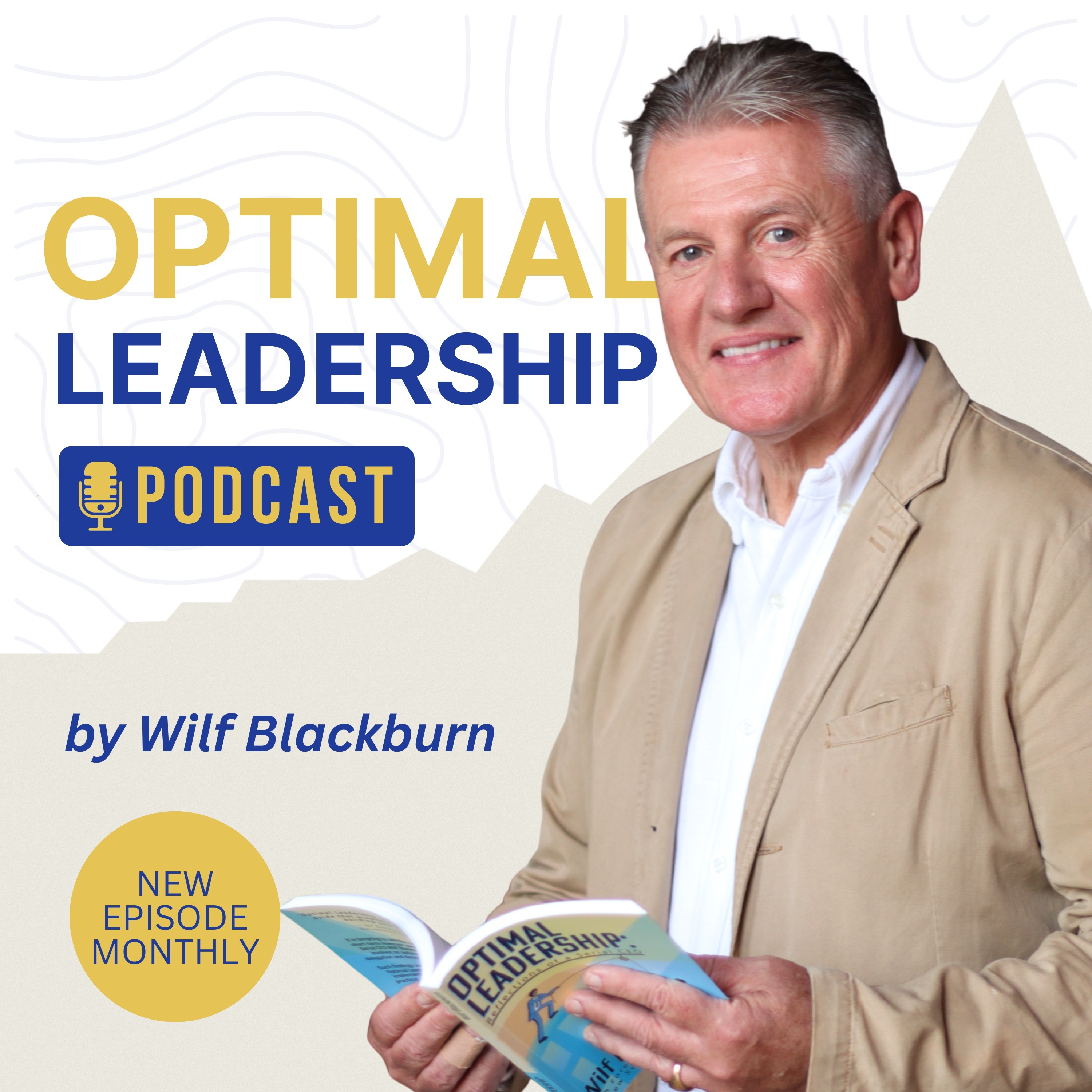
Optimal Leadership Podcast
by Optimal Leadership
Hosted by global Serial CEO Wilf Blackburn, The Optimal Edge dives into candid conversations with top business school professors and leadership thinkers around one big question: do the theories taught in classrooms actually work in the boardroom?Expect real-world insights, sharp debates, and practical tools for modern leaders navigating complexity, growth, and culture.New episodes monthly on Spotify, Apple & YouTube.
-
4
Why Most Organisations Fail to Execute Ideas, and How Leaders Fix It
Most organisations don’t suffer from a lack of ideas, they suffer from a failure to execute them.In this conversation, Wilf Blackburn sits down with Dr. Dean M. Schroeder to explore one of the most overlooked truths in leadership: innovation doesn’t come from the top, it comes from the frontline. Yet in many organisations, the very structures designed to manage performance are the ones blocking progress.Together, they unpack the tension between control and creativity, the illusion of leadership authority, and what it actually takes to build organisations where ideas turn into measurable results.This episode is particularly relevant for leaders who want to move beyond strategy and into execution, and who recognise that real performance is built through people, not hierarchy.Timestamps00:00 – Why Small Ideas Create Massive Impact00:16 – Introduction: Why Ideas Fail in Organisations01:18 – Why Good Ideas Rarely Get Executed01:45 – The Hidden Tension Between Control and Innovation06:22 – Are Leaders the Biggest Blockers of Innovation?06:59 – The Illusion of Control in Leadership08:50 – What Effective Leaders Do Differently with Power09:04 – Organisations Are Not Structures, They Are Relationships10:35 – Why CEOs Drift Away from Real Problems11:14 – Why Leaders Say People Matter… But Don’t Act Like It23:51 – Can You Systemise Creativity and Ideas?24:16 – “Take Care of People, and They Take Care of the Business”25:01 – Culture vs Strategy: What Really Drives Performance25:26 – Leadership Consistency Under Pressure27:03 – Leading by Example in Tough Times48:33 – The Role of Middle Managers in Sustaining Culture49:55 – Where Leaders Actually Find Meaning in Their Work50:39 – Why Leadership Is About Shared Accomplishment51:08 – Final Reflections: Turning Ideas Into Real ImpactKey Topics DiscussedWhy 80% of innovation potential sits with frontline employeesThe structural reasons organisations struggle to implement ideasHow leadership behaviour unintentionally blocks innovationThe illusion of control and its impact on decision-makingWhy organisations should be seen as networks of relationships, not hierarchiesThe role of trust, culture, and systems in sustaining innovationWhy culture consistently outperforms strategy in the long termHow leaders can model behaviour to build credibility and alignmentAbout the GuestDr. Dean M. Schroeder is a Senior Research Professor at Valparaiso University, as well as an academic, author, and consultant. His work focuses on innovation, quality improvement, and leadership practices that drive sustainable performance. Known for bridging research with real-world application, he has advised organisations globally and is widely recognised for his influential work on idea systems and organisational improvement.About The Optimal Leadership PodcastHosted by Wilf Blackburn, author of Optimal Leadership and a global Serial CEO, the podcast brings together real executives and eminent scholars to ask one essential question: "Do leadership theories taught in classrooms actually work in the real world?" New episodes available on Spotify, Apple Podcasts, and YouTube.
-
3
Ready, Fire, Aim: Rethinking How Leaders Make Decisions Today
Most leadership advice tells us to slow down, analyse, and act with certainty. But in today’s environment, that sequence is increasingly unrealistic.In this episode of The Optimal Leadership Podcast, our host Wilf Blackburn speaks with Professor Stephen Wyatt, Professor of Leadership & Strategy, University of Bath (UK), to challenge how leaders think about decision-making.At the centre of the conversation is a simple but powerful shift: from “ready, aim, fire” to “ready, fire, aim.”Not as a call for impulsiveness, but as a more practical way of navigating situations where clarity only emerges through action. Together, they explore how leaders can make better decisions when certainty is no longer available — and why movement, learning, and recalibration are becoming core leadership capabilities.About Professor Stephen WyattProfessor Stephen Wyatt is a Professor of Leadership & Strategy, University of Bath (UK).His work focuses on how leaders think and act in modern organisations, particularly in environments where traditional leadership models no longer apply. He is also the author of The Antidote to the Crisis of Leadership, where he challenges conventional thinking around how leadership should be practised today.Chapters:00:00 – Preview00:28 – Introducing Professor Stephen Wyatt01:00 – What Never Changes in Leadership02:16 – Why Leadership Is Context-Dependent02:54 – Is the World Actually More Complex?03:28 – What Is Systemic Complexity in Leadership?06:02 – How Transparency Is Changing Leadership06:44 – Why Do Leaders Feel Pressure to Please Everyone?08:40 – Why Do Leaders Stop Making Decisions?10:28 – What Happens When Everything Becomes a Priority?11:51 – Why Are Leaders More Decisive in Crisis?13:00 – Why Are Decisions Judged After the Outcome?14:44 – What Does Accountability Really Look Like for Leaders?15:40 – What Does Good Leadership Judgment Look Like?16:09 – Are Most Leadership Decisions Reversible?17:08 – How Do Leaders Learn Through Fast Decisions?17:53 – What Happens When Leaders Choose Inaction?18:20 – What Does “Ready, Fire, Aim” Really Mean?19:33 – Why Does This Approach Feel Counterintuitive?19:48 – Are Leaders Now Driven by Fear of Missing Out?20:30 – Why Must Leaders Move Faster Today?Keywords:leadership decision making, ready fire aim, modern leadership mindset, decision-making under uncertainty, adaptive leadership, leadership judgment, leadership in practice, leadership vs theoryTakeaways:Traditional “plan-first” leadership models are often too slow for today’s environmentWaiting for certainty can lead to missed opportunities or inactionAction is not the opposite of thinking — it is part of the thinking processLeadership today requires continuous cycles of decide → act → adjustStrong fundamentals still matter, but their application must evolve with contextJudgment, timing, and adaptability are becoming more important than rigid frameworksAbout The Optimal Leadership PodcastHosted by Wilf Blackburn, author of Optimal Leadership and a global Serial CEO, the podcast brings together real executives and eminent scholars to ask one essential question: Do leadership theories taught in classrooms actually work in the real world?New episodes available on Spotify, Apple Podcasts, and YouTube.
-
2
Leading Through Complexity: Advice for Today’s Business Leaders with professor Maury Peiperl
Explore how leaders can better understand and leverage purpose, behaviors, and context to foster effective organizations. This episode offers deep insights into leadership evolution, cultural change, and ethical decision-making in turbulent times.Summary:In this episode of The Optimal Leadership Podcast, Serial CEO Wilf Blackburn is joined by Professor Maury Peiperl to explore what leadership really requires in a complex, ambiguous world.Together, they examine the interplay between purpose, context, and behaviour, and ask a central question:Do leadership theories truly hold up in real executive environments?This is not abstract theory. It’s a field-tested conversation grounded in lived leadership experience across continents and boardrooms.About Professor Maury PeiperlProfessor, Director, Investor and Musician. Maury is an authority on change, talent, trade, and leadership, particularly across markets and borders. He served as Dean of Cranfield School of Management (UK) and George Mason University (USA), and Professor at London Business School and IMD. He has advised multiple firms worldwide and serves on commercial and nonprofit boards in the USA and Europe. Maury holds a BS in Engineering from Princeton and an MBA and PhD from Harvard.Keywords:Leadership, Purpose, Organizational Culture, Stakeholder Management, Ethical Decision-Making, Cultural Intelligence, Behavioral Cues, Contextual LeadershipTakeaways:Authentic behaviors and long-term purpose are more impactful than superficial statements.Leadership is a continuous journey of learning, questioning assumptions, and understanding complex systems.Environmental and cultural context are crucial when setting strategy and purpose.Chapters:00:15 – Introducing Dr. Maury Peiperl02:18 – From Engineer to Organizational Psychologist04:43 – Careers Are Rarely Linear06:51 – What Leaders Don’t Know (And Should Ask)08:45 – Renaissance Thinking & Broad Perspective11:05 – Musical Thinking for Leadership13:15 – Purpose, Context & Behaviour: Which Matters Most?14:12 – Why Context Is Often the Most Overlooked Factor16:37 – CEOs and the Attribution Trap18:15 – Can Leaders Change?19:31 – Should Purpose Shape Context—or Vice Versa?20:58 – Purpose Is Not Created by CEOs23:13 – Founder Purpose vs. Institutional Drift26:50 – When Purpose Gets Lost28:17 – Starting a Business Without Purpose29:12 – Have Our Views on Leadership Changed?31:12 – From Achievement to Contribution33:38 – Why Leaders Should Develop Others First36:03 – Behaviour vs. Culture: What Actually Changes?37:29 – The Reality of CEO Turnover39:45 – Mission Statements vs. Real Purpose42:05 – Ethical Leadership in Complexity43:00 – Stakeholder Mapping as a Tool for Influence and Sustainable Change47:45 – Advice to the Next Generation of Leaders54:18 – Questioning Assumptions in Complex Environments56:47 – Humility as an Executive Discipline58:00 – Final Reflections: Bridging Theory and Practice in Modern LeadershipAbout The Optimal Leadership PodcastHosted by Wilf Blackburn, author of Optimal Leadership and a global Serial CEO, the podcast brings together real executives and eminent scholars to ask one essential question: Do leadership theories taught in classrooms actually work in the real world?New episodes available on Spotify, Apple Podcasts, and YouTube.
-
1
The Power of Humility in Leadership: Navigating Leadership with Humility and Luck
SummaryIn this episode of the Optimal Leadership podcast, host Wilf engages with Dr. Franziska Frank, author of The Power of Humility in Leadership, to explore the intricate relationship between humility, luck, and circumstance in leadership. They discuss how leaders often struggle with the concept of humility, particularly in attributing their successes to external factors like luck rather than solely to their own abilities. Frank emphasizes that humility is not about downplaying one's achievements but about recognizing the broader context in which those achievements occur. She introduces the idea that a significant portion of success can be attributed to luck and circumstances, suggesting that leaders should embrace this perspective to foster a more resilient and adaptable organizational culture.The conversation delves into the importance of training and self-awareness for leaders, highlighting that many leaders enter roles without adequate preparation. Frank argues that humility can lead to better decision-making and a more supportive work environment. They also touch on the balance between hard and soft leadership styles, illustrating that effective leadership requires a blend of both. The episode concludes with insights on how leaders can navigate crises by fostering innovation and collaboration, ultimately reinforcing the idea that humility and recognition of external factors can enhance leadership effectiveness.About Dr. Franziska FrankDr. Franziska Frank is author of a book on humility in leadership, which was recommended by bestselling author Adam Grant. She is Visiting Lecturer at ESMT Berlin, Nr. 4 worldwide for Customised Programs, and teaches about humility, influencing, power and other core leadership skills at ESMT, other business schools and companies directly.Keywordsleadership, humility, organizational culture, luck, resilience, leadership styles, emotional intelligence, effective leadership, ESMT Berlin, Franziska FrankTakeawaysHumility is about an ego-free perspective.Leaders often struggle to attribute success to luck.Recognizing luck fosters a culture of resilience.Effective leadership requires a balance of hard and soft skills.Leaders must adapt their style based on context.TitlesThe Power of Humility in LeadershipNavigating Leadership with Humility and LuckSound bites"Humility means seeing what needs to be done.""I’m responsible for about 10 percent of my success.""Most things will not be on your gravestone."Chapters00:00 Introduction to Leadership and Humility02:36 Understanding Humility in Leadership03:54 The Role of Luck and Circumstance08:01 Training and Self-Awareness for Leaders10:41 The Impact of Circumstances on Success16:21 Balancing Hard and Soft Leadership Styles20:24 Cultural Differences in Leadership25:27 Adapting Leadership Styles to Contexts28:37 The Duty of a Leader34:14 Crisis Management and Innovation39:11 The Psychology of Decision-Making44:21 Reinventing Organizations Without New Leadership49:49 The Role of Luck and Perseverance in LeadershipAbout The Optimal Leadership PodcastHosted by Wilf Blackburn, author of Optimal Leadership and a global Serial CEO, the podcast brings together real executives and eminent scholars to ask one essential question: Do leadership theories taught in classrooms actually work in the real world?New episodes available on Spotify, Apple Podcasts, and YouTube.
-
0
Eastern Wisdom, Western Leadership: How Humility, Virtue, and Culture Shape Effective Global Leaders
What can modern business leaders learn when Eastern philosophy meets Western executive practice?In this episode of The Optimal Leadership Podcast, global Serial CEO Wilf Blackburn is joined by Professor Zuo, professor of Management and author of Chinese Wisdom and Modern Management, for a deep and reflective conversation on leadership across cultures.Drawing on decades of scholarship and real-world executive experience, this discussion explores how ancient Eastern wisdom and modern Western leadership thinking converge in today’s volatile, uncertain, complex, and ambiguous world.Together, Wilf Blackburn and Professor Zuo examine why humility is not weakness but strategic strength, why virtue and performance are not opposing forces, and how leaders can find steadiness, clarity, and credibility amid constant change.This episode addresses some of the most pressing leadership questions facing CEOs, founders, and senior executives today:• Why understanding cultural differences matters but shared human values matter more• How Eastern philosophy reframes leadership concepts like patience, timing, and balance• What Confucius and Lao Tzu can teach modern leaders about moral authority and trust• Why moving slowly can help organisations move faster in the long run• How leaders can shift from command-and-control to genuine empowerment• Why lifelong learning is now a strategic necessity, not a personal choice• How humility, listening, and learning create stronger cultures and better resultsProfessor Zuo explains how leaders can uphold core principles, integrity, responsibility, empathy, and learning while adapting methods to changing environments, cultures, and technologies.Wilf connects these insights directly to the lived realities of executive leadership, showing how philosophy translates into practical action inside organisations.This is not a theoretical discussion. It is a grounded, thoughtful exploration of what actually works in leadership, across borders, cultures, and industries.Whether you are a CEO navigating global complexity, a founder building culture from the ground up, or an emerging leader seeking wisdom beyond frameworks and buzzwords, this episode offers calm clarity, practical insight, and timeless perspective.The Optimal Leadership PodcastHosted by Wilf Blackburn, author of Optimal Leadership and a global Serial CEO, the podcast brings together real executives and eminent scholars to ask one essential question: Do leadership theories taught in classrooms actually work in the real world?New episodes available on Spotify, Apple Podcasts, and YouTube.
No matches for "" in this podcast's transcripts.
No topics indexed yet for this podcast.
Loading reviews...
ABOUT THIS SHOW
Hosted by global Serial CEO Wilf Blackburn, The Optimal Edge dives into candid conversations with top business school professors and leadership thinkers around one big question: do the theories taught in classrooms actually work in the boardroom?Expect real-world insights, sharp debates, and practical tools for modern leaders navigating complexity, growth, and culture.New episodes monthly on Spotify, Apple & YouTube.
HOSTED BY
Optimal Leadership
CATEGORIES
Loading similar podcasts...
URL copied to clipboard!