
PODCAST · science
Pepperwood Podcast
by Pepperwood Foundation
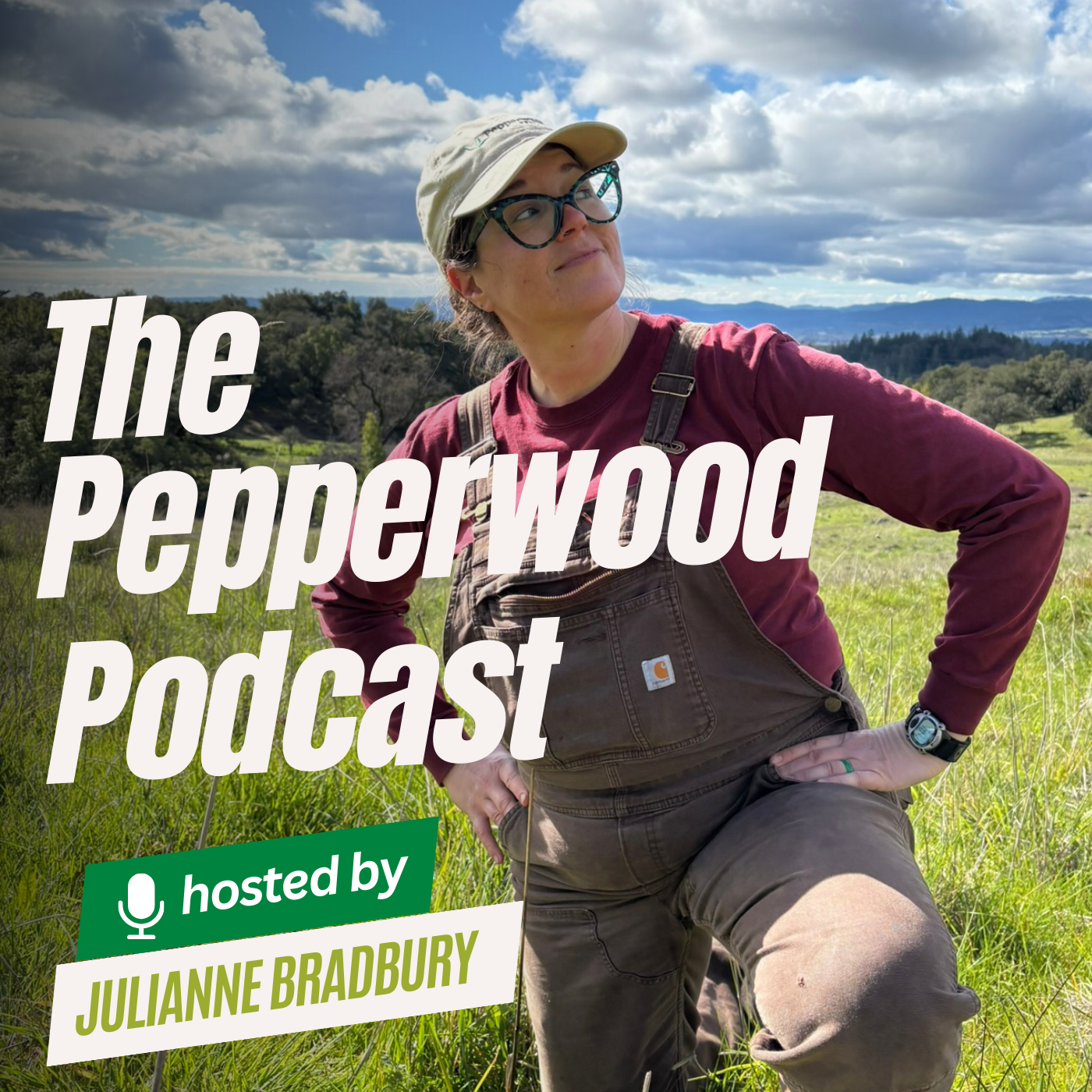
The Pepperwood Podcast is a monthly podcast, hosted by Julianne Bradbury. Join us as we speak with experts on conservation, landscape connectivity, biodiversity, science, stewardship, and everything in between.
-
11
Birdwatching Breakthroughs: How Volunteers are Transforming Bird Conservation
Since 2007, Pepperwood has actively engaged dedicated volunteers in monitoring the behavior of local bird populations. Science volunteer Sean Jeane shares his valuable experience of gathering critical data through careful listening, highlighting the skills he's honed along the way. Additionally, Ecology Research Manager Michelle Halbur provides insights into the significant findings we've uncovered about local bird populations by analyzing the data contributed by Sean and his fellow volunteers. Their combined efforts enhance our understanding of these vital ecosystems and contribute to conservation efforts.Links bonanza!Support long-term monitoring and our new Motus tower with a donation to the Pepperwood FoundationCornell Lab links: Macaulay Library to access recorded bird vocalizations, All About Birds to learn more about bird species, Merlin Bird ID to download the smartphone application, and eBird to contribute bird observationsPepperwood also contributes breeding bird survey data to the Environmental Data Initiative and the Avian Knowledge NetworkLearn more (and join an annual birding event!) at the West Sonoma County Christmas Bird Count websiteLearn more about the movement to change eponymous bird names at Bird Names for Birds website and Bird Names for the 21st Century, an article from the American Birding Association.This episode’s bird vocalization clips were used courtesy of Cornell Lab of Ornithology | Macaulay Library. Clips were recorded by Paul Marvin, Bob McGuire, Randolph Little, Thomas G. Sander, Paul Fenwick, Ed Pandolfino, Timothy Piranian, I'm Birding Right Now (Teresa & Miles Tuffli), and Bob HasenickSend your guesses for this episode’s Mystery Nature Sound to [email protected]!
-
10
Voices of TeenNat
Seven past participants of TeenNat, Pepperwood’s summer science institute for high school students, join us to share their experiences and encourage others to apply. For current information about the program and how to apply, visit the TeenNat page, and email us at [email protected] for more details and bilingual support.We kindly ask you to consider supporting the TeenNat program by making a donation to the Pepperwood Foundation to help us keep it free for all participants.In this episode, we feature clips from the Nature Sound Guess Who Game, recorded by Geoffrey A. Keller and Thomas G. Sander, with permission from the Cornell Lab of Ornithology | Macaulay Library. Please send your guesses for this episode’s Mystery Nature Sound to [email protected]!
-
9
Hunting & Conservation with Ryan Ferrell
Sentinel Site Manager Ryan Ferrell joins us for a conservation conversation (say that three times fast!) about the practice of hunting, its management for ecological sustainability, and its relationship to conservation. As a lifelong hunter and professional field scientist, Ryan’s understanding of the hunting community and the dynamics of local ecosystems provides unique insight into this topic. Learn more about Ryan’s work monitoring soils and hydrology at Pepperwood in the November 2024 article, Consulting with the Soil: Nature’s Oracle.This episode’s Nature Sound Guess Who Game clip, recorded by Bob Hasenick, was used courtesy of Cornell Lab of Ornithology | Macaulay Library.
-
8
What is a Sentinel Site for Nature?
Sentinel Sites for Nature are strategic locations, such as preserves or sanctuaries, where scientists conduct long-term and standardized monitoring of physical and biological conditions, including climate, wildlife, and water. This monitoring helps detect and understand environmental changes, providing crucial early warnings of impacts from climate change, pollution, and habitat loss. The data gathered enables better conservation decisions.Using consistent methods like camera monitoring, audio monitoring, meteorological, and soil sensor data, these sites track the pulse of the natural world across vast networks like California's Sentinel Site Network or NOAA's Marine Sanctuaries. These data help scientists establish baselines and track trends, supporting stewardship and public safety more effectively. Pepperwood is part of California's Sentinel Site Network and was among the first such sites established in the state. It is also one of the most highly instrumented of such sites, with more than 700 real-time data streams. Take a tour through our extensive collection of monitoring sensors with Ryan Ferrell, Pepperwood's Sentinel Site Manager. Ryan describes how collecting abiotic data can inform our adaptive management plan, and what that process is like in his day-to-day experience. You can read more about this, including additional projects within the Sentinel Site and links to our regional partners, in the April 2025 article What is a Sentinel Site.This episode's Nature Sound Guess Who Game clip, recorded by Geoffrey A. Keller, was used courtesy of Cornell Lab of Ornithology | Macaulay Library.
-
7
Celebrating 20 Years of Pepperwood: A Conversation with Steve and Linda Barnhart
To celebrate Pepperwood's 20th anniversary, we are joined by esteemed community members Steve and Linda Barnhart, who share their extensive involvement with Pepperwood over the years. Steve discusses the significance of oak woodlands and his academic research on local oak species, while Linda highlights the history of the Pepperwood Stewards training course, which led to the establishment of the California Naturalist (CalNat) certification course.To experience the CalNat course for yourself, visit the UC Environmental Stewards website or look for upcoming courses at Pepperwood’s Classes and Events page.This episode’s Nature Sound Guess Who Game clip, recorded by Andrew Spencer, was used courtesy of Cornell Lab of Ornithology | Macaulay Library.
-
6
Science in the Summer (and Beyond!) with TeenNat
In this episode, we hear the voices of Beatrix, Teagan, and Glenn, high school students who have participated in Pepperwood’s summer science institute and who continue to return to Pepperwood for more science, stewardship, art, and time with fellow nature lovers. Are you a high school student, or do you know a high school student who might want to spend a summer up in the beautiful landscape of Pepperwood? Here are some insights into what you might experience during TeenNat.Once you have listened, please visit the TeenNat page for more information and to apply for the program!SPOILER ALERT: Please check out this range map as well as this article from the Markkula Center for Applied Ethics at Santa Clara University to learn more about the ongoing discourse regarding this episode’s featured Nature Sound Guess Who Game species. Thanks again to the Cornell Lab of Ornithology | Macaulay Library for the use of their media and for their ongoing support, and to contributor Thomas G. Sander for recording and sharing the excellent sound clip whose identity is revealed in this episode.
-
5
Grazing for Stewardship (and Michael Gillogly's 30 Years at Pepperwood)
In this episode, Preserve Manager Michael Gillogly reflects on his three decades at the reserve and gives us an inside look at how cattle grazing can be managed to enhance biodiversity and carbon sequestration.Learn more about and support our grazing partners at Markegard Family Grass-Fed, and become a supporter of our stewardship work at Pepperwood. SPOILER ALERT: the Nature Sound Guess Who Game clip from the end of episode 4 can be viewed (and heard) here: https://www.inaturalist.org/observations/73798969. For the much more intense sound that I teased on this episode, check this out: https://www.inaturalist.org/observations/13850035. Many thanks to Elliot Smeds for these (and many more) excellent iNaturalist observations!
-
4
Michelle Halbur and the Wonders of Grasslands
In this episode we talk to Pepperwood’s Ecology Research Manager Michelle Halbur, who walks us through the world of Californian grasslands and how they are monitored and managed at Pepperwood. To hear more on this subject from Michelle, check out her 2020 webinar: California Grasslands: The Forest Beneath Our Feet. For more about grassland birds like the ones Michelle mentions, check out the eBird websiteFor more about grassland conservation, check out the California Native Grassland Association and the Milo Baker chapter of the California Native Plant SocietyTo register for events, classes, workshops, or stewardship workdays at Pepperwood, visit our Classes & Events pageThis episode’s Nature Sound Guess Who Game clips were used courtesy of Cornell Lab of Ornithology | Macaulay Library, and the contributors were Randolph Little, John Patterson, and Bob McGuire.
-
3
Science in the Forest with Makayla Freed
In this episode we talk to Makayla Freed, Pepperwood’s Research Specialist, about the long-term monitoring plots that she maintains in forest habitats at the reserve. We’ll discuss the relationship between science and stewardship and explore some of the techniques that scientists use to keep track of diverse types of organisms. To learn more about the scientific monitoring that takes place at Pepperwood, visit our Climate and Science pageFor more fascinating information about our local forests, check out Kendall Calhoun’s presentation Monitoring Oak Woodland Wildlife Communities following the Mendocino Complex Fire and Clint McKay’s presentation Black Oaks Revealed: Their cultural significance for Indigenous Communities Check out life history summaries and range maps of California animals at https://wildlife.ca.gov/Data/CWHR/Life-History-and-Range
-
2
Fires That Heal: Exploring the Art of Pile Burning in California
In this episode, we speak with Devyn Friedfel, Pepperwood’s Fire and Stewardship Manager and a California-certified Burn Boss, about the history of fire in California and the importance of using fire as a key part of land stewardship in this fire-adapted region of Northern California. We will focus on a practice known as "pile burning." This beneficial fire management technique involves burning piles of forest debris to reduce the risk of wildfires.If you're interested in learning more about this form of stewardship, Pepperwood is an excellent resource for gaining knowledge and practical hands-on experience. Visit our Stewardship page to learn more about ways to get involved in person.Watch Devyn’s 2024 webinar, “Managing Invasive Species in Grasslands”Check out Pepperwood’s Good Fire FAQs page
-
1
Gary Morgret and the Pepperwood Phenology Project
In this episode we introduce our host, Environmental Educator Julianne Bradbury, our plans for the podcast, and Steward Gary Morgret, a dedicated volunteer who has contributed his time and talents to the Pepperwood Phenology Project for nearly a decade. Watch Julianne’s 2021 webinar, “Impacts of Fire on Amphibians and Reptiles”Gary mentions being inspired by Pepperwood Steward, Wendy Herniman. She's since moved out of the area but her work on oak trees from her time with Pepperwood is really fascinating. You can read all about it in her essay, The Grandmother Oak.Another Pepperwood Steward who works on the Phenology Project is Natasha Granoff, and she's also written about her experiences! Read her essay, On The Plant Phenology Trail.Curious about becoming a Steward at Pepperwood? Or just taking one of the amazing California Naturalist or Climate Steward certification programs Julianne talked about? Here's where you can learn more about Pepperwood's Steward program, AND here's where you can learn more about the 👉 UC Environmental Stewards certification program 👈
No matches for "" in this podcast's transcripts.
No topics indexed yet for this podcast.
Loading reviews...
Loading similar podcasts...
URL copied to clipboard!