
PODCAST · society
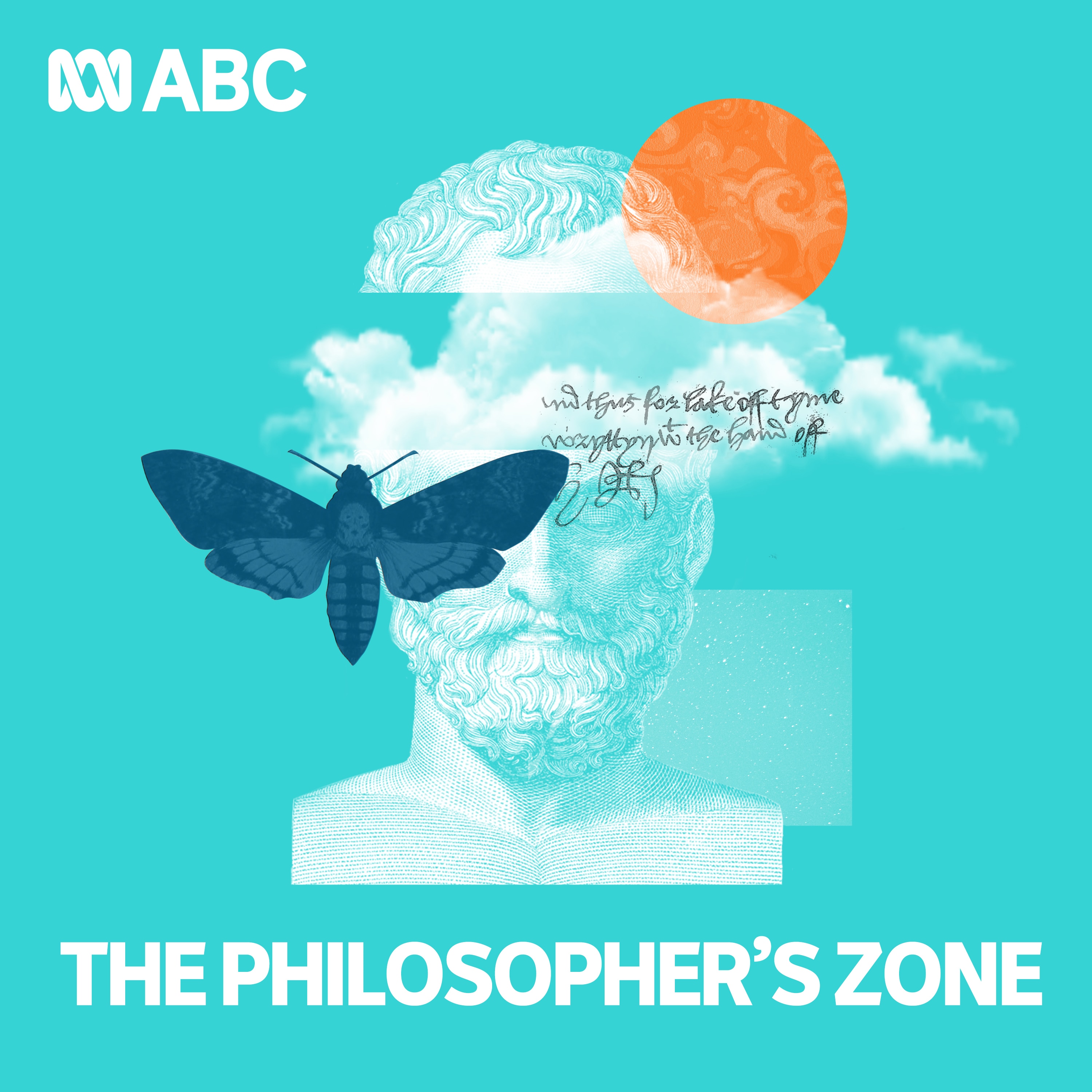
Philosopher's Zone
by ABC
The simplest questions often have the most complex answers. The Philosopher's Zone is your guide through the strange thickets of logic, metaphysics and ethics.
Episodes
-
03 | Unsteady State | What the Right gets wrong about Nietzsche
Friedrich Nietzsche is a difficult figure to pin down politically. He's popularly known as the favourite philosopher of the architects of the Holocaust, and of today's neo-Nazis and far-right ideologues who venerate strength, domination and the exercise of traditionally male-coded virtues. But…
more -
02 | Unsteady State | Who owns Antarctica?
What can Antarctica teach us about statehood and sovereignty? The continent has no government, no citizens, no permanent human population. Its native inhabitants are mostly seals and penguins who, as far as we know, take little interest in politics. But according to this week's guest, Antarctica...
-
01 | Unsteady State | Politics and the good life
What if your government decided what 'the good life' looks like, then rewarded you for living it and penalised you for straying? In a growing number of countries, that's already happening. Liberal democratic theory has long held that the good life is for each citizen to define for themselves, and...
-
Technology and the lure of ancient Athens
One of the more utopian promises of technology has always been that it will free us from the necessity of work - but not having to work poses its own problems. What will we do instead? how will we make money? and what might a leisure-oriented society look like? Technophiles - from the early...
-
Sympathy, himpathy and feminism
Australian feminist philosopher Kate Manne memorably coined the term "himpathy" to describe what happens when a man commits a crime against a woman and finds himself the object of disproportionate sympathy. But as useful as this description is, the psychological mechanism behind himpathy remains...
-
Signal, noise and interpersonal conflict
If someone's behaving badly, it can be hard to know how much of their behaviour stems from a deep character flaw, and how much of it is incidental - the stuff we might charitably filter out as unreflective of their true self. And the same goes for achievement: how much credit for a Nobel prize...
-
Feminism, generosity and cross-cultural support
Western feminists often express support for women in Muslim majority countries, but sometimes that support is couched in the language of pity, as though Muslim women were held captive by their religion and culture, and in need of 'rescue'. This week, a conversation about how to offer…
more -
Getting angry at the system
If I pick up a tree branch and smash your window with it, you're going to be angry, and your anger will rightly be directed at me. But if a tree branch smashes your windscreen during a cyclone whose intensity has been caused by global warming, you're still going to be angry — but who or what...
-
Who's afraid of Cultural Marxism?
Cultural Marxism is many things to many people — at one end of the political spectrum, it's the hidden force behind political correctness, identity politics and 'wokeness', while at the other end it's a shopworn conspiracy theory that explains nothing much at all. So what is Cultural Marxism? Did…
more -
Habermas and the retreat of reason
The great German philosopher Jürgen Habermas, who died in March, wrote in his later works about what he called Unheimlichkeit — roughly translated as "the unease of the times" — to describe the global retreat of liberal democracy, the fraying of the rules-based international order, and the...
-
Visual art as philosophy
When it comes to the ideal philosophical medium, most of us would identify the written word - or maybe the spoken word, if we're fans of Socratic dialogue - and this is because for centuries, philosophy has been a linguistic practice. But this week we're arguing that visual art can be philosophy,...
-
How smart are machines, anyway?
Ever since AI was founded in the 1950s, people have talked and written about 'intelligence' as though we all broadly agree on what that word means. But there's considerable debate on that score, and among the debaters are philosophers - like this week's guest - who question the degree to which...
-
Hegel: The philosopher with the (one) big idea
GWF Hegel (1770-1831) wanted to construct nothing less than a complete explanation of reality - nature, consciousness, art, history, politics, the lot - based on a single self-explanatory idea. Whether or not he succeeded is an interesting question (spoiler: he didn't), but more interesting is…
more -
Eco-grief and environmental loss
Philosophers have traditionally thought of grief as something that attaches to immediate loss - the death of a loved one, something terrible that's happened to us personally. But as the environmental crisis continues to wreak havoc on human and non-human lives, the philosophy of emotions needs a...
-
Colonising space
There's something about space that's always captured the human imagination, but what happens when space begins to capture the imagination of billionaire tech entrepreneurs? In the past, we've visited space for scientific purposes, but now the grand vision is colonisation, permanent human…
more -
Can pregnancy be a job? the ethics of commercial surrogacy
Commercial surrogacy - the practice of paying someone to gestate your child and then hand it over when it's born - is banned in Australia, but it has its supporters. Defenders of commercial surrogacy argue that it should be legal for someone to receive payment for the labour of carrying a child…
more -
Belief, emotion and trust
The traditional philosophical view of belief is that it's a rational cognitive affair, evidence based and directed toward truth. According to this account, things like delusion and religious belief are "edge cases", exceptions that prove the rule. But this week we're considering not only that...
-
Communication in an age of crisis
Collins Dictionary made "permacrisis" their word of the year in 2022 - a prescient choice because since then, the crises have just kept coming. Permacrisis is forcing us to take a close look at the way we communicate, because while free public discourse is one of the cornerstones of democracy,...
-
Can sport survive AI?
Elite sport is traditionally a celebration of the human, but for how much longer? We watch in awe as athletes perform feats of skill, strength and endurance, and experience the high drama of triumph and defeat - but it's all on a human scale, or at least it has been until now. Sport and…
more -
Purity, filth and 'promiscuous defecators': why we're weird about poo
Why are we so repelled yet fascinated by bodily waste? Today we're talking purity, pollution, colonial sanitation regimes, medicine and public health, and how they've been shaped by our deeply ambivalent attitudes to the stuff we all produce (ideally) every day, but rarely think about deeply.
-
Bad faith and 'just asking questions'
There's a certain kind of question that raises suspicion as to the motives of the person asking it. 'Was the Holocaust really as bad as historians have made out?' 'Is there really a scientific consensus on climate change?' 'How do we now for sure that vaccines aren't harmful?' These kinds of...
-
'Natural' disasters and climate justice
To call the effects of a fire, flood or cyclone these days a 'natural' disaster only tells part of the story, as climate change makes us realise that vulnerability to harm is often the result of factors that actually have little to do with weather events. Land theft, displacement, poverty and the...
-
Where am I? Buddhist philosophy and the self
Behind the familiar Buddhist doctrine that "there is no self" lies a centuries-long tradition of dispute and disagreement. Reductionists believe that the self is no more than a bundle of sense impressions and mental states that add up to nothing of substance or permanence, while emergentists...
-
Common sense vs reason: when philosophy gets weird
There are certain things about the world that we think we know for sure, and yet philosophical reason tells us cannot be true. Can you fly? are you real? is the world a hallucination? The answers seem self-evident, but this week we're exploring philosophical thought experiments that pull the rug...
-
Adam Smith, economics and moral philosophy
Scottish philosopher Adam Smith (1723-1790) is often described as an arch capitalist, the "father of modern economics" - and at a glance it's easy to see why. His Inquiry Into the Nature and Causes of the Wealth of Nations provided the theoretical foundation for free market capitalism and the...
-
Can AIs be friends?
Artificial intelligence is beginning to revolutionise many aspects of human existence - but how does it rate on friendship? The question is less theoretical than it seems: media reports of people developing 'relationships' with chatbots are becoming more common, and while we may instinctively...
-
Kant and religion
It's often claimed that the Enlightenment was a time when Europeans awoke from their superstitious slumber, discovered rationality, got started on science and threw religion in the bin. But a surprising number of Enlightenment philosophers had religious commitments — including Immanuel Kant…
more -
Speech acts and AI
Speech acts - utterances that have the power to make things happen in the world - are increasingly being created by AI, especially in certain workplaces where it's not uncommon to receive orders and instructions from an algorithm. The power of a speech act is often understood as emanating from…
more -
'Being a burden' and assisted dying
Caring for a terminally ill person can place huge pressure - financial, emotional, physical - on the caregivers, who are often family members. And it's not uncommon at the end of life for someone for feel as though they're a 'burden' to those around them. But how should perceptions of...
-
Sincerity, irony and metamodernism
The supposed evils of postmodern culture have been endlessly catalogued: moral relativism, the loss of shared values, ironic detachment, a pathological aversion to sincerity, and all rooted in a philosophical worldview that casts a sceptical eye on master narratives and the concept of…
more -
Is it time to get rid of legal gender status?
Most of us have Male or Female registered on our birth certificates - but what does this certification mean, in terms of its effect on our lives? There are many other things about us that have at least as much significance as our gender - our sexuality, our ethnicity - but only gender has legal...
-
Medieval Jewish philosophy and the lessons of history
We secular moderns sometimes make the assumption that philosophy is what you do when you're interested in the Big Questions of human existence, but not interested in religious answers. But the sacred/secular divide is itself a modern invention, and would not have made sense to medieval thinkers....
-
The reluctant feminist: Clara Zetkin and International Women's Day
Clara Zetkin (1857-1933) is widely celebrated as the founder of International Women's Day, yet she saw herself first and foremost as a socialist revolutionary. Far from embracing the mainstream women's movement of her day, she had limited sympathy for what she viewed as its bourgeois priorities....
-
Move fast, break everything: Nick Land and accelerationism
Nick Land is one of the more interesting contemporary philosophers, and one of the most disturbing. This week we're talking with the author of a new book that sets out Land's ideas, from cybernetic capitalism to the collapse of Enlightenment reason.
-
Can 'planetary civics' save us from techno-catastrophe?
Most of us are a little anxious these days - and for good reason, as advances in technology and the rising intensity of climate change are set to cause massive upheavals on our planet. But this week we're hearing a 'post-humanist' perspective on global issues that's positive without being blindly...
-
Racism and racial regimes
It's a well-rehearsed argument that systemic, structural racism has more significant bearing on the lives and opportunities of racialised minorities than the attitudes of individual racists. But systemic racism is harder to shift, being deeply entangled in the structures of capitalism and...
-
Do we still love art?
There has never been as much art around as there is today - digital tools are incredibly cheap, artistic production and distribution can bypass the traditional institutional gatekeepers of galleries, museums and curated spaces. And yet, there's a sense today in which art is devalued currency, and...
-
Who am I? Individual and collective identity
The question of identity, and whether each of us is best understood as an individual or a member of a collective, has vexed philosophers for centuries. This week we're getting into it with a thinker who's also a leading light in the teaching of philosophy in schools.
-
What's the point of education?
Of course, education has a point - but establishing exactly what that point is, can be a surprisingly difficult task. Do we educate children in order to foster autonomy and independent thinking, or to teach respect for certain norms, values and hierarchies? Is education about creative thinking…
more -
Albert Camus, fascism and America
Living and writing through the years before, during and after the Second World War, French author and philosopher Albert Camus witnessed the rise of fascism and its terrible endgame in German National Socialism. Today, amid fears of a neo-fascist resurgence in the USA, his work well is worth...
-
How feminism changed primatology
For decades, primatologists believed that primate societies were structured around aggressive alpha males - until a remarkable push from feminist scientists in the 1960s and 70s changed the narrative. So why does the "dominant alpha male" story persist in human culture?
-
What's the time? Indigenous temporalities and the 'Everywhen'
We tend to think of time as a universal experience, something that carries us all along in the same direction at the same pace. So it might seem strange to think of time in terms of 'temporalities', different concepts and experiences of time that reflect different cultural values. In Australia,...
-
Buddhism and nationalism
Buddhism in the West is often thought of as an ethical or philosophical system first and foremost, based on principles of non-self and impermanence, and universalist in its outlook. So it can come as a surprise to find that in countries like Sri Lanka, there exists a strain of Buddhist…
more -
Innocence and 'child rescue' in the colonial imagination
The forced removal of First Nations children from their families was active government policy in Australia between the 1910s and the 1970s, and still continues today under the banner of child protection. Today we're hearing that the story of the Stolen Generation has a historical parallel in the...
-
Distributed intelligence and the problem with 'doing your own research'
Conspiracy theorists are turning out to be a resilient bunch, and no amount of refutation or mockery will make them go away. It's a problem, because as well as being ethically problematic, conspiracy theories can sometimes be downright dangerous. So how do we deal with them? This week we're...
-
Can atheists be virtuous? The moral philosophy of Catharine Trotter Cockburn
Catharine Trotter Cockburn (1679-1749) is best known as a contemporary and defender of John Locke - but she was also a fascinating philosopher in her own right. Writing at a time when secular philosophy was beginning to challenge the Christian religious monopoly on moral authority, Cockburn was a...
-
What are we doing when we read?
Reading seems like a simple, uncomplicated activity that most of us enjoy without thinking too much about it - but how simple is it really? Literary theorists have been arguing for decades over what it is to read, what it is to interpret a text, what it is for something to be a text. This week...
-
Love, compassion and gloom: the contradictions of Arthur Schopenhauer
It's been said that the work of the 19th century German philosopher Arthur Schopenhauer should come with a health warning, so stark and pessimistic was his outlook on life. And the man was no less confronting than the philosophy: he could be rude, intemperate and misanthropic. But a new biography...
-
Poverty and punishment
The 2023 Royal Commission into the Robodebt Scheme exposed a system that unfairly (and illegally) subjected vulnerable people to stress and trauma - but was it deliberately punitive? And to what extent does our welfare system reflect negative public attitudes toward people living in poverty?
-
Knowledge, culture and parenting apps
There's an app for everything these days, including parenting and childrearing - but at what cost? Women in the Global South are increasingly using parenting apps, whose Western developers say their advice is scientific and reliable. But that modern, scientific advice is edging out older,...
We're indexing this podcast's transcripts for the first time — this can take a minute or two. We'll show results as soon as they're ready.
No matches for "" in this podcast's transcripts.
No topics indexed yet for this podcast.
Loading reviews...
ABOUT THIS SHOW
The simplest questions often have the most complex answers. The Philosopher's Zone is your guide through the strange thickets of logic, metaphysics and ethics.
HOSTED BY
ABC
CATEGORIES
Loading similar podcasts...
Frequently Asked Questions
How many episodes does Philosopher's Zone have?
Philosopher's Zone currently has 241 episodes available on PodParley. New episodes are automatically indexed when they're published to the podcast feed.
What is Philosopher's Zone about?
The simplest questions often have the most complex answers. The Philosopher's Zone is your guide through the strange thickets of logic, metaphysics and ethics.
How often does Philosopher's Zone release new episodes?
Philosopher's Zone publishes regularly with 241 episodes available. Check the episode list for the typical release schedule.
Where can I listen to Philosopher's Zone?
You can listen to Philosopher's Zone on PodParley by clicking any episode. We provide an embedded audio player for direct listening, and you can also subscribe via your preferred podcast app using the RSS feed.
Who hosts Philosopher's Zone?
Philosopher's Zone is created and hosted by ABC.
URL copied to clipboard!