
PODCAST · health
Picayune Conversations
by Travelers Rest Counseling
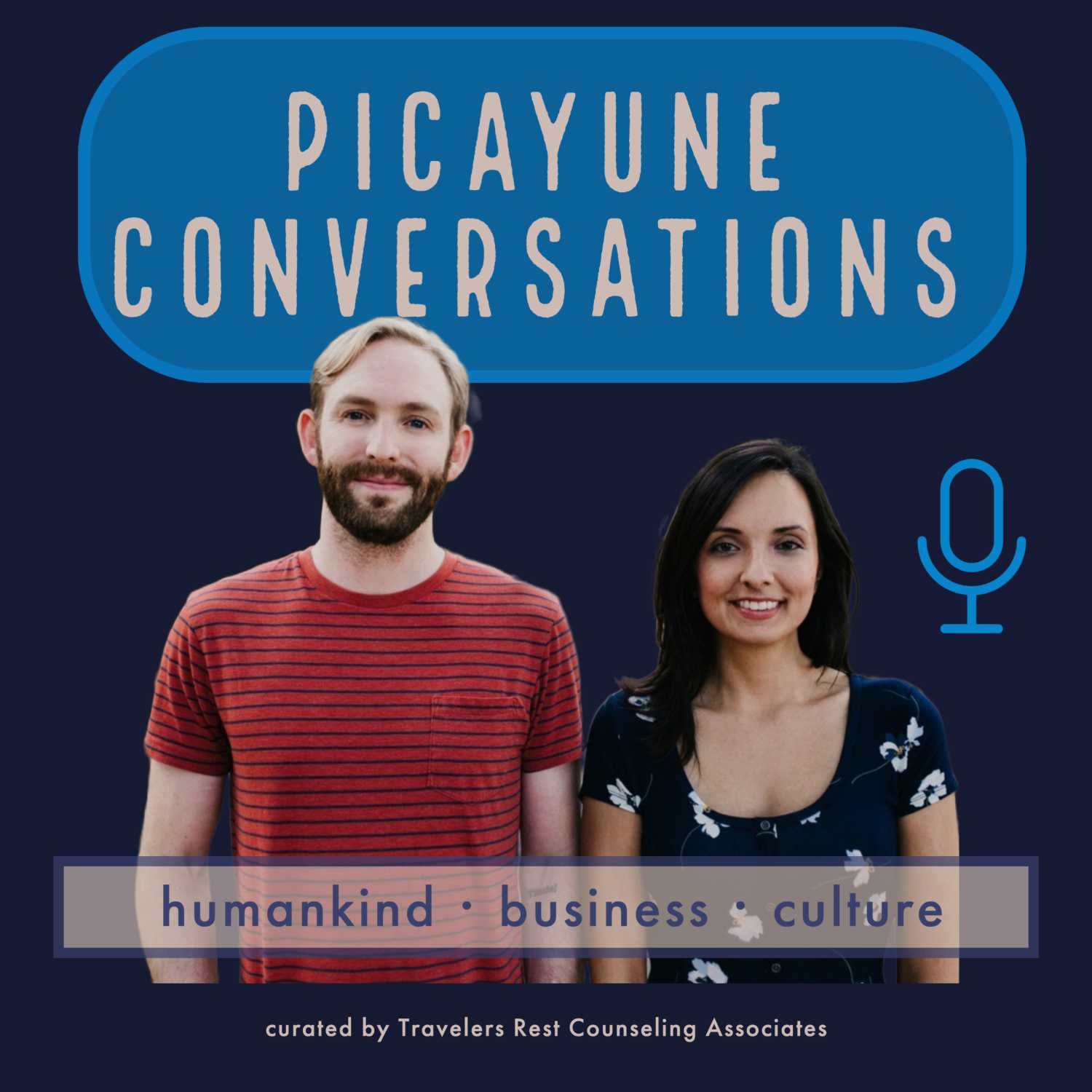
Lindsay Hill and Calvin Armerding- co-founders of Travelers Rest Counseling Associates in Travelers Rest, South Carolina- discuss business, culture, and humankind. Topics include parenting, relationships, how to treat co-workers, film/music, and more. All issues are approached from the lens of Adlerian Psychology, the theory of 20th century psychotherapist Alfred Adler.Check out Lindsay and Calvin's counseling practice at TravelersRestCounseling.com
-
51
Shame: Protection Against Rejection and Isolation
Lindsay and Calvin discuss the importance and usefulness of shame from the perspective of adaptation. Rather than being inherently "toxic," shame is an emotion that compels us to confront (potentially) problematic realities about ourselves that endanger our participation in the community. They also discuss how societies can do better by articulating what actually is disqualifying for belonging, so as to avoid unnecessary fear and shame. Contact us: https://forms.gle/Y9hhTNEhzNx9sdwr6
-
50
"How Did Nobody Notice?" Missed ADHD in Girls & Women
This episode features our friend and colleague Kelli Fowler, and we discuss the developmental and gender impacts of missed ADHD diagnoses, particularly in young people. Kelli is a Licensed Professional Counselor in South Carolina and works in Greenville County Schools as a therapist and supervisor. Contact us: https://forms.gle/SBzwCQEbnicNEzW39
-
49
Adolescence: Healthy 'Pulling Apart'
Adolescence can feel like a painful season of distance between parents and children—but what if that distance is actually healthy? In this video, I talk about adolescence as a natural “pulling apart” that helps young people become themselves. While this separation can be uncomfortable, it doesn’t have to destroy closeness. When parents avoid unnecessary conflict and damage during this stage, the relationship can emerge stronger, more respectful, and more authentic on the other side. Contact us: https://forms.gle/Y9hhTNEhzNx9sdwr6
-
48
Resisting the Urge to Rescue
Encouragement isn’t loud, and it doesn’t rush. In this episode, we explore why silence makes helpers anxious, how rescuing can interrupt courage as it’s forming, and what real encouragement looks like in therapy, parenting, and relationships. Sometimes the most encouraging thing you can do is not fill the space. Contact us: https://forms.gle/Y9hhTNEhzNx9sdwr6
-
47
What’s Actually Missing When Life Feels ‘Off’?
Using stories, reflection, and a very down-to-earth psychology lens, Lindsay walks listeners through four core experiences we all need to feel okay in the world: feeling connected, capable, like we matter, and brave enough to keep moving. You don’t need a therapy background to follow this—just a willingness to get curious about yourself. This episode is for parents, therapists, students, helpers, and humans who feel a little discouraged and want to understand why (and what actually may help). Contact us: https://forms.gle/Y9hhTNEhzNx9sdwr6
-
46
Millenial Parenting: Doing So Much (and Maybe Too Much?)
In this conversation, we dig into the real challenges of parenting as Millennials—why it takes so much energy to break old patterns, self-regulate in the moment, and navigate overwhelming societal expectations. We explore the internal pressure to be exceptional parents, the exhaustion that follows, and the courage required to choose a healthier, more connected, more humane way of raising kids. Contact us: https://forms.gle/Y9hhTNEhzNx9sdwr6
-
45
Sarah Mullis: The Necessity of Social Interest on Social Media
In this conversation, we sit down with Sarah Mullis, an Adlerian counselor based in Wales, to explore why community feeling/social interest (Gemeinschaftsgefühl) is essential in the digital age. We discuss why social media’s basic architecture is fundamentally incapable of creating real belonging or mutual respect on its own — and what it actually takes to bring Social Interest into online spaces. Sarah shares Adlerian insights on connection, courage, discouragement, and how we can show up differently to foster healthier digital communities. Whether you're a mental health professional, a creator, or simply someone navigating social media, this interview offers a grounded, hopeful perspective on how Adlerian psychology can reshape the way we relate online. Topics include: Why social media doesn’t naturally build community feeling Adler’s concept of Social Interest applied to digital life How discouragement shows up online The courage to connect Practical ways to create healthier online spaces About Sarah Mullis: Sarah is an Adlerian counselor in Wales and an advocate for bringing relational depth and real community values into modern digital platforms. Follow her on Instagram @that_adlerian_therapist and on Substack at https://substack.com/@thatadleriantherapist Contact us: https://forms.gle/Y9hhTNEhzNx9sdwr6
-
44
The Courage to Listen to Imperfect Communication
Highly therapized culture has made us vulnerable to a neurotic excuse in the form of avoiding listening to the content of what another person is saying if they are not doing an excellent job in how they are saying it. This episode explores how we can go about avoiding this excuse with courage to ensure that we don't create unreasonable barriers to repair and connection in our relationships. 👉 Contact us: https://forms.gle/Y9hhTNEhzNx9sdwr6
-
43
Don't Give Yourself "Emotional Scurvy"
In this podcast, we talk about emotional health, self-awareness, and the danger of ignoring your real needs — what Calvin calls “Emotional Scurvy.” Sometimes it’s hard to tell the difference between what we want and what we need. When we ignore our deeper, slow-burning needs, we can end up quietly malnourished — giving ourselves quick fixes instead of real nourishment. Calvin explores how to recognize those subtle needs, care for them honestly, and stay connected without slipping into selfishness or self-pity. 👉 Contact us: https://forms.gle/Y9hhTNEhzNx9sdwr6
-
42
The Psychology of Fascism
In this episode, we dive into the psychological roots of fascism, defining it as the belief that "you're only in if others are out." This ideology, which thrives on discouragement and a myth of victimhood, fosters a dangerous desire for "purity" and isolation, leading to a counterfeit sense of community. We argue that the true antidote is "Gemeinschaftsgefühl," or social interest—a genuine "we-feeling altogether" built on mutual respect. We explore why an insistence on absolute agreement and the elimination of opposing voices (whether from the left or the right) leads to a bad world. Ultimately, when we forsake the Golden Rule and due process in the name of a "good result," we are winning people over not to virtue, but to force—and sacrificing the true security found only in trust and community feeling.
-
41
The Problem With Spoiling Kids Isn't (Primarily) Overindulgence
Many people think spoiling kids is all about giving them too much—but the real issue runs deeper. In this video, we explore how spoiling is less about overindulgence and more about a subtle, discouraging message: a vote of no confidence in a child's abilities. When we step in too much, solve every problem, or shield kids from struggle, we unintentionally send the message that they aren’t capable. Let’s rethink what it really means to ‘spoil’ a child—and how to foster true confidence instead. Contact us: https://forms.gle/Y9hhTNEhzNx9sdwr6
-
40
Thanksgiving Special: Truman & Ruby
On this special holiday episode, Calvin interviews 9-year-old Truman and 7-year-old Ruby, who share their thoughts on gratitude, what adults get wrong, and how they are growing and improving in life. Questions? Commments? Contact us: https://forms.gle/Y9hhTNEhzNx9sdwr6
-
39
What Is Addiction?
In this episode, Calvin & Lindsay discuss ways of understanding and conceptualizing addiction, with the help of friend/colleague Jim Holder. Addiction is discussed in terms of its purpose in helping people to solve problems (however maladaptive the solution may be!). Questions? Commments? Contact us: https://forms.gle/Y9hhTNEhzNx9sdwr6
-
38
Emotions: The High-Stakes Nature of Shame
What is the true meaning of shame? What is it's root cause? Why does shame feel so terrible? In this continuation of a series on emotions, Calvin & Lindsay discuss the adaptive value of shame, while also emphasizing basic mistakes that lead to unnecessary shame and maladaptive uses of the emotion. Questions? Commments? Contact us: https://forms.gle/Y9hhTNEhzNx9sdwr6
-
37
Pearls and Pigs: The Importance of Stewarding the Precious Things Well
In this episode, Calvin explores a verse from the New Testament that warns against "casting pearls before swine." While not a theological exploration, the need for wise, watchful engagement with other people is a fundamentally necessary part of having positive relationships and avoiding unnecessary disappointment and pain. Questions? Commments? Contact us: https://forms.gle/Y9hhTNEhzNx9sdwr6
-
36
Emotions: How to Understand, Accept, and Manage Anxiety
What is the definition of anxiety? How do you come out of anxiety? What is anxiety good for? In this episode, Calvin and Lindsay continue their series on emotions, based primarily on the work of Dr. Paul Rasmussen. This episode focuses on anxiety as the "vigilance emotion," which (though uncomfortable, and potentially problematic) helps human beings to manage many problems of life. Contact us: https://forms.gle/Y9hhTNEhzNx9sdwr6
-
35
Emotions: The Unique Power of Sadness
How do you explain sadness? What is sadness trying to tell you? What is the difference between sadness, grief, and depression? In this episode, Calvin and Lindsay discuss the emotion of sadness, its purpose, and how powerful it can be in helping people to flourish. Questions? Commments? Contact us: https://forms.gle/Y9hhTNEhzNx9sdwr6
-
34
What About Gentle Parenting? (feat. Alyson Schafer)
Calvin and Lindsay interview Alyson Schafer about the virtues and potential missteps of Gentle Parenting, a growing trend among young parents in the United States and Canada. This longer-than-usual episode covers a broad range of topics, including: What is the gentle parenting approach? What is the argument for gentle parenting? What are the downsides of gentle parenting? How does "Parenting the Adlerian Way" compare to gentle parenting? Alyson Schafer is a counselor, parenting expert, author, and public figure based in Canada. Find more information about Alyson at https://alysonschafer.com/ Find Alyson's wonderful books here: https://alysonschafer.com/books/ Want to learn more? Listen to Alyson's podcast "Parenting the Adlerian Way," which was just rated as the #1 Parenting Podcast in Canada! Contact us: https://forms.gle/Y9hhTNEhzNx9sdwr6
-
33
Emotions: What is Anger, and What Can We Do About It?
Lindsay and Calvin discuss the emotion of anger, it's purpose, and how it can be managed (not done away-with)! The insights of Dr. Paul Rasmussen, who trained both Calvin and Lindsay, loom large in the discussion. Contact us: https://forms.gle/Y9hhTNEhzNx9sdwr6
-
32
Emotions: What Is Guilt Good For (and Not)?
What is guilt? What is the true meaning of guilt? What is the root of guilt? Lindsay & Calvin discuss the purpose of the guilt emotion, how it can be helpful, and how it can hurt us. If you have any questions about this episode, let us know: https://forms.gle/SBzwCQEbnicNEzW39
-
31
What Do Counselors Do When They See A Client in Public?
Lindsay and Calvin discuss the (somewhat) awkward situation of seeing clients in public. For many counselors, this can be a nerve-wracking experience, filled with catastrophic fears of losing their license. This conversation should put some of these fears to rest, and also remind us all of the central importance of mutual respect and an ongoing informed consent process. If you have any questions about this episode, let us know: https://forms.gle/SBzwCQEbnicNEzW39
-
30
Am I Determined by my Past, or Pulled by My Future?
"I had a terrible childhood...am I screwed?" Lots of psychotherapies are quietly deterministic in how they understand the relationship between the past and the present. "X event happened, so therefore I am this way." While of course the past is important in shaping who we are, a telelogical, goal-oriented, future-focused way of understanding human behavior can be more encouraging, empowering, and hopeful. If you have any questions about this episode, let us know: https://forms.gle/SBzwCQEbnicNEzW39
-
29
Feelings Are Not Demands
People (us too!) often act as if "I feel ________, and therefore you/I must _________." We say things like "I yelled because I was angry," or "I am upset when you offer criticism, so you must not criticize me." This is problematic, because it assumes that feelings are demands. Feelings are not demands, they are just feelings! This episode will address: How do you feel your feelings without letting them control your behavior? What is the difference between responsiveness and accommodation in a relationship? How do we take responsibility for our actions, rather than blaming those actions on our feelings? If you have any questions about this episode, let us know: https://forms.gle/SBzwCQEbnicNEzW39
-
28
Don't Make Things Worse: Klutzes & Serial Killers
A good rule for mental health is "Don't make things worse!" One way in which we do this is by making uncharitable assumptions of malice about those who hurt us. This conversation explores a (goofy) metaphor that shows us how these assumptions unnecessarily worsen our experience of life, making us more frightened and isolated from others. Ask us anything, make suggestions, or just let us know you're listening/watching! Contact us: https://forms.gle/Y9hhTNEhzNx9sdwr6
-
27
Season 2 Preview
Get excited! Picayune Conversations is back for another season of chats about humankind, business, and culture. This preview will give you a quick look ahead so you know what will be the same, what will be different, and what (specifically) to expect. Thanks for listening! Ask us anything, make suggestions, or just let us know you're listening/watching! Contact us: https://forms.gle/Y9hhTNEhzNx9sdwr6
-
26
Your First Thought May Be Reflex, But You Can Choose What Comes Next
To wrap up Season 1 of Picayune Conversations, Lindsay and Calvin discuss the idea of "first thought, second thought," noting that even though some patterns of thinking may be reflexive/automatic, we do maintain the choice of whether to reorient and give an alternate meaning to a scenario or experience. This powerful realization is applied specifically to self-compassion and self-respect, but can be generalized to other issues as well. The importance of avoiding toxic positivity or self-gaslighting is also discussed. Contact us: https://forms.gle/Y9hhTNEhzNx9sdwr6
-
25
The Danger of Pet Theories
It's tempting, especially for intuitive individuals, to avoid making (and maintaining) "pet theories" about others. This discussion explores the importance of humility and hypotheses for those who rely- however reliably- on their intuitions for understanding human behavior. Contact us: https://forms.gle/Y9hhTNEhzNx9sdwr6
-
24
Make Relationships with People Outside Your Generation
Can people from different generations be friends? What are the benefits of intergenerational friendship? Calvin & Lindsay share some thoughts (and experiences!) about forging and maintaining relationships beyond the lines of generational subgroups. Specifically, they discuss the importance of giving younger generations the chance to be teachers, and encouraging older generations in awareness of their significance through story-telling. Contact us: https://forms.gle/vj5vpz1gpG6rGsz87
-
23
Theoretical vs. Technical Eclecticism
Counselors and therapists often describe themselves as "eclectic" in their approach to helping clients. But not all eclecticism is the same! This short conversation explores the difference between borrowing a broad range of tactics/skills/techniques and borrowing from sets of (sometimes) conflicting ideas about how people function and change. Contact us: https://forms.gle/Y9hhTNEhzNx9sdwr6
-
22
Stop Focusing on Client Care
Calvin and Lindsay discuss their approach to running a private practice, including avoiding the traps of hyper-focus on client care, seeing employees as mere revenue generators, treating 1099 employees like W2 employees, and underpaying folks you work with.Contact us: https://forms.gle/QedHEjtHmgUFwFuQA
-
21
The Cooperative Family
Lindsay interviews Calvin about his 2021 book "The Cooperative Family: How Ridding Ourselves of Competitive Goals Helps Us Flourish" Contact us: https://forms.gle/Y9hhTNEhzNx9sdwr6 Purchase the book:https://henosis-press.square.site/pro... https://www.amazon.com/Cooperative-Fa...
-
20
Inferiority & Superiority in Architectural Design
Lindsay & Calvin discuss how Adler's ideas about movement away from inferiority toward superiority are relevant in architectural design. King Arthur's Round Table, Daniel Libeskind's Jewish Museum (Berlin), Mont Saint Michel, La Sagrada Familia, and even the modern American shopping mall are all discussed as emblematic of the experiential power of architectural design. How we design, build, experience, and live in our architectures speak to interpersonal and society dynamics, and the greater awareness we have about these dynamics, the more we are able to claim agency for our participation in them.
-
19
Stop Letting Social Media 'Happen To You'
Lindsay and Calvin discuss the importance of curating a social media experience by being mindful and intentional about what we expose ourselves to and what we participate in. A passive approach to social media engagement leads to a feeling of helplessness and (often) anxiety and depression. An active approach leads to accessing and saturation in life-affirming and enriching media that is positive.Contact us: https://forms.gle/Y9hhTNEhzNx9sdwr6
-
18
We Need to Make Sacrifices, Sure...But to What?
Calvin discusses the popular idea that spouses/partners must make sacrifices to one another if a relationship is to go well. Statements like "happy wife, happy life" or "just learn how to say 'yes dear'" are worth a laugh, but quietly contribute to a fundamentally unhealthy approach to relationships. Petulant participation in a relationship is a recipe for disaster, but so is chronic 'virtuous' self-sacrifice. Contact us: https://forms.gle/DintopEshsFDCbdb7
-
17
Is It A Problem, or Just an Unpleasant Part of Normal Life?
Lindsay & Calvin discuss several areas in which folks tend to unnecessarily pathologize normal experience, including conflict in relationships, compelling (some say "negative") emotions, and mistakes in parenting. Questions? Comments? Suggestions? Contact us: https://forms.gle/Y9hhTNEhzNx9sdwr6
-
16
Feelings are Not Diseases: Psychologies of Possession & Use
There are two modes of perceiving mental health conditions. Psychology of Possession focuses on what we have: e.g., "I have anxiety/depression/anger issues" Psychology of Use focuses on what we do with what we have, and acknowledges that many of the symptoms we currently classify as "diseases" are- in fact- quite useful. Lindsay & Calvin discuss the importance and implications of understanding feelings/symptoms from a Psychology of Use. Special shout out to Dr. Paul Rasmussen, who helped us to see ourselves and others through this lens! Contact us: https://forms.gle/R6CDv6son53mUEvDA
-
15
How to Build a Healthy Cancel Culture in Therapy & Business
No, we're not talking about cultural/public cancellation- we're talking about cancellation POLICIES for service-based businesses! Lindsay & Calvin discuss the importance of equality and respect in developing a policy, and the implications of following through with whatever policy you have. Contact us: https://forms.gle/eJtnXzBQKrACJEu2A
-
14
Contempt in Political Discourse
Lindsay interviews Calvin about his recent article in the Journal of Individual Psychology, which deals with the emotion of contempt and its place in contemporary political discourse. Contact us: https://forms.gle/Y9hhTNEhzNx9sdwr6 Article: Armerding, C. D. (2022). Contemptuous political artisanship: An Adlerian conceptualization and call to action. Journal of Individual Psychology, 78(4), 479-489.
-
13
What Early Memories Can Tell Us About Ourselves
Lindsay & Calvin discuss how Adlerian therapists work with early memories. In addition, we talk through the earliest memory of a famous public figure, and demonstrate what the memory can say about a person's approach to perceiving and acting in the world. We try to answer the questions: What is the meaning of early memories? How reliable are memories? Should I try to figure out what is symbolized in my earliest memories? Contact us: https://forms.gle/Y9hhTNEhzNx9sdwr6
-
12
Your Best Marketing Strategy is 100% Free
Lindsay & Calvin share their success in drumming up business by avoiding fancy (and expensive) marketing gimmicks, and instead focusing on doing excellent work, staying true to their values, and pursuing human flourishing for everyone they employ, including themselves.Contact us: https://forms.gle/Y9hhTNEhzNx9sdwr6
-
11
Why Being Safe Won't Help You Be Less Anxious...But Something Else Will
Lindsay and Calvin discuss the understandable- but fundamentally damaging- idea that the solution to anxiety is safety. Applications to phobias, parenting, and everything in between are explored. Contact us: https://forms.gle/Y9hhTNEhzNx9sdwr6
-
10
Understanding Dreams
Can dreams tell you something about yourself? What do dreams symbolize? Do they reveal hidden truths about you? Calvin and Lindsay discuss dreams and how they can reveal what Alfred Adler called the "lifestyle," our patterned way of managing challenges. One of Lindsay's recurring dreams from childhood serves as an example of how we can understand and work with dreams.Contact us: https://forms.gle/Y9hhTNEhzNx9sdwr6
-
9
Boundaries
Lindsay and Calvin discuss common myths/misunderstandings about boundaries by focusing on the basic principle of mutual respect. What are some examples of boundaries? How do you set boundaries? Why does it seem as though others don't respect your boundaries? We cover this, and more! Contact us: https://forms.gle/Y9hhTNEhzNx9sdwr6
-
8
Parenting Hacks (Part 2)
Lindsay and Calvin continue their discussion of effective parenting strategies, this time opting to answer some questions sent in by some of our viewers! We cover what to do when your children are in conflict, how to stop sounding like a broken record, and how to deal with a child lying to you. Send in more questions if you have any! Contact us: https://forms.gle/Y9hhTNEhzNx9sdwr6
-
7
Parenting Hacks (Part 2)
Lindsay and Calvin continue their discussion of effective parenting strategies, this time opting to answer some questions sent in by some of our viewers! We cover what to do when your children are in conflict, how to stop sounding like a broken record, and how to deal with a child lying to you. Send in more questions if you have any! Contact us: https://forms.gle/Y9hhTNEhzNx9sdwr6
-
6
An Invitation + Couples Hacks (Part 1)
Counselors/therapists, come train with us in England this summer (2023)! Click here to find out more about our 4-day intensive course in England: https://subscribepage.io/n0RJPA?fbcli... Lindsay and Calvin discuss the importance of mutual respect in relationships, as well as some practical take-aways that couples can use to improve their day-to-day interactions with spouses and/or partners. Contact us: https://forms.gle/Y9hhTNEhzNx9sdwr6
-
5
Parenting Hacks (Part 1)
Calvin & Lindsay share a few quick parenting strategies/nudges that pack a big punch without a huge overhaul in your approach to parenting. Special focus is given in this video to younger children, and future episodes will address other hacks that may better apply to older children and adolescents. Contact us: https://forms.gle/Y9hhTNEhzNx9sdwr6
-
4
The Limited Value of Authenticity
Authenticity is a virtue heavily promoted by Western, individualist cultures, and for good reason. But does the virtue of authenticity have its limits? How might authenticity push up against other values/virtues that are necessary for thriving, social living? Contact us: https://forms.gle/Y9hhTNEhzNx9sdwr6
-
3
Your Symptoms Are Solutions: The Inuit in Cancun
Rather than seeing problematic emotions or behavior as diseases, we can see them as adaptations that were (at one time) necessary, but now are poorly suited to the challenges we're facing. This doesn't excuse behavior, but can stir us up to compassion (including self-compassion), willingness to change, and curiosity about the challenges we're facing in the present moment. Contact us: https://forms.gle/Y9hhTNEhzNx9sdwr6
-
2
Why Wanting To Change Isn't As Important As You Think
Do you ever want to make a change, but then struggle to implement the behaviors needed to make that change? This video explores the idea that this is much less about lack of discipline or fortitude, and much more about desire. Ask us anything, make suggestions, or just let us know you're listening/watching! Contact us: https://forms.gle/Y9hhTNEhzNx9sdwr6
No matches for "" in this podcast's transcripts.
No topics indexed yet for this podcast.
Loading reviews...
ABOUT THIS SHOW
Lindsay Hill and Calvin Armerding- co-founders of Travelers Rest Counseling Associates in Travelers Rest, South Carolina- discuss business, culture, and humankind. Topics include parenting, relationships, how to treat co-workers, film/music, and more. All issues are approached from the lens of Adlerian Psychology, the theory of 20th century psychotherapist Alfred Adler.Check out Lindsay and Calvin's counseling practice at TravelersRestCounseling.com
HOSTED BY
Travelers Rest Counseling
CATEGORIES
Loading similar podcasts...
URL copied to clipboard!