
PODCAST · tv
Reel Redux Movie Podcast | Your Gateway to Cult Cinema
by Reel Redux
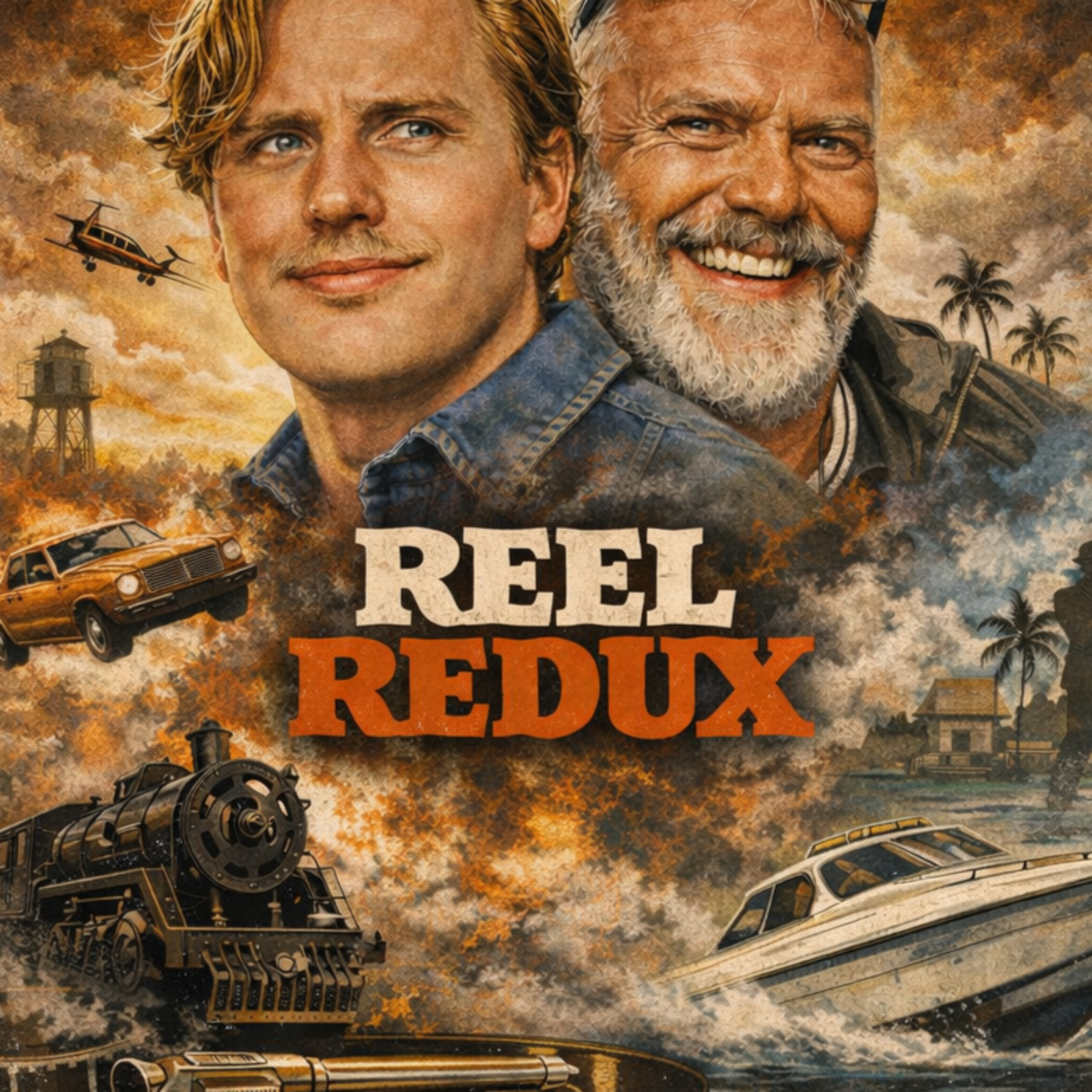
Reel Redux is a father and son movie podcast exploring cult classics, forgotten films, and genre cinema from every era. From 70s disaster movies and grindhouse oddities to horror, sci-fi, action, thrillers, and B-movie madness, we dig into the strange, the flawed, and the underrated. Each week we revisit the movies time left behind, break them down scene by scene, and decide whether they deserve a true redux or should stay buried in cinematic history.
-
18
Point Blank (1967) | The Revenge Film That Changed Crime Cinema
In this episode of Reel Redux, we take a deep dive into Point Blank (1967), the groundbreaking crime thriller directed by John Boorman and starring Lee Marvin in one of the most iconic performances of his career. Widely regarded as one of the most influential neo-noir films ever made, Point Blank blends revenge, psychological mystery, crime, and innovative filmmaking into a cinematic experience that still feels fresh decades later.Based on the novel The Hunter by Donald E. Westlake (writing as Richard Stark), the film follows Walker, a man left for dead after a betrayal that costs him both his money and his future. What begins as a straightforward revenge story quickly evolves into something far more complex, with questions of memory, identity, reality, and obsession running throughout the film.In this episode, we break down Point Blank (1967) in detail, exploring its story, characters, visual style, themes, and lasting impact on crime cinema. We discuss Lee Marvin's unforgettable performance, John Boorman's innovative direction, and the film's dreamlike structure that continues to spark debate among audiences and critics alike.As always, we also dive into our regular movie games, rankings, recommendations, and side discussions, leading us into conversations about neo-noir cinema, revenge movies, heist films, crime thrillers, and some of the most influential films that followed in Point Blank's footsteps. We examine how the film helped shape modern crime cinema and influenced generations of filmmakers with its bold editing, fragmented storytelling, and stylish visual approach.The discussion explores themes including revenge, betrayal, greed, alienation, corporate power, masculinity, and the changing face of American cinema during the late 1960s. We also look at how Point Blank fits into the broader evolution of noir and neo-noir films, standing alongside some of the greatest crime movies ever made.If you're searching for a Point Blank review, Point Blank explained, Point Blank analysis, John Boorman movies, Lee Marvin films, or a neo-noir movie podcast, this episode delivers a comprehensive breakdown of one of the most stylish and influential crime thrillers in film history.Whether you're a fan of classic crime films, revenge thrillers, neo-noir cinema, 1960s movies, cult classics, or in-depth film discussion podcasts, this episode of Reel Redux offers a detailed exploration of a film that continues to inspire filmmakers and fascinate audiences nearly sixty years after its release.From its striking visual style and unconventional narrative to its lasting influence on modern crime movies, Point Blank remains one of the most important and endlessly discussable films of its era.Is Point Blank the ultimate revenge thriller, one of the first true neo-noirs, or simply one of the coolest crime films ever made? Join us as we break down John Boorman's masterpiece and find out.
-
17
Vanishing Point (1971) | The Ultimate Cult Road Movie?
In this episode of Reel Redux, we hit the open road with Vanishing Point (1971), the cult road movie that has become one of the most influential car films ever made. Starring Barry Newman, Vanishing Point follows former racer Kowalski as he embarks on a high-speed cross-country journey that evolves into something far more philosophical than a typical action film. Combining muscle cars, counterculture themes, and a uniquely American sense of freedom, the film has earned its place as one of the defining cult movies of the 1970s.In this episode, we break down Vanishing Point (1971) in detail, exploring its story, characters, symbolism, and lasting impact on road movie cinema. We discuss the film's themes of freedom, rebellion, individuality, and the open road, while examining why it continues to resonate with audiences more than fifty years after its release. From its iconic Dodge Challenger to its unforgettable ending, Vanishing Point remains a landmark in both car culture and cult cinema.As always, we also dive into our regular movie games, debates, rankings, and challenges, leading to some unexpected conversations and recommendations along the way. The discussion expands beyond Vanishing Point into the wider world of automotive cinema, covering classics such as Two-Lane Blacktop, The Last Adventure, Wagon Master, Herbie: The Love Bug, and Fast Company. We explore how these films approach speed, travel, freedom, racing, and the relationship between characters and the vehicles that drive their stories.Along the way, we discuss some of the greatest car movies ever made, the evolution of road movies throughout film history, cult action films, racing movies, chase movies, and the unique appeal of automotive storytelling on screen. Whether it's the existential journey of Vanishing Point, the stripped-down realism of Two-Lane Blacktop, the family-friendly charm of Herbie, or the drag-racing thrills of Fast Company, this episode celebrates the many ways cinema has captured life behind the wheel.If you're searching for a Vanishing Point review, Vanishing Point explained, Vanishing Point analysis, a cult road movie podcast, or discussions about classic car movies and automotive cinema, this episode delivers a deep dive into one of the most iconic films of the genre while exploring many other essential driving and racing movies along the way.Whether you're a fan of 1970s cinema, cult films, muscle cars, road movies, racing films, car culture, or in-depth movie discussion podcasts, this episode of Reel Redux is packed with film analysis, movie recommendations, trivia, games, and conversations designed to help you discover even more great cinema.Is Vanishing Point the ultimate road movie, the ultimate car movie, or one of the greatest cult films ever made? Join us as we put the pedal down and find out.
-
16
Uncommon Valor (1983) - The Gene Hackman War Movie You've Never Heard Of! Ft. Title Tennis, Niche and Cult Movie Recommendations & More!
This week we're discussing Uncommon Valor (1983) Starring Gene Hackman, playing our FIRST EVER game of Title Tennis and recommending you plenty of super niche Vietnam war movies that you almost certainly have never heard of. Join us!In this episode of Reel Redux, we take a deep dive into Uncommon Valor (1983) — the action-packed Vietnam War film starring Gene Hackman that blends military action, rescue mission suspense, and the lingering impact of the Vietnam War into one of the most memorable combat films of the 1980s.Set years after the end of the Vietnam War, Uncommon Valor follows a determined former Marine colonel who refuses to believe his son was killed in action. Convinced that American prisoners of war are still being held in Southeast Asia, he assembles a team of veterans for a dangerous mission deep behind enemy lines. The result is a powerful mix of war drama, action thriller, and military adventure that helped define a generation of Vietnam War movies.In this episode, we break down Uncommon Valor (1983) in detail, exploring its story, characters, action sequences, and the themes that continue to resonate with audiences decades later. We discuss the film’s portrayal of loyalty, sacrifice, brotherhood, duty, and the emotional scars left behind by war. We also examine how the film reflects public attitudes toward Vietnam veterans and the POW/MIA issue during the 1980s.We take a closer look at Gene Hackman’s commanding performance and discuss how Uncommon Valor compares to other Vietnam War films and military action movies of the era. From its intense training sequences and rescue mission storyline to its emotional core, the film remains a fascinating entry in both war cinema and action movie history.If you're searching for an Uncommon Valor review, Uncommon Valor explained, Uncommon Valor analysis, or a Vietnam War movie podcast, this episode provides a complete breakdown of the film and its lasting place within 1980s action cinema.Whether you're a fan of Vietnam War movies, military action films, Gene Hackman performances, POW rescue stories, classic 1980s action movies, or in-depth film discussion podcasts, this episode of Reel Redux offers a detailed exploration of one of the most underrated war films of the decade.We also discuss how Uncommon Valor helped shape later military action films and why its blend of war drama, combat action, and emotional storytelling continues to attract fans of classic war movies today.
-
15
The White Buffalo (1977) Review | Charles Bronson’s Weirdest Western Nightmare Explained
In this episode of Reel Redux, we take a deep dive into The White Buffalo (1977) — a surreal and unusual Western starring Charles Bronson that blends traditional frontier storytelling with dark fantasy and psychological horror elements.Unlike most Westerns of its era, The White Buffalo takes a more mythic and dreamlike approach, following a haunted Wild West gunslinger tormented by visions of a massive white buffalo — a creature tied to fear, death, and destiny. As his journey unfolds, reality and nightmare begin to blur in one of the most unconventional Western films of the 1970s.This episode explores The White Buffalo (1977) in detail, breaking down its story, characters, tone, and the strange fusion of genres that makes it stand out in cult cinema history. We look at how the film combines revenge Western tropes with supernatural and symbolic imagery, creating a film that feels closer to myth than traditional Western storytelling.We also discuss Charles Bronson’s performance, his screen persona in 1970s cinema, and how The White Buffalo fits into his broader career of stoic, minimalist roles. From its bleak atmosphere to its unconventional narrative structure, the film has become a cult curiosity among Western fans and genre film enthusiasts.If you’re searching for The White Buffalo review, The White Buffalo explained, or a Charles Bronson Western analysis, this episode delivers a full breakdown of the film and why it remains one of the strangest Westerns of the 1970s.Whether you’re a fan of Western movies, cult cinema, 1970s genre films, or deep-dive film podcasts, this episode of Reel Redux explores a unique and often overlooked entry in the Western genre that continues to divide audiences.Is The White Buffalo a forgotten cult Western masterpiece — or one of the strangest misfires in 1970s cinema?
-
14
Black Caesar (1973) Cult Movie Review | The Most Stylish Blaxploitation Gangster Movie Ever Made?
In this episode of Reel Redux, we take a deep dive into Black Caesar (1973) — one of the most influential blaxploitation gangster films ever made, starring Fred Williamson in a career-defining role.Often described as a gritty reinvention of the classic gangster rise-and-fall story, Black Caesar follows Tommy Gibbs, a Harlem hustler who climbs from the streets to the top of the criminal underworld — only to discover that power, loyalty, and survival come at a brutal cost.Directed by Larry Cohen, the film blends traditional crime cinema with the raw energy of 1970s exploitation filmmaking, creating a style that is both stylish and aggressive, while also reflecting the social tensions of its era. From its New York street setting to its jazz-infused soundtrack, Black Caesar stands out as a bold and uncompromising entry in cult crime cinema.This episode breaks down Black Caesar (1973) in detail, including its story structure, key characters, and the themes that define it — including ambition, betrayal, corruption, systemic inequality, and the price of power. We explore how the film reworks familiar gangster tropes into something more raw, emotional, and culturally specific to its time.We also discuss Fred Williamson’s performance and screen presence, and why his portrayal of Tommy Gibbs helped cement him as one of the defining figures of blaxploitation cinema. The episode also places Black Caesar within the wider context of 1970s crime films, comparing it to both Hollywood gangster classics and other blaxploitation-era titles.If you’re searching for Black Caesar review, Black Caesar explained, or a blaxploitation gangster movie analysis, this episode delivers a full breakdown of why this film still stands out as one of the most stylish and impactful crime films of its era.Whether you’re a fan of gangster movies, blaxploitation cinema, 1970s cult films, or deep-dive film discussion podcasts, this episode of Reel Redux offers a detailed exploration of a film that continues to influence the genre decades later.Is Black Caesar the most stylish blaxploitation gangster movie ever made — or one of the most overlooked classics of the 1970s?
-
13
The Parallax View (1974) The Paranoid Conspiracy Movie You've Never Heard of, Warren Beatty's Political Thriller Explained, Conspiracy Movie Podcast
In this episode of Reel Redux, we take a deep dive into The Parallax View (1974) — the paranoid political thriller starring Warren Beatty that became one of the defining conspiracy films of the 1970s.Released during a decade shaped by political distrust and public anxiety, The Parallax View follows an investigative reporter uncovering a shadowy organisation linked to a series of political assassinations. As the mystery deepens, the film builds an atmosphere of paranoia, surveillance, and institutional corruption that still feels strikingly relevant today.This episode breaks down The Parallax View (1974) in detail, exploring its story, themes, visual style, and why it remains one of the most important political thrillers of its era. We examine the film’s portrayal of media manipulation, corporate influence, and the fear of unseen power structures operating behind the scenes.We also discuss Warren Beatty’s performance, director Alan J. Pakula’s approach to tension and atmosphere, and how The Parallax View fits alongside other landmark conspiracy thrillers of the 1970s. From its unsettling tone to its iconic paranoia-driven storytelling, the film continues to influence political cinema decades later.If you’re searching for The Parallax View review, The Parallax View explained, or a 1970s conspiracy thriller analysis, this episode delivers a full breakdown of the film and its lasting impact on political and psychological thrillers.Whether you’re a fan of conspiracy movies, neo-noir cinema, political thrillers, or in-depth film discussion podcasts, this episode of Reel Redux offers a detailed exploration of one of the most unsettling and intelligent films of the 1970s.
-
12
And God Said to Cain (1970) Review & Analysis | Klaus Kinski Gothic Western Explained | Cult Western Podcast
In this episode of Reel Redux, we explore And God Said to Cain (1970) — a dark, atmospheric Western that blends revenge storytelling with gothic horror elements, starring Klaus Kinski in one of his most intense and haunting performances.Often overlooked in discussions of classic Westerns, And God Said to Cain stands apart for its unique tone, minimalist dialogue, and near-mythic approach to revenge. Set almost entirely over the course of a stormy night, the film follows a man wrongfully imprisoned who returns to a town consumed by guilt, fear, and impending judgment.This episode breaks down And God Said to Cain (1970) in detail, including its story, structure, and the elements that give it a dreamlike, almost supernatural quality. We examine how the film blends traditional Western tropes with gothic horror influences — creating a tense, eerie atmosphere that feels closer to a nightmare than a conventional frontier story.We also take a closer look at Klaus Kinski’s performance, his screen presence, and how this role fits into his broader legacy in European cinema and cult film history. From its use of silence and shadow to its slow-building tension, this film offers a completely different take on the Western genre.If you’re searching for an And God Said to Cain review, And God Said to Cain explained, or a gothic Western analysis, this episode delivers a full breakdown of why this film has become a cult favourite among fans of unconventional Westerns.Whether you’re into spaghetti Westerns, revenge films, atmospheric cinema, or deep-dive film podcasts, this episode of Reel Redux offers a detailed look at one of the genre’s most unique and underrated entries.
-
11
The Street Fighter (1974) Review & Analysis | Sonny Chiba Martial Arts Classic Explained | Cult Action Movie Podcast
In this episode of Reel Redux, we take a deep dive into The Street Fighter (1974) — the brutal martial arts cult classic starring Sonny Chiba that helped define grindhouse action cinema and pushed the boundaries of 1970s exploitation films.Known for its raw violence, relentless pacing, and unforgettable lead performance, The Street Fighter follows mercenary martial artist Terry Tsurugi as he fights his way through criminals, betrayal, and corruption in one of the most influential martial arts films of its era. More than just action, the film became a landmark for international cult cinema and helped establish Sonny Chiba as a global genre icon.This episode breaks down The Street Fighter (1974) in detail, including its story, fight choreography, characters, and the darker themes that separate it from more traditional martial arts movies of the time. We explore how the film’s gritty style, moral ambiguity, and unapologetic violence made it stand out from both Hong Kong kung fu cinema and mainstream action films.We also examine Sonny Chiba’s performance, his legacy in martial arts cinema, and how The Street Fighter influenced later action stars, cult films, and even modern directors who continue to reference its style and energy.If you’re searching for a The Street Fighter review, The Street Fighter explained, or a Sonny Chiba movie analysis, this episode delivers a full breakdown of why this 1974 martial arts film remains such an important cult classic.Whether you’re a fan of martial arts movies, 1970s action films, grindhouse cinema, Japanese cult films, or film analysis podcasts, this episode of Reel Redux offers a detailed exploration of one of the genre’s most iconic and uncompromising films.
-
10
The Running Man (1987) Review & Analysis | Arnold Schwarzenegger Sci-Fi Explained | Dystopian Movie Podcast
In this episode of Reel Redux, we break down The Running Man (1987) — a cult sci-fi action film starring Arnold Schwarzenegger that blends dystopian storytelling with high-energy action and satirical commentary.Set in a totalitarian future where entertainment and violence collide, The Running Man follows a falsely accused man forced to compete in a deadly televised game show. Beneath its action-heavy surface, the film explores themes of media manipulation, state control, and the power of spectacle — ideas that feel even more relevant today.This episode dives deep into The Running Man (1987), covering its story, characters, and the elements that have helped it endure as a cult classic. We examine Arnold Schwarzenegger’s performance during his peak action era, the film’s unique tone, and how it compares to other dystopian and sci-fi films of the 1980s.We also explore the film’s place within the wider landscape of science fiction cinema — from its critique of mass media to its influence on later dystopian stories centered around televised survival and control.If you’re searching for a The Running Man review, The Running Man explained, or a 1980s sci-fi movie analysis, this episode delivers a complete breakdown of the film and why it continues to stand out in the genre.Whether you’re a fan of Arnold Schwarzenegger movies, dystopian sci-fi films, or in-depth film discussion podcasts, this episode of Reel Redux offers a detailed look at one of the most distinctive action films of the 1980s.
-
9
Hell Is for Heroes (1962) Steve McQueen Before He Became a Legend, Hollywood’s Forgotten WWII Drama
In this episode of Reel Redux, we break down Hell Is for Heroes (1962) — a gritty World War II film starring Steve McQueen that started life as a black comedy before pivoting to become a war movie that stands out for its realism, tension, and stripped-down approach to war storytelling.Set during World War II, Hell Is for Heroes follows a small squad of American soldiers tasked with holding a dangerous section of the front line. What unfolds is a tense, character-driven story that focuses less on large-scale battles and more on psychology, pressure, and survival under impossible conditions.This episode explores Hell Is for Heroes (1962) in depth, including its plot, character dynamics, and the themes that define it — from isolation and fear to leadership and sacrifice. We take a close look at Steve McQueen’s performance and how this role helped shape his screen persona as one of the most iconic actors of his era.We also examine how Hell Is for Heroes compares to other World War II films of the 1960s, and why its minimalist style and focus on individual soldiers make it a unique entry in the war movie genre.If you’re looking for a Hell Is for Heroes review, Hell Is for Heroes explained, or a WWII movie analysis, this episode delivers a complete breakdown of the film and its place in classic war cinema.Whether you’re a fan of World War II movies, classic war films, Steve McQueen performances, or film analysis podcasts, this episode of Reel Redux offers a detailed and thoughtful discussion of a film that continues to stand out for its raw and grounded approach
-
8
Arizona Raiders (1965) Review & Analysis | Audie Murphy Western Explained | Classic Western Movie Podcast
In this episode of Reel Redux, we take an in-depth look at Arizona Raiders (1965) — a classic Western starring Audie Murphy that represents a transitional moment in 1960s Western cinema.Often overlooked in discussions of classic Western movies, Arizona Raiders combines traditional frontier storytelling with evolving themes of redemption, justice, and moral ambiguity. Set against the backdrop of the American West, the film follows a group of outlaws given a second chance — raising questions about loyalty, survival, and whether people can truly change.This episode breaks down Arizona Raiders (1965) in detail, including its story structure, character dynamics, and how it compares to other Western films of the era. We examine Audie Murphy’s performance, his legacy in Western cinema, and how this film fits into the broader shift from classic heroic Westerns to more complex, character-driven narratives.If you’re searching for a Arizona Raiders review, Arizona Raiders explained, or a classic Western movie analysis, this episode delivers a complete breakdown of the film and its place in cinema history.Whether you’re a fan of 1960s Western movies, Audie Murphy films, or in-depth film discussion podcasts, this episode of Reel Redux offers a detailed and engaging exploration of a lesser-known Western worth revisiting.
-
7
Brubaker (1980) | The Prison Film Nobody Talks About, Robert Redford’s Brutal Prison Drama
In this episode of Reel Redux, we take a deep dive into Brubaker (1980), a powerful prison drama starring Robert Redford.Based on real events, the film follows a new prison warden who goes undercover as an inmate to uncover corruption, abuse, and systemic failures inside a brutal correctional facility.Directed by Stuart Rosenberg, Brubaker stands out as one of the most grounded and unsettling prison films ever made — focusing less on action and more on realism, reform, and moral conflict.In this episode, we discuss:The real-life inspiration behind BrubakerRobert Redford’s performance and characterHow the film portrays prison corruption and reformThe darker themes of power, justice, and institutional failureWhy the film still feels relevant todayOur verdict: underrated classic or overlooked drama?If you’re interested in prison movies, true story films, classic 80s cinema, and serious film discussions, this is an episode you won’t want to miss.Reel Redux is a father-and-son movie podcast exploring cult, classic, and genre cinema — from Westerns and action films to crime thrillers and overlooked dramas.
-
6
This 70s Car Movie is Pure Chaos (And We Love It) Cannonball (1976) | The Forgotten Cannonball Run
In this episode of Reel Redux, we dive into Cannonball (1976), a gritty and chaotic 70s car chase movie starring David Carradine and directed by Paul Bartel.Before the success of The Cannonball Run, this earlier racing film captured the dangerous, rebellious world of illegal cross-country road racing — inspired by real-life events.We break down where Cannonball fits into 1970s action cinema, from its raw car stunts and exploitation edge to its place in the evolution of racing movies.Is this a forgotten cult classic, or just a chaotic relic of 70s filmmaking?🎙️ In this episode: • The real-life inspiration behind the Cannonball race • David Carradine’s performance and screen presence • 1970s car chase movies and stunt work • How Cannonball compares to later racing films • Our verdict: underrated gem or messy cult curiosity?If you enjoy cult films, 1970s action movies, car chase cinema, and deep-dive movie discussions, this episode is for you.Reel Redux is a father-and-son podcast exploring classic, cult, and genre films — from Westerns and action movies to crime thrillers and forgotten cinema.
-
5
I’ll Sleep When I’m Dead (2003) – Clive Owen Neo-Noir Crime Thriller Review
In this episode of Reel Redux, the father and son cult and genre movie podcast, we dive into I'll Sleep When I'm Dead, the dark neo-noir revenge thriller from legendary British director Mike Hodges.Best known for directing the classic British gangster film Get Carter, Hodges returned decades later with this bleak and atmospheric crime story starring Clive Owen as Will Graham, a former London gangster who has abandoned his violent past to live off the grid.But when tragedy strikes his family, Graham is forced to return to the criminal underworld he tried to escape, leading him down a brutal path of revenge, secrets, and moral reckoning.With its moody cinematography, slow-burn storytelling, and philosophical approach to revenge, I’ll Sleep When I’m Dead stands apart from typical crime thrillers of the early 2000s.In this episode we discuss:• Director Mike Hodges’ legacy after Get Carter• Clive Owen’s intense performance as a haunted ex-gangster• The film’s neo-noir atmosphere and stripped-down storytelling• Revenge cinema and morally complex protagonists• Why this film remains an underrated British crime thrillerIf you enjoyed I’ll Sleep When I’m Dead, we also talk about a few other crime and revenge films worth checking out.These include:• Get Carter – Mike Hodges’ iconic British gangster classic starring Michael Caine• The Long Good Friday – a powerful British crime film starring Bob Hoskins• Sexy Beast – a modern British gangster classic featuring Ben KingsleyIf you love neo-noir films, British crime movies, revenge thrillers, cult cinema, and deep dives into overlooked genre films, this episode is for you.🎙️ Reel Redux is the father-and-son podcast exploring cult classics, crime films, horror, westerns, action movies, and forgotten genre gems from across film history.New episodes every week.
-
4
Return of the Seven (1966) – Cult Western Sequel to The Magnificent Seven Review
In this episode of Reel Redux, the father and son cult movie podcast, we ride back into the Wild West to revisit Return of the Seven, the action-packed sequel to the classic western The Magnificent Seven.Directed by Burt Kennedy and starring the legendary Yul Brynner returning as gunslinger Chris Adams, this 1966 western continues the story inspired by Seven Samurai — the iconic samurai film from Akira Kurosawa that helped shape the entire “seven warriors defend the village” storytelling formula.When a peaceful Mexican farming village is terrorized by ruthless bandits, Chris Adams assembles a new group of fighters willing to risk everything to defend the helpless. But can lightning strike twice for this Magnificent Seven sequel?In this episode we break down:• How Return of the Seven (1966) builds on the legacy of The Magnificent Seven• Why the Magnificent Seven sequels became cult favorites among western fans• The performances, shootouts, and classic 1960s western filmmaking• How Hollywood adapted the samurai storytelling formula for American western audiences• Whether this sequel deserves more recognition among classic western filmsWe also explore how the “seven warriors” concept evolved across cinema, from samurai epics to spaghetti westerns and beyond.🎥 Watch With – This Week’s RecommendationsIf you enjoyed Return of the Seven, here are a few other films we discuss and recommend in this week’s Watch With section:• The War Wagon – a classic heist-style western starring John Wayne and Kirk Douglas• The Savage Seven – a cult biker movie with its own “seven warriors” twist• Seven Samurai – the legendary samurai epic that inspired generations of filmmakers• The Magnificent Seven – the original western adaptation of Kurosawa’s masterpiece• High Plains Drifter – a darker, supernatural-tinged western starring Clint EastwoodIf you love classic westerns, samurai-inspired storytelling, cult movie sequels, and deep dives into forgotten genre cinema, this episode is for you.Reel Redux is the father-and-son movie podcast exploring cult classics, westerns, horror films, sci-fi, action movies, and overlooked genre gems from every era of film history.New episodes weekly.
-
3
Death Ship (1980) – Haunted Nazi Ghost Ship Cult Horror Review
In this episode of Reel Redux, we set sail with Death Ship (1980) — the eerie cult horror film starring George Kennedy and Richard Crenna.After a luxury liner collision leaves survivors stranded at sea, they board an abandoned vessel with a dark and disturbing past — a ghost ship tied to Nazi war crimes and supernatural horror.Is Death Ship a forgotten 80s horror gem or a slow-burning maritime misfire?We break down:• The haunted ship concept and Nazi horror elements• 1980 practical effects and atmosphere• George Kennedy’s intense performance• The psychological tension vs. exploitation tone• Why this film developed a cult followingIf you love 80s horror movies, ghost ship stories, supernatural thrillers, Nazi exploitation cinema, and overlooked cult films, this deep dive is for you.🎙️ New episodes weekly from Reel Redux — the father and son podcast revisiting cult classics, horror films, B-movies, and forgotten genre cinema.
-
2
Captain Apache (1971) – Bizarre 70s Cult Western Deep Dive
In this episode of Reel Redux, we saddle up for Captain Apache (1971) — one of the strangest cult Westerns of the 1970s starring and directed by Lee Van Cleef.Based on the novel by Louis L'Amour, this offbeat Euro-Western follows an Army officer investigating a murder conspiracy filled with coded messages, political intrigue, and… yes… that infamous pop song finale.Is Captain Apache a misunderstood cult oddity or a truly baffling Western experiment?We break down:• Lee Van Cleef in leading-man mode• The spaghetti western influence• Tonal whiplash and 70s filmmaking choices• Low-budget ambition vs. execution• Why this film has earned cult statusIf you love revisionist Westerns, spaghetti westerns, 70s cinema, B-movies, and forgotten genre experiments, this deep dive is for you.New episodes weekly from Reel Redux — the father and son podcast revisiting cult and genre films that deserve another look.
-
1
Dark Angel (1990) – 90s Sci-Fi Action Cult Classic Review
In this episode of Reel Redux, we dive into Dark Angel (1990) — the explosive sci-fi action cult classic starring Dolph Lundgren. Also known as I Come in Peace, this late-80s/early-90s genre mashup delivers alien drug dealers, Houston shootouts, and peak VHS-era chaos.Is Dark Angel a forgotten action gem or pure B-movie madness?We break down:• Dolph Lundgren’s one-liner machine performance• The alien villain and sci-fi mythology• 90s practical effects and synth-heavy atmosphere• Cannon-era action energy and low-budget ambition• Why this film became a cult favoriteIf you love 80s and 90s action movies, sci-fi thrillers, practical effects, cult cinema, and underrated genre films, this deep dive is for you.New episodes weekly from Reel Redux — the father and son podcast revisiting cult and genre movies that deserve another look.
-
0
Avalanche (1978) – Forgotten 70s Cult Disaster Movie Review
In this episode of Reel Redux, we hit the slopes with Avalanche (1978) — a chaotic entry in the late-70s disaster movie boom starring Rock Hudson, Mia Farrow, and Robert Forster.Is this snowbound spectacle a forgotten cult classic… or a buried B-movie disaster?As a father-and-son movie podcast dedicated to cult films and genre cinema, we break down:• The 1970s disaster movie craze and Hollywood excess• Behind-the-scenes drama and production shortcuts• That infamous avalanche sequence• Performances that range from committed to completely unhinged• Why this film developed a cult following• Does Avalanche (1978) deserve a redux — or should it stay buried?If you love 70s cinema, cult classics, practical effects, disaster movies, B-movies, and deep-dive film discussions, this episode is for you.🎙️ New episodes weekly from Reel Redux — the father & son podcast revisiting cult, forgotten, and genre films from every era.
We're indexing this podcast's transcripts for the first time — this can take a minute or two. We'll show results as soon as they're ready.
No matches for "" in this podcast's transcripts.
No topics indexed yet for this podcast.
Loading reviews...
ABOUT THIS SHOW
Reel Redux is a father and son movie podcast exploring cult classics, forgotten films, and genre cinema from every era. From 70s disaster movies and grindhouse oddities to horror, sci-fi, action, thrillers, and B-movie madness, we dig into the strange, the flawed, and the underrated. Each week we revisit the movies time left behind, break them down scene by scene, and decide whether they deserve a true redux or should stay buried in cinematic history.
HOSTED BY
Reel Redux
Loading similar podcasts...
Frequently Asked Questions
How many episodes does Reel Redux Movie Podcast | Your Gateway to Cult Cinema have?
Reel Redux Movie Podcast | Your Gateway to Cult Cinema currently has 19 episodes available on PodParley. New episodes are automatically indexed when they're published to the podcast feed.
What is Reel Redux Movie Podcast | Your Gateway to Cult Cinema about?
Reel Redux is a father and son movie podcast exploring cult classics, forgotten films, and genre cinema from every era. From 70s disaster movies and grindhouse oddities to horror, sci-fi, action, thrillers, and B-movie madness, we dig into the strange, the flawed, and the underrated. Each week we...
How often does Reel Redux Movie Podcast | Your Gateway to Cult Cinema release new episodes?
Reel Redux Movie Podcast | Your Gateway to Cult Cinema has 19 episodes. Check the episode list to see recent publication dates and frequency.
Where can I listen to Reel Redux Movie Podcast | Your Gateway to Cult Cinema?
You can listen to Reel Redux Movie Podcast | Your Gateway to Cult Cinema on PodParley by clicking any episode. We provide an embedded audio player for direct listening, and you can also subscribe via your preferred podcast app using the RSS feed.
Who hosts Reel Redux Movie Podcast | Your Gateway to Cult Cinema?
Reel Redux Movie Podcast | Your Gateway to Cult Cinema is created and hosted by Reel Redux.
URL copied to clipboard!