
PODCAST · music
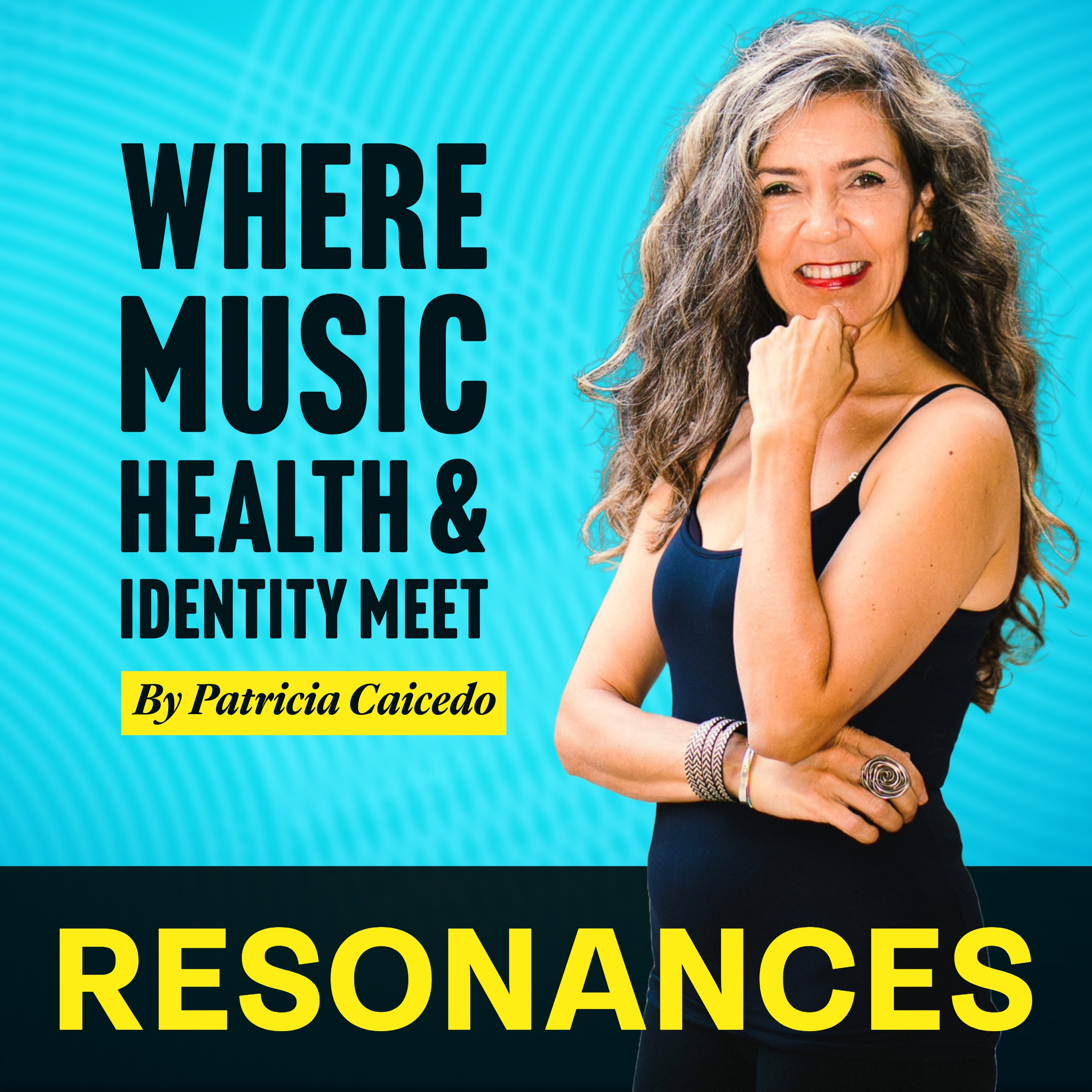
Resonances: Where Music, Health & Identity Meet.
by Patricia Caicedo
Resonances is a podcast about how music shapes identity, cultural memory, cognition, and well-being. Hosted by soprano, musicologist, and physician Patricia Caicedo, it explores the healing power of music and the rich traditions of Latin American, Spanish, and Catalan art song.Formerly the Latin American and Iberian Art Song Podcast. Episodes are in English, with songs and poetry in Spanish, Portuguese, or Catalan—inviting listeners into a rich, multilingual sound world.
-
27
When the Brain Finds the Beat: Music, Movement, and Parkinson’s
What happens when rhythm enters the body before thought? In this episode of Resonances, Patricia Caicedo explores how music, rhythm, movement, and the brain are connected, drawing from her book We Are What We Listen To: The Impact of Music on Individual and Social Health.From rhythmic entrainment and dance to neuroplasticity, embodied cognition, pleasure, memory, and Parkinson’s disease, this episode shows how music is not only something we hear, but something the body processes, responds to, and carries. Rhythm organizes movement, activates attention, shapes emotional experience, and reveals the deep relationship between music, health, and identity.This episode also connects with the 2026 Barcelona Festival of Song, a research-based festival dedicated to Latin American and Iberian art song. This year, the festival presents seven concerts in Barcelona, with four supporting Parkinson’s research and care through IDIBAPS at Hospital Clínic de Barcelona and the Associació Catalana per al Parkinson.Listen, move, share the episode, and join us in Barcelona: barcelonafestivalofsong.com.
-
26
The Musical Brain: How Music Shapes Identity
What if your brain is shaped not only by what you think, but by what you listen to?In this episode of Resonances, Patricia Caicedo—singer, musicologist, and physician—explores how music is processed in the brain and how it actively shapes neural structure, emotional patterns, and identity over time.Drawing from neuroscience, clinical observation, and musical practice, this episode examines how listening engages distributed brain networks, how rhythm activates motor systems, why musical memory remains accessible in neurodegenerative conditions, and how performance integrates sensory, motor, and cognitive processes in real time.Through clear examples—including the complex neural activity involved in a pianist’s performance—this episode presents music not as a passive experience, but as a form of neuroplastic training that supports cognitive resilience.Music is not simply something we hear.It is something that organizes how we feel, remember, and become.
-
25
The Sound of Resilience - Catalan Art Song
What if one of Europe’s most luminous and resilient art song traditions has been waiting for your voice? In this episode, you’ll discover the history, sound, and expressive power of Catalan art song — and hear Patricia Caicedo herself singing musical excerpts from this extraordinary repertoire.In Resonances: Where Music, Health, and Identity Meet, soprano and physician Patricia Caicedo shares her personal journey into the Catalan language and repertoire. You’ll learn about the medieval roots and cultural resilience of Catalan, explore the distinctive sound world of Central Catalan — including its rich vowel system and characteristic schwa — and understand why diction transforms interpretation.Patricia also introduces her book Catalan Diction for Singers: A Practical Guide, a practical resource featuring historical context, IPA guidance, comparisons with English vowel systems, song transcriptions, and references to the University of Barcelona’s “Sons Catalans” audio archive.The episode includes musical excerpts of Patricia performing Catalan art songs, as well as the inspiring story of Grammy-nominated tenor Isai Muñoz, who discovered this repertoire at the Barcelona Festival of Song and brought it to the international stage.🎧 Listen, subscribe to Resonances, and visit patriciacaicedo.com to explore concerts, resources, and the Resonances newsletter.
-
24
Was Music the First Medicine?
Why has sound been used as a tool for healing across cultures and throughout history? And what does modern neuroscience reveal about this ancient practice?In this first episode of Resonances, physician, singer, and researcher Patricia Caicedo explores the deep and enduring relationship between music and medicine—from prenatal life and shamanic ritual to Pythagoras, Renaissance physicians, and contemporary neuroscience.Drawing on history, biology, and clinical research, this episode examines how sound interacts with the nervous system, regulates emotion, modulates pain and stress, and shapes our experience of health. What ancient cultures understood intuitively, science is now beginning to explain.This episode invites you to listen differently—and to reconsider the role of music not as metaphor, but as a biological and cultural force in human health.🎧 In this episode:Sound, the body, and early healing practicesRhythm, vibration, and nervous system regulationMusic as medicine across historyWhat neuroscience tells us todayWelcome to Resonances—where music, health, and identity meet.
-
23
How One Summer in Barcelona Transformed Lives Through Song
What if one summer could change the way you see music—and yourself—forever?In this episode of Resonances, Patricia Caicedo reunites with participants of the 2025 Barcelona Festival of Song—including Eden Rosenbaum, Cassandra Brittany Leisher, Ana Socaci, Jaiden Wettstein, Katelyn Breen, Campbelle Stencel, Sofia Jaquez, Crystal Buck, Stella Roden, Amethyst Shanks, David Dies, and Robert Rocco—as they reflect on their artistic journeys, discoveries, and the deep bonds formed through eleven transformative days of making music together.
-
22
Echoes of Lorca from Barcelona: The Making of El Diván del Tamarit
What happens when Federico García Lorca’s most sensual poems collide with a historic piano in the heart of Barcelona?In this behind-the-scenes episode, soprano-musicologist Patricia Caicedo welcomes composer David Dies and tenor James Kryshak to reveal the fiery birth of El Diván del Tamarit—a brand-new song cycle premiering July 4, 2025 at the Biblioteca de Catalunya on Enric Granados’ own piano.🔍 Listen in to discover: • How Dies turns Lorca’s “white fire” and surreal images into razor-edged harmonies and soaring vocal lines. • Why Kryshak calls the poems “painfully urgent” for today—and how he sculpts every Spanish syllable for maximum impact. • Caicedo’s mission to prove the United States is already a Spanish-speaking nation and to spotlight Iberian-Latin American art song at the Barcelona Festival of Song (July 3–12, 2025). • The teamwork—pianist Joel Papinoja, live poem recitations, and more—that transforms raw verse into living performance.If you love poetry, vocal drama, or the electric moment when art is born, join us—on site or online—as Lorca’s echoes reverberate through 21st-century Barcelona.Like what you hear? Subscribe, share, and be part of the premiere.
-
21
Discovering Jaime León: A Musical Legacy That Transcends Borders
What if I told you that one of Latin America's greatest composers of art song was born in a house that once belonged to a president... and died on the very day that would later be declared a global celebration of his legacy?This is the story of Jaime León—a composer whose music connects continents, memories, and generations. In this special episode of Resonances, we honor the life and music of Colombian composer, conductor, and pianist Jaime León, on the occasion of the International Day of Latin American and Iberian Art Song—celebrated every May 11.Join me, Patricia Caicedo, as I reflect on my personal relationship with Jaime León, his transnational identity, and the lasting impact of his art songs on the repertoire and on my own journey as a performer and scholar. You'll hear two beautiful selections from the album Más Que Nunca, which I recorded with pianist Nikos Stavlas and which features León’s complete songs for voice and piano.🎧 Listen to the album on Spotify: Más Que Nunca – Patricia Caicedo & Nikos Stavlas🌐 Explore Jaime León’s life and work: jaimeleon.net📬 Subscribe to the Resonances newsletter: Get inspiration, free resources, and updates on new episodes and events. Subscribe hereBy listening, you're expanding your musical horizons, supporting underrepresented voices, and helping build a more inclusive, vibrant, and just musical world.
-
20
Resonances: A New Name, A Deeper Calling
Welcome to the first episode of Resonances, formerly The Latin American and Iberian Art Song Podcast. In this short introductory episode, I explain why I’ve rebranded the podcast and what this new phase represents—a deeper, more integrated expression of who I am.As a soprano, musicologist, and physician, I no longer want to separate the different parts of my identity. Resonances is a space where all of them meet—where music, culture, history, health, and language come together in conversation.You’ll hear episodes in English, but also poems and songs in Spanish, Portuguese, and Catalan. I’ll explore Latin American, Spanish, and Catalan art song not only as music, but as cultural memory, lived experience, and poetic expression.If you’re someone who refuses to be defined by a single box—who sees music as part of life, not separate from it—this podcast is for you.✨ Subscribe to the podcast, share it with a friend, and join the conversation. 📝 Sign up for the Resonances newsletter: https://www.patriciacaicedo.com/resonances 📱 Follow me on Instagram: @patriciacaicedobcn 🎶 Listen to my music on Spotify. 🌍 Explore my work: https://www.patriciacaicedo.comLet’s begin.
-
19
MEMORY, NOSTALGIA AND RESISTANCE: THE AFRO-LATIN ART SONG
In this episode, we delve into Dr. Patricia Caicedo's thought-provoking article "Memory, Nostalgia, and Resistance: The Afro-Latin Art Song," exploring how the African diaspora in Latin America, impacted by the Atlantic slave trade, used music, language, and rituals as mechanisms of cultural preservation and resistance.We discuss how Afro-Latin composers and poets embedded rhythmic, melodic, and idiomatic elements into art songs to keep their cultural identity alive while navigating the challenges of acculturation. These art songs served as a way to participate in avant-garde artistic movements and also as a tool for social mobility and political advocacy. Dr. Caicedo highlights how, despite their cultural contributions, the diaspora faced a "whitening" process that threatened to strip away their symbolic and artistic wealth once again.Join us as we explore how these art songs became powerful expressions of resistance, memory, and identity, shedding light on the deep connection between music and social change in Latin America.You can read the full article, published in Diagonal, an Ibero-American music review by the University of California, Riverside, by clicking [here].
-
18
The sounds of geopolitics: cultural diplomacy between Latin America and the US
Did you know that music, power, and national identity are entangled and constantly changing? In this Episode, Hermann Hudde and Patricia Caicedo talk about the political and cultural relations between the United States and Latin America and how these were staged at the Tanglewood festival led by Serge Koussevitzky in the 1940s. An opportunity to discover the role of music in what we know as cultural diplomacy.
-
17
Opera In the Tropics: A Conversation with Dr. Rogerio Budasz
Did you know that there was an important operatic activity in Brazil during the XVII and XVIII centuries? Did you know that there were opera houses in many Brazilian cities where European and local artists performed together, including mulatos, blacks, and women?In the second season premiere, Patricia Caicedo talks to Dr. Rogerio Budasz, a Brazilian musicologist and the author of Opera in the Tropics: Music and Theater in Early Modern Brazil, a fascinating book that puts in evidence how music is a space where political, social, and religious power struggles are constantly negotiated.
-
16
Discovering the concerts of the Barcelona Festival of Song 2021
In this episode, you will discover the amazing concerts and artists of the Barcelona Festival of Song 2021 and will learn how you can participate in them from anywhere in the world. At the BFOS you will find new Latin American and Iberian vocal repertoire, enjoy listening to beautiful music, and at the same time, support musicians by incorporating the XAVECoin, an environmentally conscious crypto coin designed to democratize access to music. The festival starts on July 8 and ends on July 17. To buy your tickets visithttps://www.barcelonafestivalofsong.com/concertsBarcelona Festival of Song Summer program of history & interpretation of Latin American & Iberian art song Mundoarts Publications Your source of hard to find Latin American & Iberian scores, books, classes & resources. Center Iberian & Latin American Music Research & performance of Iberian & Latin American Music at the University of California Riverside. Support the show (https://www.patriciacaicedo.com/podcast)
-
15
Introducing a gem: a new Brazilian Art Song Anthology
In this episode, Patricia talks with Carol McDavit and Flavio Melo, experts in Brazilian art song and the authors of a new Brazilian Art Song Anthology published by Mundoarts, a true gem that provides all the diction resources and historical background to introduce classical singers into this vast world.Barcelona Festival of Song Summer program of history & interpretation of Latin American & Iberian art songMundoarts Publications Your source of hard to find Latin American & Iberian scores, books, classes & resources.Center Iberian & Latin American Music Research & performance of Iberian & Latin American Music at the University of California Riverside.Support the show (https://www.patriciacaicedo.com/podcast)
-
14
Distinguishing between Latin American folk and art songs and participating in a singing challenge
Have you ever sung an art song in Spanish, Catalan, or Portuguese? Do you know how to recognize a Latin American art song—or where it differs from folk tradition?In this episode of Resonances, Patricia Caicedo guides you through one of the most essential—and often misunderstood—questions in vocal repertoire: how to distinguish Latin American and Iberian art song from folk song.Through clear examples and practical insights, she introduces the concept of performance practice as a key tool for making informed artistic choices. This episode will help you refine your interpretation, choose repertoire with intention, and deepen your understanding of this rich tradition.You’re also invited to take part in the celebration of the International Day of Latin American and Iberian Art Song on May 11. Singers from around the world are encouraged to join a global singing challenge by submitting a video performance of an art song in Spanish, Catalan, or Portuguese by May 4.While it is not a competition, participants will receive meaningful rewards, including a half scholarship to the Barcelona Festival of Song and additional prizes.If you’re exploring this repertoire—or ready to take your interpretation further—this episode gives you a clear place to begin. To participate in the singing challenge, go to https://www.mundoarts.com/latinsongdayBarcelona Festival of Song Summer program of history & interpretation of Latin American & Iberian art song Mundoarts Publications Your source of hard to find Latin American & Iberian scores, books, classes & resources. Center Iberian & Latin American Music Research & performance of Iberian & Latin American Music at the University of California Riverside. Support the show (https://www.patriciacaicedo.com/podcast)
-
13
Jaime León: one of the most important Latin American art song composers of the XX century.
In this episode, you will discover the extraordinary life and music of Jaime Leon, a conductor, a composer, and a pianist, and the author of some of the most beautiful art songs in Spanish written in the XX century. If you are interested in obtaining the scores of Jaime Leon´s songs visit www.mundoarts.com Barcelona Festival of Song Summer program of history & interpretation of Latin American & Iberian art song Mundoarts Publications Your source of hard to find Latin American & Iberian scores, books, classes & resources. Center Iberian & Latin American Music Research & performance of Iberian & Latin American Music at the University of California Riverside. Support the show (https://www.patriciacaicedo.com/podcast)
-
12
Un nuevo espacio para la canción artística latinoamericana e ibérica
En el primer episodio en español, la soprano y musicóloga Patricia Caicedo explica la misión de programa, nos cuenta cómo se interesó por el repertorio de canción artística latinoamericana, comparte algunas canciones y nos prepara para los próximos programas. Para conocer más sobre Patricia y seguirla en las redes sociales visita www.patriciacaicedo.com Si eres cantante lírico y quieres aprender la historia e interpretación del repertorio de canción artística latinoamericana e ibérica visita la web del Barcelona Festival of Song. Si estas interesado en partituras y recursos para dar vida al repertorio vocal ibérico y latinomericano visita www.mundoarts.com . Síguenos en las redes sociales!Barcelona Festival of Song Summer program of history & interpretation of Latin American & Iberian art song Mundoarts Publications Your source of hard to find Latin American & Iberian scores, books, classes & resources. Center Iberian & Latin American Music Research & performance of Iberian & Latin American Music at the University of California Riverside. Support the show (https://www.patriciacaicedo.com/podcast)
-
11
The life and songs of Carlos Guastavino
For classical singers, very often, the first contact with the Latin American art song comes throughout the songs of the Argentinian composer Carlos Guastavino. He was one of the most outstanding art song composers of the continent who wrote hundreds of art songs literally, setting to music some of the most prominent Argentinian, Latin American, and Spanish poets. His music goes straight to the heart. The combination of his neo-romantic style with the folkloric elements makes it unique. He had a gift for finding the music inherent to the poems. Guastavino was a very reserved person. During his life, very few people could talk to him and get to know him. To talk about his life, personality, political views, values, and of course, about his music, in this episode Patricia talks with Dr. Silvina Luz Mansilla, a musicologist who met him and spent a lot of time with him and, the world's expert in his music. Barcelona Festival of Song Summer program of history & interpretation of Latin American & Iberian art song Mundoarts Publications Your source of hard to find Latin American & Iberian scores, books, classes & resources. Center Iberian & Latin American Music Research & performance of Iberian & Latin American Music at the University of California Riverside. Support the show (https://www.patriciacaicedo.com/podcast)
-
10
30 Women Composers of Latin America and Spain
How many Latin American and Spanish female composers do you know? How many of their songs do you have in your repertoire? Don't you think it's about time to start learning and performing their music? In this episode, you will discover more than 30 female composers and listen to some of their songs, let's start! In this episode you will listen to songs by Maria Grever, Babi de Oliveira, Lia Cimaglia & Celia Torra. The complete CD Miraba la noche el alma: Latin American and Iberian Art Songs by Women Composers is available on Spotify. To buy the Anthology of Latin American & Iberian Art Song Women Composers visit www.mundoarts.com Barcelona Festival of Song Summer program of history & interpretation of Latin American & Iberian art song Mundoarts Publications Your source of hard to find Latin American & Iberian scores, books, classes & resources. Center Iberian & Latin American Music Research & performance of Iberian & Latin American Music at the University of California Riverside. Support the show (https://www.patriciacaicedo.com/podcast)
-
9
Expanding your identity through music, the story of soprano Regina Stroncek
𝗛𝗮𝘃𝗲 𝘆𝗼𝘂 𝗳𝗲𝗹𝘁 𝘁𝗵𝗮𝘁 𝗲𝘅𝗽𝗮𝗻𝗱𝗶𝗻𝗴 𝘆𝗼𝘂𝗿 𝗺𝘂𝘀𝗶𝗰𝗮𝗹 𝘁𝗮𝘀𝘁𝗲𝘀 𝗲𝘅𝗽𝗮𝗻𝗱𝘀 𝘆𝗼𝘂𝗿 𝗶𝗱𝗲𝗻𝘁𝗶𝘁𝘆❓ 𝗗𝗼 𝘆𝗼𝘂 𝗳𝗲𝗲𝗹 𝗱𝗿𝗮𝘄𝗻 𝘁𝗼 𝘁𝗵𝗲 𝗽𝗹𝗮𝗰𝗲𝘀 𝗼𝗳 𝗼𝗿𝗶𝗴𝗶𝗻 𝗼𝗳 𝘁𝗵𝗲 𝗺𝘂𝘀𝗶𝗰 𝘆𝗼𝘂 𝗹𝗼𝘃𝗲❓𝗧𝗵𝗶𝘀 𝗵𝗮𝗽𝗽𝗲𝗻𝗲𝗱 𝘁𝗼 𝘀𝗼𝗽𝗿𝗮𝗻𝗼 𝗥𝗲𝗴𝗶𝗻𝗮 𝗦𝘁𝗿𝗼𝗻𝗰𝗲𝗸, 𝘄𝗵𝗼, 𝗱𝗲𝘀𝗽𝗶𝘁𝗲 𝗯𝗲𝗶𝗻𝗴 𝗯𝗼𝗿𝗻 𝗶𝗻 𝘁𝗵𝗲 𝗠𝗶𝗱𝘄𝗲𝘀𝘁 𝗼𝗳 𝘁𝗵𝗲 𝗨𝗻𝗶𝘁𝗲𝗱 𝗦𝘁𝗮𝘁𝗲𝘀, 𝗳𝗲𝗲𝗹𝘀 𝗕𝗿𝗮𝘇𝗶𝗹𝗶𝗮𝗻 𝗮𝘁 𝗵𝗲𝗮𝗿𝘁. For Regina, discovering the Brazilian Art Song at the Barcelona Festival of Song was the beginning of an exciting journey that brought her to obtain a Fulbright Scholarship, making long-lasting friends in different parts of the world, and developing a passion for studying and performing Brazilian music. In this episode, you will listen to her incredible story!Barcelona Festival of Song Summer program of history & interpretation of Latin American & Iberian art song Mundoarts Publications Your source of hard to find Latin American & Iberian scores, books, classes & resources. Support the show (https://www.patriciacaicedo.com/podcast)
-
8
Moments that change our musical life: the story of the tenor Isai Jess Munoz
Have you ever felt love at first sight with a new repertoire and language? Have you lived an aesthetic experience so strong that it changed the course of your musical life? This is what happened to our guest, the tenor Isa Jess Munoz in 2010 when he participated in the Barcelona Festival of Song. Isai will share his story with us and present some of the songs of his new album Visca làmor. To participate in the Barcelona Festival of Song visit www.barcelonafestivalofsong.com To buy sheet music and books of Latin American and Iberian art song go to www.mundoarts.com To learn about Patricia´s performances, research and activities visit www.patriciacaicedo.com Support the show (https://www.patriciacaicedo.com/podcast)
-
7
Talking about the Performance Practice of the Latin American Song
Learning the Performance practice of the different repertoires is essential for musicians. Which things influence the performance of a song? Lenine Santos and Patricia Caicedo talk about different issues related to the Performance Practice of the Latin American and Iberian Art Song. Support the show (https://www.patriciacaicedo.com/podcast)
-
6
Joaquin Rodrigo, one of the most important Spanish composers of the XX century
One of the most renowned Spanish composers of the XX century, Joaquin Rodrigo, apart from composing his famous Concierto de Aranjuez, wrote hundreds of works, including many songs. His biographer, Dr. Walter Clark, will unveil for us some of the details of the fascinating life of a composer who overcame blindness to become worldwide known by his music.Support the show (https://www.patriciacaicedo.com/podcast)
-
5
Discovering Catalan language and culture with the poet Carles Duarte.
One of the most important Catalan living poets, Carles Duarte, often collaborates with artists from different media. We will learn some of the Catalan language history and hear the poet reciting some of his poems that are part of the two song cycles commissioned by the Barcelona Festival of Song. Support the show (https://www.patriciacaicedo.com/podcast)
-
4
Conversation with composer Nico Gutierrez
Composer Nicolás Gutierrez talks about his life and compositions. An exciting conversation about his compositional process, his vocal works, and many aspects of what it means to be a composer in the contemporary digital society. We will hear some of his songs.Support the show (https://www.patriciacaicedo.com/podcast)
-
3
Eugenia Forteza, Barcelona Festival of Song ambassador
In this episode, Patricia talks with Eugenia Forteza an Argentinean mezzo-soprano. She is an entrepreneur and opera promoter. She is a former participant of the Barcelona Festival of Song.Support the show (https://www.patriciacaicedo.com/podcast)
-
2
Talking about Spanish music with the musicologist Walter Clark
In this episode, Patricia talks to Dr. Walter Clark, a musicologist, and director of the Center for Iberian and Latin American Music of the University of California Riverside. They will talk about Albeniz, Granados, Joaquin Rodrigo, Moreno Torroba, and much more! Support the show (https://www.patriciacaicedo.com/podcast)
-
1
Brazilian art song with Dr. Lenine Santos
Patricia talks with Dr. Lenine Santos, a Brazilian art song expert and a faculty member of the Barcelona Festival of Song. Dr. Santos will be a guest of the Podcast on the first Wednesday of each month. Together with Patricia, they will talk about different subjects related to the Latin American art song.Support the show (https://www.patriciacaicedo.com/podcast)
-
0
Introducing the Latin American & Iberian Art Song Podcast
In Episode Zero of the Video Podcast, the host, Patricia Caicedo introduces herself and explains the journey that she is inviting viewers to take.Support the show (https://www.patriciacaicedo.com/podcast)
No matches for "" in this podcast's transcripts.
No topics indexed yet for this podcast.
Loading reviews...
ABOUT THIS SHOW
Resonances is a podcast about how music shapes identity, cultural memory, cognition, and well-being. Hosted by soprano, musicologist, and physician Patricia Caicedo, it explores the healing power of music and the rich traditions of Latin American, Spanish, and Catalan art song.Formerly the Latin American and Iberian Art Song Podcast. Episodes are in English, with songs and poetry in Spanish, Portuguese, or Catalan—inviting listeners into a rich, multilingual sound world.
HOSTED BY
Patricia Caicedo
CATEGORIES
Loading similar podcasts...
URL copied to clipboard!