
PODCAST · business
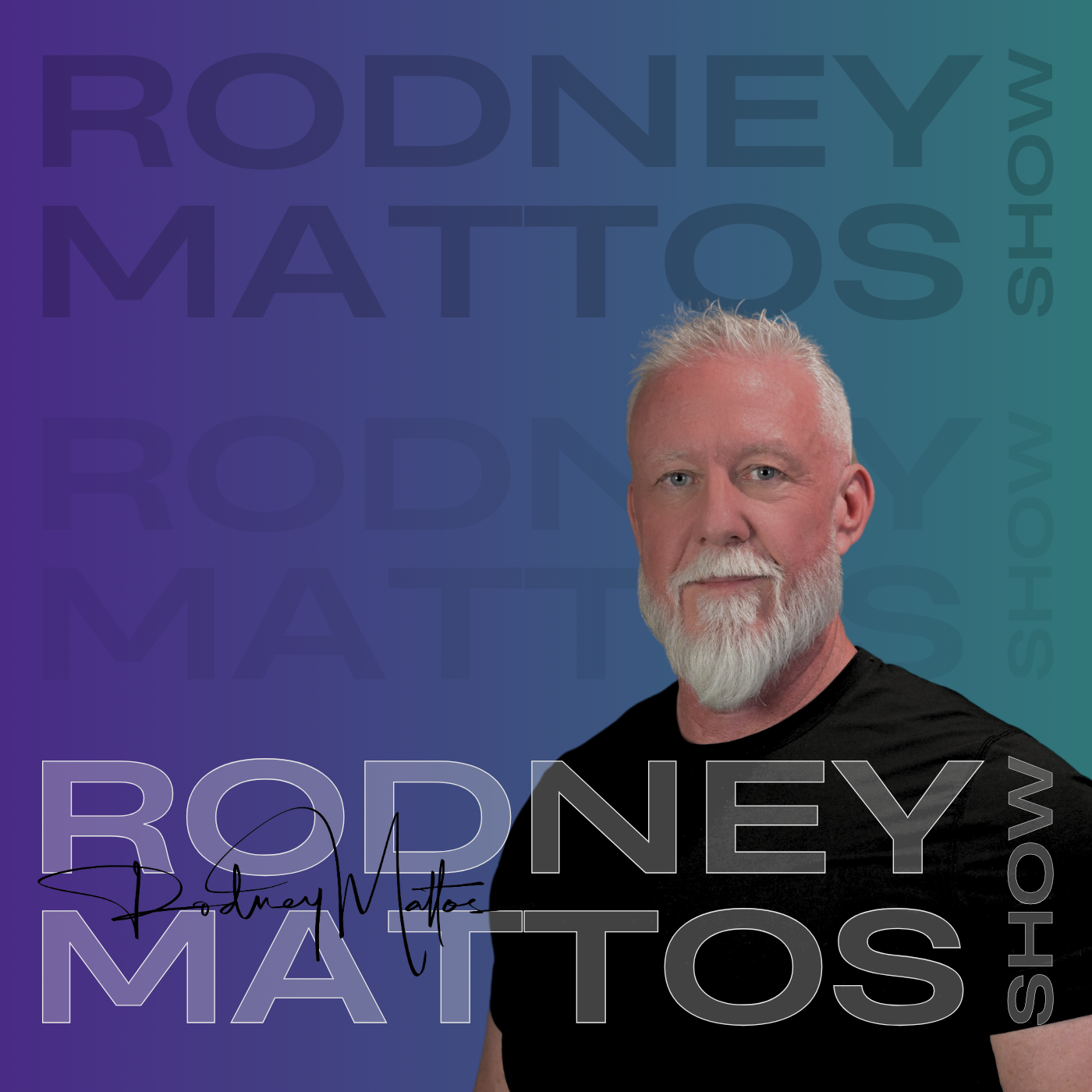
Rodney Mattos Show
by Rodney Mattos Sr.
Rodney Mattos Show: Redefining Insurance with Innovation & InsightWelcome to the Rodney Mattos Show, hosted by industry luminary Rodney Mattos, Sr., where we explore the future of insurance and employee benefits with bold ideas and practical solutions. This podcast blends cutting-edge AI automation from Apeironix with Triforta’s transformative strategies, tackling the industry’s biggest challenges head-on. From self-funded workers’ compensation to innovative health benefits management, Rodney brings nearly 30 years of expertise to every episode.Join us as we dive into how Triforta and Apeironix are revolutionizing the landscape, eliminating mundane tasks like data entry and policy reviews, while introducing self-funded mode
-
16
Self-Funding Isn't Just for Big Companies
In this episode of Blueprints for Better Benefits, Rodney Mattos Jr. and Rodney Mattos Sr. challenge one of the most persistent myths in employee benefits, that small and mid-sized employers are too small to self-fund. For employers who have been told they need hundreds or thousands of employees before self-funding becomes viable, this episode explains why that belief is outdated, what has changed in today’s market, and how smaller groups can use tools like shared risk pools, stop-loss protection, transparent pharmacy strategies, and care navigation to build a smarter, more controlled health plan. Topics We Cover • Why so many employers are told they are too small to self fund • How outdated assumptions have kept smaller companies locked into fully insured plans • What technology, predictive modeling, and shared risk structures have changed in the market • How Triforta evaluates whether a smaller employer is a fit for self-funding • Why stop-loss protection and aggregate limits help create guardrails instead of guesswork • How transparent pharmacy management helps reduce hidden waste • What direct primary care, care navigation apps, and smart plan design can do for employees and HR teams • Why self-funding is not about taking reckless risk, but about understanding, structuring, and capping risk • How the shift from buyer to owner changes the way employers think about benefits strategy Key Takeaway Self-funding is not reserved for massive employers. With the right structure, tools, and guardrails, smaller companies can gain more control, better data, and a more intentional benefits strategy without taking on unmanaged risk. The real question is not whether an employer is too small, but whether they are ready to stop renting their health plan and start owning it. Explore More • Explore our insurance agency, Triforta: https://www.triforta.com/ • Learn more about our software for insurance agencies, Apeironix: https://apeironix.com • Visit the full podcast website, The Rodney Mattos Show: https://rodneymattos.com/ Connect with Rodney • Email: [email protected] • LinkedIn: linkedin.com/in/rodneymattos
-
15
The Broker Bottleneck: Why Most Advisors Still Push Fully Insured Plans
In this episode of Blueprints for Better Benefits, Rodney Mattos Jr. and Rodney Mattos Sr. unpack one of the biggest reasons employers stay stuck in fully insured health plans: broker incentives that reward rising premiums and discourage better options. For employers frustrated by repeat renewals, limited transparency, and the same carrier-driven recommendations year after year, this episode explains why self-funded and captive strategies often never make it to the table, how compensation structures shape advice, and what leaders can do to evaluate whether their broker is truly aligned with their interests. Topics We Cover Why many brokers continue recommending fully insured plans How commissions, overrides, and retention bonuses create conflicts of interest Why some large brokerage firms are incentivized to protect revenue over outcomes How employers can identify the signs of a broker bottleneck What silent margin loss looks like over time What questions employers should ask to audit their advisor’s strategy and compensation Why self-funding is not the destination, but the starting point for better data, control, and transparency What alignment looks like in a modern fee-based advisory relationship Key Takeaway If your broker earns more when your health plan costs more, that is not alignment. Employers need advisors whose incentives support lower waste, better strategy, and stronger long-term plan performance. Explore More Visit the full podcast website, The Rodney Mattos Show: https://rodneymattos.com/ Explore our insurance agency, Triforta: https://www.triforta.com/ Learn more about our software for insurance agencies, Apeironix: https://apeironix.com Connect with Rodney Email: [email protected] LinkedIn: linkedin.com/in/rodneymattos
-
14
Fully Insured → Self-Funded: What Changes, What Stays the Same and How to Transition Without Disruption
In this episode of Blueprints for Better Benefits, Rodney Mattos Jr. and Rodney Mattos Sr. break down what actually happens when an employer moves from a fully insured plan to a self-funded or captive model. For employers considering a change but worried about confusion, disruption, or employee backlash, this episode offers a practical walkthrough of what stays the same, what changes behind the scenes, and how a well-designed transition can improve control without creating chaos. Topics We Cover • What employers and employees can keep the same during a transition, including networks, doctors, plan design, and enrollment systems • How self-funding changes the financial structure behind the plan • Why claims funding, stop-loss protection, and reserve strategy matter • How transparent pharmacy management and pass-through PBMs improve visibility and reduce waste • What real-time claims data allows employers to measure, manage, and improve • What a responsible 90 to 120 day transition timeline looks like • How HR teams can manage communication, education, and employee support during the rollout • Why a well-structured self-funded plan is designed for resilience, not volatility • How employers know when it is time to stop renting their health plan and start owning it Key Takeaway The best self-funded transitions do not feel like a revolution. They feel like an evolution. Most of what employees experience stays the same on the surface, while the real changes happen behind the scenes, where employers gain visibility, control, flexibility, and the ability to improve their plan over time. Explore More • Explore our insurance agency, Triforta: https://www.triforta.com/ • Learn more about our software for insurance agencies, Apeironix: https://apeironix.com • Visit the full podcast website, The Rodney Mattos Show: https://rodneymattos.com/ Connect with Rodney • Email: [email protected] • LinkedIn: https://www.linkedin.com/in/rodneymattos/
-
13
What Legal Needs to Know About Self-Funding But Might Not Ask
In this episode of Blueprints for Better Benefits, Rodney Mattos Jr. and Rodney Mattos Sr. unpack what legal teams need to know about self-funding, especially the responsibilities many employers misunderstand or address too late. From ERISA fiduciary duties and plan documents to HIPAA oversight, vendor contracts, and non-discrimination testing, this episode explains what legal teams, HR leaders, CFOs, and decision-makers need to know to reduce risk and build a plan that holds up when it matters most. Topics We Cover Why the employer remains the plan sponsor and fiduciary in both fully insured and self-funded plans What legal teams should review before a self-funded plan is implemented Why generic or outdated plan documents can create avoidable exposure How appeals processes, discretionary authority, and employer override clauses work What to look for in TPA, PBM, stop-loss, and vendor contracts How HIPAA compliance and business associate agreements should be managed Why Section 105(h) non-discrimination testing matters How captive governance and fiduciary liability coverage help protect employers Key Takeaway Self-funding is not just a financial strategy. It is also a legal, fiduciary, and governance decision. When the right structure is put in place from the beginning, employers gain more clarity, more control, and a stronger foundation for protecting both the plan and the people it serves. Explore More Visit the full podcast website, The Rodney Mattos Show: https://rodneymattos.com/ Explore our insurance agency, Triforta: https://www.triforta.com/ Learn more about our software for insurance agencies, Apeironix: https://apeironix.com Connect with Rodney Email: [email protected] LinkedIn: https://www.linkedin.com/in/rodneymattos/
-
12
How Indie Agencies Reach 50% EBITDA with AI
What if the fastest way to grow your agency wasn’t hiring more people, but removing friction? In this episode of The Rodney Mattos Show, Rodney Mattos Sr. sits down with Andy Neary to break down how artificial intelligence is quietly transforming independent insurance agencies and why those who embrace it early are building a massive competitive advantage. This isn’t an AI hype episode. It’s a real-world, operator-to-operator conversation about how agencies are moving from 30% to 50%+ EBITDA by redesigning how work actually moves through their business. Rodney shares how Apeironix was born inside Triforta as an internal solution to eliminate manual work, reduce errors, and restore momentum across renewals, policy verification, commissions, and submissions. What started as a fix for internal pain points has evolved into an automation layer helping agencies compress workflows that once took hours into minutes, without replacing people. You’ll hear how independent agencies can: Reach 50% EBITDA without adding headcount Eliminate repetitive admin work that drains teams Create operational predictability buyers and private equity reward Turn automation into a valuation multiplier, not just a cost saver Use AI to amplify their best people, not replace them Rodney also explains the Mirror Effect, the async automation breakthrough behind Apeironix, and why motion, not effort, is now the true measure of progress. If you’re an agency owner thinking about scale, sustainability, or exit and you’re tired of grinding harder for thinner margins, this episode will change how you think about AI, operations, and enterprise value. Episode Highlights Why automation is now existential for agencies The math behind EBITDA expansion with AI How efficiency directly drives valuation The Mirror Effect: AI that mirrors human judgment Why automating between systems matters more than tools Learn More & Connect Explore Apeironix and the automation layer built specifically for insurance agencies:👉 https://apeironix.com If this episode resonated, share it with another agency owner and subscribe to The Rodney Mattos Show for more conversations about building smarter, more valuable insurance businesses. Insurance won’t fix itself. We will.
-
11
Breaking Free: What Employers Fear (But Shouldn’t) About Self-Funding
If you’re an employer staring down another renewal and feeling that familiar knot in your stomach, this episode is for you. In Episode 8 of Blueprints for Better Benefits, Rodney Mattos Jr. and Rodney Mattos Sr. go straight at the thing that stops most leaders from taking control of their health plan: fear. Not abstract fear. The real kind, felt by CFOs who need predictability, HR teams who are already stretched thin, and CEOs who want to protect their people without gambling the business. This episode is a reset. A reframe. A reality check. Because fully insured may feel safe… but for many employers, it’s quietly draining budgets year after year, with less transparency, less control, and fewer options than you’ve been led to believe. Together, we unpack the Top 10 fears employers have about self-funding, and we dismantle them with real-world experience, proven strategy, and a few stories from the frontlines that hit close to home. Episode Highlights Why employer fear around self-funding is often learned helplessness from years on the fully insured treadmill The #1 concern: “What if claims blow up our budget?”, and how captives cap risk and define maximum exposure Catastrophic claims explained: stop-loss insurance and why those claims exist in fully insured plans too (you just don’t see them) “We don’t have claims expertise”, why you don’t need it when you have the right quarterback and infrastructure Predictability & cash flow: how captives' smooth volatility while keeping costs stable month-to-month HR workload: why the right self-funded model can mean less friction, not more Legal/ERISA fears: what employers already carry today, and how compliant vendors and oversight reduce liability The “career-risk” fear: how leadership teams gain confidence with actuarial modeling, board-ready education, and proof Myth-busting: why captives aren’t a trend or discount program, they’re a Fortune 100-level strategy made accessible to midsize employers Real savings story: how a mining employer uncovered and reclaimed $1.5M in waste and reinvested it back into their people What You’ll Take Away This isn’t a hype episode. It’s a field guide for leaders who want clarity. Self-funding isn’t a silver bullet. But it is a smarter, more transparent, more human strategy, when designed correctly, protected correctly, and managed intentionally. And the truth is simple: The only thing scarier than making a change… is staying put while costs keep rising and control keeps shrinking. Learn More & Connect 📩 [email protected] 🌐https://www.triforta.com/education 🔗LinkedIn: @Triforta-partners We are Triforta. And this is how employers take control, reduce volatility, and finally sleep at night.
-
10
GuidedEdge: The “Goldilocks” Option for Smarter Benefits
What if there was a benefits strategy that wasn’t too rigid… and wasn’t too risky…but just right? In Segment 7 of Blueprints for Better Benefits, we introduce GuidedEdge®, Triforta’s proprietary alternative funding methodology designed for employers who feel trapped between high-cost fully insured plans and the perceived risk of full self-funding. GuidedEdge is the bridge, combining the predictability of fully insured, the flexibility of self-funding, and the upside participation of more advanced risk models, without the long runway or governance lift of a captive. If you’ve ever said: “Fully insured is too expensive” “Self-funding feels like too big of a leap” “We want transparency without sleepless nights” This episode was built for you. Episode Highlights Why GuidedEdge is known as the “Goldilocks” option, not too hot, not too cold How GuidedEdge compresses implementation timelines to 3–4 weeks The role of advanced stop-loss and shared-risk layers in stabilizing cost Real-world results: 148+ GuidedEdge clients, $10M in claims paid, $4M+ in underwriting profit returned How fewer than 8% of U.S. employers are using strategies like this today Where GuidedEdge fits on the funding spectrum (fully insured → self-funded → captive) How utilization data reveals the “bell curve of opportunity” inside every plan Why monetizing low utilizers while protecting against high-cost claims changes everything Side-by-side plan comparisons showing real savings with no network disruption Who GuidedEdge Is Built For Employers with 20+ enrolled employees Organizations facing abnormal or double-digit renewals CFOs and HR leaders seeking claims transparency and predictability Employers who want flexibility without catastrophic risk exposure Physician groups, school districts, construction, mining, and mid-market employers Leadership teams ready to rethink how healthcare dollars actually work Key Takeaway Most employers don’t need an all-or-nothing solution. GuidedEdge proves there is a middle path, one that: Lowers costs Improves transparency Limits downside risk Shares upside savings Preserves employee experience It’s not an insurance product. It’s a strategy, designed, governed, and supported by Triforta’s team of actuaries, analysts, and benefit strategists. Learn More & Connect 📩 [email protected] 🌐https://www.triforta.com/education 🔗LinkedIn: @Triforta-partners We are Triforta. And this is how employers take control, reduce volatility, and finally sleep at night. GuidedEdge isn’t about taking a bigger risk. It’s about taking a smarter one.
-
9
Case Studies: When Strategy Meets Reality
In Part 6 of Blueprints for Better Benefits, we step out of theory and into the field. This episode brings together real employer case studies that show how Triforta’s integrated approach to benefits, cost containment, and risk management delivers measurable results, across industries, geographies, and complexity levels. These aren’t hypothetical scenarios. They’re real employers who faced rising healthcare costs, volatility, and workforce pressure, and chose to take control. Case Study #1: Nevada Mining Client — $1.5 Million Saved A Nevada-based mining company was facing accelerating healthcare costs that threatened not only their benefits budget, but their ability to attract and retain skilled workers in a competitive labor market. Triforta implemented a coordinated strategy combining: Predictive analytics powered by Apeironix Targeted cost-containment solutions Proactive risk management Results: Nearly 10% savings in year one Compounding reductions year over year Over $1.5 million saved in five years No reduction in benefit quality or employee access This was not cost cutting, it was intelligent cost control. Case Study #2: North Carolina Employer, From Volatility to 19% Savings This employer entered the conversation with: A Medical Loss Ratio consistently above 140% Pharmacy spend 46% over benchmark Limited carrier options due to under writing risk The solution was a transition into a Member-Owned Captive, paired with transparent data and active intervention strategies. Results: 19% savings in the first year Long-term actuarial projections showing continued improvement Nearly $243,000 in first-year Rx savings alone Renewed stability in a previously unmanageable claims environment Transparency became the turning point. Case Study #3: Healthcare Chaos, $2.6 Million Saved in One Year A mid-sized employer with 162 enrolled employees was facing an existential threat: Two hemophilia claims totaling $2million annually Stop-loss premiums alone approaching $2 million Years of 28%+ renewal increases under a graded-funded model Triforta introduced a member-owned captive and executed a multi-pronged strategy: Patient assistance programs Direct provider contracting Stop-loss renegotiation Results: $1.5 million in claims reduction $1.1 million in premium savings $2.6 million saved in one year Plan stability restored The plan didn’t just recover; it became sustainable. Episode Highlights In this episode, we cover: • How a Nevada mining company saved $1.5 million while preserving high-quality benefits • Why predictive analytics and real-time data visibility change everything • How a North Carolina employer achieved 19% first-year savings after years of volatility • The outsized role prescription drug costs play and how to take control of them • A real-world example of catastrophic pharmacy risk turned into $2.6 million in savings • Why captives, transparent PBMs, and proactive intervention outperform traditional models • The difference between cutting benefits and engineering smarter healthcare strategy Learn More & Connect 📩 [email protected] 🌐https://www.triforta.com/education 🔗LinkedIn: @Triforta-partners We are Triforta. And this is how employers take control, reduce volatility, and finally sleep at night.
-
8
Captives: Sleep-at-Night Risk Control
In this episode of Blueprints for Better Benefits, we introduce the strategy that transforms self-funding from a smart decision into a stable, long-term solution: Captives. Up to this point in the series, we’ve covered the core building blocks of better benefits, self-funding, stop-loss protection, transparent PBMs, GuidedEdge, and integrated cost containment. But even with a well-designed self-funded plan, many employers still worry about volatility, big claims, and unpredictable renewals. That’s where captives come in. In this segment, we explain why Triforta views captives as the ultimate form of “sleep-at-night risk control.” By pooling risk with thousands of like-minded employers, captives stabilize costs, smooth out claims volatility, and give employers predictability that simply doesn’t exist in the fully insured world. We walk through: Why Triforta partners with captives and how they empower employers to regain control The scale behind the captive model, including 3,000+ employer members, over 1 million covered lives, and billions in healthcare spend under management How a 30% stop-loss renewal cap and no-new-lasers policy protect employers from disruptive rate spikes Why captives act as a shock absorber, smoothing the highs and lows of claims experience How stop-loss premiums flow through the captive, and why member-held capital reserves are an asset, not an expense The renewal methodology that replaces extreme volatility with predictable, manageable increases We also review real-world outcomes, including: Average first-year savings of 7.5% for employers transitioning into the captive 82% of employers saving money in year one And for those who don’t save initially, why the captive model still prevents the kind of crushing premium hikes common in fully insured plans—and positions employers to recover and win long-term This episode makes one thing clear: captives aren’t about chasing short-term wins. They’re about building stability, predictability, and resilience into your healthcare strategy, so employers can plan confidently, even in uncertain claims years. Episode Highlights Why captives are the foundation of long-term self-funding success How Triforta uses captives as a built-in shock absorber What “no new lasers” and renewal caps really mean for your budget How collective scale unlocks leverage individual employers can’t achieve alone Real case study outcomes from employers who made the move Learn More & Connect Interested in adding stability to your benefits strategy? 📩 [email protected] 🌐 https://www.triforta.com/education 🔗 LinkedIn: @Triforta-partners We are Triforta, and this is how employers take control, reduce volatility, and finally sleep at night.
-
7
Cost Containment Playbooks: The Savings Engine Behind Self-Funding Stability
In Part 4 of Blueprints for Better Benefits, we move from “self-funding basics” to what employers actually want next: consistent savings and predictable stability. So far in this series, we’ve covered how self-funding—paired with stop-loss and pass-through PBMs can reshape your benefits spend. Now we take it further. This episode introduces Triforta’s Integrated Cost-Management Platform (ICM), our coordinated approach to cost containment that helps employers reduce the everyday claims spend that quietly consumes the majority of a health plan (often around 65% of total spend). What is ICM? ICM isn’t “one more vendor.” It’s a connected strategy built on three pillars: 1) Integrated Point Solutions Curated, pre-vetted programs that target high-cost areas like imaging, elective procedures, second opinions, neonatal/NICU management, and specialty care, negotiated at preferred pricing and designed to plug into your existing plan. 2) Real-Time Interventions This is where savings become proactive. With live pharmacy claims feeds, our clinical and pharmacy teams can intervene when high-cost specialty scripts appear, identifying clinically appropriate alternatives and working directly with providers to reduce spend without compromising care. 3) Annual Playbooks Instead of reacting at renewal, we build a customized plan strategy each year—based on your actual claims trends, so cost containment becomes a repeatable system, not a one-time project. The Ocean Effect: Captives + Collective Leverage Mid-sized employers don’t naturally have Fortune 50 leverage. But in a member-owned captive, you do. We explain how pooling risk with like-minded employers creates the Ocean Effect—absorbing claims volatility more smoothly, improving renewal stability, and unlocking better pricing and contract terms across the vendor ecosystem. In short: you stop navigating turbulent healthcare waters alone, and you gain the purchasing power, strategy, and stability typically reserved for the biggest companies in the country. The Bottom Line This episode is about turning benefits from a budget problem into a business advantage, through structured playbooks, real-time interventions, and collective leverage that drives down cost and reduces volatility year over year. Episode Highlights Triforta’s ICM platform: a coordinated cost-containment system Three pillars: Point Solutions, Interventions, Playbooks Rx savings strategies like Tier-Zero copays, international sourcing, and manufacturer assistance Why mid-sized employers can now access big-company leverage The Ocean Effect: how captives stabilize renewals and reduce volatility A phased approach to cost containment (Year 1 → Year 3) that’s manageable and measurable Why cost containment and risk management must be engineered together Connect with Triforta Ready to build a cost-containment playbook that actually performs? 📩 [email protected] 🌐 https://www.triforta.com/education 🔗 LinkedIn: @Triforta-partners We are Triforta. And this is where better benefits become a better business.
-
6
The Role of Stop-Loss in Self-Funding
In this episode of Blueprints for Better Benefits, we demystify one of the most important, and misunderstood, components of self-funded health plans: stop-loss insurance. Self-funding gives employers control over plan design and healthcare spend. Stop-loss provides the protection that makes that control practical and predictable. We explain how stop-loss works, why most Fortune 100 companies rely on self-insurance, and how mid-sized employers can use the same strategies without exposing themselves to catastrophic risk. This episode breaks down complex concepts into clear, real-world explanations so employers can evaluate self-funding with confidence. You’ll learn how specific and aggregate stop-loss work together to cap financial exposure, why fully insured plans trap employers on a renewal treadmill, and how self-funded plans allow organizations to benefit from good claim years instead of being penalized for them. In This Episode, We Cover Why self-funding typically costs less than fully insured plans The difference between specific and aggregate stop-loss How stop-loss protects against catastrophic and cumulative claims Why fully insured plans reward carriers—not employers What a transparent self-funded cost structure looks like How employers choose the right stop-loss deductible Why the “deconstructed” benefits model is the future Who This Episode Is For ✔ Employers with 50–750 employees ✔ CFOs and financial leaders ✔ HR and benefits decision-makers ✔ Organizations evaluating self-funding for the first time Connect with Triforta Interested in building a smarter, safer benefits strategy? 📩 [email protected] 🌐 https://www.triforta.com/education 🔗 LinkedIn @Triforta-partners We are Triforta, and we help employers build predictable, transparent, and sustainable healthcare strategies.
-
5
Why RX Rebates Hijack Your Budget
In this episode of Blueprints for Better Benefits, we unpack one of the most misunderstood drivers of rising healthcare costs: pharmacy rebates. Rebates are often positioned as savings, but in practice they frequently inflate drug prices, reduce transparency, and shift costs onto employers and employees. We explain how Pharmacy Benefit Managers (PBMs) negotiate rebates, why those dollars rarely reduce premiums or out-of-pocket costs, and how incentives favor higher-priced drugs over lower-cost alternatives. You’ll learn how vertical integration across insurers, PBMs, specialty pharmacies, and providers allows carriers to capture revenue at multiple levels—while remaining compliant with ACA Medical Loss Ratio rules. The result is a system where employers pay more each year with little visibility into where their healthcare dollars actually go. We also break down real-world examples, including why prices for drugs like Humira increased even after biosimilars entered the market, and why significantly cheaper options often remain off formularies. If you’re responsible for benefits, budgeting, or financial strategy, this episode offers clarity, and a better way forward. In This Episode, We Cover Why pharmacy rebates don’t work like consumer discounts How PBM incentives reward higher-priced drugs Why rebate dollars don’t lower premiums Vertical integration and its impact on employer costs The true flow of pharmacy dollars, from employer to manufacturer Why transparency is essential to cost control Who This Episode Is For ✔ Employers with 50–750 employees ✔ CFOs and finance leaders ✔ HR and benefits decision-makers ✔ Organizations exploring self-funding or alternative models Connect with Triforta Ready to take control of your pharmacy spend? 📩 [email protected] 🌐 https://www.triforta.com/education 🔗 LinkedIn @Triforta-partners We are Triforta, and we exist to help employers build transparent, predictable, and sustainable healthcare strategies.
-
4
Fully Insured Healthcare: A Model Past Its Prime.
In this episode of Blueprints for Better Benefits, we unravel the uncomfortable truth behind fully-insured healthcare and why it no longer serves the employers who rely on it. What once promised predictability has now become a system defined by rising costs, shrinking flexibility, and little to no transparency. We break down why premiums continue to skyrocket, how rate increases are often disconnected from actual claims performance, and why mid-sized employers are now carrying a disproportionate financial burden, all while employees experience reduced access and higher out-of-pocket spend. You’ll hear how this cycle forms, why it keeps repeating, and how a $2M annual healthcare budget quietly compounds into more than $30M over a decade, even under seemingly modest increases. More importantly, we highlight the strategies that allow employers to forecast costs, regain transparency, and control one of their largest expenses behind payroll. If you’re responsible for benefits, budgeting, or talent strategy, this episode gives you a clearer lens, and a better path forward. In this episode, we cover: • Why the fully-insured model is breaking mid-market employer budgets • The consolidation of BUCA carriers and what that means for pricing • The “Vicious Cycle” of reactive care and how employers unknowingly fund it • How rising premiums are outpacing wages and inflation • Why compounding costs make healthcare unsustainable • The long-term financial impact of traditional renewals • Where employers can intervene to break the cycle Who this episode is designed for: ✔ CFOs and financial leaders ✔ HR leaders and benefit decision-makers ✔ Operations and executive teams ✔ Business owners scaling beyond 50+ employees ✔ Employers tired of double-digit renewals Connect with Triforta Ready to explore a better strategy and regain control of your healthcare spend? [email protected] www.Triforta.com LinkedIn @Triforta-partners We are Triforta, and we exist to help employers build predictable, cost-controlled, and employee-aligned healthcare strategies. Press play. Your blueprint starts here.
-
3
Cracking the PBM Black Box: Why Employers Pay Too Much for Drugs
Change is barreling down the haul road and we’re riding shotgun! In this father-and-son deep-dive, Rodney Jr. grills Rodney Sr. on the White House’s new “Most-Favored-Nation” executive order, the secret costs hiding inside PBM contracts, and three instant levers from the Triforta Benefits Playbook that can chop thousands off your next renewal. Whether you run benefits for a 700-employee mine or a 70-person startup, you’ll leave with a punch-list you can activate in 45 days or less—no actuarial PhD required. How to Reach Triforta Website: https://www.triforta.com/education Email: [email protected] LinkedIn: https://www.linkedin.com/in/rodneymattos/ Need help turning today’s ideas into real savings? Drop “PODCAST” in your subject line, and our team will fast-track your request.
-
2
How Employers Can Save Millions: The Blueprint Behind Better Benefits
Episode: Blueprints for Better Benefits – How Triforta Is Fixing America’s Broken Healthcare System Host: Rodney Jr. Guest Expert: Rodney Sr., Founder & CEO of Triforta In this episode, we’re pulling back the curtain on the rising costs, hidden mechanics, and overlooked opportunities inside America’s healthcare system. For decades, our team of actuaries, analysts, underwriters, and AI-engineers has been decoding the chaos employers face every renewal season. Today, we’re handing you the blueprint. This conversation walks you through the forces driving year-over-year premium hikes, the truth behind BUCA-dominated fully insured plans, and the quieter budget-leaks hiding in pharmacy rebates and opaque claims practices. More importantly, we equip you with the strategies that actually work in the real world, strategies that help employers forecast, contain, and even reverse runaway medical spend. You’ll hear how data-driven design, modern funding models, true risk management, and Triforta’s proprietary AI platform give forward-thinking employers a measurable advantage, often trimming 15–25% off total healthcare costs with better member experience, not worse. If you’re an HR leader, operations executive, CFO, or business owner wondering whether there’s a smarter path forward, there is. And this episode spells it out step-by-step. KEY MOMENTS 0:00 – Welcome & what today’s blueprint delivers 0:48 – Why America’s health-plan math is broken 3:30 – Mistake #1: “Set-it-and-forget-it” renewals 6:42 – The hidden pharmacy clauses draining your wallet 9:55 – Fully insured vs. self-funded: the real numbers 13:25 – Building a member-owned captive (blueprint walk-through) 17:40 – Case Study: Nevada mining company saves $1.5 M 21:10 – AI early-warning system for high-cost claims 24:58 – 3 data points every CFO must demand 28:15 – Your Quick-Win Checklist for the next renewal 30:40 – How to work with Triforta (next steps) 31:50 – Outro & final thoughts Connect with Triforta Website & playbooks: https://www.triforta.com/education Book a 1-on-1 strategy call: https://calendly.com/rodney_8228/15min?month=2025-11 Rodney Jr. on LinkedIn: https://www.linkedin.com/in/rodneymattostriforta/ Rodney Sr. on LinkedIn: https://www.linkedin.com/in/rodneymattos/ Email: [email protected] Subscribe for more!
-
1
The AI-Powered Future of Insurance & Cost Containment
Revolutionizing Insurance & Healthcare Cost Containment In this exclusive interview, Rodney Mattos Sr., Founder & CEO of Triforta, sits down with Andy Neary to share his game-changing approach to insurance, healthcare, and cost containment for employers. ✅ How Triforta is tackling the broken healthcare system ✅ Cost-saving strategies for businesses of all sizes ✅ Why traditional insurance models fail employers & employees ✅ The AI-driven future of insurance & risk management Rodney doesn’t hold back as he breaks down the real problems plaguing the industry and how Triforta’s data-driven, tech-powered solutions are empowering business leaders to take back control of their benefits programs. If you're an employer, HR leader, or benefits consultant, this conversation is a must-watch! Leave a comment: What are your biggest challenges with healthcare costs? Let’s start the conversation! Get in Touch with Triforta: Triforta.com Contact: [email protected] Follow Triforta on LinkedIn: triforta-partners Subscribe for more insights on fixing healthcare & smart risk management!
We're indexing this podcast's transcripts for the first time — this can take a minute or two. We'll show results as soon as they're ready.
No matches for "" in this podcast's transcripts.
No topics indexed yet for this podcast.
Loading reviews...
ABOUT THIS SHOW
Rodney Mattos Show: Redefining Insurance with Innovation & InsightWelcome to the Rodney Mattos Show, hosted by industry luminary Rodney Mattos, Sr., where we explore the future of insurance and employee benefits with bold ideas and practical solutions. This podcast blends cutting-edge AI automation from Apeironix with Triforta’s transformative strategies, tackling the industry’s biggest challenges head-on. From self-funded workers’ compensation to innovative health benefits management, Rodney brings nearly 30 years of expertise to every episode.Join us as we dive into how Triforta and Apeironix are revolutionizing the landscape, eliminating mundane tasks like data entry and policy reviews, while introducing self-funded mode
HOSTED BY
Rodney Mattos Sr.
CATEGORIES
Loading similar podcasts...
Frequently Asked Questions
How many episodes does Rodney Mattos Show have?
Rodney Mattos Show currently has 16 episodes available on PodParley. New episodes are automatically indexed when they're published to the podcast feed.
What is Rodney Mattos Show about?
Rodney Mattos Show: Redefining Insurance with Innovation & InsightWelcome to the Rodney Mattos Show, hosted by industry luminary Rodney Mattos, Sr., where we explore the future of insurance and employee benefits with bold ideas and practical solutions. This podcast blends cutting-edge AI automation...
How often does Rodney Mattos Show release new episodes?
Rodney Mattos Show has 16 episodes. Check the episode list to see recent publication dates and frequency.
Where can I listen to Rodney Mattos Show?
You can listen to Rodney Mattos Show on PodParley by clicking any episode. We provide an embedded audio player for direct listening, and you can also subscribe via your preferred podcast app using the RSS feed.
Who hosts Rodney Mattos Show?
Rodney Mattos Show is created and hosted by Rodney Mattos Sr..
URL copied to clipboard!