
PODCAST · history
School of War
by The Free Press
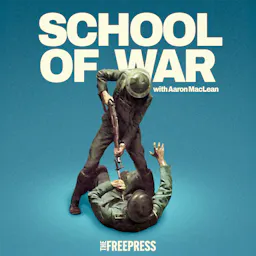
In School of War, CBS News National Security Analyst and Free Press columnist Aaron MacLean sits down with secretaries of state, top military historians, war planners, and key political decision-makers to help understand the lessons of war.Tune in as School of War takes you to the front lines.Aaron MacLean is a senior fellow at Hudson Institute. He has worked as a foreign policy advisor and legislative director to Sen. Tom Cotton of Arkansas and spent seven years in the U.S. Marine Corps.Visit our Substack for episode transcriptsFollow along on Instagram
-
316
Ten-Minute Warning: The Hypersonic Threat
A Chinese hypersonic missile targeting either U.S. coast would leave room for “about 10 minutes of warning time.” Zachary Krevor, CEO of Stratolaunch, is building vehicles to help the Pentagon learn to detect, track, and intercept this threat. Today, Krevor joins School of War to explain how China and Russia have outpaced the U.S. in hypersonic weapons testing, why AI-enabled missile “swarms” may be on the horizon, and what it will take for America to defend itself against them. 2:32 What Makes a Weapon Hypersonic? 4:47 The Real-Life Top Gun: Maverick 6:14 From Model Airplanes to Hypersonics 9:09 Why America Stopped Investing in Hypersonics 10:55 Two Types of Hypersonic Weapons 14:09 Glide Bodies vs. Cruise Missiles 15:44 Surviving the Heat of Mach 5 20:20 Testing America’s Hypersonic Technology 23:20 China and Russia’s Hypersonic Advantage 25:24 How to Stop a Hypersonic Missile 29:09 The Coming Age of Hypersonic Swarms 40:38 Can Golden Dome Stop Hypersonic Weapons? This episode of School of War is brought to you by Maven Smart System, the builder platform for the American warfighter, fielded across the force and live on the frontline today. Learn more at palantir.com. Learn more about your ad choices. Visit megaphone.fm/adchoices
-
315
What to Expect When You’re Expecting Great Power Conflict
When it comes to world superpowers, Cambridge historian Brendan Simms argues there are only four that matter—and two of them are fading. Today, Simms joins Aaron MacLean to argue that Britain still belongs among the world’s leading powers; why its place among them is “by no means guaranteed”; and why Hitler is no longer the absolute evil against which people define themselves. 4:08 The Four R’s of Great Power 4:29 Defining Great Power 8:09 Iran’s Regional Power 11:44 The Great Powers Return 15:39 The Cold War 17:44 Europe Wakes Up 21:45 American Unipolarity Ends 25:16 Britain’s Great-Power Claim 35:47 The New World Order 38:26 Realism’s Blind Spots 42:07 Losing Postwar Optimism 45:53 A “Post-Hitler World” This episode of School of War is brought to you by Maven Smart System, the builder platform for the American warfighter, fielded across the force and live on the frontline today. Learn more at palantir.com. This episode of School of War is also brought to you by Stratolaunch, a leading pure-play hypersonics company. Stratolaunch helps the U.S. and its allies move new hypersonic technologies from concept to capability, faster and cheaper. Learn more about how Stratolaunch is accelerating the future of hypersonics at Stratolaunch.com. Learn more about your ad choices. Visit megaphone.fm/adchoices
-
314
Shot Down over Serbia: General Goldfein’s Incredible Story
The story of Air Force General David Goldfein, who miraculously survived after his plane was shot down over Serbia in 1999, has since become military legend. Today, he joins School of War to recount the harrowing rescue mission that saved him, how he stayed alive behind enemy lines, and the lessons his remarkable career offers about leadership, airpower, and preparing America for the next war. 2:43 An Air Force Family 3:25 Rejected by the Air Force Academy 6:39 Becoming an F-16 Pilot 8:12 What Makes a Great Fighter Pilot? 12:36 Information Overload in Combat 15:28 Goldfein’s First Combat Mission 19:57 Training for Confidence Under Fire 21:37 A Leadership Lesson from the Gulf War 24:32 Shot Down Over Serbia 28:51 Surviving Behind Enemy Lines 31:48 The Race to Rescue Goldfein 36:22 Guiding the Rescue Helicopter 44:50 The Impact on His Family 48:53 Witnessing the Attack on the Pentagon 51:19 Digitizing the American Military This episode of School of War is brought to you by Maven Smart System, the builder platform for the American warfighter, fielded across the force and live on the frontline today. Learn more at palantir.com. Learn more about your ad choices. Visit megaphone.fm/adchoices
-
313
Our Foreign Policy Divide Began with the Korean War
More than 75 years after the Korean War, its lessons endure—and divisions over isolationism and American power continue to shape the discourse around modern global conflicts. Dane J. Cash, historian and author of The Forgotten Debate: The Korean War and the Roots of America's Ideological Divisions, joins School of War to explain how the left’s hawk-dove divide during the Korean War foreshadowed the neoconservative break from the liberal consensus during the 1970s and why the political battles of the early Cold War continue to splinter America today. 2:10 America Before the Korean War 3:08 The Debate Over Containment 4:15 Multilateralism vs. Unilateralism 5:29 Did Acheson Invite the War? 8:23 Why North Korea Attacked 8:55 Conservative Criticism of Truman 11:10 Liberal Divisions Over Korea 13:30 The Roots of Neoconservatism 17:14 Truman’s Lonely Middle Ground 19:51 The Right’s Foreign Policy Split 22:05 Taft, Eisenhower, and the GOP 22:58 MacArthur’s Moment 25:31 China Enters the War 30:37 Herbert Hoover’s Foreign Policy Revolt 33:51 Stalemate, POWs, and Ukraine Parallels This episode of School of War is brought to you by Maven Smart System, the builder platform for the American warfighter, fielded across the force and live on the frontline today. Learn more at palantir.com. Learn more about your ad choices. Visit megaphone.fm/adchoices
-
312
Inside America’s Fight for Drone Dominance
The U.S. military needs more drones, and it needs to build them without Chinese parts. Today, Defense Innovation Unit Deputy Director Travis Metz joins School of War to discuss how America can build drones quickly, cheaply, and on U.S. soil; what America can learn from Ukraine’s drone war; and the Pentagon’s new billion-dollar effort to upgrade its aging military technology. 2:23 - Why America Is Behind on Drones 4:32 - The Drone Dominance Program 6:51 - Breaking Dependence on China 10:23 - The Different Types of Drones 13:34 - Ukraine’s Mid-Range Strike Revolution 16:00 - Cheap Drones at Long Range 18:47 - AI, Autonomy, and Electronic Warfare 21:47 - How Drone Dominance Works 24:33 - Building an American Drone Industry 33:55 - Lessons From Fort Benning 39:19 - Cheap and Expendable Drones 42:01 - Testing Drones for Different Missions 50:14 - The Next Phase of Drone Dominance 55:09 - How Many Drones Does America Need? 1:02:49 - Recreating Ukraine’s Innovation Cycle This episode of School of War is brought to you by Maven Smart System, the builder platform for the American warfighter, fielded across the force and live on the frontline today. Learn more at palantir.com. Learn more about your ad choices. Visit megaphone.fm/adchoices
-
311
When Terrorists Become the Heroes to Young Americans
In prerevolutionary Russia, it was not uncommon for children to dream of becoming terrorists when they grew up. “It was a respected profession,” says Northwestern University professor Gary Saul Morson, who now sees troubling parallels between modern-day America and an era in Russia when terrorism became fashionable and radicals came to see violence as an expression of moral virtue. Today, Morson joins School of War to discuss what Fyodor Dostoyevsky understood about the terrorist mind, why good people can be persuaded to support terrible acts, and what America loses when it stops teaching the history of communism in schools. 3:09 America and Revolutionary Russia 3:47 The Rise of Modern Terrorism 4:38 When Terrorism Became a Respected Profession 6:10 Why Terrorists Had So Much Power 6:22 Why Russian Liberals Failed to Oppose Terrorism 7:26 The Danger of Celebrating Political Violence 9:36 Dostoevsky’s Radical Youth 11:31 Dostoevsky’s Arrest and Mock Execution 13:15 Understanding the Psychology of Revolutionaries 14:29 How Dostoevsky Predicted Totalitarianism 17:55 Why Communism Was Worse Than the Czars 20:11 Why Liberals Must Oppose Extremism 22:02 The Psychology of Left-Wing Totalitarianism 24:53 What Young People Don’t Know About Communism 28:16 How Good People Come to Support Evil 34:06 What Left and Right-Wing Extremists Have in Common 36:17 How Do We Fight Political Extremism? This episode of School of War is brought to you by Maven Smart System, the builder platform for the American warfighter, fielded across the force and live on the frontline today. Learn more at palantir.com. Learn more about your ad choices. Visit megaphone.fm/adchoices
-
310
Senator McCormick Thinks That America’s Military Is Stuck in the Past
Pennsylvania senator Dave McCormick, a West Point graduate, Desert Storm veteran, and former CEO of Bridgewater Associates, is concerned about America’s wealth gap, which he says is approaching “a version of capitalism I don’t think we want.” Today, McCormick joins School of War for a candid conversation about why the right needs a better answer to socialism, lessons in modern warfare from his recent closed-door meeting with Ukraine president Volodymyr Zelensky, and why he regrets his 2002 LA Times op-ed supporting the Iraq War: “I was completely wrong.” 02:01 — From Desert Storm to Princeton 05:05 — Nine Months Traveling the World 06:58 — The “End of History” and the Return of Socialism 08:00 — Can America Remain the World’s Superpower? 09:47 — Is the U.S. Military Stuck in the Past? 12:27 — What Ukraine Is Teaching America About Modern Warfare 13:41 — Rebuilding America’s Defense Industrial Base 17:15 — America’s AI Race With China 22:56 — How AI Will Transform American Jobs 24:03 — Wealth Inequality and the Future of Capitalism 25:56 — Why Socialism Is Appealing to Young Americans 30:52 — The Fight Over AI Data Centers 35:05 — Iran and the Future of the Middle East 41:17 — McCormick: “I Was Completely Wrong” About Iraq 44:08 — Balancing Iran With the Threat From China This episode of School of War is brought to you by Maven Smart System, the builder platform for the American warfighter, fielded across the force and live on the frontline today. Learn more at palantir.com. Learn more about your ad choices. Visit megaphone.fm/adchoices
-
309
Tanks vs. Drones
Is the tank obsolete? As drones and precision strikes transform modern battlefields, some have predicted that armored vehicles may soon meet the fate of the cavalry charge. Today on School of War, Colonel Jose A. Reyes and Lieutenant Colonel David “Cam” Smith of the 1st Cavalry Division make the opposite case. Drawing on their experience operating and commanding tanks, they join Aaron MacLean to explain how armored vehicles are adapting to an increasingly drone-centric battlefield—and why the future of warfare may still belong to the cavalry. 3:18 — Reyes and Smith’s Backgrounds 8:40 — The History of Tanks and Maneuver 11:15 — Is the Tank Obsolete? 12:43 — “The Tank Is Alive and Well” 15:17 — Combined Arms at Every Echelon 20:12 — Transforming Armored Warfare 27:02 — The Battlefield Data Problem 30:01 — Ukrainian Innovation and Battlefield Data 33:25 — Electronic Warfare and FPV Drones 38:13 — Cheap Drones and the Cost of Defense 42:44 — Armor and the Problem of Attrition 43:49 — The Future of Unmanned Armor 46:51 — Unmanned Resupply and Medevac 48:25 — Casualty Evacuation in Ukraine 52:16 — What the Army Needs Next This episode of School of War is brought to you by Maven Smart System, the builder platform for the American warfighter, fielded across the force and live on the frontline today. Learn more at palantir.com. Learn more about your ad choices. Visit megaphone.fm/adchoices
-
308
Boris Johnson on Why Europe and America Still Need Each Other
As war in Ukraine grinds towards its fifth year and tensions strain the transatlantic alliance, former British prime minister Boris Johnson says he remains convinced that the West has the power to prevail: “Putin has got to lose.” Today, Johnson joins School of War to discuss how the West can bring the Russian president to the negotiating table, why Europe’s dream of “strategic autonomy” is a “sham, a snare and a delusion,” and why he believes predictions of American decline and Chinese dominance have it backward. 02:20 — When Boris Johnson Knew Putin Would Invade Ukraine 05:46 — Why Europe Didn’t Believe an Invasion Was Coming 09:12 — Did Boris Johnson Stop a Ukraine-Russia Peace Deal? 11:19 — Could Ukraine Trade Land for Peace? 13:43 — What Johnson Saw on Ukraine’s Front Lines 17:06 — How Economic Warfare Could Pressure Putin 18:00 — “Putin Has Got to Lose” 20:00 — The Growing Divide Between America and Europe 22:19 — Can Britain Still Defend Itself? 26:20 — JD Vance’s Critique of Europe 30:12 — Britain, Free Speech, and the Culture War 34:39 — Can Europe Achieve “Strategic Autonomy”? 39:07 — Why America Should Still Care About NATO 41:01 — The Fight Over the Chagos Islands and Diego Garcia 46:12 — Why Johnson Is Still Betting on America Over China This episode of School of War is brought to you by Maven Smart System, the builder platform for the American warfighter, fielded across the force and live on the frontline today. Learn more at palantir.com. Learn more about your ad choices. Visit megaphone.fm/adchoices
-
307
Ted Cruz’s Plan to Bring Down Iran’s Regime—and Tucker Carlson
As the American right and left are increasingly pulled toward their ideological extremes, many politicians have chosen to appease the loudest voices in their coalitions even when those voices flirt with or openly embrace antisemitism. Senator Ted Cruz says he’s done playing nice. “If we do not defeat this poison,” he warns, “I believe it will consume the Republican Party just like it has consumed the Democratic Party.” Today, Cruz joins School of War to discuss his strategy for bringing down Iran’s regime, what Tucker Carlson’s splinter from the mainstream right means for conservative politics, and the battle he believes will define the future of the Republican Party. 02:08 - The State of Iran After the War 02:46 - Why Trump Struck Iran 04:13 - Why the MOU Was a Disaster 05:39 - The Post That Triggered an Iranian Bot Campaign 07:24 - Why Cruz Opposed the Iran Deal 08:57 - America’s Next Move in Iran 09:29 - Why the Goal Should Be Regime Collapse 12:01 - Cruz’s Strategy to Bring Down the Regime 13:08 - Why He Wants to Arm Iranian Protesters 15:22 - The Future of America’s Foreign Policy 16:27 - Is the Democratic Party Being Taken Over? 21:32 - The Rise of Antisemitism on the Right 22:50 - Why Tucker Carlson Is “Dangerous” 24:06 - “We Have to Defeat This Poison” 26:34 - Could Tucker Carlson Run for President? This episode of School of War is brought to you by Maven Smart System, the builder platform for the American warfighter, fielded across the force and live on the frontline today. Learn more at palantir.com. Learn more about your ad choices. Visit megaphone.fm/adchoices
-
306
Ukraine’s Top Drone Commander on What the Pentagon Keeps Missing
Yuri Fedorenko has spent four years turning a volunteer rifle company into the 429th “Achilles” Brigade, one of the most lethal units in Ukraine’s Defense Forces. Today, he joins School of War to discuss how the battlefield has evolved since Russia’s full-scale invasion: improvising with commercial drones in 2022, scaling a unit that now hunts targets at an unprecedented scale, what life is like on the front lines, and what the U.S. military can learn from his unit’s drone revolution. This interview was originally conducted in Ukrainian and has been translated and dubbed into English. 02:23 – Yuri Fedorenko on Returning to War 05:08 – Building a Volunteer Unit Overnight 07:37 – Discovering the Power of Drones 09:18 – The Birth of Achilles 11:14 – Ukraine's Drone Revolution 13:12 – How the Unmanned Systems Force Works 17:43 – Why Drone Forces Punch Above Their Weight 18:59 – Inside Russia's Rubicon Drone Unit 21:35 – Beating Rubicon 23:04 – Lessons America Must Learn From Ukraine 25:29 – Why the West Should Train in Ukraine 26:54 – Why 20th Century Warfare Is Obsolete 27:20 – Drones Alone Cannot Win Wars 28:14 – Ukraine's Final Message to America This episode of School of War is brought to you by Maven Smart System, the builder platform for the American warfighter, fielded across the force and live on the frontline today. Learn more at palantir.com. Learn more about your ad choices. Visit megaphone.fm/adchoices
-
305
What It’s Really Like Inside Ukraine in 2026, with Aidan Stretch
For months, it was conventional wisdom among large swaths of the American right that Ukraine would inevitably have to cede its Donbas region to Russia to end the war. Now, with Russian morale flagging, “that assumption is just no longer true,” says Aidan Stretch, a CBS News international reporter based in Kyiv. Today, Stretch joins School of War to discuss the state of play on the battlefield, Laura Loomer’s recent change of heart about the war, and how drone warfare has transformed the very idea of the front line as we know it. 02:36 - Is Ukraine Really Winning? 05:58 - Political Turmoil in Kyiv 06:51 - The Fedorov–Syrskyi Power Struggle 12:06 - The Protests That Changed Ukraine's Military 13:11 - Why Drapatyi Replaced Syrskyi 14:07 - Meeting President Zelensky 17:42 - Asking Zelensky if Ukraine Is Winning the War 20:00 - How Ukrainian Protests Force Political Change 24:29 - The Power of Ukrainian Civil Society 27:10 - Laura Loomer's Visit to Ukraine 28:50 - Ukraine's Military Innovation 30:48 - How Ukraine's Military Really Works 33:58 - Ukraine's Mobilization Challenge 37:24 - Why Drone Warfare Is Only the Beginning 41:34 - How the Middle East and Ukraine Wars Intersect 44:47 - Reporting From the Front Lines of Ukraine This episode of School of War is brought to you by Maven Smart System, the builder platform for the American warfighter, fielded across the force and live on the frontline today. Learn more at palantir.com. Learn more about your ad choices. Visit megaphone.fm/adchoices
-
304
The Dangerous Pause in Iran, with Mark Montgomery
Mark Montgomery, senior director of the Center on Cyber and Technology Innovation at the Foundation for Defense of Democracies and a retired U.S. Navy rear admiral, returns to School of War to analyze the latest military developments across the world. Why has the Iran war entered such a dangerous and uncertain phase? What role will the Strait of Hormuz and the Red Sea play in its next stage? And what do Iran and Ukraine reveal about the changing shape of global conflict? 02:22 - Why the Iran War Suddenly Paused 04:44 - An Uneasy Ceasefire and Dueling Blockades 05:35 - The Challenge of Escorting Ships Through Hormuz 07:19 - Why America's Convoy Strategy Isn't Working 09:15 - The Navy's Readiness Dilemma 09:59 - Blockade vs. Convoy 12:08 - Why the U.S. Must Take More Risk at Sea 14:10 - America's Munitions Problem 15:05 - The Weapons Shortages Shaping the War 16:29 - America's Drone Defense Gap 21:11 - The Electronic Warfare Deficit 23:13 - The Red Sea and the Houthi Threat 26:15 - How Iran and Ukraine Are Connected 30:37 - Russia's Options for Escalation 35:04 - Is a Long Blockade Better Than Escalation? This episode of School of War is brought to you by Maven Smart System, the builder platform for the American warfighter, fielded across the force and live on the frontline today. Learn more at palantir.com. Learn more about your ad choices. Visit megaphone.fm/adchoices
-
303
The Rise of the Navy SEALs, with Ben Milligan
Ben Milligan, a former U.S. Navy SEAL, Bronze Star recipient, and author of By Water Beneath the Walls: The Rise of the Navy SEALs, joins School of War to discuss the origins and evolution of one of America's most storied special operations forces. How did the Navy SEALs grow out of the Underwater Demolition Teams of World War II? What does it take to become a SEAL? How did the Vietnam War shape the institution into the force we know today? And what role should the SEALs play as the U.S. military shifts its focus from the war on terror to great power competition? 02:10 – Why Ben Became a SEAL 03:34 – Joining Before 9/11 05:17 – Inside BUD/S 09:17 – Who Makes It Through? 11:26 – What Elite Training Builds 14:29 – The Origins of the SEALs 23:18 – The Origins of UDT 27:10 – Korea Changes the Mission 38:06 – Birth of the SEALs 43:36 – Vietnam Transforms the SEALs 47:33 – The Capture-Kill Raid 49:50 – Lessons for the War on Terror 54:36 – Great Power Competition 56:13 – What Makes Special Operations "Special"? 59:31 – The Future of the SEALs This episode of School of War is brought to you by Maven Smart System, the builder platform for the American warfighter, fielded across the force and live on the frontline today. Learn more at palantir.com. Learn more about your ad choices. Visit megaphone.fm/adchoices
-
302
How Trump Decided to Go to War with Iran, with Jonathan Swan
Jonathan Swan, a White House reporter for The New York Times, joins School of War to discuss the reporting behind his new book, Regime Change: Inside the Imperial Presidency of Donald Trump, co-authored with Maggie Haberman. How does Donald Trump make geopolitical decisions? What drove him to join Israel’s war against Iran? How has his thinking on Ukraine evolved? And how does China fit into all of this? 02:23 - Inside Regime Change 05:29 - Trump's View of the World 09:04 - Why Trump Sees Iran Differently 11:25 - Trump's Proxy Strategy 12:44 - Steve Witkoff's Worldview 13:43 - The Principles Behind Iran Policy 14:45 - North Korea vs. Iran 16:15 - Ron Dermer's Prediction 17:58 - Why the 12-Day War Matters 20:48 - Netanyahu's Case for War 25:20 - Trump's Inner Circle on Iran 28:01 - Trump's Turn on Ukraine 30:36 - Trump's Approach to China 31:55 - Taiwan and the China Challenge 33:16 - The Future of Trump's Foreign Policy Follow along on Instagram, X @schoolofwarpod, and YouTube @SchoolofWarPodcast, or at The Free Press This episode of School of War is brought to you by Maven Smart System — the builder platform for the American warfighter, fielded across the force and live on the frontline today. Learn more at https://www.palantir.com/ Learn more about your ad choices. Visit megaphone.fm/adchoices
-
301
‘The Odyssey’ and the Search for Historical Truth, with James Diggle and John Underhill
James Diggle, emeritus professor of Greek and Latin at Cambridge University, and John Underhill, professor of geoscience and energy transition at the University of Aberdeen, join School of War to discuss their decades-long search for the real Ithaca of Homer’s Odyssey. Based on their recent Antigone journal article, “In Search of Ithaca,” they explain why the island we’ve called Ithaca for centuries may actually be the wrong one. Can modern geology solve a 3,000-year-old mystery? Have we finally found the true home of Odysseus? And what would that mean for one of the greatest stories ever told? 02:44 – The mystery of Homer's Ithaca 04:45 – Can Homer be treated as history? 06:19 – The Bronze Age world of Odysseus 09:25 – Why modern Ithaca doesn't fit Homer's description 12:02 – Robert Bittlestone's hypothesis 17:15 – The geology expedition begins 23:17 – The million-euro search for Ithaca 28:37 – Disproving the original theory 31:19 – The geological breakthrough 35:09 – The discovery that changes everything 37:22 – Homer never actually calls Ithaca an island 41:24 – Solving a 3,000-year-old mystery 46:22 – Telemachus' journey finally makes sense 50:54 – Would Robert Bittlestone have agreed? 57:43 – The hidden cave Follow along on Instagram, X @schoolofwarpod, and YouTube @SchoolofWarPodcast Find more at The Free Press. Learn more about your ad choices. Visit megaphone.fm/adchoices
-
300
America’s Iran Problem Isn’t Going Away, with Mike Doran
Mike Doran, senior fellow and director of the Center for Peace and Security in the Middle East at the Hudson Institute, returns to School of War to examine why the war with Iran continues despite devastating military setbacks for Tehran. Is President Trump’s Iran strategy truly different from President Obama’s, or are the similarities overstated? What does the fight over the Strait of Hormuz reveal about the limits of American power? And what does this war tell us about the future of U.S. strategy in the Middle East—and its broader competition with China? 01:22 - Recap of the Iran War 06:03 - Iran's Leverage 09:05 - MoU Misunderstandings 12:28 - The Crux of the MoU Dispute 15:42 - The Nuclear Status Quo 17:58 - Iran's Degradation Since October 7 21:13 - The Democrats' View 22:02 - The Right's View 23:25 - Trump's "Obama-Style" Rhetoric 28:10 - Should America Reimpose the Blockade? 28:53 - The Drone and Ballistic Missile Problem 31:10 - Drone Warfare Has Changed Everything 32:01 - The Vulnerability of America's Gulf Allies 37:21 - Is the MoU Still in Effect? 39:34 - Why Nobody Is Buying Iranian Oil 46:32 - China and the Bigger Picture Follow along on Instagram, X @schoolofwarpod, and YouTube @SchoolofWarPodcast Find more at The Free Press. Learn more about your ad choices. Visit megaphone.fm/adchoices
-
299
Lindsey Graham: The Last of the ‘Three Amigos’ with Vance Serchuk
Vance Serchuk, executive director and Partner at the KKR Global Institute, and former senior national security adviser to Senator Joe Lieberman, was uniquely positioned to witness one of the most influential partnerships in modern American foreign policy: the “Three Amigos” of John McCain, Joe Lieberman, and Lindsey Graham. What made their partnership so effective? What vision did they share for America’s role in the world? And what does the end of the “Three Amigos” mean for the future of American foreign policy? 02:21 - Lindsey Graham and the Three Amigos 10:42 - First Impressions of Lindsey Graham 13:20 - Lindsey Graham’s Sense of Humor 15:47 - Graham’s Spontaneity 21:44 - The Three Amigos’ Bond Through Travel 23:31 - Oversight on the Front Lines 24:56 - The Russian Threat 27:00 - The Three Amigos’ Shared Convictions 28:28 - Russia’s Invasion of Georgia 32:56 - Senator Graham’s Political Courage 33:27 - What Made the Three Amigos Different 37:24 - Graham’s Political Instincts 37:56 - Why the Three Amigos Worked 39:33 - The Power of Political Friendship 42:28 - Graham’s Work in the Trump Era Follow along on Instagram, X @schoolofwarpod, and YouTube @SchoolofWarPodcast Find more at The Free Press. Learn more about your ad choices. Visit megaphone.fm/adchoices
-
298
How Choke Points Became Weapons of War, with Edward Fishman
Edward Fishman, senior fellow and director of the Greenberg Center for Geoeconomics at the Council on Foreign Relations, joins School of War to discuss his New York Times best-selling book, Chokepoints: American Power in the Age of Economic Warfare. How has the United States turned the global economy into a strategic weapon? What are the strengths and limits of sanctions? And how are China, Russia, and Iran adapting to a new era of economic warfare? 02:46 - Edward Fishman's background 04:26 - Understanding economic chokepoints 05:35 - The dollar as a strategic chokepoint 07:02 - Semiconductors as a strategic chokepoint 09:24 - The Iraq embargo and modern sanctions 11:05 - Airpower vs. economic warfare 12:14 - Are sanctions a "nuclear weapon"? 13:23 - America's sanctions strategy toward Iran 14:25 - Trump pulling out of the JCPOA 16:20 - The limits of economic warfare 18:00 - Iran, the Strait of Hormuz, and the MoU 20:44 - Shadow fleets and Iranian oil 22:54 - The evolution of Russia sanctions 27:59 - China and the economic arms race 29:53 - How nations mitigate economic chokepoints 34:20 - What makes a strategic chokepoint? 39:40 - Chokepoints beyond economics 41:05 - Can Iran institutionalize control over the Strait of Hormuz? Follow along on Instagram, X @schoolofwarpod, and YouTube @SchoolofWarPodcast, or at The Free Press Learn more about your ad choices. Visit megaphone.fm/adchoices
-
297
Four Years Fighting Russia: An American Soldier’s Testimony
David, a U.S. military veteran who has been fighting voluntarily alongside Ukrainian forces, joins School of War to discuss how four years on the front lines have transformed modern warfare. How has combat in Ukraine changed since Russia’s 2022 invasion? Why have first-person view drones become the defining weapon of the war? What misconceptions does the West still have about the Russian military? And what lessons must the United States absorb before its next major conflict? 02:49 - David’s military history 05:56 - What brought David to Ukraine 07:37 - Russia's failed invasion of Kyiv 10:24 - How Ukraine turned the tide in 2022 17:04 - How Ukraine adapted to Russia's invasion 19:06 - America's role in Ukraine's early success 23:59 - How the battlefield has evolved since 2022 28:15 - Experiencing Russian artillery 37:22 - From artillery warfare to drone warfare 40:41 - Why FPV drones are terrifying 44:20 - The modern "gray zone" 49:26 - Why Russia is still a military threat 01:00:49 - What Ukraine must do to survive 01:11:41 - Is the U.S. military learning the right lessons? 01:15:55 - The future of warfare and America's defense industry Follow along on Instagram, X @schoolofwarpod, and YouTube @SchoolofWarPodcast Find more at The Free Press. Learn more about your ad choices. Visit megaphone.fm/adchoices
-
296
The American Revolution Was a World War, with Richard Bell
Richard Bell, historian, professor at the University of Maryland, and author of The American Revolution and the Fate of the World, joins School of War to discuss how the American Revolution became a global conflict that stretched from Boston to the Caribbean, Europe, India, and beyond. How did George Washington's strategy force Britain to fight a world war? Why was France's intervention decisive to American victory? And what does the revolution reveal about the nature of coalition warfare? 00:53 - Rick Bell's background 02:05 - The American Revolution was a global war 06:09 - What led to the Boston Tea Party 12:45 - Patriot motivations 14:38 - Who was Edmund Burke? 16:50 - Britain divided over the Revolution 20:47 - Why France backed the Patriots 23:45 - France and Spain vs. Britain 27:01 - The Caribbean: Britain's crown jewel 30:08 - The forgotten theater of the Revolution 35:49 - Washington's global coalition strategy 38:55 - Germany and the Hessian soldiers 41:50 - The Patriots' European officers 43:10 - The myth of guerrilla warfare 44:50 - Final thoughts Follow along on Instagram, X @schoolofwarpod, and YouTube @SchoolofWarPodcast Find more at The Free Press. Learn more about your ad choices. Visit megaphone.fm/adchoices
-
295
One Battle of Hormuz After Another, with Sal Mercogliano
Sal Mercogliano, professor of history at Campbell University and host of the What’s Going on with Shipping YouTube channel, joins the show once again to discuss Iran's renewed attacks on commercial shipping in the Strait of Hormuz. Why is the ceasefire already beginning to unravel? What is Iran trying to accomplish by asserting control over the strait? And what could the long-term consequences be for global trade, energy markets, and freedom of navigation? 02:11 - New arrangement in the Strait of Hormuz 05:19 - Humanitarian situation for sailors 06:53 - Jobs at sea and AI 08:05 - New rounds of violence 11:02 - Route options for ships 13:30 - Why did the ceasefire break down? 15:05 - Iran asserts control over the strait 16:10 - Why were these ships targeted? 19:08 - Strait of Hormuz as a strategic choke point 21:49 - What Iran learned from the Houthis 23:21 - Why energy prices haven't spiked 28:20 - Impact on developing nations 29:13 - The endgame in the Strait of Hormuz 33:22 - U.S. naval presence in the Gulf 36:26 - Iran's maritime protection racket Follow along on Instagram, X @schoolofwarpod, and YouTube @SchoolofWarPodcast, or at The Free Press Learn more about your ad choices. Visit megaphone.fm/adchoices
-
294
Why Chimpanzees Go to War, with John Mitani
Dr. John Mitani, professor emeritus in the Department of Anthropology at the University of Michigan and recipient of the Charles R. Darwin Lifetime Achievement Award, joins School of War to discuss the violent chimpanzee civil war he documented among the Ngogo chimpanzees in Uganda. What caused one of the world's largest chimpanzee communities to turn on itself? What does chimpanzee warfare reveal about the origins of human conflict? And what separates humans from our closest living relatives? 02:39 - How Dr. Mitani became an ape researcher 04:02 - Why chimpanzees? 05:13 - Humans' closest living relatives 08:38 - The Ngogo chimpanzees 09:31 - The chimpanzee civil war begins 13:35 - Living among wild chimpanzees 17:09 - Territorial patrols and warfare 22:34 - Why the chimpanzee community split 26:26 - How chimpanzees fight 29:14 - The strategy behind chimp warfare 31:24 - Why full stomachs lead to war 33:10 - Land, food, and reproduction 37:27 - Infanticide and the mystery of female survival 39:26 - When civil war becomes permanent 41:13 - What chimpanzees teach us about human nature Follow along on Instagram, X @schoolofwarpod, and YouTube @SchoolofWarPodcast Find more at The Free Press. Learn more about your ad choices. Visit megaphone.fm/adchoices
-
293
From Teenage Soldier to Commander in Ukraine, with Mamuka Mamulashvili
Earlier this year, Aaron MacLean visited Ukraine, where he met with Georgian Legion commander Mamuka Mamulashvili. What happens when a boy goes to war at 14 years old? What does a lifetime of fighting Russians teach you about how they operate? And what lessons should the West be learning from war in Ukraine? 02:18 - Growing up in Soviet Georgia 03:53 - Russia's invasion of Abkhazia 07:59 - Capture and torture by Russian forces 10:24 - The First and Second Chechen Wars 13:49 - Killing a Russian soldier for the first time 17:32 - Force vs. diplomacy 18:14 - Georgia's wars with Russia 20:19 - The 2008 Russo-Georgian War 23:47 - Georgian support for Ukraine 24:39 - Mixed martial arts 29:53 - Founding the Georgian Legion 33:33 - The defense of Hostomel Airport 43:32 - How drones have transformed warfare 50:45 - Russian disinformation 52:27 - Why Ukraine will ultimately win Follow along on Instagram, X @schoolofwarpod, and YouTube @SchoolofWarPodcast Find more at The Free Press. Learn more about your ad choices. Visit megaphone.fm/adchoices
-
292
Can Courage Save America? With Rye Barcott
Rye Barcott, co-founder and CEO of With Honor, veteran of the U.S. Marine Corps, and author of Courage Can Save Us, joins School of War to discuss the meaning of courage, the enduring value of service, and the challenge of bridging America’s growing political divides. What separates courage from bravery? Can military service help heal a polarized America? And what does principled leadership look like in an age of distrust? 01:28 - Murph challenge 03:08 - Rye's father and Vietnam 05:08 - Defining courage 07:57 - First to Fight 13:49 - Joining the Marines 14:22 - September 11th 17:42 - Bosnia, Africa, and Fallujah 19:16 - Marine commanders 23:52 - Life in Fallujah 26:05 - The With Honor mission 28:29 - America's polarization problem 30:05 - Veterans in politics 33:12 - The civil-military divide 37:23 - Courage in politics 41:57 - Congressman Jared Golden 44:19 - Senator Todd Young Follow along on Instagram, X @schoolofwarpod, and YouTube @SchoolofWarPodcast Find more at The Free Press. Learn more about your ad choices. Visit megaphone.fm/adchoices
-
291
Reading Trump’s Iran Deal So You Don’t Have To, with Mark Dubowitz
Mark Dubowitz, CEO of the Foundation for Defense of Democracies, returns to School of War to discuss the newly released memorandum of understanding between the United States and Iran. What does the deal actually say? What are its biggest strategic implications? And is it comparable to the JCPOA—or something worse? 01:19 - Paragraph 1: Lebanon and Hezbollah 09:45 - Paragraphs 2–3: Sovereignty and the 60-day clock 11:24 - Paragraph 4: Lifting the blockade 16:37 - Paragraph 5: The Strait of Hormuz 23:48 - Paragraph 6: A $300 billion reconstruction fund 33:49 - Paragraph 7: Ending all sanctions 35:43 - Paragraph 8: Nuclear weapons and enrichment 39:12 - Paragraph 9: Maintaining the status quo 40:44 - Paragraph 10: Oil waivers and sanctions relief 43:48 - Paragraph 11: Releasing frozen funds 46:56 - Paragraph 12: Monitoring compliance 47:52 - Paragraph 13: Negotiating the final deal 50:59 - Paragraph 14: A UN Security Council resolution 51:13 - Squandering battlefield leverage Follow along on Instagram, X @schoolofwarpod, and YouTube @SchoolofWarPodcast Find more at The Free Press. Learn more about your ad choices. Visit megaphone.fm/adchoices
-
290
Auditing the Iran War, with Eliot Cohen
Eliot Cohen, Arleigh A. Burke Chair in Strategy at the Center for Strategic and International Studies; professor emeritus at Johns Hopkins School of Advanced International Studies, author of The Strategist: How to Think About War and Politics; and co-host of the Shield of the Republic podcast, joins School of War to discuss the recent agreement between the United States and Iran. Did the United States and Israel accomplish their objectives against Iran? What does the conflict reveal about the U.S. military's readiness for future wars? And did Trump negotiate from a position of strength, or squander one? 01:22 - Eliot Cohen on the war with Iran 03:34 - Judging Trump by outcomes 05:08 - A war 47 years in the making 06:45 - What we don't know about the air campaign 08:08 - Negotiating from strength? 09:10 - Trump's negotiating style 12:05 - Questions about America's conduct of the war 14:31 - The Strait of Hormuz becomes the objective 15:41 - Why the war ended when it did 17:25 - Trump and the nature of war 19:01 - Has Iran succeeded? 23:21 - The decline of the Iranian empire 28:09 - Why Trump got a bad deal 31:36 - Auditing the U.S. military 39:39 - Has warfare been transformed? 42:10 - What should America do next? Learn more about your ad choices. Visit megaphone.fm/adchoices
-
289
The Start-Up Spirit Behind America's Founding, with Arthur Herman
Arthur Herman, senior research fellow at the Civitas Institute at the University of Texas at Austin and author of Founder’s Fire: From 1776 to the Age of Trump, joins School of War to discuss how America’s Founding Fathers helped create a culture of innovation in technology, industry, and warfare. Who are the most important founders of the past and present? What lessons can they teach us about today’s revolution in warfare? And what makes American ingenuity so unique? 02:45 - Defining founders 10:56 - Technology at America's founding 13:49 - Alex Karp and the founder mindset 14:45 - The creation of Springfield Arsenal 15:40 - Thomas Jefferson and American weapons 19:10 - Today's revolution in warfare 20:53 - AI on the battlefield 21:49 - Why a strong economy matters 24:40 - China's defense industry 26:32 - American industrial policy 29:11 - Lessons from Ukraine 31:29 - Declining competition in weapons manufacturing 33:38 - The burden of weapons regulations 37:50 - Elon Musk's founder mentality 41:52 - The future of American ingenuity Learn more about your ad choices. Visit megaphone.fm/adchoices
-
288
Why a Weakened Iran Remains Dangerous, with Behnam Ben Taleblu
Behnam Ben Taleblu, senior director of Foundation for Defense of Democracies’ (FDD) Iran Program and a senior fellow specializing in Iranian security and political issues, returns to School of War to discuss the latest round of fighting between Israel and Iran. Why did this latest wave of Iranian missile attacks feel different? Why does a weakened Iran seem emboldened? Where is the regime most vulnerable? And will politics in Washington prevent the U.S. from doing what is necessary to stop it? 02:30 - Israel in Southern Lebanon 04:37 - Iran's Missile Barrage Against Israel 06:20 - FPV Drone Warfare in Lebanon 08:30 - A New Iranian Strategy? 12:16 - Cover for Terror Proxies 14:14 - The Danger of a Weakened Iran 17:44 - The Nazi Germany Comparison 21:00 - The Wehrmacht's Last Stand 22:07 - Iran's Reaction to Pressure 25:09 - Targets in Iran and Israel 30:15 - Where Is Iran Most Vulnerable? 31:47 - The Iran-Iraq War Analogy 32:44 - Exploiting Divisions in Iran 35:09 - Political Obstacles to Maximum Pressure 38:17 - Trump's Record on Iran Policy Follow along on Instagram, X @schoolofwarpod, and YouTube @SchoolofWarPodcast Find more at The Free Press. Learn more about your ad choices. Visit megaphone.fm/adchoices
-
287
The AI Arms Race: Can Our Intel Community Keep Up? With Anthony Vinci
Anthony Vinci—co-founder and CEO of Vico, an AI company that empowers judgment and analysis in finance and national security, and author of The Fourth Intelligence Revolution—joins School of War to discuss the technological evolution of spycraft. How does an intelligence officer operate in a world of rapidly advancing technology? What happens when machines begin to assist, or even replace, human judgment? And are we being spied on constantly? 02:33 - The Job of an Intelligence Officer 03:43 - Technology and Intelligence Work 05:58 - Living Under Surveillance 07:43 - AI as an Intelligence Analyst 09:37 - The Origins of American Intelligence 10:15 - Who Was Wild Bill Donovan? 12:37 - The Modern Intelligence Community 14:25 - The Evolution of Spy Technology 16:39 - The Intelligence Gap Before 9/11 18:58 - A Mossad Chief's Critique 23:10 - The Fourth Intelligence Revolution 25:02 - AI and Autonomy 27:49 - Are We All Being Spied On? 30:05 - China's Political Warfare 34:00 - The COVID Intelligence Failure 39:59 - The Dangers of AI Language Models 48:37 - TikTok and Surveillance Follow along on Instagram, X @schoolofwarpod, and YouTube @SchoolofWarPodcast Find more at The Free Press. Learn more about your ad choices. Visit megaphone.fm/adchoices
-
286
The Iran War and a New World Order in Asia, with Rep. Michael Baumgartner
Rep. Michael Baumgartner, who represents Washington’s 5th Congressional District, joins the show from Singapore at the IISS Shangri-La Dialogue. What was the tone and significance of Defense Secretary Pete Hegseth’s speech? How are the Asian economies fairing in lieu of the closure of the Strait of Hormuz? And what is the future of the American-led order in East Asia? 03:07 - Tone of the Shangri-La Dialogue 05:30 - Asia and the Strait of Hormuz 09:35 - The UAE's Distance from Iran 11:47 - America's Role in Asian Security 13:06 - Asia's Reaction to Trump's China Summit 15:25 - The Diversity of Asia 16:54 - Pete Hegseth's Speech 19:07 - The CCP's Control of China 20:59 - Korean and Japanese Views on China 24:07 - Drones and Autonomous Warfare 24:50 - Vietnam's Reinvention 28:07 - Singapore-U.S. Relations 30:21 - Paused Arms Sales 34:00 - Iran and Electoral Politics Follow along on Instagram, X @schoolofwarpod, and YouTube @SchoolofWarPodcast Find more at The Free Press. Learn more about your ad choices. Visit megaphone.fm/adchoices
-
285
The Secret Mission to Save Europe’s Jews, with Matti Friedman
Matti Friedman is an award-winning journalist and columnist at The Free Press. He joins the show to discuss his latest book, Out of the Sky: Heroism and Rebirth in Nazi Europe. Whom were the Zionist Jews fighting on behalf of the British during World War II? What happened to the legendary Zionist figure Hannah Senesh? And how did a war story without battlefield success help give birth to a nation? 01:45 - The scene in British Mandate Palestine 07:30 - British MI9 unit 07:38 - Jewish military units 08:41 - Rescue missions into Europe 14:21 - Secret meeting in Tel Aviv 17:29 - Palestinian Jews’ view of European Jewry 21:51 - Hannah Senesh 24:46 - Parachuting technology in WWII 26:44 - Sword of Honour trilogy 29:48 - Discrimination against Jewish agents in Europe 32:54 - Chaos at the end of WWII 34:13 - Hannah Senesh’s doomed mission 43:10 - The escape of Hannah’s mother 47:43 - The importance of heroes and myths 49:06 - Understanding Zionism Follow along on Instagram, X @schoolofwarpod, and YouTube @SchoolofWarPodcast Find more at The Free Press. Learn more about your ad choices. Visit megaphone.fm/adchoices
-
284
The Democratic Party’s Worldview, with Jake Sullivan
Jake Sullivan, former U.S. national security adviser under President Joe Biden, Kissinger professor of the practice of statecraft and world order at the Harvard Kennedy School, and co-host of The Long Game podcast, joins School of War to discuss geopolitics through the lens of today’s Democratic Party. Where do Democrats stand on China, Israel, Iran, and the war in Ukraine? 02:29 - China summit recap 04:03 - President Trump’s goals in China 05:44 - Taiwan threat level 08:50 - Democratic Party position on China 14:16 - Avoiding war with China 16:39 - Nature of competition with China 18:39 - Role of AI in power struggle 23:44 - Critique of Trump’s Iran policy 27:17 - Democratic Party position on Iran 32:30 - Iran’s nuclear program 35:25 - Democratic Party position on Israel 45:15 - Russia-Ukraine conflict 51:12 - Democratic Party restraint policies 52:56 - Weapon systems assistance for Ukraine Follow along on Instagram, X @schoolofwarpod, and YouTube @SchoolofWarPodcast Find more at The Free Press. Learn more about your ad choices. Visit megaphone.fm/adchoices
-
283
Niall Ferguson on Cold War II and the Rise of Anti-History
Sir Niall Ferguson, Milbank Family Senior Fellow at the Hoover Institution and columnist at The Free Press, joins the show in front of a live audience to discuss the perilous moment we find ourselves in and how it all relates to history. What is the status of the Iran war? What is influencing President Donald Trump’s policymaking? How do we defeat a dangerous wave of “anti-history”? And are we on the brink of a world war, a cold war, or something in between? 03:35 - Historical analogies for today 09:51 - Short war illusion 15:14 - We’re in a Cold War II 18:12 - Putin’s essay from 2021 19:50 - Russia-Ukraine war 25:29 - The American mythos of WWII 26:58 - Anti-history 30:04 - The life work of Bill Buckley 31:37 - Return of antisemitism and socialism 32:52 - President Trump’s worldview 36:37 - The war in Iran 47:45 - The new state of warfighting 53:53 - President Trump’s treatment of Ukraine 57:17 - Risks of Taiwan conflict 01:03:57 - Limits to air power 01:06:58 - Reversal of historical revisionism 01:12:30 - Story about Aaron’s father Follow along on Instagram, X @schoolofwarpod, and YouTube @SchoolofWarPodcast Find more at The Free Press. Learn more about your ad choices. Visit megaphone.fm/adchoices
-
282
Grading Operation Epic Fury, with Christian Brose
Christian Brose, president and chief strategy officer of Anduril Industries and author of The Kill Chain: Defending America in the Future of High-Tech Warfare, joins the show to help us evaluate American performance against Iran so far and discuss the state of defense innovation in America. What is on the cutting edge? Where are we falling behind? And what happens if the war comes home? Times: 01:58 - Audit of Operation Epic Fury 05:04 - Munitions and weapons shortages 08:30 - New lower-cost weapons 10:56 - The Barracuda cruise missile system 15:04 - Lessons from the battlefield 15:41 - Missile defense systems 21:47 - Software, data, and AI 24:39 - Homeland defense 27:02 - Containerization 28:05 - Industrial capacity 31:36 - Bringing Americans back into defense manufacturing 34:43 - The defense budget 39:02 - Anduril fundraising Follow along on Instagram, X @schoolofwarpod, and YouTube @SchoolofWarPodcast Find more at The Free Press. Learn more about your ad choices. Visit megaphone.fm/adchoices
-
281
The New Middle Eastern Balance of Power, with Elliott Abrams
Elliott Abrams, senior fellow for Middle Eastern studies at the Council on Foreign Relations and chairman of the Vandenberg Coalition and the Tikvah Fund, joins the show to discuss Israel, Iran, and the new power dynamics in the Middle East. What new alliances have emerged since the chaos on October 7, 2023? How has the current war with Iran reshaped the region? With a storm of competing interests, fragile partnerships, and global stakes, can stability emerge, or is the Middle East heading toward an even wider conflict? 02:10 - Israel today 04:02- Israeli airport security 05:58 - Netanyahu’s domestic political situation 09:07 - Bibi’s secret visit to the UAE 10:15 - American military aircrafts in Israel 12:01 - Israel-UAE relationship 15:57- October 7th Middle East aftermath 17:17 - Erosion of Iranian proxies 19:20 - Israeli-Saudi relationship 20:27 - Egypt’s global decline 22:24 - Turkey’s role 29:09 - Israel-Lebanon relationship 28:30 - Hezbollah factor 32:25 - How to handle Hamas 36:31 - Iran and the future of the Strait of Hormuz Follow along on Instagram, X @schoolofwarpod, and YouTube @SchoolofWarPodcast Find more at The Free Press. Learn more about your ad choices. Visit megaphone.fm/adchoices
-
280
China’s War on Faith and Trump’s Trip to Beijing, with Governor Sam Brownback
Sam Brownback, former Kansas senator and governor, co-chair of the International Religious Freedom Summit, and author of China’s War on Faith, joins School of War to discuss the Chinese Communist Party’s persecution of religious minorities and how its domestic oppression shapes America’s broader strategic posture toward China. How is Beijing using the digital revolution as a tool of political control? Should freedom of religion be treated as a central front in the U.S.-China rivalry? With President Trump currently in China for a summit with President Xi Jinping, the world is watching a clash that extends beyond economics and military power into a conflict over faith, freedom, and the moral future of humanity. Times: 03:25 - Trump’s China summit 05:25 - Clash of civilizations 06:18 - History of Christianity in China 08:41 - Governor’s transformative past 11:07- Systems of communism 15:53 - Chinese surveillance technology 17:22 - Peter Xu history 19:40 - Dangers of the CCP 20:53 - Treatment of religious minorities 26:12 - Technologies for oppression 29:00 - Trump’s handling of disentanglement 32:25 - American religious freedom 35:20 - The Falun Gong 37:46 - Confrontation vs. accommodation 42:59 - Story of Wang Chun Yan Follow along on Instagram, X @schoolofwarpod, and YouTube @SchoolofWarPodcast Find more at The Free Press. Learn more about your ad choices. Visit megaphone.fm/adchoices
-
279
Trump Heads to China: Who Has the Upper Hand? With Dan Blumenthal
Dan Blumenthal, senior fellow at the American Enterprise Institute, joins the show to discuss the president’s upcoming summit in Beijing with President Xi Jinping. What are President Trump’s goals? How will war with Iran affect the meeting? And what do these discussions mean for the future of conflict in the Indo-Pacific? 02:12 Trump’s summit with Xi Jinping 03:38 Trump’s goals at summit 04:48 China’s leverage over Iran 05:57 China’s principal interest in the Middle East 08:14 U.S. sanctions on Iran and China 10:22 China’s diversified energy imports 13:05 American-Chinese competition 15:34 Defense industrial base issues 16:03 AI factor 16:34 China’s industrial leverage 19:05 Economic showdown 24:43 The Taiwan issue 26:22 Global conflict lessons for Taiwan 28:46 Division of Taiwanese politics 31:46 Stakes for the future Follow along on Instagram, X @schoolofwarpod, and YouTube @SchoolofWarPodcast Find more at The Free Press. Learn more about your ad choices. Visit megaphone.fm/adchoices
-
278
America’s Coming Population Crash—and China’s, with Nicholas Eberstadt
Nicholas Eberstadt, the Henry Wendt Chair in Political Economy at the American Enterprise Institute, joins School of War to discuss global population decline. What does a shrinking and aging population mean for the United States? What does it mean for China, whose demographic crisis may be even more severe? How could population decline reshape economic growth, military power, and geopolitical competition? And what happens to the international order when the world stops growing? 03:02 Population decline in America 006:15 Deaths exceeding births in the US 07:31 Global birth crash 14:49 Grounds for optimism 17:12 Small family trend 18:17 GDP relationship with population size 19:23 Individual prosperity vs. National strength 21:24 Rise in human life expectancy 24:36 Ben Carson’s prediction 27:11 Ukraine’s military revolution 30:47 American bad habits 33:48 AI and the labor market 37:25 Chinese depopulation crisis 48:50 What would a world war look like today? 51:48 US Alliance relationships Follow along on Instagram, X @schoolofwarpod, and YouTube @SchoolofWarPodcast Find more at The Free Press. Learn more about your ad choices. Visit megaphone.fm/adchoices
-
277
Is Trump Forcing the Strait of Hormuz Open? With Rich Goldberg and Garrett Exner
Rich Goldberg, senior adviser at the Foundation for Defense of Democracies, and Garrett Exner, adjunct fellow at Hudson Institute, return to School of War to discuss the complicated news out of the Strait of Hormuz. What is President Donald Trump’s new plan, “Project Freedom”? Does it put the ceasefire at risk? What’s really happening in this critical waterway? Times: 02:31 - President’s statement 04:00 - Understanding Project Freedom 07:15 - Attacks against tankers 09:53 - Central Command statement 12:15 - Ceasefire breakdown 16:25 - Coordination cell or escort 18:00 - Trump buying time 20:40 - US Navy escort option 23:06 - Missile defense 24:45 - Economic impacts 27:01 - Iran under pressure 31:50 - Live news US vessel transit 34:15 - Human factor of outbound transit 37:30 - American gas production 39:28 - Predictions in America’s favor Follow along on Instagram, X @schoolofwarpod, and YouTube @SchoolofWarPodcast Find more at The Free Press. Learn more about your ad choices. Visit megaphone.fm/adchoices
-
276
NORAD and Protecting America From Nuclear Attack, With Lance Blythe
Lance R. Blyth, command historian of the North American Aerospace Defense Command (NORAD) and United States Northern Command (USNORTHCOM), joins School of War to discuss the evolution of North America’s air defense. How has NORAD adapted to shifting threats over the decades? Are today’s threats manageable? Are we in a new Cold War? And what can the command, with operations deep inside a Colorado mountain, teach us about defending the continent in an era of renewed great-power competition? Times: 02:04 History of NORAD 07:02 Threats of the 1950s 13:50 Sensors, effectors, and connectors 15:15 Semi-Automatic Ground Environment (SAGE) 19:45 SABRE travel system 21:14 Aerospace missile warning systems 22:07 Cheyenne Mountain Complex 24:13 NORAD in films 27:56 False missile launches 31:31 Adapting to new threats 34:23 New joint surveillance system 35:19 Importance of Canada 36:21 September 11 40:21 Operation Noble Eagle 43:00 Today’s threats Follow along on Instagram, X @schoolofwarpod, and YouTube @SchoolofWarPodcast Find more at The Free Press. Learn more about your ad choices. Visit megaphone.fm/adchoices
-
275
The Attempt on Trump’s Life and Political Violence in America, with Douglas Murray
Douglas Murray, journalist and author of On Democracies and Death Cults, joins School of War to discuss the assassination attempt that we both witnessed in person at the White House Correspondents’ Dinner on Saturday. Was there a lapse in appropriate security? Is political violence being normalized? Can it be contained? Times: 02:44 - White House Correspondents Dinner 04:38 - Shots fired 06:51 - Security at the dinner 09:58 - Bobby Kennedy and Erika Kirk 16:25 - Secret Service valor 17:25 - Israeli security style 19:42 - Trump’s ballroom 21:35 - The shooter’s manifesto 27:26 - Past American political violence 29:13 - Assassinations can change history 31:09 - Hitler comparison 34:47 - Civic hygiene 36:49 - Justifying violence on NYT podcast 40:22 - Echoes of the Russian Revolution 47:05 - Failure of the education system 54:23 - The melding of the president and media Follow along on Instagram, X @schoolofwarpod, and YouTube @SchoolofWarPodcast Find more at The Free Press. Learn more about your ad choices. Visit megaphone.fm/adchoices
-
274
How the British Army Learned to Win, with Huw Davies
Huw Davies, an associate dean and professor of British military history at King’s College London and author of several books, including The Wandering Army, joins School of War to discuss what the 18th-century British Army can teach us about modern warfare. How does battlefield failure drive military innovation? How did institutions of the past respond to change? And in an era of drones, autonomy, and AI, have we learned from the past, or are we destined to repeat it? Times: 02:40 18th century military enlightenment 06:30 War of the Austrian Succession 12:43 The British officer class 18:39 Tension between ancients and moderns 20:20 Discovering Sir Henry Clinton’s notebook 20:48 False caricature of the British Army 27:02 Challenges of North American warfare 29:32 Battle of the Monongahela 35:09 Importance of light infantry 38:17 Rifle evolution 39:00 Why armies resist change 43:40 Lessons for today 46:42 Human behavior in war 47:10 Learning curve of war technologies 49:11 Is Ukrainian drone warfare a turning point? Follow along on Instagram, X @schoolofwarpod, and YouTube @SchoolofWarPodcast Find more at The Free Press. Learn more about your ad choices. Visit megaphone.fm/adchoices
-
273
Has America Fought Well in the Iran War? With Mick Ryan
Major General Mick Ryan, Australian Army (retired), Senior Fellow for Military Studies at the Lowy Institute, adjunct fellow with the Center for Strategic and International Studies, and author of the Futura Doctrina Substack joins the show to dissect the current state of the war in Iran. Is this conflict entering a postmortem phase, or are we still in the middle of it? How has America performed so far? How does this war connect to the Pacific theater? Are we adapting for a broader global conflict, and are our adversaries adapting as well? Times: 002:20 Iran war impact on Australia 05:06 American performance in this war 06:22 Israeli partnership over NATO 08:21 Strait of Hormuz closure 13:07 Is the US prepared for a long-term war? 15:50 Importance of AI 18:17 Israeli performance 18:55 Iran frustrating US objectives 19:26 Lessons for Taiwan 20:31 Does political decapitation work? 22:41 How is the Axis learning from this conflict 25:44 China’s interest in the Middle East 29:04 Grim predictions of the road ahead 30:40 Iranian hardliners 31:16 Importance of getting the strait open 34:29 Pilot rescue mission Follow along on Instagram, X @schoolofwarpod, and YouTube @SchoolofWarPodcast Find more at The Free Press. Learn more about your ad choices. Visit megaphone.fm/adchoices
-
272
The Future of Warfighting Technology Is Now with Aviv Shapira
Aviv Shapira, the co-founder and CEO of XTEND, joins the show to discuss his journey from competitive drone racing to building groundbreaking defense technology. How are drone swarms changing warfare? What are the ethical implications of AI weaponry? What happens if this technology falls into the wrong hands? And what comes next? 01:58 Aviv’s background04:46 Replay technologies08:28 VR Messi08:58 Xtend description09:55 Drone racing12:56 Headset importance14:13 Ender’s Game17:02 AI drones21:34 Tunnel warfare27:11 Diversity of drone needs30:41 Drone swarms34:16 Human machine teaming37:10 Rule of three41:52 Ethical questions44:11 Future of munitions45:26 Xtend business model49:23 Future of this technology52:22 Tech in enemy hands Follow along on Instagram, X @schoolofwarpod, and YouTube @SchoolofWarPodcast Find more at The Free Press. Learn more about your ad choices. Visit megaphone.fm/adchoices
-
271
How Trump’s Blockade of Iran Actually Works with Sal Mercogliano
Sal Mercogliano, professor of history at Campbell University and host of the What’s Going on with Shipping YouTube channel, joins the show once again to discuss the naval blockade on the Strait of Hormuz imposed by United States Central Command. How might this blockade unfold? Is it a tactic to bring Iran back to the negotiating table, or a step that risks igniting a new wave of conflict? We do not know how this game will end, but one thing is certain: The entire world is watching this critical waterway. 03:13 How is the blockade functioning 08:52 Trump’s messaging 10:54 Blockade is negotiating tactic 11:40 Carrier strike groups 12:12 The U.S. Navy’s run through the strait 12:39 Iranian mines 15:09 The Islamabad process 17:50 American convoying 20:01 Iranian shadow fleet 21:25 Potential blockade tactics 23:20 Boarding vessels 26:54 Merchant marine involvement 28:34 The China factor 33:08 Economic game of chicken 38:26 A return to violence Follow along on Instagram, X @schoolofwarpod, and YouTube @SchoolofWarPodcast, or at The Free Press Learn more about your ad choices. Visit megaphone.fm/adchoices
-
270
The Strategic View From the Baltic Sea with General Michael Claesson
General Michael Claesson is Sweden’s Chief of Defence Staff and Supreme Commander of the Swedish Armed Forces. How did Russia’s annexation of Crimea change Sweden’s global strategy? Is Russia weaker than it appears? How strong is the American alliance with Europe? With the tectonic plates of war shifting beneath our feet, the stakes are high and the future of NATO hangs in the balance. Times: 02:46 Swedish view of the world 04:19 Crimea annexation 08:50 Geopolitical logic of joining NATO 10:10 Military background 13:48 The war in Ukraine 17:53 Lessons from the American Civil War 19:40 Drone combat 25:09 Command versus autonomy 27:09 European defense against Russia 33:14 Contested Kaliningrad 36:00 Russia’s vulnerabilities 37:19 Russia’s greyzone warfare 41:11 Europe’s role in global security 44:26 American and European alliance 45:00 The case for NATO Follow along on Instagram, X @schoolofwarpod, and YouTube @SchoolofWarPodcast and now also on The Free Press. Learn more about your ad choices. Visit megaphone.fm/adchoices
-
269
Danger Lurks In J.D. Vance’s Negotiations with Iran
Mark Dubowitz, chief executive of FDD, joins Aaron to discuss the ceasefire negotiations between the U.S. and Iran. What are the fears surrounding the talks? Where are the two sides close on the proposed ceasefire, and where are they miles apart? What should we look for to indicate how the talks are going? Looming over everything is the question of whether the negotiating table can, at times, be more dangerous than the battlefield. Times: 02:03 Nature of the ceasefire 04:22 Do we have the upper hand? 08:04 Trump vs. Iranian trap 09:31 Iran’s fragile position 11:49 Broader American strategy 14:59 Negotiation demands 18:57 Lebanon factor 22:48 Who is Mohammad-Bagher Ghalibaf? 27:45 J.D. Vance’s analogy 30:44 Strait of Hormuz 33:03 Recession fears 36:29 Hormuz circumvention 38:05 Battle for Hormuz 39:00 Global chokepoint lessons Follow along on Instagram, X @schoolofwarpod, and YouTube @SchoolofWarPodcast Find more content on our School of War Substack Learn more about your ad choices. Visit megaphone.fm/adchoices
-
268
Is the Strait of Hormuz Closed Forever? with Sal Mercogliano
Sal Mercogliano, professor of history at Campbell University and host of the What’s Going on with Shipping YouTube channel, joins us to discuss the strategic importance of the Strait of Hormuz, highlighting the complexities of navigating the Strait under normal and elevated circumstances. The conversation delves into the geopolitical tensions involving Iran, the impact on global shipping, and the broader implications for international trade and security. What are the challenges posed by the current conflict, the role of insurance in maritime operations, and the potential long-term effects on global trade? ▪️ Times 02:45 A regular day 07:51 Shipping lanes 11:48 In the Persian Gulf 19:13 What is actually happening? 27:00 Opening the Strait 32:30 Strategic costs 38:05 Keeping things moving 44:58 Breakdown of the Freedom of the Seas 48:32 Ghost fleets 53:13 Other chokepoints Follow along on Instagram, X @schoolofwarpod, and YouTube @SchoolofWarPodcast Find more content on our School of War Substack Learn more about your ad choices. Visit megaphone.fm/adchoices
-
267
America’s Incredible Rescue of its Downed Airmen in Iran and Trump’s Strategic Options Ahead with Rich Goldberg & Garrett Exner
Rich Goldberg, senior advisor at FDD, and Garrett Exner, adjunct fellow at Hudson Institute, join the show to breakdown the dramatic events of the weekend and take a look at the road ahead in the Iran War. We discuss the American F-15E shot down in Iran, and the subsequent rescue of its crew by special operations forces near Isfahan. The conversation delves into the details of the rescue operation, President Trump's demands regarding the reopening of the Strait of Hormuz, and the potential actions the United States might take if Iran does not comply. ▪️ Times 03:00 Rescue 12:47 Potential nuclear raid sites 15:28 President’s deal terms 26:50 Targets and regime change 35:32 Ground options 38:28 Information gaps and what comes next Follow along on Instagram, X @schoolofwarpod, and YouTube @SchoolofWarPodcast Find more content on our School of War Substack Learn more about your ad choices. Visit megaphone.fm/adchoices
We're indexing this podcast's transcripts for the first time — this can take a minute or two. We'll show results as soon as they're ready.
No matches for "" in this podcast's transcripts.
No topics indexed yet for this podcast.
Loading reviews...
ABOUT THIS SHOW
In School of War, CBS News National Security Analyst and Free Press columnist Aaron MacLean sits down with secretaries of state, top military historians, war planners, and key political decision-makers to help understand the lessons of war.Tune in as School of War takes you to the front lines.Aaron MacLean is a senior fellow at Hudson Institute. He has worked as a foreign policy advisor and legislative director to Sen. Tom Cotton of Arkansas and spent seven years in the U.S. Marine Corps.Visit our Substack for episode transcriptsFollow along on Instagram
HOSTED BY
The Free Press
Loading similar podcasts...
Frequently Asked Questions
How many episodes does School of War have?
School of War currently has 50 episodes available on PodParley. New episodes are automatically indexed when they're published to the podcast feed.
What is School of War about?
In School of War, CBS News National Security Analyst and Free Press columnist Aaron MacLean sits down with secretaries of state, top military historians, war planners, and key political decision-makers to help understand the lessons of war.Tune in as School of War takes you to the front lines.Aaron...
How often does School of War release new episodes?
School of War has 50 episodes. Check the episode list to see recent publication dates and frequency.
Where can I listen to School of War?
You can listen to School of War on PodParley by clicking any episode. We provide an embedded audio player for direct listening, and you can also subscribe via your preferred podcast app using the RSS feed.
Who hosts School of War?
School of War is created and hosted by The Free Press.
URL copied to clipboard!