
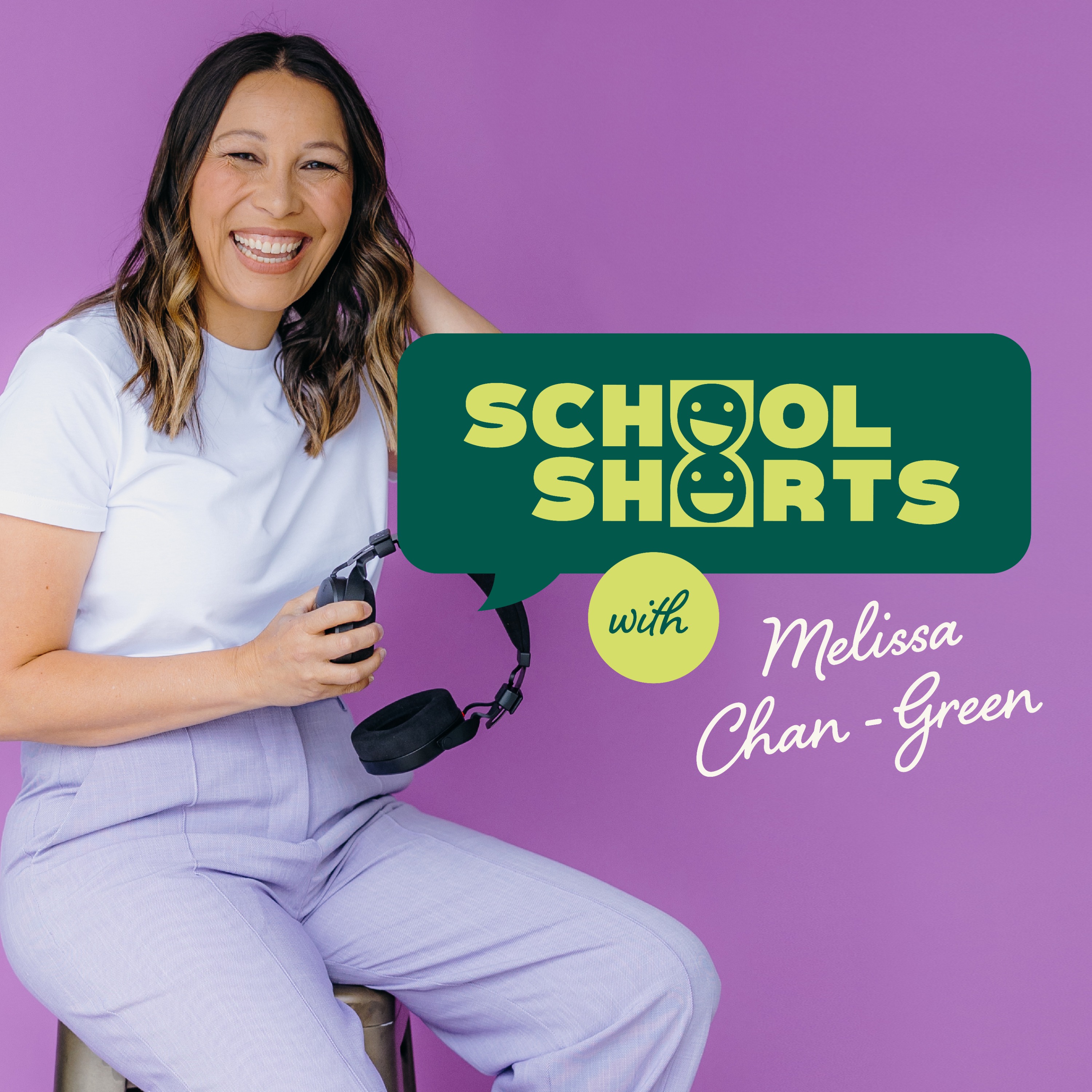
PODCAST · education
School Shorts
by Melissa Chan-Green
School Shorts is the podcast for busy parents who want to help their children succeed in school. Hosted by Melissa Chan-Green, a journalist and mum of two, this show covers practical tips on reading, writing, spelling, and maths for preschool and early school years. Learn about structured literacy, phonics, and foundational maths skills like counting, patterns, and sequences, plus how to support your child’s learning at home. Quick, easy, and packed with helpful advice—School Shorts is here to help your child thrive! Hosted on Acast. See acast.com/privacy for more information.
-
79
Junior Journalists investigate the future of education
Junior Journalists interview school leaders and their peers about the challenges and opportunities in schools right now. When I was 12 years old, I wrote my first letter to the local paper, the Howick and Pakuranga Times, and interviewed my principal for one of my very first published articles. Now, things have come full circle as I sit down with the paper's current Junior Journalists to uncover the biggest challenges and opportunities inside classrooms today. In this episode, the students and I discuss the real pressures facing school leaders and how education is shifting to prepare young people for a rapidly changing, tech-driven career landscape. Hosted on Acast. See acast.com/privacy for more information.
-
78
Play based learning meets Structured Literacy with Liz Lupton and Theresa Kinloch
People often split camps between those who believe in play based learning and those who believe in structured literacy ..but what if they are not mutually exclusive and you can actually teach with both?We talk with an early childhood centre leader (Liz Lupton) and a primary school leader (Theresa Kinloch) about how they collaborate with each other to make sure students are ready when they arrive at school ..and that the transition from different styles of learning is smooth and meets the child where they are at.We also talk about the benefits of greater co-operation and contact between ECE and schools and what you can do as a parent to help pass on information that is really useful when your child starts school. Hosted on Acast. See acast.com/privacy for more information.
-
77
Using the playground to teach reading! with Marianne Brown
Marianne Brown, a literacy expert with 30 years of experience, talks about a lightbulb moment when a struggling reader helped her discover the playground tip that helps with reading. Using the analogy of a slide, Marianne helped the little girl go from not being able to read a single word, to fully reading within just 10 weeks. She discusses the science behind why some children struggle and how oral language, conversation, and the alphabetic code are key to supporting students. With lots of practical strategies for parents to use ..and an explanation of why patience and repetition are important in building literacy. Hosted on Acast. See acast.com/privacy for more information.
-
76
Learning Support, what is a SENCO? LSC? Explained with Lizzie Bayliss
If your child has ever needed learning support or additional education needs you might be familiar with the terms SENCO and LSC, but for many families this is unfamiliar jargon for very important roles within a school. In this episode, Lizzie Bayliss talks about how educators in these roles support students. We also discuss her journey from founding a fashion company to becoming a deputy principal and setting up the Everyday Collective, a project aimed at inspiring educators through encouraging continuous learning and reflection.There is also advice here for parents on building strong home-school relationships. Lizzie encourages open communication with teachers and school staff to ensure children receive the support they need. Hosted on Acast. See acast.com/privacy for more information.
-
75
Why Kids Need Boundaries with Gen Muir
How to set confident, compassionate boundaries that actually deepen your connection with children and don't negatively impact your relationship. Obstetric social worker and renowned Parent Educator Gen Muir is the author of Why Kids Need Boundaries. Gen shares her own parenting struggles and says it's a myth that boundaries threaten attachment. However, we talk about the most effective way to set clear limits that also foster trust and reduce conflict. I first came across Gen when I discovered the High, Low, Buffalo conversation prompt for families. It has been a gamechanger in our house and I speak about how it has helped open up conversations and information from our kids that we might not have got otherwise. Hosted on Acast. See acast.com/privacy for more information.
-
74
Your AI questions answered; with Bex Rose and Principal Matt Simeon
Last time we spoke with AI consultant to schools, Bex Rose, the feedback was running hot! From people who wanted to know about the AI tutor she created for her daughter, to people interested in more information about how AI is being used in schools already ..and those who expressed very real concern about the impact digital technology has on brain development and learning and human relationships.In this episode, we discuss that feedback with Bex and we are also joined by Papamoa Primary Principal Matt Simeon to talk about how the school has been an early adopter of using AI with staff. It is another discussion which is sure to raise more debate around the merits and concerns around the best use of AI. Hosted on Acast. See acast.com/privacy for more information.
-
73
Resilience, Manners and Emotional Regulation with Cara Zelas
Cara Zelas is a U.S-based early childhood educator who speaks at conferences and in classrooms around the world about her work with 'Big World of Little Dude'. She shares how parents can build essential life skills at home, including resilience, manners, and emotional regulation. She also unpacks how technology is currently used in classrooms and why she believes digital apps should never replace face-to-face interaction. This is NOT a discussion to try and make parents feel guilty about screen-time or devices. No-one here is pretending we are perfect parents! What it IS is a discussion around bringing in human connection skills that set kids up for the world in which they will operate with artificial intelligence very much embedded in their lives. Hosted on Acast. See acast.com/privacy for more information.
-
72
Barefoot and Teaching Bravery with Harry Scott
Harry Scott believes a cornerstone of childhood fun and experience is at risk. He is the founder of Barefooted and teaches outdoor education by giving school students and hosting community events so that kids get to experience all the things they might usually learn on school camp on a more regular basis. Harry believes outdoor play is vital for childhood development and for reconnecting kids with nature in an increasingly digital world. He shares his ideas for parents about how to help with building confidence, safety skills and creativity with simple, and mostly completely free activities ..even when it's raining! Hosted on Acast. See acast.com/privacy for more information.
-
71
What Happened When This Principal Prioritised School-Parent Communication, with Blair Dravitski
Hear from the Principal of Lemonwood Grove, among the biggest primary schools by roll in New Zealand. The area has had its fair share of major local traumas like the Christchurch earthquakes and mosque attacks as well as covid. These experiences reminded Blair Dravitski of just how important schools are as part of the community in managing anxiety not just for students but for their extended families too. On top of navigating those crises, the school has had explosive growth and has a wonderful diversity with families representing 47 different countries. Blair explains how he came to dislike the words 'difficult, challenging or hard' when it comes to communication. He expects staff to send direct, positive emails to families every week to build genuine relationships and communication. His insights are useful for any parent or educator wanting to help build positive relationships with the school and home. Hosted on Acast. See acast.com/privacy for more information.
-
70
Early Learning Skills for Maximum Success: Ande Ford and Carolynne Masson
Children starting school without the skills needed for learning, are more likely to start on the back foot when it comes to the reading, writing and other skills that are assessed in the curriculum. Andrea Ford and Carolynne Masson work with families and communities to strengthen all those foundation skills through Ready 4 Learning. With backgrounds in teaching and school leadership, they discuss their thoughts on learning through play and structured literacy expertise. Ande and Carlolynne have lots of tips for parents about the best ways to develop language, movement and emotional wellbeing. We also discuss the impact of Covid - did it cause or accelerate certain challenges? or were those challenges already apparent in early education? Hosted on Acast. See acast.com/privacy for more information.
-
69
Understanding Neurodiversity and When to Seek Support with Tami Harris
Tami Harris is the CEO of Acorn Neurodiversity and a passionate advocate of better support for children and young people who are neurodivergent. This episode is especially useful if you are a parent overwhelmed or unsure of the diagnosis process, a teacher pondering strategies for diverse learners or anyone who wants to better understand the terms neurodiversity v neurodivergent thinking.Tami talks about why a multi-disciplinary approach is so often needed, combining speech therapy, occupational therapy, behavioural science, and mental health.The discussion covers specific strategies to advocate for your child, navigate long waitlists, and interpret early signs before school age. Hosted on Acast. See acast.com/privacy for more information.
-
68
Harnessing AI: The Brain Hacks to Teach Kids with Author Mohan Nair
Mohan Nair has written what he calls 'the nutrition label for AI'. Rather than a 'warning label', this is just saying here are all the ingredients we need to be aware of so that we can use AI in a way that benefits our health rather than the other way around. More specifically in this episode we are looking at the ways in which children and young people an prepare to become 'Unreachable'. This is the title of Mohan's book. After much research in the corporate world where he has worked with innovators from companies across the spectrum, Mohan has analysed what that world will want from its future workforce and the real, practical advice he would offer to families who want to prepare their children to be AI-enabled, rather than AI-afraid or AI-obsessed. Hosted on Acast. See acast.com/privacy for more information.
-
67
The Ladder of Reading and Writing with Nancy Young
Nancy Young is the creator of the infographic the Ladder of Reading and Writing which explains reading skills as a continuim. Nancy is also the Co-Editor of the 2024 book 'Climbing the Ladder of Reading and Writing: Meeting the Needs of All Learners' Here she also talks about exceptionalities that can co-occur alongside dyslexia, including ADHD, DLD and giftedness. Hosted on Acast. See acast.com/privacy for more information.
-
66
Large School Resource v Small School Connection: Principal Steve McCracken
Principal Steve McCracken doesn't want a student to be able to go through a day at school and not have a teacher or school leader say their name or greet them for a chat. It is one of the things he fears losing with growing school rolls as the Principal of Whangaparāoa College in Auckland, New Zealand. While there are many benefits of growth and the resource and specialisation it can offer. The school is looking at innovative strategies to give students the same experience they might get at a smaller school where the relationship with teachers is a benefit because of much time they are able to get to spend with a student to get to know them. Is returning to a homeroom style class more beneficial than going to a range of specialist teachers? The school is on a mission to find out. Hosted on Acast. See acast.com/privacy for more information.
-
65
The birth date disadvantage; new survey with Jo Knox
Last we spoke to Jo Knox on the podcast we looked at what birth month was best for academic success. There has not been a lot of specific research on this topic but there are some indicators which point to being the oldest in your school year leads to better educational outcomes. That might not necessarily be surprising but what is interesting is a new survey has found that a large percentage of teachers spoken to, believe the current enrolment process is inequitable and leads to unfair and unnecessary pressure on some teachers and some students. Pressure that could ultimately end up influencing their school journey. We look at the results of the survey, the barriers to change and what you can do if your child is caught up in a situation where they might be disadvantaged because of where their birthday falls. In the episode to follow this, we will be speaking with a representative from the Ministry of Education in New Zealand about the reasonings behind the specific rolling enrolment process and what they might look to investigate at some point in the future. Hosted on Acast. See acast.com/privacy for more information.
-
64
Reading Progress: Too Fast or Too Slow? with Louise Payne
Not sure if your child's reading progress or the teaching they are getting is going too fast or too slow? This is a common discussion among parents at the school gate and the answer is going to be very individualised depending on your child and their teacher. However, it's really important to have some information about how it all works so you can make a decision about whether it is something that is worth raising (remember if your gut says you should, then it's always a good idea to chat with a teacher!) Louise Payne, a former teacher and expert in literacy development with Learning Matters, shares insights about understanding the process and the pace of teaching. She explains 'phonological awareness', the best ways to support reading at home and why it's not just about decoding words but understanding the story behind them. Hosted on Acast. See acast.com/privacy for more information.
-
63
When the Support You Need Doesn't Exist: Karina McHardy on Autism, ASD
Karina McHardy shares a personal story but one that will resonate with any parent who has had to advocate for their child's needs, whether it be additional assistance or learning needs in school. Karina shares the story of her son's autism diagnosis and the overwhelming silence she felt which followed. With no roadmap for support, Karina has fought for personalised support and questioned when there has been obstacles. She has written about her experience in a book called 'All In' which she has just launched ahead of World Autism Awareness Day. Karina also shares why the phrase 'everyone is on the spectrum' is something we should reconsider. Hosted on Acast. See acast.com/privacy for more information.
-
62
Kids Need to Do THIS Before They Start School: with Kelly Seaburg and Lucy Naylor
A study of school readiness found as many as 90 percent of primary schools surveyed said there was an increase in the number of new entrant students coming to school not knowing basic skills like holding a basic conversation, identifying their name or being able to go to the toilet independently. This episode explores the critical skills children need before starting school, the impact of COVID-19, and how parents and educators can work together to prepare children for a successful educational journey. Lucy Naylor from Auckland Primary Principals Association joins ECE Leader Kelly Seaburg to look at the reasons why we are seeing a decline in basic skills as well as offering practical tips for parents. Hosted on Acast. See acast.com/privacy for more information.
-
61
Online Schools? How Crimson Global Education is Disrupting the Traditional Model
Online Schools and Alpha Schools have had a massive spike in interest but who do they work for and is this a long-term disruptor in education? In this episode, we explore the future of education with Penelope Barton, CEO of Crimson Global Education. Penelope shares what Crimson is working on in innovative models of schooling and whether it is more suited to catering for learners with different learning needs. Penelope Barton also looks at the role of AI in education and how she sees the relationship between education and technology working to prepare students for a rapidly changing world. Hosted on Acast. See acast.com/privacy for more information.
-
60
How to Help Struggling Writers with 'The Writing Teacher' Helen Walls
How well do you remember what grammatical words like adverb, adjective, prepositions actually mean? There is a lot of discussion in the education world at the moment about how much focus should be on teaching these word classes and instead focussing on whether a sentence instinctively feels right. Some research suggests being able to circle an adverb or noun on a worksheet has zero impact on writing ability. Other educators say everyone should have a common understanding of formal language grammar so that teachers can say 'try adding an adjective here' and students would be more clear about what kind of word to add in. Helen Walls aka The Writing Teacher looks at this debate in this episode of School Shorts. She has spoken in a previous episode about the importance of handwriting in the thinking process. This episode takes that discussion further to look at how to help children who are having challenges with writers including how to help older students still struggling. Hosted on Acast. See acast.com/privacy for more information.
-
59
Cambridge Exams: An Explainer for Parents
Look, I'll admit it, I don't know much about the assessment system when it gets to High School. I know you can do NCEA (with potential changes on the horizon) and some students also do Cambridge Exams, IGCSE's and A-Levels. I was among the last to do the Bursary assessment system and with kids still in primary school, I don't really know much about how this all works. So consider this an explainer for those who might also have only a little knowledge about this. If you have a child that is in High School or will soon be, hopefully this gives you some idea of how this particular assessment works as we speak with Chris Wiggin from Cambridge International. Hosted on Acast. See acast.com/privacy for more information.
-
58
The Tattooed Skateboarding Principal; Hamish Brewer
Hamish Brewer throws out the rule book when it comes to what people expect a Principal to be. The tattooed skateboarding Principal from New Zealand now spends most of his time in the U.S where he is one of the most recognisable and disruptive voices in education. Hamish has won national awards for transforming failing schools into 'high-performing', 'high-expectation communities'. Hosted on Acast. See acast.com/privacy for more information.
-
57
AI in School, How it's Being Used in Class with Bex Rose
Artificial intelligence is already in classrooms. Bex Rose from AI Surge shares what that actually looks like for teachers, students and learning. Bex works directly with schools to help them understand how they can integrate and use AI to assist. She discusses what it means for ethics, safety and age appropriate use and common misconceptions about AI in education. Hosted on Acast. See acast.com/privacy for more information.
-
56
Top 10 School Safety Tips from a Police Officer
Follow these top 10 school safety tips from Police Officer Constable Bryan Ward and empower your kids and students to have the confidence to navigate their day at school to the walk home. If you grew up in New Zealand, Constable Bryan and his canine partner Bobby probably taught you everything you know about being a safe "kiwi kid." Today, he’s joining us on School Shorts to bring those timeless lessons into 2026. Hosted on Acast. See acast.com/privacy for more information.
-
55
More than Phonics: Fluency and Comprehension with Natalie Wexler
Learning to read isn’t just about sounding out words even though the biggest part of reading instruction that gets spoken about publicly is phonics. Education journalist and author Natalie Wexler explains why in this episode. She points out that at a certain point student's reading progress flattens out unless they haven't also had teaching that helps to build fluency, background knowledge, vocabulary and comprehension. Wexler talks about how some children can 'read' words but still not understand what they're reading. Hosted on Acast. See acast.com/privacy for more information.
-
54
Was it a Miracle? The Reading Revolution in Mississippi with Kymyona Burk
As countries around the world look to a structured approach to literacy to try and lift achievement results, what can educators learn from the experience in Mississippi, USA. It went from having the second-worst reading statistics in 2013 to 9th in 2024. What was behind the rapid increase in achievement? Kymyona Burk lead the change as State Literacy Director and reflects on what was done well and what might have been done differently. Hosted on Acast. See acast.com/privacy for more information.
-
53
Risky Play and Why it Matters with Gill Connell
How to encourage risky play and why it matters. Gill Connell from Moving Smart explains the importance of allowing kids to step outside their comfort zones while maintaining a safe environment. Gill talks about how the language we use can either instil fear or encourage courage in children. They discuss the power of the 'wonder word' and the "zone of uncertainty," where children can explore and learn from their experiences, and the role of parents as guides rather than barriers. Hosted on Acast. See acast.com/privacy for more information.
-
52
Family Adventures Unplugged with Roam's Renata Wiles
Counting down the most popular activities on the Roam with Kids app with Renata Wiles. If you are looking for activities that appeal to the whole family, the most-viewed cafes and playgrounds for families and new ideas for the holidays then this episode has some tips for you. Renata aims to have these tips extend worldwide so stay tuned as Roam grows and she can update with more information from cities around the world. Other than the family-friendly insights, Renata and Melissa also speak about tips for being able to say 'yes' to more spontaneous adventures and the current discussion about more shade for playgrounds. Hosted on Acast. See acast.com/privacy for more information.
-
51
Holiday Play Ideas for Reading Practice with the 'Sound Slam Mums'
This is a great episode if you are looking for ways to keep up some reading and writing practise at home while school is on break. Primary school teacher, mother and founder of the Sound Slam card game Anna O'Connor shares her ideas and games. Anna talk about phonemic awareness, what that is and its importance in how children learn to read and write. Melissa and Anna also discuss the impact of COVID-19 on learning, the role of parents in supporting their children's education, and the creation of Sound Slam—a fun and engaging card game designed to boost phonological skills at home. Hosted on Acast. See acast.com/privacy for more information.
-
50
Mental and Physical Health for Children: The HIGHLIGHTS from 2025
How well a child does at school is often linked to how they feel there. That can depend on so many factors. We know that academic achivement is one of them and the previous episode covers some of the best tips for maximising ability in reading and writing. This episode looks at all those other factors in mental and physical health. Melissa Chan-Green looks back at some of the advice that has been shared from parenting insights in Gemma McCaw, the importance of adult self awareness with Jase Williams and physical development with Gill Connell. It also looks at some of the conversations around neurodiversity and the need for a holistic approach to support children's learning and development. Hosted on Acast. See acast.com/privacy for more information.
-
49
Best Reading and Writing Advice from 2025; The Highlights!
In this special episode of "School Shorts," I look back on a year of conversations with some of the most influential people in education across New Zealand, Australia, the U.S and U.K. This is a wrap of some of the key highlights of advice for helping children with reading and writing. It looks at educational reform, the opportunities and challenges that presents and the role of parents to support their kids at home. Hosted on Acast. See acast.com/privacy for more information.
-
48
AI in Education ft Michael Johnston
The fascinating world of AI in education with Michael Johnston who has authored a report titled Opportunities and Risks of Generative Artificial Intelligence. Michael shares some thoughts about how relying too much on tech, like calculators or Google Maps, can undercut foundational skills. We also chat about the social impacts of AI, especially on young people, and the importance of teaching critical thinking in schools. Hosted on Acast. See acast.com/privacy for more information.
-
47
Get Wise! Teaching Kids About Money
How kids are being introduced to the world of financial literacy with the help of ASB's GetWise program. Joined by guests Hamish Russell and Lucinda Howarth, the discussion delves into the importance of teaching financial skills to young students. We talk about the Big Little GetWise show featuring Captain Cash-tastic, a superhero character designed to make financial education engaging and accessible. The discussion also looks at how financial education has changed because of the changing role and method of banking as we operate in a more digital landscape. This episode gives practical tips for parents about how to start introducing money concepts at home and equipping children with essential life skills to manage money. Hosted on Acast. See acast.com/privacy for more information.
-
46
Numicon: Simple Steps to Loving MATHS ft Catherine Huxford
Numicon is a maths teaching tool is a maths teaching tool that is used across the world and through thousands of schools in Aotearoa New Zealand. Catherine Huxford of the Edushop team explains how it is a multi-sensory approach that helps children visualise and understand maths concepts. There are lots of tips here about how to introduce maths skills from a young age and how useful that can be for long-term love of maths. If you want some ideas around how to introduce easy games into everyday activities, this is a useful listen ..and there's a demonstration at the end to give an example of how it works in the classroom. Hosted on Acast. See acast.com/privacy for more information.
-
45
Managing Tech: Tips from Psychologist Dr Emma Woodward
How technology impacts kid's dopamine, attention span and language development with Dr Emma Woodward. As a Mum to four boys, Dr Woodward finds each of them have different needs, just as each of them are wired differently. So while this episode looks at the impact of tech on child development and regulation, it is also full of realistic and reassuring advice for parents. Hosted on Acast. See acast.com/privacy for more information.
-
44
"Our kids and teens are not really OK": Outward Bound CEO Malindi Maclean
Malindi Maclean shares stories and research that highlight the profound impact on brain development from connecting with nature, not just for kids, but for adults too. If you've done Outward Bound before you will find much to reminisce about here. If you haven't it will give you more information about whether it is something that could be right for your children - or you! Malindi also talks about managed risk and how she encourages independent play. Hosted on Acast. See acast.com/privacy for more information.
-
43
Girl Boss: What inspiring young women want YOU to know
What young women want you to know about the challenges they are facing and the social issues they are trying to address, such as the impact of social media.This episode features inspiring stories from three of the 10 young women recognised at the Girlboss Awards for their achievements in STEM, leadership, and community service.They have achieved so much even before they have finished high school and tell us what they think has made the biggest difference for them in education, support from their families.Thank you so much to Amelia McKenzie, Phoebe Driscoll and Sylvie Macfarlane. Hosted on Acast. See acast.com/privacy for more information.
-
42
Support for ADHD in school and the workplace: ADHD Coach Jenny Turner
Jenny Turner is an adhd coach with Human Fabric. Diagnosed later in life with adhd herself and mum to two children diagnosed with two different types of adhd.Jenny discusses her personal experience, why it is so important for the workplace to understand and get the best out of those with adhd - and how that is a journey of education that should begin from school.This episode covers the complexities of ADHD and some of the factors that impact it, like sleep and nutrition. Hosted on Acast. See acast.com/privacy for more information.
-
41
Sex and Relationships Education with Jo Robertson
If you want to know about how to have some of these conversations with your kids yourself, Jo gives some practical advice about what to say (and what NOT to say!) Relationships and Sex Education in school has been under revision and subject to feedback. In this episode, Jo Robertson from Tricky Chat Parenting talks about how the topic has evolved in schools, the role of parents in these discussions and the importance of online safety. Jo talks about some of the curriculum changes and the challenges schools face in addressing diverse needs and opinions on these topics. Hosted on Acast. See acast.com/privacy for more information.
-
40
Dyslexia: A Father and Son's story of the power of dyslexic thinking ft Arvid and Mattias Eriksen
A deeply personal account of life with dyslexia and the journey of finding out as a child but also as an adult. Father and Son, Arvid and Mattias Eriksson share their thoughts on the power of dyslexic thinking.They discuss the early signs of dyslexia, the importance of support and tutoring, and how Matthias navigates school life with dyslexia.It also covers the emotional journey of families dealing with dyslexia, the advantages of thinking differently, and the importance of self-advocacy. Hosted on Acast. See acast.com/privacy for more information.
-
39
Raising Confident Speakers with Ashleigh Gulliver
Does your child dread the school speech competition? or feel nervous about speaking in front of their peers? Drama teacher and Oral Language Coach, Ashleigh Gulliver, shares the tips for how to gradually increase their speaking confidence in the classroom and at home. The episode covers the critical role of oral language and drama education in literacy development. You'll learn strategies for building confidence from a young age and how teachers can help to offer small steps for encouraging communication that will help when it comes to preparing students for future challenges in public speaking and communication. Hosted on Acast. See acast.com/privacy for more information.
-
38
Dyslexia: How to Identify Challenges and Support Your Child ft Carla McNeil and Casey Simson
In this episode for Dyslexia Awareness Month, we’re diving into the real experiences of parents and educators who are supporting children with dyslexia. You’ll hear from mums navigating the ups and downs at home, as well as teachers who see first-hand the challenges—and strengths—that come with dyslexia in the classroom. We explore what dyslexia really is (and isn’t), how to spot the signs early, and practical ways to support children. Hosted on Acast. See acast.com/privacy for more information.
-
37
Is Your Child Twice Exceptional? Rhonda Filmer on 2E
An expert in the field of gifted students, Rhonda Filmer explains that some students are 2e. That means twice exceptional - those who are gifted and have a learning disorder. There are some common misunderstandings about these students which may impact their education. Rhonda explains how teachers and parents can better support students with these unique qualities, emphasising the importance of tailored teaching strategies and early intervention. We discuss how these students have incredible potential but are often those who fall through the cracks of traditional education systems. Hosted on Acast. See acast.com/privacy for more information.
-
36
BONUS: Daylight Savings Sleep Tips with Victoria Newport
Does your family routine go completely out of the window when it comes to daylight savings? All of a sudden the kids are grumpy and harder to get to school. Never fear, Victoria Newport from Early Parenting is here. Victoria shares some of her tips around how to adjust timings to make the transition to changing the clock easier on everyone. Hosted on Acast. See acast.com/privacy for more information.
-
35
Independent Schools: What does that really mean? with Guy Pascoe
There are a range of different school types from state, state integrated and independent - but what do all of these things mean? Guy Pascoe from Independent Schools NZ talks about the range within the independent category and why some cater to specific learning needs. Guy Pascoe explains the misconception that independent schools are only private schools that the wealthy can afford. He discusses the reason why some parents choose independent schools, the diversity within the sector and the challenges faced. Hosted on Acast. See acast.com/privacy for more information.
-
34
Critical Skills for Spelling: Literacy Expert Lorraine Hammond
Literacy expert Lorraine Hammond explains the difference between the skills of reading and spelling. If your child is able to read a word and/or sentence but has challenges with spelling, this will help to explain why. Also the way in which parents were taught at school has changed significantly from the way children are being taught now. The scientific research around how our brain actually retains and retrieves information has informed changes in teaching strategies in the classroom. For parents who want a greater understanding of what all the fuss is about over the term 'explicit instruction', this episode will answer those questions. Hosted on Acast. See acast.com/privacy for more information.
-
33
The Pre-School Secret to Success: Oral Language with Elaine Reese
If you have a child in an early learning centre, there is a chance they will be taking part in the ENRICH oral language programme created by Elaine Reese. This has received funding in the New Zealand 2025 Government budget to roll out across hundreds more early learning centres over 4 years. It looks at the importance of oral language development, especially in children aged one to three. There is a significant connection between language skills and a child's ability to self regulate. Elaine talks about the outcome of the programme so far for the early childhood centres it has been running in and the lessons parents can take from strategies that are being used to help their own child's language abilities. Hosted on Acast. See acast.com/privacy for more information.
-
32
World-Leading Neuroscientist: How 'Executive Function' Helps Us Plan and Achieve Goals
Adele Diamond is one of the world-leading neuroscientists in the field of executive functions. Executive functions are often discussed in relation to ADHD and they are especially relevant in that study ..however, executive function is crucial for all of us in our ability to plan, organise and achieve goals.It impacts working memory or ability to regulate and manage our behaviour and it shapes our children's ability to learn, adapt and thrive.Adele shares valuable insights and practical tips for parents to support their children at home. Hosted on Acast. See acast.com/privacy for more information.
-
31
Best Birth Month for Academic Success, Dr Jo Knox
If you've ever wondered whether the month you were born in impacts your educational achievement, there is now evidence to say yes it can have an impact. Dr Jo Knox has been doing research around the world into the different policies for when children start school. This conversation explores the complexities of New Zealand's enrolment system in education. It explains why some children will have more terms at school than others and what impact that has on achievement for some. Dr Knox looks at the disparities it can cause and advice for parents who have children about to start school. Hosted on Acast. See acast.com/privacy for more information.
-
30
Gill Connell: Midlines (PMP part 2)
Gill Connell from Moving Smart returns with part 2 of the Power of PMP. This time we are talking about the often-overlooked topic of midline development in children. The ability to cross the midlines of the body is foundational for reading, writing, co-ordination and cognitive growth. Gill offers great advice for parents or teachers who want to practise this at school or at home. Hosted on Acast. See acast.com/privacy for more information.
We're indexing this podcast's transcripts for the first time — this can take a minute or two. We'll show results as soon as they're ready.
No matches for "" in this podcast's transcripts.
No topics indexed yet for this podcast.
Loading reviews...
ABOUT THIS SHOW
School Shorts is the podcast for busy parents who want to help their children succeed in school. Hosted by Melissa Chan-Green, a journalist and mum of two, this show covers practical tips on reading, writing, spelling, and maths for preschool and early school years. Learn about structured literacy, phonics, and foundational maths skills like counting, patterns, and sequences, plus how to support your child’s learning at home. Quick, easy, and packed with helpful advice—School Shorts is here to help your child thrive! Hosted on Acast. See acast.com/privacy for more information.
HOSTED BY
Melissa Chan-Green
Loading similar podcasts...
Frequently Asked Questions
How many episodes does School Shorts have?
School Shorts currently has 50 episodes available on PodParley. New episodes are automatically indexed when they're published to the podcast feed.
What is School Shorts about?
School Shorts is the podcast for busy parents who want to help their children succeed in school. Hosted by Melissa Chan-Green, a journalist and mum of two, this show covers practical tips on reading, writing, spelling, and maths for preschool and early school years. Learn about structured literacy,...
How often does School Shorts release new episodes?
School Shorts has 50 episodes. Check the episode list to see recent publication dates and frequency.
Where can I listen to School Shorts?
You can listen to School Shorts on PodParley by clicking any episode. We provide an embedded audio player for direct listening, and you can also subscribe via your preferred podcast app using the RSS feed.
Who hosts School Shorts?
School Shorts is created and hosted by Melissa Chan-Green.
URL copied to clipboard!