
PODCAST · business
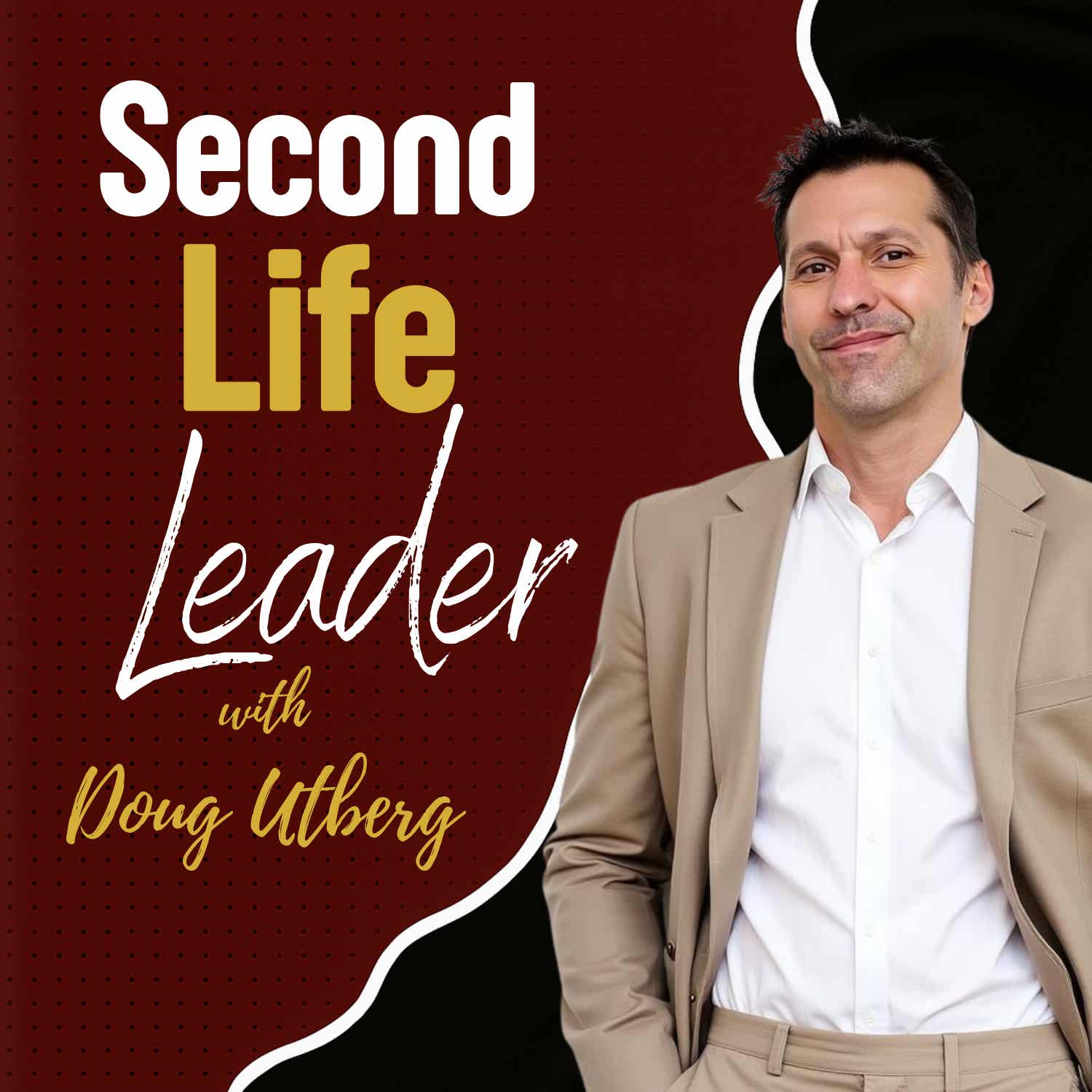
Second Life Leader
by Doug Utberg
From Setback to Sovereignty.This platform is for founders, executives, and rebuilders who’ve been knocked down by layoffs, burnout, betrayal, or failure—and refuse to stay down.I’m Doug Utberg.I rebuilt my career, my finances, and my identity from zero, and now I have raw conversations with leaders who’ve walked through fire and rebuilt stronger.Every episode cuts directly into the moments that forge a leader:Career reinvention and self-leadershipBurnout recovery and nervous system restorationEthical entrepreneurship in a post-growth worldSystems thinking, AI, and automation for sovereign executionNo hype.No guru scripts.Just clarity, truth, and the architecture required to rebuild a life—and a company—that cannot be taken from you.🔧 CFO Operator ClinicIf you lead a finance function, this is where we dismantle the chaos and build real structure:KPI treesUniversal journalsTransformation architectureDecision systemsSemantic-layer designThis is the tactical advantage mo
-
409
Rethinking Food Systems: Why Agriculture Is Really About Health, Community, and Economic Transformation
Karl Madelin joins the conversation to explore a challenge most people rarely think about until food prices rise or health problems emerge: the relationship between agriculture, nutrition, and the systems that shape what ends up on our plates.We started with a simple observation.Food isn’t just agriculture.It’s economics.It’s health.It’s culture.And ultimately, it’s community.Karl brings experience across healthcare, financial services, and now agricultural transformation in Africa. What began as a discussion about food supply quickly became a much larger conversation about resilience, smallholder farmers, hyper-consolidation, nutrition, and why the future of communities may depend on reconnecting consumers with local producers.This isn’t just a conversation about farming.It’s about how societies create healthier systems—and what happens when efficiency becomes more important than resilience.Most importantly, it’s about understanding that every purchasing decision is also an investment in the kind of community we want to build.TL;DRAgriculture is the foundation of economic transformation.Nutrition sits at the intersection of food and health.Hyper-consolidation creates efficiency but reduces resilience and choice.Smallholder farmers should be viewed as family businesses, not development projects.Healthy food systems require reliable supply chains, not just good intentions.Consumer habits shape markets and determine which producers survive.Supporting local agriculture strengthens communities and economic independence.Food choices are investments—not just purchases.Memorable Lines“Agriculture is actually the foundation of economic transformation.”“Nutrition is where health and agriculture meet.”“The original family business was the farm.”“Efficiency without resilience creates fragility.”“Healthy food isn’t always accessible, and that’s a problem.”“Consumers don’t just buy food—they shape markets.”“Every purchase is an investment in someone’s community.”“Support smallholder farmers, and you support families.”GuestKarl MadelinBased in Nairobi, Karl has spent his career across healthcare, financial services, and agricultural transformation. His work focuses on economic development, nutrition, and building sustainable agricultural systems that empower smallholder farmers and strengthen communities.Why This MattersMost people think about agriculture only when food prices increase.But food systems shape far more than what’s on our dinner tables.They influence health.They determine economic opportunities.They affect communities and culture.And they define how resilient societies become when disruptions happen.Industrial efficiency has delivered abundance.But efficiency without diversity creates fragility.The challenge isn’t choosing between global and local systems.It’s finding the balance between scale and resilience.Because healthy societies aren’t built only by producing more food.They’re built by creating systems that allow communities, families, and farmers to thrive together.And sometimes, transformation starts with something as simple as asking where your food came from—and who you’re supporting when you buy it.Listen to the full episode of Second Life Leader for a deeper conversation on agriculture, health, resilience, and why rebuilding stronger systems starts closer to home than we think. Get full access to Second Life Leader at www.dougutberg.com/subscribe
-
408
Reinventing Yourself Ahead of the Future That’s Already Arriving
Matthew Lamoureux joins the conversation to explore a different kind of leadership and life challenge—one that quietly shapes careers long before people realize it: the ability (and willingness) to reinvent yourself before disruption forces it on you.We started with a simple tension.Most people don’t fail because they’re not capable.They fail because they stay too long in systems that are already changing beneath them.Matthew brings decades of experience across consulting, investing, and venture capital in Silicon Valley, where reinvention isn’t a concept—it’s a requirement for survival.This isn’t a conversation about trends.It’s about how the future actually forms, and how individuals and organizations decide whether they will adapt early or react too late.We explore what “inevitable futures” actually mean, why popularity is not a signal of truth, how major technological shifts unfold over decades, and why most value in disruption is captured by outsiders—not incumbents.And most importantly—what it means to choose your role before the system chooses it for you.TL;DRThe future is shaped by inevitability, not popularityMajor shifts take decades, not cyclesDigitalization of value (not just communication) is still incompleteMost disruption value is captured by new entrants, not incumbentsBlockchain and AI are part of broader infrastructure shifts, not standalone trendsThe real decision is what role you choose in the changeTiming matters as much as directionIf you’re too early, you fail; if you’re too late, you adapt under pressureMemorable Lines“The future is not driven by popularity—it’s driven by inevitability.”“You don’t want to build companies the world will reject in five years.”“We digitalized communication, but not value transfer.”“Established companies rarely capture the value of disruption.”“Most people don’t fail from lack of intelligence—they fail from timing.”“You either reinvent yourself ahead of the curve, or after it’s forced on you.”“If computers can do what you do better, reinvention is no longer optional.”GuestMatthew LamoureuxInvestor and venture capitalist with decades of experience in Silicon Valley consulting, strategy, and asset management.Former advisor to major global enterprises including Microsoft, Google, Intel, Cisco, Visa, and Bank of America.Currently focused on backing exponential technologies shaping long-term global systems, including AI, blockchain, life sciences, robotics, and digital infrastructure.Why This MattersMost people think disruption is a moment.It’s not.It’s a slow restructuring of how systems actually work.And because it moves slowly, most people underestimate it—until it becomes obvious too late.We already lived through one major shift: the digitalization of communication and content.What’s still unfolding is bigger: the digitalization of value, systems, energy, health, and infrastructure.And that creates a personal question most people avoid asking:Do I want to be inside the system being disrupted?Or outside it building what comes next?Because reinvention isn’t just a strategic advantage anymore.It’s becoming a requirement for participation. Get full access to Second Life Leader at www.dougutberg.com/subscribe
-
407
The Inner Game Nobody Sees (Until Everything Starts Breaking)
Damon Flowers joins me to unpack something most founders and operators only discover after repeated failure: the real battle isn’t in the market—it’s in the mind.We started with a simple but uncomfortable pattern.People don’t usually fail because they lack skills.They fail because they can’t consistently use them when it matters.Under pressure, fear shows up. Avoidance kicks in. Old identity patterns take over. And the business reflects it back almost immediately.What looks like a strategy problem is often an inner alignment problem.Damon shares his own path—from early confidence and corporate success to building businesses, getting hit by reality, and realizing that skills alone don’t solve execution breakdowns.That realization led him into a deeper exploration of mindset, subconscious programming, and the hidden internal systems that actually drive decisions.Not in theory.In real behavior.We go deep into what actually changes when someone starts doing the inner work—and why it doesn’t show results instantly, even when it’s working.Key themes from the conversation:Most execution problems are identity problems in disguiseSkills don’t matter if fear blocks consistent actionVictim mindset quietly shapes business outcomesAvoidance is often disguised as “strategy switching”The subconscious drives behavior more than conscious planningInner change creates delayed but compounding external resultsWillpower is not a long-term operating systemConsistency matters more than intensityMemorable lines:“You’re not controlled by your thoughts—you’re controlled by what you believe your thoughts mean.”“Most people aren’t stuck because they don’t know what to do. They’re stuck because they don’t do what they already know.”“Fear doesn’t stop action directly—it just makes avoidance feel rational.”“Your business is often just a reflection of your internal operating system.”“You don’t rise to your goals. You fall to your identity.”GuestDamon Flowers — Entrepreneur, operator, and mindset-focused business mentorHe works at the intersection of business execution and internal alignment, helping operators understand why performance breaks down even when the strategy is clear.Why this mattersMost people assume business failure is tactical.Wrong hires. Wrong offer. Wrong marketing. Wrong timing.But over time, a different pattern shows up.People know what to do—but don’t do it consistently under uncertainty.They restart instead of iterate.They avoid discomfort instead of building tolerance for it.They confuse emotional resistance with strategic signal.And slowly, the gap between knowledge and execution becomes the real constraint.Not intelligence.Not opportunity.But internal conditioning.The uncomfortable truth is that:If your inner game doesn’t support the action, no strategy survives contact with reality for long.Final takeawayThis isn’t about motivation.It’s about operating systems.Because once the internal pattern shifts, the external results don’t require forcing anymore.They start to follow naturally—but only after enough repetition for the system to actually change.And that’s the part most people underestimate:change is simple to understand, but slow to install. Get full access to Second Life Leader at www.dougutberg.com/subscribe
-
406
Unlocking Growth Inside Family Businesses
David Hanner joins me to unpack one of the most difficult transitions any company faces:How do family businesses grow without losing the character that made them successful in the first place?We started with a simple reality.Growth creates complexity.And in manufacturing businesses—especially family-owned companies—that complexity compounds fast. Inventory, cash flow, dealer networks, financing, operations, succession planning, modernization. Every decision affects five others downstream.David brings perspective from inside a multi-generational manufacturing company producing heavy crushing equipment, where growth over the last several years has forced the organization to rethink everything from finance systems to operational strategy.This wasn’t a conversation about generic business advice.It was about what actually happens when a growing company realizes that “selling more” is no longer enough.We dug into working capital management, inventory risk, dealer financing, modernization efforts, leadership transitions, and why cash flow—not revenue—is what ultimately creates long-term opportunity.And maybe most importantly—why sustainable growth requires discipline, not just ambition.TL;DRFast growth exposes operational weaknesses quicklyRevenue without cash flow creates hidden riskInventory management becomes critical in manufacturing businessesFamily businesses must modernize without losing identityCash flow creates future opportunitiesDealer networks introduce another layer of financial complexityGrowth through debt only works if efficiency improves alongside itGood strategy means understanding second-order consequencesMemorable Lines“Cash equals opportunity.”“Money made and money collected are very different things.”“We don’t want millions of dollars sitting in inventory.”“Every successful business is unique in some way.”“Generating cash flow from operations is the most sustainable way to grow.”“Growth creates complexity.”GuestDavid Hanner — CFO helping lead operational modernization and strategic growth inside a multi-generational manufacturing companyFocused on finance transformation, process efficiency, cash flow management, and helping family businesses scale sustainably while preserving the culture that made them successfulWhy This MattersA lot of businesses fail during growth—not decline.Because growth hides problems.More sales can mask weak systems.More revenue can disguise poor cash flow.More opportunity can quietly increase operational risk.Especially in manufacturing, where inventory, financing, and working capital all collide at the same time.That’s why strategy matters.Not just selling more.Not just growing faster.But understanding how growth affects every layer of the business underneath it.Because eventually every company faces the same question:Are we building sustainable systems?Or are we scaling complexity faster than we can manage it?That’s where leadership shifts from reactive decision-making to intentional strategy.And that transition determines whether growth becomes momentum—or becomes pressure that eventually breaks the system. Get full access to Second Life Leader at www.dougutberg.com/subscribe
-
405
From Investment Banker to Mission-Driven CFO
Scott Bowman joins me for a conversation that starts in finance—but quickly turns into something much bigger.We unpack the transition from high-pressure investment banking to leading mission-driven companies focused on sustainability, second chances, and long-term impact.Scott spent years inside the world of constant travel, deal-making, capital raises, and relentless growth. The work was financially rewarding—but eventually the deeper question showed up:“What is all of this actually for?”That question ultimately led him away from the traditional “mercenary” side of finance and toward organizations trying to build something more meaningful.This episode explores the tension between profit and purpose—and why they don’t have to be opposites.We talk about burnout, capitalism, leadership, private equity, sustainability, prison reform, supply chains, organizational culture, and the difference between creating value versus extracting it.One of the most interesting parts of the conversation is Scott’s experience helping companies prove that mission-driven businesses can still grow, remain profitable, and scale successfully—without losing the human side of the work.This isn’t a conversation about rejecting business.It’s about redefining what successful business looks like.TL;DR• Burnout often hides behind ambition and achievement• Leadership becomes hollow when purpose disappears• Profitability and ethics can coexist• Sustainable companies think beyond short-term extraction• Great businesses create value instead of only maximizing returns• Mission-driven cultures create stronger long-term engagement• Second chances can completely change people’s lives• Financial success means very little without meaning attached to itMemorable Lines“Money becomes a way to keep score.”“You can make money and still build something meaningful.”“The fastest way to make a lot of money is to steal it.”“You start to wonder if there’s something more than chasing the next deal.”“Good businesses create value. Extractive businesses take it.”“Eventually you realize the work has to mean something bigger than yourself.”GuestScott Bowman — CFO with a background in investment banking and mission-driven consumer brandsFormerly worked in middle-market investment banking before transitioning into leadership roles focused on sustainability, organizational culture, and long-term impactCurrently helping lead businesses centered around ethical growth, human sustainability, and community-focused operationsWhy This MattersA lot of high performers spend years climbing toward success without ever stopping to define what success actually means.The external rewards keep growing.The internal fulfillment often doesn’t.That disconnect creates burnout, disengagement, and the feeling that work has become purely transactional.What makes this conversation important is that it challenges the assumption that business must choose between profitability and humanity.It doesn’t.Organizations can grow while still investing in people, communities, sustainability, and long-term thinking.But that only happens when leaders stop viewing business as a machine for extraction—and start viewing it as a system capable of creating lasting value.That shift changes not only how companies operate.It changes how people experience their work entirely. Get full access to Second Life Leader at www.dougutberg.com/subscribe
-
404
The Art of Saying No!
Lisa Leveille joins me to unpack a different kind of leadership challenge—one that quietly burns people out long before they realize it: the inability to create boundaries.We started with a simple observation.The more capable you are, the more responsibility people hand you.And in leadership roles—especially in finance—that responsibility expands fast. HR, operations, procurement, reporting, strategy, hiring, vendor management. Eventually, everything starts flowing toward the same person.That’s where the real problem begins.Lisa brings perspective from years as a CFO in the construction industry—a traditionally male-dominated environment where proving yourself often means carrying more than your actual role was ever designed to hold.This isn’t a conversation about productivity hacks.It’s about understanding when “being helpful” quietly becomes unsustainable.We dig into the difference between bluntly saying no versus tactfully creating boundaries, why leaders need self-sufficient teams, how strategic thinking is developed, and the hidden cost of constantly becoming the default person for everything.And maybe most importantly—why good leadership isn’t about controlling everything yourself.It’s about building people who no longer need you for every decision.TL;DRThe more capable you are, the more responsibility people will give youSaying no is a leadership skill—not a personality flawBoundaries protect both performance and sustainabilityGood leaders build self-sufficient teams, not dependencyPeople don’t always remember how much is already on your plateStrategic thinking comes from understanding second-order consequencesTransitioning responsibilities properly matters more than egoLeadership without wellness eventually breaks downMemorable Lines“You have to learn how to say no—or you’ll drown in tasks.”“People don’t remember everything they’ve already put on your plate.”“Anyone can say no. The art is preserving the relationship.”“You can’t pour from an empty cup.”“Good leadership means building people who don’t depend on you for everything.”“The textbook answer isn’t always the right answer.”GuestLisa Leveille — CFO in the construction industry, leading shared services across finance, HR, and operations in a traditionally male-dominated spaceFocused on leadership development, strategic thinking, and building sustainable teams through mentorship and operational clarityWhy This MattersMost burnout doesn’t happen all at once.It happens gradually.One extra responsibility.One more meeting.One more department.One more thing “only you can handle.”And because capable people usually want to help, they rarely notice the accumulation until performance, energy, or clarity starts slipping.The problem is—organizations reward reliability.So the more dependable you become, the more likely you are to become the default solution for everything.That works… until it doesn’t.Eventually, leaders have to decide:Am I building systems that scale?Or am I becoming the system myself?That’s why conversations like this matter.Because leadership isn’t just about carrying more.It’s about knowing what to keep, what to delegate, and what to say no to before everything starts breaking underneath the weight. Get full access to Second Life Leader at www.dougutberg.com/subscribe
-
403
The Great Midwest Comeback (And Why People Always Come Back)
Cody Kopas joins me to unpack a different kind of pattern—one that doesn’t show up in headlines, but quietly shapes careers, families, and entire regions: why people leave the Midwest to grow… and then come back to build.We started with a simple observation.For decades, talent has flowed out of the Great Lakes region—into coastal cities, into capital-heavy ecosystems, into faster-moving opportunities. But many of those same people return years later, often at a completely different stage of life.That gap—between where opportunity exists and where people ultimately want to live—is where this conversation sits.Cody brings perspective from finance, startups, and operating roles, combined with firsthand experience of leaving for opportunity and returning for something different: family, community, and long-term alignment.This isn’t a conversation about tactics.It’s about the patterns people recognize later:“I always thought I’d stay—but something pulled me back.”We dig into why the Midwest produces high-performing talent, how coastal ecosystems accelerate skills, the reality behind remote work, and why the next wave of opportunity may shift back toward physical-world innovation—manufacturing, supply chains, and hard tech.And maybe most importantly—what actually drives where people choose to build their lives.TL;DRYou can leave for opportunity—but you may come back for lifeThe Midwest doesn’t lack talent—it exports itCoastal ecosystems multiply skills, but not always long-term alignmentRemote work creates flexibility, but also new risk during layoffsAI is compressing software advantages, increasing competitionHardware, manufacturing, and supply chains are becoming more strategic againPeople don’t just optimize for career—they eventually optimize for lifeMemorable Lines“People leave for opportunity. They come back for life.”“You don’t lose culture—it stays with you.”“AI accelerates operators, it doesn’t replace them.”“Hardware is hard—and that’s exactly why it matters.”“You can build anywhere if you’re actually a builder.”GuestCody Kopas — Operator focused on hard tech, manufacturing ecosystems, and the future of the Great Lakes regionExperience across finance, startups, and operational roles, with a focus on building and supporting innovation tied to physical-world systemsWhy This MattersMost people don’t make career decisions purely based on logic.They follow opportunity early—where skills grow fastest, where capital exists, where momentum is highest.But over time, the variables change.Family becomes a factor.Community starts to matter.Stability and meaning begin to outweigh pure growth.What worked in one phase no longer fits the next.The problem is—most people don’t realize this until they’re already deep into that transition.So they move toward opportunity without questioning where they actually want to build their life.And then eventually, they feel the pull back.Not because they failed.Because their priorities changed.That’s why this conversation matters.Because the goal isn’t just to chase opportunity.It’s to understand the cycle—and make decisions with more awareness of where it leads. Get full access to Second Life Leader at www.dougutberg.com/subscribe
We're indexing this podcast's transcripts for the first time — this can take a minute or two. We'll show results as soon as they're ready.
No matches for "" in this podcast's transcripts.
No topics indexed yet for this podcast.
Loading reviews...
ABOUT THIS SHOW
From Setback to Sovereignty.This platform is for founders, executives, and rebuilders who’ve been knocked down by layoffs, burnout, betrayal, or failure—and refuse to stay down.I’m Doug Utberg.I rebuilt my career, my finances, and my identity from zero, and now I have raw conversations with leaders who’ve walked through fire and rebuilt stronger.Every episode cuts directly into the moments that forge a leader:Career reinvention and self-leadershipBurnout recovery and nervous system restorationEthical entrepreneurship in a post-growth worldSystems thinking, AI, and automation for sovereign executionNo hype.No guru scripts.Just clarity, truth, and the architecture required to rebuild a life—and a company—that cannot be taken from you.🔧 CFO Operator ClinicIf you lead a finance function, this is where we dismantle the chaos and build real structure:KPI treesUniversal journalsTransformation architectureDecision systemsSemantic-layer designThis is the tactical advantage mo
HOSTED BY
Doug Utberg
CATEGORIES
Loading similar podcasts...
Frequently Asked Questions
How many episodes does Second Life Leader have?
Second Life Leader currently has 7 episodes available on PodParley. New episodes are automatically indexed when they're published to the podcast feed.
What is Second Life Leader about?
From Setback to Sovereignty.This platform is for founders, executives, and rebuilders who’ve been knocked down by layoffs, burnout, betrayal, or failure—and refuse to stay down.I’m Doug Utberg.I rebuilt my career, my finances, and my identity from zero, and now I have raw conversations with leaders...
How often does Second Life Leader release new episodes?
Second Life Leader has 7 episodes. Check the episode list to see recent publication dates and frequency.
Where can I listen to Second Life Leader?
You can listen to Second Life Leader on PodParley by clicking any episode. We provide an embedded audio player for direct listening, and you can also subscribe via your preferred podcast app using the RSS feed.
Who hosts Second Life Leader?
Second Life Leader is created and hosted by Doug Utberg.
URL copied to clipboard!