
PODCAST · history
Shoe Leather
by Columbia Journalism School
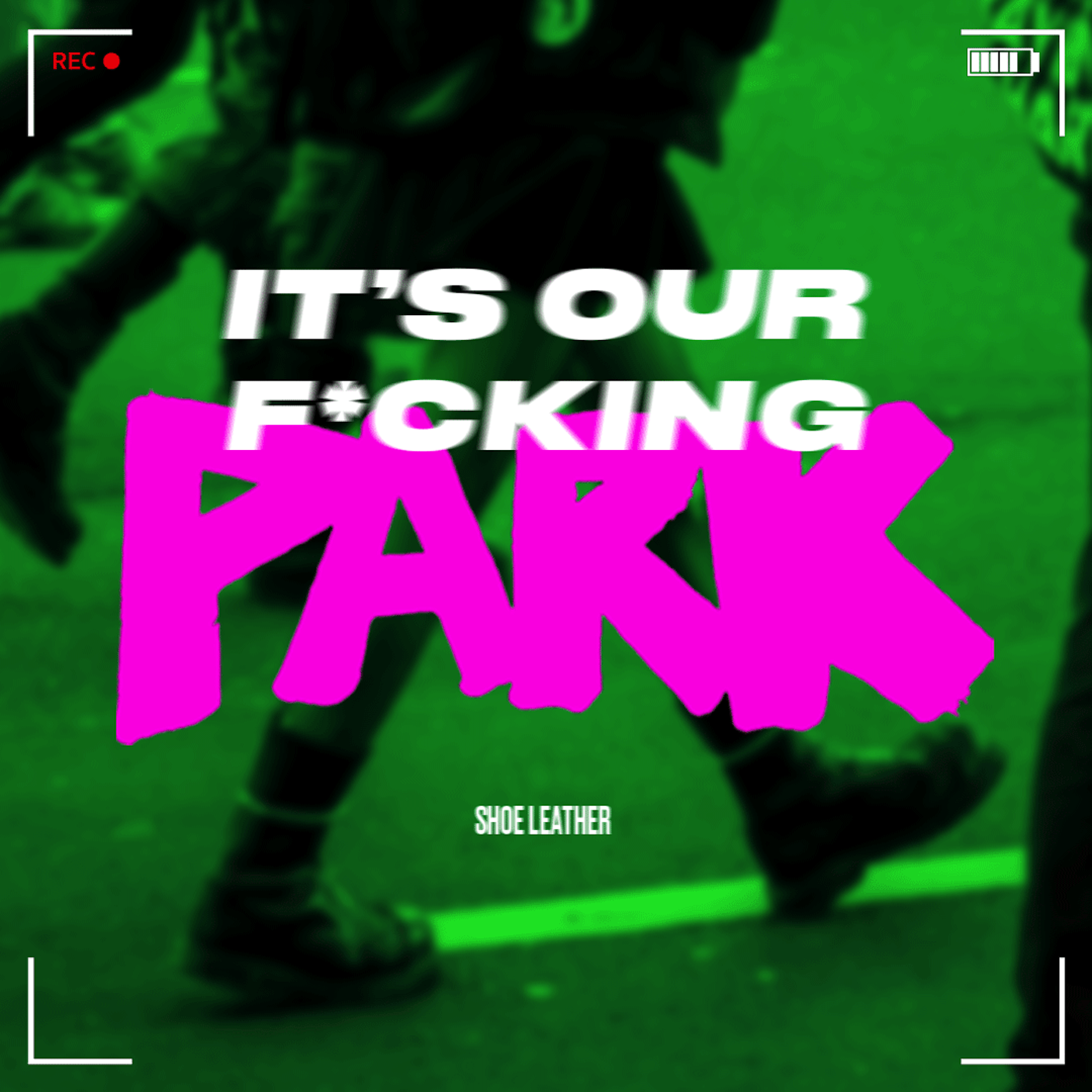
Shoe Leather is an investigative podcast that goes behind the scenes of forgotten stories that shaped New York City. Go along with the team as they knock on doors and track down the people who were at the center of the news. This season we are focusing on the events leading up to the Tompkins Square Park Police Riot that began the night of August 6, 1988. Prior to that night, people living in the neighborhood had complained that drug dealers, the unhoused and “punks” had taken over the park. In response, local government officials ordered a 1 a.m. curfew to be enforced by police. A rally to protest the curfew was held that night and violence ensued. Police officers openly beat protestors and bystanders. More than 100 complaints of police brutality were filed with the Civilian Complaint Review Board.Find out what really happened that night, and how it forever changed the Lower East Side.
Episodes
-
Episode 6: The Survivor
It’s been 56 years since the Greenwich Village townhouse exploded. Three people died. The rest vanished. The only one left alive to tell the story is Cathy Wilkerson, now 81—still wrestling with what she did, what she believes, and what, if anything, she truly regrets. Episode 6: The Survivor was...
-
Episode 5: The Prisoner
Kathy Boudin is the fourth member of the Weatherman. After running from the flames of the townhouse, she goes into hiding for over a decade. That’s until one day, when she resurfaces in a way that will define the course of her life. Kathy’s revolutionary ideals eventually land her in prison. Was...
-
Episode 4: The Explosion
It’s March 6, 1970. A townhouse suddenly explodes in New York City’s Greenwich Village, killing three of the five people inside. Two escape. Police think it’s a gas explosion at first…until they find explosives in the rubble. Who was in the townhouse that day? What happened to the survivors? And...
-
Episode 3: The Comrade
Ted Gold is one of the five people in the townhouse when the bomb explodes. He's a student at Columbia University. And a fierce opponent of the Vietnam War. But before all that, he's just a witty, New York City kid, who loves the Yankees, Bob Dylan, and Karl Marx. His friends say he is reliable,...
-
Episode 2: The Teacher
Diana Oughton was a straight-A student from a wealthy Republican family, a teacher who seemed destined for a conventional life. But over a decade marked by war, campus activism, and radical politics, she drifts into the orbit of the Weather Underground. What turns belief into action, and how does...
-
Episode 1: The Bombmaker
Terry Robbins is a charismatic, intelligent young man who becomes a leader of the student movement to protest the Vietnam War. But when peaceful protest is not making the progress he hoped for, he's ready to take more radical measures. Terry wants to start a revolution.
-
Giuliani: The Unraveling – Episode 6: Rudy Gone Wild
Newly crowned as America's Mayor, Giuliani looks set to cash in on his newfound popularity. He shoots for the White House and misses. After disappearing from the spotlight, he decides to make a comeback working for someone who could very well be his last legal client: President Donald Trump. This...
-
Giuliani: The Unraveling – Episode 5: King Rudolph
Rudy Giuliani begins his second term as New York City’s mayor riding high — a crime-fighting icon fresh off a re-election win. But as the years unfold, controversies mount, political ambitions clash with personal scandals, and his successes begin to fade. His rise quickly turns into an unraveling…
more -
Giuliani: The Unraveling – Episode 4: Credit
In 1993, Giuliani wins the mayoral election in NYC. He runs on the promise to curb one of the biggest issues for New Yorkers: crime. And, when he wins, he hires a police commissioner who flies too close to the sun. And changes the NYPD forever.
-
Giuliani: The Unraveling – Episode 3: The GODFather
In June 1983, Rudy Giuliani moves back to New York City. He takes a job as U.S. Attorney for the Southern District of New York and sets his sights on going after organized crime. He’ll use his time as prosecutor to go after the mob, which earns him a lot of media attention. In May 1989, Giuliani...
-
Giuliani: The Unraveling – Episode 2: Ambition is a Beast
Why did a young Rudy Giuliani have tea with Haiti's dictator in 1982? To answer that question, we’ll have to go back to 1968 when a 24 year-old Giuliani was just graduating from law school. He was a young, driven lawyer whose sight was set on a political career with the Democratic Party. But in...
-
Giuliani: The Unraveling – Episode 1: The Fight
Every New Yorker knows Rudy Giuliani. He was America's mayor, one of the heroes of 9/11. He was President Donald Trump's lawyer. He denied the 2020 election. Giuliani has been a big name in New York City politics since the 1980s. But it didn't start that way. The story of Rudolph William Louis...
-
Giuliani: The Unraveling – trailer
This season on Shoe Leather, a look into the life and career of Rudy Giuliani – one of the most influential politicians in New York City’s recent history.
-
BOLI
Amadou Diallo’s name became synonymous with “41 shots”. He was killed in 1999 by four NYPD officers, who fired at him 41 times inside the doorway of his Bronx apartment building. The incident etched his name into public memory through explosive news coverage. But beyond the headlines, who was...
-
The Fall Guy
Police said they approached Amadou Diallo because they suspected he was a serial rapist who had been terrorizing the Bronx and Harlem for six years. A judge later blamed the real rapist, Isaac Jones, for Diallo's death. Was Jones really responsible?
-
This Is A Fuckin’ Business
In 1999, when Yasiin Bey (then-known as Mos Def) and Talib Kweli hear about the killing of Amadou Diallo, they know they have to respond. A year later, they release Hip Hop for Respect. The EP features 41 rappers, and it gets released when much of New York City is enraged after the four cops who...
-
NYPD’s Dirty Little Secret
After Amadou Diallo was killed by four white police officers, Yvette Walton decided to speak out. She used to be the only Black woman patrolling the streets in the Street Crime Unit - the team responsible for shooting 41 bullets at the unarmed Black man. After 25 years, she looks back at her…
more -
The Mural
Two years after Amadou was killed, a local artist named Hulbert Waldroup was commissioned to create a mural honoring him on the street where he lived in the Bronx. But that’s not the mural you’ll see if you drive by today. In this episode, Sara Braun and Dani Morera Trettin uncover the story…
more -
The Verdict
In 1999, four white police officers killed Amadou Diallo and were charged with murder. A year later, a jury found them not guilty. The trial took place in Albany — even though the killing happened in the Bronx. 24 years later, we wanted to know why the jury voted not guilty. Does justice mean...
-
Who’s Afraid Of Antonio Pagan?
In the 1980s and 90s, controversial City Councilperson Antonio Pagan was loved and hated by the Lower East Side. And while his political career was short-lived, his complicated legacy lives on. 35 years later, we want to know: was Antonio Pagan to blame for one of the worst police riots in New…
more -
The Butcher Of Tompkins Square Park
Daniel Rakowitz would often wander around Tompkins Square park holding a Bible and carrying a live rooster. Everyone in the neighborhood knew him, or knew of him. In 1989 - Daniel would go on trial for the brutal and complicated murder of Monika Beerle. Turns out, he'd told people he was going to...
-
10-85
Over 400 police officers clashed with 200 civilians on the streets of the Lower East Side, in the late hours of August 6, 1988. Ralph Grasso, a retired NYPD officer, take us back to one of the most notorious nights in New York city history, the Tompkins Square park riot. Months after the riot,...
-
ACT UP, Fight Back
Andy Velez was a co-founder of ACT UP, a legendary activist group known for its willingness to take practically any nonviolent action to fight AIDS. At the same time ACT UP was making itself known, New York City’s lower east side was changing fast. Neighborhoods that once belonged to artists and...
-
The Party’s Over
Months after the 1988 Tompkins Square Park riot, a TV news report blamed some of the violence from that night on a local punk band called Missing Foundation. Led by artist Peter Missing, the band was known for trashing venues, spreading anti-gentrification slogans, and – according to the TV…
more -
Where The Riot Ended
On the night of August 6th, 1988 a police riot erupted in NYC's Tompkins Square Park — the heartland of punk music, anarchy and activism in the Lower East Side. The riot ended when protesters broke through the lobby of the Christodora House. This episode covers how one building became the symbol…
more -
The Miracle Baby
On September 10, 2001, New York City newspapers reported that a newborn baby girl was found alone on a rock in Central Park — with her umbilical cord and placenta still attached. They said the baby was abandoned. And the mother could potentially face charges for leaving her child unsafe in one of...
-
That’s so 9/10
In 2001, fashion week began with big budgets, colorful collections and extravagant parties. It was a much anticipated season - fashion magazines had predicted it to be the biggest yet. But on the morning of its fifth day all of that changed. In this episode, we go back in time to look at how the...
-
The Almost Mayor
September 11, 2001 was supposed to be primary day in New York City. As the divisive tenure of Mayor Rudy Giuliani was winding down, the city seemed poised to elect a more inclusive mayor. The Democratic frontrunner, progressive Mark Green, appeared to fit the part. But when the Twin Towers went...
-
The Disappeared
On the night of September 10th, Sneha Philip went shopping, then stayed out for the night. In upstate New York, Juan Lafuente rested before a morning commute to Wall Street. A mother in Mexico looked forward to a weekly call from her son, Fernando Molinar, one of a number of undocumented…
more -
The Party
On the morning of September 11, 2001, news trucks lined the driveway of Horace Greeley High School in Chappaqua, N.Y. Reporters were on campus covering one of the biggest stories of the day. A group of football players had thrown a party that triggered a national media storm. The story launched…
more -
The Other Hijacker
In 1971, Patrick Critton helped rob a bank as part of a Black separatist group and, to escape capture, became the first person to successfully hijack a plane in Canada. He spent 30 years on the run until he was arrested and pleaded not guilty on Sept. 10, 2001. Less than 24 hours later, the 9/11...
-
The Bronx is Burning
During the 1970s – for the whole decade – the Bronx suffered an epidemic of fires and abandonment. This destroyed over 80 percent of the South Bronx housing stock making it look like a bombed out city during World War II. What exactly caused this? Some blamed its residents, others blamed the...
-
Whatever Happened to Robert Davis?
In 1978, Robert Davis was the youngest child to ever be sent to New York’s Rikers' Island Jail. He was Black, from the Bronx, and only thirteen. In this episode we look into Robert Davis’s life. We explore his old neighborhood in the South Bronx, his old middle school, and the media frenzy that...
-
The Fight for Sydenham Hospital
In the 1970s, New York City was broke. Today, we know the city eventually bounced back, but at what cost? When a city is broke, who pays?
-
The Woman in the Hat
In 1970, Bella Abzug took on an incumbent Democratic Congressman––and won. A tough Jewish lawyer raised in the Bronx, Bella would become one of the icons of second-wave feminism, passing laws that changed the lives of men and women. 50 years after she first ran for Congress, Bella has had a...
-
Nasty Weather
On March 6, 1970, a townhouse in New York City’s Greenwich Village blew up. After unearthing large quantities of dynamite in the wreckage, local officials determined that the townhouse’s basement had been used as a makeshift bomb factory. Three people died in the explosion and the two women who...
-
Keep Your Mouth Shut
On the night of July 13, 1977, a citywide power failure plunged New York’s ten million residents into darkness. Chaos ensued. There was looting in every borough, with hundreds of fires set and thousands of arrests — but just one murder. The victim was 17-year-old Brooklyn native Dominick Ciscone....
-
The Legend of Guy Fisher and the Apollo Theater
The Apollo Theater — the venue that shaped 20th-century Black music more than any other — shut its doors in the mid-1970s and stayed closed for years. It almost disappeared for good. But a mysterious buyer purchased the theater and reopened it in 1978. According to unofficial histories of the...
-
Trailer S2 New York: Drop Dead
In season two, New York Drop Dead, reporters step back into the 1970s. They go beyond the bell bottoms and disco to explore what made this decade notorious in New York’s history. A decade in which the Big Apple went by a far more sinister nickname — Fear City. The city was broken and broke. When...
-
The Indian Godfather
In the 1990s, in the shadow of the FBI’s large-scale takedown of New York’s most infamous mafia family, an Indian immigrant was quietly building his own criminal organization. Gurmeet Singh Dhinsa came to the United States from the Punjab region of India
-
The Accident
On a hot summer night in 1991, seven-year-old cousins Gavin and Angela were getting ready to play. Gavin was undoing his bike chain while Angela eagerly stood nearby. Only a few moments separated them from Yosef Lifsh’s car and what would soon become one of the worst periods of unrest New York…
more -
The Baby Napping
In the late afternoon of February 3, 1990, two-day-old Steven Lyons was kidnapped from a Brooklyn hospital— a feat that seems nearly impossible with hospital security measures in 2020. Now, 30 years later, Shoe Leather reporters, Rachel and Elize, follow in the footsteps of the brazen baby-napper...
-
The Abortion Pill
In the 1990’s, one organization dedicated a decade of work to gain FDA approval of a drug that promised to revolutionize abortion in America. Shoe Leather: the Abortion Pill follows the Population Council’s effort to bring mifepristone – and medical abortion – to the United States. Three decades...
-
A Renaissance of Mysterious Circumstances
“I start with a blank and there’s nothing more horrifying than a blank canvas” — artist Lee Krasner. New York City, December 1990: thieves stole four paintings in a span of five days. Nearly thirty years later, one of the recovered paintings made history at a Sotheby’s auction. This is the story…
more -
Happy Land
On March 25, 1990 eighty-seven people died when the Happy Land Social Club burned. After Julio Gonzalez argued with his girlfriend he bought a gallon of gasoline and set the club on fire. Until the Oklahoma City Bombing in 1995 the Happy Land fire was the deadliest mass murder in US history.…
more -
The Murder of Bruce Bailey
Bruce Bailey was a tenants rights activist who dedicated his life to fighting landlords on Manhattan’s Upper West Side. He was a husband, a father, a graduate of Columbia College, and in June of 1989, he was brutally murdered. His dismembered body was found in trash bags on a street corner in the...
-
Trailer
Shoe Leather is an investigative podcast that goes behind the scenes of seven forgotten stories that shaped New York City. In Season 1, New York in the 90s, you’ll hear about an unsolved murder, a multi-million-dollar art heist, an Indian mob boss, stolen babies, and a pill that promised to...
We're indexing this podcast's transcripts for the first time — this can take a minute or two. We'll show results as soon as they're ready.
No matches for "" in this podcast's transcripts.
No topics indexed yet for this podcast.
Loading reviews...
ABOUT THIS SHOW
Shoe Leather is an investigative podcast that goes behind the scenes of forgotten stories that shaped New York City. Go along with the team as they knock on doors and track down the people who were at the center of the news. This season we are focusing on the events leading up to the Tompkins Square Park Police Riot that began the night of August 6, 1988. Prior to that night, people living in the neighborhood had complained that drug dealers, the unhoused and “punks” had taken over the park. In response, local government officials ordered a 1 a.m. curfew to be enforced by police. A rally to protest the curfew was held that night and violence ensued. Police officers openly beat protestors and bystanders. More than 100 complaints of police brutality were filed with the Civilian Complaint Review Board.Find out what really happened that night, and how it forever changed the Lower East Side.
HOSTED BY
Columbia Journalism School
CATEGORIES
Loading similar podcasts...
Frequently Asked Questions
How many episodes does Shoe Leather have?
Shoe Leather currently has 47 episodes available on PodParley. New episodes are automatically indexed when they're published to the podcast feed.
What is Shoe Leather about?
Shoe Leather is an investigative podcast that goes behind the scenes of forgotten stories that shaped New York City. Go along with the team as they knock on doors and track down the people who were at the center of the news. This season we are focusing on the events leading up to the Tompkins...
How often does Shoe Leather release new episodes?
Shoe Leather has 47 episodes. Check the episode list to see recent publication dates and frequency.
Where can I listen to Shoe Leather?
You can listen to Shoe Leather on PodParley by clicking any episode. We provide an embedded audio player for direct listening, and you can also subscribe via your preferred podcast app using the RSS feed.
Who hosts Shoe Leather?
Shoe Leather is created and hosted by Columbia Journalism School.
URL copied to clipboard!