
PODCAST · fiction
Stories from Luna Asli Kolcu
by Luna Asli Kolcu
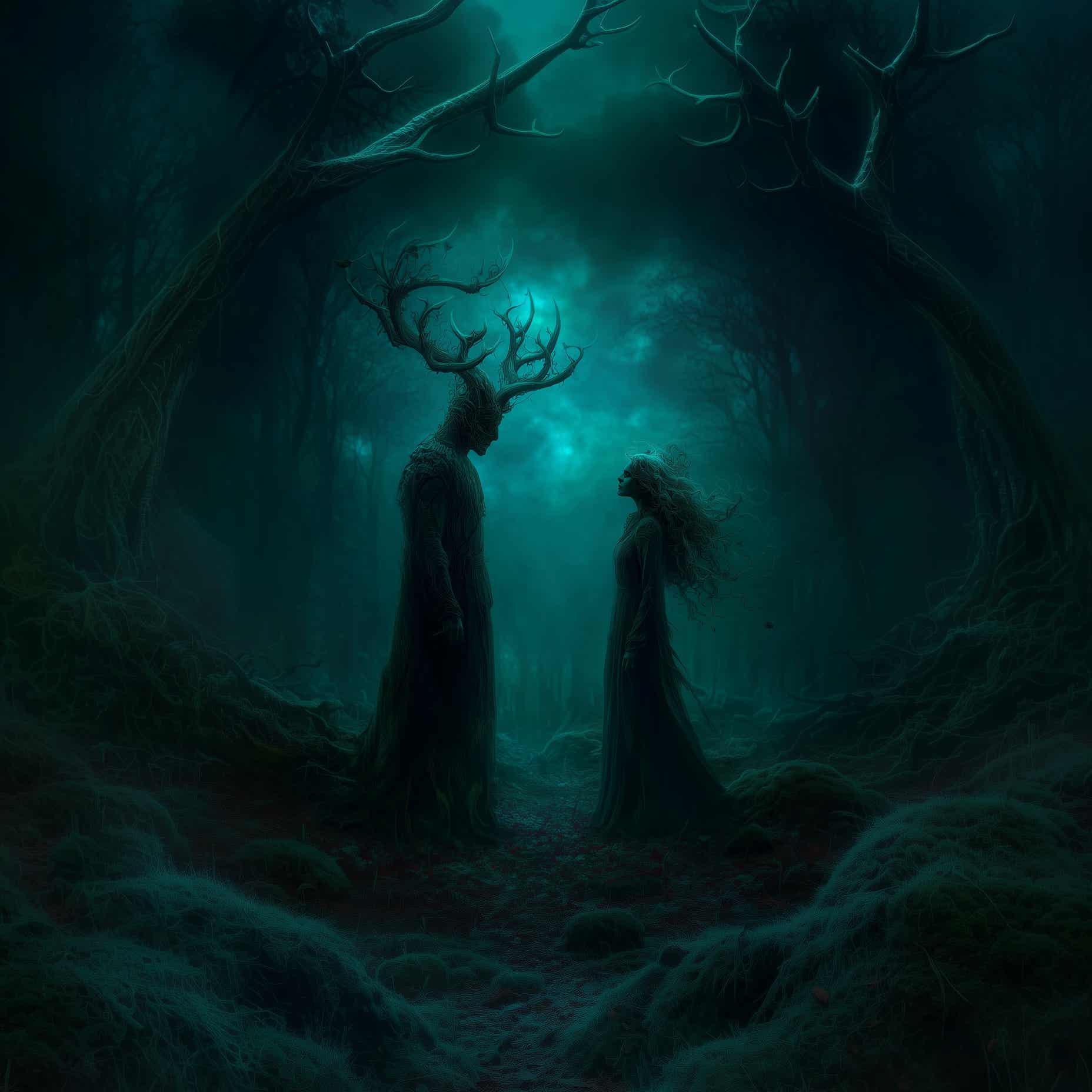
Fantasy, horror & gothic fiction exploring the spaces between loss and becoming. Where grief becomes myth. Stories with heart for those who walk in shadows. lunaaslikolcu.substack.com
-
2
Celestial Punishments: A Dark Comedy
Episode Notes:I wrote a story about two sisters exiled to a budget universe with broken physics and mortals made of anxiety and water.When a graduate student’s bathroom mirror starts talking back, he’s offered an unpaid internship in divine infrastructure — and twelve billion years to figure out what’s real. The dental plan is a lie. The romance algorithm doesn’t exist. And somewhere in Milwaukee, a filing cabinet has found love.Standalone dark comedy short story · ~18 min listen · Written by me, narrated by AI voice (ElevenLabs)CW: Existential dizziness. Philosophical nausea lasting three to five business days.I write gothic horror and dark fantasy fiction in the tradition of Shirley Jackson and Carmen Maria Machado.Subscribe for new stories: Find me on Goodreads: https://goodreads.com/lunaaslikolcu Get full access to By Luna Asli Kolcu at lunaaslikolcu.substack.com/subscribe
-
1
The Waiting Tree
Dark fantasy short story. A village stirs from its forgetting—and the old ones return to feast.(Originally written for the first prompt challenge I ran. 30 Days of Fantasy)Once, when the world had grown too quiet and the woods forgot how to whisper, the wind changed without warning.In a village stitched to the hem of the forest—left unnamed, left to sleep—things began to stir. The air went heavy, slow like honey left too long in the sun. A scent rode the breeze: sage and smoke. Iron rusting in the mouth.The Baker was the first to feel it.She rose before the sun, as always, kneading dough that had risen in the dark. Her shutters were drawn. Her hearth still cold. Yet something warm moved through the flour-dusted air.Above her, chimes rang.There were no chimes.Outside, the mist crept along the cobbles like a cat returning to a long-empty home. It did not drift—it waited. Asking permission, maybe.She did not speak. Did not mark the lintel with ash or cross herself against the stirring stillness. She shaped her loaves with poppy seeds and pressed a spiral into each one, just as her grandmother had done, though she no longer remembered why.That is how it begins.The Farmer was next.He found his oxen kneeling—heads bowed to the earth before the old tree at the edge of the fields. They weren’t resting. Weren’t stubborn. Something else.It was a crooked thing, bark split and ridged like the palm of an old hand, roots surfacing and diving like something that breathed beneath the soil. In his grandfather’s day, they called it the Waiting Tree. No one remembered what it waited for.His grandfather had told him once: Never take from it. Never give to it. And then, quieter: Never look too long.Forty years the Farmer had obeyed. Plowed around its shadow. Let the grass grow thick at its roots while the rest of his fields lay bare and orderly. Never asked why.Now a sound stirred in its branches. Breath blown through hollow bone. A lullaby behind a locked door.He stood very still.The sound knew his name.Later, when the wind tugged at his coat and his oxen turned their great heads, he followed. Forty years of obedience, broken in a single breath. Was he betraying his grandfather? Or finally answering him?The Widow hung her wash beneath the eaves, as she did every third morning.She had just pinned the final sheet when she saw it: a scarf of blue silk, threaded with gold.Twenty years since she’d worn it.Twenty years since she’d washed it.It smelled of cedar, of lavender crushed between warm palms, and something sweeter still—half memory, half ache. She laid it against her heart, where old things are kept, and her fingers would not stop trembling. Cold or grief or something she refused to name, she could not have said.Later, she would forget how it came to be there.But she would not forget the ache behind her ribs, like a name whispered only once.The children were the first to follow.They always are.They chased glints of gold through the wheat, laughing at shadows that echoed back, hearing flutes in the hedgerows though no flute had been carved in a generation. One of them looked up and froze—she had seen something between the clouds, just for a moment. Something larger than the sky should hold.The Weaver’s daughter returned with her mouth full of petals. Her eyes had gone strange.She did not speak until morning.And when she did, the birds fell silent to listen.One child did not return at all. Only her ribbon came back, tied to a fern.By midday, the village had slipped sideways.A merchant opened a crate of buckles and found it full of moss and moths that blinked in time with his breath. The forge sang lullabies in a language the blacksmith did not know. He sang back without meaning to.No one spoke of it aloud.But the story grew warm between their teeth.The Mayor rang the bell in the square and called a meeting.No one came.Already they were walking—slow and sure as frost melting in spring—toward the edge of the woods.Some carried bread. Others, wine. A child clutched a wooden spoon carved with a grandmother’s name. One brought a fiddle that hadn’t been played since the last snowfall before the forgetting began.The Baker brought her warmest loaves, wrapped in linen.The Farmer, salt.The Widow, her scarf, pressed close to her chest.Last came the Mayor, carrying his ledger. When he opened it, the pages were blank save for a single line written in green: It is time.No one spoke.They walked because the wind had asked them to.The Waiting Tree was blooming.Flowers spilled from its branches, the color of drowned things. Bruise-violet. The shade a wound turns just before it heals. They smelled of nothing, then of too much.Mushrooms ringed its base, gills wet as the underside of a tongue, caps soft and faintly warm. They swelled and settled with a slow rhythm, like sleep.The spiral in the bark matched the ones in the bread.Beneath the canopy, the air carried something that was almost sound. Remembering, perhaps. Or hunger.No one told them what to do.But they laid their offerings down.Bread was torn and passed from hand to hand. Wine turned gold in wooden cups. Someone sang a tune no one had taught them, and another found the harmony, threading it through like light between leaves.The children danced first. The steps were in their bones—they just hadn’t known it. They skipped through mushrooms, through roots. One vanished behind the tree and returned crowned in leaves, her eyes no longer young.And then they came.From the spaces between moments. From the breath held too long.Sprites drifted like pollen.Nymphs stepped river-eyed from the folds of dusk.Hard to see. Hard to touch. But the ground bowed beneath their feet, and the air turned sharp with something like ozone—the moment before lightning.They arrived.Sat among the roots and the offerings. Ate. Remembered.And the villagers remembered too. Deep in their bones.Bread left on windowsills for hands that never knocked.Wells that sang before children were born.The year the sun refused to rise until someone said please.Seeds that would not grow unless sung to.The Widow sat beside a woman made of bloom and ash. Something older than mercy.Her face shifted when looked at directly—beautiful, then strange. Then unreadable. She hummed a tune the Widow had not heard since her mother’s funeral.The Widow sang the next line.They shared the scarf between them. No one asked how.The Baker watched her bread pass from hand to hand.One of the old ones—eyes full of riverlight—bit into a slice and wept. The tears fell onto the moss and where they landed, small white flowers opened and closed like fists.She knelt by the roots. Laid her hands to the soil. Felt it move beneath her palms—hunger, old and patient. She understood.They feasted until the stars came.New stars—hung in strange constellations, bright enough to cast shadows backward. Spiraled. The Farmer looked up and saw what the child had seen: a shape moving between them, vast and slow, and he understood at last why his grandfather had said never look too long.He looked anyway. Just once. Just long enough.The wind rang once more. Three notes, low and glass-sweet.This time, everyone heard them.This time, no one turned away.When the wind shifted again—just before the first bird called—it carried the scent of sage and something that tasted very much like home.No one spoke of it the next morning.But every window was left slightly ajar.And in every loaf, a spiral was pressed with care.And once again, the wind knew their names.THE ENDFor your reflectionWhat have you stopped doing that your grandmother did without question—and what might you be forgetting by letting it go?🌙 If you’ve just arrived: I write dark fiction and essays about rural life, motherhood, and making things with your hands. Choose what you want to receive here.This is reader-supported. The stories stay free.Paid subscribers get the things I make between stories—deleted scenes, character ghosts, craft notes, early releases. The quiet work that doesn’t go anywhere else. Your subscription buys me writing hours and supports independent dark fiction.Want something different? My Patreon offers separate perks—advance chapters, process insights, and digital goods not available here.Find me: Discord • Instagram • TikTok • Pinterest • RoyalRoadJump over here for my published books and pre-launches. Get full access to By Luna Asli Kolcu at lunaaslikolcu.substack.com/subscribe
We're indexing this podcast's transcripts for the first time — this can take a minute or two. We'll show results as soon as they're ready.
No matches for "" in this podcast's transcripts.
No topics indexed yet for this podcast.
Loading reviews...
Loading similar podcasts...
Frequently Asked Questions
How many episodes does Stories from Luna Asli Kolcu have?
Stories from Luna Asli Kolcu currently has 2 episodes available on PodParley. New episodes are automatically indexed when they're published to the podcast feed.
What is Stories from Luna Asli Kolcu about?
Fantasy, horror & gothic fiction exploring the spaces between loss and becoming. Where grief becomes myth. Stories with heart for those who walk in shadows. lunaaslikolcu.substack.com
How often does Stories from Luna Asli Kolcu release new episodes?
Stories from Luna Asli Kolcu has 2 episodes. Check the episode list to see recent publication dates and frequency.
Where can I listen to Stories from Luna Asli Kolcu?
You can listen to Stories from Luna Asli Kolcu on PodParley by clicking any episode. We provide an embedded audio player for direct listening, and you can also subscribe via your preferred podcast app using the RSS feed.
Who hosts Stories from Luna Asli Kolcu?
Stories from Luna Asli Kolcu is created and hosted by Luna Asli Kolcu.
URL copied to clipboard!